doi:10.4236/jbise.2011.47066 Published Online July 2011 (http://www.SciRP.org/journal/jbise/).
The effect of amblyopia on educational activities of students
aged 9 - 15
M. Khalaj1, I. Mohammadi Zeidi1, M. R. Gasemi1, Ahmad Keshtkar2
1
School of Public Health, Qazvin University of Medical Sciences, Bahonar Blvd, Qazvin, Iran; 2
Medical Faculty, Medical Physics Department, Tabriz University of Medical Sciences, Tabriz, Iran. Email: [email protected]
Received 12 April 2011; revised 24 May 2011; accepted 10 June 2011.
ABSTRACT
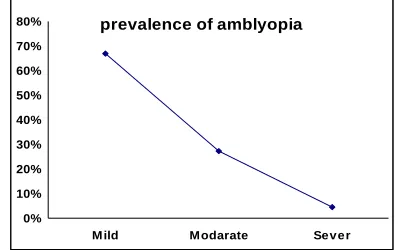
Amblyopia is an illness with reduced vision and a number of students are affected with this disease. To determine any association of amblyopia with educa- tional activities, sport and social activities of students involved by amblyopia, this study was carried on. This study was conducted at Boali Hospital in Gazvin, Iran: A total of 110 patients 9 to 15 years (54.5% fe-male and 45.5% fe-male; mean age: 13.7 ± 3.2) with amblyopia (20/25 - 20/400) due to strabismus and/or refractive errors, and that persisted after treatment with spectacles. All children wore eyeglasses contain-ing their refractive correction (based on cycloplegic autorefractor measurements, refined or confirmed by cycloplegic retinoscopy or subjective refinement) for acuity testing. The results indicated that, 25 (22.73%) patients with strabismus amblyopia, 40 (36.36%) patients anisometropic amblyopia, 22 (20%) patients ametropic amblyopia, 18 (16.36%) patients with strabismic mixed with anisometropia and 5 (4.55) with deprived amblyopia. Parent’s knowledge about meaning of amblyopia and amblyopia-related phe-nomena in 50 (45.5%) of patiens was very low. The educational level in 45 (41%) of parents were reported to be primary school, 40 (36.3%) higher school and university degrees 25 (22.7%). The sport activity in 35 (31.8%) of patients with amblyopia was very low and in 14 (12.7%) higher than others. In a comparison with other students, the educational qualification in 18 (16.4%) was very low, 35 (32%) the as equal as others and 27 (24.5%) higher than their classmate. Visual acuity with the best correction, in 75 (67%) of patients was 20/25, in 30 (27.27%) patients 20/40 or worse and in 5 (4.5%) of them 20/200 or worse. Poor eyesight and amblyopia can influence on learning, sport and social activity, and performance in school, as well as restrict choice in profession and hobbies. The parent’s knowledge of amblyopia is high effi-ciency of treatment of the amblyopia patient’s morale.
Keywords: Amblyopia-Visual; Acuity-Anisometropia – Strabismus
1. INTRODUCTION
Patient acceptance of these methods was good [17]. The most common causes of amblyopia is a congenital or early acquired cataract, but corneal opacities, vitreous hemorrhage, and ptosis also may be implicated. Depri-vation of the form of vision is the least common form of amblyopia but most damaging and difficult to treat. Am-blyopic visual loss resulting from a unilateral occlusion of the visual axis tends to be worse than that produced by bilateral deprivation of similar degree because interocular effects add to the direct developmental impact of severe image degradation. Even in bilateral cases, however, visual acuity can be 20/200 or worse. Unilateral cataracts have a better prognosis when the cataract is removed and optical correction is in place by 3 months of age to minimize deprivation and maximize visual prognosis [18,19].Most of the available data on the natural history of amblyopia and success rates of its treatment with either patching or drug therapy are retrospective and uncon-trolled. Despite the common occurrence of amblyopia, there is little quality data on treatment of this condition. Thus, there is much to be learned about the course of treated amblyopia, to provide more precise estimates of success rates and to identify factors that may be associ-ated with successful and unsuccessful treatment. A recent population-based studyof educational, health, and social outcomes, which failed toidentify any “real-life” func-tional impact of the visual deficitsassociated with am-blyopia, highlighted the need for furtherresearch on what it means to have amblyopia [20].We report an investiga-tion of the associainvestiga-tionof amblyopia with diverse health and social outcomes. In the present investigation, we provides an opportunity to determine the affects the educational, sport and social activities of amblyopia pa-tients aged 9 to 15 years old in Qazvin city in Iran.
2.
METHODS
The study was performed at Buali eye clinical in Qaz-vin-Iran. A total of one hundred ten children participated in the study, including60 female (54/5%) and 40 male (45/5%) aged 9 to 15 years, mean age: 13.7 ± 3.2 [SD]. Subjects were enrolled between January 2007 and April 2008 in a randomized trial had best-corrected visual acuity (VA) of 20/25 to 20/400 with amblyopia resulting from strabismus, anisometropia or both, and refractive errors. Children (9, 10, 11, 12, 13, 14 and 15 years) were invitedto attend in a research clinic. Patients had to have refractive error in each eye between ±0.5 and ±9.00 di-opters (D). For doing some eye examination parents of all subjects and their teachers were contactedby letter and telephone to invite them to participate and 95% of them agreed toparticipate [21]. Parents completed a compre-hensive 30-item questionnaire thataddressed basic so-ciodemographic factors such as ethnicity,parental
edu-cation, occupation and social activities of student. Cyclo- plegic autorefraction was performed with an autorefractor (model RK-F1; Canon, Tokyo, Japan). This instrument generatedthree reliable readings of refraction in each eye; the medianreading was used for analysis. Cycloplegia was induced usingcyclopentolate 1% (1 drop), 2 minutes after corneal anesthesiawith amethocaine 0.5%. Tropi-camide 1% (1 drop) and phenylephrine2.5% (1 drop) were also used in some children to obtain adequate my-driasis (a minimum pupil diameter of 6 mm). Autore-fractionwas repeated 30 minutes after the last drop [22].
Measurement of ocular biometric parameters was performed withan optical biometer. By using Snellen charts, at distance of 6 meter (20 feet), visual acuity in each eye and an examination for strabismus by trained medicalexaminers was measured [23]. The child read the first letter of each row fromthe top of the logMAR chart until an error was made (screening).The child was then redirected to two rows above the screeningerror row and asked to attempt each letter until four incorrectresponses were given [24]. All children wore eyeglasses containing their refractive correction (based on cycloplegic autore-fractor measurements, refined or confirmed by cyclople-gic retinoscopy or subjective refinement) for acuity test-ing. We invited all children to a vision assessmentat all years, including measurement of visual acuity both with and without a pinhole (with pinhole as a proxy for cor-rectionby spectacles). We sent out a questionnaire on family historyand previous treatment with patching be-forehand [25]. For thisanalysis, we excluded people with bilateral visual loss, unilateralloss inconsistent with am-blyopia, or known eye diseases (suchas cataract), as well as those whose vision was tested with and withouttheir prescribed optical correction. Results were analyzed using SPSS program, to assess for factors that directly or indirectly influenced the amblyopia and evaluation social activities and other factors of amblyopic students com-pared to normal students.
3. RESULTS
metropia was statistically more common in amblyopic cases (36.36%) compared with (22.73%) of strabismics, Anisometropia & strabismic amblyopia (16.36%), ame- tropic amblyopia (20%), and patients with deprived am-blyopia (4.55%) (p<0.001). Parents knowledge about meaning of amblyopia and amblyopiarelated phenomena in 50 (45.5%) of patiens was very low, 27 (24.5%) middle and 33 (30%) high. The literacy level in 45 (41%) of parents, was about primary school in 40 (36.3%), in high school and 25 (22/7%) of them in university degree qualifications (Figure 2).The sport activity in 35 (31.8%) of patients with amblyopia was very low, in 38 (34.5%) low, in 23 (20.9%) the same level as other students and in 14 (12.7%) of students was higher than others. In a comparison with other students,the educational quail- fication attained by 18 (16.4%) was very low, in 30 (28%) of students low, in 35 (32%) was found to be the same level as other students and 27 (24.5%) of them, had higher educationalqualification than their classmate. As Shown in Table 2, the participation in socialactivities (going park, or to the cinema, meeting friends and families)in 60 (54.5%) of amblyopic patients was very low, in 27 (28%) low, 12 (10.9%) was the same level as other students and 11 (10%) of them, higher than their classmate. Am- blyopia was found to be statistically different by gender (p = 0.01), in all age groups, the females were more activities than male.
4. DISCUSSION
It is generally agreed that amblyopia must be diagnosed and treated at an early age to prevent the loss of vision and that treatment is more extended and less effective in older
ages. This study showed that children with higher
mag-nitudes of anisometropia had higher prevalence and greater depth of amblyopia [26].Conduction of preventive programs directed to children requires the participation of
prevalence of amblyopia
0% 10% 20% 30% 40% 50% 60% 70% 80%
[image:3.595.323.522.130.255.2]M ild Modarate Sever
Figure 1. The means prevalence of mild, moderate and
severe amblyopia in children aged 9 to 15.
Parents educational level
20% 25% 30% 35% 40% 45%
primary school high schol university level
p
er
cen
[image:3.595.319.530.294.430.2]t
Figure 2. Parents literacy level of students with amblyopia in one or two eyes. About 41% of parents had a low level of education
Table 1. Prevalence of Amblyopia in Qazvin-Iran Children by Age (years).
Age
Anisometropic Amblyopia [Prevalence (n)] (N) (%)
Strabismic amblyopia prevalence(N)
(N) (%)
Strabism&aniso amblyopia preva-lence(N)
(N) (%)
Ametropia amblyopia prevalence (N) (N) (%)
Deprived am-blyopia preva-lence(N) (N) (%)
Total (N) (%)
9-10 9 (42.86) 6 (28.57) 2 (9.52) 3 (14.29) 1 (4.76) 21 (19)
10-11 8 (44.44) 2 (11.11) 2 (11.11) 5 (27.8) 1 (5.5) 18 (16.36)
11-12 6 (35.29) 5 (29.41) 2 (11.8) 4 (23.53) 17 (15.45)
12-13 8 (20) 6 (30) 2 (10) 2 (10) 2 (10) 20 (18.18)
13-14 4 (22.20) 3 (16.66) 6 (33.33) 5 (27.8) 18 (16.36)
14-15 5 (31.25) 3 (18.75) 4 (25) 3 (18.75) 1 (6.25) 16 (14.55)
[image:3.595.66.528.508.632.2]Total 40 (36.36) 25 (22.73) 18 (16.36) 22 (20) 5 (4.55) 110 (100)
Table 2. Below table shows the participation of students with amblyopia in socialactivities. About 54.5% of students had very
low social activities in comparison with normal student.
The participate of amblyopic students in social activities
Very low (N) (%)
low (N) (%)
Equal (N) (%)
higher
several sectors of the community involving physicians, educators, parents and volunteer personnel. This study indicate that, on average, students with amblyopiacan not expect to do as well as their peers with normal vision in both eyes in terms of educational attainment, sport, and social activities. We found that several factors can effect the improvement and or prevention of amblyopia (e.g. the role of parents, childhood socioeconomic environment etc.).
To our knowledge, no previous reports have addressed the importance of parents’ educational level prospects for children with amblyopia. The parents’ knowledge of
am-blyopia had an important role in educational attainment,
employment, social achievement and etc and can en- courage children attendance seriously in sports and edu-cational environments and social activity. Amblyopic children who their parents familiar with amblyopia, do not seemto be disadvantaged in relation to social activities, nor arethey at increased risk of behavioral difficulties or socialmaladjustment as children [20].This study showed the knowledge of amblyopia in 45.5% of parent was very low and literacy level in 36.3% was about primary school. These factors can be involved in future activities in chil-dren with amblyopia in one or two eyes. Our results are different with Rahi and colleagues, which showedthat, distinguishing, at a populationlevel, between the lives of people with amblyopia and thosewithout in terms of im-portant educational, health, and socialoutcomes may be difficult. They cited that children with amblyopia did as well as those with normal vision on educational tests and was not associated with highest educational qualification achieved [20]. They reported that people with amblyopia were no more likely than those with normal vision to report poor general health, depression, or psychological distress in adulthood. Our study indicated that only 24.5% of students was associated with highest educational qua- lification related to others, in contrast 18 (16.4%) of stu-dent with amblyopic eyes was very low, in 30 (28%) of them low, in 35 (32%) was found to be the same level as other students, these may be as a result of parents knowledge of amblyopia and low educational level. Re-cent study in the UK showed that the lifetime risk to peo-ple with amblyopiaof visual impairment or blindness through disease or injuryto their normal eye is between 1% and 3% [27]. It is reported that amblyopia has been found to significantly reduce speed and dexterity of pre-hension (particularly in children with a history of stra-bismus), without diminishing accuracy and control [28-30]. Evidence also has come to light that amblyopic subjects’ binocular reading speed is significantly slower than that of normal subjects, despite the amblyopic sub-jects having the same levels of binocular visual acuity and reading acuity as the normal subjects [31]. Woodruff and
colloquies reported, pure anisometropic amblyopia had the best initial visual acuity, with 25% of anisometropes having an initial visual acuity of less than 6/18 compared with 39% of strabismics and 50% of mixed amblyopes [32].Whereas our study showed that the prevalence of anisometropia was statistically more common in ambly- opic cases (36.36%) compared with (22.73%) of strabis-mics, (16.36%) of mixed amblyopes, (20%) ametropic amblyopia. Our findings suggest a significant effect of amblyopia on the sports activities. Fewer children in the amblyopic Group in Qazvin had participated in higher sport activities (12.7%).
This may be because the student with amblyopia had almost several times the risk of visual impairment in their better seeing eye with the best correction to less than 20/25 compared to students without amblyopia. This underlines the importance of continued childhood screen-ing in the early of life and treatment of children with amblyopia in order to prevent or reduce the risk of visual impairment and have no significant behavioral problems, the well reported burden of disease associated with vision loss later in life.Chua and Mitchel found a borderline significant effect of amblyopia on higher university de-greesbut no effect on lifetime occupational class [33] Snowdon and Stewart-Brown interviewed health care professionals, adults with amblyopia, and children in amblyopia treatment to gain an understandingof how amblyopia and treatment for amblyopia affect people’s lives [34]. Further longitudinal data are warranted to provide a more complete account of the natural history of amblyopia and the plasticity of the visual system [33]. Associations between performance at school and am-blyopia arecomplicated by the independent associations of strabismus andrefractive error with a variety of neu-rodevelopmental disorders, including those caused by premature birth. Nevertheless, bilateral visual deficits (which were excluded from Rahi and colleagues’study) that cannot be corrected with glasses are clearly associ-atedwith educational difficulty and reduced life chances [35].
5. CONCLUSIONS
REFERENCES
[1] Friendly, D.S. (1987) Amblyopia: Definition, classification, diagnosis, and management considerations for pediatri-cians, family physipediatri-cians, and general practitioners. Pedi-atric Clinics of North America, 34, 1389-1401.
[2] Simons, K. (1996) Preschool vision screening: Rationale, methodology and outcome. Survey of Ophthalmology, 41, 3-30. doi:10.1016/S0039-6257(97)81990-X
[3] Simons, K. and Preslan, M. (1999) Natural history of amblyopia untreated owing to lack of compliance. British Journal of Ophthalmology, 83, 582-587.
doi:10.1136/bjo.83.5.582
[4] Attebo, K., Mitchell, P., Cumming, R., Smith, W., Jolly, N. and Sparkes, R. (1998) Prevalence and causes of ambly-opia in an adult population. Ophthalmology, 105, 154- 159. doi:10.1016/S0161-6420(98)91862-0
[5] Webber, A.L. and Wood, J. (2005) Amblyopia: Prevalence, natural history, functional effects and treatment. Clinical and Experimental Optometry, 88, 365-75.
doi:10.1111/j.1444-0938.2005.tb05102.x
[6] Repka, M.X., Kraker, R.T., Tamkins, S.M., et al. (March 2009) Retinal nerve fiber layer thickness in amblyopic eyes. American Journal of Ophthalmology, 148, 143-147. doi:10.1016/j.ajo.2009.01.015
[7] Brown, S.A., Weih, L.M., Fu, C.L., Dimitrov, P., Taylor, H.R. and McCarty, C.A. (2000) Prevalence of amblyopia and associated refractive errors in an adult population in Victoria, Australia. Ophthalmic Epidemiol, 7, 249-258. [8] Pediatric Eye Disease Investigator Group. (2002) A
ran-domized trial of atropine vs patching for treatment of moderate amblyopia in children. Archives of Ophthal- mology, 120, 268-278.
[9] Neumann, E., Friedman, Z. and Abel-Peleg, B. (1987) Prevention of strabismic amblyopia of early onset with special reference to the optimal age for screening. Journal of Pediatric Ophthalmology & Strabismus, 24, 106-110. [10] Daw, N.W. (1998) Critical periods and amblyopia.
Ar-chives of Ophthalmology, 116, 502-505.
[11] Scott, W.E. and Dickey, C.F. (1988) Stability of visual acuity in amblyopic patients after visual maturity.
Graefe’s Archive of Clinical and Experimental Ophthal-mology, 226, 154-157. doi:10.1007/BF02173306
[12] Quah, B.L., Tay, M.T., Chew, S.J. and Lee, L.K. (1991) A study of amblyopia in 18 - 19 year old males. Singapore Medical Journal, 32, 126-129.
[13] Epelbaum, M., Milleret, C., Buisseret, P. and Dufier, J.L. (1993) The sensitive period for strabismic amblyopia in humans. Ophthalmology, 100, 323-327.
[14] Flynn, J.T., Schiffman, J., Feuer, W. and Corona, A. (1998) The therapy of amblyopia: An analysis of the results of amblyopia therapy utilizing the pooled data of published studies. Transactions of the American Ophthalmological Society, 96, 431-453.
[15] American Academy of Ophthalmology (2002) Preferred practice pattern: Amblyopia. American Academy of Ophthalmology, San Francisco.
[16] Nolan, A.F., McCann, A. and O’Keefe, M. (1997) Atro-pine penalisation versus occlusion as the primary treat-ment for amblyopia. British Journal of Ophthalmology,
81, 54-57. doi:10.1136/bjo.81.1.54
[17] Repka, M.X. and Ray, J.M. (1993) The efficacy of optical and pharmacological penalisation. Ophthalmology, 100, 769-775.
[18] Pediatric Eye Disease Investigator Group (2006) Treat-ment of anisometropic amblyopia in children with refrac-tive correction. Ophthalmology, 113, 895-903.
doi:10.1016/j.ophtha.2006.01.068
[19] Pediatric Eye Disease Investigator Group (2005) Two- year follow-up of a 6-month randomized trial of atropine vs patching for treatment of moderate amblyopia in chil-dren. Archives of Ophthalmology, 123, 149-57.
doi:10.1001/archopht.123.2.149
[20] Rahi, J.S., Cumberland, P.M. and Peckham, C.S. (2006) Does amblyopia affect educational, health and social outcomes? Findings from 1958 British birth cohort. Brit-ish Journal of Haematology, 332, 820-825.
[21] Webber, A.L., Wood, J.M., Gole, G.A. and Brown, B.
(2008) The effect of amblyopia on fine motor skills in children. Investigative Ophthalmology and Visual Science,
49, 594-603. doi:10.1167/iovs.07-0869
[22] Ip, J.M., Huynh, S.C., Kifley, A., et al. (2007) Variation of the contribution from axial length and other oculometric parameters to refraction by age and ethnicity. Investigative Ophthalmology and Visual Science, 48, 4846-4853. doi:10.1167/iovs.07-0101
[23] Holmes, J.M., Beck, R.W. and Repka, M.X. (2001) The Pediatric Eye Disease Investigator Group. The amblyopia treatment study visual acuity testing protocol. Archives of Ophthalmology, 119, 1345-1353.
[24] Birch, E.E., Williams, C., Hunter, J., Lapa, M.C. and ALSPAC (1997) Random dot stereoacuity of preschool children. Journal of Pediatric Ophthalmology & Stra-bismus, 34, 217-222.
[25] Williams, C., Northstone, K., Harvey, I., Harrad, R. A. and Sparrow, J.M. (2002) Amblyopia treatment outcomes after screening before or at age 3 years: Follow up from randomised trial. British Medical Journal, 324, 1549- 1551. doi:10.1136/bmj.324.7353.1549
[26] John, W., Simon, M.D. and Pamelakaw, M.D. (15 August 2001)Commonly missed diagnoses in the childhood eye examination. American Family Physician.
[27] Rahi, J.S., Logan, S., Timms, C., Russell-Eggitt, I., Taylor, D.S.I. (2002) Risk, causes, and outcomes of visual im-pairment after loss of vision in the non-amblyopic eye: A population-based study. Lancet, 360, 597-602.
doi:10.1016/S0140-6736(02)09782-9
[28] Webber, A.L., Wood, J.M., Gole, G.A. and Brown, B. (2008) The effect of amblyopia on fine motor skills in children. Investigative Ophthalmology & Visual Science,
49, 594-603. doi:10.1167/iovs.07-0869
[30] Mazyn, L.I., Lenoir, M., Montagne, G., Delaey, C. and Savelsbergh, G.J. (2007) Stereo vision enhances the learning of a catching skill. Experimental Brain Research,
179, 723-726. doi:10.1007/s00221-007-0957-5
[31] Stifter, E., Burggasser, G., Hirmann, E., Thaler, A. and Radner, W. (2005) Monocular and binocular reading performance in children with microstrabismic amblyopia.
British Journal of Ophthalmology, 89, 1324-1329. doi:10.1136/bjo.2005.066688
[32] Woodruff, G., Hiscox, F., Thompson, J.R. and Smith, L.K. (1994) The presentation of children with amblyopia. Eye,
8, 623-626. doi:10.1038/eye.1994.156
[33] Chua, B. and Mitchell, P. (2004) Consequences of am-blyopia on education, occupation, and long term vision loss. British Journal of Ophthalmology, 88, 1119-1121. doi:10.1136/bjo.2004.041863
[34] Snowdon, S. and Stewart-Brown, S. (1997) Amblyopia and disability: A qualitative study. Health Services Re-search Unit, University of Oxford, Oxford.