Done to death? Re-evaluating narrative construction in
slasher sequels.
DIXON, Elizabeth Emily.
Available from Sheffield Hallam University Research Archive (SHURA) at:
http://shura.shu.ac.uk/19565/
This document is the author deposited version. You are advised to consult the
publisher's version if you wish to cite from it.
Published version
DIXON, Elizabeth Emily. (2017). Done to death? Re-evaluating narrative
construction in slasher sequels. Doctoral, Sheffield Hallam University (United
Kingdom)..
Copyright and re-use policy
See
http://shura.shu.ac.uk/information.html
Sheffield Hallam University Research Archive
ADSETTS LEA R N IN G C ENTRE
ProQuest Number: 10694446
All rights reserved
INFORMATION TO ALL USERS
The qu ality of this repro d u ctio n is d e p e n d e n t upon the q u ality of the copy subm itted.
In the unlikely e v e n t that the a u th o r did not send a c o m p le te m anuscript and there are missing pages, these will be note d . Also, if m aterial had to be rem oved,
a n o te will in d ica te the deletion.
uest
ProQuest 10694446
Published by ProQuest LLC(2017). C op yrig ht of the Dissertation is held by the Author.
All rights reserved.
This work is protected against unauthorized copying under Title 17, United States C o d e M icroform Edition © ProQuest LLC.
ProQuest LLC.
789 East Eisenhower Parkway P.O. Box 1346
Done to Death? Re-evaluating Narrative Construction in Slasher Sequels
Elizabeth Em ily Dixon
A thesis submitted in partial fulfilment of the requirements of
Sheffield Hallam University for the degree o f Doctor of Philosophy
ABSTRACT
Slasher sequels, such as those in the H alloween, Friday the 13th and A Nightmare on
Elm Street series, are often criticised for their derivative processes of narrative
construction, which are widely perceived to sacrifice development and com plexity for the sake of repetition and formula. Thus, although scholars such as Carol Clover, Ian Conrich, and Tony W illiams have examined these films from a range of
psychoanalytical and sociocultural perspectives, academics have generally avoided engaging in processes o f close formal analysis. W here such analyses do exist, in Vera D ika’s structural study o f the slasher film, for example, the research tends to be geared
toward interrogating the generic properties of the films, rather than the properties
associated with their status as film sequels. As a result, there is a general lack of understanding about the narrative construction of the slasher sequel, leaving the dominant critical assumptions to proliferate largely unchallenged. However, for
theorists such as David Bordwell and Kristin Thompson, working within the domain of ‘historical poetics,’ even the most conventionalised systems o f narrative operate
according to complex constructive processes, often perceptible only to those willing to engage in close scrutiny.
The reluctance to engage with slasher sequels as sequels is indicative of a w ider
tendency within film studies, where the practice o f cinematic sequelisation has traditionally remained beyond the purview of academic analysis. In recent years, however, writers including Stuart Henderson have begun to re-exam ine the sequel from new critical perspectives, drawing on both historical poetics and Gerard G enette’s concept of hypertextuality to offer fresh insights into the processes involved in constructing a system of narrative continuity over multiple films.
W ith hypertextuality and historical poetics dem onstrating the potential to provide new perspectives on the film sequel, this study draws on both approaches to create a combined framework of analysis capable of answering the question: is there any evidence to suggest that the processes of narrative construction in slasher sequels are more complex than previously acknowledged?
Using this framework to engage in a formal analysis o f the H alloween films
reveals a network o f dynamic narrative processes operating beneath the
conventionalised surface of the series. By subjecting the original story to extension,
expansion, elaboration, and modification, each Halloween sequel serves to enhance,
complicate, or com prom ise the coherence of the narrative system as a whole, and, in doing so, prompts the continual reconceptualisation and recontextualisation of
previously-established information. In this way, the processes of narrative construction
within the Halloween series can be seen to demonstrate com plexity at both a formal and
cognitive level.
These findings suggest that there is evidence to challenge not only the existing
critical assumptions about the Halloween sequels, but also the critical assumptions
pertaining to other sequels in the slasher sub-genre. W ith the sequels in the H alloween
series generally representative of those in other slasher series, sharing m any narrative properties and drawing sim ilar criticisms for many of the same perceived deficiencies, the study concludes that the array o f dynamic narrative processes shown to operate in the Halloween sequels is also likely to be present in other slasher sequels. In drawing
this conclusion, the study ultimately establishes that there is evidence to suggest that the
processes of narrative construction in slasher sequels are more com plex than previously acknowledged. By expanding the existing understanding of slasher sequels in this way, this study succeeds in making an original contribution to knowledge, serving to advance both the established field of research surrounding the slasher sub-genre and the
A C K N O W L E D G E M E N T S
I am beyond grateful to my director of studies, Sheldon Hall, and my supervisor,
Shelley O ’Brien, whose continued support, guidance, and patience have been humbling.
Thank you to both for representing an unwavering source of strength which has helped
in more ways than I can possibly express. I wish to thank Sheffield Hallam University
for initially funding the project, with particular thanks to Lisa Hopkins, M erv Lewis,
and the rest of the Graduate School - especially Bev Chapman, who has provided
ongoing advice and support since the very beginning. I am also grateful to Tom Ryall
and Anne Baird, to the library staff at Hallam, to John Cunningham, who gave me the
confidence to pursue the school of thought that has come to define my work, and to
Christine Broadhurst and Ginny W alton, for originally opening my eyes to film studies
and for making me realise that there are always alternative paths to follow.
In addition, I would like to thank M ike and M arge Huntley for their ongoing
support, my Grandad for always helping me see the bigger picture, and Nev, Claire, and
Laura for providing distractions when needed and for keeping me (mostly) sane, if only
by comparison...
To my M um and Dad, who have sacrificed countless hours over the last few
years listening to my endless ramblings and anxieties and helping out in w hatever way
possible, thank you; I will be forever grateful. And finally, to Dave, who has been there
through the best and worst of it, thank you for everything; I will never forget the words
upon words that have passed between us while trying to reach the end of this strange,
C O N T E N T S
List of Tables and Figures ii
Introduction 1
Chapter One The Slasher Film 12
Conventions 12
Origins 17
Historical Developm ent 20
Critical Debates 31
Chapter Two The Film Sequel 46
Origins 46
Historical Developm ent 53
Contemporary Debates 64
Chapter Three Narrative Construction 68
Classical Narratives 68
Complex Narratives 74
Sequel Narratives 86
Chapter Four H allow een: Prospects for Hypertextual Developm ent 95
Chapter Five Halloween II: Processes of Hypertextual Developm ent 124
Chapter Six H alloween III: Season o f the Witch: Hypertextuality and
V iewer Expectation 142
Chapter Seven H alloween 4: The Return o f M ichael M yers:
H ypertextuality and Character D evelopm ent 152
Chapter Eight H alloween 5: The Hyperdiegetic W orld 166
Chapter Nine H allow een: The Curse o f M ichael Myers: The Implications of
Hypertextual Incoherence 182
Chapter Ten Halloween H20: 20 Years Later: The M urderous H ypertext 200
Chapter Eleven Halloween: Resurrection: The Significance of
Hypertextual M otifs 218
Conclusion 237
Appendices 242
Film ography 255
LIST OF TABLES AND FIGURES
Tables
Table 1. Slasher conventions. 16
Table 2. Chronological shifts in sequel forms. 47
Figures
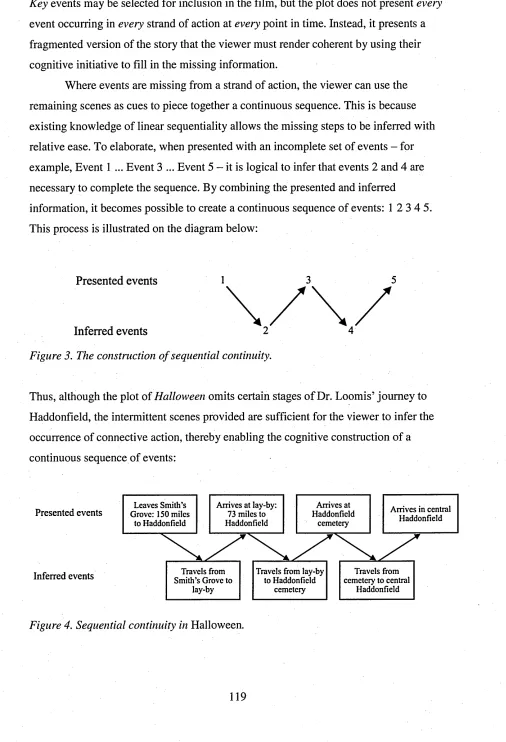
Figure 1. Strands o f action in Halloween. 116
Figure 2. Narrative timeline in Halloween. 118
Figure 3. The construction o f sequential continuity. 119
Figure 4. Sequential continuity in Halloween. 119
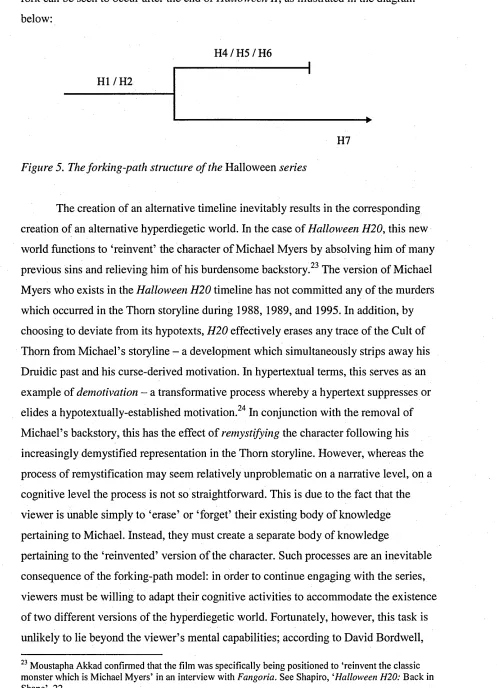
Figure 5. The forking-path structure o f the Halloween series 210
INTRODUCTION
Slasher sequels, such as those in the Halloween, Friday the 13th dead A Nightmare on
Elm Street series, are often criticised for their derivative processes of narrative
construction, which are widely perceived to sacrifice development and com plexity for
the sake of repetition and formula. Thus, although scholars such as Carol Clover, Ian
Conrich, and Tony W illiams have examined these films from a range of
psychoanalytical and sociocultural perspectives, academics have generally avoided
engaging in processes of formal analysis.1 Where such analyses do exist, in V era D ika’s
structural study of the slasher film, for example, the research tends to be geared toward
interrogating the generic properties of the films, rather than the properties associated
with their status as film sequels. As a result, there is a general lack of understanding
about the narrative construction of the slasher sequel, leaving the dominant critical
assumptions to proliferate largely unchallenged.
However, for theorists such as David Bordwell and Kristin Thom pson, both of
whom adopt analytical perspectives within the domain o f ‘historical poetics,’ even the
most conventionalised systems of narrative operate according to com plex constructive
processes, often perceptible only to those willing to engage in close scrutiny.' The
current reluctance to engage with slasher sequels at this level is indicative of a wider
tendency within film studies, where the practice o f cinematic sequelisation has
traditionally remained beyond the purview of academic analysis. In recent years,
however, the emergence of a field of research dedicated to re-exam ining the film sequel
from a range of theoretical perspectives has begun to shed new light on the format.
Situated within this field, writers including Stuart Henderson have begun to study the
constructive principles of the film sequel, not only adopting an approach within the
domain of historical poetics, but also drawing on the work of literary theorist Gerard
1 See Carol J. Clover, Men, W omen and Chainsaws: G ender in the M odern H orror F ilm (Princeton, NJ:
Princeton University Press, 1992); Ian Conrich, ‘The Friday the 13th Films and the Cultural Function o f a
Modern Grand Guignol,’ in H orror Zone: The Cultural Experience o f C ontem porary H orror C inem a, ed.
Ian Conrich (London: I. B. Tauris, 2010), 173-90; Ian Conrich, ‘Seducing the Subject: Freddy Krueger,
Popular Culture and the Nightm are on Elm Street Film s,’ in Trash Aesthetics: P opular C ulture a n d its
A u d ien ce, ed. Deborah Cartmell et al. (London: Pluto Press, 1997), 118-31; Tony W illiam s, ‘Trying to
Survive on the Darker Side: 1980s Family Horror,’ in The D read o f D ifference: G ender and the H orror
Film, ed. Barry Keith Grant (Austin, TX: University o f Texas Press, 1996), 164-80; and Tony W illiam s,
H earths o f D arkness: The Fam ily in the A m erican H orror Film. (London: Associated University Press, 1996), particularly Chapters 9 and 10.
2 Vera Dika, G am es o f Terror: Halloween, Friday the 13th and the Film s o f the Sta lker C ycle (London:
Associated University Press, 1990).
3 See David Bordwell, Poetics o f Cinema (London: Routledge, 2008); and Kristin Thompson, B reaking
Genette - and specifically G enette’s concept of hypertextuality - to offer a new
perspective on the narrative processes associated with the sequel form at.4
In light of these developments, I suggest that slasher sequels have been
prem aturely dismissed and propose that the processes of narrative construction within
these films may be more complex than previously acknowledged. In this study I will
therefore aim to answer the question: is there any evidence to suggest that the processes
of narrative construction in slasher sequels are more complex than previously
acknowledged?
In order to achieve this aim, I will pursue three objectives:
1. I will outline the historical, critical, and theoretical contexts of both the
slasher sub-genre and the film sequel in order to analyse the ways in which
each of these formal frameworks has contributed to existing critical
perceptions of the processes of narrative construction in slasher sequels;
2. I will draw on works within the domain of historical poetics to outline the
processes of narrative construction involved in classical and com plex films,
and will com bine these works with the concept of hypertextuality to outline
the processes of narrative construction involved in film sequels;
3. I will use a combined framework of historical poetics and hypertextuality to
analyse the processes of narrative construction in the H alloween series.
In com pleting these objectives, this study will make an original contribution to
knowledge by bringing together hypertextuality and historical poetics to analyse the
processes o f narrative construction in slasher sequels from a new perspective,
specifically one which foregrounds their formal identity as film sequels. By expanding
the existing understanding of slasher sequels in this way, the study will serve to advance
both the established field of research surrounding the slasher sub-genre, and, more
particularly, the em ergent field of research surrounding the film sequel.
As both slasher films and film sequels, slasher sequels are com prised o f m ultiple
formal frameworks. The first part of their formal identity denotes a sub-genre of horror
4 See Stuart Henderson, The H ollyw ood Sequel: H istory an d Form, 1911-2010 (London: BFI/Palgrave
MacMillan, 2014); and Gerard Genette, Palim psests: Literature in the Second D eg re e, trans. Channa
Newman and Claude Doubinsky (London: University o f Nebraska Press, 1997).
cinema that emerged in America following the commercial success o f John C arpenter’s
Halloween (1978). As I will go on to elaborate in Chapter One, the slasher film
typically features an attacker with a bladed weapon stalking and killing a group of
victims in varied and violent ways. The slasher sub-genre has been associated with the
practice o f sequelisation throughout its history, with popular titles such as Halloween,
Friday the 13th, A Nightmare on Elm Street, and Scream am ongst those to inspire
multiple sequels.
Sharing many formal qualities with the genre film, most notably its framework
of repetition and variation, the film sequel represents a dominant mode of production in
mainstream cinema. The word ‘sequel’ derives from the Latin verb, sequor, sequi,
secutus sum, usually translated as ‘to follow .’5 In simplistic terms, a film sequel can
therefore be understood as a film designed to follow a previous production. However,
such a generalised description reveals little about the form and function of the format.
The definition provided by the Schirm er Encyclopedia o f Film proves more illuminating
on this count, defining sequels as productions that ‘contain characters and continue
story lines established in previous film s.’6 These conventions indicate that film sequels
do not merely fo llo w previous productions, but function explicitly to continue
previously established narratives.
It is the presence of narrative continuity which serves to distinguish film sequels
from similar formats, such as the series film and the genre film. In consideration of this
fact, Carolyn Jess-Cooke argues that any effective definition of the film sequel must
ascribe sufficient importance to the distinct narrative properties of the form at.7 Paul
Budra and Betty A. Schellenberg are two writers who have adopted this approach,
defining the sequel as a ‘chronological extension of a narrative.’ This description
evokes an earlier definition by Gerard Genette, who regards sequels as a form of
continuation designed to prolong a text ‘beyond w hat was initially considered to be its
ending.’8
Envisioned in these terms, the distinct narrative properties of the sequel are
clearly exposed: functioning as extensions, continuations, or prolongations, sequels can
essentially be understood as individual components of a wider narrative system - a
5 See ‘Advanced Latin: Deponent and Semi-Deponent Verbs,’ N ational A rchives, n. d.,
http://www.nationalarchives.gov.uk/latin/advanced/lessonlO/.
6 Steve Neale, ‘Sequels, Series, and Remakes,’ in Schirm er E ncyclopedia o f Film, Vol. 4: R om antic
C om edy - Yugoslavia, Barry Keith Grant, ed. (London: Thomson Gale, 2007), 56.
7 Carolyn Jess-Cooke, Film Sequels (Edinburgh: Edinburgh University Press, 2009), 3.
8 See Paul Budra and Betty A. Schellenberg, introduction to P art Two: R eflections on the Sequel, ed. Paul
Budra and Betty A. Schellenberg (Toronto: University o f Toronto Press, 1998), 7; and Genette,
system characterised by its expansion beyond the boundaries of a single text. This
concept will be discussed further in Chapter Three, but at this point it is most salient to
note that, as chronological extensions of existing narratives, sequels are defined not
only by a ‘fundamental tem porality,’ but by associated notions of ‘afterw ardness’ that
are indicative of their distinction from original texts.9 Stuart Henderson elaborates
further in his recent study of Hollywood sequels:
At the most basic level, then, the cinematic sequel is a film which is defined by a dual form of temporal relationship. The first part of that relationship exists at the formal, or textual, level: the events a sequel portrays occur after the events of a previous film and, even if there is little causal connection between these two sets of events, it is made clear that there is a chronological relationship between them. The second part of that relationship is extratextual. As in the fictional world, the sequel as a film, as an event in the real world, occurs after the original
[emphasis added].10
If sequels can be understood in terms o f ‘afterw ardness,’ it seems logical to presume
that the films from which they are derived can be understood in term s o f ‘beforeness.’ It
is with this concept in mind that the discussion returns to Jess-Cooke and her appeal for
systems of classification to acknowledge the distinct narrative properties o f the film
sequel.
For Jess-Cooke, the film sequel can be understood as ‘a linear narrative
extension, designating the text from which it derives as an ‘original’ rooted in
‘beforeness’.’11 This definition concisely unifies the narrative principles previously
outlined, but it also has an additional advantage. By choosing to em phasise the state of
‘beforeness’ inherently designated by the sequel, rather than the state o f ‘afterw ardness’
inherently designated to the sequel, Jess-Cooke implicitly raises questions about the
transformative implications of sequelisation, as described above. As this study
progresses, the significance o f these implications will become increasingly apparent; at
this stage, however, it is sufficient to note that Jess-Cooke's definition not only provides
an insight into the narrative principles of sequelisation, but also draws attention to the
w ider implications of these principles. In this way, Jess-Cooke succeeds in
foregrounding aspects of sequelisation that are frequently overlooked in favour o f an
9 See, respectively, Budra and Schellenberg, ‘Introduction,’ 7; and Jess-Cooke, Film Sequels, 8.
10 Henderson, The H ollyw ood Sequel, 5.
11 Jess-Cooke, Film Sequels, 3.
emphasis on elements of commercial exploitation. It is for these reasons that I have
chosen to adopt Jess-Cooke's definition throughout this study.
Due to the fact that film sequels function to extend an existing story, their
production necessitates the construction of a narrative over multiple films. Defined by
David Bordwell as the process o f ‘selecting, arranging and rendering story material in
order to achieve specific tim e-bound effects on a perceiver,’ narrative construction
involves both the presentation o f story inform ation by a film ’s plot and the perceptual-
cognitive activities required for rendering this presentation coherent. “ The specific
details o f these processes will be subject to further elaboration in Chapter Three; at this
point, however, it is sufficient to note that the processes of narrative construction in
slasher sequels have frequently been criticised for perceived deficiencies seen to result
from the frameworks of convention which govern the films.
For many critics, slasher sequels are synonymous with notions of com m erce
over art and repetition over originality. W idely perceived as preoccupied with the
execution of increasingly gruesome moments of spectacle, and seen to be m otivated by
explicitly commercial objectives - such as the transformation of monstrous characters
into commodified pop-culture icons — these films are frequently accused of neglecting
processes o f narrative construction, both in terms of plot and character developm ent and
in terms of establishing logical continuity with their predecessors. Typical exam ples of
such criticisms are provided by Ken Hanke, who suggests that the Friday the 13th films
‘proved beyond a shadow o f a doubt that splatter fans frankly didn’t give a dam n about
any kind of logic;’ and by Jeffrey Sconce, who asserts that the Nightm are on Elm Street
series came to be seen as ‘a highly formulaic and thus uninteresting group of films, thin
on plot and heavy on special effects, pumped out at regular year-and-a-half intervals for
1 T a teen audience that didn’t expect much in the first place.’
Regarded as inherently imitative of previous films within both the slasher sub
genre and the individual series to which they belong, slasher sequels draw intensified
criticism for their conventionalised properties, which are seen to represent little more
than ‘an endless loop o f formulaic repetition.’ 14 As a consequence, both the production
12 David Bordwell, Narration in the Fiction Film (London: Methuen, 1985), xi.
13 See Ken Hanke, A Critical G uide to H orror Film Series (London: Garland, 1991), 286; and Jeffrey
Sconce, ‘Spectacles o f Death: Identification, Reflexivity and Contemporary Horror,’ in F ilm Theory G oes
to the M ovies, ed. Jim Collins, Hilary Radner, and Ava Preacher Collins (London: Routledge, 1993), 105. For more on the lack o f narrative development in the slasher sequel, see also Jonathan Lake Crane,
‘Chapter 6: Jason,’ in T error a n d E veryday Life: Singular M om ents in the H istory o f the H o rro r Film
(London: Sage Publications, 1994), 132-58.
14 David Church, ‘The Return o f the Return o f the Repressed: N otes on the American Horror Film (1991
of these films and the analysis of their narrative properties are often assumed to be
somewhat futile pursuits. As Rick W orland comments in his discussion of the Friday
the 13th series, ‘it is hard to believe a movie called Friday the 13th Part V: A New
Beginning will really contain anything new .’ 1'^
However, whereas processes o f repetition are undoubtedly crucial to the slasher
sequel, the individual films within a particular series are far from identical. In
discussing the distinctive properties of the film sequel, Jess-Cooke suggests that
difference and progress are among the defining characteristics of the form at.16 The
fundamental tem porality connecting a sequel to its predecessor ensures that the
narrative will never remain truly static, but will change and develop as the story
unfolds. Peter Hutchings draws attention to such processes in his discussions of the
Nightm are on Elm Street series, which serve to highlight the changes and innovations
17
that occur from one film to the next. Others have also identified and examined
developmental processes at work within slasher sequels. Harry M. Benshoff, Ian
Conrich, Pat Gill, Gary Heba, Reynold Humphries, and Tony W illiam s are am ong those
to have explored the psychoanalytical and sociocultural significance of thematic
developments within the Nightmare on Elm Street and Halloween series; Ian Conrich
and Bernard W elt have exam ined the ways in which the monsters associated with
slasher franchises are transformed into icons of popular culture; and Paul Budra has
exam ined these monsters as reflections of a postmodern society, suggesting that the
‘appealing stability’ o f their recurrence represents a welcome certainty w ithin an 1 &
increasingly unstable world. In addition to these studies, several scholars have also
exam ined the ways in which the slasher sequel has contributed to processes of genre
15 Rick Worland, The H orror Film: An Introduction (Oxford: Blackwell Publishing, 2007), 105. For
similarly dism issive attitudes toward the slasher sequel, see Kim Newman, ‘Part 2, Chapter 3: Scream and
Scream Again: Franchises, Post-Modernism, Rem akes,’ in N ightm are M ovies: H orror on Screen Since
the 1960s, rev. ed. (London: Bloomsbury, 2011), 379-409; and Robin Wood, ‘Foreword: What Lies
Beneath?,’ in H orror F ilm a n d Psychoanalysis: F r e u d ’s W orst N ightm are, ed. Steven Jay Schneider
(Cambridge: Cambridge University Press, 2004), particularly xviii.
16 Jess-Cooke, Film Sequels, 5.
17 See Peter Hutchings, ‘Tearing Your Soul Apart: Horror’s N ew Monsters,’ in M odern G othic: A
Reader, ed. Victor Sage and Lloyd Smith (Manchester: Manchester University Press, 1996), 94-100; and
The H orror Film (Harlow, England, Pearson Education Limited, 2004), 206-11.
ls Harry M. Benshoff, M onsters in the Closet: H om osexuality an d the H orror Film (Manchester:
Manchester University Press, 1997), 246-9; Conrich, ‘The F riday the 13th Films;’ Pat Gill, ‘The
Monstrous Years: Teens, Slasher Films, and the Family,’ Journal o f Film and Video 54, no. 4 (Winter
2002), 16-30, EBSCOhost (12856116); Gary Heba, ‘The Rhetoric o f Social Horror in the N ightm are on
Elm Street Series,’ Journal o f P opular Film and Television 23, no. 3 (Autumn 1995): 106-15,
doi: 10.1080/01956051.1995.9943696; Reynold Humphries, The A m erican H orror Film: An Introduction
(Edinburgh: Edinburgh University Press, 2002), 158-62; Williams, ‘Trying to Survive;’ W illiams,
H earths o f D arkness, Chapters 9 and 10; Conrich, ‘Seducing the Subject;’ and Bernard Welt, ‘Jason
Voorhees, RIP,’ in M ythom ania: Fantasies, Fables and S heer Lies in C ontem porary A m erican P opular
A rt (LA: Art Issues Press, 1996), 78-83.
development, both from an historical and a formal perspective. Jim Harper, Kim
Newman, and Adam Rockoff have drawn attention to the pivotal role played by the
sequel in sustaining the com mercial popularity of slasher cinema over a period of
almost four decades; and both Carol Clover and Vera Dika have discussed the ways in
which the conventions of the sub-genre have manifested within slasher sequels.19
However, even in cases where scholars have engaged with the slasher sequel, the
processes of narrative construction within these films are still deemed to be somewhat
deficient. Although the seamless integration of slasher sequels into genre studies, such
as those undertaken by Rockoff, Clover, and Dika, demonstrates that the films are
perceived as legitimate and successful examples of slasher narratives, com m ents made
within these studies reveal that the films are nonetheless perceived to fail as exam ples of
sequel narratives. In all three cases listed above, the writers undermine the narrative
identity of slasher sequels by asserting that the films are so repetitious that they function
20
not as sequels but as replicas or remakes. Such a position is indicative o f a general
lack of interest in the sequel status of these films: only a minority o f scholars have
engaged with slasher sequels as sequels rather than as slasher films. O f the studies that
do exist, many are focused on the explicitly self-conscious Scream sequels, which
foreground their sequel status as part of a generally self-reflexive approach to narrative
construction. Thus, although these films have been studied by those including M att
Hills, Andrew Tudor, and Steven Jay Schneider, the object of analysis is usually the
sociocultural and generic implications of self-reflexivity, rather than the processes of
21 sequelisation at work within the films.
Despite the general reluctance to engage with slasher sequels as sequels, recent
works by W ickham Clayton, Claire Perkins, and Carolyn Jess-Cooke indicate that there
19 Jim Harper, Legacy o f Blood: A Com prehensive Guide to Slasher M ovies (Manchester: Critical V ision,
2004); Kim Newman, Nightm are Movies', Adam Rockoff, G oing to Pieces: The Rise an d F a ll o f the
Slasher Film, 1978-1986 (London: McFarland, 2002); Clover, Men, Women, a n d Chainsaws; and Dika,
G am es o f Terror. Rather than discussing the role o f the sequel within processes o f genre developm ent, the historical development o f the sequels themselves has been the subject o f discussion in a number o f
production histories. See, for example, Peter M. Bracke and Sean S. Cunningham, C rystal Lake
M em ories: The C om plete H isto iy o f Friday the 13th (London, Titan, 2006); David Grove, M aking F riday the 13th: The L egend o f Camp B lood (Surrey: FAB Press, 2005); Jeffrey Cooper, The N ightm are on Elm Street C om panion: The O fficial Guide to A m erica's Favorite F iend (New York, NY: St. Martin’s Press,
1987); and W illiam Schoell and James Spencer, The N ightm are N ever Ends: the O fficial Sto ry o f F reddy
K rueger a n d the N ightm are on Elm Street Film s (New York, NY: Citadel Press, 1992).
2(1 See Rockoff, Going to Pieces, 111; Clover, Men, Women, and Chainsaws, 23; and Dika, G am es o f
Terror, 173.
21 Matt Hills, ‘Chapter 10: Intertextuality in the Contemporary Field o f Horror (II): The “Postmodern”
Scream Franchise,’ in The Pleasures o f H orror (London: Continuum, 2005), 182-97; Andrew Tudor,
‘From Paranoia to Postmodernism? The Horror Movie in Late Modern Society,’ in Genre an d
C ontem porary H ollyw ood, ed. Steve Neale (London: BFI, 2002), 105-16; and Steven Jay Schneider,
‘Kevin Williamson and the Rise o f the Neo-Stalker,’ Post Script: Essays in Film a n d the H um anities 19,
is growing interest in this area of study. In his analysis of the relationship between the
Friday the 13th films and the aesthetic development of the slasher sub-genre, Clayton
draws attention to the different viewing perspectives afforded to those who are familiar
with the series narrative and those who are not; Claire Perkins analyses the means by
which processes of self-reflexive genericity serve to consolidate the narrative
relationship between the original Scream trilogy and the belated fourth instalment; and
Jess-Cooke focuses on the same series o f films in order to scrutinise ‘the ways in w hich
the relationship between genre and sequelisation is played out and em ployed to serve
specific ideological and industrial im peratives.’
Despite the fact that these writers have been willing to engage with slasher
sequels as sequels, the focus of their studies nonetheless remains on the interaction
between the sequel framework and the genre framework, rather than on the sequel
framework itself. As a result, the processes of narrative construction associated with this
framework have yet to be exam ined in their own right. It is this gap in know ledge that
the present study seeks to address.
The lack of analysis pertaining to the narrative construction of slasher sequels is
significant because it enables dominant assumptions about the storytelling processes
within these films to go largely unchallenged. Having played a vital role in the
development of one of the most prolific sub-genres of horror cinema, the slasher sequel
has maintained a continual presence within mainstream cinema since the 1980s,
succeeding in perm eating popular culture and helping to establish sequelisation as a
dominant filmmaking practice. Yet, despite this history, there remains a general lack of
interest in their status as narrative artefacts, their conventionalised and com m ercialised
frameworks often perceived to preclude the potential for complexity. As I will go on to
explain, these assumptions are indicative of wider attitudes towards the film sequel,
which is frequently overlooked as a potential source of narrative complexity.
Consequently, by addressing the lack of knowledge regarding narrative construction in
slasher sequels, it will not only be possible to determine w hether there is any evidence
to encourage a critical re-evaluation of this particular group of films, but any such
evidence may also contribute to wider processes of re-evaluation regarding the general
practice o f cinematic sequelisation.
22 See Wickham Clayton, ‘Bearing Witness to a Whole Bunch o f Murders: The Aesthetics o f Perspective
in the F riday the 13th Film s’ (PhD thesis, Roehampton University, 2013); Claire Perkins, ‘The Scre4m
Trilogy,’ in Film Trilogies: N ew C ritical A pproaches, ed. Claire Perkins and Constantine Verevis
Despite prevailing assumptions about the lack of com plexity in slasher sequels,
an analytical approach situated within the domain of historical poetics may have the
potential to offer an alternative perspective. Originally emerging out of the work of
David Bordwell and Kristin Thompson, an historical poetics of cinema combines
principles derived from Russian Form alist theory with concepts from
cognitive-23 • r
constructivist psychology. ' The resulting framework is used to analyse the ‘principles
according to which films are constructed and through which they achieve particular
effects;’ and to exam ine ‘how and why these principles have arisen and changed in
94
particular empirical circum stances.’ Bordwell asserts that the research fram ework
associated with an historical poetics of cinema is characterised by its focus on
25
particulars, patterns, purposes, principles, practices, and processing. ' Thus, under a
framework of historical poetics, an analysis of formal particulars and patterns
progresses to a wider exam ination of constructive principles, purposes, and practices; all
o f which are ultimately understood in terms of their effect on perceptual-cognitive
processing. Ultimately serving to provide a new perspective on processes o f formal
construction, this approach is intended to look beneath surface fram eworks of
convention in order to ‘lay bare the inner w orkings’ o f any given film .26 As
dem onstrated in the study of classical Hollywood cinema undertaken by Bordwell,
Thompson, and Janet Staiger, such an approach is capable of revealing intricate
27 processes operating beneath even the most conventionalised frameworks o f narrative.
The notion of applying a framework of historical poetics to look beneath surface
conventions is already proving useful within the burgeoning field o f sequel studies.
D rawing on the framework established by Bordwell, Stuart Henderson has engaged in a
rigorous formal analysis of the Hollywood sequel, identifying and exam ining the formal
characteristics associated with the format and revealing new insights into the wealth of
constructive processes involved in establishing a system of narrative continuity over
multiple films. In this analysis Henderson draws attention to the work of literary
theorist Gerard Genette, asserting that G enette’s theory o f hypertextuality has the
potential to prove particularly illuminating for the study of film sequels.
23 Although situated firmly within the domain o f historical poetics, Thompson’s work advocates a specialised approach known as ‘neoform alism .’ This branch o f historical poetics is distinguished by its use o f analytical tools derived directly from Russian Formalism, such as the notions o f defamiliarisation
and the dominant. For more on the neoformalist approach, see Thompson, B reaking the G lass A rm or.
24 Bordwell, Poetics o f Cinem a, 23.
25 Ibid., 24.
26 Thompson, Breaking the G lass A rm or, 69.
27 David Bordwell, Janet Staiger, and Kristin Thompson, The C lassical H ollyw ood Cinema: Film Style
an d M ode o f P roduction to I9 6 0 , new ed. (London: Routledge, 1988).
Defined by Genette as any relationship uniting text B (the hypertext) to an
earlier text A (the hypotext), ‘upon which it is grafted in a m anner that is not o f
com m entary,’ hypertextuality involves the derivation of a text through transformative
processes such as extension, expansion, elaboration, and modification. In this way, the
concept can be seen to foreground the transformative properties o f the sequel, thereby
enabling those who adopt a hypertextual approach, such as Henderson, Jess-Cooke, R.
Barton Palmer, and Aylish Wood, to draw attention to the dynamic narrative qualities of
• • i • 30
the film sequel as opposed to its more repetitive characteristics/
W ith both hypertextuality and historical poetics dem onstrating the potential to
provide new perspectives on the narrative construction of film sequels, I argue that an
analytical framework incorporating both approaches may have the potential to look
beneath the conventionalised surface of the slasher sequel and toward its more dynamic
narrative depths in order to search for evidence which may suggest that the constructive
processes within these films are more complex than previously acknowledged.
The first step toward testing this hypothesis will be to establish a contextual
framework capable o f explaining the predominantly negative assumptions about the
narrative processes in slasher sequels. Thus, Chapter One seeks to understand the ways
in which the generic identity of these films may have contributed to the existing critical
assumptions. The conventions of slasher cinema are outlined and the historical
development of the sub-genre is charted before the chapter moves on to discuss the
salient critical debates surrounding the slasher film. With this basic contextual
information established, the structure of the opening chapter is subsequently paralleled
in Chapter Two, which examines the origins and development of cinematic
sequelisation and discusses the contemporary debates pertaining to this process in an
attempt to understand how the slasher sequel’s formal designation as a sequel may have
helped shape existing critical attitudes.
W ith the contextual foundations duly established, Chapter Three moves on to
outline the theoretical frameworks from which the analytical approach will subsequently
be derived. The principles o f Bordw ell’s historical poetics are draw n upon to exam ine
the constructive processes involved in classical and complex narratives, with particular
attention paid to the role of the viewer and the cognitive activities required to discern
29 Genette, P alim psests, 5.
30 See Henderson, The H ollyw ood Sequel, 129-33; Jess-Cooke, Film Sequels, 76-9; R. Barton Palmer,
‘Before and After, Before Before and After: G odfather I, II, and / / / , ’ in S econd Takes, ed. Jess-Cooke and
Verevis, 65-85; and Aylish Wood, ‘Vectorial Dynamics: Transtextuality and Complexity in The M atrix, ’
in The M atrix Trilogy: C yberpunk Reloaded, ed. Stacy Gillis (London: W allflower Press, 2005), 11-22.
narrative coherence. The final part of the chapter draws upon the poetics o f the film
sequel established by Henderson and G enette’s concept o f hypertextuality to explore the
implications of extending a narrative over more than one film, thus establishing an
analytical framework which will be carried forward to the case study.
This case study consists of an analysis of the processes of narrative construction
in the Halloween series. Specifically, I will examine in turn John Carpenter’s original
1978 film and each of the seven succeeding sequels. In each of the studies, I will
interrogate a different aspect of the hypertextual relationship connecting the films; this
will permit an exam ination of the ways in which processes of narrative construction
within the Halloween series are shaped by the dynamic transformative properties
inherent to the sequel format. Limiting the scope o f the study to a single series o f films
will facilitate a formal analysis which is both narrow and deep, thereby perm itting a
more com prehensive application of theory. The choice to focus specifically on the
Halloween films has been made in consideration of the fact that this series spans a
longer period of time than other major slasher franchises including Friday the 13th and
A Nightmare on Elm Street. An examination of the Halloween films will therefore
permit a more substantive examination of the ways in which empirical circum stances
can shape the development of particular formal principles. In addition, whereas this
introduction has shown that other slasher series have inspired a wealth of scholarly
engagement, a com parable body o f research has yet to emerge surrounding the
Halloween films; the present study therefore represents an attempt to redress this
CHAPTER ONE THE SLASHER FILM
The slasher sequel is a narrative construct com prised of m ultiple formal frameworks.
Central to the formal identity of these films is their generic designation, which places
them within the slasher sub-genre of horror cinema. In this chapter, I will exam ine this
designation more closely, studying not only questions of taxonomy, but also the
historical development of the sub-genre and the most salient critical debates associated
with the films therein. In doing so, I aim to establish a basic contextual fram ew ork for
the study and determine w hether there is a relationship between the generic identity of
the slasher sequel and the current gap in knowledge pertaining to these films.
Conventions
Slasher films typically feature attackers with bladed weapons stalking and killing
victims using violent and varied methods. However, such a general description is
insufficient for clearly delineating the boundaries o f the sub-genre. As Adam Rockoff
explains, it is difficult to describe slasher cinem a without also encom passing films that
lie firmly outside the accepted parameters of the category. The general description
outlined above, for example, may also apply to exceptionally bloody films such as The
Evil D ead (Sam Raimi, 1981) and The Thing (John Carpenter, 1982), or to other films
which feature knife-wielding villains such as Cobra (George P. Cosmatos, 1986), and
Kalifornia (Dominic Sena, 1993).' The boundaries of slasher cinem a are more
systematically demarcated by Vera Dika in her seminal structural analysis of the sub
genre. Dika suggests that slasher films are defined by a distinctive formula
incorporating salient cinematic techniques, such as subjective point-of view; a stock set
of characters, including a strong heroine, a disturbed killer, a young com munity, and an
old community; and an isolated, middle-class American setting. Furtherm ore, Dika
asserts that slasher films usually exhibit a characteristic two-part plot structure:
1 Adam Rockoff, G oing to Pieces: The Rise a n d F all o f the Slasher Film, 1978-1986 (London:
McFarland, 2002), 5. For a more in-depth discussion o f problems with defining and delineating the
slasher sub-genre, see Brigid Cherry, H orror (London: Routledge, 2009), 19-36.
2 Vera Dika, G am es o f Terror: H alloween, Friday the 13th and the Film s o f the Sta lker C ycle (London:
Associated University Press, 1990), 53-9.
Past event
1. The young com munity is guilty of a wrongful action. 2. The killer sees an injury, fault or death.
3. The killer experiences a loss.
4. The killer kills the guilty members of the young community.
Present event
5. An event com memorates the past action. 6. The killer’s destructive force is reactivated. 7. The killer reidentifies the guilty parties.
8. A m ember from the old com munity warns the young com m unity (optional).
9. The young com munity takes no heed.
10. The killer stalks members of the young community. 11. The killer kills members of the young community. 12. The heroine sees the extent of the murders. 13. The heroine sees the killer.
14. The heroine does battle with the killer. 15. The heroine kills or subdues the killer. 16. The heroine survives.
17. But the heroine is not free.
D ika’s structural framework offers a useful insight into some o f the m ost typical
features of slasher plots, but such a formula also runs the risk of being somewhat
reductive and overly exclusive.4 Dika has recognised the limitations to her approach,
conceding that there are notable variations to her suggested structure and
acknowledging that the plot formula does not remain wholly intact beyond the initial
period of slasher production from 1978 to 1981.5 Taking D ika’s model as a starting
point, Richard Nowell proposes an alternative narrative formula based on story events
rather than plot structure:
3 Dika, G am es o f Terror, 59-60.
4 Such issues are discussed by Gary Heba in ‘The Rhetoric o f Social Horror in the N ightm are on Elm
Street Series,’ Journal o f P opular Film and Television 23, no. 3 (Autumn 1995): 107, d oi: 10.1080/01956051.1995.9943696.
Part One: Setup
1. Trigger: Events propel a human (the killer) upon a homicidal trajectory. 2. Threat: The killer targets a group of hedonistic youths for killing.
Part Two: Disruption
3. Leisure: Youths interact recreationally in an insular quotidian location. 4. Stalking: A shadowy killer tracks youths in that location.
5. Murders: The shadowy killer kills some of the youths.
Part Three: Resolution
6. Confrontation: The remaining character(s) challenges the killer.
7. Neutralization: The immediate threat posed by the killer is elim inated.6
N ow ell’s story structure is advantageous due to the fact that it can be articulated in
countless ways within individual films. This renders the model more widely applicable
and more flexible than D ika’s plot-oriented formula.
Another attempt to avoid the reductive inflexibility of a prescribed structural
formula has been put forward by Adam Rockoff, who suggests adopting a more
malleable definition of the slasher film encom passing the most distinctive and
consistent elements of character, narrative, and style.7 Kent Byron A rm strong concurs
in his slasher filmography, suggesting that an outline o f the most salient features is more
useful than attempting to assert the ‘uncom prom ising’ limitations o f a precise slasher
form ula.8
The ‘consistent elem ents’ and ‘salient features’ to which R ockoff and
Arm strong refer com prise the conventions of the slasher sub-genre. D efined by Barry
Keith Grant as ‘frequently-used stylistic techniques or narrative devices typical o f (but
not necessarily unique to) particular generic traditions,’ genre conventions may include
elements of story and plot, character types, locations, structural features, themes, and
iconography.9 Iconographic conventions take on a particularly significant role within
the operation of film genres. Bordwell and Thom pson describe iconographic elements as
‘recurring symbolic images that carry meaning from film to film .’ These can include
objects, settings, characters, physical attributes, tools and technology, specific actors,
6 Richard N ow ell, B lood M oney: A H istory o f the First Teen Slasher Film Cycle, (London: Continuum,
2 0 1 1), 2 1.
7 Rockoff, G oing to Pieces, 5.
x Kent Byron Armstrong, Slasher Films: An International Filmography, I9 6 0 through 2001 (London:
McFarland, 2003), 1.
9 Barry Keith Grant, Film Genre: From Iconography to Ideology (London: W allflower Press, 2006), 10.
See also Douglas Pye, ‘Genre and M ovies,’ M ovie 20 (Spring 1975): 34.
and even the ‘general m ise-en-scene o f a genre.’10 Armstrong suggests that the
prototypical slasher film exhibits a combination of the following conventions:
1. An introductory murder or an event that evokes future murders. 2. A setting that does not inspire terror, but which may be confined. 3. Visualized killings and killers.
4. A human or human-like killer. 5. The systematic killing of characters. 6. A theme that connects the murders. 7. An unhappy, often unresolved, ending.11
This general overview can be supplemented with a more detailed breakdown of the
most com mon elements of narrative, character, and iconography found within slasher
cinem a (see Table 1.).
A framework o f conventions is essential for delineating the general parameters
o f a particular genre, but such a framework is neither fixed nor com prehensive, serving
only to illustrate the most typical features of a genre. Exceptions to the fram ework are
commonplace. In slasher cinema, for example, the villain is conventionally male, but
female killers also feature, with Friday the 13th (Sean S. Cunningham, 1980), H appy
Birthday to M e (J. Lee Thompson, 1981), and Scream 2 (Wes Craven, 1997) all
providing examples. In another variation, the Sleepaway Camp films (1983; 1988;
1989) focus on a transgender killer, presumed to be female until the truth is revealed in
a shocking scene at the conclusion of the first film.
10 See, respectively, David Bordwell and Kristin Thompson, Film Art: A n Introduction, 9th ed. (London:
McGraw-Hill, 2010), 330; and Grant, Film G enre, 12. The relationship between iconography and film
genre has been the subject o f extensive critical analysis; see, particularly, Edward Buscombe, ‘The Idea
o f Genre in American Cinema,’ in Film Genre Reader, ed. Barry Keith Grant (Austin, TX: University o f
Texas Press, 1986), 11-25; Lawrence Alloway, Violent Am erica: The M ovies 19 4 6 -1 9 6 4 (N ew York:
Museum o f Modern Art, 1971); Colin McArthur, U nderw orld USA (London: Seeker and Warburg, 1972);
and Grant, Film Genre.
Convention type
Conventional element
Typical representation
Narrative Plot structure A psychotic killer pursues and murders a series of victims using a variety o f violent methods; the killer is usually defeated at the end of the film; this defeat may prove to be temporary.
Significant dates
Significant dates function as plot devices; these dates may denote the anniversary o f a traum atic past event; the killer may return on this date to exact vengeance.
Death scenes High body count; creative; violent; graphic special
effects.
Character Killer Obscured identity; usually male; psychotic; seeks vengeance for past traum a or injustice; asexual with voyeuristic tendencies; distinctive costume elements; relentless; vaguely or explicitly supernatural - evidenced most frequently by strength and immortality; the killer’s presence is sometimes represented via subjective point-of-view.
Victims Usually teenage; relatively indiscriminate; both male
and female; may include a lone survivor who defeats the villain - at least temporarily.
Adults Tendency to assume limited roles within the narrative:
the killer, the wise elder who offers advice to younger characters; or the ineffectual authority figure.
Iconography Setting Everyday locations: high school, college, suburbia; isolated locations: campsites, cabins; the setting may be associated with the traumatic past event.
W eapons Bladed instruments including knives, machetes, and
axes; seemingly innocuous household objects; particular weapons may be associated with specific villains.
Costume M asks are used to obscure the villain’s identity;
distinctive costume elements may be associated with specific villains.
--- •---rz
Table 1. Slasher conventions.
12 The information contained in this table is a result o f personal observation, with supplementary notes
drawn from Rockoff, G oing to Pieces, 5-22. For expanded overviews o f slasher conventions, see Dika,
Gam es o f Terror, 53-63; Jim Harper, L egacy o f Blood: A C om prehensive G uide to Slasher M ovies
(Manchester: Critical Vision, 2004), 31-60; and John Kenneth Muir, H orror Film s o f the 1980s
(Jefferson, NC: McFarland, 2007), 20-32.
Origins
M any of the conventions associated with slasher cinema are drawn from earlier forms of
entertainment, with several writers drawing parallels between the sub-genre and the
Parisian Theatre of the Grand Guignol (1897-1962), which presented live audiences
with fictional scenes of murder, mutilation, rape, and torture - often by means of
n
spectacular effects. ‘ Several years before the theatre closed, a gruesome incident in
America brought the fictional horrors of the Grand Guignol into reality. In 1957,
W isconsin police discovered the decapitated body of a female shop assistant strung up
in a barn belonging to local man, Ed Gein. Further investigation uncovered grisly
evidence of grave-robbing; with the exception of rooms belonging to his late mother,
G ein’s house was littered with bones, body parts, and decorations and clothing made
from skulls and human skin. One of the most terrifying aspects of the case was the fact
that the incident had occurred within everyday society. Gein was not an inhuman
monster conjured up by a Gothic imagination; he belonged to a local com m unity and his
crimes were apparently motiveless. The highly-publicised case shocked A merican
society, but simultaneously provided writers and filmmakers with a m acabre source of
creative inspiration. Novelist Robert Bloch drew on the case when writing his 1959
novel Psycho, subsequently adapted by director Alfred Hitchcock to become a cinem a
classic and an important precursor of the slasher sub-genre.
Psycho (1960) tells the tale of Norman Bates, a psychologically-disturbed motel
owner who has an unhealthy obsession with his late mother. The film exhibits many
elements that went on to become synonymous with slasher cinema, including a killer
with an obscured identity and voyeuristic tendencies; a confined, isolated setting; the
use of a knife as a murder weapon; and the spectacular presentation of death.14 In the
same year, British director Michael Powell presented audiences with a disturbing study
of voyeurism in his thriller Peeping Tom (1960). Highly controversial on its release, the
film tells the story of serial killer M ark Lewis, who uses a cam era to capture the
13 See, in particular, Rockoff, G oing to Pieces, 23-6; and Ian Conrich, ‘The Friday the 13th Film s and the
Cultural Function o f a Modern Grand G uignol,’ in H orror Zone: The Cultural Experience o f
C ontem porary H orror Cinem a, ed. Ian Conrich (London: I. B. Tauris, 2010), 173-90. For general
historical overviews o f the Theatre o f the Grand Guignol, see Mel Gordon, G rand Guignol: Theatre o f
F ear and Terror (New York: Amok Press, 1988); and Richard J. Hand and Michael W ilson, Grand-G uig n o l: French Theatre o f H orror (Exeter: University o f Exeter Press, 2002).
14 For an elaborated discussion o f Psycho as an antecedent to slasher cinema, see Constantine Verevis,
‘For Ever Hitchcock: Psycho and its Remakes,’ in A fte r H itchcock: Influence, Im itation and
Intertextuality, ed. David Boyd and R. Barton Palmer (Austin, TX: University o f Texas Press, 2006),
15-29. John Carpenter cites Psycho as a direct influence on H allow een, the film that went on to initiate the
terrified reactions of his victims in their final moments. The film features tropes that
would later become fam iliar slasher conventions, including the use of subjective point-
of-view to represent the killer’s presence and a killer who is traum atised by a past
. 15 event.
At around the same time, British studio, Hammer, was pushing the boundaries of
cinematic horror and on-screen sexuality with its full-colour Gothic productions. Films
such as The Curse o f Frankenstein (1957) and Dracula (1958) were hugely successful
with audiences, using graphic make-up and special effects to create grotesque characters
and spectacles o f violence and death. Although H am m er’s Gothic horrors introduced
new levels of gore into the genre, the studio also produced a series of less graphic
psychological thrillers. In the wake of Psycho, titles including Taste o f Fear (1961),
Paranoiac (1963), M aniac (1963), and Fanatic (1965) capitalised on the contem porary
taste for suspenseful horror and psychological terror. Both of these tropes went on to
feature in the slasher films that followed.
Slasher films also have antecedents within the field of European horror; J. A.
Kerswell suggests that the formal attributes of some German krimi films position them
as precursors to the slasher sub-genre.16 Krimis are crime or mystery thrillers that were
particularly popular from the 1950s to the mid-1960s. The films are typically based on
the work of British crime writer Edgar W allace and feature devious villains, often
dressed in elaborate costumes. For Kerswell, the narrative structure and stylistic
elements of The Phantom o f Soho (1964) draw particular parallels with the later slasher
films. Focusing on a spate of murders in London, the film contains stalking sequences,
point-of-view shots, and periodic death scenes.
The krimis also draw parallels with the Italian gialli - one o f the most
frequently-cited precursors to the slasher sub-genre. The 1960s witnessed a surge in
Italian horror cinema, and it was during this period that gialli became prominent, 17
establishing a reputation for their vivid and visceral visual style. Gialli typically
feature a serial killer who is being hunted by a police detective; the identity o f the killer
is usually obscured; and victims are usually killed in a series of highly stylised and
intricately choreographed death scenes. Emphasis is usually placed on these spectacular
scenes o f extreme violence, with somewhat less attention dedicated to narrative
15 For further discussion o f parallels between Peeping Tom and the slasher suh-genre, see Isabelle
M cNeill, ‘Peeping Tom (I9 6 0 ),’ in F ifty Key British Films, ed. Sarah Barrow and John White (London:
Routledge, 2008), 103-8.
16 J. A. Kerswell, Teenage W asteland: The Slasher M ovie Uncut (London: N ew Holland, 2010), 38-43.
coherence. M ario Bava is widely recognised as the pioneer of the giallo: the mix of
eroticism and creative death scenes in Blood and Black Lace (1964) and Twitch o f the
Death Nerve (1971) position the films as clear precursors to the slashers that followed.
The work o f B ava’s protege, Dario Argento, became similarly influential, w ith films
such as Deep Red (1975) exhibiting a baroque style w hich displayed a ‘propensity for
18 beautifully orchestrated violence.’
The 1960s also witnessed the rise of the splatter film, an excessively graphic
sub-genre o f horror cinem a featuring visceral special effects.19 Typified by the films of
Herschell Gordon Lewis, the splatter sub-genre is marked by extreme violence,
20 •
questionable acting, low-budget special effects, and an edge of black humour. L ew is’
‘Blood Trilogy,’ consisting o f B lood Feast (1963), Two Thousand M aniacs! (1964), and
Color M e Blood Red (1965), is teeming with gory scenes, all filmed in colour for
maximum impact. Unashamedly outrageous, these films indulged in the type of visceral
terror that would go on to become a hallmark of the slasher genre.
The splatter cinem a inaugurated by Lewis inspired a graphic approach that went
on to permeate the horror genre in subsequent years. Nowhere was this more
immediately apparent than in the exploitation films of the late 1960s and 1970s.21 M any
of these films had a lasting impact on horror cinema, and particularly on the em ergence
of the slasher sub-genre. Rockoff suggests that N ight o f the Living D ead (1968)
provided a template for producing lucrative and effective horror films on a low
budget,22 while more viciously terrifying films including The Last H ouse on the Left
(1972) and The Texas Chainsaw M assacre (1974) dem onstrated the pow erful im pact of
intensely disturbing representations of violence. The popular success of The Texas
Chainsaw M assacre confirmed beyond doubt that there was potential for profit in the
commercial exploitation of violence and death, leaving the doors wide open for the
proliferation of slasher films in the com ing years.
Is Rockoff, Going to P ieces, 45. The narrative and stylistic parallels between gialli and slasher film s have
led some critics to suggest that slasher film s are, in fact, North American gialli. See Mikel J. Koven, La
D olce M orte: Vernacular Cinema a n d the Italian Giallo Film (Oxford: Scarecrow Press, 2006), 2.
19 For further discussion o f the splatter film, see John McCarty, The O fficial S platter M ovie G uide (N ew
York, NY: St. Martin’s Press, 1989); and John M cC arty's O fficial Splatter M ovie Guide, Vol. II (New
York, NY: St. Martin’s Press, 1992).
2(1 For a comprehensive overview o f the films o f Herschell Gordon Lewis, see Christopher Curry, A Taste
o f Blood: The Film s o f H erschell G ordon Lewis (London: Creation Books, 1999).
21 Rockoff, Going to Pieces, 34.