Evaluation of 'RAF WISE' work experience programmes,
RAF Cosford 2009 - 2012.
COLLINS, Jill <http://orcid.org/0000-0002-6178-2822>
Available from Sheffield Hallam University Research Archive (SHURA) at:
http://shura.shu.ac.uk/8369/
This document is the author deposited version. You are advised to consult the
publisher's version if you wish to cite from it.
Published version
COLLINS, Jill (2013). Evaluation of 'RAF WISE' work experience programmes, RAF
Cosford 2009 - 2012. Project Report. Sheffield, Centre for Science Education,
Sheffield Hallam University.
Copyright and re-use policy
See
http://shura.shu.ac.uk/information.html
Contents
Executive summary1. Introduction
2. Overview
2.1 Background
2.2 RAF-WISE Work Experience Project partners
2.3 Partnership with WiSET, Sheffield Hallam University
2.4 Accreditation of RAF-WISE - CREST Awards
2.5 Current context setting - Work Experience and Careers Advice
3. Content on programme and participants
3.1 RAF Work Experience Programme
3.2 The Application Process
3.3 The Application Forms
4. The Workbook
5. Results of research into the RAF-WISE Work Experience Programme
5.1 Methods used
5.2 What do participants like about it?
5.3 What did participants do after the experience?
5.4 Impact measurement
6. New information gathered from 2012 RAF WISE participants
7. Benefits of RAF-WISE to the participants, the RAF and Wider STEM Community
7.1 General feedback
7.2 What Participants say about the RAF
8. Next Steps
9. Conclusions and Recommendations
References
List of Figures and Tables
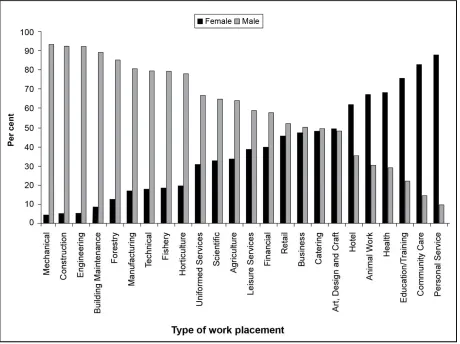
Figure 1 National Work Experience Placements by Gender, 2004
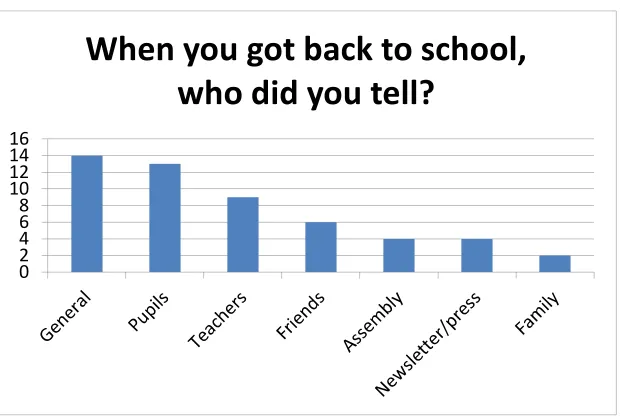
Figure 2 When you got back to school, who did you tell?
Figure 3 Overall - what are you doing now?
Figure 4 Which 3 subjects do you enjoy most at school?
Figure 5 Do you know what an engineer does?
Figure 6 Do you know what the RAF does?
Figure 7 Have you ever met an engineer?
Figure 8 What 3 words would you use to describe a career in engineering?
Figure 9 What do you think are the 3 most important things in any career?
Figure 10 In what job or career areas might you want to work?
Figure 11 Would you consider a career in the RAF?
Figure 12 Have you done (or will you do) work experience through your school?
Figure 13 How would/do you describe it [RAF-WISE] to other people?
Tables
Table 1 Example of RAF-WISE programme
Table 2 Number of past participants surveyed
Table 3 Word frequency
Acknowledgements
Executive Summary
In 2009 the RAF established a programme of residential work experience at RAF Cosford aimed at encouraging 24 young women to consider careers in engineering and more broadly into STEM related specialisms. This programme has gone from strength to strength, with the activity being repeated in 2010, 2011 and 2012.
This report is based on feedback gained from individuals who have participated in the RAF WISE-Experience over a 3 year period with a response rate of over 72% and provides robust evidence of the participants' views. When following up graduates after their course, the Higher Education Statistics Authority aims for a response rate of 80% and this is achieved using a variety of methods, including online surveys, emails and other methods (HESA 2009). HESA set this target for higher education establishments in order to collect data which is reliable. The response rate for RAF telephone survey, conducted on a small scale in comparison, therefore provides some useful information on which to draw conclusions.
The partnership approach to developing STEM activities (Section 2.3) provides a model which draws on the strengths of outside organisations that can support the RAF in this area of work. Relationships with equality and diversity specialists already working in the field of STEM and STEM specialists who actively promote activities with under-represented groups have proved particularly fruitful (for example, WISE, WiSET, STEMNET, CREST). This helps avoid duplication of effort and supports dissemination of good practice across the sector. A summary of the
partners and other organisations involved in the project delivery is contained in Section 2.2
There is currently a wide variation in the way that work experience placements are organised and the means by which careers education, information, advice and guidance is delivered. The level of support for young people is inconsistent and structured models of work experience, such as RAF WISE, are increasingly important. The programme has careers education, information and advice embedded within it and can support educators in their efforts to ensure that girls are aware of STEM options in particular.
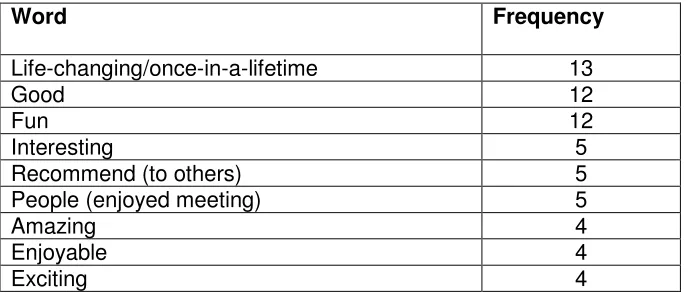
The survey feedback was overwhelmingly positive, it is hard to find any negative comments, although there are some that provide constructive criticism. Table 3 in the report gives examples of the terms used by the participants to describe their experiences, there were no negative responses overall. (Section 5.2).
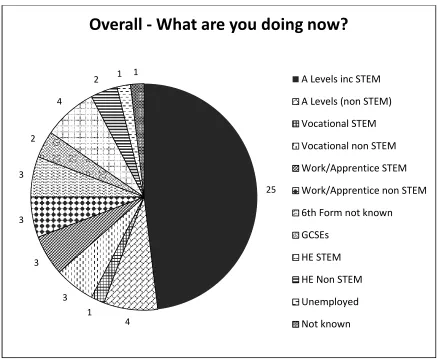
At least 60% of participants contacted indicated, at the time of the telephone survey, that they intend to or have progressed onto STEM subjects and careers. Figure 3 'What are you doing now?' on shows that approximately 63% (33 girls in total) are taking: A Levels (including STEM subjects), Vocational STEM course, Work/Apprenticeship in STEM and Higher Education course in STEM. (Section 5.3)
63% of girls are continuing to keep STEM options open after the RAF WISE work experience, this may indicate that at the very least this type of activity can help address the 'leaky pipeline' where females often drop STEM subjects (particularly Physics) after GCSEs. Research (Murphy and Whitelegg, 2006) indicates that single sex activities, in this case work experience in
engineering, can support the promotion of non-traditional careers to girls in particular.
The participants had a range of stated career interests prior to starting the work experience week but the majority indicated that they were already interested in STEM or were keen to try it (54 of the 76 application forms analysed indicated that they were interested in or wanted to explore STEM, or specifically wanted to try STEM activities in the RAF). The report (Section 3.3) covers this in more detail and outlines the implications for the RAF in managing the tension between maintaining engagement of those already interested in STEM and the RAF with the desire to reach out to new groups of potential candidates.
Sustainability has been built into the model since its inception, with top down support from the outset. Gender Equality training delivered by the UKRC at RAF Cranwell in the early stages of development and subsequent support at national and station level has provided strong
leadership and a clear message about the importance of work experience in STEM.
The RAF has not been afraid to target under-represented groups in an effort to attract a more diverse workforce. This is a bold move which, judging by the responses of the work experience participants, is a worthwhile activity. The staff at RAF Cosford are committed to making sure that the programme is a high quality one, revising and enhancing aspects of the programme
periodically. Continuity of this standard has been achieved through ensuring that the trainers at the base are clear about the rationale for the programme, putting systems in place for handover of responsibility under the leadership of the Station Commander. The commitment and
enthusiasm for the programme delivery is clear each year on the final day when instructors, chaperones, ambassadors and senior management are all on hand to witness the presentations made by the girls.
The residential nature of the work experience programme means that participants are made aware of the RAF way of life and can observe how things happen in that context. The combination of an engineering experience in an RAF environment gives many girls the opportunity to try something completely new and different, which they often cite as a positive outcome when completing applications for future courses and careers (Section 7.2). The range of employability skills (such as teamwork, co-operation, leadership and reliability) are very evident in the model and transferrable to many careers.
The CREST Award was carefully selected as the method for measuring success and offering the participants a 'qualification' to take away at the end of the week. The original plan was to develop an activity at Bronze level but the enthusiasm and commitment of the STEM Ambassadors and trainers at RAF Cosford has resulted in all recent cohorts consistently achieving the Silver standard. The CREST Award activity encourages the participants to relate their experience to STEM subjects and to demonstrate their understanding of the theories involved, as well as the application, and this is something they can build on when they return to school. The CREST Certificates are awarded by the Station Commander (or a senior manager) on the final day after the girls have delivered their presentations about their experiences.
The RAF-WISE work experience week for girls aged 14-19 was the first of a suite of similar activities now delivered by the RAF. The programme was specifically developed to be inclusive, so that individuals from different backgrounds could access the activities - being able to apply for a place and to get the maximum benefit from it, regardless of their prior learning and experience. Career related messages are woven through the programme, from the interaction with positive role models who support women and girls, to the use of a workbook which encourages them to reflect on their own learning, their preferences and how they can use the experience to make plans for the future. The model has developed organically and with care, using lessons learned from 'partners' and other organisations to incorporate best practice.
The evaluation data shows that the RAF WISE programme has delivered positive outcomes for almost all of the girls who have taken part. For those that have decided not to pursue STEM courses and careers there has been an acknowledgement that the experience itself proved valuable, both in terms of personal growth/increased confidence and as an opportunity to 'test out' some career ideas. Some individuals have decided against STEM but are considering or keen to pursue careers in other roles in the RAF.
Many of the girls found the workbook useful and some still use it for help when writing CVs and to remind them of what they have achieved. Only two participants from 2009 said that they did not remember the workbook which, after 3 years, is notable. Many (15 in total) said they thought it was good and 11 specifically said it was "good to look back" or that they used it to "reflect" on the experience.
The fact that all of the girls remember and can describe their RAF-WISE experience in such detail (after 3 years in some cases) is a testament to the high quality of this programme. The participants appear to value the uniqueness of the experience RAF-WISE has afforded them.
1.
Introduction
The Royal Air Force (RAF) has been engaged in focused activities to encourage more young women into Science, Technology, Engineering and Maths (STEM) occupations since 2007.
This report is an evaluation of the RAF-WISE work experience programme delivered at RAF Cosford between 2009 – 2011. The report is divided into seven main subject areas: an overview with background and supporting information; a summary of the programme and feedback on the application process; a description of the workbook; a section on the research being undertaken to assess outcomes of RAF-WISE work experience; information received from participants for the first time in 2012; an exploration of the benefits for the RAF and STEM 'community'; and conclusions and recommendations.
It should be noted that the author of this report has been involved since the project was first designed; this will provide some useful insights and add value, the report is therefore written from the viewpoint of a 'critical friend' rather than that of an external evaluator.
Overview
2.1
Background
The RAF study concluded that although headline numbers of females entering the Service were improving, there was growing evidence of gendered occupational segregation and recommended the development of a 5 year strategy with the primary objective of improving female recruitment into those under represented occupations. The Board accepted the study recommendations and directed the development of a detailed and costed action plan.
Following a period of investigation into current practice in the recruitment of females into STEM trades and professions, decisions were made about how best to increase the number of
applicants from under-represented groups.
The first residential work experience at RAF Cosford was established in 2009, designed to encourage 24 young women to consider careers in engineering and STEM related specialisms. This programme has evolved since that time, with the activity being repeated in 2010, 2011 and 2012.
Since the development of the first work experience week aimed at girls, the RAF's wider equality and diversity remit has been taken into account and efforts have been made to broaden the groups that might take part. The particular issues of under-representation of people from BAME (Black and Minority Ethnic) groups and those from lower socio-economic backgrounds have provided a focus for recruitment into the work experience programmes on offer (Dean, Collins, Morton, Guy 2011). The efforts to encourage people from a range of different backgrounds reflect the RAF's equality and diversity statements, which are set in very positive terms on the
'community support' web pages1The statement on the RAF website also echoes the sentiments behind the recruitment strategy for the work experience programmes, it acknowledges that individuals may find themselves in more than one group (eg BAME girls under-represented in engineering) and that groups are heterogeneous. In response to this, care has been taken to acknowledge the evidence (Institute of Physics, 2012) that girls can find it harder to access careers in engineering and that other factors can significantly affect some groups.
Further residential work experience programmes (all of which last one week) have been developed with different groups of young people, for example the Generating Genius project, focusing on academically able BAME young men and women2, the Avionics week with Air Cadets and the Logistics week with girls at RAF Halton. Lessons learned in earlier versions of the STEM work experience week can be reviewed in the external evaluation report "Project RAF WISE" (2009). The RAF Halton Evaluation in 2012 also provided some useful insights for future programme development.
The Generating Genius programme is aimed at young people (originally Black Caribbean boys but latterly widened out to include girls) from 'challenging' backgrounds. An evaluation of the Generating Genius programmes will take place in 2013. The recruits from the RAF Halton
logistics programme are drawn from the Girls Venture Corps Air Cadets (GVCAC) and the intake for the work experience week reflects the fact that some of the GVCAC members are from a range of backgrounds (BAME/White British, living in rural/urban areas, etc). The work experience programmes have differing groups of young people at their heart, the overarching aim of the RAF to deliver high quality activities which will engage and encourage them to consider STEM options is clear.
Although the programmes have evolved since the first "RAF WISE" work experience week in 2009, the main tenets remain the same:
• Hands on activities
• Meeting positive role models • Team building and fitness tests • Completing a bespoke workbook
1
http://www.raf.mod.uk/community/support/equalityanddiversity.cfm. 2
• Having exposure to the different elements of a military lifestyle • Meeting some new recruits as well as high-ranking RAF personnel
• A final day celebration event with families, teachers and other guests invited
A group of work experience participants with a female role model
It has sometimes been suggested that the residential weeks at RAF stations at Cosford, Cranwell and Halton are not 'work experience' placements as such but more of a 'work taster'. However, while most traditional placements offered to school aged learners are not residential, the RAF work experience provides a fairly accurate portrayal of what a new recruit would encounter during the early stages of induction, having to cope with challenges like home-sickness, living at close-quarters with unfamiliar people and following instructions from senior personnel. In that sense, the work experience programmes are as close as possible to the actual experience of a new RAF recruit.
Many of the underpinning elements of the RAF WISE week are based on the 'Wider Horizons' work experience programme which was created between 2004-2007 as part of the JIVE (European funded) project to increase the number of women and girls in science, engineering and technology. At that time evidence from a report commissioned by the Equal Opportunities Commission (EOC, 2005) confirmed that occupational segregation within work experience placements was a major factor in influencing career awareness and choice within young women (and young men):
Work experience has a potentially important role in disrupting such trends by providing young people with broader, diverse and/or non-gender traditional experiences and ideas about the adult workplace. Yet, evidence has suggested that uptake of work experience placements reflects and potentially perpetuates gender stereotyping. (EOC, 2005 page iii)
Figure 1
From 'Gender Equality in Work Experience Placements for Young People' Equal Opportunities Commission 2005
There are encouraging signs of increased engagement in Physics as a subject with Engineering UK (2013) reporting that the number of students studying it at A Level (in England, Wales and Northern Ireland) rose by 5% in 2012. Similarly, the report indicates that there has been an increase in the number of young people taking BTEC First qualifications in Engineering, rising by 30.4% in 2010/11. Apprenticeships in engineering and manufacturing technologies have also seen a rise in participation rates, up by 29.3% from the previous year in 2010/11. However, according to the report, the number of women in these sectors remains stubbornly low:
Over the last 10 years, accepted applicants from UK engineering and technology students have grown by 21.5%, reaching 21,344 in 2010/11. Only 10.8% of these applicants came from women. (Engineering UK, 2013)
In the light of the continued under-representation of women in the sector, the incentive for creating programmes which engage girls and encourage them to consider engineering and technological specialisms in the RAF would appear to be as relevant today as it was in 2009.
2.2
RAF-WISE Work Experience Project Partners
WISE
WISE (Women in Science, Engineering and Construction) helps organisations to inspire women and girls to pursue science, technology, engineering and mathematics (STEM) as pathways to exciting and fulfilling careers. In 2012 the WISE Campaign amalgamated with the UKRC. The Director of WISE was very involved in the early development of the RAF-WISE programme and worked closely with the DRIT Team and WiSET in the design and delivery until 2010.
WiSET
The Women in Science, Engineering and Technology (WiSET) team, based within the Centre for
Science Education at Sheffield Hallam University, aims to address the under-representation of
women in STEM (science, technology, engineering and mathematics). Sheffield Hallam
University was a core partner in the UK Resource Centre for Women in SET (later known as the UKRC) and members of the WiSET team, including the Project Manager involved in RAF-WISE, were seconded to work with the UKRC from 2004 until 2011.
UKRC
The UKRC is a leading organisation for the provision of organisational development services for businesses and organisations wanting to build gender equality and diversity in science,
engineering, technology and the built environment (SET). In 2011 it took over the leadership of the WISE Campaign and became UKRC-WISE. In late 2012 it took on the WISE name
CREST
CREST Awards are delivered by the British Science Association, a registered charity that exists to advance the public understanding, accessibility and accountability of the sciences and
engineering in the UK. CREST Awards Science, technology, engineering and maths (STEM) enrichment activities to inspire and engage young people aged 5-19 years. The area CREST Co-Ordinator attends the final day of the RAF-WISE week to assess portfolios of evidence for the CREST Awards.
STEMNET
STEMNET creates opportunities to inspire young people in Science, Technology, Engineering and Mathematics (STEM). This enables young people to develop their creativity, problem-solving and employability skills, widens their choices and supports the UK's future competitiveness. Some staff at RAF Cosford are trained as 'STEM Ambassadors' under the STEMNET framework and contribute to the delivery of activities during RAF-WISE week.
2.3
Partnership with WiSET, Sheffield Hallam University
The WiSET Project Manager has a background in careers education and guidance and has been involved in work experience programmes for over 25 years, often witnessing at first hand the effect of good (or poor) quality work experience on young people aged 14-19. The opportunity to be involved in a completely new suite of RAF activities has been incredibly rewarding and provided evidence for research activity. The development of RAF-WISE has informed practice and supported work with other organisations interested in delivering similar programmes.
In January 2008, the RAF DRIT team made contact with the Project Manager responsible for work experience in the WiSET team at Sheffield Hallam University and with WISE. WISE and WiSET were already working with the Royal Navy on a work experience project to attract girls into STEM delivered in Portsmouth and the model was used as the basis for work with the RAF. Discussions at that time focused on the basics: where the programme might be delivered; who would need to be involved; how their commitment could be obtained; which activities could be used and what success might look like.
In the early stages, meetings took place and lessons learned from previous projects undertaken through the UKRC, WISE and WiSET were used to inform the development of the RAF-WISE work experience programme. It was important to ensure that staff coming into contact with participants at RAF Cosford were clear about the reason for girls-only activities and were made aware of support/behaviour that can lead to a successful outcome for the individuals involved and for the organisation as a whole. The UKRC Gender Equality training was organised by the WiSET Project Manager and delivered at RAF Cranwell in November 2008. The training was subsequently rolled out at RAF Cosford for instructors in April 2009. Alongside this, the project team worked with station staff to identify the hands-on activities that would be offered and who would be responsible for delivery, which individuals would be chaperoning the girls, and how suitable role models would be identified.
Discussions took place on many issues and at all levels, including how the accommodation would be organised, how the girls' teams would be divided, what would go in the goody-bags the girls would receive, whether there needed to be any special rules, who would act as
chaperones/role models, and a host of other questions. A new relationship between WISE, the UKRC, WiSET and the RAF developed where the expertise of each organisation was
acknowledged and the need for honesty about targets and remits of the different individuals involved was taken into account. Since that time, the Director of WISE has changed and the UKRC has a different approach to its work with organisations (on a much smaller scale with a reduced team).
In the early stages of the RAF WISE project development the WiSET Project Manager was also undertaking work on behalf of the UKRC 'Services to Businesses and Organisations' Team. At that point her remit was to look at the culture of the organisation and to work with the DRIT Team to support the implementation of single sex activities.
From 2008 until 2011, the Department for Children, Schools and Families contracted the Centre for Science Education at Sheffield Hallam University to deliver the STEM Subject Choice and Careers Project. The WiSET Project Manager was responsible for ensuring that the equality and diversity elements of the project were fit for purpose and communicated to internal and external audiences. This included the creation of the STEM Equality and Diversity Toolkit, looking at issues which might affect people entering STEM careers in relation to gender, ethnicity,
religion/belief, age, disability, sexual orientation and socio-economic status. The activities in this strand of the STEM Subject Choice and Careers Project supported the links with the RAF in several ways, not least because the DRIT team was developing programmes for BAME young people and could contribute to, and benefit from, the networking events accessed through the project.
2.4
Accreditation of RAF-WISE - The CREST Award
All of the girls since 2010 have received a CREST Award during RAF-WISE. The British Science Association CREST Awards scheme is a project-based awards scheme for the STEM subjects which "links the personal passions of students to curriculum-based learning". The inclusion of an award which recognises the participants' efforts and acknowledges their understanding of STEM has always been an important feature of the work experience programmes, including those at RAF Halton and with Generating Genius at RAF Cranwell. The CREST Award offers the
opportunity of linking STEM to an RAF activity, usually making a glider from basic materials and testing to see how far it will carry a bottle of water. This serves to remind participants that the RAF WISE work experience is strongly linked to STEM and that successfully recording the process will lead to a STEM specific award. At the beginning of each week of work experience the participants are informed about the CREST Award and made aware of its significance in terms of the rest of the programme, particularly the evening activities which include recording their learning.
The feedback from the first two years of this study show less explicit comments about the CREST Award, although in 2010 one person mentioned it and several participants mention 'making the gliders' (which was part of the CREST activity) as one of the most memorable things, illustrated by the following quote:
Making experimental planes from paper, wood and sellotape, glue and wires. Afterwards we threw them off a long building to see which one carried most water. We did loads of things, like a trust exercise where we blindfolded each other and gave directions to see if we trusted each other. There was an assault course with a wooden brick to see if you would drop it.
(2010)
The 2011 cohort were clearer about the value of the CREST Award in their responses to the survey and three individuals mentioned that they had particularly enjoyed undertaking the CREST activities.
When the CREST activity was designed there was a clear intention to create an authentic RAF style exercise, which would appeal to girls but would not be explicitly aimed at them (by, for example, softening the image and messages). The glider activity has been used with girls, boys and mixed groups with similar levels of success.
The celebration on the final day of the work experience week focuses on the teams (6 groups of 4 people) making PowerPoint presentations detailing what they have learned from the
experience. Families, station staff, teachers and others are invited to hear the presentations. At the same time the CREST Co-ordinator for the area assesses the information which the girls have completed in their workbooks (to a standard CREST Award format) about their STEM project work and what they have learned from it. After the girls have completed their input the Station Commander and Squadron Leader Dean present the CREST Awards and make some closing comments, showing their appreciation to all involved.
Example of workbook page showing career learning, employability skills and awareness of technical knowledge used in the CREST project
2.5.
Current context setting - work experience and careers advice
The national policy situation regarding the provision of work experience and careers education, information, advice and guidance (CEIAG) is an evolving one.
The way that work experience is organised and funded nationally has also been reviewed and the government has accepted many of the recommendations of the Wolf Review (Wolf, 2011). As a result, the delivery of work experience is undergoing significant changes with key stakeholders (notably Education Business Partnerships) and the traditional links with the RAF are likely to alter. It may well be that many schools no longer offer work experience to 14-16 year olds during term time, and the approach taken by the RAF in delivering work experience weeks in half
term/holidays may be more appropriate in engaging pupils in that age group. Mann and Oldknow (2012) summarise the potential effect of the policy changes, raising concerns about the reduction in schools engagement with employers (down by 40% between 2009-10 and 2011-12).
The funding arrangement for schools to provide CEIAG, which was previously 'ring-fenced' by government, has changed since the coalition government was established. A new All Age Careers Service is being developed and the provision for young people is currently very
inconsistent (Watts, 2011) with wide variations and approaches to this issue in different areas of England.
The RAF approach to delivery of these programmes is well regarded in the wider ‘work experience community’. In the last four years the team has given presentations at national conferences, had articles printed in specialist work experience / other careers publications and been shortlisted for a national careers award. The inclusion of the CREST Award in the work experience week is recognised as good practice (other national organisations are increasingly seeing the value of including CREST activities as part of their offer). The fact that this work is embedded in a broader programme of engagement of children and young people (for example, educational outreach programmes, delivering activities at the Big Bang Fair) further enhances its credibility with schools and stakeholders.
In 2012 the Department for Education published a guide which makes it clear that schools are responsible for ensuring that pupils in years 9 to 11 should have access to independent and impartial careers guidance. In reality, there appears to be much confusion about what this means and how it is implemented in schools. Professor Tony Watts (2012) highlights some of the
ambiguities in the guidance, particularly in relation to careers education and the lack of direction in terms of curriculum links. He pinpoints the requirement to provide a 'programme of activities' rather than to a curriculum as a weakness in the guidance, and reinforces the need for careers education which is delivered through the curriculum, based on international research. Whilst the RAF work experience programmes appear to fit within the definition of a 'programme of activities', the CREST Award and the workbook elements in particular link to curriculum areas of Science, Technology and Maths taught in all schools. Careers education links are explicitly highlighted in the workbook, to provide a basis upon which participants can use their RAF activities to their future planning.
In addition to changes affecting careers education, information, advice and guidance, public funding for equality and diversity programmes has been reduced; in the context of women/girls in STEM this has particularly affected WISE and the UKRC. Both of these organisations have been involved in the development of the RAF work experience programmes from the outset and in recent years they have faced significant funding cuts and a reduction in staff. The RAF has always aligned itself with key equality and diversity organisations and continues to work with them (including WISE and the UKRC) in supporting the gender and STEM campaign.
The on-going relationship between the RAF and the Women in SET (WiSET) team at Sheffield Hallam University has proved to be mutually beneficial, with the RAF receiving advice based on the team's history of developing innovative work experience programmes. The WiSET team has been able to use the evidence base created through the RAF project feedback to inform some of its wider work. The team makes frequent reference to its work with the RAF formally, informally, in publications and on its website, and this has resulted in positive recognition for both parties. The member of the WiSET team responsible for development of the RAF programmes is on the CREST Stakeholder Group3 the Career Academies UK Programme Leadership Team4 and the Council of the newly formed Career Development Institute5 Other members of staff represent the team on committees for various STEM initiatives, careers groups and professional bodies and the lessons learned from working with the RAF are frequently referred to.
Links have developed with other organisations which specialise in equality and diversity, such as Opportunity Now, Race for Opportunity and Generating Genius, have already been referred to. The RAF is able to use its inclusive work experience programmes for under-represented groups and the work with these specialist organisations as evidence when applying for awards. The RAF has had exposure to new network s and to those involved with policy and delivery of work
experience/CEIAG, partly through attendance at conferences and exhibitions.
3
http://www.britishscienceassociation.org/crest-awards 4
http://www.careeracademies.org.uk 5
In the last two years RAF staff have delivered papers at the Education Employer Taskforce conference and provided information through an exhibition at the Institute of Career Guidance conference. Existing links with the education specialists at organisations such at BAE Systems give further credibility to the programme of work related and career related activities in which the RAF is engaged.
The value of working with partners such as WISE, the CREST Awards team, STEMNET and organisations and experts linked to careers advice/work experience should not be under
estimated. Working with partners has resulted in communication about the positive activities the RAF is undertaking to promote STEM Careers to a range of under-represented groups,
especially girls. The partners have their own networks and spread the message further afield, through their own channels of communication, resulting in a viral effect.
3.
Content of the Programme and Participants
3.1
The RAF Work Experience Programme
This report has already highlighted that the first RAF Work Experience took place in 2009 after a period of scoping out and preparation, drawing on lessons learned from other work experience projects such as Navy-WISE and Wider Horizons (which had been led by WISE and WiSET respectively). The overall plan was to develop a programme of hands-on activities which would engage the girls and it was acknowledged early on that this would need to be planned carefully, with the buy-in of RAF Cosford staff at all levels. A programme of training for the Instructors and others who would come into direct contact with the girls was put in place, to help them think about how to deal with young women as opposed to the usual (mainly male) cohorts they were used to.
It can be challenging for individuals to understand how the practice of single sex activities aimed at under-represented groups can be a fair one and issues which arose in the early stages of programme planning had to be dealt with sensitively and consistently. The team from RAF Cranwell, WISE, the UKRC and WiSET worked together to ensure that individuals could seek clarification as to why activities had been designed in a particular way or why specific
approaches were being taken to the work. Where possible, station staff were consulted and encouraged to raise concerns so that a process of culture change was gradual and not imposed upon them. Levels of confidence of those involved in leading, organising and delivering the RAF WISE week appear to have increased year on year. Feedback from the DRIT team at RAF Cranwell suggests that colleagues at RAF Cosford can undertake the planning and delivery of the week with less intervention than before. The established local links with STEMNET
Ambassadors, the CREST Co-ordinator and staff at the RAF Museum further enhance this process.
As previously stated, the programme of activities has evolved since the first RAF-WISE in 2009 but the basic tenets and ethos remain unchanged. Undertaking an evaluation after the first programme was a brave step. The programme was completely new to the organisation at that point and if the feedback had been negative it could have had a detrimental effect on the overall strategy. The evaluation report gave useful and constructive feedback resulting in some of the hands-on activities being adapted or replaced to increase the level of interaction and reduce the amount of instruction. In the current programme the girls are given guidance on how to safely complete a task and the purpose of the exercise before undertaking it to provide context and meaning. The mixture between RAF specific activities, such as the fitness tests, and the general STEM input is monitored so that the level of theory and practical work is balanced.
On arrival at RAF Cosford, the girls are introduced to each other, take part in ice-breaker activities and are divided into teams. They meet instructors, chaperones and trainers who are often also STEM Ambassadors, trained through the STEMNET Ambassador programme in the area and who are familiar with delivering activities to encourage more young people into STEM careers.
The original activities put in place included exercises on radio/communications, some
electrical/electronics, the removal of a flap from a Jet Provost and outdoor/fitness tests. In the early days it was more of a challenge to make the activities truly hands-on, with some of the instructors being more cautious about what the participants might be able to do. As the
programme has evolved and instructors' awareness has grown over the years, the activities have been tweaked and finely tuned to make them more interactive and in some ways more
challenging for the girls. The scheme has therefore evolved to give a rich learning experience with a gender sensitive approach.
The activities undertaken during the week feed directly into the CREST Award, which serves several purposes including:
• It provides evidence of learning in the form of a certificate
• It gives a structure to the way the girls record the week (alongside the 'diary') • It offers a focus for the PowerPoint presentations at the end of the week • It supports the way the girls link the engineering activities and STEM subjects • It provides something different for the participants to include in their CVs
The CREST activity provides an opportunity for the staff RAF Cosford who are also STEM Ambassadors to contribute by delivering the activity, putting into action the training they have received as part of the STEMNET Ambassador network.
At the end of the week an audience of the girls' families, teachers, RAF personnel, and others attend a presentation in the main auditorium at the RAF Museum, where the teams of
participants give a summary of their week. The impact of this has not been measured formally but it is clear that the number of individuals present (approximately 40-50 people) and the range of organisations represented at the final presentation event facilitates dissemination of very positive messages about the RAF WISE programme and the organisation's commitment to encouraging females into STEM courses and careers. There are often RAF press officers and others with access to local media in attendance so that these messages are also spread further afield.
A group of girls giving presentations on the final day
3.2
The Application Process
Information about the RAF-WISE programme and the application form has been hosted on the WISE website since the first work experience week was developed. Alongside this, the schools liaison team from RAF Cosford has promoted the programme with local schools each year to support its wider schools engagement activities. In assessing the effectiveness of the application system for this report, some anecdotal information (provided by the team members involved in the programmes) has been included.
In 2009 and 2010 the applications were collated by WISE and a short list was drawn up by the Director of WISE and members of the DRIT Team, led by Squadron Leader Dean. In 2011 the applications were shortlisted by members of the DRIT team alongside two members of staff from RAF Cosford and the Project Manager from WiSET. The change in the recruiting team for RAF WISE in 2011 provided an opportunity to consider the selection process in more depth.
Over the years the application process has evolved and the profile of the students has changed somewhat. Looking at the schools from which the participants are drawn and taking into account factors such as the names and addresses of applicants (eg sisters), it is clear that the
[image:20.595.74.387.187.396.2]programme has become established locally and that 'word of mouth' accounts for some of the applications being made. Figure 2 below shows that many of the girls had told others about their experience so this is not surprising. The existence of this informal process which runs alongside the application system could have implications for future (inclusive) promotion of the programme and this is commented on in the conclusions section of this report.
Figure 2
Note: 'General' relates to telling pupils and teachers for example in groups, assemblies,
classroom situations. Responses were interpreted from the survey question 'When you got back from the week did your school/college know about it?'
3.3
The Application Forms
A copy of the application form is available on Appendix 3. Looking back at the 76 completed application forms from 2009-2011, it is clear that the girls fall into 3 main categories:
• Those who already intend to enter STEM/RAF careers (24)
• Those who have an tentative interest (44)
• Those who are willing to try something new or have other reasons (8)
The first group includes those who are already committed to STEM to some extent, for example, some having chosen Triple Science at GCSE, others taking the Engineering Diploma or those who have already made contact with the Armed Forces Careers Office. The second group includes those who have indicated that they would like to explore engineering / science / technology through the work experience. Many (25 in total) state that they are keen to try these out in the RAF specifically. The third group includes those who have shown that they want to try something new and have made no specific reference to liking STEM/the RAF in particular. The third group also covers those who have demonstrated that they are interested in the uniformed services generally (eg Army, Royal Navy, Police) and some other individuals who do not fall neatly into any one category.
It is difficult to categorise absolutely because the majority of applicants will tailor their forms to ensure that they are offered a place - which will include information about their interest in STEM subjects, their long term career plans (linked to potential STEM jobs) and hobbies/interests which may link to the RAF/STEM careers. During the preparation of this report the application forms were reviewed and given a rating in terms of the apparent confidence levels of each of the girls.
0 2 4 6 8 10 12 14 16
The sections entitled 'Why do you want to go on this work experience?', 'Hobbies and Interests' and 'What career would you like to follow?' were scanned for key messages. The levels of confidence exhibited in the application form appear to have increased over the years and this may, again, reflect the fact that some schools are aware of the programme and have a more robust programme of careers education and pastoral care than others. It may be that further research into how the schools promote and support the applicants for the RAF-WISE experience would provide some useful insights into the different approaches taken. Development of a teacher resource pack could support those less experienced teachers or careers/work
experience co-ordinators and could be located on the RAF and WISE websites. Some examples of responses to the sections assessed follow.
In answer to the question about why they applied for the work experience some responses were more sophisticated than others, however, some appear particularly heartfelt, as the following example shows:
I was very excited when this opportunity was offered as it is very different from other work experience options. Not only because it is residential but also because it is a group, hands-on experience. A busy office situation may leave me twiddling my thumbs or just making tea. It is a great chance to do things I would not normally get to do. (2009)
The applicant above goes on to talk about her attributes as a 'team player', her interests in maths and science and how this has led her to the conclusion that an engineering career might be a suitable option. She describes a maths enrichment activity and appears confident in her mathematical ability. Her closing comments on this section of the form highlight the fact that taking part in work experience would be something she could "throw myself into whole-heartedly" whilst increasing her confidence and allowing her to find out more about careers in engineering.
Other examples showed a much more polished approach to the application process and a more refined way of articulating the desire to be selected. The following quote is from an applicant who appears to have undertaken some research and related it to her own interests in order to make the best impression. This could indicate a degree of maturity and confidence in making applications but may not necessarily reflect a genuine interest. The quote gives a picture of the standard and detail of some applications:
…I'm confident that I will pursue a career that allows me to make use of my knowledge,
understanding and passion for maths, physics and technology, and that will allow me to combine mental challenges with physical activity and skill. I am impressed by the breath of options [in the RAF] available, from supporting air operations, to being part of a flight crew, working in the fields of communications, intelligence and logistics or even providing medical, security and personal support. I am fascinated by science, by engineering, by flight - and by space. I love maths, physics and design subjects and thoroughly enjoy working in teams….
(2011)
This applicant goes on to say she knows very little about the "realities or practicalities" of being in the RAF but, by making this admission, manages to skilfully make a positive impression in the level of research she has taken into RAF careers. She uses phrases like "I would love …." to emphasise her enthusiasm for facing new challenges on the work experience week and ensures that there the application is littered with technical and aerospace/RAF specific references to demonstrate her knowledge. The application is extremely well articulated and shows a degree of maturity in facing the issue of career choice, she acknowledges she has a long way to go (and lots of options open to her) before making a decision.
They appear to recognise that physical activity is important to the RAF too and the more polished applications make reference to various sports they are engaged in (sometimes at county/city level). However, some applicants are unable to demonstrate their commitment to hobbies in the same way. The following quote is from a girl who was probably not coached in completing her application form and was already on a BTEC course in engineering at college. She clearly has an interest in engineering but has not been able to link her leisure activities and interests to her application. The comments perhaps give an example of someone who does not have the cultural capital and support from school staff to draw on in her application.
Reading, watching films, writing, composing and listening to music. Visiting prehistoric
monuments. Watching Spongebob with my younger sister…..! I enjoy working with computer systems.(2009)
Another participant from 2011 summarises her hobbies in a very factual way but manages to allude to skills and interests which are ideal for the RAF-WISE week :
I attend Army Cadets weekly and I also play football for U16's girls team. I enjoy helping my dad at weekends repairing plant and machinery. At school I thoroughly enjoy PE and DT. I take part in sports like netball, hockey, rugby and badminton. I also enjoy science at school, mostly chemistry. (Student, 2011)
The majority of applicants stated that they already had an interest in STEM and in answer to the question regarding the career they might like to follow, most said that they would like to do something linked to the RAF and/or STEM, as these examples show:
Engineering or computer work. I enjoy engineering at college. My grades show that I am succeeding. I feel it would be an interesting and rewarding career path to take. (2009)
I would love to be part of the RAF for the engineering and the fun of being part of a team. I am keen to see the world and the RAF may offer that opportunity to travel. (2010)
After describing her interest in archaeology and historical studies, listing "ancient structures" she has visited, another applicant demonstrates her motivation and interest in the RAF and STEM by commenting:
…I am now realising that what fascinates people about these places is the engineering feats and human endeavour behind these historical structures. I am now thinking that I would prefer to work in an engineering discipline, taking us forward by both building on the past and introducing new discoveries and innovative ideas. I have inspiration in older family members who were car mechanics, worked in Ship Building on the Clyde and torpedo factories in WWII and younger relatives in the construction industry and the oil industry.
My parents have both worked in Software Engineering and my uncle is head of the School of Engineering at ….. University.(2011)
When considering the range of applications and their articulation, it should be noted that, in addition to each of the applicants having different levels of support from their schools, the 'social capital' (Norris, 2011) at their disposal prior to and during the application process will also have an impact on their ability to compete. The examples above show some stark differences in the individuals' experiences prior to making their application and it would be inappropriate to offer placements under the assumption that there is a 'level playing field' in existence. Some of the girls have access to clubs and activities through their school which others do not have, one of the main factors in this may be social background. Other issues such as the location of schools (rural -v- urban) and the specialism of the school (eg arts rather than science and engineering) will all have a bearing on what is available to them.
The level of skill of the selection panel can have a major impact. If those responsible for
The likelihood of reaching a broader socio-economic group may be increased by taking the different starting points into account and by bearing in mind the enthusiasm demonstrated in an application, rather than the writing style, experience and finesse. The section of this report relating to the 'destinations' of past participants may help elucidate this argument further.
4.
The 'Workbook'
The workbook has variously been described as a diary, a logbook and a workbook since it was introduced in 2009. It has been updated and the tone and style has changed over the years and versions have been created for BAME boys (and latterly girls) on the Generating Genius work experience at RAF Cranwell and the GVCAC girls on the logistics programme at RAF Halton.
To underpin the work experience programme and to ensure best practice the RAF has worked in partnership with WISE, the UKRC and WiSET to produce a range of workbooks. Drawing on the Wider Horizons work experience booklet as a template, a new and different workbook was developed for the girls to record their thoughts and store information about the week. An innovative approach was taken and it developed into a 'diary' aimed at encouraging the
participants to keep a reflective account of their own experience as well as providing some useful information about STEM/RAF careers and how to enter them. The first version of the workbook was quite different to the usual style distributed by schools and work experience organisers (NHS Yorkshire and Humber, 2011). It was deliberately designed to encourage the girls to think about how a career in a male-dominated field in the RAF/STEM careers might affect them. There were two distinct sections. The first was fairly informal and encouraged the girls to record their
thoughts and feelings about the week; while the second contained information designed to help the young women in their career planning with a CV section and details about where to find labour market information.
The organisations involved took slightly different approaches to the development of the workbook. WISE's role was to create a product which appealed to young women, both in style of language and in the overall design. WiSET input focussed on the career learning aspects of the workbook, ensuring that it was sequential and fitted with other activities which students may have been undertaking at school (such as creating a CV) and underpinning the associated career related learning (Barnes et al, 2011). The RAF had overall editorial control and embarked upon this different approach during the first year or so with gradual amendments which suited the culture of the organisation. The UKRC's role was to support the work by giving their partner (WiSET at Sheffield Hallam) the authority to develop the product This was undertaken in line with the UKRC ethos of supporting women and organisations.
Example of the workbook content, encouraging reflection about the first day
The booklet starts with fairly informal language in the introductory section, aimed at welcoming participants and highlighting how they might get the most from the experience. The 'diary' pages are intended to give an opportunity for students to reflect on what it feels like to be on work experience with the RAF and what they are learning from it. The following pages become progressively more 'serious' and move into a more formal style of language and presentation, encouraging students to record information for future use, with examples of how they can use details stored there in the future. An example of this is a section on 'Making the most of the evidence!' which contains a table showing 'What you did' and 'What it means' (e.g. 'doing a hands-on activity = problem solving and working accurately, paying attention to detail'). The latter stages of the booklet have more careers information with examples of CVs and websites for further research.
During the process of developing the work experience programme and creating a workbook, it was recognised that there was potential for achieving accreditation so that students could receive certification for their efforts. As mentioned previously, several options for accreditation were considered and it seemed logical and relevant to link the week's activities to the British Science Association CREST Awards (Grant, University of Liverpool, 2006). Subsequently, the CREST Award pages have been added as an integral part of the workbook, this is a practical solution in that it puts all the paperwork in one place and it illustrates that the RAF placement is worthy of a STEM related qualification. This applies to the participants on the 'logistics' work experience week as well as the girls into engineering and the Generating Genius programmes, with the activities adjusted to ensure that they include enough STEM content to justify a CREST Award.
The workbook is a tangible product which can give RAF staff an understanding of what the work experience week hopes to achieve. It is RAF branded and has logos for equality and diversity and STEM organisations, which also sends a clear message about the purpose of the work experience activities. An outcome of the production of a bespoke workbook is that it drives activity, for example, once the daily activities are printed in the workbooks they have to be delivered. The sequential nature of the workbook content reminds RAF staff of the building blocks of the programme and provides a workable structure for those involved.
The generic version of the workbook has been edited to produce bespoke versions for each of the different disciplines whilst ensuring the integrity of the key diversity and STEM messaging. The workbook has been shared with other work experience providers. Overall, the work experience programmes and workbooks have drawn significant praise from participants and influencers and several former students have joined RAF sponsorship schemes with one individual already in the Service.
By delivering a programme which makes clear curriculum links to activities and ensures that all participants receive the same written information, the RAF is at least creating consistent messages about the options available for young people within the organisation and beyond.
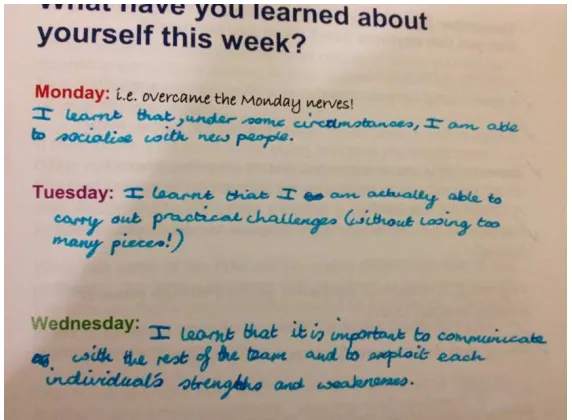
Response to the workbook question 'What have you learned about yourself this week?'
[image:25.595.166.452.118.328.2]An example of the RAF-WISE programme is shown below in Table 1
Table 1
Morning Afternoon Evening
Monday Girls are welcomed, given kit and initial instructions. Overview of WISE work experience week
Icebreaker sessions (low ropes, group dynamics)
Introduction to CREST activity, laptops and cameras issued for powerpoint evidence
Tuesday Physical training Technical activity - removal of flap from Jet Provost
Team building exercise, recording activities in workbook
Wednesday Presentation preparation time
RAF Museum to build rockets
Designing, making and testing gliders for CREST Award (delivered by STEM Ambassadors)
Team building exercise, recording activities in workbook
Thursday Presentation preparation
Introduction to survival equipment and ration packs
Technical activity, radio school
Signals Unit activity
Formal dinner in Officers' Mess
Friday Presentation preparation - families, teachers, station staff and others attend
5
Results of research into the RAF-WISE work experience programme
5.1
Methods used
Following the recommendations in the evaluation report for the RAF Halton Logistics programme in 2011, the RAF commissioned WiSET to undertake a long term impact assessment of the work experience programmes. A programme of telephone interviews was designed and developed in partnership with the RAF. The first stage of the evaluation has taken place for RAF Cosford (engineering for girls) and the following work experience programmes will be covered in the longer term once data has been gathered: RAF Halton (logistics for girls) and RAF Cranwell (STEM for black and minority ethnic boys).
The purpose of the survey is to assess the long term impact of the work experience placement on the participants' life, career and work choices; in particular to find out if it has encouraged them to pursue a career in the RAF or in STEM Careers. The survey design included
consultation with careers guidance specialists who have had responsibility for 'destinations' surveys and tracking of young people for a number of years. It was decided that the best
response rates tend to be from telephone contact, especially when the calls are made by 'peers'. 3 student interns (coincidentally females) from Sheffield Hallam University were recruited to make the calls during evenings (4-7pm) to increase the chances of contact. When different people conduct interviews in qualitative research projects such as this, there are likely to be slight variations in them. In this instance the 3 interns were given the same training, however, their confidence levels and style of recording differed to some extent. For example, one of the interns tended to make bullet points rather than sentences whereas another described the response in the first person and in a narrative style.
The engineering programme at RAF Cosford has been offered to 24-26 girls for 4 years, since 2009, and the survey offered an opportunity to gain feedback from the first 3 cohorts who have undertaken the activities, to assess how the work experience has informed their future planning and career thinking.
[image:26.595.78.530.503.558.2]Responses have been received from the following numbers of young women:
Table 2 - Number of past participants surveyed
The interview questions were:
• Do you remember the week you did with the RAF in 2009/2010/2011? • Are you happy to talk about it?
• What do you remember about it most?
• How would/do you describe it to other people?
• When you got back from the week did your school/college know about it? • Did they ask you to tell them about it/tell other students about it?
• What did you do after GCSEs? • What are you doing now?
• How did your RAF experience make a difference to the choices you made aboutwork/life? • How did it affect your views on the RAF?
• How did it affect your views on Engineering?
2009 2010 2011
Number on course 26 24 24
Number reached 13 20 19
• Is there anything the RAF should do to change future courses like this? • What did you think of the workbook you had during the week?
• Is there anything else you would like to add?
• If we need to ask any further questions may we contact you again?
The responses were studied for themes and words that appeared numerous times and linked to existing research on gender and STEM subjects (eg WISE, WiSET, UKRC and the Aspires Projects). The information was then used to gain a picture of satisfaction levels and measures of influence.
During the survey it was sometimes possible to speak to family members about the work
experience week, often through the process of explaining why the telephone call had been made. These conversations were not recorded but the willingness of family members to pass on
messages and discuss what their impression of the value of the work experience was noted. One parent wanted to undertake the survey on behalf of her daughter (who was not available that evening) and spoke about the increased confidence levels she had observed since her daughter had returned from RAF Cosford. There were other similar conversations which took place but were not formally recorded.
In 2012, a new evaluation questionnaire was introduced, aimed at obtaining initial feedback about the impact of the work experience week (Appendix 2) and this was administered to the whole group at the beginning and the end of the week. There is some value in obtaining a snapshot of the girls' views about STEM subjects before and after their RAF experience and this adds to the overall picture gained from the telephone survey. This cohort will be contacted through the follow up telephone survey this year (2013)
A grounded theory approach has been taken (Charmaz, 2005), one of the main benefits of which is that the organic nature of the development of the RAF project could be mirrored in the
evaluation.
Note: In September 2012 the author of the evaluation presented a paper at the European Conference on Educational Research (ECER), attended by academics from across Europe and beyond, one of the main tenets of the conference being: "disseminating the findings of
educational research and highlighting their contribution to policy and practice". This evaluation draws on and develops elements of the paper delivered at the ECER conference and summary of it is attached (Appendix 1)
5.2
What do participants like about it?
More detailed information about the responses from participants through the telephone survey, including quotes from the girls, is available in Appendix 1.
The feedback from the survey was overwhelmingly positive. When asked to describe what they remembered about the RAF-WISE experience, most respondents referred to the hands-on activities, particularly the removal of the flaps from the wings of a jet provost aircraft. The fact that this activity was unique and would set them apart from their peers at school and beyond appeared to have some value to the girls, they had a different 'story' to tell. Many participants were encouraged to talk to others about it, through assemblies, tutor groups, and with friends, family and teachers.
A significant number in the survey referred to the fact that the experience had given them an opportunity to test out a career idea and to think about what they might move on to next (54% said it made them think about their career, 23% and 25% said it helped them clarify ideas about the RAF and Engineering respectively). The following example gives a flavour of the value some of the girls placed on the experience and the impact it had on their choices:
I decided not to be a pilot (my original career path) as I found out I couldn't due to me wearing glasses. The RAF influenced me to do engineering. Having the RAF down on my CV helped me with jobs and to get into a new 6th form college which specialised in engineering (2010)
[image:28.595.72.416.420.568.2]Many of the terms used to describe the experience were particularly effusive; the table below highlights the words used most frequently but there were many others which could be clustered as very positive such as 'awesome' and 'epic'. The words used most frequently are summarised on the table below:
Table 3
Word Frequency
Life-changing/once-in-a-lifetime 13
Good 12
Fun 12
Interesting 5
Recommend (to others) 5
People (enjoyed meeting) 5
Amazing 4
Enjoyable 4
Exciting 4
5.3
What did the participants do after the experience?
As stated at the beginning of this report, 52 of the 74 participants in RAF-WISE have been contacted and the 'destinations' (ie what the girls are doing now) have been obtained, with varying levels of detail. Some respondents indicated that they were, for example, currently
studying for GCSEs but had made applications for specific courses (A Levels/vocational subjects) whilst others were more vague, stating that they were still choosing the second year subject of A Levels (having the option to drop/change some of their A2 levels) Appendix 4 has more detail relating to the destinations of each year group.
Some of the courses and career paths the participants have progressed to are very clearly STEM, for example at the time of the survey one girl from the 2009 cohort had been offered a place to study Aeronautics/Astronautics at a Russell Group university and another was applying for apprenticeships in Engineering. Of the 2010 cohort, one girl (still at college) was applying for Mechanical or Aerospace Engineering and another was already taking a BTEC National Diploma in Mechanical Engineering. The survey of 2011 participants showed a similar pattern with some indicating that they intended to take STEM A Levels (Maths, Chemistry, Physics and Biology in one example) or a vocational course (example - Advanced Mechanics, Engineering and English at college). The actual number of those taking STEM courses may be higher because some of the participants did not indicate which subjects they had progressed to and simply stated they had progressed to 6th form studies.
Figure 3 also shows that some individuals chose non-STEM courses and these included subjects combinations such as Law/English Literature and Sociology in one case and a course in Health and Social Care in another. Individuals who have taken these non-STEM subjects may still be considering careers in the RAF, with some indicating that they are considering careers in nursing in the RAF and others saying that they are still interested in the RAF and will decide after A Levels. One girl taking A Levels in History, Psychology, Art and Textiles stated "I learnt about the work conducted by RAF and I would consider joining them in the future."
Figure 3
5.4
Impact measurement
There has been a positive overall effect of RAF-WISE on the participants and that the majority have maintained a link to STEM courses and careers, however, it is difficult to measure impact in any precise way. Looking at the application forms and comparing them with the outcomes gives some clues as to whether the girls have maintained an interest or moved towards/away from STEM and/or the RAF. However, over a period of time since work experience there will have been various other influences on the participants. The RAF-WISE programme forms one part of a complex range of interventions, activities and other influences which might have an impact on the girls' career and lifestyle choice.
It is notoriously difficult to make specific links between 'interventions' and outcomes (Hughes and Gration 2009) but the following case studies offer examples of impact on the girls.
Case study 1 - Jane
Jane took part in the RAF WISE experience in 2009 and on her application form stated that her reasons for applying were:
I think it's a brilliant opportunity and would be a very valuable experience to have. It's a chance to meet new people my own age and I'm excited about possibly getting the chance to participate. I enjoy working in a team and getting to do new things. Engineering sounds like an exciting
career and I would love to get some actual experience. I feel I could learn lots from this week
and am very enthusiastic about doing so and I hope that from being on the work experience I will be motivated and inspired to become an engineer or perhaps get another career in the RAF.
25
4 1
3 3 3 3
2 4
2 1 1
Overall - What are you doing now?
A Levels inc STEM
A Levels (non STEM)
Vocational STEM
Vocational non STEM
Work/Apprentice STEM
Work/Apprentice non STEM
6th Form not known
GCSEs
HE STEM
HE Non STEM
Unemployed
Jane had an interest in science and stated on her original application that she was considering a range of careers:
I attended an Express Yourself Science conference in year 8 with a previous school and from then on have been set on a career in science but have changed my mind several times - from astrophysics to medical science and then environmental science. I am very interested in science, it is by far my favourite and best subject; physics and biology especially; and I think a career involving science would be really exciting. Engineering is not something I have
considered before but is definitely something I am looking into and am interested in doing at the moment.
When she was contacted in 2012 Jane's responses to the questions about the most interesting parts of the week were typical - she enjoyed "taking the wing flap off" and visiting the other RAF base. When asked how she would describe the experience she said it was "Insightful, massive focus in engineering. Sense of community among girls and loved how staff took no nonsense". On her return to school Jane spoke to her form group about the e