CAPUCHIN MONKEYS
Mindy Ann Babitz
A Thesis Submitted for the Degree of PhD
at the
University of St Andrews
1999
Full metadata for this item is available in
St Andrews Research Repository
at:
http://research-repository.st-andrews.ac.uk/
Please use this identifier to cite or link to this item:
http://hdl.handle.net/10023/15101
by Capuchin Monkeys
Mindy Ann Babitz
Dissertation submitted to the University of St. Andrews for the degree of Doctor of Philosophy
All rights reserved
INFORMATION TO ALL USERS
The quality of this reproduction is dependent upon the quality of the copy submitted.
In the unlikely event that the author did not send a com plete manuscript and there are missing pages, these will be noted. Also, if material had to be removed,
a note will indicate the deletion.
uest
ProQuest 10167327
Published by ProQuest LLO (2017). Copyright of the Dissertation is held by the Author.
All rights reserved.
This work is protected against unauthorized copying under Title 17, United States C ode Microform Edition © ProQuest LLO.
ProQuest LLO.
789 East Eisenhower Parkway P.Q. Box 1346
carried out by me and that it has not been submitted in any previous application for a higher degree.
date i //? /9 9 signature of candidate
2) I was admitted as a research student in October 1995 and as a candidate for the degree of Doctor of Philosophy in October 1995; the higher study for which this is a record was carried out in the University of St. Andrews between 1995 and 1998.
date signature of candidate
3) I hereby certify that the candidate has fulfilled the conditions of the Resolution and Regulations appropriate for the degree of Doctor of Philosophy in the University of St. Andrews and that the candidate is qualified to submit this thesis in application for that degree.
date signature of supervisor
This thesis investigated effects of manipulative experience on tool- using ability of tufted capuchins. Two groups of capuchins were tested on variations of a tool-using task, involving use of an object as a tool to dislodge a reward from a tube. The tasks were modeled after those developed by Visalberghi and Limongelli (1994) and Visalberghi and Trinca (1989). One group of monkeys was provided the opportunity to manipulate task materials without reward; the other group was not.
Experiment 1 required subjects to push a rod through the tube. Experience with task materials improved capuchins' efficiency, evidenced by faster completion of trials. In Experiment 2, short pipes could be combined to create a tool of sufficient length. Due to procedural problems, results were inconclusive. Experiment 3 required subjects to manufacture the appropriate tool. Experience with task materials improved capuchins' performance, evidenced by faster completion of trials, less frequent performance of inefficient behaviors, and decrease in errors across trials. When capuchins' performance was compared with enculturated chimpanzees tested previously on the task (Visalberghi, Fragaszy, and Savage-Rumbaugh, 1995), experienced capuchins performed as efficiently after 15 trials as had chimpanzees originally. In Experiment 4. subjects had to dislodge the reward from a tube containing a trap. Because successful levels of performance were not reached, results were inconclusive. In Experiments 5 and 6, appreciation of object affordances was examined. The capuchins demonstrated an ability to distinguish between functional characteristics of objects.
ACKNOWLEDGMENTS
Over the course of these past three years, numerous individuals have contributed to my work on this thesis and I would like to take this opportunity to express my appreciation to everyone for their help and support.
My supervisor, Dick Byrne, provided me with the opportunity to carry out this research, but more specifically, I am grateful to him for teaching me how to think more critically and for his helpful comments while I was writing up my thesis. Steve Suomi provided me the opportunity to carry out my research in his laboratory at the National Institutes of Health Animal Center, and 1 am extremely thankful for his generosity and help. For the funds that made this thesis possible, I would like to acknowledge the St. Andrews American Foundation Postgraduate Scholarship and the Overseas Research Student Awards Scheme.
My most heartfelt appreciation goes to Greg Westergaard. Without his advice and encouragement I may never have embarked on a career in this field. Throughout the course of working on this thesis he continued to be a constant source of valuable information, advice, encouragement, support, inspiration, and friendship. For this, I am forever indebted.
I would also like to thank Elisabetta Visalberghi, as her research provided the inspiration for this thesis, and both her and Jim Anderson for kindly sending me important articles.
In St. Andrews many individuals also provided their help and support: Nadia Corp and Paul Gardner were more helpful than they realize with statistics problems; Juan Carlos Gomez was always a friendly second supervisor; Kate Harrison and Heather McKiggan provided a never-ending supply of moral support, invaluable advice, and friendship, and Heather made helpful comments on thesis chapters; Rob Lowe shared his thoughts on child play and made those references that much easier to find; Andy Whiten and Hillary Box kindly agreed to examine my thesis and I thank them for their flexibility and understanding in arranging the examination to be before I returned to the States; and the workshop built the pre-”monkey-proof apparatus. Special thanks goes to my wonderful officemate, Tracy Solomon, for her friendship, moral support, encouragement, and understanding, as well as for joining me in late night work sessions, helping me get my head around some of the more complex issues, sharing her dictionary and thesaurus or just supplying words when I could not find my own, but mostly for putting up with me this last year while I gave birth to a thesis.
At the National Zoo, Ben Beck, Rob Shumaker, and Karyl Swartz deserve special mention for helping me work through some of the stickier issues during those last revisions.
I would also like to acknowledge a number of colleagues and friends whose support made the process that much more bearable, and without whom the world would have been a rather boring and scary place: Chris Baker, Elisa Bennett, Rebecca Bull, Jeremy Gauntlett-Gilbert, Sasha Greco, Gwen and George Harley, Jonathan Howarth, Glenda Keating, Gina Lascano, Grant Muir, Colin Parr, and Catrin Pritchard.
Most importantly. I'd like to thank my parents, my brother, and my two grandmas for their love, encouragement, understanding, and support, as well as the extra financial support from Grandma B, without which none of this would have been possible.
CONTENTS Title page Declaration Abstract Acknowledgments Contents I iii vi
Chapter 1. Introduction
Capuchin monkeys Tool Use
Tool Manufacture Capuchin Tool Use
Cognitive processes underlying capuchin tool use
Object experience Aims of current research
Chapter 2. Experiment 1 : Learning a novel tool behavior
Method Results Discussion 1 4 6 7 7 14 20 26 28 30 44 70
Chapter 3. Experiment 2: Tool modification task I. Tool combination
Method Results Discussion Method Results Discussion 73 76 83 94
Chapter 4. Experiment 3; Tool modification task IK Subtractive modification 98
100
108
121
Chapter 5. Experiment 4: Penalizing errors
Chapter 6. Discussion I. Experience and capuchin tool-using ability 158 Effects of experience on tool use: some 158
interpretations
Experiment 5: Appreciation of 169 functional differences between
objects I
Experiment 6: Appreciation of 174 functional differences between
objects II
implications for comparative studies 179
Chapter 7. Discussion II. Capuchin/Chimpanzee Comparison 181
Background 183
Results 189
Discussion 195
Chapter 8. Conclusions 200
Chapter 1
Introduction
" .. an old monkey. . . who having lost his teeth, when nuts are given him, takes a stone into his hand, and cracks them with it one by one” (Darwin, 1801, p. 199).
Erasmus Darwin, grandfather of Charles Darwin, reported one of the earliest observations of nonhuman tool use. He came across a monkey on display at Exeter Change, London, and witnessed this monkey’s use of a stone to crack open nuts before consuming them. The monkey that Erasmus saw display this very human-like behavior was a capuchin monkey. A hundred years after this early observation, further accounts of tool use in nonhuman primates began to appear. Because the capacity for tool use has always been considered one of the major achievements of the human species, one which defines man as separate from all other animals, these early observations of tool-using behavior in nonhuman primates have captured the attention of scientists, and have compelled systematic research into the abilities of these species.
ability, as well as for understanding what mental constructs are necessary to be able to produce what appears to be such intelligent behavior.
Before continuing, it is important to take a moment to explain my own usage of the term cognitive since this can vary widely between authors. In this thesis, the term is used in the same way as by Tomasello and Call (1997). I examine tool-using behavior from a cognitive approach, as opposed to a behaviorist one; I do not contrast cognitive with animal learning as opposing theories. Instrumental conditioning, rather, is viewed as a simple cognitive process. Specifically, cognitive processes refer to those processes which organize perceptual and conceptual input, and translate that input into functionally meaningful behavioral output based on the perception or understanding of the situation at hand. Cognitive abilities refer to the skill of organizing or understanding input, and then translating it into appropriate behavioral output.
Relatively few studies have been carried out specifically to examine the cognitive processes underlying capuchins’ tool-using behavior and how they differ from those underlying chimpanzees’ tool-using behavior. By providing them with tasks designed to assess their appreciation of the functional properties of tool objects, as well as their comprehension of the causal relations involved in tool-using tasks, Visalberghi and Limongelli (1994) and Visalberghi and Trinca (1989) investigated the limits of capuchins’ abilities. Their work not only contributed to current knowledge about capuchin tool-using behavior, but also provided a framework for comparing capuchins’ abilities with those of other species. Limongelli, Boysen, and Visalberghi (1995) and Visalberghi, Fragaszy, and Savage-Rumbaugh (1995) carried out some of these comparisons with several species of great ape and subsequently made claims about the differences in the cognitive processes underlying each species’ behavior. Because these studies have provided the only direct comparison of capuchin and chimpanzee tool-using skill, their findings have been widely accepted as representative of the true differences between capuchins and chimpanzees.
Further examination of the differences between capuchins and chimpanzees is needed before drawing conclusions about their true species differences. The best way to do this would be to “level the playing field”, so to speak, and compare capuchins and chimpanzees with more similar experiential backgrounds. This could be done either by examining unenculturated chimpanzees, or attempting to give capuchins some advantage comparable to ape enculturation. In this thesis, I report an attempt to do the latter, by providing capuchins with object manipulation experience before testing their skill on a series of tool-using tasks. Thus, one of the aims of this thesis was to further clarify the limits of tool-using ability in capuchins both with object manipulation experience and without such experience, and to compare their abilities with those of the enculturated chimpanzees tested by Visalberghi et al. (1995).
Additionally, further examination of the effects of object manipulation experience, probably the most salient part of human cultural influence on tool-using ability, is necessary to understand how it facilitates problem solving in tool-using tasks. The other aim of this thesis, therefore, was to provide further information about the effects of object manipulation experience on tool use. This is also hoped to shed further light on the nature of the problems caused by comparing enculturated, or object-experienced, apes with inexperienced capuchins.
In this chapter, I will first provide some background information about both capuchin monkeys and tool use before discussing the nature of capuchin tool-using ability. I will then briefly review previous research concerning the cognitive processes underlying capuchin tool-using behavior as well as the effects of enculturation and object manipulation experience on problem-solving ability. Finally, I will present the aims of the current study and outline the remainder of the thesis.
Capuchin Monkeys Habitat and diet
capuchin monkey. Capuchins are a genus of New World monkey, having diverged from a common ancestor with the great apes approximately 35-40 million years ago, widely distributed throughout South America. Although adaptable to a variety of forest types, capuchins prefer canopy-covered forest as a habitat. The distribution of capuchin monkeys extends from Honduras in the north to northern Argentina in the south. The specific distribution of C.
apella ranges from southern Colombia, east and south to northern Argentina.
They are the most widespread of all species of capuchin (Kinzey, 1997). Capuchins are considered to be frugivore-insectivores (Kinzey, 1997), although they have an omnivorous diet including a wide variety of fruits, nuts, foliage, insects, eggs, and small vertebrates. The diet of C. apella in particular is very flexible, as they adapt well to seasonal variation of food sources (Kinzey, 1997; Parker & Gibson, 1977). Capuchins are extractive foragers, capable of manipulating the environment to obtain otherwise inaccessible foods. For example, they will unroll leaves, break open twigs and branches, and pry open the bases of palm fronds to get insects (Kinzey, 1997; Parker & Gibson, 1977), as well as crack open nuts or hard-shelled fruits by striking them with their hands against hard surfaces (Izawa & Mizuno, 1977). The robustness of C. ape//a’s jaws and their overall large body size, compared to other capuchin species, are associated with their proficient manipulation of hard-to-open foods (Kinzey, 1997), however they also display a greater dexterity in handling objects than other Neotropical primates which is likely due to their greater thumb robusticity (ratio of thumb metacarpal breadth to length; Fragaszy, Visalberghi, & Robinson, 1990; Westergaard & Kuhn, 1998). Capuchins’ proficiency for handling objects in the wild is no doubt reflected in their manipulative propensities in captivity (Visalberghi, 1990; Westergaard, 1994).
Why study C. apella?
propensity for using tools, tufted capuchins are a good species for comparative studies of object manipulation and tool use in nonhuman primates, particularly for comparison with chimpanzees.
Tool Use
Tool use is a special form of object manipulation. Van Lawick-Goodall (1970) defined tool use as “the use of an external object as a functional extension of mouth or beak, hand or claw, in the attainment of an immediate goal . . . related to the obtaining of food, care of the body, or repulsion of a predator, intruder, etc. If the object is used successfully, then the animal achieves the goal which, in a number of instances, would not have been possible without the aid of the tool” (p. 195-196). Using a stone as a hammer to crack open a hard-shelled nut in order to gain access to its edible interior, using leaves as a sponge to wipe blood or feces from the body, and using a branch to attack or ward off an intruder are all examples of tool use seen in chimpanzees. It is generally agreed, however, that behaviors which involve an external object attached to its substrate, for example, pounding a hard- shelled nut against a tree (which, unlike a stone, is a fixed object), should not be considered tool use, however similar the behavior. Therefore, Beck (1980) went a step further with the definition to specify that in order to be a tool, the external object “must be free of any fixed connection to the substrate” (p. 10).
just prior to use and is responsible for the proper and effective orientation of the tool” (p. 10).
Tool manufacture
In addition to using tools, some primates also manufacture tools. Tool manufacture is defined as "any modification of an object by the user or a conspecific so that the object serves more effectively as a tool” (Beck, 1980, p. 11-12). Flaking a stone to produce sharper pieces to cut with, stripping a branch of leaves and twigs to produce a sleeker stick to probe with, and crumbling leaves to produce a more absorbent sponging tool are all examples of tool manufacture. Beck divided this behavior into four different modes: (1) detach consists of severing the fixed attachment between an environmental object, such as a branch, and its substrate (or another object), such as the tree, so that the object can be used as a tool; (2) subtract
consists of removing an object or objects, such as leaves or twigs, from the unattached tool object, such as a branch, to create a more effective tool; (3)
combine consists of connecting two or more objects, such as two short sticks,
to produce an effective tool, such as a stick long enough to rake in an out of reach reward; and (4) reshape consists of restructuring the object to create a functional tool, such as straightening a bent piece of wire to create an effective raking tool. Tool manufacture is also commonly referred to as tool modification because the object is being modified to create the tool, or to make the tool more effective to use.
Capuchin tool use
Table 1.1
Tool-Using Behaviors Exhibited by Capuchins
Tool Behavior In Captivity
Nut-cracking Anderson, 1990; Antinucci & Visalberghi, 1986;
Chevalier-(and oyster cracking) Skolnikoff, 1989; Fragaszy & Visalberghi, 1989; Gibson, 1990; Vevers & Weiner, 1963; Visalberghi, 1987; Westergaard, Greene, Menuhin-Hauser, & Suomi, 1996; Westergaard & Suomi, 1993b, 1993c, 1994f, 1997a
Probing (and honey-dipping) Ant fishing Cutting (or piercing) Weapon use (throwing, clubbing) Sponging Container use Pestle use Digging Lever use Raking Ladder use
(boxes or sticks)
Grooming
(wound treatment or body care)
Nut-cracking
(and oyster cracking)
Anderson & Henneman, 1994; Fragaszy & Visalberghi, 1989; Klüver, 1933,1937; Visalberghi, Fragaszy, & Savage-Rumbaugh, 1995; Visalberghi & Limongelli, 1994; Visalberghi & Trinca, 1989; Westergaard & Fragaszy, 1987b; Westergaard & Suomi, 1993c, 1994b, 1994c, 1994g, 1995a
Westergaard, Lundquist, Kuhn, & Suomi. 1997
Westergaard et al., 1996; Westergaard & Suomi, 1994d, 1994e, 1994f, 1995a, 1995c, 1996, 1997a, 1997b
Chevalier-Skolnikoff, 1989; Cooper & Harlow, 1961; Gibson, 1990; Romanes, 1892; Westergaard & Suomi, 1994a, 1995d, 1997a
Gibson, 1990; Westergaard & Fragaszy, 1987b; Westergaard, Greene, Babitz, & Suomi, 1995; Westergaard & Suomi, 1993a
Chevalier-Skolnikoff, 1989; Gibson, 1990
Westergaard et al., 1995
Chevalier-Skolnikoff, 1989; Westergaard & Suomi, 1995b
Jalles-Filho, 1995; Romanes, 1892
Anderson & Henneman, 1994; Byrne & Suomi, 1997; Chevalier-Skolnikoff, 1989; Gibson, 1990; Klüver, 1933, 1937; Parker & Poti, 1990; Romanes, 1892; Warden, Koch, & Fjeld, 1940
Klüver, 1933, 1937
Ritchie & Fragaszy. 1988; Westergaard & Fragaszy, 1987a
In the Wild
Fernandes, 1991 ; Struhsaker & Leland, 1977
Weapon use Boinski, 1988; Chapman, 1986; Chevalier-Skolnikoff, 1990
Tool use in the wild
Reports of capuchin tool use in the wild come from observations of both tufted capuchins (C. apella) and white-faced capuchins {C. capucinus).
Because there are so few reports, the observations of both species will be discussed. In the wild, capuchins customarily use sticks, branches, and other natural objects as weapons by detaching them from their substrate and then throwing them down or dropping them onto humans or other animals who are posing a threat, and they also flail branches at conspecifics or hit them with sticks held in their hands (Boinski, 1988; Chapman, 1986; Chevalier- Skolnikoff, 1990). Additionally, white-faced capuchins have been observed using branches as clubs to attack predators (Boinski, 1988; Chapman, 1986).
Tool use in captivity
In captivity, capuchins use objects as tools quite regularly. Early observations of capuchin tool use includes Romanes’ (1892) accounts of a pet capuchin using a stick to hit humans, poke at the family dog, and pry open boxes, as well as using a variety of objects for raking in food. KlCiver’s (1933; 1937) early studies provided capuchins with numerous tasks similar to those used by Kohler (1925) and Yerkes and Yerkes (1929) with chimpanzees and were thus the first extensive investigations of a capuchin’s ability to use tools. Klüver found that the capuchin succeeded in solving various tasks involving the use of tools to rake in out-of-reach objects, knock down food suspended from the ceiling, push food through a tube or box, as well as modify objects to be used as tools. These behaviors were all performed using a variety of different materials as tools, such as sticks, rakes, boxes, sacks, string, and paper. Three other early accounts of tool- using behavior in capuchins reported the use of a series of eight sticks as rakes to reach increasingly longer sticks before acquiring one of sufficient length for raking in a distant food reward (Warden, Koch, & Fjeld, 1940), the use of a stick as both a club and a poker to hit and jab cagemates who were monopolizing the food (Cooper & Harlow, 1961), and the use of marrow bones left in the cage to crack open nuts (Vevers & Weiner, 1963).
Tool-using behaviors exhibited by capuchins in captivity include hammering to crack open nuts, probing for honey or other substances, fishing for ants, cutting or piercing through barriers, sponging up liquid, aimed throwing of objects, containing liquid or bits of food, digging for food, pestle- use, lever-use, weapon-use, and treatment of wounds. Capuchins are flexible in their use of materials for a particular tool; for example, they use stones, sticks, bones, wood blocks, or metal bolts as hammers to crack open nuts (Anderson, 1990; Antinucci & Visalberghi, 1986; Chevalier-Skolnikoff, 1989; Fragaszy & Visalberghi, 1989; Gibson, 1990; Visalberghi, 1987; Westergaard, Greene, Menuhin-Hauser, & Suomi, 1996; Westergaard & Suomi, 1993b; 1993c; 1994f; 1997a). They are also flexible in their use of a particular material for many different types of tools; for example, they use sticks as probes (Anderson & Henneman, 1994; Fragaszy & Visalberghi, 1989; Visalberghi & Trinca, 1989; Westergaard & Fragaszy, 1987b; Westergaard & Suomi, 1993c; 1994c; 1995a), rakes (Anderson & Henneman, 1994; Byrne & Suomi, 1997; Chevalier-Skolnikoff, 1989; Gibson, 1990; Parker & Poti, 1990), pestles (Westergaard, Greene, Babitz, & Suomi, 1995), levers (Jalles-Filho, 1995), weapons (Chevalier-Skolnikoff, 1989; Gibson, 1990), digging tools (Chevalier-Skolnikoff, 1989; Westergaard & Suomi, 1995b), fishing tools (Westergaard, Lundquist, Kuhn, & Suomi, 1997), cutting or piercing tools (Jalles-Filho, 1995; Westergaard & Suomi, 1995a), and as tools for grooming wounds (Ritchie & Fragaszy, 1988; Westergaard & Fragaszy, 1987a). Capuchins display persistence in their use of tools; they will continue to work on a task even if they do not succeed at first and will try different means to reach their goal. For example, after unsuccessful attempts to insert a probe into the small opening of a container, Anderson and Henneman (1994) observed a capuchin acquire a more suitable stick to probe with by raking it into reach with the unsuccessful stick. Capuchins also display patience in their use of tools when necessary; they have been observed to wait for ants to climb onto a probe before removing it from the container to eat them (Westergaard et al., 1997).
subtract the twigs and leaves, creating sleeker probes (Anderson & Henneman, 1994; Westergaard & Fragaszy, 1987b; Westergaard et al., 1997; Westergaard & Suomi, 1994c; 1995a), and they combine leaves or paper towels and then reshape them by crumbling them, creating more effective sponges (Westergaard & Fragaszy, 1987b). Capuchins have also been observed to select more efficient tools from a choice of different objects. For example, Antinucci and Visalberghi (1986) reported a capuchin’s selection of a stone as a hammer twice as often as a wood block, and four times as often as a plastic container. Similarly, Anderson and Henneman (1994) noted a capuchin’s preference for sticks of the appropriate thickness for probing, over sticks which were too thick for the task. Westergaard and Suomi (1993c) noted capuchins’ preference for sticks over stones to extract nut meat from the shells of nuts which had already been cracked (usually with stones). And, when appropriate tools are not available in the vicinity of the tool-using location, capuchins will go into other cages, out of view of the tool- using location, and look for materials, as well as manufacture tools, before returning to the original location to use them (Westergaard & Fragaszy, 1987b).
Comparison with chimpanzee tool use
In the wild, chimpanzees have been observed to perform as wide a range of tool-using behaviors as capuchins do in captivity (see Table I, p.789, McGrew & Marchant, 1997). For example, they use stones to crack open nuts (Boesch & Boesch, 1983; Boesch & Boesch, 1990; Hannah & McGrew, 1987; Sakura & Matsuzawa, 1991; Whitesides, 1985), sticks to fish for ants and termites (Alp, 1993; Boesch & Boesch, 1990; Boesch & Boesch, 1993; McGrew & Collins, 1985; Nishida, 1973; Nishida & Hiraiwa, 1982; Sugiyama, 1995b; Suzuki, Kuroda, & Nishihara, 1995; Tutin, Ham, & Wrogemann, 1995), and leaves to soak up water for drinking (Sugiyama, 1995a; Tutin et al., 1995). Most captive studies with capuchins, in fact, have presented tasks modeled after forms of tool use observed in wild chimpanzees. Chimpanzees also manufacture tools in the same way as capuchins do, for example, by stripping leaves and bark from sticks to create fishing tools. In captivity, chimpanzees perform all of these behaviors as well as a few others, such as raking in out-of-reach objects or using sticks and boxes as ladders (Jackson, 1942; Jordan. 1982; Kohler, 1925; Menzel, 1972; Tomasello, Davis-Dasilva, Camak, & Bard, 1987). Chimpanzees use tool-sets (Brewer & McGrew, 1990; Suzuki et al., 1995); however, unlike capuchins, they have also been observed to use meta-tools, or tools which are used to improve the function of another tool. For example, Matsuzawa (1996) observed their use of wedge
stones to stabilize or level anvil stones used in nut-cracking. This behavior thus incorporated the use of three tool objects in a hierarchically more complex behavioral pattern than would be exhibited when simply using a stone to crack open a nut. Therefore, it is possible that chimpanzees are capable of more complex tool-using behaviors than are capuchins, but further examination would be necessary before drawing such conclusions.
been studied as extensively as have chimpanzees, and therefore it is possible that their tool-using activity in the wild has not been comparably represented, or (2) capuchins’ arboreal habitat limits their opportunities for using tools (McGrew & Marchant, 1997; Visalberghi, 1993). Despite their similarity to chimpanzees in tool-using skill, however, capuchin monkeys are phylogenetically distant from chimpanzees and this, in combination with the fact that no other species of monkey regularly uses tools either in the wild or in captivity (see Anderson, 1985; Beck, 1980; Natale, Poti', & Spinozzi, 1988; Westergaard, 1988; Westergaard, 1992, for reports of tool use in other monkeys), raises questions concerning whether the cognitive processes underlying this behavior are actually the same in both species.
Cognitive processes underlying capuchin tool use
Anecdotes from tool-using studies have lead some researchers to claim that capuchins may be capable of distinguishing between the properties of objects which are functionally relevant to their use as tools. For example, capuchins have been observed to preferentially select stones for use as tools to crack open nuts when the shells were still intact, and sticks for use as tools to extract the nuts from their shells after they had been cracked, when both stones and sticks were available to chose from (Westergaard & Suomi, 1993c). Similarly, they have been shown to select more efficient tools for a task when provided with objects which would function with less efficiency (Anderson & Henneman, 1994; Antinucci & Visalberghi, 1986). Further, capuchins have been reported to leave the tool-using location to search for tool objects out of sight of that location, and then to manufacture the tools before returning to use them (Westergaard & Fragaszy, 1987b). These behaviors suggest that capuchins are capable of recognizing materials which would make effective tools, and that they are not limited to using objects found within visual range of the goal.
and carried out a series of experiments which attempted to do just that. They presented capuchins with increasingly complex versions of a task involving the use of a stick to push a reward through a tube. The first study (Visalberghi & Trinca, 1989) presented capuchins with a simple tube task.
insert them into the tube, Visalberghi and Trinca concluded that the capuchins could not mentally represent the solution to the task and that their actions were not deliberate or foresightful, but rather the result of generic manipulation.
successful trials were performed with single insertions. Therefore, they concluded that the capuchin was unable to represent the outcome of the task in advance, but rather had used an anticipatory strategy to achieve success.
Visalberghi and Limongelli (1994) then presented the same capuchin with further variations of the task in order to examine the nature of her anticipatory strategy. In this experiment, four different conditions were presented: an inverted trap tube - the trap tube was rotated such that the trap was on top of the tube, and therefore no longer effective; alternating trials of the trap tube and the plain tube (the original tube task without the trap); an opaque trap tube - a trap tube covered with an opaque material such that the position of the reward in the tube could only be monitored by looking into the ends of the tube; and an opaque tube - the plain tube covered in an opaque material. In the first condition, the inverted trap tube, the capuchin behaved as if the trap was still effective, inserting the stick into the side of the tube farthest from the reward. On eight of the trials, the monkey even corrected her insertions, which would have lead to failure if the trap were effective. In the second condition, the capuchin behaved as if the plain tube had a trap below it, inserting the stick into the side farthest from the reward. Her behavior during these first two conditions suggested that she was not making predictions based on whether the reward was going to fall into the trap, but rather had adopted some other strategy for success in the original trap-tube task. In the third condition, the monkey successfully solved the task despite the opaque cover on the trap tube. In the fourth condition, she again behaved as if the opaque tube were a trap tube on 70% of the first 30 trials, but then decreased that behavior to 40% of the last 20 trials.
farthest from the reward” (p. 19). This strategy not only allowed her success on the trap tube, but also allowed her to solve the opaque trap tube when the reward could not be seen through the wall of the tube. The monkey apparently judged the distance of the reward from the end of the tube by looking inside of it, and then was able to correctly choose which side to insert the stick into and solve the task. Due to these findings, Visalberghi and Limongelli concluded that capuchins’ success on tool-using tasks does not come from their appreciation of the causal relations between their tool-using actions and the subsequent outcomes, but rather from forming associations between such behaviors as inserting sticks into tubes and acquiring rewards. These associations can then lead to rules for successfully solving tasks, but the monkeys do not necessarily understand why those rules work.
Comparative studies
Visalberghi et al. (1995) carried out another experiment with the tube task in which they compared the performance of common chimpanzees, pygmy chimpanzees, and an orangutan, with that of another group of capuchin monkeys. The tool-modification conditions from their first experiment with capuchins (Visalberghi & Trinca, 1989) were presented again to these subjects, only without the short stick condition. The- capuchins’ performance on both the thick bundle and stick-with-transversals conditions were similar to the performance of the capuchins in Visalberghi and Trinca’s experiment. They persisted in making errors across all 10 trials, such as attempting to insert the whole bundle of sticks or sticks with transversals still blocking their entrance into the tube. The apes’ performance on the task was without error for the bundle condition, but for the stick-with-transversals it was more similar to that of the capuchins across the first 5 trials. However, the apes improved their performance by decreasing their frequency of errors in the last 5 trials (at a significance level of p<.Q8).
into the tube leads to obtaining food but that they did not understand that the stick must have certain characteristics in order to dislodge the food” (p.58).
Limongelli et al. (1995) also carried out a comparative study of the trap-tube task with chimpanzees. Two of the five subjects reliably dislodged rewards from the trap tube after having completed 70 trials. When they compared the number of single-insertion and multiple-insertion trials, they found that both subjects had significantly more single-insertion trials, suggesting they used a representational strategy to solve the task. Limongelli et al. thus claimed that the subjects' success "may have been based on a causal understanding of the relation between action and outcome, because their performance took into account the position of the trap [in relation to the reward], which is a crucial feature of the trap-tube task” (p.25). Therefore, from this series of studies, it seemed that capuchins are unable to distinguish between the functional and non-functional characteristics of tool objects, nor are they capable of understanding the causal relations involved in the task. Chimpanzees, on the other hand, may be capable of these skills to some extent.
Problems with Visalberghi and colleagues’ studies
Therefore, the capuchins in both studies had much less experience manipulating objects than did the apes.
In the light of their different experiential histories, the differences between the species' performances on these tasks are much less impressive. It is hardly fair to compare the abilities of subjects that have had extensive experience manipulating objects with those that have not. Further, the capuchins in the tool-modification conditions of the tube task may have been prevented from even gaining the experience necessary to use the objects efficiently as tools since they were only given 10 trials on the task. Ten trials worth of tool manipulation may not be equivalent to the apes’ extensive experience manipulating and using objects. Visalberghi and colleagues (Limongelli et al., 1995; Visalberghi et al., 1995; Visalberghi & Limongelli, 1994; Visalberghi & Trinca, 1989) argued that because the capuchins did not improve their performance on the tool modification tasks, but rather persisted in making errors across all 10 trials, and because only one monkey solved the trap-tube task using a rule-based anticipatory strategy, they were not capable of acquiring an understanding of the causal relations between their tool-using behavior and its outcome. In contrast, the apes which improved their performance on the tool modification task and used what appeared to be a representative strategy to solve the trap-tube task, were thus claimed to have acquired a fuller comprehension of the tasks. However, these individuals may have had a disproportionate advantage and their performance may not be representative of great apes which do not have comparable object manipulation experience. Further examination of the effects of object experience is necessary to assess whether it could have provided the apes with an advantage on these tasks.
Object Experience
The effects of enculturation on cognitive development
An extensive review of great ape performance in various cognitive domains has suggested that cognitive differences do exist between apes raised in different environments (Call & Tomasello, 1996). In the physical domain, particularly the domain of object knowledge, Call and Tomasello found that apes’ knowledge about specific properties of objects depended on the amount of exposure they had had to them. For example, apes exposed to a wider range of objects and tools during their early development displayed a wider range of uses for them in terms of object manipulation and tool use. Call and Tomasello proposed three possible mechanisms to explain these effects: (1) simple exposure to a variety of objects during early development facilitates learning about their properties and perhaps developing generalized skills for exploring new objects, (2) observing humans manipulate and use objects facilitates learning about particular uses for those objects that may not have been discovered through the animal’s own manipulation of the objects, and (3) training with the objects may facilitate perception of, or direct attendance to, certain abstract properties of the objects. Therefore, because human-raised apes, unlike apes raised in species-typical environments, are exposed to a greater variety of objects, as well as human manipulation of those objects (including their use as tools), and trained for specific skills with those objects, they acquire a greater knowledge of the properties and functions of many objects, including many that they would not have discovered on their own. Further, Call and Tomasello argued that enculturated apes, home-raised apes treated as intentional individuals in a human-like cultural environment, may acquire a deeper understanding of intentions, or the means-ends structure of behavior, because they are treated as intentional beings. This understanding of the means-ends structure of behavior may lead to the causal understanding of inanimate events as well, such as tool-using behaviors in which the subjects’ own behavior is intentional and part of the causal sequence (Tomasello & Call, 1997).
account the different rearing histories of the species they compared. In reference to this problem, Call and Tomasello (1996) suggested that the “supposedly fundamental differences in various aspects of the cognitive development of monkeys and apes may not be as great as many scientists have claimed. Many monkey-ape differences in cognition may result from the fact that the apes producing unique behaviors or skills have been raised in human-like cultural or laboratory environments of a type that monkeys have not been systematically raised or studied in. We thus do not know what enculturated monkeys would do in some of the cognitive tasks at which home-raised apes are so proficient” (p.395).
The effects of object manipulation experience on problem-solving
There is a small body of research that has examined the effects of object manipulation on problem-solving in nonhuman primates. Most studies have found experience to be beneficial to subjects' learning of how to use the objects as tools. Further support for these beneficial effects comes from similar studies with children. Because many of the studies refer to non-goal directed manipulations as “play” (Birch, 1945; Jackson, 1942; Pepler & Ross, 1981; Schiller, 1957; Smith & Dutton, 1979; Sylva, 1977; Sylva, Bruner, & Genova, 1976; Vandenberg, 1981), a word that is avoided in this thesis in favor of more objectively recognized categorizations such as object manipulation, the role of play and exploration in development will be briefly discussed before reviewing the studies.
The role of ‘‘play” and exploration in development
behavior that would, under functional pressure, never be tried" (p.38). In other words, play behaviors do not have the same consequences as non-play behaviors and they allow the players to try out novel behaviors or behavioral combinations and discover their effects without being penalized for mistakes. Because of this, many behaviors are tried during play which would not have been attempted otherwise, either for fear of the consequences, or because the attention is focused on attaining a goal, thus inhibiting behavioral creativity. Observations of play in children and nonhuman primates have provided evidence for the benefits of play. For example, van Lawick-Goodall (1968 / 1976) observed young chimpanzees learning how to fish for termites in Gombe. Their fishing behavior developed through a process of playful activities during the first three or four years of life. They first played with materials that could be used for fishing, then practiced manufacturing the appropriate probes, and finally made their first attempts at fishing. Without these behaviors which take place in the context of play, chimpanzees do not develop the effective fishing techniques of adults.
Manipulative experience and problem-solving in nonhuman primates
Early accounts of object manipulation in problem-solving situations come from Kohler’s (1925) work with chimpanzees in which they spent a lot of time manipulating the objects before solving many of the tasks. Birch (1945) was the first to systematically study the role of manipulative experience in a problem-solving situation by providing chimpanzees with an opportunity to manipulate sticks between tests on a raking task. When he initially presented a raking task to six chimpanzees, all inexperienced with stick-using tasks, apart from one who had been observed using sticks in non-task situations to flick a light switch outside of her cage, only two of the six subjects solved the task. One was the subject who had previously been observed manipulating sticks; the other accidentally came across the solution when his arm hit against the rake and it caused the food to move. Upon noticing the movement, he pulled the rake towards him and it consequently swept the food within reach.
the sticks did not have cross bars on the ends. Initially, they examined, handled, and carried the sticks around for short periods of time. Eventually, however, they began reaching for objects while holding sticks in their reaching hands. They seemed not to reach with the stick, but rather with the hand that also happened to be holding the stick. Then, the subjects began poking and touching things with the sticks. And finally, they started reaching out and touching distant objects with the sticks, thus using them as functional extensions of their arms. They were never observed, however, to use the sticks to sweep into reach distant objects.
When Birch (1945) retested the chimpanzees on the raking task, all six subjects solved the task within 20 seconds of presentation by immediately picking up the stick and sweeping the food within reach. Their behavior was markedly different from that during the first test. Apart from one instance by one subject, they no longer attempted to directly reach the food with their hands and they no longer pushed the rakes out of the way. It appeared from these results that the chimpanzees established a pattern of using the sticks as extensions of their arms during their manipulation of them, and thus came to perceive the functional relations existing between the stick, the food, and themselves which were usefully transferred to the raking task. These functional relations were only perceived through their manipulative experience with the objects, and the task could only be reliably solved once the subjects understood these relations.
Schiller’s (1957) study comparing chimpanzees’ spontaneous manipulations of various objects with their uses of those objects in problem solving situations also supported the beneficial influence of object manipulation. He found that manipulating the objects seemed to enable problem-solving with them; for example, learning to connect sticks together during non-goal-oriented manipulation correlated with the production of the same behavior in a problem-solving situation. However, he also found that the pressure of reaching a goal seemed to "repress" subjects’ ability to recreate the behaviors already developed; either subjects took longer to perform the same behaviors easily performed during the non-goal-oriented session, or they could not reproduce the behaviors at all. Therefore, it seems that manipulating objects allows subjects to experiment with objects and explore their properties and functions in various contexts. However, as Bruner (1972 / 1976) also later observed, when presented with the pressure of obtaining a desirable goal, subjects’ behaviors become less flexible.
Children’s problem-solving
conditions are thus able to continue their flexible behavior in the test session, only in a more goal-directed manner.
As can be seen from these studies, object manipulation experience, whether provided as an experimental condition, or as part of the enculturation of nonhuman primates, seems to have a beneficial influence on subsequent tool-using ability. Previous comparative work which has examined differences in the cognitive processes underlying tool-using behaviors in inexperienced capuchins and experienced chimpanzees may therefore not be representative of differences between the species as a whole. Further examination of the effects of experience on tool-using, as well as the cognitive processes underlying capuchin tool behavior, as compared with chimpanzees, is thus necessary.
Aims of Current Research
The aims of this thesis were: (1) to shed further light on the effects of object manipulation experience on tool-using ability, (2) to clarify the extent of capuchin tool-using ability, and (3) to assess whether enculturation of ape subjects may have confounded previous studies of the differences in cognitive processes underlying capuchin and ape tool-using ability. These aims were carried out through a series of experiments in which capuchin monkeys were tested on the various tube task conditions previously studied by Visalberghi and colleagues (Limongelli et al., 1995; Visalberghi et al., 1995; Visalberghi & Limongelli, 1994; Visalberghi & Trinca, 1989). The variable of object experience was manipulated in each experiment by providing one group of capuchins with the opportunity to manipulate the materials used in the task. The other group of capuchins was not given this opportunity. Manipulative experience was provided in this way both to examine the effects of experience on learning how to solve the basic tube task, and to examine the effects of experience on subsequent performance on all of the tasks.
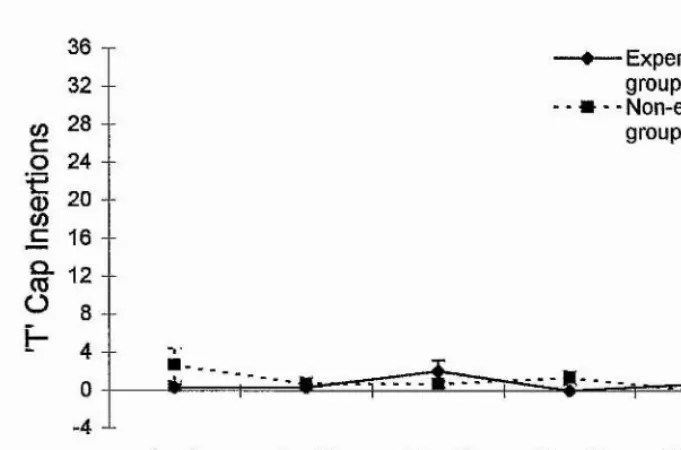
with manipulative experience would first learn to push a rod through the tube earlier, and continue to dislodge the rewards more quickly and more efficiently on subsequent trials than would non-experienced capuchins. The second and third tasks (Experiments 2 and 3, Chapters 3 and 4) were replications of two of Visalberghi and Trinca’s (1989) tool-modification conditions of the tube task. In the second task, short pipes had to be combined or inserted sequentially into the tube to reach the reward and push it through the tube. In the third task, the pipes had T shaped caps on the ends which prevented their insertion into the tube, thus the caps had to be removed in order to solve the task. It was expected that in these tasks the experienced capuchins would dislodge the rewards more quickly and more efficiently than would the non-experienced capuchins. The fourth task (Experiment 4, Chapter 5) was a replication of Visalberghi and Limongelli’s (1994) trap-tube task, in which a trap was added to the tube such that if the reward was pushed over the trap, it would fall into it and become irretrievable. Considering that only one capuchin in Visalberghi and Limongelli’s study solved the task, it was expected that only the capuchins with manipulative experience would achieve success in reliably dislodging the rewards, or at least they would achieve this level of success much earlier than would the non-experienced capuchins. The aim of these experiments was to provide information from which the effects of object manipulation experience on tool- using could be assessed, the limits of capuchin tool-using ability clarified, and the claims made by Visalberghi and colleagues regarding differences between capuchin and chimpanzee cognitive processes reevaluated.
Chapter 2
Experiment 1: Learning a novel tool behavior
To examine the effects of object manipulation experience on capuchins’ tool-using abilities, this first experiment used the most basic tube task introduced by Visalberghi & Trinca (1989), which involved pushing a straight rod through a clear tube to dislodge a reward placed in the center of the tube (see Figure 2.1). The variable of object experience was manipulated by providing one group of capuchins, the experience group, with the opportunity to manipulate the objects used in the task. The other group of capuchins, the non-experience group, was not given this opportunity. By testing both groups of capuchins on the same task, it was possible to examine the effects of this prior experience on learning how to perform a novel tool behavior, pushing a tool through a tube to dislodge the reward, and on subsequent performance of that behavior.
A set of pre-defined, task-oriented behaviors were recorded in this experiment. The behaviors included any direct manipulations with the apparatus or tools used in the task, either individually or in combination with one another. They incorporated both the behaviors scored in Visalberghi and Trinca’s (1989) study with the same task, and behaviors noted during a pilot session in which the apparatus was presented to a group of capuchins that were not used in this study. The purpose of the pilot session was to compile a list of task-oriented behaviors and to make sure the apparatus was sturdy enough to withstand the capuchins’ curiosity and rough handling.
^ ^y \^ \ \
r""v ' llg;'
I
1/ V' V \ / v" V ' B
/ V V \ f ' \ H
i!
mifmsfi m
'.V s/ /
». / / / V
# /
‘-^> y / / . \ ' '. ' / / ' / / y ;/ / y /^ V V V /
.' >/ ./ '
capuchins would work more efficiently on the task by dislodging rewards more quickly and making fewer errors.
Method Subjects
The subjects used in this experiment were eight tufted capuchin monkeys (Cebus apella) housed in two captive social groups at the National Institutes of Health Animal Center (see Table 2.1). The experience group subjects were four monkeys from a social group of 10 animals (see Table 2.2): an adult male, Zephyr; two juvenile males, Garth and Java; and a juvenile female, Jesse. They were housed in a double indoor cage (each cage measuring 2 m wide x 1 m deep x 2 m high) joined by a sliding cage door. Testing of the subjects took place in only one of these cages, which will be referred to as the “test” cage. Each cage contained perches in addition to a variety of enrichment objects, which included balls, cups, chains, and pipes large enough to crawl into. The enrichment objects were a selection of plastic and rubber toys for the monkeys to manipulate, chew, or climb on, thus enhancing their repertoire of activities in captivity.
The non-experience group subjects were four monkeys from a social group of 19 animals (see Table 2.3): an adult male, Creepshow; a juvenile female, Lee; and two juvenile males, Squeak and Iko. They were housed in an enclosure consisting of three outdoor cages and one indoor room (each measuring 2.5 m wide x 3 m deep x 2.5 m high) each joined to the adjacent one by a sliding guillotine door. Testing of the subjects took place in one of these outdoor cages and this will be referred to as the “test" cage. All four cages contained perches in addition to a selection of enrichment objects, which in the outdoor cages included balls, cups, swings, and barrels.
Table 2.1
Subject information
Group Subject Sex Age (yrs) Tool Experie
Experience Zephyr M 18.7 1,2,4.5
Jesse F 5.2 1,5
Garth M 4.1 3,5
Java M 2.8 5
Non-experience Creepshow M 7.0 2,5
Lee F 5.3 2,5
Squeak M 4.0 6
Iko M 3.5 5,6
®Tool experience: 1)Sponging (Westergaard & Suomi, 1993a); 2)Nut cracking (Westergaard & Suomi, 1993b); 3)Cutting (Westergaard et ai., 1997); 4)Bimanuai tube dipping
(Westergaard & Suomi, 1994b); 5)Syrup or ant dipping (Westergaard, Lundquist, Haynie, Kuhn, & Suomi, 1998; Westergaard et al., 1997; Westergaard & Suomi, 1994c; 1994g); 6)Raking (Byrne & Suomi. 1997)
Table 2.2
Social Group Information for Experience Group Subjects
Animal Sex Age(
Ivan M 17.0
Zephyr M 18.7
Jasmine F 11.0
Jesse F 5.2
Java M 2.8
Jumper M 0.1
Greta F 20.2
Garth M 4.1
Gracie F 2.8
Gizmo M 0.7
Table 2.3
Social Group Information for Non-Experience Group Subjects
Animal Sex Age (yrs)
Othello M 17.0
Hamlet M 15.4
Creepshow M 7.0
Lucy F 11.0
Little Ricky M 6.7
Lee F 5.3
Liddy M 4.3
Lorena F 2.7
Lexus M 0.4
Isabella F 16.0
Isuzu M 5.6
Iko M 3.5
Ito M 1.7
Shinade F 12.4
Shasta M 6.7
Squeak M 4.0
Sagan M born mid-study
Mocha F 4.0
Magic F 2.7
Subject selection
Individual subjects were not randomly assigned to each condition, but rather, the social group as a whole was assigned to the experience and non experience conditions. This was done because subjects could not be removed from their social group to carry out this series of experiments. Individual separations caused too much stress and subjects could not be permanently removed from their family group to form a new social group. Consequently, if a subject in one social group was given the opportunity to manipulate the task materials, the other subjects in that group would also have access to the materials. It was necessary, therefore, for all subjects in the same social group to be in the same experimental condition.
To ensure that the animals in each social group were similar with respect to manipulative propensity, they were compared before the experiment began. During 26 half hour sessions (one session per animal above the age of 0.5 years in each group), plastic pipes (each 30 cm in length and 1.3 cm in diameter) were provided to the group in order to supplement the enrichment objects already available in their cage such that each animal had access to at least one object, not being manipulated by another animal, at all times. Between five and fifteen pipes were provided to each group in order to meet this criterion. During each session, the object manipulations of one animal were observed at 15 second intervals. One-zero sampling was used to record object contact and object combination behaviors. Object
contact was defined as manual manipulation of any unattached object in the
cage. Object combination was defined as manual manipulation of an unattached object in combination with another unattached object, in which both objects are clearly in contact with one another. After each session, the pipes were removed from the cage.
object combination (mean frequency per animal = 0.8 for the experience group vs. 1.3 for the non-experience group; (7=68.0, ns).
The eight subjects selected for the current experiment were those animals in each social group that learned to push a tool through the tube within the first few test sessions of the experiment. Therefore, all animals in both social groups had the opportunity to work on the task at the onset of the experiment. However, four animals in each group dislodged a reward within these first few sessions, apart from Squeak who solved in the fifth session when he finally gained access to the task, and these eight animals became the subjects for the current, and subsequent, experiments. The other animals in each social group were not given another opportunity to work on the task due to time constraints imposed by other researchers' schedules and the limited amount of time for carrying out this series of experiments, as well as the interference of social factors such as restricted access to the apparatus for some individuals by more dominant animals. In fact, the majority of non subject animals in each group were either uninterested in the task, too young to be tested as they were still dependent on their mothers, or too low in dominance to be allowed access to the task by other group members.
combination (mean frequency per animal = 2.0 for the subjects vs. 0.7 for the non-subjects; (7=53.0, ns).
Counter Balancing
There was no counter balancing of subjects in the experimental conditions; subjects remained in the same condition, experience or non experience, throughout the series of experiments. As was previously mentioned, subjects housed in the same social group could not be removed from that group and were therefore exposed to the same condition. Had it been possible to divide subjects in each condition and switch half of them to the other condition for each subsequent experiment, it may have been possible to examine the effects of cumulative object experience as compared to experience from objects in a specific experiment. The practicalities, however, dictated that differences between cumulative and non-cumulative experience were not a focus of this thesis. Additionally, for both Visalberghi et al.'s (1995) and Limongelli et al.’s (1995) chimpanzees, object experience was an accumulation of experience manipulating objects throughout their lifetime, and thus experience accumulated across experiments in this study more closely approximates theirs.
experience encompassed a wider variety of objects than were used in this experiment, however the salient ones were most likely those similar to, or related to, the tasks they were tested on. Thus, experience with all of the objects used in these experiments more closely approximates the experience of the chimpanzees than would experience with only one tool. In these experiments, therefore, the effects of manipulative experience on tool-using ability are examined by keeping the experimental groups consistent throughout the experimental series.
One must keep in mind, then, that the effects of experience in all of the subsequent experiments may be due to both cumulative experience from manipulating objects in each study, as well as specific experience manipulating the objects particular to a study. Because the tools are different in Experiments 1 - 3 , and the tube is different in the Experiment 4, both of these effects are possible, and in many cases may be difficult to distinguish between.
Materials
The apparatus was a transparent plastic tube (30 cm in length and 2.4 cm in diameter) mounted in a frame. Because of differences in cage structure, a different frame was used to mount the tube in each group's cage (see Figure 2.2). Despite the difference in appearance of each frame, there were no differences in the function of or access to the tube in either frame. The objects provided for use as tools were all plastic rods (each 30 cm in length and 1.3 cm in diameter). They had been created by placing caps on the ends of PVC pipes, to keep rewards from becoming lodged inside the hollow pipes. The enrichment objects were also available for use, although they were not specifically provided for the experiment.
Procedure
Procedural constraints
30 cm
2.4 cm
(a)
30 cm
(A
a
2.4 cm
(b)
30 cm
] % 1.27 cm
(C)
became stressed when separations occurred. Therefore, to keep stress to a minimum, separations were only performed when necessary. Due to this constraint, all animals in each social group had access to the task during many of the manipulative sessions and at least the first two test sessions. Once a subject completed 50 trials on the task during test sessions, they were then separated out of the test cage during subsequent sessions to allow other subjects increased access to the apparatus. Additionally, some non subject animals were temporarily removed from the test cage to reduce interference with the task. A separation was made by encouraging the animals to go into either the test or non-test cage and then closing the sliding door adjoining the two cages. When these separations were performed for manipulative sessions, an attempt was made to keep all subjects who had not completed their 50 trials in the test cage. When these separations were performed for test sessions, at least one subject was kept in the test cage. However, due to the difficulties with separating animals that were not trained to be separated, priority was given to removing from the test cage those subjects who had completed 50 trials. Whichever subjects then remained in the test cage were given the manipulative or test session. This meant that subjects in the experience group who were still being provided with the opportunity to manipulate the task materials, and subjects in both groups who were still being tested, were not always present in the test cage for every session.
tube by the subject. When more than one subject animal was in the test cage during testing, and both subjects manipulated the apparatus during a trial, the trial was counted for the subject who inserted the tool into the tube and pushed out the reward, thereby solving the task. The trial was not counted for the subject who only touched the tube or manipulated the tool.
Manipulative sessions
The experience group subjects received a series of 30-minute manipulative sessions before each test session. During the manipulative sessions, the apparatus was mounted on the floor inside the cage (except for sessions 1 through 7 as explained above), but no reward was provided. Five rods were placed on the cage floor and they were resupplied if subjects threw them out of the cage during the session. A set of pre-defined behaviors were recorded during the session (see Table 2.4) and qualitative notes including information about the types of tube and rod manipulations made provided supporting details. Manipulative sessions typically lasted 30 minutes, however session 10 only lasted for 20 minutes because subjects broke the tube apparatus and sharp pieces of plexiglass had to be removed from their cage.
The schedule of manipulative and test sessions for each subject was dependent upon their success during each test session and their cooperation during separations. All four subjects were present for the first 12 manipulative sessions. On all subsequent manipulative sessions. Garth was separated out of the test cage because he had completed his testing. Due to the aforementioned difficulties with separations, not all of the remaining subjects were present for each subsequent manipulative session. Table 2.5 shows the final schedule of manipulative and test sessions for each subject. Sessions are numbered separately for each subject. The non-experience group was not provided with any manipulative sessions. They were tested on a continuous testing schedule until 50 trials had been completed by each subject (see Table 2.6).
Test sessions