DEVELOPMENTAL AND SEX DIFFERENCES IN RESPONSES TO NOVEL OBJECTS: AN EXPLORATION OF ANIMAL MODELS OF
SENSATION SEEKING BEHAVIOUR
De-Laine M. Cyrenne
A Thesis Submitted for the Degree of PhD at the
University of St. Andrews
2012
Full metadata for this item is available in Research@StAndrews:FullText
at:
http://research-repository.st-andrews.ac.uk/
Please use this identifier to cite or link to this item: http://hdl.handle.net/10023/2550
This item is protected by original copyright
Developmental and sex differences in responses to
novel objects: An exploration of animal models of
sensation seeking behaviour
De-Laine M. Cyrenne
This thesis is submitted in partial fulfilment for the degree of PhD
at the
University of St Andrews
Candidate’s declarations:
I, De-Laine M. Cyrenne, hereby certify that this thesis, which is approximately 59,775
words in length, has been written by me, that it is the record of work carried out by me and
that it has not been submitted in any previous application for a higher degree.
I was admitted as a research student in September, 2007 and as a candidate for the degree of
Ph.D. in September, 2007; the higher study for which this is a record was carried out in the
University of St Andrews between 2007 and 2010.
Date: September 25, 2011 Signature of candidate:
Supervisor’s declaration:
I hereby certify that the candidate has fulfilled the conditions of the Resolution and
Regulations appropriate for the degree of Ph.D. in the University of St Andrews and that the
candidate is qualified to submit this thesis in application for that degree.
Permission for electronic publication
In submitting this thesis to the University of St Andrews I understand that I am giving
permission for it to be made available for use in accordance with the regulations of the
University Library for the time being in force, subject to any copyright vested in the work
not being affected thereby. I also understand that the title and the abstract will be published,
and that a copy of the work may be made and supplied to any bona fide library or research
worker, that my thesis will be electronically accessible for personal or research use unless
exempt by award of an embargo as requested below, and that the library has the right to
migrate my thesis into new electronic forms as required to ensure continued access to the
thesis. I have obtained any third-party copyright permissions that may be required in order to
allow such access and migration, or have requested the appropriate embargo below.
The following is an agreed request by candidate and supervisor regarding the electronic
publication of this thesis:
(i) Access to printed copy and electronic publication of thesis through the University of St
Andrews.
Date: September 25, 2011 Signature of candidate:
i Acknowledgements
Thanks to the School of Psychology at the University of St Andrews for the opportunity to learn from such a diverse and talented academic staff.
Especially, I would like to thank Dr. Gillian Brown, my supervisor and mentor, for her help and patience, and a shared laugh (and occasional glass of wine) or two along the way.
Thanks also to my co-supervisors for their support and guidance: Dr. Eric Bowman and Prof. Philip Winn.
Thanks also to the members of staff in the lab for their assistance: Wendy Taylor, Mike Kinnear, Steve Laing and the all the others over the time. A very heartfelt thank you goes to Mary Latimer for her support and advice – from that first meeting at SFN in Atlanta and throughout my stay at St Andrews.
Lin MacLean – Thank you!!!
ii Abstract
iii
Table of Contents
Abstract ... ii
List of figures ... v
List of tables………...viii
Chapter 1: Sensation seeking behaviour ... 1
1.0 Introduction ... 1
1.1 Sensation seeking in humans ... 5
1.1.0 Sensation seeking measures ... 6
1.1.1 Age and sex differences ... 9
1.1.2 Physiological influences ...13
1.2 Novelty preference in animals ...22
1.2.0 Novelty preference measures ...24
1.2.1 Age and sex differences ...27
1.2.2 Physiological influences ...29
1.3 Thesis outline ...37
Chapter 2: Conditioned place preference ...39
2.0 Introduction ...39
2.1 Experiment 1 ...46
2.1.0 Methods ...46
2.1.1 Results ...50
2.1.2 Summary ...53
2.2 Experiment 2 ...55
2.2.0 Methods ...55
2.2.1 Results ...58
2.2.2 Summary ...60
2.3 Experiment 3 ...61
2.3.0 Methods ...61
2.3.1 Results ...62
2.3.2 Summary ...64
2.4 Experiment 4 ...65
2.4.0 Methods ...65
2.4.1 Results ...66
iv
2.5 Discussion ...71
3.0 Introduction ...78
3.1 Experiment 1 ...86
3.1.0 Methods ...86
3.1.1 Results ...91
3.1.2 Summary ...97
3.2 Experiment 2 ...99
3.2.0 Methods ...99
3.2.1 Results ... 101
3.2.2 Summary ... 107
3.3 Experiment 3 ... 109
3.3.0 Methods ... 109
3.3.1 Results ... 112
3.3.2 Summary ... 120
3.4 Discussion ... 122
Chapter 4: Adolescent sex differences in novel object recognition ... 127
4.0 Introduction ... 127
4.1 Novel Object Recognition ... 132
4.1.0 Methods ... 132
4.1.1 Results ... 137
4.2 Discussion ... 144
Chapter 5: Influence of gonadal hormonal levels in novel object recognition in mid-adolescence ... 151
5.0 Introduction ... 151
5.1 Antide study ... 157
5.1.0 Methods ... 157
5.1.1 Results ... 162
5.2 Discussion ... 169
Chapter 6: Conclusion ... 175
6.0 Summary of results ... 175
6.1 Conclusions and future research ... 181
References ... 185
v
List of figures
Chapter 2
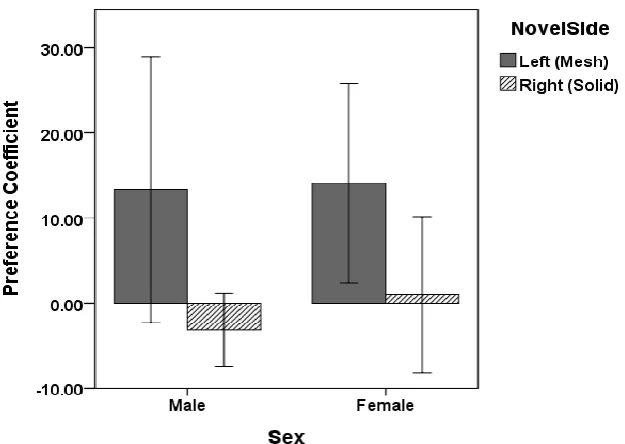
Figure 1. CPP 1 Mean preference coefficient during the preference test by sex and side previously paired with a novel object during conditioning trials. Error bars represent +/- 1 standard error of the mean. ...51
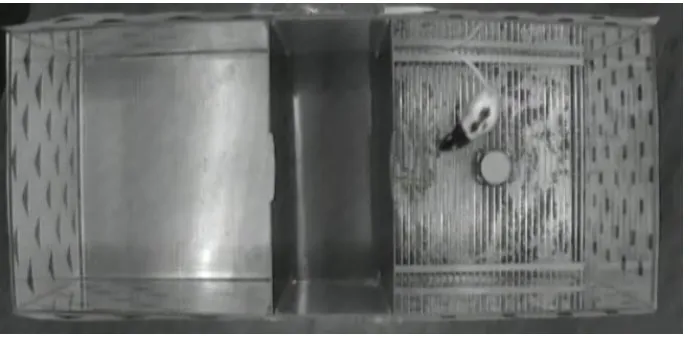
Figure 2. Conditioned place preference testing apparatus in use during a conditioning session with a novel object. ...56
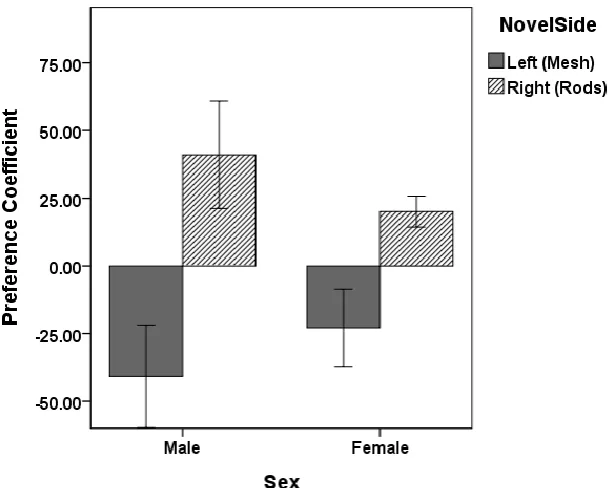
Figure 3. CPP 2 Mean preference coefficient during the preference test by sex and side previously paired with a novel object during conditioning trials. Error bars represent +/- 1 standard error of the mean. ...59
Figure 4. CPP 3 Mean preference coefficient during the preference test by sex and side previously paired with a novel object during conditioning trials. Error bars represent +/- 1 standard error of the mean. ...63
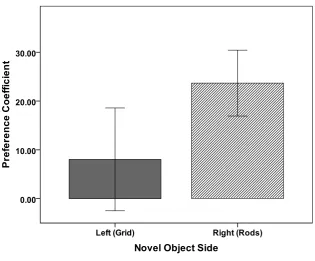
Figure 5. CPP 4 Mean preference coefficient during the preference test by side previously paired with a novel object during conditioning trials. Error bars represent +/- 1 standard error of the mean. ...67
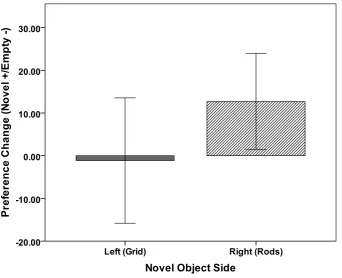
Figure 6. CPP 4 Mean preference change from familiarization trial to the preference test by side previously paired with a novel object during conditioning trials. Error bars represent +/- 1 standard error of the mean. ...69 Chapter 3
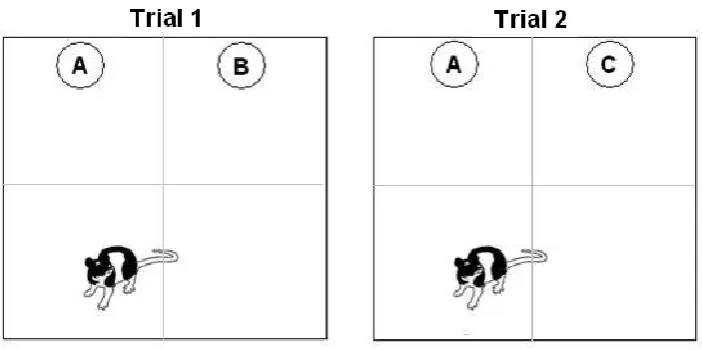
Figure 7. A diagram of object position and animal placement during Trial 1 and Trial 2. Grey lines denote quadrant boundaries but were not present in the apparatus. ...88
Figure 8. Number of detected movements per minute of males and females in a 30-minute locomotor test. ...92
Figure 9. NOR 1 mean total object contact during Trial 1 (Left) and Trial 2 (Right), in seconds, by sex and novel object. Both objects in Trial 1 were identical (multi-coloured LEGO® Duplo blocks tower). Error bars represent +/- 1 standard error of the mean. ...93
Figure 10. NOR 1. Top: Mean contact time, in seconds, with Familiar and Novel objects in Trial 2 by object and sex (Left) and overall by sex (Right). Bottom: Mean novelty preference (Left) and mean preference change (Right) during Trial 2 by sex and novel object. Error bars represent +/- 1 standard error of the mean. ...96
vi
Figure 12. NOR 2 mean total locomotion (quadrant crossings) (Left), and total object contact, in seconds (Right), during Trial 1 and Trial 2 by sex. Error bars
represent +/- 1 standard error of the mean. ... 102
Figure 13. NOR 2. Top 4 graphs: Mean contact time, in seconds, with Familiar and Novel objects in Trial 2 by object and sex. Bottom: Mean novelty preference (Left) and mean preference change (Right) during Trial 2 by sex and novel object. Error bars represent +/- 1 standard error of the mean. ... 105
Figure 14. NOR 2 mean preference measures during Trial 2 by sex. Error bars represent +/- 1 standard error of the mean. ... 106
Figure 15. A diagram of object positions and animal placement during the four sessions with objects, Trial 1 (T1), Trial 2 (T2), Trial 3 (T3) and Trial 4 (T4). If more object contact was made with object C than A in T2, object D than C in T3 and object E than D in T3, then a preference for novelty was indicated... 111
Figure 16. Mean duration of movement, in seconds (Left) and mean total object contact (Right), in seconds, during Trial 1, Trial 2, Trial 3 and Trial 4 by sex. Error bars represent +/- 1 standard error of the mean. ... 113
Figure 17. Top 3 graphs: Mean contact time, in seconds, with Familiar and Novel objects in Trial 2, Trial 3 and Trial 4 by sex. Bottom: Mean novelty preference (Left) and mean preference change from the previous trial (Right) during Trial 2, Trial 3 and Trial 4 by sex. Error bars represent +/- 1 standard error of the mean. ... 117
Figure 18. Mean preference measures, novelty preference (NP) and preference change (PC), during Trial 2, Trial 3 and Trial 4. Error bars represent +/- 1 standard error of the mean. ... 118 Chapter 4
Figure 19. A diagram of object position and animal placement in the novel object recognition task during Trial 1 and Trial 2. Grey lines denote quadrant boundaries but are not present in the apparatus. ... 135
Figure 20. Top: Mean movement duration, in seconds, and Bottom: Mean total object contact, in seconds, during Trial 1 and Trial 2 by sex and age group. Error bars represent +/- 1 standard error of the mean. ... 139
Figure 21. Top: Mean contact time, in seconds, with Familiar and Novel objects in Trial 2 by age and sex. Bottom: Mean novelty preference (Left) and mean
preference change (Right) during Trial 2 by sex and age group. Error bars represent +/- 1 standard error of the mean. ... 143 Chapter 5
vii
Figure 23. Comparison of Antide treated (bottom in both pictures) and control (top) male testes (left) and female uterine horns (right) at posnatal day 40. ... 163
Figure 24. Top: Mean movement duration, in seconds, and Bottom: Mean total object contact in Trial 1 and Trial 2, in seconds, by sex and treatment group. Error bars represent +/- 1 standard error of the mean. ... 166
viii
List of tables
Chapter 3
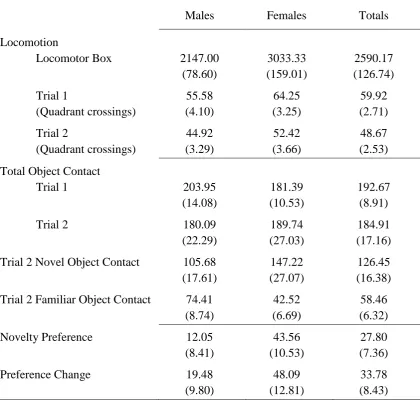
Table 1. NOR 1. Means, in seconds (except where noted), and standard error of mean of behavioural measures and preference scores by sex (n = 12 per
group)……….……….97 Table 2. NOR 2. Means, in seconds (except where noted), and standard error of mean of behavioural measures and preference scores by sex (n = 10 per
group).……….………..106 Table 3. NOR 3. Means, in seconds, and standard error of mean of behavioural measures and preference scores by sex (n = 15 per group).……….……….118 Chapter 4
Table 4. Means, in seconds, and standard error of mean of behavioural measures and preference scores by sex and age group (n = 12 per group).……….………....144
Chapter 5
1
Chapter 1: Sensation seeking behaviour
1.0 Introduction
Sensation seeking is characterised by an attraction towards activities that are new or exciting. These activities could be new experiences, such as travel to exotic locales and taking the road less travelled, or daring adventures, such as skydiving and mountaineering. Typically, sensation seeking behaviours are higher in males than females, peak during adolescence, and decline with age (Ball, Farnhill & Wangeman, 1984; Zuckerman, Eysenck & Eysenck, 1978), but why is there a difference between the sexes and across age groups? The aim of this research is to take a closer look at the age and sex differences in sensation seeking and explore the physiological
mechanisms that could lead to an understanding of why males, especially adolescents, show higher levels of this behaviour.
2 stimulation, drives behavioural choices in high sensation seekers rather than
preferences for a specific activity.
Though some associated behaviours are considered more positive avenues for expression, others are more negative and have more potential for abuse. Several studies found relationships between high sensation seeking and increased levels of drugs and alcohol use, risky sexual behaviour, and gambling (Zuckerman, 1994). For example, male and females undergraduate students who scored high on a
questionnaire measure of sensation seeking were more likely to consume greater quantities of alcohol per occasion than low scorers (e.g. Earleywine and Finn, 1991; Johnson & Cropsey, 2000), more likely to try illicit drugs of all classes (e.g.
marijuana, hallucinogens, and amphetamines) than low sensation seekers (Kish and Donnenwerth, 1972; Kumar, Pekala & Cummings, 1993), and more likely to exhibit increased frequency of unprotected sex and a greater number of partners (Arnold, Fletcher & Farrow, 2002; Zuckerman et al., 1976). Sensation seekers have reported feeling a ‘natural high’ or arousal when participating in stimulating activities, therefore the same neural regions may be affected as drugs of abuse, particularly the dopaminergic system (Zuckerman, 1994). Understanding the mechanisms underlying sensation seeking therefore has potential implications for a range of mental and physical health risks.
3 could be a result of increased desire for stimulation and change, along with greater peer influences, that precedes mature cognitive control (Berndt, 1979; Steinberg, 2004). Dahl (2001) compared the process to starting the engine without a skilled driver behind the wheel. Risk taking, however, is not the same as sensation seeking, though they share many of the same behavioural characteristics (Arnett, 1992; Jonah, 1997; Martin et al., 2002; Zuckerman, 1994). So while the definition of sensation seeking trait includes ‘the willingness to take risks’, it is not an essential aspect of the
trait (Zuckerman, 1994). Therefore, measures of behaviours associated with risk taking (e.g. drug abuse) may not be generalizable to understanding the motivations or physiological correlates of sensation seeking.
The activational effects of gonadal hormones trigger the onset of puberty, leading not only to the acquisition of secondary sexual characteristics, but also to behavioural changes (Kuhn et al., 2010; Spear, 2000). Since sensation seeking and risk taking is elevated in adolescent males, changing levels of gonadal hormones are a likely mechanism affecting the expression of these behaviours at different levels in males and females. Studies of hormone related disorders suggest that the gonadal hormones could be the mechanism for the pubertal changes in the dopaminergic pathways and structures (Hier & Crowley, 1982; Morse, Scheff & DeKosky, 1986; Murphy & DeCarli, 1993). Sexually dimorphic dopaminergic system changes during adolescence support the hypothesis that an overactive dopaminergic system without corresponding changes in the prefrontal cortex leads to increased risk taking
4 Although the data suggest physiological differences between humans are the bases for why some people exhibit sensation seeking behaviour while others do not, cause and effect between physiology and behaviour is difficult to determine in humans. Much of the understanding of the physiological influences of sensation seeking in humans is dependent on correlational studies, comparing responses on self-report questionnaires about behaviour to measureable levels of circulating gonadal hormones and dopamine metabolites, or, more recently, fMRI readings and
genotypes. Prenatal influences are harder to measure, as are the organizational effects of gonadal hormones during adolescence, though some relationships can be assessed through either clinical patients or postmortem tissue analysis. In each case, it can be difficult to establish cause and effect between physiology and behaviour.
Behavioural experimentation in animals provides a way to determine what variables, (e.g. gonadal hormones, dopamine) are responsible for a given behaviour in that species. However, a similarity of behaviour between animals and humans is not enough to establish that the motivations or mechanisms producing the behaviour are equivalent (Zuckerman, 1984b). Clark (1984) gave a logical argument indicating what must be considered for a comparative approach to sensation seeking: if animals exhibit behaviour similar to sensation seeking, if both then correlate with the same biological factors in each species, and, finally, if the same physiological mechanisms produce the same behaviour in both animals and humans, then direct comparisons can be made.
Though many tests have been designed to measure sensation seeking in animals, some tasks are better at eliciting intrinsic exploration, including those where animals are ‘free’ to choose between novel an familiar stimuli, rather than ‘forced’
5 research will examine animal responses to novelty in two designs, the conditioned place preference test (CPP) and the novel object recognition test (NOR), and assess each for benefits and limitations. Although the terms ‘sensation seeking’ and ‘novelty seeking’ have been used interchangeably in the literature, for this thesis, sensation
seeking will be used to describe the behaviour in humans, and novelty seeking will be used with animal behaviour. Additionally, most studies of novelty preferences in rodents examine this behaviour in male, adult animals. In order to understand the ontogeny of sex differences in responses to novelty, both males and females will be tested from adolescence through adulthood. Through the use of animal models, it is possible to get a better understanding of the physiological mechanisms that may be influencing age and sex differences in sensation seeking in humans.
1.1 Sensation seeking in humans
Sensation seeking is a trait defined by the “seeking of varied, novel, complex, and intense sensations and experiences, and the willingness to take physical, social, legal, and financial risks for the sake of such experience” (Zuckerman, 1994, p.27). Marvin
Zuckerman and colleagues (1964) created the first self-report questionnaire designed to measure individual differences in levels of sensation seeking behaviour, the Sensation Seeking Scale (SSS). According to Zuckerman and colleagues (1964), the development of this test was influenced by the previous works of Hebb and
Thompson (1954), Berlyne (1960) and Fiske and Maddi (1961), all of which explored the concept of an optimal level of stimulation, where some individuals crave stimulus reduction while others seek out stimulation to attain their optimal level (Zuckerman, Kolin, Price and Zoob, 1964). Early research into this area by Zuckerman and
6 between subjects, thus leading to the search for a general factor of sensation seeking. Questions in the early SSS forced test-takers to choose between two contrasting preferences between sensation extremes, familiar or unfamiliar situations, routine or irregularity and enjoyment of thrilling or dangerous activities.
Following further iterations of the sensation seeking scale (SSS-II, SSS-III), Zuckerman (1971) moved from the notion of a single general sensation seeking factor to the revised SSS-IV, which defined four subscales: ‘thrill and adventure-seeking’ (TAS; e.g. ‘I would like to try parachute jumping’), ‘boredom susceptibility’ (BS; e.g. ‘I get very restless staying at home’), ‘disinhibition’ (Dis; e.g. ‘I like wild parties’) and ‘experience-seeking’ (ES; e.g. ‘I like to try new foods’). Zuckerman’s original
definition of sensation seeking behaviour, along with the four subscales, has become one of the more widely used in studies that have looked at the association between personality traits and behaviour. For example, while both those in high physical risk occupations (e.g. fire-fighting or mountain rescue) and those in high risk sports (e.g. parachutists, mountain climbers, race car drivers) showed higher levels of Dis than age-matched controls, only the high risk sport participants scored higher on the TAS subscale (Zaleski, 1984).
1.1.0 Sensation seeking measures
Zuckerman’s SSS has gone through several versions, refining questions to be more
7 format to avoid forced-choice questions and is more resistant to cultural changes, it measures only the TAS and Dis subscales and, thus, the SSS-V remains the more used measure of sensation seeking (Zuckerman, 1994).
However, several authors have criticized Zuckerman’s SSS and the ability of
the test to accurately assess sensation seeking; for example, Gray and Wilson (2007) criticised the SSS-V for the forced-choice format and suggested removal of several dated items as well as changing to a Likert type response format. A response by Zuckerman (2007) noted that several of the items they used were from the 1978 version of the SSS-V, and did not include the 1994 updates. Although Gilchrist and colleagues (1995) had a similar concern with the 1978 version of the SSS-V, that several items required updating, the authors concluded that the scale was a reliable measure of sensation seeking. An additional critique of the SSS-V was made by Jackson and Maraun (1996) regarding the validity of the scale, questioning if the SSS actually measures sensation seeking. Zuckerman defended the validity of both the construct and the content, indicating that the use of factor analysis during
development of the SSS allowed for the construct of sensation seeking and the subscales to be defined by the data (Zuckerman, 1996).
8 their investigation of age and sex differences in sensation seeking. Roth and
colleagues were concerned that the activities listed in the questions of both the SSS-V and the AISS could be construed as too youthful, resulting in an inaccurate age-related decline in sensation seeking. Rather than ask about the desire to have a specific experience, the Need Inventory of Sensation Seeking (NISS) measured responses to more general questions such as “I prefer strong and impressive
experiences.” However, the researchers found that the NISS confirmed the findings
of prior studies using the SSS-V and the AISS, and concluded that an age-related decline in sensation seeking was robust and perhaps due to a decreased need for stimulation (Roth et al., 2007).
Several alternate, comprehensive tests have included subscales associated with sensation seeking in addition to other dimensions of personality. Among these tests are the Eysenck Personality Questionnaire – Revised (EPQ-R; Eysenck, Eysenck & Barrett, 1985), the I7 Impulsiveness Questionnaire (I7; Eysenck, Pearson, Easting & Allsopp, 1985), the Temperament and Character Inventory (TCI; Cloninger,
Przybeck, Svrakic & Wetzel, 1994), and Zuckerman and Kuhlman’s Personality Questionnaire (ZKPQ; Zuckerman, Kuhlman, Joireman, Teta & Kraft, 1993). Positive correlations have been found between the SSS-V total score and both the TCI-NS (novelty seeking) and the ZKPQ-ImpSS (impulsive sensation seeking) subscales (Zuckerman & Cloninger, 1996; Zuckerman et al., 1993). Associations were also indicated between the Dis, BS and ES subscales of the SSS-V with the L (lie) and P (psychoticism) subscales of the EPQ-R, which the authors termed
9 specific test used to assess the behaviour may differ based on researcher preferences and the nature of the research question.
Sensation seeking has been measured in humans mainly through the use of self-report questionnaires, though reports of experiences and behavioural observation have been used in some studies (Zuckerman, 1984). However, questionnaires can have limitations that need to be considered when interpreting results in correlational studies. Self-report responses can be affected by social desirability (SD), which is the possibility that respondents may answer questions in a way that is more socially desirable than truthful, thereby affecting the validity of the results. A way to check if SD is problematic with a particular scale is to administer the test along with
instructions to answer the questions in a way to give socially desirable responses, and compare the results to scores with unbiased instructions. Farley and Haubrich (1974) administered the SSS-IV to a group of college students instructing them to respond so as to give a “good impression” or a “bad impression” to others, and found no
difference in scores between the groups or against their baseline scores. In a separate study, however, when the test-takers were instructed to give the best possible image to someone they found attractive, males scored higher than baseline on the TAS and BS subscales, while females scored higher in all the scores (Rowland & Heatherton, 1987). These data suggest that responses on questionnaire measures of sensation seeking are not entirely robust.
1.1.1 Age and sex differences
10 2001; Zuckerman, 2006). In addition, males were reported to engage in more
sensation seeking behaviours than females across all age categories, while both males and females showed decreased sensation seeking as they age (Ball, Farnhill &
Wangeman, 1984; Magaro, Smith, Cionini & Velicogna, 1979; Roth et al., 2005; Trimpop, 1998; Zuckerman, Eysenck & Eysenck, 1978). These data collectively suggest that age and sex differences in sensation-seeking are relatively robust.
Several studies of adolescents and juveniles, with ages tested ranging from 7 to 19 years old, reported males as higher than females in total sensation seeking, risk-taking or venturesomeness, whereas females were typically rated higher in empathy or experience-seeking during these ages (Arnett, 1992; Butković & Bratko, 2003; Pérez, Ortet, Plá & Simó, 1986; Randhawa, De Lacey & Saklofske, 1986; Zuckerman, Eysenck & Eysenck, 1978). Studies of juveniles, however, are limited, perhaps due to the nature of the questions on the various measures (Zuckerman, 1994). A children’s version of the SSS was developed by Russo and colleagues (1991, revised 1993), which showed increased total sensation seeking from ages 7 to 12 years of age and from 9 to 14 years of age, with males higher than females in TAS and total scores. Similar finding were reported in an earlier study by Kafry (1982), which indicated an increase between 6 and 10 years of age, although males were higher than females only in the older age groups. Additional research is needed, however, to understand the pattern of sensation seeking expression from early childhood through adolescence.
11 (Arnett, 1992; Jonah, 1997; Steinberg, 2004). During the adolescent period of
development, one theory for increased risk taking is that the perception of risk declines while the desire for change, or sensation seeking, increases (Benthin, Slovic & Severson, 1993; Irwin, 1993; Steinberg, 2007). Additionally, Rolison and
Scherman (2002) found sensation seeking and lowered perceived risk were better predictors of risk taking behaviour than perceived benefits. Lowered risk perception combined with the need for additional stimulation by adolescents could result in increased participation in activities with potentially negative outcomes.
Yet, while drug use or risky driving in adolescents has been associated with both high sensation seeking and risk taking, the two behavioural traits are not synonymous (Andrucci, Archer, Pancoast & Gordon, 1989; Arnett, 1992; Jonah, 1997; Martin et al., 2002). For example, high sensation seeking was associated with risky sexual behaviours such as increased frequency of unprotected sex and a greater number of partners (Arnold, Fletcher & Farrow, 2002; Horvath & Zuckerman, 1993; Zuckerman et al., 1976). However, while White and Johnson (1988) found increased sexual activity in adolescents who were high in disinhibition and impulsivity, the authors did not find a difference in the use of contraception between the high and low rated groups. The adolescents exhibited a high level of sensation seeking, but not increased risk (White & Johnson, 1988). Therefore, Steinberg (2004, 2007, 2010) proposed that developmental neuroscience was a better approach to study risk taking in adolescents rather than assessment of risk perception. An increased desire for stimulation and change (sensation seeking), when combined with greater peer
12 Although total sensation seeking decreases across the lifespan, age and sex interactions are evident on the subscales of the SSS-V, suggesting the pattern of decline differs between males and females. In an English sample, decreased scores from age group 16-19 years through age group 60+ years were found only on the TAS and Dis subscales in males, with little difference in the BS and ES subscales, whereas females decreased in all four subscales (Zuckerman et al., 1978). In addition to Total SS, males were higher than females in the TAS, Dis and BS subscales, but not in ES. Although similar results were found by Ball and colleagues (1984) in an Australian sample, a sharper decrease was observed in male ES and Dis scores than females in the 30-39 age group, and thus female scores were somewhat higher than males at this age, particularly on the ES subscale. While examining cross-cultural validation of the SSS-V, two additional studies found no age decline or sex difference on the ES subscale (Canada: Ridgeway & Russell, 1980; China: Wang et al., 2000), suggesting both males and females remain open to new experiences as they age. Alternately, Zuckerman (1994) suggested that the ES subscale was the most influenced by educational and cultural differences, thereby reflecting generational changes in attitudes, especially in women. Thus, due to the cross-sectional rather than longitudinal design of the research, age and sex differences found in measures of sensation seeking, including the other subscales of the SSS-V may also be influenced by generational changes (Roth et al., 2005; Zuckerman, 1994).
13 females in each case, and no sex difference was indicated on the ES subscale.
Additional analysis indicated that sex differences remained consistent through the different age groups for the SSS-Total and subscales. However, on the
Venturesomeness scale of the I7 (Eysenck et al., 1985), the sex difference, males higher than females, was greatest in the adolescent and young adult age groups, 15-18 and 18-21 years of age (Cross, Copping & Campbell, 2011). Although the articles selected for inclusion in the meta-analysis were limited to English language studies published between 1980 and 2008, the sensation seeking measures included the SSS-II (Zuckerman et al., 1964) through the SSS-VI (Zuckerman, 1984) as well as the newer I7 (Eysenck et al., 1985). Therefore, age related changes in sex differences on the SSS may have been more difficult to distinguish due to potential generational differences between cohort groups.
Evidence suggests that sensation seeking behaviours are higher in males than females, peak in adolescence, and decline with age. Longitudinal studies may refine knowledge of age and sex difference patterns, but changes in cohort attitudes and opportunities, especially regarding male and female roles, could continue to affect the detection of differences using existing questionnaires. Yet, since sex differences across the lifespan appear relatively robust and have been replicated cross-culturally in a growing number of studies, biological factors may influence individual and group differences in sensation seeking behaviour.
1.1.2 Physiological influences
14 have a predisposition toward sensation seeking? The second approach coincides with the first by asking what physiological responses may be occurring in those who do score high in sensation seeking compared to those who score low. As males generally score higher than females and sensation seeking levels decline with age, examining physiological influences can also help with understanding sex and age differences.
Gonadal hormones
Levels of circulating gonadal hormones (oestrogens, progesterones and androgens), differ between males and females and also vary greatly during the lifespan. During puberty, the circulation of gonadotrophin-releasing hormone (GnRH) stimulates the release of follicle-stimulating hormone (FSH) and luteinizing hormone (LH), leading to the production of testosterone in males and oestrogen in females (Sisk & Foster, 2004). Hormones in adults can affect behaviour rapidly, since sex steroids can act similar to neurotransmitters, or more slowly, via genomic actions (Ball & Balthazart, 2006; Balthazart & Ball, 2006; Sisk & Foster, 2004). Age and sex differences in sensation seeking suggest that gonadal hormone levels may influence sensation seeking behaviours.
An early study found positive relationships between the Dis subscale of the SSS-IV and both androgens and oestrogens in young adult males (age 17-23, N = 76), and with oestrogens in a small sample of females (mean age 19, N = 7) (Daitzman, Zuckerman, Sammelwitz & Ganjam, 1978). A subsequent study by Daitzman and Zuckerman (1980) compared the gonadal hormone levels of males (age 17-20, N = 40) who scored at the high and low extremes on the Dis subscale. Positive
15 recent studies of males have had mixed results. Several researchers reported a
positive correlation between testosterone and various measures of sensation seeking (Aluja & Torrubia, 2004; Bogaert & Fisher, 1995; Gerra et al., 1999), while others indicated no significant relationship (Dabbs, Hopper & Jurkovic, 1990; Rosenblitt, Soler, Johnson & Quadango, 2001). The results of studies examining the relationship between hormones and females were also mixed. Balada and colleagues (1993) found the lowest TAS scores in females with the highest oestrogen levels, in agreement with the earlier study by Daitzmen (1978), but did not replicate the positive association Daitzmen found with the Dis subscale in the more recent study (1980). Additionally, no relationship was indicated between sensation seeking and testosterone in women (Rosenblitt et al., 2001). In each of these cited studies examining the relationship between gonadal hormones and sensation seeking levels, the participants’ levels of circulating gonadal hormones at the time of the study were measured and compared to responses on sensation seeking questionnaires. However, as sex differentiation begins
in utero, gonadal hormones could influence sensation seeking at an earlier stage in development.
16 high levels of testosterone prenatally (as the result of a condition known as congenital adrenal hyperplasia) exhibited increased male-typical play behaviour and had more male playmates during childhood (Servin, Nordenström, Larsson, & Bohlin, 2003). In a study of adult males with androgen deficits, both hypogonadal and eugonadal, no effect of androgen administration on sensation seeking scores was found within each group (O’Carroll, 1984). However, the same study found that the males with adult
acquired deficiencies scored higher in sensation seeking than the hypogonadal males (O’Carroll, 1984). Yet another argument is that other genes not related to steroidal
hormones, such as SRY, can influence sex differences during development (Arnold, 1996). However, as sexual differentiation occurs early in the gestational process, the organizational effects of gonadal hormones in utero could lead to systemic changes that are not apparent until the onset of puberty.
With regards to sensation seeking, few researchers have examined the association between physical measures linked with developing levels of steroidal hormones and sensation seeking behaviour. Based on animal studies, females in opposite-sex dizygotic twins are thought to experience increased levels of testosterone
17 males exhibited higher sensation seeking, particularly Dis, than same-sex twin
females (Cohen-Bendahan et al., 2005).
The ratio of the second to fourth digit length (2D:4D ratio) is thought to be an indicator of prenatal testosterone exposure, with males tending to have a lower ratio (4th finger longer) than females (McFadden & Shubel, 2002; Manning, Scutt, Wilson & Lewis-Jones, 1998). However, no association was found between digit ratio and sensation seeking in a meta-analysis of the small number of studies examining the relationship between the 2D:4D ratio and sensation seeking (Voracek, Tran & Dressler, 2009). The difficulty in measuring prenatal steroidal hormone levels in humans along with the lack of conclusive associations between hypothesized measures and sensation seeking, suggest additional mechanisms may be mediating sex differences in sensation seeking.
Dopamine
The standard definition of sensation seeking refers to actively seeking sensations and experiences with the idea that stimulation leads to an optimal level of arousal;
therefore, the rewarding aspects of novel stimuli may be affecting the same
18 some people exhibit increased sensation seeking behaviour and others do not (Bardo, Donohew & Harrington, 1996; Zuckerman, 1994). As adolescents are thought to be more sensitive to the rewarding properties of drugs and sex differences are found in patterns of drug use, dopaminergic responses could also contribute to the age and sex differences found in sensation seeking (Becker, 2009; Doremus-Fitzwater,
Varlinskaya & Spear, 2010; Spear, 2000).
Dopamine is involved in the processing of reward via the mesolimbic pathway, which originates in the ventral tegmental area (VTA) and acts on the nucleus accumbens (NAc), and through interconnection with the mesocortical pathway, which projects to the amygdala, hippocampus, and prefrontal cortex (PFC) (Berridge, 2004; Kelley & Berridge, 2002; Wise & Rompre, 1989). In MRI studies, researchers have found gray matter thickening, thought to be a sign of synaptic growth during cortical reorganization, coincides with puberty and typically peaks a year earlier in females than in males before decreasing again to adult levels (Bramen et al., 2010; Giedd et al., 1999; Huttenlocher & Dabholkar, 1997; Sisk & Zehr, 2005). For both sexes, the peak volumes of gray matter occurs earlier in the frontal and parietal lobes, between 10 and 12 years of age, than in the temporal lobe, which extends to mid-adolescence, or the prefrontal cortex, which does not mature until the early 20’s (Giedd, 2004; Giedd et al., 1999; Huttenlocher & Dabholkar, 1997).
Within the dopaminergic pathways, sexually dimorphic enlargement of hippocampal (in males) and amygdala (in females) volumes has been associated with puberty, which typically occurs earlier in females (Bramen et al., 2010; Giedd, 2004; Giedd et al., 1997). Additional evidence of sexual dimorphism within the
19 higher activation in the parietal and prefrontal cortices, suggesting developmental differences in this area (Grön et al., 2000). Generally, hippocampal activation has also been linked with novelty detection, while hippocampal volume has been positively associated with the ES subscale of the SSS-V, the desire for novel experiences (Kumaran & Maguire, 2009; Martin et al., 2007).
In humans, females with Turner’s syndrome, a gonadal hormone deficiency, had reduced hippocampal volume, similar to hormone dependent decreases in hippocampal projections observed in gonadectomised female rats (Morse, Scheff & DeKosky, 1986; Murphy & DeCarli, 1993). Hypogonadal males with untreated androgen deficits before puberty showed reduced spatial abilities, which have been associated with hippocampal functioning, compared to either males treated during puberty or to eugonadal males who acquired deficits as adults (Hier & Crowley, 1982). Together, these findings suggest the hormonal influence on hippocampal development during adolescence is time-sensitive and sex-specific, thereby influencing age and sex differences in the dopaminergic system.
Apart from the general neurological structures associated with the
dopaminergic system, differences in dopamine receptor levels or functioning could contribute to differences in sensation seeking levels. The five types of dopamine receptors, D1 – D5, can be further classified into two groups based on their
biochemical and pharmacological properties. The D1-like group includes the D1 and D5 receptors, found postsynaptically in the caudate putamen, nucleus accumbens, cerebral cortex and amygdala. The D2-like group, which includes the D2, D3 and D4 types, is primarily found presynaptically in areas such as the VTA and the substantia nigra (SN), and give rise to the dopaminergic pathways. Among the D2-like
20 the amygdala (Khan et al., 1998; Vallone, Picetti & Borrelli, 2000). An inverse relationship has been found between D2-like receptors in the midbrain and sensation seeking as measured on the TPQ (Zald et al., 2008). Zald and colleagues suggested that the lower level of midbrain D2-like receptors, which are presynaptic, results in increased availability of dopamine in high sensation seekers, as there is decreased inhibition of dopamine release by the autoreceptors. This hypothesis is consistent with the increased activation found in the hippocampus of high sensation seekers, which, along with the increased hippocampal volume in adolescent males, could contribute to the age and sex differences found in sensation seeking (Giedd et al., 1997; Kumaran & Maguire, 2009; Martin et al., 2007). The dopaminergic midbrain changes, along with the delayed development of the prefrontal cortices, may lead to the increased risk taking behaviour seen during adolescence, especially in males (Steinberg, 2004, 2010). However, there is still the question as to why high sensations seekers have lower levels of midbrain D2-like receptors.
21 dimorphic, with females exhibiting 17% lower COMT activity than males, while the Val158Met polymorphism has been associated with 35-50% higher COMT activity resulting in lower levels of dopamine in the prefrontal cortex (Chen et al., 2004; Jiang, Xie, Ramsden & Ho, 2003; Xie, Ho & Ramsden, 1999). Several studies have examined the link between the Val158Met polymorphism and sensation seeking levels, and, although the results were inconclusive, there was a sex-by-genotype interaction, suggesting variations in oestrogens could be affecting the availability of COMT (Golimbet, Alfimova, Gritsenko, & Ebstein, 2007; Lang, Bajbouj, Sander, & Gallinat, 2007; Reuter & Hennig, 2005; Strobel, Lesch, Jatzke, Paetzold, & Brocke, 2003).
Few experimental studies have been completed in humans to link responses on the sensation seeking questionnaires to behavioural or physiological responses. Measures of the hormone prolactin during dopamine challenge tests, involving the administration of various levels of dopaminergic agonist and antagonists, were able to discriminate between high and low sensation seekers, possibly demonstrating a link between dopaminergic functioning and personality (Netter, 2006). During a
functional magnetic resonance imaging (fMRI) study, Wittmann and colleagues (2008) found differences in striatal activity related to behaviour on a decision making task with a novelty component (Wittmann, Daw, Seymour & Dolan, 2008). Increased striatal and midbrain areas activation as a result of the novelty aspect of the task were then linked to the novelty-seeking subscale of the TPQ, suggesting a dopaminergic link to novelty seeking (Wittmann et al., 2008). In another study, differences between high- and low-scoring sensation seeking humans were found on event-related
22 physiology influences of behaviour, cause and effect relationships may be more practical to establish through the use of animal models.
1.2 Novelty preference in animals
While it is not known whether non-human animals possess a trait that directly resembles human sensation-seeking behaviour, studies of animals can potentially provide information about the biological bases of some aspects of this trait.
Accordingly, an animal model of sensation seeking would examine behaviours similar to those associated with human sensation seeking measures. Several studies have indicated strong positive relationships between various self-reported measures of novelty seeking and total sensation seeking score, as well as the ES and TAS subscales (McCourt, Gurrera, & Cutter, 1993; Zuckerman, 1994; Zuckerman and Cloninger, 1996). Although novelty seeking may be associated only with the TAS and ES aspects of human sensation seeking measures, novelty seeking is also a characteristic of the general sensation seeking trait. Additionally, studies comparing rodents with high and low responses to novelty (HR vs. LR) have found differences between the groups of animals which are analogous to those found between high and low sensation seeking humans, including increased sensitivity to the reinforcing properties of drugs in the HR animals (Dellu, Piazza, Mayo, Le Moal & Simon, 1996; Pawlak, Ho, & Schwarting, 2008). Since animal responses to novelty can be
measured and compared to human responses to novelty, the behaviour of animals in a novel task can potentially model aspects of sensation seeking.
23 responses to food or drug rewards, novelty seeking in animals examines neotic
preferences, characterized by both approach and avoidance behaviours (Montgomery, 1955; Montgomery & Monkman, 1955; Welker, 1957). Exploratory behaviours are signified by the animal approaching novel stimuli, whereas behaviours avoiding novel objects or environments are thought to signify a fear response to the stimuli, which may be influenced by the degree of novelty. Intense novelty may elicit an avoidance response, whereas mild novelty may elicit further exploration and approach
behaviours. Therefore, novelty seeking in animals can be seen as a balance between expressions of neophilia and neophobia (Barnett, 1958; Berlyne, 1950).
Sensation seeking in humans is thought to be intrinsically motivated, seeking experiences out of curiosity rather than a means to alleviate basic needs such as hunger (Berlyne, 1954). Several theories of what motivates animals to display exploratory behaviours have been proposed in order to distinguish between
24 would reduce exploratory behaviour due to fear or disinterest (Hughes, 1997;
Montgomery, 1955).
1.2.0 Novelty preference measures
Behavioural assessments of exploratory behaviour can be divided into two basic categories: ‘forced’ tasks that require entry to a novel environment or measure
interaction with a single, novel object, and ‘free’ tests of exploration that provide the animal a ‘choice’ of novel versus familiar objects or environments (Welker, 1957). The open field test is one example of a ‘forced’ task where an animal is placed into an
unfamiliar environment from which there is no escape, while locomotion and behaviours such as rearing and sniffing are recorded to evaluate exploration (Hall, 1934; Hughes, 1997, 2008; Renner, 1990). While the animal may move around the environment, it would be difficult to ascertain if the exploratory behaviour was a result of intrinsic motivation or just looking for a means to escape due to fear (Hughes, 1997). Similar reservations have been applied to the use of the elevated plus-maze or the T-maze as measures of exploratory behaviour, as avoidance of previously unexplored arms could be fear motivated (Hughes, 1997). Although ‘forced’ novelty tests may be useful measures of locomotion, they do not provide an
accurate assessment of a preference for novel stimuli over the familiar. Many different ’free’ tests have been used to measure novelty preferences during exploration, including light/dark boxes, hole-board apparatus, arenas
25 to time spent with the familiar stimulus, generating novelty preference ratios that can be analysed for individual or group differences in response to novelty. Although preference tests are a better measure of novelty seeking, the decision of which test to use depends partly on the nature of the research question. Among the more widely used tests are those where animals can display location preferences, object
preferences or learning for exploratory rewards (Hughes, 1997).
Light/dark boxes and emergence tests are examples of location preference tests that are based on a study by Fehrer (1956), where animals were confined to one box for 24 hours before being allowed free access to an identical, but novel
environment. Generally, an animal is familiarized to one area of a testing apparatus before being given access to both the familiar and a novel area, and allowed to move freely between the two areas. The amount of time spent exploring the novel area, latencies to enter the novel area, and the number of entries can then be compared between groups. As the exploration of the novel area is relatively independent of the amount of locomotion, the location preference test is useful in drug or lesion studies, when locomotion may be impaired (Hughes, 1997, 2007; Kelley, 1993). Although searching for a means to escape could still act as an extrinsic motivator to explore the novel area, when the only difference between the novel and familiar areas is sensory (e.g., differences in brightness), the motivation to explore is more likely intrinsic (Hughes, 1997).
Tests of object exploration involve introducing one or more novel objects into a familiar environment then measuring the amount of time interacting with the
26 a familiar environment, which then also become familiar. In the final testing session, a novel object is introduced at the same time as a familiar object and the interaction with both objects is compared to measure preferences (Hughes, 2007). This version of an object exploration test is commonly referred to as the novel object recognition (NOR) task (Berlyne, 1950; Ennaceur & Delacour, 1988). In addition to assessing responses to novelty, the NOR task is also used to examine recognition and spatial memory through variation of the inter-trial intervals or placement of the objects within the environment (Dix & Aggleton, 1999; Ennaceur & Delacour, 1988).
Although reinforcers in classical conditioning can be extrinsic, as with food and water, rats have demonstrated learning in order to have access to novelty which indicates intrinsic exploration (Hughes, 1997; Myers & Miller, 1954). Based on the observation that rats can acquire a preference for a location previously paired with a rewarding experience (Carr et al., 1989; Rossi & Reid, 1976), Bevins and Bardo (1999) were the first to use conditioned place preference (CPP) tests to examine novelty preference in rats. The CPP task aims to pair an unconditioned stimulus (US), in this case a novel object, with an otherwise neutral environment over a series of conditioning trials. If the novel object was sufficiently rewarding to the animal, the environment where the object was present can become the conditioned stimulus (CS), and the animal will show a preference for that environment over one that was empty during conditioning. Conditioned tasks are considered to be a stronger indicator of the appetitive properties of novelty preference, similar to the rewarding aspects of drugs of abuse leading to addiction (Bevins & Bardo, 1999). However, while the CPP task can elicit a preference for an area paired with drugs of abuse after a single
27
1.2.1 Age and sex differences
As in humans, rodents exhibit both physiological and behavioural changes as they transition through developmental stages from birth to adulthood. Rat pups remain with their lactating dam during a period of infancy until weaning, which typically occurs when they reach the age of 21 days (postnatal day, pnd, 21). The adolescent period ranges from weaning at pnd 21 through early adulthood at pnd 60, with puberty occurring between pnd 28-42, earlier in females than males (Spear, 2000; Tirelli, Laviola, & Adriani, 2003). Studies of novelty preference behaviour in weanlings (pnd 18-23) have encountered problems with animals failing to explore, suggesting extrinsic motivations may be stronger at this age (Anderson et al, 2004; Reger, Hovda, & Giza, 2009). Additionally, since sex differences in human sensation seeking become apparent in adolescence, animal studies of age and sex differences in novelty seeking typically begin at this stage of development.
28 Fraňková & Barnes, 1968; Lynn & Brown, 2010) or reported no adolescent sex
difference in response to novel environments (Masur, Schutz & Boerngen, 1980; Slob, Huizer & Van der Werff ten Bosch, 1986).
Few previous studies have compared the performance of adolescent and adult rodents of both sexes in object preference tests. Ricerri and colleagues (2000) examined the ontogeny of spatial and object discrimination in the NOR task and found that mice spent more time exploring the novel object compared to the familiar objects at pnd 28, 46 and 90, but not at pnd 18. No significant sex differences were found in any of the age groups. Although comparisons between age groups were not reported, the response to the novel object was elevated at pnd 46 and 90 compared to pnd 18 and 26 (Ricceri, Colozza & Calamandrei, 2000). However, in the same task, Calamandrei and colleagues (2002) did not find any age (pnd 28, 45 or 70) or sex differences in the control animals of a drug study, although all the groups exhibited a preference for the novel object (Calamandrei, Rufini, Valanzano & Puopolo, 2002). Both studies used a 7-sesssion design, with object novelty not tested until the last session, and a decrease in locomotion and total object exploration due to habituation or fatigue may have contributed to differences in novel object preferences.
29 longer interval (Frick & Gresack, 2003; Kosten, Lee & Kim, 2007). Kosten and colleagues (2007) attributed discrepancies in findings between studies to differences in handling, strains, ages and testing protocols. Frick and Gresack (2003) agreed that strain differences could contribute to different findings.
Only one study has examined sex differences in the CPP test while also examining effects of age (adolescent vs. adult) and housing conditions (isolation vs. group) in rats (Douglas, Varlinskaya & Spear, 2003). After five days of conditioning, during which the animals were alternately exposed to one side of a testing apparatus that was paired with a novel object or to a second side that remained empty, the animals were tested on day six and allowed free access to both, now empty, sides. Douglas and colleagues (2003) found not only an overall effect of conditioning, that animals exposed to novel objects had a higher preference coefficient than control animals, but also interactions with age, sex and housing condition. In adolescent males, both group housed and isolated animals displayed a higher preference coefficient than controls; in adults, only the isolated animals were higher than the controls. Females, in contrast, exhibited a higher preference coefficient than controls only in the group housed condition, for both adolescents and adults, and not in the isolated condition in either age group. The authors suggested that isolation enhanced conditioning in adult males, but suppressed it in adult females (Douglas, Varlinskaya & Spear, 2003).
1.2.2 Physiological influences
30 about what systems and behaviours are being affected during adolescence as well as influencing sex differences by varying the amounts of hormones through
gonadectomy and replacement. Agonists and antagonists can be administered in various dosages to understand how drugs act systemically. Since animals, especially rodents, reach adulthood in weeks instead of years, the effect of prenatal, juvenile or adolescent manipulations on adult systems and behaviours can be studied in ways that are not feasible in humans.
When sex differences have been examined in object preference tests, the research has been discussed in the context of differences in memory (Frick & Gresack, 2003; Ghi, Orsetti, Gamalero & Ferretti, 1999; Kosten, Lee & Kim, 2007; Sutcliffe, Marshall & Neill, 2007). While there have been several studies comparing the performance of adolescents and adults, few have examined sex differences (Calamandrei, Rufini, Valanzano & Puopolo, 2002; Reger, Hovda, & Giza, 2009; Ricceri, Colozza & Calamandrei, 2000). Since the novel object recognition test is used in both studies of memory and novelty-seeking, in order to understand the interaction of age and sex differences, the results from both areas of study are considered.
Although there is a component of memory in object preference tasks,
additional neural actions may mediate novelty preferences (Hughes, 2007). As with humans, the role of gonadal hormones and dopamine are of interest in novelty seeking behaviour in rodents. There is evidence for sexually dimorphic differences in the dopaminergic system during development, though studies examining the effect of these differences on novelty seeking behaviour are limited (reviewed in Becker, 2009; Spear, 2000; Wahlstrom, White & Luciana, 2009). Therefore, this section will
31 especially in performance in the CPP and NOR tests. Based on the review of the various exploratory tests, both ‘forced’ and ‘free’, the CPP and NOR tests may be
better at eliciting behaviour in animals that is comparable to sensation seeking in humans.
Memory
The NOR task has been adapted to study both working and episodic memory function by changing objects (recognition), object locations (spatial), and contextual elements (Dix & Aggleton, 1999; Eacott & Norman, 2004; Ennaceur & Delacour, 1988; Langston & Wood, 2010). Some of the neural areas involved in recognition memory are the perirhinal and entorhinal cortices, the hippocampus, and the prefrontal cortex (Aggleton & Brown, 2006; Brown & Aggleton, 2001). As changes to the
hippocampus and prefrontal cortex occur during adolescence in humans and have been associated with sensation seeking, these neural areas may be of interest when looking at differences in novelty seeking (Kumaran & Maguire, 2009; Martin et al., 2007)
32 novel stimulus is more visually distinct from the familiar, animals with perirhinal lesions continue to show a preference for the novel object in the object recognition task (Bartko et al., 2007; Norman & Eacott, 2004). Therefore, while memory may be a component of novelty preference as measured by behaviour on the NOR task, responses to novelty also may be mediated by other neural actions (Hughes, 2007).
Gonadal hormones
Several rodent studies have examined the link between gonadal hormone levels during adolescence and exploratory behaviours (e.g. Beatty, 1979; Broida & Svare, 1984; Lipska & Weinberger, 1994; Palanza et al., 2001), however, this section will primarily examine the activational effects of gonadal hormones on the NOR task. The possible mechanisms of organizational and activational effects of gonadal hormones on the dopaminergic system during development will be discussed in the next section.
Data from adult rodents suggest that gonadal hormones influence NOR performance. Studies that have examined the association of gonadal hormones to novelty preference as measured in the NOR task have been done primarily in
33 studies discussed, only the effects of oestrogen and progesterone replacement, not androgen, were considered, and neither performance in castrated males nor sex differences were examined. In males, adult gonadectomized rats given testosterone spent more time with the novel object in a NOR task compared with those given estradiol supplements, while those without replacement hormones have shown deficits in spatial memory and extra-dimensional set-shifting on operant tasks testing
cognitive function (Aubele, Kaufman, Montalmant, & Kritzer, 2008; Kritzer et al., 2007).
Similar to humans, gonadotrophin-releasing hormone (GnRH) in rodents stimulates the release of follicle-stimulating hormone (FSH) and luteinizing hormone (LH) from the pituitary gland, leading to the production of testosterone in males and oestrogen in females during puberty (Becú-Villalobos et al., 1997). GnRH then continues to be released cyclically in females and tonically in males (Dorner, 1981). In addition to the sex difference in gonadally intact animals, a sexually dimorphic response to gonadectomy has been observed (Gay & Midgley, 1969). In males, LH and FSH levels are affected within the first 24 hours after removal of the testes, and reach a plateau after 4 days. However, in females, a similar change in LH levels does not occur until 72 hours after ovariectomy, and does not match male levels until 10 days post-gonadectomy (Gay & Midgley, 1969; Yamamoto, Diebel, & Bogdanove, 1970). A similar pattern of sexually dimorphic post-gonadectomy LH levels was also measured in prepubertal animals (Yamamoto et al., 1970),
34 GnRH decrease in females, but increase in males, perhaps due to hypothalamic
organization (Debeljuk, Arimura, & Schally, 1972a, 1972b).The period just prior to birth through pnd 10 is a critical period for sexual differentiation of the brain where varying gonadal hormone levels can lead to either ’defeminization’ or
‘masculinization’ in female rats, and either ‘demasculinization’ or ‘feminization’ of
males rats (Becú-Villalobos et al., 1997; McCarthy, 2004).
Dopamine
Though several studies have indicated that dopamine acts to mediate the acquisition of place preference due to the rewarding qualities of drugs of abuse, few have examined the effect of dopamine in the CPP task with novel objects (Acquas & Di Chiara, 1994; Leone & Di Chiara, 1987; Morency & Beninger, 1986; Shippenberg & Herz, 1988). Besheer and colleagues (1999) examined the influence of dopamine receptor antagonists on the acquisition of conditioned place preference with novel objects as well as on performance in an NOR test. The responses during D1
antagonism on the CPP test were similar to those found with drugs of abuse; animals did not change their preference for the non-preferred side due to novel objects. However, D2/D3 antagonism continued to elicit a conditioned response. In the NOR test, none of the antagonists affected performance (Besheer et al, 1999). Since the D1 antagonist blocked the conditioned response in the CPP task but not the
35 The dopaminergic system has also been linked with animal performance in ‘free choice’ tasks (Dellu et al., 1996; Dulawa, Grandy, Low, Paulus, & Geyer, 1999;
Woolley, Marsden, Sleight & Fone, 2003). In an examination of recognition memory, animals given raclopride, a D2 receptor antagonist, did not show a preference for the novel object in the NOR task (Woolley et al., 2003). Dellu and colleagues (1996) separated rats into high responder (HR) and low responder (LR) groups on the basis of locomotor responses, and found HR rats explored a novel arm of a Y-maze more often than LR rats. Additionally, the HR rats were more sensitive to reinforcement from amphetamines and food, had higher dopaminergic activity in the nucleus accumbens and lower dopaminergic activity in the cortex than LR animals (Dellu et al., 1996). Adult transgenic DRD4 knockout mice (i.e., mice that have been
genetically altered to lack the D4 receptor) spent less time exploring novel objects than wild-type mice (Dulawa et al., 1999).
Developmental changes to the dopaminergic system in rodents may contribute to different responses between adolescents and adults in the NOR task (Dere, Huston & De Souza Silva, 2007; Wahlstrom, White & Luciana, 2009). Andersen and Teicher (2000) found developmental differences in striatal D2 receptor density in Sprague Dawley rats, with males, but not females, increasing 144 ± 26% between pnd 25 and 40, followed by an elimination of 55% by adulthood (pnd 120). Adult (pnd 120) D2 receptor densities were similar for males and females. A similar D2 receptor density spike was seen in males at pnd 40 in the prefrontal cortex, with a decrease to adult levels by pnd 80 (Andersen et al., 2000). An increase in dopamine D4 receptors has also been reported in male rats, with peaks reached at pnd 28 in the nucleus
36 developmental sex differences in receptor density have not been studied in the D4 receptor, the D4 receptor subtype is pharmacologically and structurally similar to the D2-like receptor (Van Tol et al., 1991, 1992). Behaviourally, rats with neonatal dopamine forebrain pathway lesions, which caused them to exhibit hyperactivity during early adolescence, displayed dose-dependent reversal of this activity when given D4 antagonists (Tarazi, Zhang, Davids & Baldessarini, 2002).
However, there is evidence that the effects of developmental hormone levels on the dopaminergic system may not emerge until after puberty, though perhaps not directly. In a different study of rats with neonatal medial prefrontal cortex lesions, locomotor activity in lesioned animals was the same as controls at pnd 35, but significantly higher than control animals at pnd 56 (Flores, Wood, Liang, Quirion & Srivastava, 1996). Increased levels of D2 receptors were seen in the striatal and limbic areas of lesioned animals at pnd 60 (Flores et al., 1996). Similar increased postpubertal locomotion was seen in animals with neonatal hippocampal lesions, which, additionally, was not mediated by castration at pnd 21 (Lipska & Weinberger, 1994).
37 overproduction and subsequent pruning in males, and ovariectomy did not increase receptor production in female rats, suggesting receptor density changes were independent of changing hormone levels in adolescence (Andersen, Thompson, Krenzel & Teicher, 2002).
Given that gonadal hormone receptors are present in dopaminergic neurons, gonadal hormones could directly mediate dopaminergic processes (Ernst, Romeo & Andersen, 2009; Kritzer & Creutz, 2009; Kuhn et al., 2010). For example, within the amygdala, nonhuman primate studies have found a higher number of androgen receptors and a smaller number of oestrogen receptors, while a higher number of oestrogen receptors were found in the hippocampus (Clark, MacLusky & Goldman-Rakic, 1988; Morse, Scheff & DeKosky, 1986; Sholl & Kim, 1989). Since sexually dimorphic changes during adolescence have been found in both of these structures, the amygdala and the hippocampus, the combined organization and activational influences of gonadal hormones could lead to the emergence of sex and age differences in novelty seeking in rodents and sensation seeking in humans.
1.3 Thesis outline
In this chapter I have given an overview of the existing research on age and sex differences in sensation seeking behaviour in humans and novelty seeking behaviour in animals. The background includes discussion on the ways these behaviours are measured in both humans and animals along with the limitations of each.
38 gonadal hormones in the development of the behaviour. Chapter 2 looks at the results of a study on adult sex differences in the conditioned place preference test. Methodological issues of the task are discussed along with assessment of the suitability of the test to address the research issue in further studies. Chapter 3 examines the responses of adult rats in the novel object recognition (NOR) test. Methodology is discussed to ensure that novelty seeking is being measured, and any influence of sex differences in memory performance is minimized. Chapter 4 considers the ontogeny of sex differences in the NOR task by testing both male and females rats at early adolescence (pnd, 28), mid-adolescence (pnd 40), or early adulthood (pnd 80). After finding a sex difference in mid-adolescent animals, in
Chapter 5 the influence of gonadal hormones is assessed. Gonadal hormones were
pharmacologically suppressed through GnRH antagonism to remove the influence of gonadal hormones in early adolescence before examining the impact on sex