A Dependency-based Word Subsequence Kernel
Rohit J. Kate
Department of Computer Sciences The University of Texas at Austin
1 University Station C0500 Austin, TX 78712-0233, USA [email protected]
Abstract
This paper introduces a new kernel which computes similarity between two natural lan-guage sentences as the number of paths shared by their dependency trees. The paper gives a very efficient algorithm to compute it. This kernel is also an improvement over the word subsequence kernel because it only counts linguistically meaningful word subsequences which are based on word dependencies. It overcomes some of the difficulties encoun-tered by syntactic tree kernels as well. Ex-perimental results demonstrate the advantage of this kernel over word subsequence and syn-tactic tree kernels.
1 Introduction
Kernel-based learning methods (Vapnik, 1998) are becoming increasingly popular in natural language processing (NLP) because they allow one to work with potentially infinite number of features with-out explicitly constructing or manipulating them. In most NLP problems, the data is present in structured forms, like strings or trees, and this structural infor-mation can be effectively passed to a kernel-based learning algorithm using an appropriate kernel, like a string kernel (Lodhi et al., 2002) or a tree kernel (Collins and Duffy, 2001). In contrast, feature-based methods require reducing the data to a pre-defined set of features often leading to some loss of the use-ful structural information present in the data.
A kernel is a measure of similarity between ev-ery pair of examples in the data and a kernel-based machine learning algorithm accesses the data only
through these kernel values. For example, the string kernel (Lodhi et al., 2002; Cancedda et al., 2003) computes the similarity between two natural lan-guage strings as the number of common word sub-sequences between them. A subsequence allows gaps between the common words which are penal-ized according to a parameter. Each word subse-quence hence becomes an implicit feature used by the kernel-based machine learning algorithm. A problem with this kernel is that many of these word subsequences common between two strings may not be semantically expressive or linguistically mean-ingful1. Another problem with this kernel is that if there are long-range dependencies between the words in a common word subsequence, then they will unfairly get heavily penalized because of the presence of word gaps.
The syntactic tree kernel presented in (Collins and Duffy, 2001) captures the structural similarity be-tween two syntactic trees as the number of syntac-tic subtrees common between them. However, of-ten syntactic parse trees may share syntactic sub-trees which correspond to very different semantics based on what words they represent in the sentence. On the other hand, some subtrees may differ syn-tactically but may represent similar underlying se-mantics. These differences can become particularly problematic if the tree kernel is to be used for tasks which require semantic processing.
This paper presents a new kernel which computes similarity between two sentences as the the number of paths common between their dependency trees.
1
(Lodhi et al., 2002) use character subsequences instead of word subsequences which are even less meaningful.
(a) A fat cat was chased by a dog.
(b) A cat with a red collar was chased two days ago by a fat dog.
Figure 1: Two natural language sentences.
It improves over the word subsequence kernel be-cause it only counts the word subsequences which are linked by dependencies. It also circumvents some of the difficulties encountered with the syntac-tic tree kernel when applied for semansyntac-tic processing tasks.
Although several dependency-tree-based kernels and modifications to syntactic tree kernels have been proposed which we briefly discuss in the Related Work section, to our best knowledge no previous work has presented a kernel based on dependency paths which offers some unique advantages. We also give a very efficient algorithm to compute this ker-nel. We present experimental results on the task of domain-specific semantic parsing demonstrating the advantage of this kernel over word subsequence and syntactic tree kernels.
The following section gives some background on string and tree kernels. Section 3 then introduces the dependency-based word subsequence kernel and gives an efficient algorithm to compute it. Some of the related work is discussed next, followed by ex-periments, future work and conclusions.
2 String and Tree Kernels
2.1 Word-Subsequence Kernel
A kernel between two sentences measures the simi-larity between them. Lodhi et al. (2002) presented a string kernel which measures the similarity between two sentences, or two documents in general, as the number of character subsequences shared between them. This was extended by Cancedda et al. (2003) to the number of common word subsequences be-tween them. We will refer to this kernel as the word subsequence kernel.
Consider the two sentences shown in Figure 1. Some common word subsequences between them are “a cat”, “was chased by”, “by a dog”, “a cat chased by a dog”, etc. Note that the subsequence “was chased by” is present in the second sentence but it requires skipping the words “two days ago” or
has a gap of three words present in it. The kernel downweights the presence of gaps by a decay fac-torλǫ(0,1]. Ifg1 andg2 are the sum totals of gaps
for a subsequence present in the two sentences re-spectively, then the contribution of this subsequence towards the kernel value will beλg1+g2. The
ker-nel can be normalized to have values in the range of [0,1] to remove any bias due to different sen-tence lengths. Lodhi et al. (2002) give a dynamic programming algorithm to compute string subse-quence kernels inO(nst)time wheresandtare the lengths of the two input strings and nis the maxi-mum length of common subsequences one wants to consider. Rousu and Shawe-Taylor (2005) present an improved algorithm which works faster when the vocabulary size is large. Subsequence kernels have been used with success in NLP for text classification (Lodhi et al., 2002; Cancedda et al., 2003), informa-tion extracinforma-tion (Bunescu and Mooney, 2005b) and semantic parsing (Kate and Mooney, 2006).
There are, however, some shortcomings of this word subsequence kernel as a measure of similarity between two sentences. Firstly, since it considers all possible common subsequences, it is not sensitive to whether the subsequence is linguistically mean-ingful or not. For example, the meaningless sub-sequences “cat was by” and “a was a” will also be considered common between the two sentences by this kernel. Since these subsequences will be used as implicit features by the kernel-based machine learn-ing algorithm, their presence can only hurt the per-formance. Secondly, if there are long distance de-pendencies between the words of the subsequence present in a sentence then the subsequence will get unfairly penalized. For example, the most important word subsequence shared between the two sentences shown in Figure 1 is “a cat was chased by a dog” which will get penalized by total gap of eight words coming from the second sentence and a gap of one word from the first sentence. Finally, the kernel is not sensitive to the relations between the words, for example, the kernel will consider “a fat dog” as a common subsequence although in the first sentence “a fat” relates to the cat and not to the dog.
2.2 Syntactic Tree Kernel
S
NP
NP
DT
A NN
cat
PP
IN
with
NP
DT
a JJ
red NN
collar
VP
AUX
was
VP
VBD
chased
ADVP
NP
CD
two NNS
days RB
ago
PP
IN
by
NP
DT
a JJ
fat NN
[image:3.612.133.499.62.256.2]dog
Figure 3: Syntactic parse tree of the sentence shown in Figure 1 (b).
S
NP
DT
A JJ
fat NN
cat
VP
AUX
was
VP
VBD
chased
PP
IN
by
NP
DT
a NN
dog
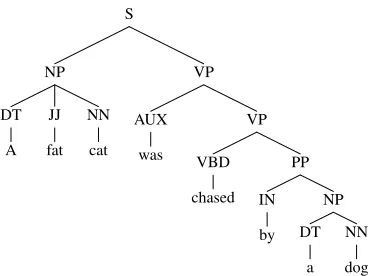
Figure 2: Syntactic parse tree of the sentence shown in Figure 1 (a).
Collins (2002) for the task of re-ranking syntactic parse trees. They define a kernel between two trees as the number of subtrees shared between them. A subtree is defined as any subgraph of the tree which includes more than one node, with the restriction that entire productions must be included at every node. The kernel defined this way captures most of the structural information present in the syntac-tic parse trees in the form of tree fragments which the kernelized learning algorithms can then implic-itly use as features. The kernel can be computed in O(|N1||N2|) time, where|N1| and|N2|are the
number of nodes of the two trees. An efficient al-gorithm to compute tree kernels was given by Mos-chitti (2006a) which runs in close to linear time in the size of the input trees.
[image:3.612.99.288.301.439.2]was
cat
a fat
chased
by
dog
[image:4.612.140.209.65.170.2]a
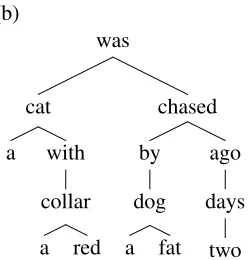
Figure 4: Dependency tree of the sentence shown in Fig-ure 1 (a).
(b)
was
cat
a with
collar
a red
chased
by
dog
a fat ago
days
two
Figure 5: Dependency tree of the sentence shown in Fig-ure 1 (b).
there is no common subtree which covers it. The Related Work section discusses some modifications that have been proposed to the syntactic tree kernel.
3 A Dependency-based Word Subsequence
Kernel
A dependency tree encodes functional relationships between the words in a sentence (Hudson, 1984). The words of the sentence are the nodes and if a word complements or modifies another word then there is a child to parent edge from the first word to the second word. Every word in a dependency tree has exactly one parent except for the root word. Fig-ures 4 and 5 show dependency trees for the two sen-tences shown in Figure 1. There has been a lot of progress in learning dependency tree parsers (Mc-Donald et al., 2005; Koo et al., 2008; Wang et al., 2008). They can also be obtained indirectly from syntactic parse trees utilizing the head words of the constituents.
We introduce a new kernel which takes the words into account like the word-subsequence kernel and
also takes the syntactic relations between them into account like the syntactic tree kernel, however, it does not have the shortcomings of the two kernels pointed out in the previous section. This kernel counts the number of common paths between the de-pendency trees of the two sentences. Another way to look at this kernel is that it counts all the common word subsequences which are linked by dependen-cies. Hence we will call it a dependency-based word subsequence kernel. Since the implicit features it uses are dependency paths which are enumerable, it is a well defined kernel. In other words, an example gets implicitly mapped to the feature space in which each dependency path is a dimension.
The dependency-based word subsequence kernel will find the common paths ‘a→ cat’, ‘cat→ was
←chased’, ‘chased←by←dog’ among many oth-ers between the dependency trees shown in Figures 4 and 5. The arrows are always shown from child node to the parent node. A common path takes into ac-count the direction between the words as well. Also note that it will find the important subsequence ‘a
→ cat → was ← chased ← by ← dog ← a’ as a common path.
[image:4.612.75.199.216.346.2]We now give an efficient algorithm to compute all the common paths between two trees. To our best knowledge, no previous work has considered this problem. The key observation for this algo-rithm is that a path in a tree always has a structure in which nodes (possibly none) go up to a highest node followed by nodes (possibly none) coming down. Based on this observation we compute two quanti-ties for every pair of nodes between the two trees. We call the first quantity common downward paths (CDP) between two nodes, one from each tree, and it counts the number of common paths between the two trees which originate from those two nodes and which always go downward. For example, the com-mon downward paths between the ‘chased’ node of the tree in Figure 4 and the ‘chased’ node of the tree in Figure 5 are ‘chased ← by’, ‘chased ← by
← dog’ and ‘chased ← by ← dog ← a’. Hence
CDP(chased, chased) = 3. A word may occur multiple times in a sentence so theCDP values will be computed separately for each occurrence. We will shortly give a fast recursive algorithm to com-puteCDP values.
Once these CDP values are known, using these the second quantity is computed which we call com-mon peak paths(CP P) between every two nodes, one from each tree. This counts the number of com-mon paths between the two trees which peak at those two nodes, i.e. these nodes are the highest nodes in those paths. For example, ‘was’ is the peak for the path ‘a→cat→was←chased’. Since every com-mon path between the two trees has a unique highest node, once theseCP P values have been computed, the number of common paths between the two trees is simply the sum of all theseCP P values.
We now describe how all these values are effi-ciently computed. TheCDP values between every two nodesn1 andn2of the treesT1andT2
respec-tively, is recursively computed as follows:
CDP(n1, n2) = 0if n1.w6=n2.w
otherwise,
CDP(n1, n2) =
X
c1ǫC(n1) c2ǫC(n2) c1.w=c2.w
(1 +CDP(c1, c2))
In the first equation, n.w stands for the word at the node n. If the words are not equal then there cannot be any common downward paths originating from the nodes. In the second equation,C(n) rep-resents the set of children nodes of the nodenin a tree. If the words at two children nodes are the same, then the number of common downward paths from the parent will include all the common downward paths at the two children nodes incremented with the link from the parent to the children. In addition the path from parent to the child node is also a common downward path. For example, in the trees shown in Figures 4 and 5, the nodes with word ‘was’ have ‘chased’ as a common child. Hence all the common downward paths originating from ‘chased’ (namely ‘chased←by’, ‘chased← by←dog’ and ‘chased
← by ← dog← a’) when incremented with ‘was
←chased’ become common downward paths orig-inating from ‘was’. In addition, the path ‘was ←
chased’ itself is a common downward path. Since ‘cat’ is also a common child at ‘was’, it’s common downward paths will also be added.
TheCDP values thus computed are then used to compute theCP P values as follows:
CP P(n1, n2) = 0if n1.w6=n2.w
otherwise,
CP P(n1, n2) =CDP(n1, n2) +
X
c1,cˆ1ǫC(n1) c2,cˆ2ǫC(n2)
c1.w=c2.w
ˆ
c1.w= ˆc2.w
( 1 +CDP(c1, c2) +CDP( ˆc1,cˆ2)+
CDP(c1, c2)∗CDP( ˆc1,cˆ2) )
If the two nodes are not equal then the number of common paths that peak at them will be zero. If the nodes are equal, then all the common downward paths between them will also be the paths that peak at them, hence it is the first term in the above equa-tion. Next, the remaining paths that peak at them can be counted by considering every pair of common children nodes represented byc1 &c2 andcˆ1&cˆ2.
term. All the downward paths from ‘cat’ when in-cremented up to ‘was’ and down to ‘chased’ are also the paths that peak at ‘was’ (namely ‘a→cat→was
←chased’). Similarly, all the downward paths from ‘chased’ when incremented up to ‘was’ and down to ‘cat’ are also paths that peak at ‘was’ (‘cat→ was
← chased← by’, ‘cat →was ← chased← by ←
dog’, etc.). Hence the next two terms are present in the equation. Finally, all the downward paths from ‘cat’ when incremented up to ‘was’ and down to ev-ery downward path from ‘chased’ are also the paths that peak at ‘was’ (‘a → cat → was ← chased ←
by’, ‘a→cat→was←chased←by←dog’ etc.). Hence there is the product term present in the equa-tion. It is important not to re-count a path from the opposite direction hence the two pairs of common children are considered only once (i.e. not reconsid-ered symmetrically).
The dependency word subsequence kernel be-tween two dependency treesT1 andT2 is then
sim-ply:
K(T1, T2) =
X
n1ǫT1 n2ǫT2 n1.w=n2.w
(1 +CP P(n1, n2))
We also want to count the number of common words between the two trees in addition to the num-ber of common paths, hence1is added in the equa-tion. The kernel is normalized to remove any bias due to different tree sizes:
Knormalized(T1, T2) =
K(T1, T2)
p
K(T1, T1)∗K(T2, T2)
Since for any long path common between two trees, there will be many shorter paths within it which will be also common between the two trees, it is reasonable to downweight the contribution of long paths. We do this by introducing a parameter
αǫ(0,1]and by downweighting a path of lengthlby
αl. A similar mechanism was also used in the syn-tactic tree kernel (Collins and Duffy, 2001).
The equations for computing CDP and CP P
are accordingly modified as follows to accommodate this downweighting.
CDP(n1, n2) = 0if n1.w6=n2.w
otherwise,
CDP(n1, n2) =
X
c1ǫC(n1)
c2ǫC(n2)
c1.w=c2.w
(α+α∗CDP(c1, c2))
CP P(n1, n2) = 0if n1.w6=n2.w
otherwise,
CP P(n1, n2) =CDP(n1, n2) +
X
c1,cˆ1ǫC(n1) c2,cˆ2ǫC(n2)
c1.w=c2.w
ˆ
c1.w= ˆc2.w
(
α2+α∗CDP(c1, c2)+
α∗CDP( ˆc1,cˆ2)+
α2
∗CDP(c1, c2)∗CDP( ˆc1,cˆ2)
)
This algorithm to compute all the common paths between two trees has worst time complexity of
O(|T1||T2|), where|T1|and|T2|are the number of
nodes of the two treesT1 andT2 respectively. This
is becauseCDP computations are needed for every pairs of nodes between the two trees and is recur-sively computed. Using dynamic programming their recomputations can be easily avoided. The CP P
computations then simply add theCDP values2. If
the nodes common between the two trees are sparse then the algorithm will run much faster. Since the algorithm only needs to store the CDP values, its space complexity isO(|T1||T2|). Also note that this
algorithm computes the number of common paths of all lengths unlike the word subsequence kernel in which the maximum subsequence length needs to be specified and the time complexity then depends on this length.
4 Related Work
Several modifications to the syntactic tree kernels have been proposed to overcome the type of prob-lems pointed out in Subsection 2.2. Zhang et al. (2007) proposed a grammar-driven syntactic tree kernel which allows soft matching between the sub-trees of the sub-trees if that is deemed appropriate by the grammar. For example, their kernel will be able
2
to match the subtrees (NP (DT a) (NN cat)) and (NP (DT a ) (JJ fat) (NN cat)) with some penalty. Moschitti (2006b) proposed a partial tree kernel which can partially match subtrees. Moschitti et al. (2007) proposed a tree kernel over predicate-argument structures of sentences based on the Prob-Bank labels. Che et al. (2006) presented a hy-brid tree kernel which combines a constituent and a path kernel. We however note that the paths in this kernel link predicates and their arguments and are very different from general paths in a tree that our dependency-based word subsequence kernel uses. Shen et al. (2003) proposed a lexicalized syntac-tic tree kernel which utilizes LTAG-based features. Toutanova et al. (2004) compute similarity between two HPSG parse trees by finding similarity between the leaf projection paths using string kernels.
A few kernels based on dependency trees have also been proposed. Zelenko et al. (2003) pro-posed a tree kernel over shallow parse tree represen-tations of sentences. This tree kernel was slightly generalized by Culotta and Sorensen (2004) to com-pute similarity between two dependency trees. In addition to the words, this kernel also incorporates word classes into the kernel. The kernel is based on counting matching subsequences of children of matching nodes. But as was also noted in (Bunescu and Mooney, 2005a), this kernel is opaque i.e. it is not obvious what the implicit features are and the authors do not describe it either. In contrast, our dependency-based word subsequence kernel, which also computes similarity between two dependency trees, is very transparent with the implicit features being simply the dependency paths. Their kernel is also very time consuming and in their more general sparse setting it requiresO(mn3)time andO(mn2)
space, where m andn are the number of nodes of the two trees (m >=n) (Zelenko et al., 2003).
Bunescu and Mooney (2005a) give a shortest path dependency kernel for relation extraction. Their ker-nel, however, does not find similarity between two sentences but between the shortest dependency paths connecting the two entities of interests in the sen-tences. This kernel uses general dependency graphs but if the graph is a tree then the shortest path is the only path between the entities. Their kernel also uses word classes in addition to the words them-selves.
5 Experiments
We show that the new dependency-based word sub-sequence kernel performs better than word subse-quence kernel and syntactic tree kernel on the task of domain-specific semantic parsing.
5.1 Semantic Parsing
Semantic parsing is the task of converting natu-ral language sentences into their domain-specific complete formal meaning representations which an application can execute, for example, to answer database queries or to control a robot. A learn-ing system for semantic parslearn-ing induces a seman-tic parser from the training data of natural language sentences paired with their respective meaning rep-resentations. KRISP (Kate and Mooney, 2006) is a semantic parser learning system which uses word subsequence kernel based SVM (Cristianini and Shawe-Taylor, 2000) classifiers and was shown to be robust to noise compared to other semantic parser learners. The system learns an SVM classi-fier for every production of the meaning representa-tion grammar which tells the probability with which a substring of the sentence represents the semantic concept of the production. Using these classifiers a complete meaning representation of an input sen-tence is obtained by finding the most probable parse which covers the whole sentence. For details please refer to (Kate and Mooney, 2006).
depen-dency trees always begin and end with the words present in the substrings. This is achieved by in-cluding only those downward paths in computations of CDP which end with words within the given substrings. These paths relate the words within the substrings perhaps using words outside of these sub-strings.
5.2 Methodology
We measure the performance of KRISPobtained us-ing the three types of kernels on the GEOQUERY corpus which has been used previously by several semantic parsing learning systems. It contains 880
natural language questions about the US geogra-phy paired with their executable meaning represen-tations in a functional query language (Kate et al., 2005). Since the purpose of the experiments is to compare different kernels and not different seman-tic parsers, we do not compare the performance with other semantic parser learning systems. The train-ing and testtrain-ing was done ustrain-ing standard 10-fold cross-validation and the performance was measured in terms of precision (the percentage of generated meaning representations that were correct) and re-call (the percentage of all sentences for which cor-rect meaning representations were obtained). Since KRISPassigns confidences to the meaning represen-tations it outputs, an entire range of precision-recall trade-off can be obtained. We measure the best F-measure (harmonic mean of precision and recall) ob-tained when the system is trained using increasing amounts of training data.
Since we were not interested in the accuracy of dependency trees or syntactic trees but in the com-parison between various kernels, we worked with standard syntactic trees. We did not have gold-standard dependency trees available for this cor-pus so we obtained them indirectly from the gold-standard syntactic trees using the head-rules from (Collins, 1999). We however note that accurate syn-tactic trees can be obtained by training a syntac-tic parser on WSJ treebank and gold-standard parse trees of some domain-specific sentences (Kate et al., 2005).
In the experiments, the α parameter of the dependency-based word subsequence kernel was set to 0.25, the λparameter of the word subsequence kernel was fixed to0.75and the downweighting
pa-Examples Dependency Word Syntactic
40 25.62 21.51 23.65
80 45.30 42.77 43.14
160 63.78 61.22 59.66
320 72.44 70.36 67.05
640 77.32 77.82 74.26
[image:8.612.314.526.61.157.2]792 79.79 79.09 76.62
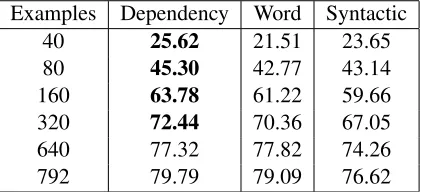
Table 1: Results on the semantic parsing task with in-creasing number of training examples using dependency-based word subsequence kernel, word subsequence ker-nel and syntactic tree kerker-nel.
rameter for the syntactic tree kernel was fixed to0.4. These were determined through pilot experiments with a smaller portion of the data set. The maxi-mum length of subsequences required by the word subsequence kernel was fixed to3, a longer length was not found to improve the performance and was only increasing the running time.
5.3 Results
Table 1 shows the results. The dependency-based word subsequence kernel always performs better than the syntactic tree kernel. All the numbers under the dependency kernel were found statisti-cally significant (p < 0.05) over the correspond-ing numbers under the syntactic tree kernel based on pairedt-tests. The improvement of the dependency-based word subsequence kernel over the word sub-sequence kernel is greater with less training data, showing that the dependency information is more useful when the training data is limited. The per-formance converges with higher amounts of training data. The numbers shown in bold were found statis-tically significant over the corresponding numbers under the word subsequence kernel.
It may be noted that syntactic tree kernel is mostly doing worse than the word subsequence kernel. We believe this is because of the shortcomings of the syntactic tree kernel pointed out in Subsection 2.2. Since this is a semantic processing task, the words play an important role and the generalized syntactic categories are not very helpful.
6 Future Work
like the kernels presented in (Bunescu and Mooney, 2005a; Zelenko et al., 2003). It should be possible to achieve this by incorporating matches between word classes in addition to the exact word matches in the kernel computations similar to the way in which the word subsequence kernel was extended to incorpo-rate word classes in (Bunescu and Mooney, 2005b). This will generalize the kernel and make it more ro-bust to data sparsity.
The dependency-based word subsequence kernel could be tested on other tasks which require comput-ing similarity between sentences or texts, like text classification, paraphrasing, summarization etc. We believe this kernel will help improve performance on those tasks.
7 Conclusions
We introduced a new kernel which finds similarity between two sentences as the number of common paths shared between their dependency trees. This kernel can also be looked upon as an improved word subsequence kernels which only counts the common word subsequences which are related by dependen-cies. We also gave an efficient algorithm to compute this kernel. The kernel was shown to out-perform the word subsequence kernel and the syntactic tree kernel on the task of semantic parsing.
References
Razvan C. Bunescu and Raymond J. Mooney. 2005a. A shortest path dependency kernel for relation extrac-tion. In Proc. of HLT/EMNLP-05, pages 724–731, Vancouver, BC, October.
Razvan C. Bunescu and Raymond J. Mooney. 2005b. Subsequence kernels for relation extraction. In Y. Weiss, B. Sch¨olkopf, and J. Platt, editors, Advances in Neural Information Processing Systems 18, Vancou-ver, BC.
Nicola Cancedda, Eric Gaussier, Cyril Goutte, and Jean Michel Renders. 2003. Word sequence kernels. Journal of Machine Learning Research, Special Issue on Machine Learning Methods for Text and Images, 3:1059–1082, February.
Wanxiang Che, Min Zhang, Ting Liu, and Sheng Li. 2006. A hybrid convolution tree kernel for semantic role labeling. In Proc. of COLING/ACL-06, pages 73– 80, Sydney, Australia, July.
Michael Collins and Nigel Duffy. 2001. Convolution kernels for natural language. In Proc. of NIPS-2001.
Michael Collins. 1999. Head-driven Statistical Models for Natural Language Parsing. Ph.D. thesis, Univer-sity of Pennsylvania.
Michael Collins. 2002. New ranking algorithms for pars-ing and taggpars-ing: Kernels over discrete structures, and the voted perceptron. In Proc. of ACL-2002, pages 263–270, Philadelphia, PA, July.
Nello Cristianini and John Shawe-Taylor. 2000. An Introduction to Support Vector Machines and Other Kernel-based Learning Methods. Cambridge Univer-sity Press.
Aron Culotta and Jeffrey Sorensen. 2004. Dependency tree kernels for relation extraction. In Proc. of ACL-04, pages 423–429, Barcelona, Spain, July.
Richard Hudson. 1984. Word Grammar. Blackwell. Rohit J. Kate and Raymond J. Mooney. 2006.
Us-ing strUs-ing-kernels for learnUs-ing semantic parsers. In Proc. of COLING/ACl-06, pages 913–920, Sydney, Australia, July.
Rohit J. Kate, Yuk Wah Wong, and Raymond J. Mooney. 2005. Learning to transform natural to formal lan-guages. In Proc. AAAI-2005, pages 1062–1068, Pitts-burgh, PA, July.
Terry Koo, Xavier Carreras, and Michael Collins. 2008. Simple semi-supervised dependency parsing. In Proc. of ACL-08, pages 595–603, Columbus, Ohio, June. Huma Lodhi, Craig Saunders, John Shawe-Taylor, Nello
Cristianini, and Chris Watkins. 2002. Text classifica-tion using string kernels. Journal of Machine Learning Research, 2:419–444.
Ryan McDonald, Fernando Pereira, Kiril Ribarov, and Jan Haji˘c. 2005. Non-projective dependency pars-ing uspars-ing spannpars-ing tree algorithms. In Proc. of HLT/EMNLP-05, pages 523–530, Vancouver, BC. Alessandro Moschitti, Silvia Quarteroni, Roberto Basili,
and Suresh Manandhar. 2007. Exploiting syntactic and shallow semantic kernels for question answer clas-sification. In Proc. of ACL-07, pages 776–783, Prague, Czech Republic, June.
Alessandro Moschitti. 2006a. Making tree kernels prac-tical for natural language learning. In Proc. of EACL-06, pages 113–120, Trento, Italy, April.
Alessandro Moschitti. 2006b. Syntactic kernels for natu-ral language learning: the semantic role labeling case. In Proc. of HLT/NAACL-06, short papers, pages 97– 100, New York City, USA, June.
Juho Rousu and John Shawe-Taylor. 2005. Efficient computation of gapped substring kernels on large al-phabets. Journal of Machine Learning Research, 6:1323–1344.
Kristina Toutanova, Penka Markova, and Christopher Manning. 2004. The leaf projection path view of parse trees: Exploring string kernels for HPSG parse selection. In Proc. EMNLP-04, pages 166–173, Barcelona, Spain, July.
Vladimir N. Vapnik. 1998. Statistical Learning Theory. John Wiley & Sons.
Qin Iris Wang, Dale Schuurmans, and Dekang Lin. 2008. Semi-supervised convex training for dependency pars-ing. In Proceedings of ACL-08: HLT, pages 532–540, Columbus, Ohio, June.
D. Zelenko, C. Aone, and A. Richardella. 2003. Kernel methods for relation extraction. Journal of Machine Learning Research, 3:1083–1106.