University of Warwick institutional repository: http://go.warwick.ac.uk/wrap
A Thesis Submitted for the Degree of PhD at the University of Warwick
http://go.warwick.ac.uk/wrap/77656
This thesis is made available online and is protected by original copyright.
Please scroll down to view the document itself.
Advances in the ring-opening (co)polymerisation of
large ring and ε-substituted lactones
James Wilson
Submitted for the degree of Doctor of Philosophy
Department of Chemistry
Table of Contents
Table of Contents... i
List of Figures, Schemes, and Tables ... iv
List of Figures... iv
List of Schemes ... xi
List of Tables... xii
Acknowledgments ...xiv
Declaration of Authorship...xv
Publications ...xvi
Abstract ... xvii
List of Abbreviations ... xix
List of Lactones... xxv
1 Introduction...1
1.1 Introduction ... 2
1.2 Ring-opening polymerisation ... 3
1.2.1 Thermodynamics of ring-opening polymerisation ... 3
1.2.2 ROP catalysts ... 5
1.2.3 ‘Immortal’ ring-opening polymerisation... 6
1.3 Lactone polymerisation ... 7
1.3.1 Transesterification side reactions ... 9
1.4 Pentadecalactone polymerisation ... 10
1.5 Pentadecalactone copolymerisation... 13
1.5.1 Copolymerisation with other non-substituted lactones ... 13
1.5.2 Copolymerisation with other monomers ... 15
1.5.3 Copolymers through functional initiation ... 19
1.5.4 PDL copolymers for post-polymerisation modification ... 20
1.6 References ... 21
2 The ‘immortal’ ring-opening polymerisation of pentadecalactone by Mg(BHT)2(THF)2...28
2.1 Introduction ... 29
2.2 Results and Discussion ... 30
2.2.1 Synthesis of Mg(BHT)2(THF)2... 30
2.2.2 Inert homopolymerisation of PDL... 31
2.2.3 Non-inert polymerisation of PDL... 35
2.2.4 Effects of solvent on polymerisation... 39
2.2.5 ‘Immortal’ polymerisation of PDL... 42
2.2.6 ‘Immortal’ polymerisation of εCL ... 44
2.2.7 ‘Immortal’ polymerisation of δVL ... 46
2.4 References ... 49
3 Synthesis ofω-pentadecalactone copolymers with independently tuneable thermal and degradation behaviour...51
3.1 Introduction ... 52
3.2 Results and Discussion ... 54
3.2.1 Ring-Opening Homopolymerisations... 54
3.2.2 Pentadecalactone copolymerisations... 57
3.2.3 Sequential Polymerisation... 70
3.2.4 Thermal Analysis... 74
3.2.5 Crystallographic Analysis... 78
3.2.6 Degradation Studies... 79
3.3 Conclusion... 80
3.4 References ... 81
4 Synthesis and post-polymerisation modification of one-potω-pentadecalactone block-likecopolymers...84
4.1 Introduction ... 85
4.2 Results and Discussion ... 87
4.2.1 Homopolymerisation of menthide ... 87
4.2.2 Copolymerisation of PDL and MI... 91
4.2.3 Triblock copolymers of PDL and MI... 103
4.2.4 PDL block copolymers ... 107
4.2.5 Post polymerisation modification of P(PDL-co-DHC) ... 110
4.3 Conclusion... 113
4.4 References ... 113
5 Towards sequence control of lactone ROP: Copolymers fromε-substituted ε-lactones ... 115
5.1 Introduction ... 116
5.2 Results and Discussion ... 117
5.2.1 MI copolymerisation with other lactones... 117
5.2.2 Transesterification of ε-substituted ε-lactones ... 122
5.2.3 Terpolymerisation of ε-caprolactone, menthide and ω-pentadecalactone .... 127
5.2.4 εSL block copolymers ... 134
5.2.5 Sequence control of ε-substituted εCLs ... 139
5.3 Conclusion... 151
5.4 References ... 152
6 Conclusions... 155
6.1 Conclusions ... 156
7 Experimental... 158
7.1 Materials ... 159
7.2 Instrumental methods ... 159
7.3 Experimental procedures for Chapter 1... 160
7.3.1 Synthesis of Mg(BHT)2(THF)2... 160
7.3.2 General procedure of δ-valerolactone polymerisation ... 160
7.3.4 General procedure of ω-pentadecalactone polymerisation ... 161
7.4 Experimental procedures for Chapter 2... 162
7.4.1 Synthesis of η-caprylolactone... 162
7.4.2 Synthesis of ω-dodecalactone ... 162
7.4.3 General procedure of lactone and ω-pentadecalactone copolymerization.... 163
7.4.4 General Procedure of Degradation Studies... 165
7.5 Experimental procedures for Chapter 3... 165
7.5.1 Synthesis of menthide ... 165
7.5.2 Synthesis of dihydrocarvide ... 166
7.5.3 General procedure of menthide complexation ... 166
7.5.4 General procedure of menthide homopolymerization... 167
7.5.5 General procedure of menthide and ω-pentadecalactone copolymerization . 167 7.5.6 General procedure of ω-pentadecalactone and ε-substituted ε-lactone copolymerization ... 168
7.5.7 General procedure for the transesterification of poly(menthide) and poly(ω-pentadecalactone) ... 170
7.5.8 General procedure for thiol-ene addition to P(PDL-co-DHC)... 170
7.6 Experimental procedures for Chapter 4... 172
7.6.1 Synthesis of ε-heptalactone ... 172
7.6.2 General procedure of menthide and non-substituted lactone copolymerization 172 7.6.3 General procedure of menthide and ε-substituted ε-lactone copolymerization 174 7.6.4 General procedure for the transesterification of poly(menthide) and poly(ε-caprolactone) ... 175
7.6.5 General procedure for the transesterification of poly(menthide) and poly(ε-heptalactone)... 176
List of Figures, Schemes, and Tables
List of Figures
Figure 1.1Small ring lactones and corresponding standard enthalpies and entropies of
ring-opening. ... 4
Figure 1.2Differences between ‘immortal’ ROP and ‘classical’ ROP. ... 6
Figure 1.3Examples of substituted lactones and macrolactones. ... 8
Figure 1.4Examples of organocatalysts for ROP... 12
Figure 1.5Examples of organometallic catalysts used in ROP. ... 13
Figure 1.6Organometallic catalysts with the ability to polymerise ω-pentadecalactone. ... 15
Figure 1.7Examples of unsaturated macrolactones. ... 16
Figure 2.11H NMR spectrum of Mg(BHT)2(THF)2(400 MHz, C6D6, 298 K)... 31
Figure 2.21H NMR spectrum of DP20 PPDL produced using Mg(BHT)2(THF)2 as a catalyst (400 MHz, 298 K, CDCl3). ... 32
Figure 2.3Kinetic plot for the polymerisation of ω-pentadecalactone using Mg(BHT)2(THF)2 as a catalyst at 80 °C in toluene with [PDL]0:[BnOH]0:[cat.]0= 50:1:1 and initial monomer concentration = 1 M... 33
Figure 2.4MnandĐM changes over monomer conversion in the homopolymerisation of ω-pentadecalactone at 80 °C in toluene with [PDL]0:[BnOH]0:[cat.]0= 50:1:1 and initial monomer concentration = 1 M... 34
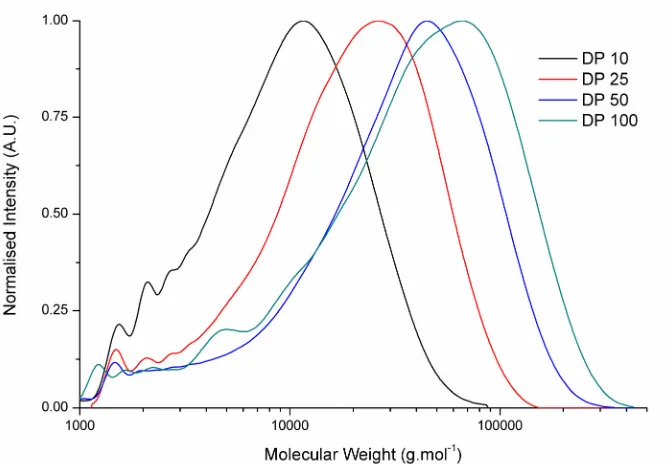
Figure 2.5SEC chromatograms of poly(ω-pentadecalactone) at various targeted DPs. ... 35
Figure 2.6a) Kinetic plot and b) change inMnandĐMagainst monomer conversion for the polymerisation of ω-pentadecalactone in a non-inert environment, using Mg(BHT)2(THF)2as a catalyst at 80 °C in toluene with [PDL]0:[BnOH]0:[cat.]0= 50:1:1 and initial monomer concentration = 1 M... 36
Figure 2.7SEC chromatograms for the evolution of molecular weight distribution throughout polymerisation of PDL in non-inert conditions, targeting a DP of 20... 37
Figure 2.8a) MALDI-TOF of DP10 PPDL produced in a dry argon environment b) MALDI-TOF of DP10 PPDL produced in non-inert conditions. ... 38
Figure 2.9SEC chromatograms for DP 20 PPDL produced in various solvents. ... 40
Figure 2.10SEC chromatographs of DP 50 PPDL produced in various ratios of hexanes : toluene... 42
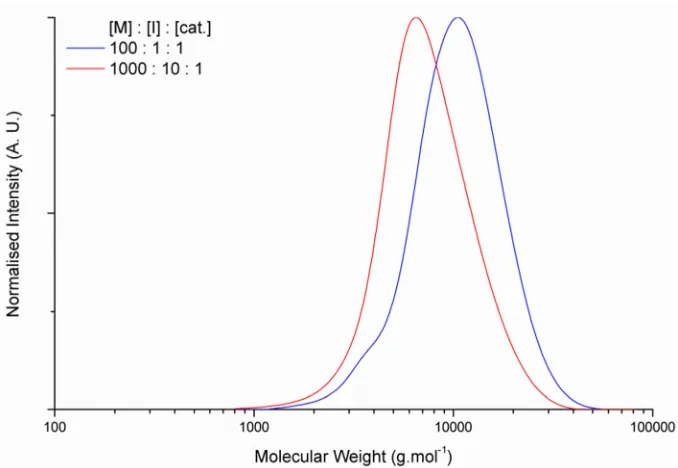
Figure 2.11SEC chromatograph for the molecular weight distribution of targeted DP100 PCL using 0.1 eq. Mg(BHT)2(THF)2catalyst with respect to benzyl alcohol initiator. ... 45
Figure 3.1a) Kinetic plot for the homopolymerisation of η-caprylolactone using
Mg(BHT)2(THF)2 as a catalyst at 80 °C in toluene with [ηCL]0:[BnOH]0:[cat.]0= 50:1:1, total monomer concentration = 1 M. b) Changes inMnandĐMover monomer conversion for the same polymerisation... 55 Figure 3.2a) Kinetic plot for the homopolymerisation of dodecalactone using
Mg(BHT)2(THF)2as a catalyst at 80 °C in toluene with [DDL]0:[BnOH]0:[cat.]0= 50:1:1, total monomer concentration = 1 M. b) Changes inMnandĐMover monomer conversion for the same polymerisation... 56 Figure 3.3Kinetic plots for the copolymerisations of ω-pentadecalactone with a)
dodecalactone, b) η-caprylolactone, c) ε-caprolactone and d) δ-valerolactone. All reactions at 80 °C in toluene with [PDL]0:[M]0:[BnOH]0:[cat.]0= 50:50:1:1, total initial monomer concentration = 2 M... 60 Figure 3.4Mn against conversion for the copolymerisation of δ-valerolactone and
ω-pentadecalactone at 2 M in toluene at 80 °C with [δVL]0:[PDL]0:[BnOH]0:[Mg(BHT)2(THF)2]0 of 50:50:1:1.MnandĐMdetermined by SEC against poly(styrene) standards. ... 61 Figure 3.5Quantitative13C NMR spectra of the carbonyl region during copolymerisations of ω-pentadecalactone with δ-valerolactone (125 MHz, CDCl3, 298 K). ... 62 Figure 3.6Mn against conversion for the copolymerisation of ε-caprolactone and
ω-pentadecalactone at 2 M in toluene at 80 °C with
[εCL]0: [PDL]0: [BnOH]0: [Mg(BHT)2(THF)2]0of 50 : 50 : 1 : 1.MnandĐMdetermined by SEC against poly(styrene) standards... 64 Figure 3.7Quantitative13C NMR spectra of the carbonyl region during copolymerisations of ω-pentadecalactone with ε-caprolactone (125 MHz, CDCl3, 298 K)... 64 Figure 3.8Quantitative13C NMR spectra of the carbonyl region after 24 h of
transesterification of PPDL with PCL (top) and PVL (bottom) (125 MHz, CDCl3, 298 K)... 66 Figure 3.9Quantitative13C NMR spectra of the carbonyl region during copolymerisations of ω-pentadecalactone with η-caprylolactone (125 MHz, CDCl3, 298 K)... 67 Figure 3.10Mn against conversion for the copolymerisation of η-caprylolactone and ω-pentadecalactone at 2 M in toluene at 80 °C with [ηCL]0:[PDL]0:[BnOH]0:[Mg(BHT)2(THF)2]0 of 50:50:1:1.MnandĐMdetermined by SEC against poly(styrene) standards. ... 67 Figure 3.11Mn against conversion for the copolymerisation of dodecalactone and ω-pentadecalactone at 2 M in toluene at 80 °C with [DDL]0:[PDL]0:[BnOH]0:[Mg(BHT)2(THF)2]0 of 50:50:1:1.MnandĐMdetermined by SEC against poly(styrene) standards. ... 69 Figure 3.12Quantitative13C NMR spectra of the carbonyl region during copolymerisations of ω-pentadecalactone with dodecalactone (125 MHz, CDCl3, 298 K)... 69 Figure 3.13Quantitative13C NMR spectra of the carbonyl region during the sequential polymerisation of a) ε-caprolactone followed by pentadecalactone and b)
Figure 3.14Quantitative13C NMR spectra of the carbonyl region of polymers formed by a) the one-pot copolymerisation of δ-valerolactone and ω-pentadecalactone compared to the sequential poylmerisation of b) δ-valerolactone followed by pentadecalactone and c) ω-pentadecalactone followed by δ-valerolactone (125 MHz, CDCl3, 298 K)... 72 Figure 3.15DSC thermograms of poly(ω-pentadecalactone-co-ε-caprolactone) Tmat 1, 2, 4, 6 and 8 h during copolymerisation of an equimolar mixture of ε-caprolactone and ω-pentadecalactone. ... 74 Figure 3.16Quantitative13C NMR spectra of DP100 PDL copolymers with varying PDL mol% a) P(PDL-co-δVL), b) P(PDL-co-εCL), c) P(PDL-co-ηCL) and d) P(PDL-co-DDL) (125 MHz, CDCl3, 298 K). ... 75 Figure 3.17DSC thermograms (second heating curve, between 0 and 100 °C) showing the Tmfor a) P(PDL-co-δVL), b) P(PDL-co-εCL), c) P(PDL-co-ηCL) and d) P(PDL-co-DDL) at various molar ratios of PDL at DP100... 76 Figure 3.18DSC thermograms (second cooling curve, between 0 and 100 °C) showing theTc for a) P(PDL-co-δVL), b) P(PDL-co-εCL), c) P(PDL-co-ηCL) and d) P(PDL-co-DDL) at various molar ratios of PDL at DP100... 76 Figure 3.19DSC thermograms showing a) theTm(second heating curve, between 0 and 100 °C) and b) theTc(second cooling curve, between 0 and 100 °C) for PPDL at various DPs.... 77 Figure 3.20WAXD diffractograms of DP100 a) δVL), b) εCL), c) P(PDL-co-ηCL) and d) P(PDL-co-DDL)with varying molar ratio feed of monomers... 78 Figure 3.21Average mass loss of PDL copolymers studied in accelerated degradation conditions (5 M NaOH, 38 °C). ... 80 Figure 4.11H NMR spectra showing significant chemical shift changes between a) menthide, b) Mg(BHT)2(THF)2/BnOH/menthide complex and c) poly(menthide) (400 MHz, toluene-d8, 298 K). ... 88 Figure 4.2a) Kinetic plot for the homopolymerisation of menthide using Mg(BHT)2(THF)2as a catalyst at 80 °C in toluene with [MI]0: [BnOH]0: [cat.]0= 50 : 1 : 1, total monomer concentration = 1 M. b) Changes inMnandĐMover monomer conversion for the same reaction.MnandĐMdetermined by SEC against poly(styrene) standards... 89 Figure 4.3SEC chromatogram of the molecular weight distribution of the resultant polymer from the homopolymerisation of menthide at 1 M in toluene at 80 °C, with
[MI]0: [BnOH]0: [cat.]0= [50] : 1 : 1. Molecular weight determined against poly(styrene) standards and CHCl3(0.5% Net3) as eluent... 90 Figure 4.41H NMR spectra of the α-methylene signals observed during the
copolymerisation of menthide and pentadecalactone at 1 : 1 mol%, targeting a total DP of 100 (400 MHz, 298 K, CDCl3)... 92 Figure 4.5Kinetic plot for the copolymerisation of menthide and pentadecalactone,
Figure 4.6Changes inMnandĐMover total monomer conversion for the copolymerisation of menthide and ω-pentadecalactone using Mg(BHT)2(THF)2as a catalyst at 80 °C in toluene with [MI]0: [BnOH]0: [cat.]0= 50 : 1 : 1, total monomer concentration = 2 M.MnandĐM determined by SEC against poly(styrene) standards. ... 94 Figure 4.7Quantitative13C NMR spectra of the carbonyl region during copolymerisation of ω-pentadecalactone with menthide (125 MHz, CDCl3, 298 K) ... 96 Figure 4.8DOSY NMR spectra of P(PDL-co-MI) (500 MHz, 298 K, CDCl3)... 96 Figure 4.9Quantitative13C NMR spectra of the carbonyl region for the transesterification of PPDL and PMI (125 MHz, CDCl3, 298 K). ... 97 Figure 4.10SEC chromatograms for the molecular weight distribution of PPDL, PMI and the resultant material from the attempted transesterification of both polymers. Molecular weights determined by poly(styrene) standards and CHCl3(0.5% Net3) as eluent... 98 Figure 4.11Quantitative13C NMR spectra of DP100 P(PDL-co-MI) copolymers with varying PDL mol% (125 MHz, CDCl3, 298 K)... 100 Figure 4.12 a) DSC thermograms (second heating curve, between 0 °C and 100 °C) of theTm at various molar ratios of DP 100 P(ω-pentadecalactone-co- menthide). b) DSC
thermograms (second cooling curve, between 0 °C and 100 °C) of theTmat various molar ratios of DP 100 P(ω-pentadecalactone-co- menthide). ... 102 Figure 4.13Kinetic plot for the sequence controlled copolymerisation of menthide and pentadecalactone, conducted at 80 °C in toluene with
[PDL]0: [MI]0: [BnOH]0: [cat.]0= 50 : 50 : 1 : 1, total monomer concentration = 1 M, MI injected into reaction mixture att= 3 h... 103 Figure 4.14Quantitative13C NMR spectra of the carbonyl region of the diblock copolymer P(PDL50-co-MI50) and triblock copolymers P(PDL25-co-MI50-co-PDL25) and P(PDL50-co-MI5100-co-PDL25) respectively (125 MHz, CDCl3, 298 K)... 105 Figure 4.15SEC chromatograms of the molecular weight distribution of a) P(PDL50-co-MI50), b) P(PDL25-co-MI50-coPDL25) and c) P(PDL50-co-MI100-co-PDL50). Molecular weights
determined by poly(styrene) standards and CHCl3(0.5% Net3) as eluent... 106 Figure 4.16Quantitative13C NMR spectra of the carbonyl region of copolymerisations of ω-pentadecalactone with a) ε-heptalactone; b) ε-decalactone; c) menthide and d)
dihydrocarvide at 1 : 1 mol% monomers and total DP of 100 (125 MHz, CDCl3, 298 K). .... 108 Figure 4.17DOSY NMR spectra of a) P(PDL-co-εHL), b) P(PDL-co-εDL), c) P(PDL-co-MI) and d) P(PDL-co-DHC) (500 MHz, 298 K, CDCl3). ... 109 Figure 4.181H NMR spectrum for P(PDL-co-DHC) in the region ofδ= 5.4-3.9 ppm illustrating preservation of the alkene post-polymerisation (400 MHz, CDCl3, 298 K)... 110 Figure 4.191H NMR spectra for a) co-DHC) and thiol-ene addition products b) P(PDL-co-DHCME), c) P(PDL-co-DHCBM) and P(PDL-co-DHCDT), with unique resonances
Figure 4.20SEC chromatograms of P(PDL-co-DHC) and the resultant polymers from thiol-ene addition of benzyl mercaptan (P(PDL-co-DHCBM)), dodecanethiol (P(PDL-co-DHCDT)) and mercaptoethanol (P(PDL-co-DHCME))... 112 Figure 5.1DOSY NMR spectra of a) P(MI-co-δVL), b) P(MI-co-εCL), c) P(MI-co-ζHL) and d) P(MI-co- ηCL) (500 MHz, 298 K, CDCl3). ... 119 Figure 5.2Possible transesterification side reactions in the copolymerisation of
δ-valerolactone and menthide... 120 Figure 5.3Quantitative13C NMR spectra of the carbonyl region for copolymers of menthide with a) ω-pentadecalactone; b) η-caprylolactone; c) ζ-heptalactone; c) ε-caprolactone and d) δ-valerolactone at 1 : 1 mol% monomers with an total DP of 100 (125 MHz, CDCl3, 298 K). ... 121 Figure 5.4SEC chromatogram of the resultant polymer mixture of the transesterification of DP 5 PCL and DP 50 PMI at 1 M in toluene at 80 °C, using Mg(BHT)2(THF)2as a catalyst. Molecular weight determined against poly(styrene) standards using CHCl3(0.5% NEt3) as eluent... 125 Figure 5.5Quantitative13C NMR spectra of the carbonyl region for the resultant material from the transesterification of poly(ε-caprolactone) and poly(menthide) (125 MHz, CDCl3, 298 K). ... 125 Figure 5.6 SEC chromatograms for the molecular weight distribution of PεHL, PMI and the resultant material from the attempted transesterification of both polymers. Molecular weights determined by poly(styrene) standards and CHCl3(0.5% NEt3) as eluent. ... 127 Figure 5.7Quantitative13C NMR spectra of the carbonyl region for the resultant material from the transesterification of poly(ε-heptalactone) and poly(menthide) (125 MHz, CDCl3, 298 K). ... 127 Figure 5.8Kinetic plot for the terpolymerisation of ε-caprolactone, menthide and
pentadecalactone, conducted at 80 °C in toluene with
[εCL]0: [PDL]0: [MI]0: [BnOH]0: [cat.]0= 50 : 50 : 50 : 1 : 1, total monomer concentration = 1 M. ... 128 Figure 5.9Quantitative13C NMR spectra of the carbonyl region for the one-pot
terpolymerisation of equimolar quantities of ε-caprolactone, menthide and pentadecalactone with an initial concentration of
[εCL]0: [MI]0: [PDL]0: [BnOH]0: [cat.]0= 50 : 50 : 50 : 1 : 1, total initial monomer
concentration = 1 M (125 MHz, CDCl3, 298 K). ... 130 Figure 5.10Quantitative13C NMR spectra of the carbonyl region for the one-pot
terpolymerisation of equimolar quantities of ε-caprolactone, menthide and pentadecalactone with an initial concentration of
[εCL]0: [MI]0: [PDL]0: [BnOH]0: [cat.]0= 10 : 50 : 50 : 1 : 1, total initial monomer
Figure 5.11Quantitative13C NMR spectra of the carbonyl region for the copolymerisation of equimolar quantities of menthide and pentadecalactone with a timed injection of
ε-caprolactone and an initial concentration of
[εCL]0: [MI]0: [PDL]0: [BnOH]0: [cat.]0 = 50 : 50 : 50 : 1 : 1. Injection of εCL at t= 16 h and total initial monomer concentration = 1 M (125 MHz, CDCl3, 298 K)... 133 Figure 5.12 Kinetic plot for the copolymerisation of ε-heptalactone and menthide at 80 °C in toluene with [εHL]0: [MI]0: [BnOH]0: [cat.]0= 50 : 50 : 1 : 1, total initial monomer
concentration = 1 M... 134 Figure 5.13Evolution ofMnandĐMover total monomer consumption for the
copolymerisation of ε-heptalactone and menthide at 80 °C in toluene with
[εHL]0: [MI]0: [BnOH]0: [cat.]0= 50 : 50 : 1 : 1, total initial monomer concentration = 1 M. MnandĐMdetermined by SEC against poly(styrene) standards... 135 Figure 5.14 Molecular weight distribution of polymeric species in the copolymerisation of ε-heptalactone and menthide at 80 °C in toluene with
[εHL]0: [MI]0: [BnOH]0: [cat.]0= 50 : 50 : 1 : 1, total initial monomer concentration = 1 M. ... 136 Figure 5.15Quantitative13C NMR spectra of the carbonyl region for the one-pot
copolymerisation of ε-heptalactone and menthide at 1 : 1 mol% with initial concentration of [εHL]0: [MI]0: [BnOH]0: [cat.]0= 50 : 50 : 1 : 1, total initial monomer concentration = 1 M (125 MHz, CDCl3, 298 K)... 137 Figure 5.16 Kinetic plot for the copolymerisation of ε-decalactone and menthide at 80 °C in toluene with [εDL]0: [MI]0: [BnOH]0: [cat.]0= 50 : 50 : 1 : 1, total initial monomer
concentration = 1 M... 137 Figure 5.17Evolution ofMnandĐMover total monomer consumption for the
copolymerisation of ε-heptalactone and menthide at 80 °C in toluene with
[εHL]0: [MI]0: [BnOH]0: [cat.]0= 50 : 50 : 1 : 1, total initial monomer concentration = 1 M. MnandĐMdetermined by SEC against poly(styrene) standards... 138 Figure 5.18 Kinetic plot for the sequence controlled copolymerisation of menthide and ε-heptalactone, conducted at 80 °C in toluene with
Figure 5.22Quantitative13C NMR spectra of the carbonyl region for the sequential control copolymerisation of εHL and MI with [εHL]0: [MI]0: [BnOH]0: [cat.]0= 10 : 100 : 1 : 1, with εHL injection after 3 h and a total initial monomer concentration of 1 M (125 MHz, CDCl3, 298 K). ... 142 Figure 5.23 Kinetic plot for the sequence controlled copolymerisation of menthide and ε-decalactone, conducted at 80 °C in toluene with [MI]0 : [εDL]0: [BnOH]0: [cat.]0=
100 : 10 : 1 : 1, total monomer concentration = 1 M, εDL injected into reaction mixture at t = 3 h... 142 Figure 5.24 Increase in DP over 200 min after injection of εDL for the copolymerisation of MI and εDL, conducted at 80 °C in toluene with [MI]0 : [εDL]0: [BnOH]0: [cat.]0=
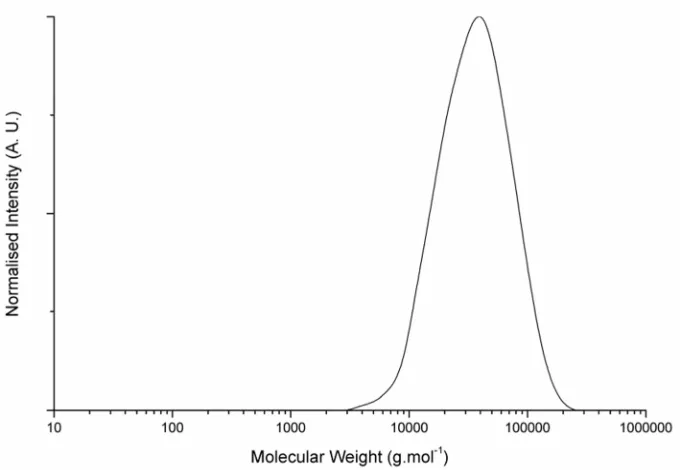
100 : 10 : 1 : 1, total monomer concentration = 1 M, εDL injected into reaction mixture at t = 3 h... 143 Figure 5.25 SEC chromatogram for poly(ε-decalactone-co-menthide). Molecular weight determined against poly(styrene) standards... 144 Figure 5.26Quantitative13C NMR spectra of the carbonyl region for the sequential control copolymerisation of εDL and MI with [εDL]0: [MI]0: [BnOH]0: [cat.]0= 10 : 100 : 1 : 1, with εDL injection after 3 h and a total initial monomer concentration of 1 M (125 MHz, CDCl3, 298 K). ... 145 Figure 5.27Kinetic plot for the sequence-controlled block copolymerisation of menthide and ε-heptalactone, conducted at 80 °C in toluene with [MI]0: [εHL]0: [BnOH]0: [cat.]0= 50 : 50 : 1 : 1, with a further 20 eq. εHL added at t= 5.33 h and total initial monomer
concentration = 1 M... 147 Figure 5.28Increase in DP throughout the sequence-controlled block copolymerisation of MI and εHL, conducted at 80 °C in toluene with
[MI]0 : [εHL]0: [BnOH]0: [cat.]0 = 50 : 20 : 1 : 1, with a further 20 eq. εHL added at t= 5.33 h and total monomer concentration = 1 M. ... 147 Figure 5.29Quantitative13C NMR spectra of the carbonyl region for the
sequence-controlled block copolymerisation of menthide and ε-heptalactone using Mg(BHT)2(THF)2as a catalyst at 80 °C in toluene with [MI]0: [εHL]0: [BnOH]0: [cat.]0= 50 : 20 : 1 : 1, with a further 20 eq. εHL added at t= 5 h and total monomer concentration = 1 M. (125 MHz, CDCl3, 298 K). ... 148 Figure 5.30Changes inMnandĐMover total monomer conversion for the sequence-controlled block copolymerisation of menthide and ε-heptalactone using Mg(BHT)2(THF)2as a catalyst at 80 °C in toluene with [MI]0: [εDL]0: [BnOH]0: [cat.]0= 50 : 20 : 1 : 1, with a further 20 eq. εHL added at t= 5 h and total monomer concentration = 1 M.MnandĐM determined by SEC against poly(styrene) standards. ... 149 Figure 5.31Molecular weight distribution of polymeric species in the the
List of Schemes
Scheme 1.1Baeyer-Villiger oxidation of cyclic ketones into lactones. ... 8
Scheme 1.2a) Intermolecular and b) intramolecular transesterification side reactions during lactone polymerisation... 9
Scheme 1.3Copolymerisation of ε-caprolactone and ω-pentadecalactone. ... 13
Scheme 1.4Copolymerisation of PDL with 1-oxa-8-aza-cyclotetradecan-9,14-dione (top) andp-dioxanone (bottom)... 15
Scheme 1.5 Copolymerisation of ω-pentadecalactone with γ-benzoyloxy-ε-caprolactone (top) and γ-methacryloyloxy-ε-caprolactone (bottom). ... 18
Scheme 1.6 Copolymerisation of ω-pentadecalactone with ethyl 3-(4-(hydroxymethyl)piperidin-1-yl)propanoate... 18
Scheme 1.7 Copolymerisation of ω-pentadecalactone with ε-decalactone. ... 19
Scheme 2.1One-pot synthesis of Mg(BHT)2(THF)2... 30
Scheme 2.2Homopolymerisation of PDL by Mg(BHT)2(THF)2... 31
Scheme 2.3 Homopolymerisation of ε-caprolactone catalysed by Mg(BHT)2(THF)2... 44
Scheme 2.4 Homopolymerisation of δ-valerolactone catalysed by Mg(BHT)2(THF)2. ... 46
Scheme 3.1Hompolymerisation of various lactones catalysed by Mg(BHT)2(THF)2... 54
Scheme 3.2Copolymerisation of pentadecalactone with other lactones catalysed by Mg(BHT)2(THF)2... 58
Scheme 3.3 Sequential polymerisation of ω-pentadecalactonee, followed by δ-valerolactone or ε-caprolactone. ... 70
Scheme 4.1Polymerisation of menthide catalysed by Mg(BHT)2(THF)2. ... 87
Scheme 4.2Potential complex formed by Mg(BHT)2(THF)2and the first ring-opened unit of MI using BnOH as an initiator (298 K, CDCl3, 298 K). ... 88
Scheme 4.3Copolymerisation of menthide and pentadecalactone in catalysed by Mg(BHT)2(THF)2... 91
Scheme 4.4Sequence controlled copolymerisation of PDL and MI through the timed injection of MI into a PDL homopolymerisation... 103
Scheme 4.5Copolymerisation of MI and PDL with bifunctional initiator 1,4-benzenedimethanol... 104
Scheme 4.6Copolymerisation of an ε-substituted ε-lactone (εSL) with ω-pentadecalactone using Mg(BHT)2(THF)2 as a catalyst to form block-like copolymers. ... 107
Scheme 4.7Thiol-ene addition of a thiol onto P(PDL-co-DHC). ... 110
Scheme 5.2Copolymerisation of menthide and pentadecalactone with timed injection of
ε-caprolactone. ... 132
Scheme 5.3Copolymerisation of menthide with an ε-substituted ε-lactone. ... 134
Scheme 5.4Sequence control polymerisation of ε-substituted εCLs. ... 139
Scheme 5.5Copolymerisation of menthide with an ε-substituted ε-lactone with sequential addition of ε-heptalactone to produce a tetrablock-likecopolymer. ... 146
List of Tables Table 2.1Synthesis of DP 50 PPDL using different solvents in non-inert conditions... 40
Table 2.2Synthesis of DP 50 PPDL in hexanes at different temperatures in inert conditionsa. ... 41
Table 2.3Synthesis of DP 50 PPDL using different solvent ratios of hexanes and toluene. . 42
Table 2.4‘Immortal’ ring-opening polymerisation results for varied Mg(BHT)2(THF)2 concentrations polymerising PDLa.... 44
Table 2.5‘Immortal’ ring-opening polymerisation results for varied Mg(BHT)2(THF)2 concentrations polymerising εCLa... 46
Table 2.6‘Immortal’ ring-opening polymerisation results for varied Mg(BHT)2(THF)2 concentrations polymerising δVLa.... 48
Table 3.1Copolymerisation of PDL and δVL at 1:1 mol% targeting DP100... 62
Table 3.2Copolymerisation of PDL and εCL at 1:1 mol% targeting DP100. ... 65
Table 3.3Copolymerisation of PDL and ηCL at 1:1 mol% targeting DP100. ... 68
Table 3.4Copolymerisation of PDL and DDL at 1:1 mol% targeting DP100... 70
Table 3.5Copolymerisation of PDL with another lactone at varied monomer ratio feeds targeting DP100. ... 77
Table 4.1Copolymerisation of 1 : 1 mol% [PDL]0: [MI]0targeting various DPs... 99
Table 4.2Copolymerisation of PDL and MI at varying monomer molar feed ratio targeting DP 100... 100
Table 4.3Copolymerisations of PDL and MI at 1 : 1 mol% with varying DP and initiator... 106
Table 4.4Copolymerisation of pentadecalactone with an equimolar ratio of substituted ε-lactone monomer, targeting a total DP of 100... 110
Table 4.5Thiol-ene addition to P(PDL-co-DHC)... 112
Table 5.1Copolymerisations of menthide with a linear lactone at 1 : 1 mol% targeting an overall DP of 100... 118
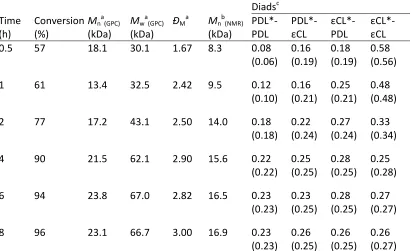
Table 5.3Homopolymerisations of ε-substituted ε-lactones targeting an overall DP of 50124 Table 5.4Terpolymerisations of εCL, PDL and MI ... 129 Table 5.5Terpolymer carbonyl diads formed from the sequential polymerisation of PDL and MI followed by εCL. ... 133 Table 5.6Copolymerisation of MI with an equimolar ratio of ε-substituted ε-lactone
I’m not one for breaking tradition, so…. Firstly, thank you to Prof. Andrew Dove for
the opportunity to do a PhD in the Dove group. The advice and guidance over the past four
years has been invaluable and really appreciated, even with the jibes about my
pescetarianism and inability to look at blood. Thanks also to Infineum UK Ltd and the EPSRC
for the joint funding, especially the former who have always offered helpful advice on my
project regardless of the deviation from their project goals.
Next up to thank is the wonderful Dove group, regardless of the moods I’ve been in
over the past four years, you’ve all been a joy to work with and made my time in the group
the most fun possible. Special thanks have to go to Ruairí for being a great lab
partner/drinking buddy/housemate, but just remember; you’re still a bad man, Ruairí
Brannigan. Also thanks to Becky. I had to write this as a contractual agreement for the
MALDI-TOF data in chapter 2. But seriously, thanks Becky for being a good friend. I have to
keep this to one page under APD rule, so I’ll just say special mentions to Ed, Annette, Craig,
Ian and Robin. Thanks next to the O’Reilly group, especially Dan, Dafni, Beth, Alice and
Anne; I’m glad we’re all allowed to talk to each other after that first year of awkwardness.
On a personal note, thanks to my amazing partner, Danielle. Sticking by me for all
of this hasn’t been exactly easy, but I’m very glad she did and I can’t wait for our next
adventure together. Thanks should go to my mother, Yvonne, as well and not just from me,
but the entire Dove group for the regular cake and brownie supply that kept us fuelled or at
risk of diabetes. As for the rest of my family, thanks for making the effort to learn about
what I’ve been researching. I realise I can bore you senseless, but the effort hasn’t gone
This thesis is submitted to the University of Warwick in support of my application for the
degree of Doctor of Philosophy. It has been composed by myself and has not been
submitted in any previous application for any degree. The work presented (including data
generated and data analysis) was carried out by the author except in the cases outlined
below:
The MALDI-TOF MS data in Chapter 2 was obtained by Dr Rebecca Williams
(University of Warwick);
The DSC data in Chapters 3 and 4 was obtained and analysed by Dr Anaïs
Pitto-Barry and Ruairí Brannigan (University of Warwick);
The WAXD data in Chapter 3 was obtained by Cathrin Kirchhoefer (University of
Warwick);
The quantitive13C NMR and DOSY NMR data in chapters 2, 3, 4 and 5 were
‘Immortal’ ring-opening polymerisation of ω-pentadecalactone by Mg(BHT)2(THF)2, J. A. Wilson, S. A. Hopkins, P. M. Wright and A. P. Dove,Polym. Chem., 2014, 2691-2694 (Chapter 2).
Synthesis of ω-pentadecalactone copolymers with independently tunable thermal and degradation behavior, J. A. Wilson, S. A. Hopkins, P. M. Wright and A. P. Dove,
This thesis reports studies into the ring-opening polymerisation (ROP) of large ring
lactones (macrolactones) and ε-substituted ε-lactones (εSLs). Additionally, the
copolymerisations of these monomers with other lactones were investigated in order to
determine the conditions that define the sequencing of lactone copolymers. The ability to
produce one-pot lactone copolymers with tuneable properties is explored and carried
forward to introduce functional groups for post-polymerisation functionalisation. The
ability to produce sequence controlled block copolymers using only lactone monomers is
also outlined for the first time in this thesis.
Chapter 1 provides an overview for the current published literature on the ROP of
macrolactones, including the factors that affect macrolactone polymerisation and
copolymerisation with a variety of other monomers.
In Chapter 2, the ‘immortal’ ROP (iROP) of the macrolactone, ω-pentadecalactone (PDL),
is demonstrated with the use of a Mg catalyst. The technique is shown to be achievable in a
non-inert environment, with no undesired side reactions affecting the properties of the
final polymers compared to polymers produced in an inert environment. Furthermore, the
catalyst is demonstrated to be able to ‘immortally’ polymerise smaller ring lactones.
Chapter 3 describes the copolymerisation of PDL with a variety of lactones of smaller
ring-sizes. The sequencing of the copolymers is characterised throughout the
copolymerisation using quantitative 13C NMR spectroscopy and demonstrates the randomisation of the polymer sequencing in each case. The thermal and crystalline
properties of the copolymers is explored and optimised in order to produce PDL
copolymers with independently tuneable thermal and degradative properties.
In Chapter 4, the copolymerisation of PDL with the εSL, menthide (MI), is examined and
shown to produce a copolymer with a block-like sequencing. This sequencing is
demonstrated in the case of PDL copolymerisation with other εSL monomers. This
modification is demonstrated through thiol-ene addition onto the pendent alkene groups.
Chapter 5 goes on to use MI in copolymerisations with other non-substituted lactones in
order to determine the factors that affect the sequencing of εSL copolymers. The
production of macrolactone/εSL copolymers with a random sequencing is then attempted.
The sequencing of copolymers produced from two εSLs is also demonstrated to produce
block-like copolymers. As a consequence of the large difference in reactivity between εSLs,
the potential for sequence controlled lactone copolymers is established.
A general summary of Chapters 2 - 5 is presented in Chapter 6, with the concluding
4MeCL 4-Methylcaprolactone
AcetCL γ-Acetyloxy-ε-caprolactone
AcrCL γ-Acryloyloxy-ε-caprolactone
Amb Ambrettolide
AROP Anion ring-opening polymerisation
ATRP Atom transfer radical polymerisation
BDM 1,4-Benzenedimethanol
BenzCL γ-Benzoyloxy-ε-caprolactone
BHT
2,6-di-
tert
-butyl-4-methylphenoxide
BnOH Benzyl alcohol
CALB Candida Antarcticalipase B
cat. Catalyst
cEA Cyclic ester amide
CROP Cationic ring-opening polymerisation
CTA Chain transfer agent
DBU 1,8-diazabicycloundec-7-ene
DDL Dodecalactone
DHCBM Benzylmercaptan dihydrocarvide
DHCDT Dodecanethiol dihydrocarvide
DHCME Mercaptoethanol dihydrocarvide
ĐM Dispersity
DMTA Dynamic mechanical thermal analysis
DOSY Diffusion-ordered spectroscopy
DP Degree of polymerisation
DPP Diphenyl phosphine
DSC Differential scanning calorimetry
EHMPP Ethyl 3-(4-(hydroxymethyl)piperidin-1-yl)propanoate
eROP Enzymatic ring-opening polymerisation
f Mole fraction
FRP Free radical polymerisation
Gbl Globalide
GPC Gel-permeation chromatography
HDL Hexadecalactone
HEA Hydroxyethyl acrylate
iROP Immortal' ring-opening polymerisation
kd Rate of depolymerisation
kp Rate of polymerisation
L Lactone
LDPE Low-density polyethylene
M Monomer
m/z mass-to-charge ratio
MALDI-ToF MS Matrix-assisted LASER desorption-ionisation time of flight mass
spectrometry
mCPBA meta-Chloroperoxybenzoic acid
McrCL γ-Methacryloyloxy-ε-caprolactone
MDEA N-Methyldiethanolamine
MI Menthide
Mn Number-average molecular weight
Mp Molecular weight at peak
MS Mass spectrometry
Mw Weight-average molecular weight
NMR Nuclear magnetic resonance
PDDL Poly(dodecalactone)
PDL ω-pentadecalactone
pDO para-Dioxanone
PEGMA Poly(ethylene glycol) methacrylate
PLA Poly(lactide)
PMI Poly(menthide)
PPDL Poly(ω-pentadecalactone)
PS Poly(styrene)
PVL Poly(δ-valerolactone)
PεDL Poly(ε-decalactone)
PεHL Poly(ε-heptalactone)
PεSL Poly(ε-substituted ε-lactone)
R Gas constant
RAFT Reversible addition-fragmentation chain transfer
RI Refractive index
ROCOP Ring-opening copolymerisation
ROMP Ring-opening metathesis polymerisation
SEC Size-exclusion chromatography
T Temperature
TBD 1,5,7-Triazabicyclo[4.4.0]dec-5-ene
Tc Crystallisation temperature
Tg Glass transition temperature
THF Tetrahydrofuran
Tm Melting temperature
TMC Trimethylene carbonate
TMP Trimercapto propionate
TOF Turn-over frequency
TON Turn-over number
UV Ultraviolet
WAXD Wide-angle X-ray diffraction
ZROP Zwitterionic ring-opening polymerisation
αClεCL α-Chloro-ε-caprolactone
βPL β-Propiolactone
γBL γ-Butyrolactone
ΔGRO Gibbs free energy of ring-opening
ΔHRO Enthalpy of ring-opening
ΔSRO Entropy of ring-opening
δVL δ-Valerolactone
εCL ε-Caprolactone
εDL ε-Decalactone
εHL ε-Heptalactone
εSL ε-Substituted ε-caprolactone
ζHL ζ-Heptalactone
4MeCL 4-Methylcaprolactone
AcetCL γ-Acetyloxy-ε-caprolactone
AcrCL γ-Acryloyloxy-ε-caprolactone
Amb Ambrettolide
O O
BenzCL γ-Benzoyloxy-ε-caprolactone
cEA Cyclic ester amide
HN O
O O
O
HDL Hexadecalactone
McrCL γ-Methacryloyloxy-ε-caprolactone
MI Menthide
PDL ω-pentadecalactone
O O
pDO para-Dioxanone
αClεCL α-Chloro-ε-caprolactone
βPL β-Propiolactone
δVL δ-Valerolactone
εCL ε-Caprolactone
εDL ε-Decalactone
εHL ε-Heptalactone
ζHL ζ-Heptalactone
1.1 Introduction
The synthesis of polyesters has become increasingly popular since the 1930 discovery of
the first synthetic polyester by Carotherset al., with a multitude of new materials produced
since then to encompass a wide range of targeted properties. Originally the majority of
these polymers were produced from non-renewable sources, significantly fossil fuels.
However with the moving of global conscience towards renewable/degradable polymers
and increasing cost of raw materials, trends in research have now shifted towards a more
“eco-friendly” outlook. Production of polyesters can occur through various methods, such
as step-growth polycondensation, ring-opening polymerisation (ROP) and free radical
polymerisation (FRP). Whilst step-growth polycondensation of diols and diacids is often the
most industrially viable method of polyester production, there is little control over the
monomer conversion, molecular weights and dispersities achieved in the final polymer.
This is most evident with the fact that 50% monomer conversion produces largely dimers.
Polycondensations often require high temperature to promote esterification and long
reaction times in order to reach high conversion and high molecular weight. This greatly
lowers the amount of control over the materials produced, which are generally very
disperse and only achieve low molecular weights. Thus, in order to maintain control of the
growth of polymer chains during polymerisation, targeting specific molecular weights and
maintaining low dispersities with a high degree of accuracy, ROP techniques are generally
employed. More predictable and higher molecular weight polymers are possible with
narrow dispersities and higher end-group fidelities through the use of ROP rather than
polycondensation and as such, research has turned towards ROP for polyester production.
However, industrial production of polylactide (PLA) is currently one of the few
1.2 Ring-opening polymerisation
Polymerisation by the ring-opening of cyclic monomers has been studied for a large
variety of monomers, including cyclic alkenes,1, 2epoxides,3, 4carbonates,5, 6lactides,5, 7-9
lactones,5, 10-30 N-carboxyanhydrides,31-33 O-carboxyanhydrides,34, 35 etc. In order to
polymerise these monomers, a range of controlled ROP techniques have been developed
such as ring-opening methathesis polymerisation (ROMP),1, 2cationic ROP (CROP),36anionic
ROP (AROP),37enzymatic ROP (eROP),29, 30, 38, 39 ‘immortal’ ROP (iROP)26-28, 40, 41 and
ring-opening copolymerisation (ROCOP).42However, not all cyclic molecules can be ring-opened,
even if they contain a functional group suitable for ROP, as a consequence of the
thermodynamics of ring-opening polymerisation.
1.2.1 Thermodynamics of ring-opening polymerisation
Through the assumption that every polymer chain end exhibits the same activity,
regardless of degree of polymerisation, the Gibbs free-energy of ring-opening can be
abbreviated to:
∆ = ∆ ᶱ − (∆ ᶱ + R [M])
where ΔG is the Gibbs free-energy, ΔHᶱ is the standard enthalpy of ring-opening, T is the
temperature, ΔSᶱ is the standard entropy of ring-opening, R is the gas constant and [M] is
the concentration of monomer. If the Gibbs free-energy is positive, the ring-opening cannot
thermodynamically occur and the ring remains closed. In order for a ring-opened monomer
to polymerise, a mechanism for ring-opening and attaching another monomer is required,
generally facilitated by a catalyst.
Polymerisation and depolymerisation reactions generally occur at the same time in ROP
and the growth of the polymer chain only proceeds if the rate of polymerisation (kp) is
greater than the rate of depolymerisation (kd). A decrease in the concentration of
increases the available monomer for polymerisation and eventually equilibrium between
the concentration of monomer and polymer is reached. As a consequence of the
equilibrium between the monomer and the polymer, a critical concentration of monomer
exists, below which polymerisation cannot occur as equilibrium is shifted in favour of the
monomer and depolymerisation becomes more likely to occur. This is accounted for in the
equation above, but generally does not apply to oligomeric polymers of 20 repeat units or
below.
Figure 1.1 Small ring lactones and corresponding standard enthalpies and entropies of ring-opening.
With the majority of lactones (cyclic esters), especially small ring lactones (4-, 6- and
7-membered rings), conformational strain provides an exothermic release when
ring-opened and gives a highly negative ᶱ that allows polymerisation (Figure 1.1).43In the
case of the 5-membered γ-butyrolactone (γBL), the positive enthalpy and negative entropy
of ROP lead to an overall positive ᶱ and so polymerisation is not achievable. The
conformation of poly(γ-butyrolactone) is helical with ester linkages in close proximity to
one another, facilitating ring-closing depolymerisation back into the more energetically
favourable, envelope conformation of a γBL monomer. Furthermore, γBL contains very
little ring-strain on the ester functionality in the envelope conformation as a consequence
of the bond angles of the ester being close to the lowest achievable free-energy state.44
Not all γ-butyrolactone derivatives are unable to polymerise through ROP, α-functionalised
γBL derivatives have been shown to copolymerise with ε-caprolactone (εCL), although poor
incorporation of the γ-butyrolactone is achieved and homopolymerisation has yet to be
adjacent γ-butyrolactone repeat units were present in the final polymer; this is likely a
consequence of depolymerisation immediately after incorporation of the second
γ-butyrolactone unit. The entropy of small ring lactones increases throughout polymerisation
as a consequence of the limited free movement of the monomer once it is incorporated
into the chain. Hence, in order to limit the effect of entropy on the polymerisation,
reactions are often carried out at low temperatures and high concentrations. For example
in the polymerisation of δ-decalactone (δDL), the reaction is kept at 0 °C or below, with
polymerisation unachievable at higher temperatures.17
As the size of the lactone ring increases, the strain in the ring decreases as more
conformations are available to limit strained bond angles in the ring. Large lactones, known
as macrolactones, are defined as lactones with larger ring sizes where the ring-strain can be
said to be ‘strainless’, i.e. ring-strain is so low that ∆ ᶱ becomes a positive value.46 In
these cases, polymerisation can still occur as long as there is an entropic gain (∆ ᶱ is
positive as a consequence of increased entropy from less hindered chain rotation).
Therefore, unlike with small ring lactones, the polymerisation of macrolactones is assisted
by higher temperatures and lower concentrations. Hence, the polymerisations of
macrolactones, such as ω-pentadecalactone (PDL), have been accomplished at high
temperatures.
1.2.2 ROP catalysts
Catalysts involved in ROP can be divided into three categories; inorganic, organic and
enzymatic. Inorganic catalysts have been shown to polymerise monomers through
mechanisms such as co-ordination insertion or metathesis, and can contain metal centres
including Mg,13, 26 Al,47, 48Sn,8, 49-51Ru21and Fe.52The main advantages of using inorganic
catalysts are the ability to tailor both the metal and ligand in order to find optimum (or
desired) conditions for polymerisation. However, the major disadvantage is the intrinsic use
biomaterials) as a consequence of the difficulty in removing catalyst post-polymerisation.
Organocatalysts such as guanidines,12, 53-57 amidines,53, 57-59 phosphazenes37, 57 and N
-heterocyclic carbenes7, 60, 61 have all been used in ROP for many different types of
monomer. As a consequence of most organocatalysts being either acidic or basic, they can
be removed through simple washing methods, materials produced from these catalysts are
often biocompatible.53However, the versatility of the catalysts is limited, with little area for
modification of catalyst in order to tailor conditions. Enzymes such as lipases and proteases
have exhibited the ability to catalyse polymerisation at high monomer concentrations,
when equilibrium favours the polymerisation route.11, 16, 23, 25, 39Materials can therefore be
produced from completely renewable sources and with the availability of some enzymes
immobilised on resin beads, easy removalviasimple gravity filtration is possible. However,
the mechanisms by which these enzymes catalyse polymerisation are very dependent on
factors such as high monomer concentration to prevent depolymerisation and require
water in order to function, which can lead to side reactions.18, 29
1.2.3 ‘Immortal’ ring-opening polymerisation
Figure 1.2Differences between ‘immortal’ ROP and ‘classical’ ROP.
Most ROP techniques initiate through the interaction of the catalyst with the initiator to
form a complex, such as a metal-alkoxide, and polymerise one chain at a time.6 However,
this means the resulting polymers are defined not only from the molar ratio of
monomer-to-initiator but also initiator-to-catalyst and thus monomer-monomer-to-initiator-to-catalyst ratio.
Therefore, for most ROP techniques, an equimolar quantity of catalyst is usually required in
order to form a catalyst/initiator complex (e.g. metal alkoxide) from which only one
use in ROP reactions where the quantity of catalyst did not affect the molecular weight of
the resulting polymers and a lower than equimolar quantity of catalyst with respect to
initiator could be used.3, 28Hence, one catalytic unit can polymerise multiple chains at the
same time (Figure 1.2). This means that polymers produced by iROP have molecular
weights purely defined by the ratio of monomer-to-initiator. Typically iROP catalysts have a
significantly higher turn-over number (TON) and turn-over frequency (TOF) than
non-‘immortal’, or ‘classical’, ROP catalysts. As a lower quantity of catalyst is required than
‘classical’ ROP, cost benefits arising for the industrial viability of ROP and lower toxicity in
materials from reduced catalyst loading has led to recent research into iROP increasing,
with the technique being applied to epoxies, lactide, lactones and carbonates.41 The
catalysts used in these cases have all been inorganic, with Al, Ca or Zn metal centres and
phenolate, porphyrin or phenoxides ligands, which increases control through steric
hindrance of the initiator to the metal centre as a consequence of their bulky
composition.3, 5, 6, 26-28
1.3 Lactone polymerisation
Polyesters produced from lactones have been of interest in biomaterials research since
the use of polylactides in sutures and the natural sourcing of many lactones providing a
cheap, renewable feedstock. Lactones are cyclic esters that can be found in varying sizes,
from the smallest lactone, α-acetolactone, to macrolactones such as the sixteen-membered
ring PDL. They can also incorporate other functional groups as seen with the
alkene-functionalised ambrettolide (Amb), alkyl chain alkene-functionalised ε-decalactone or
halo-functionalised α-chloro-ε-caprolactone (Figure 1.3). A large quantity of lactones can be
found naturally in various plants and animals, where they are used for numerous
applications including taste (limonine in lemons), scent (δ-decalactone (δDL)) and chemical
messaging (PDL). The renewability of naturally occurring lactones has resulted in the
from deer and due to its occurence in the male body as a pheromone in sweat, is used in
industry as a fragrance.62
Figure 1.3Examples of substituted lactones and macrolactones.
Lactones can also be produced from other renewable feedstocks through relatively
simple synthesis. Cyclic ketones are the most common precursor in lactone synthesis as the
ketone functionality provides an easy access point for oxidation. The first example of
oxidation of a cyclic ketone into a lactone came in 1899, with Baeyer and Villiger
demonstrating the oxidation of the naturally occurring camphor and menthone into the
lactones, camphide and menthide respectively (Scheme 1.1). The reaction occurs in the
presence of peroxy acids, which initially attack the carbonyl before a Criegee
rearrangement to form a lactone and acid. Baeyer-Villiger oxidation, as it became known,
has been exhibited for numerous other lactones in the 115 years since, generally with good
(ca. 70%) yields.63 Lactones can also be produced from ring-closure reactions; however
these methods are more challenging than Baeyer-Villiger oxidation and often require very
dilute conditions in order to avoid polymerisation.64
1.3.1 Transesterification side reactions
An inherent risk with all ROP is transesterification side reactions, which can be either
intermolecular or intramolecular (Scheme 1.2). Intermolecular transesterification occurs
between the chain end of one polymer chain and the ester linkage of another chain that
results in the former chain extending and the latter chain shortening, increasing dispersity.
Intramolecular transesterification occurs between the chain end of the polymer chain and
its own ester linkage that results in a shorter linear chain and a cyclic species, also
increasing dispersities. In the case of small ring lactones, such as δ-valerolactone (δVL) or
εCL, the mechanism of ROP is much more preferable to transesterification, which means
the rate of polymerisation is much higher than that of transesterification. Therefore,
transesterification does not generally occur during polymerisation until either high
conversion or a long reaction time is achieved. Control of the polymerisation is therefore
achievable as long as the reaction is terminated before transesterification side reactions
take place. High conversions are also avoided with lactones as a consequence of the
equilibrium between monomer and polymer in lactones, as low monomer concentration
would therefore shift the equilibrium in favour of depolymerisation.22 This has been
observed experimentally with εCL catalysed by 1,5,7-triazabicyclo[4.4.0]dec-5-ene (TBD) or
co-catalysed by 1,8-diazabicycloundec-7-ene (DBU) and thiourea.53, 65
Scheme 1.2 a) Intermolecular and b) intramolecular transesterification side reactions during lactone polymerisation.
As a consequence of the thermodynamics of macrolactones, the energy required for
transesterification and polymerisation occurring concurrently, observed experimentally
with macrolactones often exhibiting large dispersities. Furthermore, recent work has
shown that in the case of ‘strainless’ macrolactones, transesterification not only occurs in
conjunction with polymerisation but occurs before polymerisation.46 The formation of
cyclic species occurs before the polymerisation of linear chains and, due to the equilibrium
in the system between monomer and polymer, cyclic species are always present in
polymerisation. This also means there is a critical concentration of monomer that is
required in order to polymerise linear chains, below which only cyclic species are formed
through transesterification.
1.4 Pentadecalactone polymerisation
PDL is a monomer commonly found in nature making it an ideal candidate for a
renewably sourced material. The monomer itself is a sixteen-membered ring macrolactone
with no side chains or functional groups. Poly(pentadecalactone) (PPDL) is an interesting
material as a consequence of its long repeat unit length giving the polymer a repeating
15-carbon alkyl chain. This not only means that polymerisation of PDL is a quick, effective
route to generating high molecular weight polymers, but the long aliphatic backbone
introduces strong crystallinity. In fact, the crystallinity exhibited by PPDL is very high,
leading to the polymer displaying high mechanical and tensile strength properties that are
comparable to low-density poly(ethylene) (LDPE).66-68 The crystallinity also affects the
melting and crystallisation temperatures (TmandTc) of the polymer, which are very high (Tm
= 95 °C) compared to poly(ε-caprolactone) (PCL) (Tm = 57 °C).69 The glass transition
temperature of PPDL is difficult to measure through calorimetric measures (e.g.differential
scanning calorimetry (DSC)) and can only be observed through dynamic mechanical testing
(e.g. dynamic mechanical thermal analysis (DMTA)). This is a consequence of the high
crystallinity leading to a large intensity in theTmandTc, which mask theTg, even using slow
The recurring ester linkage present is an ideal centre for hydrolytic degradation, similar
to that of other polymerised lactones.45, 67, 70-73However, degradation has proven difficult as
a consequence of the high hydrophobicity of the alkyl chain contributing strongly to the
prevention of attack on the ester, thus PPDL has only been shown to degrade enzymatically
or in highly acidic or basic conditions.30The use of PPDL as a homopolymer for biomedical
application is unfeasible, however, as the human body does not contain enzymes in the
body capable of degrading PPDL.19
As a consequence of this large ring size, PDL exhibits very low ring-strain which leads to
a ΔH° = +3 kJ.mol-1. The driving force for polymerisation is therefore entropy (ΔS° ),
which is a negative value (-23 J.mol-1.K-1) as a consequence of gain in free rotation and
therefore produces a positive value for the term, -TΔS° . Higher temperatures are required
compared to strained lactones with ROP driven by enthalpy in order to produce a negative
Gibbs free energy of polymerisation, allowing polymerisation to occur. As mentioned
above, the thermodynamics of PDL polymerisation means that transesterification side
reactions occur concurrently with polymerisation and cyclic species are present throughout
polymerisation.
The polymerisation of PDL was first conducted in 1996 through eROP using Novozyme
435, immobilisedCandida antarcticaLipase B (CALB) on acrylic resin.74Water is intrinsically
required for the enzyme to function, however water can also initiate polymerisation of PDL
leading to low end-group fidelity when using another initiator. Furthermore, the eROP of
PDL is known to occur through the initial co-ordination of the monomer to the enzyme,
rather than with other catalysts, with which the initiating species usually coordinates first.18
This therefore means transesterification side reactions and initiation from water can occur
concurrently with polymerisation from the start of the reaction, resulting in increased
Figure 1.4Examples of organocatalysts for ROP.
An extensive study was recently carried out into the polymerisation of PDL by
commercially available organocatalysts (Figure 1.4).12The results of the study showed that
only TBD can successfully polymerise PDL to high conversions, with other organocatalysts
showing either no polymerisation or only oligomer formation. However, more inorganic
catalysts have been shown to polymerise PDL than organocatalysts. Organometallic
catalysts with metal centres of Al,42, 47, 49Sn,49Ca,75Zn,54, 75La, Nd and Y19have all displayed
the ability to polymerise PDL. These catalysts have shown the ability to polymerise PDL to
high molecular weights efficiently, although dispersities still broaden as a consequence of
cyclic species formation. Furthermore, the quantity of catalyst required for the
polymerisation is usually equimolar with initiator as a catalyst/chain transfer agent (CTA)
complex is generated in order to propagate polymerisation. This meant most PPDL
molecular weights were defined by the molar ratio of monomer-to-initiator-to-catalyst as is
common in ‘classical’ ROP. Recently, the use of novel Al and Zn catalysts have shown iROP
can be achieved with PDL and lower catalytic loading allows for molecular weight to be
defined solely by the molar ratio of monomer-to-initiator (Figure 1.5).40The catalysts have
all required stringent drying techniques to be applied to all reagents before polymerisation
increased to an industrial scale. Furthermore, the cost of production of these catalysts
(particularly the lanthanide catalysts) can be high.
Figure 1.5Examples of organometallic catalysts used in ROP.
1.5 Pentadecalactone copolymerisation
Due to the high processing temperatures and lack of functional groups in PPDL
homopolymerisations, the material has limited application. However, copolymers of PDL
with other monomers, such as lactones and carbonates, has been researched in order to
keep the useful properties of PDL (e.g.tensile strength) and introduce new features (e.g.
lower crystallinity, low processing temperatures, improved degradability) and making more
industrially relevant materials.
1.5.1 Copolymerisation with other non-substituted lactones
Scheme 1.3 Copolymerisation of ε-caprolactone and
ω-pentadecalactone.
The copolymerisation of PDL with εCL to produce random copolymers has been well
documented through enzymatic, organic and inorganic catalyst based ROP (Scheme 1.3).12,
16, 76, 77 Copolymerisations of PDL and εCL by eROP were observed to form polymers that
were completely random in architecture. Kinetic studies of the copolymerisation showed
that although PDL monomer was consumed at a greater rate than εCL, transesterification
side reactions occurring concurrently produced random and not gradient copolymers.16
Sequential polymerisation techniques were also attempted in order to produce block
copolymers were formed. TBD catalysed copolymerisations of PDL and εCL also produced
completely random copolymers, however, copolymerisation was shown to occur with εCL
incorporation occurring faster than PDL, which contrasts with eROP copolymerisation.12
The consumption of εCL occurs quicker than PDL as a consequence of the more favourable
thermodynamics, whereas in eROP, the high hydrophobicity of PDL over εCL concentrates
the monomer at the enzyme active site, promoting preferential consumption. The resulting
materials of TBD catalysed copolymerisation were still random in architecture as a result of
concurrent transesterification. In both TBD and enzyme catalysed ROP, when the
sequential polymerisation was attempted, transesterification side reactions caused the
formation of random copolymers instead of the expected block copolymers.
Through varying the molar ratio of PDL-to-εCL and measuring the Tm and Tc of the
polymers through differential scanning calorimetry (DSC), it was discovered that a linear
relationship between molar ratio andTm/Tcexists, such that as the content of one lactone
increases, the Tm and Tc change linearly towards the Tm and Tc of the respective lactone
homopolymer.12, 16, 76 The blending of PCL and PPDL homopolymers in the presence of
catalyst has also been attempted for both eROP and ROP catalysed by TBD. In both cases it
was shown that the resulting materials produced were completely random copolymers
based on the molar ratio of PDL and εCL in the system.40, 78The use of organocatalyst ROP is
preferable over eROP as a consequence of the higher activity of the catalyst leading to
lower polymerisation times and better control through accurate measurement of catalytic
loading that ultimately leads to higher molecular weight polymers.
Copolymerisations of PDL and εCL by inorganic catalysts of
2-((((2-dimethylamino)ethyl)imino)methyl)-4,6-bis(1,1-dimethylethyl)-phenol with Zn, Ca or
Al metal centres have also yielded similar results to TBD, with one-pot polymerisations
progressing through initially polymerising only εCL before incorporating PDL concurrently
with TBD and CALB, when PCL and PPDL are mixed in the presence of some inorganic
catalysts, the resulting materials are random copolymers as a consequence of
transesterification side reactions.
Figure 1.6 Organometallic catalysts with the ability to polymerise
ω-pentadecalactone.
1.5.2 Copolymerisation with other monomers
Copolymerisation through eROP of PDL with the lactones p-dioxanone (pDO)79 and
1-oxa-8-aza-cyclotetradecan-9,14-dione (a cyclic ester amide (cEA)),39a 14-membered ring
lactone with amide functionality also in the ring, have been studied (Scheme 1.4). P(PDL-
co-pDO), as with P(PDL-co-εCL), is a random copolymer as a result of transesterification side
reactions occurring during the polymerisation. The introduction of the ether functionality in
the polymer backbone is beneficial in terms of assisting drug encapsulation in the network,
whilst the similarity to P(PDL-co-εCL) affords the polymer with the ability to tailor
degradability for controlled release. Copolymers of PDL and cEA proceed with ring-opening
only occurring at the cyclic ester as a consequence of the enzyme catalyst.39The resultant
copolymer contained random monomer sequencing as a consequence of transesterification
side reactions and lower melting temperature than PPDL homopolymer, however neither
pre- or post-polymerisation functionalisation at the amide has been documented.
The copolymerisation of PDL with the carbonate trimethylene carbonate (TMC) through
eROP resulted in polymers formed displaying random architecture, despite different rates
of incorporation of monomers.49As a consequence of hydrophobic interactions between
PDL and the enzyme catalyst, PDL was consumed rapidly in comparison to TMC, similar to
the copolymerisation of PDL and εCL using eROP. The random sequencing of the copolymer
is surprising in the fact that other than through eROP, copolymerisations of TMC and PDL
either produce TMC homopolymers or block copolymers. Furthermore, the random
copolymers also exhibited a significant increase in crystallinity compared to that of the
carbonate homopolymer, whilst processing temperatures were kept low. Functionalised
carbonates have also been synthesised and used in copolymerisations with PDL. Tartaric
acid can be used to form a ketal diester from the secondary alcohol groups, which followed
by reduction and phosgene-based ring-closure of the ester functionalities, producing a
carbonate monomer with a pendent five-membered ketal ring. Copolymerisation with PDL
through eROP produces random copolymers, similar to PDL/TMC copolymerisation.
Post-polymerisation deprotection of the ketal is possible and introduces two hydroxyl groups
per carbonate repeat unit into the polymer backbone, with the aim of accelerating
degradation, but also as a site for post-polymerisation functionalisation.80 The
copolymerisation of PDL with oxo-crown ethers has also been demonstrated to produce
random copolymers, with the extra ether functionalities introduced providing better
regions for degradation, although this was at the cost of cocrystallinity and led to phase
separation.81, 82
Figure 1.7Examples of unsaturated macrolactones.
Another route to introducing functionality into PPDL is the use of ambrettolide (Amb),


![Figure 2.6 a) Kinetic plot and b) change in Mn and ĐM against monomerconversion for the polymerisation of ω-pentadecalactone in a non-inert environment, using Mg(BHT)2(THF)2 as a catalyst at 80 °C in toluene with[PDL]0:[BnOH]0:[cat.]0 = 50:1:1 and initial monomer concentration = 1 M.](https://thumb-us.123doks.com/thumbv2/123dok_us/9532358.458225/65.595.157.484.70.400/figure-kinetic-monomerconversion-polymerisation-pentadecalactone-environment-catalyst-concentration.webp)
![Figure 3.2 a) Kinetic plot for the homopolymerisation of dodecalactoneusingMg(BHT)2(THF)2asacatalystat80°Cintoluenewith[DDL]0:[BnOH]0:[cat.]0 = 50:1:1, total monomer concentration = 1 M](https://thumb-us.123doks.com/thumbv2/123dok_us/9532358.458225/85.595.151.479.258.578/figure-kinetic-homopolymerisation-dodecalactoneusingmg-asacatalystat-cintoluenewith-monomer-concentration.webp)

![Figure 3.6 Mn against conversion for the copolymerisation of ε-caprolactone and ω-pentadecalactone at 2 M in toluene at 80 °C with [εCL]0: [PDL]0: [BnOH]0: [Mg(BHT)2(THF)2]0 of 50 : 50 : 1 : 1](https://thumb-us.123doks.com/thumbv2/123dok_us/9532358.458225/93.595.174.463.331.536/figure-conversion-copolymerisation-caprolactone-pentadecalactone-toluene-pdl-bnoh.webp)