warwick.ac.uk/lib-publications
A Thesis Submitted for the Degree of PhD at the University of Warwick
Permanent WRAP URL:
http://wrap.warwick.ac.uk/110876
Copyright and reuse:
This thesis is made available online and is protected by original copyright.
Please scroll down to view the document itself.
Please refer to the repository record for this item for information to help you to cite it.
Our policy information is available from the repository home page.
The Development of an
Information System for Drug Misuse
using Self Knowledge Elicitation
by
Rakesh K. Gupta B.Sc., M.Sc., M.B.A.
A thesis submitted in partial fulfilment of
the requirements for the degree of Doctor of Philosophy
Warwick Business School University o f Warwick
Coventry CV4 7AL
C O N T E N T S
Acknowledgements
List of Illustrations
List of Tables
Declaration
Summary
page
INTRODUCTION 1
CHAPTER 1
AN EXPERT ADVISORY SYSTEM FOR AIDS/HIV
1.1 Introduction 6
1.2 The Expert Systems/Decision Support Unit 7
1.3 The AIDS/HIV Pandemic 9
1.4 The Expert System Approach 13
1.5 The Information System Approach 36
1.6 The Expert Advisory System Approach 65
1.7 Conclusions 79
1.8 Anticipated Contribution o f Thesis 82
CHAPTER 2
A REVIEW OF INFORMATION SYSTEMS
2.1 Introduction 86
2.2 Evaluation of Information Systems 87
2.3 Different Categories of Information Systems 93
2.4 Research Approaches in Information Systems 125
2.5 Evaluation o f Information Systems 134
CONTENTS
CHAPTER 3
DEVELOPING SYSTEMS USING SELF KNOWLEDGE ELICITATION
3.1 Introduction 138
3.2 Drug Misusers and Drug Services 143
3.3 An Editable Expert Advisory System 156
3.4 Self Knowledge Elicitation Tool 168
3.5 The Contents o f the Drug Misuse Section 176
3.6 Integration with Other Systems 178
3.7 Discussion 190
CHAPTER 4
A REVIEW OF EVALUATION METHODS
4.1 The Role and Importance o f Evaluation 193
4.2 Evaluation Methods and Techniques 195
4.3 Selecting Suitable Evaluation Methods 200
4.4 Discussion 206
CHAPTER 5
EVALUATING THE CONCEPT OF SELF KNOWLEDGE ELICITATION
5.1 Introduction 209
5.2 Preparation 210
5.3 Development: Monitoring and Feedback 215
5.4 Data Collection for Formal Evaluation 221
5.5 Results 223
5.6 Conclusions 242
CHAPTER 6
CONTENTS
REFERENCES 260
BIBLIOGRAPHY 271
APPENDICES
A Demonstrations o f the AIDS/HIV EAS 280
B 1 A Formai Evaluation of the AIDS Information Programme 311
B2 Questionnaire for Evaluation o f AIDS Information Programme 326
B3 Summary o f Data from Alderman Smith School Nuneaton 330
B4 Principal Statistical Analysis Performed for Schools Trial 334
B5 Informal Evaluations of the Expert Advisory System 339
C Tree Structure for AIDS and Drug Misuse 348
Demonstrations of the AIDS/HIV Editable Advisory System 352
D Developing a Prototype System Using a Self Knowledge
Elicitation Tool (Webofax) 358
E Using the AIDS/HIV and Drug Misuse Intelligent Database
System 375
F Letters Received from Users of Self Knowledge Elicitation Tool 387
G Questionnaire Used for Formal Evaluation o f Self Knowledge
Elicitation Tool 394
H Summary o f Results from Formal Evaluation of Self Knowledge
Elicitation Tool 399
ACKNOWLEDGEMENTS
The Action Research Project reported in this thesis would not have been possible
without the help and co-operation o f many individuals and organisations. It gives
me great pleasure to be able to acknowledge their support here to show my
appreciation. Firstly, very special thanks go to my family and in particular, to my
Parents for their invaluable help, understanding and encouragement.
I am grateful to my Supervisor Dr. R. D. Hurrion for his continuous guidance and
support during the Project. My sincere gratitude also goes to Dr. R. D. Brittain,
Dr. J. McMorran, and Mr. S. McMorran, special friends and colleagues who I have
enjoyed working with immensely.
A special thank you also goes to Miss Inderpreet Grewal for her patience and hard
work whilst helping to type and proof read this thesis. I would also like to thank
the following either for their support through sponsorships or for practical help
during the various research phases o f the Project:
Mr. D. Haskins, British Telecom Advanced Systems Group;
Mr. E. Davis, Managing Director, AAH Meditel;
Allan and Hanbury Pharmaceuticals;
British Telecom Public Accounts;
North Warwickshire Health Authority;
Mr. Paul Wells, Coventry Community Drug Team;
Prof. R. Tomlinson, Dr. A. Szcepura, Mr. A. Martin - Univeristy of Warwick;
Dr. C. Farthing, St. Stephen's Hospital;
ACKNOWLEDGEMENTS
Dr. A. Pinching, St. Mary's Hospital;
Prof. M. Marland, Mrs. H. Fawcett - North Westminster Community School;
Dr. T. Moore, East Anglia Regional Health Authority;
Dr. P. Weller, Birmingham Children's Hospital;
Dr. J. Fox, Imperial Cancer Research Fund;
Mr. S. Thompson, Birmingham City Council;
London Bureau of Hygiene and Tropical Diseases;
West Midlands Regional Health Authority;
Nimbus CD ROM Division;
Miss N. Mistry;
Mr. P. Begley;
Mrs. L. Davies
Dr. N. Harding;
Dr. T. Nomura;
Dr N. Gupta;
and staff at the following teams:
Coventry Community Drug Team
Burton Drugline
Stafford Drugline
Shropshire Drug Help Project, Telford
Kidderminster Community Drug Team
Redditch Community Drug Team
Alcohol Advisory Service, Coventry
Druglink North Staffs, Stoke-on-Trent
Cannock Drugline
Birmingham Drugline
Drug and Alcohol Services Herefordshire, Hereford
ACKNOWLEDGEMENTS
Alcohol and Drug Service, Solihull
Rugby Community Drug Team
Worcester Druglink
Alcohol Advisory Service, Rugby
Alcohol Advisory Service, South Warwickshire
Substance Misuse Unit, Shrewsbury
South Birmingham District Health Authority
HIV Network, Coventry
South Warwickshire Drug Advisory Service
LIST OF ILLUSTRATIONS
Figure page
0.1 -
1.1 -
1.2
1.3
1.4
-1.5 -
2.1 -
2.2
2.3
2.4
2.5
-2.6
2.7
3.1
3.2
3.3
3.4
-3.5 -
3.63.7
3.8
-
3.9-Structure of Thesis 2
Semantic Network Representation for Recognition of PCP 26
The Interaction Between the Knowledge Engineer and the Expert 28
Consulting an Expert Advisory System 69
Retrieving Advice from a Non-computerised System 71
Reviewing/Implementing Comments Suggested by System Users 77
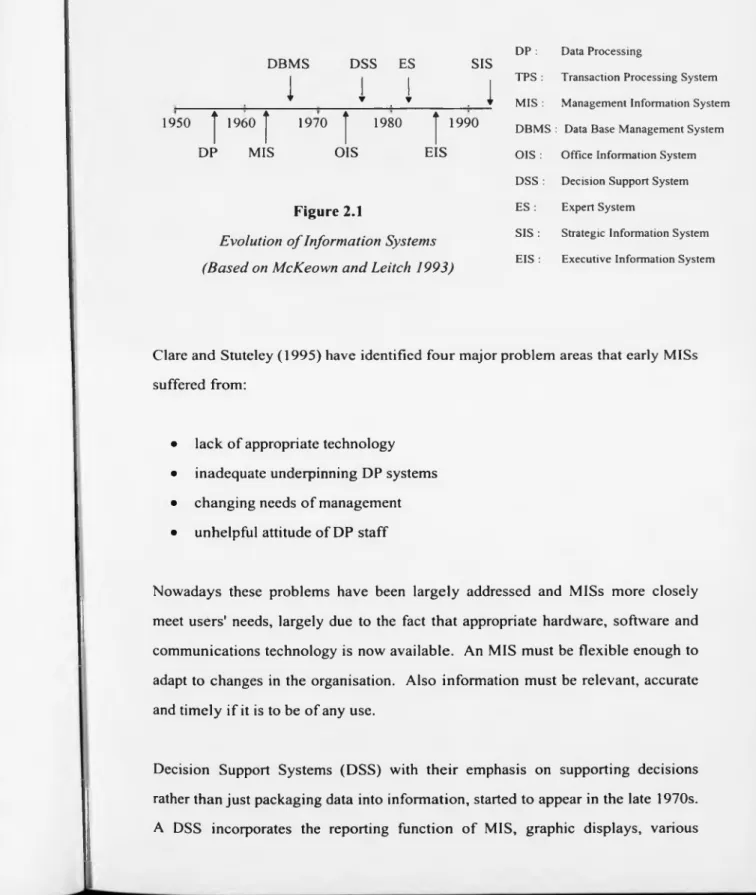
Evolution of Information Systems 90
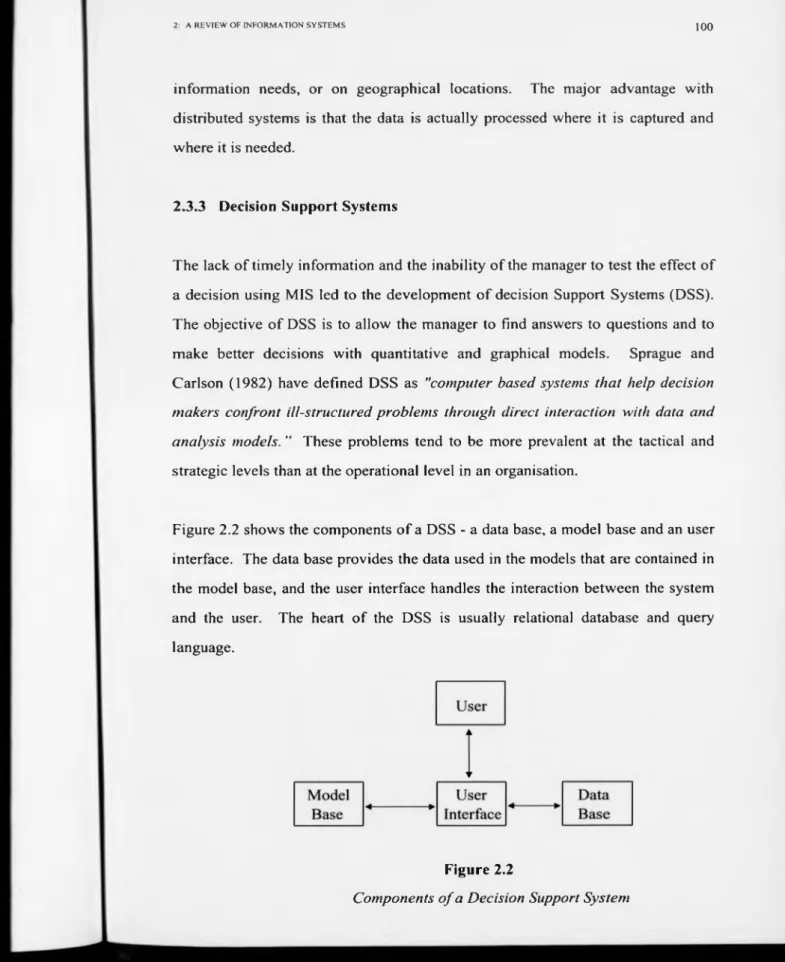
Components of a Decision Support System 100
The Structure o f an Expert System 107
Process of Knowledge Engineering 110
Three Levels o f Database Intelligence 122
Research Strategies 1970-79 128
Research Strategies 1977-85 129
System Development Research Process 139
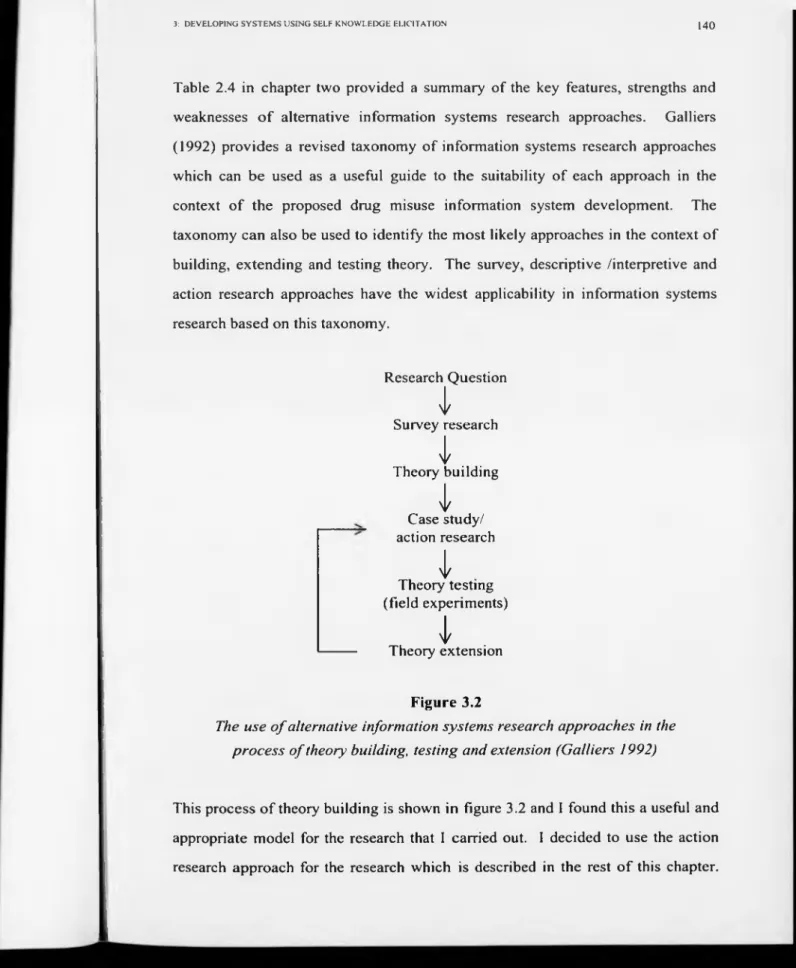
The Use of Alternative Information Systems Research Approaches
in the Process o f Theory Building, Testing and Extension 140
Changing Nature of Drug Services and Prevention Work in the
Light of HIV and Drug Misuse 145
Characteristics of Motivational Interviewing 150
Phases in the Process o f Change 152
A Diagrammatical Representation of the Drug Misuse
T ree-structure 162
The Interaction Between the Expert and the Knowledge Engineer 173
Interactions Between the Expert, Knowledge Engineer and the Self
Knowledge Elicitation Tool 184
LIST OF ILLUSTRATIONS
4.1 - Information System Goodness (Based on Orr (1973) and
Buckland (1991)) 196
4.2 - The Project Ladder 200
4.3 - Stage 1 o f the Matching Process 204
4.4 - Summary Matrix 205
4.5 - The Evaluation Methods 206
5.1 - Usage o f Self Knowledge Elicitation Tool 226
5.2 - Learning and Using the Self Knowledge Elicitation Tool 227
5.3 - Instruction Manual for the Self Knowledge Elicitation Tool 228
5.4 - Effectiveness o f the Self Knowledge Elicitation Tool 230
5.5 - Timeliness of Information Contained in the Self Knowledge
Elicitation Tool 232
5.6 - Accuracy and Relevance of Information in the Self Knowledge
Elicitation Tool 233
5.7 - Information Content and Overall Satisfaction o f Self Knowledge
Elicitation Tool 235
5.8 - Developing and Maintaining a New Application Using Self
Knowledge Elicitation Tool 236
5.9 - Usefulness of a System Developed Using Self Knowledge
Elicitation Tool 237
LIST OF TABLES
Table Page
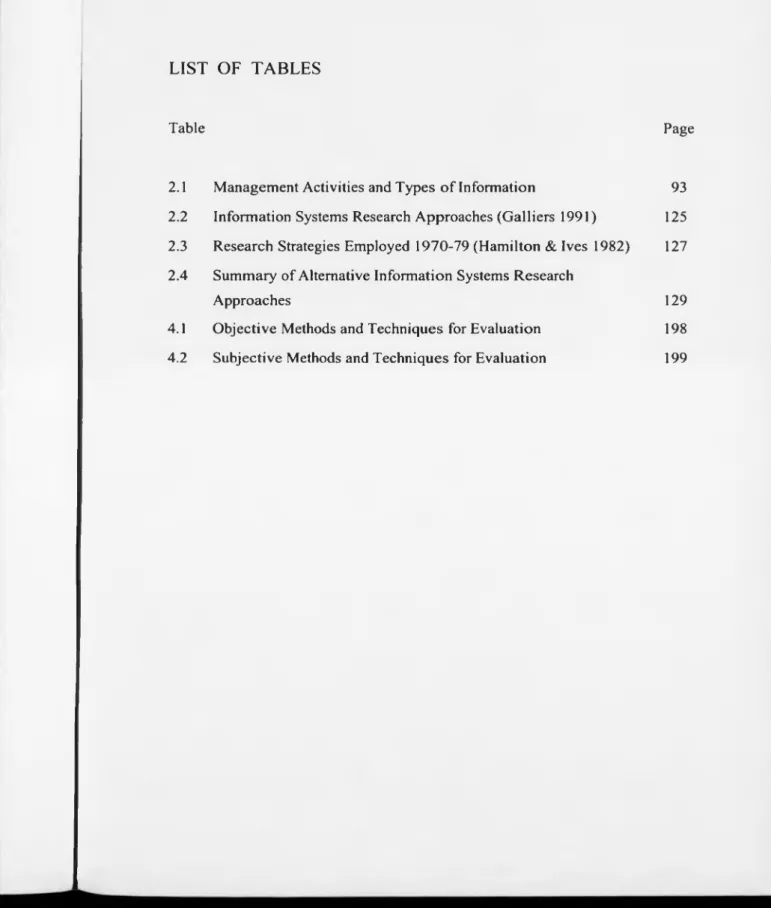
2.1 Management Activities and Types o f Information 93
2.2 Information Systems Research Approaches (Galliers 1991) 125
2.3 Research Strategies Employed 1970-79 (Hamilton & Ives 1982) 127
2.4 Summary of Alternative Information Systems Research
Approaches 129
4.1 Objective Methods and Techniques for Evaluation 198
DECLARATION
When working in a team it is always difficult to pin-point the contribution that any
one member makes. This is especially true of the Expert Systems / Decision
Support Unit (ESDSU) during the development o f various computerised decision
support systems for AIDS/HIV. Each member of the development team was
responsible for one main area although all the concepts were discussed in a group
on a regular basis. I was responsible for the design, knowledge acquisition and
evaluation of the General Public and Counselling Modules of the AIDS
Information System and the AIDS Expert Advisory System; Mr. J. McMorran was
responsible for the Clinical and Guidelines Modules; and Mr. S. McMorran was
responsible for the programming of the AIDS Expert System, AIDS Information
System and the AIDS Expert Advisory System.
I wrote the computer code for the batch files which were sent out with the AIDS
Expert, Information and Expert Advisory Systems. These were program disks to
allow users to install the system with relative ease. I was also responsible for
sending out disks regularly and for analysing the feedback received from end-users
regarding the various versions of the systems. I presented a paper on the AIDS
Expert Advisory System at the 'System Science in Health Care’ conference in Lyon
(Brittain 1988).
I was responsible for all work with Mr. Paul Wells of the Coventry Community
Drug Team (Coventry CDT), as well as for the design, development, knowledge
acquisition, implementation and evaluation o f their Database Management System
(CDTDBase), the AIDS/HIV and Drug Misuse Knowledge Base (ADMKBase),
and the Intelligent Database. The CDTDBase contains over 2000 lines o f
DECLARATION
All of these systems required regular contact and close involvement with the
Coventry CDT and in particular, with Mr. Paul Wells.
I would like to acknowledge the work o f Mr. Wells, who was able to articulate his
experience and expertise in order to develop a prototype drug misuse system using
a self knowledge elicitation tool which is described later and forms an integral part
of my research. Although he had very little experience with, or knowledge about,
computers he was able to construct a large knowledge base with relative ease. The
ability o f Mr. Wells, a community drug misuse expert, to articulate his own
SUMMARY
"What is now proved was once only imagined "
William Blake
The Marriage of
SUMMARY
In the past, information systems have been developed by system analysts and
programmers with the involvement o f end users being at a minimum. For a long
time now, researchers (Lucas 1976, Alter 1996) have been stressing the importance
of significant user involvement because it brings a number of beneficial results:
involvement can be challenging and intrinsically satisfying; involvement usually
results in more commitment to change; the user becomes more knowledgeable
about change and so is better trained in the use of the system; a better solution to
the problem is obtained because users know more about the present system than
analysts; involvement means the user has retained much of the control over
operations.
The contribution that this thesis makes is the concept of self knowledge elicitation
as an approach to prototyping, developing and maintaining information systems.
A key feature of this concept is the high degree of user involvement in the design
and development process. Self knowledge elicitation allows the user to build an
information system using his/her own knowledge and expertise, and then also
allows him/her to maintain and update this system. This concept initially emerged
following a research project which involved the development of an Expert
Advisory System for AIDS/HIV using traditional techniques of development,
which were found to have a number o f deficiencies including the time-factor.
Both formal and informal evaluations o f the self knowledge elicitation concept
were carried out at 20 different sites throughout Central England, over a minimum
period of nine months. The results o f these trials indicated that this concept was
acceptable and could be used as a practical, cost-effective way of developing and
maintaining information systems - especially for the purposes of training and
education.
Significant technological advances in both hardware and software over recent
years (advanced word processors, intemet/intranet, web browsers, e-mail, etc.),
used appropriately, will increase the availability, functionality and acceptability of
INTRODUCTION
"What we call the beginning is often the end
And to make an end is to make a beginning.
The end is where we start from ..."
T. S. Eliot,
INTRODUCTION 1
INTRODUCTION
This thesis describes the findings of a research project carried out by the research team based at the University of Warwick, in the Expert Systems/Decision Support Unit. The structure of the thesis and the inter-relationships o f the six chapters into which it is divided are shown diagrammatically in figure 0.1.
Chapter 1 describes the development of an Expert Advisory System (EAS) for AIDS/HIV. This was a decision support tool designed for multiple user-groups with varying levels of expertise within each user-group. The EAS attempted to provide a rich and valuable source of advice, information and guidance for clinicians, other health professionals, counsellors and members o f the general public. The information could be accessed using menus, keywords, differential diagnosis and free-text search. A facility was provided for users to enter their comments interactively to provide continuous feedback.
The aim o f the first chapter is to motivate the theme of the thesis and to provide a background for positioning succeeding chapters. Chapter 2 provides a review of the literature relating to the subject matter of the thesis including current research approaches used in information systems. The first two chapters then lead neatly into chapter 3, which describes how the self knowledge elicitation concept: (a) emerged from previous work undertaken including the Editable version of the EAS; and (b) was used to develop an information system on drug misuse. The need to evaluate the self knowledge elicitation concept, which is at the heart of this thesis, was established.
Chapter 4 reviews the methods and techniques that have been used to evaluate
information systems in the past. This is then followed by chapter 5 which
describes how the self knowledge elicitation concept was evaluated at 20 different
organisations from Stoke-on-Trent to Hereford. Both formal and informal
evaluations were carried out over a period of nine months. All of these were similar teams providing counselling, advice and information to drug and alcohol misusers, their relatives and friends, and other health professionals. The purpose of the trials was to evaluate:
INTRODUCTION 2
bû c
C O
-*—•
D ■*—cd»
CO o
ro E U3
<L> LU
a> CO <L>
> * bû
a . GO -TD
eS <L> - c U bl) C 'a . O (L) £ O C > U— <L>
Q GOa>
A
& o CO > £ 5 5 1m ’ >”0 Q a> << a .
03 t :
ü
l -O - e a . üu
U X
U E<u c < -*—* CO > -» GO
Î 5
Q «g a V JS
> > vo im 0> a . es 33 ü_ 03 CO a
s
Ou -a c 0 3 CO C O O c O CJ to bo 45S -S
INTRODUCTION 3
The evaluation was carried out using informal visits and discussions, together with a formal evaluation using a structured questionnaire completed by each unit. Fourteen units had built new information systems using the Self Knowledge Elicitation concept as their development tool. This included systems on alcohol, prescribing, community mental health, regional drug misuse statistics, and ecstasy tablets (in liaison with the Government Forensic Science Laboratory). The results o f both the formal and informal evaluations are presented and discussed in detail in Chapter 5.
Chapter 6 is the final chapter and this surfaces the key findings and conclusions from the whole research project. It also points out the limitations of the work carried out and proposes a number o f further research projects.
The reader may find it helpful to know the approximate dates for the various development stages of this longitudinal research project. It should be noted that many of the stages overlapped. Work on the AIDS/HIV EAS started in January 1987 and was completed in September 1988. This EAS itself emerged as a result o f integrating features from the AIDS/HIV Expert System and the AIDS/HIV Information System, both of which were developed initially (see Chapter 1).
The Editable EAS was developed and used as a prototype between October 1988 and December 1988. This editable version was developed to give the user more flexibility and control over system development. This had a number of advantages but there were a number of deficiencies and the user still had to rely on the developer to a large extent. This led to the development of another tool or concept.
This was initially referred to as Webofax and then as the self knowledge elicitation
concept. This concept gave the user total control and flexibility, and he/she could use this to capture his/her expertise in a structured manner (see Chapter 3). The development of the self knowledge elicitation concept began in January 1989 and there was a prototype version after approximately three months. From April 1989 the Drug Information System developed using this concept was used by the expert who helped to develop it as well as his staff at the Coventry Community Drug Team (Coventry CDT), where he was based.
There were a number o f other systems developed for use by Coventry CDT and
these are all described in Chapter 3. The Database Management System
INTRODUCTION 4
and integrated to form part of the CDTDBase in December 1989 after two months o f development. During the period from May 1989 to December 1989, the Drug Information System continued to be used, developed and maintained using the self
knowledge elicitation concept. An Intelligent Database was developed from
January 1990 to June 1990 by integrating all of these systems (see Chapter 3).
From July 1990 until December 1995, Coventry CDT continued to use the concept although there was now less contact between them and the researcher. Nevertheless, informal evaluations were carried out at regular intervals during this period. The concept o f self knowledge elicitation was being used mostly for education and training purposes.
From January 1996 until March 1996, the self knowledge elicitation tool was installed at 20 sites throughout Central England in order to extend the evaluation to more organisations. Formal and informal evaluations were then carried out during the period from April 1996 to December 1996, as mentioned above and described in detail in Chapter 5. It proved useful in the post-evaluation study to have at least one organisation (Coventry CDT) who had used this concept for several years. Even now in 1999, many of the 20 organisations are still using this concept for a range of different systems, some of which they have maintained and developed themselves.
Significant technological advances in both hardware and software over recent years (advanced word processors, intemet/intranet, web browsers, e-mail, etc.), used appropriately, will increase the availability, functionality and acceptability of the self knowledge elicitation concept. Although the system is currently DOS- based it is still being used today. This longitudinal study has shown that this concept has stood the test of time and it is just as important and relevant today as it was ten years ago. This concept of self knowledge elicitation ties in with the latest
management thinking in information systems. For example, in his book ‘The
CHAPTER 1
AN EXPERT ADVISORY SYSTEM FOR AIDS/HIV
"What we have to learn to do
we learn by doing... "
Aristotle,
: AN EXPERT ADVISORY SYSTEM FOR AIDS/HIV 6
1.1 Introduction
By April 1988, a total o f 86,954 cases of the Acquired Immune Deficiency
Syndrome (AIDS) had been reported to the World Health Organisation (WHO)
from 130 countries around the world (Mann 1988). Around this time, WHO
estimated that there were five to ten million people in the world infected with
Human Immunodeficiency Virus (HIV), which causes AIDS (CDSC 1988). The
next chapter gives a review o f information systems. It was believed by the Expert
Systems/Decision Support Unit (ESDSU - see section 1.2 below) that information
technology, expert systems in particular, could play a part in helping to solve some
of the problems related to AIDS/HIV (see section 1.4.2).
This chapter gives an account of the approach taken and the methods used in the
development of computerised decision support tools in order to help stop the
spread o f AIDS/HIV. The systems that were developed were action research led.
The ESDSU worked with end-users as far as possible and continually used their
feedback to refine and update both the contents and the design o f these systems.
The AIDS/HIV pandemic and its problems are highlighted under section 1.3, and
this is followed by three sections which describe the different approaches that were
taken in this action research project. Initially, a classical Expert System was
developed along the lines of past expert systems like MYCIN (see chapter 2).
When this was rejected by the experts, the ESDSU adopted a completely different
approach and developed an Information System. Although this was received more
favourably than the Expert System, it still contained a number of important
deficiencies. After studying and comparing the features of both the Expert System
and the Information System from the result of trials, it became apparent that the
1 A N EXPERT ADVISORY SYSTEM KOR AIDS/HIV 7
Consequently, there followed a third system which, by combining features from
each of the two previous systems, not only reduced most of the deficiencies but
also provided the user with greater flexibility. This new system was termed 'An
Expert Advisory System'.
This chapter gives details of all the tools developed, with an outline of the
development process including the knowledge acquisition techniques used, the
multi-user groups catered for and the multi-modes of access. The systems
contained four different modules directed at different users (clinicians, health
professionals in general, the general public including school-children, and
counsellors). The contents of each o f these modules is described briefly as well as
the different modes o f access (menus, keywords, differential diagnosis and free
text search) to the same information. Other features like the facility to enter
comments while using the system are detailed together with their importance.
This chapter also lists and details the places where the prototype systems were
installed for evaluation and feedback. A detailed study was carried out at a school
in Nuneaton and the results and findings o f this formal trial are also included. The
final section deals with the overall findings and conclusions of building
computerised decision support tools for AIDS/HIV. The positive features that
resulted out of the systems during and following their development are discussed
and the problems encountered are highlighted.
1.2 The Expert Systems/Decision Support Unit
In January 1987, the University o f Warwick, in collaboration with the North
Warwickshire Health Authority (NWHA), set up the Expert Systems/Decision
I AN EXPERT ADVISORY SYSTEM FOR A1DS/H1V 8
Management Research and Development within the Warwick Business School
(previously known as the School of Industrial and Business Studies). The Unit
comprised o f two directors, Dr. R. D. Hurrion, a senior lecturer at the University,
Dr. R. D. Brittain, District Medical Officer at NWHA, and three Research
Associates, Stewart McMorran, James McMorran and myself.
Dr. Brittain had initially approached the University of Warwick in June 1986
expressing an interest in developing an expert system for the diagnosis and
treatment o f Rabies. This work was given to a suitable student as a summer
project which formed part o f his Master of Science degree. The system that finally
emerged was received favourably by health professionals and indicated the
feasibility and usefulness of information technology in health care (McMorran,
1986). As a result o f the success of this system, the ESDSU was set up a few
months later to develop expert systems in infectious diseases.
Initially, the plan was that the three Research Associates would each develop an
expert system for one of the various infectious diseases. Therefore, work was
started on three separate expert systems in Methicillan Resistance Staphylococcus
Aureus (MRSA), Rabies and AIDS. However, even before a rudimentary system
had been developed in any one of these areas it was decided that all three Research
Associates would work together as a team to concentrate on the development o f an
AIDS/HIV Expert System. AIDS/HIV was chosen for a number of important
reasons which are described in the next section (1.3.3).
The Unit decided to work as a team in order to accelerate the development process.
Each member of the team was given an area which he was primarily responsible
for although all the concepts were discussed as a group on a regular basis. Stewart
I AN EXPERT ADVISORY SYSTEM TOR AIDS/HIV 9
McMorran was responsible for the Clinical and Guidelines modules of the system;
I was responsible for the General Public and Counselling modules of the system.
1.3 The AIDS/HIV Pandemic
1.3.1 The Evolution o f AIDS/HIV
The Acquired Immune Deficiency Syndrome (AIDS) is a term used to describe
individuals who are infected with the agent responsible for AIDS, the Human
Immunodeficiency Virus (HIV), and who have one of the diseases stated by the
World Health Organisation/Centre for Disease Control (WHO/CDC) in their
definition of AIDS (WHO 1986).
AIDS, which seemed to appear from nowhere in the spring of 1981, attracted
considerable world-wide attention within the space o f only a few years. Today,
after more than seventeen years, the AIDS pandemic still remains a phenomenon
of unusual importance and great concern. ’Acquired' means that the condition has
been caught as opposed to being inherited; 'Immune Deficiency' implies poor body
defence mechanisms against infection; 'Syndrome' is the particular pattern of
illnesses which help to identify a particular disease (in this case AIDS). HIV is a
retrovirus which can be transmitted via semen, vaginal fluids, blood and matemo-
foetal contact.
AIDS was first reported by the CDC in Atlanta, Georgia, USA (CDC 1981). CDC
is a public health body which is responsible for investigating epidemics as well as
reports of new or unusual diseases. CDC described the cases of five young
homosexuals who had been treated for Pneumocystic carinii pneumonia (PCP).
Pneumocystic carinii is a small organism (protozoan) which parasitises the lungs
1 : AN EXPERT ADVISORY SYSTEM FOR AIDS/H1V 10
These five, previously healthy men had been treated in Los Angeles hospitals.
Shortly afterwards, twenty-six previously healthy homosexuals developed Kaposi's
sarcoma (KS), a rare malignant cancer. Within two years of diagnosis, eight of
these patients had died.
PCP and KS disorders were now affecting fit, younger men, whereas in the past
they had been restricted to much older groups o f individuals. This virtually
suggested that a new disease entity had occurred. All these cases involved
homosexuals and the host response to these infections seemed to be impaired, and
therefore the syndrome was termed the Acquired Immune Deficiency Syndrome.
1.3.2 Problems Associated with AIDS/HIV
Even after more than seventeen years since the first report, AIDS is still the subject
of considerable misunderstanding and fear. A great number o f myths and
misconceptions have been established over the years, especially regarding the
transmission o f the virus, amongst various members of the general public. Also,
persons with HIV infection are incorrectly being equated with persons with AIDS.
Another problem is that AIDS is still regarded as a 'gay' disease, with many people
believing that they will, therefore, never be at risk. There is also a lot of prejudice
against lifestyle and this is being held responsible for the spread of HIV into the
general community. This stereotyping of patient groups has stood in the way of
greater social understanding and acceptance of those at risk (Miller 1987). AIDS
is in fact, unselective in regard to who it infects. Transmission can occur by sexual
I AN EXPERT ADVISORY SYSTEM FOR A1DS/HIV 11
passed from mother to child. AIDS has now been confirmed on a wide scale in
homosexuals, heterosexuals, haemophiliacs, drug abusers as well as children.
Diseases present atypically in AIDS patients which makes them difficult to
recognise, especially by those inexperienced in dealing with such diseases. PCP
and other diseases which are common in AIDS patients are rarely found in non
immunosuppressed hosts. Therefore, an entirely new area o f medical knowledge
needs to be grasped quickly by many clinicians.
There is no effective vaccine or cure against this virus. Current knowledge
suggests that once someone is infected, the virus will remain in their body for life.
Those who have contracted the virus are likely to develop AIDS eventually.
However, these people are infectious even before they develop the syndrome, and
are quite capable of transmitting the virus via sexual intercourse, infected blood
and blood products, and matemo-foetal contact.
Since AIDS was a relatively new medical condition in the late 1980’s, clinicians
and other health professionals were not yet familiar with this disease and its
presentation. This was true especially in areas away from the major medical
teaching centres, where treatment regimes were more practised because o f the high
number o f AIDS patients. David Miller (1987) expressed his concern about this
issue: "To have HIV or AIDS is, in many places, to be a medical novelty. In some
instances, this means being a 'guinea-pig' in the formation o f particular medical
policies and practices". Now in the late Nineties however, HIV and AIDS are no
longer the novelty they were in the late Eighties.
Most o f those infected with AIDS are young people aged betw een 20-40 years, i.e.
I AN EXPERT ADVISORY SYSTEM FOR AIDS/HIV 12
developed to test for the virus but this is not completely reliable and is voluntary.
Diagnosis of infection is difficult because o f the unusual presentation o f the
disease.
In the UK, historically, infection has occurred at a limited number of locations in
the Thames Region of London and in Edinburgh. Through time, physicians at
these centres have accrued more experience and expertise in diagnosing and caring
for AIDS patients, compared with the rest o f the country. Although the infection
has now spread away from its primary focus, this has not been accompanied by a
re-distribution o f knowledge. More resources have been directed to these prime
centres and this further distorts the distribution of facilities to care for patients.
Although there is a considerable mass of information about AIDS, this is in a
format which most people find difficult to use. Consequently, basic knowledge of
the disease is often confused.
1.3.3 Reasons for choosing AIDS/HIV
Many o f the reasons why AIDS/HIV was targeted as the knowledge base for the
proposed Expert System arise from the problems associated with AIDS, as
outlined in the previous section. It is an area of medicine in which there is a vital
need for expertise to be shared. This knowledge that is localised in various centres
of excellence, needs to be disseminated to other clinicians and general practitioners
who need to prepare themselves as they are very likely to meet HIV infected
patients in the near future, if they have not already done so.
The medical and social know ledge concerning A ID S/H IV is continually changing
1: AN EXPERT ADVISORY SYSTEM FOR AIDS/HIV 13
knowledge and advice is sought by a large number of groups and individuals
ranging from experts to members o f the general public.
Potentially, everyone is at risk o f becoming infected with HIV. In the absence of
an effective vaccine or cure, it is very important to educate people about the virus
and the ways that it can be transmitted. A great deal is now known about the
methods by which the virus is transmitted, and so adequate education is the best
method for prevention, especially since simple behavioural changes can greatly
reduce one's risk of becoming infected.
There is evidence that distributing expertise about specialist diseases can result in
significant savings. Firstly to the patient in terms of no unnecessary treatment and
secondly to the health service in financial terms (Adams et al 1986).
1.4 The Expert System Approach
1.4.1 Introduction
The ESDSU decided that it was necessary to build an AIDS/HIV Expert System
(AES) to solve some of the information/ understanding problems posed by the
AIDS/HIV pandemic. In order to accelerate the development process, it was
decided that an expert system shell (a software programme which allows the user
to build expert systems relatively quickly - see chapter 1) would be used rather
than a programming language. The shell chosen was Props-2 which had been
I: AN EXPERT ADVISORY SYSTEM FOR AIDS/HIV 14
1.4.2 Reasons for the Expert System Approach
There were several reasons why the Expert System approach was adopted for
tackling this terrifying disease. The most significant o f these are described below:
1) Invaluable experience had already been gained by a member of the ESDSU
during the development of a Rabies Diagnostic Expert System (McMorran 1986).
In a computerised model, the Rabies Expert System had encapsulated the expertise
of one o f the UK's leading Rabies experts, Dr Sylvia Gardener o f the
Communicable Diseases Surveillance Centre in Colindale. The system was based
on factors such as the location of the bite, the animal that had bitten the patient and
the country in which the incident had taken place. Based on these factors the
system produced advice on proposed actions - suggested therapeutic regimes,
listing of various environmental control measures.
It was assumed that the lessons learnt in the development of the Rabies System
could be applied to the area of AIDS i.e. the same methodologies and 'type' of
system, namely a diagnostic expert system.
Two other features of the Rabies Expert System were used as guidelines for the
development of the AIDS Expert System. Firstly, the system should be designed
for one user group - the medical practitioner. At this stage, no consideration had
been given to the development o f a system for a wider audience. Secondly, there
would only be one way of interacting with the knowledge contained in the system -
1 : AN EXPERT ADVISORY SYSTEM FOR AIDS/HIV 15
2) There existed a shortage of expertise in AIDS/HIV and this was
concentrated in the larger teaching hospitals. Expert Systems had been cited as a
valuable means of disseminating scarce expertise (Szolovits 1982).
3) Medical experts in this field were available and willing to share their
knowledge. Dr. R. D. Brittain was the District Medical Officer for North
Warwickshire Health Authority, a Consultant to the World Health Organisation on
Health Information and a Director of the Expert Systems/Decision Support Unit.
He was thus a very valuable and ready source of medical expertise. Many other
leading experts were available and they are discussed later in this chapter.
4) An expert system knowledge base would ensure consistency and be easily
updatable. As new knowledge is discovered, new facts can be added to the
knowledge base. Any changes in the knowledge concerning stored facts would
mean that the appropriate facts would be altered. Also, unlike with respect to
human experts, responses to a particular scenario are always consistent in a
computerised expert system.
5) Memory would not be a limitation as with humans because there is only so
much that an individual can remember (Brittain 1988). Some knowledge base
systems store vast amounts of knowledge. INTERNIST (Miller, Pople and Myers
1982) has a knowledge base that covers 80% o f Internal Medicine, containing 2.2
million facts. Users o f knowledge would not need to memorise all facts and rules
concerning a problem area if working with an expert system.
6) An expert system can be used as a training aid. A good example o f this
occurred with the diagnostic expert system MYCIN, where NEOMYCIN was
1 AN EXPERT ADVISORY SYSTEM FOR AIDS/H1V 16
re-train would be important for the medical practitioner in a volatile field o f
medicine like AIDS.
7) An expert system can help achieve consensus. Miller, Blumenfrucht and
Black (1984) describe how ATTENDING, an expert system for anaesthetic
management planning, tackles the problem o f conflicting expert judgement. An
expert's knowledge is explicit in the process of developing an expert system
because it has to be computerised. Consequently this knowledge is demonstrable
and can therefore be challenged.
1.4.3 Reasons Against Expert System Approach
According to some expert system practitioners, an AIDS Expert System would not
be a suitable application of expert systems technology. Wellbank (1983) is
amongst these and he lists several points that imply that AIDS would be a difficult
domain in which to develop an expert system. Firstly, no one feels familiar with
the domain and experts do not generally agree about it; Secondly, the knowledge
includes procedures, spatial relationships or reasoning over time. All of these are
difficult to represent. Finally, a lot of action hinges on a lot of conditions.
Buchanan (1982) adds to this list of points by saying that if the problem domain
contains knowledge that is volatile, then the application o f expert systems
technology is unsuitable.
By studying these points it can be seen that they are true o f AIDS. Since AIDS is a
new disease, knowledge about the condition is continually changing. There are
temporal considerations too - e.g. the longer an individual is infected with HIV the
1: AN EXPERT ADVISORY SYSTEM FOR AIDS/HIV 17
between factors - e.g. the increased incidence of Kaposi's sarcoma in homosexual
males with HIV as compared to heterosexual males with HIV.
Different centres of excellence on AIDS have their own expert strategies on the
treatment and management of AIDS patients. An example of this is in the
treatment of Pneumocystis carinii pneumonia, a lung infection which is the most
common cause o f death in AIDS patients. At St. Stephen's Hospital they use
Septrin Treatment; St. Mary's they are more likely to use Pentamidine.
1.4.4 Discussion
After considering the reasons for and against the suitability of expert systems
technology to this area o f medicine, the ESDSU decided to go ahead with the
development of an expert system in AIDS. The main driving force behind this
decision was the importance and appropriateness o f the development of a tool for
dissemination of expertise on AIDS.
1.4.5 The Development Plan
Most existing expert systems have been developed using a standard format. Five
stages can be identified when looking at the overview of the classical development
process (Hayes-Roth
1987):-(i) Identify the main characteristics of the problem;
(ii) Identify what knowledge is necessary to solve the problem;
(iii) Determine how the knowledge should be organised to solve the problem;
(iv) Encode the required knowledge and its organisation into a format that the
I AN EXPERT ADVISORY SYSTEM FOR AIDS.HIV 18
(v) Validate the knowledge represented by testing against the problem.
Feedback channels are provided between each stage. Development is an iterative
process where problems encountered in later stages indicate shortcomings at
earlier ones.
The ESDSU decided that the AIDS Expert System would be developed in four
stages, and these were similar to those identified by
Hayes-Roth:-(i) Preparation Period - the tools that might be appropriate for the development
of an AIDS Expert System would be investigated in this period. Also,
possible expert system approaches that might be relevant would be decided.
The Knowledge Engineer would need to become familiar with the problem
domain, in this case AIDS. Prospective experts would have to be contacted
as well as potential end users o f the system once developed.
(ii) Development Period - this is where the AIDS Expert System would be
developed using the tools and approaches identified in stage (i).
(iii) Implementation Period - end users would be able to use the system as a
prototype in this period.
(iv) Evaluation Period - an evaluation of the system would need to be done to test
its usefulness.
It should be noted that although these stages are presented here in a sequential
I A N EXPERT ADVISORY SYSTEM FOR AIDS/HIV 19
listed sequentially for convenience in order to divide the development process into
identifiable steps.
1.4.6 The Preparation Period
1.4.6.1 The User Groups
Although no programming o f the AIDS Expert System was done in this period, it
was necessary for the development team to become familiar with the problem area
as well as investigate possible tools that may be used for development. It was also
important and necessary to identify "user groups" for the developed system. These
groups would also provide a means for evaluation o f the system.
The three main user groups that were initially identified were clinicians at St.
Mary’s Hospital, St. Stephen's Hospital and the Middlesex Hospital. Dr Brittain
was also aware of the anxieties of the medical community in his role as District
Medical Officer. He viewed AIDS as an area in which expertise would be needed
in his health authority, although at the time there were no cases of AIDS or HIV in
the North Warwickshire Health Authority.
Interest had also been shown by a number o f other organisations. Amongst these
was the Wellcombe Tropical Institute who saw it as a possible solution to the lack
o f clinical expertise in the African sub-continent. Professor Zeb Handzel of the
Israeli Working Party on AIDS expressed interest in collaborating with the project
1 : AN EXPERT ADVISORY SYSTEM FOR AIDS/HIV 20
1.4.6.2 The Experts
Dr Roger Brittain
It is obviously very important to locate experts who are willing to give up their
time and share their knowledge before any proposed development can take place.
Dr Brittain was not only medically qualified but had experience with health based
computer systems. He was used as an expert in the development o f the AIDS
Expert System by having twice weekly meetings with him during the initial stages
o f the project.
Dr Brittain was also a consultant to the World Health Organisation on Health
Information. He was able to use his position and influence in order to get experts
willing to collaborate in the project.
Dr Susan Drake
Dr Drake, from the Department of Genitourinary Medicine in North Warwickshire
Health Authority, agreed to help in the development of the system. Since no cases
of AIDS had occurred in their authority at the time, her expertise of the practical
management and treatment of AIDS patients was limited.
Dr Marion McEvov
Dr McEvoy was an Epidemiologist at the Communicable Diseases Surveillance
Centre in Colindale, which provides a national resource and expertise in infectious
diseases. Dr McEvoy's work on the models o f the number of future AIDS cases in
1: AN EXPERT ADVISORY SYSTEM FOR AIDS/HIV 21
Professor Andrew Geddes
Professor Geddes was based in the Department of Infectious and Tropical Diseases
at East Birmingham Hospital. Most of the cases o f AIDS in the West Midlands
had been referred to East Birmingham Hospital.
Dr Charles Farthing
Dr Farthing was involved in the treatment and management of patients with AIDS
related disorders at St. Stephen’s Hospital in London. Dr Farthing and the team of
doctors at his hospital had agreed to collaborate with the development team,
following a meeting between the two groups.
Dr Anthony Pinching
Dr Pinching, an Immunologist at St. Mary's Hospital in London, was investigating
the effects of the AIDS virus and how these could be managed. A meeting was
arranged between the development team and Dr Pinching's unit and they agreed
collaboration.
Professor Michael Adler
Professor Adler, the only Professor of Sexually Transmissible Diseases in the UK,
was in charge of a team o f doctors at the Middlesex Hospital. Professor Adler's
unit were involved in the treatment and management of patients with AIDS. They
agreed to collaborate with the development team after a meeting in London
between both parties.
1.4.7 The Development Period
Initially two m em bers o f the developm ent team were responsible for the
I AN EXPERT ADVISORY SYSTEM FOR AIDS/HIV 22
form o f a computerised expert system. From the two knowledge engineers, one
was responsible for the more clinical and specialist aspects of AIDS whilst the
other concentrated on the general aspects.
It was also important for the knowledge engineers to be familiar with the
techniques of knowledge acquisition (see chapter two). The main technique used
was interviews. Meetings were arranged with the experts listed above. All
meetings were recorded using a voice-activated tape recorder, so neither the Expert
nor the Knowledge Engineer would be distracted whilst the interview proceeded.
Also, this made the meeting more productive, as the Knowledge Engineer was able
to elicit more information in a shorter time. This was important because Experts
have very limited time and they are already over-stretched.
After the first knowledge engineering session with the expert, further sessions
involved having the computer present too. In this way, previous knowledge that
had been encapsulated in the programs could be shown to the expert as a prototype
system. This provided a means of refining the knowledge that had been acquired
in previous interviews.
During this part of the project, over 40 hours o f tape recording had been made.
The tapes had to be played so that the information and expertise could be written
down, examined and then encoded for the computer system.
Textual material in the form of papers, journals and books were read to acquire
some of the basic knowledge concerning AIDS, as well as to become familiar with
the terminology used in this area of medicine. A lot of facts and rules were
derived from printed text for use in the AIDS knowledge base, and this was
I : AN EXPERT ADVISORY SYSTEM FOR AIDS/HIV 23
The acquisition of knowledge is regarded as a major obstacle to success in building
expert systems (Hayes-Roth et al 1983). This was confirmed during the
development of the AIDS Expert System. The time that the experts could devote
to the development of the system was very limited. Nevertheless, one of the
biggest problems encountered during the development process was a bottle-neck
that occurred during knowledge acquisition. For example, this occurred during
several three-weekly periods of stay at St Stephen's Hospital when working with
Dr Charles Farthing. The stays were not longer because the developers of the
system could not keep up with the knowledge that had been acquired and the
changes demanded by the experts. This was frustrating for both the expert and the
development team. As mentioned above, over 40 hours of tape recording had been
made during the development of the AIDS Expert System.
The Development Methodology used and the way knowledge was represented are
described below. The programming environment used for the AIDS Expert
System was PROPS-2. This is a PROLOG based expert system development
environment for personal computers, which has been developed by the Imperial
Cancer Research Fund (ICRF). PROPS-2 is a rule based PROLOG shell which
encourages additional forms of knowledge representation. This particular shell
was chosen because o f (a) availability; (b) the need for a tool that would enable
rapid prototyping; (c) the need for the AIDS Expert System to remain compatible
with the Oxford System of Medicine (OSM). The OSM was being developed by
ICRF in PROPS-2. It was an attempt to computerise the widely acknowledged
Oxford Textbook of Medicine. This textbook, however, lacked in-depth coverage
1: AN EXPERT ADVISORY SYSTEM FOR AIDS/HIV 24
There were a number o f problems with using PROPS-2, the main one being that
the software was unsupported. Consequently, there was no assistance available
when run-time errors were encountered, which hindered the development process.
There was little scope for manipulating the design of the screen and for referencing
the knowledge in different ways. Another problem was that PROPS-2 was slow
and memory intensive. The importance o f speed was not realised until the AIDS
Expert System was shown to end-users and the experts involved in the
development. A number of lessons can be learnt from this. It is important to
choose a development environment which is well established and supported. The
knowledge engineer needs to balance the advantages and disadvantages of using an
expert system shell against a programming language. Both of these are discussed
in detail in chapter one. Shells allow rapid prototyping because it is easier to
represent knowledge, and they are easier to learn and use. A programming
language has more flexibility and the user is not restricted to pre-defined structures
which are built into Shells.
Knowledge Representation
One of the most frequent diseases that occurs in AIDS is pneumocystis carinii
pneumonia (PCP). In a case o f suspected PCP only the identification of the
pneumocystis carinii organism in eg sputum from the patient, would confirm the
diagnosis o f PCP. However, based on the symptoms and signs that a patient
presents with, a physician might suspect that the patient has PCP. The physician
might also suspect that the patient is suffering from infection with another disease.
He would be unable to confirm conclusively that the patient was suffering from
PCP without a positive laboratory test for pneumocystis carinii. Even if a
laboratory test o f e.g. a patient's sputum, were negative for pneumocystis carinii
then a physician might still consider that PCP was the most likely cause o f a
I AN EXPERT ADVISORY SYSTEM FOR AIDS/HIV 25
considering as possible causative agents for a patient's presenting symptoms and
signs is called a differential diagnosis.
By constructing lists of factors and actions from recorded interviews with experts,
tentative semantic networks of some of the AIDS diseases were drawn up. The
one for PCP is shown in figure 1.1. This representation was to be used in a
differential diagnosis or diagnostic classification. It was also hoped that parts of
the network could be represented as Attribute-Object-Value (AOV) triples.
A knowledge base containing AOV triples was constructed and used in the
prototype AIDS Expert System. The experts were used to specify the relevant
importance of AOVs in relation to including diseases in a differential diagnosis or
possibly even in confirming the diagnosis of a disease.
Both textual material and interviews were used for the derivation o f facts and rules
that were used in the knowledge base. As an example, consider the following
extract from "AIDS - etiology, diagnosis, treatment and prevention" by Devita,
Heilman and Rosenburg (p i81) discussing central nervous system (CNS)
disorders:
"...Patients may present initially with cognitive disorders, seizures, or
focal motor and sensory defects. I f a computer Tomography (CT) scan
shows any contrast-enhancing lesion(s), the differential diagnosis
includes toxoplasmosis, lymphoma - or less likely but conceivably
-cryptococomma or tuberculoma. I f there are multiple hypodense
lesions that do not contrast-enhance, progressive multifocal
I AN EXPERT ADVISORY SYSTEM FOR AIDS/HIV 26
PCP S e m a n t ic N e t w o r k
Factor relevant to possible symptom of PCP includes rapid weight loss
Factor relevant to cough includes duration
Possible includes
Possible includes
symptom of PCP febrile prodrome
Possible symptom of PCP includes cough
Possible symptom of PCP includes dyspnoea
D I F F E R E N T I A L
D I A G N O S
Factor relevant to PCP includes X-ray
I
Factor relevant to PCP includes weight loss
State of X-ray includes interstitial filtrates
Factor relevant to PCP includes Lab Tests
i
Lab Tests relevant to PCP include alveolar lavage, biopsy
D I A G N O S I S O F P C P
Figure 1.1
1 : AN EXPERT ADVISORY SYSTEM FOR AIDS/H1V 27
Facts that were extracted from this text were:
• Symptoms of CNS infection include cognitive disorders
• Symptoms of CNS infection include seizures
• Symptoms of CNS infection include focal motor defects
• Symptoms of CNS infection include sensory defects
• Results of CT scan include contrast enhancing lesions (CEL)
• Results o f CT scan include non contrast enhancing lesions (NCEL)
• Symptoms of toxoplasmosis include CEL
• Symptoms of lymphoma include CEL
• Symptoms o f cryptococomma include CEL
• Symptoms of Tuberculoma include CEL
• Symptoms of progressive multifocal encephalopathy include NCEL
Rules were also constructed so that the increased likelihood o f CEL being found in
e.g. toxoplasmosis compared to tuberculoma was represented.
Development Methodology
A prototype of the AIDS Expert System was constructed using information
obtained from textual sources and interviews with collaborating experts. This
prototype was then extended, refined and re-refined by using an iterative
development cycle. This is represented diagrammatically in Fig 1.2, showing the
1 : AN EXPERT ADVISORY SYSTEM FOR AIDS. HIV 28
◄
Knowledge Engineer shows Expert current system
T Expert studies system
Knowledge Engineer and Expert Discuss changes
Knowledge Engineer and Expert agree changes
Knowledge Engineer Implements changes
►
Figure 1.2
The Interaction between the Knowledge Engineer
1 : AN EXPERT ADVISORY SYSTEM FOR AIDS/HIV 29
1.4.8 The Implementation Period
Once an initial prototype of the development o f the AIDS Expert System had been
developed, it was installed in several locations in order to receive feedback. Only
groups that were involved with the project were targeted at this early stage of
evaluation.
A facility was incorporated in the system which allowed the users to type, using
the keyboard, any comments they had about the overall system or specific sections
of it. These comments were stored as a text file which the development team
could access later.
Due to the lack o f suitable computer hardware, all the experts were not able to
have access to the system. Those who were able to evaluate the system included
Dr Brittain and Dr Drake at North Warwickshire Health Authority; Dr Farthing at
St. Stephen's Hospital, Dr Handzel at both the London school of Hygiene and at
the Hebrew University after his sabbatical.
1.4.9 The Evaluation Period
The evaluation o f the AIDS Expert System was carried out by demonstrating and
receiving feedback from experts and end-users.
As discussed earlier in this chapter, the project objective was to resolve some of
the problems associated with AIDS by developing and implementing an expert
system in AIDS. In the initial evaluation o f the problem, it appeared that an expert
: AN EXPERT ADVISORY SYSTEM FOR AIDS/HIV 30
As the AIDS Expert System development progressed, it became apparent from the
participants that a traditional diagnostic clinical expert system was not the answer.
The participants included the experts and the user groups as well as the
development team themselves. The reasons for this are discussed below.
There were four principal points that the experts made against the development of
a diagnostic AIDS Expert System:
(i) AIDS was only one area of medicine - Professor Geddes noted that any
diagnostic medical expert system was of use only if all areas of medicine were
covered by the system. It was therefore, unlikely that a clinician would use an
expert system for one specific area of medicine only.
(ii) The complex nature of infection with the AIDS virus - as the effects of the
AIDS virus become more severe there is an increasing range of diseases that a
patient may present. Also, the relationship between HIV infection and the diseases
that a patient might suffer are still not very well understood. All this made it
difficult to build a knowledge base.
(iii) A diagnostic AIDS Expert System was not "wanted" - Professor Geddes
was against the idea of doctors using a diagnostic expert system, saying that they
had not been used by physicians in the past, e.g. MYCIN.
(iv) Other areas of AIDS related advice were equally in need of dissemination -
these views were expressed in particular by Dr Drake, Dr Farthing and Dr
Pinching. For example, Dr Drake was a 'clinical' AIDS expert but was required to
] AN EXPERT ADVISORY SYSTEM FOR A1DS/HIV 31
Dr Brittain as a user o f the AIDS Expert System became aware that the
development of a diagnostic system was a 'blinkered' approach to the problem of
shortage in expertise. A diagnostic system would only help in identifying the
problem but not help to resolve that problem, e.g. treatment advice.
The development team also identified areas of difficulty during the development of
the system:
(i) HIV infection was assumed by the AIDS Expert System;
(ii) Knowledge of HIV was volatile;
(iii) Some experts were not very willing to develop a diagnostic system;
(iv) Some relationships concerning AIDS and HIV infection were time
dependent;
(v) Areas of advice other than diagnostic advice were required;
(vi) A diagnostic expert system required the inputting o f data from the patient's
medical record.
A number o f lessons can be learnt from the results of these evaluations of the
prototype AIDS Expert System. It is important to consider the context in which
any expert system will be used. How much of the work carried out by the user or
expert is represented by the application of the expert system ? The smaller this
amount is, the less likely it is that the expert system will be accepted and used by
the user or expert.
The area o f application for the expert system needs to be well established and
understood. It is difficult to represent knowledge in an expert system when a
relatively new phenomenon like HIV infection has a lot of grey areas and where a
AN EXPERT ADVISORY SYSTEM FOR AIDS/HIV 32
An expert system needs to be considered in terms of its practical use in a working
environment. The expert system needs to go beyond just identifying or diagnosing
the problem and be able to give advice on how to resolve that problem.
The informal evaluations by the participants involved in the project have been
discussed. These indicate that the provision of an AIDS Expert System needs to be
reconsidered.
1.4.10 Discussion
There were a number of problems in the representation of knowledge because
textual material is dominated by qualitative terminology, being written in a
descriptive rather than prescriptive way. This results in potentially ambiguous
descriptions o f diseases and conditions. For example, the term 'likely' does not
mean the same thing to different clinicians, nor to the same clinician on different
occasions.
There is a lack o f causal knowledge concerning HIV and this is highlighted by
unanswered questions put to the experts. One o f these is "why can someone have
been infected with the virus fo r several years without developing AIDS whilst
another person might develop AIDS only months after contracting the virus?"
Another problem in the representation of knowledge in the AIDS Expert System is
that the system is designed so that it assumes the patient is HIV positive. This