A professional development programme for supporting teachers in the design, development, and implementation of Technology Enhanced Learning activities for
teaching Arabic as a foreign language
Rasha Essam, BS, MA June 2019
This thesis is submitted in partial fulfilment of the requirements for the degree of Doctor of Philosophy
PhD e-Research and Technology Enhanced Learning Department of Educational Research,
Lancaster University, UK
ii Declaration
This thesis results entirely from my own work and has not been offered previously for any other degree or diploma. I declare that the word-length conforms to the permitted maximum.
iii
Abstract
The purpose of this two cycles design-based research study is to explore the approaches with response to and perceptions of teachers towards a professional development programme (PDP) for enabling them to design, develop, and implement technology enhanced learning (TEL) activities for teaching Arabic as a foreign language (AFL). The PDP was designed with reference to Laurillard’s (2002) conversational framework and Passey’s (2011) learning elements framework.
Semi-structured interviews, online open-ended questionnaires, and observations are used for data collection. The results are analysed and presented visually and in text to show different levels of detail. The findings identified teachers’ positive and negative perceptions towards the support elements provided throughout the PDP in addition to: 1) their pedagogical
outcomes in relation to the different types of support provided; 2) the positive influencers and barriers that affected them throughout the PDP; 3) their produced outcomes (artefacts); and 4) their students’ responses from their perspectives. The design principles of a successful
implementation of a PDP were also included based on findings.
Finally, this study attempts to assist PDP designers by referring to the theoretical and practical implications that can help them in designing similar programmes. In addition, originality in terms of the design, development, and implementation of the PDP are highlighted, so adding to the learning design body of knowledge with respect to foreign language learning.
Keywords: professional development, learning design, conversational framework, support,
iv
Acknowledgments
First and foremost, I want to thank my Supervisor Professor Don Passey who empowered me with his knowledge, guidance, and kindness throughout my thesis and whom I learned a lot from both on the professional and the personal level. I also want to thank my tutors, Dr. Brett Bligh, Dr. Sue Cranmer, and Dr. Murat Oztok whom I learned a lot from their knowledge. I also want to thank Alice Jesmont for all her instant support throughout the entire PhD process.
In fact, I am dedicating my PhD thesis to my mother Fatma Salem who was with me throughout this PhD journey as she is the one who believed in me all the way and always empowered me. I am also dedicating this thesis to the soul of my father Essam whom I am sure would have been very proud of me now, but his soul was always surrounding me with his love.
I also want to thank my grandmother Nana; my brothers Mohamed and Bassem; my sisters in law Sarah and Mai; and my lovely nephews Yassin, Hassan, and Omar who always believed in me and surrounded me with love and support.
I also want to thank my cohort 8 friends Chris O’Toole and Tunde Varga-Atkins; cohort 7 friend Ahmed Mukhtar; and my friends Hasnaa Essam and Sherif Farawila who supported me with their friendship and guidance throughout my PhD journey.
v
List of Figures and Tables
Figures
Figure 2.1: Themes tackled by each study to identify gaps 16 Figure 2.2: Themes tackled by all studies to identify gaps 17
Figure 2.3: Number of times each theme was tackled 18
Figure 2.4: Number of times each subject field was tackled 18 Figure 2.5: Number of times each design objective was tackled 19
Figure 3.1: Laurillard’s (2002) conversational framework 33
Figure 3.2: The relation between the two frameworks 36
Figure 4.1: Tasks 49
Figure 4.2: Implementation of the PDP 53
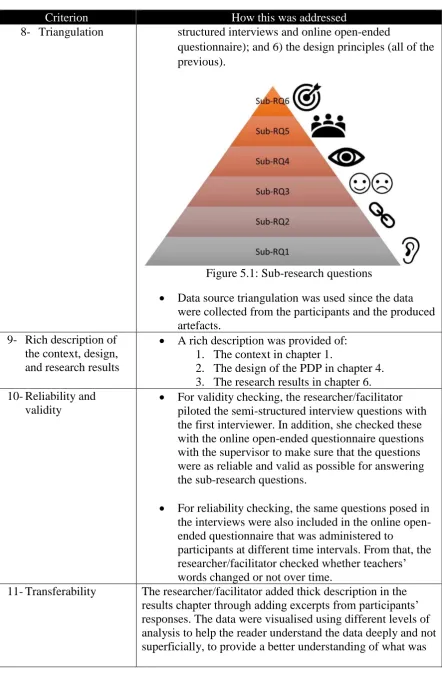
Figure 5.1: Sub-research questions 78
Figure 5.2: Research design summary 81
Figure 6.1: Support types and pedagogical outcomes 106
Figure 6.2: CSCL activities in October 112
Figure 6.3: CSCL activities in November 113
Figure 6.4: CSCL activities in December 113
Figure 6.5: Total number of CSCL activities in the two cycles 114 Figure 6.6: Percentage of CSCL activities in the two cycles 114 Figure 6.7: Number of activities completed by students per participant 115
Figure 6.8: Language skills tackled per participant 116
Figure 6.9: Sensory stimuli used and not used by participants with their students 119
Figure 6.10: Sensory stimuli (cycle 1 versus cycle 2) 120
Figure 6.11: Motor stimuli used and not used by participants with their students 121
Figure 6.12: Motor stimuli (cycle 1 versus cycle 2) 122
Figure 6.13: ICT learning involved in student-based activities 122
Figure 6.14: ICT (cycle 1 versus cycle 2) 123
Figure 6.15: Subject knowledge developed through student-based activities 123
Figure 6.16: Subject knowledge (cycle 1 versus cycle 2) 124
Figure 6.17: Thinking involved in student-based activities 125
Figure 6.18: Thinking (cycle 1 versus cycle 2) 126
Figure 6.19: Knowledge handling involved in student-based activities 127 Figure 6.20: Knowledge handling (cycle 1 versus cycle 2) 127 Figure 6.21: Memory involvement with student-based activities 128
Figure 6.22: Memory (cycle 1 versus cycle 2) 128
Figure 6.23: All learning elements (cycle 1 versus cycle 2) 129 Figure 6.24: High, medium, and low use of learning elements in both cycles 130
Figure 6.25: CSCL activities and feedback/comments 131
Figure 6.26: Feedback/comments received for each activity 132
Figure 6.27: Feedback/comments matrix 133
Figure 6.28: Reflections 134
Figure 7.1: Relationship between support elements, pedagogical outcomes, and types of learning outcomes
149 Figure 7.2: Cycle 1 design principles
Figure 7.3: Cycle 2 enhancements
vi
Figure 7.4: The design principles 161
Figure 8.1: The relationship between the theoretical framework and the literature review
187
Figure 8.2: Facilitator support 195
Figure 8.3: Exemplary materials support 196
Figure 8.4: Manual support 196
Figure 8.5: Collaborative medium support 197
Figure 8.6: The overall picture 197
Tables
Table 1.1: Terminologies and definitions 9
Table 2.1: Selection strategy 11
Table 2.2: Summary of empirical studies 13
Table 3.1: Internalisation 37
Table 3.2: Internal cognitive processing 38
Table 3.3: Externalisation 40
Table 4.1: Resources 48
Table 5.1: Compatibility of the study with DBR 62
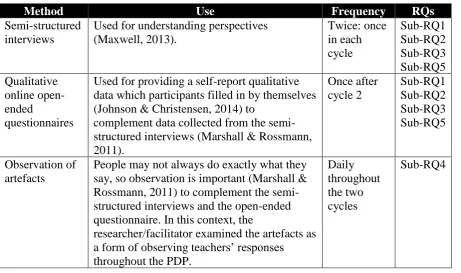
Table 5.2: DBR phases and how each was tackled in the study 63 Table 5.3: The frequency of how each data collection method was used and when 65
Table 5.4: Quality criteria 76
vii
Table of contents
Abstract ... iii
Acknowledgments ... iv
List of Figures and Tables ... v
Chapter 1: Introduction and background ... 1
1.1-Background and context ... 1
1.2-Problem statement ... 3
1.3-Statement of purpose and research question ... 4
1.4-Research approach ... 5
1.5-The researcher work experience and educational background ... 6
1.6-History of the relationship between the researcher as an insider and the participants ... 7
1.7-Rationale and significance ... 9
1.8-Definitions of key terminologies ... 9
1.9-Summary ... 10
Chapter 2: Literature review ... 11
2.1-Learning design and teachers’ needs ... 12
2.1.1- Summary of empirical studies related to the current study ... 13
2.2-Organisational learning ... 23
2.2.1- Positive influencers ... 24
2.2.2- Barriers of organisational learning ... 28
2.2.3- Learning outcomes ... 28
2.3-Impact of the reviewed literature on the design of the PDP ... 29
2.4-Summary ... 30
Chapter 3: Theoretical framework ... 31
3.1-Firstly: Laurillard’s conversational framework ... 31
3.2-Secondly: Passey’s learning elements framework ... 35
3.3-The link between the two theoretical frameworks and the literature review ... 40
3.4-Summary ... 42
Chapter 4: The PDP ... 43
4.1-The development of the PDP ... 43
4.1.1- Mode of delivery ... 44
4.1.2- Duration ... 44
4.1.3- Location ... 45
4.1.4- Content ... 45
4.1.5- Technology tool ... 45
4.1.6- Exemplary materials ... 46
4.1.7- Resources ... 48
viii
4.1.9- PDP tasks ... 49
4.1.10- Coaching and the leadership style ... 50
4.1.11- Types of support ... 51
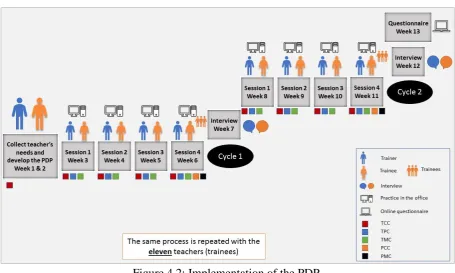
4.2-The implementation of the PDP ... 53
4.3-Summary ... 55
Chapter 5: The research design ... 56
5.1-The ontological and epistemological position of the researcher/facilitator ... 56
5.2-Rationale behind using DBR ... 57
5.3-DBR features and compatibility with the study ... 59
5.4-How DBR was used in this study ... 62
5.5-Data collection methods ... 64
5.6-Data analysis technique ... 68
5.7-Sampling technique and participants... 72
5.8-Role of the researcher/facilitator ... 73
5.9-The quality criteria of this DBR study ... 74
5.10- Ethics ... 79
5.11- Summary ... 81
Chapter 6: Results ... 82
6.1 – Sub-RQ1: How did teachers perceive the PDP? ... 82
6.1.1- Researcher/facilitator support (cycle 1) ... 83
6.1.2- Exemplary materials (cycle 1) ... 85
6.1.3- Manuals (cycle 1) ... 86
6.1.4- Teachers’ online video-recorded exchanged feedback (cycle 1) ... 88
6.1.5- Teachers’ on-screen video-recorded reflections (cycle 1) ... 90
6.1.6- Computer supported collaborative learning (cycle 1) ... 92
6.1.7- Google Slides (cycle 1) ... 94
6.1.8- Suggestions for enhancing cycle 1 (cycle 1) ... 97
6.1.9- Shared Google Slides templates with narrative explanation (cycle 2) ... 99
6.1.10- Adding sound narration to templates and manuals (cycle 2)... 99
6.1.11- Responding to teachers’ questions (cycle 2) ... 100
6.1.12- Perceptions towards the PDP (cycles 1 and 2) ... 101
6.2-Sub-RQ2: What types of pedagogical outcomes are produced and how do they relate to the ways that teachers used different forms of support? ... 105
6.3-Sub-RQ3: What are the positive influencers and barriers that affected teachers throughout the PDP? ... 107
6.4-Sub-RQ4: How did teachers respond to the PDP? ... 111
6.4.1- CSCL activities ... 112
6.4.2- Feedback/comments ... 130
ix 6.5-Sub-RQ5: What are students’ responses towards the TEL activities from teachers’
perspectives? ... 136
6.6-Summary ... 137
Chapter 7: Discussion of findings ... 138
7.1-Findings of Sub-RQ1 (How did teachers perceive the PDP?) ... 138
7.1.1- Finding 1 (Researcher/facilitator support): ... 138
7.1.2- Finding 2 (exemplary materials and templates with sound explanation): ... 140
7.1.3- Finding 3 (video manuals): ... 141
7.1.4- Finding 4 (feedback/comments): ... 142
7.1.5- Finding 5 (reflections): ... 144
7.1.6- Finding 6 (responding to teachers’ questions): ... 144
7.1.7- Finding 7 (CSCL): ... 145
7.1.8- Finding 8 (Google Slides): ... 146
7.2-Findings of Sub-RQ2 (What types of pedagogic outcomes are produced and how do they relate to the ways that teachers used different forms of support?) ... 147
7.3-Findings of Sub-RQ3 (What are the positive influencers and barriers that affected teachers throughout the PDP?) ... 150
7.4-Findings of Sub-RQ4 (How did teachers respond to the PDP?) ... 152
7.4.1- Findings related to the CSCL activities ... 152
7.4.2- Findings related to feedback/comments shared between teachers ... 155
7.4.3- Findings related to reflections made by teachers ... 157
7.5-Findings of Sub-RQ5 (What are students’ responses towards the TEL activities from teachers’ perspectives?) ... 158
7.6-Findings of Sub-RQ6 (What are the design principles of an effective implementation of a PDP?) ... 159
7.7-Summary ... 167
Chapter 8: Conclusion ... 169
8.1-How the contextual problem was tackled ... 169
8.1.1- Not having time to communicate their needs or to ask questions ... 169
8.1.2- Not knowing how to integrate technology effectively in their classrooms even after the training courses they take and not knowing how to relate what they take in the training course to the classes that they teach ... 170
8.1.3- Having different working hours and being on two different campuses limiting opportunities to attend the training courses ... 171
8.1.4- Forgetting what they took away because there is neither feedback nor time to practice in a one-hour training course ... 172
8.2-What can be concluded from the findings of each sub-research question? ... 172
8.3-Conclusions related to Sub-RQ1 (How did teachers perceive the PDP?) ... 173
8.3.1- Researcher/facilitator support ... 173
x
8.3.3- Manuals ... 175
8.3.4- Feedback/comments ... 175
8.3.5- Reflections ... 176
8.3.6- Responding to colleagues’ feedback/comments ... 177
8.3.7- CSCL ... 177
8.3.8- Google Slides ... 178
8.3.9- Overall perceptions towards the PDP ... 179
8.4-Conclusions related to Sub-RQ2 (What types of pedagogic outcomes are produced and how do they relate to the ways that teachers used different forms of support?) ... 179
8.5-Conclusions related to Sub-RQ3 (What are the positive influencers and barriers that affected teachers throughout the PDP?) ... 180
8.6-Conclusions related to Sub-RQ4 (How did teachers respond to the PDP?) ... 181
8.6.1- CSCL ... 182
8.6.2- Feedback/comments and reflections ... 184
8.7-Conclusions related to Sub-RQ5 (What are students’ responses towards the TEL activities from teachers’ perspectives?) ... 185
8.8-The theoretical and practical implications ... 185
8.9-What did this study add to the learning design literature in terms of training teachers on how to design TEL activities in the context of foreign language learning? ... 190
8.10- Which gaps in the literature did this study tackle? ... 192
8.11- Limitations ... 198
8.12- Recommended ideas for further research ... 200
8.13- Final reflection ... 201
8.14- Summary ... 203
1
Chapter 1: Introduction and background
This chapter focuses on: 1) background and context; 2) the problem statement; 3) statement of purpose and research question; 4) research approach; 5) role of the researcher; 6) rationale and significance; and 7) definitions of key terminology used in the study.
1.1- Background and context
This study takes place in an Arabic as a foreign language instruction department (ALI) at an independent non-profit English language international university in Cairo (an educational organisation). The ALI department as part of this university was established in 1921 and is fully accredited in both the United States and Egypt. The university is in an Arabic-language country and therefore all degree and non-degree/study abroad students should learn Arabic. Degree students (undergraduates and graduates) are the ones seeking a degree from the university, while non-degree/study abroad students are the ones not seeking a degree from the university, but they want to take certain academic credit courses. Students can apply for the following four ALI programmes:
1) Arabic language intensive programme (ALIN) offers both Modern Standard Arabic (MSA) and Egyptian Colloquial Arabic (ECA) intensive courses at all levels: novice, intermediate, and high. The courses involve 20 to 25 contact hours a week and are only for international students who want to study Arabic.
2) Arabic language for study abroad students programme (ALNG) offers both MSA and ECA of all levels (as above), but is mainly for degree and non-degree international and Egyptian students (graduates and undergraduates). The courses involve a
2 3) The Center for Advanced Arabic Study in Cairo programme (CASA) offers tailored
MSA and ECA courses with the same levels and contact hours as ALIN, but for advanced Arabic language international students only.
4) Arabic language intensive programme for diplomats (ALID) offers both MSA and ECA with the same levels and contact hours as ALIN, but for international diplomats.
In addition to the above programmes, there is the computer aided language learning unit (CALL) which is responsible for training teachers from all the above programmes on how to integrate technology in teaching Arabic as a foreign language (AFL). It is also responsible for developing and designing interactive-technology software programs for teaching AFL. The above programmes are not situated on the same campus, but rather distributed across two campuses that are approximately 38 kilometres apart. For instance, the ALIN and ALNG that are under one director, in addition to the CALL unit which has its own director, are on the new campus, but the ALID and CASA, that have two different directors, are on the old campus. The new campus is the main one, where 36 undergraduate, 44 masters and two PhD programmes of the university are situated. In addition, all classes on this new campus are considered “smart”, since each teacher has access to a computer and a projector. Aside from these smart classes, the ALIN programme classes in the ALI department have a teacher laptop, projector, document camera, sound system, television, and students’ laptops. These classes are smaller compared to other university classes and they are more technologically provided, because the director of the CALL unit in the ALI department at the time when the new campus was founded applied for a grant to furnish the classes with this level of
3 The ALI consists of twenty-one full time teachers including four directors and a department head. They all teach fifteen hours a week except for the directors who teach only ten hours a week leaving five hours for administrative work. In addition to the assigned teaching load which might be distributed across the two campuses, teachers prepare material, correct assignments, attend workshops, and undertake university services.
1.2- Problem statement
Teachers of AFL do not have adequate support to design, develop, and implement practices with digital technologies; this statement is based on the fact that there is not sufficient time for them to integrate technology in their teaching through designing, developing, and
implementing technology enhanced learning (TEL) activities when they receive only one-hour training course every two weeks. A similar problem was reported by Asensio-Pérez et al. (2017) regarding how short workshops are not sufficient for achieving their goals.
These one-hour training courses have been conducted by the researcher (who is the CALL unit director) in a room designated mainly for training courses. This room is spacious and has around twenty computers, a projector, and a teacher laptop. The focus of these training courses is to give brief overviews of software programs for designing and developing TEL activities for teaching AFL. From observing the target context, from this direct experience, the key issues that teachers face in the target context are:
1. Not having time to communicate their needs or to ask questions.
4 3. Having different working hours and being on two different campuses limiting the
opportunities to attend the training courses.
4. Forgetting what they take away because there is neither feedback nor time to practice in a one-hour training course.
Based on these experiences, teachers are not benefiting from such training courses and they do not practice what they take away, although practice is considered the most valuable
learning resource (Wenger, 1998). As a result, they need more support to enable and motivate them not only to design and develop TEL activities, but also to implement them in their teaching practices.
1.3- Statement of purpose and research question
Teachers are one of the most important catalysts behind the success or failure of any educational innovation (Kirschner, 2015) and finding ways to support them is clearly important. To support them in designing TEL activities, they may well need to receive professional development practice (Laurillard, 2012) with certain types of support that includes information, guidance, and advice to use technology effectively in education.
To that end, the researcher is motivated to conduct this study, by designing, developing, and implementing a professional development programme (PDP) that provides appropriate support and motivation for designing, developing, and implementing TEL activities. However, before applying the PDP, it was important to initially collect ideas of teachers’ needs to optimise the design to the target context, as a misalignment between the PDP and teachers’ needs can lead to limited success (McKenney, Kali, Markauskaite, & Voogt, 2015).
5 success. For example, Wenger (1998, p.233) previously stated: “There is an inherent
uncertainty between design and its realisation in practice, since practice is not the result of design but rather a response to it.” Accordingly, the aim of this study is to explore teachers’ perceptions/responses to the PDP (intervention), in terms of an overarching research question (RQ) and six sub-research questions:
Overarching RQ: What is the response (perceptions and outcomes) of AFL teachers in an international university in the Middle East towards the PDP specifically developed to support their needs?
1. Sub-RQ1: How did teachers perceive the PDP?
2. Sub-RQ2: What types of pedagogic outcomes are produced and how do they relate to the ways that teachers used different forms of support?
3. Sub-RQ3: What are the positive influencers and barriers that affected teachers throughout the PDP?
4. Sub-RQ4: How did teachers respond to the PDP?
5. Sub-RQ5: What are students’ responses towards the TEL activities from teachers’ perspectives?
6. Sub-RQ6: What are the design principles of an effective implementation of a PDP?
1.4- Research approach
6 1.5- The researcher work experience and educational background
Concerning work practices and experience in the target context, the researcher has been working as a teacher and CALL director in the ALI department since 2009. She teaches AFL for ten hours a week and her administrative work includes one hour every two weeks to conduct training courses that inform teachers about software programs that they can use in designing and developing TEL activities for teaching AFL. Concerning her educational background, she has: 1) a Bachelor of Science degree in computer science and information systems from 2002; 2) a Master’s degree in teaching Arabic as a foreign language from 2010; and 3) a Master’s degree of education leadership from 2016.
The researcher’s work experience and basis enable her to: - Know about the culture of the target context. - Understand AFL teachers’ needs.
- Be aware of AFL courses and the variety of students the teachers teach. - Approach teachers within their course contexts and as a part of their desire to
develop practice.
- Facilitate communication and accessibility.
- Have pedagogical, and content knowledge related to teaching AFL.
In addition, her educational background helps in:
- Knowing the software programs that work with Arabic language script and those that do not.
7 Based on her teaching experience (8 years) in the target context with the same teachers
(colleagues), she considers herself an experienced insider researcher who is well aware of the target context and culture. She is also aware of the challenges and difficulties which other teachers face, so she feels she can easily put herself in their place. Also, in terms of the researcher’s education background, she is equipped with technological, pedagogical, and content knowledge that can enable her to understand teachers’ needs.
1.6- History of the relationship between the researcher as an insider and the participants
Since the researcher is an insider, it is worth highlighting the history of the relationship between her and the participants when she started working in the target context back in 2011 compared to when she started conducting the study in 2017.
Firstly, when the researcher started working as a CALL director and faculty member in the target context, teachers were resistant to the use of technology in their AFL teaching for many reasons: 1) the researcher was junior at that time and new in the target context, so teachers did not want to listen to her because of the big difference in age (37 of-age versus 50 years-of-age and above) as learning from someone much younger and newly hired might be
considered a threat to them (as that happens in many instances in the Middle-Eastern culture); 2) the teachers perceived themselves always as experienced with long years of successful AFL teaching; and 3) the teachers always acknowledged reaching their teaching goals without the need for integrating technology, which is why they neither wanted to attend the
technology workshops nor change their practices.
8 target context as that helped in gradually accepting listening to her recommendations
regarding the importance of integrating technology in their AFL teaching. Nevertheless, they still did not want to design, develop, or implement TEL activities for reasons mentioned before in section 1.2. As a result, the researcher was sceptical about teachers’ positive performance in the PDP conducted in this study and did not expect them to become engaged positively, but to keep their practice to the minimum.
Having described briefly the history of the relationship between the researcher and the participants, it is also important to highlight the opportunities and challenges of being an insider in the target context. For example, Mercer (2007) talked about that in terms of: 1) access; 2) intrusiveness; 3) familiarity; and 4) rapport. Firstly, in terms of access, the insider researcher can be easily granted access to the target context and that facilitates data collection compared to an outsider researcher who might exert more time and effort to collect data. Secondly, in terms of intrusiveness, Mercer (2007) highlighted that the insider researcher who continues performing his/her ordinary role, can have an impact in the target context compared to the outsider researcher. Thirdly, in terms of familiarity, insider researchers understand the target context and culture in addition to understanding the links between situations. As a result, the culture shock that might be encountered by the outsider researcher is avoided. Fourthly, in terms of rapport, the insider researcher has a considerable rapport and credibility with the participants of the study leading to them being open with him/her throughout
conducting the study.
9 1.7- Rationale and significance
The rationale for this study emanates from the researcher’s need as an insider researcher and experienced trainer in contact with teachers for about ten years, to solve a problem and provide a practical (but theoretically sound) solution in a context where she is aware of the background culture. This study seeks to solve the problem through a PDP that provides different types of support for enabling AFL teachers to design, develop, and implement TEL activities effectively for teaching AFL.
Knowing how to enable teachers through providing different types of support to reach the above objective could then well help other professional developers in similar contexts. That new programme knowledge could also lead to a greater understanding of teachers’ needs in higher education with respect to technology integration.
1.8- Definitions of key terminologies
For this study, Table 1.1 shows some key terminologies used. Table1.1: Terminologies and definitions
Terminology Definition
Support To help teachers complete the assigned tasks throughout the PDP. Enable To provide teachers with means to enact assigned tasks through
10 1.9- Summary
In this chapter, the following have been highlighted: 1) background and context; 2) the problem statement; 3) statement of purpose and research question; 4) research approach; 5) researcher experience and position; 6) rationale and significance; and 7) definitions of key terminology used in the study.
11
Chapter 2: Literature review
A literature review is used for different purposes (see Bryman, 2012 and Johnson &
Christensen, 2014) such as: 1) justifying the position of the research by referring to previous work; and 2) showing how the study fits into a broader picture in terms of previous empirical work. In this study, the researcher reviews the literature for these purposes.
It is worth mentioning first that transparency in describing how the studies were selected and analysed for evidence is important (Bryman, 2012). For that purpose, the researcher used a strategy developed by Booth (2006) and it focuses on: 1) sampling; 2) type of study; 3) approaches; 4) range of years; 5) limits; 6) inclusions; 7) exclusions; 8) terms used; and 9) electronic sources. Table 2.1 shows how the researcher applied this strategy for the literature review.
Table 2.1: Selection strategy
Criteria Details
Sampling strategy Keywords for teachers’ needs:
“teachers”, “needs”, “technology”, “professional development”, and “higher education” were used interchangeably.
Keywords for teachers’ support to be TEL designers: “learning design”, “support”, “technology”, “teachers”, “training”, and “professional development” were used. In addition, prominent scholars in the field of design such as “Laurillard”, “Voogt”, “Van Den Akker”, “McKenney”, and “Nieveen” were also included in the search.
Keywords for organisational learning:
“organisational learning” and “learning organisation” were used. In addition, the keyword “Peter Senge” was also included since he is a prominent scholar in the field of organisational learning.
Type of study Empirical peer-reviewed studies only written in English.
12
Criteria Details
Range of years 2010 to 2018 to build upon the findings of recent studies, but only one article from 2005 was included due to its relevance to this study.
Limits The last ten years only were included because the field of design is still emerging, and therefore the researcher wanted to inspect the most up-to-date findings. In addition, she included one article that was published in 2005 because it was cited in recent articles and was found to be particularly relevant. Inclusion and exclusion
criteria
All the studies that resulted from using the above-stated approach were included, and the rest were excluded. Electronic sources Academic Search Complete, and Lancaster “One search”.
2.1- Learning design and teachers’ needs
Learning design is an emergent field (Mor, Ferguson, & Wasson, 2015) and it focuses on perceiving teaching as a design science (Laurillard, 2012). It is the act of developing new practices, resources, plans of activity and tools with the aim of achieving certain contextual educational objectives; results are in the form of shared products and resources which are referred to as learning designs (McKenney & Mor, 2015). For teachers to be designers, they need explicit attention and appropriate support to help them in creating their own TEL material, especially when they have little experience in designing novel tasks (McKenney et al., 2015).
13 6) perceives teachers as learners. In addition, Sadaf, Newby, and Ertmer (2016) and Barak (2010) found that contextualising learning, having autonomy over learning, and providing constructive feedback affect teachers’ intentions to use technology. In the same vein, Uluyol and Sahin (2016) mentioned that teachers need to: 1) be provided with different types of support while using technology; 2) see the benefits of using technology by themselves; 3) receive feedback on their work; 4) view outcomes that are of intrinsic value; and 5) have a training designed to teach certain content. In addition, Kali, McKenney, and Sagy (2015) highlighted the importance of: 1) engaging them in the design; 2) increasing their practicality; 3) increasing their ownership for implementation; and 4) increasing their learning about technology in an authentic context.
Having said that, the question that arises now is: What do empirical studies say about supporting teachers for TEL design? The answer to this question is presented in the next section.
2.1.1- Summary of empirical studies related to the current study
From applying the strategy highlighted in Table 2.1, the literature search resulted in 252 peer-reviewed studies, but after reading the abstracts, only 21 empirical studies were found directly related to this study. Table 2.2 lists the studies with their reference numbers and design
objectives.
Table 2.2: Summary of empirical studies Study
reference number
Authors Design objectives
A1 (Kafyulilo, Fisser, & Voogt, 2015) Science lessons
A2 (Agyei & Voogt, 2012) Mathematics lessons
14 Study
reference number
Authors Design objectives
A4 (Voogt, Almekinders, Van Den Akker, & Moonen, 2005)
French and German lesson plans A5 (Alayyar, Fisser, & Voogt, 2012) Science lessons A6 (Huizinga, Handelzalts, Nieveen, & Voogt,
2014)
Social, economics, history, and German lesson series
A7 (Michos, Hernández-Leo, & Albó, 2018) Mathematics
collaborative activities
A8 (Nguyen & Bower, 2018) Moodle modules and
lessons
A9 (Asensio-Pérez et al., 2017) Collaborative learning
activities
A10 (Boloudakis, Retalis, & Psaromiligkos, 2018) Moodle based units A11 (Laurillard, Kennedy, Charlton, Wild, &
Dimakopoulos, 2018)
TEL lessons
A12 (Lewin, Cranmer, & McNicol, 2018) TEL lesson planning A13 (Garreta-Domingo, Sloep, & Hernández-Leo,
2018)
ICT based learning activities
A14 (Ma, Xin, & Du, 2018) Mandarin course lesson
plans
A15 (Jimoyiannis, 2010) Science lessons
A16 (Janssen & Lazonder, 2015) Lesson plans biology
A17 (Ekanayake & Wishart, 2015) Science lessons with mobile phones
A18 (Jia, Jung, & Ottenbreit-Leftwich, 2018) K12 lessons and units A19 (Kali, Levy, Levin-Peled, & Tal, 2018) Mobile TEL science
activities
A20 (McKenney & Mor, 2015) Science and
mathematics lesson plans
A21 (Kafyulilo, Fisser, & Voogt, 2016) Biology, chemistry, physics lessons
After reviewing the 21 articles, 25 common themes were identified (referred to as C(n) where n is the theme number) and categorised as follows:
- Phases of the TEL designed objective: [C1: Design, C2: Development, C3: Implementation].
15 - Mode of delivery: [C7: Face-to-face, C8: Blended, C9: Online].
- Context: [C10: School, C11: Higher education]. - Teachers’ status: [C12: Pre-service, C13: In-service].
- Theoretical framework used: [C14: Theoretical framework].
- Implications: [C15: Theoretical implications, C16: Practical implications]. - Types of support provided: [C17: Collaborative support, C18: Material, C19:
Resources, C20: Exemplary materials, C21: Tutorial, C22: Facilitator, C23: Technology, C24: Workshops].
- Design principles: [C25: Design principles].
To highlight gaps in the 21 studies, the following two strategies were used:
1. Visual representations of the themes tackled in the studies for giving the reader a detailed summary of each study compared to other studies.
2. The three gap-spotting strategy proposed by Alvesson and Sandberg (2013) for categorising the types of gaps: 1) confusion spotting (finds contradictions in the literature); 2) neglect spotting (spots areas in the literature that are
under-represented); and 3) application spotting (searches for a shortage in the use of a perspective or theory).
16 the following themes: C1, C2, C3, C6, C7, C10, C13, C14, C16, C17, C18, C20, C22, and C24, but ignored the rest. In addition, in C23, the green column that has: 1) the letter “C” means that the technology was used for communication; 2) the letter “D” means that
technology was used for design; and 3) the letters “D+C” means that technology was used for communication and design.
Figure 2.1: Themes tackled by each study to identify gaps
17 Figure 2.2 shows the reviewed empirical studies (1 to 21) on the vertical axis and the themes (C1 to C25) on the horizontal axis to show the reader all the gaps in the literature in another visual format that collects all the gaps per theme together. The green column shows how many times the theme was tackled. For example, C25 was not addressed at all, while C14 was addressed 10 times.
Figure 2.2: Themes tackled by all studies to identify gaps
This figure again shows the themes that were under-represented, moderately represented, and highly represented, but in a different format for a deeper analysis. For example, it highlighted that the two themes C11 and C13 when combined were under-represented.
18 Figure 2.3: Number of times each theme was tackled
This shows that the themes listed in the “High” and the “Medium” columns such as practical implications and theoretical framework (Technological pedagogical and content knowledge (TPACK)) were overlooked, and the ones listed in the “Low” column such as design principles were under-represented.
Figure 2.4 shows the subject fields according to how many times each was tackled in the literature (refer to Table 2.2) categorised as high and low.
Figure 2.4: Number of times each subject field was tackled
This shows that the subject field listed in the “High” column (science) was well represented in the literature and the ones listed in the “Low” column such as German, French, and Mandarin were under-represented.
19 Figure 2.5: Number of times each design objective was tackled
This shows that the design objective listed in the “High” column (lessons) was well represented in the literature and the ones listed in the “low” column such as activities were under-represented (refer to Table 2.2). It is worth highlighting that the complexity of
designing units, lessons, and activities varies in time and effort (see for example Huizinga et al. (2014) who highlighted that designing a series of lessons is a medium to complex design task).
In addition to the above visual analysis, the literature reported certain findings with respect to the support elements (facilitator support, exemplary materials, collaborative support that included exchanging feedback and reflection, and the computer-supported software programs) provided in the PDP. For example, the facilitator support was perceived as being not that helpful in certain instances because of: 1) the quality and amount of input (Nguyen & Bower, 2018); and 2) if not there, problems can occur in the design (Huizinga et al., 2014). However, this support was perceived positively in other instances for reasons related to: 1) supervision during the follow-up phase (Asensio-Pérez et al., 2017); and 2) providing feedback (Jia et al., 2018).
20 teaching practices (Agyei & Voogt, 2012); and 3) understand the integration of technology in their subject (Voogt et al., 2005).
For the feedback and reflection in the collaborative support, they were perceived as being helpful. For example, the feedback was perceived positively by teachers during: 1) the implementation phase from peers and facilitators (Voogt et al., 2005); 2) selecting the appropriate technology (Jia et al., 2018); and 3) exchanging ideas and opinions (Alayyar et al., 2012). The reflection was perceived helpful because it helped teachers to learn from each other and from their practices (Kafyulilo et al., 2016).
For the computer-supported software programs, they were perceived as being useful for: 1) guiding teachers throughout the design of the TEL interventions and reflecting on them (Michos et al., 2018); 2) supporting teachers as designers for sharing and creating learning designs (Asensio-Pérez et al., 2017; Garreta-Domingo et al., 2018); 3) creating learning designs that can be exported to Moodle by teachers (Boloudakis et al., 2018); 4) developing learning activities by teachers (Lewin et al., 2018); 5) supporting teachers as designers (Laurillard et al., 2018); and 6) supporting personalised diagnosis and evaluation of teachers’ needs (Ma, Xin, & Du, 2018).
21 orientation (Jia et al., 2018). Although, the influencers and barriers were very few, they might nevertheless be quite important.
Having presented a high-level and detailed view of what was tackled and reported in the learning design literature, a summary of the gaps that are of interest to this study are highlighted.
Firstly, there were certain aspects that were neglected in the literature that are listed below without any specific order such as:
- The technology tool used for designing, developing, and implementing the lessons, activities, and/or units.
- The design principles used for guiding the development of the exemplary materials.
- The pedagogical outcomes and their relationship to the different types of support provided.
- The pedagogical objectives of the designed lessons, activities, and/or units (e.g. learning elements targeted).
- The tutorials/manuals’ format whether they were in the form of a document and/or videos.
- The number and quality of the designed lessons, units, and/or activities produced by teachers after completing the PDP.
22 - The design principles produced after implementing the PDP. In fact, none of the
21 studies used design-based research as a methodology in the design of the PDP and therefore there were no produced design principles.
Secondly, there were certain aspects that were under-represented such as:
- In-service teachers in higher education (2 of 21) (refer to Figure 2.1).
- Languages in general (4 of 21) and foreign languages and AFL in specific (0 of 21) [refer to Figure 2.4 and Table 2.2].
- Blended learning (6 of 21) (refer to Figure 2.1).
- The use of resources (1 of 21) and tutorials/manuals (4 of 21) (refer to Figure 2.1). - Implementing the designed material (11 of 21) (refer to Figure 2.1).
- The explicit identification of the influencers and barriers that affected teachers throughout the PDP.
Thirdly, there was one aspect that was over-represented:
- The use of TPACK as a theoretical framework as most studies (9 of 21) that used theoretical frameworks in the 21 studies used TPACK. This suggested that their findings will reflect specific perspectives related to TPACK only and neglect others (refer to Figure 2.1).
Fourthly, there was one aspect that included confusion spotting:
23 Fifthly, there was one aspect that included application spotting:
- The literature focused on TPACK (9 of 21 from the reviewed studies) as a
theoretical framework. That shows that there is a lack of use of other perspectives and/or theories which might show different findings and different understandings. In addition, as argued by Jimoyiannis (2010), TPACK lacks precision because the connection between its components are not clear.
Having highlighted the gaps in the learning design literature, the next section focuses on the organisational learning literature in order to know more about: 1) the positive influencers and barriers that can affect learning in an organisation and 2) the types of learning outcomes which learners can produce. These two points were not covered appropriately in the learning design literature and that is why the organisational learning literature is consulted here.
2.2- Organisational learning
Organisational learning as a concept first emerged in 1990 in Peter Senge’s book ‘The Fifth Discipline’ (as cited in Lawler & Sillitoe, 2013). Since then, organisational learning has become a very popular concept in different disciplines such as sociology, psychology,
management, and business (Knipfer, Kump, Wessel, & Cress, 2013). In addition, the concept has become more recently familiar to universities through the term learning institution (Lawler & Sillitoe, 2013). Espuny and Bertran (2013) referred to organisational learning in universities as a community that has a shared vision in a well-established culture where shared leadership and collaboration are nurtured.
24 collaborative learning (Pantouvakis & Bouranta, 2017); creates a climate that promotes
learning (Bhaskar & Mishra, 2014); and provides a suitable environment for acquiring new skills for promoting knowledge (Alavi, Abd. Wahab, Muhamad, & Arbab Shirani, 2014).
The next sub-sections focus on: 1) the positive influencers, 2) barriers, 3) and types of learning outcomes highlighted in the organisational learning literature as they were not represented properly in the learning design literature. These details are important because by knowing the positive influencers and barriers, the researcher can take them into consideration while designing and developing the PDP and can relate to in the findings and discussion chapter when answering Sub-RQ3. In addition, by knowing the types of learning outcomes produced in a learning organisation, the researcher can relate to in the findings and discussion chapter when answering Sub-RQ2.
2.2.1- Positive influencers
The literature highlights many positive influencers affecting organisational learning that are listed in the below sub-sections.
2.2.1.1- Culture
25 new technologies, acquisition of information, sharing of information, supporting continuous learning, training, learning as a team, transferring knowledge, and enhancing individuals’ skills as a response to environmental changes. Cho et al. (2013) also advocated having a learning environment that encourages learning that values certain features such as open-mindedness and shared vision (Alavi et al., 2014), while Bhaskar and Mishra (2014) recommended having an organisation that supports innovation and experimentation. 2.2.1.2- Leadership style
The literature has highlighted that it is essential to use transformational leadership for enhancing learning in an organisation because it focuses on motivation, individual consideration, and intellectual stimulation (Bhat et al., 2012). Waddell and Pio (2014) highlighted that it is important for leaders to: 1) share an agreed-upon valuable vision in an optimistic and enthusiastic environment to act as role models for other members in an organisation; and 2) take members’ needs into consideration for promoting learning. 2.2.1.3- Reflection
Researchers such as Knipfer et al. (2013), Kyndt, Vermeire, and Cabus (2016), and Walker (2016) have highlighted the importance of reflection for organisation learning. They
mentioned that: 1) it acts as a driving force for learning among members in an organisation; 2) it is a cognitive, conscious, and emotional process for sharing experiences and lessons
learned; and 3) it encourages meaningful outcomes for achieving innovation and modification (Knipfer et al., 2013).
2.2.1.4- Emotions
26 on organisational learning. For example, Waddell and Pio (2014) referred in their research study to the influence of positive and negative emotions on organisational learning. They mentioned that positive emotions can reinforce the feelings of happiness and confidence in knowledge and skills leading to empowerment, commitment, pride, and energy. However, negative emotions can generate feelings of embarrassment and anger. As a result, these kinds of negative feelings hinder learning. In the same vein, Knipfer et al. (2013) mentioned the term “Psychological safety for learning”, as it determines the organisational climate for learning and sharing knowledge where different perspectives are valued.
2.2.1.5- Cooperation
Cooperation was suggested as a condition for learning among members in an organisation for developing better interactional skills, since, through cooperation, people can listen, observe, ask for advice, discuss topics together, and share experiences leading to learning from each other (Kyndt et al., 2016; Schumacher, 2015). Bhaskar and Mishra (2014) also mentioned that individuals in cooperative learning environments learn from each other as they share different perspectives together.
2.2.1.6- Feedback
Feedback was perceived to be important for organisational learning (Knipfer et al., 2013; Kyndt et al., 2016) as it has two functions: 1) cognitive; and 2) motivational. Firstly cognitive, because it provides information about the adequacy of one’s knowledge; and secondly
27 2.2.1.7- Accessing and sharing information
Accessing and sharing information were found to be effective for organisational learning because they: 1) provide the opportunity to acquire knowledge and information (Kyndt et al., 2016); 2) motivate the learning process leading to better organisational performance (Seo, Lee, & Moon, 2015); and 3) facilitate the retaining and reuse of knowledge within an organisation (Tam & Gray, 2016).
2.2.1.8- Coaching
Coaching was found essential for enhancing organisational learning (Kyndt et al., 2016) because the coach: 1) guides people by sharing his/her experience in addition to providing support for empowering individuals (Grealish et al., 2015); and 2) acts as a support tool for enhancing organisational learning (Bhaskar & Mishra, 2014).
2.2.1.9- Technology
Technology has been perceived as a tool for facilitating communication and sharing of information, exchanging feedback, and monitoring using different commercial software applications such as Blackboard (Za, Spagnoletti, & North-Samardzic, 2014).
2.2.1.10- Personal characteristics
Researchers have highlighted the importance of having certain personal characteristics for enhancing organisational learning such as: 1) learning motivation, self-efficacy, and
28 Having highlighted the positive influencers that affect learners positively in an organisation, the next sub-section highlights the barriers.
2.2.2- Barriers of organisational learning
The literature has highlighted some barriers that hinder organisational learning, including: 1) lack of flexibility as this hampers the flow of knowledge (Walker, 2016); 2) internal personal competition and the avoidance of sharing information (Klein, 2016); 3) limited interaction and absence of shared vision (Alavi et al., 2014); 4) lack of direction (Cho et al., 2013); 5) individual differences with respect to beliefs, values, and expectations (Bensimon, 2005); and 6) limitation of time and resources (Chien, Lin, & Lien, 2015).
Having highlighted the barriers that affect learners negatively in an organisation, the next sub-section highlights the learning outcomes produced in an organisation.
2.2.3- Learning outcomes
Learning outcomes have been perceived in different ways in the literature. For example, Kyndt et al. (2016) referred to learning outcomes as changes in knowledge, attitudes, or skills as a response for engagement in different learning processes leading to change in individuals’ professional achievement. In addition, other researchers said there are a range of kinds of learning outcomes: 1) gaining knowledge (Alegre, Pla-Barber, Chiva, & Villar, 2012); 2) taking action (Cho et al., 2013); or 3) applying and sharing knowledge (Walker, 2016). However, it is worth mentioning that as Kyndt et al. (2016) highlighted, insights about which learning conditions lead to which learning outcomes is missing from the literature.
29 2.3- Impact of the reviewed literature on the design of the PDP
The reviewed literature informed the design elements for this research study in the following ways:
1. Considering teachers’ needs prior to developing the PDP (Brennan, 2015).
2. Providing teachers with: 1) different types of support; 2) feedback; 3) outcomes of intrinsic value; 4) meaningful content; and 5) opportunity to practice what was learned in authentic contexts (Kali et al., 2015; Uluyol & Sahin, 2016).
3. Gaining a number of forms of support from the facilitator: online (Alayyar et al., 2012); and just-in-time support (Kafyulilo et al., 2015).
4. Using positive influencers in facilitator support, such as: 1) transformational leadership (Bhat et al., 2012); 2) coaching (Bhaskar & Mishra, 2014); 3) feedback (Kyndt et al., 2016); and 4) collaborative culture (Bhat et al., 2012).
5. Including a number of activities in collaborative learning support: 1) accessing and sharing information (Seo et al., 2015); 2) exchanging feedback (Kyndt et al., 2016); and 3) reflection (Walker, 2016).
6. Including exemplary materials (Svihla et al., 2015) as a type of support. 7. Being aware of the positive influencers and barriers that affect learning in an
organisation and so provide participants with: 1) enough time to practice; 2) resources to support them in the design, development, and implementation of the TEL activities; 3) direction; and 4) shared vision in an interactive environment (see Alavi et al., 2014; Chien et al., 2015; Cho et al., 2013).
30 research, the scope did not focus on software design programs that support teachers in their designs as they might be a burden on the teachers (Asensio-Pérez et al., 2017). 9. Being aware of learning outcomes that could be achieved after implementing the PDP
such as: 1) gaining knowledge (Alegre et al., 2012); 2) taking action (Cho et al., 2013); 3) applying and sharing knowledge (Walker, 2016); and 4) a focus on
involving a learning organisation (Bhat et al., 2012; Pantouvakis & Bouranta, 2017). 10. Being aware of personal characteristics and emotions (positive/negative) which
participants might experience during the implementation of the PDP (see Grealish et al., 2015).
11. Using blended learning for delivering the PDP, as undertaken by Svihla et al. (2015). 12. Assigning the role of the facilitator to the researcher as was done in another study
conducted by Agyei and Voogt (2012). As a result, the researcher will be referred to as the researcher/facilitator from chapter 4 to chapter 8.
13. A focus on one tool for designing and developing the activities as too many tools can be a burden on teachers, leading them to being overwhelmed (Nguyen & Bower, 2018).
2.4- Summary
31
Chapter 3: Theoretical framework
The aim of this DBR study was to support teachers in designing, developing, and
implementing TEL activities for teaching AFL through a PDP. It is important for the PDP to be based on a theoretical framework that guides this design (Laurillard et al., 2011; Wenger, 1998).
The main framework used for designing the key pillars of the PDP was Laurillard’s
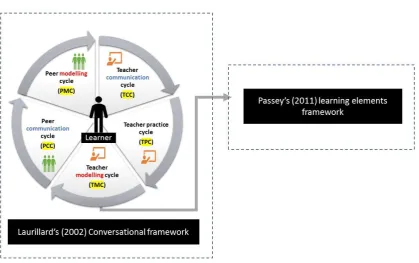
conversational framework (2002, as cited in Laurillard, 2012). In addition, Passey’s (2011) learning elements framework was used to complement part of the Laurillard framework as the researcher found the conversational framework insufficient to inform the design of that PDP. The connection between the two frameworks is discussed later in section 3.2, after
highlighting the main elements of the conversational framework; that is, showing the reader where the gap was that needed to be informed by Passey’s (2011) learning elements
framework and accordingly helping in the design, development, and implementation of the PDP.
It is worth highlighting that the two frameworks together were found particularly pertinent, because they accommodated many of the needs identified in the literature review.
3.1- Firstly: Laurillard’s conversational framework
The conversational framework was developed by Laurillard (2002, as cited in Laurillard, 2012) and inspired by Gordon Pask’s Conversation Theory (Laurillard, 2012) for enabling and motivating learners to continually generate actions and modulate practices.
32 learner through different types of learning such as conceptual learning, experiential learning, social constructivism, constructionism, and collaborative learning (Laurillard, 2012). Different learning modes are included in this framework: 1) acquisition; 2) inquiry; 3)
practice; 4) production; 5) discussion; and 6) collaboration. Laurillard (2012) defined each of these as follows:
1. In learning through acquisition, the learner watches, reads, or hears an explanation of the teacher’s concept in addition to the teacher’s model actions. Through this type of learning, the learner is enabled to see a demonstration of the teacher’s practice and can modulate their own concept but does not require them to generate any actions.
2. In learning through inquiry, the learner explores the learning resources that include the concept being taught. Therefore, the learner in this type of learning is more in control because s/he learns through finding out more about the concept.
3. In learning through practice, the learner generates actions using their developed concepts to put theory into practice. Teachers’ model actions are used as a reference by the learner to provide intrinsic feedback and therefore provide their actions. 4. In learning through production, the learner produces an output which is considered a
representation of their learning.
5. In learning through discussion, which is a type of social learning, the learners discuss ideas and questions raised by the teacher. This process leads learners to modulate their ideas and generate more questions and ideas.
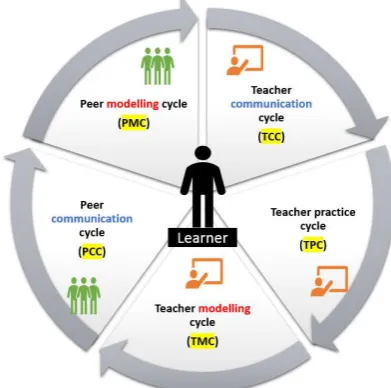
33 According to Laurillard (2012), the above learning types can occur through five cycles (see Figure 3.1): 1) teacher communication cycle (TCC); 2) teacher practice cycle (TPC); 3) teacher modelling cycle (TMC); 4) peer communication cycle (PCC); and 5) peer modelling cycle (PMC).
Figure 3.1: Laurillard’s (2002) conversational framework
Firstly, in the TCC, the teacher: 1) explains the concept; 2) elicits learners’ questions; and 3) responds to learners’ questions. The teacher in this cycle uses any kind of representation of the concept to help learners in the learning process.
Therefore, the main aims of this cycle are to:
o Enable learners to modulate their conception by giving them access to teachers’ concepts.
o Motivate learners to generate questions and receive extrinsic feedback from their teachers.
[image:43.595.198.394.216.410.2]34 tasks that suit the learner’s level of knowledge and creates tasks that motivate learners to reveal their thinking through external representations.
Therefore, the main aims of this cycle are to:
o Enable learners to modulate their concepts.
o Motivate learners to generate actions for eliciting extrinsic feedback.
Thirdly, in the TMC, the teacher provides a model for a task where the learner can refer to correct his/her practice. Learners can receive intrinsic feedback, since the model will inform them about how to adjust their actions in comparison to the model. The aim is to motivate the learner to work independently by revising his/her actions in comparison to the modelling environment to achieve the task goal.
Therefore, the main aims of this cycle are to:
o Enable learners to modulate their concepts and practices.
o Motivate learners to generate an action that elicits intrinsic feedback.
Fourthly, in the PCC, the teacher encourages learners to produce and share their outputs with other peers in a collaborative learning environment where they can learn from each other and receive feedback on the produced outputs. To facilitate this process, the teacher provides learners with means to communicate together.
Therefore, the main aims of this cycle are to:
o Enable learners to modulate their concepts.
35 Fifthly, in the PMC, the teacher motivates the learners to share their outputs with other peers as that enables them to modulate their outputs by using peers’ outputs as a model for
reference. To facilitate this process, the teacher provides learners with means to share their produced outputs together.
Therefore, the main aims of this cycle are to:
o Enable learners to modulate their concepts and practices.
o Motivate learners to generate outputs to be shared for negotiation.
According to Laurillard (2012), at least two cycles are needed to assure the teacher that the learner is learning.
3.2- Secondly: Passey’s learning elements framework
Having highlighted the five cycles of Laurillard’s (2002) conversational framework, this section shows how Passey’s (2011) learning elements framework was needed in order to close a gap in this framework.
36 Figure 3.2: The relation between the two frameworks
Passey’s framework consists of five main learning elements: 1) megacognitive; 2) cognitive; 3) metacognitive; 4) social; and 5) societal. Megacognitive focuses on wider and deeper learning as it focuses on transferring learning across subjects in addition to providing different types of applications in real-life situations (Passey, 2014). Cognitive learning focuses on internalisation, internal cognitive processing, and externalisation of knowledge.
Metacognitive learning focuses on ways learners learn and how information is transferred from one situation to another. Social learning focuses on ways learners interact with others (McCormick, 1999, as cited in Passey, 2014). Societal learning focuses on real-life situations (McFarlane, 1997, as cited in Passey, 2014).
From the entire framework, the researcher focused only on cognitive learning for guiding the design elements of the models (exemplary materials) in the TMC. Cognitive learning
37 materials and were also used in the data analysis. The internal cognitive processing learning element was used only in the data analysis.
In terms of internalisation, it focuses on different forms of external stimuli that engage
learners in the learning process and their effect on the internal mind. Internalisation according to Child (1973) (as cited in Passey, 2014) includes the learning elements presented in Table 3.1.
Table 3.1: Internalisation
Learning element Focus
Attention This element focuses on being attentive to the activity.
Sensory stimuli This element focuses on the forms of knowledge and ideas accessed through one or more senses. Gardner (1991) (as cited in Passey, 2014) identified nine types of sensory stimuli as follows:
• Visual: Knowledge is presented in different visual forms such as pictures, videos, and/or real situations.
• Auditory: Knowledge is presented through audio files, teachers’ talk, and/or videos.
• Kinaesthetic: Knowledge is presented in the form of material and/or resources handled through motor skills such as using the keyboard or mouse.
• Emotional: Emotional links such as joy, empathy, sympathy, and/or sadness are recognised by the learner when ideas are presented.
• Social: Knowledge is described through discussing and/or questioning concepts with peers, teacher, and/or others. • Textual: Knowledge and ideas are presented in text form. • Musical: Material is presented in a musical form.
• Interpersonal: Knowledge and ideas are acquired through interaction with peers, teacher, and/or other.
• Intrapersonal: Knowledge is acquired through questioning oneself where external stimuli affect the learner to ask questions internally.
Acquisition This element focuses on recognising knowledge after being accepted into the mind to be handled further through internal cognitive
processes.
38 existing knowledge and ideas, to integrate that knowledge to a wider learning canvas. Internal cognitive processing has been described differently by many researchers. Firstly, Child (1973) (as cited in Passey, 2014) described subject knowledge processes through searching,
summarising, generating or developing ideas, hypothesising, imagining, gaining skills, and gaining understanding. Bloom (1956) (as cited in Passey, 2014) focused on handling knowledge through acquisition, comprehension, application, analysis, synthesis, and
evaluation, while Moseley et al. (2005) (as cited in Passey, 2014) focused on thinking skills such as creativity, enquiring, questioning, conceptualising, comparing, reasoning, and
interpreting. Additionally, Child (1973) (as cited in Passey, 2014) focused on elements related to memorisation such as rehearsal, retention, and recall. Details regarding each learning element within the arena of internal cognitive processing are given in Table 3.2. Table 3.2: Internal cognitive processing
Learning element Focus
Subject knowledge
To cognitively process subject knowledge internally, learning can occur through:
• Searching: The learner seeks information in large data sets or in one or more sources.
• Summarising: The learner selects key points to add to a current knowledge.
• Generating or developing ideas: The learner takes existing knowledge to generate other ideas.
• Hypothesising: The learner takes knowledge and forms questions that need to be validated through additional knowledge.
• Imagining: The learner takes existing knowledge that leads to questions such as ‘What if?’
• Gaining skills: The learner gains certain skills due to accessing certain knowledge.
• Gaining understanding: The learner gains understanding of both the content and context as a result of accessing certain knowledge.
Bloom’s work To cognitively handle and manipulate learning internally, learning can occur through:
39
Learning element Focus
Bloom’s work • Comprehension: The learner understands knowledge at a descriptive level.
• Application: The learner uses knowledge in another setting other than the original setting.
• Analysis: The learner questions knowledge and draws other ideas through different ways, such as comparing, contrasting, categorising, and/or arguing points that arise from other material. • Synthesis: The learner brings knowledge and ideas together to
build a wider picture leading to deeper understanding.
Evaluation: The learner questions knowledge to see how it can be used in certain situations and therefore judges its use and value. Thinking skills To cognitively process learning internally, thinking skills can be
approached through:
• Creativity: The learner takes existing knowledge and creates new knowledge with unique qualities beyond the original. • Enquiring: The learner looks at certain areas of interest to
collect more details and/or ideas.
• Questioning: The learner questions ideas critically rather than accepting them as is.
• Conceptualising: The learner develops a concept by shaping ideas and/or reconstructing ideas to develop or amend
previously-held concepts.
• Comparing: The learner searches for similarities and differences in existing knowledge and compares them.
• Reasoning: The learner compares knowledge to reason with them and then draw conclusions or hypothesis.
• Interpreting: The learner takes knowledge and works with it to draw other conclusions leading to better understanding.
Memorisation • Rehearsal: The learner considers existing knowledge by recognising additions or differences that can be of interest. Knowledge and ideas can be accessible from long-term or short-term memory.
• Retention: The learner retains knowledge and ideas through relating them to various sensory associations such as visual, textual, auditory, social, and/or emotional.
• Recall: The learner recalls knowledge from memory through associations from mental schemas.