
Optimal Power Flow using Cockroach Swarm
Optimization
M. A. El-dosuky
Computer Science Department,Mansoura University Faculty of Computer and Info
Mansoura University, Egypt. P.O. 35516
ABSTRACT
Optimal Power Flow(OPF) faces challenges of convergence and local minima. This paper reviews nomenclature and literature of both OPF and metaphor-based heuristic optimization, emphasiz-ing Cockroach Swarm Optimization (CSO). Then the paper in-vestigates CSO as applied to OPF. The solution is tested on the benchmark systems such as IEEE 9 bus system using Matpower.
General Terms
Global optimization, Power Systems
Keywords
Optimal Power Flow,Cockroach Swarm Optimization
1. INTRODUCTION
Optimal Power Flow(OPF)is implicated in both security [49] and economy [13] of operation. Solving an OPF faces many challenges [50] such as convergence [29] and local minima [42] .
The rest of this paper presents OPF nomenclature and metaphor-based heuristic optimization, emphasizingCockroach Swarm Opti-mization (CSO), in the second section, before reviewing OPF litera-ture in the third section. Then the paper investigates CSO as applied to OPF in the evaluation section where CSO is tested on benchmark systems, before concluding and showing future directions in the last sections.
2. BACKGROUND
2.1 OPF Formulation
Power flows can be calculated from voltage phase angle denoted as
δi[53]. Hence,vi, the voltage at nodei, is
|vi|∠δi (1)
Admittance matrixY of sizenb×nbcan perfectly describe a
net-work ofnbbuses [53, 23].
Now,pf, the active power injected into busfat timet, is nb
X
t=1
|yf tvfvt|cos(δf−δt−θf t) (2)
and the reactive power,qf, is nb
X
t=1
|yf tvfvt|sin(δf−δt−θf t) (3)
whereθshif tis the phase shift angle.
OPF is a global minimization problem [32,§18], i.e.
min
x f(x) (4)
with constraints :
pf g−p
f d=p
f (5)
and
qfg−q f d=q
f
, (6)
wheregis generation
g(x) = 0 (7)
anddis demand
OPF operates near maximum loadability limit (MLL), formulated as [30]
max
z α (8a)
subject to Pd=Pd0+αd (8b)
Qd=diag(tanφ0)Pd (8c)
g(z) = 0 (8d)
zmin≤z≤zmax (8e)
where
z= [xT α]T =
Θ
Vm Pg Qg α
, (9)
Differences among MLL and OPF regarding voltage constraints in-clude [12]:
(1) Magnitudes at the reference buses are locked at their set point values.
(3) PQ magnitude upper bounds are relaxed.
(4) PV magnitude upper bounds are set to the voltage set point of correspondent generators.
2.2 Metaphor-based Heuristic optimization
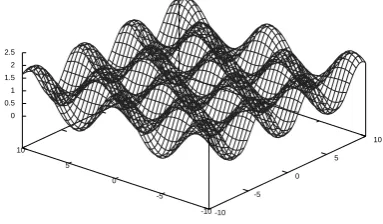
Figure 1 depicts an arbitrary search space with many local mini-ma/maxima. This nonlinear problem, and the like, requires global optimization [52, 7, 16].
-10 -5
0 5
10
[image:2.595.323.555.75.587.2]-10 -5 0 5 10 0 0.5 1 1.5 2 2.5
Fig. 1. an arbitrary search space with many local minima/maxima.
Global heuristic optimization, a.k.a metaheuristics [22], scrutinize search spaces using a dichotomy of intensification and diversifica-tion [21, 10] .
Metaphor-based optimization [1] usually mimic nature [54] such as Genetic Algorithms (GAs)[24], Cuckoo Search (CS) [55], Hoopoe Heuristic(HH) [19], or swarms [34] of particles(PSO) [35], bees (BCO) [33], or ants (ACO) [18].
2.3 Cockroach Swarm Optimization (CSO)
Many algorithms mimic cockroaches [57, 27]. CSO uses:
(1) Swarmingof a quorum of cockroaches, excreting a fecal matter trail in the way for the others to follow [5].
(2) Dispersionin presence of danger or resource sparsity [5]. (3) Eliminatingeach other in resource shortage [57].
Blattodea insects, comprising cockroaches, have an affinity with Hymenoptera,comprising ants and bees, showing gregarious be-haviour [40]. Ants are eusocial with distinguishable behavioral spe-cializations [28]. Otherwise, the nocturnal cockroaches swarm in aggregations [9] for collective decision-making [39].
As depicted in figure 2, cockroaches quorum is initialized ran-domly, as shown in figure3. Then, they are evaluated, the best indi-vidual being associated with a given position in their field of vision. Hence, forming a cluster based on that, as shown in figure4.CSO converses rapidly as shown in figure5.
3. PREVIOUS WORK
Since the original formulation of OPF [13], the Newton-Raphson was the de facto solving method [51, 45] even for ill-conditioned systems[31].
OPF is periodically surveyed [26, 29, 11]. A honorable mention is use of linear programming (LP)[4].
Metaphor-based heuristic optimizations [14, 37] are used such as
—PSO [47, 2] and fuzzy version [8]
Start
Generate Cock-roaches Quorum
Stop Cond. is met?
Randomize Cockroaches Coordinates
Measure Cock-roaches Fitness
Is a near one good?
Update Co-ordinates for the remaining
Cockroaches
Dispersion?
Rerandomize some Cockroaches
Coordinates
Ruthless?
Eliminate some Cockroaches
Stop
yes
yes
yes no
yes
no
no
Fig. 2. CSO Flowchart.
—GAs [36, 56]
—ACO [38]
—BCO [48]
[image:2.595.75.267.183.295.2]Fig. 3. Initial settings.
[image:3.595.317.568.65.365.2]Fig. 4. Cockroach Clustering.
Fig. 5. Pre-Convergence.
4. EVALUATION
CSO applied to OPF is tested on the IEEE 9 bus system [6] imple-mented in MATPOWER.V.6[58] as CASE09.m as shown in figure6 . CASE09 has 1 area, 9 buses, 9 branches, 3 generators and 3 loads. Consider continuation flow,runcpfin MATPOWER.V.6, with no reactive power limits.
Bus Volt.magnitude Volt.angle
---1 1 0
2 1 -50.45
3 1 -55.24
4 0.84 -19.34
5 0.77 -37.63
6 0.82 -58.71
7 0.61 -79.87
8 0.78 -57.92
9 0.74 -38.42
The results are:
Bus P Q
---1 482 362
2 163 355.5
3 85 305.5
---Total: 730 1023
Compare This with MLL as shown below.
[image:3.595.52.216.459.671.2]Bus MLL Load Voltage
Fig. 6. IEEE 9 bus system [6].
---1 0 1
2 0 1
3 0 1
4 0 0.87
5 90 0.81
6 0 0.85
7 439.53 0.66
8 0 0.82
9 125 0.78
%
All busses have direction 0, except the 7th has direction 1. The Reactive power production and generators voltages are :
Bus Qgen Qmax
---1 305.15 9999
2 300 300
3 255.64 300
All with Qmin=-300, Vm=Vref=1.
CSO converges in 4 iterations, approx.0.29 seconds, giving
Bus Volt.magnitude Volt.angle
---1 1 0
2 1 9.67
3 1 4.77
4 0.99 -2.41
5 0.98 -4.02
6 1 1.92
7 0.99 0.62
8 0.99 3.8
9 0.96 -4.35
The generations are
Bus P Q
---1 71.95 24.07
2 163 14.46
3 85 -3.65
[image:3.595.318.478.488.697.2]
Fig. 7. PSO vs CSO on Systems with 10 groups [15].
Fig. 8. PSO vs CSO on Systems with 15 groups [20].
As PSO is widely applied in power systems[17, 3], let us compare it with CSO on benchmark systems such as [15] in figure7 and [20]in figure8.
5. CONCLUSION
CSO shows a fast convergence as compared to PSO.
6. FUTURE WORK
An enunciated future work may be applying CSO in other cases such as IEEE Reliability Test test [25] in figure9 to investigate the invariants among systems of varying sizes.
Another direction may be considering improved versions of CSO [43, 44], or parameter optimization [41].
7. REFERENCES
[1] Ec bestiary website.https://github.com/fcampelo/EC-bestiary. [2] M A Abido. Optimal power flow using particle swarm
opti-mization.International Journal of Electrical Power and En-ergy Systems, 24(7):563–571, 2002.
Bus 1 Bus 2
Bus 3
Bus 4
Bus 5
Bus 6
Bus 7 Bus 8
Bus 9 Bus 10
Bus 11 Bus 12
Bus 13 Bus 14
Bus 15 Bus 16 Bus 17
Bus 18
Bus 19 Bus 20
Bus 21 Bus 22
Bus 23
Bus 24
cable
cable
A1
152 MW 2×U76
A2 152 MW
2×U76 A4 300 MW
3×U100
A3
591 MW 3×U197
A5 Synch.
Cond.
A1
155 MW
A2 155 MW
A1
400 MW
Nuclear A2 400 MW
Nuclear
A3 300 MW Hydro, 6×U50
A4
660 MW 2×U155 1×U350
108 MW
97 MW 108
MW
74 MW
71 MW
136 MW
125 MW 171 MW 175 MW
195 MW 265 MW 194 MW
317 MW 100
MW
333 MW
181 MW 128 MW
138 kV
230 kV
Fig. 9. IEEE Reliability Test test [25].
[3] Mohammed R AlRashidi and Mohamed E El-Hawary. A sur-vey of particle swarm optimization applications in electric power systems.IEEE transactions on evolutionary computa-tion, 13(4):913–918, 2009.
[4] O Alsac, J Bright, M Prais, and B Stott. Further developments in lp-based optimal power flow.IEEE Transactions on Power Systems, 5(3):697–711, 1990.
[5] Jean-Marc Am´e, Jos´e Halloy, Colette Rivault, Claire Detrain, and Jean Louis Deneubourg. Collegial decision making based on social amplification leads to optimal group formation. Pro-ceedings of the National Academy of Sciences, 103(15):5835– 5840, 2006.
[6] Paul M Anderson and Aziz A Fouad.Power system control and stability. John Wiley & Sons, 2008.
[7] JS Arora. Introduction to optimum design. 1989.
[8] Mostafa Asghari and Jamshid Mohammadi. Fuzzy multi-objective opf considering voltage security and fuel emission minimization. InPower and Energy Engineering Conference (APPEEC), 2012 Asia-Pacific, pages 1–6. IEEE, 2012. [9] William J Bell, Louis M Roth, and Christine A Nalepa.
[10] Christian Blum and Andrea Roli. Metaheuristics in combi-natorial optimization: Overview and conceptual comparison.
ACM Computing Surveys (CSUR), 35(3):268–308, 2003. [11] Mary B Cain, Richard P O’neill, and Anya Castillo. History
of optimal power flow and formulations.Federal Energy Reg-ulatory Commission, pages 1–36, 2012.
[12] Claudio Ca˜nizares, William Rosehart, Alberto Berizzi, and Cristian Bovo. Comparison of voltage security constrained optimal power flow techniques. InPower Engineering Society Summer Meeting, 2001, volume 3, pages 1680–1685. IEEE, 2001.
[13] J Carpentier. Contribution ´a l’´etude du dispatching ´economique. Bulletin de la Soci´et´e Franc¸aise des
´
Electriciens, 3(1):431–447, 1962.
[14] Jinyin Chen and Dongyong Yang. Optimal power flow op-timization based on bio-inspired computing. In Communica-tions and Mobile Computing (CMC), 2010 International Con-ference on, volume 1, pages 195–199. IEEE, 2010.
[15] Chao-Lung Chiang. Improved genetic algorithm for power economic dispatch of units with valve-point effects and mul-tiple fuels.IEEE transactions on power systems, 20(4):1690– 1699, 2005.
[16] Kalyanmoy Deb.Optimization for engineering design: Algo-rithms and examples. PHI Learning Pvt. Ltd., 2012.
[17] Yamille Del Valle, Ganesh Kumar Venayagamoorthy, Salman Mohagheghi, Jean-Carlos Hernandez, and Ronald G Harley. Particle swarm optimization: basic concepts, variants and ap-plications in power systems.IEEE Transactions on evolution-ary computation, 12(2):171–195, 2008.
[18] Marco Dorigo. Optimization, learning and natural algorithms.
Ph. D. Thesis, Politecnico di Milano, Italy, 1992.
[19] M. A. El-Dosuky, M. Z. Rashad, and T. T. Hamza. New hoopoe heuristic optimization.International Journal of Sci-ence and Advanced Technology, 2(9):85–90, 2012.
[20] Zwe-Lee Gaing. Particle swarm optimization to solving the economic dispatch considering the generator constraints.
IEEE transactions on power systems, 18(3):1187–1195, 2003. [21] Veysel Gazi and Kevin M Passino. Stability analysis of social foraging swarms.IEEE Transactions on Systems, Man, and Cybernetics, Part B (Cybernetics), 34(1):539–557, 2004. [22] Fred Glover. Future paths for integer programming and links
to artificial intelligence.Computers & operations research, 13(5):533–549, 1986.
[23] J. Duncan Glover and Mulukutla S. Sarma.Power System Analysis and Design. Brooks/Cole Publishing Co., Pacific Grove, CA, USA, 3rd edition, 2001.
[24] David E Goldberg. Genetic algorithms in search, optimiza-tion, and machine learning, 1989.Addison-Wesley, 1989. [25] Cliff Grigg, Peter Wong, Paul Albrecht, Ron Allan, Murty
Bhavaraju, Roy Billinton, Quan Chen, Clement Fong, Suheil Haddad, Sastry Kuruganty, et al. The ieee reliability test system-1996. a report prepared by the reliability test system task force of the application of probability methods subcom-mittee. IEEE Transactions on power systems, 14(3):1010– 1020, 1999.
[26] HH Happ. Optimal power dispatch-a comprehensive sur-vey.IEEE Transactions on Power Apparatus and Systems, 96(3):841–854, 1977.
[27] Timothy C Havens, Christopher J Spain, Nathan G Salmon, and James M Keller. Roach infestation optimization. In
Swarm Intelligence Symposium, 2008. SIS 2008. IEEE, pages 1–7. IEEE, 2008.
[28] B H¨olldobler and EO Wilson. The ants cambridge.MA: The Belknap Press, Harvard University, 1990.
[29] M Huneault and FD Galiana. A survey of the optimal power flow literature.IEEE transactions on Power Systems, 6(2):762–770, 1991.
[30] GD Irisarri, X Wang, J Tong, and S Mokhtari. Maximum loadability of power systems using interior point nonlinear optimization method.IEEE transactions on Power Systems, 12(1):162–172, 1997.
[31] S Iwamoto and Y Tamura. A load flow calculation method for ill-conditioned power systems.IEEE transactions on power apparatus and systems, (4):1736–1743, 1981.
[32] J. Kallrath, P.M. Pardalos, S. Rebennack, and M. Scheidt. Op-timization in the Energy Industry. Springer, 2009.
[33] Dervis Karaboga. An idea based on honey bee swarm for nu-merical optimization. Technical report, Technical report-tr06, Erciyes university, engineering faculty, computer engineering department, 2005.
[34] James Kennedy. Swarm intelligence. InHandbook of nature-inspired and innovative computing, pages 187–219. Springer, 2006.
[35] R Kennedy. J. and eberhart, particle swarm optimization. In
Proceedings of IEEE International Conference on Neural Networks IV, pages, volume 1000, 1995.
[36] R Kumar et al. Economic power dispatch using evolutionary algorithm. International Journal of Machine Learning and Computing, 2(4):365–370, 2006.
[37] Kwang Y Lee and Mohamed A El-Sharkawi.Modern heuris-tic optimization techniques: theory and applications to power systems, volume 39. John Wiley & Sons, 2008.
[38] K Lenin and MR Mohan. Ant colony search algorithm for optimal reactive power optimization.Serbian journal of elec-trical engineering, 3(1):77–88, 2006.
[39] Mathieu Lihoreau, JT Costa, and Colette Rivault. The so-cial biology of domiciliary cockroaches: colony structure, kin recognition and collective decisions. Insectes Sociaux, 59(4):445–452, 2012.
[40] Mathieu Lihoreau, Jean-Louis Deneubourg, and Colette Ri-vault. Collective foraging decision in a gregarious insect.
Behavioral Ecology and Sociobiology, 64(10):1577–1587, 2010.
[41] Mohamed Arezki Mellal and Edward J Williams. Parameter optimization of advanced machining processes using cuckoo optimization algorithm and hoopoe heuristic.Journal of In-telligent Manufacturing, 27(5):927–942, 2016.
[42] JA Momoh, RJ Koessler, MS Bond, B Stott, D Sun, A Pa-palexopoulos, and P Ristanovic. Challenges to optimal power flow.IEEE Transactions on Power Systems, 12(1):444–455, 1997.
[43] Ibidun Christiana Obagbuwa and Ademola Philips Abidoye. Binary cockroach swarm optimization for combinatorial op-timization problem.Algorithms, 9(3):59, 2016.
[45] John Peschon, Dean S Piercy, William F Tinney, Odd J Tveit, and Michael Cuenod. Optimum control of reactive power flow.IEEE Transactions on Power Apparatus and Systems, (1):40–48, 1968.
[46] M RamaMohana Rao and AV Naresh Babu. Optimal power flow using cuckoo optimization algorithm. International Journal of Advanced Research in Electrical, Electronics and Instrumentation Engineering, 2(9):4213–18, 2013.
[47] T Saravanan, G Saritha, and V Srinivasan. Optimal power flow using particle swarm optimization.Middle-East Journal of Scientific Research, 20(11):554–1560, 2014.
[48] Linda Slimani and Tarek Bouktir. Economic power dispatch of power systems with pollution control using artificial bee colony optimization.Turkish Journal of Electrical Engineer-ing & Computer Sciences, 21(6):1515–1527, 2013.
[49] Brian Stott, Ongun Alsac, and Alcir J Monticelli. Secu-rity analysis and optimization. Proceedings of the IEEE, 75(12):1623–1644, 1987.
[50] WF Tinney, JM Bright, KD Demaree, and BA Hughes. Some deficiencies in optimal power flow. IEEE Transactions on Power Systems, 3(2):676–683, 1988.
[51] William F Tinney and Clifford E Hart. Power flow solution by newton’s method.IEEE Transactions on Power Apparatus and systems, (11):1449–1460, 1967.
[52] Thomas Weise. Global optimization algorithms-theory and application.Self-published, 2, 2009.
[53] Allen J. Wood and Bruce F. Wollenberg.Power Generation Operation and Control. Wiley, New York, New York, second edition, 1996.
[54] Xin-She Yang.Nature-inspired metaheuristic algorithms. Lu-niver press, 2010.
[55] Xin-She Yang and Suash Deb. Cuckoo search via l´evy flights. InNature & Biologically Inspired Computing, 2009. NaBIC 2009. World Congress on, pages 210–214. IEEE, 2009. [56] Mimoun Younes and Mostafa Rahli. Economic power
dis-patch using the combination of two genetic algorithms. IU-Journal of Electrical & Electronics Engineering, 6(2):175– 181, 2006.
[57] Chen ZhaoHui and Tang HaiYan. Cockroach swarm opti-mization. In2010 2nd International Conference on Computer Engineering and Technology, 2010.
![Fig. 6.IEEE 9 bus system [6].](https://thumb-us.123doks.com/thumbv2/123dok_us/9299078.428221/3.595.52.216.459.671/fig-ieee-bus-system.webp)
![Fig. 7.PSO vs CSO on Systems with 10 groups [15].](https://thumb-us.123doks.com/thumbv2/123dok_us/9299078.428221/4.595.328.562.71.414/fig-pso-vs-cso-systems-groups.webp)
