Helicopterborne Operations
US Marine Corps
DISTRIBUTION STATEMENT A: Approved for public release; distribution is unlimited.
Changes: Readers of this publication are encouraged to submit suggestions and changes that will improve it. Recommendations may be sent directly to Commanding General, Marine Corps Combat Development Command, Doctrine Division (C 42), 3300 Russell Road, Suite 318A, Quantico, VA 22134-5021 or by fax to 703-784-2917 (DSN 278-2917) or by E-mail to
[email protected]. Recommendations should include the following information:
● Location of change
Publication number and title Current page number
Paragraph number (if applicable) Line number
Figure or table number (if applicable)
● Nature of change
Add, delete
Proposed new text, preferably double-spaced and typewritten
● Justification and/or source of change
Additional copies: A printed copy of this publication may be obtained from Marine Corps Logistics Base, Albany, GA 31704-5001, by following the instructions in MCBul 5600,
Marine Corps Doctrinal Publications Status. An electronic copy may be obtained from the Doctrine Division, MCCDC, world wide web home page which is found at the following uni-versal reference locator: https://www.doctrine.usmc.mil.
Washington, D.C. 20380-1775
16 August 2004
FOREWORD
Marine Corps Warfighting Publication (MCWP) 3-11.4, Helicopterborne Operations, describes how infantry and aviation units plan and conduct helicopterborne operations during subsequent operations ashore. MCWP 3-11.4 emphasizes the coordination neces-sary between ground, air, combat support, and combat service support organizations con-cerning the planning sequence and tactical employment of ground and aviation elements. It describes the versatility of helicopterborne operations and explains the tactical funda-mentals of helicopterborne operations for ground-based operations once ashore.
MCWP 3-11.4 is intended for commanders, staff officers, and support units responsible for the planning and execution of helicopterborne operations. However, it should be read by any Marine involved in the execution of helicopterborne operations.
This publication does not contain information relative to amphibious operations. Helicop-terborne operations in amphibious operations are discussed in MCWP 3-31.5, Ship-to-Shore Movement,Naval Warfare Publication (NWP) 3-22.5, Tactical Manual series, and Joint Publication (JP) 3-02.1, Joint Doctrine for Landing Force Operations.
This publication supersedes Fleet Marine Force Manual (FMFM) 6-21, Tactical Funda-mentals of Helicopterborne Operations, dated June 1991.
Reviewed and approved this date.
BY DIRECTION OF THE COMMANDANT OF THE MARINE CORPS
EDWARD HANLON, JR. Lieutenant General, U.S. Marine Corps
Commanding General
Marine Corps Combat Development Command
Publication Control Number: 143 000147 00
Chapter 1. Overview
Sequence of Operations . . . 1-1 Tactical Considerations . . . 1-2 Command and Control . . . 1-3 Helicopterborne Forces. . . 1-4 Organization . . . 1-4 Task Organization Considerations . . . 1-4 Capabilities . . . 1-5 Limitations . . . 1-5 Vulnerabilities . . . 1-6
Chapter 2. Preparation for Combat
Intelligence Preparation of the Battlespace . . . 2-1 Threat . . . 2-1 Task Organization. . . 2-2
Chapter 3. Command and Control
Chapter 4. Planning
Section I. Estimation Process. . . 4-1 Analysis of METT-T. . . 4-2 Mission . . . 4-2 Enemy . . . 4-2 Terrain and Weather . . . 4-2 Troops and Support Available . . . 4-4 Time Available . . . 4-4 Ground Commander’s View of the Plan of Attack. . . 4-4 Scheme of Maneuver . . . 4-4 Plan for Supporting Fires . . . 4-4 Loading Plan . . . 4-5 Air Movement Plan . . . 4-5 Landing Plan . . . 4-5
Section II. Detailed Planning. . . 4-5 Ground Tactical Plan . . . 4-5 Mission . . . 4-6 Concept of Operations . . . 4-6 Landing Plan . . . 4-6 Selection of Landing Zones . . . 4-6 Single Versus Multiple Landing Zones . . . 4-8 Landing Formations . . . 4-8 Supporting Fires . . . 4-8 Emergency Extract . . . 4-9 Air Movement Plan . . . 4-10
Selection of Helicopter Approach and Retirement Routes . . . 4-10 Ground Considerations During Helicopter Movement . . . 4-10 Supporting Fires Along the Approach and Retirement Route . . . 4-11 Loading Plan . . . 4-11 Primary and Alternate Pickup Zones . . . 4-11 Pickup Zone Criteria . . . 4-11 Pickup Zone Control . . . 4-12 Staging Plan . . . 4-15
Section III. Mission Briefing and Debriefing . . . 4-15 Mission Brief. . . 4-15 Helicopterborne Mission Briefing Guide . . . 4-15
Chapter 5. Combat Operations
Secure and Defend . . . 5-3 Seizure and Retention . . . 5-3 Control Measures . . . 5-4 Assault Objectives . . . 5-4 Reconnaissance in Force. . . 5-4 Raid. . . 5-5
Section II. Helicopterborne Operations in Defensive Operations . . . 5-5 Defensive Operations Against an Armor-Heavy Threat . . . 5-6 Economy of Force . . . 5-6 Delay. . . 5-7
Section III. Other Tactical Missions and Operational Considerations . . . 5-7 Screening . . . 5-7 Guard Force . . . 5-7 Covering Force . . . 5-8 Reinforcement of Committed Units . . . 5-8 Linkup Operations . . . 5-8 River Crossing Operations . . . 5-8 Rear Area Operations . . . 5-9 Night and Limited Visibility Operations . . . 5-9 Operations in a Nuclear, Biological, and Chemical Environment . . . 5-9
Chapter 6. Combat Support Within the Helicopterborne Force
Section I. Fire Support. . . 6-1 Fire Support Coordinator . . . 6-2 Fire Support Delivery Means . . . 6-2
Section II. Fire Support Planning and Coordination . . . 6-3 Formal and Informal Planning . . . 6-3 Displacement of Fire Support. . . 6-3 Enemy Air Defense. . . 6-4 Fire Support Coordination . . . 6-4
Section III. Artillery Helicopterborne Operations . . . 6-5 Planning Considerations . . . 6-5 Range of Artillery and Other Support Systems . . . 6-5 Importance of the Target . . . 6-5 Airlift Assets. . . 6-5 Risk in Crossing Lines . . . 6-5 Target Location. . . 6-5 Pickup Zone and/or Landing Zone . . . 6-5 Ammunition . . . 6-5 Communications . . . 6-6 Security . . . 6-6 Capabilities . . . 6-6
Planning Considerations . . . 6-7 Using Helicopters to Support Air Defense Operations . . . 6-8
Chapter 7. Combat Service Support
Section I. Helicopter Support Team . . . 7-1 Helicopter Support Team Organization . . . 7-1 Advance Party . . . 7-2 HST Headquarters. . . 7-2 Other MAGTF Support . . . 7-2 Landing Support Battalion . . . 7-3 Equipment . . . 7-3 Training . . . 7-3 Employment . . . 7-3
Section II. Combat Service Support Planning. . . 7-4 Considerations Prior to Planning . . . 7-4 Key Points . . . 7-4 Specific Points. . . 7-4 Planning Considerations . . . 7-5 Basic Load and Combat Service Support Buildup . . . 7-5 Basic Load. . . 7-5 Combat Service Support Buildup . . . 7-6
Section III. Execution of Combat Service Support . . . 7-6 CSS Trains . . . 7-6 Supply . . . 7-7 Maintenance . . . 7-8 Field and Personnel Support Services. . . 7-8 Medical Support . . . 7-8 Casualty Evacuation . . . 7-8 Helicopter Casualty Evacuation Control
and Coordination Procedures . . . 7-8
Section IV. External Load Operations. . . 7-9 External Load Considerations . . . 7-9 Elements of an External Lift Mission . . . 7-10
Section V. Aviation Support Considerations. . . 7-11 Forward Arming and Refueling Points . . . 7-11 Aircraft Maintenance . . . 7-11 Tactical Recovery of Aircraft and Personnel . . . 7-11
Chapter 8. Conduct of a Helicopterborne Operation
Helicopter Movement to the Pickup Zone . . . 8-2 Lift-off From the Pickup Zone . . . 8-2 En route to the Landing Zone . . . 8-2 Security . . . 8-3 Landing Operations . . . 8-3 Command and Control Helicopter . . . 8-3 Landing Zone Preparatory Fires . . . 8-3 Landing Techniques . . . 8-4 Completion of the Landing Zone Operation. . . 8-5 Commanders’ Responsibilities/Sequence of Actions. . . 8-5 Helicopterborne Mission Commander or
Helicopterborne Unit Commander . . . 8-5 Air Mission Commander . . . 8-5 Helicopterborne Force Executive Officer. . . 8-6 Helicopterborne Force S-1 . . . 8-6 Helicopterborne Force S-2 . . . 8-7 Helicopterborne Force GCE S-3. . . 8-7 Helicopterborne Force GCE Air Officer . . . 8-8 Helicopterborne Force GCE S-4. . . 8-9 Helicopterborne Force GCE Fire Support Coordinator . . . 8-9 Subordinate Unit Commander . . . 8-10 Helicopterborne Force Commander . . . 8-10 Planning Sequence . . . 8-10 Time Schedule . . . 8-10 Ground Tactical Plan . . . 8-11 Landing Plan. . . 8-11 Air Movement Plan . . . 8-12 Loading Plan. . . 8-12 Staging Plan . . . 8-12
Appendices
A. Small-Unit Leader’s Guide to Pickup
Zone and Landing Zone Operations . . . A-1 B. Air Mission Commander’s or Air Officer’s Checklist. . . B-1 C. Helicopterborne Unit Commander’s Checklist . . . C-1 D. Landing Zone Brief . . . D-1 E. Example of an Annex to Battalion
O
VERVIEW
Helicopterborne operations are tactical operations in which assault forces maneuver on the battle-field under the direction of an assigned com-mander in order to engage and destroy enemy forces or to seize key terrain. They are best employed in situations that provide the force a calculated advantage due to surprise, terrain, threat, or mobility. Helicopterborne operations allow the commander to maneuver rapidly to achieve tactical surprise and mass forces, regard-less of obstacles and without dependency on ground lines of communication. These operations embody the combined-arms concept through coor-dination and planning between the air and ground commanders. Infantry and air units can be fully integrated with other members of the combined-arms team to form powerful and flexible helicop-terborne task forces (HTFs). These forces can project combat power throughout the entire depth, width, and breadth of the modern battlefield with little regard for terrain barriers. The unique versa-tility and strength of an HTF is achieved by com-bining the capabilities of helicopters—speed, agility, and firepower—with those of the infantry and other combat arms to form tactically tailored HTFs that can be employed in low, medium, and high intensity environments.
Helicopterborne operations are not merely the movement of Marines, weapons, and material by helicopter units. They are deliberate, precisely planned, and aggressively executed combat oper-ations that allow friendly forces to strike over ter-rain barriers in order to attack the enemy when and where he is most vulnerable.
Note
Helicopterborne operations are more than just air movement operations. Air movement operations require airlift assets outside of
the assets used for helicopterborne opera-tions. These operations are used to move troops and equipment; to emplace artillery and other combat support assets; and to transport ammunition, fuel, and supplies.
Helicopterborne operations span the spectrum of risk. They can be high-payoff operations that can, when properly planned and aggressively exe-cuted, drastically extend a commander’s area of operations. This extension of a commander’s area of operations enables the commander to execute operations in areas ranging beyond the capabili-ties of ground forces.
The speed and mobility of helicopters can pro-vide freedom of rapid maneuver. Freedom of rapid maneuver can then fix the enemy and mass sufficient combat power to destroy him over dis-tances that would otherwise be impossible to traverse as quickly. The helicopter’s flexibility and versatility permit the ground commander to reduce time and distance limitations normally encountered in the ground movement of troops.
Sequence of Operations
A helicopterborne operation generally takes place in the following sequence:
z Planning. z Briefing. z Loading. z Air assault. z Landing.
z Tactical ground operations. z Sustainment.
Tactical Considerations
In addition to utilizing the tactical fundamentals of ground combat, helicopterborne operations also apply the following tactical considerations:
z The HTF is assigned missions that take
advan-tage of its superior mobility, and it is not employed in roles requiring deliberate opera-tions over an extended period of time.
z The HTF fights as a combined-arms team. z Operational planning must be centralized and
precise.
z Execution must be aggressive and decentralized. z Helicopterborne forces lack tactical mobility
and heavy weapons; therefore, it is important that the force lands on or near the objective. The successful accomplishment of the mission can be threatened if the force lands further from the objective than planned, particularly if the enemy has superior ground mobility. Con-sequently, the landing of a helicopterborne force in any location other than the designated landing zone (LZ) is justified only when land-ing in the designated zone poses a threat to force survival.
z Helicopterborne forces may operate in
con-junction with other ground forces or indepen-dently. Helicopterborne forces enable the commander to react quickly over the entire depth and width of his area of responsibility.
z Helicopterborne operations require a rapid
buildup of combat power on the ground; e.g., one-third of the helicopterborne force’s assault elements should be landed in the initial wave (for a battalion landing, a minimum of one company and for a company landing, a mini-mum of one platoon). The actual size of the assault wave is based on the threat and deter-mined by the mission commander.
z Helicopters are an excellent means of tactical
deception. When possible, helicopters can make demonstration landings in several differ-ent zones during one flight to deceive the enemy as to the true objective of an operation.
z Helicopterborne attacks are typically launched
against undefended or lightly defended objec-tives. If attacking a well-defended objective, planners must select LZs that are nearby and support a safe landing of the force while ade-quately suppressing enemy air defenses.
z Helicopterborne forces are vulnerable to attack
helicopters, fixed-wing aircraft, surface-to-air missiles, and antiaircraft artillery. To counter this vulnerability, fixed-wing and/or rotary-wing aircraft escort the helicopterborne forces, and use indirect fires to suppress or neutralize enemy air defenses. Suppression may also be conducted by electronic attack.
z During a landing, helicopterborne forces are
especially vulnerable and may be disorganized for a short time.
z Air defense weapons are employed to counter
this vulnerability in the pickup zones (PZs) and the LZs.
z Helicopterborne forces should be employed
early to allow an early linkup with vehicular support to enhance ground mobility and sus-tainability. It is advisable to use the helicopter-borne force as the stationary force during the linkup because of itslimited mobility while on the ground.
z The increased mobility of a helicopterborne
force allows the commander to extend his area of influence, but the following risks must be considered:
Greater exposure to enemy ground fire and
enemy aircraft.
Possible loss of surprise.
Possible involvement with enemy reserves. Increased vulnerability to enemy
counterat-tack pending linkup with ground forces.
Decreased lines of communications.
z To execute successful deep helicopterborne
operations, the following must exist:
Detailed intelligence and objective area
col-lection assets.
Ability to move securely to the objective area Ability to execute the mission without ground
Ability to provide aerial combat support and
combat service support (CSS).
Ability to withdraw forces if required. z Due to the lack of vehicles and other support
during the initial stages of the helicopterborne operation, Marines must carry all necessary supplies and equipment; therefore, command-ers must ensure that only mission-essential items are carried. The commander ensures that other supplies and equipment are delivered at the earliest opportunity.
z Coordination is required between ground and
helicopter units involved in a helicopterborne operation; therefore, rehearsals are critical to mission success. At a minimum, communica-tions and accommunica-tions in the PZs and LZs are rehearsed.
z Command and control (C2) is tailored for the
assigned mission. Ideally, the air mission mander (AMC) and helicopterborne unit com-mander (HUC) are collocated in a C2 platform. This collocation may not always be possible depending on the mission.
z Due to the range of helicopterborne operations,
the use of airborne relay and C2 platforms must be considered and the communications plan must be simple, redundant, and fully inte-grate all elements of the force. See Marine Corps Warfighting Publication (MCWP) 3-40.3, Communications and Information Sys-tems, appendix D, for a description of Marine air-ground task force (MAGTF) radio nets that can be used to provide the needed C2 links for the helicopterborne force.
z Helicopterborne operations conducted during
adverse weather require more planning and preparation time.
z A unit’s tactical integrity should be
main-tained throughout a helicopterborne operation.
z Fire support planning must provide for
sup-pressive fires along flight routes and in the vicinity of LZs. The suppression of enemy air defenses (SEAD) systems must be a priority for fires.
z Helicopterborne forces are most effectively
employed in environments where limited lines of communications are available to the enemy, terrain limits the use of heavy ground forces, and where the enemy lacks air superiority and effective air defense systems.
z When infantry units conduct helicopterborne
operations, the HUC must determine the dispo-sition of unit vehicles, attached vehicles, and support vehicles. Vehicles may be—
Flown in with the helicopterborne force. Flown in subsequent to arrival of the
heli-copterborne force.
Driven in by ground mobile elements of the
helicopterborne force subsequent to the ini-tial assault.
Attached to another ground unit (e.g., a
link-up force) for movement to the objective area.
Left in the assembly area until the
helicop-terborne force returns.
Staged in position to provide support for the
helicopterborne force or adjacent units.
Also see appendix A for the small-unit leader’s guide to tactical PZ/LZ operations.
Command and Control
Helicopterborne operations require close coordi-nation between the commander of the ground unit to be lifted and the AMC. The AMC is an experi-enced naval aviator typically operating from an aircraft to direct airborne coordination and con-trol of helicopterborne operations. When no AMC has been designated, the assault flight leader (AFL) performs this function within his capabilities. The following coordination mea-sures enhance command and control of helicop-terborne operations:
z Coordination begins at the earliest opportunity
in the planning phase of the operation.
z When possible, both commanders are
z The AMC’s primary responsibility is to
coordi-nate the air movement of personnel and equip-ment into designated LZs. The AMC supports the ground commander’s concept of operations.
z While the air movement phase is primarily the
responsibility of the AMC, the ground com-mander must be prepared to recommend pri-mary and alternate approach and retirement lanes. The ground commander must confirm the proper LZ.
z It may become necessary to shift from primary
to alternate LZs or to alter the course of heli-copter flights; therefore, the authority to change to an alternate LZ must be established as soon as LZs are selected. The shifting of an LZ or lane usually impacts both the current operation and other operations. When the use of either LZ will not affect the scheme of maneuver or plan of supporting fire of adjacent units, the HUC, in coordination with the AMC or AFL, may be delegated the authority to use the alternate zone to exploit a tactical advan-tage or to improve the ground situation. If the use of a selected zone will affect adjacent or higher units, this authority cannot be delegated below the highest unit affected.
Helicopterborne Forces
Organization
The organization of forces may include some or all of the elements of the MAGTF.
Note
Throughout the remainder of this publica-tion, the term HTF will include the ground combat element (GCE), aviation combat ele-ment (ACE), combat service support eleele-ment (CSSE), and command element forces used to conduct helicopterborne assault.
Since task organization is essential in the conduct of helicopterborne operations, the helicopterborne force, as a part of the MAGTF, is an integrated force tailored to a specific mission under the com-mand of a single comcom-mander. Typically, The MAGTF commander directs the formation of an HTF and designates a mission commander. The AMC, escort flight leader (EFL), AFL, and HUC are subordinate to the mission commander. To exploit opportunities offered by an HTF, com-manders and leaders must understand the princi-ples upon which the HTF was organized and its intent of employment.
Task Organization Considerations
Planners must consider the following during task organization of the helicopterborne force:
z Availability and allocation of aviation assets. z Task organization is determined and announced
early in the planning process; and it should be included in the warning order.
z The helicopterborne force provides sufficient
combat power to seize initial objectives and protect LZs.
z The helicopterborne force requires a
mission-specific balance of mobility, combat power, and sustaining power.
z The required combat power is delivered to the
objective area as soon as possible, consistent with aircraft and LZ capabilities, to provide surprise and shock effect.
z Ability of the helicopterborne force to arrive
intact at the LZ (providing en route security, throughout the entire flight route, and during actions on the objective) and to facilitate fol-low-on operations.
z Development of an effective C2 system.
z Combat support elements are normally placed
Capabilities
A helicopterborne force provides commanders with unique capabilities. No other ground force on the battlefield can respond to a tactical situation and move considerable distances as quickly as a helicopterborne force. It can extend the battlefield, move with great agility, and rapidly concentrate combat power. Specifically, helicopterborne forces can—
z Attack enemy positions from any direction. z Overfly or bypass barriers/obstacles and strike
objectives on otherwise inaccessible areas.
z Conduct deep attacks and raids beyond the
for-ward line of own troops (FLOT) or point of contact by using helicopters to insert and extract forces.
z Rapidly concentrate, disperse, or redeploy to
extend the area of influence.
z Provide responsive reserves thereby allowing
commanders to commit a larger portion of their forces to action.
z React rapidly to tactical opportunities and
necessities.
z Conduct exploitation and pursuit operations. z Rapidly place forces at tactically decisive
points in the battle area.
z Provide surveillance or screen over a wide area. z React to rear area threats.
z Rapidly secure and defend key terrain such as
crossing sites, road junctions, or bridges.
z Bypass enemy positions. z Achieve surprise.
z Conduct operations under adverse weather
conditions and at night to facilitate deception and surprise.
z Conduct fast-paced operations over extended
distances.
z Conduct economy of force operations over a
wide area.
z Rapidly reinforce/sustain committed units.
Limitations
A helicopterborne force is light and mobile, and it relies on helicopter support throughout the operation. As such, it may be limited by—
z Severe weather and winds. z Extreme temperatures.
z Reliance on air lines of communications. z Enemy aircraft, air defense, and electronic
warfare (EW) action.
z Reduced ground mobility once inserted. z Availability of suitable LZs and PZs.
z Available nuclear, biological, and chemical
(NBC) protection and decontamination capa-bility.
z Reduced vehicle-mounted antitank weapon
systems.
z Battlefield obscuration.
z High fuel and ammunition consumption rates. z Limited accessibility to supporting arms,
espe-cially indirect fires.
Another critical helicopterborne operation’s plan-ning consideration is the inherent trade off between the range a helicopter can fly and the fuel, troops, and cargo it can carry. Therefore, the following factors impact distance, fuel, and carry-ing abilities:
z Weather conditions at the PZ and LZ
deter-mine the maximum weight (i.e., fuel, troops, cargo) a helicopter can safely lift.
z The fuel load determines the distance the
heli-copter can fly.
z The distance of the mission determines the fuel
required.
z The remaining excess payload after fuel
deter-mines how many troops and cargo can be moved the desired distance.
z Movement of a desired number of troops and
z The use of en route refueling via forward
arm-ing and refuelarm-ing point (FARP) or aerial refuel-ing can minimize the trade off between range and payload.
Vulnerabilities
Helicopterborne forces use the helicopter to move and close with the enemy. Initial assault ele-ments must be light and mobile; therefore, they are often separated from heavy weapon systems, supporting arms, equipment, and materiel that
provide protection and survivability on the battle-field. A helicopterborne force is particularly vul-nerable to—
z Attack by enemy air defense weapon systems
during the movement phase.
z Attack by NBC systems, because of limited
NBC protection and decontamination.
z Attacks (ground, air, or artillery) during the
loading and unloading phases and at other times when infantry is not dug in.
z Electronic attack due to heavy reliance on radio
P
REPARATION
FOR
C
OMBAT
Helicopterborne forces must prepare for combat operations by following troop leading procedures and organizing for a specific mission. This chap-ter discusses procedures and organizations that provide a basis for detailed discussion of helicop-terborne operations in later chapters. The follow-ing paragraphs discuss combat preparation procedures for helicopterborne operations:
z Intelligence preparation of the battlespace
(IPB).
z Threat.
z Task organization.
Intelligence Preparation of the Battlespace
IPB’s main purpose is to support commanders and their staffs in the decisionmaking process. It integrates enemy doctrine with the weather and terrain, the mission, and the specific battlefield environment in order to produce a graphic intelli-gence estimate that portrays probable enemy courses of action. Because of aircraft vulnerabil-ity during helicopterborne operations, IPB’s sys-tematic approach to analyzing the enemy, weather, and terrain in a specific geographic area makes it critical to helicopterborne operations. The four steps of IPB are—
z Define the battlespace environment. z Describe the battlespace’s effects. z Evaluate the threat.
z Determine threat courses of action.
Once hostilities begin and current information becomes available, the IPB estimate becomes dynamic, changing with the immediate situation on the battlefield. See Marine Corps Reference
Publication (MCRP) 2-12A, Intelligence Prepa-ration of the Battlespace, for a detailed discus-sion of this process.
Threat
Threat capabilities vary based on the enemy and the situation. However, there are basic threats to helicopterborne operations that will not change:
z Air defense fires, including small arms fires,
must be identified and addressed by effective suppressive measures and increased emphasis on accurate and timely enemy intelligence.
z Fixed-wing and rotary-wing aircraft
capabili-ties and limitations within the area of opera-tions must be understood and measures taken to minimize the risk of encounter.
z EW capabilities, to include jamming, direction
finding and monitoring of communications/ radars, must be considered and appropriate countermeasures employed.
z Threat actions to counter PZ/LZ operations
(analyze threat capabilities that could interdict friendly PZs/LZs with ground forces, indirect fires, and aerial attack).
uncertainty concerning the enemy, the environ-ment, and the terrain in order to determine and exploit enemy weaknesses.
Task Organization
Task-organized HTFs conduct helicopterborne operations. This task organization involves orga-nizing both ground and aviation assets and requires coordination, planning, and execution between both ground commanders and aviation commanders to execute the ground tactical plan.
Note
Normally there is only one ground element in a helicopterborne operation although units may be landed in different locations.
The force is structured around an infantry unit and can vary in size from a reinforced rifle com-pany to a reinforced Marine regiment. The HTF is normally part of a MAGTF and designed to accomplish a specific mission.
The MAGTF commander normally directs the formation of an HTF and allocates dedicated air resources. The MAGTF commander designates and assigns the mission commander. The mission commander allocates assets and defines authority and responsibility by designating command and
support relationships. The mission commander ensures that ground operations are conducted according to the commander’s intent and assists the commander in integrating the helicopterborne operation into the overall operational plan. Com-bat support and CSS are task-organized to pro-vide the full range of support necessary to accomplish the helicopterborne mission. Com-manders supporting the helicopterborne operation ensure that support operations are conducted according to the needs of the total helicopter-borne force, to include both ground and support-ing aviation units.
Aviation support is task organized to fully sup-port all facets of the helicopterborne operation. Aviation support includes all or a portion of the six functions of Marine aviation in varying degrees, based on the tactical situation and the helicopterborne force’s mission. The designated AMC ensures that all supporting operations are executed in a manner that best supports the ground tactical plan.
An HTF exists until completion of a specific mis-sion. The MAGTF commander or designated mission commander establishes the criteria that constitutes mission completion under which the aviation elements can return to their parent unit.
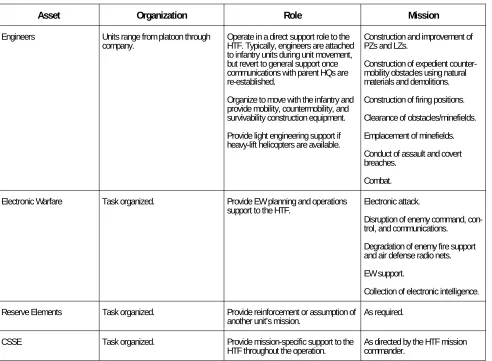
Table 2-1. Task Organization of Helicopterborne Operations.
Asset Organization Role Mission
Infantry Units typically form nucleus of HTF.
Units range from reinforced com-pany through reinforced regiment.
Units must prepare to assume heli-copterborne missions.
Operate under the control of the HUC in
direct support role to the HTF. As directed by the HTF mission commander.
Assault Support Helicopters One or more reinforced helicopter
squadrons support the HTF. Operate under the control of the AMC in a direct support role to the HTF. Combat assault transport providing tactical mobility for troops, equip-ment, and weapon systems by internal and external load.
Aerial resupply by internal and external load.
Recovery and evacuation of equip-ment.
Casualty evacuation or other air evacuation.
Dedicated or hasty tactical recovery of aircraft and personnel.
Attack Helicopters Task organized. Operate under the control of the AMC in
a direct support role to the HTF. Fire support against point targets and/or antiarmor operations (e.g., air interdiction, close air support).
Armed escort for assault support operations.
SEAD artillery and other weapons en route to and during insertions and/or extractions.
Observation of the LZ and objective areas to neutralize enemy resis-tance and to block enemy attempts to reinforce the objective area.
Escort for tactical recovery of air-craft and personnel (TRAP) forces and/or security for downed aircraft.
Armed and visual reconnaissance.
Utility Helicopters Task organized. Operate under the control of the AMC in
a direct support role to the HTF. Enhance command, control, and communications capability for the HTF.
Fire support against point targets (close air support).
Armed escort for assault support operations.
Observation of the LZ and objective areas to neutralize enemy resis-tance and to block enemy attempts to reinforce the objective area.
Rescue escort for TRAP and secu-rity for downed aircraft.
Armed and visual reconnaissance.
Fire support coordination and termi-nal control for supporting arms (FAC[A]).
Unmanned Aerial Vehicles Task organized. Operate under the control of the AMC in
a direct support role to the HTF. Reconnaissance of PZs, flight routes, LZs, and objectives.
Forward observation (or all around) of ground forces to provide limited early warning.
Artillery Fire Support Normally, an artillery battalion pro-vides support; however, artillery batteries may be required.
Operate under the control of the mis-sion commander in a direct support or attached role to the HTF.
Provide rapid response capability to prepared LZs and objectives.
Provide suppression of enemy artillery and air defense fires.
Disruption of threat artillery/indirect fires.
SEAD along flight routes and in the vicinity of LZs.
LZ preparation.
Screening fires.
Deception fires.
Artillery raids/aerial repositioning.
Delivery of family of scatterable mines.
Objective preparation and/or suppression.
Air Defense Task-organized low altitude air
defense (LAAD) assets. Operate under the control of the mis-sion commander in coordination with the AMC in a direct support or attached role to the HTF.
Equipped with light, air-transportable, short-range, man-portable air defense systems in order to fly with the lead assault elements and provide protec-tion in the objective area.
Air defense of high value locations including PZ, LZ, objective areas, helicopter FARPs, and holding sites.
Direct fires for ground defense. Table 2-1. Task Organization of Helicopterborne Operations.
Engineers Units range from platoon through
company. Operate in a direct support role to the HTF. Typically, engineers are attached to infantry units during unit movement, but revert to general support once communications with parent HQs are re-established.
Organize to move with the infantry and provide mobility, countermobility, and survivability construction equipment.
Provide light engineering support if heavy-lift helicopters are available.
Construction and improvement of PZs and LZs.
Construction of expedient counter-mobility obstacles using natural materials and demolitions.
Construction of firing positions.
Clearance of obstacles/minefields.
Emplacement of minefields.
Conduct of assault and covert breaches.
Combat.
Electronic Warfare Task organized. Provide EW planning and operations
support to the HTF. Electronic attack.
Disruption of enemy command, con-trol, and communications.
Degradation of enemy fire support and air defense radio nets.
EW support.
Collection of electronic intelligence.
Reserve Elements Task organized. Provide reinforcement or assumption of
another unit’s mission. As required.
CSSE Task organized. Provide mission-specific support to the
[image:19.612.70.562.104.465.2]HTF throughout the operation. As directed by the HTF mission commander. Table 2-1. Task Organization of Helicopterborne Operations.
C
OMMAND
AND
C
ONTROL
Command and control is the process of directing and controlling the activities of a military force in order to obtain an objective. Since the bat-tlespace over which the helicopterborne force operates may extend beyond the typical bat-tlespace of a company- through regiment-sized force, operational command and control must be given special considerations.
A helicopterborne C2 system must communicate orders, coordinate support, and provide direction to the helicopterborne force in spite of great dis-tances, enemy interference, and the potential loss of key facilities and individuals. Above all, this system must function quickly and effectively, thus allowing the helicopterborne force to receive and process information and to make decisions faster than the enemy. An effective helicopter-borne C2 system includes the procedures, facili-ties, equipment, and personnel required to gather information, make plans, communicate changes, and control all ground and air elements in pursuit of the objective.
Planning
The MAGTF commander addresses C2 require-ments and establishes an effective C2 system early in the planning phase. An effective helicop-terborne C2 system allows the MAGTF com-mander to direct diverse, widely dispersed air and ground elements between the initial PZ and the final objective. Since helicopterborne operations are subject to degraded communications due to the extended distance from which they operate, the MAGTF commander must develop a C2 plan and system that allow execution of the mission despite degraded radio communications. The key
to successful helicopterborne command and con-trol lies in effective task organization, precise planning, decentralized execution, and the use of helicopterborne radio nets. See chapter 4 for detailed planning information.
Effective Task Organization
All assets must be tailored into discrete, task-organized elements, each with two-way radio communications, unity of command, clearly defined missions and objectives, and provisions for maintaining unit integrity throughout the operation. An effective task organization, with each element having a clearly defined mission, allows the HTF the flexibility to decentralize exe-cution and ensures mission success despite degraded communications, the fog of battle, or unexpected enemy reaction.
Precise Planning
Helicopterborne operations must be precisely planned and well briefed before execution so that each subordinate leader knows exactly what is expected, knows the commander’s intent, and knows that the mission can be executed despite the loss of radio communications. Contingencies or alternatives must be built into each plan to allow for continuation of the mission in a fluid operational environment.
An example of an event driven action is the inser-tion of one company into the alternate LZ if the lead company makes enemy contact on the pri-mary LZ. If previously planned, this event occurs as expected and without the need for lengthy radio communications.
Decentralized Execution
Although it is centrally planned, the execution of a helicopterborne operation is decentralized. Sub-ordinate commanders are given the maximum possible freedom of action (consistent with safety and mission accomplishment considerations) to ensure mission accomplishment.
Helicopterborne Radio Nets
Radio nets that facilitate ground-to-ground, air-to-air, and ground-to-air communications are established to provide for the timely flow of information and redundancy in capability. This helps reduce, if not eliminate, the loss or degrada-tion of communicadegrada-tions.
Airborne Command and Control
The ability to place command and control in the air allows the mission commander to personally influence the operation, communicate with subor-dinates, and arrive at a timely decision. The mis-sion commander and his staff are positioned where they can best support the mission and, sometimes, this may be airborne in a C2 plat-form with the AMC or in an assault support heli-copter with the AFL. In a large heliheli-copterborne operation with multiple LZs, subordinate com-manders may also require C2 helicopters to con-trol and coordinate their units.
Typically, the mission commander commands airborne only during air movement and the initial stages of the landing. When a major portion of
the assault elements have landed, the mission commander displaces to a forward command post on the ground. The mission commander should avoid routinely controlling ground operations from the air. This can lead to over supervision of subordinate units and can sometimes give an inaccurate picture of the true tactical situation. Appendix B summarizes the essential items included in the planning phase of helicopter-borne operations.
Mission Commander
The MAGTF commander allocates assets, defines both authority and responsibility by designating command and support relationships, and desig-nates the time that the HTF is established. The MAGTF commander may be the mission com-mander depending on the scope of the helicopter-borne operation or may designate a mission commander. The MAGTF commander desig-nates a mission commander as follows:
z If a regiment HTF is designated, the regimental
commander is the mission commander.
z If a battalion HTF is designated, the battalion
commander is the mission commander.
z If a company HTF is designated, the battalion
commander is the mission commander.
The mission commander exercises command via the established command and support relation-ships, is responsible for the planning and execu-tion of all aspects of the assigned mission, and determines when the HTF is disbanded.
which an HTF might be employed. The role of the mission commander is to ensure a unity of command throughout the operation.
Air Mission Commander
The commander of the aviation unit tasked to support the helicopterborne operation designates the AMC. The AMC is the Marine aviator desig-nated by the commander of the aviation unit tasked to support a helicopterborne operation. Depending on the size and scope of the MAGTF, he may also be the ACE commander. Unless the mission commander is the MAGTF commander, there will not be a command relationship between the mission commander and the AMC. In some cases, the mission commander exercises tactical control of assigned aviation assets; that is, he may direct and control the movements or maneu-vers necessary to accomplish missions or tasks assigned. During the planning phase, the AMC is co-equal to the HUC. During execution, specific authority is delegated from the mission com-mander to the AMC. The AMC typically works in direct support of the mission commander and answers directly to the mission commander’s requests for assistance and support. The sup-ported-supporting relationships and the means by which they are executed are critical to mission success; therefore, the AMC must have a detailed understanding of the command and support rela-tionships with key subordinates (e.g., AFL, EFL). The AMC is responsible for the planning and execution of all aviation functions relative to the assigned helicopterborne mission; therefore he must be an experienced aviator. It is the AMC’s responsibility to establish liaison with the mission commander and HUC (the commander responsi-ble for the ground tactical plan) in order to con-duct concurrent and parallel planning. The AMC shall assume the duties of the assault support coordinator (airborne) (ASC[A]) of a mission if no ASC(A) is assigned.
Helicopterborne Unit Commander
The HUC is a ground officer who has been desig-nated as the commander of the helicopterborne force:
z For a regiment HTF, the HUC is either the
main effort battalion commander or any battal-ion commander as otherwise stipulated.
z For a battalion HTF, the HUC is either the
commanding officer of the main effort com-pany or any comcom-pany commander as other-wise stipulated.
z For a company HTF, the company commander
is the HUC.
As such, the HUC is charged with executing and accomplishing the ground tactical plan and with coordinating aviation and the other support required to plan and execute the helicopterborne mission. The HUC’s unit composes the helicopter landing force. Normally, there is only one HUC commanding a single helicopterborne unit although there may be multiple lifts and land-ings. As in any operation, the HUC must move in order to see the battlefield and where he can con-trol the operation. Depending on the situation, the HUC can be airborne during the movement and insertion phases. At other times, the HUC fights the battle from a tactical command post deployed well forward. The HUC is subordinate to the mis-sion commander and co-equal to the AMC dur-ing the planndur-ing phase. Durdur-ing execution, specific authority is delegated from the mission commander to the HUC.
Assault Flight Leader
and is co-equal to the EFL during the planning phase. During execution, specific authority is del-egated from the AMC to the AFL. (See app. C for a checklist to assist with planning.)
Escort Flight Leader
The EFL is an experienced aviator in command of the escort flight. The EFL reports to the AMC and assists in the planning of LZ preparation, fire support planning, threat mitigation, and all other facets of the helicopterborne mission that directly involve attack aircraft. The EFL is subordinate to the AMC and is co-equal to the AFL during the planning phase. During execution, specific authority is delegated from the AMC to the EFL.
Assault Support Coordinator (Airborne)
The ASC(A), an experienced aviator operating from an aircraft, is delegated the authority to per-form specific coordination and control functions of helicopter operations and to provide situational awareness to the helicopterborne force during a specific evolution. Typically, the ASC(A) pro-vides information concerning—
z Weather along the approach and retirement
routes and in the LZs.
z Observed enemy operations that may affect the
HTF mission.
z Changes to helicopter routes. z Changes in the friendly situation.
z Employment of supporting arms, to include
tactical air coordinator (airborne) (TAC[A]) activities.
The ASC(A) may directly support a mission com-mander or be employed as an extension of the direct air support center (DASC) or helicopter direction center to coordinate assault support activities that do not warrant the assignment of a
mission commander. If employed as an extension of the DASC/helicopter direction center, these agencies assign specific functions to the ASC(A) (e.g., initial assaults, subsequent assaults).
The ASC(A) is also responsible for coordinating the activities of all helicopters in his assigned area. If employed in conjunction with the TAC(A) or FAC(A), and no mission commander is assigned, the relationship with the ASC(A) is established by the tactical air commander or his designated representative. When an ASC(A) has not been designated, the AMC discharges the duties of the ASC(A) within the limits of his authority. To facilitate timely and coordinated decisions affecting helicopterborne assaults, the ASC(A) and a representative of the HUC should be assigned to the same aircraft if feasible.
Tactical Air Coordinator (Airborne)
The TAC(A) is an extension of the DASC and coordinates with the ground commander’s tacti-cal air control party (TACP); subordinate FAC(A); and the mortars, artillery, and naval gunfire shore fire control parties. Normally, the TAC(A) is the senior coordinator having the authority over all aircraft operation within his assigned area.
Forward Air Controller (Airborne)
FAC(A) performs the following tasks within his assigned area of responsibility:
z Detects enemy targets for suppression,
neutral-ization, and destruction.
z Controls CAS missions.
z Performs strike coordination and armed
recon-naissance when directed.
z Controls LZ preparations. z Marks targets and LZs.
z Controls mortar, artillery, and naval gunfire
missions when required.
z Conducts visual reconnaissance.
z Reports intelligence information to the
appro-priate ground or air control agency.
Initial Terminal Guidance Teams
Initial terminal guidance (ITG) teams from the force reconnaissance company or reconnaissance battalion, Marine division, have the inherent capability to provide terminal guidance for the initial helicopter waves in the LZs. However, all ground units must be trained, equipped, and capa-ble of performing ITG for small helicopter land-ings. ITG teams are comprised of personnel who are inserted into LZs in advance of the landing zone control team, and they may be the first ele-ments to make contact with the enemy. Therefore, they must promptly report any enemy activity that may influence the landing. ITG teams execute prelanding reconnaissance tasks and establish and operate signal devices that guide the initial heli-copter waves from the initial point to the LZ. The use of ITG teams may increase the difficulty or even prevent the use of LZ preparation fires due to the presence of friendly troops in or around the LZ. Duties of the team may include—
z Determining obstructions in the LZs,
includ-ing radiological hazards.
z Giving advance notice of enemy positions. z Selecting PZs/LZs.
z Marking LZs for day and night. z Recommending use of alternate LZs.
z Controlling supporting arms.
z Recommending actions to be taken by
follow-ing waves.
z Organizing an area around the zone to stage
troops, equipment, or supplies to be picked up or moved upon landing.
z Selecting an initial point near the LZ.
z Establishing communications with
approach-ing flight.
z Giving an LZ brief (see app. D) to the flight
leader.
Helicopter Support Team
The helicopter support team (HST) is a task orga-nization whose composition is formed and equipped for employment in PZs and LZs. These teams facilitate the pickup, movement, and land-ing of helicopterborne troops, equipment and supplies, and the evacuation of selected casualties and prisoners of war (POWs). The team usually includes a headquarters element, a helicopter control element, and an LZ platoon. The LZ pla-toon provides supply and engineer support func-tions. The helicopter control element consists of a landing zone control team provided by the ACE commander when necessary and may include per-sonnel to provide refueling and emergency main-tenance. The landing zone control team may be task-organized from the Marine air traffic con-trol detachment when the size or scope of the operation warrants and the MAGTF commander determines it is necessary. The Marine air traffic control detachment tasks may include—
z Installing and operating air traffic control and
navigational systems required for the control of aircraft at expeditionary airfields and remote landing sites.
z Providing air traffic control services that
facili-tate the safe, orderly, expeditious flow of air-craft within designated terminal/landing areas.
z Maintaining the capability to deploy
Pickup Zone Control Officer
Typically, the HUC designates a pickup zone control officer (PZCO) (either a FAC or air officer) from the supported unit of each PZ. The PZCO organizes, controls, and coordinates opera-tions in the PZ and pushes elements out of the PZ. He operates on a designated tactical net and is prepared to assist in executing needed changes. The PZCO is the key individual during night operations or when multiple subordinate elements are being lifted from the same PZ.
Subordinate Unit Commanders
Subordinate unit commanders are attached to the HUC and normally function as they would in any other infantry task force. Each subordinate unit commander must be prepared to receive other elements for movement.
Command Post
The command post provides command and con-trol for the execution of helicopterborne opera-tions. It must be mobile and well forward. It is normally helicopter lifted into the objective area soon after the initial echelon. A C2 helicopter may serve as a command post if enemy air defense systems allow.
Combat Operations Center
The combat operations center is normally estab-lished in the command post. It provides planning
for future operations and ongoing operations as directed by the commanding officer. Functions of the combat operations center include—
z Monitoring current operations and
maintain-ing current enemy and friendly situations.
z Gathering and disseminating intelligence. z Keeping higher and adjacent organizations
informed of the friendly situation.
z Submitting recurring reports.
z Providing liaison to higher and adjacent
orga-nizations.
z Establishing a fire support coordination center
(FSCC).
z Coordinating combat support, aviation,
engi-neer, and air defense.
z Advising the commander on the use of combat
support for current and future operations.
z Monitoring airspace and coordinating
support-ing fires.
z Continuing planning for future operations and
overseeing the preparation of all contingency plans.
z Issuing combat/warning orders as necessary.
Rear Area Operations
P
LANNING
During the planning phase of the helicopterborne operation, it is essential that coordination among the mission commander, HUC, and AMC begin as soon as possible. While the HUC and AMC must plan the operation together, the mission commander’s and HUC’s ground concept of operations drives all planning for the helicopter-borne operation. The battalion is the lowest level that has sufficient personnel to plan, coordinate, and control a helicopterborne operation. When company-sized operations are conducted, the bulk of the planning and air-ground asset coordi-nation takes place at the battalion headquarters.
Helicopterborne operations require the develop-ment of five basic plans: ground tactical plan, landing plan, air movement plan, loading plan, and staging plan. The HUC directs the formula-tion of the ground tactical plan, the landing plan, and the loading plan. The AFL is principally
responsible for formulating the air movement plan. During planning of a helicopterborne opera-tion, one primary consideration for the HUC and AMC is the enemy air defense situation. Other planning considerations include, but are not lim-ited to, sortie rates and aircraft types, availabil-ity, and capabilities.
To achieve the necessary, rapid buildup of com-bat power, a helicopterborne operation requires the massing of helicopters. As a planning figure, a minimum of one third of the ground unit must be landed in the zone in the first wave, but should always be based on a detailed assessment of the threat within the objective area.
The basis for planning the timing of the opera-tion is L-hour-the time when the first assault heli-copter in the first wave touches down in the LZ.
SECTION I. ESTIMATION PROCESS
A vital portion of planning is the estimation pro-cess. The following are actions that are impor-tant parts of the estimation process. Some of these actions are required to initiate the estima-tion process, some acestima-tions are initiated to keep the estimation process in a continual, progressive state based on the evolution of the operation, and some actions are options for the commander to implement based on the battle situation.
z The helicopterborne force uses command and
staff actions and troop leading procedures common to other combat operations to execute planning.
z Planning of helicopterborne operations is as
detailed as time permits, and, if time allows,
complete written orders and plans are devel-oped. However, if a tactical opportunity does not allow detailed planning, then rapid plan-ning is used and the planplan-ning steps are com-pressed or conducted concurrently and detailed written plans and orders are replaced with standing operating procedures (SOPs) or les-sons learned. See appendix E for a sample bat-talion SOP.
z Information flow is critical to the successful
z All tactical estimates used in troop leading
pro-cedures employ the factors of mission, enemy, terrain and weather, troops and support avail-able–time available (METT-T). Analysis of METT-T provides data that is used during the estimation process to reach a decision.
Analysis of METT-T
The analysis of METT-T is an important part of the estimation process because it formulates the design of the commander’s plan of attack and contributes significantly to the estimate of the tactical situation for helicopterborne operations. Appendix F provides a guide for detailed, pre-cise reverse planning.
Mission
Mission analysis is conducted early in the estima-tion process. The mission includes the critical tasks that must be accomplished. The tasks are either specified tasks stated by the order or implied tasks determined by the commander. Mission analysis determines not only what must be accomplished, but also the intent of the com-mander ordering the mission. It also states the restraints and constraints placed on the mission by the higher headquarters. This analysis pro-vides the basis for task organization and must be conducted to determine if it is more advantageous to strike with a helicopterborne force or attack with a ground force. To analyze the mission, the following questions must be asked:
z Does the mission require the rapid massing or
shifting of combat power over an extended dis-tance?
z Does the mission require surprise?
z Does the mission require the flexibility,
mobil-ity, and speed afforded by helicopters?
z Since helicopterborne operations are inherently
a high risk operation that can yield a high pay-off, does the payoff warrant the risk?
z What is the level of training? See appendix G.
Enemy
The evaluation of the enemy defines the enemy’s capabilities and most probable courses of action. The following factors about the enemy must be considered:
z Identification: Who is he?
z Location: Where is he? Where is he going? z Disposition: How is he organized? What are
his formations?
z Strength: What are his strengths versus
friendly forces strengths?
z Morale: What are his esprit, experience, state
of training, and regular or reserve forces?
z Capabilities: What are the obstacles, indirect
fires, direct fires, observation, NBC, air, reserve forces, and EW?
z Composition: What is his armor, infantry
(motorized or light), artillery, and combat sup-port?
z Probable courses of action: What is his likely
mission or objective? How will he probably achieve it? (Think about the most probable course of action and most dangerous course of action.)
When planning a helicopterborne operation, the following factors about the enemy must be con-sidered:
z Enemy air defense weapons and capabilities. z Enemy mobility; particularly the ability to
influ-ence potential flight routes and helicopter LZs.
z Enemy NBC capability; particularly the ability
to react to the insertion.
z Capability to interdict or interrupt helicopter
movements with enemy helicopters or fixed-wing aircraft.
z Enemy EW capability.
Terrain and Weather
these factors must be analyzed in relation to their effects on the force during movement to the PZ, loading, air movement, LZ insertion, movement to the objective, and subsequent actions.
Observation and Fields of Fire
The following considerations relate to both enemy and friendly forces:
z Enemy visual observation and/or electronic
surveillance of PZs, flight routes, and LZs.
z Enhanced friendly observation provided by
aerial and ground reconnaissance assets.
z Ease of navigation along flight routes
particu-larly for night or adverse weather operations.
z Ability to influence the PZs, LZs, and flight
routes with indirect and direct fire.
Cover and Concealment
The following considerations relate to the cover and concealment of friendly forces:
z Terrain masking for low level flight routes and
insertions.
z Covered battle positions for attack helicopters. z PZs and LZs that offer ground forces cover and
concealment.
Obstacles
While helicopters can bypass most obstacles, PZs and LZs must be free of natural and/or manmade obstacles that could preclude a helicopter land-ing or affect the ground scheme of maneuver.
Key Terrain
The possession of key terrain provides a decided advantage to a force and, in many instances, is mission-dependent. However, in helicopterborne operations, key terrain is not limited to that which influences the ground scheme of maneuver. It must also be analyzed in terms of—
z PZs and LZs. z Flight routes.
z Attack helicopter battle positions.
z Occupation of enemy positions, especially
enemy air defense assets.
z Potential FARPs.
Avenues of Approach
Air and ground avenues of approach are consid-ered in both offensive and defensive operations from both friendly and enemy viewpoints. A good avenue of approach for a helicopterborne force offers–
z A reasonable degree of mobility and few if any
natural or manmade obstacles to the aircraft.
z Little or no canalization.
z Terrain masking that decreases effectiveness of
enemy air defense weapons.
z Cover. z Concealment.
z Good lines of communication and logistics. z Ease of link up with other forces when
appro-priate.
Weather
Weather can greatly impact an operation. Changes in the weather may result in an interruption of helicopter support and require changes in planned operations. Considerations include–
z Fog, low clouds, heavy rain, and other factors
that limit visibility for pilots.
z Illumination and moon angle during night
vision device (NVD) operations.
z Ice, sleet, and freezing rain may cause ice
accumulation on airframes, which can become catastrophic.
z High temperatures and/or density altitudes that
degrade aircraft engine performance and lift capability.
z Darkness, normally an advantage to
well-trained pilots and ground forces.
z High winds (large gust spreads).
z Weather conditions that create hazards on PZs
Troops and Support Available
Troops and support available encompasses not only troops to be lifted into the objective LZ but also all combat power to include combat support and CSS available to the helicopterborne force. The helicopterborne force should have enough combat power relative to the threat to seize ini-tial objectives and protect the LZs until follow-on echelons arrive in the objective area, and helicop-ter lift capability is the single most important variable in determining how combat power can be introduced into the objective area.
Aircrew endurance must also be considered. For planning purposes, the AFL usually considers 8 hours of flight time within a 24-hour period for dual-piloted aircraft to be a safe limit for air-crews. Day and night operations may require dif-ferent day endurance considerations for the crew. If those limits are exceeded during a single period, then degraded aircrew performance can be expected.
Time Available
The time available to prepare for a helicopter-borne operation is extremely important. It is often the scarcest resource and is vital to planning. The commander must adjust the planning pro-cess to make optimum use of this perishable resource. When time is critical, the commander’s intuition, judgment, and experience are invalu-able in guiding his staff and subordinate com-manders. This planning must be coordinated between the GCE and the ACE. While the ACE is preparing its aircrews, servicing its aircraft, and planning its flights, the GCE is also prepar-ing for its mission. Once the GCE’s and ACE’s concurrent planning is completed, these elements must be brought together for rehearsals, espe-cially if an unusual mission is being planned. The following must be considered:
z Allocating the time required to prepare, plan,
and rehearse. Helicopterborne planning must
be centralized and precise. It normally requires more time than other operations.
z Additional planning time may be required for
night operations and those involving multiple PZs and/or multiple LZs.
z The HUC must allow adequate time to ensure
that all subordinates and support elements are thoroughly briefed. Briefing time can be signifi-cantly reduced with SOPs and previous training.
Ground Commander’s
View of the Plan of Attack
From the ground commander’s point of view, the plan of attack for a helicopterborne operation includes the scheme of maneuver, plan for sup-porting fires, loading plan, air movement, and the landing plan, which are developed concurrently and are closely integrated.
Scheme of Maneuver
The scheme of maneuver is the tactical plan exe-cuted by a force in order to accomplish its assigned mission. It includes objectives, LZs, forms of maneuver to be employed, distribution of forces, and necessary control measures. The commander must take into account the time required for the helicopterborne force to consoli-date at the LZ and move to its objective. The ability to secure the LZ and move to the objective must be compared to the enemy’s ability to rein-force the threatened area.
Plan for Supporting Fires
and fires in support of the ground operation. The plan for supporting fires should also include plans for employment of air defense weapons.
Loading Plan
The loading plan is designed to establish, orga-nize, and control activities in the PZ, plan for the movement of troops and equipment to the PZ, and establish the priority of loading units. For battalions or larger, a written plan may be required. However, the requirement for written loading instructions can be minimized by advanced planning and detailed unit SOPs. Regardless of its simplicity, the loading plan must receive command attention during plan-ning. The ultimate success of the operation is directly related to a properly developed loading plan and subsequent control of unit loading.
Air Movement Plan
The air movement plan provides for the control and protection of the helicopterborne force during the air movement. The air movement plan is pri-marily the responsibility of the AMC, although the ground commander also contributes to its development. The air movement plan includes the selection of approach and retirement lanes, control points, and en route SEAD and the provisions for escort by attack helicopter or other aviation.
Landing Plan
The landing plan consists of the commander’s guidance concerning the desired time, place, and sequence of arrival of units. The landing plan must support the ground tactical plan.
SECTION II. DETAILED PLANNING
The HUC and AMC receive a mission from the mission commander. If possible, the HUC and AMC should receive the mission together in order to begin initial coordination and to facilitate concurrent/parallel, detailed planning. The proce-dures for detailed planning are as follows:
z The HUC receives a mission from the mission
commander.
z The HUC and AMC pass mission information
to their staffs. They may do this in the form of a warning order to allow their staff and subor-dinates to begin general planning.
z It is the mission commander’s responsibility to
make initial liaison with the HUC and AMC. During his initial liaison, the mission com-mander gives the HUC and his staff planning data relative to the numbers and types of heli-copters available for the lift.
During detailed planning, there are five basic p l a n s t h a t c o m p r i s e t h e r e v e r s e p l a n n i n g sequence for each helicopterborne operation. The five basic plans are the ground tactical plan,
landing plan, air movement plan, loading plan, and staging plan. These plans should not be developed independently. They are coordinated and developed concurrently by the staff of the designated helicopterborne force.
Ground Tactical Plan
must capitalize on surprise, speed, and mobility in order to achieve mission success.
Mission
The most obvious portion of the helicopterborne mission is the requirement to conduct a helicopter movement. The following concerns should be examined:
z Missions of all task force elements and
meth-ods of employment.
z Purpose of the helicopter movement. z Reason for using helicopters.
z Task organization of ground, air, and combat
support units.
z Number of Marines to be lifted. z Total weight to be lifted. z Internal and external loading.
z Approximate distance of the air movement.
Concept of Operations
The ground concept of operations is formulated in five parts:
z Ground movement to the PZ.
z Securing and organizing the PZ (include the
task organization of the force and embarkation plan for force aboard mission aircraft).
z Actions at and securing of the LZ.
z Ground movement from the LZ to the
objec-tive or actions on the objecobjec-tive if the force is landed directly on the objective.
z Operations subsequent to securing the objective.
Landing Plan
The landing plan must support the ground tacti-cal plan. The plan sequences troops and equip-ment into the area of operations so that units arrive at locations and times prepared to execute the ground tactical plan. Appendix F provides
more information. Considerations in developing the landing plan include—
z Availability, location, size, and enemy
proxim-ity to potential LZs are overriding factors.
z The helicopterborne force is most vulnerable
during landing.
z Troops and equipment must land with tactical
integrity.
z To avoid disorientation, troops must be
informed if changes occur in the landing direc-tions that were given during their initial brief.
z Initially, there may be no other friendly units in
the area; therefore, the helicopterborne force must land prepared to fight in any direction.
z The landing plan should offer flexibility so that
a variety of options are available in develop-ing a scheme of maneuver.
z Supporting fires (i.e., artillery, naval surface
fire support, CAS) must be planned in and around each objective area LZ.
z Although the objective may be beyond the
range of supporting artillery fire, artillery or mortars may be brought into the LZ early to provide fire support for subsequent lifts on the objective.
z The plan includes provisions for TRAP,
imme-diate re-embarkation, emergency extract, resupply, and casualty evacuation by air.
Selection of Landing Zones
LZs are selected during planning between the HUC and the AFL in coordination with the intel-ligence officer (S-2). The selected LZs are approved by the MAGTF commander or mission commander. Regardless of whether the site is a LZ or PZ—
z The ground chosen must support the safe
land-ing of helicopters.
z The selected site should be identifiable from
z The enemy situation must be such that the site
can be secured without undue interference from enemy fires.
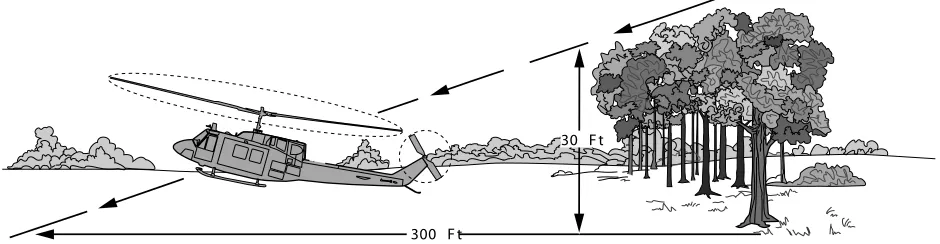
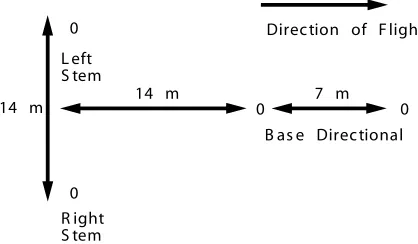
Each helicopter requires a different size LZ/PZ, and each area needs to be on level ground. Lighting conditions also affect the size of the LZ for each helicopter: daylight zones should be 100 feet larger than the diameter of aircraft rotor blades and night zones should be 150 feet larger than the diameter of aircraft rotor blades. Table 4-1 provides the recommend landing zone diame-ters for different types of helicopdiame-ters.
Ideally, each LZ/PZ is as level as possible, and free of major obstacles that might obstruct land-ings or takeoffs (e.g., tall trees, telephone/power lines). Plans must be made to mark or identify obstacles than cannot be removed in order to aid the aircrew’s ability to safely land the aircraft. The ground itself must be firm enough to prevent bogging down, otherwise air