Multisensory Environments:
The use of interactive technology in effective
pedagogy with learners who have severe and
complex forms of special educational needs.
Olga Lesley Miller
Acknowledgements
Research Abstract
The aims of this research are threefold. They are: to examine the use of interactive technology by teachers working with a low incidence population within the defined context of multisensory environments; to identify case studies illustrating good practice in the use of interactive technology; to develop guidance materials for further
dissemination. Two approaches are used in the collection of research data for this study: focus group interviews and illustrative multi-case studies (filmed using digital
technology).
This research highlights the use of interactive technology amongst a very low incidence population by teachers who are often practitioners working in isolation. The rationale for the choice of methodology therefore rests on the need to canvass views nationally and ethically within a relatively short and cost-effective timeframe. The use of digitally filmed illustrative case studies provides the additional advantage of dissemination through the Web.
Outcomes:
Table of Contents
Page
Acknowledgement
Research Abstract 3
Chapter 1: Research Aims 6
Chapter 2: Key Research Questions 8
Chapter 3: Multisensory Environments 11
Chapter 4: Multisensory Environments: Definitions 16
Chapter 5: Context of this Research 20
Chapter 6: The Client Group 30
Table 1: n = 108 32
Chapter 7: Multisensory Environments: The Literature 34
Chapter 8: Towards a framework: The impact of Human Psychology 37
Chapter 9: Human Psychology and Sensory Stimulation 41
Chapter 10: Research Methodology . 45
Figure 1: Approaches used in the collection and analysis of data 46
Figure 2: Sources of evidence: 56
Chapter 11: Ethical Issues 57
Chapter 12: Conduct of the Study 59
Figure 3: List of codes 63
Figure 4: Framework of effectivness 65
Chapter 13: Research Findings 66
Chapter 14: Lesson Observations 105
Chapter 15: Discussion of Findings 120 Chapter 16: The Development of Guidelines on Good Practice 138
Figure 6: Initial Structure of the Interactive CD 142
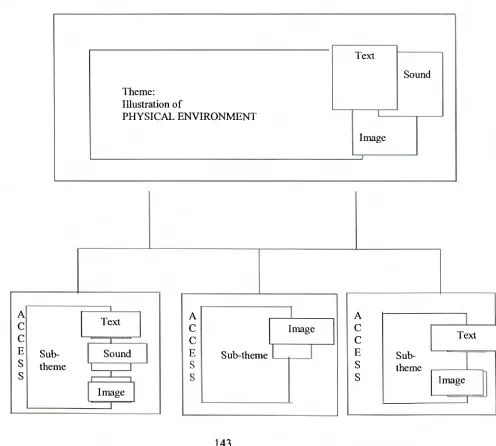
Figure 7: Organisation of guidance content . 143
Chapter 17: Summary and Conclusion 144
References 150
Appendix 1: Focus Group Information 156
Appendix 2: Examples of Interview Transcripts 157
Appendix 3: Extracts from Coded Interview Material 158
Appendix 4: Collated Interview Material 159
Chapter 1
Research Aims
Research Aims
The aims of this research are:
• To examine of the use of interactive technology by teachers working with a low incidence population within the defined context of multisensory environments.
• To identify Case studies illustrating good practice in the use of interactive technology.
• To develop guidance materials for further dissemination.
Multisensory Environments
Chapter 2
Key Research Questions
Over the last decade or so much fundraising has been targeted towards the purchase of multisensory environments. But the following questions arise which the research hopes to address:
• Who uses them and (more importantly) why?
• Do they benefit the learner or do they act as reassurance for staff that something productive can be done for their most challenging students?
• Is their use supported by a sound pedagogy?
• What is included or excluded from a multisensory environment?
There was also the need to define concepts of technology and interactivity. The three aspects of technology identified by Bozic and Murdoch (1996) in their introduction to 'Learning Through Interaction' provided a helpful guide to concepts of technology:
1. Working with microcomputers
Following the Teacher Training Agency (TTA) Framework for ICT in its Initial Teacher Training National Curriculum (1999) and the importance of interaction within the context of multisensory environments specific consideration is given in this research to:
The interactive way in which information is stored, processed and presented to provide rapid and dynamic feedback ("interactivity") which itself has further functions:
1. exploration of models and simulations 2. communication
3. presenting information
As a starting point it is hypothesised that effective pedagogy and ICT might be conceptualised as:
• An in-depth knowledge of the use of interactive technology within specialist teaching and learning environments.
• The creation of innovative solutions to pupils' complex needs.
• The development of whole school policies which guide teachers in the use of multisensory environments across the curriculum and in meeting what are considered the priority needs of individual learners.
However a further overarching question arises which needs consideration:
Chapter 3
Multisensory Environments
Multisensory environments are regarded as an important resource in the education of children and young people with profound and complex needs. Teachers have highlighted an enormous number of uses of such environments. These include:
• Simulations and dramatic reconstructions carefully planned and directed by staff in order to create access for mixed groups of pupils to various areas of the curriculum such as science, history or geography;
• Opportunities for pupil-led exploration, investigation, problem-solving and discovery; • A means of promoting pupil self-awareness and empowerment;
• A context for the development of sensory awareness, an understanding of cause and effect, and skills in environmental control;
• A resource used by professionals in support of assessment and pupil profiling; • Individual therapy and relaxation.
Specific claims concerning the beneficial effects of multisensory environments have also been made (McConnachie, Carlson, Kemp and Smith, 1994). Some of what might be considered key claims are listed below:
• The development of hearing, sight, taste, smell and touch • Hand and eye-cordination
• The development of language
• Relief of tension and of hyperactivity • The promotion of a receptive mental state • The reduction of challenging behaviours • Increased motivation
Bozic highlights the following differences between these repertoires:
The child-led repertoire shares many of the characteristics with the adult-orientated use of multi-sensory rooms. The room is presented as a comfortable, relaxing place in which children are able to make their own decisions about the activities they become involved in.
School staff also used the developmental repertoire. This repertoire was distinct from the child-led repertoire and could not readily be combined with the language of the child, decision-making and relaxation. Instead it focused on a developmental view of the child progressing through stages and levels... Children were sometimes seen as being in control, but of equipment rather than social activities. (p.57)
Bozic's work points to the complexities facing teachers when planning individual programmes with pupils. On the one hand there is a genuine wish to facilitate a responsive environment which encourages communication between teacher and pupils but on the other hand, without due regard to the outcome (through monitoring and evaluation), such interactions may appear as isolated instances within the child's daily experience of education.
Bozic's final sentence in particular flags up the danger of a too simplistic view of the use of equipment:
Children were sometimes seen as being in control, but of equipment rather than social activities. (p.57)
Pagliano (1997) echoes this:
The dependence on information and communication technology for all sections of the community means that it can only increase... Used inappropriately, they (technological devices) can frustrate, waste time and money, dehumanize interactions and generally be counter
-
productive. (p.149)Mount and Cavet (1995) take the argument further in relation to multisensory environments:
Chapter 4
Multisensory Environments: Definitions
Multisensory environments are many and various. Most forms of specialist provision for learners who have complex and/or sensory needs will have some form of dedicated space for multisensory stimulation. A paper produced in 1998 by Richard Byers explored some of the terms used:
• Some used a variety of terms (sensory studio; interactive light and sound room; white/light/dark rooms; visual assessment room; multi-sensory room; sensory suite, sensory area) to describe the facilities in their schools... (p.28)
Pagliano (1997) gives the following definition:
in isolation or combination, packaged for active or passive interaction, and temporarily matched to fit the perceived motivation, interests, leisure, relaxation, therapeutic and/or educational needs of the users. It can take a variety of physical, psychological and sociological forms (p.11).
Mount and Cavet (1995) offer a further defmition:
Multi-sensory environments are a collection of devices or objects which have been assembled with the aim of offering stimulating or relaxing experiences to people with very severe intellectual disabilities...(p.52)
Pagliano (1999) describes the range of equipment commonly found in such environments:
A variety of equipment is on hand to provide visual, auditory, olfactory, tactile and kinesthetic stimulation. These stimuli include a wide range of pleasant aromas, soothing music, vibrating cushions, tactile wall panels, wind chimes, wooden flying birds, beanbags, a water bed, a ball pit... (p3)
Considerations
Holt (1993) gives a useful aide memoir when considering technology:
• What exactly does this equipment do?
• What are the aims of its use?
• Are there cheaper alternatives?
• Will it suit the needs of a range of users?
• How safe is it?
• Are instructions available and are there courses in the use of the equipment?
It was also important to recognize the issues raised by Mount and Cavet (1995):
How carefully do organizations consider the need for setting up a multi-sensory
environment, and what criteria are used?
What influences the choice of equipment?
Is the installation of such an environment compatible with the integration of pupils in a school setting of the philosophies of normalization and social role valorization in adult
settings?
Could alternative everyday curriculum or community experiences be offered which
would generate similar responses or have similar appeal?
How is the effectiveness and relevance of such an environment monitored and evaluated
How are individual responses and progress recorded and developed?
Could the money spent have been allocated to other ways of improving the experiences of children and young people with learning difficulties?
Chapter 5
Context of this Research
National Context
Developments in Information and Communications Technology are opening up educational opportunities previously denied to pupils with SEN...ICT should be used to give children with special educational needs maximum access to the curriculum, and to help them reach their learning potential.
(Excellence for all children: Meeting Special Educational Needs, p.21, DfEE: October 1997)
The second strand of policy implementation relates to the publication of 'National Special Educational Needs Specialist Standards' by the Teacher Training Agency in December 1999. The production of Specialist Standards is the latest in a long line of initiatives covering the training and development of the teaching profession. These Standards continue with the emphasis on inclusion highlighted in the 1998 'Programme of Action' by aiming to 'achieve successful inclusion of pupils with SEN by securing better training for teachers working with pupils with SEN. '(p.2)
The TTA document is divided into two main components. These components cover `Core' and 'Extension' Standards. The Core Standards identified within the document are listed under five headings. There is also what is described as Extension Standards. These Extension Standards relate to more specific forms of SEN. Therefore these `National SEN Specialist Standards' are meant to have especial relevance for teachers and managers who work with learners who have severe and/or complex SEN and are considered by the TTA to identify the key skills necessary for consolidating learning and securing access to knowledge' (p.2). This emphasis on working with learners who have severe and/or complex forms of SEN distinguishes the Specialist Standards from those which the TTA produced in 1998 for Special Educational Needs Co-ordinators (SENCOs). The fourth heading of the specialist Core Standards is most germane to this research: the development of communication, literacy and numeracy skills, and ICT capability.
of the text does indicate that a more ecological approach is recognised as important for learners who are unlikely to acquire literacy or numeracy in a traditional sense. These learners may be functioning below the levels determined within the current model of the national curriculum. Indicators of effective pedagogy for this group in relation to ICT, as expoused in TTA documentation suggest that teachers should:
• know and apply the effective pedagogy relating to the teaching of literacy, numeracy, ICT and study skills, and relate these to the needs of pupils with severe and /or complex forms of SEN
• make effective use of first hand experience and contexts beyond the classroom to help pupils to understand the importance of literacy and numeracy skills and ICT capability in everyday living.
The five elements of the TTA Core Standards are:
a) strategic direction and development of SEN provision nationally and regionally; b) identification, assessment and planning;
c) effective teaching, ensuring maximum access to the curriculum:
d) development of communication, literacy and numeracy skills, and ICT capability; e) promotion of social and emotional development, positive behaviour and preparation
for adulthood
Underpinning the third element of the Core Standards (c) are a further ten sub-divisions. From discussion with TTA Officials and their Consultants it was possible to gain some insight into the development of the process which resulted in the creation of this section. A process of distillation generated both the overarching theme and its sub-divisions. This process began with an examination of documentation provided to the Special Educational Needs Training Consortium and presented in their report to the DfEE: Professional Development to Meet Special Educational Needs (1997). Distillation also continued via discussions with the TTA focus group concerned with special needs as well as feedback from consultation documents, conferences and the National Advisory Group on Special Needs (NAGSEN). Such discussions paralleled other TTA initiatives aimed at gathering illustrative case material.
opportunity for some direct comparisons between the uses of ICT in specialist and mainstream provision and made it possible to identify ways of determining how developments in the use of mainstream technology could be better harnessed in relation to pupils with profound and complex needs.
The SEN Standards are not without critics, many of whom feel that the documentation will not be easily applicable to making judgements about a teacher's performance. In an attempt to respond to this criticism the TTA have recently (March 2000) produced guidance on using and applying the SENCO Standards (this move signals the likelihood of a similar approach in relation to specialist Standards). Whilst debate continues over the application of TTA documentation in the field of SEN it seems opportune to return to the descriptors of effective pedagogy provided in their text. It is evident that the ten sub-divisions described are, in reality, interwoven and inter-dependent:
• a detailed knowledge of the school curriculum, including approaches to National Curriculum requirements, and the use of assessment criteria, to develop, adapt and evaluate teaching strategies and content within the curriculum, and know how to maximize their benefit to pupils with SEN;
• understand the implications of the revised National Curriculum statement on inclusion and the QCA curriculum guidance which sets the National Curriculum within a wider context;
• identify individual learning outcomes and develop, implement and evaluate a range of approaches, including, for example, task analysis, skills analysis and target setting, to help pupils achieve those outcomes in a variety of settings;
• explore ways of reducing barriers to learning which arise from a major physical, intellectual, emotional, social or sensory impairment, and understand how these may change in childhood and adolescence or in response to learning experiences and opportunities;
• encourage pupils to become more independent learners by sequencing and structuring learning experiences and the learning environment so pupils develop organizational, information processing and problem solving skills;
• adapt and modO, teaching and pupil resource materials to suit pupils' maturity levels and learning styles so that pupils are given every opportunity to understand concepts and ideas;
• use, manage efficiently and evaluate relevant specialized aids and resources including when appropriate, ICT, to give greater access to the curriculum and to assist in the promotion of independent living skills.
• Take account of the effects on learning and behaviour of medications, medical treatments, and therapeutic regimes, including those which necessitate periods of absence from the classroom; and, when needed, make adjustment to targets and the management of individual learning;
• Work collaboratively with specialist and non-specialist staff, to make effective use of
These descriptors are compared in this research to features of effective pedagogy and the use of ICT presented as outcomes of the TTA (1999) study:
• clear identification of how ICT will be used to meet specific objectives within subjects of the curriculum to improve pupils' attainment;
• ensuring that pupils have adequate ICT skills to achieve subject specific objectives; • a planned match of pedagogy with the identified purpose of ICT activities and
learning outcomes (e.g. by the teacher's use of ICT to demonstrate or model learning rather than for pupil use);
• matching starting points for development for particular teachers in accordance with their preferred teaching styles and approaches;
• adequate access to and intensity of use of the necessary equipment by pupils and teachers;
• effective technical back-up and support to overcome any difficulties encountered and the provision of adequate resources. (p.97)
The interactive model presented by the TTA (1999, p.14) research can thus be considered to relate to all pupils and as such is very much an inclusive model:
A key assumption of the model is that the actions and behaviours of the teacher and the learners in a particular context directly influence learning outcomes.
This model is supported by reference to other research on teacher effectiveness summarized by the TTA research team.
To summarize, the research literature suggests the effective teacher:
• informs learners of lesson objectives
• provides learners with an organizing structure
• checks for prior learning relevant to the task at the beginning of the lesson
• gives directives slowly and distinctly
• knows the current attainment levels of pupils
• uses examples, illustrations, and demonstrations to explain and clarifr • provides a summary at the end of each lesson
(P .xv)
effective pedagogy both in government guidance for specialists and outcomes in the
mainstream classroom.
Where there may be differences in teacher behaviour with regard to a population with complex needs they are likely to be related to the specific choice and combination of
teaching strategies used. For instance, specialist strategies may well need to be employed
to provide augmentative forms of communication that will facilitate interaction between
teacher and pupil and pupil and task. However, the same fundamental principles remain
in common. These are recognized in the TTA research:
Research indicates increased pupil achievement from the use of a variety in instructional materials and techniques, the frequency and variety of reinforcement used, and types of feedback given to pupils (Brophy & Good, 1986). In terms of ICT, the use of technology clearly adds to the range of approaches (e.g. using an Integrated Learning System) and to the variety possible within a particular approach Effectiveness is therefore the appropriate choice of approach to match a particular context. (p.xv)
This view of teacher effectiveness and the need for a broad range of strategies is noted
also in research, which focuses on complex needs. Porter, Miller and Pease (1997)
identified that:
Porter, Miller and Pease go on to posit a range of factors:
Chapter 6
The Client Group
The main use of multisensory environments within an educational context rests with those who work with learners who are unlikely to access the National Curriculum at chronological equivalents. Such learners may continue to operate at early developmental levels throughout their lives. It is therefore important to make clear the underpinning assumptions about the client group addressed in this study. These are that they have:
• A need for enhanced or augmentative forms of communication. • A need for enhanced or alternative input through sensory modalities.
• Access to greater environmental control by access to appropriate forms of technology.
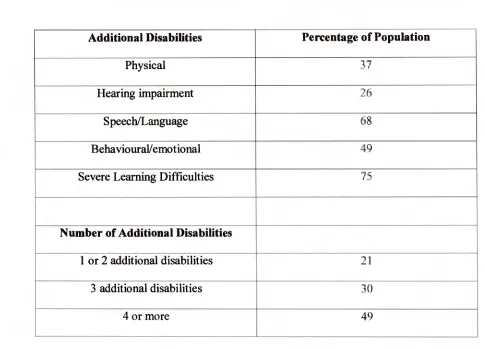
By far the largest percentage of these learners is likely to suffer some form of sensory impairment. Research conducted for the DfEE by Porter, Miller and Pease (1997) found that in a population described as deafblind the following changes had occurred:
has diminished there has been an increase in the number of children born with dual sensory impairment resulting from genetic syndromes or associated with cerebral palsy after perinatal or neonatal insult. (p.2)
Table 1: Percentage of visually impaired pupils with additional disabilities n=108
RNIB, 1996
Additional Disabilities Percentage of Population
Physical 37
Hearing impairment 26
Speech/Language 68
Behavioural/emotional 49
Severe Learning Difficulties 75
Number of Additional Disabilities
1 or 2 additional disabilities 21
3 additional disabilities 30
4 or more 49
Chapter 7
Multisensory Environments: The Literature
There is rather a complex history behind the development of multisensory environments. Part of this complexity arises from the variety of routes that culminate in what are now described as multisensory environments. Most information points to the Snoezlen leisure facilities in Holland as the primary influence on what are now described as multisensory environments but other developments in the external environment focused attention on sensory stimulation. One of the most influential of these developments was the emergence of humanistic psychology during the 1950s and 1960s:
The concern of humanistic psychologists was to do justice to people's conscious experience of themselves and their role in directing their own lives. They wanted to emphasize people's capacity for self-awareness, that they have the power to choose...Because it represented essentially a reaction to the prevailing traditions of the time, humanistic psychology was sometimes termed the 'third force'.
(Stevens, p.419, 1990)
and hearing started to permeate education as peripatetic services began to meet this new client group. Clinical methods were also being developed which allowed clinicians to assess those children with little or no verbal communication and limited mobility (Atkinson and Van Hof-Duin, 1993). There was growing awareness of delayed visual maturation amongst some children with neurological impairments. In these cases vision developed even after an initial diagnosis of blindness (Jan, 1993). Staff training improved with the introduction of specialist courses in severe learning difficulties (Miller and Porter, 1994). Parents began to play a more influential part in their child's education and home/school links were formed which emphasized partnerships between home and school. Overall expectations were raised about what should be possible and available for children with multiple disabilities.
However, some children were so profoundly disabled that the benefits of a typical classroom based school environment did not easily reach them. Physically isolated by their equipment needs and their communication difficulties these children challenged the system. Parents and professionals sought to find ways of engaging such children in a world outside their own bodies. Ware (1996) describes the need for a responsive environment in all our lives but highlights its importance for this profoundly disabled client group:
By a 'responsive environment' we mean an environment in which people get responses to their actions, get the opportunity to give responses to the actions of others, and have an opportunity to take the lead in interaction. (p.1)
`stimulation'. The introduction of a national curriculum focused attention on the
rationale behind areas of the curriculum and the methods used for monitoring and
evaluating progress. This brought into stark relief the sometimes-unclear basis for the
use of multisensory environments and the wide range of approaches to the monitoring
and evaluation of the outcomes for the young people involved. Byers (1998) identifies
three underpinning approaches to curriculum planning and the use of multisensory
environment based on:
• A specialized 'sensory curriculum';
• Access to subjects and other aspects of the whole curriculum (including a national
curriculum), which may be differentiated in order to provide a 'sensory dimension';
• And/or progress towards pupils' individual learning priorities, some of which might
be described in terms of 'sensory targets'. (p.29)
McClarty (1993) describes the addition of two multisensory rooms to school facilities and
their different purposes:
One room offers an interactive experience, which is just right for some of our busier, more enquiring children containing equipment that must be operated by touch or voice to get a reaction. The room provides simple problems and instant, enjoyable rewards.... In the other room, the White Room, the emphasis is on relaxation and passive enjoyment.... (p.12)
However, in order to put multisensory environments within an underpinning framework it
Chapter 8
Towards a framework: The Impact of Humanistic Psychology
Multisensory environments contain very similar equipment to that found in the average nightclub. Flashing lights and powerful sound systems are part of everyday disco paraphernalia and are also the everyday tools used in multisensory environments. But how did this happen and why should multisensory environments look as they do? What is the underpinning psychology or philosophy behind their use? One possible answer is that multisensory environments were not created to meet the needs of a population with profound and complex forms of special need but out of an interest in altered states of consciousness by a mainstream population. Altered states of consciousness were a key area of interest for the humanistic psychologists. It is therefore surprising that the role of humanistic psychology in the creation of multisensory environments has been much overlooked in the literature surrounding them.
generation anxious to create a better future. It brought together influences from European and eastern philosophies. The impact of postmodernism had begun to challenge perceptions of the individual and their role in society. The old order was fading into something less certain. The experiential approach favoured by humanistic psychologists matched the mood of the time. Uncertainty became a basis for personal exploration. There was more acceptance of individual difference and diversity.
Humanistic psychology drew together a wide range of professionals such as Carl Rogers a proponent of psychotherapy and the so-called 'progressive' educationalists such as A.S.Neil. What they held in common was a belief in the potential of the individual. Although much criticized by successive governments there is little doubt that 'progressive' education influenced teacher training during the 1960s. Humanistic psychology can be seen as providing a counterbalance to the earlier influence of models of teaching and learning based on the natural sciences (Shipman, 1985). A recognition of diversity combined with a growing belief in human potential led naturally to a re-examination of the treatment of those previously marginalised by the education system: ...Meanwhile from around 1950, in a field previously dependent on medical knowledge and interest, psychologists appointed to mental deficiency hospitals ... began to publish findings which demonstrated that the mentally handicapped could learn under appropriate conditions... (Gulliford, 1988 p.37).
disabilities have become even more complex, educationalists have increasingly drawn on developmental and experiential approaches. Within this context the five central themes or principles of humanistic psychology have particular relevance. This is not only to the creation of what we now describe as multisensory environments but can be also seen to underpin many approaches to the education and care of those learners with profound and complex needs which still predominate today. These five central themes are:
1. Humanism is strongly phenomenological or experiential: its starting point is conscious experience.
2. Humanistic psychology insists on man's essential wholeness and integrity.
3. Humanistic psychology while acknowledging that there are clear-cut limits inherent in human existence, insists that human beings retain an essential freedom and autonomy.
4. Humanistic psychology is antireductionist in its orientation.
5. Humanistic psychology, consistent with its strong grounding in existentialism, believes that human nature can never be fully defined
(Shaffer, 1978 pp.10-17)
Richard Stevens (1990, p.60) has summarized these five principles. The summary has been annotated to demonstrate how these principles might be considered to apply to the work undertaken with the client group addressed by this research. These are:
of much of the assessment and planning used with pupils with complex and profound needs.
• Personal agency and growth — the importance of being able to exercise freewill and choice is an important focus for much of the work undertaken with learners who have profound and multiple disabilities and links with concepts of self-advocacy.
• The holistic approach - in terms of work with a population where communication is largely at a pre-symbolic level and physical disability is the norm, the holistic approach provides the opportunity to bring together the many levels and forms of interaction. This approach also lends itself to an examination of more ecological forms of intervention.
Chapter 9
Humanistic Psychology and Sensory Stimulation
The knowledge gained from the involvement of humanistic psychology in sensory stimulation has been influential. But there remain strong links between the natural sciences and those (such as the humanistic psychologists) who favour a more functional approach. The very complexity of the needs of those with profound and complex disabilities has made it necessary to harness information and approaches from a wide range of sources. This is particularly the case when the use of technology is considered.
involved the removal of as much extraneous stimulation as possible (Lilly, 1977). This approach was designed to focus awareness upon the internal resources of the individual. To facilitate sensory stimulation a range of mood or 'state' enhancers were used such as alcohol or 'mind-changing' drugs.
A failure or impairment in processing sensory information (often combined with difficulty integrating sensory input) remains one of the major characteristics of learners with profound and complex needs. Much emphasis has therefore been placed on the use of technology in relation to the needs of this population. The rationale for this lies in two main areas and links closely with visual cognition, development and assessment. The first of these is concerned with the development of latent visual potential and derives from developmental roots.
Fielder (1991) gives an explanation from a physiological perspective:
Uniquely, during this period, also known as the sensitive period, the nervous system has the capacity to recover (partially) from some forms of arrested development or damage. Stimulation, it is postulate4 results in functional improvement by inducing structural/neurochemical changes within the nervous system. However, after about 6-7 years the nervous system is no longer sensitive to deprivation and, critically important, it is no longer amenable to the effects of visual stimulation for the purpose of structural/neurochemical change. (pp.1306 —1309)
awareness. Other senses are targeted either in isolation or in combination but the two main approaches to sensory stimulation have been summarized by Goldstein (1999) as: • The behavioural approach — Linking stimulation and perception
• The physiological approach — Linking stimulation and neural firing
However, visual cognition remains one of the most fundamental aspects to be addressed. If the focus of stimulation is to increase the awareness of those with profound and complex needs and thus interaction with a world outside their own bodies, visual cognition must be better understood. Like many of the things we take for granted, being able to see, is the tip of an epistemological iceberg. Dretske (1990) gives the example of truth and knowledge. We know that something exists outside our own bodies because we can see, touch and perhaps taste its existence but underpinning that sensory experience is perception. Memory is fundamental to the retention of acquired knowledge. Sensory stimulation has thus the double task of awakening interest and the process of recall. Dretske goes further in his exploration of the complexities involved:
Chapter 10
The Research: Methodology
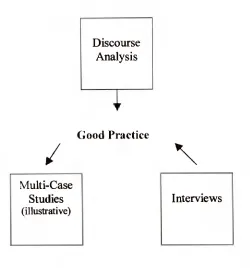
Figure 1: Approaches used in the collection and analysis of data.
Discourse Analysis
Good Practice
i
Multi-CaseStudies
(illustrative)
Interviews
Case Studies
Rationale for the choice of methodology
mediated by inner sensory experiences). As Scott (1995, p.29) identifies they may be chosen for their typicality or for explanatory power. They are either representative of a wider whole or they illuminate theories which concern the wider setting. Unlike more quantitative approaches there is no attempt to standardize the outcomes from this process. Indeed it is the very specificity of case studies, which is important.
There is much discussion centered on definitions or descriptors of case-study research. For instance, commentators such as Hammersley and Gomm (2000) focus on the dimensions which potentially mark the boundaries of the case study. Specifically they note:
The term 'case study' is employed to identibi a specific form of enquiry; notably, one which contrasts with two other influential kinds of social research: the experiment and the social survey. (p.2)
Cohen and Manion (1994) also pursue a similar use of contrast but go further:
what is perceived as the particular. This opens up a deeper philosophical debate concerning the nature and relationship between concepts of knowledge and truth. Writers such as Strake (2000) identify an important distinction between what is described as a naturalistic generalisation and the concept of generalisation from a positivist perspective. Strake points to a difference of particular importance to this research:
The legitimate aim of many scholarly studies is to discover or validate laws. But the aim of the practical arts is to get things done. The better generalizations are often those more parochial, those more personal. In fields such as education and social work where few laws have been validated and where inquiry can be directed towards gathering information that has use other than for the cultivation of laws, a persistent attention to laws is pedantic. (p.23)
Alongside these current perspectives, it is valuable to reflect on the insights offered by an educational theorist whose views remain relevant twenty years on. Stenhouse (1980) emphasises:
Stenhouse goes on to identify what he describes as three broad styles of case study inquiry, which he categorizes:
In evaluative case studies a single case or collection of cases is studied in depth with the purpose of providing educational actors or decision-makers (administrators, teachers, parents, pupils, etc.) with information that will help them to judge the merit and worth of policies, programmes and institutions.
An educational case study [is where] many researchers using case study methods are concerned neither with social theory nor the evaluative judgement, but rather the understanding of educational action...
They are concerned to enrich the thinking and discourse of educators either by the development of educational theory or by the refinement of prudence through systematic and reflective documentation of evidence.
Case study in action research is concerned with contributing to the development of case or cases under study by feedback of information which can guide revision and refinement of action.
(p.50)
of the research and those of the 'evaluative case study' in its attempt to relate policy and
practice.
Thus, the use of case study inquiry gives the opportunity in this research for:
• An examination of a low incidence population within a defined context.
• Exemplification of a specific phenomenon within differing environments.
• The application of a framework for evaluation.
• The development of guidance materials for further dissemination.
Interviews
The use of interviews is an integral element in this research of the development of case study material.
As Cohen and Manion (1994, p.273) note there are four kinds of interview that are used
as research tools:
• The structured interview
• The unstructured interview
• The non-directive interview
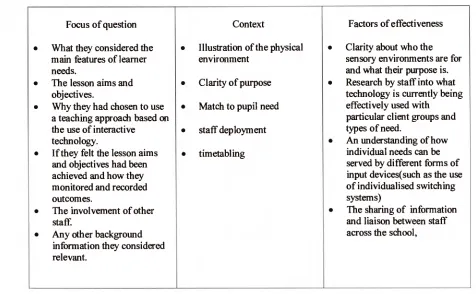
This research utilizes a combination of a form of semi-structured and focused interviews. In this way it combines the opportunity to interview the individual concerned in some depth, with the more complex dynamics of the focus group. This does not mean that interviews with teaching staff were scripted, rather questions were arranged along themes identified by the focus group. Therefore, before conducting the research, potential key areas for questioning had been identified. This formed the basis of situational analysis described by Robson (p. 241, 1993) as:
• The important aspects of the situation to those involved • The meaning these aspects have for those involved • The effects they have on those involved
Without some consistency of themes it would have been difficult, if not impossible, to ensure that interview material provided contextual information germane to the observations. Conversely, without flexibility teachers would have been constrained in their observations about the outcomes of teaching sessions. Unlike the focus group, which relies heavily on group dynamics, the individual interview is dependent on a one to one situation. It was important to be aware in the case of individual teachers of the need to develop a relationship based on trust. Since they were being videoed as they responded participants were likely to be particularly self-conscious. The following strategies were introduced to reduce self-consciousness on the part of the interviewee:
• Before the interviews subjects were shown the results of the filmed lesson observations. This had the twofold effect of refreshing their memory and engaging them in the process of reflection.
• Interviews were filmed in locations chosen by the interviewee.
Focus Groups
A definition of focus groups provided by Millward (1995) explains that the focus group is a discussion-based interview, which involves the simultaneous use of multiple respondents to generate data. The group is 'focused' by the use of an external stimulus and is organized through the medium of a 'moderator'. This approach is well known in certain forms of market research (particularly in relation to the social effects of mass communication). Although primarily developed as a sociological tool, the use of focus groups has gained prominence within psychology. Millward points to an underlying assumption behind the use of focus groups:
The assumption of focus groups is that people will become more aware of their own perspective when confronted by active disagreement and be prompted to analyze their views more intensely than during the individual interview. (p.277)
specific topics relevant to the topic in hand '(p.73) Vaughn, Schumm and Sinagub (1996)
note that:
• Focus groups can be used alone or with other methods (qualitative or quantitative) for a wide range of purposes.
• Focus groups can yield a great deal of specific information on a selected topic in a relatively short period of time. (p.13)
As Millward (1995) indicates, focus groups are not geared to the formal testing of hypotheses in the hypothetico-deductive sense ...the aim of focus groups is to get closer to participants' understanding of certain issues (p.276). In this particular research the aim in establishing a focus group was:
• to provide overview information on the use of multisensory environments and interactive technology, which could then be used to identify features of good practice. These features were then to be exemplified within multiple-case studies.
The focus group provided significant advantages over other methods:
Observations
As Yin (1994) outlines:
By making a field visit to the case study "site" you are creating the opportunity for direct observation. (p.86).
And of particular relevance to this research Yin adds:
Observational evidence is often useful in providing additional information about a topic being studied If a case study is about, for instance, a new technology, observations of the technology at work are invaluable aids to any further understanding of the limits or problems with the technology. (p.87)
Lesson observations were used for the dual purpose of focusing the interviews and also providing the researcher with potential evidence, which could be examined at a later stage. Because they were filmed they also offered the possibility of comparison between approaches and interactions. This was important for several reasons:
• They could be used as another source of evidence as a form of theoretical replication. • They could act as a resource for the development of illustrative material for further
dissemination.
• They could be used as a prompt for the interviewee.
Triangulation
The use of case studies offers the possibility of collecting evidence from a number of
sources. Yin notes:
The use of multiple sources of evidence in case studies allows an investigator to address
a broader range of historical, attitudinal and behavioral sources of evidence ... (p.92)
There are obviously particular difficulties in some elements of triangulation when a lone
researcher is involved. For instance, analysis and coding of interview material cannot be
scrutinized within the context of inter-coder reliability. This makes it all the more
important to harness additional approaches to the collection of evidence. The strategy
adopted in this research allows for the same phenomena to be examined from a variety of
different perspectives. This is achieved by the development and application of a
framework of effectiveness. This ensures an iterative review of themes. Lesson
observations are combined with interview material in order to consolidate the judgements
made by the researcher. Finally, the production of guidance material gives the additional
opportunity of bringing the components of case study evidence together. This is with the
intention to communicate the outcomes of the research to an extended audience of
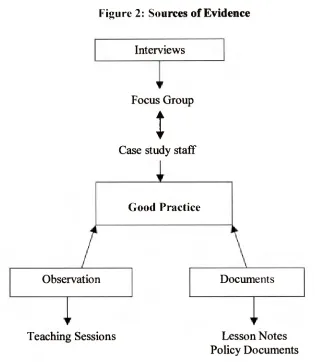
professionals and interested others. Below is a diagram, which highlights multiple facets
Figure 2: Sources of Evidence
Interviews
lir Focus Group
: Case study staff
1
Good Practice
Observation Documents
• •
Chapter 11
Ethical Issues
Robson (1993) highlights the fact that there are particular issues around research associated with particular populations. Much of the research conducted in the low prevalence but high areas of need usually associated with the use of multisensory environments concentrates on populations with limited communication and understanding. As individuals they are often highly dependent and have little autonomy any power relationship is inevitably one-sided. Cohen and Manion (1994) stress:
A dilemma emerges, that on the one hand;
Being ethical limits the choices we can make in pursuit of truth. Ethics say that while truth is good, respect for human dignity is better, even if, in the extreme case, the respect of human nature leaves one ignorant of human nature. (Cavan, 1977,p.810)
On the other hand:
Both sides have a weakness. If for instance, as the absolutists usually insist, there should be informed consent, it may leave relatively privileged groups under-researched (since they will say no) and underprivileged groups over-researched).
(Plummer, 1983 in Cohen and Manion p.362)
There are no easy answers. More emphasis of the rights of those who are disabled makes this issue particularly sensitive. The compromise reached in this research was to seek the consent of significant others. Teachers and parents were therefore approached and gave consent based on their knowledge and concern for the young people involved.
Chapter 12
Conduct of the study
Description of participants and group
Procedure for Data Transcription
Key ideas were summarized following collation and then grouped as themes. The procedure adopted followed the analytic approach identified by Lederman (1990); that of the development of categories based on the data. The following categories/themes were identified:
• illustration of the physical environment • illustrations of policy and planning • clarity of purpose
• match to pupil need
• staff deployment and development • timetabling
Selection of case study material
Focus group members were asked (in the light of the outcomes of the day) to suggest possible case study schools. Five case studies were then chosen to exemplify the range of features identified by the group. These case study schools represented:
• mainstream primary phase provision • specialist provision for visual impairment • specialist provision for deafblindness • provision for severe learning disabilities
Case study schools were contacted and site visits arranged. The main method used to collect case study material was through the use of digital video recording. Structured interviews were conducted with key members of staff in each of the case study schools. Sessions involving the use of multisensory environments and interactive technology were also videoed. In total ten members of staff from case study schools were interviewed.. Other material collected included:
• Curriculum materials
• Recording and assessment material • Planning documentation
Interviews were fully transcribed. Verbatim scripts were then produced. The process of analysis was derived from a number of sources (Willott and Griffin, 1997; Bozic, 1997; Potter and Wetherall, 1987,1992) and took the following form:
• Grouping of responses in relation to 'given' themes (themes derived from focus group material).
• Coding of in-vivo 'themes' (Bozic, 1997) directly from transcript material. Pattern codes were then developed which linked theme and response.
1. Setting/Context: general information on surroundings that allows you to put the study in a larger context
2. Definition of the situation: how people understand, define, or perceive the setting or topics on which the study bears
3. Perspectives: ways of thinking about their setting shared by informants
4. Ways of thinking about people and objects: understandings of each other, of outsiders, of objects in their world
5. Process: sequences of events, flow, transitions, and turning points, changes over time 6. Activities: regularly occurring kinds of behaviour
7. Events: specific activities, especially ones occurring infrequently
8. Strategies: ways of accomplishing things; people's tactics, methods, techniques for meeting their needs
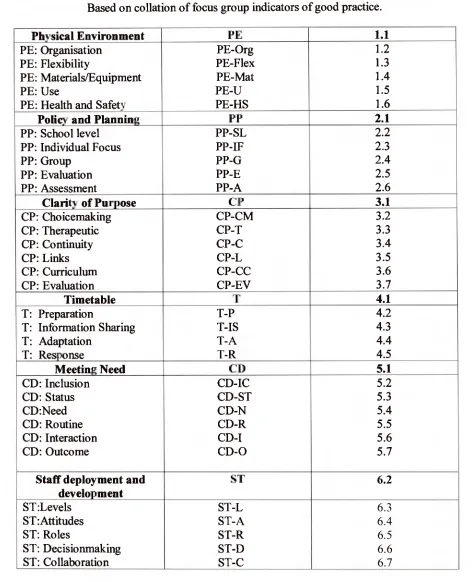
Figure 3: List of Codes
Based on collation of focus group indicators of good practice.
Physical Environment PE 1.1
PE: Organisation PE-Org 1.2
PE: Flexibility PE-Flex 1.3
PE: Materials/Equipment PE-Mat 1.4
PE: Use PE-U 1.5
PE: Health and Safety PE-HS 1.6
Policy and Planning PP 2.1
PP: School level PP-SL 2.2
PP: Individual Focus PP-IF 2.3
PP: Group PP-G 2.4
PP: Evaluation PP-E 2.5
PP: Assessment PP-A 2.6
Clarity of Purpose CP 3.1
CP: Choicemaking CP-CM 3.2
CP: Therapeutic CP-T 3.3
CP: Continuity CP-C 3.4
CP: Links CP-L 3.5
CP: Curriculum CP-CC 3.6
CP: Evaluation CP-EV 3.7
Timetable T 4.1
T: Preparation T-P 4.2
T: Information Sharing T-IS 4.3
T: Adaptation T-A 4.4
T: Response T-R 4.5
Meeting Need CD 5.1
CD: Inclusion CD-IC 5.2
CD: Status CD-ST 5.3
CD:Need CD-N 5.4
CD: Routine CD-R 5.5
CD: Interaction CD-I 5.6
CD: Outcome CD-0 5.7
Staff deployment and development
ST 6.2
ST:Levels ST-L 6.3
ST:Attitudes ST-A 6.4
ST: Roles ST-R 6.5
ST: Decisionmaking ST-D 6.6
Once interview data had been coded and examined it was then necessary to go through a further set of operations. These have been described by Lincoln and Guba (1985, p.62) as follows:
1. "filling in": adding new codes, reconstructing a coherent scheme as new insights emerge and new ways of looking at the data set emerge
2. "extension": returning to materials coded earlier and interrogating them in a new way, with a new theme, construct, or relationship
3. "bridging": seeing new or previously not understood relationships within units of a given category
4. "surfacing": identifying new categories
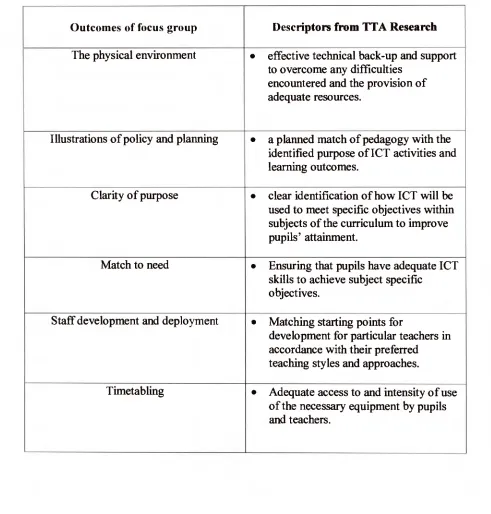
Figure 4: Framework of Effectiveness
Outcomes of focus group Descriptors from TTA Research
The physical environment • effective technical back-up and support to overcome any difficulties
encountered and the provision of adequate resources.
Illustrations of policy and planning • a planned match of pedagogy with the identified purpose of ICT activities and learning outcomes.
Clarity of purpose • clear identification of how ICT will be used to meet specific objectives within subjects of the curriculum to improve pupils' attainment.
Match to need • Ensuring that pupils have adequate ICT skills to achieve subject specific
objectives.
Staff development and deployment • Matching starting points for
development for particular teachers in accordance with their preferred teaching styles and approaches.
Chapter 13
Research Findings
The Case study Schools
The case studies are presented as illustrations of the outcome of the focus group responses and therefore organized under the following headings:
• illustration of the physical environment • illustrations of policy and planning • clarity of purpose
• match to pupil need
• staff deployment and development • timetabling
Case 1
Illustration of the Physical Environment
The 'Studio' is an integral part of a large primary school. It is a newly created facility within an existing open space about the size of a small hall. To allow for flexible use the environment can be partitioned off to provide access to the following technology:
• darkroom with ultraviolet lighting
• white room with soft play area and infinity but • sound/light wall and floor
One interviewee describes how this mainstream primary school came to be chosen to house a multisensory environment.
After full discussions with peripatetic and support services it was decided that we should establish the Studio in our school. It was established in our school because we have one of the largest support for learning bases in the area.
It was important to the staff that the multisensory environment resource had an appropriately mainstream name:
The Studio is managed by a teacher who is the Sensory Co-ordinator. Senior managers (which includes the SENCO) have thought carefully about use of the facility and certain ground rules apply:
So it's used by all these external groups. They contact me and I deal with the bookings. I've got a timetable and when they come here they log in. We can tell who has been here and for how long.
I think the whole of the community now knows it is here. Some (know what a multisensory environment is) and some don't. That can still be a problem because those that think they know what it is want to come because they think of it as an exciting place to be but they perceive of it as a social exercise and we are committed to the studio being used to enhance teaching and learning
Funding for the "Studio" came from Central Government and followed the creation of small unitary authorities within the area:
We all had new directors of education. If a parent said I want this or that for their child we wanted to be able to say OK you don't have to go (out of the Authority) to get it....
Illustrations of policy and planning
One interviewee described the overarching approach to the development of policies:
The way the school runs indeed is not top down. We have a structure in the school in which we co-operate to develop all policies.
Because the school is hoping to extend the use of the Studio their policy in relation to
external groups is quite specific:
All persons are included, all we ask is they have a very clear idea of the purpose they want to use it for. There is a form to complete and they indicate which equipment they want to use and what they want to do. Because again it is important that the equipment in the Studio is used for specific purposes.
The role of technology is considered in relation to future policy and planning:
We need to innovate and will continue to look at different ways of meeting youngsters' needs. I have no way of knowing where technology is going to be in ten years time. If we continue as we have started, that is to say that we establish a Studio and facilities to meet need, we will keep pace with technological developments.
Clarity of Purpose
The school organizes the delivery of the curriculum through a number of cross-subject topics. This approach means that whole year groups have been able to use the Studio facility on a fully inclusive basis to provide dramatic reconstructions of events. Two of these (which the staff considers the most successful) were aimed at bringing historical themes to life:
So we were looking at early experience of cave people. It was hugely successful in the Studio, the darkroom was set up with sticks for the fire — we rubbed the florescent sticks together really hard Someone — a member of staff, just flicked on and off (the ultraviolet light) so it just sparked Then once they got going and the fire was on all the time, we told stories about those days, what animals did you meet.
For those pupils with learning difficulties early uses of the Studio have focused around learning reinforcement in subjects such as Maths:
We've got the different shapes (under the UVA) to reinforce what we are doing here (in the classroom) with some of the younger kids.
Match to Need
Interviewees felt the school is still at an early stage in making sure that the Studio is used by those who would benefit most. They are therefore reviewing current pupil needs and seeking to identify future issues:
There are six children coming from the nursery and they have quite diverse needs.
One of the main strategies already identified is the use of the Studio to increase motivation and attention span:
We had a fairground (created in the Studio) with a fortuneteller with a wheel with the signs of the zodiac (made by the art teacher). The infinity but was used for telling stories. We have one boy...his attention was all over the place. He couldn't hone in on a story. He went into there (the infinity hut) with two other children and he concentrated on answering questions and now his attention is much better. It was a bit of a breakthrough...
do his exercises but when he went in there (the Studio) he apparently did press-ups which no-one had ever seen him do before...
Staff deployment and development
The attitude of the staff is considered to be of key importance:
I believe our staff are well motivated, innovative and are prepared to pick up new ideas and run with them and meet challenges if they think they are helpful to the children in the school.
In addition to staff development within the school, there is also recognition that it is important to include a wide range of stakeholders in development activities:
when we established the studio we had inductions for all members of staff to familiarize themselves with the equipment that was down there and to have some degree of training on its usage. On inservice days we've had a rolling programme and staff can come and have a look see. On another day we will be available for staff to come in and use the stuff.
...we had one day where there were representatives from different services like the hearing and visually impaired.
Timetabling
There are clearly significant issues within a mainstream context when organizing access to the facilities of a multisensory environment. The school has tackled this in two ways. One aspect of timetabling is concerned with providing inclusive opportunities for whole year groups to come together (as illustrated by the dramatic reconstructions) The other aspect concerns the timetabling demands of the learning support base within the school:
We have a Thursday activity group when we split up into four groups and one member of staff has responsibility for a group of children. That group of children rotate and will have one member of staff one week when they will do cooking or baking, then sewing and then we go out and about, we call it 'social', we go to a café. Next year we are going to plan five groups and one of those groups will have an afternoon in the Studio, which 'll be planned for that group of four children.
Case 2
Case 2 is specialist non-maintained residential provision for pupils with visual and multiple disabilities. It is set in a rural area of the Midlands. The school has devoted a large amount of space to a series of rooms each with a slightly different emphasis in terms of sensory stimulation. Over a long period of time the use of these rooms has gone through various stages of use and development:
We had the first part about ten years ago. Yes, it was used, but after the novelty wore off I saw that certain children benefited more, so not everyone went in there. There was (subsequently) a little more thought about which children went in to it ...Then we had the dark room with the ultraviolet light
Illustration of the physical environment
The series of rooms, which comprise the multisensory environment, include an assessment facility, which can be used to assess the functional vision of pupils as well as a range of technology:
The use of the multisensory environment varies across the different groups within the school:
I put round a little checklist to see who used it and how. One of the groups had used it for drama. You can get more children in (without the dividing curtain) and you can get effects like thunder and lightning.
Illustrations of Policy and Planning
The policy and planning behind the use of the multisensory environment is very much geared towards its use as a functional assessment facility. The role of technology is also largely seen within this context. There is particular emphasis on health and safety issues that relate to specific forms of technology such as ultraviolet light. At the same time there is recognition of the possible functional benefits of specific environmental adaptations:
Clarity of purpose
Staff members are clear that assessment is the main use of the multisensory environment. Assessments are considered to be clearly linked to achieving progress in pupil development including (where possible) levels of visual functioning. The purpose of such assessments is therefore to establish a suitable visual training programme and to identify strategies for increasing motivation:
His whole development has been aided by him learning to use his vision...He will reach to pick up his drink from the table. He still needs very high contrast but (in the past) he didn't use his sight to the capacity he does now. This would be part of his visual training programme.
A couple of children have made enough progress so that no one would be in any doubt that they had some sight, even though notes say they are blind.. one child was in a wheel chair. He kept his hands under his tray and didn't want to interact. It was quite dcult. He did begin to be interested in things under the ultraviolet light and did begin to reach and did begin to reach out to bright things in the normal environment. At the same time he was beginning to walk and use a rolator.
Match to Need
The school uses its multisensory environment to meet a variety of needs. All pupils are visually impaired but have a wide range of additional and multiple disabilities. The majority has ocular conditions although some have both ocular and cortical (processing) difficulties. All pupils have some form of communication difficulty and an increasing number exhibit challenging behaviours.
Pratima has not got a great deal of patience and she can be quite destructive with equipment. She will move quickly to grab and destroy equipment. Even the activities she enjoys, she will usually only tolerate for a couple of minutes. She likes using the touch screen on the computer and will be highly delighted for two to three minutes and then try to throw it on the floor ...It was interesting to see how she was with the fibre optics — she was so gentle and explored them — even looking down the end... The benefit for Pratima of going in there (the multisensory environment) is spending so long on one activity which I have never seen her do in any other situation. To move on to handling other equipment with such care would be very useful.
This interviewee highlighted some of the positive effects of technology for socialization: