International Journal of Research
Available at https://edupediapublications.org/journals p-ISSN: 2348-795X Volume 03 Issue 12
August 2016
Available online: https://edupediapublications.org/journals/index.php/IJR/ P a g e | 1579
1Ramesh Babu, Research scholar,
Mewar University, Chittorgarh , Rajasthan.
2Dr.S.Krishna Mohan Rao
Siddhartha Institude of Engineering College, Ibrahimpatnam, Ranga Reddy, Hyd
Abstract:Routing in Vehicular Ad-hoc Networks is a
challenging venture as a result of the distinctive characteristics of the network similar to the high mobility of nodes, dynamically changing topology and extremely partitioned network. It's a venture to make certain trustworthy,steady and seamless communique in the presence of speeding vehicles. Growth and advancement in VANET engenders countless purposes as real-time traffic, electronic toll assortment, andsurrounding road conditions. In this paper, R-optimum paths system has beenundertaken to ensure real-time communication between nodes. When any nodeneeds to set up a path to destination, the trail must be chosen by means of rootnode. This minimizes possibilities of link failure within the network. The algorithm iscarried out in ns2 and it has been identified proposed process outstands interms of extend, throughput, packet delivery ratio and energy consumption.
Keywords-VANET, RSU, OLSR, AODV
I. INTRODUCTION
Vehicular ad hoc network (VANET) is a promising
manner forrisk-free using through enabling
cooperation among cars. Road accidents are a significant dilemma far and wide the world. Thousands ofdeaths are caused by road accidents. Researchers have alreadycarried out and are attempting to put in force various safetyapplications, both in academia and enterprise.Vehicular ad-hoc network (VANET), an up-and-comingtechnological type is a blend of an advert hoc network, wireless LAN, and mobile technology [1]. It is a system whereinwireless technological kind is deployed in cars. Each and every vehicle actsas a node that may
possibly forward information packets in the direction ofthe destination, thereby forming an ad hoc community whereinnodes can become a member of and go away in a dynamic method [2]. It isalso known as the intervehicle communication (IVC) or
vehicle-to-vehicle(V2V) communication [3].
VANETs have emerged astrendy due to their huge range of purposes. Functionsfor functions rather thensafety are given in [3–7].Routing in VANET is a present field of research, both inacademia and enterprise. VANET is a subclass of mobile ad-hoc network (MANET) wherein nodes are automobiles, so theirnature is dynamic. Because of the highly dynamic nature of thenodes, efficient routing is a key assignment. So, there may be the necessity fora routing protocol which supplies better knowledge deliverywithout route breakage.
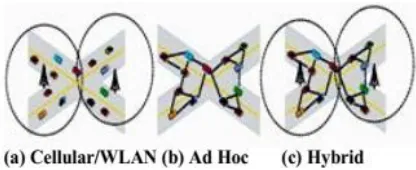
Figure 1: Network architectures for VANETs
Wireless ad hoc networks generally do not relyon
fixed infrastructure for communication
anddissemination of information. VANETs followthe same principle and apply it to the highlydynamic environment of surface transportation.As shown in Fig. 1, the architecture ofVANETs mainly falls within three categories:pure cellular/WLAN, pure ad hoc, and hybrid.VANETs may use fixed cellular gateways andWLAN / WiMax access points at trafficintersections to connect to the Internet,
Energy Efficient Routing Protocols and its Issues in
International Journal of Research
Available at https://edupediapublications.org/journals p-ISSN: 2348-795X Volume 03 Issue 12
August 2016
Available online: https://edupediapublications.org/journals/index.php/IJR/ P a g e | 1580 gathertraffic information, or for routing purposes.The
network architecture under this scenario isa pure cellular or WLAN structure as shown inFig. 1(a). VANETs can combine both cellularnetwork and WLAN to form the networks sothat a WLAN is used where an access point isavailable and a 3G connection otherwise.
II. RELATED WORK
VANET routing protocols broadly fall into thefollowing categories: unicast, broadcast, multicast, geocast and hierarchical.
Topology Dissemination Based on Reverse-PathForwarding (TBRPF) [8]:
It is a link-state routingprotocol designed for ad-hoc networks. Every node constructs asource tree which
contains paths to all reachable nodes by
usingtopology table. Nodes are periodically updated with only thedifferences between the previous and current network state usingHELLO messages. Therefore, routing messages are smaller, cantherefore be sent more frequently to neighbors.
Temporally-Ordered Routing Algorithm
(TORA)[15]:
Each node constructs a directed cyclic graph bybroadcasting query packets. On receiving a query packet, if thenode has a route to destination it will send a reply packet, else itdrops the packet. A node on receiving a reply packet will updateits height only if the height of packet is minimum than otherreply packets. It gives a route to all the nodes in the network, butthe maintenance of all these routes is difficult in VANET.
Hybrid protocol:
The hybrid protocols are introduced to reduce the controloverhead of proactive routing protocols and decrease the initialroute discovery delay in reactive routing protocols.
Zone routing protocol (ZRP) [24]:
In this the network is divided into overlapping zones. The zoneis defined as a collection of nodes which are in a zone radius.The size of a zone is determined by a radius of length α where αis the number of hops to the perimeter of the zone. In ZRP, aproactive routing protocol (IARP) is used in intra-zonecommunication
and an inner-zone reactive routing protocol(IARP) is used in intra-zone communication. Source sends datadirectly to the destination if both are in same routing zoneotherwise IERP reactively initiates a route discovery. ZRP aimsto find loop free routes to the destination. It uses bordercastingmethod to construct multicast trees to flood the query packetsinstead of standard flooding to discover the destination route.
HARP [17]:
It divides entire network into non-overlappingzones. It aims to establish a stable route from a source to adestination to improve delay. It applies route discovery betweenzones to limit flooding in the network, and choose best routebased on the stability criteria. In HARP routing is performed ontwo levels: intra-zone and inter-zone, depending on the positionof destination. It uses proactive and reactive protocols in intrazone and inter-zone routing respectively. It is not applicable inhigh mobility adhoc networks.3. Position based protocols:These protocols use geographic positioning information to selectthe next forwarding hops so no global route between source anddestination needs to be created and maintained.
Greedy Perimeter Stateless Routing (GPSR) [4]:
International Journal of Research
Available at https://edupediapublications.org/journals p-ISSN: 2348-795X Volume 03 Issue 12
August 2016
Available online: https://edupediapublications.org/journals/index.php/IJR/ P a g e | 1581 junctions form a natural planar graph, without using
any staticstreet map.
III. PROPOSED WORK
In the proposed technique, in the whole network we define some nodes which are rootnodes, under these root nodes we will defines the leaf nodes. The leaf node comes underwhich root that will be decided by prediction based technique for multicasting. TheRoot nodes are responsible to maintain the tree on the basis of distance between thenodes. The root nodes can maintain routing table and in this routing table informationabout their leaf nodes are stored. The root nodes can send the stored information toRSU’s and before requesting for the path to destination. The source node communicateswith the RSU and RSU give information about the leaf node for path establishment byusing R-optimal paths algorithm. The source node send route request packets to onlythose root nodes, which have access to desired leaf node.
Psudo code for proposed algorithm:
Step1:- Install Ubuntu 12.5 using VMWARE. Step2:- Update Ubuntu by entering command Sudo- apt.
Step3:- Install ns-2 version NS-2.35, Install xgraph, Install Network Animator.
Step4:- Designing Topology for wireless
communication.
Step5:- Nodes are then configured in network. Step6:- Design algorithm and integrate in C++ and TCl.
Step7:- Analyze the results by computing several parameters as energy consumption,
delay, and throughput and packet delivery ratio. Step8:- Obtain graphs and contrast with existing algorithms.
Traffic, comprising vehicles, moving at different velocities in both urban and rural areasare subjected to propound algorithm:
R-optimal path algorithm
Set M mobile node’s
Set S sender and R receiverEnergy Efficient Routing Protocols in Vanets
Node Routing=AODV Set Route
{If(route found(from S to R)) {Checking resistance of route;
If (route>=1) //alternative route exist in the network {
Search nearest neighbouring nodes
Establish path through root nodes
Root node is transmitting acknowledgement }}
Else {destination root unreachable} { Creation of new node(root); {
Source node start sending data to destination through root node
{ Q++;
Store incoming data; }
Receiver receives data from I node; Send ACK to sender S;
}}}
IV. CONCLUSION
Inthis work, multicasting technique is proposed in which source node flood the routerequest packets to the node which has maximum possibility to establish path todestination. The proposed technique improves leads to reduction in packet loss, delayand increase in network throughput. The proposed algorithm is the multicastingalgorithm which can be tested on the different scenarios to analyze networkperformance by deploying lesser energy
REFERENCES
[1] H. Ghafoor, N. D. Gohar, and R. Bulbul, “Anchor-based Connectivity Aware Routing in VANETs,” in Proceedings of theIEEE International
Conference on Wireless
Communications,Networkimg and Mobile
Computing, Shanghai, China, September 2012.
[2] H. Ghafoor and K. Aziz, “Position-based and
geocast routingprotocols in VANETs,” in
Proceedings of the 7th InternationalConference on
Emerging Technologies (ICET ’11),
Islamabad,Pakistan, September 2011.
[3] F. Li and Y. Wang, “Routing in vehicular ad hoc networks: asurvey,” IEEE Vehicular Technology Magazine, vol. 2, no. 2, pp.12–22, 2007.
International Journal of Research
Available at https://edupediapublications.org/journals p-ISSN: 2348-795X Volume 03 Issue 12
August 2016
Available online: https://edupediapublications.org/journals/index.php/IJR/ P a g e | 1582 [5] K. Shafee and V. C. M. Leung,
“Connectivity-aware minimumdelay geographic routing with vehicle tracking in VANETs,” AdHoc Networks, vol. 9, no. 2, pp. 131–141, 2011.
[6] G. M. T. Abdalla, M. A. Abu-Rgheff, and S. M.
Senouci, “Currenttrends in vehicular ad hoc
networks,” Ubiquitous Computingand
Communication Journal, pp. 1–9, 2007.
[7] V. N. G. J. Soares, J. J. P. C. Rodrigues, and F. Farahmand,“GeoSpray: a geographic routing protocol for vehicular delaytolerant networks,” Information Fusion, vol. 15, pp. 102–113, 2011
[8] R. Ogier, et al., “Topology Dissemination Based on ReversePath Forwarding (TBRPF)”, RFC 3684, NetworkWorking Group, Feb 2004.
[9] M. Kihl, M. Sichitiu, T. Ekeroth and M. Rozenberg,”Reliable Geographical Multicast Routing in Vehicular Adhoc Networks” , Lecture Notes in Computer Science 4517LNCS[C], pp. 315-325, 2007.
[10] Rainer Baumann, “Vehicular Ad hoc Networks”, Master’sThesis in Computer Science, ETH Zurich 2004.
[11] R. A. Santns, R. M. Edwards, A. Edwards and D. Belis, “Anovel cluster-based location routing algorithm for intervehicular communication”, Personal, Indoor and MobileRadio Communications,
IEEE proceedings of the 15thAnnual Symposium,
2004.
[12] Y. Peng, Z. Abichar, and J. M. Chang,” Roadside-aidedrouting(RAR) in vehicular networks”,
ICC’06 IEEEInternational Conference on
Communications, 8:3602–3607, June 2006.
[13] HamidrezaRahbar, KshirasagarNaik, Amiya Nayak,“DTSG: Dynamic Time-Stable Geocast Routing inVehicular Ad Hoc Networks”, IEEE Symposium onComputers and Communications, pp. 198–203, 2001.
[14] M. Nekovee, B. BjamiBogason, "Reliable and efficientinformation dissemination in intermittently connectedvehicular ad hoc networks", IEEE the 65th VTC'07 spring,Dublin, Ireland, April 22-25, 2007.
[15] V. Park, S. Corson, "Temporally-Ordered RoutingAlgorithm (TORA) Version 1 Functional Specification",IETF Internet draft, work in progress, draft-ietf-manet-toraspec-04.txt, 2001.
[16] YuyiLuo, Wei Zhang, Yangqing Hu, ”A New ClusterBased Routing Protocol for VANET”, IEEE WirelessCommunications and Trusted Computing, 2010.
[17] NavidNikaein, Christian Bonnet and
NedaNikaein,“HARP - Hybrid Ad Hoc Routing Protocol”, in proceedingof IST 2001: International
Symposium onTelecommunications, Iran/Tehran
2001.
[18] O. K. Tonguz, N. Wisitpongphan, F. Bai, P. Mudalige andV. Sadekar, "Broadcasting in VANET", Proc. IEEEINFOCOM MOVE Workshop 2007, Anchorage, USA,May, 2007.
[19] Yang Xia, Chai Kiat Yeo, Bu Sung Lee, ” HierarchicalCluster Based Routing for HighlyMobile
HeterogeneousMANET”, Communications and
Information Technologies,ISCIT’07, International Symposium on, pp. 936–941, Oct2007.
[20] Y. Ding, C.Wang, and L. Xiao, “A static-node assistedadaptive routing protocol in vehicular networks”,VANET’07, Proceedings of the fourth ACM internationalworkshop on Vehicular ad hoc networks, pages 59–68,September 2007.
[21] Adnan Afsar Khan, Ivan Stojmenovic, NejibZaguia,”Parameter less broadcasting in static to highly mobilewireless ad hoc, sensor and actuator networks”, in Proc.ACM Int.Conference on Mobile Computing andNetworking (MobiCom), Seattle, USA, August 1999.
[22] JieLuo, Xinxing Gu, Tong Zhao, Wei Yan, “A
MobileInfrastructure Based VANET Routing
Protocol in theUrban Environment”, IEEE
Conference onCommunications and Mobile
Computing, 2010.
[23] C. Lochert, M. Mauve, H. Fubler, and H. Hartenstein,“Geographic routing in city scenarios”,
ACM SIGMOBILEMobile Computing and
International Journal of Research
Available at https://edupediapublications.org/journals p-ISSN: 2348-795X Volume 03 Issue 12
August 2016
Available online: https://edupediapublications.org/journals/index.php/IJR/ P a g e | 1583 [24] Z. J. Haas, “The Zone Routing Protocol (ZRP)