361)b)
-SUPERVISION OF EARLY CIDLDHOOD DEVELOPMENT EDUCATION PROGRAMMES: IMPLICATIONS FOR PROVISION OF QUALITY
PRE-SCHOOL EDUCATION IN NAIROBI PROVINCE
BY
JOY BUDEMBU MUDAKI
ESS/I0488/2007
A RESEARCH PROJECT SUBMITTED TO THE SCHOOL OF EDUCATION IN PARTIAL FULFILMENT OF THE REQUIREMENTS FOR THE DEGREE
I' OF MASTER OF EDUCATION (ADMINISTRATION)
OF KENYATTA UNIVERSITY
DECLARATION
This research project is my original work and has not been presented for a degree in any other university.
t
S-(
D'1
I
';;(t)
l )
Date---JOY BUDEMBU MUDAKI
REG NO: E55/1044/07
This research project has been submitted for examination with our approval asthe University Supervisors.
Signature----~-':':t~=~~---• Date
DR. G. ADINO ONYANGO
Lecturer, Department of Educational Management, Policy and Curriculum Studies
-JJh
_6 <~ Signature ~~ . Date ... (~~
.r/..
~
.
.I.f.
.
..
DR. F. W. NJUGUNA
DEDICATION
ACKNOWLEDGEMENT
I would like to appreciate and acknowledge my supervisors Dr. Onyango Adino and Dr.
F.W. Njuguna of the department of educational management, policy and curriculum
studies for the effort, hard work and professional guidance they offered me to make this
work a success. My gratitude also goes to my beloved family: my husband Oscar
Mutwasi for the love, financial and moral support that he gave me during the period of
my study, without him, this work would not have been possible. To my children: Julie,
Nicole, Sonia and Ryan, you endured lonely times while I worked tirelessly on this
project, your love kept me going. Further gratitude goes to my sisters Beth Atiavila and Jacqueline Arita for running errands for me giving me time to concentrate on my studies.
Finally, for the technical and handy work of Anthony, Bojana, Phydelis and Eunice who
played a key role in data analysis, type setting, printing and editing of this work.
TABLE OF CONTENTS
DECLARATION ii
DEDICATION iii
ACKNOWLEDGEMENT iv
LIST OF TABLES viii
LIST OF FIGURES x
LIST OF ABBREVIATIONS AND ACCRONyMS xi
ABSTRACT xiii
CHAPTER ONE 1
INTRODUCTION 1
1.1 Background to the Study .1
1.2 Statement of the Problem 11
1.3 Purpose of the Study 13
1.4 Objectives of the Study 13
1.5 Research Questions 14
1.6 Significance of the Study 15
1.7 Assumptions of the Study 15
1.8Limitations of the Study 15
#1.9 Theoretical Framework 16
, 1.10Conceptual Framework 18
1:"11Operational Definition of Terms 20
CHAPTER TWO 21
REVIEW OF RELATED LITERATURE 21
2.1 Introduction 21
2.2 Importance of Early years 21
2.3 Historical Development of Early Childhood Care and Education (ECDE) in Kenya.28
2.5 Supervision of Education in Schools: A Global View 36 2.6 Studies Conducted in the Area of Supervision and Inspection .40 2.7 Supervision and Quality Assurance and Standards inEducation inKenya .41
2.8 Quality of Education 44
2.9 Supervision and Monitoring in ECDE .48
2.10 Summary of Literature Review : 49
CHAPTER
THREE
51RESEARCH METHODOLOGY 51
3.1 Introduction 51
3.2Research Design 51
3.3 Locale of the Study , 52
3.4 Target Population 52
3.5 Sample and Sampling Procedures 52
3.6 Research Instruments 53
3.7 Piloting of the Research Instruments 54
3.8 Validity Research Instruments 55
3.9 Reliability of Research Instrument 55
3.10 Data Analysis Technique 55
CHAPTER FOUR 57
DATA ANALYSIS, RESULTS AND DISCUSSIONS OF THE
FINDINGS
574.1 Introduction 57
4.2 Background Information of the Respondents 59
4.3 The element of assessment in Early Childhood Development Education Programmes ... 66 4.4 The Effectiveness ofQASOs and DICECE Officers in Performing Various
4.5 The Perception of QASO and DICECE officers supervisory practices on the teacher's
performance and the ECD centre environment 85
4.6 Challenges Encountered in Supervision ofECDE Centers 87 4.7 Measures that can be adopted to improve supervision of Early Childhood
Development Education Programmes 91
CHAPTER FIVE 94
SUMMARY, CONCLUSIONS AND RECOMMENDATIONS 94
5.1 Introduction 94
5.2 Summary 94
5.3 Conclusions 98
5.4 Recommendations 99
References ; 101
APPENDICES 106
Appendix A: RESEARCH PERMIT 107
Appendix B: QASO 107
Appendix C: Questionnaire for DICECE Officers 111
Appendix D: Questionnaire for Primary School Head teachers .116
LIST OF TABLES
Table 1.1:Number of Pre-Primary Schools, Public Primary Schools and
Pre-school Teacher Colleges (2003-2007) 3
Table 1.2: Expenditure of Ministry of Education 2003/04- 2007/08 in Millions of Kenya Shillings... 6
Table 1.3: Indicative Programme Based Budget 2008/09 2010111: Summary
of Expenditure by Programmes on Education in millions ofKsh 6
Table 4.1: Professional Qualifications of the Pre-school Teachers... 60
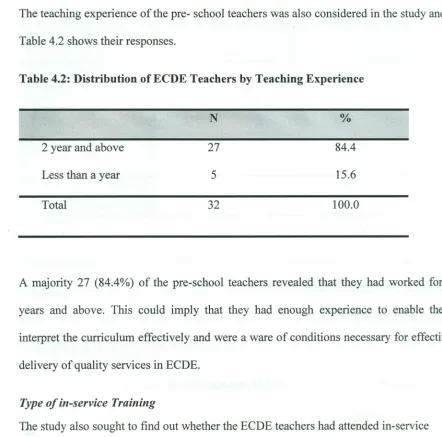
Table 4.2: Distribution ofECDE Teachers by Teaching Experience... 61
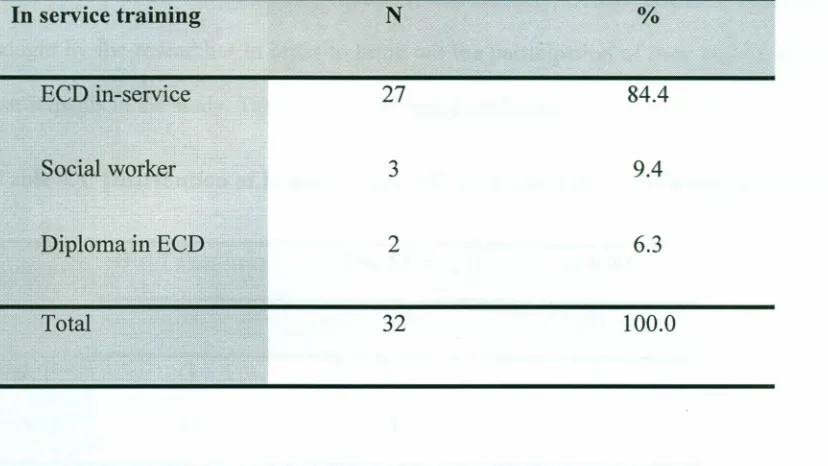
Table 4.3: Distribution of ECDE Teachers by Type ofIn-Service Training 62
Table 4.4: Distribution of Headteachers, DICECE and QASO Officers by Gender.. 63
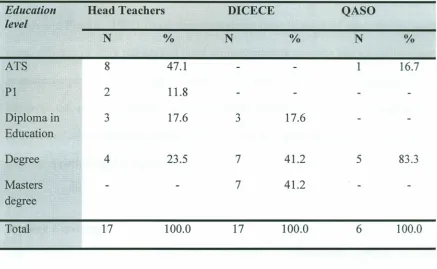
Table 4.5: Distribution of Headteachers, DICECE and QASO Officers by
Professional Qualification... 64
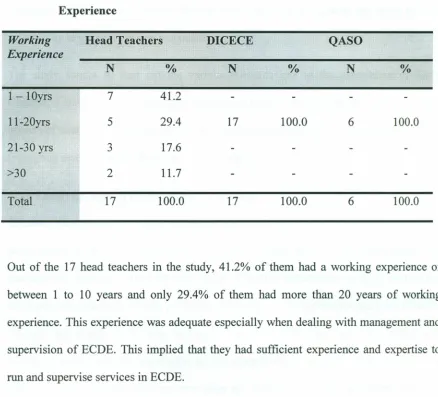
Table 4.6: Distribution of Headteachers, DICECE and QASO Officers
by Working Experience 66
Table 4.7: Pre-School Teachers Responses on Reasons that Prompted School
Visits for Assessment 71
Table 4.8: Pre-School Teachers' Response on the Areas of Assessment 72
Table 4.9: QASOs' Responses on Areas of Assessment 75
Table 4.10: Pre-school Teachers' Responses on the Effectiveness ofQASOs and DICECE Officers in Performing Curriculum and Instruction Functions ...78
Table 4.11: Headteachers Responses on Effectiveness ofQASO's and DICECE
Officers in Terms of Performing Curriculum and Instruction Functions 80
Table 4.12: Pre-School Teachers' Responses Regarding the Effectiveness of QASO and DICECE Officers in their Supervision of Teaching and
Learning Resources 81
Table 4.14: -Responses of Pre-School Teachers Perception on QASO/DICECE
Officers 85
Table 4.15: The Distribution ofDICECE and QASO Officers on the
Challenges they Face in Supervision 90
Table 4.16: Measures that can be Adopted to Improve Supervision of ECDE
LIST OF FIGURES
Figure 4.1: Distribution of Pre-School Teachers by Gender---59 Figure 4.2: QASOs and DICECE Officers Distribution on the Frequency
LIST OF ABBREVIATIONS AND ACCRONYMS
ASAL Arid and Semi rid lands
CRC Convention on the Rights of the Child DEO District Education Officer
DICECE - District Centre of Early Childhood Education DQAS Directorate of Quality Assurance and Standards ECCDE
-
Early Childhood Care Development EducationECD Early Childhood Development
ECDE Early Childhood Development Education ECE Early Childhood Education
EFA Education for All FPE Free Primary Education .GER Gross Enrolment Ratio
GOK Government of Kenya
KESSP Kenya Education Sector Support Programme KIE Kenya Institute of Education
,-KSH Kenya Shillings
MoEST Ministry of Education Science and Technology NACECE- National Centre for Early Childhood Education NGO's Non- Governmental Organizations
QASO Quality Assurance and Standards Officers.
TSC
UNESCO -.
UNICEF
-Teachers Service Commission
United Nations Educational Scientific and Cultural Organisation
ABSTRACT
The main purpose of this study was to investigate how supervision of Early Childhood Development Education (ECDE) was carried out in public pre-schools in Nairobi Province and the implications it had for the provision of quality education in these pre-schools. The study target was 20 pre-school institutions in Nairobi Province. The sample comprised of 22 DICECE Officers, 6 QASOs, 20 headteachers and fifty (50) pre-school teachers in the sampled schools. Descriptive research was used to analyze data. Questionnaires were the main instruments of data collection. The collected data were analysed using descriptive statistics, employing quantitative approach. From the analysis, the study found out the following: that the effectiveness of QASO's and DICECE Officers in supervision was merely good; despite the inadequacies in the supervision by both QASO's and DICECE officers, the overall perception of the supervision was positive. The study also established that the two key challenges which can have negative implication on performance were in accessibility and lack of adequate teaching and
r
CHAPTER ONE
INTRODUCTION
This chapter presents the background to the study, statement of the problem purpose of
the study, research questions, limitations and delimitations of the study, theoretical and
conceptual frameworks and definitions of terms.
1.1 Background to the Study
Definitions of early childhood care and education differ around the world. The more
industrialized nations consider early childhood to be a period from birth through age
eight while developing countries focus from birth through age six, (Essa, 1999).
Regardless of the different definitions, the increased interest in early childhood education
around the world reflects respective nations' philosophical beliefs about children.
The world conference on Education for All (EF A) that took place in Jomtien Thailand in
March 1990, articulated the significance of early years as the foundation for the life of an
individual. The belief that early learning begets later learning and success just like early
I'
failure breeds later failure has been validated in both economic and educational research
(Heckman, 1999). Accordingly, children may be viewed as growing plants that need
nurturance, miniature adults, natural and national resources that need to be nurtured as
future investments to the sustenance of a society and Vs ability to compete in the
Researches in early childhood development and education programmes play critical role in laying a foundation for further education and character formation. It has been noted that participation in comprehensive early childhood programmes of good quality can significantly alter the development trajectory of a child (UNESCO, 2005).
According to France and Utting (2003), good quality early education is a preliquisite to educational efficiency. Children acquire the basic skills, concepts and attitudes required for successful learning and development prior to entering formal education system thus reducing the chances of failure and lay a foundation of life-long learning. As reflected in many official documents such as Gachathi and Kamunge education commission reports (Republic of Kenya 1976, 1988), the government is keenly aware of investing in quality care and education for pre-school children. ECDE is, therefore, a holistic integrated approach that requires a healthy nurturing environment that includes opportunities for holistic development of children.
1.1.1 Early Childhood Development and Education in Kenya
government has made a commitment to have at least one ECD centre in every public
primary school (Institute of Economic Affairs (IEA), 2007). Republic of Kenya (RoK)
Economic Survey (2008) indicates there was a total of 37,263 pre-schools both public
and private and a total of 18,063 public primary schools in the county.
Table 1.1: Number of Primary Schools, Public Primary Schools and Pre-Primary Teacher Colleges (2003-2007)
Category 2003 2004 2005 2006 2007
Pre-primary 29,455 32,879 34,043 36,121 37,263
public primary 17,697 17,804 17,807 17,946 18,063
Pre- primary colleges 3 4 6 8 10
Primary training colleges 29 30 30 30 33
Source: Ministry of education
According to MoEST, UNESCO/aCED on ECD policy review report (2005), early
childhood development in Kenya is under the Ministry of Education. Under the
presidential circular number one of 1990, the pre-school education programme was
transferred from the then Ministry of Culture and Social Services to the Ministry of
Education, Science and Technology (MoEST). According to the Ministry of Education
statistics (2003) in the area ofECDE since independence, 35% of children aged 3-6 years
were accessing ECD services. Kenya is fourth in Africa with only Mauritius, Namibia
According to the ministry of education strategic plan, Zero Draft (2006). ECD sector had
witnessed significant growth. ECDE centres increased from 26, 924 in 2000 to 31,879 in
2004. As a consequence, the enrolment rose from 1,255,194 in the year 2001 to
1,602,721 in the year 2004 for public ECD centres. These statistics are unacceptable
considering the importance of ECDE. The GER at ECDE stood at 57.6% while of
primary at 104.8%. This disconnect is worrying. The low GER has been attributed to
various reasons: First, the provision of physical facilities for ECD centres is largely the
responsibility of communities; and the central governrnent laying a minimal role. Early
childhood education enrolment increased from 1.67 million in 2006 to 1.69 million in
2007. Participation levels in pre-primary schools increased from GER of 58.8% in 2006
to 59.3% in 2007. The number of trained (ECD) teachers went up by 3.0% from 52,600
in 2006 to 54, 177 in 2007 (RoK, 2008).
ECDE in Kenya is governed by a partnership policy of the MoEST whose main aim is to
enhance the provision of ECD services throughout the country. The policy was first
stipulated in the Sessional Paper No.6 of 1988 on education and manpower training for
tlfe next decade and beyond with a view to boosting the sector. Numerous stakeholders
have various roles and responsibilities for the provision of direct and indirect services for
children. The main partners include government ministries, private organizations, NGOs
and bilateral and multilateral partners. The community however is the most important
partner taking responsibility for the provision of physical facilities, payment of salaries,
The MoE is the major sector in the government responsible for the country's ECD programmes and involves other ministries for planning and implementation. Within the ministry are three concerned sections at the national level: the ECD unit of the Directorate of Basic Education, responsible for the formulation of policy guidelines, registration of pre-schools, co-ordination of data collection, funding, donors and provision of trainers; The ECD unit of the Division of the Directorate of Quality Assurance and Standards responsible for inspection of pre-schools and training institutions, administration of teacher trainee examinations and pre-school teacher certificates; and the National Centre for Early Childhood Education (NACECE) housed in KIE is responsible for pre-school curriculum and material development, training of and professional support to DICECE trainers and co-ordination of research, monitoring and evaluation.
The Ministry of Education acknowledges that access to early childhood lays a strong foundation to future learning and development of children in their early years and has a positive effect on enrolment and retention as expressed in Kenya Education Sector
I'
Table 1.2: Expenditure of Ministry of Education 2003/04- 2007/08 in Millions of Kenya Shillings
RECURRENT
2003/04 2004/05 2005/06 2006/07 2007/08+EXPENDITURE
Pre-primary Education 15.51 25.66 .57 50.45 50.45
Primary Education 5,966.52 6,583.42 7,148.58 7,746.53 7,874.59
Secondary Education 945.42 938.79 2,893.70 1,018.98 7,758.98
Source: Ministry of Education
Similarly, KESSP 2005- 2010 investment programme indicates that the total ECDE
budgetary allocation in millions of Kenya shillings amounts to 1,948.2 while that of
primary school amounts to 2,368.395. Republic of Kenya (2008) on the 2008/09
indicative programme-based budget summary of expenditure by programmes In education 2008/09 - 2010111 also reveals that, the ECD sector continues to receive the
least budgetary allocation within the basic education programmes in millions of Kenya
shillings as indicated below:
Table 1.3: Indicative Programme Based Budget 2008/092010/11: Summary of Expenditure by Programmes on Education in millions of Ksh.
Programme . Approved Estimates Estimates Projected Estimates
Year 2007/08 2009/09 2010/10 2010/11
Free Primary Education 14,681 16,488 16,634 17,398
Free Secondary and Tertiary 8,094 13,221 14,112 14,120 Education
Early Childhood Education 69 250 230 230
Kenya has four curricula for early childhood development, they include; Guidelines for
early Childhood Development in Kenya popularly known as the ECD guidelines,
Kindergarten Headmistresses Association Curriculum, Montessori, the Islamic Integrated
programme and the curricula of parental and education programme. The curricula have
provided flexibility and variation in terms of facilities and activities undertaken which is
a healthy feature in the curricula. Communities are allowed to develop appropriate
affordable and relevant services without any pressure and competition. The lesson from
Kenya is that the community is a very important source for the development of ECDE
programmes and must continue to be tapped and appreciated for sustainability (Kipkorir
&Njenga, 1993).
Pre-school is not compulsory, hence attendance in pre-school is not a pre-requisite to
joining the first grade of primary education. With the introduction of free primary
education, there's a recent decline in enrolment at pre-school level since parents have to.
pay for ECDE services. As a result, parents tend to keep their children at home until they
reach the entitlement age for FPE. Consequently, ECD teachers whose salaries in most
cases rely on parents' contributions are leaving their jobs due to non-payment. One of the investment rationale and strategies highlighted in the MoE, UNESCO/OECD
(2005) policy review report was subsidising ~CD teacher's salaries which, however,
would raise feasibility issue if it was to be done according to the governrnents teacher
remuneration scale as determined by the teachers service commission (TSC). Kenya's
•
facilitate the decentralization of service delivery to local government authorities. It
strengthened the revenue base of local government authorities to enable them to conduct
management and financing of services in education, nutrition and health. The act has
empowered local authorities to provide social services in their respective areas.
The local authorities including county councils, municipal council, town and urban
councils meet substantial costs in ECD services within their jurisdiction. Their
contributions are mainly financial. They pay salaries of pre-school teachers and supervisors, set up and maintain facilities, purchase equipment and other materials and
meet the cost of training pre-school teachers (MoEST, 2005).
A major characteristic of pre-school education in Kenya is that pre-schools serve a wide
cross-section of children from different social, economic, cultural and religious
background unlike in many other African countries where pre-schools are for children of
wealthy members of the elite. Children attending Kenya's ECD services come from a
wide spectrum of rich and poor, educated and uneducated families (Republic of Kenya,
UNESCO, 2005). Reports show that today, Kenya has about 1,691,093 children attending
pre-school with a total of 816,163 boys and ~14,930 girls managed by 54,177 trained
teachers and 22,147 untrained teachers in 37,263 pre-schools (RoK, 2008).
1.1.2 Supervision of ECDE Programmes in Kenya
Supervision is an important aspect of ECDE programmes. It aims at regular and
..
(KIE, 1995). Supervision of ECDE services is done by the Directorate of Quality
Assurance and Standards in collaboration with DICECE trainers and supervisors who
have a special responsibility of supervising the ECDE programmes. It is important to
supervise in order to gather information from children, care-givers, parents, communities,
and general ECD environment. This can be used to correct errors, modify practices where
necessary and motivate as well as encourage all involved in ECD. The changes resulting
from supervisory activity strengthen the ECD programmes.
According to KIE (1995), supervision is a continuous monitoring of ECD activities to
ensure the sharing of experiences and information, improves the quality of programmes,
encourages, motivates, enriehes and promotes personal as well as professional growth for
all those involved. Supervision is important because it helps to ensure that childrens'
needs are met, enables efficient implementation of curriculum, checks whether the
objectives of the programmes have been achieved, promotes maintenance of basic
standards, identifies problems and constraints and identifies strengths and achievement.
During supervision, the supervisor is supposed to take into consideration the various
factors so as to ensure that the environment of ECD centre is conducive to the total
development of a child. Supervision involves assessing physical facilities such as
classrooms, toilets, compound, indoor and outdoor equipment and materials for their
suitability for learning and child development. In many educational acts, guaranteeing a
satisfactory level of educational quality is achieved primarily through inspection and
•
In pre-school setup, teaching/learning situation is the most important area which should be supervised, this is because children learn through play, manipulation of objects and interacting with people and material in their environment, (KIE, 1995). Teachers and caregivers need special skills to ensure that learning takes place effectively. Supervision should be aimed at ensuring the total development of children and how children interact with one another.
The ECD section of the Ministry of Education, Directorate of Quality Assurance and Standards is responsible for maintaining and improving educational standards in all pre-schools owned by the community and private sector. The QASO's have the authority to enter and inspect any school a! any time without notice, and report their findings to the director quality assurance and standards (MoEST, 2000). The bulk of supervision is carried out by DICECE trainers and zonal QASO and TAC tutors based at the District level. The QASO's monitor the teaching-learning process and inspect facilities and services at pre-schools (MoEST, UNESCO/OECD, 2005).
services; organize follow-up action on quality assessment reports among other duties
(RoK, 2006).
The issues that hamper the quality assurance function sector include: inadequate legal
provisions; inadequate requisite skills; lack of tools to measure learning achievement;
---inadequate capacity for school level supervision; lack of national system of teacher
INSET accreditation; inadequate curriculum support materials; lack of adequate capacity
and facilities for curriculum support through radio and other channels; lack of capacity to
assess learners' special needs and respond to them and inadequate budgetary allocation .
MoEST (2006).
There remains numerous challenges facing the supervision of ECDE programmes in the
country which has grave implications for the provision and enhancing of quality
pre-school educational standards in Nairobi Province. Supervision in pre-schools is
inadequate and the physical presence of QASO has not effectively been felt in
pre-schools. There is inadequate information which calls for further research since QASO
and DrCECE officers' contributions have not exhaustively been assessed. It is from this
background that there is need to investigate the contribution of supervisory activities of
QASO and DrCECE officers towards enhancing quality of pre-school education.
1.2 Statement of the Problem
Despite the effort by the government, community initiatives and other collaborating
partnership, in trying to improve quality of pre-school educational services in Kenya,
According to the World Bank report (1996) on the evaluation of ECD centres which is
consistent with a report by Kenya Institute of Education NACECE, (2004) on effects of
FPE on ECD programmes, inadequate monitoring and supervision was cited as one of the
key issues in the sector.
MoEST, UNESCO/OECD (2005), consistent with RoK (2006) further identifies
insufficient supervision and inspection as one of the perceived problems facing ECD
citing the following as causes:
1. Officers in charge of monitoring pre-schools are not conversant with pre-school
curriculum, teaching and methodology.
11. Inspection guidelines provided by the ECD section of the directorate are long and
largely irrelevant and are not user friendly.
iii. Shortage of QASO to ensure that all existing pre-schools have been registered.
iv. Implementation of FPE has led to a heavy workload for QASOs and TAC tutors of
closely monitoring FPE and leaving little room for them to work with ECD centres.
v. Shortage ofDICECE trainers and zonal QASOs to ensure that all existing pre-school
are supervised on regular basis.
There are 22 DICECE officers and 6 zonal QASO officers in charge of supervision of all
ECDE programmes in the entire Nairobi Province. Unlike DICECE officers, QASOs are
also charged with providing the same services to all public and registered private primary
schools most of which are feeder schools for the pre-schools. There are 561 pre-schools
to City Education Department, 2009. As earlier indicated in the literature review, with the
introduction of FPE the burden of supervising ECD programmes has been left to
DICECE officers and TAC tutors leaving supervisory services in ECDE almost
paralyzed.
Comparing the number ofDICECE officers and zonal QASOs in the province against the
number of pre-schools, supervision and monitoring is a daunting task for these officers.
The researcher is, therefore, prompted to investigate the supervisory practices of QASOs
and DICECE officers in public pre-schools in Nairobi Provinces. This will close the
existing gap in information about the implication supervision of ECDE programme has
for the provision of quality pre-school education in the region.
1.3 Purpose of the Study
The purpose of the study was to investigate supervision of ECD programmes and its
implications. for the provision of quality pre-school education in Nairobi Province.
Specifically, the study looked at the supervisory functions of the DICECE officers and
zonal QASOs. It also determined the effectiveness of supervision and the extent it
affected the quality services offered in pre-school education in the province.
1.4 Objectives of the Study
The study sought to find out the following:
1. The elements of assessment in Early Childhood Development Education Programmes
11. The Effectiveness of QASOs and DICECE officers in performing various supervisory
functions in the province.
iii. The perception of external supervisors' supervisory practices on the teacher's
performance and the ECD centre environment.
IV. Challenges encountered in supervision of ECDE Centers in the province.
v. Measures that can be adopted to improve supervision of Early Childhood
Development Education Programmes.
1.5 Research Questions
The study was based on the following research questions:
1. What are the major aspects of assessment of Early Childhood Development
Education Programmes among pre-schools in Nairobi province?
11. To what extent QASOs and DICECE Officers effective in performing vanous
Supervisory Functions in the province?
iii. What is the perception of QASO and DICECE officer's supervisory practices on the
teacher's performance in the province?
iv. What are the challenges encountered III supervision of ECDE Centers III the
, province?
v. What measures can be adopted to improve supervision of Early Childhood
1.6 Significance of the Study This study was significant because:
1. The study provided useful information about the status of supervision in ECDE services and therefore contributed to the improvement of the ongoing process of providing quality pre-school education by the Ministry of Education.
11. It helped to identify training needs of QASO, DICECE officers and ECD teachers. 111. Discrepancies uncovered could help identify feasibility problems that the QASO's
and DICECE officers face in supervision and hence possible solutions.
IV. Information obtained from this study could guide the MoE and policy makers on future formulation and implementation of policy guidelines related to ECDE prOVIsIOn.
1.7 Assumptions of the Study
The study was based on the following assumptions:
1. Respondents gave accurate, truthful and honest answers to items that were in the questionnaire.
11. All public pre-schools used guidelines for Early Childhood Education Curriculum.
1.8 Limitations of the Study
setups. Some respondents were not be willing to grve information because of being
suspicious of there researcher. The researcher overcame these by creating a good rapport
with the respondents and assuring them of confidentiality of their responses.
1.9 Theoretical Framework
This study was guided by rationale of supervision theory developed by Robinson (1968).
According to him, supervision of professionals in education is necessary to fulfill a
number of functions, among them being to make the job of teaching easier. Others are,
ensuring that there are adequate number of teachers, good orientation programmes and
provision of adequate supplies and equipment.
The theory states that the results of teaching are highly intangible and teachers have a
better way of assessing their quality of work or effects of their work. These teachers may
invite education officers to supervise them not because they need help but because they
want a reassurance that they work well. This would earn them recognition and build in
them confidence. Teacher's morale needs to be maintained. It can be done through
rewards, involving them in decisions that affect their work ethics and provision of
teaching materials among others. Another important aspect of this theory is that
supervision of classroom instruction is necessary to ensure that functions of all teachers
are coordinated. Robison suggests that this can be done through proper time scheduling
and clustering of pupils according to their grades. An important concept developed by
Robinson is that of a working team which would bring together diverse skills of a number
of equal or near equal specialists. For him, much of the co-ordination of their efforts
The theory states that teachers differ in their degree of professional competence and in
their need for advice regarding their classroom work. However, he points out that there is
a difference between requested for and un-requested advice. Advice that is unsolicited
inclines towards questioning of teachers' professional competence while advice that
follows a request from the teacher inclines towards a genuine desire for help in the
solution of a problem.
Programme development is an aspect that Robinson's theory attributes to be important
in supervision. This involves professional growth of teachers. According to him, these
two dimensions of supervision cannot be separated since a programine for curriculum
development has a concomitant outcome in professional development of teachers.
Similarly, programmes designed for teachers' professional growth should result in
improvement of teaching and learning. From this theory there are five important
functions that are necessary to fulfill in supervision of professionals. These functions
became an integral part of the study as they hit directly on variables that were
investigated in the study. These functions are:
a) Facilitation: Supervision is supposed to facilitate teaching.
b) Morale Building: Whenever teachers are supervised, they feel that they are doing
their work well, thus it boosts their morale in the workplace.
c) Co-ordination: Supervision ensures that there's co-ordination of teachers in the
d) Advisory function: When the atmosphere of supervision is well-developed then
teachers will feel free to consult those in higher ranks.
e) The Development function: As a result of supervision, there IS curriculum
development aswell as professional growth of teachers.
Robinson feels that the five functions that is, facilitation, morale building, co-ordination,
advisory and development justify the necessity for supervision of professionals in
education. This study sought to find out whether supervision of ECD programmes by
education officers, the QASOs and DICECE trainers satisfy these five functions.
1.10 Conceptual Framework
From the rationale of supervision theory developed by Robinson (1968), the researcher
designed a conceptual framework that shows the independent variables and how they
helped the study. The model is based on the concept that overall supervision of the ECD
programme led to improvement in service delivery of pre-school education. Supervision
also led to better quality education in terms of curriculum and instruction, use of
adequate, relevant teaching materials, resources and provision of enough physical
facilities. This was facilitated by the competent skills of the supervisors and supervisory
practices which was be best carried out when supervisors fulfill five important functions
in supervision which include: morale building, coordination, advisory function and the
development function. When supervisory practices were carried out, they led to better
methods of teaching, motivated teachers and learners, consequently leading to
achievement of educational goals in ECD. An combined led to the desired outcome. It
also led to a learner who is holistically nurtured which is indicated by the achievement in
social, psychomotor and cognitive skills. These skills are a prerequisite to entering formal
Fig. 1.2: A model of Supervisory Practices by QASO's in Public Pre- Schools in
Nairobi Province
QASO officers
Supervisory Activities
•
Curriculum implementation•
Registration of centres•
Motivating•
Decision making•
Monitoring & evaluationCommunication "\
•
I
OutcomeI
/
-
,
Results in E
e
n
centreECD centre climate
•
Variety of better ind teachingmethods
•
Registered centreMotivated teac
•
Enough physical facilitie~•
rsMotivated le
•
High learning timet
---•
ers..
Quality edu ation•
More stakeholder involvement•
•
Achieve nt ofgoals•
Relev curriculum/
1
Pupil outcome Achievement in:
• Social skills for example social interaction and communication.
• Psychomotor skills for example: fine motor and physical activity.
• Cognitive skills for example: language development, classification and ordering.
• Affective skills: can deal with feelings and emotions • Formal school readiness.
1.11 Operational Definition of Terms
Caregiver - Someone who looks after the pre-school children and they may include,
teachers and parents.
Child - A young person below the age of six years.
Early childhood development education - Is education provided to children under the
age of six years where development experiences are provided before start of compulsory
schooling, mainly to meet the child's cognitive, social, moral spiritual, emotional and
physical needs.
Quality Assurance and Standards officers - An educational professional under MoE
who supervise Education Standards, curriculum development and implementation in
schools.
Inspection - Visits to schools for checking facilities; also referred to as assessment.
Pre-school - Refers to the schooling that provides care for young children inreadiness
for primary education, the term will be used interchangeably with kindergarten, nursery,
day care and pre-unit. I'
Quality- It is a measure of degree of excellence and worthiness of pre-school education
geared towards meeting the Kenyan ECD guidelines.
Supervision -This is a process that entails keeping check and monitoring to ensure
C
HAP
TER TWO
REVIEW OF
RELATED LITERATURE
2.1 Introduction
This chapter contains review of related literature on supervision of Early Childhood Development Education with reference to provision. It focuses on what philosophers, scholars, educationists, researchers and the Ministry of Education have found out concerning Early Childhood Education. The literature review is based on historical development of ECDE in Kenya, policy context of ECDE, supervision of education in . schools: a global review, quality of education, quality assurance in education in Kenya and quality assurance in ECDE.
2.2 Importance of Early Years
Early childhood development is crucial for human capital and formation for enhancing educability of children. These early years, from 0-6 years are critical in development of humans' physical, mental and social aspects. According to World Bank (1997), studies have confirmed that three quarters of a human brain is formed by age five and developmental deficiencies that may occur during this period are difficult to reverse.
who receives extremely poor care or rarely hears language is likely to suffer development
deficits that are difficult to redress (UNESCO, 2006).
Recognition of early years of life is not a new phenomenon, it can be traced back in the
18th century when the first five years were dignified as important stage of human
development as reinforced by Pestlozzi (1827) and Froebel (1852) when they recognized
the natural unfolding of childhood and the role of the home and especially the mother in
early education of the child. The world conference on Education For All (EFA) that took
place in Jomtiem, Thailand in March 1990, articulated the significance of the life of an
individual. These deliberations have been corroborated by various researchers on the
brain development especially Shore Rima (1997), Mustard (1998),0' Doneel (1999) and
Stephens (1999). All these researchers emphasize that the first six years of life are
extremely important (UNESCO/OECD, 2005). According to these studies, early years are
important because:
• The environmental experiences during this period are significant in influencing
one's life. The experiences of this period are known to either enhance or inhibit
realization of ones potential life.
• This is also the fastest period of growth and development in all aspects.
• Development of the brain is most rapid in the early years, by the 2nd year of life
the brain of the child is 70% of adult brain. By six years of age, it reaches 90% of
its adult weight and size. In addition, by the end of six years, the brain of the child
"
life time. All that is left is to make these connections permanent through
providing early stimulation and quality care.
• All the 'critical windows of opportunity' are open during this period. These are
the periods when children are able to earn and acquire certain knowledge, skills
and attitudes very quickly within minimal effort. Parents, other caregivers and
teachers need to make use of this period in order to maximize children's holistic
development their potential in life.
• This is the period when the brain IS most malleable and also highly
impressionable. Environmental influences especially care, nurturance and brain
stimulation have the greatest impact on the brain.
• This is the period when it is very easy to mould the character of children by
inculcating social norms, values and habits as well as regulation and control of
emotion.
Good programmes can significantly enhance young children's wellbeing in the formative
years and complement the care received at home. There is one means of guaranteeing the
rights of young children, improving there well-being and repairing them for primary
schools. The immediate and long-term benefits make such programmes cost-effective
strategy for reducing poverty and offsetting disadvantages (UNESCO, 2006). As cited in
the MoEST, UNECSO/OECD Discussion Paper on Early Childhood Policy Framework
for Kenya (2005) because of the proven importance in early years, Kenya would reap
enormous benefits with investment into quality programmes for infants and children.
·
.
1. Increase in productivity at family, community and national levels.
11. Increased opportunities for prenatal and community empowerment.
111. Reduction of poverty since quality early childhood experiences contribute to
more productive human resources since children exposed to such experiences
have better success in school and hence they grow up to get better paying jobs
when they enter the labour market. Such adults have better living standards.
IV. Improved chances for the girl child since girls who enroll in ECD are likely to
proceed to primary school and higher levels of formal education.
v. Reduction of social inequalities since quality early childhood programmes help
children from poor families to get out of the cycle of poverty since stimulating
ECD experiences enhance retention and academic performance hence better
success in school resulting to better paying jobs.
VI. Improved moral values in the communities as a result of increased investment
during this period, will support parents so that they are able to inculcate values
and morals in their children. The window of moral and value training is open
during the early years, when children tend to grow up to be disciplined, well
adjusted socially and morally upright youth and adults.
V11. Improved family welfare since communities and parents acqurre more
knowledge and skills and positive attitudes on various issues related to the
needs and rights of children and their welfare, hence families and community
Vlll. Increased opportunities for parental and community empowerment since ECD
programmes offer very good opportunities for creating awareness on other
development issues, for example those relating to various methods of
improving living standards.
The rapid growth and development does not mean that the child's intelligence is fixed by
the age of five. Psychologists and educational theorists support the view that learning
and development depend on quality stimulation during the early years. Current theories
indicate that there is a much complex interaction between heredity, environment and
experience than was assumed in the past. It follows therefore, that attendance at a
pre-school setting of whatever type might be expected to have some impact on early learning
and development, whether positive or negative. The works of pioneers; Froebel,
Montessori, McMillan and Isaacs all stress on the positive gains from early education.
2.2.1 Studies on the Effects of Attendance in Pre-School Education
IP
AR (2008), a paper on policy review, points out that the main studies conducted in thearea of ECDE have confirmed that the early years of life are critical to the acquisition of
concepts, skills and attitudes and lay the foundation for long life learning. Once a child
fails to receive sufficient educational stimulation from those responsible for her or him in
the vital early years, the lost ground is hard to recover leading to fundamental
programmes that can be traced to poor readiness for fonnal education. This is usually due
Studies conducted on how pre-school education affects an individual's educational
achievement and success have focused on the immediate, short-term effects such as
cognitive, social, emotional and behaviour development. Others have examined medium
term effectiveness such as child's later performance in school and long-term
effectiveness such as qualifications, employment and life chances. Effectiveness is being
measured increasingly by the long-term benefits to the state and society (Smith, 1994).
Research on nursery schools and classes is oriented more towards evaluating gains in
intellectual performance rather than social competence. However, the social skills which
children acquire in early years are essential to their success at school and in life. A broad
overview of research into the effects of pre-school education on educational achievement
and later success of a child in life is provided by Clark (1988), Godenur and Crahy
(1993) and Martin, Moss and Merhuisch (1992). These researchers gathered information
about the children's pre-school experiences and assessed their progress at age 5 and 10.
They concentrated on six types of provisions, three in maintained sector and the other
three in private sector. Overall report concluded that attendance at pre-school resulted in
the child's cognitive ability and educational attainments. There were some statistical I'
differences between the types of provision, but no evidence to suggest that any actually
hindered a child's cognitive development. The authors acknowledged the difficulties of
having to consider so many intervening variables such as; the age at which the child
starts attending school, the frequency of attendance, the number of settings attended,
children's' home lives and backgrounds, socio- economic status, size and stability of the
experience does not rest on a single aspect of the curriculum. The important factor
seemed to be the educational role of the adults, the quality of the curriculum, and the
extent of parental involvement and interest. The findings also suggested that children
from disadvantaged homes were more likely to gain from pre-school provision than their
counterparts.
Similar findings about positive effects of pre-school education on academic achievements
later success in life have been reported from America. In the 1960s there was a prevailing
view that early deprivation was a major cause of later school failure and that
compensatory programmes in the pre-school years would help to break the cycle of
disadvantage and achievement. Under the Head Start Project in America, several
initiatives were funded by the state that predominantly targeted children from the most
disadvantaged families. These children were sponsored to attend pre-school education in
an effort to try to address the problems of social inequality and poverty. Early results
seemed to indicate positive effects with some cognitive gains among the beneficiaries.
Fewer children had to be placed in special schools and the number of children who had to
repeat a year was reduced. Follow-up reports of those who participated in these
I'
programmes indicated they were found to have lower rates of school failure, higher
career aspiration, fewer teenage pregnancies, less drug dependency and lower rates of
involvement in crime (Smith, 1994).
High quality provision in ECDE programmes according to Smith (1994), consistent with
in later phases of schooling. It changes the attitudes, aspirations and expectations. It can
not tackle all the inequalities in the society, but educating the under-fives makes a
difference. This enables all children to develop positive self-images and sense of their
own capabilities and worth. It also matters to the children in their early years and to the
society because children are our future.
2.3 Historical Development of Early Childhood Care and Education (ECDE) in
Kenya
The first recorded school for young children in Kenya was founded at Rabai, a coastal
town in 1886, by the Church Missionary Society. The first early care centres can be
traced to the 1940s when British colonists established centres to serve both the European
and Asian children. During the same period, the colonial government established early
childhood care centres for Kenyan children living on the tea, coffee and sugar
plantations. These centres were set up in response to Mau Mau uprising and struggles for
independence (Eshiwani, 1993). The centres were non-academic childcare settings and
only provided custodial care, a situation that persisted until early 1970s.
A massive expansion of early childhood care and education centres throughout the
I'
country followed Kenyans independence in 1963. The new Kenyan sovereign state
articulated the educational goals as national development "Kenyanization" of the
curriculum, respect for Kenyan culture, social equality and national unity and
collaboration (Eshiwani, 1990, 1993). Next, the Ominde commission of 1964
high-lighted the importance of universal primary education as a basic right. This marked the
Early Childhood Development Education in Kenya expanded rapidly by 1970, the
increasing participation of Kenyan women in the labour force, the growing number of
female -headed households and changing family structures and child-rearing practices
created new demands for external support. During the same period, the government
entered into partnerships with communities and other institutions engaged in provision of
pre-school education in Kenya. These partnerships involved NGOs, parastatals, religious
organizations, The Bernard Van Leer Foundation, The Aga Khan Foundation and
UNICEF. In addition, families and community members provided land for school
buildings and playgrounds and helped to construct and maintain these sites (Bogonko,
1992). Since the mid-1970s, significant government initiatives have emphasized the
importance of providing care and education in pre-schools. Two notable initiatives are
the Gachathi and Kamunge Educational Commissions from 1976 and 1988 respectively,
which play key roles in creating greater recognition of pre-school education within the
Ministry of Education.
In 1984 the MoE established National Centre for Early Childhood Education (NACECE)
a national endeavour aimed at harmonizing the growth, evaluation and oversight of early
I'
childhood education. A year later sub-centres were established at district level, these
centres were called District Centres for Early Childhood Education (DICECE) (MoEST,
UNESCO/OECD. 2005).
Today, a variety of institutions charged with the responsibility of training early childhood
logistical purposes. These institutions range from local training centres (The DICECE) to
National Training Centres (The NACECE) and local universities which offer a range of
programmes to cater for various needs of the ECCE professionals, offering prospective
teachers short courses ,two year diploma courses and bachelors degree, masters and
doctoral programmes in Early Childhood Education.
2.4 The Policy Context of ECDE in Kenya
Provision of ECD services involves households, communities and government as an
integrated development of children. The structure of ECDE provision is divided into two
parts 0 -3 year olds and 4- 5 year old children. For this sub-sector, the MoE policy
focuses on 4-5 year old children with a view to providing a holistic and integrated
programme that meets a child's cognitive, social moral, spiritual, emotional and official
needs. The policy framework proposed to integrate ECDE for 4 - 5 year old children in
the countries formal primary education sub-sector (IPAR, 2008). As reflected in many
official education reports documents such as the presidential working party on education
manpower for the next decade and beyond and national committee on education
objectives. (RoK, 1976, 1988) the government is keenly aware of the importance of
investing in quality care and education for pre-school children. Kenya has continuously
provided resources towards improvement in access through programmes which include
community mobilization, support grounds and health and nutrition. As a result, with
support from the levels at ECDE, training and establishment of centres have increased
According to KESSP 2005 - 2010, the main issues and challenges to be addressed in this
ECDE sub-sector include the need for a comprehensive policy, enhanced access,
adequate financing and training of teachers. The government is to continue to address
these issues within its policy of promoting the development and management of EDCE
through partnership with households, communities and the private sector. The
government was to work with it's stakeholders to develop an overall ECDE policy that
would incorporate a legal and comprehensive national ECDE framework to guide the
development and management of ECD programmes. It was also to intensify programmes
for capacity building and resource mobilization to empower communities and other
stakeholders to develop ECDE facilities and to provide efficient management. In
particular, the government is to provide within KESSP investment support for training of
teachers, targeted support grants to poor communities, to expand and improve ECDE
services based on agreed criteria and implementation plans in order to ensure that
benefits go to the children enrolled in ECDE programmes (RoK, 2005).
The Sessional Paper No.1 of 2005 on a policy framework for education, training and
research pointed out that the government is already implementing measures that seek to
I'
improve the performance of the ECDE sub-sector. These include: establishing guidelines and standards for the management, supervision and curriculum development for ECDE;
establishing of NACECE and DICECE for the purposes of in-servicing teachers and
training trainers; mobilizing communities and parents through awareness creation and
providing community support grants to support marginalized and vulnerable communities
enhance quality at this level include: implementing a 2-year in-service training
programme for ECDE teachers; mounting a 9-month training of trainers' course;
developing supervisors and inspectors to ensure the quality of ECDE programmes and
equipping NACECE. The Sessional Paper also recommended the development of a
comprehensive ECD policy framework and service standard guidelines.
Efforts have been made towards developing consolidated ECD policy by MoE with the
support of UNICEF and UNESCO. It is gratifying to note that the early childhood draft
policy framework for Kenya has been developed although the process seemed to be
overtaken by events when the government declared free primary education in early
2003 followed by the restructuring of the Ministry. The key partners in ECDE include
local authorities, religious organizations, NGOs and external donors whose roles are spelt
out in the draft policy. According to RpK (2006), this draft policy stipulates the following
strategies in dealing with challenges in ECDE:
• Pre-school education services in the country be provided through the process of cost
sharing while the ministry will continue to give professional guideline and expertise
I' to the programme. Partners will undertake other responsibilities including the
provision of personnel and physical facilities. Pre-school education services in the
country can best be provided through decentralized approach which will take place
through the framework of the establishment of the DICECE.
• Training and ratification of pre-school teachers will be undertaken by the MoE in
many pre-school teachers as possible through a decentralized in-service mode of
training which is cost-effective and more relevant to the needs of the teachers, children, parents and community. For the purpose of quality control in matters relating to certification of the pre-school teachers, the Ministry of Education will be the only ministry that will award pre-school teachers certificates in the country. The chief QASO of schools will have a discretion of equating certificates awarded by other institutions or organizations, the certificates awarded before this regulation also be equated so as to harmonize them with the regulation.
• Employment and salary structure of pre-school teachers should be done in accordance with the current local authorities salary structure as recommended by the National joint negotiating council. The council will incorporate all the local authorities in
Kenya and can only be operationalized by inter-ministerial forum between the Ministry of Education, the local government, treasury and the directorate of personnel management.
• Curriculum development at pre-school level is to be facilitated by KIE with the inception ofNACECE/DICECE programme by mobilizing field teams in developing
I' local materials based on Kenyan oral traditions, card games and graphic materials including manipulative materials that are concrete to engage in meaningful play.
• Health and nutrition of pre-school children should be adequately catered for by encouraging DICECE trainers to liaise with relevant service departments including
health personnel nutritionists and other extension workers in the district to ensure that
inducted in primary health care within the framework of child to child, child to adult
and adult to adult approach.
• Research and evaluation in pre-school be conducted to ensure that pre-school programmes are based on sound empirical data, it is possible to collect data
continuously which is ploughed back into the programme and is used to correct
errors and also to strengthen any weaknesses detected in the programme.
• Registration and supervision governments policy is that the public take responsibility of establishing and maintain educational institutions. For this reason, the various
sponsors who offer pre-school education will continue to establish and maintain pre-school institutions.
Pursuant to the government of Kenya's Sessional Paper No. 1 of 2005 on a policy
framework for education training research, a comprehensive Early Childhood
Development (ECD) policy framework and service standard guidelines have been
developed. The policy framework provides a co-ordination mechanism and explicitly
defines the role of parents, communities, various government ministries and departments,
development partners and other stakeholders in the provision of ECD services.
~ .
Development of this policy framework has taken into cognizance the critical role of
investing in young children in order to achieve the millennium development goals
(MDGs) of poverty reduction, maternal mortality and creation of gender equality (RoK,
2006).
The National early childhood development policy framework (2006) targets all children
are four categories: conception to birth, 0 -3 years, 3- 6 years and 6 - 8 years. Special
attention must be focused on providing for needs and rights of the vulnerable and
marginalized young children in ASAL including those with special needs. The policy
framework also targets primary care-givers of these children and communities who need
empowerment in the provision of better services for these children.
The main objectives of this policy framework include: to ensure that quality services for
infants and children are accessible and affordable to all children, including the
vulnerable, disabled and marginalized; to promote and strengthen partnerships and
collaboration among all stakeholders involved in the provision of services and
programmes for children; to mobilize resources to provide quality services to all young
children; to provide standards and quality assurance guidelines for enhancement of
quality and efficiency.
The comprehensive policy framework is important because it will help to: regulate the
provision of services for infants and children, guide the activities of various partners in
the provision of services for young children; amalgamate and harmonize all policy
I'
statements to ensure better co-ordination in the provision of services and better utilization
of resources; address the gaps in the existing policy guidelines for instance, there's no
central organization mandated to register ECDE centre, there are no data on management
However, there are policy concerns in EDCE in Kenya. Despite the progress made in the
sub-sector, management of this important area has been wanting. The provision of ECDE
services especially for those children aged 0 -3 years has not been well co-ordinated.
Although government Ministries are said to be involved, there has not been reliable data
on access to services provided by different players both in the public and private sector.
Implementation, monitoring and evaluation have not been effective especially in public
ECD centres. With the rising poverty levels in Kenya, there are disparities in accessing
ECDE services leading to severe regional inequalities especially in Arid and Semi-Arid
land (ASAL), (UNESCO, 2005). The Sessional Paper No.1 of2005 on policy framework
on education also pointed out lack of clear policy on transition from pre-primary to
primary as one of the challenges in EDCE.
2.5 Supervision of Education in Schools: A Global View
School supervision and support services are a crucial element in improving the quality of
basic education. These services although existing in almost every country, have been
severely neglected by policy makers. This policy neglect has been reflected by a similar
indifference among researchers. Indeed, the most recent comprehensive study on
education supervision in developing countries dates from mid, 1970s (Lyons and
Pritchard, 1976). In the recent years however, changes in education management have
fundamentally affected supervision and support services and this has contributed to a
In both developing and developed countries, education policy makers have shifted their
attention from expansion issues to quality issues, since 1980s. This focus on schools has
led to important reforms in the administration of education and led to increased interest in
mechanisms of quality control resulting in a serious questioning of traditional supervision
services. Most European countries set up their school supervision systems generally
known as the inspectorate. These agencies have a core responsibility in the development
of modem education systems. Their task was not only to supervise the implementation of
rules and regulations but also to carry out functions such as guidance, information and
stimulation. The ultimate objective of inspection was to improve education quality
(Gabriel & Anton, 1987). These inspectors were members of the most famous
supervision service known as England's Her Majesty's Inspectorate founded in 1934.
These became a model for quite a number of developing countries.
France's inspection system, whose background goes back even further to the French
Revolution has been copied by several of its colonies. Gabriel and Anton (1987) note that
Algeria, for instance, retains much of French inspection practice. Pakistan and Zambia on
the other hand tend to follow English inspection practice. In most countries, school
,.
support services which include school visits in their job description do not date back so
far. In England, for instance, the first such service was given in 1902.
Throughout the history of supervision, services have undergone various changes subject
mainly to the political environment and the wider reforms in education. School and
teacher supervisors have indeed been a political and politicized issue in quite a number of
instance, school was one of the main battlefields of the anti- apartheid struggle.
Inspectors and more surprisingly, subject advisers were seen as instruments of control
and oppression (Lyons & Pritchard, 1997). While in all countries the objectives of school
supervision and support is to improve the quality of education, most ministries of
education will list, as their primary task, the monitoring of what goes on in schools. In
Spain, for instance, the first function of the inspectorate is to "ensure that the laws,
regulations and any other legal dispositions of educational administration are fulfilled in
schools and services". In Thailand, two groups of inspectors exist whose task is almost
exclusively to monitor the implementation of the ministry policy (Watson, 1994).
In all countries therefore, the foremost task of supervisor is not to surprise schools. Job
description details the number of school visits to be undertaken. In Indiana for instance,
the norms prescribe that every school is inspected once a year and visited two to three
times a year by their inspecting officer (Gabriel & Anton, 1997). A trend to assign
teacher supervision to the head of school and to request supervision of staff to focus on
the school evaluation is spreading. Some countries have considered teacher inspection to
be the prerogative of the school director. In Burundi, MoE policies require the directors to make 150 visits per year and file written reports with the school inspectors on what
they have observed. However, in several, countries, Thailand, Russia and Japan, it
remains the task of local level inspectors to supervise teachers (Watson, 1994).
Some countries separate administrative supervision from pedagogical supervision, for
to sustain, it is not easy to classify duties as either professional or educational and those which are managerial or administrative in nature. Clearly, an inspector visiting a school may well perform both kinds of duty for example collecting statistical data or looking into problems of supply of materials or staffing and building problems and in the same visit inspecting the work of particular classes or teachers (Lyons and Pritchard, 1997).
The disappointing performance of many external supervision services has led to the
prospect of moving away this type of external supervision and support or limiting its role by placing emphasis on in - school quality monitoring devices. Only a few countries have implemented such profound reforms. In New Zealand, England, Iceland and Scandinavian countries supervision without an external inspection service already exists. In Denmark, primary schools are not visited by external authorities. The school plans have to be approved by the municipal council but monitoring is done mainly through the
school council, the headteacher and the staff itself. The headteacher is responsible for the school administration and will observe classroom teaching only in the case of new
teachers or those who have particular problems. Each private school however is attached to an inspector chosen by the parents or appointed by the municipality (Gabriel & Anton,
"
1997).
School supervision is necessary because many basic problems can only be solved properly and monitored at school level. Occasional visits by school inspectors can not prevent the problems and the gradual deteriorating of the schools. Daily function