Review Paper
An extensive Review of Sunscreen and Suntan Preparations
AK Mohiuddin, Assistant Professor1
1Department of Pharmacy, World University of Bangladesh,
151/8, Green Road, Dhanmondi, Dhaka – 1205, Bangladesh
Corresponding author: AK Mohiuddin, [email protected], +8801716477485 Orcid ID: https://orcid.org/0000-0003-1596-9757
1. Background
Ra (Re) was the primary name of the sun god of Ancient Egypt. According to Osiris myth, Nut, the mother of Osiris swallowed the setting sun (Ra) each evening and gave birth to him each morning. The Ancient Egyptians were well aware of the dangers of the sun. Their lands were scorched with heat. Women protected their skin, preferring light skin to dark in their cultural hierarchy of beauty. Recent discoveries written on papyri and the walls of several tombs unearthed ingredients and formulations in use in Ancient Egypt specifically addressing issues of sun damage to the hair and skin. Also, a brief historical review manifests the following interesting things indeed:
Jasmin was used to heal the sun-damaged skin. Recent evidence reveals that Jasmin aids in DNA repair at the cellular level.
Aloe was used to heal sun-damaged skin.
Olive oil was used as a hydrating oil for both skin and hair damaged by overexposure to the sunlight.
Almond oil was applied before and after sun exposure to hydrate the sun-damaged skin, improving elasticity and texture.
Rice bran extracts were used in sunscreen preparations. Today, gamma oryzanol extracted from rice bran has UV absorbing properties.
kohl (to darken eyes in order to combat sunlight impairment to the retina in the glare of the desert sun), red ochre (to redden and impart a rosy glow in women’s makeup mimicking the effect of the sun on the skin), and henna oil (to dye the lips and nails, darken the color of the hair and skin, and protect light skin from the sun). Today, henna is one of the most widely used natural sunscreen with both UVA and UVB protection.
Lupin extract was used to block the rays of the sun and is still used to date to lighten the color of the skin.
Calcite powder and clay were used as UV filters similar to the modern-day inorganic particulates zinc oxide and titanium dioxide.
Aquatic lotus oil was used for protection of the skin from the sun.
2. Abstract
The sunscreen industry is achieving remarkable worldwide prominence by responding to the growing need for skin protection with fast-paced innovation. Increased consumer awareness of the harmful effects of sunlight has fueled the demand for improved photo protection. The need for broad-spectrum protection from both UVA and UVB rays has inspired scientists worldwide to research new cosmetic formulations and delivery systems. More effective sunscreen actives, emollients and novel cosmetic and functional ingredients have been regularly added to the
3. Introduction
Protection from sunlight is often equated with use of sunscreens, but this approach is too narrow, and protection should consist of a package of measures: avoiding overexposure to sunlight, using sunscreens, and wearing protective clothing. Solar ultraviolet (UV) radiation significantly influences the skin, causing aging, sunburns, precancerous and cancerous lesions, and immunosuppression. UV radiation has an immunosuppressive effect on the antigen-presenting cells within the epidermis and contributes to the likelihood of skin cancer. If solar radiation is a primary risk factor for malignant melanoma, it is reasonable to conclude that reducing sun exposure via topical sunscreen use would be associated with reduced disease risk. Melanoma is more common in Whites than in Blacks and Asians. The incidence of non-melanoma skin cancer (NMSC) is dramatically increasing worldwide, despite the increased use of improved sunscreens. In 2014, the Surgeon General estimated that 2.2-5.0 million people were treated annually for NMSC. As the number of newly diagnosed skin cancers continues to rise, there is a need for additional preventative measures beyond sunscreens. UV radiation is the second most prevalent carcinogenic exposure in Canada, fifth in Switzerland and is similarly important in other countries with large Caucasian populations. Within the UK, Wales has among the highest rates of skin cancer annually and skin cancer diagnosis rates have increased 63% in 10 years. Australia and New Zealand having the world's highest skin cancers. People living in Australia and New Zealand are now advised to apply sunscreen every day when the UV index is predicted to reach 3 or above. Denmark has one of the highest incidences of melanoma in the world, although it is a relatively northern country. Implications for public health: Increased use of sunscreen as part of the daily routine to reduce incidental sun exposure will lead to decreased incidence of skin cancer in the future. There are 3 kinds of UV radiation: UVC, UVB, and UVA. The ozone layer ingests 100% of UVC, 90% of UVB, and a negligible measure of UVA. Therefore, exhaustion of the ozone layer expands UV transmission. UVA is related with aging and pigmentation. It enters profound into the skin layer and creates free extreme oxygen species, in a roundabout way damaging DNA. UVA expands the quantity of incendiary cells in the dermis and diminishes the quantity of antigens introducing cells. UVB causes sunburn and DNA strand breaks. It causes pyrimidine dimer changes which are related with non-melanoma skin malignancies. Photoprotection includes both essential and secondary protective variables. Essential variables are sunscreens; these incorporate physical barriers which reflect and dissipate light, and substance barriers which ingest light. Secondary components incorporate cancer prevention agents, osmolytes, and DNA repair enzymes which help to constrain skin harm by exasperating the photochemical cascade that happens by UV sunlight. People with black skin are much less susceptible to sunburn than white-skinned individuals. Black people living in the UK were more likely to use sunscreen as a form of sun protection, whereas sunscreen was the least popular modality in the two African countries with shade being the most common form of limiting sun exposure. A significant benefit from regular sunscreen use has not yet been demonstrated for primary prevention of basal cell carcinoma and melanoma. Concerning the prevention of actinic keratoses, squamous cell carcinomas, and skin aging, the effect of sunscreens is significant, but it remains incomplete. Some organic UV filters (PABA derivatives, cinnamates, benzophenones, and octocrylene) have been described to cause photo allergy. Percutaneous absorption and endocrine disrupting activity of small-sized organic and nano-sized inorganic UV filters have been reported.
Exposure to UVR is not always considered bad. In fact, UVR has been found to be particularly helpful in treating vitamin D deficiency, seasonal affective disorders, psoriasis, sarcoidosis, mycosis fungoides, and numerous other cutaneous conditions. Within the epidermis, 7-dehydrocholesterol is converted to vitamin D (cholecalciferol) by UVB light. The elderly and young children are the ones who are particularly susceptible to vitamin D deficiency. Vitamin D deficiency can lead to rickets in children, osteomalacia in adults, osteopenia/osteoporosis, and factures in the elderly. The Institute of Medicine recommends the following vitamin D allowances: 400 IU for 0 to 12 months, 600 IU for 1 to 70 years, and 800 IU for greater than 70 years. Light therapy is an inexpensive treatment and can be beneficial in treating certain diseases. Although it has been known for the last 100 years that UV light (particularly UVC with a wavelength range of 240–280 nm) is highly germicidal, its use to treat wound or other localized infections remains at an early stage of development. Candida auris is a globally emerging yeast, causing severe infections in patients with underlying diseases. This yeast is responsible for several outbreaks within healthcare facilities, where it can be found on hospital surfaces and patient care devices. Spread from these fomites may be prevented by improving the decontamination of hospital surfaces. UV-C decontamination may constitute an effective adjunct to routine room cleaning. Additionally, difficult-to-treat psoriasis patients sometimes find relief with UVR. It is thought that UVR has both antiproliferative and anti-inflammatory effects through downregulation of T-cell response to antigens. Studies have also shown improvement of the cutaneous effects of sarcoidosis with UVA-1 light and topical psoralen plus UVA (PUVA) therapy. PUVA and narrowband UVB has been shown to induce and maintain remissions of mycosis fungoides. Phototherapy is the use of light for reducing the concentration of bilirubin in the body of infants. However, the exposure to UV in childhood has been established as an important contributing factor for melanoma risk in adults and considering the high susceptibility to UV-induced skin damage of the newborn, related to his pigmentary traits, the UV exposure of the infant during phototherapy should be "as low as reasonably achievable," considering that it is unnecessary to the therapy. Protective eyewear can be necessary during newborn assistance activities carried out in proximity of some sources. Most people judge sun exposure in non-erythemic doses as pleasant. Exposure to sunlight has been linked to improved energy and elevated mood. Seasonal affective disorder (SAD) is a seasonal pattern of recurrent major depressive episodes that most commonly occurs during autumn or winter and remits in spring. The prevalence of SAD ranges from 1.5% to 9%, depending on latitude. Evidence on light therapy as preventive treatment for patients with a history of SAD is limited, preventive treatment of SAD and the treatment selected should be strongly based on patient preferencesLight therapy, an effective treatment for seasonal affective disorder (SAD), may also be appropriate for MDD which is the second-ranked cause of disability worldwide. Bright light treatment, both as monotherapy and in combination with fluoxetine, was efficacious and well tolerated in the treatment of adults with nonseasonal MDD. The combination treatment had the most consistent effects [77-83].
5. Sunburn
5.1. Sunburn and sunscreen facts
Sunburn and sun poisoning are forms of skin damage due to UV ray exposure. The symptoms can range from mild to severe and may require treatment.
UV rays are most intense at noon and the hours immediately before and after (between 10AM and 4PM) [2], [10].
Immediate symptoms of sunburn are hot, red, tender skin; pain when the skin is touched or rubbed; and dehydration; several days after exposure the skin may swell, blister, and peel [3].
Most sunburns are mild and can be treated with home remedies such as applying damp cloths or compresses to reduce the pain, soaking in a tepid bath (with no soap), gently patting the skin dry, applying soothing creams or lotions, OTC pain relievers such as Tylenol or others, and moisturizing the skin [4].
Sunburn may cause permanent skin damage and skin cancer (malignant melanoma, basal cell carcinoma, squamous cell carcinoma) [5].
Persons with certain pigment disorders and individuals with fair skin are at most risk of sunburn [6].
Certain diseases and conditions pose a higher risk of sunburn (for example, albinism, lupus, porphyria, vitiligo, and xeroderma pigmentosum) [7].
Some medications may increase sensitivity to sunburn (photosensitivity) [8], [10].
Sun poisoning is caused by severe sunburn; its symptoms include fever, nausea, chills, dizziness, rapid pulse, rapid breathing, dehydration, and shock [9].
UVA and UVB are mainly responsible for skin pathologies such as sunburns, cutaneous degeneration, photosensitivity, phototoxicity, photo-aging, immunosuppression and skin cancer [27].
Snow reflects up to 80% of the sun’s rays, sand reflects 15%, and grass, soil, and water reflect 10%. Due to these factors, an individual sitting under a solitary standard beach umbrella can be exposed to up to 84% of the total UV radiation despite feeling adequately covered. For these reasons, it is best to seek deep shade [28].
Less than 50% of the SPF number claimed on the label is spread on the consumer's skin, meaning that a sunscreen with an SPF 30 will give the real protection of an SPF of 15. Therefore, SPF 60 should be recommended if real protection of 30 is desired. Significant injury, DNA damage, mutations, and carcinogenesis can and do occur also with cumulative sub-erythemal UV exposure [29].
The SPF was created in 1956 by Schulze and it reflects the ratio between the lower amount of UV energy required to produce a minimal erythema on sunscreen protected skin and the amount of energy required to produce the same erythema on unprotected skin [31].
Since many of UV filters were shown to cross the blood-brain barrier (BBB), the risk for neurotoxicity also occurs [37].
Sunscreen compounds might block vitamin D synthesis or act as endocrine disruptor and lead to developmental toxicity. The effects of sunscreen on cutaneous synthesis of vitamin D induced by sunlight have been a subject of debate for recent years, however the newest analysis suggests, that normal usage of sunscreen by adults do not decrease cutaneous synthesis of vitamin D [38].
The FDA is notoriously slow in approving sunscreen compounds, requiring exhaustive evidence of their safety. Indeed, FDA has approved only 16 sunscreen ingredients (14 organic filters and two nonorganic filters, including zinc oxide and titanium dioxide), while other areas of the world, like the European Union and Australia, have approved nearly twice as many [39].
Padimate O, Ensulizole, Sulisobenzone, Titanium dioxide, Trolamine salicylate, Zinc oxide [44].
Two of the 16 main ingredients used in OTC sunblock products are safe, the FDA said. Moreover, the FDA is requesting more information on 12 ingredients among the 16 [45].
The FDA has changed its guidelines to address broad-spectrum sunscreen use, which involves UVA and UVB coverage; water resistance, to indicate the time duration the sunscreen is effective; and sun protection factor (SPF). SPF-15 or higher is recommended and can be labeled as reducing the risk of skin cancer and early skin aging [40].
PABA and trolamine salicylate — are not GRASE for use in sunscreens, are no longer permitted for use in OTC sunscreen products. No sunscreens sold in the United States contain PABA or trolamine salicylate [41,42].
For a decade, Environmental Working Group (EWG) has worked to raise concerns about sunscreens with oxybenzone, which is found in nearly all Americans, detected in breast milk and potentially causing endocrine disruption [43].
Hawaii recently enacted legislation that will ban the use of two major ingredients-oxybenzone and octinoxate-that have also been implicated in coral toxicity and will be banned. This creates a healthcare dilemma: Will the protection of coral reefs result in an increase in human skin cancers? [51].
5.2.Sunburn: Pathophysiology
excision repair, or mismatch repair genes, do not recognize dimers, the mutations go uncorrected to the cell cycle. When mutated genes reach the cell cycle, if not repaired by the induction of the p53 pathway, a series of changes can result in malignant transformation and immunosupression. UV-induced immunosuppression contributes to skin cancer due to damage to DNA and inhibition of protective mechanism within the skin (Figure 2). A common type of sun-related skin damage is actinic keratosis (AK). Age, Fitzpatrick skin type 1 or 2 (See exhibit 1), and UV light are the major risk factors for developing AK. Most AKs do not progress into invasive squamous cell carcinoma (SCC), but the risk is still present. The risk of malignant transformation of an AK to SCC within one year is approximately 1 in 1,000. However, approximately 60% of invasive SCCs of the skin probably arise from AKs. If not treated or protected against additional sun damage, AKs may eventually progress to invasive SCC. Avoiding sun exposure and daily application of sunscreen statistically decreases the number of AKs [77].
Exhibit 1. Fitzpatrick's Skin Phototypes [14]
Type I: Pale white skin, burns easily, does not tan
Type II: White skin, burns easily, tans with difficulty
Type III: White skin, may burn but tans easily
Type IV: Light brown/olive skin, hardly burns, tans easily
Type V: Brown skin, usually does not burn, tans easily
Type VI: Black skin, very unlikely to burn, becomes darker with UV radiation exposure
Figure 2. Mechanism of UV induced immunosuppression [130], [139-141].UVR, in particular the UVB range, suppresses the immune system in several ways. UVB inhibits antigen presentation, induces the release of immunosuppressive cytokines and causes apoptosis of leukocytes. UVB, however, does not cause general immunosuppression but rather inhibits immune reactions in an antigen-specific fashion. Application of contact allergens onto UV-exposed skin does not cause sensitization but induces antigen-specific tolerance since such an individual cannot be sensitized against the very same allergen later, although sensitization against other allergens is not impaired. This specific immunosuppression is mediated by antigen-specific suppressor/ regulatory T cells. UVB-induced DNA damage is a major molecular trigger of UV-mediated immunosuppression. Reduction of DNA damage mitigates UV-induced immunosuppression. Likewise, interleukin-12 which exhibits the capacity to reduce DNA damage can prevent induced immunosuppression and even break tolerance. Presentation of the antigen by UV-damaged Langerhans cells in the lymph nodes appears to be an essential requirement for the development of regulatory T cells. Studies addressing the molecular mechanisms underlying UV-induced immunosuppression will contribute to a better understanding how UV acts as a pathogen but on the other hand can be also used as a therapeutic tool.
BCC arises from the basal layer of epidermis and its appendages. The most important risk factor is chronic UVR. Other known risk factors include fair skin, light eyes, red hair, chronic arsenic exposure, therapeutic radiation, immunosuppression, basal cell nevus syndrome, and various other genetic pre-dispositions. Primary prevention is protection from sun exposure beginning at an early age [77]. Other than UVR, exposure to arsenic, radiation, chronic inflammatory conditions in skin, and burns, scars, infections complications or even tattoos are also the contributing factors for BCC [96].
Epidemiological analysis reveals that annually in the United States alone, ~5 million skin cancer patients are treated, and that between 40 and 50% of Americans are susceptible to develop skin cancer at least once by the age of 65 [96]. More than 90% of melanoma cases in the United States are attributed to skin cell damage from UV radiation exposure. Skin cancer is the most common form of cancer, representing 40–50% of all cancers diagnosed in the US. Melanoma is the most serious form of skin cancer. Melanoma is responsible for the most skin cancer deaths, with about 9,000 persons dying from it each year [84]. Despite early screening and detection programs, the overall mortality rate from melanoma has remained stable or continues to rise. The incidence of melanoma has more than tripled in the Caucasian population in the United States over the past 30 years.An estimated 60–70% of cutaneous malignant melanomas are thought to be caused by UV radiation exposure.Two types of UV radiation are primarily responsible for causing carcinogenic skin damage: UVA (315 nm-400 nm) and UVB (280 nm-315 nm) [85]. Intense and intermittent sun exposure at a young age increases a patient's risk of melanoma. Individuals with five or more severe sunburns in childhood or adolescence have an estimated twofold greater risk of developing melanoma. Melanoma is commonly found on areas sporadically exposed to UVR, such as the back of the legs in women and the backs of men. UVB, UVA, and PUVA therapy all have been proven to increase the risk of melanoma. Appropriate UVR protection decreases the risk of developing a melanoma or having a secondary melanoma. Studies indicate that decreasing recreational sun exposure following the diagnosis of primary melanoma can significantly decrease the chance of developing a second melanoma [77].
Exhibit 2. Environmental Factors That Influence Ultraviolet Radiation [32-36]
Ozone layer: The main absorber of UVR, is produced for the most part in the terrestrial stratosphere of the equatorial region of the planet. Ozone layer is the name given to the region with high concentration of this gas in the Earth's atmosphere, located at a height between 15 and 30 km. This layer contains between 80 and 90% of the total ozone in the terrestrial atmosphere and is responsible for the intensive absorption of UVB radiation and part of the extinction of UVC radiation.
Altitude: The higher the altitude of a location, the thinner is the atmosphere above it and, consequently, the larger the quantity of UVR reaching the surface. In situations of clear and cloudless skies, the UVR flux may increase between 5 and 10% for each 1000 m altitude. Nevertheless, this altitude-related increase in URV may vary to values close to 20% per kilometer, as it depends on a series of other factors, such as the quantity of ozone in the lower layers of the atmosphere, the type of surface that reflects UV radiation, the particulates present in the atmosphere and even the position of the sun.
The time of day: In a clear sky situation, the "higher" the Sun is in the sky, the higher the levels of UV radiation are. This means that the farther the Sun is from the horizon, the shorter the optical pathway the radiation has to cross in the atmosphere.
The season of the year: In the summer, the Sun reaches higher positions in relation to the horizon than in the winter and, consequently, the UVR flux is more intense. The differences between the seasons of the year become more relevant as the latitude becomes higher.
Suspended Particles: Polluted environments or those with suspended dust may show UVR attenuation in relation to clear sky situations. Some studies demonstrate that polluted locations, such as São Paulo or Mexico City, may present situations with around 20% of the incident UVR.
Surface reflection (albedo): The term 'albedo' is used to express the relationship between the radiation reflected by a surface and the radiation such surface receives from the Sun. Very light colored surfaces, such as freshly fallen snow, may reflect up to 90% of the incident radiation; therefore, wearing adequate protection for the eyes and skin is required in environments like mountains and ski tracks.
Outdoor Vs Indoor Working: Outdoor workers can get three to nine times as much solar UVR exposure as indoor workers. Paradoxically, outdoor workers have a lower incidence of cutaneous malignant melanoma compared to indoor workers. It is supposed that indoor solar UVA exposure, which causes mutations, depletes vitamin D3 in the skin. Behavior includes the time spent outdoors and the use of photoprotective agents. In adult life, a British indoor worker in the UK might typically receive 30% of his or her annual UV exposure from sun-seeking holidays, 40% from summer weekends, 20% from casual weekday exposure between April and September and just 10% from sun exposure during the 6 months period October to March.
5.3.Photoaging
occur in the dermis, where photodamage is characterized by degeneration of collagen and deposition of abnormal elastotic material, reflected by wrinkles, furrows, and yellow discoloration of the skin. The greater the photodamage, the more the accumulation of thickened, tangled and degraded elastic fibers [153]. The application of topical growth factors after microneedling can be useful to reduce visual signs of facial photoaging by improving skin texture and minimizing the appearance of fine lines and wrinkles [151]. Amongst retinoids, tretinoin is the most potent and best-studied retinoid. However, its irritation potential has prompted dermatologists to switch over to less irritating but comparably effective retinoids like adapalene and to some extent retinol and retinaldehyde [154]. Bakuchiol (functional analogue of topical retinoids, as both compounds have been shown to induce similar gene expression in the skin) is a phytochemical that has demonstrated cutaneous antiageing effects when applied topically. Bakuchiol is promising as a more tolerable alternative to retinol [152].
Exhibit 3. Comparison between photoaging and intrinsic aging [130]
Particular Photoaging Intrinsic aging
Epidermal changes
Thickness increases, acanthropic in early phase and atrophy in later stages
Thin epidermis
Proliferative rate is higher than normal Proliferative rate is lower than normal
Non-uniform and random distribution of keratinocytes, polarity of cells is lost, frequent enlargement
Uniform and defined distribution of keratinocytes, polarity is maintained, usually atrophied
Diversifi ed melanosomes Uniformly distributed melanosomes
Increased number of stratum corneum (SC) cell layer
Normal cell layer
Vitamin A content is destroyed by sun exposure
Plasma content of retinol increases
Dermal changes
Marked elastogenesis followed by massive degeneration
Elastogenesis followed by elastolysis
Massive increase in elastic fibers Gradual decline in production of dermal matrix
Increased lysozyme deposition on elastic fibers
Modest lysozyme deposition on elastic fibers
Decrease in amounts of mature collagen Mature collagen more stable in degradation
Increased mast cells Decreased mast cells
Vessels become dilated Micro vessels decrease
Pronounced inflammation No inflammatory response
Marked increase in glycosaminoglycans Slight decrease in glycosaminoglycans
Common signs and symptoms
Mild (age 28–35 years): Few wrinkles, no keratoses
Moderate (age 35–50 years): Early wrinkling, sallow complexion with early actinic keratoses
Fine wrinkles, thin and transparent skin
Loss of underlying fat leading to hollowed cheeks and eye sockets with noticeable loss of firmness on the hands and neck
Advanced (age 50–60 years): Persistent wrinkling, discoloration of the skin with telangiectases and actinic keratoses
Bones shrink away from the skin as a result of bone loss, which causes sagging of skin, dry skin with pruritus
Severe (age 65–70 years): Severe wrinkling, photo aging, gravitational and dynamic forces affecting the skin, actinic keratoses with or without skin cancer
Inability to sweat sufficiently to cool the skin, faster graying of hair
Exhibit 4. Exogenous antioxidants with photoprotective or damage protective effects [154]
Antioxidants Outcome of the study
Ascorbic acid
Topical vitamin C 5% cream applied for six months led to clinical improvement in the appearance of photoaged skin
Topical vitamin C stimulates the collagen-producing activity of the dermis
Exhibit 4. Exogenous antioxidants with photoprotective or damage protective effects [154]
Antioxidants Outcome of the study
Ascorbic acid was a photoprotectant when applied to mice and pig skin before exposure to ultraviolet (UV) radiation
Vitamin E
UV-induced vitamin E depletion
The interaction of vitamin E with the eicosanoid system may result in an anti-inflammatory effect and thereby complement the photoprotective effects of other antioxidants in the skin
Vitamin E has skin barrier-stabilizing properties
Lycopene
UV light decreased skin lycopene concentrations more so than skin β-carotene concentrations
Lycopene protects against UV-induced erythema in humans
Carotenoids (carotene, β-carotene, and carotenoid mix)
Carotenoids are efficient in photoprotection, scavenging singlet oxygen, and peroxyl radicals. Supplements or a carotenoid-rich diet decreased sensitivity against UV-induced erythema
Supplementation with carotenoids contributes to basal protection of the skin but is not sufficient to obtain complete protection against severe UV irradiation
Dietary beta-carotene has effect on wrinkles and elasticity, procollagen gene expression, and ultraviolet (UV)-induced DNA damage in human skin
Erythema-protective effect of a carotenoid mix inhibited serum lipid peroxidation
Presupplementation with β-carotene before and during sunlight exposure provides protection against sunburn
Inhibition of UV-induced epidermal damage and tumor formation in mouse models
Tretinoin
Topical tretinoin ameliorates the clinical signs of photoaging
The treatment of photodamaged skin with tretinoin increased collagen I formation.
Topical tretinoin is safe and effective in the treatment of photodamage
Improvement in photodamaged skin
Topical tretinoin reduced the effects of photoaging
Topical tretinoin in combination with sun protection as a useful approach to the treatment of sun-damaged skin
Coenzyme Q10 (CoQ10)
Topical application of CoQ10 has the beneficial effect of preventing photoaging
Coenzyme Q10 protects against oxidative stress-induced cell death and enhances the synthesis of basement membrane components in dermal and epidermal cells
CoQ10 was shown to reduce UVA-induced MMPs in cultured human dermal fibroblasts
Glutathione Glutathione is a photoprotective agent in skin cells
Zinc
Zn-treated fibroblasts were more resistant to UVR than cells grown in normal medium
Zn can positively influence the effects of oxidative stress on cultured human retinal pigment epithelial (RPE) cells
Resveratrol Application of resveratrol to the skin of hairless mice effectively prevented the UVB-induced increase in skin thickness and the development of the skin edema
Exhibit 4. Exogenous antioxidants with photoprotective or damage protective effects [154]
Antioxidants Outcome of the study
Topical treatment or oral consumption of green tea polyphenols (GTP) inhibits chemical carcinogen- or UV radiation-induced skin carcinogenesis in different laboratory animal models
Green tea or caffeine
Oral administration of green tea or caffeine in amounts equivalent to three or five cups of coffee per day to UVB-exposed mice increased levels of p53, slowed cell cycling, and increased apoptotic sun burn cells in the epidermis
Sylimarin
Silymarin strongly prevents both photocarcinogenesis and skin tumor promotion in mice
Skin cancer chemopreventive effects
Genistein Antioxidant and anticarcinogenic effects on skin
Cocoa
Dietary flavanols from cocoa contribute to endogenous photoprotection, improve dermal blood circulation, and affect cosmetically relevant skin surface and hydration variables
Photoprotection against UV-induced erythema
5.4.Sunburn Home Remedies and Treatment
Certain medical treatments have been tried and studied to treat sunburn. However, in general, most remedies have not shown any clinically proven benefit as far as speeding the recovery or reversing the damage. Therefore, most of the treatments available are only used to treat symptoms.
Nonsteroidal anti-inflammatory drugs (NSAIDs):Systemic and topical nonsteroidal inflammatory drugs, when used at dosages to achieve optimal serum levels for anti-inflammatory effect, only result in an early and mild reduction of ultraviolet B-induced erythema [15]. In oral (ibuprofen, Motrin, Naprosyn, Advil etc.) or topical diclofenac 0.1% gel (Solaraze) forms have shown to reduce redness if applied before or immediately after UVB exposure. This benefit may be diminished after 24 hours. These medications may also help relieve the symptoms of sunburn such as pain and discomfort [4].
Topical steroid creams have not shown any significant improvement in sunburn symptoms. Oral steroids such as prednisone have not proven to be beneficial and have been associated with some significant side effects. Treatment with topical moderate-potency or high-potency corticosteroids does not provide a clinically useful decrease in the acute sunburn reaction when applied 6 or 23 hours after UV exposure [16].
Applying Aloe Vera gel: Topical application of Aloe Vera is not an effective prevention for radiation-induced injuries and has no sunburn or suntan protection [17]. The Aloe Vera cream was continuing applied at the test sites twice daily for the next three weeks. The results showed no sunburn or suntan protection and no efficacy in sunburn treatment when compared to placebo. The Aloe Vera cream has no bleaching effect too. However, this may be beneficial in treating the symptoms [18].
Topical anesthetics: Advertised remedies such as topical anesthetics (benzocaine) may help with symptoms of sunburn, however, very little clinical data is available to substantiate their effectiveness. LMX is a topical liposomal formulation containing 4% or 5% lidocaine. LMX 4% is available OTC and is FDA-approved for temporary relief of pain and itching associated with minor cuts, minor burns, sunburn, and insect bites [19].
Kruppel like factor 4 (KLF4), peroxisome proliferator activated receptor gamma (PPARG), and arginase 1. Analysis of UV-exposed human skin biopsies detected a similar increase in macrophage autophagy following vitamin D intervention, identifying an essential role for autophagy in vitamin D-mediated protection of skin from UV damage [25].
Sunscreens: Sunscreens represent a practical approach to photoprotection for skin. The importance of beginning sun protection at a young age cannot be overstated. In humans, the regular use of sunscreens has been shown to reduce AKs, solar elastosis, UV-induced immunosupression, and photosensitivities. Sunscreens also prevent the formation of SCCs in animals. A thorough understanding of the mechanism of action of sunscreens, different sunscreen vehicle choices, and adverse effects can help educate patients on their choice of sunscreens [77].
malignant disease.** TNF-α is a primary cytokine that can be induced in keratinocytes and in dermal fibroblasts by UVB, synthesized in adipose tissue by adipocytes and other cells in the tissue matrix. TNF-α is mainly secreted by activated macrophages immediately postburn. The host immune response is activated by TNF-α, as is the subsequent release of cytokines following trauma and infection.
5.5.Medication responsible for increase skin sensitivity to sunlight
A large number of medications are known to increase skin sensitivity to sunlight and are called photosensitive drugs or medications. Photo-sensitizing chemicals usually have a low molecular weight (200 to 500 Daltons) and are planar, tricyclic, or polycyclic configurations, often with heteroatoms in their structures enabling resonance stabilization. All absorb UV and/or visible radiation, a characteristic that is essential for the chemical to be regarded as a photosensitizer. Some of the common ones include:
NSAIDs (nonsteroidal anti-inflammatory drugs)
Antibiotics: Tetracyclines (tetracycline, doxycycline [Vibramycin]), Quinolone (ciprofloxacin [Cipro], levofloxacin [Levaquin]), Sulfonamides (sulfamethoxazole and trimethoprim; cotrimoxazole [Bactrim, Septra], sulfamethoxazole [Gantanol]).
Diuretics (water pills): thiazides (hydrochlorothiazide [Hydrodiuril], furosemide [Lasix])
Cardiac medications: amiodarone (Cordarone), quinidine
Diabetes drugs: sulfonylureas such as chlorpropamide (Diabinese), glyburide (Micronase, DiaBeta, Glynase)
Psychiatric drugs: chlorpromazine (Thorazine), tricyclic antidepressants such as desipramine (Norpramin) and imipramine (Tofranil)
Acne medications: isotretinoin (Accutane) [20-24], [34].
Exhibit 5. Cosmetic ingredients and cancer risk [34]
Cosmetic substance Risk
DEA (diethanolamine)
TEA (triethanolamine) Can result in formation of carcinogenic nitrosamines Bronopol
(2-bromo-2-nitropropane-1,3-diol)
May break down into formaldehyde and also cause the formation of nitrosamines
1,2-Dioxane in
surfactants/detergents Contaminated with carcinogenic 1,4-dioxane Artificial colors (as Blue 1 and
Green 3) Carcinogenic
Hair dyes Dark colors ingredients are carcinogenic
Cosmetic lanolin
Can be contaminated with carcinogenic pesticides such as DDT, dieldrin, and lindane, in addition to other neurotoxic pesticides
Talc Carcinogenic
Figure 6. Use of Sun Protective [178]. Public guidelines for sun protection have been updated as stakeholders warn that Australians are using sunscreen as a “suit of armour”. Heather Walker, chair of Cancer Council Australia’s National Skin Cancer Committee, said that recent research shows 85% of people do not apply sunscreen correctly. The Australasian College of Dermatologists and Cancer Council updated the guidelines following concerns that many Australians only use sunscreen to protect their skin. By not using clothing, a broad-brimmed hat, shade, sunglasses and sunscreen correctly when the ultraviolet index reaches three or above, they are putting themselves at risk, the organizations say.
Exhibit 6. Endocrine disrupting effects of the commonly used UV filters [74]
UV Filters Endocrine Disrupting Effects
Benzophenones
Estrogenic disrupting effects
Activation of ERα, ERβ; Inhibition of the activity of 17β-Estradiol; Induction of proliferation of MCF-7 cell; Induction of VTG in fathead minnows; Reduce of the uterine weight in immature Long-Evans rats
Androgenic disrupting effects
Antagonists of human AR transactivation; Repression of 4,5-dihydrotestosterone-induced transactivational activity; Inhibition of testosterone formation in mice and rats
Disrupting effects toward other nuclear receptors
Inhibition of human recombinant TPO; Interference with THR; Inhibition of TPO activity in rats; Antagonists of PR
Camphor derivatives
Disrupting effects toward estrogen receptor
Exhibit 6. Endocrine disrupting effects of the commonly used UV filters [74]
UV Filters Endocrine Disrupting Effects
Disrupting effects toward androgen receptor
Repression of 4,5-dihydrotestosterone-induced transactivational activity; Inhibition of testosterone formation in HEK-293 cells; Antagonists of Human AR
Disrupting effects toward progesterone receptor
Antagonists of PR; Increase of PR mRNA levels in rats; Inhibition of the expression of PR protein in rats; Disturbance of the expression of membrane-associate PR in insects
Cinnamate derivatives
Disrupting effects toward estrogen receptor
Activation of ERα; Inhibition of the activity of 17β-Estradiol; Induction of proliferation of MCF-7 cell; Reduce of the uterine weight in rats; Induction of VTG in fish
Disrupting effects toward thyroid hormone receptor
Decrease of T4 level; Inhibition of the conversion of T4 to triiodothyronine in rats
Disrupting effects toward other nuclear receptors
Antagonists of PR and AR; Inhibition of 4,5-dihydrotestosterone activity; Reduce of the prostate and testicular weight in rats
*AR: androgen receptor; ER: estrogen receptor alpha; PR: progesterone receptor; T4: thyroxine; THR: thyroid hormone receptor; TPO: thyroid peroxidase; VTG: vitellogenin
5.6. Tanning/Pigmentation with or without Sun Exposure
depending on the UV dose and the individual's skin color. It may take several weeks or months for the skin to return to its base constitutive color. UVA-induced DT is 2-3 orders of magnitude less efficient per unit dose than UVB and has an earlier onset, often directly after IPD [158]. The IPD method can also be used as an appropriate endpoint in the determination of UVA protection. It is time saving, and thus considerably lowers the risk of UV exposure, particularly when testing sunscreen products with higher UVAPF [159]. IPD typically appears gray to black while PPD is brown. Both IPD and PPD do not require any new pigment synthesis and are thought to result from oxidation and/or polymerization of pre-existing melanin or melanogenic precursors and metabolites. Melanosomes have also been shown to redistribute within both keratinocytes and melanocytes during the IPD/PPD response. PPD is not protective against neither UVB-induced erythema nor UVB-induced DNA lesions [160]. Exposure to ultraviolet radiation from indoor tanning device use is associated with an increased risk of skin cancer, including risk of malignant melanoma, and is an urgent public health problem. By reducing indoor tanning, future cases of skin cancer could be prevented, along with the associated morbidity, mortality, and healthcare costs [175].
Exhibit 7. Common Tanning Methods [171-174]
1. UV Tanning: Tanning salons offer an indoor method of UVR with tanning beds and booths. These salons
expose people to man-made UV light. Tanning beds were introduced in North America in 1978 and gained considerable popularity in the 1980s. Indoor tanning salons are a common choice among those who tan as they do not require people to spend hours outside in the sunlight. At any given tanning salon, there are typically three to five different types of beds. They are classified as level 1 through 6. In general, increasing levels correspond to increasing concentrations of UVA relative to UVB. Increasing the bed level also increases the pressure and number of lamps, resulting in a deeper tan that appears faster and fades slower than lower level beds. In tanning salons, the user has the option to stand (e.g., in a booth) or lie supine (e.g., in a bed). The time spent in a bed is limited by the strength of lamps used and ranges from 8 to 20 minutes. One of the most important differences between beds is the percent of UVA versus UVB light.
2. Tanners for Topical Use: Topical sunless tanners are products that are applied to the skin to give the
appearance of a tan. These products come in many forms including lotions, gels, mousses, sprays, wipes, creams, and powders. Temporary bronzers are one type of topical self-tanner. Bronzers come in creams, lotions, and powders. When a bronzer is applied to the skin, it coats the outer layers of the epidermis. Bronzers are considered temporary because they only last until they are washed off by normal soap and water use. The use of a bronzer is similar to putting on make-up every day. Commonly used ingredients for temporary bronzers include caramel, walnut oil extract, and jojoba extract. DHA formulations have become popular among the public due to their relative ease of application and longer lasting tan when compared to temporary color bronzers, which wash off readily with soap and water. The temporary color bronzers also have a higher tendency to cause blotchiness, an uneven tan, and a less natural looking color. DHA is not approved for use on non-skin areas, such as the eyes, lips, and mucous membranes. As a result, DHA has not been approved in the use of spray tanning booths due to the potential exposure to non-FDA approved sites, even when taking precautions, such as wearing nose plugs, goggles, or applying petroleum jelly to the lips.
3. Tanning Pills: The FDA has banned canthaxanthin-containing tanning pills due to their significant adverse
effects when ingested in large quantities. Some of the side effects include gastrointestinal disturbance, urticaria, hepatitis, retinopathy, and potentially fatal aplastic anemia. Tanning pills are non-prescription formulations that are readily available to customers for purchase over the Internet. The most common active ingredient is canthaxanthin. Another common ingredient in tanning pills is beta-carotene, a different carotenoid. Beta-carotene is obtained through the dietary consumption of fruits and vegetables, and it contributes to the yellow pigment found in human skin. Its deposition in the skin is thought to contribute to photoprotection, guarding against the deleterious effects of both natural and artificial UV light exposure, and raising the minimum amount of UVR exposure required to cause a sunburn.
4. Alpha-Melanocyte Stimulating Hormone Analogues: Afamelanotide is a subcutaneous implant
analogues of alpha-MSH, Melanotan I and II, are available and unregulated to enhance skin pigmentation for cosmetic tanning. They are not equivalent to afamelanotide. They have been reported to cause side effects, such as satiety, hypertension, and penile erections. Other risks include the potential to transmit blood-borne infections, rhabdomyolysis, encephalopathy, and renal dysfunction. These side effects have not been reported with the controlled-release subcutaneous afamelanotide implant that is undergoing clinical trials.
Figure 7. Give me a tan! - Megan Fox [176,177]. Megan Fox comes up the most when searching online for pale vs. tan photos. She demanded a sun bed be delivered to the set of Transformers: Revenge of the Fallen, because she was feeling self-conscious about her pale skin, according to Fox News. But they didn't have one available so offered to send an expert to give Megan a customized spray tan. However, Megan turned down the offer, saying she wanted a sun bed instead.
Exhibit 8. Future research opportunities to inform efforts to reduce indoor tanning in the US [175]
Individual-level strategies
Continue to develop and evaluate tailored and targeted messaging strategies. Evaluate the long-term impact that messages have on indoor tanning behaviors.
Test the efficacy of behavioral counseling among groups other than female undergraduate tanners.
Assess parents’ perceptions of the risks associated with indoor tanning. Assess parents’ awareness of their children’s use of indoor tanning devices.
Examine the prevalence of the practice of parents doing indoor tanning with their children. Evaluate strategies for engaging parents in prevention efforts targeting children.
Identify ways to disseminate information about and tools for behavioral counseling to clinicians. Monitor clinicians’ behavioral counseling practices.
Develop and evaluate educational, systems, and environmental interventions in school settings.
Mass media campaigns
Develop and evaluate the efficacy of mass media campaigns.
Engage celebrities and other public figures in mass media campaign efforts.
Legislation
Track the development and implementation of new indoor tanning legislation. Compare the effects of various types of indoor tanning legislation on behaviors. Develop informational resources for decision makers.
Monitor public support for indoor tanning legislation.
Assessment, monitoring, and evaluation
Continue surveillance efforts at the national level to track indoor tanning device use. Increase surveillance efforts at the state and local levels to track indoor tanning device use. Collect data on the prevalence and use of unsupervised indoor tanning devices.
Monitor indoor tanning attitudes and beliefs among the U.S. population and among indoor tanners. Monitor trends in outdoor tanning (i.e., sunbathing).
Conduct economic analyses to quantify the impact on morbidity, mortality, productivity, and health care costs.
Monitor trends within the indoor tanning industry over time (e.g., industry size and pricing). Continue surveillance of melanoma incidence and mortality rates.
Collect data on basal and squamous cell carcinomas using electronic medical records.
Conduct modeling studies to estimate trends in the incidence of basal and squamous cell carcinomas.
5.7.The Sun Care Industry
The U.S. sun care market size was estimated at USD 1.95 billion in 2016. The growing consumer awareness regarding the ill-effects of over exposure to ultraviolet (UV) rays on the undefended skin is expected to propel growth. Furthermore, rising utilization of organic sun care products owing to absence of synthetic chemicals in the formulation is expected to drive growth over the forecast period. The sunscreen manufacturers are actively using these formulations as it increases the endurance of skin cells against UV rays and enhances the self-defense mechanism. Enhanced standard of living coupled with increasing disposable income of the middle-class working population in economies of North America, including the U.S., is expected to propel sun care market growth over the forecast period. The industry players including L’Oréal are using nanotechnology by manipulating the materials at an atomic or molecular in order to enhance the efficiency of the product. Over the past five years, the Sunscreen Manufacturing industry has grown by 1.6% to reach revenue of $407m in 2018. In the same timeframe, the number of businesses has grown by 3.9% and the number of employees has grown by 1.5% [179,180].
6. Classification of sunscreens
making some formulas incompatible for medium to dark skin tones (iii) Can be less protective if not applied and re-applied generously and accurately since UV light can get between the sunscreen molecules and get into the skin [93]. There are few reports available on the application of Polymeric Nanoparticles (NPs) of physical and chemical sunscreen ingredients (titanium dioxide, zinc oxide, octyl methoxycinnamate, oxybenzone, octocrylene, and luteolinon) to improve sun protection efficacy. UV-absorbing agents must accumulate within the upper skin layers in order to provide a dense light-absorbing layer and guarantee water resistance. Incorporation of antioxidants could provide additional benefit by scavenging free radicals. Natural polyphenols are attractive in this respect, due to their potential activity as photoprotectans and antioxidants [95].
7. FDA approved sunscreen ingredients: Literature Review
7.1.Aminobenzoic acid: Aminobenzoic acid is a Vitamin B Complex Member. The chemical classification of aminobenzoic acid is Vitamin B Complex Compounds. In 1943, p-aminobenzoic acid (PABA) was patented. Red petrolatum was used by the United States military as a sunblock during World War II. The initial compounds were primarily ultraviolet B radiation (UVB) blockers as it was to blame for the most observable effect, sunburn [48]. When exposed to light, aminobenzoic acid (para-aminobenzoic acid or PABA) absorbs UV light and emits excess energy via a photochemical reaction that may cause damage to DNA. Because DNA defects contribute to skin cancer, aminobenzoic acid is no longer widely used in sunscreen formulations. Aminobenzoic acid may also increase oxygen uptake at the tissue level and may enhance monoamine oxidase (MAO) activity to promote the degradation of serotonin, which in excess, may lead to fibrotic changes [46]. Aminobenzoates are the most potent UVB absorber but do not absorb UVA. Their use has declined due to para-aminobenzoic acid (PABA) sensitivity. PABA is a very effective UVB filter; however, it was reportedly the most common photoallergen and contact allergen [47]. (See also 5.1. Sunburn and Sunscreen Facts)
Figure 8. p-aminobenzoic acid (PABA)
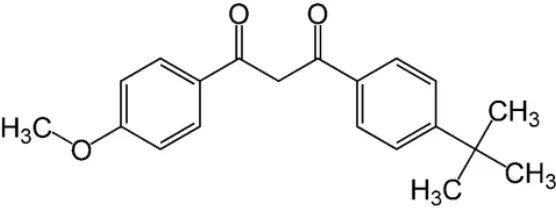
of multipurpose cosmetic lotions [49]. Avobenzone is dibenzoyl methane derivative. It is oil soluble crystalline solid [50], [58]. Mesoporous silicas (MSs) containing avobenzone or oxybenzone effectively ameliorated UVA-induced skin disruption and reduced the possible toxicity elicited by percutaneous penetration [56]. Photosensitization by drugs is a problem of increasing importance in modern life. This phenomenon occurs when a chemical substance in the skin is exposed to sunlight. Photosensitizing drugs are reported to cause severe skin dermatitis, and indeed, it is generally advised to avoid sunbathing and to apply sunscreen. In this context, the NSAID diclofenac is a photosensitive drug, especially when administered in topical form. avobenzone provides partial photoprotection to diclofenac from photocyclization to carbazole derivatives [52]. Avobenzone is widely used in various personal care products, is present in swimming pools, and is toxic to aquatic organisms. Avobenzone induces mitochondrial dysfunction-mediated apoptosis leading to abnormal placentation during early pregnancy [53]. Avobenzone was more unstable/toxic than octyl p-methoxycinnamate (an organic UV-B filter originally developed in the 1950s, has been one of the most widely used sunscreens for decades) [54,55]. Octocrylene helps stabilize avobenzone, which is good, but it is a known endocrine disruptor that also releases free radicals [57].
Figure 9. Avobenzone
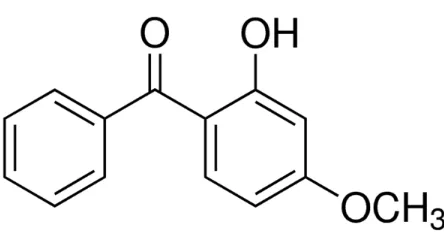
Figure 10. Oxybenzone
7.4.Dioxybenzone: Dioxybenzone is an approved sunscreen ingredient in concentrations up to 3% [67]. The benzophenone sunscreens, octabenzone (UV-1) and dioxybenzone (UV-2) were found to exhibit significant chemopreventive activity against mouse skin carcinogenesis which correlated with their antioxidant potency [63]. In a study aimed to qualify photo-safety screening, benzophenone derivatives and ketoprofen exhibited significant reactive oxygen species (ROS) generation upon exposure to simulated sunlight, however ROS generation from sulisobenzone and dioxybenzone was negligible [68]. Polymerization with natural polymer pullulan not only provides a long polymer backbone to dioxybenzone, but also keeps the distance between benzene rings of the dioxybenzone and prevents reduction of photoabsorption intensity. UV/vis spectrophotometry confirmed that dioxybenzone-pullulan polymer and dioxybenzone demonstrated similar UV absorption. Dioxybenzone showed higher plasma concentration after multiple applications compared to that of dioxybenzone-pullulan polymer [64]. Chlorine is used as a chemical disinfectant in swimming pools. Its reactivity suggests sunscreen components might be chlorinated, altering their absorptive and/or cytotoxic properties. Chlorinated oxybenzone and dioxybenzone (caused significantly more cell death than unchlorinated controls. In contrast, chlorination of sulisobenzone actually reduced cytotoxicity of the parent compound. Exposing a commercially available sunscreen product to chlorine also resulted in decreased UV absorbance, loss of UV protection, and enhanced cytotoxicity [65]. Bromal hydrate was also detected as one of the byproducts generated by oxybenzone and dioxybenzone, which is highly toxic, the "positive halogen" properties of bromal hydrate are responsible for its high toxicity [66]. In addition to allergic reactions, concerns have been raised about the relative ease of which benzophenone is absorbed into the skin and may promote generation of potentially harmful free radicals [69].
Figure 11. Dioxybenzone
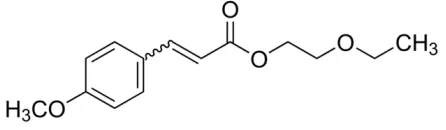
world as UV filters. However, their maximum concentrations in cosmetic products are restricted due to their adverse effects, which include contact and a photocontact allergies, phototoxic contact dermatitis, contact dermatitis, estrogenic modulation and generation of reactive oxygen species. 4-hydroxycinnamic acid, which is currently indexed as a skin-conditioning cosmetics ingredient, has been widely tested in vitro and in vivo as a new drug candidate for the treatment of hyperpigmentation [61]. Cinnamates have replaced PABA as the next most potent UVB absorber and include octinoxate (OMC) and cinoxate (2-ethoxyethyl-methoxycinnamate). Cinoxate is less commonly used [62]. Major Key players with cinoxate are Major Key Players are Parchem(US), Carbosynth Limited(UK), Synchem UG & Co. KG(DE) [110].
Figure 12. Cinoxate
7.6. Octinoxate: Octinoxate (Octyl Methoxycinnamate, OMC) is a cinnamate ester and common ingredient in sunscreen and other skin care products to minimize DNA photodamage. It was originally developed in 1950's as an organic UV-B filter that absorbs UV-B rays from sun. It is often combined with nanoparticles or other water-resistant liposomes in formulations to increase the localization at the epidermis and decrease the risk of percutaneous absorption [105]. OMC is the most commonly used UVB filter in the US. It is not as potent a UVB absorber as padimate O; for this reason, other UVB absorbers are used in combination to increase the SPF. OMC is not very photostable and degrades in the presence of sunlight after a short period of time. OMC is a potent UVB absorber and is the most frequently used sunscreen ingredient. The efficacy of OMC can be further increased when encapsulated in polymethyl methacrylate microsphere [62]. Due to low water solubility (<1 mg/L), OMC is suitable for most waterproof sunscreen formulations [106]. Hawaii legislature passed a bill that outlaws products that contain Oxybenzone and OMC, effective January 2021. The bill is based on studies that show that oxybenzone may harm coral larvae and that both compounds may “bleach” coral, causing it to lose symbiotic algae [107-109]. OMC has been detected in human urine, blood and breast milk, which indicates that humans are systemically exposed to this compound. OMC is an endocrine disruptor that mimics estrogen and can disrupt thyroid function [112,113].
7.7.Homosalate: Homomenthyl salicylate or 3,3,5-Trimethylcyclohexyl Salicylate. After topical application of gel, the bioavailability of HMS was 5.4 ± 1.1 and 4.2 ± 0.6% for high and low doses (10 and 20 mg), respectively. Homosalate (HMS) is an UV filtering agent used in sunscreens and other cosmetics for skin protection purposes. It is a viscous or light yellow to slightly tan liquid or oil, derives from salicylic acid [70,71]. Salicylates are weak UVB absorbers and they are generally used in combination with other UV filters. Both octisalate and homosalate are water insoluble that leads to their high substantivity, which is the ability to retain its effectiveness after exposure to water and perspiration [72]. HMS does not have endocrine disruptor effects on thyroid function and the pubertal development of female and male rats [73]. Another study says HMS is a potential endocrine disruptor and studies in cells suggest it may impact hormones. In addition to direct health concerns following homosalate exposure, the chemical may also enhance the absorption of pesticides in the body [75]. Homosalate suppressed the ear edema response to dinitrobenzene, a possible mechanism of action of the salicylates is suppression of COX [114].
Figure 14. Homosalate (Homomenthyl salicylate)
Figure 15. Octisalate (Ethylhexyl salicylate)
7.9.Meradimate (Menthyl Anthranilate): Meradimate, before known as menthyl anthranilate, is used in a maximal concentration of 5% in different products as a UV filter. It is currently required to be named as meradimate in all FDA approved OTC products. Meradimate is approved by the FDA and Health Canada to be used as an ingredient in sunblocking products Meradimate is a monoterpenoid, a broad-spectrum ultraviolet absorber used as a chemical filter in commercial sunscreens [76]. A moderately effective UVA protector not permitted for use in Europe or Japan. Its protective effective action does not cover completely the UVA rays as it only reaches 336 nm. This has been proven even though meradimate has a theoretical protective coverage range between 200-380 nm. Its function is related to the intrinsic structure of meradimate which is an ortho-disubstituted aminobenzoate. This structure allows easy electron delocalization and shifts in the maximum absorption. Poor photoprotection reported by Rodrigues et.al, 2018 makes it a poor choice for an efficient, efficacious sunscreen chemical filter [76], [87,88].
Figure 16. Meradimate (Menthyl Anthranilate)
profile of octocrylene spans from 290 to 360 nm with peak absorption at 307 nm. The compound has an excellent safety profile with low irritation, phototoxicity, and photoallergic potential. Octocrylene may be used in combination with other UV absorbers to achieve higher SPF formulas and to add stability. [62]. Photostability refers to the ability of a molecule to remain intact with irradiation. Photostability is potentially a problem with all UV filters. This issue been raised specifically with avobenzone. This effect may degrade other sunscreens in a formulation, including octyl methoxycinnamate. Octocrylene and some of the newer suncreens, including BEMT, stabilized avobenzone [97]. Chlorination reactions showed that only octocrylene was stable in chlorinated seawater [66]. UVA and UVB screening potentials of octocrylene and zinc oxide formulations were compared in the 290-400 nm wavelength region. Zinc oxide loaded SLN suspensions were found to be more effective in the UVA region while octocrylene loaded ones performed better in the UVB region [98]. Octocrylene appears to be a strong allergen leading to contact dermatitis in children and mostly photoallergic contact dermatitis in adults with an often-associated history of photoallergy from ketoprofen. Patients with photoallergy from ketoprofen frequently have positive photopatch test reactions to octocrylene. These patients need to be informed of sunscreen products not containing octocrylene, benzophenone-3, or fragrances [99,100]. The clinical studies show that octocrylene is both a photocontact allergen and a contact allergen [103]. Octocrylene's ability to cause contact allergy is probably attributable to its reactivity towards lysine [101]. A reduction of the UV filter in the formulation packed in HDPE/LDPE material can occur over time, reducing the protective effect of the product when applied to the skin [102]. Wide application in cosmetics leads to contamination of the aquatic environment, mainly affects transcription of genes related to developmental processes in the brain and liver as well as metabolic processes in the liver (bioaccumulation study in male zebrafish) [104].
Figure 17. Octocrylene (2-Ethylhexyl-2-cyano-3,3 diphenylacrylate)
should be exercised when administering this substance to infants younger than six months of age due lack of understanding of its metabolism and absorption. It is widely used as an ingredient in many cosmetics at an average concentration of 1.25% (0.5–2.0%) in Korea. It is toxic to the following four organs: testis, epididymis, spleen, and liver. In addition, experiments using human keratinocytes found that ethylhexyl dimethyl PABA inhibits cell growth and DNA synthesis at low concentrations, and halted the cell cycle of malignant melanoma cell line (MM96L) at the G1 phase. According to the EWG database, it is used in many products including lipstick, conditioner, shampoo, anti-aging agents, hair spray, and sunscreen. No significant reproductive toxicity, genotoxicity, carcinogenicity, skin sensitization, skin irritation, or phototoxicity was observed in response to Padimate O administration (limited studies there, requires further investigations) [97], [118,119].
Figure 18. Padimate O (Ethylhexyl dimethyl PABA)
Figure 19. Ensulizole (Phenylbenzimadazole sulfonic acid)
7.13. Sulisobenzone: A benzophenone does not undergo decomposition to an inactive form if it does not couple to target molecules. Instead, it degrades from the photo-excited state back to its initial state, so it can be once again photolyzed to an active state. This process increases the likelihood that the benzophenone will couple to a target molecule during the photoreaction. Benzophenones are used as photoinitiators, fragrance enhancers, ultraviolet curing agents, and, occasionally, as flavor ingredients; they are also used in the manufacture of insecticides, agricultural chemicals, and pharmaceuticals and as an additive for plastics, coatings, and adhesives. The UV-filter substance Sulisobenzone (BP-4) is widely employed in sunscreens and other personal care products. Sulisobenzone is approved by the FDA in concentrations of up to 10% and in Canada, is approved by Health Canada at the same concentrations. It works to filter out both UVA and UVB rays, protecting the skin from sun UV damage. The benzophenones are a group of aromatic ketones that have both pharmaceutical and industrial applications. Benzophenones may be found organically in fruits such as grapes, used primarily as a UVA absorber, but boosts SPF values in combination with other UVB absorbers. Sulisobenzone water soluble, somewhat unstable, and used with less frequency. It can cause skin and eye irritation. Does not penetrate the skin to a large degree, but enhances the ability of other chemicals to penetrate. safety use in sunscreen is questionable [88], [126-130].
Figure 20. Sulisobenzone (benzophenone-4/BP-4)
trolamine salicylate has no distinct odor which improves patient acceptability. Trolamine or triethanolamine salicylate has good water solubility. It is mostly used for water soluble sunscreens to help increase the SPF of a cosmetics owing to their substantivity to the skin. It also displays low systemic absorption upon dermal or topical administration and has low skin irritant properties. Approved in both the US and Canada, trolamine salicylate is used in concentrations of up to 12%. It filters UVB rays, but has no effect on UVA rays, which means it can’t be relied on alone as a sunscreen. It has found to cause photocontact dermatitis [106], [131,132]. (See also 5.1. Sunburn and Sunscreen Facts)
Figure 21. Trolamine salicylate
are used, but cannot completely prevent these effects. TiO2, however, has currently attracted more scientific attention than ZnO [40], [133,134].
7.16. Zinc oxide: Sunscreens containing metal oxide nanoparticles appear transparent on the skin and provide excellent protection against sunburn caused by UV radiation. Zinc oxide is a widely used broad-spectrum sunscreen, repeated application of ZnO-NPs to the skin, as used in global sunscreen products, appears to be safe, with no evidence of ZnO-NP penetration into the viable epidermis nor toxicity in the underlying viable epidermis. It was associated with the release and penetration of zinc ions into the skin, but this did not appear to cause local toxicity. In the past two decades, ZnO NPs have become one of the most popular metal oxide nanoparticles in biological applications due to their excellent biocompatibility, economic, and low toxicity. ZnO NPs have emerged a promising potential in biomedicine, especially in the fields of anticancer and antibacterial fields, which are involved with their potent ability to trigger excess ROS production, release zinc ions, and induce cell apoptosis. In addition, ZnO NPs have superior antibacterial, antimicrobial, and excellent UV-blocking properties. ZnO NPs-exposed HepG2 cells presented higher cytotoxicity and genotoxicity, which were associated with cell apoptosis mediated by the ROS triggered mitochondrial pathway. In the brain, the oxidative stress and inflammation reaction were found after ZnO NP exposure and more remarkable changes were identified in aged individual. These kinds of neurotoxicity might due to the destruction of the BBB integrity caused partly by ZnO NPs-induced systemic inflammation [135-138].
8. Sunscreen Formulation
On the surface, sunscreen products are pretty simple. They consist of a delivery vehicle containing one or more sunscreen active ingredients. When applied to the skin, these sunscreen actives intercept solar UV rays before they can damage the underlying skin. However, while conceptually simple, a detailed analysis reveals that sunscreen formulations are quite complex, requiring careful selection of sunscreen active and vehicle components to control multiple performance and in-use parameters [164].
Exhibit 9. Aqueous, Non- Aqueous and Clear Sunscreen Lotion Formulation
Aqueous Lotion Non- Aqueous Lotion Clear Lotion
Ingredients (%) Ingredients (%) Ingredients (%)
Filtrosol B 7 Giv-Tan F/Cinoxate 1.5 Isobutyl PABA 5
Methyl Cellulose 0.5 Denatured ethyl alcohol 65 Tween 20 9
Glycerin 2 Oleyl alcohol 10 Alcohol SD 40 45
Ethyl alcohol 10 Water 23 Water 41
Water 80.5 Perfume q.s.
Perfume q.s.

![Figure 2. Mechanism of UV induced immunosuppression [130], [139-141]. UVR, in particular the UVB range, suppresses the immune system in several ways](https://thumb-us.123doks.com/thumbv2/123dok_us/8027389.1335562/9.595.131.466.97.467/figure-mechanism-induced-immunosuppression-particular-range-suppresses-immune.webp)
![Figure 3. UVB response in melanoma [85]. UVB exposure triggers macrophage and neutrophil infiltration into the skin](https://thumb-us.123doks.com/thumbv2/123dok_us/8027389.1335562/10.595.71.522.226.489/figure-response-melanoma-exposure-triggers-macrophage-neutrophil-infiltration.webp)
![Figure 4. Mechanisms of Photoaging and Chronological Skin Aging [143], [147-150]. Photodamaged skin displays variable epidermal thickness, dermal elastosis, decreased/fragmented collagen, increased matrix-degrading metalloproteinases, inflammatory infiltr](https://thumb-us.123doks.com/thumbv2/123dok_us/8027389.1335562/13.595.72.524.274.558/mechanisms-photoaging-chronological-photodamaged-thickness-fragmented-metalloproteinases-inflammatory.webp)
![Figure 5. The Effect of Oral Vitamin D3 Intervention on Skin Inflammation [26]. As depicted in panel A, levels of vitamin D3 are at baseline levels in the absence of high dose oral vitamin D3 intervention](https://thumb-us.123doks.com/thumbv2/123dok_us/8027389.1335562/17.595.76.524.272.601/effect-vitamin-intervention-inflammation-depicted-baseline-vitamin-intervention.webp)
![Figure 6. Use of Sun Protective [178]. Public guidelines for sun protection have been updated as stakeholders warn that Australians are using sunscreen as a “suit of armour”](https://thumb-us.123doks.com/thumbv2/123dok_us/8027389.1335562/19.595.68.526.117.418/figure-protective-guidelines-protection-updated-stakeholders-australians-sunscreen.webp)
![Figure 7. Give me a tan! - Megan Fox [176,177]. Megan Fox comes up the most when searching online for pale vs](https://thumb-us.123doks.com/thumbv2/123dok_us/8027389.1335562/22.595.71.528.181.530/figure-megan-fox-megan-fox-comes-searching-online.webp)