CSEIT172214 | Received: 05 March 2017 | Accepted: 14 March 2017 | March-April-2017 [(2)1: 22-25]
International Journal of Scientific Research in Computer Science, Engineering and Information Technology © 2017 IJSRCSEIT | Volume 2 | Issue 2 | ISSN : 2456-3307
22
Load Balancing and Bandwidth in Grid Computing
Environments
J. Preethi1, R. Jayasudha2
1Assistant Professor, Department of CSE, Anna University Regional Campus, Coimbatore, Tamilnadu, India 2PG Scholar, Department of CSE , Anna University Regional Campus, Coimbatore, Tamilnadu, India
ABSTRACT
Load Balancing is the challenging tasks in the Computing infrastructure. These two tasks are interdependent. Well defined computing infrastructure may reach through a Blue Print is called GRID. Even advance Resource Management algorithms may suffer due to improper load distribution among the available resources in the Grid environment. Load balancing algorithm plays important role in the resource management and also gives much impact in the performance point of view. An Improved Enhanced Gridsim with Deadline Control (IEGDC) model is used to reduce bandwidth and for load balancing. It enhances the utilization of the resources and prevents the resource overloading. The selection method for the scheduling proposed here is called Fastest Bandwidth to Highest Capacity (FBHC). Our selection method considers the state of resource bandwidth and capacity of the resources. The incorporation of the said features of the proposed method makes it quite attractive in grid applications. It is simulated on GridSim platform.
Keywords: Grid Computing, Load Balancing, Bandwidth, Scheduling.
I.
INTRODUCTION
Grid computing is a collection of computers or systems that are situated at different locations that are used to perform particular task . All the systems are connected with each other generally in mesh like network.These systems are connected with one system which is connected with other system called grid manager [2]. Grid manager manages the things like scheduling, load balancing, task distribution, task assignment etc.
Grid Computing is a distributed computing that involves sharing of resources over the Internet. Middlewares like Globus Toolkit, UNICORE designed with grid mainly allow coordination of heterogeneous resources as well as Virtual organizations.
Each node in grid is dedicated to particular application so nodes collectively perform variety of tasks. Resource Management, Scheduling and Load Balancing are the key concepts in grid systems [3]. One of the major issues in grid computing is load balancing. Classification of load balancing is: Static - Dynamic,
Centralized - Decentralized, Homogeneous - Heterogeneous. Techniques like: Ant Colony Optimization, Threshold based and Optimal Heterogeneous [4] are used by some researcher to balance the load.
This survey paper discusses set of parameters to be used for comparing performance of each of them. In addition to that it says which technique is more useful for grid environment.
II.
METHODS AND MATERIAL
Related Works:
There are different techniques available to balance the load in grid environment:
Centralized
Decentralized
Static
Figure 2. Types of load balancing techniques Centralized
One system work as central system that gathers information of load of all the systems than distribute new task to all the systems according to the load capacity of that system. Sometimes it is possible that if server goes down than whole grid system is of no use.
Decentralized
All individual systems have their own load information. By message communication all the system get load information of other systems also. But in large area there are so many systems in grid environment so it is very difficult to know the load information by message communication. It makes communication overhead and creates traffic.
Static
As per its name, there are predefined criteria to balance the load. So if any problem occurs at run time than it create problem. Because now a day the scenario is all depend on run time management.
Dynamic
According to the today’s need, there is runtime change in a load of a grid. So to handle such situations, underneath load balancing algorithm are to be skilled for it. Several researchers have proposed set of algorithms for the same.
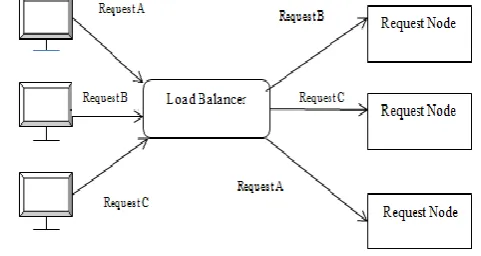
Figure 3. Load Balancer in GRID computing
Pawan Kumar Tiwari and Deo Prakash Vidyarthi (2016) presents an improved auto controlled ACO algorithm using the lazy ant concept. Performance study reveals the efficacy and the efficiency achieved by the proposed algorithm. A comparative study of the proposed method with some other recent meta-heuristics such as auto controlled ant colony optimization algorithm, genetic algorithm, quantum genetic algorithm, simulated annealing and particle swarm optimization for grid scheduling problem exhibits so.
Sun et al (2016) the nodes with minimum load ratio in virtual network providing layer to map, in order to avoid the appearance of “bottleneck node”. During link mapping stage, we design a genetic-algorithm-based fault-tolerant virtual link mapping (GFVLM) algorithm to ensure the fault tolerance and reliability of the network. By this method, we select two disjoint links for each request including a primary link and a backup link. The evaluation results show that our proposed method can balance network load, have better fault tolerance ability and improve the reliability of smart grid communication networks
heterogeneity, scalability and resource selection characteristics.
Keerthika P and Suresh P (2015) Load Balanced Min-Min (LBMM) minimizes the makespan in addition to improves the utility connected with resources. Hierarchical approach for load balancing [41] is presented that leads to user’s satisfaction as well as for fault tolerance factors. The different tasks are submitted hierarchically .Load is computed for each processing elements (PE) using distinct metrics. Scheduling is performed at three levels and better efficiency is achieved for fault tolerant concepts.
Naglaa M. Reda (2015) proposed an improved heuristic algorithm of Sufferage is proposed. Its goal is to maximizing the resource utilization and minimizing the makespan. We adapt a new strategy for selecting proper resources. The main two criteria are the sufferage value and the minimum completion time. Our experimental results show that the proposed algorithm outperforms other algorithms in terms of flow time, utilization, and makespan.
Mohd Kamir Yusof and Muhamad Azahar StapaScheduling (2010) process carried out by a Tabu Search Algorithm discusses four stages to perform the scheduling function so that global optimal solution can be obtained. It is applicable for dynamic situations although the number of machines is growing. Small as well as Medium sized companies get optimum profit from grid operation processes by saving cost related to higher machine powers.
Darmawan et al (2013) Load balancing algorithm for heterogeneous computing resources in a grid computing environment using the integration of the two heuristic optimization algorithm Genetic Algorithm (GA) and Tabu Search (TS) as the Integration of Genetic and Tabu Search (IGTS) . IGTS algorithm utilizes the strengths of each algorithm used , the first force in the GA global search and local search in both the strength of the TS method . IGTS algorithm will map the jobs to be processed on the computational resources that are used to get a faster time makespan and the minimum value of balance.
Karthikumar et al (2013) This article designs a Grid Scheduler, which selects the Minimum Loaded Site for the candidate set of nearest sites, Execute the job within
the Grid. Then the job is dispatchhed to the Fault Detector based on the availability of the site. The load balancing task in the grid environment will significantly improve the performance of the grid environment. Fault tolerance is a main technique in grid environment. This technique will used to execute the job from the processor failure. To achieve high throughput and resource utilization we propose a Fair scheduling algorithm. Trails for the proposed system are conducted using Grid Simulation Toolkit (GridSim). Zhang, Zehua, and Xuejie Zhang (2010) improves many aspects of the related Ant Colony algorithms which proposed to realize load balancing in distributed system, Furthermore, this mechanism take the characteristic of Complex Network into consideration. Finally, the performance of this mechanism is qualitatively analyzed, and a prototype is developed to enable the quantitative analysis, simulation results manifest the analysis.
Yusof et al (2010) A good scheduling algorithm is normally shows lower value of total tardiness and schedule time. The implementation Tabu Search algorithm was tested and evaluated on universal datasets using GridSim tool. The results indicate performance of tardiness is directly related to number of machines up to certain number of resources. Small and medium company can use grid in operation process because it saves cost and times.
Wenpeng et al (2010)combined with the advantages of genetic algorithm, clonal selection algorithm and simulated annealing, brings forward a genetic clonal annealing algorithm and applied to solve grid computing task scheduling problem. From the analysis and experiment result, it is concluded that this algorithm is superior to genetic algorithm and simulated annealing.
A.Paulin Florence,V(2014) Shanthiproposed algorithm improves the execution time while diminishing the waiting time. Firefly algorithm (FA) purposed for load balancing maintain the index table by noticing the accessibility of node. After that load index is calculated for available resources and load balancing operation is carried out by using firefly approach.
Multiple client setting is thought about where present system burden is required to be wind up being adjusted upon the nodes together with existing nodes.
Jasma Balasangameshwara and Nedunchezhian Raju (2012) Global as well as Greedy based algorithms are taken to gauge the system performance. Hybrid policy of fault tolerant in grid environment joins both the static and also dynamic load balancing strategies to locate the suitable sites. This approach basically stresses on neighbor and also cluster organized load balancing algorithms.
Gurveer Kaur Brar and Amit Chhabra (2016) presents an extensive review of different meta-heuristic techniques that are applicable in grid and cloud systems to generate optimal load balancing solution.
Mushu Li, Peter He, and Lian Zhao (2016) present an exact approach in order to allocate the elastic loads based on the inelastic load’s information considering the group and node power upper constraints. For online approach, the reference level is computed dynamically using historical demand data to minimize the fluctuation in the grid, and the elastic loads can only be scheduled in the future time slots.
III.
RESULTS AND DISCUSSION
Table1.
Comparison of Load balancing techniques
Algorithms Approach Optimization
It will benefit to small as
Search is valid for limited
PROPOSED SYSTEM
An Improved Enhanced Gridsim with Deadline Control (IEGDC) model is used to reduce bandwidth and for load balancing. It enhances the utilization of the resources and prevents the resource overloading. The selection method for the scheduling proposed here is called Fastest Bandwidth to Highest Capacity (FBHC). Our selection method considers the state of resource bandwidth and capacity of the resources. The incorporation of the said features of the proposed method makes it quite attractive in grid applications. It is simulated on GridSim platform.
We calculate the current load of all resources. we check the state of the resource periodically. The states are classified into three categories: underloaded, normally loaded, and overloaded. we make a list of Gridlets which we want to transfer from an overloaded resource to an underloaded resource and then insert that list of
Gridlets into the unfinished Gridlet list for subsequent scheduling.
Load balancing and bandwidth
Grid computing still has the problem of load balancing and bandwidth due to its characteristics and the complex nature of the problem itself. Load balancing algorithms in classical distributed systems, which usually run on homogeneous and dedicated resources, cannot work well in the Grid architectures. Grids has a lot of specific characteristics, like heterogeneity, autonomy, scalability, adaptability and resources computation-data separation, which make the load balancing problem more difficult. It is a major and more important challenge in grid computing.
ADVANTAGES OF PROPOSED SYSTEM
To reduce the bandwidth using Improved Enhanced Gridsim with Deadline Control
For load balancing in grid computing
To improve the grid scheduling Algorithms Annealing
IV.
CONCLUSION AND FUTURE
ENHANCEMENT
The lazy ant’s inclusion into AACO introduces a good balance between diversification and convergence of the search process i.e. the exploration versus exploitation trade-off. Simulation results, for a number of benchmark job scheduling problem, shows that IAC-ACO outperforms QGA, SA, GA based job scheduling models and has better edge compared to AACO and PSO based models on several performance parameters. In future, the application of the proposed algorithm over other problem domain e.g. dynamic travelling salesman problem with traffic factor , cloud computing, mobile cloud computing etc. will be explored. More robust algorithm for IPC case will also be a point of quest.
V.
REFERENCES
[1]. Belabbas Yagoubi and Yahya Slimani, "Dynamic Load Balancing Strategy for Grid Computing," World
Academy of Science, Engineering and
Technology,2006.
[2]. Mohd Kamir Yusof, Muhamad Azahar
Stapa,"Achieving of Tabu Search Algorithm for Scheduling Technique in Grid Computing Using GridSim Simulation Tool: Multiple Jobs on Limited Resource," International Journal of Grid and Distributed Computing,Vol. 3, No. 4, December, 2010.
[3]. C.Kalpana, U.Kartichk Kumar and R.Gogulan ,"A Randomized Load Balancing in grid using Max Min PSO Algorithm," International Journal of Research in Computer Science,ISSN 2249-8265,2012.
[4]. S.K.Karthikumar, 2M.Udhaya Preethi, P.Chitra," Fair Scheduling Approach For Load Balancing and Fault Tolerant in Grid Environment," IEEE International Conference on Emerging Trends in Computing, Communication and Nanotechnology (ICECCN), 2013.
[5]. Tiwari, Pawan Kumar, and Deo Prakash Vidyarthi. "Improved auto control ant colony optimization using lazy ant approach for grid scheduling problem." Future Generation Computer Systems 60 (2016): 78-89.
[6]. Jagdish Chandra Patni, M.S. Aswal, Aman Aswal,Paras Rastogi. A Dynamic and Optimal Approach of Load Balancing in Heterogeneous Grid Computing Environment. 2015 Springer International Publishing Switzerland. Emerging ICT for Bridging the Future Vol-2, Page No: 447-455.
[7]. Sun, Li-Qian, Shao-Yong Guo, Si-Ya Xu, Zhu Liu, and Lei Wei. "A load-balancing-based fault-tolerant mapping method in smart grid virtual networks." In Network Operations and Management Symposium (APNOMS), 2016 18th Asia-Pacific, pp. 1-6. IEEE, 2016.
[8]. Keerthika P, Suresh P,"A Hierarchical Load Balanced Fault tolerant Grid Scheduling Algorithm with User Satisfaction’" WSEAS Transactions on Computers, Vol.14, 2015.
[9]. Naglaa M. Reda, "An Improved Sufferage Meta-Task Scheduling Algorithm in Grid Computing Systems", International Journal of Advanced Research (2015), Volume 3, Issue 10, 123 -129.
[10]. Darmawan, Irfan, and Yoga Priyan. "Integration of Genetic and Tabu Search algorithm based load balancing for heterogenous grid computing." In Computer, Control, Informatics and Its Applications (IC3INA), 2013 International Conference on, pp. 325-329. IEEE, 2013.
[11]. Karthikumar, S. K., M. Udhaya Preethi, and P. Chitra. "Fair scheduling approach for Load balancing and Fault tolerant in grid environment." In Emerging Trends in Computing, Communication and Nanotechnology (ICE-CCN), 2013 International Conference on, pp. 446-451. IEEE, 2013.
[12]. Zhang, Zehua, and Xuejie Zhang. "A load balancing mechanism based on ant colony and complex network theory in open cloud computing federation." In Industrial Mechatronics and Automation (ICIMA), 2010 2nd International Conference on, vol. 2, pp. 240-243. IEEE, 2010.
[13]. Wenpeng, Zhang, and Liu Hongzhao. "A load balancing method based on genetic clonal annealing strategy in grid environments." In Educational and Network Technology (ICENT), 2010 International Conference on, pp. 549-552. IEEE, 2010.
[14]. A. Paulin Florence,V. Shanthi,"A Load Balancing Model Using Firefly Algorithm In Cloud Computing," Journal Of Computer Science, 10 (7): 1156-1165, 2014.
[15]. Q.Zheng and B.Veeravalli,"On the Design of Mutually Aware Optimal Pricing and Load Balancing Strategies for Grid Computing Systems," accepted by IEEE Transactions on Computers,Vol 63,No 7,July 2014.