Article
1
Combining living microorganisms with regenerated
2
silk provides nanofibril based thin films with heat
3
responsive wrinkled states for smart food packaging
4
Luca Valentini1,*, Silvia Bittolo Bon1 and Nicola Pugno2,3,4*
5
1 Dipartimento di Ingegneria Civile e Ambientale, Università di Perugia, UdR INSTM, Strada di Pentima 4,
6
05100 Terni - Italy. E-mail: [email protected]
7
2 Laboratory of Bio-Inspired and Graphene Nanomechanics, Department of Civil, Environmental and
8
Mechanical Engineering, University of Trento, Trento, Italy. E-mail: [email protected]
9
3 School of Engineering and Materials Science, Queen Mary University of London, Mile End Road, London,
10
United Kingdom
11
4 Ket-Lab, Edoardo Amaldi Foundation, Italian Space Agency, via del Politecnico snc, I-00133 Roma, Italy
12
* Correspondence: [email protected]; Tel.: +39-0744-492924; [email protected]; Tel.:
13
+39-0461-282525
14
15
Abstract: Regenerated silk (RS) is a protein-based “biopolymer” that enables the design of new
16
materials; here we sought to “bionic” the process of regenerated silk production by fermentation
17
assisted method. Based on yeast’s fermentation, here we produced a living hybrid composite made
18
of regenerated silk nanofibrils and a single-cell fungi, the Saccharomyces Cerevisiae yeast extract, by
19
fermentation of such microorganisms at room temperature in the dissolution bath of silkworm silk
20
fibers. The fermentation-based processing enhances the beta-sheet content of the RS, corresponding
21
to a reduction in water permeability and CO2 diffusion through RS/yeast thin films enabling the
22
fabrication of mechanically robust film that enhances the food storage durability. Finally a
23
transfer print method, which consists of transferring RS and RS/yeast film layers onto self-adherent
24
paraffin substrate, was used for the realization of heat – responsive wrinkles by exploiting the high
25
thermal expansion of the paraffin substrate that regulates the applied strain, resulting in a
26
switchable coating morphology from the wrinkle-free state to a wrinkled state if the food
27
temperature overcomes a designed threshold. We envision that such efficient and smart coatings
28
can be applied for the realization of smart packaging that through such temperature sensing
29
mechanism can be used to control the food storage conditions.
30
Keywords: bionic composites; thin films; mechanical properties.
31
32
1. Introduction
33
Living microorganisms have long been used in food preservation [1,2]; such microorganisms
34
form living surfaces that provide an attractive platform to the development of functional materials.
35
At present, biotech companies uses fungi to produce valuable products [3], thus combining the
36
fermentation mechanism of some microorganisms with biomaterials could give a raise to bionic
37
composites with novel properties.
38
Between such novel products, innovative packaging solutions to increase the shelf-life of fresh
39
fruits by slowing down their metabolism so they remain fresh and appetizing for longer and the
40
development of sensors to monitor if perishable food in the cold chain is maintained in the desired
41
temperature range to prevent the growth of pathogens and spoilage microorganisms, are still
42
challenging.
43
Concerning the sensing issue, spontaneous generation of wrinkles induced by the buckling of a
44
thin skin due to thermal contraction of the underlying substrate may be used as diffraction gratings
45
in optical sensors, and as the basis for monitoring temperature changes in food cold chain. In this
46
regard, micro/nanoscale surface patterns obtained by coupling a stiff skin to a soft substrate have
47
been used to create reversible patterns that are responsive to temperature and provided unique
48
surface morphology to sense temperature changes [4-7].
49
From the material point of view, silk fibroin is an ideal candidate for the packaging applications
50
since it is a biocompatible structural protein that can processed to obtain films which recently have
51
been used as biodegradable and edible sensors to monitor food degradation [8-10]. The
52
polymorphism of silk fibroin (i.e. random coil, silk I, and silk II structures) can be also tailored by
53
controlling the content of β-sheet crystals that enables the correct gas exchange and water vapour
54
permeability through silk-based membranes [11-13]. Between the different fabrication methods,
55
transfer printing is the most known method for interfacing silk on soft substrates [14]. In this regard,
56
the hidden strength and stiffness of natural honeycomb walls constructed from recycled silk and
57
wax secreted by worker bees [15-17] is reminiscent of modern fiber-reinforced composite laminates.
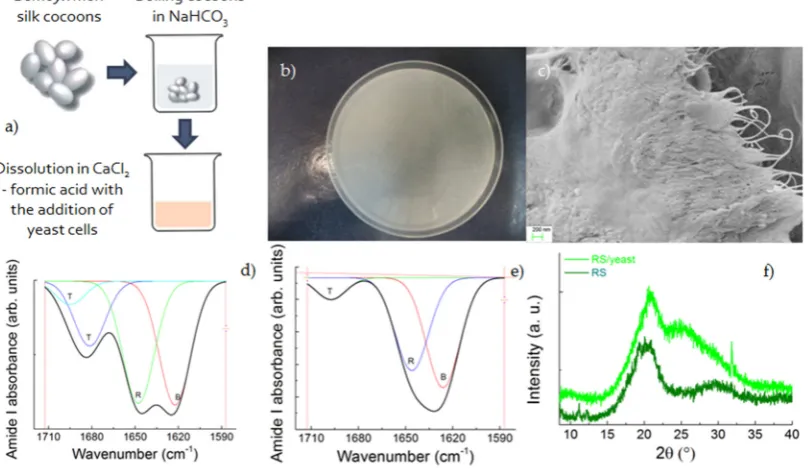
58
Taking inspiration from the honeybee comb cell wall, a self-adhesive and soft thermoplastic
59
paraffin wax, can be used to stick RS film to produce a bilayer system [18]. Being the paraffin wax a
60
material with high thermal expansion coefficient, wrinkles occur to minimize the total energy of
61
such bilayer system when the compressive strain, caused by the thermal expansion coefficients and
62
rigidities mismatches between the skin layer and the substrate induced by thermal stimulus.
63
Inspired by our previous work [19] on the production of beer’s yeast cells/carbon nanotube
64
composite directly by fermentation of the yeast extract in presence of carbon nanotube aqueous
65
dispersion, we therefore designed a robust composite coating combining inert (RS) and living parts
66
(brewer’s yeast). It was observed that once Saccharomyces Cerevisiae yeast cells were fermented by
67
nutrient addition into a silk fibroin solution, the regenerated silk shows a higher content of
68
beta-sheet structures. Moreover, the microorganism growth increased the cell density and reduced
69
the porosity of the RS membrane limiting the exchange of water and gas diffusion. As conceptual
70
proof, we demonstrated as an example that the deposition of such living coating on fruits helps the
71
preservation of their shelf-life. Finally, we demonstrate that RS based film layers can be laminated
72
onto a paraffin wax substrate for the realization of temperature – responsive bilayer systems.
73
2. Materials and Methods
74
For the preparation of RS film, commercial B. mori silk cocoons were boiled for 1 h in distillated
75
water solution of 0.025 wt % NaHCO3, rinsing with distilled water every 30 min. to remove the
76
sericin. According to the method adopted by Kaplan et al. [20], the degummed silk (i.e. 0.2 g) was
77
then added to a CaCl2 (i.e. 0.14 g) - formic acid (i.e. 20 ml) solution and stirred over the night at 40°C
78
yielding an 1 wt % solution. Water solution (50 mg/ml) of Saccharomyces Cerevisiae based commercial
79
beer yeast extract was prepared separately by mechanical stirring at 30 °C for 1 h. After that, sucrose
80
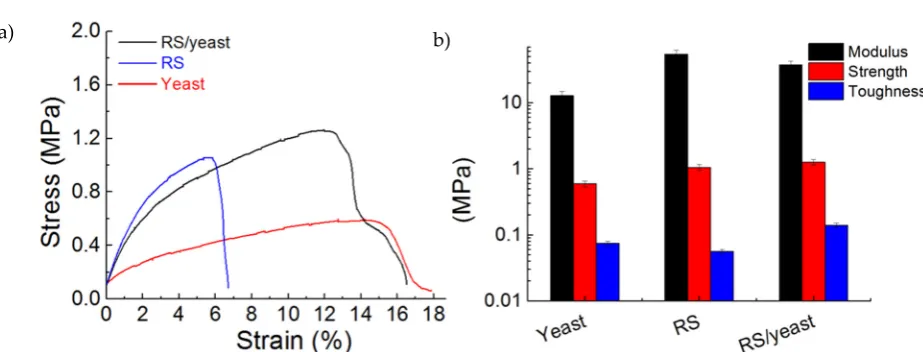
was added to start the fermentation. The amount of sugar added is usually between 3 and 5 times
81
the weight of the medium. Water solution of fermenting yeast was then added to the silk fibroin
82
solution. RS/yeast films were prepared by leaving the silk-yeast solution to evaporate for 12 h in a
83
polystyrene Petri dish (diameter 15 cm). The growth of yeast cells was monitored by the optical
84
density (OD) method, measuring the absorbance at wavelength 600 nm and temperature 30°C of the
85
yeast and RS/yeast solutions in sucrose growth medium. The morphology of the films was
86
investigated by optical and field emission scanning electron microscopy (FESEM). Fourier transform
87
infrared (FTIR) analysis was performed in a Jasco FTIR FT/IR-615 spectrometer, equipped with an
88
ATR mode in the wave number range from 400 to 4000 cm-1. X-ray diffraction was performed using a
89
Bruker D8 Advance diffractometer with a radiation source of CuKα and wavelength λ=0.154 nm
90
operated at 40 kV and 40 mA. The incidence angle (2θ) was varied between 2° and 60° and the scan
91
rate was 0.02°/s. The tensile properties of films were measured using a universal tensile testing
92
machine (Lloyd Instr. LR30K) with a 50 N static load cell. The film samples were cut into strips (30
93
The effect of different types of coatings on bananas freshness was evaluated by monitoring the
95
colour change through time-lapse photography. The water permeability was determined after
96
soaking a sponge in water and subsequently dip coating the sponge in RS and RS/yeast solutions.
97
The variation of the weight was monitored at different hours with a standard laboratory balance
98
(Mettler Toledo AB135-S/FACT). The weight variation was calculated as an average of three
99
measurements for each coating. The respiration rate of bananas was evaluated by monitoring the
100
CO2 production. In brief, bananas were placed in a sealed FTIR chamber and the production of CO2
101
was monitored by measuring the evolution of the CO2 absorption peak over period of 7 days (see
102
supplementary material Fig. S1). This measurement takes into account the initial background
103
performed in air to remove the initial contribution of the carbon dioxide moisture of the air.
104
For the adopted transfer print process to realize the bilayer system, regenerated silk was
105
transferred to Parafilm film (Parafilm M®, Pechiney Plastic Packaging Company) through direct
106
transfer process, which consists of placing RS and RS/yeast free standing films on the receiving
107
Parafilm substrate while applying with a hot press a pressure of 2kPa at 60°C for 15 min.; the
108
composite material separates spontaneously from the press plates as it cools. The obtained bilayer
109
systems were heated at 60°C and cooled to room temperature (i.e. ΔT≈40°C) and AFM was carried
110
out to measure wrinkle morphology in tapping mode (easyScan DFM system).
111
3. Results and discussion
112
The production method adopted for the realization of thin films with the aid of living
113
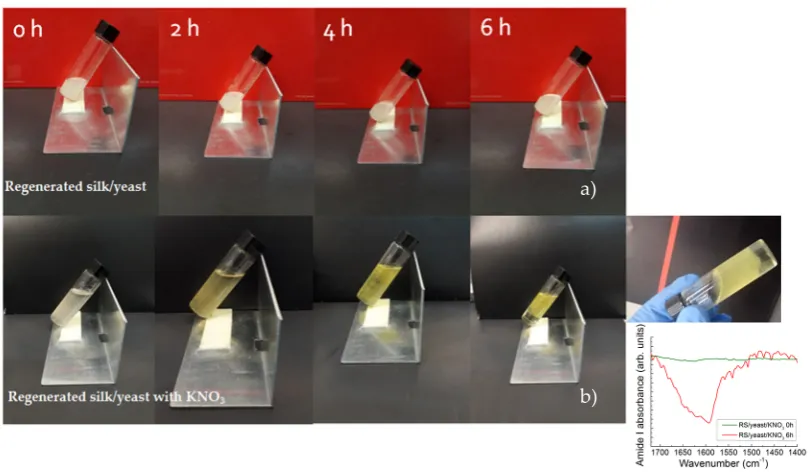
microorganisms is schematically reported in Fig. 1a. The yeast fermentation was implemented into a
114
CaCl2-formic acid dissolution system, which can be used to produce large films (Fig. 1b) with a
115
nano-fibrillar structure (Fig. 1c).
116
Changes in structure of the films deposited after the fermentation assisted silk dissolution were
117
detected by FTIR and X Ray Diffraction (XRD). The β-sheet (crystalline) content was determined by
118
the deconvolution of the amide I region (1580 - 1720 cm-1) estimating the ratio between the peak area
119
in the wavenumber region of 1622~1637 cm-1, which is the main absorbance region of β-sheet crystal
120
in amide I [21], and the whole area of the amide I comprising the peaks of the structural components
121
including turns (T) and random coil (R). The deconvolution of the amide I band provides an
122
estimation of β-sheet structure in the RS and RS/yeast of 37% and 44%, respectively (Figs. 1d-e).
123
The XRD data in Fig. 1f show the RS/yeast film is characterized by diffraction peaks at 2Θ values of
124
20.4° and 25.4°, corresponding to silk I structure [22,23]. RS film also showed silk I and silk II crystal
125
structures, having diffraction peaks at 20.4° and 29.0°. Compared with RS/yeast, the silk I peak at
126
25.0° disappeared, indicating more silk II formation.
127
129
Figure 1. (a) Scheme of silk fibroin production using regenerated silk. (b) Visual appearance of the
130
RS/yeast film and (c) FESEM image of silk nanofibrils. (d-e) FTIR spectra of regenerated silk and RS/yeast
131
films, respectively. The coloured lines represent the components of the amide I band and are indicated as
132
β-sheets (B), random coil (R) and turns (T). (f) XRD results of regenerated silk and RS/yeast films.
133
The cell division of yeast occurs by budding in which a daughter is initiated from the mother
134
cell, followed by nuclear division and finally cell separation. The yeast cell growth reported in Fig. 2
135
shows the three main phases: the lag phase where the individual cells are activated in preparation
136
for division, the exponential phase once the cell starts actively metabolizing shortly after the cells
137
divide and finally the stationary phase when metabolism slows and the cells stop rapid cell division
138
[24]. The factors that cause cells to enter stationary phase are related to change in the environment
139
typically caused by high cell density. The data reported in Fig. 2a state the stability of the yeast cells
140
to proliferate also with the presence of formic acid in the nutrient broth. The effects of RS addition
141
during the growth curve are demonstrated in Fig. 2a by measuring the OD during the cell growth.
142
The OD curve of the yeast cells is substantially altered by the RS addition, with the effect on the lag
143
time and final cell yield being particularly pronounced: RS/yeast cells have a lag phase of ~ 2-3 hrs,
144
after which they proliferate rapidly, in comparison, the neat yeast cells show an increased lag
145
phase of ~ 10 hrs. The morphology of the stationary phase for the RS/yeast system observed by
146
means of FESEM and optical microscopy (Figs. 2b-c) indicates the cell proliferation for such culture.
147
148
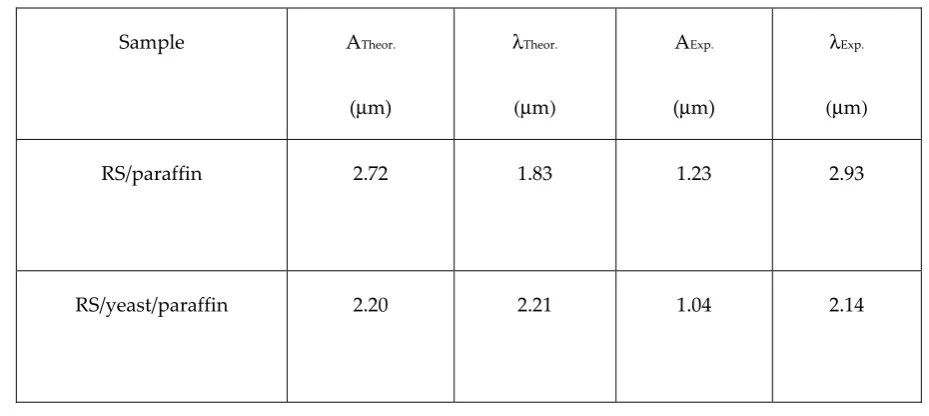
149
151
152
Figure 2. (a) OD measured at 600 nm wavelength during growth of neat Saccharomyces Cerevisiae
153
and Saccharomyces Cerevisiae in RS with sucrose until stationary was reached. (b) Appearance under
154
FESEM and optical microscope of the RS/yeast cell growth during the stationary phase.
155
156
In order to demonstrate potential application of such living coating in consumer exposed food
157
the mechanical robustness of the films is required to withstand, for example, handling procedures.
158
Figure 3a represents typical stress/strain curves obtained from testing of yeast, RS and RS/yeast
159
samples. The maximum average toughness (i.e. the area underlying the stress-strain curves)
160
obtained from RS/yeast sample was 0.14 MPa (Fig. 3b) as well as the highest average strength (i.e.
161
the stress at the ultimate strain) obtained was 1.26 MPa, with a maximum elastic modulus of 37.2
162
MPa recorded. The improved mechanical properties with fermentation-based dissolution of
163
silkworm silk fibers agree with our previous studies reported for the assisted-fermentation synthesis
164
of bionic composites [19,25]. In these studies, addition of carbon nanotubes (CNTs) and/or graphene
165
in the fermentation broth, resulted in composites with higher toughness value. In our studies, tensile
166
tests on dried composite films were rationalized in terms of a CNT cell bridging mechanism where
167
the strongly enhanced strength of the composite is governed by the adhesion energy between the
168
bridging CNTs and the matrix. The presence of glucose can plasticize regenerated silks and increase
169
the ultimate strain leading to toughness values (see Table 1) that are comparable to those measured
170
for traditional biopolymers used for food packaging [26,27] being in our case as added value the
171
edibility of the coating.
172
173
174
175
Figure 3. (a) Stress-strain curves from testing of yeast, RS and RS/yeast samples. The curves
176
represent analysis performed on three different samples. (b) Effect of yeast fermentation on
177
modulus, strength, and toughness of RS film. The modulus, strength, and toughness of neat yeast
178
film have been reported for comparative purposes.
179
180
a) b)
Table 1. Mechanical properties of various biopolymers for food packaging [27]. σ* — specific
181
tensile strength, E* — specific tensile modulus, ε — ultimate strain.
182
183
Type of biopolymer
Toughness
(MPa)
σ*
(Nm/g)
E*
(kNm/g)
ε
(%)
RS/yeast (this work) 0.14 1.1 0.032 15.4
PLA 0.26 16.8 0.3 2.5
PLLA
0.23 40.0 2.2 3.0
PDLLA 0.28 22.1 0.8 2.0
PDLLA/PGA50/50 0.41 30.9 0.8 2.0
184
185
In general, coatings for food packaging beyond the mechanical robustness should exert low
186
permeability to water vapors; fruit dehydration is, in general, an indicator of the breakdown of the
187
protective skin, which results in loss of turgor and water evaporation. We observe that the increase
188
in beta-sheet content yields a less water permeability through the RS/yeast membrane as indicated
189
by the less variation of the initial weight of soaked sponges coated with different types of coatings,
190
as reported in Fig. 4a (see supplementary material Fig. S2). These results are in agreement with those
191
obtained by Omenetto et al.10 who showed that when the silk fibroin beta-sheet content is in the
192
range of 36%–58%, the water vapour permeability is five times smaller than that measured for the
193
film with a lower beta-sheet content.
194
Many fresh fruits have high metabolic activity and due to microbial attack they result in short
195
conservation time, colour change (Fig. 4b), and off-flavour. The change in colour of fresh fruit, in
196
particular, is associated to ethylene production and cell respiration. To evaluate the exploitation of
197
RS/yeast film as barrier coating, the change in color of coated and non-coated fresh bananas was
198
evaluated (Fig. 4b). Time-lapse photography shows that RS/yeast coating decreases the fruit
199
degradation, when compared to uncoated or RS coated fruit at day 7. During the continuing
200
metabolism of the fresh fruit, oxygen is transformed into carbon dioxide; thus gas permeation
201
through a coating film plays a crucial role in fruit storage. To prevent the spoilage of fresh fruits it is
202
necessary to reduce the breathing process. In our case, the higher beta-sheet content of the RS/yeast
203
film decreases the production of CO2, which indicated a decrease in the respiration rate of the fruits
204
(Fig. 4c).
205
206
208
209
210
Figure 4. (a) Weight loss of sponges soaked in water and stored for up to 25 hours at 23 °C and
211
32% RH. Sponges were stored without coating or after dip coating with RS and RS/yeast
212
suspensions, respectively. (b) Evaluation of bananas degradation. Fruits were stored at 23 °C and
213
32% RH as received and after coating with silk/yeast film. Time lapse photography of banana
214
degradation, indicating that silk/yeast coating reduces the degradation rate. (c) CO2 variation of
215
uncoated, RS coated and RS/yeast coated bananas, respectively.
216
217
Another very interesting property of such silk nanofibrils relies on their ability to self-assemble
218
giving rise to sol-gel transition with rapid gelation time induced by the presence of salts [28,29].
219
Pregelation occurs when a fresh solution has a β-sheet content of about 20% with negligible
220
intermolecular bindings; gelation is then induced by interchain interactions that become irreversible
221
with the formation of β-sheet intermolecular structures of the gel phase [29]. In our case, the gelation
222
was observed when KNO3 salt was added to silk nanofibrils/yeast/formic acid solution (Figure 5).
223
Without salt, the RS/yeast retains with time a sol characteristic (Fig. 5a). In comparison with the sol
224
RS/yeast solution, the RS/yeast with salt transform into a semi-solid gel within several hours,
225
together with the appearance of a strong infrared absorption peak at 1626 cm-1 due to the formation
226
of strong β-sheet strctures (Fig. 5b).
227
228
a)
229
230
Figure 5. Dynamic optical morphology of the (a) RS/yeast and (b) RS/yeast/KNO3 solutions
231
resulting at different times (temperature 37°C). The inset of panel (b) shows the evolution of the
232
amide I FTIR band of the RS/yeast/KNO3 solution with time and gelation of the RS/yeast/KNO3
233
solution.
234
235
Considering the application of controlling the food cold chain, it is essential to design a bilayer
236
packaging system where the mechanical properties of the top skin layer when laminated onto a soft
237
substrate will be beneficial for the creation of temperature-driven surface patterning. Figure 6a
238
shows the RS and RS/yeast films laminated onto the paraffin wax substrate. Wrinkle formation is
239
typically connected to the high thermal expansion coefficient of the substrate used for the transfer.
240
Parafilm is worldwide used in research laboratories as self-adhesive and sealant plastic foil, it is soft
241
(tensile strength ≈2.0MPa) with a high thermal expansion coefficient (i.e. 0.89*10-3 K-1) and due to its
242
low melting point (≈60°C) it becomes adhesive applying heat during lamination, sticking strongly to
243
the receiving material. The formation of wrinkles occurs to minimize the total potential energy of the
244
skin layer and the substrate induced by thermal expansion. The strategy for the realization of the
245
heat-driven wrinkle patterns is illustrated in Figure 6b; once heated, the paraffin wax upon cooling
246
to room temperature, generates a compressive stress at the interface of the bilayer sample, owing to
247
the considerable mismatch between the modulus and thermal expansion ratio of the substrate and
248
the stiff top layer made of RS or RS/yeast [30]. AFM analysis reported in Figure 6c shows that a
249
smooth surface converts into wrinkled state through heating and then cooling down to room
250
temperature.
251
252
253
254
255
a)
256
257
258
259
260
Figure 6. (a) Photographs of RS/yeast/paraffin and RS/paraffin bilayer systems before (left) and
261
after (right) the wrinkle activation. (b) Schematic illustration of temperature driven wrinkling. The
262
bilayer system is flat at room temperature, the heat induces the temperature increasing and thus the
263
thermal expansion of the paraffin substrate, resulting in the increase in the compressive strain of the
264
bilayer systems once cooled down to room temperature with the appearance of the wrinkles. Once
265
the wrinkled state was activated, the heat/temperature can again induce the thermal expansion of
266
the paraffin substrate, resulting in the reversibility of the tempertature-driven wrinkles. (c) AFM
267
images showing the reversibility of the temperature-driven wrinkles. (d) AFM images and related
268
profile images of RS (left) and RS/yeast (right) film layers.
269
270
The amplitude (A) and the wavelength (λ) of the wrinkles depend on the thickness and mechanical
271
properties of the skin layer and the substrate and according to linear bucking theory [31-35] can be
272
expressed as:
273
A=hf((σ0-σc)/σc)1/2/a
(1)
274
and
275
λ=4.36hf(Ef(1-νs2)/(Es(1-νf2))1/3-2A(1-a)/a (2)
276
where σc refers to the critical strain to wrinkle formation and is given as33
277
σc=(1/4)(Ef’)1/3(Es’)2/3
(3)
278
and σ0is the compressive stress of the film layer at temperature below the heating temperature given
279
by the equation 4 [37]:
280
σ0=(Ef(αs-αf)ΔT)/(1-νf)
(4)
281
RS/ t/ ffi
RS/ ffi
a)
b)
c)
where E’=E/(1-ν2) and subscript f and s refer to the film layer and the substrate of the bilayer system
282
and E’, E and ν are in plane modulus, Young’s modulus and Poisson’s ratio, respectively. hf (equal to
283
1μm) is the film thickness and 0≤a≤1 is an adhesion parameter that we have introduced (ideally a=1)
284
for accounting the nonideal bonding between film and substrate (imposing the film inextensibility
285
and simply assuming squared shape wrinkles, i.e. 2A+λ=cost). The Young’s modulus for RS,
286
RS/yeast and paraffin are 54 MPa, 37 MPa, 1.4 MPa [18], respectively, and νf=0.5. The applied strain ε
287
when the bilayer system is heated is calculated as ε=(αs-αf)*ΔT where αs and αf are the thermal
288
expansion coefficients with αs>>αf. Finally, the theoretical wavelength and amplitude values
289
obtained from Eq. 1 and Eq. 2 are reported in Tab. 2 and compared with the experimental findings
290
by fitting the single parameter a.
291
292
Table 2. Theoretical and experimental (estimated by AFM images and related profiles reported
293
in Fig. 6d) amplitude and wavelength of the different skin layers, with a=0.4.
294
295
Sample ATheor.
(μm)
λTheor.
(μm)
AExp.
(μm)
λExp.
(μm)
RS/paraffin 2.72 1.83 1.23 2.93
RS/yeast/paraffin 2.20 2.21 1.04 2.14
296
5. Conclusions
297
Here we described how incorporating microorganisms in bio-based structural proteins, by
298
providing an opportune nutrient for their growth, can results in a composite material with novel
299
properties. We observed that the fermentation of yeast cells activated in the dissolution bath of silk
300
fibers is critical in determining the β-sheet content of RS and thus the mechanical properties. In
301
particulat the yeast fermentation increases the crystalline content of regenerated silk fibroin, such
302
bionic coating reduces the water permeability and acts as an effective gas barrier, e.g. to increase the
303
shelf-life of perishable food. Then we reported a method which consists of transfer printing the
304
prepared freestanding RS and Rs/yeast layer films onto on self-adherent Parafilm substrate. It is
305
reported how the mechanical characteristics of the film layers as well as the high thermal expansion
306
coefficient of the paraffin substrate can be used to fabricate a sensor with the surface morphology
307
that changes between the wrinkled state and the wrinkle-free state under an external thermal
308
stimulus. This naturally derived material is thus a promising solution for different problems, e.g. a
309
valid alternative for efficient and smart food packaging with respect to traditional polymer-based
310
coatings. Finally, the proposed model can help in the real thus nonideal design of such coatings and
311
the degree of adhesion also emerges as designing parameter for tuning the wrinkle morphologies.
312
Supplementary Materials: The following are available online, Figure S1: Evolution of the CO2 absorption peak
313
over period of 7 days for (left) RS/yeast and (right) RS coating, respectively; Figure S2: Water soaked sponges
314
with different types of coatings.
Author Contributions: Conceptualization, L.V. and N.M.P.; Methodology, L.V.; Investigation, S.B.B.; Data
316
Curation, S.B.B.; Writing-Original Draft Preparation, L.V. and N.M.P.; Writing-Review & Editing, L.V. and
317
N.M.P.
318
Funding: N.M.P. is supported by the European Commission under the Graphene Flagship Core 2 grant No.
319
785219 (WP14 “Polymer Composites”) and FET Proactive “Neurofibres” grant No. 732344 as well as by the
320
Italian Ministry of Education, University and Research (MIUR) under the ''Departments of Excellence'' grant
321
L.232/2016. L.V. is supported by the Italian Ministry of Education, University and Research (MIUR) under the
322
''Departments of Excellence'' grant L.232/2016.
323
Acknowledgments: Prof. Miguel-Angle Lopez-Manchado (Instituto de Ciencia y Tecnología de Polímeros,
324
ICTP-CSIC, Madrid) is kindly acknowledged for the XRD analysis.
325
Conflicts of Interest: The authors declare no conflict of interest.
326
References
327
1. Cleveland, J.; Montville, T. J.; Nes I. F.; Chikindas, M. L. Bacteriocins: safe, natural antimicrobials for food
328
preservation. Int. J. Food Microbiol.2001, 71, 1–20.
329
2. Paul Ross, R.; Morgan S.; Hill, C. Preservation and fermentation: past, present and future. Int. J. Food
330
Microbiol.2002, 79, 3–16.
331
3. Synowiecki J.; Al-Khateeb, N. A. Production, properties, and some new applications of chitin and its
332
derivatives. Crit. Rev. Food Sci. Nutr.2003, 43, 145–171.
333
4. Ohzono, T.; Monobe, H.; Yamaguchi, R.; Shimizu, Y.; Yokoyama, H. Dynamics of surface memory effect in
334
liquid crystal alignment on reconfigurable microwrinkles. Appl. Phys. Lett.2009, 95, 14101.
335
5. Kim, P.; Hu, Y.; Alvarenga, J.; Kolle, M.; Suo, Z.; Aizenberg, J. Rational Design of Mechano-Responsive
336
Optical Materials by Fine Tuning the Evolution of Strain-Dependent Wrinkling Patterns. Adv. Opt. Mater.
337
2013, 1, 381 – 388.
338
6. Bowden, N.; Huck, W. T. S.; Paul, K. E.; Whitesides, G. M. The controlled formation of ordered, sinusoidal
339
structures by plasma oxidation of an elastomeric polymer. Appl. Phys. Lett.1999, 75, 2557 – 2559.
340
7. Ohzono, T.; Suzuki, K.; Yamaguchi, T.; Fukuda, N. Tunable optical diffuser based on deformable wrinkles.
341
Adv. Opt. Mater.2013, 1, 374 – 380.
342
8. Kim, D. H.; Viventi, J.; Amsden, J. J.; Xiao, J.; Vigeland, L.; Kim, Y. S.; Blanco, J. A.; Panilaitis, B.; Frechette,
343
E. S.; Contreras, D.; Kaplan, D. L.; Omenetto, F. G.; Huang, Y.; Hwang, K. C.; Zakin, M. R.; Litt B.; Rogers, J.
344
A. Dissolvable films of silk fibroin for ultrathin conformal bio-integrated electronics. Nature Materials2010,
345
9, 511–517.
346
9. Tao, H.; Brenckle, M. A.; Yang, M.; Zhang, J.; Liu, M.; Siebert, S. M.; Averitt, R. D.; Mannoor, M. S.;
347
McAlpine, M. C.; Rogers, J. A.; Kaplan D. L.; Omenetto, F. G. Silk-based conformal, adhesive, edible food
348
sensors. Advanced Materials2012, 24, 1067–1072.
349
10. Marelli, B.; Brenckle, M. A.; Kaplan D. L.; Omenetto, F. G. Silk fibroin as edible coating for perishable food
350
preservation. Sci. Rep.2016, 6, 25263.
351
11. Lawrence, B. D.; Pan, Z.; Liu, A.; Kaplan D. L.; Rosenblatt, M. I. Human corneal limbal epithelial cell
352
response to varying silk film geometric topography in vitro. Acta Biomaterialia2012, 8, 3732–3743.
353
12. Lawrence, B. D.; Marchant, J. K.; Pindrus, M. A.; Omenetto F. G.; Kaplan, D. L. Silk film biomaterials for
354
cornea tissue engineering. Biomaterials2009, 30, 1299–1308.
355
13. Lawrence, B. D.; Wharram, S.; Kluge, J. A.; Leisk, G. G.; Omenetto, F. G.; Rosenblatt, M. L.; Kaplan, D. L.
356
Effect of hydration on silk film material properties. Macromolecular Bioscience2010, 10, 393–403.
357
14. Brenckle, A. M.; Kaplan, D. L.; Omenetto, F. G. Direct Transfer Printing of Water Hydrolyzable Metals
358
onto Silk Fibroin Substrates through Thermal-Reflow-Based Adhesion. Adv. Mater. Interfaces 2016, 3,
359
1600094.
360
15. Jay, S. C. The cocoon of the honey bee, Apis mellifera. Can. Entomol.1964, 96, 784–792.
361
16. Hepburn, H. R.; Kurstjens, S. P. The combs of honeybees as composite materials. Apidologie1988, 19, 25–36.
362
17. Dorset, D. L. The crystal structure of waxes. Acta Crystallogr. B1995, 51, 1021–1028.
363
18. Valentini, L.; Bittolo Bon, S.; Lopez-Manchado, M.-A.; Mussolin, L.; Pugno, N. Development of conductive
364
paraffin/graphene films laminated on fluoroelastomers with high strain recovery and anti-corrosive
365
properties. Composites Science and Technology2017, 149, 254-261.
19. Valentini, L.; Bittolo Bon, S.; Signetti, S.; Tripathi, M.; Iacob, E.; Pugno, N. M. Fermentation based carbon
367
nanotube multifunctional bionic composites. Sci. Rep.2016, 6, 27031.
368
20. Ling, S.; Zhang, Q.; Kaplan, D. L.; Omenetto, F.; Buehler, M. J.; Qin, Z. Printing of stretchable silk
369
membranes for strain measurements. Lab Chip2016, 16, 2459-2466.
370
21. Hu, X.; Kaplan D.; Cebe, P. Determining Beta-Sheet Crystallinity in Fibrous Proteins by Thermal Analysis
371
and Infrared Spectroscopy. Macromolecules2006, 39, 6161-6170.
372
22. Q. Lu, X. Hu, X. Wang, J. A. Kluge, S. Lu, P. Cebe and D. L. Kaplan, Water-insoluble silk films with silk I
373
structure. Acta Biomaterialia2010, 6, 1380–1387.
374
23. J. P. Anderson, Morphology and crystal structure of a recombinant silk-like molecule, SLP4. Biopolymers
375
1998, 45, 307–321.
376
24. J. Warringer, E. Ericson, L. Fernandez, O. Nerman and A. Blomberg, High-resolution yeast phenomics
377
resolves different physiological features in the saline response. PNAS2003, 100, 15724–15729.
378
25. L. Valentini, S. Bittolo Bon, S. Signetti and N. M. Pugno, Graphene-Based Bionic Composites with
379
Multifunctional and Repairing Properties. ACS Applied Materials & Interfaces2016, 8, 7607-7612.
380
26. A. Seidel, O. Liivak, S. Calve, J Adaska, G. Ji, Z. Yang, D. Grubb, D. B. Zax and L. W. Jelinski, Regenerated
381
Spider Silk: Processing, Properties, and Structure. Macromolecules2000, 33, 775-780.
382
27. K. Van de Velde, P. Kiekens, Biopolymers: overview of several properties and consequences on their
383
applications. Polym. Test.2002, 21, 433–442.
384
28. D. S. Im, M. H. Kim, Y. I. Yoon, W. H. Park. Gelation behaviors and mechanism of silk fibroin according to
385
the addition of nitrate salts. Int. J. Mol. Sci.2016, 17, 1697.
386
29. A. Matsumoto, J. Chen, A. L. Collette, U. J. Kim, G. H. Altman, P. Cebe and D. L. Kaplan, Mechanisms of
387
silk fibroin sol-gel transitions. J. Phys. Chem. B2006, 110, 21630 – 21638.
388
30. Hou, H.; Yin, J.; Jiang, X. Reversible diels-alder reaction to control wrinkle patterns: from dynamic
389
chemistry to dynamic patterns. Adv. Mater.2016, 28, 9126 – 9132.
390
31. Rodríguez-Hernández, J. Wrinkled interfaces: taking advantage of surface instabilities to pattern polymer
391
surfaces. Prog. Polym. Sci.2015, 42, 1 – 41.
392
32. Chen, C.-M.; Yang, S. Wrinkling instability in polymer films and their applications. Polym. Int.2012, 61,
393
1041 – 1047.
394
33. N. Bowden, S. Brittain, A. G. Evans, J. W. Hutchinson, G. M. Whitesides, Spontaneous formation of
395
ordered structures in thin films of metals supported on an elastomeric polymer. Nature1998, 393, 146 –
396
149.
397
34. C. M. Stafford, C. Harrison, K. L. Beers, A. Karim, E. J. Amis, M. R. VanLandingham, H.-C. Kim, W.
398
Volksen, R. D. Miller, E. E. Simonyi, A buckling-based metrology for measuring the elastic moduli of
399
polymeric thin films. Nat. Mater.2004, 3, 545 – 550.
400
35. Wang, Q.; Zhao, X.; Beyond wrinkles: Multimodal surface instabilities for multifunctional patterning.
401
MRS Bull.2016, 41, 115 – 122.
402
36. Allen, H. G. Analysis and Design of Structural Sandwich Panels (Pergamon, New York, 1969).
403
37. Ohring, M. The Material Science of Thin Films (Academic, San Diego, 1992).
![Table 1. Mechanical properties of various biopolymers for food packaging [27]. σtensile strength, E* — speci* — specific fic tensile modulus, ε — ultimate strain](https://thumb-us.123doks.com/thumbv2/123dok_us/8007216.1330624/6.595.59.526.107.386/mechanical-properties-biopolymers-packaging-stensile-strength-specic-ultimate.webp)