International Journal of Women’s Health
Dove
press
O r I g I n a l r e s e a r c H
open access to scientific and medical research
Open access Full Text article
Use of hormonal contraceptives to control
menstrual bleeding: attitudes and practice
of Brazilian gynecologists
María Y Makuch1
Maria José D Osis1
Karla simonia de Pádua1,2
luis Bahamondes3
1center for research in reproductive
Health (ceMIcaMP), 2Prof Dr José
aristodemo Pinotti Women’s Hospital, University of campinas, 3Department
of Obstetrics and gynaecology, school of Medical sciences, University of campinas, and national Institute of Hormones and Women’s Health, campinas, são Paulo, Brazil
correspondence: María Y Makuch center for research in reproductive Health (ceMIcaMP), caixa Postal 6181, campinas 13084-971, são Paulo, Brazil Tel +55 19 3289 2856
Fax +55 19 3289 2440
email [email protected]
Background: The purpose of this study was to assess the attitudes and prescribing practices of Brazilian obstetricians and gynecologists regarding use of contraceptive methods to interfere with menstruation and/or induce amenorrhea.
Methods: We undertook a nationwide survey of Brazilian obstetricians and gynecologists selected using a computer-generated randomization system. Participants completed a question-naire on prescription of contraceptives and extended/continuous regimens of combined oral contraceptives (COCs).
Results: In total, 79.2% of Brazilian obstetricians and gynecologists reported that 20%–40% of their patients consulted them for menstrual-related complaints and 26%–34% of the gynecologists reported that 21%–40% of their patients consulted them for reduction in the intensity, frequency, and/or duration of menstrual bleeding. Overall, 93% stated that medically induced amenorrhea represents no risk to women’s health and 82.5% said that they prescribed contraceptives to control menstruation or induce amenorrhea. The contraceptives most commonly prescribed were extended-cycle 24/4 or 26/2 COC regimens and the levonorgestrel-releasing intrauterine system. Poisson regression analysis showed that Brazilian obstetricians and gynecologists pre-scribing contraceptives to control menstruation or induce amenorrhea consider extended-use or continuous-use COC regimens to be effective for both indications (prevalence ratio 1.23 [95% confidence interval 1.09–1.40] and prevalence ratio 1.28 [95% confidence interval 1.13–1.46], respectively). They also prescribed COCs with an interval of 24/4 or 26/2 to control bleeding patterns (prevalence ratio 1.10 [95% confidence interval 1.01–1.21]).
Conclusion: Brazilian obstetricians and gynecologists were favorably disposed toward pre-scribing extended-use or continuous-use COC regimens for control of menstrual bleeding or to induce amenorrhea on patient demand.
Keywords: menstruation, induced amenorrhea, gynecologists, Brazil, hormonal contraceptives
Introduction
More women are seeking counseling and medical options to reduce the intensity, duration, and/or frequency of menstruation or to become amenorrheic.1–6 Over
recent decades, menstruation has been able to be avoided with the use of hormonal contraceptives.1–3 At present, the safest and commonest strategy for menstrual control
consists of extended-use or continuous-use combined oral contraceptive (COC) regi-mens rather than the conventional 21/7 pill regimen3–5,7 or extended use of the vaginal
ring or contraceptive patch, albeit the experience with these methods for menstrual control is still limited.8
International Journal of Women's Health downloaded from https://www.dovepress.com/ by 118.70.13.36 on 23-Aug-2020
For personal use only.
Number of times this article has been viewed
This article was published in the following Dove Press journal: International Journal of Women’s Health
Dovepress Makuch et al
A study conducted in several countries in 1987 reported that women’s desire to control menstruation varied accord-ing to their age, education level, occupation, and degree of menstrual discomfort.9 However, more recent studies have
presented evidence of the growing tendency of women to accept use of contraceptive methods that may provoke amenorrhea, longer intervals between menstrual periods, or less bleeding flow.10–14 Another study reported no significant
difference between adolescents and adult women regarding attitudes toward menstrual bleeding.11
Studies conducted between 1999 and 2006 in the Netherlands, Germany, France, and Italy showed that 25%, ∼41%, 57%, and 29%, respectively, of interviewed women reported that they wished to become amenor-rheic.5,12–14 One US study reported that 69% of women wanted
amenorrhea or to reduce the frequency of bleeding episodes,3
and another showed that 60% of women who embarked on extended-use COCs to induce amenorrhea continued using them for up to 2 years.15 In two Brazilian surveys,
approxi-mately 60% of women reported disliking menstruation, approximately 65% reported that they would prefer not to bleed at all, a similar proportion reported that they would use COCs to control menstrual bleeding, and more than 80% reported that they would use COCs to induce amenorrhea. Further, the women reported that they would like more infor-mation on medically induced amenorrhea.16,17
The increasing number of women requesting information and treatment to control their bleeding pattern highlights the need for an indepth understanding of the attitudes of obstetricians and gynecologists (OBGYN) regarding this practice and their prescribing habits. Patient–physician com-munication is an important skill in medical practice and an essential component of the patient–physician relationship.18–20
The quality of patient–physician communication depends to a great extent on the physician’s attitudes and ability to understand and discuss the patient’s concerns and to provide information.
US-based studies15,21 of OBGYN and family planning
health care professionals reported that 70%–92% of physi-cians who prescribed COCs prescribed them in extended-cycle regimens and OBGYN were more prone to this practice. Also, in Germany and Austria, OBGYN were favorably dis-posed to use of extended-COCs for control of bleeding.5,22
There is still a paucity of data in developing countries on the attitudes and practices of OBGYN regarding use of hormonal contraceptive methods and control of menstrual bleeding. The objective of this study was to assess attitudes and prescribing practices on the part of OBGYN regarding
hormonal contraceptive methods that may modify men-strual patterns and eventually lead to medically induced amenorrhea.
Materials and methods
Design
A nationwide descriptive study was conducted using a nonprobability sample of Brazilian OBGYN. The research protocol was approved by the institutional review board at the University of Campinas. A letter of invitation was prepared in which we explained the objectives of the study, the vol-untary nature of participation, and that those OBGYN who answered and returned the questionnaires were consenting to participate in the study. The procedure used to obtain consent was approved by the institutional review board.
Computer-generated randomization was used to select the OBGYN from a list of OBGYN registered with the phar-maceutical company that partially supported this study. This list included 17,978 OBGYN registered in the country. Sales representatives from the pharmaceutical company delivered the questionnaires to the OBGYN invited to complete the questionnaire and later collected them. On their routine visits, the sales representatives gave a package of research material consisting of the letter explaining the study, the questionnaire, and an envelope in which the questionnaire was to be returned. If the envelope was open at the time of collection, the sales representative sealed it in the presence of the OBGYN. No incentive was offered to participants for completion of the questionnaire.
Data collection
A self-completed questionnaire was developed and pretested. The questionnaire included questions on sociodemographic characteristics, the percentage of patients consulting for menstrual disorders according to the perception of the OBGYN, the concerns and questions regarding monthly bleeding raised by women during consultations, the attitude of the OBGYN toward hormonal contraceptives for the purpose of controlling bleeding, and his/her prescribing habits regarding these products, monthly menstrual bleed-ing, and medically induced amenorrhea. For those who reported prescribing hormonal contraceptives including COCs, questions were then asked about extended-use COC regimens, defined here as regimens in which the hormone-containing pill is taken for more than 28 days followed by a scheduled hormone-free interval, or continuous-use COCs, defined here as uninterrupted use of hormone-containing pills. OBGYN who reported prescribing COCs were then
International Journal of Women's Health downloaded from https://www.dovepress.com/ by 118.70.13.36 on 23-Aug-2020
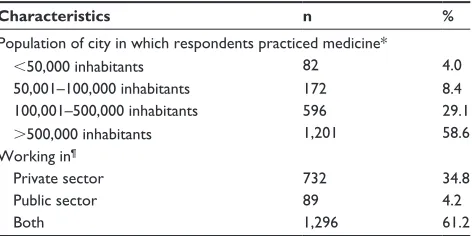
Table 1 Percentage distribution of OBgYn according to where they worked (n=2,153)
Characteristics n %
Population of city in which respondents practiced medicine*
,50,000 inhabitants 82 4.0
50,001–100,000 inhabitants 172 8.4
100,001–500,000 inhabitants 596 29.1
.500,000 inhabitants 1,201 58.6
Working in
Private sector 732 34.8
Public sector 89 4.2
Both 1,296 61.2
Notes: *Data missing for 102 physicians; ¶data missing for 36 physicians.
Abbreviation: OBgYn, obstetricians and gynecologists.
Dovepress attitudes of gynecologists regarding menstruation
asked to answer questions regarding the characteristics of the women for whom this kind of prescription is indicated and to what extent their patients expressed a desire to change their menstrual pattern. Questions were also included on the clinical benefits and risks of COCs, extended-use and continuous-use COC regimens, and use of other hormonal contraceptive methods to control bleeding.
Data analysis
The sociodemographic characteristics of the participants were compared using the χ2 test and the Student’s t-test.
Associations between physician age, number of years since graduation, place of work (large/small cities), and knowledge were evaluated using the χ2 test. The Mann–Whitney U test
and Student’s t-test were used to evaluate the association between attitudes and prescribing habits. A Poisson multiple regression model with the backward selection method was used to assess whether there were any correlations between age, sex, year in which the physician completed their medical residency in Obstetrics and Gynecology, the size of the city in which the physician lived, whether he/she was working in the private or public sector, their opinion that menstrual control or medically induced amenorrhea is detrimental to health, and their knowledge regarding contraceptive methods that are effective in controlling bleeding or induc-ing amenorrhea. Statistical significance was established at
P,0.005. The data were analyzed using Statistical Pack-age for the Social Sciences version 13.0 software (SPSS, Chicago, IL, USA).
Results
Of the 8,989 questionnaires distributed, 2,137 (23.8%) were returned completed. The mean ± standard deviation age was 48.8±11.1 (range 22–84) years and the respondents had completed their OBGYN residency in 1990.9±10.2 (range 1952–2012). Almost half (48.4%) of the respondents were women, 58.6% practiced medicine in a city with more than 500,000 inhabitants, and 61.2% worked in both the private and public sectors (Table 1). Of the OBGYN who worked in the public sector, 39.7% reported working in a hospital, 38.0% in a primary health care facility, and 16.2% in a teaching hospital.
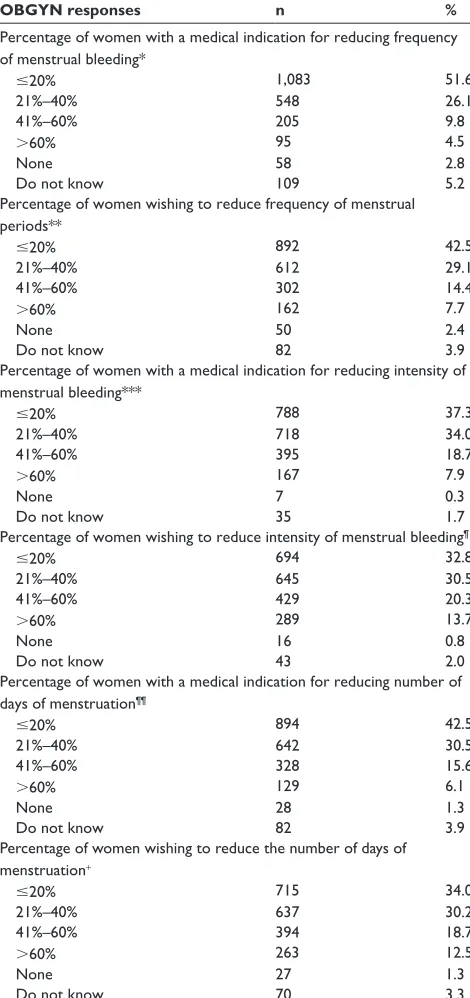
According to 79% of the OBGYN, 20%–40% of their patients consulted them for complaints related to menstrual bleeding, and they estimated that 21%–40% of their patients had a medical indication for reducing the frequency (26%), intensity (34%), or number of days of menstruation (30%). Further, almost 30% of the OBGYN estimated that 21%–40%
of their patients would like to reduce the frequency, intensity, or number of days of menstruation, respectively (Table 2).
Of the responding OBGYN, 67.2% reported that a continuous regimen of hormonal contraceptives to control menstrual bleeding on demand represented a risk only for those women with contraindications according to the World Health Organization guidelines,23 and a further 30% reported
that it posed no risk whatsoever to women. According to 93% of the participating OBGYN, amenorrhea or delayed menstruation induced by contraceptives represented no risk at all to women’s health (Table 3). Further, 66.9% reported that they prescribed hormonal contraceptives to delay men-struation and 82.5% prescribed them to reduce the frequency of menstrual periods. Younger and female OBGYN were more likely to prescribe these COC regimens (P,0.001). Regarding the prescription of hormonal contraceptives to induce amenorrhea, 81% reported that they prescribed them either at the women’s request or when medically indicated. OBGYN who prescribed contraceptives to control bleed-ing stated that there were no restrictions on this practice according to age or parity (P,0.001). The contraceptives most commonly prescribed to control menstruation were extended-use COC regimens (79.4%), the levonorgestrel-releasing intrauterine system (72.7%), and 24/4 or 26/2 COC regimens (P,0.0001, Table 4).
OBGYN reported that the women who requested con-traceptives to control bleeding frequency were afraid that hormones could affect their body (84.0%) or cause future infertility (80.2%), considered that amenorrhea is not natu-ral (75.0%), and were worried about their health (75.0%, Table 5). Most of the OBGYN (99.0%) reported that they used hormonal contraceptives to control their own menstrual bleeding or prescribed them for their partners. The main rea-sons given for this practice were that hormonal contraceptives reduce symptoms of the premenstrual syndrome (89.7%),
International Journal of Women's Health downloaded from https://www.dovepress.com/ by 118.70.13.36 on 23-Aug-2020
Table 2 Proportion of women consulting for menstrual complaints or because they wished to change their menstrual pattern, according to OBgYn (n=2,153)
OBGYN responses n %
Percentage of women with a medical indication for reducing frequency of menstrual bleeding*
#20% 1,083 51.6
21%–40% 548 26.1
41%–60% 205 9.8
.60% 95 4.5
none 58 2.8
Do not know 109 5.2
Percentage of women wishing to reduce frequency of menstrual periods**
#20% 892 42.5
21%–40% 612 29.1
41%–60% 302 14.4
.60% 162 7.7
none 50 2.4
Do not know 82 3.9
Percentage of women with a medical indication for reducing intensity of menstrual bleeding***
#20% 788 37.3
21%–40% 718 34.0
41%–60% 395 18.7
.60% 167 7.9
none 7 0.3
Do not know 35 1.7
Percentage of women wishing to reduce intensity of menstrual bleeding
#20% 694 32.8
21%–40% 645 30.5
41%–60% 429 20.3
.60% 289 13.7
none 16 0.8
Do not know 43 2.0
Percentage of women with a medical indication for reducing number of days of menstruation¶¶
#20% 894 42.5
21%–40% 642 30.5
41%–60% 328 15.6
.60% 129 6.1
none 28 1.3
Do not know 82 3.9
Percentage of women wishing to reduce the number of days of menstruation+
#20% 715 34.0
21%–40% 637 30.2
41%–60% 394 18.7
.60% 263 12.5
none 27 1.3
Do not know 70 3.3
Notes: *Data missing for 55 physicians; **data missing for 53 physicians; ***data missing for 43 physicians; ¶data missing for 37 physicians; ¶¶data missing for 50 physicians;
+data missing for 47 physicians.
Abbreviation: OBgYn, obstetricians and gynecologists.
Table 3 Opinion of OBgYn regarding whether continuous use of hormonal contraceptives to control menstruation represents a risk to women (n=2,153)
n %
Is continuous use of hormonal contraceptives on demand for the purpose of controlling menstrual bleeding a risk to women’s health?* Yes, for women with contraindications 1,416 67.2
no, not for any women 645 30.6
Yes, for all women 32 1.5
Do not know 13 0.6
Is amenorrhea or delayed menstruation induced by hormonal contraceptives a risk to women’s health?**
no, not for any women 1,914 93.0
Yes, for all women 82 4.0
Do not know 63 3.1
Notes: *Data missing for 47 physicians; **data missing for 94 physicians. Abbreviation: OBgYn, obstetricians and gynecologists.
Table 4 Prescribing habits of OBgYn regarding bleeding control and methods they prescribe
n %
Prescribes methods for delaying menstruation* 1,399 66.9 Prescribes methods for women to bleed less
frequently**
1,727 82.5
Prescribes methods to induce amenorrhea** 1,805 86.2 In which situation does the physician prescribe these methods?
at the woman’s request 188 9.1
When OBgYn suggest use 185 9.0
Both cases 1,672 81.0
Does not prescribe these methods 19 0.9
Hormonal contraceptives that OBgYn reported they prescribed for reducing intensity, frequency, and number of days of menstruation or for inducing amenorrhea
extended cOc regimens 1,644 79.4
lng-IUs 1,506 72.7
24/4 or 26/2 cOc regimens 1,163 56.2
Progestin-only pill 994 48.0
etonogestrel-releasing implant 378 18.3
21/7 cOc regimen 377 18.2
Injectable 238 11.5
Notes: *Data missing for 61 physicians; **data missing for 59 physicians; ¶data
missing for 89 physicians.
Abbreviations: OBgYn, obstetricians and gynecologists; cOc, combined oral contraceptive; lng-IUs, levonorgestrel-releasing intrauterine system.
Dovepress Makuch et al
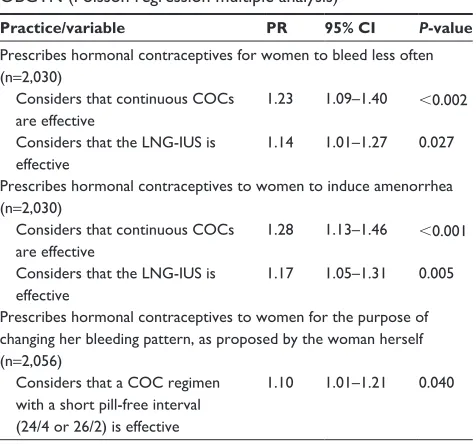
consider extended-use and continuous-use COCs to be effective for both indications (prevalence ratio [PR] 1.23, 95% confidence interval [CI] 1.09–1.40 and PR 1.28, 95% CI 1.13–1.46, respectively) and also consider the levonorgestrel-releasing intrauterine system to be effective for both purposes (PR 1.14, 95% CI 1.01–1.27 and PR 1.17, 95% CI 1.05–1.31, respectively). They also reported that when they recommend use of hormonal contraceptives to control bleeding patterns, they prescribe a COC regimen with a short pill-free interval (24/4 or 26/2, PR 1.10, 95% CI 1.01–1.21, Table 6).
diminish the intensity of menstrual bleeding (86.6%), and are not detrimental to health (37.8%).
The Poisson multiple regression model showed that the OBGYN who reported prescribing hormonal contraceptives to reduce the frequency of bleeding or to induce amenorrhea
International Journal of Women's Health downloaded from https://www.dovepress.com/ by 118.70.13.36 on 23-Aug-2020
Table 5 Questions raised by women when requesting hormonal contraceptives to control menstrual bleeding according to experience of participating OBgYn
Questions#,* n %
afraid that hormones will affect their body 1,732 84.0 afraid that they will become infertile due to continuous
hormone use
1,655 80.2
concerned that it is not natural 1,547 75.0
concerned with health in general 1,547 75.0
They want to know where the menstruation goes 1,260 61.1 concerned that it may affect their sexual relationship 490 23.8
Other queries 98 4.8
Notes: #more than one answer allowed; *data missing for 90 physicians.
Abbreviation: OBgYn, obstetricians and gynecologists.
Dovepress attitudes of gynecologists regarding menstruation
Discussion
The results presented here on the perspectives and practice of Brazilian OBGYN regarding monthly menstruation and use of hormonal contraceptives with the aim of interfering with menstrual patterns and/or to induce amenorrhea are, to the best of our knowledge, the first in Latin America. Nearly a quarter of the distributed questionnaires were
returned completed. This return rate was higher than for a similar German study which reported a response rate of only 18% for 9,000 questionnaires distributed.5 Additionally, a
US-based study which distributed a smaller number of question-naires reported a 32.7% response rate,24 and another study
done in the US that did not report the number of question-naires distributed obtained a response from 460 OBGYN.25
Given that it is important for women to have access to different hormonal contraceptive options and that these methods may be used not only for contraception but also for bleeding control, it is relevant to broaden our knowledge on the perspectives of OBGYN. The contraceptive method chosen by a woman and its effect on her menstrual pattern has to be meaningful in the context of her life. OBGYN are some of the key health care professionals who give informa-tion, clarify doubts, listen to and understand concerns, and establish a dialogue with the woman.
Our findings show that, according to the perspectives of the OBGYN interviewed, menstrual bleeding is an impor-tant issue in clinical practice. Overall, the OBGYN showed favorable attitudes regarding use of contraceptives for control of menstrual bleeding or to induce amenorrhea, and no dif-ferences were found according to their sociodemographic characteristics. Our results regarding the decision to pre-scribe hormonal contraceptives are in contrast with those of a US study showing that physicians who practice in urban locations are more likely to report prescribing extended-use COC regimens.24
Most of the OBGYN interviewed were favorably dis-posed to prescribing extended-use or continuous-use COC regimens, the levonorgestrel-releasing intrauterine system, and 24/4 and 26/2 COC regimens to control bleeding or to induce amenorrhea, either when medically indicated or at the woman’s request, with the only exception being those women for whom hormonal contraceptives are contraindicated according to World Health Organization eligibility criteria.23
This positive response rate is in agreement with the 92% rate reported from a US study,26 and could be accounted for
by the fact that dedicated products for extended-use COCs are approved and available on the US market.3,25,26 However,
there are no dedicated products for this purpose in Brazil, although we can speculate that the positive response rate may be a consequence of ongoing medical education in obstetrics and gynecology.
Menstrual bleeding control and medically induced amen-orrhea requires two-way communication between women and physicians. It has been reported that the practices of physicians are influenced by their attitudes;4 however, it may
Table 6 Variables associated with several practices reported by OBgYn (Poisson regression multiple analysis)
Practice/variable PR 95% CI P-value Prescribes hormonal contraceptives for women to bleed less often (n=2,030)
considers that continuous cOcs are effective
1.23 1.09–1.40 ,0.002
considers that the lng-IUs is effective
1.14 1.01–1.27 0.027
Prescribes hormonal contraceptives to women to induce amenorrhea (n=2,030)
considers that continuous cOcs are effective
1.28 1.13–1.46 ,0.001
considers that the lng-IUs is effective
1.17 1.05–1.31 0.005
Prescribes hormonal contraceptives to women for the purpose of changing her bleeding pattern, as proposed by the woman herself (n=2,056)
considers that a cOc regimen with a short pill-free interval (24/4 or 26/2) is effective
1.10 1.01–1.21 0.040
Notes: Variables in the model: age (years); sex; year in which the physician completed residency in obstetrics and gynecology (up to 1992 and after 1992); number of inhabitants in the city in which the physician lives (#100,000 inhabitants and .100,000 inhabitants); works in the private sector (Yes/no); works in the public sector (Yes/no); believes that menstrual control or amenorrhea induced by contraceptive use is detrimental to health (Yes/no); considers that cOcs with short pill-free interval are effective for control of bleeding (Yes/no); considers that cOcs with a 21/7 regimen are effective for control of bleeding (Yes/no); considers that continuous-use cOcs are effective for control of bleeding (Yes/no); considers that injectable contraceptives are effective for control of bleeding (Yes/no); considers that the lng-IUs is effective for control of bleeding (Yes/no); considers that the etonogestrel-releasing implant is effective for control of bleeding (Yes/no). Abbreviations: OBgYn, obstetricians and gynecologists; Pr, prevalence ratio; CI, confidence interval; COC, combined oral contraceptive; LNG-IUS, levonorgestrel-releasing intrauterine system.
International Journal of Women's Health downloaded from https://www.dovepress.com/ by 118.70.13.36 on 23-Aug-2020
Dovepress Makuch et al
be argued that they are also affected by patient attitudes. In our study, OBGYN reported that many patients were concerned about whether hormones could affect their health and wanted to be certain about the safety of interfering with menstrual bleeding. The perceptions of the OBGYN inter-viewed regarding women’s concerns about use of hormonal contraceptives for control of menstrual bleeding were similar to the concerns reported by Brazilian women in two recent nationwide studies.16,17
We can also speculate that these questions may affect the decision of health care professionals to prescribe hormonal contraceptives. On the one hand, women need to understand that use of a contraceptive method that can induce amenorrhea is not harmful to their health. On the other, OBGYN need to discuss amenorrhea openly with their patients, taking women’s perceptions and concerns into account, explain that this practice will not damage their health, and provide adequate information on the different contraceptive options available. There is evidence that the quality of patient–physician communication is important in ensuring both patient compliance with treatment and patient satisfaction.18,19,24,27,28
The fact that almost all the physicians interviewed reported that they used hormonal contraceptives to control their own menstrual bleeding or prescribed them for their partners may be a good indication that they are indeed open to prescribing these contraceptives for this purpose. It has been reported elsewhere that physicians’ personal contraceptive use affects their prescribing and counseling practices.29
When the OBGYN in our study were questioned about the hormonal methods most commonly indicated for control of bleeding or to induce amenorrhea, many also mentioned the levonorgestrel-releasing intrauterine system. One of the benefits of this system is a reduction in the intensity, frequency, and days of menstrual bleeding, as well as its ability to induce amenorrhea. However, this effect is not expected to occur within a short period of time following insertion.30–32
The main strengths of this study were the large num-ber of Brazilian OBGYN interviewed, the wide age range of participants, their distribution throughout the different regions of the country, and the fact that they practiced in both the public and private sectors. The main limitations were that only about one quarter of the OBGYN approached answered the questionnaire and that the information about the number and percentages of the women attended due to menstrual complaints was self-reported by the responders, with no review of medical records. These findings related to the attitudes and prescribing habits of Brazilian OBGYN
may contribute toward gaining a greater understanding and improving patient–physician interaction regarding the use of hormonal contraceptives and control of menstrual bleeding in other settings.
Conclusion
Brazilian OBGYN were favorably disposed toward prescrib-ing hormonal contraceptives, includprescrib-ing extended-use and continuous-use COC regimens, to control menstrual bleed-ing and/or to induce amenorrhea both for medical reasons and on demand.
Acknowledgment
This study was partially funded by the Brazilian National Research Council (grant 573747/2008-3) and by Bayer, Brazil. The sponsors were not involved in the design of the study, in any part of the data entry or data analysis procedures, or in preparing or reviewing the manuscript.
Author contributions
All authors were involved in the design and development of the study and in preparation of the manuscript.
Disclosure
The authors report no conflicts of interest in this work.
References
1. Snow R, Hardy E, Kneuper E, Hebling EM, Hall G. Women’s responses to menses and nonbleeding intervals in the USA, Brazil and Germany.
Contraception. 2007;76:23–29.
2. Ferrero S, Abbamonte LH, Giordano M, et al. What is the desired men-strual frequency of women without menstruation-related symptoms?
Contraception. 2006;73:537–541.
3. Edelman A, Lew R, Cwiak C, Nichols M, Jensen J. Acceptability of contraceptive-induced amenorrhea in a racially diverse group of US women. Contraception. 2007;75:450–453.
4. Glasier AF, Smith KB, van der Spuy ZM, et al. Amenorrhea associ-ated with contraception – an international study on acceptability.
Contraception. 2003;67:1–8.
5. Wiegratz I, Hommel HH, Zimmermann T, Kuhl H. Attitude of German women and gynecologists towards long-cycle treatment with oral contraceptives. Contraception. 2004;69:37–42.
6. Rutter W, Knight C, Vizzard J, Mira M, Abraham S. Women’s attitude to withdrawal bleeding and their knowledge and beliefs about the oral contraceptive pills. Med J Austr. 1988;149:417–419.
7. Davis MG, Reape KZ, Hait H. A look at the long-term safety of an extended-regimen OC. J Fam Pract. 2010;59:E3.
8. Barreiros FA, Guazzelli CA, Barbosa R, de Assis F, de Araújo FF. Extended regimens of the contraceptive vaginal ring: evaluation of clinical aspects. Contraception. 2010;81:223–225.
9. World Health Organization. A cross-cultural study of menstruation: implications for contraceptive development and use. Stud Fam Plann. 1981;12:3–16.
10. Loudon NB, Foxwell M, Potts DM, Guild AL, Short RV. Acceptability of an oral contraceptive that reduces the frequency of menstruation: the tri-cycle pill regimen. BMJ. 1977;2:487–490.
International Journal of Women's Health downloaded from https://www.dovepress.com/ by 118.70.13.36 on 23-Aug-2020
International Journal of Women’s Health
Publish your work in this journal
Submit your manuscript here: http://www.dovepress.com/international-journal-of-womens-health-journal
The International Journal of Women’s Health is an international, peer-reviewed open-access journal publishing original research, reports, editorials, reviews and commentaries on all aspects of women’s healthcare including gynecology, obstetrics, and breast cancer. The manuscript management system is completely online and includes
a very quick and fair peer-review system, which is all easy to use. Visit http://www.dovepress.com/testimonials.php to read real quotes from published authors.
Dovepress
Dove
press
attitudes of gynecologists regarding menstruation
11. Aubeny E. Are monthly menstrual periods optional? A European perspective. Reprod Health Matters. 2007;15:183–185.
12. Tonkelaar I, Oddens BJ. Preferred frequency and characteristics of menstrual bleeding in relation to reproductive status, oral contraception use, and hormone replacement therapy use. Contraception. 1999;59: 357–362.
13. Reproduction Humaine et Hormones, Symtomes liés au cycle: doivent-ils rester une fatalité? Résultat d’une grande enquête miroir TNS Sofres. Médecins/patientes sur l’attitude vis à vis des règles et la prise en charge des symptômes liés aux cycles [Human Reproduction and Hormones, Symptoms-cycle: should they remain a fatality? Result of a large mirror survey TNS Sofres. Doctors / patients on the attitude towards rules and management of symptoms associated with menstrual cycles]. SOFRES Survey. 2006, Vol XIX, n° Spécial, p. 1–11. Available from: http://www.tns-sofres.com/resultats-de-recherche-rapide?filtreS ecteur=32&filtreBesoin=none#. Accessed October 31, 2013. French. 14. Ferrero S, Abbamonte LH, Giordano M, et al. What is the desired
men-strual frequency of women without menstruation-related symptoms?
Contraception. 2006;73:537–541.
15. Sulak PJ, Carl J, Gopalakrishnan I, Coffee A, Kuehl TJ. Outcomes of extended oral contraceptive regimens with a shortened hormone-free interval to manage breakthrough bleeding. Contraception. 2004;70: 281–287.
16. Makuch MY, Duarte-Osis MJ, de Pádua KS, Petta C, Bahamondes L. Opinion and experience of Brazilian women regarding menstrual bleed-ing and use of combined oral contraceptives. Int J Gynaecol Obstet. 2012;117:5–9.
17. Makuch MY, Osis MJ, Petta CA, de Pádua KS, Bahamondes L. Menstrual bleeding: perspective of Brazilian women. Contraception. 2011;84:622–627.
18. Ong LMI, de Haes JCJM, Hoos AM, Lammes FB. Doctor-patient communication: a review of the literature. Soc Sci Med. 1995;40: 903–918.
19. Participants in the Bayer-Fetzer Conference on physician-patient com-munication in medical education. Essential elements of comcom-munication in medical encounters: the Kalamazoo consensus statement. Acad Med. 2001;76:390–393.
20. Lipkin M. Physician-patient interaction in reproductive counseling.
Obstet Gynecol. 1996;88(Suppl 3):31S–40S.
21. Sulak PJ, Buckley T, Kuehl TJ. Attitudes and prescribing preferences of health care professionals in the United States regarding use of extended-cycle oral contraceptives. Contraception. 2006;73:41–45.
22. Wiegratz I, Galiläer K, Sänger N, Rody A, Kuhl H, Schleussner E. Prescribing preferences and personal experience of female gynaecologists in Germany and Austria regarding use of extended-cycle oral contraceptives.
Eur J Contracept Reprod Health Care. 2010;15: 405–412.
23. World Health Organization. Medical eligibility criteria for contraceptive use. Available from: http://www.who.int/reproductivehealth/publications/ family_planning/9789241563888/en/. Accessed October 13, 2013. 24. Frederick CE, Edelman A, Carlson NE, Rosenberg KD, Jensen JT.
Extended-use oral contraceptives and medically induced amenorrhea: attitudes, knowledge and prescribing habits of physicians. Contraception. 2011;84:384–389.
25. Seval DL, Buckley T, Kuehl TJ, Sulak PJ. Attitudes and prescribing patterns of extended-cycle oral contraceptives. Contraception. 2011;84:71–75.
26. Coffee AL, Sulak PJ, Kuehl TJ. Long-term assessment of symptoma-tology and satisfaction of an extended oral contraceptive regimen.
Contraception. 2007;75:444–449.
27. Moore PJ, Adler NE, Robertson PA. Medical malpractice: the effect of doctor-patient relations on medical patient perceptions and malpractice intentions. West J Med. 2000;173:244–250.
28. Hall JA, Roter DL, Katz NR. Meta-analysis of correlates of provider behavior in medical encounters. Med Care. 1988;26:657–675. 29. Frank E, Elon L. Clinical and personal relationships between oral
contraceptive and hormone replacement therapy use among US women physicians. Menopause. 2003;10:133–141.
30. Monteiro I, Bahamondes L, Diaz J, Perrotti M, Petta C. Therapeutic use of levonorgestrel-releasing intrauterine system in women with menor-rhagia: a pilot study. Contraception. 2002;65:325–328.
31. Hidalgo M, Bahamondes L, Perrotti M, Diaz J, Dantas-Monteiro C, Petta C. Bleeding patterns and clinical performance of the levonorgestrel-releasing intrauterine system (Mirena) up to two years. Contraception. 2002;65:129–132.
32. Kaunitz AM, Bissonnette F, Monteiro I, Lukkari-Lax E, Muysers C, Jensen JT. Levonorgestrel-releasing intrauterine system or medroxy-progesterone for heavy menstrual bleeding: a randomized controlled trial. Obstet Gynecol. 2010;116:625–632.
International Journal of Women's Health downloaded from https://www.dovepress.com/ by 118.70.13.36 on 23-Aug-2020