Scholarship at UWindsor
Scholarship at UWindsor
Electronic Theses and Dissertations Theses, Dissertations, and Major Papers
2008
Hope Theory: A framework for understanding the relation
Hope Theory: A framework for understanding the relation
between childhood maltreatment and adult suicidal action
between childhood maltreatment and adult suicidal action
Parveen Kaur Grewal-Sandhu
University of Windsor
Follow this and additional works at: https://scholar.uwindsor.ca/etd
Recommended Citation Recommended Citation
Grewal-Sandhu, Parveen Kaur, "Hope Theory: A framework for understanding the relation between childhood maltreatment and adult suicidal action" (2008). Electronic Theses and Dissertations. 7897.
https://scholar.uwindsor.ca/etd/7897
This online database contains the full-text of PhD dissertations and Masters’ theses of University of Windsor students from 1954 forward. These documents are made available for personal study and research purposes only, in accordance with the Canadian Copyright Act and the Creative Commons license—CC BY-NC-ND (Attribution, Non-Commercial, No Derivative Works). Under this license, works must always be attributed to the copyright holder (original author), cannot be used for any commercial purposes, and may not be altered. Any other use would require the permission of the copyright holder. Students may inquire about withdrawing their dissertation and/or thesis from this database. For additional inquiries, please contact the repository administrator via email
HOPE THEORY: A FRAMEWORK FOR UNDERSTANDING THE RELATION
BETWEEN CHILDHOOD MALTREATMENT AND ADULT SUICIDAL ACTION
By
Parveen Kaur Grewal-Sandhu
A Dissertation
Submitted to the Faculty of Graduate Studies
through Psychology Department
in Partial Fulfillment of Requirements for
the Degree of Doctor of Philosophy at the
University of Windsor
Windsor, Ontario, Canada
2008
1*1
Published Heritage
Branch
395 Wellington Street Ottawa ON K1A0N4 Canada
Direction du
Patrimoine de I'edition
395, rue Wellington Ottawa ON K1A0N4 Canada
Your file Votre reference ISBN: 978-0-494-47100-5 Our file Notre reference ISBN: 978-0-494-47100-5
NOTICE:
The author has granted a
non-exclusive license allowing Library
and Archives Canada to reproduce,
publish, archive, preserve, conserve,
communicate to the public by
telecommunication or on the Internet,
loan, distribute and sell theses
worldwide, for commercial or
non-commercial purposes, in microform,
paper, electronic and/or any other
formats.
AVIS:
L'auteur a accorde une licence non exclusive
permettant a la Bibliotheque et Archives
Canada de reproduire, publier, archiver,
sauvegarder, conserver, transmettre au public
par telecommunication ou par Plntemet, prefer,
distribuer et vendre des theses partout dans
le monde, a des fins commerciales ou autres,
sur support microforme, papier, electronique
et/ou autres formats.
The author retains copyright
ownership and moral rights in
this thesis. Neither the thesis
nor substantial extracts from it
may be printed or otherwise
reproduced without the author's
permission.
L'auteur conserve la propriete du droit d'auteur
et des droits moraux qui protege cette these.
Ni la these ni des extraits substantiels de
celle-ci ne doivent etre imprimes ou autrement
reproduits sans son autorisation.
In compliance with the Canadian
Privacy Act some supporting
forms may have been removed
from this thesis.
Conformement a la loi canadienne
sur la protection de la vie privee,
quelques formulaires secondaires
ont ete enleves de cette these.
While these forms may be included
in the document page count,
their removal does not represent
any loss of content from the
thesis.
Canada
Bien que ces formulaires
AUTHOR'S DECLARATION OF ORGINALITY
I hereby certify that I am the sole author of this thesis and that no part of this thesis has been published or submitted for publication.
I certify that, to the best of my knowledge, my thesis does not infringe upon anyone's copyright nor violate any proprietary rights and that any ideas, techniques, quotations, or any other material from the work of other people included in my thesis, published or otherwise, are fully acknowledged in accordance with the standard referencing practices. Furthermore, to the extent that I have included copyrighted material that surpasses the bounds of fair dealing within the meaning of the Canada Copyright Act, I certify that I have obtained a written permission from the copyright owner(s) to include such material(s) in my thesis and have included copies of such copyright clearances to my appendix.
I declare that this is a true copy of my thesis, including any final revisions, as approved by my thesis committee and the Graduate Studies office, and that this thesis has not been submitted for a higher degree to any other University or Institution.
This study was designed to increase our understanding of the mechanisms
underlying the link between childhood maltreatment and suicidality in adulthood using
the theoretical framework of Hope Theory (Snyder, 1991). Two hundred university
students between the ages of 18 and 60 took part in the study. One hundred participants
were selected for having suicidal behaviour histories and 100 participants were
pre-selected for having no previous suicidal behaviours. In total, 34 males and 166 females
participated in groups of five to ten. The following measures were administered to all
participants in the same order: Hope Scale (HS; Snyder et al.,1991); Beck Hopelessness
Scale (BHS; Beck & Steer, 1988), Childhood Trauma Questionnaire (CTQ: Bernstein &
Fink, 1998); Suicide Behaviours Questionnaire (SBQ-14; Linehan, 1996); and the
Linehan Reasons for Living Inventory (LRFL; Linehan, Goodstein, Neilsen, & Chiles,
1983). The results revealed strong correlations between hope, suicidal behaviours, child
maltreatment, reasons for living, and hopelessness. Participants with either a history of
childhood maltreatment or a history of suicidal behaviours had lower hope, lower
pathways thinking and lower agency than did participants without histories of either
childhood maltreatment or suicidality. Although the interaction between hope and overall
child maltreatment did not explain suicidal behaviours, suicidal behaviour was
significantly affected by the interaction between emotional abuse and hope. Furthermore,
hope partially mediated the relationship between childhood maltreatment and adult
suicidal behaviours. In conclusion, this study shows that hope plays an important role in
the relation between childhood maltreatment and suicidal action. The findings support
the notion that the development of hope can serve as a protective factor against suicidal
Without the support and guidance of my advisor, Dr. Jim Porter, this dissertation
would never have been completed. I dedicate this work to him. Thank you Jim for your
unwaivering faith in me.
I would also like to thank my two families for all their support and encouragement
through this long process. I would also like to thank my husband, Ravi, for motivating
me, my daughter Arya for inspiring me, and my daughter Raya, who's arrival we
anxiously await, for literally kicking me into gear. I love you all and I share this
accomplishment proudly with you.
TABLE OF CONTENTS
ABSTRACT iv
DEDICATION vi
TABLE OF CONTENTS vii
LIST OF TABLES ix
LIST OF FIGURES xii
CHAPTERS
I. INTRODUCTION 1
II. REVIEW OF LITERATURE
Childhood Maltreatment 3 Suicidal Ideation and Behaviour 17
Hope Theory 25 Rationale For Study 42 Specific Hypotheses 45
III. METHODOLOGY
Research Participants 47
Design 48 Measures 49 Procedure 53
IV. RESULTS
Data Analysis 55 Data Categorization 55 Normality Assumptions 57 Reliability of Measure 58 Validity Checks 58 Demographics 61 Childhood Maltreatment and Suicidal Behaviours 70
Analyses by Hypothesis 72 Secondary Analyses 106 Summary of Findings 114
V. DISCUSSION 116 Characteristics of the Sample 116
The Relation between Childhood Maltreatment and Hope 118 The Relation between Hope and Suicidal Behaviours 122
Hope and its Role in the Relation between Childhood
Maltreatment and Suicidality 126 Hope and Hopelessness 127
Limitations 129 Future Directions 131 Conclusions 133
REFERENCES 134
APPENDICES: APPENDIX A: APPENDIX B: APPENDIX C: APPENDIX D: APPENDIX E: APPENDIX F: APPENDIX G: APPENDIX H: APPENDIX I: APPENDIX J: APPENDIX K: APPENDIX L: VITA AUCTORIS
Letter of Informed Consent Demographic Questionnaire The Trait Hope Scale
Beck Hopelessness Scale (BHS)
Childhood Trauma Questionnaire (CTQ) Demographic Sheet #2
Suicide Behaviours Questionnaire (SBQ) Linehan Reasons for Living Inventory (RFL) Breakdown of Participants according to the Abuse and Neglect Subscales of the
Childhood Trauma Questionnaire
Correlations Between the Five Subscales of the Childhood Trauma Questionnaire
Frequencies of individuals with early and later age of onset for physical abuse, sexual abuse and emotional abuse
Skewness and Kurtosis for Scales and Subscales
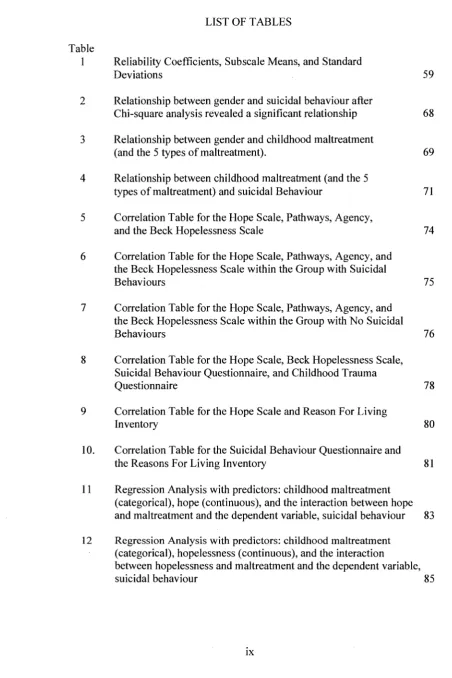
LIST OF TABLES
Table
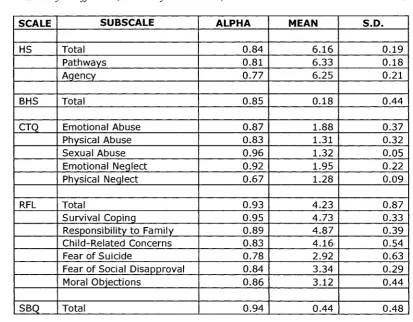
1 Reliability Coefficients, Subscale Means, and Standard
Deviations 59
2 Relationship between gender and suicidal behaviour after
Chi-square analysis revealed a significant relationship 68
3 Relationship between gender and childhood maltreatment
(and the 5 types of maltreatment). 69
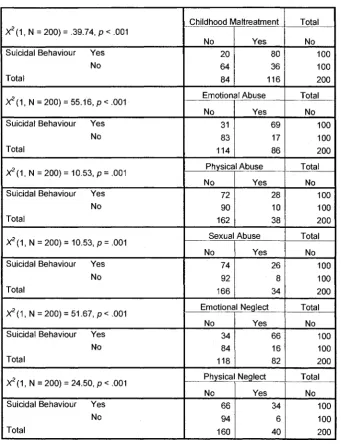
4 Relationship between childhood maltreatment (and the 5
types of maltreatment) and suicidal Behaviour 71
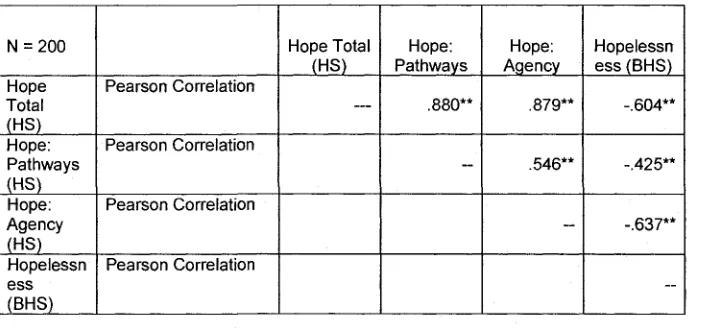
5 Correlation Table for the Hope Scale, Pathways, Agency,
and the Beck Hopelessness Scale 74
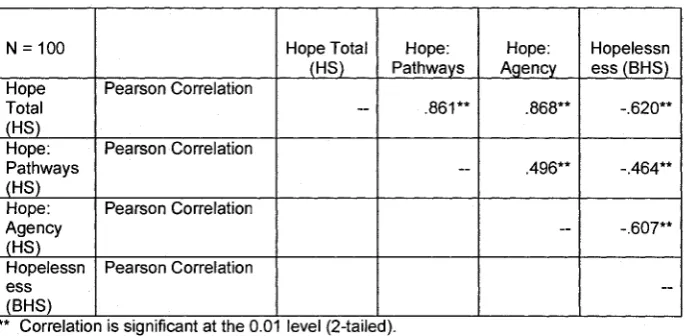
6 Correlation Table for the Hope Scale, Pathways, Agency, and the Beck Hopelessness Scale within the Group with Suicidal
Behaviours 75
7 Correlation Table for the Hope Scale, Pathways, Agency, and the Beck Hopelessness Scale within the Group with No Suicidal
Behaviours 76
8 Correlation Table for the Hope Scale, Beck Hopelessness Scale, Suicidal Behaviour Questionnaire, and Childhood Trauma
Questionnaire 78
9 Correlation Table for the Hope Scale and Reason For Living
Inventory 80
10. Correlation Table for the Suicidal Behaviour Questionnaire and
the Reasons For Living Inventory 81
11 Regression Analysis with predictors: childhood maltreatment (categorical), hope (continuous), and the interaction between hope
and maltreatment and the dependent variable, suicidal behaviour 83
12 Regression Analysis with predictors: childhood maltreatment (categorical), hopelessness (continuous), and the interaction
between hopelessness and maltreatment and the dependent variable,
suicidal behaviour 85
emotional abuse and the dependent variable, suicidal behaviour 88
14 Regression Analysis with predictors: emotional abuse (categorical), hopelessness (continuous), and the interaction between
hopelessness and emotional abuse and the dependent variable,
suicidal behaviour 90
15 Regression Analysis with predictors: physical neglect (categorical), hopelessness (continuous), and the interaction between
hopelessness and physical neglect and the dependent variable,
suicidal behaviour 91
16 Hope, Agency, and Pathway Means and Standard Deviations for
Childhood Maltreatment 95
17 Hope, Agency, and Pathway Means and Standard Deviations for
Suicidal Groups 97
18 Four Steps of Baron and Kenny's Mediation Test: Regressing Childhood Maltreatment onto the Criterion Variable Suicide and
Mediating Hopelessness 99
19 Four Steps of Baron and Kenny's Mediation Test: Regressing Childhood Maltreatment onto the Criterion Variable Suicide and
Mediating Hopelessness 101
20 Four Steps of Baron and Kenny's Mediation Test: Regressing Sexual Abuse onto the Criterion Variable Suicide and Mediating
Hopelessness 103
21 Means and Standard Deviations of Hope When the Perpetrator
of Physical Abuse was a Caregiver versus Other 105
22 Hope, Pathways and Agency Means and Standard Deviations
Based on Three Suicidal Groups 107
23 Coefficients for Model Testing Whether Hope Moderates the Relationship between Childhood Maltreatment and Suicidal
Behaviour 109
24 Coefficients for Model Testing Whether Hopelessness Moderates the Relationship between Childhood Maltreatment and
Suicidal Behaviour 110
25 Coefficients for Model Testing Whether Hopelessness Moderates
the Relationship between Emotional Abuse and Suicidal
Behaviour
26 Coefficients for Model Testing Whether Hopelessness Moderates
the Relationship between Physical Neglect and Suicidal
Behaviour
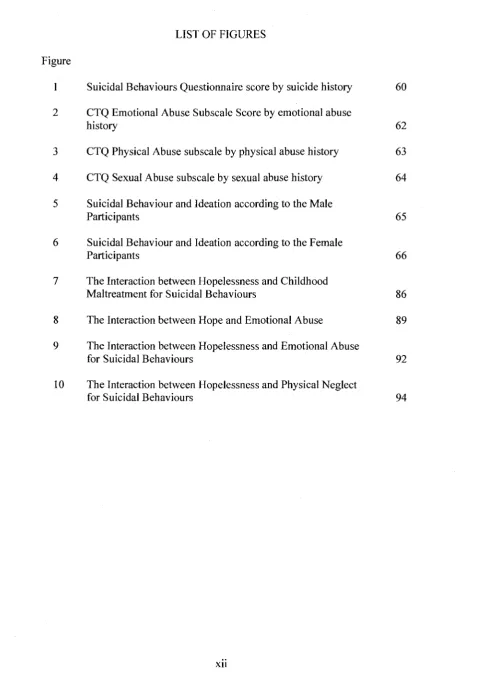
Figure
1 Suicidal Behaviours Questionnaire score by suicide history 60
2 CTQ Emotional Abuse Subscale Score by emotional abuse
history 62
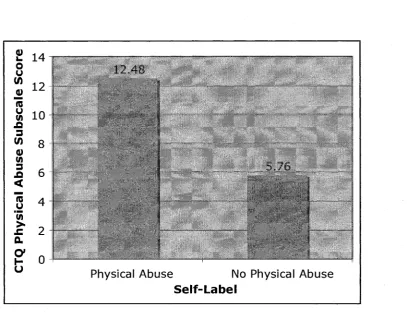
3 CTQ Physical Abuse subscale by physical abuse history 63
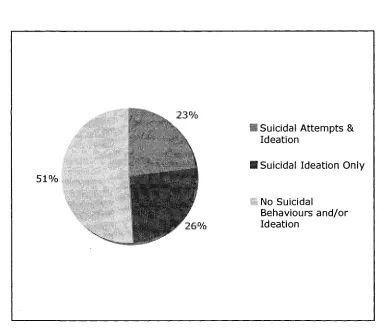
4 CTQ Sexual Abuse subscale by sexual abuse history 64 5 Suicidal Behaviour and Ideation according to the Male
Participants 65
6 Suicidal Behaviour and Ideation according to the Female
Participants 66
7 The Interaction between Hopelessness and Childhood
Maltreatment for Suicidal Behaviours 86
8 The Interaction between Hope and Emotional Abuse 89
9 The Interaction between Hopelessness and Emotional Abuse
for Suicidal Behaviours 92
10 The Interaction between Hopelessness and Physical Neglect
for Suicidal Behaviours 94
1
CHAPTER ONE
INTRODUCTION
Overview
Both childhood maltreatment and suicidality threaten the welfare of society.
Research has demonstrated an intersection between these two tragic epidemics (Santa
Mina & Gallop, 1998). Specifically, individuals with histories of childhood trauma are
more likely to engage in suicidal behaviour, particularly in adulthood, compared to
individuals with no history of childhood trauma. In addition, a high proportion of adults
engaging in suicidal manifestations report incidents of abuse in childhood. Identifying a
rationale for this association has been difficult (Santa Mina & Gallop, 1998). To explain
the mechanisms supporting the link between childhood maltreatment and adult
suicidality, theoretically-driven investigations are needed. These investigations also need
to consider why and how some individuals with maltreatment histories are protected from
suicidal behaviours, while others are vulnerable. To date, few theories have been used to
understand the connection between child maltreatment and suicidal behaviour, and these
have only been partially successful at shedding light on this association.
Is it possible that Snyder's (1994) hope theory can explain the path from
childhood maltreatment to adult suicidal manifestations? Could this theoretical model be
the bridge necessary to understand this association? Could this theory explain factors that
increase vulnerability and resiliency to suicidal behaviours in individuals with histories of
child maltreatment? Snyder describes hope as a thinking process that involves two
fundamental goal-directed components - agency (goal-directed determination) and
pathways (goal-directed planning). Could it be that childhood maltreatment negatively
despair when goals are blocked, and eventually may lead to the acquisition of suicide as a
goal to end the pain? Could it be that highly developed hope buffers stressors and protects
individuals from suicide even in face of adversity? If indeed this theory can explain the
relation between childhood trauma and adult suicidally, it may provide us with direction
to prevent eventual suicide by encouraging the development of hope in childhood,
adolescence, and even adulthood. More importantly, hope theory may make a
contribution to suicidology, moving it forward by suggesting promising interventions.
The lack of theoretical investigations of the link between childhood maltreatment
and adult suicidal behaviour highlights the need for a comprehensive research project
which tests the utility of hope theory to investigate and explain this association. The
purpose of this dissertation is to determine the role of hope, as proposed by Snyder et al.
(1991), in the development and explanation of adult suicidal action subsequent to
childhood maltreatment. In the following, a thorough review of research in the areas of
child maltreatment and suicidality is presented. Then, research that has been conducted to
examine the association between the two is explored. Further, in addition to the hope
3
CHAPTER TWO
LITERATURE REVIEW
Child Maltreatment
Childhood maltreatment is a widespread international problem. Potential
consequences of childhood trauma are varied and may be immediate as well as long-term
(e.g., De Arellano, Kipatrick, Saunders, & Resnick, 2005; Messman-Moore & Brown,
2004). Research on child trauma has suffered due to the absence of standardized
definitions of child abuse and lack of theoretical investigations (Briere, 1992; Cole &
Putnam, 1992). The maltreatment literature has identified possible psychological and
behavioural consequences of child abuse, but describing the underlying mechanisms that
influence the impact of maltreatment has generally been overlooked (Futa, Nash, Hansen,
& Garben, 2003; Liem & Goudewyn, 1999).
Definitions
Often terms such as "childmaltreatment', 'childtrauma', and 'childabuse' have
been used interchangeably in the literature. Childhood maltreatment is a challenging term
to operationalize due to the social stigma attached to the phenomenon. The lack of
consistent definitions has made it difficult to aggregate research findings and to
accurately assess the prevalence of abuse and neglect. Although no uniform definitions
for child maltreatment exist, many definitions have been offered (e.g., Heller, Larrieu,
D'Imperio, & Boris, 1999; Oates, 1996). Commonly, child maltreatment is the general
term used to describe all forms of child abuse and neglect, encompassing physical abuse,
sexual abuse, neglect, emotional abuse, and more recently, witnessing family violence.
Canada's Department of Justice defines child abuse as "the violence, mistreatment or
or depend on, such as a parent, sibling, other relative, caregiver or guardian" (Child
Abuse: A fact sheet, p. 1, 2006). Other definitions, such as the one provided for the Child
Abuse Prevention and Treatment Act (2003) in the United States, specify a maximum age
for the victim (e.g., 18 years of age) along with defining the power relationship between
the victim and the perpetrator (e.g., must be a parent or caregiver) (English, 1998).
Abusive behaviour by other individuals, (whether known to the child or not) is considered
assault and not maltreatment (English, 1998).
Individual forms of child maltreatment are defined in the childhood trauma
literature (Bernstein & Fink, 1998; Crouch & Milner, 1993; Finkelhor, 1994; Knutson,
1995) as:
Physical Abuse: bodily assaults on a child by an older person that pose a risk of,
or result in, injury (Bernstein & Fink, 1998).
Sexual Abuse: sexual contact or conduct between a child and older person; explicit
coercion is a frequent but not essential feature of these experiences (Bernstein & Fink,
1998).
Emotional Abuse: verbal assaults on a child's sense of worth or well-being, or any
humiliating, demeaning, or threatening behaviour directed toward a child by an older
person (Bernstein & Fink, 1998).
Emotional Neglect: failure of caretakers to provide a child's basic psychological
and emotional needs, such as love, encouragement, belonging, and support (Bernstein &
Fink, 1998).
Physical Neglect: failure of caregivers to provide a child's basic physical needs,
5
Statistics
Many incidents of child maltreatment are not admitted or reported, and at times,
the result is fatal (English, 1998). In 1996 alone, there were 47 children murdered by their
parents in Canada; 34 (72%) of these victims were under the age of six (Fedorawycz,
1997). The U.S. Department of Health and Human Services Children's Bureau reported
1500 children died as a result of child maltreatment in 2003. More than three-quarters of
the children who died were under four years of age (U.S. Department of Health & Human
Services, 2005). There are approximately 1 million substantiated cases of child abuse and
neglect in the United States each year and millions more reported cases (U.S. Department
of Health and Human Services, 2005), translating to a national rate of 12.4 per 1000
children. Among the children confirmed by child protective service agencies as being
maltreated, 61% experienced neglect, 19% were physically abused, 10% were sexually
abused, and 5% were emotionally or psychologically abused. In Canada, through the
Canadian Incidence Study of Reported Child Abuse and Neglect (CIS) (Trocme et al.,
2001), a rate of 9.7 victims per 1000 children was revealed for 1998. According to the
CIS, nearly three-quarters of children under six were victims of neglect (44%) or
emotional maltreatment (29%). Furthermore, younger boys, two and three years old, are
victimized more often than girls, whereas by age five, girls are victimized more often than
boys (Trocme et al, 2001). Rates of investigated and substantiated maltreatment cases are
lower in Canada than in the U.S.A., but higher than those reported in Australia (Paz,
Jones, & Byrne, 2005). However, it is difficult to make inferences from direct
comparisons between incidence rates in Canada and in other countries because of
Some statistics are also available for the individual forms of maltreatment. One in
two females and one in three males in Canada have been victims of unwanted sexual acts,
including being subjected to sexual exposure, being sexually threatened, being sexually
touched, or being the victim of an attempted or completed sexual assault. Eighty percent
of these incidents occurred when the person was under 18 (Badgley, 1984). The CIS
found that abuse victimization also varied significantly by gender, physical abuse (20%)
being more common than sexual abuse (8%) for boys, whereas sexual abuse (15%) was
more common than physical abuse (12%) for girls (Trocme et al., 2001). According to the
Child Maltreatment Report (U.S. Department of Health and Human Services, 2005),
"more than 60% of child victims were neglected, approximately 20% were physically
abused, 10% were sexually abused, 17% suffered from other types of maltreatment, and
5% were emotionally maltreated" (Chapter 3).
The co-occurrence of multiple forms of maltreatment is often observed. For
example, Arata, Langhinrichsen-Rohling, Bowers, and O'Farrill-Swails (2005) found that
60% of college students reporting a history of childhood maltreatment also reported more
than one type of maltreatment. Another study revealed that individuals reporting a history
of childhood sexual abuse were 2 to 3.4 times more likely to report experiences of
physical abuse, emotional abuse, physical neglect, and emotional neglect also in
childhood (Dong, Anda, Dube, Giles, & Felitti, 2003). Higgins and McCabe (2000) found
that physical abuse and psychological maltreatment, and physical abuse and sexual abuse
were highly likely to co-occur. Arata, Langhinrichsen-Rohling, Bowers, and O'Brien
(2007) indicated that neglect was the only type of maltreatment that was most often
experienced alone. The presence of intimate partner violence in a home not only increases
7
being physically abused, psychologically abused, and neglected (Berger, 2005; McGuigan
& Pratt, 2001).
Short-term & Long-term Consequences
Child maltreatment impacts an individual's personal, physical, social and
psychological development (Paz et al, 2005). The effects may be immediate or may
appear in adolescence or adulthood, and may be direct or indirect (Paz et al., 2005).
Although child abuse has been associated with negative outcomes, it is important to note
that not all persons who report a history of maltreatment report debilitating symptoms
(Steele, Sanna, Hammond, Whipple, & Cross, 2004). In fact, Williams (1993) suggested
that individuals with similar abusive experiences may have varying outcomes depending
on how the events are perceived, appraised, and processed. Other factors that affect the
impact of maltreatment include the intensity and frequency of the abuse, the child's
characteristics, the child's stage of development (O'Hagen, 1995), the child's relationship
to the perpetrator, and the child's access to other supportive caregivers (English, 1998).
Investigations have also found that coexisting multiple forms of abuse have a greater
negative impact on children when compared to the consequences of single forms of
maltreatment (e.g., English, Graham, Litrownik, Everson, & Bangdiwala, 2005; Higgins
& McCabe, 2000).
Interpersonal Outcomes. Adults with a history of child maltreatment are more
likely to have challenges "over a broad range of personal functioning, including adult
love relationships, friendships, criminality and employment" (Collishaw et al., 2007,
p. 213). Maltreatment impacting interpersonal relationships may not be exhibited until
(Briere & Elliott, 1994). The interpersonal effects of one specific type of maltreatment
may also differ from the consequences of multiple forms of maltreatment.
Male and female adults who have been abused reported significantly higher rates
of relationship disruption (Colman & Widom, 2004). Abused and/or neglected women
were less likely than control women to perceive their current partners as supportive,
caring, and open to communication, and were less likely to be sexually faithful to their
partners (Colman & Widom, 2004).
Adults with a history of childhood maltreatment are also at increased risk of
revictimization, such as being victims of intimate partner violence (Coid et al., 2001).
Victims of child maltreatment are also more likely to perpetuate youth violence and
intimate partner violence in the future. In fact, the link between intimate partner violence
perpetration and maltreatment in the forms of physical abuse and neglect was stronger in
females than males (Fang & Corso, 2007). The link between child sexual abuse and future
intimate partner violence perpetration was significant for males but not for females (Fang
& Corso, 2007). Caregivers with histories of maltreatment as children are also vulnerable
of providing compromised parenting (Wekerle, Wall, Leung, & Trocme, 2007).
Theoretical approaches used to explain this links have included social learning and
developmental psychopathology (Appel & Holden, 1998).
Social Outcomes. Maltreated children face several social problems. Physically
abused children tend to be aggressive toward peers and adults, tend to have difficulty with
peer relations, and tend to show a diminished capacity for empathy toward others (Tong,
Oates, & McDowell, 1987). As adults, physical abuse has been found to be associated
with anger and aggression (Loos & Alexander, 1997). As victims of child maltreatment
9
persons (Widom, 2000). They are also more likely than others to drop out of school
before completion (Widom, 2000) and females become pregnant at a young age
(Herrenkohl, Herrenkohl, Egolf & Russo, 1998). They more often experience emotional
problems, depression, and sexual problems (Starr, MacLean, & Keating, 1991).
Individuals who report abuse or neglect as children are also significantly more likely to
report engaging in health risk behaviours, such as driving while intoxicated, engaging in
unsafe sexual practices, and abusing substances (Dube et al., 2005; White & Widom,
2003). A recent study has shown that higher rates of substance abuse were found among
youth reporting a combination of both physical abuse and neglect than any other type or
combination of maltreatment (Arata et al., 2007). Victims of maltreatment also have a
high prevalence of homelessness (Herman, Susser, Struening, & Link, 1997).
Physical Outcomes. Physical symptomology resulting from child maltreatment
can be seen in childhood, as well as adulthood. Some studies have revealed differences in
the brains of individuals with histories of maltreatment when compared with healthy
control individuals. A recent study compared abused and neglected children with children
without similar histories (Teicher et al., 2004) and found the neglected children's corpora
collosa were reduced in size in neglected boys and in sexually abused girls.
An epidemiological study conducted by Goodwin and Stein (2004) showed an
association between childhood maltreatment and physical outcomes in adults. These
authors demonstrated that childhood physical abuse was associated with increased risk for
lung disease, peptic ulcer, and arthritic disorders; sexual abuse was associated with an
increased risk for cardiac disease; and neglect was associated with increased risk for
individuals report higher rates of physical illness including ischemic heart disease, cancer,
chronic bronchitis, emphysema, and hepatitis (White & Widom, 2003).
Psychological Outcomes. Psychological problems are prevalent among victims of
maltreatment. For example, childhood adversities have strong associations to the
development of eating disorders and problems with eating and weight that persist into
early adulthood (Johnson, Cohen, Kasen, & Brook, 2002). Hitchcock (1987) found that
adults who were physically abused as children were less likely to have adequate coping
skills, especially under high stress situations. Widom (2000) suggests that the
development of maladaptive coping may result in problems for adjustment and dealing
with stress later in life. Furthermore, people with histories of early abuse and neglect have
repeatedly been found to suffer from profound and pervasive psychiatric problems (van
der Kolk, 2001).
Childhood maltreatment has also been associated with post-traumatic stress
disorder (PTSD), specifically complex PTSD (Herman, 1992; McLeer et al., 1998). While
PTSD is the human response to experiencing a traumatic event, such as a car accident or
rape, complex PTSD (Herman, 1992) is the result of chronic traumas that have continued
over months or years, such as sexual abuse, held in control by another (Herman, 1997).
Symptoms of complex PTSD include: "1) alterations in the regulation of affective
impulses, including difficulty with modulation of anger and being self destructive,
2) alterations in attention and consciousness leading to amnesias and dissociative
episodes and depersonalizations, 3) alterations in self perception, such as a chronic sense
of guilt and responsibility, chronically feeling ashamed, 4) alterations in relationship to
11
5) somatization the problem of feelings symptoms on a somatic level for which no
medical explanations can be found, and 6) alterations in systems of meaning" (van der
Kolk, 2001, p. 8 - p. 9). Changes in one's system of meanings may include a loss of
sustaining faith or a sense of hopelessness and despair.
One consistent relation reported with child maltreatment has been the occurrence
of non-suicidal self-injury, that is, the direct and deliberate harm of bodily tissue in the
absence of suicidal intent (Glassman, Weierich, Hooley, Deliberto, & Nock, 2007; Nock
& Kessler, 2006). For instance, sexual abuse has shown a strong association with
self-injury, including non-suicidal self-injury and suicide (Bergen, Martin, Richardson,
Allison, & Roeger, 2003). Other studies have shown a strong association between
physical neglect and non-suicidal self-injury (Glassman et al., 2007; Joiner et al., 2007),
while physical abuse and emotional neglect were not significantly associated with the
presence of non-suicidal self-injury (Glassman et al., 2007).
Childhood maltreatment has also been associated with suicide attempts, that is,
self-injury with the attempt to die (Fergusson, Horwood, & Lynskey, 1996). A study
conducted by Coll, Law, Tobias, Hawton, and Tomas (2001) found that women admitted
to hospital after having taken an overdose were significantly more likely to have been
sexually and psychologically abused (but not physically abused) as children than women
admitted to hospital on the same day for other reasons. In fact, studies have demonstrated
links between childhood sexual (Bryant & Range, 1997; Zlotnick et al., 2001), physical
(Silverman, Reinherz, & Giaconia, 1996), and emotional (Langhinrichsen-Rohling,
Resilience to Maltreatment
Research shows that not all individuals with childhood maltreatment histories
experience problems later in life (Collishaw et al., 2007). McGloin and Widom (2001)
found that 48% of children with documented histories of abuse or neglect did not meet
criteria for adult psychiatric disorders including depression, anxiety and PTSD. These
authors also classified 22% of the maltreated population in their study as "resilient".
Although the definition of resilience varies across researchers and much debate exists on
how best to define the concept of resilience, one definition offered for resilience is "the
process of, capacity for, or outcome of successful adaptation despite challenging or
threatening circumstances" (Masten, Best, & Garmezy, 1990, p. 426).
Research has shown several factors are related to individual variability when
examining responses to childhood adversity. Heller et al. (1999) found that the
availability of emotional support at the time of childhood maltreatment engenders
resiliency in adulthood. Peer relationships in adolescence have been shown to protect
individuals with abuse histories and are strong predictors of resilience (Collishaw et al.,
2007). Other protective variables against deleterious effects of child maltreatment
include (1) dispositional/temperamental attributes of the child (e.g., self-esteem,
intellectual ability); (2) a warm and secure family relationship; and (3) the availability of
extrafamilial support (e.g., peers, teachers) (Luthar and Zigler, 1991).
Theory-Driven Investigations
Methodological Issues
The "childhood maltreatment body of literature is often disparaged because it
tends to lack precision, specificity, and comparability across studies" (Riddle & Aponte,
13
childhood maltreatment (Manly, 2005), the current literature suffers from: (1) a
propensity to study the effects of one or two types of child maltreatment in isolation,
while overlooking the potential impact of other types, (2) a lack of psychometrically
sound child maltreatment measures, and (3) a tendency to only consider the frequency of
a particular type of maltreatment, while over-looking variables, such as the relation
between the victim and the offender (Aber, Allen, Carlson, & Cicchetti, 1989).
Sexual abuse has received "a disproportionate amount of research attention while
the risk associated with other types of maltreatment, such as psychological maltreatment
and physical neglect, are being largely ignored" (Riddle & Aponte, 1999, p. 1104).
Research on the consequences of maltreatment for children has tended to focus on one or
two forms of child maltreatment, apart from others, which gives rise to confusion about
the relative importance of each as a predictor of later outcomes (Edelson, 1999;
Herrenkohl & Herrenkohl, 2007; Litrownik, Newton, Hunter, English, & Everson, 2003).
This is a drawback for research especially since 90% of social service cases involve the
co-occurrence of multiple types of abuse (McGee, Wolfe, Yuen, Wilson, & Carnochan,
1995), and these individuals experience the most deleterious outcomes (Claussen &
Crittenden, 1991).
Many times when defining childhood maltreatment, multiple forms are aggregated
together into one category (Heller et al., 1999). Each type of maltreatment may pose a
risk to a child's future functioning, but the effects may vary according to the type of
maltreatment (Cicchetti & Toth, 1995; Heller et al., 1999). Lumping together multiple
forms of childhood maltreatment may over-simplify the important distinctions between
various forms of abuse (Heller et al., 1999). However, given that single types of
co-occur, examining the combined (general) effects of various forms of child maltreatment is
also necessary, and recently has been encouraged (Arata et al., 2007; Herrenkohl &
Herrenkohl, 2007).
In addition, there is a lack of reliable measures of child maltreatment. Few
instruments have been developed based on well-researched and validated constructs, and
even fewer have been put through the scrutiny of rigorous psychometric testing (Riddle &
Aponte, 1999). Briere (1992) suggests that the use of measurement instruments with
unknown psychometric properties adds to the methodological problems faced by the
maltreatment field.
Variables that may also affect outcomes of child maltreatment but have been
overlooked in research include the age at onset, developmental period(s) of occurrence,
relationship of the child to the perpetrator, duration, and the child's subjective perception
of the experience. The age at onset and the developmental period during which the child
is exposed to a given caregiver behaviour are of paramount importance to the child's
adaptation because the same parental act is likely to have a different impact on children at
different stages of development, such that early exposure is more detrimental (Garbarino,
Guttman, & Seeley, 1986; Sroufe, 1979; Zigler & Hall, 1989). In addition, the impact of
maltreatment varies according to the relationship between the child and the perpetrator
(Mullen, Martin, Anderson, Romans, & Herbison, 1996). Finkelhor (1979) examined
responses to sexual abuse and found victims react differently depending on whether the
perpetrator was the individual's father, someone he or she knew, or a complete stranger.
Another problem with the childhood maltreatment literature is that most of it is
cross-sectional research, as opposed to longitudinal in nature. Thus, potentially causal risk
15
research utilizes retrospective recall, which may be unreliable and invalid due to (1) the
degree of forgetting over the years, (2) the tendency of people to seek meaning in their
memories which may influence recall, (3) the ability to recall only those memories that
they are aware of at the time of occurrence, (4) the inability to recall what happened
during the first few years of life, also known as infantile amnesia, and (5) the propensity
of memories to be influenced by mood state at the time of retrospective recall (Hardt &
Rutter, 2004). Despite the substantial limitations of retrospective data with respect to
causal inferences, such data has three crucial advantages: (1) convenience of sampling;
(2) relatively low cost, and (3) a lack of any need to wait for results while the children
grow up (Hardt & Rutter, 2004, p. 261).
Theories
Developmental theories are important when understanding the impact of
childhood maltreatment. In fact, Harlow conducted experiments in the 1950s on maternal
deprivation in rhesus monkeys bringing to light the effects of attachment and loss
(Harlow, 1958). Harlow separated infant monkeys from their mothers a few hours after
birth, then arranged for the young animals to be "raised" by two kinds of surrogate
monkey mother machines, both equipped to dispense milk. One mother was made out of
bare wire mesh while the other was a wire mother covered with soft terry cloth. Not only
did Harlow observe that the monkeys spent more time with the terry cloth surrogates
when given a choice, he also observed that those monkeys with only the bare wire
mothers were frightened by strange, loud objects, rocked back and forth and screamed in
terror when they were scared. Harlow and others have used these findings to run parallels
with human beings and realized the importance of emotional attachment between parent
children are deprived of the basic social and psychological necessities of life such as
food, shelter and safety, they are at a greater risk for maladjustment than children who
have had those needs met. Some research may identify consequences of child
maltreatment, but usually do not explain them in terms of underlying determinants or
developmental etiologies (Liem & Boudewyn, 1999). Developmental theories in the areas
of attachment and social-cognitive perspectives have attempted to account for the
short-term consequences experienced by maltreated children during early childhood (Aber,
Allen, Carlson, & Cicchetti, 1989), but this conceptualization is rarely extended to the
study of long-term consequences (Riddle & Aponte, 1999).
Some researchers have used Bowlby's (1990) concept of the internal working
model to understand the mechanisms behind the consequences of child abuse and neglect.
According to attachment theory, if the attachment figure acknowledges the child's need
for comfort and provides protection for the child while respecting his or her need for
autonomy and independence, a working model of the self as valued and self-reliant and
the other as reliable and supportive may develop (Liem & Boudewyn, 1999). Conversely,
if a parent frequently ignores their child's need for comfort or autonomy, a working
model of the self as unworthy or incompetent and a working model of the other as
rejecting or unreliable may result. Thus, according to the responsiveness of the parents, a
child forms working models of self-in-relationships, which in turn may influence both the
construction of new relationships and the ability to cope with the demands of new and
stressful events later in development (Bowlby, 1980). Liem and Boudewyn (1999) used
attachment theory as a framework for analyzing child maltreatment in early childhood
17
maltreatment did predict poor self-functioning in the form of higher levels of depression
and lower levels of self esteem.
Other studies have used schemas to examine mechanisms through which child
maltreatment may contribute to problems later in life. Schemas are defined as cognitive
structures that guide the ways people attend to and interpret their environments (Kaysen,
Scher, Mastnak, & Resick, 2005). These schemas lie dormant until they are activated by
relevant stimuli, typically stress. Schemas develop from interactions with the
environment, primarily from interactions that occurred during childhood (Beck, 1967,
1987). If early interactions are characterized by negativity, schemas may develop which
guide attention to negative rather than positive events, and which lead to interpretations of
benign events as negative. Findings generally support the idea that childhood
maltreatment confers risks for information-processing biases and overt cognition
characteristics of maladaptive schemas (Kaysen et al., 2005). Allen and Tarnowski (1989)
found that maltreated children report more maladaptive cognitions (e.g., negative
expectations about the future) compared to nonmaltreated children. In addition, negative
cognitive styles have been shown to contribute vulnerability to the onset of depression
(Gibb, Abramson, & Alloy, 2004). Since depression has been linked with suicidal
behaviour, suicidal action may also be important to investigate. Although the association
between child maltreatment and suicide has also received some attention, it still remains
far from conclusive (Rogers, 2003).
Suicidal Ideation and Behaviour
Suicide is defined as an action and not an illness (Health Canada, 1994).
Identifying the chain of causal events and factors that lead to the action of suicide is
primarily due to the paucity of theoretically guided investigations into suicide-related
behaviour (Neuringer, 1976; Rogers, 2001; 2003). Many theories have been put forth to
explain suicidal acts (Baechler, 1979; Baumeister, 1990; Durkheim, 1951; Menninger,
1959; Schneidman, 1985), but few of these outline potential causal pathways to
suicidality (Cornette, Abramson, & Bardone, 2000). Some theories simply list potential
risk factors that are thought to be associated with suicide (Clark & Fawcett, 1992; Mann,
Waternaux, Haas, & Malone, 1999; Maris, 1981), and other investigations are often only
correlational in nature (Santa Mina & Gallop, 1998). Despite the efforts of researchers,
suicidology is filled with large gaps in knowledge and comprehension, predominantly in
the areas of theory and intervention (Joiner and Rudd, 2000).
Definitions
Suicidology has been confused and stagnated due to the lack of adequate standard
definitions for suicidal behaviour (O'Carroll et al., 1996; Kidd, 2003). The terms
"suicide", "suicide attempt", "self-harming behaviour", and. "parasuicide" are used
commonly and sometimes interchangeably in the suicide literature (Santa Mina & Gallop,
1998). Leenaars et al.(1997) argue that the definitions are Cartesian in nature and have a
tendency to ignore human elements of motivation, intention, and severity. Additionally,
the terms are not applied uniformly in research and practice (Kidd, 2003), making it
difficult to generalize findings and to extrapolate (Westefeld et al., 2000).
O'Carroll et al. (1996) proposed a nomenclature for suicide-related behaviour in
an attempt to solve this dilemma. They define suicide as "death from injury, poisoning, or
suffocation where there is evidence (either explicit or implicit) that the injury was
self-inflicted and that the decedent intended to kill himself/herself (p. 247). The definition for
19
self-injurious behaviour must be nonfatal. However, it is not necessary for injuries to
have occurred in order for this behaviour to be classified as a suicide attempt. The authors
also used the terms "suicidal act" and "suicide-related behaviour" to incorporate both
suicide and suicide attempt. They defined suicidal ideation as "any self-reported thoughts
of engaging in suicide-related behaviour" (O'Carroll et al., 1996, p. 247).
Statistics
As a leading cause of premature death, suicide is a major public health problem
(Health Canada, 1994). In 2001, at least 3692 Canadians died from suicide (Statistics
Canada, 2002). This represented 2% of all deaths in Canada (Statistics Canada, 2002;
Health Canada, 2002), and a rate of 11.7 per 100,000, compared to a lower rate of 10.4
per 100,000 in the United States during the same year (World Health Organization, 2003).
However, rates vary among specific groups. For example, the suicide rate for Inuit
peoples living in Northern Canada is between 60 and 75 per 100 000 people, significantly
higher than the general population (World Health Organization, 2002). Suicidal rates also
vary with gender and age. Men commit suicide at a rate four times higher than that of
women, and rates are higher among the youth and the elderly (Weir & Wallington, 2001)
The actual number of suicide deaths may be considerably higher either because
information about the nature of the death may become available only after the original
death certificate is completed, or because determining the intent of a death is difficult in
some situations (Health Canada, 2002). The stigma of suicide also influences coding on
the death certificate, such that a number of suicides may be classified as accidents or
natural deaths, thereby masking the actual incidence of suicide (Health Canada, 2002;
Leenaars & Lester, 1998; Madge & Harvey, 1999; McClure, 1994; Moscicki, 1999). The
compared to international rates. The World Health Organization (2003) reported the rate
in Canada to be among the highest one-third (actual ranking was 26) compared to 97
European, American, and Asian countries.
Although public attention tends to focus on completed suicides, suicidal
behaviours range from suicidal thoughts not acted upon, through failed suicidal attempts,
to eventual suicides (Beautrais, 2003). Twenty-five percent of young people today report
having suicidal thoughts (Beautrais, 2000). Beautrais (2000) also identified that 4% to 8%
of young people report a lifetime history of suicidal attempts by age 20. Women report
considerably higher rates of both suicidal ideation and suicide attempt than men
(Fergusson, Woodward & Horwood, 2000). According to a report released by the World
Health Organization, there are 10 to 20 times more failed suicide attempts that result in
injury, hospitalization, emotional and mental trauma than suicide completions (World
Health Organization, 2004).
Risk Factors.
A predominant focus in contemporary suicidology has been the identification of
risk factors that influence suicide-related behavior (Rogers, 2001). This focus has
revealed various biological (e.g., low brain serotonin, Asberg, Nordstrom, &
Traskman-Bendz, 1986; Asberg, Traskman, & Thoren, 1976), psychological (e.g., mental disorders,
Tanney, 1992), sociological (e.g., unemployment, Moser, Goldblatt, Fox, & Jones, 1987),
and cultural variables (e.g., ethnicity, Kirmayer, 1994) as contributors to the ultimate goal
of suicide (Matheson, 2002; Rogers, 2001). Childhood maltreatment (Johnson, Cohen,
Gould et al., 2002), lack of social support (Bellini & Matteucci, 2001), alcoholism
(Lester, 1992; Smart & Mann, 1990), previous suicide attempts (Rudd, Joiner, & Rajab,
21
(Kidd, 2004), and a family history of suicide (Runeson & Asberg, 2003) are all examples
of risk factors associated with suicide.
Depression has also been identified as a strong predictor of suicidal action. Many
studies, involving both clinical and non-clinical populations, have shown that individuals
who have engaged in suicidal acts (Westefeld et al., 2000; Tanney, 1992) or have
indicated suicidal ideation (Vandivort & Locke, 1979; Brown & Vinokur, 2003) have
high indices of depression, primarily assessed by depression scales (e.g., Beck's
Depression Inventory; Beck, Ward, Mendelson, Mock, & Erbaugh, 1961). Depression is
the most common psychiatric disorder among individuals who have attempted suicide
(Davis, 1995; Isometsa & Lonnqvist, 1998).
Although depression is a useful psychological construct for predicting suicide
(Beck, 1963,1974; Dyck, 1991), hopelessness may be an even more precise indicator of
suicide-related behavior. In fact, hopelessness is found to correlate better with suicidal
ideation than depression (Weishaar & Beck, 1992; Wetzel, Margulies, Davis, & Karam,
1980) and is believed to be a better predictor of eventual suicide than depression (Beck,
Steer, Beck & Newman, 1993; Chance, Kaslow, & Baldwin, 1994; Chioqueta & Stiles,
2003).
Theory-Driven Investigations
Methodological Issues
Suicidology has also been plagued with imprecise definitions. Additionally, this
field too has had to rely on retrospective data (e.g., from suicide attempters) or data on
attitudes to predict and understand suicidal behaviour. Research also tends to overlook the
Theories
Sociological Theories. Durkheim's work from the late 1800s has provided the
basis for most sociological theories of suicide. Durkheim (1951) conceptualized the
phenomenon of suicide as a social act, related to particular social surroundings and
conditions. He explained suicide using social rather than individual characteristics and
variables. His theory states that there are two dimensions of social influence on
individuals, social integration (the degree of connection between an individual and a
social network) and social regulation (the degree of influence that society has over an
individual). Due to these two forces, four different types of suicide exist.
Within the dimension of social integration, Durkheim described two types of
suicide: egoistic and altruistic. Egoistic suicide results from a lack of social integration
because the individual's emotional ties with his social network are loose. He is not able to
sustain himself in relationships with others and is isolated and detached. He derives little
satisfaction from his connections with his social group or its achievements. Conversely,
extreme social integration can also culminate in altruistic suicide. In this social condition,
an individual sacrifices his life for the goals of the social group to which he or she feels
overly obligated in his or her duties. Fatalistic and anomic suicides are functions of social
regulation. Those who commit fatalistic suicides do so because they have been rejected
by society, a very weak social regulation. Individuals attempting to deviate from social
expectations in their death commit anomic suicides.
Durkheim's sociological perspective of suicide excludes the reality of the person
who engages in the behavior. The idea of individual choice is not acknowledged. The
potential for prevention and intervention resides external to the individual. He is
23
imminent suicide. Although Durkheim's sociological perspective has contributed
extensively to the knowledge of social factors in suicide, the omission of the individual as
responsible for himself has made it problematic. There is also limited empirical research
conducted using Durkheim's perspective.
Suicide as a Choice. At the center of Shneidman's (1976) theory is the notion that
suicide is caused by intense psychological pain - termed by Shneidman as "psychache".
The emotions which are common in a suicidal state are: hostility, despair, shame, guilt,
dependency, hopelessness, apathy, and emotional impotence. Shneidman (1987) argues
that suicide is not caused by depression, alcoholism, unemployment, or any of the other
factors that are commonly studied in contemporary suicidology, but rather, suicide is
caused mainly by psychological factors. He asserts that psychache creates such an
overwhelming amount of distress in an individual that he or she perceives suicide as the
only way to escape from pain. Schneidman included cognitive aspects, conceptualizing
the idea of suicide as a conscious solution to a problem and emphasizing the constriction
of intellectual functioning. It is then the dichotomous thinking and lack of clear insight
and useful communication that allows one to think of suicide as the only option. The
combination of perturbation (e.g. psychache) and lethality (the willingness and ability to
kill oneself) results in suicide (Shneidman, 1985, 1996). Although recent research has
started to examine Shneidman's ideas, little empirical research supporting his theory
exists.
Cognitive Theories. Cognitive theories of suicide focus on the thoughts of suicidal
individuals. Hopelessness has been put forward as a significant risk factor, not only of
mental disorders generally, but of depression and suicidal-related behaviours specifically
(Beck, 1963; 1974; Beck et al., 1979) defined hopelessness as "negative cognitions about
the future". Beck developed his theory of hopelessness focusing on the antecedents of
psychopathology and mental illness (Snyder, Shorey, & Berg, in press). This concept of
hopelessness refers specifically to one (the self in relation to the future) of the three
cognitive features that a depressed individual possesses: a) a negative view of the self, b)
of the self in relation to the world, and c) of the self in relation to the future (Beck, 1963,
1974). In order to measure hopelessness, Beck, Weissman, Lester, and Trexler (1974)
developed the Beck Hopelessness Scale (BHS). This scale, defining hopelessness as the
degree to which an individual's cognitive schemata are dominated by negative
expectations toward the future (Beck et al., 1974), is a 20-item, true/false forced choice
questionnaire where a higher score is associated with a higher degree of hopelessness
(O'Connor, Connery, & Cheyne, 2000). Beck's concept of hopelessness has been utilized
to understand and predict suicide-related behaviour (Beck, 1963; 1974; Beck et al., 1979).
According to Beck, Kovacs, and Weissman (1975), hopelessness is a useful
construct to understand suicidal behaviour, and has substantial clinical utility for suicide
risk assessment and prediction. In fact, hopelessness, as assessed by the BHS, has been
strongly linked empirically with suicidal ideation (Beck et al., 1979; Chioqueta & Stiles,
2003; Holden, Mendonca, & Mazmanian, 1985; Snyder 1994), suicide attempts
(Esposito, Spirito, Boergers & Donaldson, 2003: Salter & Piatt, 1990), and completed
suicides (Beck, Brown & Steer, 1989; Beck, Brown, Berchick, Stewart & Steer, 1990;
Snyder, 1994).
The identification of the relation between hopelessness and suicidal behaviour has
been an important discovery in suicidology that has advanced our understanding of the
25
to be the key factor in connecting depression and suicide. Since then, research has
revealed that the construct of hopelessness plays a significant role in the etiology and
maintenance of depression (Beck et al., 1989; Minkoff, Bergman, Beck, & Beck, 1973;
Salter & Piatt, 1990). Hopelessness not only predicts various indices of suicide potential,
but also mediates the indirect relationship between depression and suicidal behaviour
(Beck et al., 1975; Petrie & Chamberlain, 1983; Beck et al., 1990). In fact, some studies
reveal that the correlation between suicidal ideation and depression becomes
nonsignificant when the effect of hopelessness is controlled for (Wetzel et al., 1980; Beck
et al., 1975). Beck's crucial contribution to the conceptualization of suicide is that
cognition has the capacity to influence the nature and content of emotions.
Snyder's Hope Theory
Hope theory, introduced by C. R. Snyder (1994; 2000a), may offer an alternative
cognitive model to explain suicidality. This theory incorporates several elements of the
previously mentioned suicide and child maltreatment theories. This model describes
suicide as a choice, related to the lack of hope, and influenced by one's upbringing and
attachment to caregivers. In contrast to Beck's focus on attempting to avoid negative
outcomes, Snyder recognized the significance of hope for adaptive functioning (Snyder et
al., in press). Snyder (2000b) suggests that hope is a more complex construct than
previously described by other scholars. Snyder describes hope as a bidimensional
phenomenon, a thinking process that involves two fundamental goal-directed
components: agency and pathways (Snyder, 1994; Snyder et al., 1991; Snyder, Cheavens
& Sympson, 1997). The agency component entails goal-directed determination, whereas
Goals represent the cognitive targets for hope and vary on a number of levels
(Snyder, 1994). Goals may be visual, virtual, or verbal in nature, and may vary
temporally from short- to long-term (e.g., "I want to get this sentence written" versus "I
want to complete my doctoral degree") (Snyder, 1994; Snyder et al, 2000). Goals may
also vary with respect to attainability, such that even the perceived "impossible" goal may
be achieved through planning and determination (Lopez, Snyder, Teramoto-Pedrotti,
2003). Goals may vary in importance, although a given goal must be of at least moderate
importance before a person will pursue it (Snyder et al., 2000). An important principle of
hope theory is that the expectation of goal attainment will be positively associated with
greater levels of both agentic and pathways thinking which, in turn, will result in greater
psychological adjustment (e.g., greater life satisfaction, less dysphoria) (Chang, 2003).
Agency thinking is the motivational component of hope theory (Snyder, 1994).
Agency reflects self-perceptions about one's capability to meet goals in the past, present,
and future (Snyder, 1994, 2000a). Agency is the "belief that one can begin and sustain
movement along the envisioned pathways toward a given goal" (Snyder et al., 2000, p.
749). Individuals with high levels of hope endorse agentic personal self-talk phrases (e.g.,
"I won't give up;" Snyder, LaPointe, Crowson, & Early, 1998) Agency is especially
important in applying the motivation to the appropriate alternative pathways when
confronted by impediments (Lopez et al., 2003). Pathways thinking reflects "the person's
perceived ability to generate plausible routes to goals" (Snyder, 2000b, p. 13). Pathways
also taps positive self-talk about being able to find ways to desired outcomes (e.g., "I'll
find a way to solve this;" Snyder et al., 1998). Individuals can usually generate at least
one primary path to achieve a goal. Some, especially those with high hope, may produce
27
Unlike previous conceptualizations of hope that describe it as a unidimensional
construct, Snyder proposes that two interrelated dimensions -- agency and pathways — are
necessary throughout the goal-directed behavior, and critical in defining hope. According
to Snyder et al. (1991), "these two components of hope are reciprocal, additive, and
positively related, although they are not synonymous" (p. 571.). To sustain movement
toward the goals in one's life, both the sense of agency and the sense of pathways must be
operative (Snyder et al., 1991).
Development of Hope
According to Snyder (1994), hopeful thought is an active process that is learned,
and is crucial for survival and thriving. The development of hope begins early in life and
is established during the infant and toddler stage. Newborns undertake pathways thinking
and begin to understand the process of causation that allows events to happen (Snyder,
1994, 2000a). This cause and effect thinking enables the child to conceptualize goals and
pathways to reach them (Snyder, 1994, 2000a). By the time babies are a year old, they are
able to anticipate events and engage in intentional acts (Snyder, 1998). Hopeful,
goal-directed thinking is learned in the context of other people (Snyder, 2002). Each child
needs encouragement from caregivers and instruction on how to overcome impediments
(Snyder, 1998). For the facilitation of hope, a child needs a secure attachment with one or
more caregivers, who in turn need to provide a model for effective goal related activities
(Snyder, 1994, 2000a). Agency develops when a child learns that he or she can
accomplish goals and then receives praise and support in the pursuit of accomplishing age
appropriate tasks (McDermott & Snyder, 2000). Thus, the foundation of hope lies in the
ability to make linkages between desires and the ability to use strategies that fulfill them
Several factors may hinder the development of hope, and are especially damaging
when encountered earlier in life (Snyder, 1998). Negative events, such as childhood
neglect and abuse, can harm the establishment of hope. Snyder (2002) posits that
neglected children lack someone to teach them to think hopefully. The neglected child, by
definition, has the attention of no caregivers (Rieger, 1993). Hope cannot develop
because the time spent with caregivers is not attentive, interactive, or evocative (Snyder,
1994). Neglect kills hopeful thinking in a passive manner, whereas hope is destroyed
actively through physical and sexual maltreatment (Snyder, 2002). In these situations, the
caregiver's actions are no longer a source of stability or support, but instead cause the
infant to shut down his or her goal-directed thinking (Snyder, 1994, 2000a). Other events,
such as parental loss or family suicide, may also have similar negative effects on hope.
The hope that develops during the first years of childhood becomes the template for the
future and influences the remainder of the person's life (Snyder, 1994, Snyder et al.,
1991).
Hope Measures
Self-report hope scales emerging from different theoretical conceptualizations are
available. The 1975 Hope Scale (Erickson, Post, and Paige, 1975) was devised based on
Stotland's view of hope as "an expectation greater than zero of achieving a goal (1969,
p. 2). It consists of a list of 20 focused goals that are not situation-specific in nature,
asking participants to rate each goal using a 7-point Likert scale. Psychometrics for this
measure appear adequate with test-retest reliability over a one-week period and moderate
internal consistency (Lopez et al., 2003). The Hope Index (Staats & Stassen, 1985) is
29
particular events and outcomes, instead of a more general focus and has displayed
moderate test-retest reliabilities and internal consistency (Staats, 1989).
Snyder and his colleagues have also developed and validated instruments that
reflect their hope theory structure. The Hope Scale (HS; Snyder et al., 1991) measures
hope as a relatively stable personality trait. The State Hope Scale (Snyder et al., 1996)
assesses goal-directed thinking at a given moment in time. Both measures have been
psychometrically tested and utilized with a variety of different populations.
High-hope versus Low-hope Persons. A variety of differences are exhibited
between persons of high-hope and low-hope with respect to goals, agency and pathways
thinking. These differences are even apparent at a young age. High-hope children, as
opposed to low-hope children, view others as available and supportive into adulthood
(Snyder, 1994). Over time, high-hope people view the world as consistent and safe, and
view themselves as worthy of support while low-hopers report less life satisfaction, less
self-worth, and higher depressive symptoms (Chang, 1998; Snyder, 1994). Consequently,
people with high hope, in contrast to low-hope individuals, focus on success and
experience positive emotional states.
In terms of goals, high-hope persons have more goals, and set more challenging
goals for themselves than individuals with low hope. Low-hope, compared to high-hope
people, are less likely to "let go" of goals that are no longer feasible (Snyder, 1998), or
are unable to identify plausible alternative goals (Snyder, Wrableski, Parenteau, & Berg,
2004). When a given pathway no longer leads to a goal, high-hope persons quickly will
identify alternative paths so as to continue their goal pursuits. Low-hope persons,
however, cannot find new routes. In a testing environment, low-hopers are more prone to