by
Constance Heffren Urbanski
A dissertation submitted to the Graduate Faculty of North Carolina State University
in partial fulfillment of the requirements for the degree of
Doctor of Education
Educational Administration and Supervision
Raleigh, North Carolina 2011
APPROVED BY:
___________________ ____________________ Dr. Lance D. Fusarelli Dr. Kevin P. Brady Committee Co-Chair Committee Co-Chair
_____________________ _____________________ Dr. Kenneth H. Brinson Jr. Dr. Paul F. Bitting
BIOGRAPHY
TABLE OF CONTENTS
LIST OF TABLES...vi
CHAPTER 1: INTRODUCTION... 1
Background... 1
Statement of the Problem... 6
Purpose of the Study... 12
Research Questions... 13
Definition of Key Terms... 14
Principles Embodied in Parochial Schools... 15
Significance of the Study... 16
Summary... 18
CHAPTER 2: LITERATURE REVIEW... 22
General Introduction... 22
History of Catholic Schools and their Mission in the United States... 28
A Changing Population and Identity...31
Catholic Education in the Southeast... 32
Catholicism in North Carolina... 35
Using Organizational Theory to Create Change... 40
Summary... 43
Overview of Chapter Three... 46
CHAPTER 3: METHODOLOGY... 47
Conceptual Framework... 47
Explanation of the Appropriateness of the Approach... 48
Theoretical Framework... 51
Research Questions... 52
Site Selection and Sample... 53
Case Study Methodology... 56
Data Collection... 57
Data Analysis... 61
Research Validity and Reliability... 63
Limitations and Assumptions of the Study... 65
Subjectivity Statement... 69
Ethical Considerations/IRB... 70
Summary of Chapter... 71
CHAPTER FOUR: RESULTS OF THE STUDY... 72
Introduction... 72
Study Sample Demographics... 73
Factors Impacting Bishop X's Students' Selection of Catholic High School... 83
The School's Mission as Seen by Students of Bishop X... 86
Factors Impacting Teachers' Selection of Bishop X High School... 87
The Principal's View of Bishop X... 90
Factors Impacting T. M. Academy's Students' Selection of Catholic High School... 91
Factors Impacting Teachers' Selection of T. M. Academy... 95
The Principal's View of T. M. Academy... 97
Advertising and Admissions' Materials... 98
Summary... 101
CHAPTER FIVE: DISCUSSION... 105
Summary of the Study... 106
Conclusions and Discussion of the Findings... 106
Research Question 1... 107
Research Question 2... 109
Research Question 3... 110
Research Question 4... 113
Implications for Catholic Schools Today... 115
Recommendations for Catholic Schools in the Future... 116
Implications for Further Research... 118
REFERENCES... 121
APPENDICES... 139
Appendix A. Focus Group Questions for Students... 140
Appendix B. Focus Group Questions for Faculty... 141
LIST OF TABLES
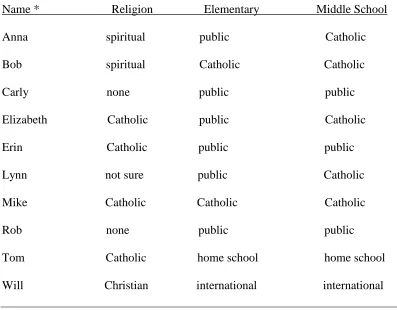
Table 1. The student sample demographic at Bishop X... 79
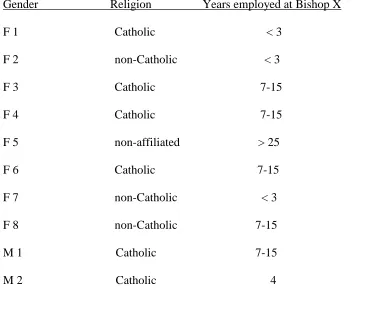
Table 2. The faculty sample demographic at Bishop X... 80
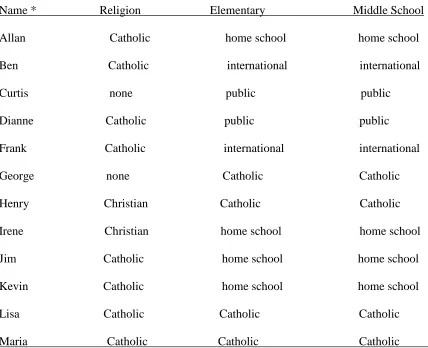
Table 3. The student sample demographic at T. M. Academy... 81
CHAPTER ONE: INTRODUCTION Background
Non-public schools, like any business, need to fill a particular niche in order to generate the enrollment necessary to succeed. Additionally, once they have established an enrollment base, it is necessary for the schools to remain responsive to their stakeholders’ needs in order to continue filling that niche. In a society in which parents shop for the right school for their child in much the same way that they shop for shoes, administrators often need to present their schools’ attributes in a way that is most appealing to both prospective students and their parents.
schools is to maintain the distinctive features that make Catholic schools desirable without alienating those who are uncomfortable with the schools’ traditional expression of Catholic dogma. As identified by national research studies and summarized by Convey’s (1992) Catholic Schools Make a Difference: Twenty-five Years of Research, these features include small class size, personal attention from teachers, academic and behavioral discipline and a sense of community.
For years, K-12 Catholic schools in the United States have found their niche by responding to Catholic parents’ desire for a place where their children’s faith could be developed and openly shared.
The Catholic school participates in this mission like a true ecclesial subject, with its educational service that is enlivened by the truth of the Gospel. In fact, faithful to its vocation, it appears ‘as a place of integral education of the human person through a clear educational project of which Christ is the foundation’ directed at creating a synthesis between faith, culture and life. (Pope Benedict XVI, 2007, pp. 2-3)
Often during the history of American Catholic schools, this synthesis of faith and culture has been used to insulate students from a world that seemed inconsistent and/or disrespectful to that faith.
(Fisher, 2000). For some Catholic immigrants newly arrived to the United States, both faith and ethnicity made assimilation into the mainstream difficult. Viewed by some in their new country as having a culture that was divisive and therefore dangerous, they often discovered that they were the object of fear and censure. However, determined to protect their faith and remain loyal to it, many Catholic parents enrolled their children in schools run by their parish.
A parish, the smallest geographical section of a Catholic territory referred to as a diocese, typically houses one church which is under the direction of the parish priest or pastor. Those parishes that were established in the United States during the eighteenth century were largely “nationality parishes” that served the religious needs of a particular ethnic group. While some regard these parishes as an important element in immigrants’ adjustment to their new home, others believe that, by allowing the parishioners to preserve their native culture, the parishes impeded assimilation (Juliani, 2007).
One element of parish life is the parish or parochial school. Parish schools are open to parishioners and are usually funded, at least in part, by the parish. While not all Catholic schools are parish-affiliated, approximately seventy-eight percent of Catholic elementary schools today are supported by a parish (National Catholic Education Association (NCEA), 2009). Since their inception, the parochial school was considered both a source of education and a method of preserving and protecting the faith in Catholic youth (Bryk, Lee, & Holland, 1993).
parishioners. Originally identified by the first Catholic bishop in the United States, John Carroll, as having the “virtuous and Christian instruction of youth as a principal object of pastoral solicitude” (Hunt et al., 2004, p. 1), the mission of parish schools has been defined differently over the years. The provisions of parish school life changed with the needs of those whom they served, moving from ethnic enclaves for the protection of immigrants new to the United States to middle class parishes with a challenging curriculum to rival those found in secular private schools. Yet, parish schools have long been a vital part of the lives of the Catholic community. “The parish was the geographic, psychological, and spiritual center of the neighborhood” (Hidy, 1998, p. 13) and as such has had a great impact on the lives of those whom they served. For many, the parish represented more than just a community that gathered together to celebrate their faith. For them the parish was a the embodiment of the sociological definition of the word “community” in that the parish acted to “(1) develop a sense of belonging and loyalty, (2) empower action in common and (3) nurture values and standards for its members as part of their moral consensus” (Coriden, 1997, p. 6).
the Catholic School system, maintained without any aid by the people who love it” (Ryan, 1912, p. 1).
Aware of the role that parish schools played in the lives of many Catholics, the Church encouraged full participation in and support for the schools. After the First Catholic Synod, the first Catholic bishop in the United States addressed a pastoral letter to Catholics in which he emphasized the importance of “a pious and Catholic education of the young to insure their growing up in the faith” (Ryan, 1912, p. 2). This led to the plan of organizing separate Catholic schools. Further, the First Plenary Council of Baltimore in 1829 stated, “We judge it absolutely necessary that schools should be established, in which the young may be taught the principles of faith and morality, while being instructed in letters” (Ryan, 1912, p. 2). This emphasis was reiterated in 1929 in Pope Pius XI’s work, The Christian Education of Youth, in which he stated the ideal educational situation as one in which Catholic children are enrolled in Catholic schools.
Although the role of the Catholic parish has evolved over the years in an attempt to meet its members’ needs, its contribution has been a lasting one. As explained by Hidy (1998), “the parish school, church, and community steeped in the Catholic ethos offers the young child – by definition open, impressionable and imaginative – the chance to experience Catholic theology married to every day” (p. 13).
of those religious faithful dwindled and was replaced by lay people who unwittingly altered the ethos to some degree (Fahy, 1992). This alteration, combined with the change in mission to include greater emphasis on academic success and social mobility, has resulted in a Catholic school experience that no longer resembles that found at the inception of Catholic schools in the United States (O’Farrell, 1992). As viewed by Hidy (1998), we need to acknowledge that “Catholicism no longer defines us, that our values, spending habits, language and attitudes are indistinguishable from anyone else’s. It is not our faith, but our social class that shapes us” (p. 14). Upon their immigration to the United States European Catholics were “hewers of wood and drawers of water for white Nordic, Protestant America” (Kane, 1955, p. 23). However, American Catholics have since grown in power, as they have grown in number. “In the middle of the 20th century U.S. Catholicism moved from neighborhood enclaves into mainstream society. Many Catholic families are now solidly middle class” (Ospino, 2010). As this shift in class has occurred it has been accompanied by a shift in values that has impacted Catholics’ choice in schools.
Statement of the Problem
sensitive treatment made by John Hughes, the first Archbishop of New York, to the Public School Society were denied (McCadden, 1964).
Rather than encouraging Catholics to continue sending their children to be educated in a hostile environment, Hughes and his colleagues decided to start their own, discrete Catholic school system. Within this more secure environment, they felt certain that the Catholic faith would be protected and nurtured. They recognized that, without an alternative to public schools’ Protestant influence, the immigrants would be limited to choosing either to remain outsiders and the object of scorn or to give up their faith as well as their native culture and language in order to fully assimilate into American society. The Catholic schools system provided the means for immigrants to be insulated from the hostility of American culture and maintain their own customs (NCEA, 2010).
However, the Church was aware that protection was not the only function that the schools could provide. Recognizing that, ultimately, their students needed to assimilate into their new American culture, the schools worked to prepare students “to be players in the culture and the world that they would inhabit as they grew older” (McShane, 2010, p. 5). Realizing that the students’ faith was not the key to acceptance in this world, the schools emphasized academic excellence, believing that mastery and accomplishment in this realm would lead to success in the students’ new society.
neighborhoods by the poor, often non-Catholic minorities. Having lost the niche that they had once found in assisting the immigrants, the schools now discovered a new niche, one with a very similar mission (Bryk, et al., 1993). Once again, the schools provided service to the poor and academic challenge to a group marginalized by much of American society. Once again, the Catholic schools found that their mission was one that responded to a societal need.
Today, K-12 Catholic schools in the United States are facing a crossroads far more complicated than any faced in the past. These schools are now dealing with a changing student demographic that includes non-Catholics as well as Catholics who no longer cling to their faith for protection and acceptance. Additionally, Catholic schools face increasing costs, as the last of the post-World War II generation of religious personnel retires, to be replaced by more expensive, lay employees (Vitello & Hu, 2009). In order to continue to thrive, Catholic schools must again identify and respond to a specific need. By doing so the schools may be able to formulate a mission that will reenergize the schools and provide them with a direction for the future. In order to recognize and address these needs, however, they must first identify the diversity that now exists among the stakeholders in Catholic schools.
Vatican II (Marty, 1995). This lack of clergy and decline in religious teaching has, in turn, resulted in budget problems created by the need to pay lay teachers. These budget problems and the competition for enrollment from charter and other private schools have led to increases in tuition. Because of these increases, and strong competition from charter and private schools, Catholic schools today must work hard to attract students. The students of today are very different from the traditional Catholic school student population in demographic and in expectations.
Today’s stakeholders include non-Catholics who regard Catholic schools as safe environments that have an established reputation for discipline, both in terms of conduct and in academics. The rate of non-Catholic students enrolled has risen from 2.7% in 1970 to its current level of 14.5% (NCEA, 2010). These students often select the schools when the local public schools are not an option, due to poor academic product, lack of security, or an overemphasis on testing. For others, Catholic schools are regarded a more affordable alternative to secular private schools, a phenomenon referred to by Baker and Riordan (1998) as the “eliting” of Catholic schools. For these stakeholders, a strong academic program is often the goal of their enrollment.
Additionally, in dealing with their changed demographics, Catholic schools must recognize that today’s stakeholders have both an extensive array of educational choices available to them and, in many cases, the financial latitude to take advantage of those choices. Further, Catholic schools must acknowledge that the educational consumers of today are both savvy and demanding. In order for the schools to be competitive with other private schools, they must provide an educational product that is academically strong and capable of competing with that found in these secular, often well-funded private schools. To do this requires that the schools maintain a strong financial base.
the schools’ administrators’ sense that promoting Catholic schools today often involves a moral dilemma.
Because the struggle for Catholic schools to adapt to a changing society is one that affects the schools’ future, as well as impacting the direction that the Catholic Church may take with regard to how it relates to both Catholic and non-Catholic youth, an examination of the issue is significant. If the Catholic Church is to remain a vital component in the lives of its children, its educational mission must be clarified for both stakeholders and observers. Catholic educators must recognize that it is no longer necessary for assimilation into American society or protection from it. Rather, Catholic educators must acknowledge that their mission must respond to current societal needs in order to survive. However, this newly formulated mission must also embrace the traditions of Catholicism that make its history and its identity unique.
Benedict XVI, in his fifth year of the papacy, is reported by some to have “been responsible for some of the failings of abusive priests” (Bryant, 2010, p. 1), further shakes the confidence of Catholics around the world, while also detracting from the Church’s mission. For the schools that are affiliated with that Church the scandal adds another roadblock to the presentation of Catholic schools as a desirable educational option. The scandal further obfuscates the schools’ attempts at identifying a mission that can marry both tradition and change.
Bridging this gap between the past and the future will require a responsiveness and openness to change that would be relevant for study by many institutions that seek to avoid obsolescence. Because the conflict between tradition and change that is the focal point of this research study can result in lessons that can be applied to areas as diverse as the continuation of the traditional marriage or the federal postal system, its study may be significant to researchers and policymakers in many areas of society.
Purpose of the Study
current student population and the values they hold and the professed mission of Catholic schools today. The purpose of this study, therefore, is to investigate that need and to identify a possible direction for Catholic schools’ future mission.
Research Questions
The overarching question that drives this study is Can Catholic school administrators develop a response to the needs of their changing population that will both remain true to the belief system on which the schools are based and be pragmatic enough to adapt to the population that keeps their schools sustainable? This question acknowledges the possibility that a compromise can be reached, but does not accept that such a compromise is either inevitable or easily reached.
Further, the study will consider the question: What aspects of Catholic school life indicate that its changing population of stakeholders is impacting the schools’ expression of Catholic identity? This question addresses the need for specificity regarding the elements of school culture which are most being altered. This understanding will be essential to any efforts to understand the changes to date and will be useful in redefining the mission for Catholic schools in the future because it will indicate which areas of school life have the greatest potential for conflict with traditional values.
During the course of my study I hope to generate some answers to the following questions, which will help to inform the study and to add context to the dilemma of changing population within Catholic schools:
2. What are today’s stakeholders’ specific priorities and which of these priorities would be categorized as needs rather than as preferences?
3. What changes need to be made in Catholic schools’ mission in order to address these needs?
4. How will making relevant changes to address stakeholders’ needs impact Catholic identity?
Definition of Key Terms
In order to remove ambiguity from the discussion of Catholic schools and their mission, the following terms and their definitions have been provided:
Catholic ethos: The fundamental values that identify something as Catholic. The expression, stated and unstated, of faith within an event that marks it as uniquely Catholic (Deehan, 2007).
Diocese: A diocese refers to the administrative territorial unit that is under the authority of a bishop. Typically, an area is divided up geographically into distinct dioceses, each under the domain of a specific bishop (Ryan, 1912).
Lay employees: Lay employees are those non-religious who make up 93% of Catholic school employees today (NCEA, 2010).
Mission: A mission statement provides a foundation for all activities within a school. It is a unifying touchstone about what the school values and what it stands for. A mission provides stakeholders with a sense of identity and shared purpose (Abrahams, 1999).
one priest assigned to it. However, each parish is under the authority of one pastor (Ryan, 1912).
Parochial school: A parochial school, also called a parish school, is controlled and supported by the parish with which it is affiliated. It receives funding, to a large extent, from its accompanying parish church (Freude, 1998).
Pastor: The Catholic priest who has responsibility for a specific congregation called a parish (Nelson, 1990).
Privatize or secularize: To change function or focus from one that is religious to one that is worldly or lay (Ryan, 1912).
Roman Catholic Church: Roman Catholicism is the largest Christian faith. It traces its roots to the Apostles, specifically to Peter, who is believed to be the first pope (Bowker, 2006).
Traditional Catholic school student: A student who is a Catholic and who attends the school from a desire to continue learning about his/her faith and acquiring an academic education in an environment in which faith is freely discussed.
Principles Embodied in Parochial Schools
The sacrifice which Catholics are making in maintaining their system of primary schools is justified, in their estimation, by the following principles:
• (1) The spiritual interests of the child, while not exclusive of others, such as learning,
• (2) Next to religion, morality is the most important matter in the life of a child.
Catholics maintain that morality is best taught when based on religion. Catholic educational theorists, especially, are convinced that the immature mind of the child cannot grasp principles of morality except they be presented by way of religious authority and religious feeling.
• (3) Considering the nature of the child-mind, the whole curriculum of the school is
best presented when it is organized and unified, not fragmented and disconnected. Religion, appealing as it does to the heart as well as to the head, offers the best principle of mental and spiritual unification and organization. The exclusion of religion from the schools is a pedagogical mistake.
• (4) Although condemned by secularizing educationalists and sectarian enthusiasts as
un-American and opposed to our national institutions, our schools seem to us to be second to none in national usefulness and effectiveness. They teach patriotism, and the results show that they teach it successfully. They teach morality, and the lives of the Catholic people of the country show the result. They teach religion, thus constituting, in an age that questions everything, a great institutional force on the side of belief in God, in religious obligation and in definite moral responsibility. (Ryan, 1912, p. 71)
Significance of the Study
teachings are regarded both by Catholics and by non-Catholics. Further, it provides insights that are useful in determining how pertinent the Church and its schools are considered in today’s society. Both of these issues may be used as a barometer in assessing the overall health of the Catholic faith in the United States. This may, in turn, enable the leaders of the Church to make more efforts at presenting the faith in ways that increase its relevance for today’s changing society.
This study can also fill a gap in the literature concerning the role of Catholic schools in the South in general. Because the schools are a minority, there is little written about them or about how they fit into the predominantly Protestant landscape. Additionally, the study can add to the literature concerning Catholic schools in North Carolina, about which there is a dearth of existing literature.
Similarly, although there is significant study of the Wake County School System’s efforts to bring diversity through redistricting, little has been written about the impact that these efforts are having on the private and/or religious schools that enroll their expatriates. This study may provide a perspective, although indirectly, on that issue that is currently nonexistent.
Outside of the Catholic community, the study is significant as a symbol of the clash with modern culture that is being experienced by many traditions. What occurs in the Catholic schools may reflect outcomes for other such traditions and may indicate to them strategies that they can adapt for their own survival.
take with regard to how it relates to both Catholic and non-Catholic youth, an examination of the issue is significant. If the Catholic Church is to remain a vital component in the lives of its children, its educational mission must be clarified. Catholic education must recognize that it is no longer necessary for assimilation into American society or protection from it. Rather, Catholic education must acknowledge that its school communities have changed drastically, both in religious composition and in the way in which they regard the schools’ role in their lives. The schools must, therefore, realize that their current mission is one that must be re-evaluated and revised to meet current stakeholders’ needs in order to survive. However, this newly formulated mission must, to remain Catholic, also embrace the traditions of Catholicism that make its history and its identity unique.
Bridging this gap between the past and the future will require a responsiveness and openness to change that would be relevant for study by many institutions that seek to avoid obsolescence. Because the conflict between tradition and change can result in lessons that can be applied to areas of all types of education, encompassing both their current curriculum and their method of providing instruction, its study may be significant to researchers and policymakers in diverse areas of society. In fact, it may be useful to those affiliated with other types of institutions that are seeking to redefine their own mission statement.
Summary
is not American, the schools provided a haven for immigrants who faced discrimination, and a safe environment in which to teach their faith.
As Catholics became increasingly assimilated into the culture of their new country, their schools’ mission evolved to include an emphasis on academics as a vehicle for upward mobility. Associated with discipline and academic rigor, the schools received the full support of the Catholic Church. However, despite this support, the issue of school financing has been “a matter of priority concern for Catholic parishioners and dioceses in every historical period and geographic location” (Walch, 1996, p. 301).
A dwindling demographic, shortage of religious clergy working in Catholic schools, and dilution in Catholic identity soon complicated the issue of affordability for those who wished to attend the schools. As Catholics no longer enrolled in the schools for protection or indoctrination in their faith, the schools found it necessary to turn to non-traditional students for enrollment. Yet, this enrollment has created a need to re-evaluate the schools’ mission. As framed by Grace (2002), Catholic schools are now challenged to remain relevant and "on the front foot" in an “increasingly demanding secular and market-driven global society” (p. 5). Catholic schools across the United States are deciding whether to face the challenge of contemporary life and redefine their mission or to acknowledge that the need for Catholic education no longer exists.
evolution of the schools as they address the needs of Catholics who have assimilated into society.
Along with the development of Catholic schools, the chapter follows the evolving mission of those schools as that mission alters due to the changing role of their stakeholders and the fluctuating needs of the society in which those stakeholders live. The chapter also follows the migration of Catholics into the Southeastern region of the United States. It chronicles the development of Catholic schools in the predominantly Protestant state of North Carolina, acknowledging the impact of anti-Catholic sentiment on the development of Catholic identity in the state.
Chapter Three identifies the use of Bolman and Deal’s Four Framework approach to organizations as the conceptual framework used, explaining the relevance of this framework to the study. It explains each of the frames and the role that it will play in organizing and informing the data. It indicates the use of a constructivist perspective for the study, as one that allows for a fluid approach that is consistent with the nature of the topic to be studied. Chapter Three includes the research design as well as the research questions that will guide the study and the sites from which data will be compiled. It includes a characterization of each of the sites, and an overview of points for comparison between the two. It also points out that the selected sites are largely representative of the broad range of stakeholders present in Catholic schools today.
the data will be organized and analyzed. Further, it addresses issues of validity and reliability, acknowledging that, for some qualitative researchers, these terms have been replaced by the arguably more accurate “credibility” and “confirmability” (Trochim & Donnelly, 2006). The chapter also stipulates the study’s efforts to provide a triangulated approach to data collection. It continues with an acknowledgment of areas of personal bias/limitations that may impact the study and continues the discussion of the study’s limitations that was initiated in Chapter One.
Finally, Chapter Three suggests that the significance of the study lays in its examination of the conflict that can result when traditional values are confronted by progress. This conflict is one that may be felt by a broad range of institutions, both religious and secular.
CHAPTER TWO: LITERATURE REVIEW General Introduction
Today’s Catholic schools, K through 12, in the United States are experiencing a significant shift in their student populations due to factors as global as the effects of the No Child Left Behind legislation and patterns of migration and as local as the individual fluctuations of each community’s population or vagaries of the local public school board (Hoff, 2008). The balance of Catholic school student populations is moving from a predominantly traditional Catholic student community to one that has an increasingly strong representation of non-Catholics. Additionally, those Catholics who remain affiliated with the schools no longer enroll their children in the schools simply from a desire to maintain and protect their Catholic identity. No longer made up of loyal Catholics who accept the decrees of the religious hierarchy without question, Catholic school stakeholders today may be equally critical of the Church with which the schools are affiliated, whether or not those stakeholders are Catholic.
As public school parents become increasingly disenchanted with the rigorous testing mandated by NCLB’s emphasis on accountability, they are looking to Catholic schools as an option. Similarly, those who are disappointed with the academic performance or the safety of their public schools are turning to Catholic schools for a remedy. Unlike public schools, Catholic schools are not held accountable for end of course testing, nor are they concerned with particular measures of annual yearly progress, as they utilize standardized testing for prescriptive rather than evaluative purposes. Further, Catholic schools in some areas out-perform neighboring public schools on the standardized testing they do administer, making them an attractive option for those who can afford the tuition charged by Catholic schools. For some this is made particularly attractive when coupled with the schools’ ability to refuse admission to those who may be regarded as threatening to the safety of those enrolled, providing a more secure, safe environment.
While this increase in non-traditional Catholic students is often a boon to Catholic schools suffering a loss of traditional students due to economic challenges and/or a general loss of Catholic identity, it also has resulted in some unanticipated problems. Used to dealing with Catholic families that accepted that their schools were primarily responsive to the dictates of their Church, Catholic school administrators of today are struggling to address the needs of families who are not a part of that Church. Because they are not a part of the Church they are often ignorant of its policies and unconcerned with the hierarchy from which many of those policies have been derived.
the schools for protection from a hostile anti-Catholic society, as had been the case at the schools’ inception, today’s Catholics do not regard the schools as a sanctuary (Veto, Nugent, & Kruse, 2001). Similarly, they no longer rely upon the schools to aid them in maintaining devotion to their faith. Today’s Catholics are often conflicted about that faith even if they continue to identify with it. As former Catholic priest James Carroll explains, “A Catholic can continue to claim Catholic identity even while disagreeing powerfully with those who assert their exclusive right to define Catholic identity” (Kennedy, 2008, p. 65). This conflict, however, presents a greater challenge to Catholic administrators who must walk a delicate line between maintaining the Catholic identity of the schools and generating sufficient student enrollment to allow the schools to continue to stay open. Since many of the schools rely upon a parish or diocese for some degree of financial support, this may pose a dilemma that is difficult to resolve (Pytel, 2009). Adding to the confusion, Catholic school administrators are selected based partially upon their solid standing and presumed loyalty to the teachings of the Church. This background may further obfuscate the administrators’ ability to make decision regarding the schools’ future direction and changed mission.
changing the Church quite powerfully, simply by continuing to affirm their identities as Catholics while also affirming their responsibilities for their own lives” (Kennedy, 2008, p. 66).
which, in many cases, is without plan or involvement on the part of the Church that sponsors them, that concerns some.
An organization’s mission is its statement of purpose. It serves as a compass that unifies its stakeholders and clarifies the organization’s reason for existing. As viewed by Schnaubelt (2007), the mission statement has multiple uses. “Since the mission statement articulates an organization’s vision and values, it can be an effective leadership tool, public relations tool, and compass for decision-making” (p. 1).
The need for a stated purpose as focal point is particularly true for schools. “A school, to be effective, must have a clear and vital mission” (Boyer, 2002, p. 14). For Catholic schools in the United States, the relationship between the students attending the schools and American society has always had a great impact on the schools’ definition of their mission. Skerrett (2009) argues that it is vital for schools to regularly reevaluate their mission based upon objective data that accurately depicts student needs. As their student populations have changed, the mission and culture of Catholic schools in the United States have evolved in response to this change. Though often not a purposeful alteration, the mission of Catholic schools has demonstrated a subtle shift that reflects the values and needs of its changing stakeholders. This shift has caused some to pose the question: “What makes a school ‘
the schools’ expression of their Catholic identity, long considered vital to their societal role. Reardon (2004) depicts this change in identity as a “villain void”, believing that the schools’ identity and mission have lost their focus of protecting their students from external criticism. She believes that, in losing this emphasis, the schools themselves have become generic. “Parents who regard the word ‘Catholic’ as a brand name are mistaken” (p. ii). Reardon believes that today’s Catholic schools exist as “myriad micro-organisms” (p. 9) which function individually, with little or no systemic connection. She blames this condition on a distant Vatican with a laissez faire attitude toward its schools, citing the Vatican’s declaration in 1965 that “the Catholic school is to take on different forms depending upon local circumstances” (p. 10). This view on the Church’s position is not regarded as neglect by all, however. McLaughlin, O’Keefe, and O’Keefe (1996) view this individualized approach as a sign of the Church’s responsiveness to varying types of need.
As summarized by Gibson (2004), the Catholic challenge is “one of assimilating culturally without disappearing religiously” (p. 11).
History of Catholic Schools and their Mission in the United States
The first Catholic curriculum and design for elementary schools were developed by Jean Baptiste de la Salle in 1720. The founder of the Christian Brothers’ teaching order sought to create a curriculum that would include the basics of reading, writing and arithmetic while emphasizing the importance of religious instruction (Bryk, Lee, & Holland, 1993). While this emphasis on the backdrop of the Catholic faith was unique, the incorporation of faith in education was consistent with that found in public schools which were largely Protestant in influence (Butts, 1978). As characterized by Catholic convert, G.K. Chesterton (1922), America at that time was a “nation with the soul of a church” (p. 41).
The first parochial schools were founded in the mid 1700’s in Pennsylvania. The schools were affiliated with a parish, the responsibility of which included funding and administration for the schools. Early parish schools were small and neighborhood-based, enrolling students of both genders. They recognized their mission as the preservation and sustenance of the Catholic religious culture (Grace, 2002).
headed by the first bishop of the United States, John Carroll. Carroll and his followers recognized that Catholic schools could be used both to assimilate Catholic immigrants into American culture and to instill “principles that would preserve religious faith” (Walch, 1996, p. 16). Soon, Catholic schools opened across the country in various locations with comparatively large Catholic populations. However, despite the growing number of Catholics, many immigrants, working only at low paying jobs, were unable to afford the relatively low tuition charged by the schools (Marty, 1995). From their inception, Catholic schools’ enrollment has been impacted by financial concerns.
Although Catholic schools did receive state school funding at first, the Public School Society, a Protestant organization founded in New York, convinced the state assembly to cease support for the schools. This move, based on the fear that Catholic schools posed a threat to American democracy due to Catholics’ allegiance to the Pope (Moore, 2007), halted the growth of Catholic schools in the late 1820’s (Walch, 1996).
Despite this support from the hierarchy of the Catholic Church, the Catholic educational experience in the United States has been riddled with conflict. On November 7, 1922 the voters of Oregon passed the Compulsory Education Act, aimed at eliminating Catholic and other parochial schools (Butts, 1978). This Act required that all Oregon children between ages eight and sixteen attend public school. Supporters of this Act believed that schools run by religious groups were an impediment to students’ assimilation into general society. The Society of Sisters, a group of Catholic nuns who ran a religious private school, sued Governor Water Pierce and other representatives of the Oregon government, alleging that the Act conflicted with parents’ right to send their children to schools where they would receive an appropriate religious training. The suit also argued that the Act was prohibiting the schools and their teachers from engaging in a useful profession (Mizia, 2000). The U.S. Supreme Court declared that the parents’ choice to send their children to Catholic or other non-public schools was a liberty that was protected by the Fourteenth Amendment.
anti-Catholic sentiment of the past but also as a threat to the future. On this point Bennett agrees, believing that the Church seeks not only to impact its own schools but also to try to “impose Catholic ideas” to control legislation (p. 26).
Such a suspicion with regard to the intentions of Catholics is, in the eyes of William Clancy (1958), “evidence of remarkable inability even to glimpse the realities of Catholicism in the modern world” (p. 5). C. Stanley Lowell (1958), however, feels that this inability may be attributed to the divided identity of the Catholic hierarchy. Clancy refutes this belief that Catholic divisiveness is a detriment to the Church, its followers, and its institutions citing it as merely an adaptation to a changing world and proof that “the Church is living, not dead” (p. 6). Yet, as stated by Richard Chilson (1987), “A changing church is a confusing church” (p. ix).
A Changing Population and Identity
still Catholic, this identity was no longer as vital as had once been. As Stuart Hall (1992) argues,
We should think of identity as a “production”, which is never complete, always in process...Cultural identity is a matter of becoming as well as of being. It belongs to the future as much as to the past. It is not something which already exists. .. Cultural identities come from somewhere, have histories. But, like everything which is historical they undergo constant transformation. (p. 222).
Catholic Education in the Southeast
The issue of cultural identity has particular relevance for those Catholics that settled in the Southeastern part of the United States, an area where anti-Catholicism has lingered longer than in any other section of the country (Moore, 2007). Impacted to some degree by the slow growth of the area’s Catholic community, anti-Catholicism “profoundly infected Southern life until well into the 20th century” (Powers, 2003, p. xi).
Despite the increase of Catholics in the Southeast during recent years, Catholics in this region have faced a level of religious discrimination that has “rivaled race as the boundary separating groups in the South” (Moore, 2007, p. 1). This boundary is one that seems to be based upon cultural rather than theological differences, as is more typically found in the anti-Catholic sentiment of the North (Daues, 1994). Aversion to anti-Catholics in the Southeast has focused upon fears that the religion poses a threat to democracy and an assault to individuality, based upon Catholic allegiance to the Pope. Interestingly, this emphasis on community is viewed by Greeley (1990) as one of the faith’s primary strengths, and a large part of the reason that many continue to identify themselves as Catholic, despite disagreements over Church policies.
The view of Catholicism as a threat to those of other faiths is one that has continued to impact regional response to Catholics. Even as recently as the early twentieth century, Southerners regarded Catholics as “the intolerable Alien, the bearer of Jesuit plots to rob them of their religion by force” (Cash, 1991, p. xviii). While Moore (2007) agrees with this portrayal of Southern anti-Catholicism, he argues that this “type of anti-Catholicism that approached religious paranoia" continued long after the century's midpoint (p. 17). In fact, Moore claims, as late as the early 1960’s Catholics were seen as an easy target, with the Vatican portrayed as having “equal villain status with the Kremlin” (p. 17), in threatening American democracy.
a renewed loyalty to their faith (Moore, 2007). Greeley (1990) explains this allegiance as an understandable “loyalty to a heritage that helps define yourself” (p. 33). In turning more firmly to the Church, Moore (2007) believes that Southern Catholics responded to the ostracism that they encountered by creating their own subculture, one that identified with Rome, and which more firmly embraced the symbolism and mystery associated with the faith. This recommitment to the elements of Catholicism most feared by non-Catholics was viewed by some as further indication of a “Catholic plot to take over America” (Beecher, 1977, p. 399).
It was not until the middle of the Civil Rights Movement that any real changes occurred within the relationship between Protestants and Catholics in the Southeast (Moore, 2007). These changes, however, were viewed as both positive and negative in nature. For Grestle (2001), the Civil Rights Movement created an understanding between white Protestants and Catholics that was “rooted in the tacit agreement that bound [the two groups] to preserve the racial status quo” (p. 524). Moore (2007) agrees that an uneasy truce between the two religions was provoked by “a crisis atmosphere of racial agitation” (p. 2), in which both factions identified a threat that was even more intimidating than the other.
discrimination "on the basis of race, color, condition of life [poverty] or religion" (Smitha, 2002, http://www.fsmitha.com).
Catholicism in North Carolina
As part of the Southeastern region of the United States, North Carolinians experienced all of the tension associated with the relationship between Protestants and Catholics. As characterized by Powers (2003), “The story of Roman Catholicism in North Carolina is one of three centuries of frustration followed by three decades of rapid growth” (p. xi). Yet, despite this growth Powers acknowledges that, until 1835, the North Carolina state constitution prohibited Catholics from seeking public office. Further, it was not until the year 2000 that a Catholic, Mike Easely, was elected to the office of governor of the state by popular vote (Freebase, 2010).
North Carolina’s Catholic population has grown significantly during the past forty years, with the increase in the number of Catholics in the state rising from 4.7% to 8.6%. However, although the number of Catholic adherents has grown rapidly, the number of Catholic churches in which they worship has increased by only five, from 175 to 180 (NCEA, 2010). This growth is relatively recent and can be primarily attributed to the migration of Catholics from the northern United States and the influx of Latinos, both groups that have a large Catholic representation. The growth tends to be greater in metro areas such as Raleigh or Charlotte and in the agricultural hubs, such as Sampson County, where field workers are needed (Stuart, 2004).
1775 when Alexander Gaston of New Bern married Margaret Sharpe, an English Catholic immigrant to North Carolina (Powers, 2003). North Carolina, along with the rest of the Southern region of the United States, was under the jurisdiction of the Catholic Archdiocese of Baltimore (Maryland) until 1820. At this time, it was shifted to the supervision of the Diocese of Charleston (South Carolina), a diocese that encompassed North Carolina, South Carolina, and Georgia (Moore, 2007). The first Catholic parish in the state was St. Paul’s of New Bern, which was developed in 1824. North Carolina was the last state in the United States to receive its own Catholic diocese, the Diocese of Raleigh, in 1924 (Quinterno, 2004). The slow progress made by Catholics in North Carolina is attributed to a variety of causes. To Powers, the intermarriage of Catholics and non-Catholics within the state resulted in the loss of Catholicism on the part of the offspring of those unions. This dilution of Catholic identity and loyalty meant that little attention was paid to Catholic concerns in the area.
For some, the lack of attention resulted in the distrust of their religion. However, those who had found their Catholic identity diluted by lack of practice and support often discovered that “leaving a local church is easy compared to erasing the traces of Catholic socialization” (Groome, 2002, p. xiii). Greeley (2004), agreeing with this depiction of Catholic identity, goes on to address the discord often found between the institutional Church and its people which often characterizes their relationship. To Greeley, “There is precious little their Catholic leaders can do that will drive them out of their Catholic heritage” (p. 2).
p. 260), a view that the Catholic hierarchy struggled to combat. To Moore (2007), however, despite the best efforts of the Catholic clergy, it was only after the Civil Rights Movement that the level of acceptance was truly raised. “... The South of the early 1970s appeared more diverse, and the mainstream acceptance of the Catholic Church reflected that turnabout” (p. 162).
That Powers’ assessment of the degree to which Catholics were discriminated against is valid may be derived from the fact that, by 1971, the total student enrollment in Catholic schools in North Carolina numbered 10,768. This number was divided among 42 elementary schools and 3 secondary schools (Koch, 1992) and reveals a decline in both enrollment and number of existing Catholic schools, which began in 1964. This decline may, to some degree, have been created by a resurgence of the old fears of a threatened democracy created by the threat of a Catholic president. “Although virulent anti-Catholic sentiment had largely subsided by mid-Twentieth century, it flared up anew when John F. Kennedy was nominated for the presidency in 1960” (Powers, 2003, p. 40). For some, Kennedy’s nomination reawakened fears of the Catholic foreign allegiance.
many are “confusing faith with politically-correct fluff” (p. 1), which fails to recognize that, as defined by Catholic doctrine, those who take religious orders have a relationship with the Church that is stronger than the relationship of those who remain lay people. This loss that is affecting the religious orders, despite the cause, has reduced North Carolina’s number of priests to only 150, a decline of 17 in the last approximately 50 years (http://www.catholic-hierarchy.org/diocese/drale.html, 2010) As a result, some of the Catholic parishes in the state are served by priests who must divide their time between more than one church, often located in separate towns.
Currently, the majority of Catholics in North Carolina can be found in their urban areas, primarily Charlotte and Raleigh. Today, the Catholic Church in Wake County maintains 15 congregations, with a total of 59,610 adherents, making it the third largest denomination in the county, with Evangelical Protestant, and Mainline Protestant posting the strongest statistical following. However, making the case for the diminishing role of organized religion in the county, the primary group is that which declares itself to be “unclaimed”, with 352,716 adherents. The category of “unclaimed” respondents refers to those who either have no religious belief or affiliation or have chosen not to respond to questions regarding their affiliation (Association of Religious Data Archives, 2010).
school is “fundamentally a synthesis of culture and faith, and a synthesis of faith and life: the first is reached by integrating all the different aspects of human knowledge through the subjects taught, in the light of the Gospel; the second in the growth of the virtues characteristic of the Christian” (Pope Paul VI, 1965, p. 23). Yet, the administrators often find that this task is not the primary concern of most Catholic school parents who prefer that the schools maintain the ability to provide quality academics and produce students who are competitive with those found in the most elite private schools. They also insist that this is provided at a tuition that is more affordable than the secular private schools with which they are forced to compete.
Pulled in two very different directions, the administrator of a Catholic school often struggles to maintain his/her vow of allegiance to the Church without losing his/her awareness that maintaining the “synthesis of faith and life” called for by Vatican II is not how most of the school stakeholders would view his/her job description. Rather, according to a study by Belmonte (2006), administrators often depict themselves in a “constant struggle to refocus the energies of the school community on a set of values consistent with the mission of Catholic schools" (p. 8). This struggle is made more difficult when faced with issues such as “the influence of the media, the pressure for academic success, peoples’ disengagement
from the Church”
assaults, purposeful or otherwise on their Catholic identity. This reflects the shortage of studies conducted nationally on the impact of demographic shifts on Catholic identity. Perhaps this study can provide some information to fill the current gap in the literature.
Using Organizational Theory to Create Change
If Catholic schools acknowledge that their role in American society has changed and, with it, the schools’ mission and identity must change, they must also work to define what that mission will be and how best to pursue that mission in light of the schools’ relationship with the Catholic Church. In working toward that goal, they must first identify who their current stakeholders are, what changes the schools need to make to address the needs of those stakeholders, to what extent the schools will be supported by the Church in making those changes, and whether those changes will endanger the identity upon which the schools are associated (O’Keefe, 2010).
solved. They may find it more effective to work backward from the conclusion that Catholic schools’ population of stakeholders and their needs have changed in order to arrive at what problems those changes have created within Catholic school identity.
Essential to the continuing health and longevity of Catholic schools is school climate. Climate in a school is viewed by Freiberg and Stein (1999) as “that quality of a school that helps each individual feel personal worth, dignity and importance, while simultaneously helping create a sense of belonging to something beyond ourselves” (p. 11). While Catholic schools’ current mission emphasizes the role of individual worth while also emphasizing each individual’s connection to the community (Bryk, Lee, & Holland, 1993), building a sense of belonging seems to have become problematic with the changing demographics. Compounding this problem of school climate may be the stress being placed upon the administrator, due to the competing pressures of the tradition of doctrine and concern for future economic health.
Particularly important to expressing the school culture and climate is purposeful use of symbol or metaphor. McNeil (2005) suggests that, to be successful, school leaders need to carefully select those metaphors that can most effectively develop new ways of working. Cleary and Packard (1992) agree with this perspective, yet caution against allowing the symbols to enhance inappropriate intra-organizational conflict. For Bolman and Deal (2002), “Symbols govern behavior through shared values, informal agreements and implicit understandings” (p. 4), all-important to creating a new expression of identity for Catholic schools. This may be a particularly important area of organizational change, since, as described by Greeley, (1990), “Catholics stay in their Church because...of loyalty to the imagery of the Catholic imagination” (p. 63). Any new use of metaphor to evoke change would therefore need to be reconciled with the extensive use of symbolism and metaphor that has long been associated with Catholicism.
Despite the importance of strong leadership, Bolman and Deal (1991) advise against downplaying the importance of the human resource frame, as they regard employees as “the heart of any organization” (p. 359). They believe that an organization and its leader who is responsive to employees' goals and needs can, in turn, count on those employees for loyalty and commitment to the organizational goal. Motsett (1998), however, disagrees with this portrayal, feeling that most employees work within an egocentric philosophy that constantly wonders what they themselves can gain from each situation.
Awareness that some employees may reflect Motsett’s philosophy suggests the use of Bolman and Deal’s political frame. Individuals in an organization may have varying preferences and values, some of which may be irreconcilable. Additionally, there is usually a limit to the resources available to the individuals in the organization, causing further divisiveness. The political frame, therefore, can be used in channeling those differences productively. Although no leader can give everyone what he/she wants, an effective leader can “create arenas for negotiating differences and coming up with reasonable compromises” (Bolman & Deal,1991, p. 361). Considering the extent of the gulf between the values of traditional Catholic education and that of its new stakeholders, reasonable compromise may allow for the realignment of both identity and mission.
Summary
doctrine” (NCEA, 2010) along with reading and writing and to avoid the anti-Catholic and heavily fundamental Protestant tone of public education. Bias against Catholics lessened as Catholic immigrants became increasingly assimilated into American society, yet many parents remained committed to the goal of fostering Catholic values in their children through enrollment in the schools.
While initially parental commitment lingered, this loyalty to Catholic education is no longer as strong as it has been, leading Catholic schools to question their place on the educational landscape of the future. No longer the unquestioned educational choice for Catholic families who can afford the tuition, Catholic schools are now discovering that the role the schools have long played is no longer pertinent for those Catholic families. Additionally, their own stakeholders are no longer comprised of those for whom Catholic doctrine and values are of primary concern.
Though Catholic schools have long served predominantly Catholic students, a small percentage of students of other faiths were represented. These students were often attracted to
the schools‟ smaller class sizes and protective environments. For students likely to be
bullied due to small stature or learning disabilities, the schools provided a safe haven not found in larger public schools. Despite this environment, however, Catholic schools have traditionally enrolled primarily students of Catholic upbringing.
expansion of choice programs to include religious schools has become a regional boon. Some of these affected schools face an identity conflict created by a diluted Catholic identity and stronger integration into general society on the part of Catholic parishioners. Few today identify themselves primarily as Catholics, following in the footsteps of contemporary politicians such as Rudy Giuliani and John Kerry, who choose not to highlight their Catholic identity (Macaluso, 2008). As a result, many Catholic schools face the choice of closing, adapting, or struggling to maintain enrollment. Those who choose to adapt to their changing student base may need to alter their expression of Catholic identity or their mission in order to better address the needs of their more diverse clientele (Egan, 2000).
If Catholic schools are going to continue to exist, they must recognize that the needs of today’s stakeholders are very different from those of the past. No longer solely peopled by traditionally Catholic students, the schools no longer serve the same protective purpose that they have in the past. No longer insulating their students from a hostile society, Catholic schools need to acknowledge that their function has changed with their student population.
This change has resulted in a breach between the schools‟ Catholic identity and current mission
and the role that the schools might fill in today’s society.
Overview of Chapter Three
Chapter Three will examine the methodology planned for identifying the challenges that Catholic school administrators face in developing an expression of identity and mission that can be both consistent with the values of the faith tradition upon which the schools were formed and responsive to the stakeholders upon whom the schools currently rely for sustenance. It will identify and characterize the sample schools that will be used for the study. It will also include an explanation of why those schools were selected and how the schools serve as a representative sample of Catholic education in the Southeast region of the United States, specifically in North Carolina.
CHAPTER THREE: METHODOLOGY General Introduction to the Methodology
This is a qualitative research study of the changing pressures that contemporary Catholic schools experience that may challenge their traditional expression of Catholic identity. This challenge is derived from the changing values, priorities, and expectations placed on them by stakeholders whose demographics have changed over the years. The study considers the effect of this challenge on Catholic identity as expressed explicitly, through the schools' mission statement and admissions materials, and implicitly, through their hiring practices and school culture.
While schools may, in many ways, continue to overtly express their mission as one that is based in traditional Catholic views on education, they may also be, either purposely or unwittingly, expressing contradictory views through their hiring practices, admissions and public relations materials, and through the priorities that they set. An examination of these areas indicates whether the schools are making changes in their expression of Catholic identity as they encounter different expectations from a changing demographic within their student populations. This study also provides insight into the degree to which these changes are purposeful and systemic, coming from the diocese in which they are located or if the changes are the individual school's response.
Conceptual Framework
argue that there are four fundamental frames through which to view the activities and leadership of organizations. These frames include structural, political, human resource, and symbolic constructs. As a conceptual framework for this study, these constructs provided both direction and dimension in building a portrayal of the study's subject schools that can be both in-depth and detailed. As I examined each specific area of the study, I analyzed how the individual school reacted within that particular frame to the challenges presented and whether or not the school's message was consistent with traditional Catholic school identity. Additionally, I examined each reaction to determine whether it was consistent with the individual school's expressed identity, as indicated by its mission statement.
Also, by utilizing the four-frame approach, I was better able to affect a more complete analysis of the organization. The four frameworks outlined by Bolman and Deal can be used "as a diagnostic model that organizes the major schools of organizational thought and facilitates a comprehensive yet manageable approach to organizational complexity" (Gallos, 2006, p. 2). Allowing this model to guide my work helped to ensure that it avoided an overly narrow focus in favor of a more comprehensive and systemic view.
Explanation of the Appropriateness of the Approach
It then entails tracing the patterns of meaning that can be found within the collected data. "Qualitative researchers enjoy serendipity and discovery... it is the endless possibilities to learn more about people that qualitative researchers resonate to" (Corbin & Strauss, 2008, p. 13).
"There are many reasons for choosing to do qualitative research, but perhaps the most important is the desire to step beyond the known and enter into the world of participants, to see the world from their perspective" (Corbin & Strauss, 2008, p. 16). I chose this approach for a variety of reasons. One particularly persuasive feature is its inductive nature. As described by Grbich (2007), in qualitative research, "reality is a shifting feast, subjectivity is usually viewed as important, and power is seen as lying primarily with the participants who are the experts on the matter under investigation" (p. 196). The sources of data in my research may, in some cases, choose to identify the pressures that they are experiencing by comparing their personal interpretations of what a Catholic school is today with what they had experienced as Catholic school identity in the past. This type of subjectivity is important to gaining an understanding of their views and beginning to interpret them.
of analysis can better present the confusion that may result when the practicalities of addressing the need for a growing enrollment meets the traditions upon which Catholic schools were founded. It can focus its attention on the type of description that can more truly replicate the nuances inherent in the evolution of schools that must tread a line between the past and present, between the secular and the religious.
As a piece of qualitative research, this study draws "from well-rooted traditions in anthropology, sociology, theology, social and clinical psychology" (Staples, 2005, p. 1). In many ways, therefore, the foundations of qualitative research parallel the development of Catholic education as a construct that is similarly rooted in the study of the culture, traditions, and beliefs of man. A qualitative approach can best allow participants to describe their own experiences, attitudes, beliefs, and motivations (Hakim, 2000). Qualitative research allows the participants to give much richer answers to the questions put to them by the researcher, and may give valuable insights that might have been missed by any other method (Rubin & Rubin, 1995).
Theoretical Framework
Having determined that a qualitative approach to data analysis is optimal to obtaining the type of data most suitable for this study, it is necessary to also address the issue of which epistemology or knowledge tradition informs the research. The study was done from a constructivist/interpretivist view, which acknowledges reality as "fluid and changing" (Grbich, 2007, p. 8), consistent with the topic being studied. As based on a religion that emphasizes the "shared signs and symbols...recognized by members" (p. 8), similar to those found in constructivism, this knowledge tradition seems to best address the unique qualities found in Catholic schools. Just as the constructivist views all reality as being constructed by those who experience it, so too must the Catholic school administrator now work to construct the response needed to address the challenges to Catholic identity posed by his/her stakeholders as part of a changing world.
identity is, in fact, in flux is evident from the data compiled by the 1993 Gallup Poll of Catholics.
The poll, sponsored by the National Catholic Reporter, found data that lead to the expectation of "a gradual shift from specific Catholic identity to a broader Christian identity" (Hoge, 1993, p. 2). Additionally, Hoge believes that the data indicate that the move to a broader identity will make it increasingly difficult for Catholics to find value in their Church.
Finally, the constructivist tradition is one with which I myself am most comfortable. As one who is continually aware of the different realities experienced by others, this knowledge tradition responds to my desire to "relinquish the position of sole authority" (Gray, 2005, p. 26) and allow others to chart their own course in the quest for knowledge. I find this particularly important in addressing my own discomfort with categorizing the perspective of others, particularly when dealing with matters of faith and doctrine which may be interpreted both very personally and very discretely. A constructivist approach, in this area, allows for research to delineate the subjects' views accurately even if they are at opposite ends of the spectrum of faith and its expression.
Research Questions
1. How are students in K-12 Catholic schools in the United States today different from those of past years?
2. What are today's stakeholders' specific priorities and which of these priorities would be categorized as needs rather than as preferences?
4. How will making relevant changes to address stakeholders' needs impact Catholic identity?
These research questions are generated from a consideration of Allen's (2010) study on the perception of Catholic identity on the part of students attending Catholic high schools. The data generated from this study resulted in major policy recommendations centering on professional development for faculty and staff of the schools' policy recommendations centering on professional development for faculty and staff of the school.
The research questions are also influenced by the NCEA study done by DeFiore, Convey, and Shuttloffel (2009). This work identified seven critical factors that the authors believe must be analyzed and addressed in order for Catholic schools to reverse their current downward trend. These factors included declining demographics, weak leadership, parents who no longer value Catholic education, academic problems, shaky family finances, strong competition, and weak Catholic identity.
Site Selection and Sample
33,192 in 1998-09 to 50,888 ten years later. This is an overall increase in the regional non-Catholic enrollment of 15.1%.
Though both of the Southeast region sites chosen are Catholic high schools located in Raleigh, North Carolina, Bishop X is a Diocesan school, while T.M. Academy is one that, although located geographically within the diocese, is not directly supervised or sponsored by a parish and its pastor. Bishop X has been in operation for the past one hundred years and currently enrolls approximately 1200 students. T. M. Academy has been in operation since 2002 and has a student body of approximately 120 students. T. M. Academy is neither parish-based, as the majority of Catholic schools are, nor is it considered to be Diocesan, though it describes itself as Diocese-approved.