ABSTRACT
KAMKE, KRISTYN LEIGH. Evaluating a Sexual Health Program in High-risk Girls: Assessing Program Efficacy and Identifying Barriers to Skill Implementation (Under the direction of Dr. Laura Widman)
Negative sexual health outcomes, such as sexually transmitted diseases (STDs)— including HIV—and unplanned pregnancy, are a serious risk for adolescent girls. Girls with emotional and behavioral difficulties, such as delinquent behavior, substance use behavior and mental health problems have a heightened chance of these negative outcomes. In this
dissertation, these adolescents are referred to as high-risk girls. Although many evidence-based sexual health interventions are available for adolescents, there are only a few sexual health programs that target high-risk girls. Further, four factors limit the reach and impact of these programs for high-risk girls: 1) lack of a gender-specific focus, 2) lengthy time commitments for completion, 3) inaccessibility, and 4) mixed or limited effects. In this dissertation, I sought to address these limitations by evaluating a new, brief web-based sexual health program called HEART (Health Education and Relationship Training) with a sample of 52 high-risk girls with emotional and behavioral difficulties (EBDs). In Study 1, I administered the HEART program to 52 ethnically/racially diverse (64% Black; 23% Hispanic; 13% Multiracial/Other) participants and compared their outcomes to a matched control sample of 115 adolescent girls who
completed an attention-matched web program without sexual health content and who were matched to the intervention participants by propensity scores. Further, in Study 2, I used semi-structured interviews to better understand the factors that serve as barriers and facilitators to girls’ implementation of sexual health knowledge and skills learned in sexual health
Evaluating a Sexual Health Program in High-risk Girls: Assessing Program Efficacy and Identifying Barriers to Skill Implementation
by
Kristyn Leigh Kamke
A dissertation submitted to the Graduate Faculty of North Carolina State University
in partial fulfillment of the requirements for the degree of
Doctor of Philosophy
Psychology
Raleigh, North Carolina 2018
APPROVED BY:
_______________________________ _______________________________ Dr. Laura Widman Dr. Sarah Desmarais
Committee Chair
BIOGRAPHY
Kristyn Kamke is a native of West Nyack, NY. She graduated from the College of William and Mary in 2013 with a B.A. in Psychology and English. Afterwards, she attended Loyola
ACKNOWLEDGEMENTS
First, I must thank my mentor, Dr. Laura Widman, who took a chance on me as her first graduate student. Not only has she provided me with endless support, fostered my professional
development, and made me a better research scientist, she also led me towards the research area of adolescent sexual health, which has become my utmost passion. I could not have gotten here without her. Thank you as well to my dissertation committee members—Dr. Sarah Desmarais, Dr. Joseph Simons-Rudolph, and Dr. Kami Kosenko—who provided me with amazing
encouragement, feedback, and flexibility during this dissertation process. I would also like to thank my parents—Gail and Paul Kamke—who facilitated my path from Bachelor’s degree to Master’s degree to Doctoral degree and provided me with support along the way. Thank you to Joy Massey who taught me to manage and lead a research project and the rest of the Teen Health Lab for their support and for making my doctoral career spectacular. Many, many thank yous to J Stewart and Abby Nance who helped me to complete this project and also made me laugh, poured me wine, and became two of my most treasured friends along the way. I would also like to thank my peer mentors in the SoCo program, who never hesitated to provide advice and teach me complicated statistics. Thank you to Matt Whitfield, who has always supported my dreams and chooses every day to be by my side no matter how long this process takes. Lastly, I am so grateful for the organizations that agreed to help me to complete this project and to the
TABLE OF CONTENTS
LIST OF TABLES ... vii
LIST OF FIGURES ... viii
CHAPTER I: Introduction ... 1
Incidence and Prevalence ... 1
Disparities by Race/Ethnicity and Sexual Orientation... 2
Sexual Health Interventions ... 3
High-Risk Girls and Sexual Risk Behavior ... 5
Sexual Health Programs for High-Risk Girls ... 6
Summary and Study Purpose ... 10
Overview of Studies ... 10
Organization of Dissertation ... 12
CHAPTER II: Study 1... 16
Method ... 20
Study Design ... 20
Participants and Procedure ... 20
Intervention participants and procedure... 20
Control participants and procedure ... 22
Intervention Program Description... 23
Control Program Description ... 23
Measures ... 24
Demographic and background characteristic questionnaire ... 24
Acceptability questionnaire ... 24
Emotional and behavioral difficulties ... 25
Delinquency ... 25
Substance use ... 25
Mental health symptoms ... 26
Communication intentions ... 26
Condom intentions ... 26
STD/HIV knowledge ... 27
Sexual self-efficacy ... 27
Condom attitudes ... 27
Condom norms ... 28
Sexual assertiveness ... 28
Sexual assertiveness skills assessment... 28
Analytic Approach ... 29
Missing data ... 29
Propensity score analysis ... 30
Hypothesis testing ... 31
Results ... 32
Descriptive Statistics ... 32
Primary Outcomes ... 32
Secondary Outcomes ... 33
Exploratory Moderation Analyses ... 33
Communication skills ... 34
Condom use intentions ... 34
Discussion ... 34
CHAPTER III: Study 2 ... 48
Study Purpose ... 49
Method ... 50
Participants ... 50
Study Procedure ... 50
Analysis Plan ... 51
Results and Discussion ... 52
Societal Level... 53
Sexual refusal and abstinence ... 53
Condom use ... 54
Other sexual and reproductive healthcare ... 57
Community Level ... 57
Sexual refusal and abstinence ... 58
Condom use ... 59
Partner communication ... 63
Interpersonal Level ... 63
Sexual refusal and abstinence ... 64
Condom use ... 68
Partner communication ... 72
Other sexual and reproductive healthcare ... 73
Individual Level ... 75
Sexual refusal and abstinence ... 75
Condom use ... 79
Partner communication ... 83
Other sexual and reproductive healthcare ... 84
Conclusion ... 85
CHAPTER IV: Discussion ... 199
Limitations ... 104
REFERENCES ... 106
APPENDICES ... 133
Appendix A ... 134
Appendix B ... 151
Appendix C ... 153
LIST OF TABLES
Table 1.1 Five modules of HEART that target areas of the Reasoned Action Model ... 13 Table 2.1 Standardized differences between groups before and after matching ... 39 Table 2.2 Sociodemographic characteristics of intervention group and control group after
matching ... 40 Table 2.3 Primary and secondary outcomes of HEART ... 41 Table 2.4 Interactions between the intervention and EBDs on the primary outcomes ... 42 Table 3.1 Barriers and facilitators to implementation of sexual health information and
skills at the societal level ... 90 Table 3.2 Barriers and facilitators to implementation of sexual health knowledge and
skills at the community level ... 91 Table 3.3 Barriers and facilitators to implementation of sexual health knowledge and
skills at the interpersonal level ... 93 Table 3.4 Barriers and facilitators to implementation of sexual health knowledge and
LIST OF FIGURES
Figure 1.1 Extended version of the Reasoned Action Model with communication skills ... 14 Figure 1.2 Social Ecological Model ... 15 Figure 2.1 Interaction between delinquency and intervention group on communication
intentions ... 43 Figure 2.2 Interaction between substance use and intervention group on communication
intentions ... 44 Figure 2.3 Interaction between substance use and intervention group on communication
skills ... 45 Figure 2.4 Interaction between delinquency and intervention group on condom use
intentions ... 46 Figure 2.5 Interaction between mental health symptoms and intervention group on condom
CHAPTER 1 Introduction Incidence and Prevalence
Adolescent sexual health problems are a substantial public health concern. Each year, 50% of new sexually transmitted diseases (STDs) are diagnosed in youth ages 14 to 25, resulting in almost 10 million new infections (Centers for Disease Control and Prevention [CDC], 2013; CDC, 2016c). For HIV specifically, youth account for 21% of new infections and are unlikely to be tested or treated for HIV (CDC, 2016a; Zanoni & Mayer, 2014). With 75% of youth engaging in sexual intercourse by age 20, sexual health problems are a risk for nearly all youth
(Guttmacher Institute, 2014).
Although all sexually active youth risk negative sexual health outcomes if they engage in unsafe sexual practices like unprotected sexual activity, adolescent girls have a pronounced risk. As many as one in four sexually active girls has an STD (Forhan et al., 2009), which can lead to serious consequences including: ectopic pregnancy, pelvic inflammatory disease, infertility, and cervical cancer (CDC, 2009; Haggerty et al., 2010; Monk & Tewari, 2007). In addition, girls face the risk of unplanned pregnancy, with nearly 230,000 babies born to 15- to 19-year-old girls in the United States in 2015 (Martin, 2017), the highest rate in the developed world (Kearney & Levine, 2012).
(52% v. 62%; Kann, McManus, et al., 2016). Further, of the 30% of girls who used a non-barrier contraceptive method at last sex (i.e., birth control pill, IUD), less than half used a condom with it (i.e., dual protection; Kann, McManus, et al., 2016). Without the use of condoms, these girls are still at risk of STDs/HIV. Importantly, although female condoms may be as effective as male condoms in protecting against STDs/HIV, they are understudied, rarely used, and may be
inaccessible to adolescents (Committee on Adolescence, 2013). Therefore, throughout this dissertation, references to condoms denote male condoms.
Disparities by Race/Ethnicity and Sexual Orientation
Risk of negative sexual outcomes varies by race/ethnicity and sexual orientation.
Adolescent girls of color have higher rates of STDs and HIV than White adolescent girls (CDC, 2016b; CDC, 2017). They are also more likely to become pregnant and give birth as teenagers (Kost & Henshaw, 2014). In terms of sexual orientation, there is some indication that girls who engage in sexual relationships with male and female partners are at higher risk of negative outcomes than those who only have sex with boys (Kann, Olsen, et al., 2016; Lindley,
Walsemann, & Carter, 2013). One study showed that young women who had two or more female sex partners in addition to male partners were more likely to have had an STD than young
women who only had sex with men (Lindley et al., 2013). Sexual minority girls who have relationships with boys and girls are also at a higher risk of unplanned pregnancy than girls who only have sex with boys (Kann, Olsen, et al., 2016).
“mostly heterosexual” (i.e., identify as heterosexual but engage in sexual relationships with women and/or report sexual attraction to women; Ela & Budnick, 2017), have earlier sexual debuts, more sexual partners, use condoms more inconsistently, and are less likely to use dual birth control methods compared to heterosexual women (Ela & Budnick, 2017; Kann, Olsen, et al., 2016). However, higher risk of negative outcomes for racial and sexual minorities is more aptly tied to a history of oppression based on their marginalized identities, leading to social and economic disadvantage (Carlson, McNulty, Bellair, & Watts, 2014; Pellowski, Kalichman, Matthews, & Adler, 2013). STD infections, including HIV, are most heavily concentrated in individuals of lower socioeconomic status, lower education levels, and lower social capital (Pellowski et al., 2013). These disparities result in lower access to contraception, sexual education, and healthcare resources (World Health Organization, 2015). Both racial/ethnic minority and sexual minority youth are unlikely to receive sexual education that is culturally tailored to or inclusive of their health needs (Guttmacher Institute, 2015). Additionally, social and geographical disparities limit access for racial/ethnic and sexual minority youth to HIV care (Pellowski et al., 2013). Further, these same factors that increase the likelihood of STD/HIV infections among racial/ethnic and sexual minority youth also increase the likelihood that they will give birth as teenagers (Penman-Aguilar, Carter, Snead, & Kourtis, 2013).
Sexual Health Interventions
To reduce the prevalence of negative sexual outcomes among adolescents, many sexual health interventions have been developed (for reviews, see Goesling, Colman, Trenholm,
offered in school, church, youth centers, or other community setting) that covers STDs, HIV, or sexual refusal; however, far less (50-60%) receive formal training on contraceptive use, and these numbers have been declining, especially in rural areas (Lindberg et al., 2016). Many formal settings utilize sexual education interventions with abstinence-only messages, despite research that shows these programs are less effective than comprehensive sexual health programs (i.e., those that cover both abstinence and the use of condoms and other contraceptive methods for prevention of STDs/HIV and unplanned pregnancy), and recommendations that comprehensive sexual health programs be administered to youth (B. T. Johnson et al., 2011; Stanger-Hall & Hall, 2011)
The Office of Adolescent Health [OAH] (2016) specifically identifies and recommends 42 evidence-based pregnancy prevention programs for adolescents designed for diverse
populations and settings and that can be utilized by organizations through grant funding. Most of these programs are designed for boys and girls (67%), whereas around 30% are designed
specifically for girls. A review of these programs by Goesling et al. (2014) found that most programs are administered in a school setting (55%), are lengthy (multiple, hour-long or more sessions), and are designed for general populations of youth (only 17% of programs target special populations, such as homeless youth or delinquent youth). These sexual health programs for youth include content focused on STD/HIV facts, interpersonal skills training,
2001; Fishbein & Ajzen, 2010) and the Information-Motivation-Behavioral Skills Model (Fisher & Fisher, 1992).
High-Risk Girls and Sexual Risk Behavior
Although many evidence-based programs to reduce the risk of STDs/HIV and unplanned pregnancy among adolescent girls are available, most programs are designed to reach a general population of girls and not “high-risk” girls; by “high-risk,” I mean those who are experiencing emotional or behavioral difficulties (EBDs), placing them at increased likelihood of current or future sexual risk behavior (Garner, James, & Julian, 2013; National Research Council & Institute of Medicine, 2004). Importantly, my reference to these girls as “high-risk” is not meant to direct judgment towards girls who have EBDs; rather, my use of “high-risk” is meant to acknowledge that a combination of biopsychosocial factors of adolescent life (i.e., social environment, perceived environment, personality, other behavior, and biology/genetics) have contributed to girls’ development of certain characteristics or behaviors that heighten their chances of negative sexual health problems, such as STDs/HIV and unplanned pregnancy (Jessor, 1991).
sexual partners (Aalsma, Tong, Wiehe, & Tu, 2010), and inconsistent condom use (Frances M. Costa, Jessor, Fortenberry, & Donovan, 1996). Empirical research suggests that mental health difficulties are similarly linked to sexual risk behaviors, such as early sexual debut and
inconsistent condom use (Geri R. Donenberg, Bryant, Emerson, Wilson, & Pasch, 2003;
Schuster, Mermelstein, & Wakschlag, 2013). Knowing that these risk behaviors are linked, it is important to understand the availability and effectiveness of sexual health programming for high-risk girls who have EBDs.
Sexual Health Programs for High-risk Girls
Although most sexual health interventions have focused on general populations of youth, some programs have been developed to meet the needs of high-risk girls (for examples, see Bryan, Schmiege, & Broaddus, 2009; Coyle et al., 2006; Milburn et al., 2012). Importantly, only three of the evidence-based programs recommended by the OAH (2016) are designed to meet the needs of high-risk girls: All4You! (Coyle et al., 2006), Sexual Health and Adolescent Prevention (SHARP; Bryan et al., 2009), and STRIVE (Milburn et al., 2012). These programs show
promising effects, but several key issues limit their potential reach and impact. First, although these programs were designed for risk youth, they were not specifically designed for high-risk girls, despite recommendations from the Office of Juvenile Justice and Delinquency Prevention [OJJDP] (1998) that educational programs for high-risk girls be tailored to their gender. Safer sexual behavior is influenced by gender. For example, girls have less direct
Second, two of the programs, All4You! (14 sessions, 70-140 minutes, 7 weeks) and STRIVE (5 sessions, 90-120 minutes, 5 weeks) are lengthy programs, likely leading to inconsistent program attendance (OAH, 2016). Twenty-four percent of families enrolled in STRIVE did not complete all five sessions (Milburn et al., 2012), and the 24% attrition rate from baseline to follow-up in All4You! suggests similarly poor attendance rates (Coyle et al., 2006).
Third, All4You! and SHARP are administered in a school and a detention center
respectively. High-risk youth are likely to miss school (Hallfors et al., 2002) and have short stays in detention centers (OJJDP, 2015), which also may contribute to incompletion rates or missing programming opportunities. Although STRIVE was administered in homes to families, families were difficult to recruit and sessions were still difficult to fit into families’ schedules, suggesting problems with full delivery of the program (Milburn et al., 2012). Further, these three programs have shown mixed effects and/or significant effects on only a limited number of outcomes (U.S. Department of Health and Human Services, 2015).
In summary, although sexual health intervention programs for high-risk girls have been developed, these programs are limited by factors including: 1) lack of a gender-specific focus, 2) lengthy time commitments, 3) inaccessibility, and 4) mixed or limited effects. Recently, a new sexual health program was developed that may address the limitations of prior sexual health interventions used with high-risk girls. This program, called HEART (Health Education and Relationship Training), is a brief, web-based program focused on developing assertive
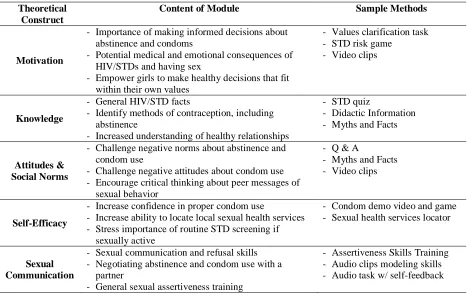
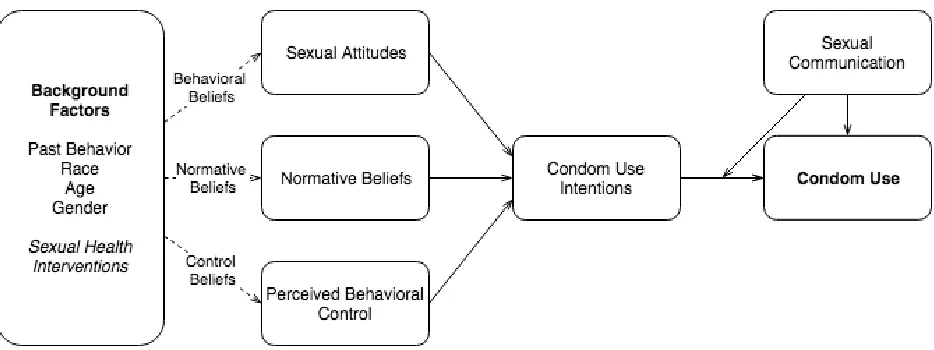
(RAM; Fishbein & Ajzen, 2010), as shown in Figure 1.1, the program contains five modules that target: 1) safer sex motivation, 2) STD/HIV knowledge, 3) sexual norms/attitudes 4) safer sex self-efficacy, and 5) sexual communication skills. Each module has features such as information, videos, quizzes, games, and skills training (See Table 1.1). Screening quizzes at the start of each module identify girls with deficits in knowledge and/or self-efficacy, and the program provides these girls with additional content. Assertive communication is emphasized throughout the program, but the sexual communication module focuses specifically on skill development, using a role-playing exercise. The program highlights the importance of condom use for sexually active adolescents but can be used by girls regardless of sexual activity status and encourages girls to make independent decisions about engaging in sexual activity.
It is critical to evaluate the HEART program in a new sample of high-risk girls. Replication is often not conducted in intervention studies, but it is an important step for evaluating program efficacy and effectiveness (Catalano et al., 2012; Valentine et al., 2011). Replication of intervention evaluations provides greater evidence of program efficacy in diverse populations, allowing organizations to make better decisions about intervention adoption. Further, several factors suggest that HEART will be effective with high-risk girls.
high-risk adolescents show that negative condom attitudes, negative peer norms, and less sexual communication between partners are predictors of unprotected sex in this population, illustrating the importance of improving these outcomes among high-risk girls (L. Brown et al., 2008; Crosby et al., 2003).
Second, because of HEART’s design, it can be administered anywhere with Internet access, quickly, with fidelity, and without the influence of facilitator biases. These features are especially valuable for high-risk girls because of the structural barriers that prevent them from receiving evidence-based, comprehensive sexual health programming. For example, in
impoverished areas, in which high-risk girls are likely to live, youth are increasingly less likely to receive comprehensive sex education compared to youth in higher resource areas (Lindberg, Maddow-Zimet, & Boonstra, 2016). In addition, a recent study suggests that high-risk youth may be more engaged in their healthcare needs when they are able to access health information
through the Internet (Gaskin, Longhurst, & Anoshiravani, 2012).
adapted in the future to include more targeted modules for high-risk girls. It is important that I evaluate this promising program in a sample of high-risk girls.
Summary and Study Purpose
Although sexual health intervention programs for high-risk girls have been developed, these programs are limited by factors including: 1) lack of a gender-specific focus, 2) lengthy time commitments, 3) inaccessibility, and 4) mixed or limited effects. There is a need for a brief, accessible sexual health program for high-risk girls that can be tailored to meet their needs. The HEART program can address limitations of prior programs, but it has not yet been evaluated in a sample of high-risk girls. The purpose of this dissertation is to present two studies: 1) a
quantitative evaluation of HEART using a sample of high-risk girls compared to a
non-equivalent control group of girls who received an attention-matched web program without sexual content; and 2) a qualitative study to identify factors that may serve as barriers to the effective implementation of sexual health knowledge and skills in the lives of high-risk girls.
Overview of Studies
socioeconomic status, sexual activity status), as well as other factors statistically related to our outcomes of interest (i.e., pre-test measures of the outcomes variables, such as communication intentions, condom attitudes, etc.). In addition, I evaluated whether program outcomes differed for girls based on the severity of their EBDs (i.e., delinquent behavior, substance use behavior, mental health symptoms).
In Study 2, qualitative interviews were used to understand factors that impede high-risk girls’ use of sexual health knowledge and skills in their sexual relationships. It is recommended that qualitative methods accompany quantitative methods when evaluating intervention programs to overcome several limitations of quantitative evaluations (R. B. Johnson & Schoonenboom, 2015). One such limitation is the reliance on immediate post-tests or short-term follow-up (approximately 3-6 month) assessments in initial evaluations, which cannot fully capture behavior change. Instead, these assessments usually evaluate intervention effects on factors that mediate behavioral outcomes (e.g., knowledge, attitudes, intentions); however, even
interventions that are efficacious at improving these outcomes may not produce behavioral change if there are intervening factors.
assessment measures, and a program that appears to be effective based on immediate outcome assessments may fail to produce behavioral change if these barriers are not addressed. In contrast, long-term outcome assessments with a lack of significant behavioral effects could be attributed to a completely ineffective program, rather than contextual barriers. Adding a qualitative component to health intervention studies allows for a better understanding of the contexts in which information and skills learned in intervention programs can be used
successfully, especially contexts that are difficult to measure quantitatively (R. B. Johnson & Schoonenboom, 2015). Many studies of randomized controlled trials have added qualitative components, resulting in adaptations to theoretical models, program content, and facilitator actions (for a review, see R. B. Johnson & Schoonenboom, 2015).
Organization of Dissertation
Table 1.1
Five modules of HEART that target areas of the Reasoned Action Model.
Theoretical Construct
Content of Module Sample Methods
Motivation
- Importance of making informed decisions about abstinence and condoms
- Potential medical and emotional consequences of HIV/STDs and having sex
- Empower girls to make healthy decisions that fit within their own values
- Values clarification task - STD risk game
- Video clips
Knowledge
- General HIV/STD facts
- Identify methods of contraception, including abstinence
- Increased understanding of healthy relationships
- STD quiz
- Didactic Information - Myths and Facts
Attitudes & Social Norms
- Challenge negative norms about abstinence and condom use
- Challenge negative attitudes about condom use - Encourage critical thinking about peer messages of
sexual behavior
- Q & A
- Myths and Facts - Video clips
Self-Efficacy
- Increase confidence in proper condom use
- Increase ability to locate local sexual health services - Stress importance of routine STD screening if
sexually active
- Condom demo video and game - Sexual health services locator
Sexual Communication
- Sexual communication and refusal skills - Negotiating abstinence and condom use with a
partner
- General sexual assertiveness training
CHAPTER 2 Study 1
Adolescent sexual health is a public health concern. Each year, youth account for 50% of new sexually transmitted disease (STD) diagnoses and 21% of new HIV diagnoses (CDC, 2016a; CDC, 2016c). Adolescent girls have a pronounced risk of negative sexual health outcomes. As many as one in four sexually active girls has an STD (Forhan et al., 2009), which can lead to serious complications, such as ectopic pregnancy, pelvic inflammatory disease, infertility, and cervical cancer (CDC, 2009). Unplanned pregnancy is also a serious risk facing teenage girls, with 230,000 babies born to 15- to 19-year-olds in 2015 (Martin, 2017).
For sexually active adolescents, male condoms are a cost-effective and accessible means to prevent negative sexual health outcomes (Trussell, 2011). When used consistently and
correctly, condoms are highly effective at preventing pregnancy, HIV, and other STDs, regardless of whether a teen is engaging in other risky behaviors, such as having sex with multiple partners. However, adolescents, especially adolescent girls, often use condoms
inconsistently (Kann, McManus, et al., 2016). Although 97% of sexually active girls have used a condom at least once (Martinez & Abma, 2015), only about half used them the last time they had sex (Abma & Martinez, 2017; Kann, McManus, et al., 2016). Additionally, although 54% of girls used some form of contraception in their last sexual encounter (Kann, McManus, et al., 2016), without a barrier method, such as condoms, these girls are not protected from STDs/HIV (Abma & Martinez, 2017). Importantly, although female condoms may be as effective as male condoms in protecting against HIV/STDs and allow for greater female control, they are
Adolescent girls with emotional and behavioral difficulties (EBDs) are especially at risk of negative sexual health outcomes, including unplanned pregnancy, HIV, and other sexually transmitted diseases. EBDs refer to a range of experiences including mental health problems (e.g., depression, anxiety) and problem behaviors (e.g., substance use, delinquency, conduct problems) that place adolescents at greater likelihood of engaging in sexual risk behavior (Garner et al., 2013; National Research Council & Institute of Medicine, 2009). Past research grounded in Problem Behavior Theory (Jessor & Jessor, 1977) has found that marijuana use, alcohol use, and delinquent behavior are associated with earlier onset of sexual activity (F. M. Costa et al., 1995), multiple sexual partners (Aalsma et al., 2010), and inconsistent condom use (Frances M. Costa et al., 1996). Empirical research also suggests that mental health difficulties are similarly linked to sexual risk behaviors, such as earlier sexual debut and inconsistent condom use (Geri R. Donenberg et al., 2003; Schuster et al., 2013).
Importantly, despite the heightened risk of STDs/HIV and unplanned pregnancy among girls with EBDs, most sexual health interventions are designed to reach a general population of girls and not girls with EBDs. Of the current programs designated as evidence-based by the OAH (2016), no programs are specifically targeted at youth with EBDs, and only three target other high-risk youth, including youth in alternative schools, homeless or runaway youth, and incarcerated youth. There is a need for additional research into efficacious sexual health interventions to serve adolescent girls with emotional and behavioral difficulties.
highly acceptable and efficacious with adolescent girls in a school-based sample (Widman et al., 2018; Widman et al., 2017). This program is based on an extended version of the Reasoned Action Model (RAM; Fishbein & Ajzen, 2010), a health behavior model that has been used to predict condom use (Albarracín et al., 2001). Specifically, this extended RAM acknowledges the role of sexual communication in predicting adolescent condom use (see Figure 1.1).
It is critical to evaluate the HEART program in a sample of girls with EBDs. As the array of efficacious sexual health interventions has expanded, the need to implement and evaluate these programs in varied populations and real-world settings has been made evident (Bull, 2018; Valentine et al., 2011). This process, referred to as implementation science, provides greater evidence of program efficacy in diverse populations, allowing for more informed decisions about widespread program dissemination and intervention adoption by organizations (Schackman, 2010). An efficacy replication study of HEART contributes to the burgeoning field of
implementation science and provides greater understanding as to whether HEART is efficacious among girls with EBDs.
Several factors suggest that HEART may be efficacious among girls with EBDs. First, intervention participants in the initial evaluation of HEART liked the program and found it engaging (Widman et al., 2017). Further, HEART participants showed improvements in several safer sex outcomes, including STD/HIV knowledge, safer sex attitudes and norms,
technology-based interventions for adolescents (Lenhart et al., 2015). Further, research suggests that high-risk youth may be more engaged in their healthcare needs when they are able to access health information through the Internet (Gaskin et al., 2012). Fourth, HEART focuses specifically on communication skills, which are a strong predictor of condom use (Widman, Noar, Choukas-Bradley, & Francis, 2014). Communication skill practice is also vital for girls with emotional and behavioral difficulties because they tend to have social skill deficits (Cross, 2011). Fifth, the program is sex-positive, meaning that this program focuses on more than the absence of poor sexual outcomes, emphasizing the importance of girls’ personal values in making healthy choices about sexual activity (WHO, 2006).
The purpose of this study was to determine whether HEART is an efficacious sexual health program for adolescent girls with emotional and behavioral difficulties. Because the primary objectives of the HEART program are to improve sexual communication skills and promote condom use, the primary outcomes of this study were sexual communication intentions, sexual assertiveness skills, and condom use intentions. It was hypothesized that participants who completed the HEART program would show greater improvement in communication intentions, sexual assertiveness skills, and condom intentions compared to a non-equivalent control group, who completed an attention-matched web program without sexual content, matched to
intervention participants by propensity scores. Further, several secondary outcomes were
behavioral difficulties, specifically their delinquency, substance use, and mental health symptoms, on the primary outcomes, although no predictions were made for these analyses.
Method Study Design
Through discussion with community partners, I decided that a sample of 50 participants was reasonable for recruitment over the 13-month evaluation period, given the difficulty in reaching adolescents with emotional and behavioral difficulties in the community. Due to the constraints of conducting an experimental evaluation with this sample size, a decision was made to conduct this evaluation using a non-equivalent control group design. The control group consisted of 115 control participants recruited from four high schools in the southeastern U.S., who completed an attention-matched web program during the initial evaluation of HEART. To mimic an experimental design and approximate equivalence between intervention and control participants, propensity score analysis was used to match intervention participants to control participants. A power analysis showed that with these 115 control participants, 50 was an adequate sample size to achieve 80% power at a .05 significant level (Total N needed = 150; Control group N = 115; Intervention N needed = 35). Our total recruitment exceeded this number (N = 52); however, five participants were excluded from outcome analyses because they did not meet pre-specified criteria for emotional and behavioral difficulties. Descriptions of intervention and control participants, as well as the propensity score analysis, are detailed below.
Participants and Procedure
problems. These organizations were located in a metropolitan area in the southeast United States. Several methods were used to recruit participants for the study, including referrals from
organization staff, face-to-face contact with parents or adolescents, and recruitment flyers hung on organization billboards. In all recruitment materials, I indicated that I was recruiting
adolescent girls; therefore, agency staff, parents, or participants determined whether participated identified as girls and were eligible for participation. When asked to report their gender identity in a demographic survey during the study, no participants indicated they identified as
transgender.
Participants were adolescent girls between the ages of 12 and 19 (M age = 15.60). They were racially/ethnically diverse (64% Black; 23% Hispanic; 13% Multiracial/Other). Most participants were heterosexual (77%; 4% Lesbian, 17% Bisexual), and 58% were sexually active (i.e., had engaged in sexual touching, oral sex, or sexual intercourse). Emotional and behavioral difficulties were not assessed prior to the beginning of the study, so no participants were
excluded from participating based on this factor; however, because the focus of this project was to determine intervention efficacy among girls with EBDs, five intervention participants were excluded from data analysis because they did not meet pre-specified criteria for having emotional or behavioral problems (see measure section below).
computer in a private room. Immediately following the program, participants completed a two-minute audio task to measure their sexual assertiveness skills (procedure described in detail below). Lastly, participants completed a post-test survey. Participants took 29-95 minutes to complete the program (M = 47 minutes); however, five participants experienced technological problems, which resulted in a longer completion time. Participants received $20 in gift cards for their participation in this study.
Control participants and procedure. Our comparison group was a sample of 115 girls who completed an attention-matched control web-program called Growing Minds (Burnette, Russell, Hoyt, Orvidas, & Widman, 2017). This program focuses on cultivating academic growth mindsets (Burnette & Finkel, 2012). These participants were recruited from four low-income high schools in the southeastern United States as part of the initial evaluation of HEART (Widman et al., 2018). Participants ranged from 14 to 17 years old (M age = 15.22) and were racially/ethnically diverse (39% White, 22% Black, 30% Hispanic). Most participants identified as heterosexual (80%; Lesbian = 4%, Bisexual = 13%), and 42% indicated they were sexually active (i.e., had engaged in sexual touching, oral sex, or sexual intercourse).
All tenth-grade girls in the four high schools were recruited using active parental consent and student assent. Of the 78% of students who returned parent consent forms, 79% of parents granted consent. After consent and assent were obtained, participants first completed a
computerized pre-test survey in a group-based classroom setting. Next, participants were randomly assigned to either HEART or Growing Minds. In total, 222 participants were
two-minute sexual assertiveness skills assessment. Participants received $10 for returning their parental consent form, regardless of whether consent was granted. In addition, participants received $10 for the pre-test and $30 for the intervention and immediate post-test. For a detailed description of study procedures, see prior studies (Burnette et al., 2017; Widman et al., 2018). Intervention Program Description
A full description of the HEART program is available elsewhere (Widman, Golin, et al., 2016). Based on RAM, the HEART program contains five modules that target 1) safer sex motivation, 2) STD/HIV knowledge, 3) sexual norms/attitudes 4) safer sex self-efficacy, and 5) sexual communication skills. Screening quizzes at the start of each module identify girls with deficits in knowledge, skills, or self-efficacy, and HEART provides them with added program content. All modules incorporate features such as information, videos, quizzes, games, and skills training with self-feedback. The importance of assertive communication is emphasized
throughout the program, but the sexual communication skills module focuses specifically on assertiveness skill development, using a role-playing exercise. Although the program highlights the importance of condom use during sexual activity, the program can be used by both sexually active and non-sexually active girls and encourages girls to make independent decisions about engaging in sexual activity (see Table 1.1 for detailed program information).
Control Program Description
A full description of the Growing Minds program is available elsewhere (Burnette et al., 2017). This program focuses on cultivating academic and social growth mindsets. Similar to HEART, Growing Minds includes five modules that are comparable in format and materials. This program is compatible with previous mindset work but also provides two unique
growth mindsets. Both HEART and Growing Minds require active participation and include similarly engaging content, such as videos and quizzes. Further, both programs take
approximately the same amount of time. Measures
The main variables of interest are detailed below. These variables were consistently administered to both the intervention and control groups unless otherwise noted (see Appendix A for full questionnaire).
Demographic and background characteristic questionnaire. This questionnaire was administered as part of the pre-test assessment. It assessed variables such as: age, race/ethnicity, sexual orientation, and parent education level. In addition, it assessed romantic and sexual behavior with questions adapted from the AIDS Risk Behavior Assessment (ARBA; G. R. Donenberg, Emerson, Bryant, Wilson, & Weber-Shifrin, 2001). These questions included: relationship status, sexual activity, condom use, history of sexual communication with a partner, and other questions related to romantic or sexual relationships.
Acceptability questionnaire. Intervention participants received a questionnaire to assess the acceptability of the intervention, based on previous measures (Bauermeister et al., 2015; Jemmott, Jemmott, Braverman, & Fong, 2005; Paiva, Lipschitz, Fernandez, Redding, &
= “Not at all,” 4 = “A lot”). Participants were also asked to report the people they intended to talk to about the program in the next three months (e.g., best friend, dating partner, mother).
Emotional and behavioral difficulties. Intervention participants had to meet criteria for at least one of the emotional or behavioral difficulties described below to be included in analyses for this study.
Delinquency. Thirteen items from the delinquency behavior scale of The Rochester
Youth Development Study assessed antisocial and delinquent behavior (Thornberry, Krohn, Lizotte, Smith, & Tobin, 2003). Participants responded to items such as, “In the past 30 days, have you tried to buy or sell things that are stolen” with either “Yes” (scored as 1) or “No” (scored as 0). Participants who had engaged in at least one of the delinquent behaviors in the past 30 days (i.e., had a score of 1 or more) were eligible for inclusion in analyses. Delinquency was also used as a moderator variable. For these analyses, items were summed with higher scores indicating greater delinquency.
Substance use. These three items assessed how many days in the past three months
participants have used alcohol, marijuana, or other illegal drugs (e.g., opioids; Kann, McManus, et al., 2016), with options ranging from “0” to “9 days or more.” For youth, initiating substance use prior to neurobiological adulthood is risky, given the extensive brain development that
Mental health symptoms. The Strengths and Difficulties questionnaire (Goodman,
Meltzer, & Bailey, 1998) was used to assess the presence of emotional or behavioral mental health symptoms. The questionnaire has four subscales: emotional symptoms, conduct problems, hyperactivity/inattention, and peer relationship problems. Participants responded on a scale from “Not True” to “Certainly True” for a maximum score of five on each scale. Scores on this subscale are categorized as “Normal,” “Borderline,” or “Abnormal” based on normed data (Goodman et al., 1998), with 20% of the population being classified as “Borderline” or
“Abnormal.” Participants in this study who scored “Borderline” or above on any of the subscales (cut-off scores: Emotional Problems = 6; Conduct Problems = 4; Hyperactivity/Inattention = 6; Peer Problems = 4) were eligible for inclusion in analyses. Internalizing and externalizing symptoms were also used as a moderator variable. For these analyses, the Total Problems Score was generated by computing a sum score of all four subscales for a maximum score of 20 (Goodman et al., 1998).
Communication intentions. Three items were used to assess the likelihood of communicating with a dating partner about the following sexual topics: 1) sexual limits and boundaries, 2) STDs/pregnancy, and 3) condom use. These items were adapted from the ARBA (G. R. Donenberg et al., 2001). Participants selected a response from 0% to 100% indicating the likelihood they would communicate about each sexual topic with a dating partner in the next three months. Scores were averaged to create a composite score, with higher scores indicating greater likelihood of communicating with a dating partner (Intervention: = .83; Control: = .83).
three months. Participants selected a response from 0% to 100% to indicate how often they would use condoms in the next three months if they had sex, with higher scores indicating condom use in a greater percentage of sexual encounters.
STD/HIV knowledge. Twelve items were used to assess participants’ knowledge of STDs and HIV. In response to each item (e.g., “Most people know when they have an STD”), participants responded “Yes,” “No,” or “I don’t know.” Items answered correctly were coded “1,” and incorrect or “I don’t know” responses were coded “0.” Scores were summed to create a composite knowledge score, with higher scores indicating greater knowledge of STDs/HIV (possible range = 0-12).
Sexual self-efficacy. The self-efficacy for HIV Prevention scale (L. Brown et al., 2014) was used to measure confidence using HIV preventative behaviors (e.g., communicating with a partner about sex, using condoms). Example items included: “How sure are you that you could talk to your partner about safer sex?” and “How sure are you that you could have condoms available when you need them?” Participants responded on a 4-point scale from 1 (Couldn’t do it) to 4 (Very sure). Scores were averaged to create a composite score with higher scores representing greater confidence in HIV prevention skills (Intervention: = .73; Control: = .70).
Condom attitudes. Participants’ beliefs about condom use (e.g., “Condoms create a sense of safety”) were measured using the Safety subscale and Effect on Sexual Experiences subscale of the Condom Attitudes Scale – Adolescent Version (St. Lawrence et al., 1994). Participants indicated their attitudes on a scale from 1 (Strongly Disagree) to 5 (Strongly Agree). Item scores were averaged to create a composite score with higher scores indicating more
Condom norms. Three items from Basen-Engquist et al. (1999) were used to evaluate participants’ perceptions of their peers’ opinions on condoms (e.g., “Most teenagers believe condoms should always be used if a person my age has sex”). Item responses ranged from 1 ( Strongly Disagree to 5 (Strongly Agree). Scores on the three items were averaged to create a composite score with higher scores indicating views that peers’ condom attitudes are positive (Intervention: = .86; Control: = .91).
Sexual assertiveness. Self-reported sexual assertiveness was assessed using 3-items from the Multidimensional Sexual Self-Concept Scale (Snell, 1998). Participants responded to items such as, “I’m very assertive about the sexual aspects of my life,” on a scale from 1 (Strongly Disagree) to 5 (Strongly Agree). Item scores were averaged to create a composite score of sexual assertiveness, with higher number indicating greater sexual assertiveness (Intervention: = .76; Control: = .67).
coded the responses (interrater reliability = 79%). Scores were averaged to obtain an index of sexual assertiveness skills. Data from 22 participants were excluded because participants did not follow directions (n = 1 intervention; n = 21 control).
Analytic Approach
Missing data. First, the dataset of intervention participants was merged with the dataset of the control group participants. To account for missing data and the non-equivalent control group design, both multiple imputation and propensity score analysis (PSA) were performed on this merged dataset. The data were analyzed with the SPSS Missing Values package in SPSS Version 24 (IBM Corp., 2016). However, scores from the communication skills assessment were not included in missing data analyses because a large proportion of control participants failed to follow directions for the task during at least one scenario (n = 48) resulting in over 20% missing data that was Not Missing Completely at Random (MCAR). Therefore, for the purposes of calculating communication skills scores, all participants who did not follow directions for all scenarios (n = 1 intervention; n = 21 control) were excluded; mean scores were calculated for the remaining participants.
Little’s chi-square test (Little, 1988) was conducted, and it was determined that the data was MCAR, for both the control group, (2[3401] = 3345.83, p = .75) and the intervention group
(2[195] = 0.00, p = .99). Therefore, multiple imputation was conducted on the dataset for N =
10 imputations, consistent with guidelines from Graham, Olchowski, and Gilreath (2007). For all variables, values were imputed at the item level. All variables were constrained based on
available values within the dataset. Variables were set to both predict imputed values and be imputed, except for the dependent variables that were set to be imputed only.
Propensity score analysis. Following imputation, PSA was conducted to match
intervention and control participants to mimic a randomized, experimental design. To determine variables to include in the PSA, first, bivariate analyses were conducted. Based on suggestions from Brookhart et al. (2006), variables related to group (intervention or comparison) or the dependent outcomes at a p<.15 level were included in propensity score analysis, which included age, White race (0 = “Non-White,” 1 = “White”), Black race (0 = “Non- Black,” 1 = “Black”), parent education (0 = “high school degree or less,” 1 = “some college or more”), sexual activity status (0 = “not sexually active,” 1 = “sexually active”), sexual assertiveness, pre-test
communication intentions, pre-test condom intentions, pre-test condom attitudes, pre-test condom norms, pre-test sexual self-efficacy, and pre-test STD/HIV knowledge. The PSA was conducted using the MatchIt package (Ho, Kosuke, King, Stuart, & Whitworth, 2011) in R version 3.4.3 (R Core Team, 2017). Due to the inequivalent sample sizes and dissimilarity between the intervention and control group, a full matching procedure was conducted
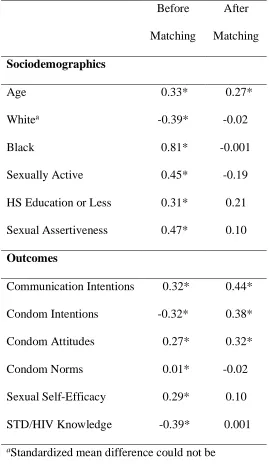
1991; Stuart & Green, 2008). Further, while other matching techniques using subclassification require equal sized groups, the full matching procedure is done in an optimal manner so subclasses are smaller in circumstances in which fewer comparison participants are similar to intervention participants (Stuart & Green, 2008). Following propensity score analysis, balance diagnostics showed an improvement in balance across eight of the twelve variables (Rubin, 2001). However, the percent balance improvement across all covariates was 95%. See Table 2.1 for standardized mean differences between groups before and after matching.
Hypothesis testing. Weighted linear regression analyses were conducted for the primary study outcomes (sexual communication intentions, sexual assertiveness skills, and condom intentions) and the secondary study outcomes (STD/HIV knowledge, condom attitudes, condom norms, and sexual self-efficacy). Although it is recommended to control for all covariates used in PSA to reduce possible remaining bias (Rubin & Thomas, 2000; Schafer & Kang, 2008), this would have resulted in inadequate power to detect differences between the intervention and control groups with the current sample size. Instead, for each analysis, the baseline measurement of each variable was included as a covariate. The one exception was for the analysis of sexual assertiveness skills, which were only measured at post-test. Further, post-matching, participants in the intervention were still significantly older than participants in the control group (p = .03). therefore, age was controlled for in all analyses.
Subsequent linear regression analyses were conducted to assess moderation effects of delinquency, substance use, and mental health symptoms on each outcome. To assess
for each outcome. Lastly, to assess mental health symptoms as a moderator, mental health symptoms and the intervention by mental health symptoms interaction term were added to the models for each outcome.
Results Descriptive Statistics
First, the acceptability of the HEART program among intervention participants is reported. The majority of intervention participants liked the program “some” or “a lot” (96%), learned “some” or “a lot” (94%), felt the program held their attention “some” or “a lot” (98%), said they would return to the website again (77%), would recommend the program to a friend (92%), and would use what they learned in the future (98%). Further, participants indicated they would talk about the program in the next three months with people in their lives, including their best friend (85%), their dating partner (81%), other friends/classmates (58%), their mother (54%), someone else (54%), their father (25%), or their teacher (19%).
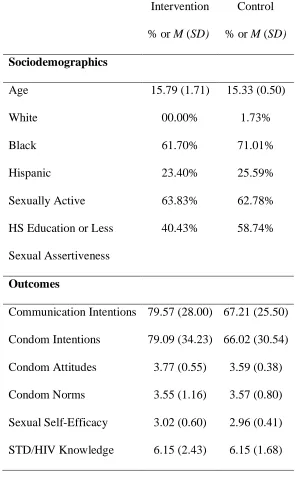
As mentioned above, after matching, a few differences were still apparent between intervention and control group (see Table 2.2). Specifically, intervention participants were older, had higher communication intentions, had higher condom use intentions, and had more positive attitudes toward condoms.
Primary Outcomes
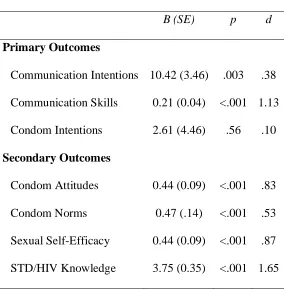
remained significant. There were no differences between intervention and control group on condom intentions. Effect sizes ranged from small to large (0.10-1.13).
Secondary Outcomes
At post-test, intervention participants significantly improved in their condom attitudes, condoms norms, sexual self-efficacy, and STD/HIV knowledge (See Table 2.3). Effect sizes ranged from medium to large (0.53-1.65).
Exploratory Moderation Analyses
Follow-up moderation analyses revealed several interactive effects between EBDs and the intervention on the primary outcomes.
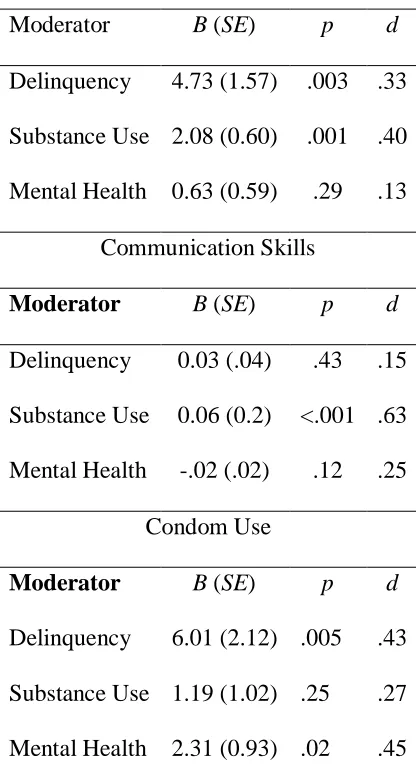
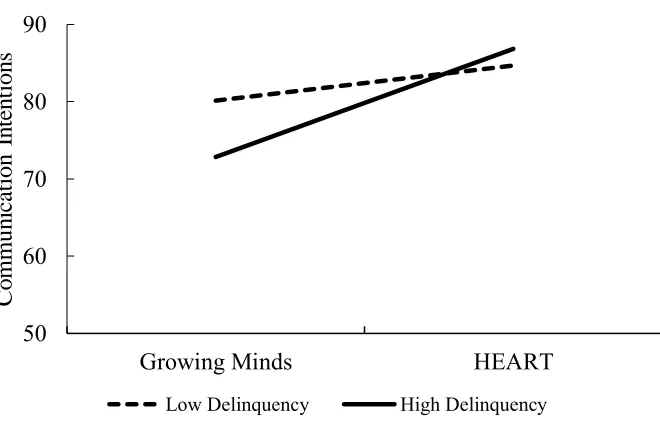
Communication intentions. There was a significant interaction between the intervention and delinquency on communication intentions (see Table 2.4). Specifically,
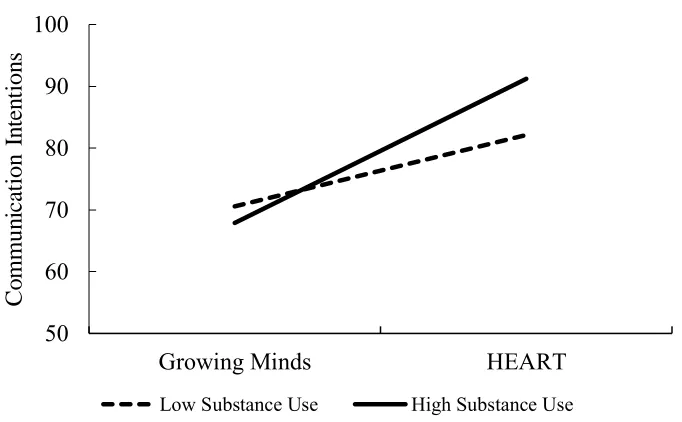
intervention participants who reported engaging in higher levels of delinquency (b = 23.32, p < .001) had greater communication intentions at post-test compared to control participants who engaged in higher levels of delinquency; however, there were no differences in communication intentions at post-test between intervention and control participants who engaged in lower levels of delinquency (b = 2.551, p = .481; see Figure 2.1). Further, there was a significant interaction between the intervention and substance use on communication intentions (see Table 2.1). Participants who engaged in higher levels of substance use had significantly greater
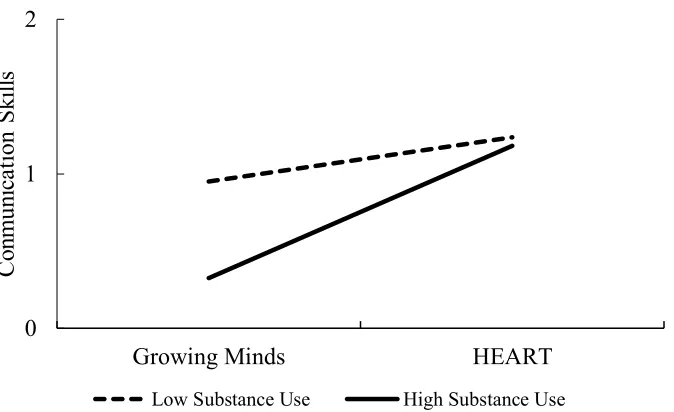
Communication skills. There was a significant interaction between the intervention and substance use on communication skills (See Table 2.4). Specifically, the intervention group had greater communication skills at post-test compared to the control group among participants with higher substance use engagement (b = 0.86, p < .001) and lesser substance use engagement (b = 0.29, p < .001; see Figure 2.2); however, the relationship between the intervention and
communication skills was stronger for those who engaged in higher levels of substance use. Condom use intentions. There was a significant interaction between the intervention and delinquency on condom use intentions (see Table 2.4). However, although intervention
participants who engaged in higher levels of delinquency had greater condom use intentions than control participants who engaged in higher levels of delinquency, this trend was marginally significant (b = 7.19, p = .08). There were no differences in condom use intentions between intervention participants and control participants with lower levels of delinquency (b = -4.83, p = .31; see Figure 2.3). Further, there was an interaction between the intervention and mental health symptoms on condom use intentions. Specifically, the intervention group had greater condom use intentions at post-test compared to the control group for participants with greater mental health symptoms (b = 18.90, p<.001) and lesser mental health symptoms (b = 2.76, p<.001; see Figure 2.3); however, the relationship was stronger for those with greater mental health
symptoms.
Discussion
intervention literature by evaluating the potential of a new, web-based intervention called HEART to reduce the risk of negative sexual health outcomes among a unique sample of
adolescent girls with EBDs recruited from community-based agencies in the southeastern United States.
First, it is important to note that intervention participants had positive reactions to the HEART program. An overwhelming majority of girls liked the program, thought it was helpful, were engaged with the program, would recommend it to a friend, and would use the information in the future. Further, most participants reported they would return to the website again. These findings are promising given the difficulty in engaging adolescents in educational programming (National Research Council & Institute of Medicine, 2004).
Further, this study showed that HEART is efficacious in improving outcomes for girls with emotional and behavioral difficulties in several areas that are key to safer sexual decision-making. Girls who received the HEART program improved significantly in their communication intentions and communication skills compared to the control group. Further, intervention
participants also improved in their condom attitudes, condom norms, sexual self-efficacy, and STD/HIV knowledge compared to the control group. Notably, the effect sizes in this study were comparable to those found in the original evaluation of HEART (Widman et al., 2018).
Further, the effects of the program were moderated by severity of girls’ EBDs.
substance use both improved in their communication skills, the effect of the intervention was stronger for participants with greater substance use behavior. Lastly, delinquency and mental health symptoms moderated the effect of the intervention on condom use intentions. Intervention participants who reported higher levels of delinquency had marginally greater condom use intentions compared to the control group. Further, intervention participants with a greater number of mental health symptoms had greater condom use intentions at post-test compared to control participants with equivalent mental health symptoms. Intervention participants with a lesser number of mental health symptoms also had greater condom use intentions at post-test compared to control participants with equivalent mental health symptoms, but this relationship was weaker. These findings suggest that the HEART program may be especially useful for girls at the highest risk of negative outcomes. Importantly, girls with lower levels of the EBDs tended to have higher mean scores on the pre-test measures of the outcome variables, accounting for the reduced impact of the program on their scores at post-test. However, girls with higher levels of the EBDs had lower mean scores on the pre-test measures of outcomes variables and improved at post-test to scores similar to those of the participants with lower levels of EBDs
Further, this evaluation is part of an important process in replicating previously evaluated interventions so to ensure program efficacy across unique populations (Bull, 2018). This
evaluation, along with that done by Widman et al. (2018), provides support for the efficacy of the HEART program across diverse groups of girls based on risk status, racial/ethnic
incorporated into programming currently offered by community-based organizations with minimal staff training necessary.
However, although many of the findings of this study are promising, there were some limitations. First, because of the difficulty of recruiting girls with emotional and behavioral difficulties, the sample included only 52 girls who received the HEART intervention. Although HEART participants were matched to a control group who received an attention-matched intervention for outcome analyses, there were still mean differences on four covariates after matching that could not be controlled for in all analyses. In addition, participants were recruited from several different sites that were distinct from the control group. It was not possible to control for recruitment site because this would have substantially reduced statistical power. In future evaluations of HEART with high-risk girls, it will be important to use a randomized, experimental design.
Second, intervention participants completed the pre-test assessment, intervention, and post-test assessment in the same day without any longer-term follow-up assessments. Although this design removed the possibility of participant attrition, it prohibited examining program effects for girls with EBDs in the long-term. Although it is promising that such a brief program has immediate effects, examining program effects among high-risk girls in the long-term will provide additional evidence of HEART’s utility for this vulnerable group.
risk than White girls (Chesney-Lind & Eliason, 2006), which could have contributed to their involvement in community-based services or their likelihood of being referred to this study by staff at their organization. However, given the sexual health disparities among girls of color, it is important that these girls were reached by the intervention.
Fourth, there were two issues with the assessment measures in this study. First, the condom attitudes measure had a low internal consistency. The measure was included in the outcome assessment of this study to keep the analyses as consistent with the original evaluation as possible; however, in future evaluations of the HEART program, a new condom attitudes scale should be utilized. Second, the behavioral communication skills assessment, although novel, was only administered at post-test; therefore, analyses could not control for pre-intervention sexual assertiveness skills. In the future, it will be important to assess
communication skills at pre-test to control for differences between groups. In addition, a greater proportion of control participants were excluded from communication skills analyses because they failed to follow directions. This discrepancy is likely because intervention participants had already practiced communication skills in the intervention and were more familiar with the task. In the future, it will be necessary to provide more detailed instructions regarding the
communication skills task to ensure participants fully understand it prior to assessment.
Table 2.1.
Standardized differences between groups before and after matching. Before
Matching
After Matching Sociodemographics
Age 0.33* 0.27*
Whitea -0.39* -0.02
Black 0.81* -0.001
Sexually Active 0.45* -0.19 HS Education or Less 0.31* 0.21 Sexual Assertiveness 0.47* 0.10 Outcomes
Communication Intentions 0.32* 0.44* Condom Intentions -0.32* 0.38* Condom Attitudes 0.27* 0.32*
Condom Norms 0.01* -0.02
Sexual Self-Efficacy 0.29* 0.10 STD/HIV Knowledge -0.39* 0.001 aStandardized mean difference could not be
Table 2.2.
Sociodemographic characteristics of intervention group and control group after matching. Intervention
% or M (SD)
Control % or M (SD) Sociodemographics
Age 15.79 (1.71) 15.33 (0.50)
White Black Hispanic
00.00% 61.70% 23.40%
1.73% 71.01% 25.59%
Sexually Active 63.83% 62.78%
HS Education or Less 40.43% 58.74% Sexual Assertiveness
Outcomes
Table 2.3.
Primary and secondary outcomes of HEART.
B (SE) p d Primary Outcomes
Communication Intentions 10.42 (3.46) .003 .38 Communication Skills 0.21 (0.04) <.001 1.13 Condom Intentions 2.61 (4.46) .56 .10 Secondary Outcomes
Table 2.3.
Interactions between the intervention and EBDs on the primary outcomes. Communication Intentions
Moderator B (SE) p d
Delinquency 4.73 (1.57) .003 .33 Substance Use 2.08 (0.60) .001 .40 Mental Health 0.63 (0.59) .29 .13
Communication Skills
Moderator B (SE) p d
Delinquency 0.03 (.04) .43 .15 Substance Use 0.06 (0.2) <.001 .63 Mental Health -.02 (.02) .12 .25
Condom Use
Moderator B (SE) p d
Figure 2.1. Interaction between delinquency and intervention group on communication intentions.
50 60 70 80 90
Growing Minds HEART
Co
m
m
un
ic
at
ion
I
n
te
n
ti
on
s
Figure 2.2. Interaction between substance use and intervention group on communication intentions.
50 60 70 80 90 100
Growing Minds HEART
Co
m
m
un
ic
at
ion
I
n
te
n
ti
on
s
Figure 2.3. Interaction between substance use and intervention group on communication skills. 0
1 2
Growing Minds HEART
Co
nm
un
ic
at
ion
S
ki
lls
Figure 2.4. Interaction between delinquency and intervention group on condom use intentions. 50
60 70 80 90 100
Growing Minds HEART
Co
ndo
m
U
se
I
nt
en
tion
s
Figure 2.5. Interaction between mental health symptoms and intervention group on condom use intentions.
50 60 70 80 90 100
Growing Minds HEART
Co
ndo
m
U
se
I
nt
en
tion
s
CHAPTER 3 Study 2
Adolescent girls are at heightened risk of negative sexual health outcomes. As many as one in four girls has a sexually transmitted disease (STD; Forhan et al., 2009), and over 5% of girls under 20 years old become pregnant each year (Kost & Henshaw, 2014). For sexually active girls, condom use is the most cost effective method to protect against pregnancy and STDs, but only 51% of girls report using a condom at their last sexual intercourse (Kann, McManus, et al., 2016). Unlike boys who can directly apply a condom themselves, girls do not have direct behavioral control over condom use and cannot guarantee that condoms are used without some form of negotiation with a partner (Amaro & Raj, 2000; Wingood & DiClemente, 2000). In addition, for girls, both sexual communication and acquisition of condoms are contrary to traditional sexual scripts, or cultural norms surrounding gender and sexuality that dictate girls should be passive in sexual relationships (Gagnon & Simon, 2005). Although girls have
behavioral control over several other birth control methods (e.g., contraceptive pills, intrauterine devices [IUDs]), these do not protect against STDs.
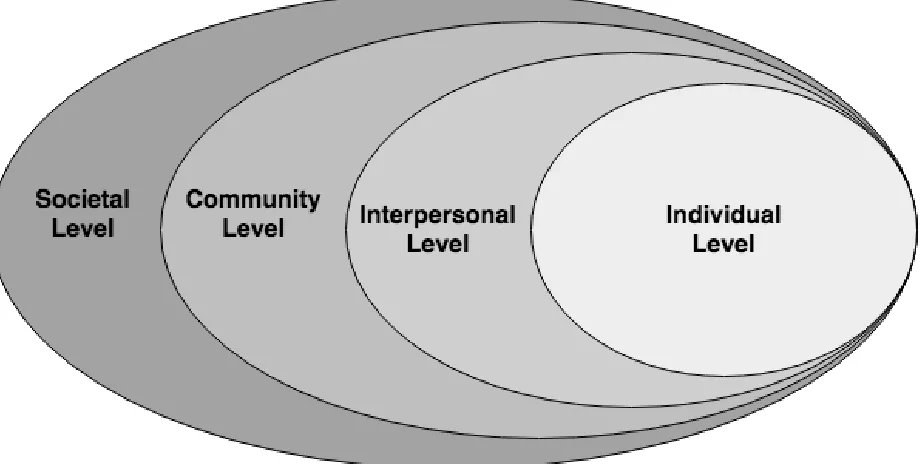
interpersonal-level, community-level, and societal-level influences (see Figure 3.1). Because health interventions typically are targeted at the individual-level, intervening factors at the outer-levels of the model may inhibit individual behavior change. For example, even if attitudes toward condoms are improved (individual-level), this change will not lead to condom use if a person does not have access to condoms (community-level). These intervening factors may not be recognized using only quantitative assessment measures, and a program that appears to be effective based on immediate outcome assessments may fail to produce behavioral change if these barriers are not addressed. To build more impactful interventions, it is necessary to better understand the intervening factors that may serve as barriers to healthy sexual decision-making. Study Purpose
Method Participants
Participants were 50 adolescent girls recruited from community-based organizations in a metropolitan area of the southeastern United States that provide services to youth with
pronounced needs such as: homelessness, emotional and behavioral problems, and court
involvement. These participants were recruited as part of a larger study evaluating a web-based sexual health intervention. This intervention focuses on improving sexual communication skills and promoting safer sex decision-making among adolescent girls. All girls who participated in this evaluation study were eligible to participate in the current study, although they were able to decline participation. Although no participants declined to participate in the current study, two participants from the larger study did not complete the current study procedures because of time constraints. Participants received a $20 gift card for participation. Participants were between the ages of 12 and 19 (M age = 15.60) and were primarily Black (58%; 18% Hispanic; 4% Asian; and 20% Multiracial/Other). Most participants were heterosexual (76%; 4% Lesbian; 20% Bisexual/Pansexual), and 58% were sexually active (i.e., had engaged in sexual touching, oral sex, or sexual intercourse). For characteristics of individual participants, see Appendix C. Study Procedure
Following the quantitative evaluation procedures of the larger study, an hour and a half long process that included pre-test, the intervention program, and a post-test, a qualitative interview was conducted with participants from which data for the current study were generated. All participants completed the interview on the same day as the quantitative assessments.