[1]
A
NO
VERVIEW OFG
EOPOLYMERM
ATERIALSB
ASEDZ
EOLITE AS ANA
NTIFOULINGL
AYER INI
MPROVINGW
ATERQ
UALITYA
NO
VERVIEW OFG
EOPOLYMERM
ATERIALSB
ASEDZ
EOLITE ASAN
A
NTIFOULINGL
AYER INI
MPROVINGW
ATERQ
UALITY1
Mardhiyah Syahida Berhanuddin 2
Supiah Shamsudin, 3Azmi Aris
1Post-Graduate Student, Faculty of Civil Engineering, Universiti Teknologi Malaysia,
Johor Bharu, MALAYSIA
2Associate Professor (PhD), UTM Razak School of Engineering & Advanced Technology,
Universiti Teknologi Malaysia, Kuala Lumpur, MALAYSIA
3
Associate Professor (PhD), Faculty of Civil Engineering, Universiti Teknologi Malaysia, Johor Bharu, MALAYSIA
1
[email protected], [email protected], [email protected]
ABSTRACT
The paper presents an overview of the geopolymer concrete based fly ash as well as zeolite and titanium dioxide powder as an admixtures to create a nitrogen removal in polluted water. This geopolymeration process occurred from the fly ash or zeolite powder and fine aggregate are mixed together with the alkaline solution to form geopolymer concrete. The sodium silicate solution and the sodium hydroxide are chosen and mixed together to produce the alkaline solution. The geopolymer concrete acts as the rough film, contaminants removal in polluted water body and consequently acts as antifouling. The surface of foulant layer created from the contaminant itself that need to mitigate time to time. Meanwhile, the water sample was collected from the selected stations, i.e.; Sungai Gombak, Sungai Klang and Sungai Batu. The existing data quality of water at Sungai Gombak was applied from Department of Irrigation and Drainage (DID) to be analysed and compared to the results from water quality assessments of water without/with treatment. The current values of water quality were captured in year 2012. The water quality index for Sungai Klang is 57.05 in Class III similar class to Sungai Batu valued is 54.7 and while the Sungai Gombak has no station to capture the values. The rivers are identified that contain polluted water but still suitable for fishery. The aim of the study at those polluted rivers is to reduce and remove the amount of high concentrations of nitrogen via zeolite reactions meantime to mitigate the foulant layer on the film surface.
Keywords: water quality, geopolymer, zeolite, titanium dioxide, anti-foulant layer and nitrogen removal.
1
Mardhiyah Syahida Berhanuddin 2
Supiah Shamsudin, 3Azmi Aris
1Post-Graduate Student, Faculty of Civil Engineering, Universiti Teknologi Malaysia,
Johor Bharu, MALAYSIA
2Associate Professor (PhD), UTM Razak School of Engineering & Advanced Technology,
Universiti Teknologi Malaysia, Kuala Lumpur, MALAYSIA
3Associate Professor (PhD), Faculty of Civil Engineering, Universiti Teknologi Malaysia,
Johor Bharu, MALAYSIA
1
[email protected], [email protected], [email protected]
ABSTRACT
The paper presents an overview of the geopolymer concrete based fly ash as well as zeolite and titanium dioxide powder as an admixtures to create a nitrogen removal in polluted water. This geopolymeration process occurred from the fly ash or zeolite powder and fine aggregate are mixed together with the alkaline solution to form geopolymer concrete. The sodium silicate solution and the sodium hydroxide are chosen and mixed together to produce the alkaline solution. The geopolymer concrete acts as the rough film, contaminants removal in polluted water body and consequently acts as antifouling. The surface of foulant layer created from the contaminant itself that need to mitigate time to time. Meanwhile, the water sample was collected from the selected stations, i.e.; Sungai Gombak, Sungai Klang and Sungai Batu. The existing data quality of water at Sungai Gombak was applied from Department of Irrigation and Drainage (DID) to be analysed and compared to the results from water quality assessments of water without/with treatment. The current values of water quality were captured in year 2012. The water quality index for Sungai Klang is 57.05 in Class III similar class to Sungai Batu valued is 54.7 and while the Sungai Gombak has no station to capture the values. The rivers are identified that contain polluted water but still suitable for fishery. The aim of the study at those polluted rivers is to reduce and remove the amount of high concentrations of nitrogen via zeolite reactions meantime to mitigate the foulant layer on the film surface.
Keywords: water quality, geopolymer, zeolite, titanium dioxide, anti-foulant layer and nitrogen removal.
[2]
Water purification typically begins with a pre-treatment stage to remove contaminants that would otherwise affect the downstream equipment. HE Shen-bing, et. al. (2006) found that the zeolite powder addition could alleviate the ultra-filtration membrane fouling and enhance the membrane permeability. The implementation of such treatment tools attached with the water body would create the fouling on its surface. The fouling nature and its influences has sometimes been seen as a reduction in the active area of the membrane surfaces therefore to a reduction in flux. If the surfaces are partially blocked or restricted with the residual contaminants layer and its function has no more contribution to the water body. Dissolved molecules accumulating at the surface reduce the solvent activity and this reduces the solvent flow through the membrane (Klaus & Suzanna, 2010). They added that as a fouled membrane requires cleaning before damage to the membrane surfaces and fouling during filtration clearly has a negative influence on the treatment process and so it must be understood then counter-measures must be adopted to mitigate the effects. Zhao, Y-J., et. al. (2000) stated that the factors affecting or contributing to membrane fouling are concentration, pH, component interactions, pore size, physico-chemical properties, transmembrane pressure and cross-flow velocity. They propose several approaches to improve membrane performance by minimizing the effects of membrane fouling and concentration polarization on membrane/film performance, for example use boundary layer or velocity control and membrane modification and materials. Another study on the membrane fouling is Kazi, S.N. (2012) stated that fouling is a complex phenomenon due to involvement of a large number of variables. The aim of this study is to develop the geopolymer film with zeolite powderand synthesizing nano titanium dioxide or fly ash recycle materials, acts as nanofiltration and antifouling layer in improving the performance of nitrogen removal.
2.0 Zeolite for Water Purification
[3]
aquariums. Rafiee G. H. and Saad C. R. (2006) investigated how zeolite performs chemically in solution. They found that the natural zeolite framework consists of a symmetrically stacked alumina and silica tetrahedral which results in an open and stable three dimensional honey comb structure with a negative charge. Lin, H et. al. (2010) also involved in the research of water quality improvement found that modified zeolite with better nitrogen removal effect was used to prepare antibacterial adsorption materials for treating the secondary effluent of high concentration coliform and ammonia nitrogen. From the previous research in modifying the zeolite and other raw materials, the study of integrated water resources management has taken an action to use the zeolite and flyash as better contaminants removal. It was emphasized by Xie, L-G.et. al. (2010) in their study indicated that the zeolite flyash had obvious stabilization effect to heavy metal i.e; Zn, Cu, Mn, and had apparent retention ability to the nutrients contents of N, P of the municipal sewage sludge.
Zeolites are well known for their cost effective and its efficiency in adsorption ability besides makes avail of ion exchanges (Qiu, W. and Zheng, Y., 2009; Huang, H., et.al., 2010; Wang S. and Peng Y., 2010; Ibrahim H. S., et.al., 2010; Malekian R., et.al., 2011; Zhang M., et.al., 2011). Formed as crystalline hydrated aluminium-silicates, zeolites are structured by combination of corner-sharing AlO4and SiO4 tetrahedral joined. This formation which alumina and silica symmetrically stacked to each other, results in 3-dimensional honeycomb framework with having fine pores (Malekian R., et. al., 2011).
In water circulation system of aquaculture industry, zeolites play a role as ion exchanger in removing ammonium (AlDwairi, R. A., 2009). Poor soil fertility due to rapid dissipation of nutrient from soil can be overcome by zeolites. This is because zeolite is a good carrier which will let nutrient to be released gradually while in torrential rain, all of the nutrient will be fully washed. Besides improve the nitrogen balance in light and sandy soils, zeolites can rise to the acid capacity in soil (Rehakova M., et.al.,2004).
3.0 Geo-polymer Concrete Characteristics
[4]
(1:1.5:3.3) with a solution NaOH and Na2SiO3 combined together to fly ash ratio of 0.35. High and early strength was obtained in this geopolymer concrete mix.
3.1 Strength
In previous findings, Mohd Ariffin, M. A. et. al. (2011) stated that geopolymer concrete is a type of amorphous alumino-silicate cementitious material. They said that polymer can be polymerized by poly-condensation reaction of geo-polymeric precursor and alkali poly-silicates. Compared to conventional cement concrete, the production of geo-polymer concrete has a relative higher strength, excellent volume stability and better durability. While Lloyd, N. A. & Rangan, B. V. (2010) found that geo-polymer concrete has excellent resistance to chemical attack and shows promise in the use of aggressive environments where the durability of Portland cement concrete may be of concern. This is particularly applicable in aggressive marine environments, environments with high carbon dioxide or sulphate rich soils. Similarly in highly acidic conditions, geo-polymer concrete has shown to have superior acid resistance and may be suitable for applications such as mining, some manufacturing industries and sewer systems. Rajamane, N. P., et. al., 2012 stated that Rajamane’s findings in 2009 about the materials were used to produce geo-polymer concrete are fly ash, ground granulated blast furnace slag (GGBS), fine aggregates in the form of river sand, coarse aggregates in the form of crushed granite stone and alkaline activator solution (AAS). AAS is a combination of solutions of alkali silicates and hydroxides, besides distilled water. The role of AAS is to activate the geo-polymer source materials containing Si and Al, such as fly ash and GGBS.
3.3 Contribution
Geopolymer mixtures with variations of water/binder ratio, aggregate/binder ratio, aggregate grading, and alkaline/fly ash ratio were investigated by Monita, O. and Hamid, R. N., 2011. Fly ash-based geo-polymer concrete has emerged as a new technology in construction materials. The addition of fly ash adds value to the cement, and also reduces the Ordinary Portland Cement (OPC) contribution to CO2 emissions during concrete production. Mustafa AlBakri, A. M., et. al.
[5]
givens its better resistance to aggressive environments compared to normal concrete.
4.0 Mix Design
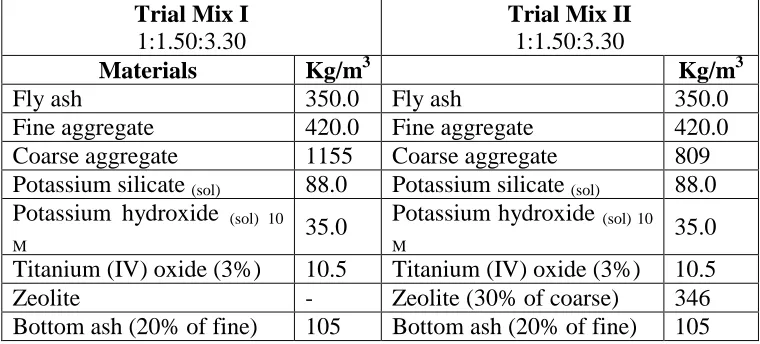
The mix design of newly geopolymer film is based on the previous studies about geopolymer. The materials involve in geopolymer concrete mixtures are basically fly ash, alkaline solution, fine and coarse aggregates in constant size. According to Davidovits (2002), the fly ash has high content of Silica (Si) and Alumina (Al) that react with alkaline solution like Sodium Hydroxide (NaOH) or Potassium Hydroxide (KOH),and Sodium Silicate(Na2SiO3) or Potassium Silicate (K2SiO3), eventually forms a gel which binds the fine and coarse aggregates. Geopolymer concrete do not require any water for matrix bonding, instead the alkaline solution react with Silicon and Aluminium present in the fly ash.
The polymerisation process involves a substantially fast chemical reaction under alkaline condition on Si-Al minerals. In 2012, Abdul Aleem& Arumairaj continue the studies and stated that geopolymer technology is most advanced in precast applications due to the relative ease in handling sensitive materials e.g., high-alkali activating solutions and the need for a controlled high-temperature curing environment required for many current geo-polymer.
[6]
Table 1: Proposed mix design of geopolymer concrete.
Trial Mix I
1:1.50:3.30
Trial Mix II
1:1.50:3.30
Materials Kg/m3 Kg/m3
Fly ash 350.0 Fly ash 350.0
Fine aggregate 420.0 Fine aggregate 420.0
Coarse aggregate 1155 Coarse aggregate 809
Potassium silicate (sol) 88.0 Potassium silicate (sol) 88.0
Potassium hydroxide (sol) 10
M
35.0 Potassium hydroxide (sol) 10
M
35.0
Titanium (IV) oxide (3%) 10.5 Titanium (IV) oxide (3%) 10.5
Zeolite - Zeolite (30% of coarse) 346
Bottom ash (20% of fine) 105 Bottom ash (20% of fine) 105
4.1 Preparation of Geopolymer Concrete Mixtures
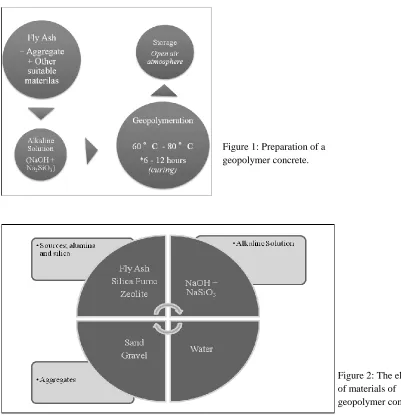
[7]
5.0 Fouling Mitigation Model
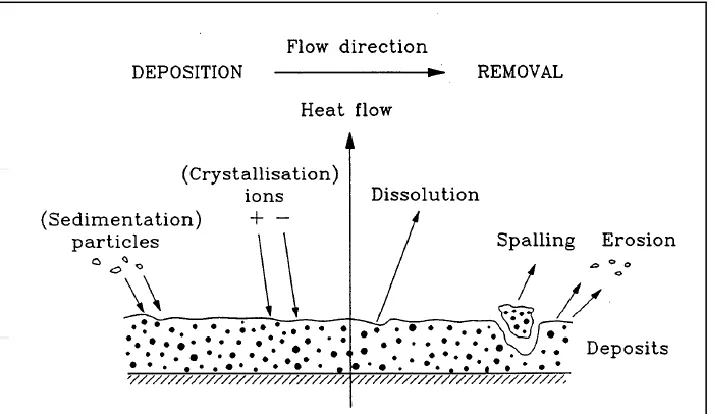
Various deposition and removal processes for a typical system could be predicted as shown in Figure 3. The processes occur simultaneously and depend on the operating conditions. Usually removal rates increase with increasing amounts of deposit whereas deposition rates are independent of the amount of deposit but do depend on the changes caused by deposits such as increase in flow velocity and surface roughness. In the application of constant wall temperature or constant heat transfer coefficient boundary conditions, the interface temperature
Figure 2: The elements of materials of
geopolymer concrete. Figure 1: Preparation of a
[8]
decreases as deposits build up which reduces the deposition rate (Kazi, S.N., 2012). HE Shen-bing, et. al. (2006) emphasized that when zeolite powder added, ammonium removal efficiency was maintained over 96% regardless of influent nitrogen condition and it suggested to be combined both of physical and biological ammonia removal is possible in a zeolite powder added membrane bioreactor. On the other side, it had been proven by influencing the microorganism activity compared with control sludge, zeolite powder addition improved both organic and nitrogen removal efficiency. Consequently, the zeolite powder added reactor kept stable performance even at the shock loading. Two approaches to improve membrane performance and to minimize the effects of concentration polarization are boundary layer by controlling the velocity and membrane modification and materials.
In this study, the membrane is modified its surface using the zeolite compound layer that act as antifouling. Meanwhile the velocity is controlled to get the optimize performance of the film surfaces. The fouling modelling is set up to counter measure its value of fouling removal besides of its function to reduce the nitrogen concentration.
6.0 Water Quality
[9]
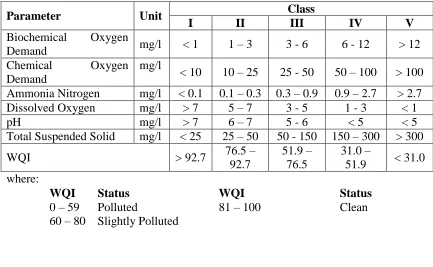
In the determination of status of water quality, Department of Environment, Malaysia (DOE) has proposed the Water Quality Index (WQI). WQI is a tool for evaluating the quality of water based the formula. At the first step, the water is tested for the six chemical parameters namely pH value, Biochemical Oxygen Demand (BOD), Chemical Oxygen Demand (COD), Ammonical Nitrogen (AN), Suspended Solid (SS) and Dissolved Oxygen (DO). Then, the water quality data is compared with the National Water Quality Standards for Malaysia (NWQS) to determine their status of quality level. WQI calculation includes those six (6) parameters. The six parameters resulting values are then entered into an established formula to arrive at the WQI score as described in Table 2 shows water quality classes and uses.
Table 2: DOE Water Quality Index Classification.
Parameter Unit Class
I II III IV V
Biochemical Oxygen
Demand mg/l < 1 1 – 3 3 - 6 6 - 12 > 12
Chemical Oxygen
Demand
mg/l
< 10 10 – 25 25 - 50 50 – 100 > 100
Ammonia Nitrogen mg/l < 0.1 0.1 – 0.3 0.3 – 0.9 0.9 – 2.7 > 2.7
Dissolved Oxygen mg/l > 7 5 – 7 3 - 5 1 - 3 < 1
pH mg/l > 7 6 – 7 5 - 6 < 5 < 5
Total Suspended Solid mg/l < 25 25 – 50 50 - 150 150 – 300 > 300
WQI > 92.7 76.5 –
92.7
51.9 – 76.5
31.0 –
51.9 < 31.0 where:
WQI Status WQI Status
0 – 59 60 – 80
Polluted
Slightly Polluted
81 – 100 Clean
6.1 Assessment
[10]
the Earth Force GREEN Program or any water quality monitoring effort. Based on the program to be used as a guidance of the preliminary assessment, they introduce the steps to be established such as collecting a water sample and testing procedures. From that, the laboratory assessment to establish with the optimized and enhanced results of the water quality.
6.2 Existing Data
The existing data were measured by the Department of Irrigation & Drainage (DID) and collected relevant to the objectives of the research. Then, parameters from the collected data are selected to be analysed and to be compared with Department of Environment (DOE) of Water Quality Index Classification. In order to validate the data collections from DID, the water sample also collected from the water body located at similar river stations where the measurements of the existing data had been taken. The locations are at Sungai Klang and Sungai Batu in Wilayah Persekutuan Kuala Lumpur catchment areas where the data had been taken in 37 gauging and 38 gauging respectively from year 2005 to year 2012. The selected parameters from the existing data are Ammonia, Nitrate, Phosphate, Chemical and Biological Oxygen Demands and sediments. The current values of water quality are captured in year 2012. The water quality index for Sungai Klang is 57.05 (Class III) similar to Sungai Batu valued is 54.7. It can be identified that both river are polluted but still suitable for fishery. Chart 1 and Chart 2 show the obvious concentrations of Nitrate and Ammonia to be reduced via this applied geopolymer concrete.
[11]
7.0 Conclusions
As a result from the proposed aim at those two rivers, the quality of parameters in water can be improved when the geopolymer film performs the best photocatalysis process and antifouling. The final data that represent the geopolymer film products would be a new contribution in the water resources industry especially in foulant layer removal. The results are expected to be a best data validity and reliability collections. Then, the product would be a very applicable in improve water quality and consequently reduce the maintenance monitoring in long life term condition. Cost-effectiveness, sustainability, non-toxicity and environment friendly are some of the novel products features. Other significance of the study is there are several approaches such as fouling modeling set theory and fundamental that can be contributed to the water treatment industry.
8.0 References
Abdul Aleem, M. I. & Arumairaj, P. D., 2012. Geopolymer Concrete- A Review. International Journal of Engineering Sciences & Emerging Technologies. Abdullah, K., et. al., 2006. POFA: A Potential Partial Cement Replacement
Material in Aerated Concrete. APSEC 2006, Kuala Lumpur, Malaysia. Adesina, A. A. (2004); Industrial exploitation of photocatalysis progress,
perspectives and prospects. Catal. Surv. Asia 8(4), 265–273.
AlDwairi, R. A. (2009), The Use of Expendable Local Zeolite Deposits for NH4 Removal in Municipal Wastewater; Jordan Journal of Civil Engineering, Vol.
[12]
3, No. 3. Department of Natural Resources and Chemical Engineering, Tafila Technical University, Tafila, Jourdan.
Alp, E., (2005); Transalcilasion and disproportion of aromatic compounds on zeolite catalyzators, Ankara University, MSc Thesis, Ankara.
American Public Health Association, APHA (1995). Standard methods for the examination of water and wastewater. American Public Health Association, American Water Works Association, and Water Pollution Control Federation. 19th edition, Washington, D.C.
Bian, B. and Cheng, X. J. (2011), Quality Characterization and Impact Assessment of Urban Runoff in a Medium Size City of China, 978-1-4244-5089-3/11 ©2011 IEEE.
Bonarccorsi, L., Calabrese, L., Freni, A., Proverbio, E., Restuccia, G., (2011); Zeolites Direct Synthesis on Heat Exchangers for Adsorption Heat Pumps. Applied Thermal Engineering (2011) 1-6.
Danabas, D. and Altun, T. (2011), Effects Of Zeolite (Clinoptilolite) On Some Water And Growth Parameters Of Rainbow Trout (Oncorhynchus mykiss Walbaum, 1792), Vol. 6, No 3, July-September 2011, p. 1111-1116.
Davidovits, J., 2002. 30 Years of Successes and Failures in Geopolymer Applications. Market Trends and Potential Breakthroughs. Geopolymer 2002 Conference, October 28-29, 2002, Melbourne, Australia.
Davidovits, J., 2002. Environmentally Driven Geopolymer Cement Applications. Geopolymer 2002 Conference, October 28-29, 2002, Melbourne, Australia. DelRio, F. W., Dunn, M. L., Boyce, B. L., Corwin, A.D., and Maarten, P. B.
(2006); The effect of nanoparticles on rough surface adhesion. Journal Of Applied Physics 99, 104304 American Institute of Physics.
Gordillo, G. and Hailey, X. (2004), Nanopowder Production, A Comparison of Several Methods. University of Illinois at Chicago.
Guo, Y. and Adams, B. J. (1998). Hydrologic analysis of urban catchments with event-based probabilistic model. University of Toronto , Toronto, Ontario, Canada.
Hashimoto, K., Irie, H. and Fujishima, A. (2005), TiO2 Photocatalysis: A Historical Overview and Future Prospects, Japanese Journal of Applied Physics, Vol. 44, No. 12, 2005, pp. 8269–8285.
HE Sheng-bing, Xue Gang, Kong Hai-nan (2006), Zeolite Powder Addition to Improve the Performance of Submerged Gravitation-Filtration Membrane Bioreactor. Journal of Environmental Sciences vol. 18.
[13]
Hüsken, G., 2008. Air purification by cementitious materials: Evaluation of air purifying properties. ICCBT 2008 - A - (24) - pp263-274.
Jorgensen, T.C. and Weatherly, L. R. (2003). Ammonial Removal from Wastewater by Ion Exchange in the Presence of Organic Contaminants. Water Research 37 (2003) 1723-1728.
Kaduk, J. A. and Faber, J. (1995), Crystal Structure of Zeolite Y as a Function of Ion Exchange, The Rigaku Journal, Vol. 12, No. 2.
Kazi, S.N. (2012), Fouling and Fouling Mitigation of Heat Exchanger Surfaces. Heat Exchangers - Basics Design ApplicationsEdited by Dr. Jovan Mitrovic (Ed.).
Kilinçarslan, S., 2011. The effect of zeolite amount on the physical and mechanical properties of concrete. International Journal of the Physical Sciences Vol. 6(13).
Klaus-Victor Peinemann & Suzanna Pereira Nunes (2010), Membrane for Water Treatment : Volume 4. Wiley-VCH.
Kristiawan, S. A., 2011. Toward Environmentally Friendly Construction Material with Class C Fly Ash-Based Geopolymer. International Seminar on Climate Change.
Kwaadsteniet, M-DE., Botes, M. and Cloete, T-E. (2011), Application Of Nanotechnology In Antimicrobial Coatings In The Water Industry, Vol. 6, No. 5. 395–407.
LaMotte Low Cost Water Monitoring Kit; Earth Force GREEN Program.
Leggo, P. J., Ledesert, B., and Christie, G. (2006); The Role of Clinoptilolite in Organo-Zeolitic-Soil System used for Phytoremediation. Science of Total Environment 363 (2006) 1-10.
Lin, H., Guo, L-L., Jiang and L-Y. (2010), Preparation Of Antibacterial Adsorption Materials And Application In Reclaimed Water Treatment, Beijing KejiDaxueXuebao/Journal of University of Science and Technology Beijing, v 32, n 5, p 644-649, May 2010, ISSN:1001053X.
Lloyd, N. A. & Rangan, B. V., 2010. Geopolymer Concrete : A Review Of Development And Opportunities. 35th Conference on Our World In Concrete & Structures.
Loiola, A.R., Andrade, J.C.R.A., Sasaki, J.M., Silva, L.R.D. (2012); Structural Analysis of Zeolite NaA Synthesised by a Cost-effective Hydrothermal Method using Kaolin and its use as Water Softner. Journal of Colloid and Interphase Sciences, 367 (2012) 34-39.
[14]
McNulty, G.S. (2007); Production Of Titanium Dioxide; Proceedings Of The Fifth International Symposium On Naturally Occurring Radioactive Material Organized By The University Of Sevill, 19–22 March 2007.
Misaelides, P. (2011). Application of Natural Zeolites in Environmental Remediation: A Short Review. Microporous and Mesoporous Materials 144 (2011) 15-18.
Mohd Ariffin, M. A. et. al., 2011. Mix Design and Compressive Strength of Geopolymer Concrete containing Blended Ash from Agro-Industrial Wastes. Advanced Materials Research Vol. 339 (2011) pp 452-457.
Monita, O. and Hamid, R. N., 2011. Strength and Water Penetrability of Fly Ash Geopolymer Concrete. ARPN Journal of Engineering and Applied Sciences. Montalvo, S., Guerrero, L., Borja, R., Traviesco, L., Sanchez, E. and Diaz, F.
(2006).; Use of Natural Zeolite at Different Doses and Dosage Procedure in Batch and Continuous Anaerobic Digestion of Synthetic and Swine Wastes; Resources, Conservation and Recycling 27 (2006) 26-41.
Mustafa AlBakri, A. M., et. al., 2011. The Processing, Characterization, and Properties Of Fly Ash Based Geopolymer Concrete. Rev. Adv. Mater. Sci. 30 (2012) 90-97.
Nazari, A., et. al., 2010. Assessment of the effects of the cement paste composite in presence TiO2 nanoparticles. Journal of American Sciences.
Obare, S. O. and Meyer, G. J. (2004). Nanostructured materials for environmental remediation of organic contaminants in water. J. Environ. Sci. Health A. 39(10), 2549–2582.
Qiu, W. and Zheng, Y. (2009), Removal of Lead, Copper, Nickel, Cobalt and Zinc from Water by Cancrinite-type Zeolite Synthesis from Fly Ash. Chemical Engineering Journal 145, 483-488. Department of Chemical Engineering, University of New Brunswick, Canada.
Rafiee, G. H. and Saad, C. R. (2006), The Effect of Natural Zeolite (Clinoptiolite) on Aquaponic Production of Red Tilapia (Oreochromis sp.) and Lettuce (Lactuca sativa var. longifolia), and Improvement of Water Quality, Vol. 8: 313-322.
Rajamane N. P., et. al., 2012. Literature Survey on Geopolymer Concretes and a Research Plan in Indian Context. The Masterbuilder.
[15]
Savage, N. and Diallo, M. S. (2005), Nanomaterials and water purification: Opportunities and challenges. Journal of Nanoparticle Research (2005) 7: 331–342.
Virta, R.L. (1998), Zeolites. U.S. Geological Survey Puplication.
Wang, S. and Peng, Y. (2010). Natural Zeolites as Effective Adsorbents in Water and Wastewater Treatment. Chemical Engineering Journal; 156 (2010) 11-24.
Wanielista, M., Kersten, R., Eaglin, R. (1997); Hydrology: Water Quantity and Quality Control, 2nd Edition ; John Wiley & Son, Inc. USA.
Wiesner, M.R., PhD., P.E. (2011) Nanomaterials, Water, and the Directed Self-Assembly of Environmentally Responsible Industries, National Water Research Institute.
Xagas, A.P., Androulaki, E., Hiskia, A., Falaras, P. (1999); Preparation, fractal surface morphology and photocatalytic properties of TiO2 films. Elsevier Science S.A.
Xie, L-G., Zheng, H-L., Wu, Y-Q.and Zhang, O. (2010), Modification And Application Of Fly Ash For The Stabilization Of Sludge, Tumu Jianzhuyu Huan jing Gongcheng/Journal of Civil, Architectural and environmental Engineering, v 32, n 1, p 120-124, February 2010, ISSN:16744764.
Zakaria, N. A., Ab. Ghani, A., Abdullah, R., Sidek, L. M., Kassim, A. H. and Ainan, A. (2003), MSMA – A new Storm water Management Manual for Malaysia, BIOECODS at the national level.
Zhang, M., Zhang, H., Xu, D., Han, L., Niu, D., Tian, B., Zhang, J., Zhang, L., and Wu, W. (2011). Removal of Ammonium from Aqueous Solutions using Zeolites Synthesised from Fly Ash by a Fusion Method. 221 (2011) 111-121.
Zhao Yan-Jun, Wu Kai Fen, Wang Zheng-jun, Zhao Liang, Li Shu-shen (2000), Fouling and Cleaning of Membrane – a literature review. Journal of Environmental Sciences vol. 12.