Drug Design, Development and Therapy
Dove
press
O r i g i n a l r e s e a r c h
open access to scientific and medical research
Open access Full Text article
novel glyoxalase-i inhibitors possessing a
“zinc-binding feature” as potential anticancer agents
Qosay a al-Balas1
Mohammad a hassan1
nizar a al-shar’i1
nizar M Mhaidat2
ammar M almaaytah3
Fatima M al-Mahasneh1
israa h isawi1
1Department of Medicinal chemistry
and Pharmacognosy, 2Department of
clinical Pharmacy, 3Department of
Pharmaceutical Technology, Faculty of Pharmacy, Jordan University of science and Technology, irbid, Jordan
Background: The glyoxalase system including two thiol-dependent enzymes, glyoxalase I (Glo-I) and glyoxalase II, plays an important role in a ubiquitous metabolic pathway involved in cellular detoxification of cytotoxic 2-oxoaldehydes. Tumor cells have high glycolytic activity, leading to increased cellular levels of these toxic metabolites. The increased activity of the detoxification system in cancerous cells makes this pathway a viable target for developing novel anticancer agents. In this study, we examined the potential utility of non-glutathione-based inhibitors of the Glo-I enzyme as novel anticancer drugs.
Methods: Computer-aided drug design techniques, such as customized pharmacophoric features, virtual screening, and flexible docking, were used to achieve the project goals. Retrieved hits were extensively filtered and subsequently docked into the active site of the enzyme. The biological activities of retrieved hits were assessed using an in vitro assay against Glo-I.
Results: Since Glo-I is a zinc metalloenzyme, a customized Zn-binding pharmacophoric feature was used to search for selective inhibitors via virtual screening of a small-molecule database. Seven hits were selected, purchased, and biologically evaluated. Three of the seven hits inhibited Glo-I activity, the most effective of which exerted 76.4% inhibition at a concen-tration of 25 µM.
Conclusion: We successfully identified a potential Glo-I inhibitor that can serve as a lead compound for further optimization. Moreover, our in silico and experimental results were highly correlated. Hence, the docking protocol adopted in this study may be efficiently employed in future optimization steps.
Keywords: cancer, glyoxalase-I, zinc-binding feature, flexible docking, Discovery Studio 3.5, ketol
Introduction
Cancer is a rebound system of growth that originates in the human body. The cancer cells are capable of avoiding apoptosis, a programmed suicide mechanism, which confers them the ability of limitless cell expansion.1 Cancer is the leading cause of mortality worldwide; it was accountable for 8.2 million deaths in 2012 according to the World Health Organization statistics, and its incidence is expected to increase to 13.0 million by 2030. Consequently, immense research attention has been focused on successful treatment of the disease. Unfortunately, due to the lack of selectivity for cancerous cells, no optimal chemotherapeutic agents have been identified to date. Researchers are therefore centralizing their efforts on discovering valid targets and designing new therapeutic inhibitors.2–5
Glyoxalase system enzymes have been approved as valid targets for cancer treatment.6–8 These enzymes present an attractive target for cancer therapy owing to their overexpression in malignant cells and involvement in increasing resistance to antitumor correspondence: Qosay a al-Balas
Jordan University of science and Technology, Faculty of Pharmacy P.O. Box 3030, irbid 22110, Jordan Tel +962 7 7633 7216
Fax +962 2 720 1075 email [email protected]
Journal name: Drug Design, Development and Therapy Article Designation: Original Research
Year: 2016 Volume: 10
Running head verso: Al-Balas et al
Running head recto: Glo-I inhibitors possessing a “zinc-binding feature” DOI: http://dx.doi.org/10.2147/DDDT.S110997
Drug Design, Development and Therapy downloaded from https://www.dovepress.com/ by 118.70.13.36 on 22-Aug-2020
For personal use only.
Number of times this article has been viewed
This article was published in the following Dove Press journal: Drug Design, Development and Therapy
Dovepress
al-Balas et al
agents. The glyoxalase system comprising two enzymes, glyoxalase-1 (Glo-I) and glyoxalase-2 (Glo-II), is responsible for the detoxification of metabolic byproducts produced by cells, particularly reactive aldehydes, such as methylglyoxal (MG). Glo-I catalyzes the first step, which is isomerization of the toxic metabolite, and the detoxification process is sub-sequently accomplished via hydrolysis of the Glo-I product,
S-d-lactoylglutathione, to generate nontoxic bystanders that
are safely excreted outside the body (Figure 1).9–13
Tumor cells are metabolically more active than normal cells, resulting in increased cellular levels of toxic MG and
S-d-lactoylglutathione metabolites. Tumor cells respond
by augmenting the activity of the detoxifying glyoxalase system to minimize the intracellular concentrations of toxic metabolites. This phenomenon has been reported in breast carcinoma by Rulli et al14 and human superficial or invasive bladder cancer by Mearini et al,15 who showed that activities of both Glo-I and Glo-II are significantly increased in tumors, compared to those in normal cells. This finding rationalizes that inhibition of the glyoxalase system (Glo-I and/or Glo-II) may be detrimental for cancer cells, potentially leading to their self-destruction.14,16–22 Structurally, Glo-I is a homodimeric enzyme composed of two identical polypeptide chains, each comprising 183 amino acids. In addition, the enzyme pos-sesses a structural zinc metal. Zinc is an essential cofactor present within the Glo-I active site that plays an important structural and catalytic role in the isomerization of reactive and toxic aldehydes via stabilizing the enediolate intermediate by lowering the free activation energy of proton transfer.23 The
Glo-I active site is located at the interface of the two polypep-tide chains, and the zinc atom displays octahedral coordination with adjacent amino acids from both chains.24,25
Glo-I, an established pivotal anticancer target, has been the focus of research by several groups. For example, More et al26–32 designed a number of Glo-I transition-state competitive inhibitors incorporating different zinc-binding groups (ZBGs). Takasawa et al33–35 additionally identified natural flavonoids, such as Glo-I inhibitors, and showed that coplanar hydroxyl and ketone groups are important for zinc chelation (Figure 2).
Previously, we performed active site analysis of Glo-I to determine the pivotal features essential for optimal inhibitor binding with the active site.28 Three features were determined as critical: a zinc-binding region in the inhibitor possessing a ZBG to chelate the Zn2+ ion, the presence of a negatively ionizable group in the inhibitor for binding to the positively ionized active site mouth, and a deep hydrophobic pocket that could be filled with a hydrophobic group.28
In this study, we mined the commercially available AldrichCPR database for extraction of potential inhibitors of Glo-I by selecting a ketol group (present in myricetin) as the ZBG and carboxylic acid to complement the positively ionized active site mouth. Final selection of potential inhibi-tors was achieved by performing flexible docking to estimate binding energy, along with establishing a good perception of the binding modes of these inhibitors within the active site. The biological inhibitory activities of the selected hits against Glo-I were evaluated via in vitro assay.
2
2
+ *6+
0HWK\OJO\R[DO
2 2+ 2
2+ 2
*6+
2+ 2+
*OR, *OR,,
*6+ + *6 +
Figure 1 Mechanism of MG detoxification utilizing glyoxalase system enzymes.
Abbreviations: Mg, methylglyoxal; glo-i, glyoxalase-1; glo-ii, glyoxalase-2; gsh, glutathione.
6KRXOGQRWEHEXON\
6KRXOGQRWEHEXON\
3ODQDUFRRUGLQDWHZLWK]LQFDWRP 'RXEOHERQGLVQRW HVVHQWLDOIRUDFWLYLW\
(VVHQWLDOIRUDFWLYLW\ELQGWR $6PRXWK$UJ$VQ
+2
2+ 2+ 2+ 2+
2
2+
$
% &
2
Figure 2 Takasawa perception of the expected pharmacophore and SAR of flavonoids as Glo-I inhibitors. Abbreviations: sar, structure–activity relationship; glo-i, glyoxalase-1; as, active site.
Drug Design, Development and Therapy downloaded from https://www.dovepress.com/ by 118.70.13.36 on 22-Aug-2020
Dovepress glo-i inhibitors possessing a “zinc-binding feature”
Materials and methods
computational materials
Discovery Studio (DS) 3.5 from Biovia® Software Inc http:// www.3ds.com/products-services/biovia/ (San Diego, CA, USA) was used for active site analysis, extraction of potential inhibitors from commercial databases (AldrichCPR), and flex-ible docking. The crystal structure of Glo-I (accession code: 1QIN) was retrieved from the Protein Data Bank (PDB) as our structural model.25
glo-i active site analysis
The crystal structure of Glo-I, obtained from PDB, was pre-pared using the Prepare Protein Protocol, in which missing loops and alternate conformations were corrected. The active site was determined from the cocrystallized ligand bound within, along with the zinc atom. The Glo-I enzyme active site is mapped as three main areas: a highly positive active site mouth containing arginine and lysine, a hydrophobic pocket deep within the active site, and zinc atom coordinated between these two areas.28
Virtual screening of the commercial
database
The commercially available AldrichCPR database (containing
∼250,000 compounds) from Sigma-Aldrich Co. (St Louis, MO, USA) was downloaded and converted into a three-dimensional database using the Build 3D Database protocol in DS. The database was searched for potential inhibitors of Glo-I based on the active site and the function of the ketol group, which can chelate zinc atom.34
The search query was based on two steps: extraction of all compounds containing a ketol group with the potential to chelate zinc atoms, followed by selection of carboxyl-containing compounds from hits retrieved from the first step which were expected to bind to the mouth of the active site. These steps were performed using the Ligand Pharmacophore Mapping protocol within DS, which aligns and identifies the ligands that map to a pharmacophore. Moreover, with appli-cation of Absorption, Distribution, Metabolism, Excretion, and Toxicity (ADMET) profiling and Lipinski’s and Veber’s rules, hits were reduced to obtain drug-like compounds and facilitate the process of flexible docking, which is computa-tionally expensive.
Docking
Final selection of the anticipated inhibitors was based on docking studies in parallel with visual inspection. The protein active site was determined using the Edit and Define Active
Site Tool available in DS. The active site was defined by a sphere of 11 Å radius encompassing the three main areas. Other parameters for docking were left at default values.
Flexible Docking protocol in DS 3.5 was used to facilitate selection of potential Glo-I enzyme inhibitors. Selection of the proposed inhibitors from the docked set was based on their score, in addition to orientation within the active site and potential chelation between the inhibitor and zinc atom (considered the main criterion of selection).
This type of docking protocol is distinct from other docking programs in that it allows side chains of the active site residues to move with high flexibility. Despite being compu-tationally demanding, the flexible docking procedure results in better mimicking of real inhibitor–enzyme binding.36
glo-i in vitro assay
Bulk solvents and chemicals were purchased from Sigma-Aldrich Co. and Acros (Thermo Fisher Scientific, New Jersey, US) via their local agents and utilized with no further purification or distillation.
Biological activities of the selected compounds were evaluated by measuring their in vitro inhibitory activities against human recombinant Glo-I following the protocol pro-vided by the manufacturer (R&D Systems, Inc., Minneapolis, MN, USA). The enzyme was reconstituted in our laboratory by dissolving to a concentration of 0.5 mg/mL in sterile, deionized water, stored at -70°C, and thawed for use on the day of the test. Test compounds were dissolved in dimethyl sulfoxide to prepare 10 mM stock solution, and absorbance was measured at λmax of 240 nm for 200 seconds at 25°C.
The assay buffer was prepared using 0.5 M sodium phos-phate dibasic and 0.5 M sodium phosphos-phate monobasic. The substrate mixture contained 100 mM glutathione (freshly prepared) and 100 mM MG. The two solutions were com-bined and added to assay buffer, and the mixture was allowed to stand at room temperature for 15 minutes. The blank was prepared by mixing assay buffer with substrate mixture, and test compounds were prepared by diluting with assay buffer followed by the addition of human recombinant Glo-I into a cuvette at a concentration of 50 µM. All tests were performed in triplicate, and the mean was calculated.
Results and discussion
in silico design
The Glo-I enzyme has been investigated previously by our research group, and three main criteria that contribute to the binding of potential inhibitors have been established. In the present study, the crystal structure of Glo-I complexed with a
Drug Design, Development and Therapy downloaded from https://www.dovepress.com/ by 118.70.13.36 on 22-Aug-2020
Dovepress
al-Balas et al
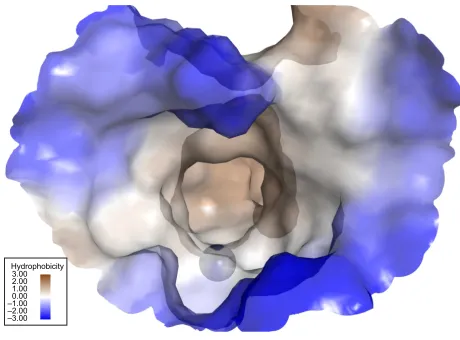
substrate analog (PDB accession code: 1QIN) was employed for active site analysis. The zinc atom localized at the bottom of the active site is considered the main determinant of specific binding of potential inhibitors. The reason behind this assumption is that the zinc atom plays a structural role in the catalytic mechanism of aldehyde detoxification. Structurally, Zn2+ has octahedral geometry, coordinating with four amino acids in addition to the inhibitor (Figure 3).25
The second important criterion for selecting Glo-I inhibi-tors is the presence of positively ionizable amino acids, such as arginine and lysine, at the mouth of the active site. The nature of this area has guided the design process to preferably select ligands carrying negatively ionizable groups, such as carboxylic acid. Finally, the hydrophobic pocket located deep within the active site of the enzyme has been utilized in the design process via incorporation of a hydrophobic feature in the final pharmacophore that fits into the pocket.
The next step in the selection of suitable inhibitors of Glo-I enzyme was to identify compounds bearing the cor-rect binding features. Many functional groups are known to chelate the zinc atom.34,37,38
We selected the ketol group as a guide, in view of its presence in many natural compounds and lack of association with visible toxicity that is evident with thiol or hydrox-amate groups. A ketol-mapping feature was incorporated into our final pharmacophore (Figure 4). Several naturally occurring compounds, such as flavonoids, possess such a group. Myricetin, containing a ketol group for chelating the zinc atom, is an established inhibitor of Glo-I, and therefore used as a positive control in our enzyme assay. Based on this hypothesis, a query root pharmacophore was built, and
the AldrichCPR database was virtually screened to extract the compounds displaying this feature. Following the first search step, a refining step was conducted on retrieved hits to further identify compounds possessing carboxylic acid groups, resulting in a collection of compounds possessing both ketol and carboxylic acid groups. The third feature for consideration is the presence of a hydrophobic moiety, which was investigated manually due to the difficulty of assigning specific groups for the search, since numerous candidate chemical groups are capable of forming hydro-phobic interactions.
To reduce the number of returned hits and enhance the chances of finding potential inhibitors of Glo-I, Lipinski’s and Veber’s rules for orally available drug-like compounds (within DS) were implemented. Additional restrictions for the selection criteria were imposed prior to docking by filtering compounds that had passed the previous filtration step using the ADMET profile filter. The resulting set of filtered com-pounds were considered effective drug candidates, as they complied with the known rules of safe oral compounds.
Successful candidates that passed the harsh filtration criteria were subjected to a semifinal ranking procedure based on docking. Flexible docking is used as a predictor of binding energy and the binding mode (orientation) of the final filtered set of compounds. Final selection of the proposed inhibitors for biological evaluation was performed by visual inspection of the chemical structure. Three main features were required for binding (ZBG, COOH, hydrophobic) in addition to their docking score and binding orientation.
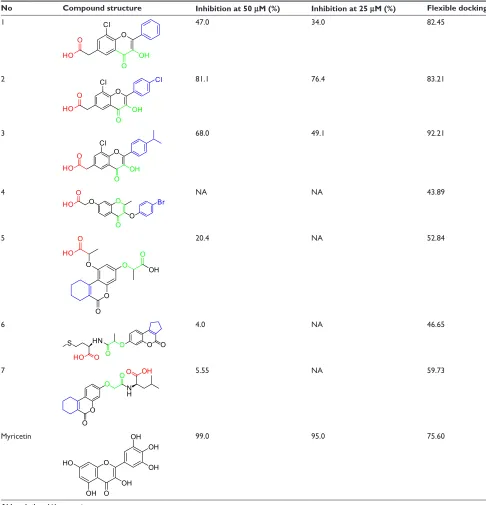
Seven compounds were ultimately selected from the AldrichCPR commercial database (Table 1). All seven com-pounds possessed a ZBG, carboxylic acid forming a salt bridge at the mouth of the active site, and a hydrophobic group next to the ZBG.
The compounds were assayed (at a concentration of 50 µM) using the method described in the “Materials and methods” section.
+\GURSKRELFLW\
± ± ±
Figure 3 active site of the glo-i enzyme.
Note: The site contains a positively ionized mouth (blue), a hydrophobic pocket (deep: brown), and a zinc atom (gray sphere).
Abbreviation: glo-i, glyoxalase-1.
Figure 4 Query used for extracting compounds from the aldrichcPr database using
the ligand Pharmacophore Mapping protocol.
Drug Design, Development and Therapy downloaded from https://www.dovepress.com/ by 118.70.13.36 on 22-Aug-2020
Dovepress glo-i inhibitors possessing a “zinc-binding feature”
As shown in Table 1, compounds 1, 2, and 3 showed high inhibitory activities, compared to the other four candidates, with compound 2 exhibiting the highest inhibition efficiency (76.4%) at a concentration of 25 µM. Compounds 1–3 with high structural similarity (apart from the hydrophobic region with different patterns of substitution) were selected to investigate the importance of hydrophobic interactions. Compound 1 contained an unsubstituted benzene ring,
compound 2 had a chlorine atom on the benzene ring as electron-withdrawing group, and compound 3 contained an isopropyl group as electron-donating group. This variation was in favor of the presence of a chlorine atom at the para position of the benzene ring, which produced a compound at least twice as active as the isopropyl analog and three times as active as the unsubstituted compound. This could be explained by the fact that the hydrophobic pocket is capable
Table 1 chemical structures of retrieved hits from aldrichcPr, their in vitro enzyme assay results, and corresponding in silico docking
scores
No Compound structure Inhibition at 50 µM (%) Inhibition at 25 µM (%) Flexible docking
1
2
2 2+
&O
+2 2
47.0 34.0 82.45
2
2
2 2+
&O
&O
+2 2
81.1 76.4 83.21
3
2
2 2+
&O
+2 2
68.0 49.1 92.21
4
2
2 2
%U
2
+2
2 na na 43.89
5
2
2
2 2+
2
2
+2
2 20.4 na 52.84
6
2 2
2 2
+1
+2 2
6
4.0 na 46.65
7
2 2
2 1
+
22 2+ 5.55 na 59.73
Myricetin
2+ 2 2+
+2 2
2+ 2+
2+ 99.0 95.0 75.60
Abbreviation: na, not active.
Drug Design, Development and Therapy downloaded from https://www.dovepress.com/ by 118.70.13.36 on 22-Aug-2020
Dovepress
al-Balas et al
of accommodating more than the benzene ring and electro-static forces are important, as the Cl atom has better activity than the isopropyl group, although both groups are considered classical bioisosteres. The most active hit was selected as a lead compound for further derivatization and optimization of pharmacokinetic and pharmacodynamic profiles. Ongoing research in our laboratory has focused on generating a robust structure–activity relationship that can be utilized in further development and optimization.
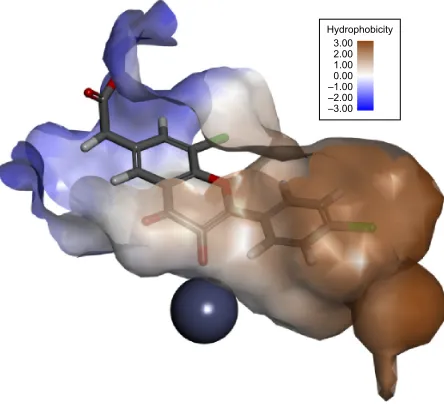
In silico docking of the proposed compounds was well correlated with experimental data obtained from the in vitro enzyme assay. Highest scores were obtained with the first three compounds (1, 2, 3) in docking studies, with significant differences in activity, compared with the inac-tive compounds. These results have enhanced credibility and confidence in our parametrization of the flexible dock-ing protocol, which may be effectively used in the future to screen other commercial databases for further potential Glo-I inhibitors. Compound 2 (the most active) is depicted in Figure 5 docked within the active site of the enzyme in which the ketol group clearly chelates the zinc atom, the carboxylic acid group forms a salt bridge with the positively ionized mouth, and the hydrophobic pocket is filled with a
para-chlorobenzene ring.
Conclusion
In this research, computer-aided drug design techniques were implemented to identify novel Glo-I inhibitors. Thorough
investigation of the active site of the target enzyme revealed three areas crucial for effective binding that were used to construct the pharmacophore. The electrostatic criteria of the three main areas of the active site were fulfilled, that is, a zinc-binding region with a ketol group, a positively ionized active site mouth that can bind carboxylic acid, and finally, a hydrophobic pocket with a lipophilic moiety.
Seven compounds were selected based on evaluation of Glo-I inhibitory activity in vitro. The computer-aided drug design techniques used facilitated the rapid and successful identification of a new class of Glo-I inhibitors. The most effective compound exerted 76.4% inhibition at a concentra-tion of 25 µM. We observed a clear correlation between the in vitro results obtained with the selected compounds and their in silico docking scores.
Acknowledgment
This work was supported by the Deanship of Research, Jordan University of Science and Technology, The Hashemite Kingdom of Jordan.
Disclosure
The authors report no conflicts of interest in this work.
References
1. National Cancer Institute. Available from: http://www.cancer.gov/. Accessed October 28, 2015.
2. Jemal A, Bray F, Center MM, Ferlay J, Ward E, Forman D. Global cancer statistics. CA Cancer J Clin. 2011;61(2):69–90.
3. World Health Organization (WHO). The Global Burden of Disease: 2004 Update. Geneva: WHO. Available from: http://www.who.int/ topics/global_burden_of_disease/en/. Accessed October 28, 2015. 4. Aziz NM, Rowland JH. Trends and advances in cancer survivorship
research: challenge and opportunity. Semin Radiat Oncol. 2003;13(3): 248–266.
5. Petrelli NJ, Winer E, Brahmer J, et al. Clinical Cancer Advances 2009: major research advances in cancer treatment, prevention, and screen-ing – a report from the American Society of Clinical Oncology. J Clin Oncol. 2009;27(35):6052–6069.
6. Davidson SD, Milanesa DM, Mallouh C, Choudhury MS, Tazaki H, Konno S. A possible regulatory role of glyoxalase I in cell viability of human prostate cancer. Urol Res. 2002;30(2):116–121.
7. Rabbani N, Thornalley PJ. Glyoxalase in diabetes, obesity and related disorders. Semin Cell Dev Biol. 2011;22(3):309–317.
8. Thornalley PJ, Rabbani N. Glyoxalase in tumourigenesis and multidrug resistance. Semin Cell Dev Biol. 2011;22(3):318–325.
9. Xue M, Rabbani N, Thornalley PJ. Glyoxalase in ageing. Semin Cell Dev Biol. 2011;22(3):293–301.
10. Sakamoto H, Mashima T, Kizaki A, et al. Glyoxalase I is involved in resistance of human leukemia cells to antitumor agent-induced apop-tosis. Blood. 2000;95(10):3214–3218.
11. National Toxicology Program. Final report on carcinogens back-ground document for formaldehyde. Rep Carcinog Backg Doc. 2010; 10-5981:i-512.
12. Chaplen FW. Incidence and potential implications of the toxic metabo-lite methylglyoxal in cell culture: a review. Cytotechnology. 1998; 26(3):173–183.
Figure 5 Docking of compound 2 within the active site of glo-i.
Notes: The ketol group chelates zinc (gray sphere). The carboxylic acid group forms ionic interactions with the mouth of the active site. para-chlorophenyl occupies the hydrophobic pocket.
Abbreviation: glo-i, glyoxalase-1.
+\GURSKRELFLW\
±
± ±
Drug Design, Development and Therapy downloaded from https://www.dovepress.com/ by 118.70.13.36 on 22-Aug-2020
Drug Design, Development and Therapy
Publish your work in this journal
Submit your manuscript here: http://www.dovepress.com/drug-design-development-and-therapy-journal
Drug Design, Development and Therapy is an international, peer-reviewed open-access journal that spans the spectrum of drug design and development through to clinical applications. Clinical outcomes, patient safety, and programs for the development and effective, safe, and sustained use of medicines are the features of the journal, which
has also been accepted for indexing on PubMed Central. The manu-script management system is completely online and includes a very quick and fair peer-review system, which is all easy to use. Visit http://www.dovepress.com/testimonials.php to read real quotes from published authors.
Dovepress
Dove
press
glo-i inhibitors possessing a “zinc-binding feature”
13. Suttisansanee U, Honek JF. Bacterial glyoxalase enzymes. Semin Cell Dev Biol. 2011;22(3):285–292.
14. Rulli A, Carli L, Romani R, et al. Expression of glyoxalase I and II in normal and breast cancer tissues. Breast Cancer Res Treat. 2001; 66(1):67–72.
15. Mearini E, Romani R, Mearini L, et al. Differing expression of enzymes of the glyoxalase system in superficial and invasive bladder carcinomas. Eur J Cancer. 2002;38(14):1946–1950.
16. Feierberg I, Luzhkov V, Åqvist J. Computer simulation of primary kinetic isotope effects in the proposed rate-limiting step of the glyoxalase I catalyzed reaction. J Biol Chem. 2000;275(30):22657–22662. 17. Thornalley P. Protecting the genome: defence against nucleotide
gly-cation and emerging role of glyoxalase I overexpression in multidrug resistance in cancer chemotherapy. Biochem Soc Trans. 2003;31(6): 1372–1377.
18. Thornalley P. Glyoxalase I-structure, function and a critical role in the enzymatic defence against glycation. Biochem Soc Trans. 2003;31(6): 1343–1348.
19. Clelland J, Allen R, Thornalley P. Inhibition of growth of human leu-kaemia 60 cells by S-2-hydroxyacylglutathiones and monoethyl ester derivatives. Biochem Pharmacol. 1992;44(10):1953–1959.
20. Edwards L, Adesida A, Thornalley P. Inhibition of human leukaemia 60 cell growth by S-d-lactoylglutathione in vitro. Mediation by metabolism to N-d-lactoylcysteine and induction of apoptosis. Leuk Res. 1996;20(1):17–26.
21. Edwards L, Thornalley P. Prevention of S-d-lactoylglutathione-induced inhibition of human leukaemia 60 cell growth by uridine. Leuk Res. 1994;18(9):717–722.
22. Thornalley P, Tisdale M. Inhibition of proliferation of human promy-elocytic leukaemia HL60 cells by S-D-lactoylglutathione in vitro. Leuk Res. 1988;12(11–12):897–904.
23. Feierberg, I. (2003). Computational Studies of Enzymatic Enolization Reactions and Inhibitor Binding to a Malarial Protease. Department of Cell and Molecular Biology. Uppsala, Acta Universitatis Upsaliensis. Doctor of Philosophy: 54.
24. Cameron AD, Olin B, Ridderström M, Mannervik B, Jones TA. Crystal structure of human glyoxalase I – evidence for gene duplication and 3D domain swapping. EMBO J. 1997;16(12):3386–3395.
25. Cameron AD, Ridderström M, Olin B, Kavarana MJ, Creighton DJ, Mannervik B. Reaction mechanism of glyoxalase I explored by an X-ray crystallographic analysis of the human enzyme in complex with a transition state analogue. Biochemistry. 1999;38(41):13480–13490.
26. More SS, Vince R. A metabolically stable tight-binding transition-state inhibitor of glyoxalase-I. Bioorg Med Chem Lett. 2006;16(23): 6039–6042.
27. Vince R, Daluge S, Wadd WB. Inhibition of glyoxalase I by S-substituted glutathiones. J Med Chem. 1971;14(5):402–404. 28. Al-Balas Q, Hassan M, Al-Oudat B, Alzoubi H, Mhaidat N,
Almaaytah A. Generation of the first structure-based pharmacoph-ore model containing a selective “zinc binding group” feature to identify potential glyoxalase-1 inhibitors. Molecules. 2012;17(12): 13740–13758.
29. More SS, Vince R. Design, synthesis, and binding studies of bidentate Zn-chelating peptidic inhibitors of glyoxalase-I. Bioorg Med Chem Lett. 2007;17(13):3793–3797.
30. More SS, Vince R. Inhibition of glyoxalase I: the first low-nanomolar tight-binding inhibitors. J Med Chem. 2009;52(15):4650–4656. 31. Suzuki T, Miyata N. Rational design of non-hydroxamate histone
deacetylase inhibitors. Mini Rev Med Chem. 2006;6(5):515–526. 32. Maingot L, Leroux F, Landry V, et al. New non-hydroxamic
ADAMTS-5 inhibitors based on the 1, 2, 4-triazole-3-thiol scaffold. Bioorg Med Chem Lett. 2010;20(21):6213–6216.
33. Takasawa R, Saeki K, Tao A, et al. Delphinidin, a dietary anthocya-nidin in berry fruits, inhibits human glyoxalase I. Bioorg Med Chem. 2010;18(19):7029–7033.
34. Takasawa R, Takahashi S, Saeki K, Sunaga S, Yoshimori A, Tanuma S-I. Structure–activity relationship of human GLO I inhibitory natural flavonoids and their growth inhibitory effects. Bioorg Med Chem. 2008;16(7):3969–3975.
35. Takasawa R, Tao A, Saeki K, et al. Discovery of a new type inhibitor of human glyoxalase I by myricetin-based 4-point pharmacophore. Bioorg Med Chem. 2011;21(14):4337–4342.
36. Koska JR, Spassov VZ, Maynard AJ, et al. Fully automated molecular mechanics based induced fit protein–ligand docking method. J Chem Inf Model. 2008;48(10):1965–1973.
37. Madsen AS, Kristensen HM, Lanz G, Olsen CA. The effect of various zinc binding groups on inhibition of histone deacetylases 1–11. ChemMedChem. 2014;9(3):614–626.
38. Kawai K, Nagata N. Metal–ligand interactions: an analysis of zinc binding groups using the Protein Data Bank. Eur J Med Chem. 2012;51:271–276.
Drug Design, Development and Therapy downloaded from https://www.dovepress.com/ by 118.70.13.36 on 22-Aug-2020