ARTIGO ORIGINAL
ABSTRACT
Introduction: The epidemiological and social relevance of dementia and mild cognitive impairment increases with life expectancy and prevalence of metabolic disorders. The recognition of an important role for dietary nutrients on cognitive functioning opens new preventive strategies. This work analyses the association between erythrocyte omega-3 index and omega-6 / omega-3 ratio and cognitive performance/ mild cognitive impairment.
Material and Methods: We selected a random sample of individuals registered at a health centre aged ≥ 55 years. Participants were asked about their alimentary habits, erythrocyte indexes were determined and neuropsychological evaluation included the Montreal Cognitive Assessment and a comprehensive test battery.
Results: Mean age of 90 participants was 64 years (sd = 5.6), 71.1% had four years of education and 40% of them had more than one vascular risk factor. Limits for omega-3 index and omega-6 / omega-3 ratio were 2.90 - 9.79 (mean = 6.20; sd = 1.50) and 1.14 - 2.95 (mean = 2.12; sd = 0.39), respectively. Montreal Cognitive Assessment scores ranged from 10 to 29 (mean = 22; sd = 4.5), increasing on average 1 - 2 points for above average omega-3 values and an omega-6 / omega-3 ratio ≤ 2 (Group 1) and decreasing 5 - 6 points for omega-3 below mean values and the same omega-6 / omega-3 ratio (Group 2). Prevalence of mild cognitive impairment was 25.6% (95% CI: 16.4 - 34.7), ranging from 12.5% to 83.3% in the two groups above.
Discussion: This preliminary study is one of the first analyzing the repercussion of omega-3 index and omega-6 / omega-3 ratio on cognitive functioning, considering additionally the participant clinical and dietary profiles.
Conclusion: The association found suggests that omega-3 and omega-6 / omega-3 ratio could be important biomarkers in the prevention of cognitive impairment.
Keywords: Aging; Cognition Disorders; Fatty Acids, Omega-3; Fatty Acids, Omega-6
Relevance of Omega-3 and Omega-6 / Omega-3 Ratio in
Preventing Cognitive Impairment
Relevância dos Índices Ómega-3 e Razão Ómega-6 /
Ómega-3 na Prevenção do Défice Cognitivo
1. Associação de Estudos de Demência. Porto. Portugal. 2. Centro de Saúde de Lousada. Lousada. Portugal.
3. Divisão de Aquacultura e Valorização. IPMA – Instituto Português do Mar e da Atmosfera. Lisboa. Portugal. 4. Instituto de Ciências Biomédicas de Abel Salazar. Universidade do Porto. Porto. Portugal.
Autor correspondente: Belina Nunes. [email protected]
Recebido: 22 de junho de 2016 - Aceite: 01 de dezembro de 2016 | Copyright © Ordem dos Médicos 2017
Belina NUNES1, Cristina PINHO1, Cláudia SOUSA1, Alan Rocha MELO1,2, Narcisa BANDARRA3, Maria Carolina SILVA4
Acta Med Port 2017 Mar;30(3):213-223 ▪ https://doi.org/10.20344/amp.7970
RESUMO
Introdução: A relevância epidemiológica e social da demência e do défice cognitivo ligeiro aumenta com a esperança de vida e pre-valência das doenças metabólicas. O reconhecimento da importância dos nutrientes no funcionamento cognitivo perspectiva novas estratégias preventivas. Neste trabalho analisamos a associação entre os valores do índice ómega-3 e da razão ómega-6 / ómega-3 e desempenho cognitivo/ défice cognitivo ligeiro.
Material e Métodos: Selecionamos uma amostra aleatória de utentes de um centro de saúde com idade ≥ 55 anos, que foram inquiri-dos sobre hábitos alimentares e sujeitos a avaliação neuropsicológica, incluindo o Montreal Cognitive Assessment, e determinando-se os índices indicados.
Resultados: Os 90 participantes tinham em média 64 anos (dp = 5,6), 71,1% quatro anos de escolaridade e 40% mais de um factor de risco vascular. Os limites dos valores de ómega-3 e da razão ómega-6 / ómega-3 foram respectivamente 2,90 - 9,79 (média = 6,20; dp = 1,50) e 1,14 - 2,95 (média = 2,12; dp = 0,39). A pontuação no Montreal Cognitive Assessment variou entre 10 - 29 (média = 22,0; dp = 4,5), aumentando em média 1 - 2 pontos para valores de ómega-3 acima da média e uma razão ómega-6 / ómega-3 ≤ 2 (Grupo 1) e diminuindo 5 - 6 pontos para um valor de ómega-3 abaixo da média e a mesma razão ómega-6 / ómega-3 (Grupo 2). A prevalência de défice cognitivo ligeiro foi 25,6% (IC 95%:16,4 - 34,7%), variando entre 12,5% e 83,3% nos dois grupos mencionados.
Discussão: Este estudo preliminar é um dos primeiros a analisar a repercussão do índice ómega-3 e da razão ómega-6 / ómega-3 na função cognitiva, considerando adicionalmente o perfil clínico e consumo alimentar dos participantes.
Conclusão: A associação encontrada sugere que o índice ómega-3 e a razão ómega-6 / ómega-3 podem ser biomarcadores impor-tantes na prevenção da deterioração cognitiva.
Palavras-chave: Ácidos Gordos Ómega-3; Ácidos Gordos Ómega-6; Envelhecimento; Perturbações da Cognição INTRODUCTION
Dementia and mild cognitive impairment (MCI) have as-sumed an increasing relevance due to ageing population and to high social, psychological and economic impact on patients, their families and society. Significant resources in dementia research have been aimed to the study of MCI over the past few years, to its differentiation from normal ageing as well as to MCI conversion to dementia. A 12-15%
prevalence rate has been found in patients aged over 65, with a 10-15% annual conversion rate of amnestic MCI to Alzheimer’s disease (AD), in contrast with low rates, not higher than 1-2%, in a population of normal individuals with the same age.1-6 A 12.3% prevalence rate of MCI has been
found in Portugal in people aged 55-79, in 2003-2004.7
ARTIGO ORIGINAL need for regular monitoring of patients in this age group. Major benefits of a reduction of the prevalence of
dementia will certainly relate to an early intervention, as patients with MCI are increasingly the target population in different clinical trials. Even though no therapy has so far showed any proved efficacy in preventing the progression from MCI to dementia, the effects of nutrition and the different nutrients in cognition has been one of the most promising lines of research. A certain protective role of Mediterranean-type dietary pattern – including the consumption of fish, vegetables, fresh fruit, olive oil and nuts, as well as the benefit of diet supplementation with B12 and B6 vitamin, folic acid, antioxidants and omega-3 (n-3) polyunsaturated fatty acids (PUFA) seem to exist. Omega-3 PUFA (DHA: docosahexaenoic acid and EPA: eicosapentaenoic acid), phosphatidylserine, folic acid, E and B12 vitamin and Gingko biloba are those having shown higher neuroprotective effects among the different agents studied.8-14
Omega-3 index has been recognized as a relevant cardiovascular risk marker and has been recently studied as a possible marker of cognitive impairment. Therefore, an omega-3 index ≥ 8% is associated with higher cardiac protection, while an index ≤ 4% is associated with the risk of coronary heart disease15 and omega-3 fatty acids
have been recognized as essential nutrients aimed at the promotion of healthy ageing.16 A comprehensive laboratorial
study is usually included in clinical MCI evaluation even though the determination of the omega-3 index or the omega-6 / omega-3 ratio is not a current practice. However, recent studies showed an association between omega-6 / omega-3 ratio and dementia or cognitive impairment; cognitive impairment can be enhanced between 10 to 80% in patients with lower n-3 PUFA intake or increased consumption of omega-6 (n-6) PUFA.17
A 1:1 n-6/n-3 ratio would be found in the ancestral human diet and has been increasing up to much higher values in the industrialized societies and levels of 15:1 or even 25:1 have been described in Western populations. DNA synthesis in the brain is very limited and, for that reason, the effects of the n-3 PUFA in cognition are expected to be higher with diets rich in DHA vs. those containing its precursors.17,18
For instance, some studies have shown lower values of n-3 index in patients with Alzheimer’s disease when compared to healthy controls.19,20 A three-month dietary
supplementation with DHA in animal models of AD21 or a
diet with low n-6 / n-3 ratio22,23 led to the reduction of the
n-6/n-3 ratio and the levels of Aβ and insoluble tau proteins in the brain, which are the major neuropathological markers of AD. In a recent study, the supplementation with DHA in a group of patients with cognitive impairment showed benefits at six months, when compared to placebo.24 Benefits of
an enriched diet with n-3 PUFA (vs. n-6 PUFA) were also shown regarding the progression of atherosclerotic risk markers (lipid profile, inflammatory cytokines, rheological parameters, homocysteine) or the stabilisation of carotid and coronary atherosclerotic plaques.25-27
Different population studies, including the Portuguese population7 have also shown that classical cardiovascular
risk factors are also prominent risk markers for the development of dementia, even regarding non-vascular neurodegenerative forms (e.g. Alzheimer’s disease), implying the presence of shared or synergic physio-pathogenic mechanisms.
The results suggested that low dietary n-6 / n-3 ratio, obtained by higher consumption of n-3 PUFA or lower intake of n-6 PUFA can induce important beneficial effects in the maintenance of the cognitive function and the prevention of dementia. This study aimed at the analysis of the relationship between cognitive performance / MCI and blood levels of erythrocyte omega-3 index and omega-6 / omega 3 ratio, considering the clinical and nutritional profile of the participants.
MATERIAL AND METHODS Sample
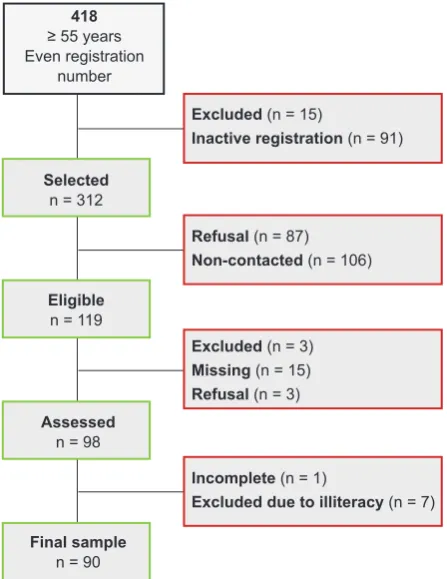
A randomly selected group of patients attending the Community Health Centre (Centro de Saúde) at the municipality of Lousada has been involved in the study, based on the following criteria: active registration, even registration number and over 55 years of age. The patients with history of addiction to alcohol or other psychotropic drugs based on the analysis of the clinical records were excluded from the study (Fig. 1). Patients were recruited by phone up to approximately 120 participants were obtained (this number has been considered as adequate for a multiple
Figure 1 – Recruitment procedure
List of users: n = 1,872
418
≥ 55 years Even registration
number
Selected
n = 312
Excluded (n = 15)
Inactive registration (n = 91)
Refusal (n = 87)
Non-contacted (n = 106)
Incomplete (n = 1)
Excluded due to illiteracy (n = 7)
Excluded (n = 3)
Missing (n = 15)
Refusal (n = 3)
Eligible
n = 119
Assessed
n = 98
Final sample
ARTIGO ORIGINAL
regression analysis involving 10 predictor variables).
Procedure
Upon approval by the management of the health centre, the aims and procedures of the study were previously explained to each participant and/or carer and a written informed consent has been signed. Each participant has been evaluated as follows:
a) Socio-demographic data, clinical history with comprehensive laboratorial tests and details on current drug and vitamin supplementation therapy collected during a semi-structured interview;
b) Modified six-item, 0-21 range, AUDIT testing used for the determination of patient’s alcohol consumption28;
c) Subjective Memory Complaints, 10-item, cut-off > 3, testing29,30;
d) Montreal Cognitive Assessment (MoCA) testing; a cut-off value of 1 standard deviation below the mean according to patient’s age and educational level (ages 55-64; ≥ 65 and 1 - 4, 5 - 9, 10 - 12 and > 12 years of education) has been adopted for the definition of cognitive impairment.31,32 As regards the different
domains within the MoCA, the following criteria have been used for the definition of cognitive impairment: i) Visuo-Spatial/ Executive (including Trail Making Test, Copy of the Cube and the Clock Drawing test) – all the sub-tests scored ≥ 3 points; ii) Naming, if score ≤ 1 point; iii) Attention (Digit Span, Series of Letters and Subtraction) subtest score < 3 points; iv) Language (Repetition and Verbal Fluency) subset total score ≤ 1 point; v) Abstraction score ≤ 1 point and unsuccessful two-item verbal abstraction task; vi) the presence of Memory impairment has been considered when scored ≤ 2 points; vii) Orientation, impairment when score < 3; e) Battery of neuropsychological tests, including: i) Clock
Drawing Test33 with an 18-point scoring system34;ii)
Semantic (animals) and Phonemic (letter ‘P’) Fluency
test35,36; iii) Stroop test37,38; iv) Hopkins Verbal Learning
Test- HVLT-R39; v) Digit Span Subtest of the Wechsler
Memory Scale - WMS-III40; vi) Symbol Span subtest
of the Wechsler Adult Intelligence Scale 41; vii) Trail
Making Test – Part A and B.42,43 In line with the MoCA
testing, the results obtained with the cognitive tests were subsequently grouped into cognitive domains (Attention: Digit Span III), Symbol Span (WAIS-III), Trail Making Test (part A), Stroop test (first part – Word and 2nd part – Colour); Memory: Hopkins Verbal
Learning Test; Executive functions: Clock Drawing Test, Stroop Test (3rd part – colour-word and interference),
Trail Making Test (part B) and Phonemic Fluency Test (letter ‘P’); Language: Semantic fluency test (‘animals’); Visuo-construction: Clock Drawing Test) in order to obtain a best definition of the cognitive profile of the study sample;
f) Instrumental Activities of Daily Living (IADL) scale, cut-off ≥ 944,45;
g) Hospital Anxiety and Depression Scale (HADS), normal
- < 8; mild 8 - 10; moderate > 1046;
h) Nutritional questionnaire based on the consumption frequency of fish (codfish, lean fish, fatty fish, preserved fish), meat (white, red, smoked), nuts (walnuts, almonds, hazelnuts), dairy products and vegetables, on a scale from 0 – never to 7 – daily.
The cognitive assessment has been carried out by two neuropsychologists (C. P. and C. S.) at the health centre. Blood sampling has been collected for the determination of the omega-3 index and omega-6 /omega-3 ratio (10mL venous blood sample. Upon a resting period, plasma separation has been obtained by centrifugation at 700 x g (2500 rpm) for 10 min. Resulting plasma has been removed and the erythrocyte pellet has been washed with the same volume of saline (0.9% NaCl solution in water), followed by centrifugation at 700 x g for 5 min. The pellet was washed one more time and 0.5 mL has been collected into a labelled and stoppered tube which has been kept at -80ºC until further analysis. The erythrocytes have been used for the analysis of the phospholipid fatty acids according with the methodology described in a previous study.47
The values of the index were dichotomized with the following criteria: the mean value of the sample has been used for the omega-3 index and a value of 2 has been considered as adequate for the determination of omega-6 / omega-3 ratio.48
Statistical analysis
Analysis of variance (ANOVA) models and multiple comparisons using Scheffé’s test, upon checking for assumptions of normality (Kolmogorov-Smirnov test) and assessing for the equality of variances (Levene’s test) assuming a p-value >0.01 for checking for assumptions were used for the analysis of the relationship between the assessment of the cognitive performance (MoCA) and the variables defining the socio-demographic profile, cognitive functioning, comorbidities, medication and omega-3 index and omega-6 / omega-3 ratio; the presence of linear and/or quadratic mean trend regarding ordinal variables has been analysed. The relationship between food consumption, erythrocyte count and cognitive performance has been assessed using Pearson’s correlation coefficient. The association between these variables and the prevalence of cognitive impairment in MoCA testing has been analysed with Pearson’s chi-square test or Fisher’s exact test regarding dichotomous variables; linear trend in proportions has been tested as regards the ordinal variables. These procedures were repeated for cognitive impairment within the different domains of MoCA testing.
ARTIGO ORIGINAL Table 1 graphic characteristics and assessment of cognitive functioning. depression and anxiety– Participant description. cognitive performance (MoCA) and prevalence of cognitive impairment according with the
socio-demo-Characteristics Participants Cognitive Assessment Cognitive impairment
n % Mean (sd) p† n Prevalence (%) p‡
Gender
0.12
Male 44 48.9 22.8 (4.2) 8 18.2 0.12
Female 46 51.1 21.3 (4.7) 15 32.6
Age (years)
0.068 0.019
55 - 59 21 23.3 24.1 (3.7) 4 19.0 0.63
60 - 64 26 28.9 22.0 (4.1) 7 26.9 0.76
65 - 69 27 30.0 20.8 (4.8) 9 33.3
≥ 70 16 17.8 21.2 (4.9) 3 18.8
Marital status
0.30
Married 78 86.7 21.8 (4.6) 20 25.6 0.96
Single / widower / divorced 12 13.3 23.3 (3.6) 3 25.0
Education (years)
0.001 0.001
1 - 3 12 13.3 17.0 (4.3) 8 66.7 0.002
4 64 71.1 22.0 (3.9) 12 18.8 0.014
≥ 5 14 15.6 26.3 (2.0) 3 21.4
Occupational status
0.17
Active 22 24.4 21.9 (4.8) 5 22.7
Unemployed 12 13.3 24.3 (3.0) 2 16.7 0.65
Retired / pensioner 56 62.2 21.6 (4.5) 16 28.6
Occupational sector
0.010
Staff / self-employed 16 17.8 24.6 (3.5) 3 18.8
Production / industry 42 46.7 22.0 (3.9) 9 21.4 0.56
Services 9 10.0 22.8 (5.1) 3 33.3
Non-qualified 23 25.6 19.9 (5.0) 8 34.8
Residential status
0.63
Living with the family 84 93.3 21.9 (4.5) 21 25.0 0.65
Living alone 6 6.7 22.8 (3.7) 2 33.3
Daily activity
0.46
Yes 70 77.8 22.2 (4.5) 16 22.9 0.27
No 20 22.2 21.4 (4.6) 7 35.0
Subjective memory complaints
0.85
Presence 57 63.3 21.9 (4.6) 16 28.1 0.47
Absence 33 36.7 22.1 (4.4) 7 21.2
Functional assessment – IADL
0.027
Functionally independent 83 92.2 22.3 (4.5) 18 21.7 0.004
Functionally dependent 7 7.8 18.4 (2.2) 5 71.4
Anxiety (HADS)
0.27 0.12
Moderate 4 4.4 20.0 (6.2) 3 75.0 0.047
Mild 12 13.3 20.5 (4.8) 4 33.3 0.022
Absent 74 82.2 22.4 (4.3) 16 21.6
Ansiedade (escala HADS)
0.13 0.093
Moderate 24 26.7 20.5 (5.1) 10 41.7 0.088
Mild 11 12.2 23.1 (3.4) 3 27.3 0.029
Absent 55 61.1 22.5 (4.3) 10 18.2
ARTIGO ORIGINAL
medication and the last model was also adjusted to food consumption. A value of p < 0.05 has been adopted as upper limit to wrongly reject the null hypothesis. IBM SPSS Statistics 21 software has been used in data analysis.
RESULTS
Profile of participants
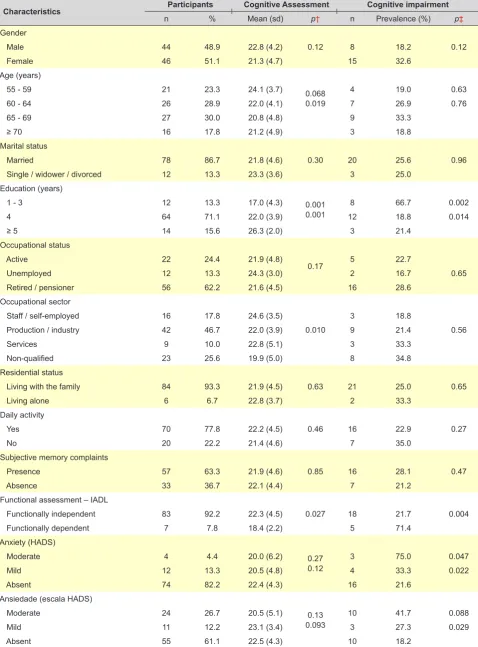
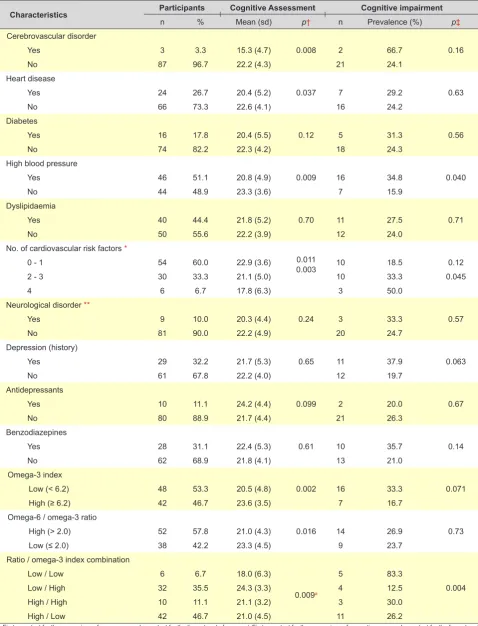
A total of 21 patients out of the eligible 119 were excluded from the study, three of whom due to alcohol addiction. Upon the initial assessment, eight patients were additionally excluded, one having not completed the questionnaire and the remaining due to illiteracy having not been confirmed and MoCA testing having not been adequate for the diagnosis of cognitive impairment in this population (7.2% of the total). The remaining 90 participants were aged 55 to 82 (m = 64.0; sd = 5.6) and male participants (48.9%) had higher average age (65.7; sd = 6.0 vs. 62.4; sd = 4.8). Most participants (71.1%) had four years of education, eight (8.8%) had nine and five (5.5%) had 14 or above, with similar values for both genders. Approximately 62% of the participants were pre-retired or retired and 22 (24.4%) were still active (Table 1). The region of Lousada is predominantly industrial; 42 (46.7%) of the participants worked in industry and 25.6% were non-qualified workers or did not receive any remuneration, including 16 (34.8%) housewives. Almost all the participants lived with their family (93.3%), were still active (77.8%) and functionally independent for daily tasks (92.2%). High blood pressure was the most prevalent cardiovascular risk factor found (51.1%), followed by dyslipidaemia (44.4%), heart disease (26.7%) and diabetes (17.8%) (36 participants (40.0%) presented with more than one risk factor); neurological (10.0%) or cerebrovascular disorders (3.3%) were less prevalent (Table 2). Approximately 32.2% of the participants had a history of depression, even though only 11.1% were currently on antidepressants and 31.1% on benzodiazepines.
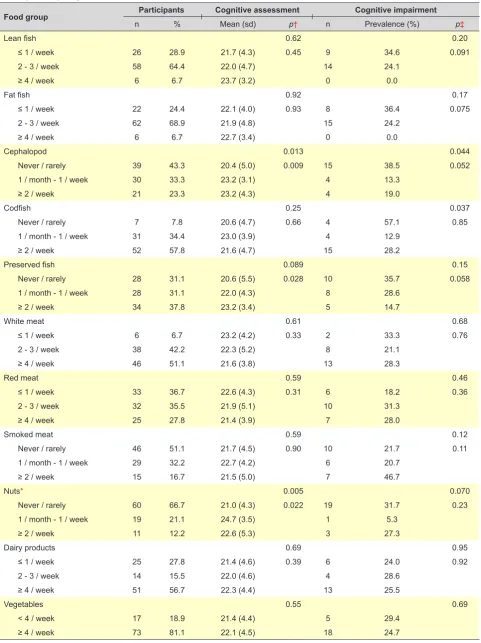
Omega-3 index values ranging between 2.90 and 9.79 (mean = 6.20; sd = 1.50) and omega-6 / omega-3 ratio values between 1.14 and 2.95 (mean =2.12; sd = 0.39) have been found and the distribution is shown in Fig. 2. A linear correlation between both indices has been found (r = -0.65; p < 0.001) and increasing to r = -0.82 when two of the extreme values were excluded from the combination (low levels in both indices). A brief presentation of the nutrition profile of the participants is shown in Table 3, characterised by a high consumption (more than 4 times per week) of vegetables (81.1%), dairy products (56.7%) and white meat (51.1%) while fat fish (68.9%), lean fish (64.4%), codfish (55.6%), red meat (35.6%) and preserved fish (32.2%) were mostly consumed 2-3 times per week. In addition, smoked meat, nuts and cephalopod consumption were not included as these were not consumed by 36.7%, 35.6% and 34.4% of the participants, respectively. Omega-3 index and omega-6 / omega 3 ratio were both correlated with lean fish (r = 0.26 and r = -0.25, respectively) and cephalopod (r = 0.25 and r = -0.22, respectively) consumption frequency; nut consumption was also correlated with the omega-3 index
(r = 0.24) and dairy product consumption with the omega-6 /omega-3 ratio (r = -0.26). Consumption frequency of the remaining food groups did not correlate with any of the indices (shown in Table 3).
Cognitive performance
Cognitive assessment using MoCA testing ranged between 10 and 29 (mean = 22.0; sd = 4.5) and followed a normal distribution (p > 0.22). The average levels were significantly different between patient’s three levels of education (p < 0.05), regarding occupational sectors (staff / self-employed vs. non-qualified workers, p < 0.05) and cognitive functioning (Table 1). A linear trend between the MocA test score and patient’s age (p < 0.02) and the level of anxiety (p < 0.1) has also been found. Overall, there is a lower cognitive performance in patients with comorbidities, even though significant differences were only found regarding the presence of a history of cerebrovascular or heart disorder and high blood pressure (Table 2). A lower cognitive performance has been found with less cardiovascular risk factors (p < 0.003), even though better results have been found in participants on anti-depressants or benzodiazepines.
A significant increase in cognitive performance has been found in patients showing high values of omega-3 index (p
< 0.002) or low omega-6 / omega-3 ratio, even though a significant effect of the omega-3 index (F (1.86( = 7.5; p
<0.008) and interaction (F (1.86) = 7.1; p < 0.009) has been found when a two-factor and interaction ANOVA model was considered, which was not found regarding the omega-6 / omega -3 ratio, showing that this significant increase regarded the subgroup with a low ratio and related to the contrast between high and low n-3 (Table 2). Cephalopod, preserved fish and nut consumption was associated with cognitive performance; increased consumption frequency of these food groups is reflected on an improved cognitive performance (Table 3).
Regardless of the variables included in the regression model, the participants with a value of omega-3 above the mean and n-6 / n-3 ratio ≤ 2 scored 1-2 points above the remaining participants and those with a value of omega-3 below the mean and n-6 / n-3 ratio ≤ 2 scored on average 5-6 points below the remaining participants (Table 4). Education (p < 0.001), the number of vascular risk factors (p <0.02) and nut consumption frequency were other independent predictive factors of the cognitive performance. Depending on the number of factors included in the model, the inclusion of laboratorial variables led to a 45.6% (Model 1), 28.4% (Model 2) and 19.9% (Model 3) relative increase in R².
Cognitive impairment
ARTIGO ORIGINAL
Table 2 – Participant description, cognitive performance (MoCA) and prevalence of cognitive impairment according with comorbidities, medication and laboratorial assessment
Characteristics Participants Cognitive Assessment Cognitive impairment
n % Mean (sd) p† n Prevalence (%) p‡
Cerebrovascular disorder
0.008
Yes 3 3.3 15.3 (4.7) 2 66.7 0.16
No 87 96.7 22.2 (4.3) 21 24.1
Heart disease
0.037
Yes 24 26.7 20.4 (5.2) 7 29.2 0.63
No 66 73.3 22.6 (4.1) 16 24.2
Diabetes
0.12
Yes 16 17.8 20.4 (5.5) 5 31.3 0.56
No 74 82.2 22.3 (4.2) 18 24.3
High blood pressure
0.009
Yes 46 51.1 20.8 (4.9) 16 34.8 0.040
No 44 48.9 23.3 (3.6) 7 15.9
Dyslipidaemia
0.70
Yes 40 44.4 21.8 (5.2) 11 27.5 0.71
No 50 55.6 22.2 (3.9) 12 24.0
No. of cardiovascular risk factors *
0.011 0.003
0 - 1 54 60.0 22.9 (3.6) 10 18.5 0.12
2 - 3 30 33.3 21.1 (5.0) 10 33.3 0.045
4 6 6.7 17.8 (6.3) 3 50.0
Neurological disorder **
0.24
Yes 9 10.0 20.3 (4.4) 3 33.3 0.57
No 81 90.0 22.2 (4.9) 20 24.7
Depression (history)
0.65
Yes 29 32.2 21.7 (5.3) 11 37.9 0.063
No 61 67.8 22.2 (4.0) 12 19.7
Antidepressants
0.099
Yes 10 11.1 24.2 (4.4) 2 20.0 0.67
No 80 88.9 21.7 (4.4) 21 26.3
Benzodiazepines
0.61
Yes 28 31.1 22.4 (5.3) 10 35.7 0.14
No 62 68.9 21.8 (4.1) 13 21.0
Omega-3 index
0.002
Low (< 6.2) 48 53.3 20.5 (4.8) 16 33.3 0.071
High (≥ 6.2) 42 46.7 23.6 (3.5) 7 16.7
Omega-6 / omega-3 ratio
0.016
High (> 2.0) 52 57.8 21.0 (4.3) 14 26.9 0.73
Low (≤ 2.0) 38 42.2 23.3 (4.5) 9 23.7
Ratio / omega-3 index combination
Low / Low 6 6.7 18.0 (6.3)
0.009a
5 83.3
Low / High 32 35.5 24.3 (3.3) 4 12.5 0.004
High / High 10 11.1 21.1 (3.2) 3 30.0
High / Low 42 46.7 21.0 (4.5) 11 26.2
† First row - test for the comparison of means; second row - test for the linear trend of means; ‡ First row - test for the comparison of proportions; second row - test for the linear trend of proportions. *High blood pressure, dyslipidaemia, heart disease and diabetes; **Parkinson, epilepsy, injury and infection; a p-value regarding the interaction of both indices into the
ARTIGO ORIGINAL
Table 3 – Participant description, cognitive performance (MoCA) and prevalence of cognitive impairment according with each food group consumption frequency
Food group Participants Cognitive assessment Cognitive impairment
n % Mean (sd) p† n Prevalence (%) p‡
Lean fish 0.62 0.20
≤ 1 / week 26 28.9 21.7 (4.3) 0.45 9 34.6 0.091
2 - 3 / week 58 64.4 22.0 (4.7) 14 24.1
≥ 4 / week 6 6.7 23.7 (3.2) 0 0.0
Fat fish 0.92 0.17
≤ 1 / week 22 24.4 22.1 (4.0) 0.93 8 36.4 0.075
2 - 3 / week 62 68.9 21.9 (4.8) 15 24.2
≥ 4 / week 6 6.7 22.7 (3.4) 0 0.0
Cephalopod 0.013 0.044
Never / rarely 39 43.3 20.4 (5.0) 0.009 15 38.5 0.052
1 / month - 1 / week 30 33.3 23.2 (3.1) 4 13.3
≥ 2 / week 21 23.3 23.2 (4.3) 4 19.0
Codfish 0.25 0.037
Never / rarely 7 7.8 20.6 (4.7) 0.66 4 57.1 0.85
1 / month - 1 / week 31 34.4 23.0 (3.9) 4 12.9
≥ 2 / week 52 57.8 21.6 (4.7) 15 28.2
Preserved fish 0.089 0.15
Never / rarely 28 31.1 20.6 (5.5) 0.028 10 35.7 0.058
1 / month - 1 / week 28 31.1 22.0 (4.3) 8 28.6
≥ 2 / week 34 37.8 23.2 (3.4) 5 14.7
White meat 0.61 0.68
≤ 1 / week 6 6.7 23.2 (4.2) 0.33 2 33.3 0.76
2 - 3 / week 38 42.2 22.3 (5.2) 8 21.1
≥ 4 / week 46 51.1 21.6 (3.8) 13 28.3
Red meat 0.59 0.46
≤ 1 / week 33 36.7 22.6 (4.3) 0.31 6 18.2 0.36
2 - 3 / week 32 35.5 21.9 (5.1) 10 31.3
≥ 4 / week 25 27.8 21.4 (3.9) 7 28.0
Smoked meat 0.59 0.12
Never / rarely 46 51.1 21.7 (4.5) 0.90 10 21.7 0.11
1 / month - 1 / week 29 32.2 22.7 (4.2) 6 20.7
≥ 2 / week 15 16.7 21.5 (5.0) 7 46.7
Nuts* 0.005 0.070
Never / rarely 60 66.7 21.0 (4.3) 0.022 19 31.7 0.23
1 / month - 1 / week 19 21.1 24.7 (3.5) 1 5.3
≥ 2 / week 11 12.2 22.6 (5.3) 3 27.3
Dairy products 0.69 0.95
≤ 1 / week 25 27.8 21.4 (4.6) 0.39 6 24.0 0.92
2 - 3 / week 14 15.5 22.0 (4.6) 4 28.6
≥ 4 / week 51 56.7 22.3 (4.4) 13 25.5
Vegetables 0.55 0.69
< 4 / week 17 18.9 21.4 (4.4) 5 29.4
≥ 4 / week 73 81.1 22.1 (4.5) 18 24.7
ARTIGO ORIGINAL
and 21.4% in the groups of patients with higher education (p < 0.014). A higher prevalence rate has been found in functionally dependent patients (71.4%) linearly increasing with the level of depression (p < 0.03) and anxiety (p < 0.03), tendentially higher in participants with comorbidities, particularly in patients with high blood pressure (34.8%
vs. 15.9%, p < 0.04) and increasing with the number of cardiovascular risk factors (p < 0.05) (Table 2). Even though a higher prevalence rate of cognitive impairment has been found in participants with low omega-3 index and high n-6 / n-3 ratio, significant differences were found in the
group of patients with low n-6 / n-3 ratio, in whom a 83.3% prevalence has been found in patients with low omega-3 index vs. 12.5% in those with high omega-3 index values (Fig. 2). The prevalence of cognitive impairment was not associated with food consumption frequency, even though it was tendentially lower in patients with higher fish (fat, lean, preserved, codfish) or even cephalopod consumption, unlike what happened in those with high meat consumption, particularly smoked meat (Table 3).
As regards the presence of cognitive impairment within the different domains of the MoCA testing, we found that it is more frequent in Language (46.7%), Memory (40.0%) and Abstraction (36.7%) (Table 5). The values of omega-3 index and omega-6 / omega-3 ratio were associated with an impairment in Naming (p < 0.003) and in Memory (p < 0.002), which did not occur within the remaining domains. As regards the results obtained with neuropsychological test battery and considering the cognitive impairment shown by the other neuropsychological tests, is was more frequent in Memory (74.4%), Language (25.6%) and Attention and Processing Speed (24.4%). Cognitive impairment in Attention and Processing Speed was associated with the values of both indices (p < 0.002) and tendentially with Executive Functions and Language. Lower impairment has been found in the group of participants with omega-3 index > 6.2 and n-6 / n-3 ratio ≤ 2, followed by the group with n-6 / n-3 ratio > 2 (regardless of the value of n-3) and values of omega-3 < 6.2 and n-6 / n-3 ratio ≤ 2 are indicative of higher impairment within the abovementioned domains (results not shown).
Figure 2 – Dispersion diagram of the omega 6 / omega 3 ratio into the omega-3 index
3.0 1.0 1.2 1.4 1.6 1.8 2.0 2.2 2.4 2.6 2.8 3.0
4.0 5.0 6.0 7.0 8.0 9.0 10.0
Cognitive impairment
Omega-3 index
Omega 6 / omega 3 ratio
No
Yes
Table 4 - Resultados dos modelos de regressão linear da avaliação cognitiva nas características associadas
Variables Model 1 Model 2 Model 3
B p B p B p
Gender (female versus male) -0.97 0.24 -0.85 0.29 -1.11 0.18
Age (years) -0.18 0.012 -0.14 0.052 -0.10 0.15
Education (years) 0.49 0.001 0.49 0.001 0.42 0.001
Occupational sectors (staff versus others) 0.44 0.70 0.46 0.67 0.71 0.51
Functional assessment (dependent versus independent) -1.95 0.18 -1.58 0.26 -1.47 0.28
Anxiety (HADS) -0.14 0.083 -0.08 0.35
No. of cardiovascular risk factors -0.66 0.035 -0.74 0.014
Antidepressants (yes versus no) 2.51 0.032 2.05 0.075
Nut consumption (NC) 1.65 0.013
NC² -0.25 0.030
Preserved fish consumption 0.31 0.11
Cephalopod consumption -0.11 0.60
High n-3 and low n-6 / n-3 ratio versus others 1.98 0.022 1.91 0.021 1.59 0.048 Low n-3 and low n-6 / n-3 ratio versus others -5.80 0.001 -5.10 0.002 -5.03 0.002
R² (%) * 31.8 46.3 41.5 53.3 49.2 59.0
ARTIGO ORIGINAL
DISCUSSION
We can come to the conclusion that there is a relationship between the values of n-3 and n-6 / n-3 ratio and cognitive performance in this group of patients aged over 55 and living in the municipality of Lousada; the group of patients with n-3 below the mean and n-6 / n-3 > 2 had a high risk of cognitive impairment while the group with n-3 values above the mean and n-6 / n-3 ≤ 2 was the most protected group from cognitive impairment. This has been assessed with MoCA testing and mostly regarded failures on Naming and Memory, while it was higher in Attention/Processing Speed and Executive Functions, as far as neuropsychological tests are concerned.
It would have been expected that cognitive performance and impairment would be focused in groups of patients with high n-6 / n-3 ratio, usually described as having a high risk of cognitive impairment.49 However, the values of this ratio did
not exceed 3.0 in this group of patients. The low variability (range: 1.14-2.95) found in this index may be explained by the essentially Mediterranean-type dietary pattern, with a frequent consumption of vegetables, meat from free-range animals and fish.
Dietary fat sources, even though more diversified in Europe than in the USA, have changed a lot over the past decades, with higher consumption of sunflower oil instead of olive oil, even in producing countries such as Portugal and Spain.50
Considering the relationship between the values of both indices and cognitive impairment upon adjustment to possible confounding variables, approximately 10% variability is explained by the presence of these two groups of patients – lower MoCA scores in participants with simultaneously low n-3 and n-6 / n-3 ratio and higher MoCA scores in participants with n-3 above the mean and low n-6 / n-3 ratio.
The remaining variables with protective effect explaining for the cognitive performance included patient’s education and nut consumption frequency; the protective effect of nuts regarded a moderate consumption when compared to the remaining patients (regression model with linear and quadratic term adjusted to the relationship described in Table 3). In addition, worse cognitive performance has been found in participants with higher number of cardiovascular risk factors. These have already been described in literature due to their association with cognitive performance.7
Beydoun et al. have described an association between cognitive impairment assessed by a verbal fluency test and high levels of n-6 fatty acids, even in the absence of high n-6 / n-3 ratio.51 The authors found an association
between n-6 / n-3 ratio and cognitive impairment assessed by MMSE in a study involving 304 institutionalized elderly patients, as opposed to the consumption of fish and other marine products.52 Other studies in humans and in animals
emphasised that n-6 / n-3 ratio is associated with the risk of dementia and cognitive decline and lower consumption of n-3 is related to 10-80% increased cognitive decline.19-24
CONCLUSION
Even though the dimension of our group of patients does not allow for more definitive conclusions regarding the presence of cognitive impairment (23 out of 90 participants), this has been one of the first studies considering a wider range of population characteristics, based not only in the clinical information of patients attending the Portuguese
Serviço Nacional da Saúde (an advantage related to the fact that a specific population has been available for random selection), but also including information on less common aspects such as food consumption, which has been relevant in the study of cognitive performance.
Table 5 – Association between omega-3 index and omega-6 / omega-3 ratio and cognitive impairment within specific domains
Domains
Patients w/ cognitive impairment Lab values
p
n % and n-3 > 6.2n-6 / n-3 ≤ 2
(n = 32)
n-6 / n-3 > 2 (n = 52)
n-6 / n-3 ≤ 2
and n-3 < 6.2 (n = 6) Global MoCA + domains
MoCA 23 25.6 4 (12.5) 14 (26.9) 5 (83.3) 0.001
Visuospatial / Executive 20 22.2 5 (15.6) 13 (25.0) 2 (33.0) 0.48
Naming 20 22.2 1 (3.1) 16 (30.8) 3 (50.0) 0.003
Memory 36 40.0 6 (18.8) 25 (48.1) 5 (83.3) 0.002
Attention 6 6.7 2 (6.3) 3 (5.8) 1 (16.7) 0.59
Language 42 46.7 14 (43.8) 23 (44.2) 5 (83.3) 0.18
Abstraction 33 36.7 8 (25.0) 23 (44.2) 2 (36.7) 0.20
Neuropsychological
Attention and Processing Speed 22 24.4 1 (3.1) 18 (34.6) 3 (50.0) 0.002
Memory 67 74.4 21 (65.6) 40 (76.4) 6 (100) 0.17
Executive functions 13 14.4 0 (0.0) 11 (21.2) 2 (33.3) 0.011
Language 23 25.6 5 (15.6) 14 (26.9) 4 (66.7) 0.030
ARTIGO ORIGINAL All in all, cognitive performance and impairment were related to the values of erythrocyte omega-3 index and n-6 /
n-3 ratio in a predominantly lower-literacy population (84.4% with ≤ 4 years of education) in whom 40% of the patients presented with at least two cardiovascular risk factors, with a characteristic Mediterranean dietary pattern, suggesting that these are important biomarkers for the prevention of cognitive decline.
The need for reinforcing n-3 fatty acid intake has also been shown, namely through the consumption of fish, algae and nuts, as well as the need for reinforcing the measures of salt restriction as prevention and control of high blood pressure, a very relevant risk factor associated with cognitive decline.
HUMAN AND ANIMAL PROTECTION
The authors declare that the followed procedures were according to regulations established by the Ethics and
Clinical Research Committee and according to the Helsinki Declaration of the World Medical Association.
DATA CONFIDENTIALITY
The authors declare that they have followed the protocols of their work centre on the publication of patient data.
CONFLICTS OF INTEREST
The authors declare that there were no conflicts of interest in writing this manuscript.
FINANCIAL SUPPORT
The authors declare that a financial support has been assigned by Angelini Farmacêutica for the conduction of interviews and neuropsychological assessment, apart from the laboratorial determination of erythrocyte omega-6 / omega-3 ratio.
REFERENCES
1. Petersen RC, Smith GE, Waring SC, Ivnik RJ, Tangalos EG, Kokmen E. Mild cognitive impairment: clinical characterization and outcome. Arch Neurol. 1999;56:303-8.
2. Petersen RC. Mild cognitive impairment as a diagnostic entity. J Intern Med. 2004;256:183-94.
3. Proceedings of the 1st Key symposium: Mild Cognitive Impairment. Stockholm, Sweden, September 2003. J Intern Med. 2004;256:179-246. 4. Petersen RC, Morris JC. Mild cognitive impairment as a clinical entity
and treatment target. Arch Neurol. 2005;62:1160-3.
5. Lopez OL, Jagust WJ, DeKosky ST, Becker JT, Fitzpatrick A, Dulberg C, et al. Prevalence and classification of mild cognitive impairment in the cardiovascular health study cognition: part 1. Arch Neurol. 2003;60:1385-9.
6. Feldman HH, Jacova C. Mild cognitive impairment. Am J Geriatr Psychiatry. 2005;13:645-55.
7. Nunes B, Silva RD, Cruz VT, Roriz JM, Pais J, Silva MC. Prevalence and pattern of cognitive impairment in rural and urban populations from Northern Portugal. BMC Neurology. 2010;11:10-42.
8. van Gelder BM, Tijhuis M, Kalmijn S, Kromhout D. Fish consumption, n-3 fatty acids, and subsequent 5-y cognitive decline in elderly men: the Zutphen Elderly Study. Am J Clin Nutr. 2007;85:1142-7.
9. Jicha GA, Markesbery WR. Omega-3 fatty acids: potential role in the management of early Alzheimer’s disease. Clin Interv Aging. 2010;5:45-61.
10. Roberts RO, Geda YE, Cerhan JR, Knopman DS, Cha RH, Christianson T, et al. Vegetables, unsaturated fats, moderate alcohol intake, and mild cognitive impairment. Dement Geriatr Cogn Disord. 2010;29:413-23. 11. Barak Y, Aizenberg D. Is dementia preventable? Focus on Alzheimer’s
disease. Expert Rev Neurother. 2010;10:1689-98.
12. Kamphuis PJ, Scheltens P. Can nutrients prevent or delay onset of Alzheimer’s disease? J Alzheimers Dis. 2010;20:765-75.
13. Lopez LB, Kritz-Silverstein D, Barret Connor E. High dietary and plasma levels of the omega-3 fatty acid docosahexaenoic acid are associated with decreased dementia risk: the Rancho Bernardo study. J Nutr Health Aging. 2011;15:25-31.
14. Walker JG, Batterham PJ, Mackinnon AJ, Jorm AF, Hickie I, Fenech M, et al. Oral folic acid and vitamin B-12 supplementation to prevent cognitive decline in community-dwelling older adults with depressive symptoms- the Beyond Ageing Project: a randomized controlled trial. Am J Clin Nutr. 2012;95:194-203.
15. Harris WS. The omega-3 index as a risk factor for coronary heart disease. Am J Clin Nut. 2008;87:1997S-2002.
16. Molfino A, Gioia G, Fanelli FR, Muscaritoli M. The role for dietary omega-3 fatty acids supplementation in older adults. Nutrients. 2014;6:4058-72. 17. Loef M, Walach H. The omega-6/omega-3 ratio and dementia or
cognitive decline: a systematic review on human studies and biological evidence. J Nutr Gerontol Geriatr. 2013;32:1-23.
18. Hammen C. Stress and depression. Annu Rev Clin Psychol. 2005;1:293-319.
19. Conquer JA, Tierney MC, Zecevic J, Bettger WJ, Fisher RH. Fatty acids analysis of blood plasma of patients with Alzheimer´s disease, other types of dementia, and cognitive impairment. Lipids. 2000;35:1305-12. 20. Cherubin A, Andres-Lacueva C, Martin A, Lauretani F, Iorio AD, Bartali
B, et al. Low plasma N-3 fatty acids and dementia in older persons: the InCHIANTI study. J Geront Biol Sc Med Sci. 2007;62:1120-6.
21. Perez SE, Berg BM, Moore KA, He B, Counts SE, Fritz JJ, et al. DHA diet reduces AD pathology in young APPswe/PS1deltaE9 transgenic mice: possible gender effects. J Neurosci Res. 2010;88:1026-40. 22. Oksman M, Iivonen H, Hogyes E, Amtul Z, Penke B, Leenders I, et al.
Impact of different saturated fatty acid, polyunsaturated fatty acid and cholesterol containing diets on beta-amyloid accumulation in APP/PS1 transgenic mice. Neurobiol Dis. 2006;23:563-72.
23. Lebbadi M, Julien C, Phivilay A, Tremblay C, Emond V, Kang JX, et al. Endogenous conversion of omega-6 into omega-3 fatty acids improves neuropathology in an animal model of Alzheimer’s disease. J Alzheimers Dis. 2011;27:853-69.
24. Yurko-Mauro K, McCarthy D, Rom D, Nelson EB, Ryan AS, Blackwell A, et al. Beneficial effects of docosahexanoic acid on cognition in age-realted cognitive decline. Alzheimers Dement. 2010;6:456-64. 25. Thies F, Garry JM, Yaqoob P, Rerkasem K, Williams J, Shearman
CP, et al. Association of n-3 polyunsaturated fatty acids with stability of atherosclerotic plaques: a randomised controlled trial. Lancet. 2003;361:477-85.
26. Sofi F, Giorgi G, Cesari F, Gori AM, Mannini L, Parisi G, et al. The
atherosclerotic risk profile is affected differently by fish flesh with a similar EPA and DHA content but different n-6/n-3 ratio. Asia Pac J Clin Nutr. 2013;22:32-40.
27. Mehmetoglu I, Yerlikaya FH, Kurban S, Polat H. Plasma 3-3 fatty acid levels negatively and 3-6 fatty acid levels positively associated with other cardiovascular risk factors including homocysteine in severe obese subjects. Asia Pac J Clin Nutr. 2012;21:519-25.
28. Babor TF, Higgins-Biddle JC, Saunders JB, Monteiro MG. The alcohol use disorders identification test: guideline for use in primary care. 2nd ed.
Geneva: WHO; 2001.
29. Ginó S, Mendes T, Ribeiro F, Mendonça A, Guerreiro M, Garcia C. Escala de queixas de memória. In Grupo de Estudos de Envelhecimento Cerebral e Demências, editores. Escala e Testes na demência. Lisboa: GEECD; 2008. p.117-20.
30. Schmand B, Jonker C, Hooijer C, Lindeboom J. Subjective memory complaints may announce dementia. Neurology. 1996;46:121-5. 31. Freitas S, Simões M, Alves L, Santana I. Montreal Cognitive Assessment
(MoCA): normative study for the Portuguese population. J Clin Exp Neuropsychol. 2011;3:989-96.
ARTIGO ORIGINAL V, Collin I, et al. The Montreal Cognitive Assessment, MoCA: a
brief screening tool for mild cognitive impairment. J Am Geriat Soc. 2005;53:695-9.
33. Santana I, Duro D, Freitas S, Alves L, Simões M. The clock drawing test: Portuguese norms, by age and education, for three different scoring systems. Arch Clin Neuropsychol. 2013;28:375-87.
34. Babins L, Slater ME, Whitehead V, Chertkow H. Can an 18-point clock-drawing scoring system predict dementia in elderly individuals with mild cognitive impairment? J Clin Exp Neuropsychol. 2008;30:173-86. 35. Cavaco S, Gonçalves A, Pinto C, Almeida E, Gomes F, Moreira I, et al.
Semantic fluency and phonemic fluency: regression-based norms for the Portuguese population. Arch Clin Neuropsychol. 2013;28:262-71. 36. Strauss E, Sherman EM, Spreen O. A compendium of neuropsychological
tests: administration, norms, and commentary. 3rd edition. New York:
Oxford University Press; 2006.
37. Fernandes S. Stroop: teste de cores e palavras. 1ª edição. Lisboa: CEGOG-TEA; 2012.
38. Golden CJ, Freshwater SN. Stroop color and word test: a manual for clinical and experimental uses. Chicago: Stoelting Co; 2002.
39. Brandt J. The Hopkins verbal learning test: development of a new verbal memory test with six equivalent forms. Clinical Neuropsychologist. 1991;5:125-42.
40. Wechsler D. Escala de memória de Wechsler (WMS-III). Lisboa: CEGOG-TEA; 2008.
41. Wechsler D. Escala de inteligência de Wechsler para adultos (WAIS-III). Lisboa: CEGOG-TEA; 2008.
42. Cavaco S, Gonçalves A, Pinto C, Almeida E, Gomes F, Moreira I, et al. Trail Making Test: regression-based norms for the Portuguese population. Arch Clin Neuropsychol. 2013;28:189-98.
43. Rabin LA, Barr WH, Burton LA. Assessment practices of clinical neuropsychologists in the United States and Canada: a survey of INS, NAN, and APA Division 40 members. Arch Clin Neuropsychol.
2005;20:33–65.
44. Madureira S, Verdelho A. Escala de actividades instrumentais de vida diária (IADL). In Mendonça A, Guerreiro M, Coords. Escala e testes na demência – Grupo de Estudos de Envelhecimento Cerebral e Demências. Lisboa: Novartis; 2007. p. 113-5.
45. Lawton MP, Brody EM. Assessment of older people: self-maintaining and instrumental activities of daily living. The Gerontologist. 1969;9:179-86.
46. Zigmond AS, Snaith RP. The hospital anxiety and depression scale. Acta Psychiat Scand. 1983;67:361-70.
47. Bandarra NM, Palma P, Batista I, Nunes ML, Branco P, Bruges M, et al. Supplementation of the diet of haemodialysis patients with portuguese canned sardines and evaluation of w3 fatty acid level in erythrocyte phospholipids. J AQUAT FOOD PROD T. 2004;13:61-8.
48. Janssen CI, Kiliaan AJ. Long-chain polyunsaturated fatty acids (LCPUFA) from genesis to senescence: the influence of LCPUFA on neural development, aging, and neurodegeneration. Progr Lipid Res. 2014;53:1-17.
49. Vercambre MN, Boutron-Ruault MC, Richie K, Clavel-Chapelon F, Berr C. Long-term association of food and nutrient intakes with cognitive and functional decline: a 13-year follow-up study of French women. Br J Nutr. 2009;102:419-27.
50. Sanders TA. Polyunsaturated fatty acids in the food chain in Europe. Am J Clin Nut. 2000;71:176S-8.
51. Beydoun MA, Kaufman JS, Sloan PD, Heiss G, Ibrahim J. n-3 Fatty acids, hypertension and risk of cognitive decline among older adults in the Atherosclerosis Risk in Communities (ARIC) study. Pub Health Nutr. 2008;11:17-29.