277
© 2017 by the Serbian Biological Society How to cite this article: Peng B, Zhang Y, Sun X, Li M, Xue J, Hang Y. Genetic relationship and identification of Dioscorea polystachya cultivars accessed by ISAP and SCAR markers. Arch Biol Sci. 2017;69(2):277-84.
Genetic relationship and identification of Dioscorea polystachya cultivars accessed
by ISAP and SCAR markers
Bin Peng1,2, Yanmei Zhang2, Xiaoqin Sun2, Mimi Li2, Jiayu Xue2 and Yueyu Hang1,2,*
1College of Horticulture, Nanjing Agricultural University, Nanjing, People’s Republic of China
2Institute of Botany, Jiangsu Province and Chinese Academy of Sciences, Nanjing, People’s Republic of China
*Corresponding author: [email protected]; [email protected]
Received: July 17, 2015; Revised: September 18, 2015; Accepted: September 20, 2015; Published online: October 17, 2016
Abstract: A survey of intron sequence amplified polymorphism (ISAP) in conjunction with sequence characterized ampli-fied region (SCAR) was carried out to examine the genetic relationships among 14 Dioscorea polystachya cultivars and identify the most popular cultivar ‘Tiegun’. Our results revealed that there is a high level of polymorphism among these cul-tivars. Furthermore, in this study, ISAP markers were consistent with the morphological characters of Dioscorea polystachya
cultivars and previous hypotheses on the classification of these cultivars into 2 groups via leaf and tuber shapes have been confirmed. Based on morphological characters and molecular data, we show for the first time that D. doryphora might be a single species and another progenitor of these cultivars. An ISAP fragment specific to the ‘Tiegun’ cultivar was converted into a SCAR marker. This marker could be used to discriminate the ‘Tiegun’ cultivar from the other 13 cultivars. Overall, the results of our study provide the foundations for subsequent breeding programs or conservation actions.
Key words: Dioscorea polystachya; Genetic relationship; Identification; ISAP; SCAR
INTRODUCTION
Dioscorea L., the largest genus of the family Diosco-reaceae, consists of some economically important tuber crops in Southeast Asia and equatorial Africa [1,2]. These crops are a leading source of calories for millions of people in many developing countries be-cause their tubers are rich in carbohydrates, proteins and vitamins [3,4]. In East Asia, D. polystachya Turcz. (Chinese yam) is the most important Dioscorea spe-cies used as food and in traditional herb medicine [5]. It belongs to the section Enantiophyllum, which also includes economically important species such as
D. alata and D. rotundata [6]. It is believed that this species originated in China and was domesticated by farmers in the Song Dynasty dating back about 1000 years [2]. Nowadays, there are mainly 14 cultivars on the Chinese market [7,8].
Previous research showed there were several morphological variations among these cultivars. For example, two tuber shapes, ‘oblong’ and ‘round’, were reported among those cultivars [9]. Furthermore, two leaf types (shallow/deeply lobed) were found among
those cultivars [10]. A further question is whether these morphological variations correctly reflect genet-ic relationships among the cultivars. To date, genetgenet-ic studies have had some limitations for addressing this question. For example, some genetic studies focused on limited cultivars from local regions such as the Fujian and Henan provinces and their obtained phy-logenetic resolution was relatively low [11]. To the best of our knowledge, there has been no research directly comparing the genetic variations and morphological characters of D. polystachya cultivars. Therefore, the genetic relationships among those cultivars must have been well established.
Molecular methods have been used for estimat-ing genetic relationships among yam accessions and species, such as the genetic structure and diversity of cultivated and wild yams in Nigeria [14], systematic relationships of Guinea yams [15] and the genetic relatedness among some edible Dioscorea species [16]. However, reports have shown that it is difficult to study the phylogenetic relationships with markers such as simple sequence repeats (SSR), inter simple sequence repeat (ISSR), and random amplified poly-morphic DNA (RAPD), because these markers are usually not consistent with morphological characters [14,17,18]. Recently, intron sequence amplified poly-morphism (ISAP) has been developed. This molecular marker used the conservative consistent sequence of intron splicing sites as its core sequence of amplifica-tion, and its high degree of allelic variation and abun-dant unique fragments have proven to be especially useful in the assessment of genetic variation in culti-vated species, such as wheat, chili and tobacco [19]. In the case of species-, region- and cultivar-spe-cific identification, traditional molecular techniques may be ambiguous, pose time constraints and are costly [20,21]. To overcome this, traditional molecular markers can be converted into sequence characterized amplified region (SCAR) markers [22-24]. Cultivar-specific identification using SCAR markers has been demonstrated in rice, coconut and wheat [25-27].
Our aim was to evaluate the genetic relationships of 14 cultivars of D. polystachya mainly cultivated in China using ISAP markers, and to develop a robust tool for cultivar-specific identification of ‘Tiegun’ with the SCAR marker.
MATERIALS AND METHODS
Plant materials and sampling design
A total of 14 cultivars of D. polystachya were collected from Henan, Shanxi, Jiangsu, Shandong, Sichuan and Guizhou provinces. Collections of silica gel-dried leaf material were obtained from 10 individuals from each cultivar randomly, resulting in a total of 140 putative individuals for ISAP study (Table 1). Another 10 in-dividuals per cultivar were assayed for SCAR marker validation, with 140 individuals in total. The samples were identified by Professor Yueyu Hang of the Jiang-su Institute of Botany, Chinese Academy of Sciences.
DNA extraction
Leaf samples from the 10 individuals from each cultivar were mixed in equal volume. Then the mixture was ex-tracted as described for ISAP profiling [28]. Genomic DNAs of another 10 randomly selected individuals from all 14 cultivars were extracted for SCAR validation.
Table 1. Plant materials of D. polystachya cultivars.
Cultivar Voucher No. Locality Individuals Morphological characteristics
‘Tiegun’ PB2012001PB2012002 Wenxian, HenanTaiyuan, Shanxi 55 Round tuber, Shallow lobed leaf, red fleck, bulbils
‘Taigu’ YY2012003YY2012004 Wenxian, HenanTaiyuan, Shanxi 55 Round tuber, shallow lobed leaf, red fleck, bulbils ‘Xiaobaizui’ CX2012004 Wenxian, Henan 10 Oblong tuber, deeply lobed leaf, no red fleck, bulbils ‘Wujiashuangbao’ SX2012005 Xuzhou, Jiangsu 10 Round tuber, shallow lobed leaf, no red fleck, bulbils ‘Mishanyao’ HZ2012006 Xuzhou, Jiangsu 10 Round tuber, shallow lobed leaf, no red fleck, bulbils ‘Xichangmao’ PB2012007 Wenxian, Henan 10 Round tuber, shallow lobed leaf, no red fleck, bulbils ‘Huaying’ PB2012008 Guangan, Sichuan 10 Round tuber, shallow lobed leaf, no red fleck, bulbils ‘Huazi’ PB2012009 Wenxian, Henan 5 Oblong tuber, deeply lobed leaf, no red fleck, no bulbils
XM2021009 Xuzhou, Jiangsu 5
Primer selection and ISAP profiling
Based on an earlier report [19], 31 pairs of ISAP prim-ers were synthesized. Subsequently, the DNA of 3 cul-tivars of D. polystachya was randomly selected for PCR amplification. Then primers based on the presence of highly polymorphic and good resolution bands were chosen to amplify the genomic DNA of all 14 cultivars. PCR amplifications were performed in a 20-μl reaction volume containing 25 ng of genomic DNA, 0.6 mM of each primer, 0.2 mM of MgCl2, 0.3 mM of dNTPs and 1.0 U of Taq DNA polymerase. PCR amplifications were carried out with a thermal cycler using the follow-ing program: 5 min of denaturfollow-ing at 94°C, followed by 5 cycles of 1 min at 94°C (denaturing), 1 min at 36°C (annealing) and 1 min at 72°C (elongation). For the next 35 cycles, the annealing temperature was increased to 50°C, with a final elongation step of 10 min at 72°C.
ISAP data analysis
The data were entered into a binary matrix by means of the presence or absence of amplification frag-ments from each ISAP primer pair. PopGen software
(Available from: http://www.ualberta.ca/-fyeh/fyeh ) was used to calculate the observed number of alleles (Na), the effective number of alleles (Ne), Nei’s genetic diversity (H), and Shannon’s information index (I). A phylogenetic tree was obtained for genetic relationship among cultivars using NTSYS2.10 software (Available from: http://ntsyspc.software.informer.com). Princi-pal coordinate analyses (PCoA) were calculated by NTSYS2.10 software
Morphological character analysis
In order to assess the congruence between molecular and morphological characters, four morphological traits in cultivars of D. polystachya were optimized onto the tree generated from the ISAP data. The traits included (i) tuber shape (round or oblong), (ii) red flecks on the tuber skin (present or absent), (iii) leaf type (shallow or deeply lobed) and (iv) bulbils (present or absent).
SCAR marker development and validation
The presence of an ISAP fragment in the ‘Tiegun’ cultivar, which is absent in all the other cultivars,
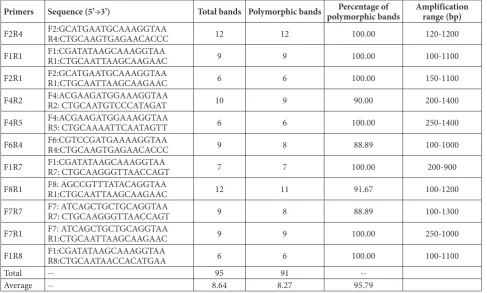
Table 2. List of primers of ISAP and the amplification results.
Primers Sequence (5’→3’) Total bands Polymorphic bands polymorphic bandsPercentage of Amplification range (bp)
F2R4 F2:GCATGAATGCAAAGGTAAR4:CTGCAAGTGAGAACACCC 12 12 100.00 120-1200
F1R1 F1:CGATATAAGCAAAGGTAAR1:CTGCAATTAAGCAAGAAC 9 9 100.00 100-1100
F2R1 F2:GCATGAATGCAAAGGTAAR1:CTGCAATTAAGCAAGAAC 6 6 100.00 150-1100
F4R2 F4:ACGAAGATGGAAAGGTAAR2: CTGCAATGTCCCATAGAT 10 9 90.00 200-1400
F4R5 F4:ACGAAGATGGAAAGGTAAR5: CTGCAAAATTCAATAGTT 6 6 100.00 250-1400
F6R4 F6:CGTCCGATGAAAAGGTAAR4:CTGCAAGTGAGAACACCC 9 8 88.89 100-1000
F1R7 F1:CGATATAAGCAAAGGTAAR7: CTGCAAGGGTTAACCAGT 7 7 100.00 200-900
F8R1 F8: AGCCGTTTATACAGGTAAR1:CTGCAATTAAGCAAGAAC 12 11 91.67 100-1200
F7R7 F7: ATCAGCTGCTGCAGGTAAR7: CTGCAAGGGTTAACCAGT 9 8 88.89 100-1300
F7R1 F7: ATCAGCTGCTGCAGGTAAR1:CTGCAATTAAGCAAGAAC 9 9 100.00 250-1000
F1R8 F1:CGATATAAGCAAAGGTAAR8:CTGCAATAACCACATGAA 6 6 100.00 100-1100
Total -- 95 91
was designated as the cultivar-specific marker. The cultivar-specific fragment of ‘Tiegun’ was cloned into a pMD18-T vector, then propagated by transferring the recombinants into E. coli cells and sequenced by Majorbio Co. (Shanghai, China). Primers were de-signed from this fragment using Primer Premier 5.0 software for the cultivar-specific amplification [29]. The primer pairs were amplified in 10 randomly se-lected individuals from each cultivar for validation using the following program: 5 min of denaturing at 94°C followed by 30 cycles of denaturation for 1 min at 94°C, annealing for 30 s at 58°C, extension for 2 min at 72°C and a final extension for 10 min at 72°C.
RESULTS
Eleven highly polymorphic primers were selected from the 31 ISAP primer pairs to amplify the 14 cul-tivars, and a total of 95 fragments were generated, ranging from 120 bp to 1400 bp, with an average of 8.64 bands per primer pair for ISAP. The number of polymorphic bands for ISAP was 91, with an aver-age of 8.27 polymorphic bands per primer pair. The percentage of polymorphic bands of ISAP was 95.79% (Table 2). The highest number of bands was obtained
from the primer pair F2R4 (12 bands, all of which were polymorphic) and F8R1 (12 bands, 11 of which were polymorphic), whereas the lowest was found with the primer pair F2R1 (6 bands, all of which were polymorphic) and F1R8 (6 bands, all of which were polymorphic).
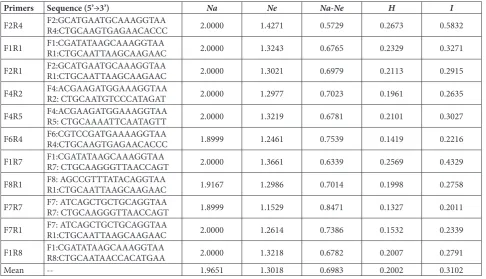
Significant genetic difference and high genetic diversity were observed among the cultivars: within the 11 primer pairs, the number of alleles (Na) was from 1.8999 to 2.0000, with an average of 1.9651; the effective number of alleles (Ne) ranged from 1.1529 to 1.4271, with an average of 1.3018; the difference between Na and Ne was from 0.5729 to 0.8471, with an average of 0.6983. Nei’s genetic diversity index (H) was from 0.1327 to 0.2673, with an average of 0.2002. Shannon’s information index (I) was from 0.2011 to 0.5832, with an average of 0.3102 (Table 3).
A dendrogram was generated with NTSYS2.10 software using the unweighted pair group method with arithmetic mean (UPGMA) method. The 14 cultivars could be completely separated with the 11 primer pairs (Fig. 1). Furthermore, it was possible to identify into 2 well-defined clusters. Cluster I included 9 cultivars: ‘Tiegun’, ‘Taigu’, ‘Caoshanyao’, ‘Mashanyao’,
Table 3. Genetic diversity of D. polystachya among 14 cultivars.
Primers Sequence (5’→3’) Na Ne Na-Ne H I
F2R4 F2:GCATGAATGCAAAGGTAAR4:CTGCAAGTGAGAACACCC 2.0000 1.4271 0.5729 0.2673 0.5832
F1R1 F1:CGATATAAGCAAAGGTAAR1:CTGCAATTAAGCAAGAAC 2.0000 1.3243 0.6765 0.2329 0.3271
F2R1 F2:GCATGAATGCAAAGGTAAR1:CTGCAATTAAGCAAGAAC 2.0000 1.3021 0.6979 0.2113 0.2915
F4R2 F4:ACGAAGATGGAAAGGTAAR2: CTGCAATGTCCCATAGAT 2.0000 1.2977 0.7023 0.1961 0.2635
F4R5 F4:ACGAAGATGGAAAGGTAAR5: CTGCAAAATTCAATAGTT 2.0000 1.3219 0.6781 0.2101 0.3027
F6R4 F6:CGTCCGATGAAAAGGTAAR4:CTGCAAGTGAGAACACCC 1.8999 1.2461 0.7539 0.1419 0.2216
F1R7 F1:CGATATAAGCAAAGGTAAR7: CTGCAAGGGTTAACCAGT 2.0000 1.3661 0.6339 0.2569 0.4329
F8R1 F8: AGCCGTTTATACAGGTAAR1:CTGCAATTAAGCAAGAAC 1.9167 1.2986 0.7014 0.1998 0.2758
F7R7 F7: ATCAGCTGCTGCAGGTAAR7: CTGCAAGGGTTAACCAGT 1.8999 1.1529 0.8471 0.1327 0.2011
F7R1 F7: ATCAGCTGCTGCAGGTAAR1:CTGCAATTAAGCAAGAAC 2.0000 1.2614 0.7386 0.1532 0.2339
F1R8 F1:CGATATAAGCAAAGGTAAR8:CTGCAATAACCACATGAA 2.0000 1.3218 0.6782 0.2007 0.2791
‘Anshun’, ‘Wujiashuangbao’, ‘Mishanyao’, ‘Xichangmao’ and ‘Huaying’, whereas Cluster II included 5 cultivars: ‘Huazi’, ‘Xiaobaizui’, ‘Cuniutui’, ‘Jiujinhuang’ and ‘Baiyu’. The morphological characters of each cultivar were observed (Table 1) and optimized on the tree generated from ISAP bands. The result showed that the samples with round tuber and shallow lobed leaf were observed only in Cluster I, whereas those with oblong tuber and deeply lobed leaf were found only in Cluster II. The red fleck on the tuber skin was present in ‘Tiegun’ and ‘Taigu’, and absent in other cultivars. Bulbils were observed in all cultivars except ‘Huazi’.
Principle coordinate analysis (PCoA) using Eu-clidean similarity indices also clearly separated all the samples into two groups (Fig. 2).
A specific amplicon at approximately 400 bp was observed in ‘Tiegun’ and was missing in all the other cultivars from the amplification using the primer pair F2R4 (Fig. 3). Subsequently, this specific amplicon was cloned and sequenced. The BLAST result of se-quence data (435 bp) in GenBank showed there was no homology sequence in other species. A SCAR primer pair specific for ‘Tiegun’ identification (F: 5ʹ-GTAATGATTGGAGATAAGTGTTCGTG-3ʹ;R: 5ʹ-AATTTACAAGTTGTGCGACCAAG -3ʹ was con-structed based on Primer Premier 5.0 software (Fig. 4). This primer pair was amplified in 140 individuals of all the 14 cultivars. All 10 individuals of ‘Tiegun’ had the cultivar-specific band at 399 bp, which was absent in the other 13 cultivars (Fig. 5).
Fig.1. Dendrogram of all 14 cultivars (the bar under the tree is the coefficient). □ − shallow lobed leaf, ■ − deeply lobed leaf; ○ − round tuber, ● − oblong tuber; ▲ − red fleck on the tuber skin present, ∆ − red fleck on the tuber skin absent; ◊ − bulbils absent, ◆ − present bulbils.
Fig.2. Principal coordinate analysis of all the cultivars revealing 2 distinct groups.
Fig.3. ISAP polymorphism in 14 cultivars with primer pairs
F2R4. M: 2000 maker; 1-14: ‘Tiegun’, ‘Taigu’, ‘Wujiashuangbao’, ‘Mishanyao’, ‘Baiyu’, ‘Caoshanyao’, ‘Xiaobaizui’, ‘Huaying’, ‘Anshun’, ‘Mashanyao’, ‘Xichangmao’, ‘Cuniutui’, ‘Jiujinghuang’ and ‘Huazi’. The arrow showed the specific fragment for ‘Tiegun’ with a length of 435 bp.
DISCUSSION
Understanding the genetic relationship of culti-vars is vital to breeding programs and conservation strategies [30-33]. Unfortunately, D. polystachya has not received enough attention, unlike other Dioscorea
species that have received much more attention. At the molecular level, the percentage of polymorphic band (PPB), the effective number of alleles (Ne), Nei’s genetic diversity (H) and Shannon’s information index (I) are essential for evaluating the genetic diversity of germplasm [34,35]. In this study, high levels of ge-netic diversity among D. polystachya cultivars were detected with these parameters. Our results also in-dicted that ISAP markers detected a higher degree of variation among D. polystachya cultivars compared with RAPD markers (PPB: 85.16%) [11]. The high genetic diversity among the cultivars may be explained by the domestication process of Dioscorea tuber crops [36,37]. Primarily, traditional farmers collected and grew clones of varieties for the special characteristics they preferred. Subsequently, other varieties were sub-ject to selection by farmers to meet different demands
of the market. As a result, these varieties of D. polys-tachya were maintained and this species could avoid genetic erosion.
Some studies showed there was no agreement be-tween genetic clustering and morphological traits of yam cultivars using molecular markers such as RAPD, SSR and ISSR [14,18,31,38]. This might be because the loci amplified by these markers did not target the genes of morphological characteristics [39]. These incongru-ent results may also explain the reason why there are not enough improvements in yam breeding programs, clonal selection and genetic conservation as in other tu-ber crops. In the present research, the phylogenetic tree generated by ISAP data was consistent with morpho-logical characteristics: the cultivars with round tuber and shallow lobed leaf were gathered into an indepen-dent cluster, whereas cultivars with oblong tuber and deeply lobed leaf made an independent cluster (Cluster I and Cluster II, respectively). As for the phylogenetic relationships of D. polystachya cultivars, some research-ers have suggested that these cultivars should be divided into two groups based on tuber shape: a round tuber group and an oblong tuber group [10]. Moreover, two ploidy levels among cultivars have been reported (2n = 100, 140): cultivars with deeply lobed leaves were 2n=140 while those with shallow lobed leaves were 2n=100 [40]. Finally, all the available data are consis-tent with the hypotheses that the cultivars of Chinese yam should be divided into 2 groups.
Despite the morphological variability found within this species, the intraspecific phylogeny remains some-what enigmatic. Due to many morphological characters in common, the species D. doryphora has been consid-ered as a synonym of D. polystachya [2]. In subsequent decades, D. polystachya was thought to be the only wild progenitor of all the cultivars. But recently, D. polys-tachya and D. doryphora could be distinguished from each other with chloroplast markers [41]. It is interest-ing to notice that the morphological differences in only two characters (tuber and leaf morphology) between D. doryphora (oblong tuber and deeply lobed leaf) and D. polystachya (round tuber and shallow lobed leaf) [41] were consistent with our molecular results. It seems that D. doryphora might be classified as a single spe-cies once more. Meanwhile, deductions could be made from morphological and molecular evidence that the cultivars in Cluster I were probably domesticated from
D. polystachya, and D. doryphora may be the wild pro-genitor of the cultivars in Cluster II. However, further research is needed to verify the history of domestica-tion of these cultivars and the systematic reladomestica-tionship between D. polystachya and D. doryphora.
The cultivar ‘Tiegun’ is a landrace cultivar native to China, and possesses more nutritional and phar-maceutical value than other cultivars [42,43]. Due to its high popularity in China, many other cultivars are sold as ‘Tiegun’ in order to acquire a higher price. In the market, it is not easy to identify ‘Tiegun’ mor-phologically. Therefore, there is an urgent need for the development of identification techniques to dis-tinguish ‘Tiegun’ from other cultivars. In our ISAP analysis, significant genetic polymorphism was ob-served among the cultivars and a cultivar-specific SCAR marker was developed for the identification of ‘Tiegun’. In order to check its sensitivity and ac-curacy, this SCAR marker was validated by testing on 140 individuals of 14 cultivars. The result showed that all 10 individuals of ‘Tiegun’ amplified the culti-var-specific band at 399 bp, which was absent in the other 13 cultivars, confirming the specificity of the SCAR marker for cultivar-specific identification. In summary, an ISAP-SCAR technique proved to be a helpful tool in identifying Chinese yam cultivars. The results of our study indicate that PCR products can be used to design SCAR primers and then used as a DNA barcoding for cultivar identification at a lower cost.
Acknowledgments: We thank the Institute of Botany, Jiangsu
Province and Chinese Academy of Sciences for funding, and the College of Horticulture, Nanjing Agricultural University for as-sistance with ISAP profiling.
Authors’ contribution: Bin Peng designed and performed the
experiments, analyzed the data and wrote the manuscript. Bin Peng, Xiaoqin Sun, Mimi Li, Yanmei Zhang, Jiayu Xue and Yueyu Hang carried out the accession collection.
Conflict of interest disclosure: The authors declare no conflict of interest.
REFERENCES
1. Mignouna D, Abang M, Asiedu R, Geeta R. True yams (Dioscorea): A biological and evolutionary link between eudicots and grasses. Cold Spring Harbor Protocols. 2009;11(4): emo136.
2. Wu ZhengYi, Peter H. Raven. Flora of China. In: Ding ZZ, Gilbert M.G, editors. Dioscorea. Vol. 24. Beijing: Science Press; 2000. p. 276-96.
3. Scarcelli N, Tostain S, Mariac C, Agbangla C, Da O, Ber-thaud J.Genetic Nature of Yams (Dioscorea sp.) Domesti-cated by Farmers in Benin (West Africa). Genet Resour Crop Evol. 2006;53(1):121-30.
4. Scarcelli N, Couderc M, Baco M, Egah J, Vigouroux Y.
Clonal diversity and estimation of relative clone age: applica-tion to agrobiodiversity of yam (Dioscorea rotundata). BMC Plant Biol. 2013;13(1):178.
5. Committee CP. Pharmacopoeia of the People’s Republic of China. Beijing: Medico-Pharmaceutical Science and Tech-nology Press; 2010. 28p.
6. Coursey, DG. Yams. An account of the nature, origins, culti-vation and utilisation of the useful members of the Diosco-reaceae. London: Longmans Press; 1967. 230p.
7. Feng XF, Huang LQ, Ge XG, Yang LJ, Yang JY. Textual research on origin and development of genuine medicinal herbs of Shanyao. Chin J Chin Mater Med. 2008;33(7):859-62. 8. Li YX, Huang DY, Huang XL, Wang Y, Luo HS, Zhou X.
Progress of Study on Dioscorea Opposita Thunb. Chin Agric Sci Bull. 2009;25(9):1-6.
9. Wang F, Liu HY, Lu CT, Bai ZW, Wang TL, Zhang BH. Com-parison of the Agronomical Traits and Nutrient Quality among Five Yam Germplasms. J Henan Agric Sci. 2005;3:58-60. 10. Chai JH, Yan JZ, Huang XH, Ye SJ, Jiang LW J, Gu ZZ. A
taxonomical study on varital resource of Dioscorea species. Acta Agric Univ Jiangxiensis. 1999;21(1):53.
11. Hua SM, Tu QC, Lei FG.Genetic diversity of Dioscorea polystachya Turcz. revealed by RAPD markers. J Plant Genet Resour. 2009;10(2):195-200.
12. Zhou Y, Guo H, Zhou J. Study on main nutrients in Iron
Dioscorea opposita Thunb. Food Nutr China. 2011;3:69-71. 13. Wang SJ, Gao WY, Liu HY, Chen HX, Yu JG, Xiao PG. Stud-ies on the physicochemical, morphological, thermal and crystalline properties of starches separated from different Dioscorea opposita cultivars. Food Chem. 2006;99(1):38-44. 14. Sartie A, Asiedu R, Franco J. Genetic and phenotypic
diversity in a germplasm working collection of cultivated tropical yams (Dioscorea spp.). Genet Resour Crop Evol. 2012;59(8):1753-65.
15. Mengesha WA, Demissew S, Fay M, Smith R, Nordal I, Wilkin P. Genetic diversity and population structure of Guinea yams and their wild relatives in South and South West Ethiopia as revealed by microsatellite markers. Genet Resour Crop Evol. 2013;60(2):529-41.
16. Mukherjee P, Bhat KV. Phylogenetic relationship of wild and cultivated yam species (Dioscorea spp.) of India inferred from PCR–RFLP analysis of two cpDNA loci. Plant Syst Evol. 2013;299(8):1587-97.
17. Lay HL, Liu HJ, Liao MH, Chen CC, Liu S, Sheu BW.
Genetic identification of Chinese drug materials in Yams (Dioscorea spp.) by RAPD analysis. J Food Drug Anal. 2001;9(3):132-8.
and morphological markers. Genet Resour Crop Evol. 2013;61(3):611-24.
19. Lu CR, Yu SX, Yu JW, Fan SL, Song MZ, Wang W. Devel-opment and appraisement of functional molecular marker: intron sequence amplified polymorphism (ISAP). Hereditas. 2008;30(9):1207-16.
20. Peng M, Qu L, Wang Q. Seed-specific identification of Larix gmelinii, Larix olgensis, and Larix principis-rupprechtii using sequence-characterised amplified region markers. Biochem Syst Ecol. 2014;55:231-5.
21. Paran I, Michelmore RW. Development of reliable PCR-based markers linked to downy mildew resistance genes in lettuce. Theoret Appl Genetics. 1993;85(8):985-93. 22. Cheng J, Long Y, Khan MA, Wei C, Fu S, Fu J.
Develop-ment and significance of RAPD-SCAR markers for the identification of Litchi chinensis Sonn. by improved RAPD amplification and molecular cloning. Electron J Biotechn. 2015;18(1):35-9.
23. Cho KH, Shin IS, Kim SH, Kim JH, Kim DH, Shin YU. Identification of Korean pear cultivars using combinations of SCAR markers. Hortic Environ Biote. 2012;53(3):228-36. 24. Wang DW, Li Y, Li ZQ. Identification of a male-specific
Amplified Fragment Length Polymorphism (AFLP) and a Sequence Characterized Amplified Region (SCAR) marker in Eucommia ulmoides Oliv. Int J Mol Sci. 2011;12(1):857-64. 25. Wu Y, Zhang Z, Chen Y, Wang B, Yang G, Yang W. Authen-tication of Thailand jasmine rice using RAPD and SCAR methods. Eur Food Res Technol. 2009;229(3):515-21. 26. Vaillancourt A, Nkongolo KK, Michael P, Mehes M.
Identi-fication, characterisation, and chromosome locations of rye and wheat specific ISSR and SCAR markers useful for breed-ing purposes. Euphytica. 2008;159(3):297-306.
27. Rajesh MK, Jerard BA, Preethi P, Thomas RJ, Fayas TP, Rachana KE.Development of a RAPD-derived SCAR marker associated with tall-type palm trait in coconut. Sci Hortic. 2013;150(2):312-6.
28. Asemota HN. A fast, simple, and efficient miniscale method for the preparation of DNA from tissues of yam (Dioscorea
spp.). Plant Mol Biol Rep. 1995;13(3):214-8.
29. Lalitha S. Primer premier 5. Biotechnol Softw I J. 2004;1(6):270-2.
30. Mengesha WA, Demissew S, Fay M, Smith R, Nordal I, Wilkin P. Genetic diversity and species delimitation in the cultivated and wild Guinea yams (Dioscorea spp.) from Southwest Ethiopia as determined by AFLP (amplified frag-ment length polymorphism) markers. Genet Resour Crop Evol. 2013;60(4):1-11.
31. Sonibare MA, Asiedu R, Albach DC. Genetic diversity of
Dioscorea dumetorum (Kunth) Pax using amplified fragment length polymorphisms (AFLP) and cpDNA. Biochem Syst Ecol. 2010;38(3):320-34.
32. Lucic A, Popovic V, Nevenic M, Ristic D, Rakonjac L, Cirkovic-Mitrovic T, Mladenović-Drinić S.Genetic diver-sity of Scots pine (Pinus sylvestris L.) populations in Serbia revealed by SSR markers. Arch Biol Sci. 2014;66(4):1485-92. 33. Gradzielewska A, Tyrka M, Lesniowska-Nowak J, Nazaruk
J. Genetic Relationships Among Representatives of Dasy-pyrum, Secale and Triticum Species Revealed with RAPD and ISSR Markers. Not Bot Horti Agrobot Cluj Napoca. 2014;42(2):420-30.
34. Zhao L, Liu H, Cai G, Xia M. Assessment of the genetic diversity and genetic relationships of Lilium in China using ISSR markers. Biochem Syst Ecol.2014;55(4):184-9. 35. Narzary D, Mahar KS, Rana T, Ranade S. Analysis of genetic
diversity among wild pomegranates in Western Himalayas, using PCR methods. Sci Hortic. 2009;121(2):237-42. 36. Diez CM, Trujillo I, Martinez-Urdiroz N, Barranco D, Rallo
L, Marfil P, Gaut BS.Olive domestication and diversification in the Mediterranean Basin. New Phytol. 2015;206(1):436-47.
37. Mignouna HD, Dansi A. Yam (Dioscorea ssp.) domestication by the Nago and Fon ethnic groups in Benin. Genet Resour Crop Evol. 2003;50(5):519-28.
38. Nascimento WF, Rodrigues JF, Koehler S, Gepts P, Veasey EA. Spatially structured genetic diversity of the Amerin-dian yam (Dioscorea trifida L.) assessed by SSR and ISSR markers in Southern Brazil. Genet Resour Crop Evol. 2013;60(8):2405-20.
39. Schaal B, Hayworth D, Olsen K, Rauscher J, Smith W. Phylo-geographic studies in plants: problems and prospects. Molec Ecol. 1998;7(4):465-74.
40. Babil P, Kondo S, Iwata H, Kushikawa S, Shihiwachi H.
Intra-specific ploidy variations in cultivated Chinese yam (Dioscorea polystachya Turcz.). Trop Agr Develop. 2013;57(3):101-7.
41. Hsu KM, Tsai JL, Chen MY, Ku HM, Liu SC. Molecular phy-logeny of Dioscorea (Dioscoreaceae) in East and Southeast Asia. Blumea. 2013;58(1):21-7.
42. Zhang ZY, Xie CX, Huang XS, Chui YJ. Comparison of quality of rhizome Dioscorea between geo-authentic and non-authentic producing areas. Res Pract Chin Med. 2003;17(1):19-21.