1/102
CHALLENGES FACING THE POSTAL SECTOR
AS IT MOVES TO FULL LIBERALISATION
2/102 INDEX INDEX OF FIGURES ... 4 INDEX OF TABLES ... 5 INDEX OF MAPS ... 6 1. EXECUTIVE SUMMARY ... 7 2. INTRODUCTION ... 12 3. REGULATORY FRAMEWORK ... 13
3.1 EUROPEAN REGULATORY FRAMEWORK ... 13
3.2 NATIONAL REGULATORY FRAMEWORK ... 15
4. POSTAL ECONOMICS IN PORTUGAL ... 21
4.1 MARKET SEGMENTATION ... 24
4.2 VALUE CHAIN ... 29
4.3 KEY INDICATORS ... 30
4.3.1 TRENDS IN REVENUE AND MARGINS ... 30
4.3.2 PRICE TRENDS ... 33
4.3.3 TRENDS IN TRAFFIC ... 36
4.3.4 TRENDS IN NUMBER AND DENSITY OF POSTAL ESTABLISHMENTS ... 39
4.3.5 TRENDS IN QUALITY OF SERVICE ... 43
5. CHARACTERISATION OF THE MAIN OPERATORS... 47
5.1 NON-EXPRESS MAIL ... 58
5.1.1 CORRESPONDENCE (NON-EXPRESS MAIL) ... 59
5.1.2 PARCELS (NON-EXPRESS MAIL) ... 60
5.2 EXPRESS MAIL ... 61
6. CASE STUDIES ... 70
6.1 GERMANY ... 72
3/102
6.3 SWEDEN... 83
7. CHALLENGES FACING POSTAL SECTOR AS IT MOVES TO FULL LIBERALISATION ... 88
7.1 CHALLENGES FOR SERVICE PROVIDERS... 88
7.2 CHALLENGES FOR ICP-ANACOM ... 94
REFERENCES ... 97
4/102 INDEX OF FIGURES
Figure 1 Classification of services according to UPS and reserved area ... 16 Figure 2 Number of providers (2002 - 2010) ... 21 Figure 3 Evolution of operating income and revenues of the companies in the postal sector as a percentage of GDP (2002-2009) ... 23 Figure 4 Segmentation by customer type... 25 Figure 5 Percentage of population who used the postal services by type of service (residential consumers - 2006 and 2008). ... 26 Figure 6 Percentage of population who used the postal services by age group (2008) ... 27 Figure 7 Percentage of population who used the postal second by level of education (2006 and 2008) ... 27 Figure 8 Percentage of population who used post services according to social class ... 28 Figure 9 Traditional value chain of the postal sector ... 29 Figure 10 Contemporary value chain of the postal sector ... 30 Figure 11 Consolidated operating income of Grupo CTT by business area in 2009 32 Figure 12 Trend in the average annual value of base tariffs in real terms (correio normal (non-priority mail) and correio azul (priority mail)) for the period 1993-201033 Figure 13 European comparison of the price of priority national mail ... 34 Figure 14 European comparison of the price of non-priority national mail ... 35 Figure 15 Postal traffic growth and GDP growth in Portugal (2003-2009) ... 36 Figure 16 Trend in postal traffic (including traffic of the reserved area and the non-reserved area) over the period 2002-2010 ... 37 Figure 17 Grupo CTT traffic (millions of items) ... 38 Figure 18 Total access points to the postal network ... 39 Figure 19 Average number of inhabitants per access point to the postal network. . 40 Figure 20 Trend in the global indicator of quality of service (1995-2009) ... 44 Figure 21 Distribution of complaints about postal services by type of service (1H 2010)... 45 Figure 22 Distribution of complaints about postal services by subject (1H 2010) .... 46 Figure 23 Organigram of Grupo CTT ... 50 Figure 24 Trend in the provision of CEP services by CTT Expresso ... 54 Figure 25 Postal Freedom Index in 2010 ... 70 Figure 26 Consumer prices and prices of letters of Deutsche Post (including subsidiaries) between 1998 and 2009 ... 73 Figure 27 Evolution of Royal Mail's operating volume of correspondence (in millions of letters) ... 77 Figure 28 Trend in CO2 emissions by Posten Norden in Sweden ... 86
Figure 29 CTT's business strategy ... 89 Figure 30 Governance model for the postal sector in a fully liberalised environment ... 96
5/102 INDEX OF TABLES
Table 1 Characteristics of the postal market offer by type of object ... 47
Table 2 Postal traffic flows reported by the different non-express mail postal operators ... 49
Table 3 Characterisation of Grupo CTT... 52
Table 4 Characterisation of Grupo Rangel (data as of 31.12.2009) ... 64
Table 5 Characterisation of the Seur franchise brand (data as of 31.12.2009) ... 65
Table 6 Characterisation of the Nacex franchise (figures referring to 31.12.2009) ... 66
Table 7 Characterisation of the MRW franchise (data as of 31.12.2009) ... 68
6/102 INDEX OF MAPS
Map 1 Trend in the density of inhabitants per postal establishment by region (2001-2009) ... 41
Map 2 Trend in the average area covered per postal establishment by region (2001-2009) ... 43
7/102 1. EXECUTIVE SUMMARY
This report summarises the current state of postal services in Portugal and the main challenges facing the sector as it moves to full liberalisation.
After an introduction to the study, a brief summary is given of the sector's regulatory framework, at European Union (EU) and national level, particularly with regard to the designation of the universal service provider (USP), the calculation of any net costs of the universal postal service (UPS), the compensation of these net costs and conditions of network access.
Subsequently, in Chapter 4, a perspective is given of the post economy in Portugal, using the key indicators of the postal activity and examining the characteristics of postal consumption (business and residential).
Postal services play an important part in Portugal’s national economy; since 2002, its revenues have consistently totalled 0.6% of Gross Domestic Product (GDP) (slightly above the EU average) and it has provided about 0.33% of the country’s employment (about 0.17 percentage points below the EU average).
The bulk of postal traffic comprises traffic originated by companies – while the volume of traffic originated by consumers remains marginal.
The services which are used most often by consumers are correio azul (priority mail) and correio normal (non-priority mail) (ICP-ANACOM, 2008). About a quarter of the population uses the parcel service and 15% of the population uses the express mail service1. In
general, individuals who use postal services most often are those aged 25 to 34 years2
, with higher education and belonging to higher social classes3.
In the corporate segment, the most frequently used services are, in order, correspondence, parcels, express mail, direct mail, catalogues/newspapers periodicals
1
Postal services are characterized by acceptance/collection, handling, transport and distribution, with increased speed, of items of correspondence and parcels, being differentiated from basic postal services by a set of supplementary characteristics, possible through the agreement of contacts with clients: Pre-set delivery time; Registration of items; Liability guarantee from authorised provider by way of insurance or other means whereby the sender has prior knowledge of the formula for damage compensation; Routing control through the operating circuit of the authorised service provider, enabling the identification of the status of items and information to the client.
2
With the exception of priority mail, where the age group that uses this service most is between 55 and 64 years (albeit with a only slight difference compared to the 25 - 34 age group).
3
8/102
and unaddressed correspondence (KPMG, 2008). The first three services are also the most used by the residential segment.
In the postal sector, we are seeing a shift away from the "traditional" value chain towards a "contemporary" value chain. The first comprises five stages: acceptance, processing at origin, transport, processing at destination and distribution (where the bulk of the costs are associated with acceptance and with distribution). The second comprises seven stages: market and customer segmentation, definition of content, production (printing / finishing), collection/processing/transport/distribution, response handling, logistics and payment processing (KPMG, 2008).
From 2005 to 2010 there was a reduction in the volume of total postal traffic (about 12.5% accumulated over these years), which cannot be explained simply by business cycle fluctuations, but, increasingly, by the substitution of post by electronic means of communication (e.g. e-mail and social networking) and by development of media as evidenced by the decline in postal traffic comprised by newspapers and periodicals.
In this context, between 2005 and 20104, there was a slight decrease (about 1%) in the
sector's revenues. This decline is explained mainly by the significant reduction reported in the revenues of the reserved area, while revenues from liberalised post and, above all, from express mail saw evident growth over this period.
Nevertheless, according to the analytical accounting system employed by CTT, between 2005 and 2009, the company saw positive margins and strong growth in the UPS, while the non-universal service (which, compared to the UPS, represents a much smaller part of this provider's revenues) had negative margins.
Since 1993, users of postal services have benefited from a very favourable trend in the base tariff of correio normal (non-priority mail) and especially in the base tariff of correio azul (priority mail), which saw a decline of about 20 percentage points in real terms. This is mainly explained by the application of a regulatory "price-capping" regime. In both categories of mail, prices are below the EU average.
Meanwhile, since 1995, overall levels of quality of service (QoS) have come in above the targets established under the Convénio de Qualidade do Serviço Postal Universal (Quality Convention of the Universal Postal Service) (except in 2003 and 2006 - where CTT reports that service was affected by strikes and computer problems). In contrast, the
4
Revenues for 2010 were estimated as amounting to double the revenues reported for the first half of 2010.
9/102
number of access points5
to the postal network fell between 2002 and the first half of 2010, by about 4.5%6.
Nevertheless, according to data from ICP-ANACOM (2010b), the number of complaints related to the postal sector, which include all the complaints received by the regulator7
, increased by 22% between the first half of 2009 and the first half of 2010, with about half of these associated with the correspondence service and with most complaints stemming from situations associated with problems in customer service, lack of effort to deliver at home, loss, delivery to wrong address and delayed delivery.
Moving on, Chapter 5 examines the activities of the major postal service providers operating in Portugal, identifying the main segments in which they operate and their relative weighting.
At the end of 2010, 63 undertakings were eligible to provide express mail services and 13 undertakings were eligible to provide non-express mail services. The latest information, dating from the third quarter of 2010, indicates that 58 of these undertakings were active. Of the 57 undertakings which responded to ICP-ANACOM's questionnaire about their activities during 20098
, 10 covered all market segments and provided services throughout the national territory, 35 covered all segments of the market, but only operated in part of the country, one company offered national coverage but only for some market segments and 11 only provided services in certain market segments and in certain regions of the country.
The postal service providers operating in only part of the country tend to operate mostly in the urban areas of Lisbon and Porto, although there are exceptions.
5
Physical locations where users can deposit items in the postal network, covering post offices, postal agencies and post boxes, whether or not located on the public highway.
6
CTT does not consider the postal network as essential infrastructure for the delivery of services, giving priority to the efficiency of handling correspondence, as set out in the document available at http://www.ctt.pt/fectt/export/download/grupoctt/comimagens/Aposta79.pdf
7
The presentation of this data considers the total number of requests addressed to this Authority by end-users of communications services and by the general public, sent directly or through other entities. Meanwhile, analysis of the data focuses only on the universe of complaints and requests for information, with a distinction made in this analysis between complaints received in writing - letter, fax, e-mail, online forms and complaints book - and complaints made over the telephone and/or in person at the public attendance services.
8
10/102
Among the 12 largest companies in the postal sector, in terms of total revenue, 10 provide express mail services only, the exceptions being CTT and Seur (which also provide express mail services themselves or through companies in the same economic group).
The largest express mail company in terms of market share measured in revenues is CTT Expresso.
In non-express liberalised mail (comprising correspondence and parcels), CTT faces competition from providers of services such as Vasp Premium, SDIM, Notícias Direct, Urbanos Express, Iberomail, Lordtrans, Meest and Celeris. Nevertheless, CTT continues to retain a dominant position in liberalised correspondence not covered by express mail. Behind Seur and Urbanos, CTT is the third largest company in parcels not covered by express mail, in terms of market share measured in traffic.
Seeking lessons from abroad, Chapter 6 presents and examines case studies taken from some of the countries where full liberalisation of the postal service has already been accomplished - namely Germany, the United Kingdom and Sweden.
However, when deciding on the lessons that can be drawn from these case studies, the idiosyncratic characteristics of each national market must be taken into account, notwithstanding their inclusion in the same European space. In particular, consideration should be given to differences in terms of market size, tax and employment laws, population density, urbanization and per capita income.
The case studies show that the USP of the countries examined have retained dominant positions after full liberalisation, except in very specific situations and sectors, for example, city express mail in Sweden.
Secondly, the USP have streamlined their postal operations, in particular through automation9, the reduction in the number of postal establishments and the adjustment of
staff numbers.
Another important trend among the USP of these countries is their move to diversify into non-traditional areas of the postal activity (such as, for example, logistics and hybrid mail) and their drive to launch innovative services10.
9
This includes the introduction of new technologies such as RFID and optical readers. 10
Examples of services considered innovative by the providers are: collection from the home, definite day delivery, choice of delivery route that minimizes the service's carbon footprint and the introduction of solutions specific to a particular sector.
11/102
The internationalisation of the postal business, with operations in markets outside the USP's country of origin, is also worth noting, particularly in the case of Germany and Sweden.
Meanwhile, the growing importance given by the USP to the environmental sustainability of their businesses should also be emphasised, as this is something considered crucial to their development and future profitability.
Based on the combination of these factors, it is expected that the USP will remain economically viable in a scenario of full liberalisation, especially in situations where there is a mechanism in place to compensate the net costs of the UPS if and when applicable. The specific challenges facing the postal sector’s service providers (especially the USP) are discussed in Chapter 7, which also examines the challenges faced by the sector’s regulator.
These challenges include, in the case of service providers, the current and expected decline in correspondence traffic, reducing the "carbon footprint" and the extent to which their strategy is geared to possible changes in the application of VAT to services provided as part the UPS. In the particular case of CTT, note is made of the reconciliation of an increasingly competitive environment with the goal of safeguarding the economic sustainability of providing the UPS and, possibly, the extent to which their management competence is ready to face this new environment.
In terms of the challenges facing the regulator, the report highlights the evaluation of the net costs of the UPS, the drive to improve the SCA used by CTT, the continued adaptation of regulatory practice to international best practice and a global redefinition of the role of regulation, focusing on three fundamental objectives: to ensure provision of the UPS; to promote competition; and to protect the interests of users of all types of postal services, while maintaining its natural relationship with AdC - Autoridade da Concorrência (The Competition Authority).
12/102 2. INTRODUCTION
With full liberalisation, the Portuguese postal market is about to enter a new phase of development, and so it was considered fitting to draw up a picture of the sector, properly set in the context of European legislation and of the experience gathered from countries that have already moved ahead to a fully liberalised market.
Accordingly, this report seeks to present a descriptive submission, in summary form, on the evolution of the postal service in Portugal, identifying the main challenges facing providers of postal services and facing ICP-ANACOM, as the sector moves to full liberalisation.
After a brief outline of the sector's regulatory framework at EU and national level, a perspective is given in Chapter 4 on postal economics in Portugal, using the key indicators of the postal activity and with an examination of the characteristics of postal consumption (business and residential).
Chapter 5 outlines the characteristics of the activities of the main postal service providers operating in Portugal, identifying the main segments in which they operate and their relative weighting.
Chapter 6 presents and discusses case studies from some of the countries where total liberalisation of the postal service has already been accomplished - namely Germany, the United Kingdom and Sweden - seeking to draw lessons for Portugal.
The challenges facing the postal sector, in particular, those facing the regulator and the USP are discussed in Chapter 7.
13/102 3. REGULATORY FRAMEWORK
3.1 EUROPEAN REGULATORY FRAMEWORK
The main objectives of European policy for the postal sector are (EC, undated):
a) Define a UPS at Community level, conceived as the right of users to access postal services, comprising a minimum set of services with specified quality and affordable prices, regardless of their geographical location;
b) Establish a common limit for the reserved postal area that each EU Member State can reserve for its USP in order to ensure the economic and financial viability of UPS provision;
c) Bring about the gradual and controlled opening of the market, while safeguarding provision of the USP in a sustained manner;
d) Improve Quality of Service (QoS) by setting a common level of QoS for cross-border intra-community mail and by publishing QoS levels achieved for national mail;
e) Have cost-orientation of prices and ensure that financing of the UPS is transparent and in accordance with EU legislation;
f) Encourage the harmonisation of technical standards, serving the interests of users;
g) Ensure that there are conditions of fair competition outside the reserved area. h) Encourage the postal sector to adapt quickly and effectively to changes in demand
and to technological development;
i) Coordinate Community postal policy with other Community policies, ensuring a consistent approach to overlapping issues;
j) Adopt an approach to international postal traffic which is consistent with the above objectives and priorities, in cooperation with third parties and international organizations.
The implementation of these objectives has been taking place based on a legislative framework centred on EU Directive 97/67/EC of the European Parliament and of the Council of 15 December 1997 on common rules for the development of the internal market of Community postal services and the improvement of quality of service11
11
14/102
(Amended by Directive 2002/39/EC of 10 June12
and by Directive 2008/6/EC of 20 February13). This directive, among other things:
a) Defined the minimum requirements of the UPS to be guaranteed by each Member State in its territory;
b) Established common limits for the services reserved to the UPS and a gradual timetable for their liberalisation;
c) Affirmed the principles underlying the allocation of authorisations governing the provision of non-reserved services;
d) Specified principles governing UPS tariffs along with the rules determining the transparency of USP accounting;
e) Set out the QoS standards for the national service and the cross-border intra-community service;
f) Confirmed mechanisms to encourage technical harmonisation in the postal sector; g) Required the creation of national regulatory authorities (NRA) which were
independent of postal operators.
Directive 2002/39/EC set out additional steps towards the gradual liberalisation of the postal sector - which it was expected, id temporis, may occur in 2009 - whereby only items of correspondence could be included in the reserved area as follows:
a) From the beginning of 2003, items weighing less than 100g and costing less than three times the base tariff (which corresponded to the liberalisation of an estimated 9% of the EU postal market);
b) From the beginning of 2006, items weighing less than 50g and costing less than 2.5 times the base tariff (which corresponded to the liberalisation of an estimated further 7% of the EU postal market);
In addition, under Directive 2002/39/EC, all outgoing cross-border mail was to be liberalised on 01.01.2003 (which is estimated to correspond, per se, to the liberalisation of 3% of the EU postal market), safeguarding exceptions which Member States might require in order to finance the provision of UPS or to enable further adjustment to the specific characteristics of the postal service in certain Member States.
Finally, Directive 2008/06/EC established 31/12/2010 as the deadline for opening the postal sector up to full competition, with the exception of eleven Member States14
12
Directive 2002/39/EC of the European Parliament and the Council, of 10.6.2002. 13
15/102
(Representing only about 5% of the EU postal market) for which the date was fixed for 31.12.2012. In any case, it should be noted that six out of 27 Member States already have fully liberalised postal services: Finland (1991), Sweden (1993), the United Kingdom (2006), Germany (2008), Netherlands (2009) and Estonia (2009).
3.2 NATIONAL REGULATORY FRAMEWORK
The regulatory framework for the postal sector in Portugal establishes the general conditions to be respected for the establishment, management and operation of postal services within its national territory15, as well as international services originating or
terminating within its national territory.
In particular, note should be made of the provision of the UPS, which in Portugal, according to the Lei de Bases dos Serviços Postais (Basic Law for Postal Services), corresponds to the permanent offer of postal services of a specific quality, provided throughout national territory at prices accessible to all users, whose aim is to satisfy the communication needs of the population and those of economic and social activities.
The UPS encompasses a postal service for the sending of correspondence, books, catalogues, newspapers and other periodicals weighing up to 2 kg and postal parcels of up to 20 kg, as well as a service of registered items and service of insured items, on a national and international basis.
The designated USP in Portugal is CTT - Correios de Portugal, S.A. under the concession agreement made with the Portuguese State, which is referred to below in more detail.
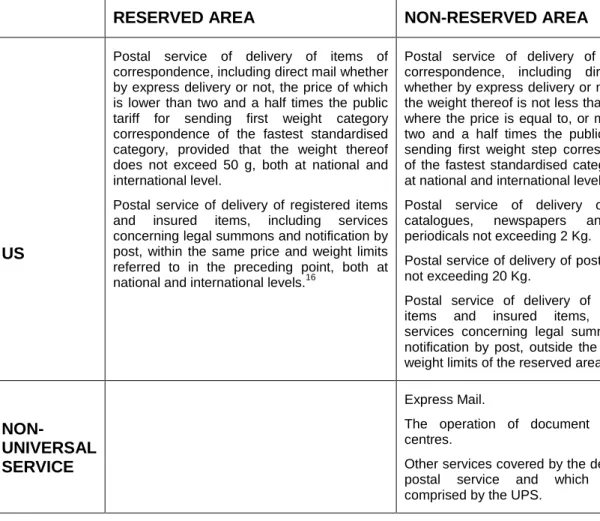
Also under Lei de Bases dos Serviços Postais (Basic Law for Postal Services) - and to ensure the economic-financial viability of the provision of UPS - a reserved area was established in Portugal (as in other EU Member States at the time, except Sweden and Finland) comprising services to be provided exclusively by the USP. This reserved area includes services detailed in the upper left quadrant Figure 1, whereas non-reserved
14
Cyprus, Czech Republic, Greece, Hungary, Latvia, Lithuania, Luxembourg, Malta, Poland, Romania and Slovakia.
15
In accordance with article 4 of the Lei de Bases dos Serviços Postais (Basic Law for Postal Services), available at Law no. 102/99, of 26 of July, the postal service is understood to be the activity encompassing the operations of acceptance, processing, transport and distribution of postal items, whereas postal item is understood to be an addressed object in definitive form, which complies with the physical and technical specifications that allow it to be handled by the postal network.
16/102
services included in the UPS are listed in the right upper quadrant and those not included in the UPS and not reserved are listed in the lower right quadrant of the figure.
Figure 1 Classification of services according to UPS and reserved area
RESERVED AREA NON-RESERVED AREA
US
Postal service of delivery of items of correspondence, including direct mail whether by express delivery or not, the price of which is lower than two and a half times the public tariff for sending first weight category correspondence of the fastest standardised category, provided that the weight thereof does not exceed 50 g, both at national and international level.
Postal service of delivery of registered items and insured items, including services concerning legal summons and notification by post, within the same price and weight limits referred to in the preceding point, both at national and international levels.16
Postal service of delivery of items of correspondence, including direct mail, whether by express delivery or not, where the weight thereof is not less than 50 g, or where the price is equal to, or more than, two and a half times the public tariff for sending first weight step correspondence of the fastest standardised category, both at national and international levels; Postal service of delivery of books, catalogues, newspapers and other periodicals not exceeding 2 Kg.
Postal service of delivery of postal parcels not exceeding 20 Kg.
Postal service of delivery of registered items and insured items, including services concerning legal summons and notification by post, outside the price and weight limits of the reserved area.
NON-UNIVERSAL SERVICE
Express Mail.
The operation of document exchange centres.
Other services covered by the definition of postal service and which are not comprised by the UPS.
Source: ICP-ANACOM
The provision of non-reserved services is subject to different formats for the granting of authorisations for the exercise of activity, depending on whether or not such services fall within the UPS17
. If comprising the non-reserved area of the UPS, an individual licensing system applies. Otherwise, a less demanding regime applies (in terms of obligations imposed), based on a general authorisation scheme (covering express mail services; the operation of documents exchange centres and other postal services not covered by the UPS, especially those which, due to technological development, differ from traditional services).
16
The issue and sale of stamps and other postal products, such as the issue of postal orders and the placing in public space of post-boxes for the collection of postal items are services /activities which, while reserved to the USP, and not included within the scope of the US.
17
17/102
The Lei de Bases dos Serviços Postais (Basic Law for Postal Services) also established, in particular, the principles of pricing (which in the universal service must comply with the principles of cost orientation of prices, non-discrimination, transparency and affordability for all users) – specifically as governed by the Convénio de Preços (Price Convention) concluded between ANACOM and CTT - Correios de Portugal, S.A. (CTT); the current Convention18 was concluded on 10.07.2008. The Lei de Bases dos Serviços Postais
(Basic Law for Postal Services) also establishes the rules for assessing any net costs of the UPS and corresponding compensation. Meanwhile, legislation transposing Directive 2008/6/EC is not yet in force, and the rules of the Convention remain temporarily applicable.
At the same time, this piece of legislation establishes rules for QoS in the context of the US, establishing in particular that provision of UPS must fulfil basic requirements, such as (Article 8, paragraph 1):
a) Compliance with the appropriate quality standards, especially in terms of delivery deadlines, density of access points, regularity and reliability of service;
b) Provision of the service under equal and non-discriminatory conditions; c) Continuity of service, except in cases of force majeure;
d) Progressive development of the service, with respect to the technical, economic and social environment and the users' needs;
e) Respect of the obligations inherent to the provision of universal service, deriving from international obligations, and which the State shall in future transpose to internal law;
f) Supply of information to the public on the conditions and prices of services.
In this context, the USP shall ensure collection and home distribution, at least once a day, on all working days. When this is not possible, due to exceptional geographical conditions or circumstances, recognised as such by the postal regulatory body, these services shall be provided on specific premises to be defined in the implementing provisions.
The parameters and minimum levels of QoS for the UPS are established through a Convénio de Qualidade (Quality Convention) concluded between ICP-ANACOM and CTT; the current Convention19 was concluded on 10.07.2008.
18
Universal postal service price convention, of 10.7.2008 . 19
18/102
The USP is also bound to properly advertise and regularly provide users with updated and accurate information on the characteristics of the UPS, particularly with regard to the conditions governing access to and use of the service, prices and levels of QoS.
The functions of ICP-ANACOM, as regulatory authority of the postal sector, are defined in the Lei de Bases dos Serviços Postais (Basic Law for Postal Services) (Article 18, paragraph 2), in addition to the statutes approved by Decree-Law no. 309/2001 of 7 December20, specifically:
a) Representation in intergovernmental organisations within the scope of postal services;
b) The granting of licences for the exercise of postal activities in competition; c) Monitoring the quality and prices of postal services included in the UPS;
d) Overseeing of postal service operators' compliance with the legal and regulatory provisions associated with the activity and application of respective sanctions.
The current concession contract21 - as amended on 09.09.200322 and on 26.07.200623-
was concluded on 09/01/2000 between the State and CTT (conceding provision of the UPS to this company for an initial period of 30 years, renewable for successive minimum periods of 15 years); this contract has as its object:
a) The setting-up, management and operation of the public postal network24;
b) Provision of the following reserved services and activities:
1) Postal service for sending correspondence, including mailings, whether by accelerated delivery or not, which price is lower than 2.5 times the public tariff for sending first step weight correspondence of the fastest standardised category, provided that its weight is lower than 50g.
2) The postal service for sending registered correspondence and correspondence insured for a specific amount, including services to notify and service legal summons by post, within the same price and weight limits referred to in the previous paragraph above;
20
Decree-Law no. 309/2001, of 7 of December. 21
Concession contract signed on 1.9.2000. 22
Amendment to the Universal Postal Service licensing agreement. 23
Subsequent to the amendments to the concession bases enacted by Decree-Law no. 112/2006. 24
Set of human and material resources allocated to the provision of universal postal service, namely those to be found in the following operating units; Postal items processing centres; Postal items distribution centres; and Post offices.
19/102
3) The issue and sale of postage stamps and other postage products; 4) The issue of postal orders;
5) The provision, in areas of public access, of boxes or other receptacle for the collection of postal items.
c) The provision of the following non-reserved postal services comprised by the UPS:
1) The postal service for items of correspondence not covered by the price and weight limits set out in sub-point 1) of paragraph b), books, catalogues, newspapers and periodicals up to 2 kg;
2) Postage of parcels up to 20 Kg in weight;
3) The postage of registered mail, not covered by the price and weight limits set out in sub-point 1) of point b);
4) The postage of insured items not covered by the price and weight limits set out in sub-point 1) of point b);
d) The public service of non-reserved electronic mail boxes.
Finally, on 10/01/2011, the government concluded a public consultation on a legislative proposal which transposes EU regulation with regard to the full liberalisation of the postal sector25, including regulation related to establishing the scope of the UPS, its fundamental
requirements (particularly in terms of pricing and QoS), calculating its net cost and the designation of the USP.
According to this draft legislation, following an initial period of CTT's designation as USP for a period of 15 years, the UPS may be provided alternatively or cumulatively, through the efficient functioning of the market or through the designation of one or more postal service providers to provide different components of the UPS or covering different parts of the national territory.
In terms of the net cost of the UPS, calculation should take into account (according to the methodology established by ICP-ANACOM) the tangible and intangible benefits of its provision, the right of the USP to derive a reasonable profit and incentives for the economically efficient provision of the USP.
The same legislative proposal establishes that any net costs of the UPS could be compensated using public funds or a compensation fund financed through contributions
25
See
http://www.governo.gov.pt/pt/GC18/ConsultaPublica/Pages/20101228_Concorrencia_Servicos_Postais.asp x
20/102
from all postal service providers (although smaller providers may be exempted) providing one or more services covered by the UPS and or from users of services covered by the UPS.
Besides the issues associated with the UPS, other relevant provisions set out in this draft legislation relate to the principles governing access to networks and postal infrastructure components, in particular those owned by the USP.
In this context, the USP are bound to provide access to their networks according to conditions which are transparent and non-discriminatory, by establishing agreements with the postal service providers who request such access. Nevertheless, ICP-ANACOM may determine, where it sees fit and in order to ensure effective competition or uphold the interests of users, that:
a) The USP advertise, in a suitable manner, the terms and conditions for network access, including pricing;
b) In a specific situation, in the absence of agreements between the parties, access to the US network and the terms and conditions thereof.
Additionally, under the same legislative draft, all postal service providers may negotiate and make arrangements among themselves as to access to elements of their postal infrastructure or to services which they provide, notwithstanding - where this is necessary to protect the interests of users and promote effective competition - that ICP-ANACOM may impose access to these elements on postal service providers according to transparent and non discriminatory conditions.
Finally, ICP-ANACOM may, when there are several USP with postal networks that on their own do not cover the entire national territory, impose conditions that ensure the interoperability of the various networks.
21/102 4. POSTAL ECONOMICS IN PORTUGAL
Despite the unfavourable development of some types of postal traffic and the challenges encountered in recent year, including the widespread use of electronic media, postal services remain an important means of communication, offering an important contribution to social cohesion and to the country's economic development.
This chapter sets out the postal sector’s contribution to the national economy and describes, from the standpoint of its economic structure, the functioning of the sector, using the key indicators available.26
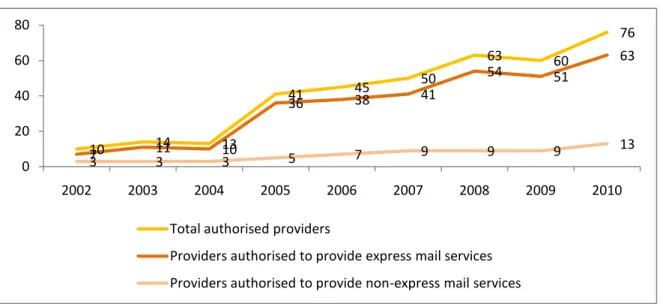
Figure 2 shows the growing number of providers, registered between 2002 and the end of 2010, with 76 entities authorized to provide postal services at this time. Since many of these entities work under franchise relationships, these 76 entities account for only 27 different brands.
Figure 2 Number of providers (2002 - 2010)
Source: ICP-ANACOM
Among these entities, 63 were authorised to provide express mail services27
and 49 entities which actually engaged in this activity. There were 13 licensed providers of
26 The lists of providers of express mail services and providers of non-express mail services, operating in the third quarter of 2010, are available respectively at List of active operators and service providers > Postal. 27 Authorised entities are eligible to provide express mail services. These services are characterized by the acceptance/collection, handling, transport and distribution with increased urgency of mailed correspondence and orders, distinguished from the respective basic services by a set of supplementary characteristics contracted with clients:
a) Pre-set delivery deadline;
10 14 13 41 45 50 63 60 76 7 11 10 36 38 41 54 51 63 3 3 3 5 7 9 9 9 13 0 20 40 60 80 2002 2003 2004 2005 2006 2007 2008 2009 2010
Total authorised providers
Providers authorised to provide express mail services Providers authorised to provide non-express mail services
22/102
services not covered by the express mail category28
of which 10 were actually operating. One of these providers is the UPS concessionaire (CTT), which operates according to the respective Contrato de Concessão (Concession Contract).
The latest information, dating from the third quarter of 2010, indicates that 58 undertakings were operational. Of the 57 undertakings which responded to ICP-ANACOM's questionnaire about their activities during 200929, 10 covered all market
segments and provided services throughout the national territory, 35 covered all segments of the market, but only operated in part of the country, one company offered national coverage but only for some market segments and 11 providers only provided services in certain market segments and in certain regions of the country.
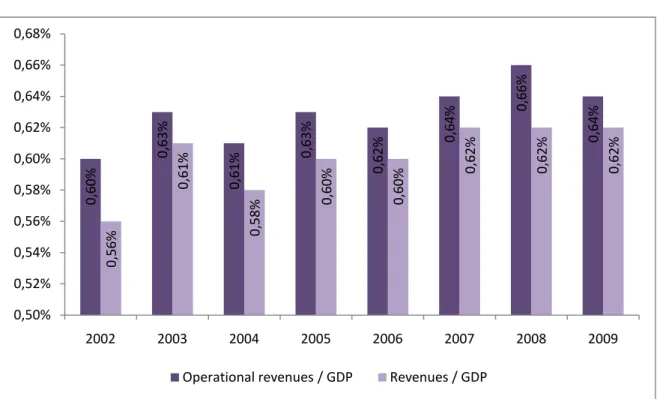
Postal services have an important weighting in the national economy, and their revenues have consistently totalled at least 0.6% of GDP since 2002 (see Figure 3). According to the latest data available from Eurostat, with reference to 2007, the EU average for this indicator is about 0.5%, slightly below that recorded in Portugal, with the highest weighting reported in Sweden (0 8%).
b) Registration of sent mail;
c) Guarantee of responsibility of the authorised provider by insurance or other means by which the sender knows the formula for compensation for damages in advance;
d) Control of mail route by operating circuit of the authorized provider, allowing identification of the status of deliveries and customer information.
28
Licensed undertakings are authorised to provide non-reserved services, even where covered by the weight and price limits of the UPS, including correspondence, books, catalogues, newspapers and other periodicals and postal parcels provided they are not encompassed by the express mail category
23/102
Figure 3 Evolution of operating income and revenues of the companies in the postal sector as a percentage of GDP (2002-2009)
Source: ICP-ANACOM, based on data from postal operators and the Bank of Portugal
The weight of the postal sector in the Portuguese economy in terms of employment amounted to about 0.33% in the period 2002-2009. According to the latest data available from Eurostat, with reference to 2007, the EU average as regards the weight of the postal sector in total employment was 0.5%, with the highest value reported in France (1%), followed by Finland, Denmark and Hungary (all exceeding 0.8%).
Meanwhile, according to data from ICP-ANACOM, employment in the postal sector in Portugal fell by 12% between 2002 and the end of 2010, which seems to follow the trend in Europe.
As such, at the end of the first half of 2010, there were about 16,000 people employed in the postal sector. Grupo CTT is by far the largest employer, making up about 4/5 of jobs, followed by Chronopost Portugal.
The vehicle fleet as a whole reached a total of 6,114 vehicles in the first half of 2010, with Grupo CTT owning about two thirds of this fleet (in 2002 they owned more than four fifths of the total fleet).
0,60 % 0,63% 0,61% 0,63% 0,62% 0,64% 0,66% 0,64% 0,56% 0,61 % 0,58% 0,60% 0,60% 0,62% 0,62% 0,62% 0,50% 0,52% 0,54% 0,56% 0,58% 0,60% 0,62% 0,64% 0,66% 0,68% 2002 2003 2004 2005 2006 2007 2008 2009
24/102 4.1 MARKET SEGMENTATION
There are several alternative possibilities for market segmentation, according to the various dimensions, in particular, according to factors such as (AdC, 2010, KPMG, 2008):
a) Product;
b) Meeting the needs of customers; c) Volume / frequency of sending; d) Geographical area;
e) Type of customer.
In terms of product, segmentation can be performed, for example, focusing on correspondence (including subdivision according to "correio normal" (non-priority mail), "correio azul" (priority mail) or other), Direct mail30
, postal parcels31
, express mail, non-addressed mail and newspapers/books/periodicals.
With a focus on the fulfilment of customer needs, classification is possible based on the segments of communication (associated with the sending of correspondence), advertising, transportation (connected, as a rule, to postal parcels) and media (newspapers, books and other publications). It is also possible to divide the communications segment into segments of transactional mail (generated by companies in financial transactions, such as bank statements) and social mail (originating from households, such as greetings cards) (Hooper et al, 2008a).
In terms of volume and frequency, a clear distinction can be made between "bulk mail“ and the sending of individual mail items, with the first aggregating various similar postal items (especially in terms of direct mail).
At geographical level, it is possible to make a distinction between national mail (which can also be subdivided into urban and extra-urban) and cross-border mail (which can be subdivided by groups of countries and/or as incoming mail32 and outgoing mail33).
30
Correspondence bearing an identical message sent to a significant number of addressees, exclusively for the advertising purposes of marketing or dissemination (article 4, paragraph 3, point c) of the Lei de Bases dos Serviços Postais (Basic Law for Postal Services).
31
Small volumes containing merchandise or objects, with or without commercial value, whose weight does not exceed 20 kg. (Article 4, paragraph 2, point b) of the Basic Law for Postal Services).
32
mail originating abroad and delivered in Portugal. 33
25/102
With regard to segmentation by type ofcustomer, the relevant segments are business-to-business (B2B), the business-to-consumer (B2C), the consumer-business-to-business (C2B) and consumer-to-consumer (C2C) - see Figure 4.
Figure 4 Segmentation by customer type
From / To Company Consumer
Company B2B B2C
Consumer C2B C2C
Source: ICP-ANACOM
The bulk of postal traffic comprises B2B and B2C traffic, with C2C and C2B traffic having residual volume. Meanwhile, according to available information, in most European countries, B2C traffic exceeds B2B traffic in terms of volume.
With reference to the survey on the use of postal services by the residential population (ICP-ANACOM 2008), the services most used by residential consumers were correio azul (priority mail) (used by about half the population) and correio normal (non-priority mail) (used by about 4/10 of the population), whereas a ¼ of the population used the parcel service, and express mail and correio verde (pre-paid mail) were each used by about 15% of the population (see Figure 5).
26/102
Figure 5 Percentage of population who used the postal services by type of service (residential consumers - 2006 and 2008).
Source: ICP-ANACOM (2008)
Figure 6 shows the use of postal services according to the age group of consumers, as in 2008. It is noted that, for the various postal services indicated, the age group that uses them most often is 25 and 34 years, except for correio azul (priority mail), which is most used by the people from 55 to 64 years (albeit with a only slight difference compared to the 25 - 34 age group).
44,1% 41,9% 47,5% 52,7% 4,4% 14,8% 10,2% 14,9% 14,3% 24,5% 0,0% 10,0% 20,0% 30,0% 40,0% 50,0% 60,0% 2006 2008 2006 2008 2006 2008 2006 2008 2006 2008
27/102
Figure 6 Percentage of population who used the postal services by age group (2008)
Source: ICP-ANACOM (2008)
In terms of level of education, Figure 7 shows that, overall, statistically individuals with a higher level of education tend to make greater use of the various postal services indicated.
Figure 7 Percentage of population who used the postal second by level of education (2006 and 2008)
Source: ICP-ANACOM (2008) 44,5% 48,9% 15,7% 14,3% 28,3% 51,5% 61,0% 26 ,1% 25,1% 35,5% 45,2% 57,7% 16,3% 16,3% 27,1% 37,9% 47,8% 15,2% 13,2% 21,8% 36,1% 62,6% 13, 8% 18,6% 24,3% 38,5% 42,6% 6,4% 6,2% 14,3% 0% 10% 20% 30% 40% 50% 60% 70%
Non-priority mail Priority mail Express mail Pre-paid mail Parcels 15 - 24 25 - 34 35 - 44 45 - 54 55 - 64 more than 65 37 ,0% 47,7% 12,0% 11,8% 21,6% 34,1% 46,3% 7,2% 3,1% 12,1% 47,3% 55, 1% 17,6% 16,1% 25,6% 54, 7% 70,0% 23,9% 28,5% 38 ,9% 0% 10% 20% 30% 40% 50% 60% 70% 80%
Non-priority mail Priority mail Express mail Pre-paid mail Parcels Primary (1st cycle) 2nd cycle Secondary Higher education
28/102
With regard to the social class of the individuals, Figure 8 shows that, as a rule (with the exception of C1 and C2 when it comes to parcels), individuals belonging to higher social classes use postal services more often.
Figure 8 Percentage of population who used post services according to social class
Source: ICP-ANACOM (2008)
The types of mail most commonly used by the business segment are, in order, correspondence, parcels, express mail, direct mail, catalogues/newspapers/periodicals and non-addressed correspondence (KPMG, 2008).
According to survey data from KPMG (2008), correspondence represents the overwhelming majority of business expenditure on postal services (representing 85% of spending), followed by parcels and express mail services (which together represent 13% of spending).
Also according to the same survey data, about 60% of business customers spent less than one thousand euros annually on postal services, about one third spent between one thousand and ten thousand euros on postal services and only about 1% spent more than fifty thousand euros on postal services.34.
34
About a quarter of companies surveyed did not answer the question about how much they spent on postal services, probably because, in these cases, postal services are predominantly seen as support services and the related costs, small in size, are grouped with the other supporting activities (KPMG, 2008).
51,1% 62,9% 19,7% 21,0% 33, 7% 46,6% 54,7% 14,9% 18,6% 20,6% 38,6% 52,4% 13,4% 11,0% 23,3% 29,3% 38,9% 10,1% 7,0% 18,4% 0% 10% 20% 30% 40% 50% 60% 70%
Non-priority mail Priority mail Express mail Pre-paid mail Parcels
29/102 4.2 VALUE CHAIN
It is possible to consider two value chains, one more in line with the traditional view of the postal business and a more contemporary chain, associated with new value generating businesses, resulting from a new set of customer needs.
The traditional value chain is represented in Figure 9.
Figure 9 Traditional value chain of the postal sector
Source: ICP-ANACOM
Acceptance consists of the set of operations involved in the entry of postal items into the postal network35, including the collection of postal items at the respective access points
(Article 4, paragraph 7, point a) of the Lei de Bases dos Serviços Postais (Basic Law for Postal Services)).
Processing consists of the preparation of postal items on the operator's premises for conveyance to the distribution centre of the area to which it is addressed (article 4, paragraph 7, b) of the Lei de Bases dos Serviços Postais (Basic Law for Postal Services)).
Transport consists of the movement of postal items by appropriate technical means from the access point to the postal network and thus to the distribution centre of the area to which it is addressed (article 4, paragraph 7, c) of the Lei de Bases dos Serviços (Basic Law for Postal Services)).
Distribution consists of the operations effected from the sorting of postal items at the distribution centre of the area to which it is addressed to delivery to the addressees (article 4, paragraph 7, d) of the Lei de Bases dos Serviços Postais (Basic Law for Postal Services)).
According to estimates by NERA (2004), with reference to an unidentified group of countries for which information had been obtained, the distribution stage of the value
35
Understood to be the set of human and material resources, owned, organised and operated by an entity that provides postal services, ensuring the operations of acceptance, processing, transport and distribution of postal items.
Acceptance Processing at origin
Transport Processing at Distribution destination
30/102
chain represents the largest share of costs, both with respect to correspondence (50% of total costs) and parcels (39% of total costs). Acceptance represents 12% and 10% of total costs in the case of correspondence and parcels respectively. Processing constitutes 15% of the total costs of correspondence and 17% in the case of parcels. Transportation costs have a much greater weight when it comes to parcels (21%) compared to correspondence (7%). Finally, the common costs to these activities represent 16% of total costs for correspondence and 13% of the total cost for parcels.
Available information regarding CTT, affirms that, in Portugal, distribution is also the stage of the value chain which represents the largest share of costs, followed by acceptance, processing and transport.
Figure 10 illustrates the contemporary value chain of the postal sector, comprising - in addition to traditional activities - a set of additional activities related to market/customer segmentation, with the definition of content and with production and downstream activities associated with the processing of responses, logistics and payment processing.
Figure 10 Contemporary value chain of the postal sector
Source: KPMG (2008)
4.3 KEY INDICATORS
4.3.1 TRENDS IN REVENUE AND MARGINS
Overall revenues for the sector between 2005 and 2010 show a slight decrease (about 1%). This is mainly explained by the significant reduction in revenues derived from the reserved area, whereas revenues derived from mail in the liberalised area, and especially express mail, saw evident growth over the same period.
Revenues from the reserved area are less than half of total revenues, and in the liberalised area, express mail and non-express mail have levels of revenue which are relatively close to each other.
The trend in CTT's UPS revenues and revenues from the non-universal service show a decrease over the period 2005-2009. Within this trend, revenues from the UPS decreased
Market and customer segmentation Definition of content Production (printing / finishing) Processing responses Logistics Processing payments Collection Processing Transport Distribution
31/102
slightly, in line with the decrease in sector revenues between 2005 and 2009 (mainly due to a reduction in revenues from the reserved UPS, since significant positive change has not reported in UPS revenues), while revenues from the non-universal service over the same period saw reasonable growth (mainly due to an increase in revenues from the non-reserved universal service).
These trends are reported in a context where, by virtue of legislative developments and as detailed above, there was a reduction in the reserved area in 2006. Furthermore, according to CTT, there was a marked decrease in the volume of correspondence sent by its largest customers in 2009 (representing 46% of total correspondence revenues). Customers in the banking and insurance sectors reduced their postage by 7%, publishers by 9%, mass market retail by 7% and online sales by 3%. A decrease was reported in the total derived from key accounts of 28 million items compared to 2008. The number of items sent by the State fell by 7%, with a transfer of traffic reported from registered mail to normal mail, negatively impacting the revenues derived from this important customer (CTT, 2010).
The vast majority of income earned by CTT in 2009 came from the provision of services included in the universal service. More than half of this revenue was derived from the UPS of the reserved area and the remaining revenue from the UPS of the non-reserved area.
Looking at the distribution of CTT revenues among the different service families, it is reported that, in 2009, correspondence represented more than three quarters of revenues, followed by financial services and direct marketing. It is also reported that correspondence revenues grew marginally between 2005 and 2009, while revenues from other service families (except "miscellaneous" services)36 declined over the same period. This
distribution is in line with the distribution observed in the consolidated operating income of Grupo CTT (see Figure 11).
36
The family of "miscellaneous" services corresponds to the set of the following services: post office boxes, certification services, public payphones, telegrams, electronic date stamping, message delivery, telecommunications products, sale of transport tickets and passes, merchandising, EBPP Project, other products, air transport allowance, seconded staff, Distri Mais, PICK & GO, Digital Mailroom, VIA CTT; Mailmanager, Postalnet, Banco Postal, Phone IX.
32/102
Figure 11 Consolidated operating income of Grupo CTT by business area in 2009
Source: ICP-ANACOM, based on data from CTT (CTT 2010)
Given the weight of correspondence in CTT's revenues, it is useful to look at the distribution of revenues according to each specific type of correspondence. It appears that about half of revenues are derived from the provision of national non-priority mail, whereas national correio azul (priority mail) makes up a very small part of revenues.
The UPS has a positive margin, with extremely strong growth reported between 2005 and 2009. The margin in the non-universal service was negative throughout the same period, and this deficit increased slightly between 2005 and 2009.
Looking at the trend in margins between 2005 and 2009, and at the different families of services, particularly strong margin growth is seen for correspondence and for direct marketing(which moved from a negative margin to a very positive margin) with substantial reductions seen in other families of service, particularly financial services.
Given the weight of the correspondence service in CTT's activity, it is also worth examining the margins of the different types of correspondence. The type of correspondence which contributed most to the company's profits are those comprised by national correio normal (non-priority mail), followed at a considerable distance, by those comprised by national simple registered mail, registered mail with acknowledgment of receipt and non-priority international mail. In contrast, types of correspondence which
2,7% 6,9%
17,9%
69,9% 2,9%
Data and documents Financial Services Courier, Express and Parcels
Mail Others
33/102
were most negative in 2009 were national correio azul (priority mail), national editorial mail and home collection of correspondence.
4.3.2 PRICE TRENDS
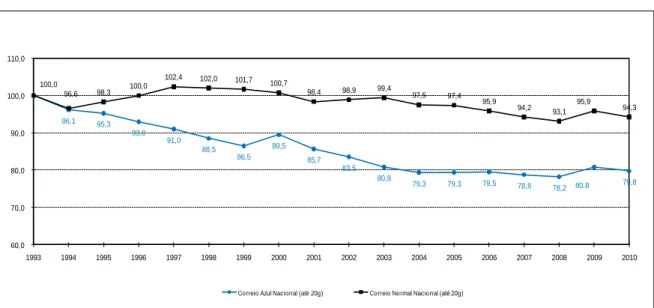
Figure 12 illustrates the trends in base tariffs for correio normal (non-priority mail) and correio azul (priority mail), with a very favourable trend reported for customers, particularly with regard to correio azul (priority mail), where the base tariff fell by about 20 percentage points between 1993 and 2010.
Figure 12 Trend in the average annual value of base tariffs in real terms (correio normal (non-priority mail) and correio azul (priority mail)) for the period 1993-2010
Source: ICP-ANACOM
Regulation of prices in the reserved area has been implemented, in the context of the Convénio de Preços (Price Convention) referred to above, through "price capping". In particular, under Article 8 of the current Convénio de Preços (Price Convention), the average weighted variation in prices of reserved postal services may not exceed, in nominal terms:
a) CPI + CPIAF37
-0.3%, in 2008;
37 The CPI adjustment factor (CPIAF) corresponded, in 2008, to the difference between the inflation value for 2007, published by the INE (Statistics Portugal), and the level of inflation officially expected for 2007 by the Government and referred to as such in the State Budget Report for 2007. In subsequent years, this corresponds to the difference between the inflation value foreseen in the State Budget Report of a given year for the previous year and the inflation value expected for the previous year pursuant to point k). In
96,1 95,3 93,0 91,0 88,5 86,5 89,5 85,7 83,5 80,8 79,3 79,3 79,5 78,8 78,2 80,8 79,8 100,0 96,6 98,3 100,0 102,4 102,0 101,7 100,7 98,4 98,9 99,4 97,5 97,4 95,9 94,2 93,1 95,9 94,3 60,0 70,0 80,0 90,0 100,0 110,0 1993 1994 1995 1996 1997 1998 1999 2000 2001 2002 2003 2004 2005 2006 2007 2008 2009 2010
34/102
b) CPI + CPIAF -0.4%, in 2009 and 2010.
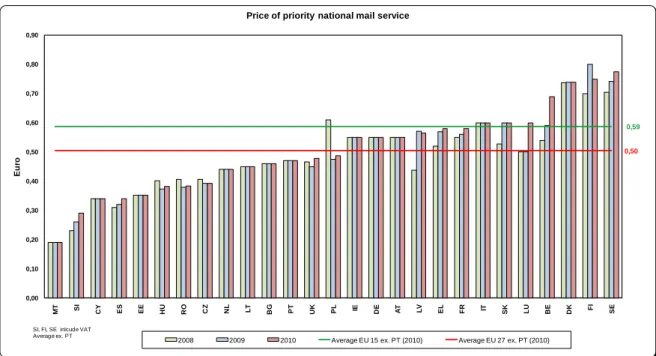
Figure 13 shows a European comparison of priority national mail (correio azul), at current exchange rates.
Figure 13 European comparison of the price of priority national mail
Source: ICP-ANACOM
The average price (excluding Portugal) of priority national mail in the EU27 increased by 3.3% (0.02 euros) in 2010 compared to 2009, with a current value of 0.51 euros. The average of the EU15 (excluding Portugal) increased by 3.0% (0.017 euros) over the same period to stand at 0.59 euros. Of all EU countries, 1338
have prices below the EU27 average (excluding Portugal), Portugal among them. In 2010, the difference between the highest and lowest prices n the EU27, found respectively in Sweden and Malta, was 0.59 euros.
case the State Budget Report of a given year fails to mention the inflation value foreseen for the previous year, this value shall be replaced by the value, in September of the referred previous year, of the average variation of the consumer price index in the last twelve months, published by the INE (Statistics Portugal). The value forecast for inflation in the State budget Report from one year to the previous year is considered zero in the event that, in this report, a rate of inflation is forecast which is below zero and, cumulatively, a positive value for inflation had been forecast for the previous year under the terms of k).
38
Malta, Slovenia, Cyprus, Spain, Estonia, Hungary, Romania, Czech Republic, Netherlands, Lithuania, Portugal, United Kingdom and Poland.
0,59 0,50 0,00 0,10 0,20 0,30 0,40 0,50 0,60 0,70 0,80 0,90 MT SI CY ES EE HU RO CZ NL LT BG PT UK PL IE DE AT LV EL FR IT SK LU BE DK FI SE E u ro
Price of priority national mail service
2008 2009 2010 Average EU 15 ex. PT (2010) Average EU 27 ex. PT (2010) SI, FI, SE inlcude VAT
35/102
A European comparison of the price of non-priority national mail (correio normal), at current exchange rates, is shown in Figure 14. The average price (excluding Portugal) of non-priority national mail in the EU27 maintained at the same value as in 2009 (0.46 euros). The EU15 average (excluding Portugal) increased by 1.6%. Of the14 EU countries under review, eight countries, including Portugal, had prices below the EU27 average (excluding Portugal)39, with the remaining six above this average.
Figure 14 European comparison of the price of non-priority national mail
Source: ICP-ANACOM
Since 2008, the average price in the EU15 (excluding Portugal) has been higher than the average price (excluding Portugal) in the EU27. The difference between the average price (excluding Portugal) in the EU15 and in the EU27 increased by 11.6% between 2009 and 2010.
In 2010, the difference between the highest and lowest price in the EU27 was 0.47 euros40, higher than reported in 2009 (0.44 euros). The maximum price is about three
times the lowest price.
39
Romania, Hungary, Bulgaria, United Kingdom, Poland, Lithuania and Slovakia. 40
In 2008 this same difference was reported at 0.42 euros. 0,00 0,10 0,20 0,30 0,40 0,50 0,60 0,70 0,80 RO HU BG PT UK PL LT SK LV FR EL FI DK SE
Price of non-priority national mail service
2008 2009 2010 EU 15 EU 27
Euro
SI, FI, SE inlcude VAT Average ex. PT
0,57
36/102 4.3.3 TRENDS IN TRAFFIC
Historically, a strong and significant correlation can be seen between GDP growth and growth in postal traffic. However, more recently, it is possible to see, as already discussed, the effect of substitution of postal traffic by electronic mail and by mediaand alternative channels, so that the growth of postal traffic growth has been lagging the national economy (see Figure 15).
Figure 15 Postal traffic growth and GDP growth in Portugal (2003-2009)41
Source: ICP-ANACOM, based on data from INE (Statistics Portugal) and postal operators
There are other reasons, however, that help to explain why the growth of postal traffic tends to lag global economic growth (ITA Consulting and WIK-Consult, 2010). One such reason is the decline in editorial mail, as more and more people prefer to read online versions of newspapers, as evidenced by the decline in postal traffic made up by newspapers and periodicals. Another factor stems from the fact that companies which send out correspondence on a large scale are becoming increasingly price-sensitive and are therefore reducing the frequency with which they send out mail.
Figure 16 illustrates the trend in total postal traffic, in postal traffic of the reserved area and of postal traffic in the liberalised area between 2002 and 2010. Over this period, there was an estimated drop of around 12.7% in total postal traffic, explained by a reduction of more than 22% in traffic of the reserved area, while traffic in the liberalised area grew by about 60% over the same period (despite a downward trend from 2006).
41
37/102
Figure 16 Trend in postal traffic (including traffic of the reserved area and the non-reserved area) over the period 2002-2010
Source: ICP-ANACOM
It is further noted that, at the end of 2010, the volume of postal traffic in the liberalised area represented 21% of total postal traffic.
Looking at the trend in addressed traffic of Grupo CTT as a whole, it is clear that the incumbent's addressed traffic declined by 5.5% in 2009 over 2008. Over the same period, CTT Expresso’s traffic grew by 10.3% and CTT Group’s non-addressed traffic grew 0.1% (see Figure 17). 1.296 1.262 1.291 1.293 1.225 1.239 1.226 1.169 1.166 1.147 1.061 1.036 1.044 922 951 956 917 893 148 201 255 249 303 288 270 251 238 0 200 400 600 800 1.000 1.200 1.400 2002 2003 2004 2005 2006 2007 2008 2009 2010