African Journal of Reproductive Health September 2018; 22 (3): 120
REVIEW ARTICLE
Association of Brucellosis with Abortion Prevalence in Humans and
Animals in Africa: A Review
DOI: 10.29063/ajrh2018/v22i3.13
Jean-Bosco Ntirandekura
1*, Lucas Eliaimringi Matemba
2, Sharadhuli Iddi Kimera
1, John
Bwalya Muma
3and Esron Daniel Karimuribo
1Sokoine University of Agriculture, College of Veterinary and Biomedical Sciences, Department of Veterinary Medicine and Public Health, Morogoro, Tanzania1; National Institute for Medical Research, Morogoro, Tanzania2; University of Zambia, School of Veterinary Medicine, Department of Disease Control, Lusaka, Zambia3
*For Correspondence: Email: [email protected]; Phone: +255 742601303
Abstract
Brucellosis is a worldwide zoonotic disease suspected to be the cause of abortions which remain largely undiagnosed in both humans and animals. A review of literature was performed to elucidate the contribution of brucellosis to abortions in humans, livestock and wildlife in Africa. A total number of 18 published articles associated brucellosis to abortions observed in humans and livestock in some parts of Africa. The contribution of brucellosis to abortions in humans was less reported in the literature compared to livestock; and no report was done in wildlife in Africa. The association of brucellosis to abortions in Africa was mostly based on bacteriologic, serologic or molecular techniques and Brucella abortus biovar 3 seemed more associated to abortions in cattle. The isolation and molecular characterization of Brucella species could advance the assessment of the contribution of brucellosis to abortions in Africa, focusing much in humans. The epidemiologic approach based on case-control comparisons could elucidate more about the contribution of brucellosis to abortions in Africa. The economic impact evaluation of abortions due to brucellosis could justify implementation of eradication programs of this disease in Africa, such as occupational and food hygiene in humans; with a vaccination and culling in animals. (Afr J Reprod Health 2018; 22[3]: 120-136).
Keywords: Spontaneous abortions, Brucellosis, mammals, Africa
Résumé
La brucellose est une maladie zoonotique mondiale soupçonnée d'être à l'origine d'avortements qui restent largement non diagnostiqués chez l'homme et chez l'animal. Une revue de la documentation a été réalisée pour élucider la contribution de la brucellose aux avortements chez l'homme, le bétail et la faune en Afrique. Au total, 18 articles publiés ont associé la brucellose aux avortements observés chez l'homme et le bétail dans certaines régions d'Afrique. La contribution de la brucellose aux avortements chez l‘homme était moins rapportée dans la documentation par rapport au bétail; et aucun rapport n'a été fait sur la faune sauvage en Afrique. L'association de la brucellose aux avortements en Afrique était principalement basée sur des techniques bactériologiques, sérologiques ou moléculaires et Brucella abortus biovar 3 semblait davantage associés aux avortements chez les bovins. L'isolement et la caractérisation moléculaire des espèces de Brucella pourraient faire progresser l'évaluation de la contribution de la brucellose aux avortements en Afrique, en se concentrant beaucoup sur l'homme. L'approche épidémiologique basée sur des comparaisons cas-témoins pourrait élucider davantage la contribution de la brucellose aux avortements en Afrique. L'évaluation de l'impact économique des avortements dus à la brucellose pourrait justifier la mise en œuvre des programmes d'éradication de cette maladie en Afrique, tels que l'hygiène professionnelle et alimentaire chez l'homme; avec la vaccination et l‘élimination chez les animaux. (Afr J Reprod Health 2018; 22[3]: 120-136).
African Journal of Reproductive Health September 2018; 22 (3):
121
Introduction
Brucellosis is a zoonosis of both veterinary and public health significance with an economic impact on livestock production in most developing countries1. This disease, which has a worldwide distribution, is caused by Gram-negative bacteria of the genus Brucella. Currently, there are 11 recognized Brucella species2, and six of them, are known to be pathogenic for both animals and to humans, namely: B. abortus, B. canis, B. inopinata, B. melitensis, B. pinnipedialis, and B. suis3. The sources of infection for animals include aborted materials, vaginal discharges, milk and semen from Brucella infected animals. Domestic animals (Cattle, sheep, goats and pigs) are the main reservoirs of Brucella. The transmission of brucellosis to humans occurs through occupational or environmental contact with infected animals or their products (cheese, raw milk and unpasteurized milk) including a travel-association to the disease4. Person-to-person transmission is extremely rare.
Despite its global distribution, data on the prevalence of brucellosis among humans and animals in Africa is limited. In Africa, the intensive interactions between humans and animals in the ecosystems favor cross-infections in mixed husbandry systems or at the livestock-wildlife interface5. Brucellosis remains endemic in most areas of the world6, even if, some of the developed countries have eradicated it from their domestic animal populations. In some parts of Africa, the disease is underreported due to insufficient awareness, inadequate diagnostic protocols, including lack of laboratory reagents7. In addition, limitations in the implementation of blood testing, milk pasteurization, food hygiene measures, slaughter and heifer vaccination programs, are some of factors which negatively affect the surveillance networks of brucellosis in Africa. However, brucellosis infections in humans can be avoided by applying occupational and food hygiene together with the implementation of bio-security measures in laboratories, while the prevention in animals could be based on good herd management and hygiene strengthened with a careful vaccination program4.
Brucellosis poses diagnostic and confirmation challenges in humans, domestic and wild animals8. In humans, brucellosis resembles other febrile diseases such as malaria, and is often misdiagnosed or underreported9. Even where good laboratory facilities exist, the disease is still misdiagnosed because of the low diseases suspicion levels among the medical practitioners. In some cases, infections due to brucellosis are not necessarily recognized based on clinical evidences because the disease has no pathognomonic signs, and therefore confirmation must be based only on laboratory tests. In livestock industry, the economic impact of brucellosis is mainly attributed to abortions which mostly occur during the last third of pregnancy. In African countries, abortions are followed in some cases by temporary or definitive infertilities also with a decrease or a total absence of milk production10. Unfortunately, in Brucella infections, the causes of abortions often remain undiagnosed even after a complete necropsy, histopathologic and microbiological examinations11. Furthermore, there are some limitations on how to make a differential diagnosis with other infectious diseases, making it difficult to assess the real contribution of brucellosis to the observed abortions in humans and in animals. Several studies in Africa have shown an association between seropositivity and abortions11–
13
; but in many cases these relationships have been established based on statistical association between prevalence and the history of abortions in herds, not as counter-factual events, which could make an ambiguous interpretation about the role played by brucellosis in the causation of abortions. Furthermore, the presence of organisms does not necessarily indicate a causal association between
African Journal of Reproductive Health September 2018; 22 (3):
122
to assess the contribution of brucellosis to abortions observed in humans and animals in Africa.
Methods
This literature review was done to demonstrate from published information the contribution of brucellosis to abortions in livestock, humans and wildlife in Africa. Articles in English and French published between 1997 and 2015 were retrieved using large-scale search engines including the Google, Google Scholar, Pubmed, Gopubmed, Freefullpdf and African journals Online. The inclusion criterion was any article in which the authors attributed the responsibility of Brucella
infections to abortion occurrence in humans, domestic animals and wildlife in Africa. Articles reporting prevalence of brucellosis in Africa without any association of abortions in humans, domestic and wild animals were excluded. The key words for the search were: [brucellosis, abortion, livestock, Africa]; [brucellosis, abortion, humans, Africa]; [brucellosis, abortion, wildlife, Africa]; [Contribution, brucellosis, abortion, Africa]. For the balanced information, it was necessary to review the Brucella and non- Brucella causes of abortions in humans and animals, as well as their economic impact evaluation without limit only to Africa continent. In this review, the focus was based only on the causes of spontaneous abortions in humans and animals (not induced abortions).
Results
Different causes of abortions in humans and
animals
The general causes of spontaneous abortions are due to infectious and non-infectious causes. There are several causes of spontaneous abortions and some of such common causes in humans and animals are discussed below.
Definition of abortion
Spontaneous abortion, or miscarriage, is defined as a pregnancy that ends spontaneously before the
fetus has reached a viable gestational time (20th week of gestation)14. Abortion can be defined also as an expulsion of a dead or living fetus of recognizable size at any stage of gestation. Abortion is also defined as a loss of a fetus which occurs from the moment in which the pregnancy diagnosis is usually performed to the point at which the fetus is considered capable of sustaining life outside the uterus15. Abortion may be either spontaneous (occurring from natural causes) or induced (artificially or therapeutically). Abortion is most of the time the result of a disturbance in the functioning of the placenta and, it may occur at any stage of pregnancy16. In case of brucellosis, the presence in uterus of erythritol (a 4-carbon sugar alcohol) is associated with abortions occurrence because it constitutes the placental tropism for the development of Brucella
specifically in ruminants17. This carbon sugar is not found in human uterus or fetus, a reason which makes it more difficult to understand the contribution of Brucella infections to abortions in pregnant women. The pathogenic mechanism for induction of abortion by bacterial and viral infections is not the same depending of the characteristics of each infectious disease which may induce this syndrome18. Protozoan parasites are common causes of extensive abortion in livestock and some species, including Toxoplasma gondii, Neospora and Sarcocystis, have a two-host life cycle19. In addition, the pathogenesis of fungal abortions is possibly based on the penetration of fungi and their toxins in the uterus and the fetus by hematogenous route20. In case of brucellosis, the pathogenesis of abortion is very unclear although, some studies have demonstrated the interactions between brucellosis and the animal trophoblast, which is not the case for the human trophoblast21.
Causes of abortions in humans
Genetic causes
African Journal of Reproductive Health September 2018; 22 (3):
123
the embryo23. Generally in Africa, it is rare to diagnose and get service in such cases24 due to the difficulties in finding trained medical geneticists, genetic counselors and medical scientists. Other causes of abortions may include genetic factors because of lethal gene combinations25.
Endocrinologic causes
In humans, an important cause of early and late abortions is due to an insufficient progesterone (disorders of the luteoplacental progesterone) secretion26.
Immunologic causes
Some studies reported the maternal immunologic aberrations to be the cause of repeated abortions27,28, and the larger numbers of unexplained abortions may have immunological reasons.
Nutritional deficiency and toxic agents
Abortions may also be due to some deficiencies of vitamins, minerals and energy in the body of pregnant females. In terms of maternal health, clinical deficiency (vitamin B12, E) may be a cause of infertility or recurrent spontaneous abortion29,30. Furthermore, poor iodine tenancy in pregnant woman body has been found in West Africa to be associated to reproductive failure including miscarriage31. A long exposure to toxic agents such as pesticides may also cause abortions or early embryonic human deaths32.
Environmental and occupational factors
On rare occasions, an individual may abort after developing a very high fever due to an infection. Spontaneous abortions can be due to environmental factors: for example, the tobacco exposure in some occasions can cause spontaneous abortions32–34. Occupations; even the income of people (poverty, lifestyle) can in some cases expose them to risk of abortions32,35.
Causes of abortions in domestic animals
Genetic causes
In animals, abortions due to genetic abnormalities occur as an individual case problem rather than as a herd problem. Studies reported abortions and neonatal losses in cattle linked to chromosomal aneuploidy11,23.
Endocrinologic causes
An experimental study reported significant alterations caused by T. brucei in the hypothalamus, adenohypophysis, uterus, placenta and fetal liver with infertility in goats36. In South Africa, a study reported cases of abortions in Angora goats due to an abnormally low level of adrenal function, coupled with some qualitative changes in adrenal steroid biosynthesis37.
Immunologic causes
It has been proved with clinical evidence that using some vaccines in pregnant animals can cause abortions. A study reported an outbreak of abortions following the use of intramuscular infectious bovine virus vaccine in a dairy herd in Canada38. Abortions which may occur after administration of Leptospira vaccines have also been discussed39. In case of brucellosis, although the available vaccines RB51 and S19 are effective in controlling brucellosis, studies reported their numerous drawbacks, such as potential to cause abortion in pregnant animals8,40,41. For Brucella
immunization, cattle are vaccinated mostly as heifer calves at 4–12 months of age whereas adult cattle may be vaccinated only in selected high-risk situations.
Nutritional deficiency and toxic agents
African Journal of Reproductive Health September 2018; 22 (3):
124
to nutritional deficiencies43. Abortions may occur, especially in late gestation if animals are exposed to sufficiently high levels of nitrates in forage (55 % or greater). Experimentally, studies have proved abortions caused by mycotoxins such as zearalenone44,45 and ergot alkaloids46.
Environmental factors
Some abortions in animals may be a result of an increase in environmental temperature47, but, evidences are not sufficient to support heat stress as a common cause of abortions.
Abortions caused by infectious diseases in
humans and animals
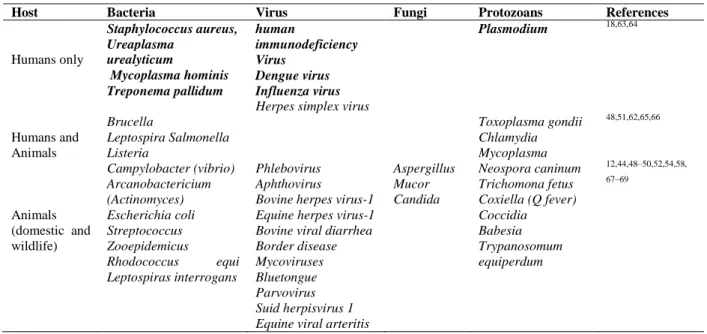
There are a larger number of infectious agents causing abortions in humans and animals and some of them are zoonotic (Table1). In fact,
Brucella spp., are among the important bacterial agents associated with abortion during mid-to late gestation including Chlamydia spp., Salmonella spp., Campylobacter spp., Listeria monocytogenes
and Coxiella burnetii8,48,49. In case of Toxoplasma gondii, it used to be misidentified while it is the most probably significant cause of repeated abortion in humans, cattle and dogs50–52. The evidences are lacking to consider Neospora caninum as a cause of abortions in humans; however, it is one the causative agents of abortions in cattle and dogs53.
Causes of abortions in wildlife
Toxoplasma gondii infections are suspected to be mostly associated to abortions cases in wildlife54,55. The Coxiella burnetii and
Chlamydiales species have been associated with abortions in wild ruminants54–57. Some infectious diseases are reported in wildlife such a Rift valley fever (RVF) in Kenya58, Food and Mouth Disease (FMD) in Zimbabwe59, tuberculosis in African buffalo in South Africa60, but little is documented about their association with abortion in wild species in Africa. Serological evidence of brucellosis and abortion were reported in wildlife
in USA61 where B. abortus was isolated for the first time from an aborted female bison62. In addition, Brucella abortus biovar 1 was isolated from a bison (Bison bison) fetus collected in Yellowstone park70. In Africa, different studies are reporting on prevalence of brucellosis in wildlife61,71–73, but little is known about the association of abortions occurrence with infectious diseases including brucellosis in wild species.
Detection of the causes of abortions
The role of infectious agents could be less important if the presence of organisms does not necessarily indicate a causal association with abortion, although the reports indicate 20-30% of their implication in abortions cases diagnosed in laboratories74. The detection of the causes of abortions in the population may be done by serological assay, immunological, bacteriological and molecular techniques, based on clinical evidences. The seroepidemiological approaches can establish a high degree of association between infections and the abortion level in the farm75. However, it is difficult to establish that Brucella is a cause of abortion based on serological results only. Furthermore, the gold standard for the diagnosis of brucellosis is isolation and identification of the causative bacterium in a biological containment level three76. In humans, the history of the patient, the physical examinations, a pelvic ultrasound, the laboratory orientation may be the foundation for a detection of causes of abortions77.
Management of abortions
African Journal of Reproductive Health September 2018; 22 (3):
125
Table 1: Infectious agents which can cause abortions in humans and animals
vaccines which may cause abortions in pregnant animals. In case of abortions due to infectious diseases such as brucellosis, a good disposal of aborted materials and culling are required to avoid the human contaminations and the dissemination of infectious agents in the herd.
The impact of abortions in humans and
animals
The economic impact of abortions
The economic impact of abortions in animals can be evaluated based on direct costs (value of fetuses lost) and indirect costs: establishing the diagnosis, re-breeding cows that aborted, possible loss of milk yield, and replacement costs if cows that aborted are culled74. Abortions in domestic animals are of great concern to farmers because the fetus that would form replacement stock is lost and a prolonged period of uterine disease and infertility or sterility may follow leading to unproductive females being maintained for long periods81. Some loss estimates around US $110.00 for abortions caused by Neospora caninum in a pregnant dairy cow in USA82. Abortions extend calving interval and increase culling and the economic evaluation from each pregnancy loss
was estimated at approximately $2,333 in Korea83. In Burkina Faso, a study reported an impact of the spontaneous abortion in women of US $56 (27 668 CFA) and underlined the high expenses with short-term economic repercussions on households‘ poverty84. In sub-Saharan Africa, very few articles focused exclusively on the cost of treating abortion complications in humans, but authors agreed that it consumes a disproportionate amount of hospital resources85. In fact, the number of fetus including the milk losses due to abortions in animals are easy to quantify whereas in humans the fetus including the emotion stress associated to abortions are difficult to measure.
Economic impact of abortions due to
brucellosis
Higher productivity losses are associated with higher prevalence of brucellosis. Brucella
seropositive animals have higher rates of abortion, stillbirth, infertility and calf mortality, as well as reduced growth and longer calving intervals. Often, infected females will abort only once, although they may remain infected their entire life. Studies on the economic production losses of bovine brucellosis are reasonably consistent across a range of production systems in Africa and Asia13.
Host Bacteria Virus Fungi Protozoans References
Humans only
Staphylococcus aureus, Ureaplasma
urealyticum
Mycoplasma hominis Treponema pallidum
human
immunodeficiency Virus
Dengue virus Influenza virus Herpes simplex virus
Plasmodium 18,63,64
Humans and Animals
Brucella
Leptospira Salmonella Listeria
Toxoplasma gondii Chlamydia Mycoplasma
48,51,62,65,66
Animals (domestic and wildlife)
Campylobacter (vibrio) Arcanobactericium (Actinomyces) Escherichia coli Streptococcus Zooepidemicus Rhodococcus equi Leptospiras interrogans
Phlebovirus Aphthovirus
Bovine herpes virus-1 Equine herpes virus-1 Bovine viral diarrhea Border disease Mycoviruses Bluetongue Parvovirus Suid herpisvirus 1 Equine viral arteritis
Aspergillus Mucor Candida
Neospora caninum Trichomona fetus Coxiella (Q fever) Coccidia Babesia Trypanosomum equiperdum
12,44,48–50,52,54,58,
African Journal of Reproductive Health September 2018; 22 (3):
126
Table 2: Papers reviewed per region and species on the contribution of brucellosis to abortions in Africa
In African regions where the infection rate is 30% for bovine brucellosis in breeding females (20% of the herd), the result in economic losses approximate to 5.8% of gross income per animal reared86. In Mongolia, after estimating the proportion of abortions among brucellosis seropositive animals, a mass vaccination program was implemented with a cost of $8.3 million87,88. If the costs of the vaccination were shared between the livestock and public health sectors, the intervention may be cost-saving and cost-effective. In Ethiopia, the economic impact of abortions due to brucellosis in camels was estimated to 21% of the total cost89 while in Sudan it was representing 8.2% of the total losses due to bovine brucellosis90.
The public health impact of abortions
Aborting animals shed large quantities of infectious agents and pose considerable risk to humans in contact. In some cases, consumers may also be at risk; for example, Coxiella burnetti, responsible for Q-fever, can be excreted in the milk of aborting goats for up to 52 days91. The disposal of aborted fetuses might be well managed to avoid humans and animal exposure to the pathogen. The human assistance rendered during parturition in abortive cattle, sheep or goat has been associated in some cases to brucellosis infections in humans92. Some case of abortive animals could result in infection of entire households when animals are kept in close proximity to living accommodation, or when they are brought inside of houses, especially in severe weather4.
The social impact of abortions
Abortion is a tragic loss and can be associated with significant psychological problems for women, their partners and families in general. For women who get an experience of spontaneous abortion, it is a stressful event as well as they are not sure to conceive and arrive at term successfully with the next pregnancies. About 1% of couples will experience recurrent spontaneous abortion93. In animals, abortions can lead to nutrition insecurity because of the decrease of milk production and loss of calves. In addition, infectious diseases which lead to abortions can unable livestock producers to meet their social obligations such as the man‘s position, influence and the respect in the community as well as the payment of children school fees, medication, clothes110,111.
The contribution of brucellosis to abortions
observed in humans and animals in Africa
Some studies in this review (5/18) reported data on the abortion associated with brucellosis in Africa96,100. These estimates of abortions reported in this review are high (0.17-16.2%) compared to the normal abortion rate, which is ranged between 2-5% in cattle86. Domenech et al.112 demonstrated, using a formula, the existence of correlation between the manifestation of brucellosis symptoms and the increases of abortion cases in African cattle. Some authors have also reported the association between brucellosis and abortions observed in Africa based on the calculated odds ratio101,103.
Region Countries Humans Dom.
Animals
Humans &
dom. animals
Wildlife Total Reference
s
North Africa Morocco, Egypt, Tunisia
1 3 0 0 4 94–97
West Africa Nigeria, Niger 0 3 0 0 3 12,98,99
Central Africa Cameroon, Chad 0 1 0 0 1 86
East Africa Tanzania, Kenya, Rwanda, Ethiopia
1 3 2 0 6 100–105
Southern Africa Zimbabwe, Zambia, South Africa
African Journal of Reproductive Health September 2018; 22 (3):
127
Table 3: Data extracted from literature on the contribution of brucellosis to abortions observed in Africa
Studies/ species
Study design Sample size Samples
type
Diagnostic methods Prevalence Ethical
issues
Abortion rate
(OR) References
Humans
Case-control 324 women Blood SAT 26.8% Yes NR 2.3 101
Cross-sectional
129 women Blood SAT 38.8% Yes NR NR 97
Prospective 125 women Blood, swabs
NR 4% NR NR NR 106
Humans and domestic animals
Cross-sectional
60 women, 27 cattle
Blood RBPT 25% Yes NR NR 104
Cross-sectional
483 cattle, 120 humans
Blood RBPT, ELISA 0 – 28.95% Yes NR NR 105
Domestic animals
Cross-sectional
20 herds (214 cattle)
blood, swabs, milk
RBPT, culture, RT-PCR 31.3% Yes NR NR 95
Cross-sectional
23 sheep Blood 4.34% NR 7% NR 96
Cross-sectional
5192 cattle (681 herds)
Blood, hygromas fluids)
ELISA, MLVA-VNTR Herd:11.2- 17.2% Individ: 1.3%
Yes No 3.0 12
Cross-sectional
24 cattle Blood RBPT 15.4 - 85% NR 0.17- 11.8 NR 86
Cross-sectional
700 cattle Blood, milk RBPT, culture, ELISA, PCR
6.7 – 9% Yes NR NR 107
Cross-sectional
200 cattle, 50 goats, 35 sheep
Blood, milk, aborted materials
RBPT, ELISA, MRT, culture, PCR, MLVA-VNTR
48% Yes NR NR 102
Cross-sectional
283 cattle, 756camels, 757 goats
Blood, RBPT, CFT Cattle : 10.6%
camel : 2.2% goats : 1.9%
Yes Camels:
23.4% cattle: 13.8% goats 12.4%
cattle: 4.7 goats: 6 9 camel: 1
African Journal of Reproductive Health September 2018; 22 (3):
128
Cross-sectional
886 cattle Blood RBPT, ELISA 23.9% NR Herd:
50% Individ: 16.2%
3.4 108
Cross-sectional
239 cattle Blood RBPT, SAT, CFT 3.8 NR NR 109
Cross- sectional
28 sheep Milk ,
blood, vaginal swab
RBPT, SAT, MRT, culture
14.3% NR NR NR 98
Cross-sectional
22 sheep Milk RBPT, SAT, MRT,
Culture
14.5% NR NR NR 99
Cross-sectional
260 cattle Blood ELISA 16.8% NR 6.5% 0.7
1.1
100
Cross-sectional
10 cattle, 5 buffalo, 9 goats,1 sheep
Blood RT-PCR -cattle: 100%;
-buffaloes: 50%; -goats:33.3%; -ewe:100%
NR NR NR 94
CFT: Complement fixation test; ELISA: Enzyme-linked immunosorbent assay; MRT: Milk ring test; MLVA-VNTR: Multiple-locus variable number tandem repeat
African Journal of Reproductive Health September 2018; 22 (3):
129
Figure1: The study design, diagnostic methods, reported data, ethical considerations per species and regions to assess the contribution of brucellosis to abortions in Africa
However, some abortions recorded in Africa may be due to co-infections between brucellosis and others infectious diseases95,100. Differential diagnosis of brucellosis with others abortive infections prevalent in the study area could reveal the true association between the observed abortions and the prevalence of each disease.
Discussion
Brucellosis is one of the major zoonotic diseases on the African continent and has an economic impact on livestock productivity (abortions, decrease of milk production). The syndrome of abortion affects the household‘s income and constitutes a risk factor for the dissemination of
Brucella in humans and animals. A review of online literature has been done with an objective of assessing the contribution of brucellosis to abortions in humans, domestic animals and wildlife in Africa. The association may exist between brucellosis and abortions in animals which manifest clinical symptoms for this disease in Africa12, and a correlation exists between the manifestation of brucellosis symptoms and the increases of abortion cases in African cattle86. Some events at farm or risk group level such as exposure to aborted materials, unpasteurized milk
consumption, artificial insemination, could be recorded during follow up for completing the differential diagnosis with other prevalent infectious diseases related to abortions. The high prevalence of brucellosis in cattle reported in Africa is most of time associated with abortions13; around one fifth of cows may abort where seroprevalence is higher than 30%.
African Journal of Reproductive Health September 2018; 22 (3):
130
known to be less specific, and the results can be biased with false positive because of some cross-reactions with other bacteria. However, the contribution of brucellosis to abortions is less highlighted by molecular techniques114,115, although this disease is considered to be one of the major causes of abortions in cattle in Africa109,116. In this review, Brucella abortus seemed to be the specie most associated with abortions in Africa12,99,102,109. Generally, the cost of molecular techniques could be a challenge to African countries. However, this technique could be a good way to detect the presence of infectious agents in aborted materials and to assess the real contribution of brucellosis in abortions recorded in humans and animals on the continent. Molecular epidemiology could contribute as a tool for identification and characterization of Brucella
species from aborted animals, determining their origin and possible spillover to other species (especially wildlife). Studies could extend their exploration to the presence of Brucella in the human aborted materials or breast milk after abortions, this will complete data on seroprevalence studies and questionnaire surveys in Africa.
In this review, studies reported abortions associated with brucellosis in Africa, focusing much on domestic animals94,98,103 and less in humans (Tables 2 and 3). Although some authors reported the association between brucellosis and the observed abortions in humans in Africa97,101,104,106, the pathogenesis of brucellosis in pregnant women still remains to be elucidated. However, the abortion process is well described in animals due to the role played by erythritol (sugar), which may confer the tropism for Brucella
development in the uterus. Nevertheless, out of Africa, it has been suggested that brucellosis may cause higher rate of abortions, more frequently than do other bacterial infections in pregnant women115. Furthermore, in situations where brucellosis is suspected to be a cause of abortions in pregnant women, laboratory analyses are required to confirm the role played by others febrile diseases (such as malaria) or abortive
infectious diseases (Rift valley fever, Toxoplasmosis) which are equally prevalent in Africa. The clinical symptoms observed in pregnant women could complete the differential diagnosis with the prevalent others abortive and febrile diseases. Furthermore, this gap can be rectified by applying for the confirmation of the brucellosis in humans based on isolation and molecular techniques.
Generally, no evidence of abortion due to this disease has been documented in wildlife; despite the findings from a single study that reported the impact of brucellosis on abortions in the wildlife-livestock interface103. In Africa, interactions are observed between domestic and wild animal species in pastoral farming systems where they may be exposed to aborted materials, when sharing the same pasture or common source of water. Furthermore, smallholder farmers might be affected by the abortions exposure due to brucellosis because of the cut and carry as feeding system117.
Study Limitations
Eighteen papers were used to extract data because they reported on the role played by Brucella
African Journal of Reproductive Health September 2018; 22 (3):
131
Conclusion
Brucellosis is reported in Africa with high prevalence in humans and animals. However, there is limited published data about the contribution of this zoonotic disease to abortions in humans and animals. The literature reviewed stated little about the estimation of the abortion rate and the calculated odds ratio which are strong indications of association between brucellosis and abortions in humans and animals in Africa. More data are reported by eastern and southern parts of Africa on the assessments of the contribution of brucellosis to abortions, but generally in Africa, there is a lack of a rigorous sample size calculation, an inadequate study design planning, and ethical clearance considerations are also required. The identification of the causes of abortions in Africa, specifically the role played by brucellosis, is based on routine test (RBT) and immunological diagnosis (ELISA); but, the detection should be based on more definitive methods such as isolation and molecular characterization from blood, milk and aborted materials. Furthermore, little is reported about the association of brucellosis to abortions in humans (five papers out of 18). As the causes of abortions are multiple, the clinical observations in humans and animals could complete the differential diagnosis with the prevalent abortive diseases. In addition, the contribution of brucellosis to abortions in wildlife in Africa is not elucidated in the literature, and, the economic impact evaluation of abortions in the herds due to this disease remains to be completed. The epidemiologic approach based on collecting core data concerning both aborted and non-aborted individuals (humans and animals) could determine the contribution of brucellosis to abortions in populations and could help to monitor the prophylaxis in humans and the progress of vaccination programs in animals. Due to the strong interactions in the human-livestock-wildlife interface in Africa, the contribution of brucellosis to abortions calls for the interdisciplinary collaboration for its understanding and controlling.
Acknowledgement
We would like to thank the Intra-ACP Academic Mobility Scheme through Grant Agreement 2012-3166 to Sokoine University of Agriculture for the financial support of this review.
Contribution of Authors
The first and the fourth authors prepared the manuscript for publication. All the authors mentioned in the article reviewed the final version and they approved the manuscript.
References
1. Corbel MJ. Brucellosis: an overview. Emerg Infect Dis. 1997;3(2):213-221. doi:10.3201/eid0302.970219 2. Whatmore AM, Davison N, Cloeckaert A, Al Dahouk
S, Zygmunt MS, Brew SD, Perrett LL, Koylass MS, Vergnaud G, Quance C, Scholz HC, Dick EJ Jr, Hubbard G and Schlabritz-Loutsevitch NE. Brucella papionis sp. nov., isolated from baboons (Papio spp.). Int J Syst Evol Microbiol. 2014;64(12):4120–4128. Doi:10.1099/ijs.0.065482-0
3. Tiller RV, Gee JE, Lonsway DR, Gribble S, Bell SC, Jennison AV, Bates J, Coulter C, Hoffmaster AR and De BK. Identification of an unusual Brucella strain (BO2) from a lung biopsy in a 52 year-old patient with chronic destructive pneumonia. BMC Microbiol. 2010;10(1):23. doi:10.1186/1471-2180-10-23
4. Corbel M. Brucellosis in Humans and Animals. Geneva. World Health Organization, 2006.
5. Zheludkov MM and Tsirelson LE. Reservoirs of Brucella infection in nature. Biol Bull. 2010;37(7):709-715.
doi:10.1134/S106235901007006X
6. Moreno E. Retrospective and prospective perspectives on zoonotic brucellosis. Front Microbiol. 2014. doi:10.3389/fmicb.2014.00213
7. Assenga JA, Matemba LE, Muller SK, Malakalinga JJ and Kazwala RR. Epidemiology of Brucella infection in the human, livestock and wildlife interface in the Katavi-Rukwa ecosystem, Tanzania. BMC Vet Res. 2015;11:189. doi:10.1186/s12917-015-0504-8
African Journal of Reproductive Health September 2018; 22 (3):
132
9. McDermott JJ and Arimi SM. Brucellosis in sub- Saharan Africa: epidemiology, control and impact. Vet Microbiol. 2002;90(1-4):111-134.
10. Mangen MJ, Otte J, Pfeiffer D and Chilonda P. Bovine brucellosis in sub-Saharan Africa: estimation of sero-prevalence and impact on meat and milk offtake potential. FAO Livestock policy discussion paper. 2002;(8), 53.
11. Schmutz SM, Moker JS, Clark EG and Orr JP.
Chromosomal Aneuploidy Associated with Spontaneous Abortions and Neonatal Losses in Cattle. J Vet Diagnostic Investig. 1996;8(1):91-95. doi:10.1177/104063879600800114
12. Boukary AR, Saegerman C, Abatih E, Fretin
D, Alambédji Bada R, De Deken R, Harouna HA, Yenikoye A and Thys E. Seroprevalence and Potential Risk Factors for Brucella Spp. Infection in Traditional Cattle, Sheep and Goats Reared in Urban, Periurban and Rural Areas of Niger. PLoS One. 2013;8(12). doi:10.1371/journal.pone.0083175 13. McDermott JJ, Grace D and Zinsstag J. Economics of
brucellosis impact and control in low-income countries. Sci Tech Rev Off Int des Epizoot. 2013;32(1): 249-261.
14. Regan L and Rai R. Epidemiology and the medical causes of miscarriage. Best Pract Res Clin Obstet Gynaecol. 2000;14(5):839-854. doi:10.1053/BEOG.2000.0123
15. Kinsel ML. epidemiologic approach to investigating abortion problems in dairy herds. Bovine Proc. 1999;32:152–160. http://agris.fao.org/agris-search/search.do?recordID=US201302917471. Accessed March 10, 2016.
16. Mohale D. Abortions and causes of death in newborn
sheep and goats.
http://www.nda.agric.za/docs/Infopaks/abort.pdf. Published 2013. Accessed June 16, 2018.
17. O‘Callaghan D. Novel replication profiles of Brucella in human trophoblasts give insights into the pathogenesis of infectious abortion. J Infect Dis. 2013;207(7):1034-1036. doi:10.1093/infdis/jit010 18. Nigro G, Mazzocco M, Mattia E, Di Renzo GC, Carta G
and Anceschi MM. Role of the infections in recurrent spontaneous abortion. J Matern Neonatal
Med. 2011;24(8):983-989.
doi:10.3109/14767058.2010.547963 19. Kaltungo BY and Musa IW. A Review of Some
Protozoan Parasites Causing Infertility in Farm Animals. ISRN Trop Med. 2013;2013:1-6. doi:10.1155/2013/782609
20. Pal M. Growing Role of Fungi in Mycotic Abortion of Domestic Animal. J Bacteriol Mycol. 2015, 2(1):1009.
21. Kurdoglu M, Cetin O, Kurdoglu Z and Akdeniz H. The Effect of Brucellosis on Women‘s Health and Reproduction. Int J Women‟s Heal Reprod Sci. 2015;3(4):176-183. doi:10.15296/ijwhr.2015.38 22. Carr DH. Chromosome studies in selected spontaneous
abortions. 1. Conception after oral contraceptives. Can Med Assoc J. 1970;103(4):343-348.
23. Suzumori N and Sugiura-Ogasawara M. Genetic factors as a cause of miscarriage. Curr Med Chem. 2010;17(29):3431-3437.
24. Kromberg JGR, Sizer EB and Christianson AL. Genetic services and testing in South Africa. J Community Genet. 2013;4(3):413-423. doi:10.1007/s12687-012-0101-5
25. Schmid W. A Familial Chromosome Abnormality Associated with Repeated Abortions. Cytogenet Genome Res. 1962;1(3-4):199-209. doi:10.1159/000129729
26. Kaur R and Gupta K. Endocrine dysfunction and recurrent spontaneous abortion: An overview. Int J Appl basic Med Res. 2016;6(2):79-83. doi:10.4103/2229-516X.179024
27. Scott JR, Rote NS and Branch DW. Immunologic aspects of recurrent abortion and fetal death. Obstet Gynecol. 1987;70(4):645-656.
28. Fatusić Z. Immunological aspect of spontaneous and habitual abortion. Medicinski arhiv. 2006;60(2):129-131.
29. Yamini B and Stein S. Abortion, stillbirth, neonatal death, and nutritional myodegeneration in a rabbit breeding colony. J Am Vet Med Assoc. 1989;194(4):561-562.
30. Molloy AM, Kirke PN, Brody LC, Scott JM and Mills JL. Effects of folate and vitamin B12 deficiencies during pregnancy on fetal, infant, and child development. Food Nutr Bull. 2008;29(2 Suppl):S101-111-115.
31. Dillon JC and Milliez J. Reproductive failure in women living in iodine deficient areas of West Africa. BJOG An Int J Obstet Gynaecol. 2000;107(5):631-636. doi:10.1111/j.1471-0528.2000.tb13305.x 32. Arbuckle TE, Lin Z and Mery LS. An exploratory
analysis of the effect of pesticide exposure on the risk of spontaneous abortion in an Ontario farm population. Environ Health Perspect. 2001;109(8):851-857.
33. George L, Granath F, Johansson AL V, Annerén G and Cnattingius S. Environmental Tobacco Smoke and Risk of Spontaneous Abortion. Epidemiology. 2006;17(5):500-505.
doi:10.1097/01.ede.0000229984.53726.33 34. Windham GC, Von Behren J, Waller K and Fenster L.
Exposure to environmental and mainstream tobacco smoke and risk of spontaneous abortion. Am J Epidemiol. 1999;149(3):243-247.
35. Hemminki K, Kyyrönen P, Niemi ML, Koskinen K, Sallmén M and Vainio H. Spontaneous abortions in an industrialized community in Finland. Am J Public Health. 1983;73(1):32-37. doi:10.2105/AJPH.73.1.32
36. Leigh OO, Emikpe BO and Ogunsola JO.
African Journal of Reproductive Health September 2018; 22 (3):
133
West African dwarf goat does. Bulgarian Journal of Veterinary Medicine. 2015;18(1).
37. Van Rensburg SJ. Reproductive physiology and endocrinology of normal and habitually aborting Angora goats. Onderstepoort J Vet Res (South Africa). 1971;(38):1-62.
38. Mitchell D. An outbreak of abortion in a dairy herd following inoculation with an intramuscular infectious bovine rhinotracheitis virus vaccine. ncbi.nlm.nih.gov. 1974;15(5):148.
39. Naiman BM, Blumerman S, Alt D, Bolin CA, Brown R, Zuerner R and Baldwin CL. Evaluation of type 1 immune response in naïve and vaccinated animals following challenge with Leptospira borgpetersenii serovar Hardjo: involvement of WC1+ γδ and CD4 T cells. Infection and immunity. 2002;70(11): 6147-6157.
40. Dougherty AMF, Cornish TE, O‘Toole D, Boerger- Fields AM, Henderson OL and Mills KW. Abortion and premature birth in cattle following vaccination with Brucella abortus strain RB51. J Vet Diagnostic Investig. 2013;25(5):630-635. doi:10.1177/1040638713499570
41. Dorneles EMS, Sriranganathan N and Lage AP. Recent advances in Brucella abortus vaccines. Vet Res. 2015;46(1):76. doi:10.1186/s13567-015-0199-7 42. Moeller RB. Causes of Caprine Abortion: Diagnostic
Assessment of 211 Cases (1991–1998). J Vet Diagnostic Investig. 2001;13(3):265-270. doi:10.1177/104063870101300317
43. Van Heerden K. Investigation into the cause of abortion in Angora goats in South Africa. J S Afr Vet Assoc. 1961;32(2):211-219.
44. Knudtson WU and Kirkbride CA. Fungi Associated with Bovine Abortion in the Northern Plains States (USA). J Vet Diagnostic Investig. 1992;4(2):181-185. doi:10.1177/104063879200400211
45. Weaver GA, Kurtz HJ, Mirocha CJ, Bates FY, Behrens JC, Robinson TS and Gipp WF . Mycotoxin-induced abortions in swine. The Canadian Veterinary Journal. 1978;19(3):72-74.
46. Clay K and Schardl C. Evolutionary origins and ecological consequences of endophyte symbiosis with grasses. Am Nat. 2002;160(S4):S99-127. 47. Edwards MJ. Congenital defects in guinea pigs: Fetal
resorptions, abortions, and malformations following induced hyperthermia during early gestation. Teratology. 1969;2(4):313-328. doi:10.1002/tera.1420020406
48. Kirkbride CA. Bacterial Agents Detected in a Lo-Year Study of Bovine Abortions and Stillbirths. J Vet Diagnostic Investig. 1993;5(1):64-68. doi:10.1177/104063879300500114
49. Tramuta C, Lacerenza D, Zoppi S, Goria M, Dondo A, Ferroglio E, Nebbia P and Rosati S. Development of a set of multiplex standard polymerase chain reaction assays for the identification of infectious agents from aborted bovine clinical samples. J Vet
Diagnostic Investig. 2011;23(4):657-664. doi:10.1177/1040638711407880
50. Sahwi SY, Zaki MS, Haiba NY, Elsaid OK, Anwar MY and AbdRabbo SA. Toxoplasmosis as a cause of repeated abortion. J Obstet Gynaecol (Tokyo 1995). 1995;21(2):145-148.
51. Dubey JP and Jones JL. Toxoplasma gondii infection in humans and animals in the United States. Int J Parasitol. 2008;38(11):1257-78.
52. Tenter AM, Heckeroth AR and Weiss LM. Toxoplasma gondii: from animals to humans. Int J Parasitol. 2000;30(12-13):1217-1258.
53. Petersen E, Lebech M, Jensen L, Lind P, Rask M, Bagger P, Björkman C and Uggla A. Neospora caninum infection and repeated abortions in humans. Emerg Infect Dis. 1999;5(2):278.
54. Dubey JP, Johnson JE, Hanson MA and Pierce V. Toxoplasmosis-associated abortion in an Alpaca ( vicugna pacos ) fetus. J Zoo Wildl Med. 2014;45(2):461-464. doi:10.1638/2014-0006R.1 55. Crawford GC, Dunker FH, and Dubey JP.
Toxoplasmosis as a suspected cause of abortion in a Greenland muskox (Ovibos moshatus wardi). J Zoo Wildl Med. 2000;31(2):247-250.
56. Lloyd C, Stidworthy MF and Wernery U. Coxiella burnetii Abortion in Captive Dama Gazelle (Gazella dama) in the United Arab Emirates. J Zoo Wildl Med. 2010;41(1):83-89. doi:10.1638/2009-0005.1 57. Kreizinger Z, Szeredi L, Bacsadi Á, Nemes C, Sugár L,
Varga T, Sulyok KM, Szigeti A, Ács K, Tóbiás E and Borel N. Occurrence of Coxiella burnetii and Chlamydiales species in abortions of domestic ruminants and in wild ruminants in Hungary, Central Europe. J Vet Diagnostic Investig. 2015;27(2):206-210.
doi:10.1177/1040638714563566
58. Evans A, Gakuya F, Paweska JT, Rostal M, Akoolo L, Van Vuren PJ, Manyibe T, Macharia JM, Ksiazek TG, Feikin DR and Breiman RF. Prevalence of antibodies against Rift Valley fever virus in Kenyan wildlife. Epidemiol Infect. 2008;136(9):1261-1269.. 59. Sutmoller P, Thomson GR, Hargreaves SK, Foggin CM
and Anderson EC. The foot-and-mouth disease risk posed by African buffalo within wildlife conservancies to the cattle industry of Zimbabwe. Prev Vet Med. 2000;44(1-2):43-60.
60. Michel AL, Bengis RG, Keet DF, Hofmeyr M, De Klerk LM, Cross PC, Jolles AE, Cooper D, Whyte IJ, Buss P and Godfroid J. Wildlife tuberculosis in South African conservation areas: Implications and challenges. Vet Microbiol. 2006;112(2-4):91-100. doi:10.1016/j.vetmic.2005.11.035
61. Godfroid J. Brucellosis in wildlife. Revue Scientifique et Technique-Office international des épizooties. 2002;21(1):277-86.
African Journal of Reproductive Health September 2018; 22 (3):
134
1993;29(1):118-122. doi:10.7589/0090-3558-29.1.118
63. Giakoumelou S, Wheelhouse N, Cuschieri K, Entrican G, Howie SEM and Horne AW. The role of infection in miscarriage. Hum Reprod Update. 2016;22(1):116-133. doi:10.1093/humupd/dmv041 64. Silasi M, Cardenas I, Kwon J-Y, Racicot K, Aldo P and
Mor G. Viral Infections During Pregnancy. Am J Reprod Immunol. 2015;73(3):199-213. doi:10.1111/aji.12355
65. Kundsin RB and Driscoll SG. The role of mycoplasmas in human reproductive failure. Ann N Y Acad Sci. 1970;174(2 Unusual Isola):794-797. doi:10.1111/j.1749-6632.1970.tb45596.x
66. Hum S, Kessell A, Djordjevic S, Rheinberger R, Hornitzky M, Forbes Wand Gonsalves J. Mastitis, polyarthritis and abortion caused by Mycoplasma species bovine group 7 in dairy cattle. Aust Vet J. 2000;78(11):744-750. doi:10.1111/j.1751-0813.2000.tb10444.x
67. Elliott RM. Emerging viruses: the Bunyaviridae. Mol Med. 1997;3(9):572-577.
68. Giles RC, Donahue JM, Hong CB, Tuttle PA, Petrites- Murphy MB, Poonacha KB, Roberts AW, Tramontin RR, Smith B and Swerczek TW. Causes of abortion, stillbirth, and perinatal death in horses: 3,527 cases (1986-1991). J Am Vet Med Assoc. 1993;203(8):1170-1175.
69. Ranjan R, Biswal JK, Subramaniam S, Singh KP, Stenfeldt C, Rodriguez LL, Pattnaik B and Arzt J. Foot-and-Mouth Disease Virus-Associated Abortion and Vertical Transmission following Acute Infection in Cattle under Natural Conditions. Xing Z, ed. PLoS One. 2016;11(12):e0167163. doi:10.1371/journal.pone.0167163
70. Rhyan JC, Quinn WJ, Stackhouse LS, Henderson JJ, Ewalt DR, Payeur JB, Johnson M and Meagher M. Abortion Caused by Brucella abortus Biovar 1 in a Free-ranging Bison (Bison bison) from Yellowstone National Park. J Wildl Dis. 1994;30(3):445-446. doi:10.7589/0090-3558-30.3.445
71. Waghela S and Karstad L. Antibodies to Brucella spp. among blue wildebeest and African buffalo in Kenya. J Wildl Dis. 1986;22(2):189-192. doi:10.7589/0090-3558-22.2.189
72. Fyumagwa RD, Wambura PN, Mellau LS and Hoare R. Seroprevalence of Brucella abortus in buffaloes and wildebeests in the Serengeti ecosystem: A threat to humans and domestic ruminants. Tanzania Vet J. 2009;26(2):62-67.
73. Muma JB, Munyeme M, Matope G, Siamudaala VM, Munang‘andu HM, Matandiko W, Godfroid J, Skjerve E and Tryland M. Brucella seroprevalence of the Kafue lechwe (Kobus leche kafuensis) and Black lechwe (Kobus leche smithemani): Exposure associated to contact with cattle. Prev Vet Med. 2011;100(3-4):256-260.
doi:10.1016/j.prevetmed.2011.03.013
74. Peter AT. Abortions in dairy cows: new insights and economic impact. Proceedings of Western Canadian Dairy Seminar, Red Deer, Alberta, Canada. Adv Dairy Technol. 2000;12(233-44).
75. Hall CA, Reichel MP and Ellis JT. Neospora abortions in dairy cattle: diagnosis, mode of transmission and control. Vet Parasitol. 2005;128(3-4):231-241. 76. Nielsen K and Yu WL. Serological diagnosis of
brucellosis. Prilozi. 2010;31(1):65-89.
77. Shields AD. Pregnancy Diagnosis: Overview, History and Physical Examination, Laboratory Evaluation.
Medscape References.
https://emedicine.medscape.com/article/262591-overview. Published 2012. Accessed June 17, 2018. 78. Griebel CP, Halvorsen J, Golemon TB and Day AA.
Management of spontaneous abortion. Am Fam Physician. 2005;72(7):1243-1250.
79. Murray RD. Practical Approach to Infectious Bovine Abortion Diagnosis. World Buiatrics Congr., Nice,
France; 2006.
https://pdfs.semanticscholar.org/a71a/366fc6c163dc c2024e2d17b5aee8a3c152cb.pdf. Accessed June 9, 2018.
80. Monney T, Debache K and Hemphill A. Vaccines against a Major Cause of Abortion in Cattle, Neospora caninum Infection. Animals. 2011;1(3):306-325. doi:10.3390/ani1030306 81. Sekitoleko A, Kasirye FN, Muwazi R and Owiny OD.
Prevalence of Bovine Abortion in Selected Areas of Central Uganda. East African Agric For J. 2003;68(3):143-146. doi:10.4314/eaafj.v68i3.1788 82. Reichel MP, Alejandra Ayanegui-Alcérreca M, Gondim
LFP and Ellis JT. What is the global economic impact of Neospora caninum in cattle – The billion dollar question. Int J Parasitol. 2013;43(2):133-142. doi:10.1016/j.ijpara.2012.10.022
83. Lee JI and Kim IH. Pregnancy loss in dairy cows: the contributing factors, the effects on reproductive performance and the economic impact. J Vet Sci. 2007;8(3):283-288. doi:10.4142/JVS.2007.8.3.283 84. Ilboudo PGC, Greco G, Sundby J and Torsvik G. Costs
and consequences of abortions to women and their households: a cross-sectional study in Ouagadougou, Burkina Faso. Health Policy Plan. 2015;30(4):500-507. doi:10.1093/heapol/czu025 85. Benson J, Nicholson LA, Gaffikin L and Kinoti SN.
Complications of unsafe abortion in sub-Saharan Africa: a review. Health Policy Plan. 1996;11(2):117-131.
86. Domenech J, Coulomb J and Lucet P. La brucellose bovine en Afrique Centrale. IV. Evaluation de son incidence économique et calcul du coût-bénéfice des opérations d‘assainissement. Rev Elev Med Vet Pays Trop. 1982;35(2):113-124.
African Journal of Reproductive Health September 2018; 22 (3):
135
Organization. 2003;81:867-76.
88. Zinsstag J, Schelling E, Waltner-Toews D, Whittaker M and Tanner M. One Health: the theory and practice of integrated health approaches. CABI,2015. 89. Habtamu TT, Richard B, Dana H and Kassaw AT.
Camel brucellosis: its public health and economic impact in pastoralists, Mehoni district, Southeastern Tigray, Ethiopia. Journal Microbiol Res. 2015;5(5):149-156.
90. Angara TE, AAA I, Ibrahim AM and Osman SZ. Assessment of the economic losses due to bovine brucellosis in Khartoum State, Sudan. International Journal of Technical Research and Applications. 2016;4(2):85-90.
91. Bouvery NA, Souriau A, Lechopier P and Rodolakis A. Experimental Coxiella burnetii infection in pregnant goats: excretion routes. Vet Res. 2003;34(4):423-433. doi:10.1051/vetres:2003017
92. John K, Fitzpatrick J, French N, Kazwala R, Kambarage D, Mfinanga GS and MacMillan A CS. Quantifying Risk Factors for Human Brucellosis in Rural Northern Tanzania. Noor AM, ed. PLoS One. 2010;5(4):e9968. doi:10.1371/journal.pone.0009968 93. Ford HB and Schust DJ. Recurrent pregnancy loss:
etiology, diagnosis, and therapy. Rev Obstet Gynecol. 2009;2(2):76-83.
94. Wareth G, Melzer F, Tomaso H, Roesler U and Neubauer H. Detection of Brucella abortus DNA in aborted goats and sheep in Egypt by real-time PCR Veterinary Research. BMC Res Notes. 2015;8(1). doi:10.1186/s13104-015-1173-1
95. Barkallah M, Gharbi Y, Hassena AB, Slima AB, Mallek Z, Gautier M, Greub G, Gdoura R, Fendri I. Survey of Infectious Etiologies of Bovine Abortion during Mid- to Late Gestation in Dairy Herds. Chang Y-F, ed. PLoS One. 2014;9(3):e91549. doi:10.1371/journal.pone.0091549
96. Benkirane A, Jabli N and Rodolakis A. Frequency of abortion and seroprevalence of the principal diseases causing ovine infectious abortion in the area of Rabat (Morocco). Ann Vet Res. 1990;21(4):267-73.
97. Sabah AA, Aly AM, Tawab AHA and Arafa WAS. Brucellosis in Egyptian female patients. J Egypt Soc Parasitol. 2008;38(2):671-678.
98. Ocholi RA, Kwaga JKP, Ajogi I and Bale JOO. Abortion due to Brucella abortus in sheep in Nigeria. Rev Sci Tech. 2005;24(3):973-979. 99. Okoh AEJ. Abortion in sheep near Kano, Nigeria. Trop
Anim Health Prod. 1980;12(1):11-14. doi:10.1007/BF02242624
100. Okumu TA. Infectious Abortion and Associated Risk Factors in Dairy Cattle Farms in Nakuru District, Kenya. Doctoral dissertation, Thesis (PhD), Clinical Studies, University of Nairobi. 2014. http://erepository.uonbi.ac.ke/bitstream/handle/1129 5/75174/Okumu_Infectious abortion and associated risk factors in dairy cattle farms in Nakuru district,
Kenya.pdf?sequence=1. Accessed June 11, 2018. 101. Onzere NI. The role of Brucellosis in spontaneous
abortion at Narok District Hospital. Master's dissertation, Medicine in Obstetrics and Gynaecology, University of Nairobi. 2011. http://erepository.uonbi.ac.ke/handle/11295/3795. Accessed June 11, 2018.
102. Mathew C, Stokstad M, Johansen TB, Klevar S, Mdegela RH, Mwamengele G, Michel P, Escobar L, Fretin D and Godfroid J. First isolation, identification, phenotypic and genotypic characterization of Brucella abortus biovar 3 from dairy cattle in Tanzania. BMC Vet Res. 2015;11:156. doi:10.1186/s12917-015-0476-8 103. Megersa B, Biffa D, Abunna F, Regassa A, Godfroid J
and Skjerve E. Seroprevalence of brucellosis and its contribution to abortion in cattle, camel, and goat kept under pastoral management in Borana, Ethiopia. Trop Anim Health Prod. 2011;43(3):651-656. doi:10.1007/s11250-010-9748-2
104. Rujeni N and Mbanzamihigo L. Prevalence of
brucellosis among women presenting with abortion/stillbirth in Huye, Rwanda. Journal of tropical medicine. 2014. doi.org/10.1155/2014/740479
105. Shirima GM, Masola SN, Malangu ON and Schumaker BA. Outbreak investigation and control case report of brucellosis: experience from livestock research centre, Mpwapwa, Tanzania. Onderstepoort J Vet Res. 2014;81(1).
106. Fernihough TJ, Muñoz WP and Mahadeyo I. The role of Brucella abortus in spontaneous abortion among the black population. S Afr Med J. 1985;68(6):379-380. 107. Gomo C, Van Heerden H, Musari S, De Garine-
Wichatitsky M, Caron A and Pfukenyi DM. Detection of Brucella abortus in Chiredzi district in Zimbabwe. Onderstepoort Journal of Veterinary Research. 2012 ;79(1):1-5.
108. Muma JB, Godfroid J, Samui KL and Skjerve E. The role of Brucella infection in abortions among traditional cattle reared in proximity to wildlife on the Kafue flats of Zambia. Rev Sci Tech. 2007;26(3):721-730.
109. Njiro SM, Kidanemariam AG, Tsotetsi AM, Katsande TC, Mnisi M, Lubisi BA, Potts AD, Baloyi F, Moyo G, Mpofu J and Kalake A. Journal of the South African Veterinary Association. Vol 82. [South African Veterinary Association.]; 2011.
110. Bruckner G, Donaldson A, James A and McDermott J. Improved animal health for poverty reduction and sustainable livelihoods. Ser title FAO Anim. 2002. 111. Peyre M, Chevalier V, Abdo‐Salem S, Velthuis A,
Antoine‐Moussiaux N, Thiry E and Roger F. A Systematic Scoping Study of the Socio-Economic Impact of Rift Valley Fever: Research Gaps and Needs. Zoonoses Public Health. 2015;62(5):309-325. doi:10.1111/zph.12153
African Journal of Reproductive Health September 2018; 22 (3):
136
In: Range Beef Cow Symposium. 1993. https://digitalcommons.unl.edu/rangebeefcowsymp/ 219. Accessed June 11, 2018.
113. Smits HL and Cutler SJ. Contributions of biotechnology to the control and prevention of brucellosis in Africa. African J Biotechnol. 2005;3(12):631-636. doi:10.4314/ajb.v3i12.15031
114. Ocholi RA, Kwaga JKP, Ajogi I and Bale JOO. Phenotypic characterization of Brucella strains isolated from livestock in Nigeria. Vet Microbiol. 2004;103(1-2):47-53.
doi:10.1016/j.vetmic.2004.06.012
115. Elshamy M and Ahmed AI. The effects of maternal
brucellosis on pregnancy outcome. J Infect Dev Ctries. 2008;2(3):230-234. http://www.ncbi.nlm.nih.gov/pubmed/19738356. Accessed June 11, 2018.
116. Matthew M, Mruttu H and Gebru G. Animal Health Strategy and Vision for Tanzania. Nairobi, Kenya: Tanzania Ministry of Agriculture, Livestock and Fisheries and International Livestock Research Institute (ILRI). 2016.