BURDEN ESTIMATES, POST-DIAGNOSIS CARE, AND OUTCOMES ASSOCIATED WITH PERIPHERAL ARTERY DISEASE IN THE ATHEROSCLEROSIS RISK IN
COMMUNITIES STUDY
Corey Andrew Kalbaugh
A dissertation submitted to the faculty at the University of North Carolina at Chapel Hill in partial fulfillment of the requirements for the degree of Doctor of Philosophy in the Department
of Epidemiology in the Gillings School of Global Public Health.
Chapel Hill 2016
Approved by: Laura Loehr Gerardo Heiss
Anna Kucharska-Newton
© 2016
ABSTRACT
Corey Andrew Kalbaugh: Burden estimates, post-diagnosis care and outcomes associated with peripheral artery disease in the Atherosclerosis Risk in Communities Study
(Under the direction of Laura Loehr and Gerardo Heiss)
Peripheral artery disease (PAD) is a progressive atherosclerotic disorder of the lower extremities that causes adverse individual- and health care system-level consequences as populations age. This doctoral dissertation research estimated the annual period prevalence and incidence of PAD as well as the frequency of care and mortality following diagnosis in the outpatient or inpatient setting.
The majority (>70%) of all PAD encounters occurred in the outpatient setting. The weighted mean age-standardized prevalence and incidence of outpatient PAD was 11.8% (95% CI: 11.5, 12.1) and 22.4 (95% CI: 20.8, 24.0) per 1000 person-years, respectively. Blacks had a higher mean weighted mean age-standardized prevalence (15.6%; 95% CI: 14.6, 16.4) as
compared to whites (11.4%; 95% CI: 11.1, 11.7). Blacks also had a higher incidence rate of PAD (31.3 per 1000 years; 95% CI: 27.3, 35.4) as compared to whites (25.4 per 1000 person-years; 95% CI: 23.5, 27.3). PAD prevalence and incidence did not differ by gender alone.
Approximately 14% (95% CI: 9.3, 18.7) of participants diagnosed with inpatient PAD had a PAD-related rehospitalization at one year while 43.4% (95% CI: 36.3, 49.7) had an all-cause rehospitalization at one year. One year age-standardized case fatality was 7.1% (95% CI: 5.4, 8.7) and 16.0% (95% CI: 11.0, 21.1) among those diagnosed in the outpatient and inpatient setting, respectively.
ACKNOWLEDGEMENTS
I have been honored to receive tremendous support over my years in this program. Support has come from committee members, professors, colleagues, friends and family. This dissertation would not be possible were it not for all of their combined efforts. I want to thank my committee members for the time they have each invested in me. I have worked with Gerardo Heiss, my committee chair, on this project since our grant writing course. His responsiveness and commitment to students is unparalleled. Laura Loehr, my dissertation advisor, has tremendous scientific acumen and I have always appreciated her realistic perspective and the time she has invested in me. Anna Kucharska Newton helped me to get this work funded and has poured countless hours into developing my ideas, writing, and understanding of epidemiology. Jenny Lund was always available for help and made my work much better, through long meetings and even phone calls when needed. Lisa Wruck contributed great expertise in the methodologic development of this project and others during my time at UNC. Many thanks to my two long-term officemates: Mehul Patel and Kapuaola Gellert. You are both patient and kind and were a great source of assistance, knowledge, and friendship. Other thanks to Sara Jones and Montika Bush, for programming support and friendship.
made so that I might get to this place. To Juli and Novella: You are my heart and I want to acknowledge that it is you who have sacrificed the most. There is nothing I could say that could appropriately thank you for standing beside me and supporting me. I am looking forward to what the rest of this life will look like with you. I love you.
The ARIC Study is carried out as a collaborative study supported by National Heart, Lung, and Blood Institute contracts (HHSN268201100005C, HHSN268201100006C, HHSN268201100007C, HHSN268201100008C, HHSN268201100009C,
TABLE OF CONTENTS
LIST OF TABLES ... xi
LIST OF FIGURES ... xiv
LIST OF ABBREVIATIONS ... xvi
CHAPTER 1: INTRODUCTION ...1
CHAPTER 2: STUDY OBJECTIVES AND SPECIFIC AIMS...3
CHAPTER 3: BACKGROUND AND SIGNIFICANCE...5
3.1 Anatomy and Pathophysiology of Peripheral Atherosclerosis... 6
3.2 Relationship of PAD to other Cardiovascular Diseases ... 7
3.3 Clinical Manifestations of PAD ... 8
3.3.1 Claudication ...9
3.3.2 Critical Limb Ischemia ...10
3.4 Methods to Detect PAD ... 12
3.4.1 Questionnaires ...12
3.4.2 Non-invasive Tests to Detect PAD ...14
3.4.3 Imaging Techniques Used to Identify PAD ...15
3.5 Clinical Management of PAD ... 18
3.5.1 Non-invasive Management of PAD ...18
3.5.2 Invasive Management of PAD ...19
3.5.3 Trends Associated with PAD Management ...21
3.6 Epidemiology of PAD ... 21
3.6.2 Incidence of PAD ...25
3.6.3 PAD Risk Factors Identified from Reviewed Literature ...29
3.6.4 Literature Summary for PAD Epidemiology ...34
3.6.5 Identification of PAD Events from Administrative Claims Data ...35
3.7 Public Health Significance ... 42
CHAPTER 4: RESEARCH METHODS ...43
4.1 Study Population ... 43
4.1.1 The ARIC Study Cohort Data Linked to CMS Medicare Claims ...43
4.1.2 Event Ascertainment in Claims ...46
4.2 Research Approach for Assessment of Prevalence and Incidence of PAD (Specific Aim 1) ... 49
4.2.1 Analytic Sample ...49
4.2.2 Demographic and Comorbidity Assessment ...49
4.2.3 PAD Event Ascertainment ...49
4.2.4 Prevalence of PAD ...49
4.2.5 Incidence of PAD ...50
4.2.6 Statistical Analysis ...51
4.3 Research Approach for Assessment of Post-Diagnosis Encounters and Case Fatality Following a PAD Diagnosis (Specific Aim 2) ... 53
4.3.1 Analytic Sample ...53
4.3.2 Cohort Construction ...53
4.3.3 Demographic and Comorbidity Assessment ...54
4.3.4 Event Ascertainment ...55
4.3.5 Statistical Analysis ...55
4.5 Study Power ... 61
4.5.1 Specific Aim 1 ...61
4.5.2 Specific Aim 2 ...63
CHAPTER 5. MANUSCRIPT #1: PERIPHERAL ARTERY DISEASE PREVALENCE AND INCIDENCE ESTIMATED FROM BOTH OUTPATIENT AND INPATIENT SETTINGS AMONG MEDICARE FEE-FOR-SERVICE BENEFICIARIES IN THE ATHEROSCLEROSIS RISK IN COMMUNITIES (ARIC) STUDY ...67
5.1 Introduction ... 67
5.2 Methods ... 68
5.2.1 Study Population ...68
5.2.2 Statistical Analysis ...71
5.3 Results ... 72
5.3.1 Age-standardized Annual Prevalence and Weighted Mean Annual Prevalence of PAD ...72
5.3.2 Age-standardized Annual Incidence and Weighted Mean Annual Incidence of PAD ...73
5.4 Discussion ... 75
5.4.1 Strengths and Limitations ...77
5.4.2 Conclusions ...78
CHAPTER 6. MANUSCRIPT #2: FREQUENCY OF CARE AND MORTALITY FOLLOWING AN INCIDENT DIAGNOSIS OF PERIPHERAL ARTERY DISEASE IN THE INPATIENT OR OUTPATIENT SETTING. THE ARIC STUDY. ...93
6.1 Introduction ... 93
6.2 Methods ... 94
6.2.1 Study Population ...94
6.2.2 Statistical Analysis ...97
6.3.1 Age-standardized Rates of Post-Diagnosis Outpatient
and Inpatient Encounters ...99
6.3.2 Hospitalization and Re-Hospitalization Following an Incident PAD diagnosis ...101
6.3.3 Mortality Following an Incident PAD Diagnosis ...101
6.4 Discussion ... 102
6.4.1 Strengths and Limitations ...106
6.4.2 Conclusions ...108
CHAPTER 7. CONCLUSIONS AND PUBLIC HEALTH IMPLICATIONS ...121
7.1 Methodologic Challenges Addressed ... 121
7.2 The Advantage of Linkage with the ARIC Cohort ... 122
7.3 High Estimates of Burden and Frequency of Care Could Raise Awareness about PAD ... 123
7.4 High Mortality and Frequent Hospitalizations Following Inpatient PAD Diagnosis Highlights the Potential Importance of Early Identification, Screening, and Risk Factor Modification... 124
7.5 Limitations Leading to Future Work ... 125
7.6 Validation Studies and PAD Misclassification ... 125
7.7 Conclusion ... 127
APPENDIX 1: CALIBRATION ANALYSES ...128
APPENDIX 2: DEFINITIONS OF PAD CODES...137
APPENDIX 3: EPIDEMIOLOGY OF PAD FROM LITERATURE REVIEW ...145
APPENDIX 4: CONSTRUCTING A COMORBIDITY SCORE USING ADMINISTRATIVE CLAIMS ...156
APPENDIX 5: FORMULAS ...158
LIST OF TABLES
Table 1. PAD classification schemes by severity ... 9
Table 2. Claudication assessment questionnaire comparison ... 14
Table 3. PAD prevalence estimates by gender and race ... 33
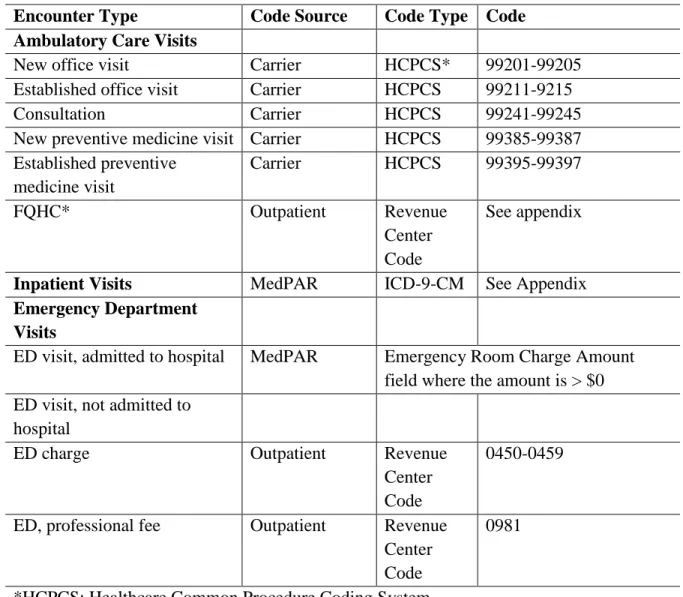
Table 4. Classification of clinical encounters from CMS Medicare claims ... 48
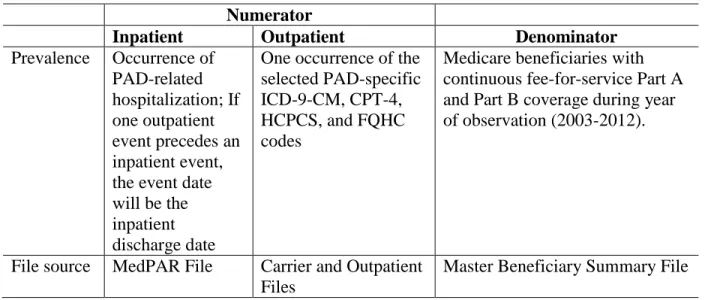
Table 5. Operational definitions for numerators and denominators used in prevalence calculations ... 50
Table 6. Operational definitions for numerators and denominators used for incidence analyses ... 51
Table 7. ICD-9-CM hospitalizations and adjudication to identify hospitalized PAD... 60
Table 8. Agreement between CMS outpatient claims and ARIC cohort outpatient events ... 61
Table 9. Expected annual prevalent PAD by race-gender groups ... 62
Table 10. Study population estimates for four ARIC communities... 63
Table 11. Expected annual incident PAD by race-gender groups ... 63
Table 12. Expected PAD events by race-gender strata ... 63
Table 13. Expected median and IQR values for race-gender strata following inpatient encounter ... 64
Table 14. ARIC* fee-for-service enrollees by year and demographic groups, 2003-2012 ... 79
Table 15. Age-standardized* overall and annual prevalence (%) of peripheral artery disease claims, overall and by health care setting. The ARIC† study (2003-2012)... 80
Table 16. Age-standardized* overall and annual incidence (per 1000 person-years) of peripheral artery disease claims, overall and by health care setting of incident claim. The ARIC† study (2005-2012) ... 81
LIST OF FIGURES
Figure 1: Lower extremity arterial system; adapted from qualityvascular.com ... 6
Figure 2: Lower extremity atherosclerosis; adapted from NIH.gov ... 6
Figure 3: Clinical progression of PAD ... 8
Figure 4: Evolution of imaging techniques ... 18
Figure 5. Percent managed care penetrance by ARIC community from 2001-2008; adapted from ARIC website ... 36
Figure 6. Map of the four ARIC communities ... 43
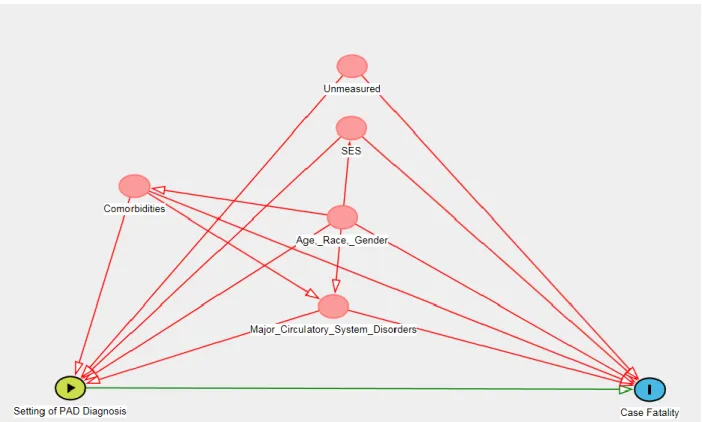
Figure 7. Directed acyclic graph showing the relationship between race and time-to-PAD event ... 58
Figure 8. Estimates of hazard ratios of hospitalization by power ... 65
Figure 9. Estimates of hazard ratios of procedure by power ... 66
Figure 10. Age-standardized annual prevalence of PAD, by age groups. The ARIC Study, 2003-2012 ... 82
Figure 11. Age-standardized annual prevalence (%) of PAD, by race groups. The ARIC Study, 2003-2012 ... 83
Figure 12. Age-standardized annual incidence (per 1000 person-years) of PAD, by age groups. The ARIC Study, 2005-2012 ... 84
Figure 13. Age-standardized annual incidence of PAD (per 1000 person-years), by race groups. The ARIC study, 2005-2012 ... 85
Figure 14. Age-standardized rates of race- and gender-specific PAD-related outpatient encounters (per person-year) following a PAD diagnosis, by diagnosis setting. The ARIC study, 2002-2012 ... 115
Figure 15. Age-standardized rates of race- and gender-specific outpatient primary care encounters (per person-year) following a PAD diagnosis, by diagnosis setting. The ARIC study, 2002-2012 ... 116
Figure 16. Age-standardized rates of race- and gender-specific outpatient cardiology encounters (per person-year) following a PAD diagnosis, by diagnosis setting. The ARIC study, 2002-2012 ... 117
LIST OF ABBREVIATIONS ABI ankle-brachial index
AFU Annual follow-up
AHA American Heart Association
ARIC Atherosclerosis Risk in Communities Study CA Contrast angiography
CAD Coronary artery disease CHD Coronary heart disease CHS Cardiovascular Health Study CI Confidence interval
CLI Critical limb ischemia
CMS Center for Medicare and Medicaid Services CR Comparability ratio
CPT-4 Current Procedural Terminology, 4th edition CTA Computed tomography angiography
DAG Directed acyclic graph DM Diabetes mellitus
ECQ Edinburgh Claudication Questionnaire EAS Edinburgh Artery Study
EMR Electronic medical record FFS Fee-for-Service
FHS Framingham Heart Study
HMO Health maintenance organization IC Intermittent claudication
ICD-9-CM International Classification of Diseases, Clinical Modification, version 9 IR Incidence rate
LEA Lower Extremity Arterial MCA Clinic algorithm
MedPAR Medicare Provider Analysis and Review MESA Multi-Ethnic Study of Atherosclerosis MI Myocardial infarction
MRA Magnetic resonance angiography
NAMCS National Ambulatory Health Care Survey
NHANES National Health and Nutrition Examination Survey NPV Negative predictive value
PABAK Prevalence and bias adjusted Kappa PAD Peripheral artery disease
PARTNERS PAD Awareness, Risk, and Treatment: New Resources for Survival program PPV Positive predictive value
PSV Peak systolic velocity
PTA Percutaneous Transluminal Angioplasty
REACH Reduction of Atherothrombosis for Continued Health registry RQ Rose Questionnaire
SEER Surveillance, Epidemiology, and End Results SES Socioeconomic status
UCSD University of California San Diego WHI Women’s Health Initiative
CHAPTER 1: INTRODUCTION
Peripheral artery disease (PAD) is a prevalent atherosclerotic disorder characterized by plaque build-up in the lower extremities. Functional limitations resulting from PAD lead to poor quality of life, high health care utilization and costs of care, and an increase in mortality risk. A diagnosis of PAD suggests presence of atherosclerosis in other vascular beds, and PAD
significantly increases the risk of coronary and cerebrovascular disease events. The direct and indirect contribution of this disease to the morbidity associated with other chronic disease conditions is important yet health professional and public awareness of PAD is low in
comparison with awareness of other chronic cardiovascular diseases; up to 50% of those with PAD are unaware they have the disease and physicians often do not evaluate for the presence of PAD. Disease awareness is critical as the burden of PAD is expected to increase as our
population ages.
Most estimates of the population burden of PAD evaluate hospitalized events, while excluding PAD diagnosed and treated in the outpatient setting [1]. Missing information on outpatient PAD is important because the evolution of endovascular technologies and wound care therapies, including angiogenesis, is changing the clinical location where PAD is managed [2, 3]. Disease manifestations which formerly required hospitalization can now be treated in an
the hypothesis that the burden of PAD is underreported and that quantifying both inpatient and outpatient events is critical to a more accurate representation of PAD burden and to the
assessment of post-diagnosis care.
Proposed analyses will provide an assessment of the frequency of care and outcomes associated with a PAD diagnosis. Administrative claims allow characterization of the care following a PAD diagnosis from the health care setting of the first diagnosis to the subsequent processes of PAD-related care at the outpatient and inpatient levels. Proposed research will address possible patient-level factors that affect a patient’s transition from outpatient management to hospitalization, an area of research that is currently underreported in the literature.
CHAPTER 2: STUDY OBJECTIVES AND SPECIFIC AIMS
The proposed study aims to estimate the prevalence and incidence of PAD and to estimate the frequency of care and outcomes following an incident PAD diagnosis among Medicare fee-for-service beneficiaries ages 65 years and older in the biracial ARIC study cohort [8].
Specific Aim 1: Estimate the annual period prevalence (2003-2012) and incidence (2005-2012) of PAD in the outpatient and inpatient setting among Black and White CMS Medicare fee-for-service beneficiaries in the ARIC study cohort (Manuscript 1; Chapter 5). Estimates will be stratified by age, gender and race to inform prevention efforts. Direct standardization methods will be used to estimate burden.
Specific Aim 2: Estimate the frequency of care and mortality following an initial diagnosis in the outpatient or inpatient or outpatient setting among Black and White CMS Medicare fee-for-service beneficiaries in the ARIC study cohort (Manuscript 2; Chapter 6). Direct standardization will be used to estimate age-standardized rates of encounters. Time-to-event analysis will be used to estimate the time to (re)hospitalization and case fatality. Race and gender differences in the rates of- and time-intervals between- outpatient and inpatient
encounters will be examined.
alone. Limitations that will affect the interpretation of findings include exclusion of participants with MA enrollment, misclassification of prevalent as incident events, and survivor bias
associated with the cohort. Findings from the study will address issues of health care utilization and outcomes among elderly individuals with PAD that will improve the evidence base
CHAPTER 3: BACKGROUND AND SIGNIFICANCE
Peripheral artery disease is a prevalent atherosclerotic disorder characterized by plaque build-up in arteries distal to the abdominal aorta [9]. Current estimates suggest that more than 8 million individuals in the United States have PAD with increasing prevalence expected as the population ages [10]. Health professional and public awareness of PAD remains low in comparison with awareness of other cardiovascular diseases; up to 50% of those with PAD are unaware they have the disease and physicians often fail to evaluate for the presence of PAD [11]. PAD presents clinically as intermittent claudication (pain with exercise), or as critical limb
ischemia (a PAD subtype that can be limb and life threatening) [12]. Functional limitations resulting from PAD lead to poor quality of life [13], high health care utilization [14], high costs of care [15], and an increase in mortality risk [16]. PAD is frequently associated with coexisting atherosclerosis in the coronary and cerebral arterial beds, and the direct and indirect contribution of this disease to the morbidity associated with other chronic disease conditions is significant [17]. PAD is largely managed in the outpatient setting with risk factor modification [18],
3.1 Anatomy and Pathophysiology of Peripheral Atherosclerosis
Processes involved in the development of
peripheral atherosclerosis are similar to the pathogenesis of coronary, cerebral, and renal atherosclerosis [26]. Figure 1 provides an example of peripheral atherosclerosis in the posterior tibial artery. The current understanding of this process has been described by Libby (2000) as a three stage presentation: lesion initiation, lesion progression, and plaque complications [27]. Atherogenesis begins when blood leucocytes (white blood cells) attach to endothelial cells lining the intima layer of an artery [28].
Adhesion molecules on vascular endothelial cells facilitate leukocyte adhesion. Chemokines direct leucocytes to enter into the arterial wall. A fibrous cap forms, signaling the end of the atherogenesis initiation process [29]. Atherogenesis progression takes place when proteins create a net positive balance of growth stimuli, such that smooth muscle cells proliferate and eventually migrate if platelets are activated [29]. The migration causes a thickening of the fibrous cap, which leads to thrombus formation. Clinically important atheroma complications are commonly the result of thrombus formation and disruption [27].
A plug containing platelets and fibrinogen molecules forms [30]. The plug can either remain attached to the arterial wall while it grows until it completely obstructs the vessel lumen or it can dislodge from
Figure 2: Lower extremity atherosclerosis; adapted from NIH.gov
Figure 1: Lower extremity arterial system;adapted from
the vessel wall because of rapid arterial flow. If the plug dislodges, platelet rich emboli are released into the arterial tree. These obstructions deprive the tissues of crucial oxygenated blood necessary to meet the metabolic requirements of ambulation (claudication) or wound healing (critical limb ischemia) [30].
Changes in and disruption of the fibrous cap can cause blood flow-related conditions in the vessels of the lower extremities, including the descending abdominal aorta and the iliac, femoral, popliteal, and tibial arteries, as shown in Figure 2 [26]. Disease can be bilateral or unilateral, depending on anatomic location; disease tends to be bilateral in the iliac arteries and is more often unilateral in femoral/popliteal/tibial arteries [31].
3.2 Relationship of PAD to other Cardiovascular Diseases
The presence of PAD is indicative of increased atherosclerotic burden throughout the cardiovascular system [32, 33]. Aronow et al (1994) identified the coexistence of symptomatic peripheral, coronary, and cerebrovascular disease among 1886 patients 62 years of age and older in a long-term health care facility [34]. These investigators found that among those with
symptomatic PAD, 58% also had coronary artery disease and 34% had cerebrovascular disease [34]. The Reduction of Atherothrombosis for Continued Health (REACH) registry, an
international study of general physician practices comprising more than 65,000 individuals ages 45 and older, also measured coexisting vascular diseases. The REACH registry found that, of those with PAD, 65% had clinical evidence of either coronary or cerebrovascular disease [17].
health problem as compared to other cardiovascular conditions for which awareness is greater [11].
3.3 Clinical Manifestations of PAD
Natural history studies estimate that 20%-50% of individuals with detectable PAD are asymptomatic [12]. The most common PAD manifestation is intermittent claudication (IC), a condition producing leg cramping and pain during exercise that causes functional limitations and decreases quality of life [13]. Critical limb ischemia (CLI) is a more severe presentation of PAD, with symptoms that include ischemic rest pain and tissue loss due to non-healing wounds,
ulcerations, and gangrene [36]. Figure 3 is a depictionof the most commonly seen clinical progression of PAD, from
asymptomatic disease to gangrene presentation.
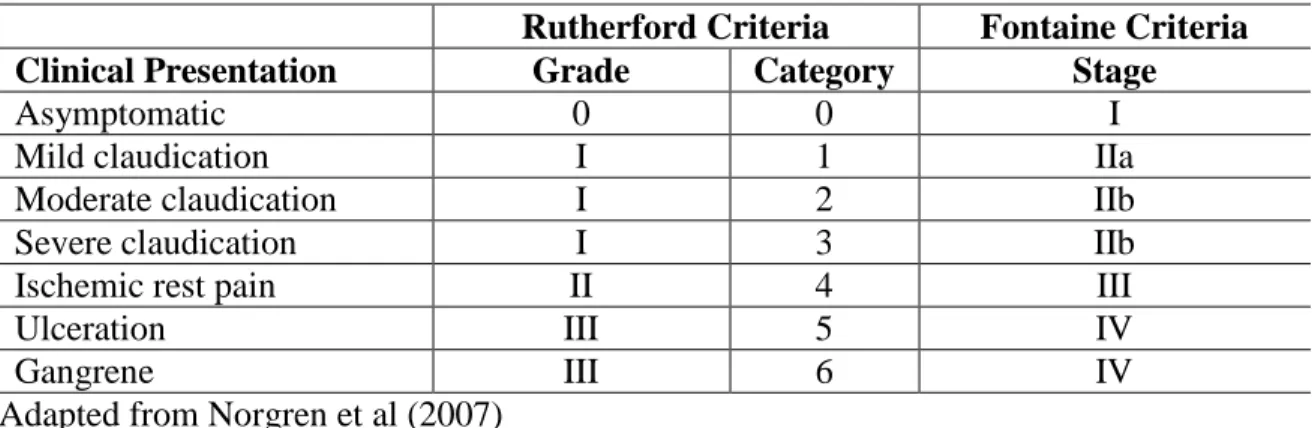
Disease severity is frequently measured in a clinical setting using one of two classification schemes, as shown below in Table 1 [31, 37]. Briefly, the Rutherford classification system assigns grades and category scores for clinical presentations ranging from asymptomatic disease (Grade 0, Category 0) to major tissue loss (Grade III, Category 6) [31]. The Fontaine classification system classifies PAD according to stages, ranging from I (asymptomatic disease) to IV (ulceration or gangrene) [37].
Table 1. PAD classification schemes by severity
Rutherford Criteria Fontaine Criteria
Clinical Presentation Grade Category Stage
Asymptomatic 0 0 I
Mild claudication I 1 IIa
Moderate claudication I 2 IIb
Severe claudication I 3 IIb
Ischemic rest pain II 4 III
Ulceration III 5 IV
Gangrene III 6 IV
Adapted from Norgren et al (2007) 3.3.1 Claudication
Claudication (Rutherford I, Fontaine II), or pain with exercise, is the most common form of symptomatic PAD [38]. Claudication-induced pain can present as a cramping, aching, or general discomfort in the lower extremities [18]. Although this pain typically occurs in the calves, claudication can also occur in the thighs, buttocks, hips, and feet depending on the location of the underlying arterial blockage. Claudication in the upper two-thirds of the calf is indicative of superficial femoral artery (SFA) disease while disease in the lower third of the calf is indicative of popliteal disease [39]. In vascular-related claudication, the limb pain continues during exercise but subsides with rest, generally within five to ten minutes. Individuals affected by claudication may experience significant functional limitations and have a significantly lower quality of life compared to the general population [40]. A study of 201 claudicants who were administered the SF-36 quality of life questionnaire found statistically significant (p<0.05) health decrements compared to population norms at all measures of physical, emotional, mental, and general health [40].
(discussed in section 1.4) at baseline [41]. However, He et al (2006) used the Rose questionnaire and found a much higher prevalence of 11.3% in a population-based study of individuals 60 years of age and older in a small Chinese province [42]. Generally, population-based studies measuring claudication found increasingly higher prevalence the higher the mean age of participants. These studies will be reviewed in more detail in section 1.6 of this proposal.
Despite the progressive nature of atherosclerosis, approximately 75% of those with clinically diagnosed claudication will stabilize or improve over time [12]. The remaining 25% experience worsening claudication (10-20%) or progression to critical limb ischemia (5-10%). Of those with deteriorating symptoms, approximately 5% will require surgical intervention and 2% will require lower extremity amputation [12].
3.3.2 Critical Limb Ischemia
Critical limb ischemia (CLI) is the “end stage” of PAD resulting from a chronic lack of oxygen that is needed for limb vitality [43]. Clinically, CLI is defined by an international consensus as presence of any one of the following: 1) chronic ischemic rest pain or pain in the extremities while at rest, 2) ulceration of the lower extremity, or 3) gangrene due to occlusive PAD [44]. Although a small proportion of patients with diagnosed claudication will eventually deteriorate to CLI, CLI can manifest with no prior PAD history [45, 46].
The end stages of PAD involve tissue loss (Rutherford III, Fontaine IV) to an extremity and include ischemic ulceration or gangrene. Clinically these end-stage processes present as non-healing wounds on the toes, foot, shin, or heel. An ischemic lesion can result from minor trauma because of arterial insufficiency, although compromised arterial flow can preclude any size lesion from healing [47].
CLI is a rare outcome and is infrequently quantified in studies. A study among 5800 randomly selected participants in four regions of Sweden found a prevalence of CLI of 1.6% using a low ankle blood pressure measurement (<70 mm Hg) as the indicator of CLI presence [48]. A Norwegian study that quantified CLI by self-reported ulcers or rest pain, found an age-adjusted prevalence of 0.24% [49]. Ulcers were not categorized by cause and, thus, could be misclassified as CLI when the cause might be neuropathic or traumatic. One study estimated CLI incidence by examining a sample of CLI hospitalizations from 27 Northern Italy hospitals [50]. They found the annual incidence of CLI to be 260 per 1,000,000 person years. Incidence of CLI was 652 per 1,000,000 person-years among those 45 years of age and older [50]. Many studies have assumed a percentage of amputations are related specifically to CLI to quantify CLI incidence [25, 50, 51]. Information derived from this methodology is subject to substantial misclassification bias and true CLI incidence remains unknown.
Approximately half of individuals with CLI have arterial reconstruction and one-fourth is managed non-surgically. About 25% of individuals presenting with CLI will
3.4 Methods to Detect PAD
Prior to discussing the prevalence and incidence of PAD, I will introduce the various methods to identify and diagnose PAD in research and clinical settings.
3.4.1 Questionnaires
Leg pain can be multi-factorial and appropriate diagnoses are often difficult to determine with precision and reproducibility. Causes of leg pain can include IC, as well as sciatica or osteoarthritis. As a result of the challenges associated with appropriately diagnosing the cause of leg pain, a series of questionnaires have been created to better delineate PAD from other
potential causes [53-55]. Commonly used questionnaires are discussed below. 3.4.1.1 WHO/Rose Intermittent Claudication Questionnaire
The Rose Questionnaire (1962) was created to target the diagnosis of IC in
epidemiologic research and to facilitate international comparisons of prevalence estimates [53]. Initially, the Rose Questionnaire (RQ) was administered to thirty-seven individuals with IC and a control group of eighteen individuals with other types of diagnosed walking-induced leg pain (control group). Thirty-four (92%) of the 37 patients with IC met all six criteria outlined to delineate IC from other leg pain syndromes while none of the control group met the criteria [53].
The RQ was adopted by the World Health Organization (WHO/RQ, herein) in 1968 to determine PAD prevalence rates [56]. The WHO/RQ was modified in 1977 to enable self-administration [57]. Studies have found sensitivity values that range from 9%-92% and specificity values that range from 95%-100% [58].
WHO/RQ is commonly used to screen for PAD and is the primary survey tool used to identify claudication in population-based research [42, 48, 59, 60].
3.4.1.2 Edinburgh Claudication Questionnaire
While the WHO/RQ is highly specific, the moderate sensitivity results shown across several population-based studies led scientists at the London School of Tropical Medicine and Hygiene to create a new questionnaire, the Edinburgh Claudication Questionnaire (ECQ) [54]. Leng et al (1992) found more than 50% of the false negatives generated by the WHO/RQ resulted from one question: Does your pain disappear on walking?[54] These investigators also found that the specificity was upheld by asking only three particular questions: 1) Do you have pain when standing/sitting? 2) Do you have pain in the calf? and 3) Is your pain gone in 10 minutes of stopping? [54]. The investigators pre-tested new questions and piloted their new survey in 300 subjects. The ECQ had a sensitivity of 91.4% and a specificity of 99.3%, and repeatability was excellent at six months (kappa=0.76) [54]. The ECQ is only moderately sensitive (~50%) in detecting PAD in high risk patients [61, 62]
3.4.1.3 San Diego Claudication Questionnaire
Neither the WHO/RQ nor the ECQ allow for leg-specific (right versus left) assessment of claudication symptoms. While calf pain is the most typical location of pain in those with
claudication, the WHO/RQ and ECQ surveys also do not allow for assessment of non-calf claudication. With these limitations in mind, the San Diego Claudication Questionnaire (SDCQ) was created and tested among 508 patients [63]. The SDCQ contains questions about anatomic location of pain and the extremity (left, right, both) affected. In the study by Criqui et al (1996), the SDCQ identified 40% more claudication than the Rose in the same participants [55].
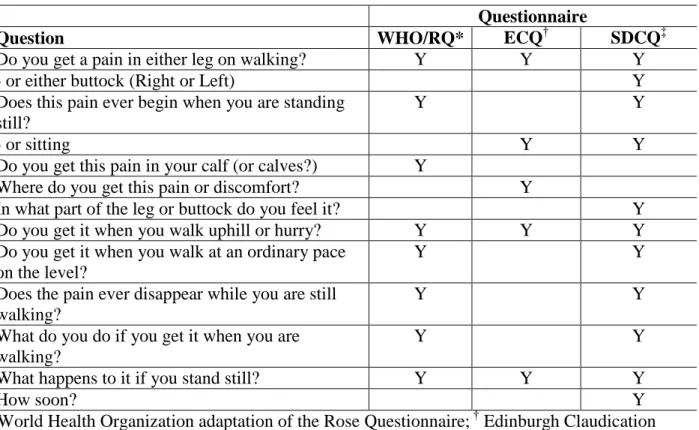
Treat-Jacobson (2013) reported inconsistency across studies in how these questionnaires were utilized causing biased prevalence estimates [58]. Table 2 describes the questions contained within each of these three questionnaires and shows the differences between the questions used to assess claudication in each questionnaire. Estimate comparisons across studies are, therefore, difficult and fluctuate depending on the methodology and survey used.
Table 2. Claudication assessment questionnaire comparison
Questionnaire
Question WHO/RQ* ECQ† SDCQ‡
Do you get a pain in either leg on walking? Y Y Y
- or either buttock (Right or Left) Y
Does this pain ever begin when you are standing still?
Y Y
- or sitting Y Y
Do you get this pain in your calf (or calves?) Y
Where do you get this pain or discomfort? Y
In what part of the leg or buttock do you feel it? Y
Do you get it when you walk uphill or hurry? Y Y Y
Do you get it when you walk at an ordinary pace on the level?
Y Y
Does the pain ever disappear while you are still walking?
Y Y
What do you do if you get it when you are walking?
Y Y
What happens to it if you stand still? Y Y Y
How soon? Y
* World Health Organization adaptation of the Rose Questionnaire; † Edinburgh Claudication
Questionnaire; ‡ San Diego Claudication Questionnaire 3.4.2 Non-invasive Tests to Detect PAD
3.4.2.1 Ankle-brachial Index Test
A physician or vascular laboratory technician can perform the ABI test, which requires a standard sphygmomanometer, a hand-held Doppler, and acoustic gel [36]. Systolic
measurements are taken in the brachial artery in each of the upper arms and in both the posterior tibial and dorsalis pedis arteries of the legs. As PAD can be a unilateral disease the ABI is calculated for each limb separately. The value is determined as the ratio of the lowest systolic value obtained in the leg to the highest systolic value obtained in either arm. An ABI value <0.90 is indicative of PAD and is a cut-point used to detect asymptomatic PAD. The ABI test has a high sensitivity (>90%) and a high specificity (>90%) in detecting >50% occlusion in contrast angiography [26, 82]. However, inclusion criteria for studies, the number of times the measurement is repeated, and calculation methods, such as using the highest versus the lowest or median systolic values, vary widely resulting in low comparability across studies [83].
3.4.2.2 Reactive Hyperemia Test
The reactive hyperemia test is infrequently used to identify asymptomatic PAD [26]. According to the Edinburgh Artery Study protocol [81], the test is performed by occluding arterial flow above the knee for four minutes, following which ankle systolic pressure is then measured in both legs fifteen seconds after releasing the cuff. A drop in blood pressure of at least 35% is considered indicative of PAD. A hyperemic drop of 20-35% with an abnormal ABI is also indicative of PAD. The sensitivity and specificity of the reactive hyperemia test at
predicting abnormal ABI is 64% and 94%, respectively [84]. 3.4.3 Imaging Techniques Used to Identify PAD
and computed tomography angiography (CTA) are less invasive ways to assess PAD [85]. Each of these techniques is described in the following section.
3.4.3.1 Contrast angiography to Identify PAD
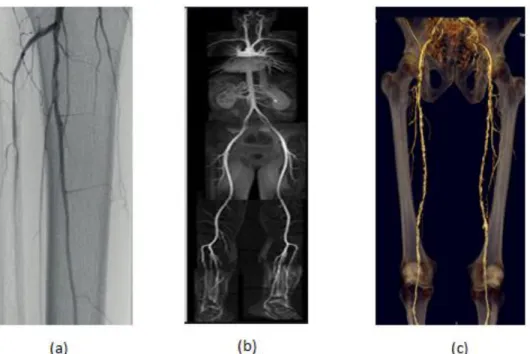
Contrast angiography (CA) is the gold standard in identifying and characterizing PAD lesions [86]. In this procedure a small puncture in the common femoral or brachial artery allows access to the vasculature, such that sheaths and guidewires are inserted into the arterial tree and directed toward the site of expected anatomical lesions; these lesions are first identified through non-invasive testing. Radiopaque contrast is injected into the vessels in order to visualize stenotic or occluded arteries and determine appropriate invasive management. CA is an expensive procedure accompanied by significant risk, including a 0.16% mortality risk, and is associated with contrast-induced nephropathy and renal failure, pseudoaneurysm, hematoma, and other complications associated with vascular access[25, 86]. Figure 4a, below, is an image from a contrast angiography procedure.
3.4.3.2 Duplex Ultrasound to Identify PAD
3.4.3.2 Magnetic Resonance Angiography to Identify PAD
Magnetic resonance angiography uses a super-conducting system and pulse sequencing to image blood flow and to measure the presence and size of atheroma [90, 91]. MRA eliminates exposure to ionizing radiation and recent advancements in non-iodine-based intravenous contrast agents allow a more accurate revascularization plan with MRA in comparison to duplex
ultrasound [92]. In a systematic review where contrast angiography was the gold standard, MRA had a median sensitivity of 95% (range: 92%-99.5%) and a median specificity of 97% (range: 64%-99%) in identifying significant stenosis (>50%) [85]. MRA can overestimate degree of stenosis due to turbulence, it is not safe for patients with pacemakers or defibrillators, and imaging of metal stents and calcified arteries is challenged [86]. Figure 4b, below, is an MRA image of the lower extremity arterial system.
3.4.3.3 Computed Tomography Angiography to Identify PAD
Computed tomography angiography (CTA) is the most recently developed method used to identify PAD. It provides up to 128 simultaneous cross-sectional images of the arterial system [86], and uses a peripheral intravenous cannula to deliver iodinated contrast media [92]. A recent systematic review found that CTA is 91% sensitive (range: 89%-99%) and 91% specific (range: 83%-97%) in detecting significant (> 50% stenosis or occlusion) disease [85]. CTA allows for more rapid and detailed image acquisition as compared to other imaging modalities [92]. Radiation dosage is significant, although it is less than what is received in contrast angiography procedures [86]. The risk of nephropathy and acute tabular necrosis is also
Figure 4: Evolution of imaging techniques 3.5 Clinical Management of PAD
Peripheral artery disease is managed both non-invasively and invasively, and each of these management strategies is described in the section below.
3.5.1 Non-invasive Management of PAD
Risk factor modification, exercise therapy, and pharmacologic intervention are often the first steps in management of PAD. The main targets of risk factor modification in individuals with PAD are tobacco cessation and diabetes control [18]. Tobacco cessation has been shown to decrease the risk of PAD progression and reduces cardiovascular events among claudicants [20]. Guidelines suggest that maintaining a glycated hemoglobin A1c close to 6% or less is optimal in individuals with diabetes [25].
a) Contrast angiography of popliteal and tibial vessels; b) Magnetic resonance
Risk factor modification is combined with exercise therapy and pharmacologic
management in many claudicants. Supervised exercise programs, including 30 minutes of total walking time per day, at least three times per week, increase walking distances (compared to usual care or placebo) in individuals with claudication [19]. Regarding pharmacologic
management, only one PAD-specific drug, Cilostazol, has repeatedly shown positive impacts on walking ability in randomized clinical trials [20, 21]. Often, these non-invasive options do not result in symptom resolution for the patient and the next steps include consideration of
modalities for invasively treating PAD. 3.5.2 Invasive Management of PAD
There are three primary modalities for invasively treating PAD. These include
endovascular management, open surgical bypass or endarterectomy, and lower limb amputation. 3.5.2.1 Endovascular Management
Endovascular management of PAD includes Percutaneous Transluminal Angioplasty (PTA) with or without a stent, first described in 1964 with the pioneering work of Dotter and Judkins [22]. Stents were not commonly used in the management of PAD until the 1980s [93].
Percutaneous treatments are minimally invasive and are associated with lower morbidity and mortality than open surgery or limb amputation. The major weakness of endovascular management is the frequent failure of these procedures to maintain arterial patency (i.e. to keep a blockage open) [26]. Endovascular management is most common among individuals with claudication and those with short-segment disease in the aorto-iliac region [4]. As an example, in a study of 1000 consecutive interventions for claudication, 643 were performed using
3.5.2.2 Open surgical Management
Two primary open revascularization options exist for clinically diagnosed PAD. Surgical endarterectomy, a procedure first described by Dos Santos (1947), involves removing thrombus from an arterial segment [23], and is commonly used for isolated common femoral artery disease [95]. An alternative to endarterectomy is the surgical bypass (bypass) procedure which first occurred in humans in 1906 [24]. Open surgical procedures cause higher morbidity and mortality than PTA, but have longer patency and require fewer repeat operations. Open management is most common among individuals with critical limb ischemia and those with long-segment arterial disease [26]. A recent study reported, however, that open management can be appropriate in certain individuals with claudication [7].
3.5.2.3 Limb Amputation Management
The final invasive treatment option for the severe and treatment resistant PAD is lower extremity limb amputation, which was first performed for PAD-related gangrene around 400 BC [96]. Lower limb amputation is indicated for life-threatening wound infection, uncontrollable rest pain, unreconstructable arterial disease, non-ambulatory patients, and others in whom treatment has failed [25]. Amputation is defined as primary, implying no prior intervention has been attempted, or secondary, in which a prior attempt at arterial reconstruction has failed, and is categorized, based on location of the amputation, as below-, through-, or above- the knee.
3.5.3 Trends Associated with PAD Management
Recent evidence indicates increases in rates of endovascular management of PAD while the rates of limb amputation and bypass procedures are either stable or decreasing [100, 101]. O’Brien-Irr et al (2012) found that endovascular management increased while limb amputation procedures decreased between 2003 and 2008 [1]. Goodney et al (2009) found similar increases in endovascular procedures with a decrease in the use of bypass procedures by 42%, and declines in amputation over a ten-year period [102]. Evidence specific to trends among the Medicare population have not been examined and are a gap in the literature.
3.6 Epidemiology of PAD
Peripheral artery disease is inconsistently defined across studies, and source populations differ significantly to include a variety of population-based and clinical-based settings. The following section is meant to serve as an extensive literature review of the seminal PAD
prevalence and incidence studies reported to date, while acknowledging cross-study comparisons are difficult because of methodological and source population differences. Appendix 2 contains tables that highlight the important features of these seminal studies and each table highlights a methodology used to define PAD. In reviewing this literature, important gaps in this literature will be identified that the proposed research will address. Prevalence studies will be discussed prior to studies that quantified PAD incidence. A section detailing the seminal CVD cohort studies that measured PAD will be discussed within the section on incidence, as will risk factors identified from these studies. The final topic of PAD epidemiology will be the use of
3.6.1 Prevalence of PAD
3.6.1.1 PAD Prevalence Based on ABI Measurement
The most common method of quantifying PAD prevalence in research studies is through measurement of the ABI, a procedure described above in section 1.4 of this research proposal. Prevalence of PAD originating from population-based studies from the U.S. ranged from 3.0% among the middle aged (45-64 years of age) participants in the ARIC cohort to 13.4% among older participants (> 65 years of age) in the Cardiovascular Health Study (CHS) [41, 72]. Selvin et al (2004) observed a similar prevalence of PAD in the National Health and Nutrition
Examination Survey (NHANES) (14.5%, 95% CI: 10.8%-18.2%) [64].
In studies identified through this review, prevalence estimates were uniformly higher among hospital-based or clinic-based cohorts compared to population-based studies. For example, the German Epidemiological Trial on Ankle Brachial Index (getABI study) measured ABI on 6,880 patients (> 65 years) identified from 344 general practitioners across Germany. Using ABI <0.90 as the cut point, the age-adjusted prevalence of PAD was 19.8% [73]. A Houston-based study of primary care clinics and the DeBakey Veterans Administration hospital found an overall prevalence of 16.7% among 403 participants over the age of 50. Results were stratified by race and gender with particularly high prevalence estimates seen among black women (20.3%) and white men (20.1%) as compared to other white, black and Hispanic participants [78]. Further studies that used ABI measurement as the sole identifier of PAD are shown in Appendix Table 1 and Appendix Table 2.
3.6.1.2 PAD Prevalence Based on Questionnaires with or without ABI
Prevalence is commonly measured using only questionnaires although some studies use both a questionnaire and the ABI measurement to detect PAD. Estimates that use both methods are important because they can capture both asymptomatic and symptomatic disease. Not unexpectedly, prevalence estimates based on this combined methodology are uniformly higher than estimates based on ABI alone. As an example, the lowest prevalence identified in a search of the literature was from a population-based study of randomly selected individuals from four regions in Sweden. This study had an “any PAD” category, defined by ABI <0.90 or a positive Rose/WHO Questionnaire [48]. Prevalence of this definition of PAD was 17.9% (95%CI, 16%-20%); 11.1% had asymptomatic PAD identified by ABI and 6.8% had symptomatic disease. The highest prevalence of PAD identified through combined ABI and questionnaire method was 19.1% (95% CI: 18.1%-20%) in the Rotterdam Study, a population-based study in the Netherlands. This study also used ABI <0.90 to detect asymptomatic disease and the Rose/WHO Questionnaire to define symptomatic PAD [59]. Studies using this combined methodology had low response rates for enrollment. Many studies reported poor response rates for completion of the questionnaire. These studies also used different questionnaires to assess for claudication making cross study comparisons difficult [59, 80]. Results from other studies using this methodology are shown in Appendix Table 3.
3.6.1.3 PAD Prevalence Based on Self-report and ABI or Questionnaires
Several studies of PAD prevalence used a combination of self-report with or without one other assessment modality to quantify PAD burden. The lowest estimate came from a
population-based study in the industrialized urban regions of Western Germany that used ABI <0.90 or self-reported physician diagnosis to conclude an overall PAD prevalence of 6.8% [67]. The highest prevalence was found in the PAD Awareness, Risk, and Treatment: New Resources for Survival (PARTNERS) program [11]. The PARTNERS program included 350 primary care practices in 27 sites (25 cities) across the US and enrolled individuals that were either 1) 50-69 years of age with a history of diabetes or smoking or 2) 70 years of age and older. Using ABI <0.90, or documented PAD in a medical record, PAD prevalence was 29% [11]. Studies
quantifying PAD prevalence by a combination of self-report with one additional modality show inconsistent methodologies, causing a wide range of estimates. Estimate comparisons across studies, therefore, are difficult. Further information on studies using these criteria can be found in Appendix Table 4 and Appendix Table 5.
3.6.1.4 Summary of PAD Prevalence Studies
PAD prevalence estimates vary widely and are dependent on the methodology used to assess PAD. As would be expected, studies that used ABI in combination with a second detection method reported higher prevalence estimates than those that used a single assessment method. Studies conducted in populations with a higher mean age or in high risk populations, such as the CHS study of people 65 years of age and older, had the highest prevalence estimates. Studies such as the study in Western Germany, described above, which included healthy
3.6.2 Incidence of PAD
Estimates of PAD incidence are exceedingly rare in population-based studies as PAD is an infrequently examined endpoint. Many of the studies that do measure PAD have different population bases and detection methods to assess PAD, making cross-study comparisons difficult. The following section details cohort studies that measured and have reported findings for incident PAD. Incidence of PAD obtained from longitudinal studies ranged from 1 per 1000 person years to 23.8 per 1000 person year. Estimates for PAD incidence are comparable to estimates for stroke and myocardial infarction incidence. Incidence of PAD is, however, lower than incidence of atrial fibrillation and heart failure [104]. Further information from a review of the literature presenting PAD incidence estimates is shown in Appendix Table 6.
3.6.2.1 Cohort Studies Measuring Incident PAD
Several major cardiovascular cohort studies that measured incident PAD are described below. These studies are highlighted because they are the seminal studies in the literature with well-defined methodologies and reported results. They are also primarily US-based, providing a reference point for the proposed research. With the exception of a study by Murabito et al (2005), which found that the incidence of claudication is declining over time, all literature reviewed indicates that PAD incidence is expected to increase as the population ages [105]. 3.6.2.1.1 The Framingham Heart Study
questionnaire. All IC cases were reviewed and adjudicated by a panel of investigators [107]. Over the first fourteen years of follow-up 125 cases of IC were identified with an average annual incidence of IC of 26 per 10,000 person-years among males and 12 per 10,000 person-years among women. A follow-up study assessed temporal trends of IC incidence over a fifty-year period [105]. Incident cases increased through the 1970s with a peak rate of 34.5 per 10,000 from 1970-1979. The number of cases declined in the 1980s and 1990s and decreased to 22.5 per 10,000 from 1990-1999 [105].
While the FHS provided valuable insights into PAD etiology and trends associated with PAD burden over more than sixty years of follow-up, the Framingham Study has several
limitations. The FHS excludes all minority groups and is poorly generalizable to the broader US population. Claudication was defined only by medical history documentation, which might result in misclassification bias.
3.6.2.1.2 Edinburgh Artery Study
The EAS was one of the first studies that monitored peripheral atherosclerosis endpoints, and is a rare study that reports incidence rates. The study includes information on individuals across social class and educational attainment and uses several measures to delineate PAD prevalence. Their inclusion of participants from poorer areas led to a lower response rate than they had expected.
3.6.2.1.3 Atherosclerosis Risk in Communities (ARIC) Study
The ARIC study is a bi-ethnic longitudinal study of the natural history of atherosclerotic diseases among 15,792 residents of four US communities: Forsyth County, North Carolina, Washington County, Maryland, Jackson, Mississippi, and suburban Minneapolis, Minnesota [8]. ARIC study participants were 45-64 years of age at baseline.
Zheng et al (2005) conducted a cross-sectional analysis using ABI <0.90 to identify PAD and found an age-adjusted PAD prevalence of 3.0% among ARIC study participants [70]. Age adjusted prevalence among gender and race subgroups was as follows: African American men, 3.1%; African American women, 4.4%; white men, 2.3%; white women, 3.2% [70]. Selvin et al (2006) used the Rose Questionnaire, ABI <0.90, or a PAD-related hospitalization to quantify incident PAD among those with diabetes in the ARIC cohort [109]. Crude incident rates reported for IC, low ABI, and PAD-hospitalization were 2.1, 18.9, and 2.9 per 1000 person-years, respectively, during 9.8 mean years of follow-up. Wattanakit (2005) conducted a similar study among diabetic participants in ARIC and found a total PAD event rate of 13.9 per 1000 person-years [110].
The ARIC study is a geographically diverse, bi-ethnic cohort, providing distinct advantages over similar cohort studies, such as the FHS, that were from single centers or
measured in only one leg at baseline and only in segments of the cohort at subsequent visits. Follow-up ABI testing was completed for 4,575 participants at the third clinic visit (1993-1995) and in 6,404 participants at the fourth clinic visit (1996-1998). Thus, estimates from this study likely underestimate PAD burden in this population.
3.6.2.1.4 Women’s Health Initiative (WHI)
The Women’s Health Initiative (WHI) is a clinical trial (n=16,608) and observational study (n=69,000) designed to delineate causes of morbidity and mortality among
postmenopausal women 50-79 years of age [111]. The study was initiated in 1992 and follow-up is ongoing. The clinical trial component, the Women’s Health Initiative Estrogen Plus Progestin trial, randomized women to placebo or estrogen therapy. Peripheral artery disease, measured by self-reported history of carotid or lower extremity surgery, was exceedingly rare (0.5%) at baseline exam.
Hsia et al (2003) reported on incident lower extremity events, defined as overnight hospitalization with either symptoms or intervention and confirmed by procedure, absence of pulses, or non-invasive vascular studies [112]. Over 5.6 years of follow-up, the incidence proportion of PAD was 0.14% per year. Incident PAD events occurred more frequently among women with a history of coronary artery disease (CAD) or PAD (13 per 1000 person-years) than women with no history of arterial disease (1 per 1000 person-years).
3.6.3 PAD Risk Factors Identified from Reviewed Literature
In the following section, traditional and sociodemographic risk factors for PAD will be discussed to further place PAD in the context of overall atherosclerotic disease burden. As PAD has a shared risk factor profile with coronary and cerebral atherosclerosis, the implication of reducing the prevalence of PAD risk factors extends to benefits in delaying or preventing myocardial infarction, stroke, and other major circulatory system disorders [25, 35, 113]. 3.6.3.1 Traditional Risk Factors
Risk factors for PAD are identical to traditional cardiovascular disease risk factors, with diabetes [109, 110, 114, 115] and smoking [116-118] particularly predictive of PAD. Other important risk factors include hypertension [119-121], dyslipidemia [122-124], renal
insufficiency [125, 126], poor diet [127-129], and lower levels of physical activity [130-132]. Risk factor profiles are similar for all stages of PAD severity, although diabetes may have a stronger association with CLI as compared to claudication [133].
3.6.3.1.1 Diabetes Mellitus/Impaired Glucose Tolerance as a PAD Risk Factor
Diabetes Mellitus (DM) causes an abnormal metabolic state which increases the
susceptibility to atherosclerotic diseases in the three primary vascular beds: the coronary arteries, the lower extremity arteries and the extracranial arteries [134]. Diabetes is more predictive of PAD than of MI and stroke, and is considered one of the most prominent risk factors for PAD [120, 135]. The predictive ability of DM is so substantial that the American Diabetes
Association has recommended ABI measurement, the most common test for PAD, every five years, for life, among diabetics [136].
claudication among women with glycosuria was 8.6 times the risk of claudication among women without glycosuria [121].
Diabetic patients are more likely to have disease in their distal (below the knee) arterial tree where vessels are smaller [134]. Disease in the popliteal and tibial arteries is associated with the more severe PAD sequelae [137]. Diabetic patients are at an increased risk of foot ulcers because of neuropathic complications and poor infection response [134]. As a result of these complicating factors, DM is associated with an increased risk of CLI and limb amputation [25, 138]. The risk of amputation is five-fold greater among diabetics as compared to non-diabetics, and DM is implicated in the majority of non-traumatic limb amputations [139, 140]. Diabetes represents a modifiable risk factor that, if appropriately managed, could reduce the overall burden of PAD.
3.6.3.1.2 Smoking as a PAD Risk Factor
dose-response relationship [116, 122, 143]. Smoking is associated with CLI [25] but does not
confound the relationship of CLI to outcomes such as mortality and limb amputation [144, 145]. 3.6.3.2 Sociodemographic Traits as PAD Risk Factors
Prior studies have shown that important sociodemographic traits such as age, gender, race, and socioeconomic status are associated with PAD [41, 64, 66, 67, 69]. Disease prevalence increases significantly with age and the American Heart Association recommends all individuals over the age of 65 be screened for PAD via the ABI test [60, 64, 86]. Selvin et al (2004) studied 2,174 participants aged 40 and older with ABI measurements in the National Health and
Nutrition Examination Survey (NHANES I), conducted from 1999-2000 to estimate PAD prevalence [64]. Overall prevalence (ABI <0.90) was 4.3% (95% CI: 3.1%, 5.5%) among those 40-49 years of age, 2.5% (95% CI: 0.5%-4.5%) among those 50-59 years of age, 4.7% (95% CI: 2.5%-6.9%) among those 60-69 years of age and 14.5% (95% CI: 10.8%, 18.2%) among those 70 years of age and older. Overall, the investigators estimated that during the period of
observation more than 5 million individuals in the US had PAD, including at least 4 million among those over 70 years of age [64].
The majority of population-based studies stratify estimates by gender, although evidence concerning differences in PAD prevalence between men and women is conflicting. The
Table 3. PAD prevalence estimates by gender and race
Gender Race
Study Population Female (%)
Male (%)
Black (%)
White (%)
ARIC 3.5 2.5 3.7 2.8
CHS 12.4 14.8 21.5 11.9
NHANES 4.2 4.5 7.9 4.4
MESA 3.7 3.7 7.1 2.7
San Diego 3.6 6.1 7.8 4.9
Reports on the association between socioeconomic status (SES) and PAD are limited. In the population-based Heinz Nixdorf Recall Study in Germany, PAD prevalence (ABI<0.90) was inversely related to education and income among 4,738 individuals [67]. PAD prevalence among low (< 10 years), medium (11-13 years), and high education (> 14 years) was 8.1%, 7.5%, and 5.3%, respectively. Among 6,791 participants in the NHANES study, SES, defined by income, was inversely associated with prevalent PAD (ABI<0.90). Individuals with low SES had the highest PAD prevalence (8.4%, 95% CI: 7.3%-9.5%), while individuals in the highest SES category had the lowest PAD prevalence (3.4%, 95% CI: 1.8%-3.6%) [148]. Other studies only found weak associations between SES and PAD [149, 150].
Sociodemographic disparities in PAD extend to variations in rates of procedures. Several studies of revascularization procedures for PAD report lower procedure rates among blacks, women, and individuals of low SES in comparison with whites, men, and those of high SES, respectively [151, 152]. Numerous studies have reported disparities in surgery for lower
3.6.4 Literature Summary for PAD Epidemiology
PAD is an arterial disease that has significant consequences, both to the individual and to the health care system, if it is not identified and aggressively managed. Total all-cause
hospitalizations for PAD are in excess of $21 billion with 57% of those due to revascularization procedures and amputations [15]. PAD can cause life-altering physical limitations with limb- and life-threatening consequences. More than 50% of individuals with critical limb ischemia, the most severe PAD, will be deceased or have experienced a limb amputation within one year of diagnosis. As such, early detection and management is critical. Furthermore, as PAD is
associated with disease in other vascular beds, increasing awareness of PAD could have benefits in the prevention of myocardial infarction, stroke, and cardiovascular-related death. One of the primary hopes of the proposed research, therefore, is simply to raise awareness of PAD and to provide information that will allow PAD to be placed in context with other more well-known atherosclerotic conditions.
A thorough review of existing of PAD prevalence and incidence literature reveals widely varying estimates. Population bases and detection methods to assess PAD differ, making cross-study comparisons difficult. Differences among characteristics of PAD incidence studies include single gender representation, race-specific population studies, population-based versus clinic-based samples, differing questionnaires, and adjudicated versus non-adjudicated events among others. In the majority of population-based studies where PAD is an endpoint, it is synonymous with intermittent claudication to the exclusion of more severe sequelae, such as critical limb ischemia. Current estimates do not contain information on outpatient visits and procedures where the majority of encounters likely occur.
years and older which is a limitation of this data source. Other administrative sources, such as Medicaid and commercially available claims databases, include information on younger populations. These sources are, however, not linked with the ARIC study. Further, the
Medicare-eligible population is a reasonable population to study PAD because it is a disease of aging primarily found in the elderly. The next section will detail the use of administrative claims as a research tool to quantify PAD.
3.6.5 Identification of PAD Events from Administrative Claims Data
Administrative claims originating from federal and private insurers are increasingly used for research purposes. Claims are created by health care providers for payers and indicate what services a provider billed for during a particular visit. The International Classification of Diseases, Clinical Modification, version 9 (ICD-9-CM), Current Procedural Terminology, 4th edition (CPT-4) codes, Healthcare Common Procedure Coding System (HCPCS) codes, and Federally Qualified Healthcare Center codes (FQHC) are used to identify clinical events and procedures in claims data. A description of these codes is found below in Table 4 (p.41). Administrative claims data frequently are examined in Medicare Fee-for-Service (FFS) and Managed Care Programs, which are discussed below.
3.6.5.1 Medicare Fee-for-Service and Medicare Advantage Programs
individuals who are likely to have low medical care costs [156]. Significantly, MA is not required to submit claims information to Medicare for their enrollees; therefore health care utilization is not quantifiable for beneficiaries enrolled in MA using Medicare claims and researchers must note this study design limitation. The percentage of Medicare beneficiaries enrolled in MA varies significantly across states and geographic regions. An example of this variation (and significant to the proposed research) is the ARIC study, where penetrance ranges from <10% (Washington County, Jackson from 2003-2005) to >40% (Forsyth County, 2005-present). Figure 5, below, is a representation of penetrance among the four ARIC regions from 2001-2008.
Figure 5. Percent managed care penetrance by ARIC community from 2001-2008; adapted from ARIC website
3.6.5.2 Validation of Administrative Claims Data
Administrative data studies examining the validity of ICD-9 and CPT codes to identify PAD are rare and only three studies on the validation of PAD related codes from claims data were identified for review [157-159].
The Mayo Clinic has developed the Mayo Clinic algorithm (MCA), a billing code-based algorithm for identifying PAD patients from an electronic medical record (EMR). The MCA,
F M
J
of ICD-9-CM and CPT-4 codes relevant to PAD [160]. Recently published work examined the application of the MCA in a community-based sample of 4420 Olmstead County residents seen at the Mayo Clinic with a PAD-related billing code [161]. Of these patients, 225 patient records were randomly selected for manual record abstraction by an experienced cardiologist. Results included: sensitivity, 68.0% (95% CI: 56.2-78.3); specificity, 87.6% (95% CI: 80.9-92.6); positive predictive value (PPV), 75.0% (95% CI: 63.0-84.7), and negative predictive value (NPV), 83.3% (95% CI: 76.2, 89.0). An additional study of 22,000 individuals at the Mayo clinic used billing codes and the ABI test to ascertain PAD. Area under the operating-receiver was 0.86, indicating sufficient PAD identification ability of the algorithm [159]. Appendix Table 7 provides a detailed report of these studies.
The Women’s Health Initiative (WHI) study investigators validated ICD-9-CM codes in comparison with reviewer diagnosis and adjudication of 470 potential PAD events and found a sensitivity of 0.61 (95% CI: 0.54,0.68) and a positive predictive value of 0.31 (95% CI:
0.26,0.36; ICD-9-CM codes 443.9, 440.2) [158]. A second study by Fisher et al (1992) examined 217 hospitalized PAD events abstracted from a hospital record to assess
agreement/reliability as compared to reabstraction, completed by the Office of the Inspector General [157]. The sensitivity of ICD-9-CM codes (in any position) to identify PAD was 0.58 (95% CI: 0.51, 0.64) with a PPV of 0.53. This study also examined a PAD diagnosis based on ICD-9-CM codes in the primary or secondary position and found that sensitivity and PPV were much higher at 0.76 and 0.69, respectively [157].
3.6.5.3 Estimates of PAD Burden Based on Administrative Claims
A small body of literature quantifies PAD prevalence and incidence using ICD-9-CM and/or CPT-4 codes obtained from administrative databases, with source populations originating from Medicare and managed care. The majority of those studies were completed for the purpose of assessing PAD-related costs [1, 15, 102, 162-165]. Each of the salient studies is discussed below. Appendix Table 8 lists the diagnostic codes used to define PAD in each study.
For the purposes of this review, the term PAD prevalence is used to describe the
occurrence of PAD among individuals eligible for inclusion in administrative claims-based data sources. Thus, estimates are representative of individuals who have had medical encounters (i.e. the source of a claim) and do not reflect a true population-based denominator. PAD estimates from claims sources are unique in comparison to the previous literature discussed because asymptomatic disease, defined by ABI or questionnaire in the literature reviewed, cannot be quantified using administrative claims. Further, administrative claims allow outpatient PAD, for which there is limited information available otherwise, to be quantified. Estimates from
administrative claims are, therefore, a reflection of the burden of clinically diagnosed PAD. 3.6.5.3.1 Estimates of PAD Burden Based on CMS Medicare Claims
beneficiaries studied had a PAD-related claim. PAD-related hospitalizations accounted for nearly 90% of expenditures among those with PAD, although only 6.4% (n=668) of those with PAD had an inpatient claim with a PAD-related diagnostic code. This study indicates that majority of PAD events occur in the outpatient setting, although the study investigators only present outpatient costs and do not present detailed burden information for outpatient claims. This study underscores the need to further examine PAD events occurring in the outpatient setting.
A 5% random sample of Medicare beneficiaries from the Medicare Standard Analytic Files (Medicare Part A and Part B) was used to quantify PAD costs and to assess clinical outcomes following invasive management [163]. PAD was defined using pre-specified ICD-9-CM and CPT code algorithms, as shown in Appendix Table 8. A range of 2.1 to 2.4 million beneficiaries were enrolled in the data set, depending on the year. Of these, 57,043 beneficiaries receiving PAD-related treatment were identified. Inpatient PAD prevalence increased during the period of observation from 8.2% in 1999 to 9.5% in 2005. Projected estimates for the full Medicare beneficiary population indicate prevalence of 4.3 million in 2005. Prevalence
increased incrementally with age with the highest rates (19.3%) seen among those > 85 years of age. Prevalence was comparable among men (9.3%) and women (9.7%). Among individuals treated for PAD less than 6% underwent limb amputation procedures and 27% died during the six years of follow-up. This is an important study that provides useful information on inpatient PAD-related care. The study, however, excludes outpatient data and does not provide
information on PAD subtypes.