IMPROVING STAFF COMFORT WITH AND DELIVERY OF BEHAVIORAL COUNSELING INTERVENTIONS TO ADOLESCENT AND YOUNG ADULT MALES
PRESENTING FOR SEXUALLY TRANSMITTED INFECTION SCREENING
Kelly W. Bates
A project submitted to the faculty at the University of North Carolina at Chapel Hill in partial fulfillment of the requirements for the degree of Doctor of Nursing Practice in the Family Nurse
Practitioner program in the School of Nursing.
Chapel Hill 2018
ABSTRACT
Kelly W. Bates: Improving Staff Comfort With and Delivery of Behavioral Counseling Interventions to Adolescent and Young Adult Males Presenting for Sexually Transmitted
Infection Screening
(Under the direction of Eric Hodges)
Background: More than two-thirds of sexually transmitted infections (STI) occur in Americans
under age 25. There are nearly 20 million new STIs each year and this number is increasing. Several organizations recommend including STI screening and behavioral counseling in every adolescent health appointment to reduce STI risk. However, adolescents and young adults (AYA), particularly males, do not consistently receive this care. This project aimed to improve the frequency and quality of behavioral counseling delivered to AYA males at a Health
Department in North Carolina through development of an evidence-based staff workshop. Methods: This project was developed using quality improvement methodology. A chart review was completed of AYA males who presented for STI screening during a three-month period. These data were used to design the workshop. Attendees were asked to complete one pre- and two post-surveys to assess their perceptions of this curriculum. An additional chart review was completed after the workshop to assess for changes in staff documentation of behavioral counseling interventions delivered to AYA males presenting for STI screening in the 11 weeks after the workshop.
ACKNOWLEDGEMENTS
TABLE OF CONTENTS
LIST OF TABLES ... x
CHAPTER 1: INTRODUCTION ... 1
Introduction ... 1
Problem Statement ... 2
Purpose of the Project ... 4
Practice Question ... 5
CHAPTER 2: REVIEW OF THE LITERATURE ... 6
Search Strategy ... 6
Limitations of the Search ... 7
Overview of the Literature ... 8
High Risk Status ... 8
Best Practice ... 9
Current Practice ... 11
Gender Disparity ... 13
Barriers to Care ... 13
Role of Provider Training ... 14
CHAPTER 3: THEORETICAL FRAMEWORK ... 15
Theoretical Foundation ... 15
Application of the Health Belief Model ... 16
Justification of the Health Belief Model ... 18
AIDS Risk Reduction Model ... 19
Application of the AIDS Risk Reduction Model ... 19
Justification of the AIDS Risk Reduction Model ... 21
Adult Learning Theory ... 22
Application of Adult Learning Theory ... 22
Justification of Adult Learning Theory ... 23
CHAPTER 4: METHODOLOGY ... 24
Project Design ... 24
Participants ... 26
Setting ... 26
Orange County Health Department ... 26
Orange County ... 27
Data Collection ... 27
Ethical Considerations and Confidentiality ... 28
Analysis Plan ... 29
CHAPTER 5: RESULTS ... 30
Initial Chart Audit ... 30
Demographic Information ... 30
Reasons for Visit ... 31
STI Risk Assessment ... 31
Staff Response ... 35
Response Rates ... 35
Staff Survey Analysis ... 36
Post-Training Chart Audit ... 45
Demographic Information ... 46
Reasons for Visit ... 46
STI Risk Assessment ... 47
Clinical Impressions, Diagnoses and Interventions ... 50
CHAPTER 6: DISCUSSION ... 52
Key Findings ... 52
Implications for Future Practice ... 55
Limitations ... 56
Conclusion ... 58
APPENDIX A: ITEMS FOR THE PERCEIVED ATTRIBUTES OF THE PRINCIPLES OF EFFECTIVENESS ... 59
APPENDIX B: PERCEIVED ATTRIBUTES OF THE BEHAVIORAL COUNSELING CURRICULUM ... 62
APPENDIX C: BEHAVIORAL COUNSELING TRAINING POWERPOINT HANDOUT ... 65
APPENDIX D: HANDOUT SUMMARIZING FINDINGS OF INITIAL CHART REVIEW ... 70
APPENDIX E: BEHAVIORAL COUNSELING TRAINING SESSION CASE STUDIES ... 71
LIST OF TABLES
Table 1 – Recommendations of Health Care Organizations………...….. 10
Table 2 – Demographic Information of Initial Chart Audit……….…. 30
Table 3 – Reasons for Visit of Initial Chart Audit ………..…. 31
Table 4 – STI Risk Assessment of Initial Chart Audit ……… 33
Table 5 – STI Diagnoses and Interventions of Initial Chart Audit ……….. 35
Table 6 – Staff Survey Responses ……….….. 36
Table 7 – Mean Staff Survey Responses ………. 41
Table 8 – Staff Survey Chi-Square Results ……….… 45
Table 9 – Demographic Information of Post-Training Chart Audit ……….46
Table 10 – Reasons for Visit of Post-Training Chart Audit ……… 47
Table 11 – STI Risk Assessment of Post-Training Chart Audit ……….…. 48
Table 12 – Alcohol Consumption Classification Chi-Square Results ………... 50
Table 13 – STI Diagnoses and Interventions of Post-Training Chart Audit ………….... 50
LIST OF ABBREIVAITONS
AAFP American Academy of Family Physicians AAP American Academy of Pediatrics
ACOG American Congress of Obstetricians and Gynecologists AHRQ Agency for Healthcare Research and Quality
ARRM AIDS Risk Reduction Model AYA Adolescent and Young Adult
CDC Centers for Disease Control and Prevention DNP Doctor of Nursing Practice
HBM Health Belief Model HCP Health Care Professional
HIV Human Immunodeficiency Virus HPV Human Papillomavirus
ICSI Institute for Clinical Systems Improvement LGBT Lesbian Gay Bisexual and Transgender MSM Men who have Sex with Men
NICE National Institute for Health and Care Excellence OCHD Orange County Health Department
SAHM The Society for Adolescent Health and Medicine
SAMHSA Substance Abuse and Mental Health Services Administration SPSS Statistical Package for the Social Sciences
STI Sexually Transmitted Infection STD Sexually Transmitted Disease
US United States
CHAPTER 1: INTRODUCTION
Introduction
The American adolescent and young adult (AYA) population constitutes one-quarter of sexually active Americans, yet accounts for more than two-thirds of new sexually transmitted infection (STI) cases and 30% of new human immunodeficiency virus (HIV) cases (Satterwhite et al., 2013; Centers for Disease Control and Prevention [CDC], 2013b). There are an estimated 19.7 million new STIs each year in the United States (US) with a prevalence of 110 million (Satterwhite et al., 2013; CDC, 2016). Each year, one out of every four teens contracts a STI and one out of every two sexually active people will contract an STI by age 25 (CDC, 2013c; Cates, Herndon, Schulz & Darroch, 2004).
According to the CDC (2015), all three nationally reported STIs (chlamydia, gonorrhea and syphilis) increased for the second year in a row between 2014 and 2015, the latest year for which data is available. Over 1.5 million cases of chlamydia were reported during 2015, which is the highest number of annual cases of any disease ever reported to the CDC and a 6% increase from the previous year. Increases in gonorrhea (13%) and primary and secondary syphilis (19%) were also observed between 2014 and 2015. These increases are largely attributed to increasing rates among AYA males across all three diseases (CDC, 2016).
although this age group accounts for less than one quarter of males in the state (North Carolina HIV/STD Surveillance Unit, 2016; U.S. Census Bureau, 2015). Syphilis infections are rapidly increasing in North Carolina, with a 64% increase in cases from 2014 to 2015 (North Carolina HIV/STD Surveillance Unit, 2016). Nationally, over 90% of primary and secondary syphilis cases occur in males (CDC, 2016). Gonorrhea and chlamydia infections have also increased in North Carolina between 2014 and 2015 and North Carolina’s gonorrhea and chlamydia rates are higher than the U.S. national rates (North Carolina HIV/STD Surveillance Unit, 2016).
Certain behaviors, including improper or inconsistent use of barrier methods, having sex while using alcohol or drugs, having multiple sex partners, a previous STI diagnosis and having sexual partners who have or are at high risk for an STI, increase a person’s risk for STIs, HIV, and unplanned pregnancy (O’Connor et al., 2014). These behaviors are deemed high-risk sexual behaviors (U.S. Department of Health and Human Services, 2014a; O’Connor et al., 2014).
Problem Statement
Several organizations, including the US Preventative Services Task Force (USPSTF), CDC, American Academy of Pediatrics (AAP), American Congress of Obstetrics and
Gynecology (ACOG) and The Society for Adolescent Health and Medicine (SAHM) recommend including sexual healthcare in every adolescent health appointment, and recommend STI
their medical provider did not recommend testing (Cuffe, Newton-Levinson, Gift, McFarlane & Leichliter, 2016).
Additionally, research demonstrates that this care is not equitably delivered to males versus females. A retrospective chart review demonstrated that healthcare providers (HCPs) are three times more likely to take a sexual health history from AYA females than AYA males and that they are twice as likely to advise AYA females on condom use compared to AYA males (Lafferty et al., 2002; Lafferty, Downey, Shields, Holan & Lind, 2001). Analyses of a national youth survey demonstrated that AYA females are significantly more likely to report receiving STI testing in the last 12 months than AYA males (16.6% vs. 6.1%). Females age 25 years and younger are also more likely than their male counterparts to be screened for STIs and HIV during health visits not specific to STIs (Cuffe et al., 2016). The gender disparity that exists in sexual healthcare among American AYA suggests that the sexual health needs of AYA males are going unmet and that this population does not have adequate access to risk assessments and behavioral counseling that can positively impact sexual and reproductive health (SRH) across the lifespan (Marcell, Wibbelsman & Seigel, 2011). This inadequate counseling and screening may
contribute to a reservoir of STIs, which promotes a higher incidence of STIs among all Americans.
Despite recommendations to deliver SRH services and behavioral counseling to AYA males, HCPs continue to encounter multiple barriers. First, while females often receive bundled reproductive health care (birth control, pelvic exams, pap smears, prenatal care), there is
declines during adolescence and shifts from routine to more time-limited acute visits, which likely contributes to a decrease in the provision of SRH care (Marcell, Klein, Fischer, Allan & Kokotailo, 2002). Adolescent males are less likely than adolescent females to attend healthcare appointments when they become sexually active. This increases adolescent males’ risk for morbidity and mortality associated with risky sexual behavior and signals the need for efforts to increase AYA males’ awareness of SRH needs and their utilization of healthcare once they become sexually active (Marcell, Matson, Ellen & Ford, 2009).
Evidence suggests that providers with more extensive knowledge and training in
behavioral counseling may provide counseling that more effectively mitigates risk and decreases STI incidence (Kamb et al., 1998; Jemmott, Jemmott & O’Leary, 2007). The National Network of STD/HIV Prevention Training Centers (2011) recommends that counseling be provided by staff who are trained in basic risk assessment and risk reduction client-centered counseling methods. Although counseling interventions can be delivered by a variety of HCPs, specialized training is necessary to promote successful STI risk reduction (Brookmeyer, Hogben & Kinsey, 2016). The World Health Organization (WHO) (n.d.) recommends that counselors receive ongoing training in counseling and education.
Purpose of the Project
The purpose of this Doctor of Nursing Practice (DNP) project was to improve the
male AYA patients of the OCHD. High-risk behaviors that are routinely identified during STI visits were the focus of the behavioral counseling training. Through development of standardized and streamlined questions and statements to correspond with the OCHD’s existing risk
assessment, staff were expected to experience a low degree of difficulty, disruption and intricacy with the intervention.
Practice Question
This DNP project assessed whether or not health department staff who attended the workshop demonstrated pre- and post-intervention changes in:
• The perceived advantages and feasibility of delivering SRH behavioral counseling to
AYA males. An adapted attitudes and belief measure based on a valid and reliable tool developed by Pankratz, Hallfors & Cho (2002) was used to assess staff perceptions of attributes of the Project’s behavioral counseling education and toolkit.
• The rates at which staff document behavioral counseling to AYA males who present to
CHAPTER 2: REVIEW OF THE LITERATURE
Search Strategy
A literature search was conducted on PubMed using the following search terms:
((((((gender* OR male* OR female* OR man OR men* OR woman* OR women* OR boy* OR girl*))) AND ((disparit*[Title] OR disparat*[Title] OR inequal*[Title] OR unequal*[Title] OR equal*[Title] OR differen*[Title]))) AND ((teen*[Title] OR "young adult"[Title] OR
adolesc*[Title] OR minor[Title] OR minors[Title] OR preteen*[Title]))) AND (((sexual[Title] OR reproductive[Title]) AND (health*[Title] OR practice*[Title] OR belief*[Title] OR
Limitations of the Search
The limitations of this search were significant. First, the search results varied widely in their focus, despite multiple consultations with a nursing librarian. Many studies utilized all female, all MSM, or all lesbian, gay, bisexual, transgender (LGBT) samples. While MSM and LGBT clients certainly were not excluded from this DNP project, they were not the primary focus and, as such, these studies lacked external validity since the subjects were not
representative of the OCHD patient population. An additional search strategy utilized in this literature search was ancestry searching, which helped to identify articles with a focus that included the male AYA population.
Second, much of the research was outdated and published over 15 years ago. This field is highly culture-dependent. Several recent key changes have impacted care delivery, including the Affordable Care Act affording coverage for preventive SRH services for the first time, the impact of technology on high-risk sexual behaviors and the recommendation of HPV vaccination of males (Marcell and the Male Training Center for Family Planning and Reproductive Health, 2014). The lack of current literature, which has been noted by experts in male sexual health, was a significant limitation (Marcell and the Male Training Center for Family Planning and
Reproductive Health, 2014).
Overview of the Literature
The literature consistently demonstrated a lack consistent delivery of SRH services to the AYA population, and an even greater lack of SRH services to AYA males. The high-risk status of AYA generally and AYA males specifically has been well established in the literature. There is a lack of evidence or standardization of care to best guide practitioners; furthermore, the evidence and guidelines that do exist are not being consistently implemented by HCPs. AYA males are negatively impacted by this lack of evidence and lack of evidence-based care. This results in a significant missed opportunity to improve the SRH of AYA males. Significant barriers exist, but improved provider training and increased and improved tools and guidelines for the SRH care of AYA males are essential to improving the delivery of SRH care to AYA males.
High Risk Status
The vulnerability and high-risk status of the AYA population has been clearly
demonstrated. It is estimated that of the 20 million new STI cases each year in the U.S., more than two-thirds are within the AYA population (Centers for Disease Control and Prevention, 2013b). Contrary to the common misconception that males are less likely to have an STI, recent analysis by the CDC reveals that the incidence of STI infections is approximately equal among young men and young women (49 vs. 51 percent, respectively) (CDC, 2013b). Importantly, AYA are likely to have sexual partners from this risk pool and are likely to engage in high-risk sexual behaviors (Weinstock et al., 2000; Senn & Carey, 2011).
often asymptomatic, STI status is often unknown (Marcell et al., 2011). Nearly 70 percent of people infected with gonorrhea or chlamydia have no symptoms, but are still able to infect others (WHO, 2011). This contributes to high rates of repeat gonococcal and chlamydial infections, with a systematic review reporting a median rate of reinfection within one year of 11.3 and 7.0 percent for gonorrhea and chlamydia, respectively (Fung, Scott, Kent & Klausner, 2007).
An important high-risk behavior in this demographic is alcohol and drug use before sex, which is associated with increased engagement in other high-risk behaviors and with increased STI risk (Eaton et al., 2010; Marcell and the Male Training Center for Family Planning and Reproductive Health, 2014; U.S. Department of Health and Human Services, 2014). AYA males self-report more alcohol-related sexual dis-inhibition than females (Hesse & Tutenges, 2008). Newman & Zimmerman (2000) found that among surveyed African-American youth, males were more likely than females to engage in high-risk sexual behavior, including more alcohol and drug use before sexual intercourse, having multiple sex partners, and inconsistent condom use. During adolescence, youth are developing their ability to think abstractly, ponder the long-term consequences of their actions, recognize personal risk and evaluate information (Rice & Dolgin, 2008). These features of the adolescent developmental stage have important implications for both risk behaviors and for best practices to mediate risk.
Best Practice
Many organizations, including the USPSTF, CDC and AAP, recommend including sexual health in every adolescent health appointment (O’Connor et al., 2014, CDC, 2010a, AAP, 2013, Hagan et al., 2008). Recommended services include sexual health history and risk
These recommendations are summarized in Table 1. The USPSTF concluded that there was moderate certainty (B recommendation) that behavioral counseling for sexually active adolescents and adults at risk for STIs has a net benefit on STI incidence rates; it therefore recommends behavioral counseling for all adolescents and adults at increased risk for STIs (USPSTF, 2008). The CDC provides additional guidance for providers to inform patients about STI risk reduction, including abstinence, barrier method use, and minimizing the number of sexual partners. Such guidance should be empathetic, non-judgmental, and personalized to the patient’s risk (CDC, 2010b). In an evidence synthesis prepared for the Agency for Healthcare Research and Quality (AHRQ), O’Connor et al. (2014) note that there is consensus that
behavioral sexual risk reduction counseling should include: education on HIV and STI risk and prevention strategies, techniques to enhance motivation and promote successful behavior change and assistance with skill development to reduce risky behaviors and increase protective
behaviors. In their review of 16 high-intensity behavioral counseling interventions, the odds of re-acquiring an STI were reduced by 62% in adolescents and condom use was increased in both adolescents and adults (O’Connor et al., 2014).
Table 1
Recommendations of Health Care Organizations
Organization and Citation Recommendation American Academy of
Family Physicians (AAFP)
AAFP recommends high-intensity behavioral counseling for all sexually active adolescents and adults at high risk to decrease the risk of STIs. AAFP does not make a
recommendation for adolescents who are not yet sexually active nor for adults with any increased risk for STIs due to insufficient evidence (AAFP, 2012)
American Academy of
Obstetricians and Gynecologists (ACOG)
during initial adolescent reproductive health visits between the ages of 13 and 15 years (Committee on Adolescent Health Care, 2014). ACOG further recommends applying the principles of motivational interviewing to sexual behavior practices to elicit behavior change and improve patient-provider communication (Committee on Health Care for Underserved Women, 2009).
Centers for Disease Control and Prevention (CDC)
The CDC recommends that all providers routinely obtain a patient’s sexual history and provide risk reduction counseling and prevention strategies (CDC, 2010b). The CDC also recommends HIV prevention counseling in clinics serving high-risk patients (such as STI clinics and health
departments) (CDC, 2010a). Institute for Clinical
Systems Improvement (ICSI)
ICSI recommends that adolescents receive behavioral counseling regarding sexual behaviors to prevent STIs
beginning at age 12 (Wilkinson et al., 2013b). ICSI notes that there is good evidence to support the efficacy of multiple-visit interventions to reduce STI incidence among sexually active adolescents. ICSI concludes that there is insufficient evidence to recommend less intensive behavioral counseling interventions or counseling interventions for low-risk
patients (Wilkinson et al., 2013a; Wilkinson et al., 2013b). National Institute for
Health and Care Excellence (NICE)
NICE recommends screening and identifying those at high risk for STIs, followed by one-to-one structured discussions with a professional trained in sexual health. Practitioners should provide one-to-one sexual advise on how to prevent and get tested for STIs (NICE, 2007).
The Society for
Adolescent Health and Medicine (SAHM)
SAHM recommends encouraging adolescents to delay sexual debut and adopt safe sex practices to prevent unintended pregnancy and recommends provision of STI and HIV education, counseling and services to all adolescents (SAHM, 2014).
United States
Preventative Services Task Force (USPSTF)
The USPSTF recommends that all sexually active adolescents and adults at increased risk for STIs receive intensive behavioral counseling (O’Connor et al., 2014).
Current Practice
Reproductive Health, 2014; Goyal, Witt, Hayes, Zaoutis & Gerber, 2014). The high-risk status of this population is increased by the low rates at which AYA are captured in care. In a
secondary analysis of data from the National Ambulatory Medical Care Survey, teenagers (age 13-18) had the lowest rates of outpatient visits. Furthermore, health counseling took place in just 39% of these visits and HIV/STI prevention counseling took place in just 5% of these visits (Ma, Wang & Stafford, 2005).
National data collected in the Young Adult Health Care Survey found that nearly half of adolescents reported not receiving guidance on age-appropriate topics such as sexual activity, contraception and STIs during their most recent health care visit (Chung, Lee, Morrison & Schuster, 2006). In a household-based survey of males aged 15-44 years, less than one in five reported discussions about HIV and pregnancy prevention with their HCP in the last year (Chabot, Lewis, de Bocanegra & Darney, 2011). National survey data demonstrates that among males aged 15-44 years, 19% report an STI test in the last year and 15% report an HIV test in the last year. Survey respondents also reported low levels of counseling by a HCP, with just 11% receiving counseling for STIs, 11% for HIV and 10% for contraception use in the last year (Marcell et al., 2016). In focus groups of AYA urban minority males, 90% reported being sexually active, yet 30% reported receiving no STI/HIV counseling by a HCP (Pilgrim et al., 2014).
seeking care at family planning clinics, 40% reported wanting to learn more about STI prevention and risk reduction (Weinman, Buzi & Smith, 2011).
These findings indicate that providers should routinely and proactively promote SRH conversations with AYA male patients (Weinman, Buzi & Smith, 2011). Despite multiple recommendations and guidelines from prominent professional organizations regarding the importance of SRH screening and counseling in every adolescent appointment, and documented interest from patients in receiving this care, providers are failing to provide this care (O’Connor et al., 2014, CDC, 2010a, AAP, 2013, Hagan et al., 2008).
Gender Disparity
Burstein et al. (2003) found that 26% of males report HCP counseling on STI, HIV or pregnancy prevention at their last preventive visit compared to 43% of females. Chart reviews have demonstrated HCPs are three times more likely to take a sexual health history from AYA females compared to AYA males and that they are twice as likely to advise an AYA female on condom use compared to an AYA male (Lafferty et al., 2002; Lafferty et al., 2001).
While females often receive bundled reproductive health care (birth control, pelvic exams, pap smears, prenatal care), there is insufficient research on the necessary components and protocols for evidence-based SRH services for males (Marcell et al., 2002). Males stand to benefit from improved services to reduce the risk of unplanned pregnancy and STI or HIV contraction. The lower rates at which AYA males are captured in SRH care represents an important missed opportunity (Rice, Salomon & Fine, 2014).
Barriers to Care
continue to encounter multiple barriers. AYA males are less likely to seek routine check-ups (Rice et al., 2014). The number of health appointments that males have declines during
adolescence and shifts from routine to more time-limited acute visits, which likely contributes to a decrease in the provision of sexual health care (Marcell et al., 2002).
Additionally, AYA are less likely to seek SRH services due to a lack of confidentiality and privacy. Only 40% of patients aged 12-17 years old have time alone with the provider during primary care visits (Irwin, Adams, Park & Newacheck, 2009). In a survey of high school
students, Schuster, Bell, Petersen & Kanouse (1996) found that only 65% of participants trusted HCPs to keep their sexually active status confidential. Importantly, an increase in the number of visits is found among AYA who receive assurances of confidentiality (Ford, Millstein, Halpern-Felsher & Irwin, 1997).
Role of Provider Training
CHAPTER 3: THEORETICAL FRAMEWORK
Theoretical Foundation
Recommendations to improve SRH services provided to this population should be
grounded in theoretical frameworks (O’Connor et al., 2014). This behavioral counseling training was designed using the frameworks of the Health Belief Model (HBM), AIDS Risk Reduction Model (ARRM) and the educational Adult Learning Theory (ALT) framework.
Health Belief Model
This model was one of the first theories of health behavior and is one of the most widely used health behavior frameworks. The HBM is used as a framework to motivate behavior change and has been utilized in sexual education to motivate actions such as condom use (Eisen & Zellman, 1986).
Application of the Health Belief Model
The HBM model is made up of six concepts to mediate health behavior decision-making: perceived susceptibility, perceived severity, perceived benefits, perceived barriers, cues to action and self-efficacy (US Department of Health and Human Services, 2014). These six concepts form a framework to develop health education and behavior change strategies to address the SRH needs of AYA males.
The perceived susceptibility to and severity of disease affects the individual perception of AYA males (Maiman & Beker, 1974). Although the susceptibility of AYA males has been clearly demonstrated through high rates of STIs, HIV and pregnancy, AYA males underestimate their susceptibility (Weinstock et al., 2000; Hamilton, Martin & Ventura, 2009). Downing-Matibag & Geisinger (2009) explored sexual risk-taking behaviors within the college hook-up culture and developed HBM-based risk reduction strategies. They identified three common reasons participants underestimated personal STI risk; subjects: placed too much trust in their sexual partners, placed too much trust in their community, including underestimating the community prevalence of HIV and were misinformed about risks associated with oral sex.
A successful behavioral counseling curriculum should inform AYA males of the susceptibility and severity associated with high-risk sexual behaviors, including the high incidence of STIs and HIV, of the high-risk status of their sexual partner pool and of the high rates of unplanned pregnancy. Additionally, the curriculum should seek to alter AYA males’ perceived severity of STIs, HIV, and unplanned pregnancy.
There are several modifying factors that should be addressed in an HBM-based
Reproductive Health (2014) provide a helpful checklist of services the Center recommends be provided to AYA males, including guidance on behavioral counseling and risk reduction topics.
HBM-based curricula have proven to be successful. Ma, Fisher & Kuller (2014) found that HBM-based HIV-preventive education is associated with several self-protective behaviors for AYA males, including delayed age of first sexual intercourse, decreased use of drugs or alcohol before intercourse, and fewer sexual partners for male high-school students. Another HBM-based HIV-, STI-, and pregnancy-prevention program was particularly effective with AYA males, who increased condom use at a higher rate than AYA females (Kirby et al., 2004).
Including HBM-based behavioral counseling in clinical encounters can also positively impact self-efficacy. Brindis (2010) notes that behavioral counseling and anticipatory guidance that anticipates sexual debut can improve SRH care for AYA males. He writes that HCPs “can prompt adolescents to increase their own self-efficacy” by providing counseling on health choices, by providing care navigation and by encouraging adolescents to take responsibility for their health, health care, and health choices (Brindis, 2010, p. 306).
(Martens et al., 2006). These are important misconceptions as they may contribute to AYAs underestimating the actual acceptability of risk-reducing and protective sexual behaviors.
Confidentiality concerns represent a final perceived barrier to AYA males seeking out SRH care that is worth exploring. Research has shown that AYA are less likely to seek SRH services due to a lack of confidentiality and privacy. Only 40% of patients aged 12-17 years old have time alone with the provider during primary care visits (Irwin et al., 2009). In a survey of high school students, Schuster et al. (1996) found that only 65% of participants trusted HCPs to keep their sexually active status confidential. Importantly, an increase in the number of visits was found among AYA who receive assurances of confidentiality (Ford et al., 1997).
Justification of the Health Belief Model
Consideration of each component of the HBM model can significantly improve the delivery of behavioral counseling to AYA males and can positively impact their SRH. Within this model, the low rates of discussion of sexual health and risk status between AYA males and HCPs diminishes the perceived susceptibility, perceived severity, and cues to action and self-efficacy, thereby decreasing the likelihood that self-protective action will be taken.
Development of a curriculum can improve HCP’s perceived self-efficacy in providing SRH care and enhance their ability to provide evidence-based SRH care to AYA males (Ozer et al., 2001; Ozer et al., 2005).
Importantly, HBM-based SRH programs have been shown to contribute to healthier sexual behavior choices. Such programs are associated with: delayed age of first sexual
Eisen & Zellman, 1986; Downing-Matibag & Geisinger, 2009; Laraque et al., 1997; Slater, 2016). These programs may be especially effective with AYA males (Kirby et al., 2004).
AIDS Risk Reduction Model
The AIDS Risk Reduction Model (ARRM) was introduced in 1990 as a framework for understanding and predicting individuals’ behavior change efforts related to sexual transmission of HIV/AIDS (Catania, Kegeles & Coates, 1990). This behavior change model incorporates several aspects of the HBM, including the role of self-efficacy and intra- and interpersonal influences. The ARRM has been used to examine and identify predictors of risk behaviors and “leverage” points for behaviors that are amenable to intervention for risk reduction (Brecht, Stein, Evans, Murphy & Longshore, 2009). The model lays out three stages that individuals move through before gaining the ability to maintain complex health behaviors: recognition of one’s behavior as high risk; committing to reducing high-risk sexual behaviors and increasing protective behaviors; and seeking and enacting risk reducing solutions (Lopez, Tolley, Grimes & Chen-Mok, 2009; Catania et al., 1990).
Application of the AIDS Risk Reduction Model
identifying when their SRH choices place them at high risk for STI contraction and unplanned pregnancy.
Catania et al. (1990) identified several influencers within stage one of the ARRM: knowledge of the relative risk of various sexual activities, perceived susceptibility to HIV contraction and other consequences, belief that such consequences are undesirable, and the influence of social norms and social networks. Many of these hypothesized influences overlap with the HBM and are amenable to change with behavioral counseling.
Individuals who label their sexual behaviors as high-risk progress into the second stage of the ARRM: commitment to reducing high-risk sexual behaviors and increasing protective
behaviors (Catania et al., 1990). The authors identify several hypothesized influences during this stage, including: anticipated impact of behavior changes on enjoyment of sex, perceived efficacy of risk reduction strategies, self-efficacy, and social factors such as group norms and social support. HCPs have an important opportunity to assist patients in navigating these influencers and exploring barriers to behavior change, including considering how to accomplish behavior change across a variety of contexts, such as non-monogamous sexual relationships, one-time sexual relationships, or sex under the influence of drugs and alcohol (Catania et al., 1990). These contexts are particularly important to explore during the late adolescence developmental stage as this stage is marked by increasing independence, separation from parents and caregivers, sexual exploration, and redefining of boundaries (Erikson, 1959; Erikson, 1968).
to provide education on the best types of risk reduction and how they might be achieved. Additionally, HCPs can help individuals with the third phase (behavior change) by tailoring interventions to anticipate challenges and promote skill development (Catania et al., 1990; Lopez et al., 2009; O’Connor et al., 2014).
Justification of the AIDS Risk Reduction Model
The ARRM has demonstrated success as a basis for HIV sexual risk reduction and has also been used to reduce STI risk and HIV risk among drug users. In a sample of unmarried heterosexual adults with a risk factor for HIV contraction, increased commitment to condom use was related to: increased labeling of behaviors as high risk, supportive norms around condom use, and greater enjoyment. Additionally, increased commitment to condom use was predictive of increased actual use of condoms (Catania, Coates & Kegeles, 1994). ARRM-based counseling has been found to be more effective than standard counseling at reducing the number of self-reported unprotected vaginal or anal sex acts and at increasing first-time female condom use (Shain et al., 1999; Hoffman, Exneer, Leu, Ehrhardt & Stein, 2003).
ARRM-based counseling interventions have also been demonstrated to move beyond reducing high-risk behaviors to also reducing their consequences. In a study of minority
adolescent females with a history of abuse and a current STI, Champion & Collins (2012) found that participants who received AARM-based intervention experienced significantly fewer STIs at 6- and 12- month follow-ups than controls who received standard counseling. HCPs should be provided with ARRM-based training so that effective and appropriate behavioral counseling based on this model is provided to AYA males.
guideline- and evidence-driven care. Through the improved delivery of sexual healthcare to adolescent males, HCPs have the opportunity to decrease STI transmission, prevent unplanned pregnancies and promote responsible, fulfilling and healthy sexual relationships (Marcell et al., 2011).
Adult Learning Theory
The Adult Learning Theory (Andragogy) was developed by Malcolm Knowles, an American educator, to describe the art and science of adult learning. Knowles’s concept of andragogy was originally introduced as a theory of adult learning in 1980 (Knowles, 1980). The theory recognizes that adult learners have different needs compared to child learners. Andragogy presents a set of assumed characteristics of adult learners to guide adult learning practice
(Merriam, Caffarella & Baumgartner, 2012).
Application of Adult Learning Theory
Knowles originally presented four assumptions about adult learners: they are increasingly self-directed learners, offer rich experiences as a learning resource, offer readiness to learn based on their social role, and are motivated by learning that is problem-centered rather than subject-centered (Knowles, 1980). Knowles later added two additional assumptions about adult learners: their most powerful motivations are intrinsic rather than extrinsic and they need an explanation of the relevance of the learning (Knowles, 1984).
Following a brief PowerPoint lecture to review the tenets of behavioral counseling, learners were invited to participate in case studies in an effort to promote the problem-centered learning
consistent with Knowles’s fourth assumption.
Knowles later added an additional assumption, which noted the benefit of intrinsic motivation in adult learners. OCHD’s 2016 annual report notes that 80% of employees report that the OCHD mission “makes them feel their job is important” (OCHD, 2016, p. 1). Learners are, therefore, likely to be intrinsically motivated to better promote the health of Orange County residents (OCHD, 2016). In an effort to promote learners’ perceived relevance of the training, attendees were provided with a handout (Appendix D) summarizing findings of an initial chart review and highlighting client needs and areas for improvement.
Justification of Adult Learning Theory
Knowles believed that these assumptions are foundational to successful program design for adult learners (Merriam et al., 2012). Since staff participation in this curriculum was
voluntary, an understanding of the reasons that adult learners attend and engage in voluntary learning activities and under what conditions is likely to promote greater success with implementation of this project. Therefore, the principles of adult learning theory were
CHAPTER 4: METHODOLOGY
Project Design
This project was developed using quality improvement methodology to improve the delivery of SRH care to AYA males. The U.S. Department of Health and Human Services (2011) defines quality improvement as “systematic and continuous actions that lead to measurable improvement in health care services and the health status of targeted patient groups” (p. 3). Successful quality improvement programs should focus on the following key principles: systems and processes; focus on patients; teamwork; and the use of data (Massoud, n.d.).
This project focused on those key areas in the following ways:
• Systems and Processes: OCHD’s STI questionnaires and documentation materials, in
both paper and electronic form, were reviewed to assess the current practices of the OCHD. Staff training included recommended behavioral counseling statements and techniques for risk behaviors that, based on this review, are routinely assessed during the patient encounter. The training session aimed to better address the behavioral counseling topics relevant to OCHD’s patient population without significantly increasing staff time or resource utilization. Additionally, prior to implementation of this project, the author had the opportunity to complete over 120 sexual and reproductive health clinical hours at the Chapel Hill OCHD location.
individual high-risk behaviors. Additionally, staff input was elicited to identify knowledge and skills that staff would most like addressed by this DNP Project.
• Teamwork: The entire Health Department team (both clinical and non-clinical staff) was
included in the educational workshop. The Quality Assurance Project recognizes that feedback from and involvement of the full team is essential to develop ownership and buy-in and for effective implementation (Massoud, n.d.). This training, therefore, focused on how all staff can contribute to the Health Department’s goal of improving access to and quality of SRH care for AYA males.
• Use of Data: Given that the Health Department serves multiple vulnerable populations,
including significant patient volumes from the immigrant and LGBT communities, collecting data directly with patients was viewed as undesirable by this site (R. Gasparini, personal communication, February 21, 2017). Therefore, data collected included:
o Pre-implementation chart review: A chart review was conducted of all male patients less than 25 years old who presented for STI screening at either OCHD clinic between July 1, 2017 and October 1, 2017. The charts were reviewed to identify the most frequently documented high-risk behaviors and the rates at which OCHD staff documented risk reduction interventions for identified high-risk behaviors. These data were used in the design of the behavioral counseling curriculum.
assess for documented changes in OCHD staff’s documentation of the assessment of high-risk behaviors or of interventions to reduce these behaviors.
o Staff survey: All OCHD staff who attended the behavioral counseling training workshop were asked to complete three surveys designed to assess their perceived attributes of this curriculum (Appendix B). This survey was dispensed
immediately before the workshop, one day after the workshop and six weeks after the workshop.
Participants
Participants in the training session and associated surveys included both clinical and non-clinical staff at the OCHD Chapel Hill and Hillsborough non-clinical campuses. Two sessions were scheduled, one at each of the OCHD locations, over the lunch hour. Lunch was provided in an effort to promote participation.
Setting
Orange County Health Department
Implementation of this DNP Project, including chart audits, conducting a training workshop and staff surveys, occurred at the Chapel Hill and Hillsborough campuses of the OCHD. The OCHD’s mission is “to enhance the quality of life, promote the health, and preserve the environment for all people in the Orange County community” (Orange County Health
Health and Human Services, n.d.). This project directly addresses several of these benchmarks, which are laid out below:
Benchmark 4: The local health department shall engage in surveillance activities and assess, investigate, and analyze health problems, threats and hazards, maintaining and using epidemiological expertise.
Benchmark 10: The local health department shall provide, support, and evaluate health promotion activities designed to influence the behavior of individuals and groups.
Benchmark 12: The local health department shall develop strategies in collaboration with community partners to solve existing community health problems.
Benchmark 19: The local health department shall identify populations that are not receiving preventive services or are otherwise underserved with respect to health care. Benchmark 24: The local health department shall regularly evaluate staff training and development needs and provide opportunities for continuing education, training and leadership development.
Benchmark 25: The local health department shall build relationships with entities that conduct education or research to enrich public health practice (NC Health and Human Services, n.d.).
Orange County
According to 2010 Census data, the racial composition of Orange County, North Carolina is: 74.4% White, 11.9% Black or African American, 8.2% Hispanic or Latino, and 6.7% Asian. Of the total population, 35.3% are between the ages of 10 and 29 years while 34.8% of the total male population is between the ages of 10 and 29 years (U.S. Census Bureau, 2015).
Data Collection
An adapted attitudes and belief measure based on a valid and reliable tool developed by Pankratz, Hallfors & Cho (2002) was used to assess staff perceptions of attributes of the
known through research and what actually occurs in clinical practice. The authors note that this scale can be adapted to understand and assess the adoption of a variety of health education interventions (Pankratz et al., 2002). The pre-test and post-tests each used a five-point Likert scale in which participating staff selected the number corresponding to their level of agreement or disagreement with 22 statements. Factor analysis of Pankratz et al.’s (2002) original scale revealed three underlying constructs: relative advantage/compatibility, complexity, and observability. Internal consistency of the items on the original survey was satisfactory with Cronbach’s α ranging from 0.71 to 0.89 for these constructs. The adapted survey, Perceived Attributes of the Behavioral Counseling Curriculum (Appendix B) measured staff attitudes and beliefs using a five-point Likert scale, with possible responses ranging from strongly disagree to strongly agree for all 22 questions of the survey. Surveys were completed during a pre-test immediately prior to the workshop, the following day, and again six weeks after the workshop.
Data was also collected through chart audits of AYA males less than 25 years old who presented to the OCHD for STI screening. Data was collected over three months prior to the training and again for eleven weeks after the training. The data was analyzed to identify the most common high-risk behaviors that the training could help to address and to identify changes pre- and post-training.
Ethical Considerations and Confidentiality
In order to protect the anonymity of staff participants who completed the workshop and associated pre-test and post-test, no names were put on any instrument. Survey data was
records audited were for patients over age 89 and, therefore, according to the US Department of Health and Human Services, there was not significant risk for patient identification (UNC Office of Human Research Ethics, 2011).
Additionally, the author completed the online training entitled Protecting Human Research Participants developed by the National Institute of Health to ensure appropriate
understanding and assurance of the rights of human subjects. This Project design was reviewed by School of Nursing faculty and by staff at the OCHD, including the DNP Project Chair and Committee members. Finally, the Project was approved by the UNC Office of Human Research Ethics Institutional Review Board.
Analysis Plan
Pre-test and post-test scores from the educational workshop were collected and
compared to objectively assess for change in staff perceptions of attributes of the behavioral counseling training. A Chi-square was conducted using the Statistical Package for the Social Sciences (SPSS) version 24 ® to assess for differences in staff responses across the pre-survey and post-surveys. Additionally, chart audits conducted pre- and post-training were analyzed by running a Chi-square using SPSS version 24 ®. The investigator also calculated a two-sample z-test for the difference between proportions. Both z-tests were used to assess for changes in
CHAPTER 5: RESULTS
Initial Chart Audit
A chart audit was conducted of all medical records of AYA males aged 15-25 who presented to OCHD’s clinic locations for STI screening between July 1 and October 1, 2017. During this timeframe, there were 33 of these patient encounters. Five of these encounters were repeat visits for treatment following a positive STI lab result at the initial visit. Data from these repeat visits were included as part of the initial visit, resulting in a total of 28 initial visits included in this analysis.
Demographic Information
Patients included in the initial chart audit had an age range of 18 to 24 years with a mean age of 21.9 years and median age of 22 years. The racial and ethnic makeup of this sample was largely representative of the general population of Orange County, North Carolina based on the 2010 Census.
Table 2
Demographic Information of Initial Chart Audit
Age Years
Mean 21.9
Race N %
Black or African American 7 25.0
Caucasian or White 18 64.3
Asian 1 3.6
Declined to Identify 0 0.0
Ethnicity N %
Hispanic 2 7.1
Non-Hispanic Declined to Identify
24 0
85.7 0.0
Total 26 100.0
Reasons for Visit
Of the 28 patient visits included in the initial chart audit, 42.9% were symptomatic for an STI at their initial visit. Only 39.3% of patients responded affirmatively to having one of the following symptoms: itch, irritation, pain, rash, discharge, dysuria, ulcer, or lesion. This
difference is due to one patient being identified as symptomatic for genital warts, which had been previously diagnosed, but who described his symptom as a “bump on the penis” rather than one of the specific terms used during patient intake.
Table 3
Reasons for Visit of Initial Chart Audit
Reasons N %
Symptomatic 12 42.9
Referred by Emergency Department or HCP 2 7.1
Exposed to Partner with Symptoms 3 10.7
Positive STI Test 2 7.1
Contact to Partner Treated for STI 1 3.6
Responded “Yes” to One of the Following: N %
Itch, Irritation, Pain, Rash, Discharge, Dysuria, Ulcer,
Lesion 11 39.3
STI Risk Assessment
number of sexual partners in the past 60 days. The mean number of sexual partners over the past 60 days was 2.1 partners while the median was 1 partner. Of the 22 patients with their partners’ sex documented, 10 (45.5%) reported a male sexual partner within the last 60 days while 12 (54.5%) reported a female partner in the last 60 days. None had documentation of both male and female partners in the past 60 days. Among the 28 patients included in the initial chart audit, 13 did not have documentation on their use of condoms during their last sexual encounter. Among the 15 with this documentation, 8 (53.3%) reported condom use during their last sex and seven (46.7%) reported no condom use. The CDC’s (2010) STI Treatment Guidelines recommend that risk assessments include identification of exposure sites and completion of corresponding laboratory tests. This chart audit found that the most common exposure in the 60 days preceding the patient visit site was the penis, with 90.9% (20 patients) reporting exposure, followed by the mouth at 72.7% (16 patients) and anus at 36.4% (8 patients).
OCHD routinely assesses alcohol and drug use during STI visits. The Substance Abuse and Mental Health Services Administration (SAMHSA) (2015) defines different levels of
alcohol consumption. For males, moderate or low-risk drinking is defined as up to two drinks per day; 30.0% of the 20 patients with documentation of their alcohol consumption were
Table 4
STI Risk Assessment of Initial Chart Audit
Number of Partners, Past 60 Days, N=21 N %
0 3 14.3
1 9 42.9
2 6 28.6
3 1 4.8
4 0 0.0
5-10 1 4.8
Greater Than 10 1 4.8
Date of Last Sexual Encounter, N=22 N %
0-7 Days 6 27.3
7-14 Days 6 27.3
Greater Than 14 Days 10 45.5
Barrier Protection Use During Last Sexual Encounter,
N=15 N %
Condom Used 8 53.3
No Condom Used 7 46.7
Sex of Partners, Last 60 Days, N=22 N %
Female Partners 12 54.5
Male Partners 10 45.5
Exposure Sites, Last 60 Days, N=22 N %
Mouth Only 0 0.0
Anus Only 0 0.0
Penis Only 3 13.6
Mouth and Penis 9 40.9
Mouth and Anus 0 0.0
Anus and Penis 1 4.5
Mouth, Anus and Penis 7 31.8
None 2 9.1
Current Alcohol Use, N=20 N %
No Alcohol Use 1 5.0
Low Risk Alcohol Use 6 30.0
Binge Drinking 2 10.0
Heavy Use 2 10.0
Alcohol Use of Unspecified Category 9 45.0
Current Drug Use, N=28 N %
Injectable Drug Use 1 3.6
Prior STI Treatment, N=23 N %
Less Than 6 Months Ago 6 26.1
6 to 12 Months Ago 0 0.0
Greater than 12 Months Ago 1 4.3
No Prior STI Treatment 13 56.5
Prior STI Treatment at Unknown Date 3 13.0
Lifetime Occurrence of High Risk Behaviors, N=28 N %
Same Sex Partner 9 32.1
Exchanged Sex for Drugs or Money 0 0.0
Sex with HIV+ Partner 0 0.0
Shared Needles 0 0.0
Sex with Bisexual Male 2 7.1
Sex with Intravenous Drug User 0 0.0
Paid for Sex 0 0.0
Clinical Impressions, Diagnoses and Interventions
Given that STI lab screening can take several days to get results, providers often rely on their clinical judgment for whether a patient’s in-person STI screening is normal or abnormal and whether treatment, including presumptive treatment, is warranted (CDC, 2010). In the initial chart audit, the clinical impression was documented for 26 patients. The clinical impression was abnormal for 12 (46.2%) of these patients. One of these 12 patients declined treatment for genital warts. In total, 39.3% (11) patients received STI treatment. Five patients had a positive STI blood test that resulted after the initial visit. Some STIs, however, are not detected through blood test, but are instead diagnosed through clinical impression or other laboratory tests. Risk
reduction interventions, such as education and partner notification, are also a routine part of STI visits. The most frequently documented intervention was advising condoms (89.3%, 25).
Table 5
STI Diagnoses and Interventions of Initial Chart Audit
Clinical Impression at Initial Visit, N=26 N %
Normal STI Screening 14 53.8
Abnormal STI Screening 12 46.2
N %
STI Treatment Provided, N=28 11 39.3
Interventions at Initial Visit, N=28 N %
Instructed to Abstain for 7 Days 10 35.7
Instructed to Abstain Until Partner Treated 9 32.1
Condoms Advised 25 89.3
Condoms Offered or Provided 10 35.7
Offered and Accepted 9 32.1
Offered and Declined 1 2.6
Treatment Handouts Provided 3 10.7
STI Handouts Provided 6 21.4
Instructed to Notify Partner 4 14.3
EPT Cards Given 3 10.7
N %
Positive STI Blood Test Result, N=28 5 17.9
Staff Response
Response Rates
A total of 42 staff members were invited to the two training sessions. Lunch was provided in an effort to increase attendance and staff were encouraged to attend via an email from a supervisor at the OCHD. In total, 13 staff attended over the two sessions for an
response rate of 61.5%. Nine staff completed the six weeks post-survey for a response rate of 69.2%.
Staff Survey Analysis
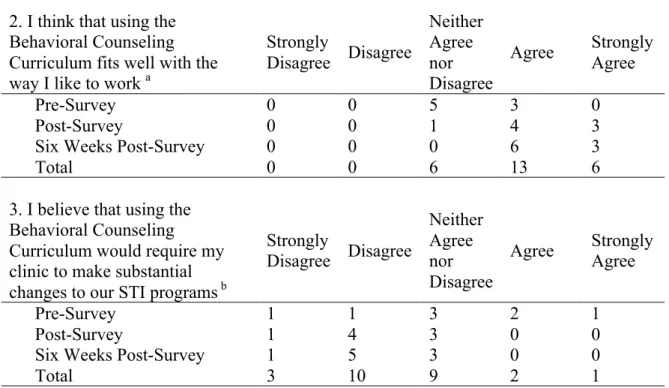
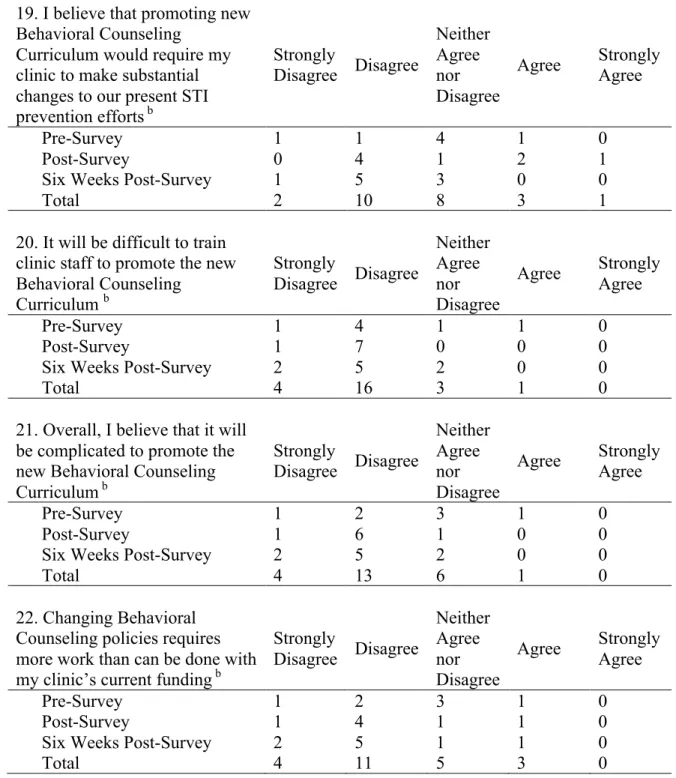
Table 6 provides a summary of tabulated staff responses on each of the three distributions of the Perceived Attributes of the Behavioral Counseling Curriculum survey.
Table 6
Staff Survey Responses
1. Using the Behavioral Counseling Curriculum is compatible with the STI activities in my clinic a
Strongly
Disagree Disagree
Neither Agree nor Disagree
Agree Strongly Agree
Pre-Survey 0 0 5 3 0
Post-Survey 0 0 0 5 3
Six Weeks Post-Survey 0 0 0 5 4
Total 0 0 5 13 7
2. I think that using the Behavioral Counseling Curriculum fits well with the way I like to work a
Strongly
Disagree Disagree
Neither Agree nor Disagree
Agree Strongly Agree
Pre-Survey 0 0 5 3 0
Post-Survey 0 0 1 4 3
Six Weeks Post-Survey 0 0 0 6 3
Total 0 0 6 13 6
3. I believe that using the Behavioral Counseling Curriculum would require my clinic to make substantial changes to our STI programs b
Strongly
Disagree Disagree
Neither Agree nor Disagree
Agree Strongly Agree
Pre-Survey 1 1 3 2 1
Post-Survey 1 4 3 0 0
Six Weeks Post-Survey 1 5 3 0 0
4. It will be difficult to train staff to implement the Behavioral Counseling Curriculum b
Strongly
Disagree Disagree
Neither Agree nor Disagree
Agree Strongly Agree
Pre-Survey 2 4 1 0 1
Post-Survey 2 5 1 0 0
Six Weeks Post-Survey 1 8 0 0 0
Total 5 17 2 0 1
5. Overall, I believe that it will be complicated to implement the Behavioral Counseling
Curriculum b
Strongly
Disagree Disagree
Neither Agree nor Disagree
Agree Strongly Agree
Pre-Survey 3 3 1 1 0
Post-Survey 1 6 1 0 0
Six Weeks Post-Survey 1 7 1 0 0
Total 5 16 3 1 0
6. I believe that each of the components described in the Behavioral Counseling Curriculum needs to be implemented within one year a
Strongly
Disagree Disagree
Neither Agree nor Disagree
Agree Strongly Agree
Pre-Survey 0 0 4 3 1
Post-Survey 0 0 1 5 1
Six Weeks Post-Survey 0 0 4 3 2
Total 0 0 9 11 4
7. I believe that it is okay for me to try out a new STI behavioral counseling program on a limited basis before fully implementing a
Strongly
Disagree Disagree
Neither Agree nor Disagree
Agree Strongly Agree
Pre-Survey 0 0 2 6 0
Post-Survey 0 0 1 7 0
Six Weeks Post-Survey 0 1 3 3 2
Total 0 1 6 16 2
8. Staff will not be able to see any changes in patient behavior if the Behavioral Counseling Curriculum is implemented b
Strongly
Disagree Disagree
Neither Agree nor Disagree
Agree Strongly Agree
Pre-Survey 2 4 2 0 0
Post-Survey 2 3 3 0 0
Six Weeks Post-Survey 1 5 3 0 0
9. Patients will like the changes if the Behavioral Counseling Curriculum is implemented a
Strongly
Disagree Disagree
Neither Agree nor Disagree
Agree Strongly Agree
Pre-Survey 0 0 4 3 1
Post-Survey 0 0 2 2 4
Six Weeks Post-Survey 0 0 1 6 2
Total 0 0 7 11 7
10. Using the Behavioral Counseling Curriculum will enhance my effectiveness on the job a
Strongly
Disagree Disagree
Neither Agree nor Disagree
Agree Strongly Agree
Pre-Survey 0 0 3 5 0
Post-Survey 0 0 2 6 0
Six Weeks Post-Survey 0 0 0 7 2
Total 0 0 5 18 2
11. Using the Behavioral Counseling Curriculum will increase the quality of STI prevention programs in my clinic a
Strongly
Disagree Disagree
Neither Agree nor Disagree
Agree Strongly Agree
Pre-Survey 0 0 1 4 3
Post-Survey 0 0 1 3 4
Six Weeks Post-Survey 0 0 0 5 4
Total 0 0 2 12 11
12. Using the Behavioral
Counseling Curriculum will have no effect on STI rates b
Strongly
Disagree Disagree
Neither Agree nor Disagree
Agree Strongly Agree
Pre-Survey 2 4 2 0 0
Post-Survey 3 1 4 0 0
Six Weeks Post-Survey 1 5 3 0 0
Total 6 10 9 0 0
13. The Behavioral Counseling Curriculum requires more work than can be done with the current funding at my clinic b
Strongly
Disagree Disagree
Neither Agree nor Disagree
Agree Strongly Agree
Pre-Survey 1 3 3 1 0
Post-Survey 1 4 2 1 0
Six Weeks Post-Survey 1 4 3 1 0
14. Even if the Department of Health did not encourage the use of this Curriculum, I would like to implement them in my practice a
Strongly
Disagree Disagree
Neither Agree nor Disagree
Agree Strongly Agree
Pre-Survey 0 0 4 4 0
Post-Survey 0 0 2 5 1
Six Weeks Post-Survey 0 0 5 3 1
Total 0 0 11 12 2
15. Overall, I find using Behavioral Counseling Curriculum fits well with the way I like to work a
Strongly
Disagree Disagree
Neither Agree nor Disagree
Agree Strongly Agree
Pre-Survey 0 0 6 2 0
Post-Survey 0 0 1 4 3
Six Weeks Post-Survey 0 0 1 4 3
Total 0 0 8 11 6
16. Enacting the new Behavioral Counseling Curriculum will have no effect on my community’s STI rates b
Strongly
Disagree Disagree
Neither Agree nor Disagree
Agree Strongly Agree
Pre-Survey 1 5 2 0 0
Post-Survey 3 1 4 0 0
Six Weeks Post-Survey 2 4 2 1 0
Total 6 10 8 1 0
17. Promoting new Behavioral Counseling Curriculum will enhance my effectiveness on the job a
Strongly
Disagree Disagree
Neither Agree nor Disagree
Agree Strongly Agree
Pre-Survey 0 0 4 4 0
Post-Survey 0 0 2 6 0
Six Weeks Post-Survey 0 0 1 7 1
Total 0 0 7 17 1
18. Overall, I find the enactment of new Behavioral Counseling Curriculum advantageous for my community a
Strongly
Disagree Disagree
Neither Agree nor Disagree
Agree Strongly Agree
Pre-Survey 0 0 2 4 1
Post-Survey 0 0 2 3 3
Six Weeks Post-Survey 0 0 1 6 2
19. I believe that promoting new Behavioral Counseling
Curriculum would require my clinic to make substantial changes to our present STI prevention efforts b
Strongly
Disagree Disagree
Neither Agree nor Disagree
Agree Strongly Agree
Pre-Survey 1 1 4 1 0
Post-Survey 0 4 1 2 1
Six Weeks Post-Survey 1 5 3 0 0
Total 2 10 8 3 1
20. It will be difficult to train clinic staff to promote the new Behavioral Counseling
Curriculum b
Strongly
Disagree Disagree
Neither Agree nor Disagree
Agree Strongly Agree
Pre-Survey 1 4 1 1 0
Post-Survey 1 7 0 0 0
Six Weeks Post-Survey 2 5 2 0 0
Total 4 16 3 1 0
21. Overall, I believe that it will be complicated to promote the new Behavioral Counseling Curriculum b
Strongly
Disagree Disagree
Neither Agree nor Disagree
Agree Strongly Agree
Pre-Survey 1 2 3 1 0
Post-Survey 1 6 1 0 0
Six Weeks Post-Survey 2 5 2 0 0
Total 4 13 6 1 0
22. Changing Behavioral Counseling policies requires more work than can be done with my clinic’s current funding b
Strongly
Disagree Disagree
Neither Agree nor Disagree
Agree Strongly Agree
Pre-Survey 1 2 3 1 0
Post-Survey 1 4 1 1 0
Six Weeks Post-Survey 2 5 1 1 0
Total 4 11 5 3 0
a Range: 1-5 (5 is most favorable for adoption) b Item was reverse coded for analysis
Questions 1, 2, 9, 11 and 18 are all structured so that a response of 5 (strongly agree) is the most favorable choice for adoption. These questions had mean staff response of at least 4.0. Questions 4 and 5 were reverse coded for analysis so that a response of 1 (strongly disagree) is the most favorable for adoption. Both of these questions had a mean of 2.0 across the three surveys.
Question 3 in the pre-survey was the only question with an unfavorable mean response. Question 3 is structured so that a response of 1 (strongly disagree) is the most favorable
response. The mean response on the pre-survey was 3.50. In the and six weeks post-surveys, mean staff responses were increasingly favorable with means of 2.25 and 2.22
respectively. All other mean responses, across each of the three surveys or the combined mean across the three surveys, were neutral or favorable.
Table 7
Mean Staff Survey Responses
1. Using the Behavioral Counseling Curriculum is
compatible with the STI activities in my clinic a Mean SD
Pre-Survey 3.38 0.52
Post-Survey 4.38 0.52
Six Weeks Post-Survey 4.44 0.53
Total 4.08 0.70
2. I think that the Behavioral Counseling Curriculum
fits well with the way I like to work a Mean SD
Pre-Survey 3.50 0.53
Post-Survey 4.25 0.71
Six Weeks Post-Survey 4.33 0.50
Total 4.04 0.68
3. I believe that using the Behavioral Counseling Curriculum would require my clinic to make
substantial changes to our STI programs b Mean SD
Pre-Survey 3.13 1.25
Post-Survey 2.25 0.71
Six Weeks Post-Survey 2.22 0.67
4. It will be difficult to train staff to implement the
Behavioral Counseling Curriculum b Mean SD
Pre-Survey 2.25 1.28
Post-Survey 1.88 0.64
Six Weeks Post-Survey 1.89 0.33
Total 2.00 0.82
5. Overall, I believe that it will be complicated to
implement the Behavioral Counseling Curriculum b Mean SD
Pre-Survey 2.00 1.07
Post-Survey 2.00 0.53
Six Weeks Post-Survey 2.00 0.50
Total 2.00 0.71
6. I believe that each of the components described in the Behavioral Counseling Curriculum needs to be
implemented within one year a Mean SD
Pre-Survey 3.63 0.74
Post-Survey 4.00 0.58
Six Weeks Post-Survey 3.78 0.83
Total 3.79 0.72
7. I believe that it is okay for me to try out a new STI behavioral counseling program on a limited basis
before fully implementing a Mean SD
Pre-Survey 3.75 0.46
Post-Survey 3.88 0.35
Six Weeks Post-Survey 3.67 1.00
Total 3.76 0.66
8. Staff will not be able to see any changes in patient behavior if the Behavioral Counseling Curriculum is
implemented b Mean SD
Pre-Survey 2.00 0.76
Post-Survey 2.13 0.83
Six Weeks Post-Survey 2.22 0.67
Total 2.12 0.73
9. Patients will like the changes if the Behavioral
Counseling Curriculum is implemented a Mean SD
Pre-Survey 3.63 0.74
Post-Survey 4.25 0.89
Six Weeks Post-Survey 4.11 0.60
Total 4.00 0.76
enhance my effectiveness on the job a
Pre-Survey 3.63 0.52
Post-Survey 3.75 0.46
Six Weeks Post-Survey 4.22 0.44
Total 3.88 0.53
11. Using the Behavioral Counseling Curriculum will increase the quality of STI prevention programs in
my clinic a Mean SD
Pre-Survey 4.25 0.71
Post-Survey 4.38 0.74
Six Weeks Post-Survey 4.44 0.53
Total 4.36 0.64
12. Using the Behavioral Counseling Curriculum will
have no effect on STI rates b Mean SD
Pre-Survey 2.00 0.76
Post-Survey 2.13 0.99
Six Weeks Post-Survey 2.22 0.67
Total 2.12 0.78
13. The Behavioral Counseling Curriculum requires more work than can be done with the current funding
at my clinic b Mean SD
Pre-Survey 2.50 0.93
Post-Survey 2.38 0.92
Six Weeks Post-Survey 2.44 0.88
Total 2.44 0.87
14. Even if the Department of Health did not
encourage the use of this Curriculum, I would like to
implement them in my practice a Mean SD
Pre-Survey 3.50 0.53
Post-Survey 3.88 0.64
Six Weeks Post-Survey 3.56 0.73
Total 3.64 0.64
15. Overall, I find using Behavioral Counseling
Curriculum fits well with the way I like to work a Mean SD
Pre-Survey 3.25 0.46
Post-Survey 4.25 0.71
Six Weeks Post-Survey 4.22 0.67
Total 3.92 0.76
16. Enacting the new Behavioral Counseling