Arab American Identity and Intergroup Bias Danny Rahal
University of North Carolina at Chapel Hill Spring 2016
A thesis presented to the faculty of The University of North Carolina at Chapel Hill in partial fulfillment of the requirements for the Bachelor of Science degree with Honors in
Psychology.
Committee Chair: Beth Kurtz-Costes, Ph.D
Acknowledgements
Abstract
Arab American Identity and Intergroup Bias
According to the Arab American Institute, at least 3.5 million Americans are of Middle Eastern descent. Yet, there is a dearth of research regarding the understanding of features of Arab American identity. Arabs are generally characterized as an ethnically distinct population whose culture derives from Middle Eastern countries that predominately speak Arabic. Arabs also are arguably distinct phenotypically with respect to skin tone and clothing. Despite these features, Arab Americans are still classified as Caucasians according to the US Census Bureau. Many Arab American organizations are campaigning for a Middle Eastern and North African grouping to be included in the Census, but currently Arabs are considered a part of the Caucasian majority in accordance with the Supreme Court ruling St. Francis College v. Al-Khazraji (Tamer, 2010). Because of this racial designation, many Arabs identify with both Whiteness and being Arab. On the other hand, although Arabs are still considered Caucasian, Arabs still experience discrimination; this discrimination was most prominent immediately following the attacks of 9/11 (Lauderdale, 2004). Although overt acts of discrimination are less prominent today, data suggest that Arabs are still victims of ethnic name discrimination. Therefore, in this study I seek to further explore ethnic name discrimination, intergroup bias, and ethnic identity among Arabs. Ethnic Name Discrimination
racism. In line with the idea of modern racism, people often feel conflicted between their biases and societal egalitarian beliefs, and thus discriminate in less overt ways (McConahay, Hardee, & Batts, 1981; Gee & Ford, 2011). One means by which intergroup biases are manifested both explicitly and implicitly is through ethnic name discrimination.
Ethnic name discrimination refers to the favoring of traditionally non-ethnic names over distinctively ethnic names. Such discrimination can limit opportunities for housing, employment, and higher wages for members of other groups. For example, individuals with foreign names were less likely than individuals with Anglo and Italian names to be invited to a room viewing in London and Italy, with Arabic-named persons least likely to receive a callback in each country (Baldini & Federici, 2011; Carlsson & Eriksson, 2014). Individuals with Arabic names were also less likely to receive callbacks in the Swedish rental housing market, at least when the landlord was Swedish (Ahmed & Hammarstedt, 2008; Bengtsson, Iverman & Hinnerich, 2012).
Additionally, women’s last names were more predictive of wage than actual ethnicity, and wage was correlated with the father-in-law’s ethnicity in married women in Israel (Rubinstein & Brenner, 2013). Taken together, these findings suggest that traditionally Arabic names are often discriminated against in different countries.
are discriminated against because of employers’ biases, whether or not individuals are aware of their bias. In this study, I measured ethnic name bias with a resume rating task. Arab and non-Arab individuals rated students’ future success based on their high school resumes. I was interested both in whether Whites would display a bias in predicting academic successful comparable to that of employers’ callback bias, and also whether Arab Americans would also show intergroup bias.
Intergroup Bias: A Precursor to Ethnic Name Discrimination
Intergroup bias refers to a preference or favoring of one group over another. People readily distinguish between in-groups and out-groups, and strong identification with a group is associated with developing bias for that group (Roth & Steffers, 2014). People readily develop intergroup biases in favor of their own group, as posited within social identity theory (Taijfel, 1970). By focusing on the similarities within in-groups and the differences between themselves and out-group members, individuals are able to reinforce their sense of membership in a group and in turn reinforce their positive bias for that group. Adults and children have even been found to develop lasting preference for a group to which they are randomly assigned (Billig & Taijfel, 1973; Files, Casey, & Oleson, 2010). Arabs may show an implicit bias favoring other Arabs despite cultural and phenotypic differences between the groups.
low-income, and obese people, implicit biases for their own group were positively correlated with their own perceptions of their group’s relative status (Rudman, Feinberg, & Fairchild, 2002). These findings suggest that implicit bias may depend on one’s attitudes about the ingroup, also known as private regard, or awareness of the group’s status in society.
In contrast, Latino children displayed a positive bias for Latinos over Black people, but they did not display a bias for Latinos relative to White people (Dunham, Baron, & Banaji, 2007). Latinos may not have shown bias between Latinos and Whites because they are able to identify with both a majority racial group and a minority ethnic group. Latinos are similar to Arabs in that Latinos are able to racially identify as Caucasian, in accordance with the US Census Bureau, and ethnically identify otherwise. According to social identity complexity theory, membership in a relatively high status group may improve self-esteem and mitigate the negative stereotypes associated with membership in a low status group (Roccas & Brewer, 2002). As a result, rather than displaying a bias for Whiteness, Latinos might associate positively with both identities and consequently do not favor one.
With regard to Arab self-identification, Abdulrahim et al. (2012) suggested that Arabs may also identify as White in order to vie for higher status. In their study, Arabs self-identifying as White experienced fewer instances of discrimination, but experienced more distress in response to this discrimination, suggesting that self-identification has significant implications for how one interprets racial interactions. Therefore, minority groups may not develop implicit biases favoring their own groups because of their awareness of societal attitudes or their own perceptions of these groups.
Bias favoring a particular racial/ethnic group might be influenced by one’s racial/ethnic identity. For instance, ethnic identity, measured as the sum of centrality and private regard sub-scales, was positively correlated with intergroup bias among minority children in 2nd and 4th grade (Pfeifer et al., 2007). Racial/ethnic identity has been conceptualized as made up of several components. The Multi-dimensional Model of Racial Identity (MMRI) is one means of assessing racial/ethnic identity in African Americans (Sellers, Smith, Shelton, Rowley, & Chavous, 1998). Two components of this model are private regard and centrality. Centrality assesses the
importance of race for one’s overall identity. Private regard refers to whether the individual feels positively or negatively about his or her own race. For instance, someone who identifies strongly with being Black is high in centrality, and someone who highly esteems Black people is high in private regard. Although traditionally applied to African American identity, modified versions of the MMRI have been used with other minority groups with moderate reliability (Johnson,
Robinson Kurpius, Rayle, Arrendondo, & Tovar-Gamero, 2005). In the present study, I modified the MMRI to be used with Arab Americans.
Higher rates of acceptance and affirmation of Arab ethnic identity are associated with better psychological well-being in young Arab American adults (Sheldon, Oliver, & Balaghi, 2014). However, moderate identification with Arab and American identities, as opposed to strong identification with either, is associated with better physical well-being (Jadalla & Lee, 2012). There is a relative dearth of literature regarding the Arab American population, due in part to the fact that Arabs are not yet considered a unique ethnic group. The consistent
anticipated that Arabs with high ethnic centrality and high private regard would show a positive bias toward resumes with Arab names.
The Current Study
In the present study, Arab Americans, recent Arab immigrants and non-Arab White Americans rated the probable success of students based on their resumes. Intergroup bias was measured by using two pairs of identical resumes with one in each set having an Anglo name, and the other an Arab name. The difference between the ratings of the two resumes served as the measure of ethnic name discrimination or intergroup bias. The first goal of the study was to measure group differences in bias. The second goal was to examine relationships between ethnic name discrimination and aspects of ethnic identity among Arab participants.
I hypothesized that Arabs and non-Arab Whites (subsequently referred to as “Whites”) would display different amounts of bias against Arabs, with bias measured as a preference for resumes bearing non-ethnic names. I predicted that Whites would display preference for traditionally Anglo-American names because of an implicit bias favoring their own group, as well as a bias against traditionally Arabic names after the stigma surrounding the Middle East in news and media.
Finally, centrality, private regard, and self-identification were hypothesized to predict the degree of bias displayed by Arab participants. Arabs who view Arabs positively (i.e., have high private regard) were expected to show less bias against Arabic names than Arabs with lower private regard. It was expected that individuals who felt more positively about Arabs would identify more strongly with being Arab and would thus show less of a preference for Anglo-American names. Similarly, Arabs with high centrality and those who most strongly self-identified as Arab were expected to show less of a preference for Anglo-American names, whereas individuals who self-identified more closely with being American might be more inclined to adopt American preferences for Anglo-American names. The present literature is unclear about the relationship between public regard and degree of intergroup bias, so analyses were exploratory and directional hypotheses were not posited.
Method Development of Study Measures
and Ahmed Hussain) were used as names for the identical pairs of resumes. On a rating scale of 1 (very unlikely) to 7 (very likely), the first names Kyle, William, Hassan, and Ahmed had mean ratings of 6.22, 5.98, 6.67, and 6.67 in representing the designated group and were rated as being associated with the specific racial/ethnic group of interest by at least 90% of participants. The family names Smith, Johnson, Abu Bakr, and Hussain were rated on the same Likert scale and had means of 6.11, 6.11, 6.75, and 6.75.
A second pilot test was conducted to develop the resumes used for the study. Nineteen adults (10 Whites and 9 Arabs recruited via email) participated in this pilot. Eleven one-page resumes were collected from current college students who were friends or acquaintances of the PI, and all identifying information and scores were removed. SAT scores, GPA scores, and home state were randomly assigned to the nine distinct resumes. All students had unweighted high school GPAs, had taken the most recent form of the SAT with a maximum score of 2400, and were entering college with majors undecided. Two resumes were selected as target stimuli, and the remaining resumes served as controls. Control resumes were assigned a mixture of Anglo-American names and other ethnic names (e.g., Jose Hernandez; Manish Valusabramanian) so that the participants would be less likely to view the Arabic names as central to the purpose of the study. The content of the resumes was altered slightly to reflect the ethnicity of the name (e.g. Latin Honors Society was switched to Spanish Honors Society for Jose Hernandez). The two pairs of identical resumes differed only with regard to these ethnic cues, school name, and participant names.
reported whether they noticed any identical resumes. The presentation sequence of the identical resumes was randomized such that the 3rd and 10th resumes were identical and the 4th and 11th resumes were identical, with the Arabic resumes never presented consecutively (e.g. if Ahmed Hussain was presented 3rd, the identical resume belonging to Kyle Smith was presented 10th and the other Arabic name Hassan Abu Bakr was presented 11th). This order ensured that participants consistently rated 6 resumes before rating an identical resume in the pair. During pilot testing, the order of the seven control resumes was altered until 10 participants consistently reported that they did not notice any identical resumes.
Participants
Three hundred forty three adults participated in the full-scale study. All participants were from the United States and completed the survey through Amazon Mechanical Turk. Twenty-five Arab immigrants, 102 Arab American adults, and 216 Whites participated. The White participants were slightly older (M = 33.5 years) than the Arab Americans (M = 27.4 years) and Arab immigrants (M = 29.3). Of the Arab immigrants, 8 were from India and the remaining 17 were from different Middle Eastern nations (e.g. Kuwait, Saudi Arabia, Syria). There was a nearly equal amount of men and women among Whites (51.1% female), and slightly more men than women among Arabs (38.1% female). Participants who rated a resume a score of 0 or who spent under 2 seconds rating any of the resumes of interest were removed.
Participants who identified as White/Caucasian were asked if they were Middle Eastern or European American. Any participants who selected Middle Eastern were categorized as Arab/Middle Eastern in this study. Participants were designated as White if they identified as both White/Caucasian and European American.
Resume Rating. Participants viewed 11 high school resumes, one at a time, ostensibly belonging to 11 male students who were recently admitted to Princeton University. Participants rated each student’s chance of success at Princeton University on a scale of 0 (low chance of success) to 100 (high chance of success). There were two sets of identical resumes. The third and
tenth resumes were identical except for the names used, with one resume having a distinctively Arab name (Ahmed Hussain) and the other having a distinctively Anglo-American name (Kyle Smith). Additionally, the fourth and eleventh resumes were identical aside from the name
(Hassan Abu Bakr and William Johnson).
Resume presentation sequence was randomized such that half of the participants saw the resumes with Arabic names as the third and tenth resumes in the sequence and the resumes with Anglo-American names as the fourth and eleventh resumes. The other half of participants saw the opposite ordering, with the Arabic resumes as the fourth and eleventh resumes and the Anglo-American resumes as the third and tenth. This randomization was such that participants rated six resumes before rating an identical resume. The rating of the Arabic name resume was subtracted from the rating of the rating of the identical Anglo-American name resume, such that a positive score represented a pro-Anglo bias, and a negative score reflected a pro-Arab bias. Only participants who spent between 2 and 120 seconds per resume were included in the study. This procedure resulted in dropping 7 White and 10 Arab participants from the sample.
Centrality. Centrality measures how important one’s racial/ethnic identity is for his or her overall self-concept. The centrality scale had 10 items (e.g. “Being Arab is an accurate reflection of whom I am”), with higher scores representing higher racial/ethnic centrality. Participants rated each item on a Likert scale from 1 (strongly disagree) to 7 (strongly agree). All items were positively scored. Reliability for the 10 items was high (α = .95), and mean scores were calculated for centrality.
Private regard. Private regard measures how highly a person considers his or her own racial/ethnic group. The private regard scale had 7 positive items (e.g. “I feel good about Arabs in general”), with higher scores representing higher private regard Participants rated each item on a Likert scale from 1 (strongly disagree) to 7 (strongly agree). Mean scores were calculated for private regard (α = .94).
Public regard. Public regard measures how positively a person believes people in general feel about his or her racial/ethnic identity. The public regard scale had 6 items (e.g. “American society views Arabs in a positive manner”), with higher scores representing higher private regard Participants rated each item on a Likert scale from 1 (strongly disagree) to 7 (strongly agree). Mean scores were calculated for public regard (α = .85).
Ethnic identification. Participants reported how closely they identify with being Arab and American respectively on a Likert scale from 1 (not at all) to 7 (very closely). Because the MMRI has not been previously applied to the Arab American population, these measures were included to directly gauge identification with Arab culture and identification with being American respectively.
Arab or Arab American, Persian, African or African American, East Asian or East Asian American, South Asian or South Asian American, Australian or Pacific Islander, Caucasian or European American, Hispanic or Latino, Native American or Alaska Native, or other.
Participants were only allowed to select one race. Procedure
Participants were initially asked to indicate their race/ethnicity from the choices listed above. Those who identified as White/Caucasian or Arab/Middle Eastern were permitted to continue with the survey. Participants who identified as White/Caucasian were further asked to identify whether they were of European or Middle Eastern descent. All participants who did not qualify because of their race/ethnicity were redirected to the end of the survey.
After completing the eligibility questions, participants completed the resume rating task. After completing this task, Arab participants read and responded to the ethnic identity measures described above. Participants who completed the survey were compensated with $0.50.
Results
Participants who self-identified as White/Caucasian and being of European descent were considered White, whereas participants who self-identified as either Arab/Middle Eastern or as White/Caucasian and being of Middle Eastern descent were considered Arabs. A chi-square test was conducted to examine pre-existing group differences with respect to gender. There were significantly fewer women within the Arab sample (n = 131, 38.2% female) than within the White sample (n = 227, 50.4% female; 2(1) = 6.91, p = .009). Arabs were also significantly younger than Whites recruited in this study, t(377) = 5.18, p < 0.001.
the two groups on each of the seven control resumes. Those analyses showed that Arabs and Whites differed significantly with respect to the rating of the first resume (Glen Cook), with Arabs (M = 66.1) rating the resume less positively than Whites (M = 71.4) t(359) = 2.42, p = .016. The two groups did not differ on ratings of the other six control resumes, all t’s < 2.0. Test of Intergroup Bias
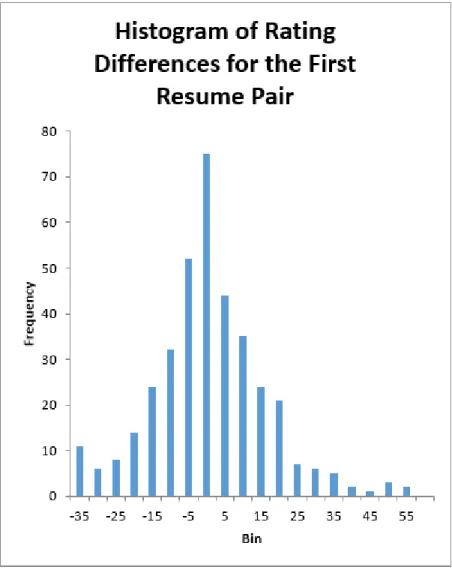
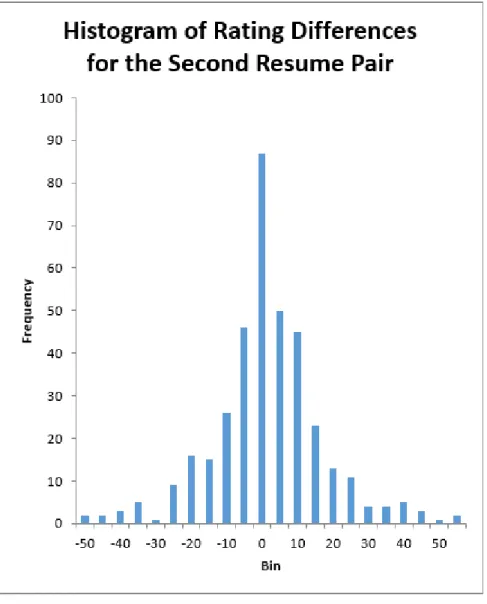
The four resume scores of interest were negatively skewed, each with a wide range of scores. The difference between each individual’s rating of the Anglo-American name and the Arabic name was calculated for each pair of identical resumes and was used as a measure of intergroup bias. A positive number indicates that the resume with the Anglo-American name was rated higher and that intergroup bias was displayed favoring the Anglo-American name. A negative score indicates that the Anglo-American name was rated lower. The difference scores for both pairs of resumes were normally distributed (see Figures 1 and 2). Both means were near zero, indicating that on average, resumes with Arab names were rated similarly as resumes with White names across the entire sample.
Paired sample t-tests were used to test whether Whites’ and Arabs’ ratings for identical resumes significantly differed from zero. Results showed that the differences in Whites’ ratings for each pair of resumes (-1.07 and 0.16) did not differ significantly from zero, suggesting that Whites rated the Anglo-American and Arabic names approximately equally. The difference in Arabs’ ratings for identical resumes (-1.41 and -0.41) also did not differ significantly from zero, t’s < 2.0. These findings suggest that neither Whites nor Arabs showed intergroup bias in their
ratings.
gender and ethnicity, F(1, 372)= 1.31, p = .27. However, the model was significant for the second pair of resumes, F(1, 372) = 2.84, p = .038. The main effect of Ethnicity was not significant. A main effect of Gender was qualified by a significant Ethnicity by Gender
interaction, F(1, 372) = 5.21, p = .023 and F(1, 372) = 5.31, p = .021, respectively. Means are reported in Table 1 and are shown in Figure 3. The findings suggested that Arab women
displayed a bias significantly different from that of Arab men and White men and women; Arab women have a negative mean value, meaning that Arab women, in contrast to the other three groups, showed intergroup bias favoring the Arabic name.
Ethnic Identity and Intergroup Bias among Arabs
Backward hierarchical regression was used to test whether facets of identity predict the degree of bias displayed during the resume rating task. Although the original goal was to test what facets of identity were associated with intergroup bias among Arabs in general, separate analyses were run for Arab men and Arab women because of the interaction effect found between ethnicity and gender. Income, private regard, public regard, centrality, Arab identity, and American identity were included in the regression analyses predicting the resume rating difference scores of Arab men and Arab women. Income was included as a control variable, and the two items regarding Arab identity and American identity were included with the components of the MMRI because the MMRI has not yet been widely used among Arab Americans, whereas these two items directly assess the importance of Arab identity and American identity to
The regression model using scores of Arab men to predict the rating difference scores was significant, F(1, 86) = 3.34, p = 0.07; see Table 3. Arab identity significantly predicted degree of bias among men (B = -2.97), with each increase in the Arab identity scale predicting the Arabic name to be rated 2.97 higher than the Anglo-American name. For Arab women, public regard and Arab identity predicted ethnic name bias, F(1, 49) = 4.20, p = 0.02; see Table 4). Again, Arab identity predicted a higher rating of the resume with the Arabic name, with each unit increase in the Arab identity scale predicting a 3.54 increase in the rating of the resume with the Arabic name relative to the resume with the Anglo-American name (B = -3.54 p = 0.048). Arab public regard predicted rating the Anglo-American name higher than the Arabic name, with a unit increase in public regard predicting the resume with the Anglo-American name to be rated 0.326 higher relative to the resume with the Arabic name (B = 3.27, p = 0.018).
Discussion
The purpose of this study was to test whether Arab Americans displayed an intergroup bias for Anglo-American names and whether this bias was related to facets of Arab American identity. I predicted that White Americans would display a bias toward traditionally Anglo-American names over Arabic names by rating students with Anglo-Anglo-American names as more likely to succeed. This hypothesis was not supported, as Whites rated identical resumes approximately equally. These findings at first appear to contradict previous findings, which suggest that employers are more likely to callback applicants with Anglo-American names than applicants with identical resumes and Arabic names (Widner & Chicoine, 2007).
Intergroup Bias and Ethnic Name Discrimination
The nature of the tasks used may explain why Whites were found to have no bias for Anglo-American names whereas past studies have found that such names are favored by
employers. Employers review resumes with the intent of choosing a small number of applicants and ultimately offering a position. Therefore, employers only interview people whom they would genuinely consider working with as opposed to considering ability alone. Participants in this study rated how likely students were to succeed in a challenging academic setting. Participants could rate a resume highly but ultimately prefer not to work with a student. Because ratings did not have long-term implications for participants in this study, ratings may represent a more objective measure of perceptions of student success. This finding may suggest that employers may discriminate against Arabs, but may not view Arabs as less effective workers than
individuals with Anglo names. Arabs may receive fewer callbacks because employers must consider factors beyond ability, such as a preference for working with people of a specific ethnicity in spite of ability or wanting to provide more opportunities to people of their own ethnic background.
I also predicted that Arabs would display less of a bias than Whites by rating the resumes more equally than Whites, while controlling for gender. This hypothesis was not supported, as there were no differences in ratings across groups regarding one pair of resumes (Ahmed Hussain and Kyle Smith). For the second pair of resumes (Hassan Abu Bakr and William Johnson), Arab women rated the resume of Hassan Abu Bakr more positively than the (identical) resume of William Johnson. An interaction effect was found between ethnicity and gender, such that Arab
Differences may have been found between the second pair of resumes and not the first pair because of the presentation sequence of the resumes. The resume ratings were compared for each of the seven control resumes to ensure there were no fundamental differences in rating criteria between Arabs and Whites. Examples of good and bad resumes were not included in the study to avoid biasing participants to valuing certain qualities over others. No ethnic group differences were found in ratings of control resumes aside from the resume that was presented first to all participants (Glen Cook). Arabs rated this resume lower, which suggests that Arabs may have had higher expectations of the resumes and adjusted these expectations after seeing more resumes. Participants may have needed to rate more resumes to develop a clear baseline before rating the resumes of interest. Significant differences were observed for the second pair of resumes, which were presented as the 4th and 11th resumes respectively, whereas the resumes from the first pair were reviewed 3rd and 10th consistently. Additionally, the resumes from the first pair were generally rated as less likely to be successful than the other pair. The quality of the resumes therefore may have influenced this relationship, with Arab women the only group to consistently show bias.
Gender, Identity, and Intergroup Bias
People develop a favorable bias for a group after perceiving similarities between
Centrality and private regard were not predictive of bias, which suggests that gender differences in intergroup bias may be present because of experiences in America and factors besides identity.
These findings suggest that Arab men and women may associate with their racial/ethnic group differently and consequently develop different biases. There has been little research regarding the differences in the experiences of Arab men and women in America. Arab women are often recognizable because of the hijab and may be more likely than Arab men to experience discrimination or exclusion. Arab men and women may have different experiences of
discrimination and assimilation in the United State, and these differences may influence how they conceptualize their own identities, in a way that is not necessarily captured by the MMRI. Lastly, Arab society is largely patriarchal with clear gender roles. Arab women may be inclined to adhere more strictly to their culture, whereas men are encouraged to explore different cultures. As a result, Arab men and women can associate differently with being Arab and being American and may have different intergroup biases.
Versions of the MMRI have been used to measure racial/ethnic identity in Blacks, Whites, Latinos, and Native Americans, but this study was among the first to adjust these scales to measure Arab racial/ethnic identity. After removing reverse-coded items, centrality, public regard, and private regard sub-scales had high reliabilities. However, in this study, ethnic centrality and private regard were not predictive of intergroup bias; the only identity measure that predicted intergroup bias among both Arab men and women was a single item measure regarding Arab identity, which was not part of the original MMRI. Therefore, the scales may not be capturing the aspects of Arab identity that are most pertinent to ethnic name bias. For
instance, Arab identity may need to be assessed differently because Arabs are able to associate dually with being Arab and being Caucasian. Also, Arab experiences differ from those of other minority groups because of the political state of the Middle East and the associations of Arabs with terrorism, and the heavy role media can have with respect to shaping perceptions of Arabs. Therefore, appraisal of discrimination may be more pertinent than public regard.
The present findings suggest that there are gender differences with respect to intergroup bias. Identity was predictive of intergroup bias among both Arab men and Arab women. A different model of racial/ethnic identity may better explain the development of this bias and why this bias is observed in Arab women and not Arab men.
Methodological Considerations
included to ensure that participants understood the scores included on the resumes. Most participants graduated from high school over 10 years ago, and participants may be unfamiliar with current college testing. Although it was stated that the GPA and SAT scores were
consistently out of 4.0 and 2400 respectively, participants who glossed over the instructions may have misinterpreted the scores.
College applications have also become more competitive, so participants may have had inflated ratings of the first resumes and developed a baseline after viewing multiple resumes. As previously discussed, anchor resumes were not included on the rating scale so as not to bias participants regarding what factors to value when evaluating the resumes. However, participants may have altered their expectations after rating the first resumes, and the resumes of interest may have been presented too early in the sequence. Including more resumes or including sample resumes to rate may enable participants to develop clearer expectations before the rating task. Such procedures might help participants to maintain consistency in their rating criteria as well as control for order effects. This method has valid stimuli, as the presented resumes were actually used by high school students to apply to college. The resumes accurately represent the caliber of prospective college students. However, the resumes were each relatively lengthy in content. Participants glossing over the resumes may have become fatigued or read different content when reviewing each identical resume. Although they may not have identified the target resume pairs as identical, they may have selectively attended to different parts of each resume.
Future Directions
This experiment is a first step to better understand Arab American identity and
genders are equally represented. Moving forward, ratings of resumes with feminine names as opposed to solely masculine names could be collected. Literature is mixed regarding how Arab men and women are perceived by employers, so it would be worthwhile to assess whether these findings regarding intergroup bias are present when evaluating women rather than men. A greater disparity in resume quality could be included as well, to determine whether racial biases are more significant for higher quality resumes.
A new measure of Arab identity could also be developed. Although the MMRI had high reliabilities among Arab participants, the subscales of the MMRI may not measure important facets of Arab American identity. A new scale could be developed and tested, focusing more specifically on the distinction between Arab and White identity and assessments of
discrimination and political attitudes regarding Arabs. Qualitative interviews could be used to gauge what factors are most central for Arab identity in order to develop a scale with greater validity.
References
Abdulrahim, S., James, S., Yamout, R., & Baker, W. (2012). Discrimination and psychological distress: Does Whiteness matter for Arab Americans? Social Science & Medicine, 75(12), 2116-2123.doi:10.1016/j.socscimed.2012.07.030.
Ahmed, A., & Hammarstedt, M. (2008). Discrimination in the rental housing market: A field experiment on the Internet. Journal of Urban Economics, 64, 362-372.
doi:10.1016/j.jue.2008.02.004
Ajrouch, K., & Jamal, A. (2007). Assimilating to a White Identity: The Case of Arab Americans. International Migration Review, 41, 860-879.
doi: 10.1111/j.1747-7379.2007.00103.x
Baldini, M., & Federici, M. (2011). Ethnic discrimination in the Italian rental housing market. Journal of Housing Economics, 20, 1-14. doi:10.1016/j.jhe.2011.02.003 Bengtsson, R., Iverman, E., & Hinnerich, B. T. (2012). Gender and ethnic discrimination in
the rental housing market. Applied Economics Letters, 19, 1-5. doi:10.1080/13504851.2011.564125
Bertrand, M., & Mullainathan, S. (2004). Are Emily and Greg more employable than Lakisha and Jamal? A field experiment on labor market discrimination. National Bureau of Economic Research, 94, 991-1013. doi:10.3386/w9873
Carlsson, M., & Eriksson, S. (2014). Ethnic discrimination in the London market for shared housing. Journal of Ethnic and Migration Studies, 41, 1276-1301.
doi:10.1080/1369183X.2014.965670
analysis of implicit consistency in Hispanic Americans. Self and Identity, 6(2-3), 238-255. doi: http://dx.doi.org/10.1080/15298860601115344
Files, J., Casey, C., & Oleson, K. (2010). Intergroup bias in children: Development and
persistence. European Journal of Social Psychology Eur. J. Soc. Psychol., 40, 671-678. doi:10.1002/ejsp.734
Gee, G., & Ford, C. (2011). Structural racism and health inequities. Du Bois Review: Social Science Research on Race, 8(1), 115-132. doi:10.10170S1742058X11000130
Jadalla, A., & Lee, J. (2012). The relationship between acculturation and general health of Arab Americans. Journal of Transcultural Nursing, 23, 159-165.
doi:10.1177/1043659611434058
Johnson, T., Robinson Kurpius, S., Rayle, A., Arrendondo, P., & Tovar-Gamero, Z. (2005). The multidimensional inventory of Black identity: Its use with Euro-American, Latino, and Native American undergraduates. Measurement and Evaluation in Counseling and Development, 38, 92-103.
Lauderdale, D. (2006). Birth outcomes for Arabic-named women in California before and after September 11. Demography, 43(1), 185-201. doi:10.1353/dem.2006.0008
Newheiser, A., & Olson, K. (2012). White and Black American children's implicit intergroup bias. Journal of Experimental Social Psychology, 48, 264-270.
doi:10.1016/j.jesp.2011.08.011
Pfeifer, J. H., Ruble, D. N., Bachman, M. A., Alvarez, J. M., Cameron, J. A., & Fuligni, A. J. (2007). Social identities and intergroup bias in immigrant and nonimmigrant children. Developmental Psychology, 43(2), 496-507.
doi:http://dx.doi.org/10.1037/0012-1649.43.2.496
implicit intergroup bias in minimal groups. Social Psychology, 45, 253-264. doi:http://dx.doi.org/10.1027/1864-9335/a000169
Rubinstein, Y., & Brenner, D. (2013). Pride and prejudice: Using ethnic-sounding names and inter-ethnic marriages to identify labour market discrimination. The Review of Economic Studies, 389-425. doi:10.1093/restud/rdt031
Roccas, S., & Brewer, M. B. (2002). Social Identity Complexity. Personality and Social Psychology Review, 6(2), 88-106. doi:10.1207/S15327957PSPR0602_01
Rudman, L., Feinberg, J., & Fairchild, K. (2002). Minority members' implicit attitudes: Automatic ingroup bias as a function of group status. Social Cognition, 20, 294-320. doi:10.1521/soco.20.4.294.19908
Schnake, S., & Ruscher, J. (1998). Modern racism as a predictor of the linguistic intergroup bias. Journal of Language and Social Psychology, 17, 484-491.
doi:10.1177/0261927X980174004
Sellers, R., Smith, M., Shelton, J., Rowley, S., & Chavous, T. (1998). Multidimensional model of racial identity: A reconceptualization of African American Racial identity. Personality and Social Psychology Review, 2, 18-39. doi:10.1207/s15327957pspr0201_2
Sheldon, J., Oliver, D., & Balaghi, D. (2014). Arab American emerging adults' ethnic identity and its relation to psychological well-being. Emerging Adulthood, 42, 340-352.
doi:10.1177/2167696815597601
Sheng, F., & Han, S. (2012). Manipulations of cognitive strategies and intergroup
relationships reduce the racial bias in empathic neural responses. NeuroImage, 61, 786-797. doi:10.1016/j.neuroimage.2012.04.028
Journal on Civil Liberties & Civil Rights, 16, 101-128.
doi:10.1016/j.neuroimage.2012.04.028
Widner, D., & Chicoine, S. (2011). It's all in the name: Employment discrimination against Arab Americans. Sociological Forum, 26, 806-823. doi:
Table 1
Mean difference scores in ratings of identical resumes by ethnicity and gender. (Standard
deviations appear in parentheses.)
Resume Pair
Mean difference in ratings Arab Men Arab Women White Men White Women Pair 1 -0.73
(17.51) -2.46 (17.96) 0.75 (17.06) -3.03 (15.23) Pair 2 3.05
Table 2
Pearson’s Product Moment Correlations for Ethnic Identity Factors
Measure 1 2 3 4 5 6 7 M (SD)
1 Centralitya 0.757* 0.318* 0.652* -0.023 0.095 -0.152 4.93 (1.35)
2 Private Regarda -0.065 0.452 0.032 0.063 -0.137 5.05 (1.06)
3 Public Regarda 0.272* 0.060 0.040 0.027 4.26 (1.53)
4 Arab Identityb -0.051 -0.087 -0.032 2.71 (1.20)
5 American Identityb -0.032 0.042 2.81 (1.06)
6 First Pair Differencec 0.006 -1.2554
(16.7013)
7 Second Pair Differencec -0.0536
(16.167)
* Correlation is significant at the .01 level (2-tailed). a
Score rated on a 7-point scale. b
Score rated on a 4-point scale. c
Table 3
Predictors of Differences in Resume Ratings among Arab Men
Differences in resume ratings
Model 1 Model 2
Variable B β B 95% CI β
Arab Identity -2.329 -0.012 -2.982 [-6.236, 0.272] -0.193 Centrality -0.019 -0.001
Private Regard -0.831 -0.045 Public Regard -1.103 -0.089 American Identity 0.002 0.001
Income -1.227 -0.112
R2 -0.016 0.027
F 0.632 3.337
Δ R2
0.043
Δ F 2.705
Table 4
Predictors of Differences in Resume Ratings among Arab Women
Variable
Differences in resume ratings
Model 1 Model 2
B β B 95% CI β
Arab Identity -4.241 -0.352 -3.535* [-7.019, -0.051] -0.369 Public Regard 4.038 0.525 3.274* [0.606, 5.942] 0.326 Centrality -.101 -0.101
Private Regard 0.501 0.501 American Identity 0.048 0.048
Income 0.008 0.008
R2 .061 0.101
F 1.943 4.202*
Δ R2
0.040
Δ F 2.259
Figure 3. Gender and ethnic differences in ratings of resumes of William Johnson