Community Based Programs: An Alternative Approach For Treating/Preventing Childhood Obesity In Low-Income and Ethnically Diverse Families
By
Shay Ia Lester
A Master's Paper submitted to the faculty of the University of North Carolina at Chapel Hill
in partial fulfillment of the requirements for the degree of Master of Public Health in
the Public Health Leadership Program.
Chapel Hill
2009
[signature]
Date
[signature]
Community Based Programs: An Alternative Approach For Treating/Preventing Childhood Obesity In Low-Income and Ethnically Diverse Families
Research Question: Will using local community-programs in place of the current standards of
diet and exercise counseling be more effective in reducing overweight and obesity among children ages 3-7 in low-income and ethnically diverse families?
Hypothesis- We believe community programs are a more viable resource for low-income
families due to their convenience and propensity to provide programming structured to
accommodate the social and cultural factors of citizens within their neighborhoods. We expect to realize significant differences favoring the community-based program group over control group for all indicated measures. There may be an association between low counseling rates of physicians and percentage of minority patients, particularly those whose first language is one other than English. We expect to realize this association through the design of our study. Finally, we expect to see improvements in the diet and exercise knowledge base in participating patients
pediatric obesity is.4 Children who are overweight have both innnediate and long-term health risks. They often face considerable psychosocial burdens, dealing with the stigma of being overweight/obese and are at increased risk of developing early onset diabetes mellitus or other chronic illnesses?· 5 Children who have weight management problems in their youth are more likely to experience weight and health problems as adults5 More specifically, approximately one-half of school-aged obese children and 60 to 70% of obese adolescents become obese adults, with greater risk of adult morbidity and mortality, independent ofBMI, family history of cardiovascular disease or cancer, and smoking. 4 This weight management crisis has
economic implications as well. In 2005, the national health care expenditures related to obesity and overweight in adults are estimated to range from approximately $100 to 130 billion
dollars3 In 2008, a study found that at all ages, smokers and obese people incur more costs than do healthy living persons. Until age 56, average annual health-care costs are highest for an obese person when compared to those who are oflower or normal weights.6 Childhood obesity, for these reasons, has gained marked attention from policy makers who consider this a
significant threat to public health. 3 Current literature suggests that traditional diet and exercise interventions have been ineffective in preventing obesity and overweight in children7
Community-based programs to help prevent and treat obesity have been investigated in the past, and have shown promise in support of its use as an alternative to current treatment and counseling efforts of physicians. However, additional data are still warranted to solidifY it as a plausible option. 2
• S-lO
seeing patients for their regularly scheduled appointments. The proportion of physicians who
actually accomplish both tasks is relatively low.11 Previously identified barriers to offering
advice were time, lack of training, and lack of reimbursement.11 Although there were changes
made to the North Carolina Division of Medicaid Assistance clinical coverage policy in 2008,
additional literature published after this change is necessary to understand any effect. 12
Obesity management is a complex task involving social and cultural norms as well as
behavior modifications. Primary care clinics usually lack the personnel and the facilities to
thoroughly address the issue. Although physicians are trained to utilize the 5 A's (Ask, Advise,
Assess, Assist, Arrange Follow-Up) when counseling patients during their medical school
training, a routine office visit is hardly enough time to be effective in these efforts. Evaluation
of pediatric obesity requires a complete review of systems, child and family past medical
history, social and lifestyle history, and physical exam.4 According to a study conducted by
Perrin et. a] assessing pediatricians' ability to prevent and treat obesity, physicians identified
enviromnental, practice-based, and family/individual related barriers to successfully managing
obesity13 Sixty-five percent of those surveyed found that caregivers not perceiving current
weight as an issue was a barrier to counseling efforts, while 97% and 51% of those surveyed
found the availability of fast food and the lack of an on-site dietician respectively, were
additional significant barriers to diet and obesity management. Importantly, only 12% of the
physician respondents report a high self-efficacy (belief in his /her ability to function in a
situation) in obesity management. 13 These lower self-efficacy ratings may decrease the
likelihood that respective physicians are offering counseling and behavior modification
education. In this instance, it is not a quality issue, but more the frequency or lack thereof, that
Obesity is associated with increased mortality and morbidity and is a known risk factor for developing chronic diseases like coronary heart disease, hypertension, diabetes mellitus, gallbladder disease, arthritis, and certain cancers. 14 Obesity, particularly abdominal and central adiposity, measured by waist circumference, is often associated with insulin resistance,
elevated triglyceride concentrations, low high-density lipoprotein cholesterol concentrations, elevated blood pressure, and elevated fasting glucose concentrations, the latter of which are diagnostic correlates of metabolic syndrome. These last five factors appear to be closely linked with increased risk of developing type 2 diabetes mellitus and cardiovascular disease.15
Introduction-The American Dietetic Association (ADA) believes that overweight interventions for children are most efficacious when they combine family-based and school-based programs that promote physical activity, parent training, behavior counseling, and nutrition education. They also support community-based programs, which are believed to support healthy lifestyles for the largest number of children and families9 Community-based programs as a health
promotion resource are quickly emerging as an alternative to clinician based behavior modifications. These community programs may assist in the initial stages of lifestyle
food pantries, afterschool care, and health education. Some believe that projects have a higher likelihood of success if they are designed where there is a commonality of interests and a mutual understanding amongst the participants. There are budding relationships between health promotion organizations and religious institutions for this reason. The influence of religious leaders can be used to support health-behavior changes in members.4 The Expanded Family Nutrition Education Program (EFNEP), a federally funded program in North Carolina is an example of such community based programming. It is strategically designed to offer hands-on learning in the areas of nutrition, food preparation, food shopping, and physical activity. The EFNEP program utilizes community members to teach classes and therefore, has removed the barrier posed by health care providers who are unable to relate to the patient.
A research project currently in progress at the University of North Carolina called Kids Eating Smart Moving More (KESMM) will evaluate the role and benefit, if any, in using EFNEP specifically to help address childhood overweight or obesity. The KESMM project, conducted by principal investigators Drs. Ammerman, Perrin, Lazorick, and Dunn is designed to improve primary care physicians' and case managers' abilities to identifY and assess
children at risk for or who are already overweight and communicate more effectively with the families. Programs like EFNEP would theoretically help facilitate better communication as well as help physicians tailor interventions to the families' financial and social needs. By evaluating the KESMM project's use ofEFNEP, we will be able to better understand the referral process and the advantages/disadvantages from the patient and clinician perspective.
there are additional resources available that provide comparable health behavior modification benefits and services. Our study is designed to assess several of these additional opportunities with the intention of discovering a patient-centered, cost-efficient alternative to current methods.
The focus of this paper is to assess the value in using community-based programs as a new resource to address childhood obesity in low-income families of diverse backgrounds. We know they provide avenues of reaching patients where they are in the process of change and are better equipped to provide more patient specific strategies. Community programs also expose families to knowledge, which can work to change negative health behaviors, and access to resources they had been previously unable to enjoy. The convenience of the activities and the relaxed environment are areas that may have been previously seen as barriers to success. Programs such as the local YMCA's, community churches, registered dieticians, and even home health can provide individualized care plans and offer counseling that will consider the person's social and financial situation and are all reasonable referral centers for use in this study. "Because community health centers respond directly to the communities that they serve, depend less on funding from private insurers, and are successful in reducing health care-access disparities, they may constitute a particularly promising setting for pediatric obesity prevention and treatment if it is confirmed that they serve a high-risk population." 16
specialized patient-centered approach. This study will also evaluate the patient-physician encounter. While physicians admit to lack of confidence in counseling parents about nutrition and weight management, there could be a breakdown in the attempt to counsel at all. Another area of importance is the physician knowledge of such programs and patient's ability to pay for such services. This study will also elucidate what additional barriers exist (i.e. cultural
differences) in utilizing community programs for low-income families.
Methods-Systematic
Review-This journal search was conducted to determine the current level of research concerning community-based efforts to combat pediatric obesity in culturally diverse
populations, with the intentions of identifYing the need for larger, more comprehensive studies with this objective. Due to the general paucity ofliterature available on this topic, all study designs were considered. Internal and external validity was evaluated utilizing a plus scale where one plus is equivalent to a poor rating, two plus signs equals a fair rating, and three plus signs signifies that the article had good internal or external validity. Internal validity ratings were based on study design, study size, and appropriate statistical analyses of the results. External validity ratings were based on whether the study design would allow the results to be applicable to broader audiences.
community resources, community health programs, and community health resources. Finally, for articles on community based programming and childhood obesity, we used the following combination of MESH terms: child OR adolescent AND obesity AND community health resources. We reviewed all abstracts for English language and child (ages 0-18) related citations. The initial search yielded 39 studies, 36 of which were excluded. We excluded articles with older adolescents as the primary focus, strictly behavior based studies, studies placed outside of the United States, and school-based initiatives since this is a current
prevention initiative worthy of independent investigation. Of the three resulting articles, there was only one that explored the community approach in a minority setting, one which
was rated 'fair'. The external validity of this study was given a poor rating due to sample size and specificity of the study parameters. The final study was a longitudinal study which assessed physicians' ability to provide effective behavior change advice and referral to community programs, not an actual assessment of the effects ofthis referraL
A second search was initiated to assess the studies specific to minority communities with the following search criteria: (child OR adolescent) AND obesity AND minority groups AND community AND health resources. This search resulted in four studies, none of which fit the specifications necessary to assist this research initiative.
The literature review conducted revealed a great paucity in published evidence for using community based programming in the child and adolescent population as well as the minority child and adolescent population specifically. There is however great support ofthis as a new approach to childhood obesity as well as some indication that supportive data is on the horizon. Even though new study data in the works, additional studies examining varying parameters (rural vs. urban, SES status, race/ethnic differences etc.) will be necessary to support the use ofthis newer method of obesity/overweight prevention/treatment.
Research
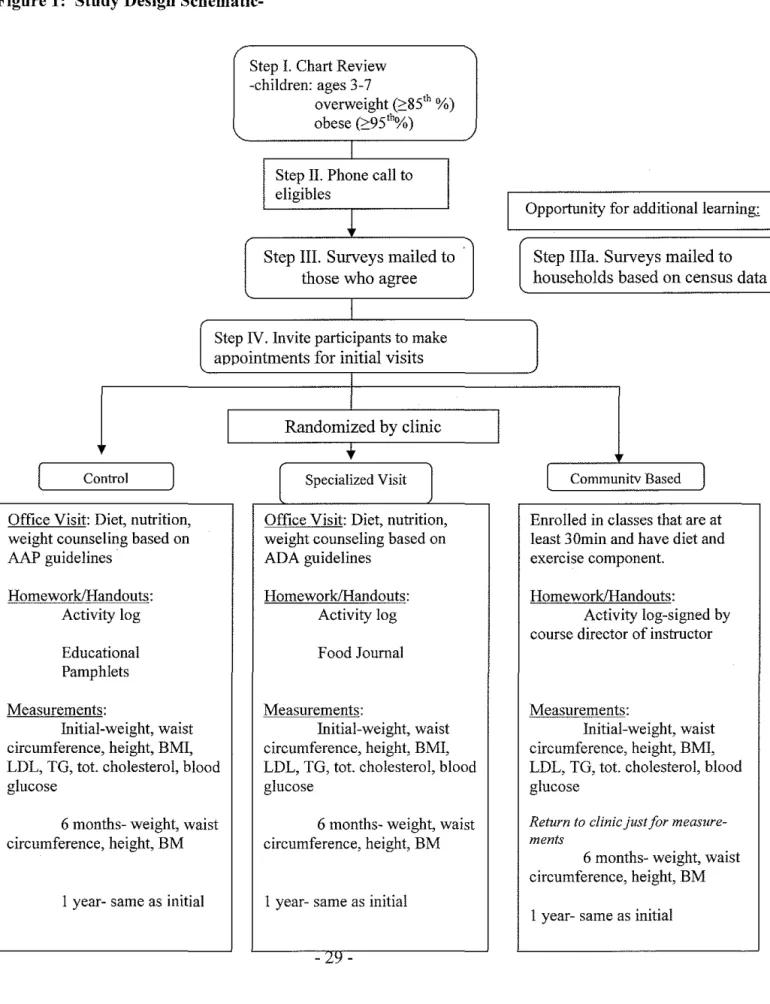
intervention as well as after the stndy has ended. Finally, the focus groups will occur as the final phase to assist us in gathering additional information we were unable to assess during the stndy or through the use of the survey questionnaires. (Figure 1.)
We will consult with the North Carolina Pediatrics Society, Conununity Care of North Carolina, and the North Carolina Academy of Family Physicians to locate potential practices within the areas we have previously determined for possible participation in the stndy.
Subjects and
Design-Study subjects will be determined through an initial chart review in search of pediatric patients ages 3-7 who are overweight (2: 85th percentile) or obese (2: 95th percentile) based on the CDC's BMI calculator and growth charts. All data will be collected by using chart
abstraction at the pediatric doctor's office by the centers' staff using a standardized procedure. A standardized abstraction form will be provided to the centers for each data record together with detailed instructions for data abstraction. Because of the wide geographic distribution of the centers, quality checks will not be performed at each center, but to ensure consistency between the abstraction form and the database, careful quality control will be performed after data entry. When several visits are available for a randomly selected child, the most recent visit in which measurements were taken will be selected. Clinically measured weight and height will be recorded from the charts, as well as age, gender, and race/ethnicity. Additionally, all participants will be Medicaid recipients so that we ensure our panel includes a cohort of low-income families.
questionnaire regarding their office visits with the pediatrician or family medicine physician. All respondents will receive au incentive in the amount of $20 upon return of the survey. Those who agree to enroll in the study will be directed to make au appointment with their pediatrician within the next 48-hours. The research assistant will make one reminder call if the appointment has not been scheduled within the two days post phone interview. Upon arrival to the clinic, each patient will return the survey, be consented to participate, initial measurements recorded, blood work completed, aud given a $50 incentive. In the event we are unable to recruit enough participants directly through the clinics, we will use area pre-schools aud elementary schools to fulfill our requirements.
Participants in the specialized office visit group will first report to the clinic and be seen by the physician for general concerns, have measurements taken by the nursing staff, and then be seen by a registered dietician (RD). The RD will counsel patients on weight
management and nutrition according to the American Dietetic Association guidelines for approximately an hour. These sessions will include prescribed diet and activity regimens for each participant and lessons on proper food portions. Each family will be asked to keep a food journal which the RD will use to counsel the patients on the two follow-up appointments. They will also keep an activity log as previously described for the control group. These patients will also follow-up at six months and again at twelve months. Measurements will be the same for this specialized office visit group as they are for the control group.
The community based intervention group will be randomly assigned to a YMCA, a WIC program, or local community center which has been previously approved for inclusion in the study. Inclusion criteria includes: minimal monthly cost to participate, full range of
Exclusion
Criteria-We will exclude those with existing co-morbidities (glandular disease, heart conditions, Type I or Type II diabetes), those families who have been unable to keep regular appointments, and those who are morbidly obese or who are hindered from participating in activity due to weight or disease. We recognize that morbidly obese patients would benefit from placement in the study, however, inclusion criteria for this study includes ability to fully engage in physical activity and treatment plans set forth by the referral center. Patients, who have difficulty doing minimal exercise due to size or physical ailment as a result of size, could potentially alter the results of the study. As such, these patients may benefit more from intense and closely monitored treatment plans by physician and dietician teams. Finally, there will only be one participant per household if there is more than one who is eligible. The family, along with practice input, will determine which child will participate and all materials can be shared with the entire family.
Compensation-We will compensate all participants in the study based on the segment of the study they participate in. Those who complete and return the pre and post surveys will receive $20 per survey for their time. Study participants randomized to either of the test groups or the control group will receive $25 after each measurement appointment. Finally, those who attend the focus groups wrap-up will receive an additional $30. Each participant could receive $145 for full participation.
Primary and Secondary
Outcomes-There are both primary and secondary outcomes that we expect as a result of tbis study and the concerted efforts of study participant. These outcomes will vary by short and long term time frames as a result of increased physical activity, behavior changes, and an overall increase in knowledge.
Decrease
and waist
Increase in
weight, BMI,
physicians' knowledge and
confidence in use of alternative
prevention/treatment method for
Decrease in disproportionate increase
of overweight/obese in minority
Pilot Study Evaluation Methods
Decrease in LDL, TGs, blood glucose, and blood
Increase in awareness and appropriate concern among parents of overweight/obese children
entity affects the normal flow of the clinic and what changes are necessary so that we are not
disruptive to daily patient flow. All surveys are on paper, however, it may be more convenient
for the physicians if they are available online using survey programs accessible through the
internet. We will provide this as an option for physicians and verbally assess which option they
prefer and are more likely to complete. We will assess the use of community programs and
whether they adhered to the standards outlined in the study description. We will also evaluate
each program for its content to confirm that they have programs useful for children who are as
young as two years old and how effective these programs were for all age groups. The
questionnaires administered to the families will be assessed for length and question type. We
will evaluate whether the questions asked were understood as intended by comparing the types
of responses received to the kinds of responses we expected. Finally, we will evaluate the
length of time in the study and d-etermine if it should be lengthened or shortened. Although the
duration is only one year, we don't want the participants (physicians, programs, families) to
become burned out, thereby affecting the integrity of our study results.
Survey
Instruments-North Carolina is ranked 5th in the country for childhood obesity.20 There are several counties
within the state of North Carolina that have a particularly large number of obese pediatric
patients. These are Nash, Wilson, Franklin, and Moore counties. Initial questionnaires and
letters were sent to a total of fifteen pediatric and family medicine practices in these areas
introducing the study, soliciting information on current counseling practices, and their interest
in participating in the study. The questionnaires specifically address key factors in treating
activity counseling, amount of time spent during each session, availability to the patients for questions/concerns, and ability to communicate with patients of varying cultures. The purpose of the latter was to also understand if cross-culture communication is a specific barrier in nutrition counseling. All participating clinics will supply demographics including what percentage of their patients are "low income". Clinics who are interested in participating will be subsequently scheduled for one training session in which all clinic members attend and participate. Two practices will be recruited per target county with a goal of 15 patients per practice for a total of 120 participants.
We will then use census data to determine households with children ages 3-7 in the same counties as the practices and mailed them questionnaires. Survey recipients will be patients of the designated practices as well as families in the area. We would like to generate general data from the surrounding population to increase the fund of knowledge regarding issues related to this serious epidemic. Responses to the survey will help determine
Development of Survey
Instruments-A mail-out questionnaire for initial survey of participating physicians was developed by the author based on a systematic review of the literature on childhood obesity. The preliminary version will be issued to two physicians who will provide wording, length, and format
suggestions for the survey. The final version of the survey will include 25 items with two to five response choices scored using the Likert scale.
The author prepared a second mail-out questionnaire for parents of eligible children living in Moore, Nash, Wilson, or Franklin counties. It will be administered to 10 volunteer parents who rated it on length, wording, and clarity. The final version contains 27 items with two to eight response choices. Each survey will be scored using a Likert scale.
Measures-On initial visit to the physician's office, weight, waist circumference, height, BMI, total cholesterol levels, triglycerides, LDL, HDL, and glucose measurements will be recorded. Fallowing these baseline measurements, additional measurements will be taken at three months, again at six months, and final measurements recorded at one year. In addition to physical
measurements, we will record level of activity at these same intervals. Activity levels for the control group will be rated based on self-reported time, in minutes per day, spent doing physical activity. Physical activity, for the purposes of this study, is defined as any movement of the body that uses energy. The rating scale is as follows: ::0:30 minutes= 4, 20-29 minutes=3, 10-19=2, <10=1.
For study participants in either the community based program or the specialized office visit group, the activity level accounting will take place using the same log sheets. The
how to use it. The parents will journal every activity their child does and for how long. On each measurement visit, the registered dietician will record the values in the patient's chart and return the log to the participant. Those who are a part of the community-based intervention will present to the director of each program a letter drafted by the research team, which will ask that they log the activity and times for our study participants. The ratings will be averaged at the end of the study and used with all measurements to determine physical activity correlates to each.
Statistical Methods
We will use basic descriptive statistics to analyze means, frequency, and medians of demographic and baseline characteristics. Student's t-tests will be used to test for differences in baseline characteristics between the control, specialized office visit, and community based groups. Repeated measures of effect will help us to determine differences between pre and post-intervention weights, BMI, waist circumference etc. of the control group versus the community and specialized office visit groups. All three groups will be required to complete activity log sheets during the course of the study. We will use Pearson's correlations to detect associations between level of activity and age group, change in BMI, weight, waist
circumference, and relevant lab values. When we compare differences in activity level (time) and types of activities (level of intensity) between the study groups both pre and post
All survey responses will be analyzed using several statistical methods. The study team will use kappa statistics test of agreement to understand any association between questions which were asked of physicians and then asked of families. We will use basic descriptive statistics analysis to generate frequencies of responses to questions answered using a Likert-scale. Finally, we will use chi-square tests to determine correlates between practice
demographics and counseling efforts, indicated measures and practice demographics, and between support services and patient reported score.
To show a 70% difference in effect between measures, powered at 80%, we will need 34 respondents per study group. Currently, we have 150 families projected to participate in the study and is therefore large enough to show statistically significant differences in indicated variable between study groups, allowing for attrition during follow-up.
Results
opportunities to improve or enhance current treatment of childhood obesity we discover through this work.
Discussion-This study was designed with several objectives in mind. First, we hope to generate data in support of using community based programs through changes in lab values and survey scores for both physicians and families. We also intend to establish a more clear understanding of the specific barriers which exist to impede families' ability to live more healthy lifestyles. It will show unrealized barriers in treating minority groups and suggest opportunities for
improvements in addressing their specific needs. Barriers exist for the clinicians as well, and we hope to specify what they are as well as any associations to the physicians' ability to manage childhood obesity. This study could potentially expose factors contributing to the increase in obesity trend, and assist the medical community to discover opportunities to change its trajectory.
The study also aims to increase the knowledge of both the local community and the medical community. We hope that we can alert physicians to additional resources that may be more effective for treating obesity. It may ease some frustration previously expressed in the literature. Although the study will not highlight specific programs, we intend for it to motivate physicians to actively seek out resources in the communities of their patients.
Literature in support of conununity progranuning to combat childhood obesity is increasing.
However, the studies that generate supporting data are lacking. In theory, the idea of creating
prevention and treatment options within the source population's conununity would remove
some of the barriers faced with previous methods (i.e. inconvenience, costly, etc). We do not
currently have enough evidence-based support to rationalize using this option. This study will
potentially generate initial data in support oflarger intervention studies with different
objectives that together, allow us to move forward with a viable method to prevent and treat
childhood obesity.
Public Health
Implications-Overweight and obesity are more easily prevented than treated, but prevention may
prove more challenging in children. Statistics suggest that childhood overweight and obese has
more than doubled in the past decades indicating that current measures are insufficient in this
burgeoning epidemic. The medical conununity is pressed to find a viable alternative to the
current counseling efforts in order to reduce a myriad of secondary and long-term outcomes
related to developing poor eating habits and an obese/overweight body habitus early on.
School-aged children who are obese or overweight are often the target of teasing from
their peers and due to inability to compete in athletic play, may be ostracized by schoolmates.
As results, these children have greater psychological stress, and lower self-esteem. These
children are also at greater risk for adolescent hypertension, type II diabetes, orthopedic
conditions (tibial torsion, slipped capital femoral epiphysis), asthma, sleep apnea, and long
Obesity that develops during childhood often continues into adulthood increasing adult morbidity and mortality, hypertension, gallbladder disease, and osteoarthritis. One study found that approximately 80% of children who were overweight at ages 10-15 years were obese adults at age 25 years. Another study found that 25% of obese adults were overweight as children. The latter study also found that if overweight begins before 8 years of age, obesity in adulthood is likely to be more severe. 22
Future
Studies-Future studies are warranted for more challenging cases, like the morbidly obese patients, and those with multiple co-morbidities. These patients would ultimately benefit from weight loss and healthier lifestyles, however, may require a more specialized approach. Financial implications for these programs are currently unknown. Studies which generate a cost benefit analysis are warranted to determine the future feasibility of community based programs as well as to determine the financial benefit, if one exists, over alternative options. Future studies may also want to identifY specific motivators for families as they relate to diet and exercise and what has the most influence on their position among the stages of change. Physicians'
Strengths and
Limitations-We will attempt to generate publishable data in support of using community based programs as an alternative approach for preventing and treating childhood obesity. Block randomization to assign patients to individual groups will allow us to more accurately determine the effects of the intervention, instead of having to control for co variates in the analysis to notice its affect. It will also reduce the likelihood of selection bias due to a priori knowledge of each patient's group. We will also consider newly defined barriers as identified by both providers and patients. Tills will allow the medical community to structure an
intervention that is specific to a large population: the low-income, minority, and generally underserved population.
The study as proposed, however, does not consider additional factors which may seriously hinder participation and acceptance. We are unsure if this newly proposed way of addressing childhood obesity may present new barriers that require additional services
previously unconsidered. For instance, are there single parents who are unable to take off from work to make it to the appointments and would therefore benefit from transportation support for their child? Perhaps there are a multitude of social factors this study does not account for in the design. Conversely, this study is designed to specifically identify these social factors and can thus be used to inform future studies.
classroom space, storage, etc.), and many of the clinics may be physically incapable of supporting the addition. Another potential concern is general practice flow. The additional of traffic could alter the regular flow of the clinic, causing the clinic to have to schedule fewer patients on the days in which the study will be conducted. It is not our intention to disrupt business as usual, so this will be an area we monitor closely in the pilot portion of the study.
This research study also does not consider the possibility that Medicaid will not cover the additional costs or whether the patients will need to pay out of pocket. Many of our target population, low income families, will carry Medicaid insurance or have no insurance at all. The next phase of this study will need to consider whether this option can be subsidized or is otherwise covered with minimal insurance. The next generation of studies will also need to use more strategic validation methods to ensure that community weight management programs are age appropriate.
Finally, we assume that this is a sustainable option for participants given its inherent properties that make it cost-efficient and more accessible. However, this study will not allow us to fully understand the long-term sustainability of using community programs or on-site specialized counseling.
demographics of communities are increasing in diversity, so there are also noticeable
differences in social and cultural norms. All of these factors together help to negatively affect the childhood overweight and obesity epidemic. Data from the most recent NHANES study shows that obesity among even the 2-5 year olds is increasing rather rapidly, a group we would have liked to target for prevention methods instead of treatment. 22 If we do not discover a solution relatively quickly, we will see this epidemic worsen.
A comprehensive approach to the solution will therefore, be most powerful and effective for this burgeoning epidemic of childhood obesity. We must first access the
community resources more readily, making better use of their more tailored programming and expertise in counseling. Policy enhancements are essential if we want to see environmental changes that support more healthy lifestyles in lower income communities. Currently, play outside or in local parks may be unsafe, and therefore underutilized. The schools will need to address curriculums and increase opportunities for physical activity, re-introduce physical education in schools where they have been previously eliminated due to financial constraints. We will also need local grocery stores to regulate available food items. The quality of foods and limited selection impose an additional barrier for those who attempt to eat healthier. There are some communities that do not have local grocery stores and the citizens here must rely on public transportation to do food shopping. Studies conducted in both the US and Canada have found that disadvantaged and minority areas benefit less from local supermarkets, but have more independent grocery stores in which there are limited food selections. 23 In these
Table 1.
1···.· ~·- , .•••. ~ •• ,):~{
1·.
{: ·•>····
•·>
Age
3-5 yrs
6yr
7yr
Sex
Female Male Race
White,
non-nw
Native
Family
2: $80,000
~'n J,nnn
~w nnn.J o ooo
< $10,000
Insurance Private Medicaid
I
Weight lbs. (kg)
Height (in.)
BMI Waist Blood
Total rl
LDL HDL
1 'o'r
5-24% 25-50% 51-74%
lL L Study Description: Pediatric patients ages 3-7
Control ·. Specialized Office Visit
\9!llll1~n~~B~~~d
j
(A)
.
;;
~-~~~_:::;(B)
. . ·.· .·· .
. r:r()gl7f!;ll1 .•.•• •
.... )(C,\;
)~~-·~
50 patients
I.\ •···.
~0 p~t}ents · . . ·.· . ·. rSO;]Jaflihts;ii
,, '"" " ,,:-, ",
-Patients will see -Patients will be -Participants will be Pediatrician or Family scheduled for a one-hour referred by physician to Medicine physician for specialized office visit community YMCA, normal office visit and the where they will receive church, or Home health physician will counsel comprehensive agency.
them on nutrition, obesity, counseling by a
and physical activity based registered dietitian *No private on current methods. Each including visual aids organizations like
patient and their parents Weight Watchers will
will receive nutrition be an option in this trial
education pamphlets since the target is low
Figure 1: Study Design
Schematic-Step I. Chart Review -children: ages 3-7
overweight (~85'h %)
obese (~95''%)
I
Step II. Phone call to eligibles
~
Step III. Surveys mailed to
those who agree
I
Step IV. Invite participants to make appointments for initial visits
c
ontroll
Diet, nutrition,
Office Visit: weight couns AAP guidelin
eling based on
Homework!H Activ es andouts: ity log a tiona! Educ Pamp hlets Measurement s: !-weight, waist e, height, BMI, Initia
circumferenc
LDL, TG, tot glucose
6mo circumferenc
. cholesterol, blood
nths- weight, waist e, height, BM
I yea r- same as initial
I
I
I
Randomized by clinic
t
l
Specialized VisitJ
Office Visit: Diet. nutrition, weight counseling based on ADA guidelines Homework/Handouts: Activity log Food Journal Measurements: Initial-weight, waist circumference, height, BMI, LDL, TG, tot. cholesterol, blood glucose
6 months- weight, waist circumference, height, BM
I year- same as initial
I
I
Opportnnity for additional! eamm~
Step Ilia. Surveys maile d to usus data households based on ce
l
Communitv BasedI
Enrolled in classes that are at and least 30min and have diet exercise component.
Homework/Handouts:
Activity log-signe d by r course director of instructo
Measurements:
Initial-weight, wai st circumference, height, BM I,
blood LDL, TG, tot. cholesterol, glucose
Return to clinic just for meas ure-ments
Table 3
Lab Values Control Registered Dietitian Community
Pro ram
~*'··
·Pre Post·.··. ~~e > ;>.; !'.R~st· \ ··· Pre····.• PostBlood Glucose
Total Cholesterol
LDL
HDL
Triglyceride
Blood Pressure (% for height)
5-10%
25-50%
-75-90%
Figure 2.
Physical Average Waist
Age BMI Circumference
Activity Weight (lbs.)
(%tile)
----,----
l're----,--£6$!.'
.Pre,i•;B Eilsi-- Pre. PostPre
'
'Post·
3-5 2 3 27 23 36 28 56 43
6 3 4 33 27 80 68 65 56
7 3 4 33 29 89 79 70 56
The rating scale is as follows: 2:30 minutes= 4, 20-29 minutes=3, 10-19=2, <10=1. BMI- <18.5=underweight 18.5-24.9=Normal weight 25-59.9=overweight >30= obese
Note: These are fictitious numbers, meant only to illustrate the type of data we plan to collect and a potential graphic depiction of the results illustrating trends.
<:: 0 ·u; .... Ql > <::
8
>...
·;;; t; <("'
...
·u; > ..<: 0.Physical Activity per Age Group
4.5 4 3.5 3 2.5 2 1.5 1 0.5
0
-F==
Initial 6 month Final
Age
E
6~to
treat childhood obesity
Used in Study: yes (background)
Community and Family Perspectives on Addressing Overweight in Urban, African-American Youth PubMed a Community Health Promotion Resource For Primary Care Practices
Used in Study: yes (background)
A Case Series Short term study
Hand Search
Morris,V 2006
Burnet, DL, Plaut AJ, Ossowski K, et a!.
2007
Gordon, LE Pomiecko, GL
2004
+-poor ++-fair +++-good
n/a
South side Chicago
Reserve University; Cleveland, OH
Not a research article
13 focus groups with overweight children and their parents and eight semi structured interviews with community leaders
ability to provide effective behavior change advice and referral to community programs
D:Mixed-methods longitudinal pre/post test study
I: web-based health behavior change w/ database of comm. programs and patient ed. materials &
health prescription pad
Usefulness of community-based
program
Data gathering study; measured responses to focus group questions
related discussion and smoking cessation and patient change motivation to modify behavior at 8-weeks post-visit.
of weight Wt. changer per month
-
32-n/a
N=67 participants in the focus group; urban setting, selected, w/ self-reported weights and n=9 in the interview of faith, community leaders
practices -2 longitudinal cohorts of patients
BMI~ 2:95'"
percentile for age Enrolled in YMCA FitNFun
Primary care provided by UTMB
ped clinic in Galv 35 cases vs. 35 controls
targeted to assist youth in
reaching/maintaining health weights
There were 4 major themes that seemed to emerge in the categories of barriers to healthy nutrition and exercise, parental challenges and concerns, definitions of overweight, and program recc. See
had
t
rates of discussion of diet (25.7% vs. 20.2%), exercise(27.8% vs. 16.9%) and weight mngmt (23 .2% vs. 16.3%), and greater referral to patient education materials (24.2% vs.21.6%) and community programs for health beh. change. NO difference in patient motivation to modifY behavior
gain over the 28wk period was .28 for the cases and .62 for the controls
External Validity-+, not generalizable since it took place in a small specific urban setting with such a small
non-representative sample
Internal- Powered well, but practices did not fully implement study design.
External- results not as generalizable due to specificity of study design (NE Ohio)
Internal-++ no loss to follow up but the time period was short. Didn't assess the relation btw. Incentive and participation in study (will we see the same w/o the gift cards)
Based Obesity Prevention Program For Minority Children: Rationale and Study design for Hip-Hop to Health Jr.
Long Term Study
Hand Search
start programs and their
parents.
12 sites would receive the intensive
intervention 12 sites received the general health intervention
During the first year of the active intervention, study was conducted in 12 sites that serviced primarily in AA communities.
During the second year it was placed in Latino communities
r:hart Abstraction Log
Form-Instructions: Please write clearly and in black ink. If you make a mistake, do not use white-out or scribble through the error. Use one clean line through the error and re-write the correct entry above it then write your initials to the side of it. If the patient has had more than one visit within the last year, use only the most recent measurements. In the event a visit does not include all relevant measures, please find the next most recent visit where this measurement was taken and record that value.
of Recorder
Age Gender Insurance
Patient Initials Study ID # Race/Ethnicity BMI missed Initials
(years) (M/F) Status
appointments
~jR
]~t
..
1·.····1:~,.6
.'itt.
*.
··.···~~~IT~~,
~~
I
~ s~·
· · ,
FI
i; . .
L ·.·· .• ';o ), ...
i:<i • ·
..•.. •
..•.. · .. ·
..
.
.,.
;~.
MNC_ 1.
-MRS_ 2.
-MNC_ 1.
-MRS_ 2.
-MNC - 1.
-MRS 2.
-MNC_ 1.
-MRS 2.
-MNC 1.
-MRS - 2.
-MNC 1.
-MRS - 2.
-MNC_ 1.
-MRS 2.
-MNC_ 1.
-MRS 2.
-MNC_ 1.
-MRS 2.
-MNC - 1.
-MRS 2.
T .ab
Record-There should be a lab record for each study participant, each with a total of three readings. The initial
measurements will occur during their first visit, the second will occur at six months, and the final
measurements will be recorded at the end of the study during month nine. Please write clearly and
legibly in black ink. If you make a mistake, do not use white-out or scribble through the error. Use one
clean line through the entire line with the error and re-write beginning on a new line. Please remember
to write your initials next to the error.
Date Study
ID# Age
Weight Height
BMI
(kg) (in.)
Waist Blood Tot !I DLIHDL/TG Blood
Circumference Glucose Cholesterol Pressure ·•· • .
. ·
f-'l'-m1tta_I·.+-L-·--'--·--f····--'----'--·.···"""f"···~~=
•· ··• ·.···<~- ~ ;~
~
<
. 4'>:>tifh
.· .. ·
.~~~1;,$?~
•.••....•..•...
~onsent Form- Families
Purpose of the
Study-• Study the use local programs for weight management in children ages 3-7
• Understand how the medical community can assist families attain healthier lifestyles
• Work with physicians to increase general health knowledge of patients
• Assist physicians in their search of more effective methods in preventing and treating childhood
overweight and very overweight.
Study
Participants-We are seeking to recruit children ages 3-7 who are overweight (85th· 95th percentile) or very overweight(?: 95th percentile) based on measurement secured in the pediatrician or family medicine physician's office. If there is more than one child in the home who fits the criteria, only one may participate. Which one is recruited for the study will be determined by the family and the family pediatrician or family medicine doctor.
Description of the study
-If you are emolled into the study, you will participate over a one year period. There are three groups within the study that you could be randomly selected for. The study team will be unaware of which group you are assigned to and will therefore be unable to tell you what group you were randomized to. What Happens in the
Study-0you have reached this portion of the study, you have already filled-out the initial survey. You were invited to make an appointment with your physician and instructed to bring your survey with you today. During this portion of the study, we will take measurements of your child. These include a current weight, height, width of their waist, blood pressure and BMI. We will also take blood to look at their glucose and cholesterol levels. You will be given specific instructions based on what group you are assigned to and asked to adhere to these throughout the entire study. In six months you will be phoned to arrange a date and time that you and your child will return to the clinic for another set of measurements. There will be no blood drawn at this visit. At the end of one year, you will be phoned again to return to the clinic for final measurements and final blood work. At this appointment you will be asked to participate in a focus group.
Benefits from
Participating-By participating in this study your child's health will be closely monitored for this one year period. Both you and your child will gain access to diet and exercise education with an opportunity to address any of your concerns. Your child will participate in fun, age appropriate activities and increase their overall health. You will be given health education and affordable diet suggestions.
The information we gain from your participation in this study will help us to address a growing problem in children the same age as your child. You will also assist us to make improvements within the medical community which will help generations of children.
Risks for
'i.e. were not previously reported to your physician), please alert your physician prior to leaving the Jffice today.
Compensation-We will compensate you and your child for participation in this study in appreciation of your time and effort. If you complete the entire study (entire year and focus group) you will receive $145. You will be awarded $20 for your initial survey and $20 for the post study survey, $25 at each measurement appointment, and $30 for attending the focus group.
Privacy
Rights-All information we obtain during this study will be strictly used for the advancement of our research. We will not share any personal information with others outside of this study. All information that could be used to identifY your child will be removed and unique codes used instead.
Early Withdrawal from the
Study-If at any point during the study, you feel that you can no longer participate, please contact the research assistant immediately. We would like for you to complete the study, but understand that participating is a personal choice. We will use all the data we have up until that point and you will be excused from the duration of the study. There will be no additional compensation after that point.
I understand the purpose of this study and my assumed role. My signature signifies that I have read, or listened, to the above information contained in this consent form and agree to adhere to the study protocol as written.
Parent or Guardian Signature Date
~onsent F onn- Physicians
Purpose of the
Study-• Study the use local programs for weight management in children ages 3-7
• Understand how the medical community can assist families attain healthier lifestyles
• Work with physicians to increase general health knowledge of patients
• Assist physicians in their search of more effective methods in preventing and treating childhood
overweight and very overweight.
Study
Participants-This study will include pediatricians and family medicine physicians of Nash, Franklin, Moore, and Wilson counties inN orth Carolina. We will recruit two practices per county. You are one of many practices we contacted using Community Care ofNC, NC Pediatrics Society, and NC Academy of Family Physicians for listings in the indicated areas.
We are seeking to recruit children ages 3-7 who are overweight (85th· 95th percentile) or very
overweight (2: 95th percentile) based on measurement secured on their most recent office visit. If there is more than one child in the home who fits the criteria, only one may participate. Which one is recruited for the study will be determined by you and the family.
Description of the study
-If you are enrolled in the study, you will participate over a one year period. There are three groups 1ithin the study, and you will assist all of them but be specifically involved in only one. The study will require the use of your office space and the assistance of your staff to help with chart reviews and measurements. The research team will provide all measurement equipment and training for its use.
What Happens in the
Study-We will require that you fill-out an initial survey and agreement to participate. Study-We will need your staff to supply us with potential patients' charts based on the study criteria. We subsequently conduct a chart review of the patients you recommend. Study potentials will be contacted via written letters. These letters will instruct patients to make an appointment within the next 48 hours. Our research assistant will handle all phone calls and correspondence with the patients.
During their initial clinic visit, measurements are taken for each child. These will include a current weight, height, width of their waist, blood pressure and BMI. We will also take blood to look at their glucose and cholesterol levels. All patients who have been randomized to group A will see you for counseling according the guidelines established by the American Academy of Pediatrics. At the end of your counseling session, you will give each family an education pamphlet supplied by the research team.
In six months, they will return to the clinic for a follow-up with you and for another set of
measurements. There will be no blood drawn at this visit. At the end of one year, they will return the clinic for the final follow-up appointment and final measurements.
Tf they are assigned to group B, you will be told where and when to refer them at that time. Finally, you ,viii be instructed on what to do with each patient assigned to group C on the day of their initial visit. We will have several enrollment days so that we are not too disruptive to the flow of patients.
Benefits from
Participating-By participating in this study you will gain additional resources for treating and preventing overweight and obesity in children. You will become privy to feedback regarding your current counseling practices and the needs of your patients. Together these may assist you in designing future treatments for your patients.
The information we gain from your participation in this study will help us to address a growing problem in children. You will also assist us to make improvements within the medical community which will help generations of children.
Risks for
Participating-With any study there may be some risks associated with participating. We have designed the study such that you should not incur any. In the rare case you do, please contact us immediately
Compensation-We will compensate you $200 for your time and for the use of your facility. Privacy
Rights-All information we obtain during this study will be strictly used for the advancement of our research. We will not share any personal information with others outside of this study. All information that could be used to identify your patient will be removed and unique codes used instead.
Early Withdrawal from the
Study-If at any point during the study, you feel that you can no longer participate, please contact the research assistant immediately. We would like for you to complete the study, but understand that participating is a personal choice. We will use all the data we have up until that point and you will be excused from the duration of the study. There will be no additional compensation after that point.
I understand the purpose of this study and my assumed role. My signature signifies that I have read, or listened, to the above information contained in this consent form and agree to adhere to the study protocol as written.
Parent or Guardian Signature Date
<\ctivity Log
Sheet-Company Name. _ _ _ _ _ _ _ _ _ _ _ _ Instructor Name _ _ _ _ _ _ _ _ _ _
Customer Name - - - - Age _ _ _ _ Date _ _ _ _ _ _ _ _
;hl.<,<l!VHJ !J.' ·.~ : : • :·:•>;: •. .· .. : .Total 1 .• ·'·~'· <· Si<mptnr?
1.
2.
3.
4.
5.
6.
7. Sl.
9.
10.
11.
12
13.
14.
1\ppendix -Survey P 1 Administered to Physicians
"'lease answer the following questions according to your current practices.
Strongly;pisagree · Disagr~~:;>:~; ~~t~"(ipd~ecided
!'i'
&"ri'P Strongly&~grei?.· 1'. < . 2 •.. ··.··~~ ... • .3
;
~4}. SeseObesity/overweight prevention is a priority for me
Treating/preventing overweight/obesity is a challenge of my practice I fmd that I need to counsel my patients but I don't have the time
I fmd that I need to counsel my
patients but reimbursements
don't cover me doing so
My patients feel comfortable
addressing nutrition health with
me
I am comfortable speaking with patients regarding health
practices and nutrition
My current approach to counseling patients has been successful
I have noticed a decrease in
weight and/or BMI results after I provided counseling
My clinic sees patients whose
frrst language is not English I am comfortable providing counseling to patients of
varyincr cultures
My clinic uses/has access to
language services that helps us
communicate with patients who
don't speak English well I feel knowledgeable about
what community programs are
available
I know where to look to find
out what resources are available
in this area
'\ppendix- Survey PlA _ ost-intervention Survey
'··· "15'1(
-":·;- · .
1-···-····
I y
:·~.j~ i~;·~
v~
3
.
r
rfor':O
prevention
is a
I have discovered additional methods to treat and/or prevent
· l obesitv
I am more cuuuunaoJe speaking with patients regarding health practices and
nutrition
I have nn';""" some value in using alternative methods for
nn ~' ·
I am confident that I can fmd
alternative resources for my
who mav need the~ I would rather more trained specialist handle counseling and
I am more aware of barriers
that exist for some of my
I know •u 'to addrese
these needs when ' them
lam more
providing counseling to patients
of cultures
I feel about
what programs are
,,,;Johlo
I know where to look to find
Appendix- P2 Administered to Physicians
Please circle the choice which best describes your practice.
I. About how many of your patients have been clinically determined to be overweight? a. 0%-20%
b. 20%-50% c. 50%-80% d. ?: 80%
2. About how many of your patients have been clinically determined to be obese? a. 0%-20%
b. 20%-50% c. 50%-80% d. ?: 80%
3. What percentage of your patient population receives Medicaid? a. 0%-20%
b. 20%-50% c. 50%-80% d. ?: 80%
4. How many of your patients are African-American or Latino? a. 0%-20%
5. How often do you provide nutrition/weight management/ physical activity counseling to your overweight/obese patients?
a. Each Visit b. Every other visit c. Twice a year d. Once a year
6. About how much time would you estimate is devoted to each counseling opportunity? a. 5-10 minutes
b. I 0-15 minutes c. 15-20 minutes
d. An entire office visit (30-40 minutes)
7. How many of your staff members speak both Spanish and English? a. None
b. 1-2 c. 3-4
d. All of them
8. How available does your schedule allow you to be for patient's nutrition health questions/concerns?
a. Only the time scheduled for their office visit
b. I set aside time during the day or week for patients' questions/concerns c. I am flexible and will make myself available when my patients need me
9. How difficult is it for you to counsel patients whose first language is one other than English?
a. Extremely difficult b. Difficult
c. Neutral
d. Somewhat easy e. Extremely easy
10. How would you rate your clinic's ability to handle bi-lingual patients?
a. Very Good-we have translators or use language services and all materials in the clinic are printed in both Spanish and English
b. Good- we have made some provisions to accommodate patients who speak languages other than English and have some materials with
c. Fair- we are in the process making accommodations for non-English or bi-lingual speaking patients
cppendix-Fl Administered to Families
Please answer the following questions according to how you would rate your pediatrician or family medicine physician
Sl~ongl~)lisagree . liiS'agree
~~,:~ided· ,~\\:\
/gJee -:~,;+; :~ ''' s(rongly Agre~ . . "'~ . \< ~02 ',Y<-' 5 i
I understand what my physician means when he/she uses the
words overweight
I understand what my physician means when he/she uses the
word obese
I feel that my child is at risk of developing an unhealthy weight Eating healthy and staying
active is important for my
child's normal growth I would like to learn more about healthy meal options for my family
I feel comfortable asking my pediatrician/family medicine
physician about nutrition,
eating healthy, or any weight
concerns
My physician has informed me about the consequences of my child being over the desired weight for his/her age & height My physician discusses the importance of physical activity to my child's health
I live in a neighborhood safe enough for my child to play
outside
I would send my child to a free
or low cost community center
or local program available for my child to learn about his/her health and participate in physical activities
I am more interested in a
community program that will
cater to the needs of my entire
<\ppendix
FlA-~ ost-intervention Survey
~Strongly' Disagree Disagree
~
F~Un([eCided . Agree. j,§J'~ong{yAgree
,., . ''·'1
·z•' .
;;· :3 . 4 ~. ~... i5
I understand better what my physician means when he/she
uses the words overweight
I understand better what my physician means when he/she uses the word obese
I feel that my child is at risk of developing an unhealthy weight
I was able to learn more about
healthy meal options for my family
I feel more comfortable asking my pediatrician/family
medicine physician about nutrition, eating healthy, or any
weight concerns
I understand what the
consequences are for my child being over the desired weight for his/her aae & height
I know importance of physical activity to my child's health
I am willing to send my child to
a free or low cost community
center or local program available for my child to learn about his/her health and participate in physical activities
I am more interested in a
community program that will cater to the needs of my entire family
Cost is a major detenninant of
my participation in any proozyarn
Transportation is a major
Appendix- F2 Administered to Families
Please circle the choice which best describes your practice.
Demographics-!. What is your age? a. 18-21 b. 22-25 c. 26-30 d. 31-40 e. >40 2. Race/Ethnicity
a. White
b. White, non-Hispanic c. African-American d. Hispanic
e. Asian/ Pacific Islander f. Native American
3. What is your current marital status? a. Married
b. Single c. Divorced d. Widowed
4. What is the highest level of education you have completed? a. Less than high school
d. 2yr/4yr College
e. Graduate/Professional School
5. What is your yearly income? a. Less than $10,000
b. $10,000-19,999
c. $20,000-$29,999
d. 30,000-$39,999
e. $40,000-$49,999
f. $50,000-$59,999
g. $60,000-$69,999
h. 2:: $70,000
6. Race/Ethnicity
a. White
b. White, non-Hispanic
c. African-American
d. Hispanic
e. Asian/ Pacific Islander
f. Native American
7. How many people live in your home including yourself?
8. How many of those in your home are of the aged 2-18? a. Two
b. Three c. Four d. Five e. 2: Five
Physician
Enconnter-9. How concerned are you about your child's current weight? a. Extremely Concerned
b. Concerned c. Indifferent
d. Not concerned at all
10. Thinking about your doctor's office visits, how often has your doctor counseled you on healthy eating and physical activity for your child?
a. At least once b. More than once c. Never
11. How long does your physician normally take to talk to you about the health issues (i.e. vaccines, diet, and exercise) concerning your child?
a. 5-1 0 minutes b. 1 0-15 minutes c. 15-20 minutes
12. Do you feel your physician spends enough time discussing health and nutrition topics with you?
a. Yes b. No
13. How would you describe your level of comfort addressing your health concerns with your pediatrician or family medicine physician?
a. Excellent b. Very Good c. Good d. Fair e. Poor
14. How likely are you to participate in a program within your community designed increase your child's level of activity and emphasizes healthy eating habits?
a. Very Unlikely b. Somewhat unlikely c. Very likely
d. Extremely likely
If English is your second language:
15. Does your physician communicate in a language you can fully understand? a. Yes
b. No
16. When you go in for a visit, do you feel you comprehend what your physician has instructed you to do?
17. Do you feel like your physician understands your concerns when you tell him/her? a. Yes
b. No
18. Are there translators or other language services in your physician's office available to you?
Training Itinerary and
Manuscript-
Introduction-Introductions of research staff Purpose of research study
Study
specifics-Goals and Objectives
Responsibility of each physician Responsibility of nursing staff
Lunch Provided
Describe their critical role in the process Discuss Recruitment efforts
Measurements- instruct only those who will be taking measurements on how to use equipment
Who Does
What-We will use this time to discuss what the role of each person is Medical Asst. (if clinic employs them)
Nurses Physicians Research Staff Benefits of
Participation-Included in on the work toward finding a viable solution to an important issue facing your patients.
Learning new methods or resources in the process
Compensation-$200 for the use of the facility
Questions-Focus Group Script and Suggestion for
Activities-Facilitators will be trained in focus groups for minority and disadvantaged participants. The groups will contain no more than 6 study subjects per group.
We will work with the facilitator for the best format, however suggestions are listed below.
Focus Group Members-• Physicians • Study Subjects
Goals-• Participants will verbalize specific barriers
• Determine what worked in this study and what didn't • Solicit feedback on specific programs
o What made them good/bad o Genuine interest in the concept o Likelihood of continuing • What made it difficult to fully engage • What made it easy to engage
• What additional factors (specifically) would they need to focus on healthier lifestyles, whatever the treatment is
• For Physicians only
o Level of disruption in everyday flow
o Interest in using either option in the future (if data in support)
Activities-• Magazines
o Pick pictures that would depict a child they thought was overweight and very overweight
o Create a typical meal
Acknowledgements