Pediatric Obesity Interventions in Racial and Ethnic Minorities:
A Systematic Review
By
Kelly Smith
A Master’s Paper submitted to the faculty of the University of North Carolina at Chapel Hill
in partial fulfillment of the requirements for the degree of Master of Public Health in
the Public Health Leadership Program.
Chapel Hill 2008
________________________________
Advisor:
________________________________ Second Reader:
________________________________
ABSTRACT
Background: The prevalence of childhood obesity has increased dramatically in the United States, disproportionately afflicting racial and ethnic minorities and producing lifelong health consequences. Various lifestyle and pharmacologic obesity interventions have been analyzed with inadequate representation of minority populations. Systematic reviews that address obesity interventions in minority populations have not been published. Even with the increasing research on pediatric obesity, many clinicians and public health professionals are uncertain of effective interventions in minority populations.
Purpose: To identify pediatric obesity intervention studies in minority populations and assess the effectiveness of these interventions.
Data Sources: The MEDLINE database (inception through February 2008).
Study Selection: The author selected prospective studies of various pediatric obesity interventions with adequate racial and ethnic minority participation that reported an outcome related to body mass index.
Data Extraction: Predefined criteria were used to extract details on study design, study duration, study population, intervention type and outcomes. The studies were then graded as good, fair or poor. The overall body of evidence was then graded as high, moderate or low. Results: Ten eligible articles were included in the systematic review, seven of which were randomized controlled trials (RCT), one of which was a secondary analysis of an existing RCT, and two of which were prospective cohort studies. African-American and Hispanic children were the most common minority population represented. Five studies were effective in reducing adiposity. Only two studies were graded as good, while many had serious methodological flaws. Moderate evidence exists for some pharmacological interventions in decreasing adiposity, but evidence for lifestyle interventions alone is limited.
INTRODUCTION
Background
Obesity is a significant public health crisis that affects all ages, racial and ethnic groups. The prevalence of overweight and obesity in children in the United States has increased dramatically over recent years, disproportionately affecting minority groups and contributing to existing racial and ethnic health disparities. According to recent estimates, about 34% of children, ages two to nineteen, are considered overweight or at risk of overweight.1 Between 1963 and 2000, the prevalence of overweight in children aged six to eleven increased from 4% to 15.3% and from 5% to 15.5% among adolescents in the United States.2 The prevalence of overweight in adolescents increased in each racial group from 1988 to 2000, according to the National Health and Nutrition Examination Survey (NHANES), with the most significant increase in non-Hispanic blacks (13.4% to 23.6%) and Mexican Americans (13.8%-23.4%).3 Children ages six to eleven years of age also experienced similar prevalence trends in racial groups.2 Although overweight and obesity affect all children, the prevalence rose more than twice as fast among minority groups compared with white groups in the United States.4
Measurement of Overweight/Obesity
The body mass index (BMI) has been accepted as an indicator for overweight and obesity in children5, 6 and is predictive of obesity risk as an adult.7 BMI has also been shown to correlate with actual body fat in children and adolescents.8, 9 One study found that the BMI or the BMI
ages two to eighteen, with a body mass index at or above the 95th percentile for age and sex, and those children with a BMI between the 85th and 95th percentile for age and sex were termed at risk for overweight.5, 11 This terminology has recently been revised by an expert committee who published recommendations to consider greater than the 95th percentile as obese and between the 85th and 95th percentiles as overweight.12 The term obese had not been designated as a weight category in childhood before prior to this change in terminology. This change strengthens the clinical relevance of BMI measurement, is more continuous with adult measures and better reflects the seriousness of associated health consequences.12
Body mass index is commonly used to classify children as overweight or obese, but measuring the change in BMI over time is less straightforward. Researchers have investigated various methods to track change in body mass index and have demonstrated differences in the individual measures.13 This is a significant consideration when determining the effectiveness of an intervention based on a single measure. When children are still growing, the absolute change in BMI is not an accurate measure of treatment effect,13 and other measures are more informative. However, this may have less influence in BMI monitoring in adolescents since growth has slowed. Obesity intervention studies have analyzed changes in absolute BMI, percent BMI, BMI z-score, BMI centile,10 percent over-BMI and BMI sympercent.13 One study found that BMI and percent BMI are superior measures, since BMI z-score can get progressively smaller the more obese the child.10 Although BMI z-score is still considered a valuable tool to measure overweight in children, the percent over-BMI is recommended in clinical decision making and showing changes in obesity interventions.13 Many studies provide more than one
Causes
Pediatric obesity is largely caused by an imbalance between energy intake and expenditure with inadequate physical activity and poor nutrition with excess calorie-dense foods.14 Although studies suggest that genetics may have a significant influence on individual risk,15 the widespread, dramatic increase in childhood obesity is more likely related to behavior changes and environmental factors than genetic modification.6 The complex interaction between genes, environment and behavior lead to chronic obesity, which is associated with substantial health consequences that continue throughout one’s life-course.
Racial and ethnic minority children and adolescents are disproportionately affected with higher rates of obesity.16 Studies have shown that low socioeconomic status is associated with higher rates of overweight and obesity.17, 18 Urban populations, in particular, appear more susceptible because of poor diet19 and limited opportunity for physical activity.20 Current research addressing the causes and associated factors that contribute to obesity are still being investigated, including the possible protective effects of breastfeeding, independent of racial and socioeconomic group.21
Health Consequences
have estimated that 8 – 43% of new-onset diabetes cases in the pediatric population are considered Type 2 diabetes mellitus.24 The SEARCH for Diabetes in Youth Study Group, who intended to provide the most comprehensive data to date on diabetes prevalence in children, found 6379 cases out of about 3.5 million children and adolescents. For youths 10 – 19 years of age, the crude prevalence was 2.80 cases per 1000 youths, while the crude prevalence was less in children aged 0 – 9 years, estimated at 0.79 cases per 1000 children.25 Minorities, including Native Americans, African-American, Hispanic and Pacific Islander/Asian children, are at higher risk of developing this chronic disorder. For example, 76% of new diabetes cases diagnosed in Native American children aged 12-19 years were identified as Type 2 diabetes mellitus.25 Children with diabetes are at risk for heart disease, stroke, limb amputations, kidney failure and blindness, all of which are consequences of long-standing diabetes. Other complications of pediatric obesity include sleep apnea26, asthma27 and exercise intolerance28, in addition to serious hepatic, renal, musculoskeletal and neurological complications.29-32
require more research to better understand the influence of racial and ethnic disparities in pediatric overweight and obesity, as well as illustrate the importance of effective obesity interventions in minority children to prevent harmful health outcomes.
Overweight and obese children or adolescents may also experience psychological problems such as negative self-esteem, withdrawal from peer interaction, depression, anxiety and the feeling of chronic rejection,38 as well as significantly lower quality of life.39-41 Obese adolescents with lower self-esteem were also shown to have higher rates of loneliness, sadness, nervousness, as well as an increased risk of smoking and drinking alcohol.42 In addition, obese Hispanic and white females were shown to develop significantly lower self-esteem by early adolescence than those who were not obese.42 The extensive multi-system health consequences associated with pediatric obesity require effective prevention and treatment interventions in childhood, as well as life-long management.
Additional research needed
METHODS
Inclusion Criteria
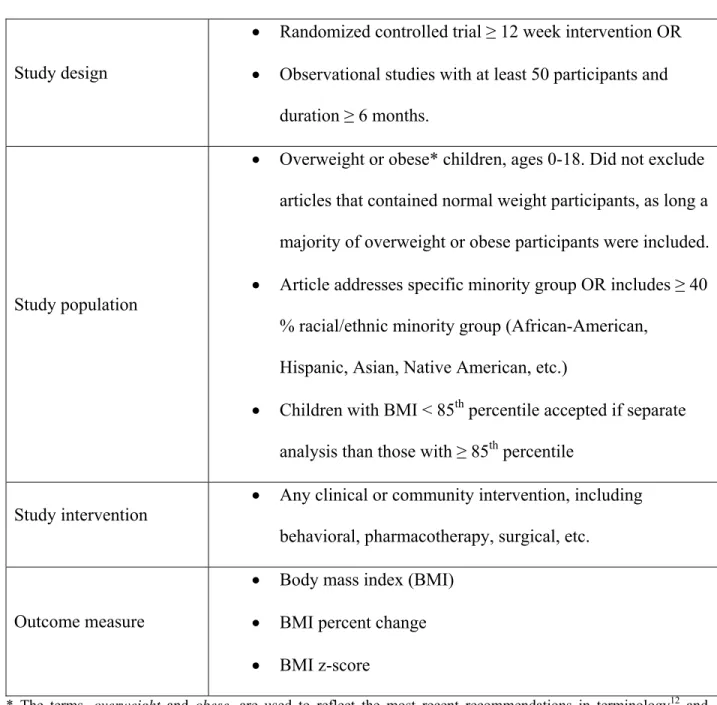
The goal of this systematic review was to identify interventions designed for childhood overweight and obesity and assess their effectiveness in minority populations. The purpose is to determine if specific interventions will work in populations other than Caucasian/white, and not compared to this population. Types of interventions in this review include: pharmacologic treatment, surgical treatment, lifestyle changes (dietary, physical activity, behavioral) or a combined therapy. Studies can assess effects by comparing the intervention to another treatment or to no intervention. Clinical, community or school-based interventions were included and there was no restriction on who was delivering the intervention.
Randomized controlled trials were included in the review if they analyzed an intervention of at least 12 weeks in duration. Observational studies were included if they had at least 50 participants and the intervention was at least 6 months in duration.
due to the under-representation of minorities in research studies. African-American, Hispanic, Asian, Alaska native/Native American, or Other, were possible racial/ethnic categories to identify study participants, although African-American and Hispanic participants were more commonly included. Since this review focuses on treatment and not on prevention, the study must have enrolled overweight or obese participants at baseline, with a BMI > 85% for age and gender. However, articles were not excluded if normal-weight children also participated. All children under age 18 at the start of the study were included in this review.
To be included in the review, the study must have assessed some outcome of weight, including baseline and post-intervention height and weight, body mass index (BMI), BMI percentile change or BMI z-score.
Exclusion Criteria
for pregnant females. In addition, organic or syndromal causes of obesity, such as the genetic syndrome, Prader-Willi, were excluded from this review.
Table 1: Eligibility Criteria
Study design
• Randomized controlled trial ≥ 12 week intervention OR • Observational studies with at least 50 participants and
duration ≥ 6 months.
Study population
• Overweight or obese* children, ages 0-18. Did not exclude articles that contained normal weight participants, as long a majority of overweight or obese participants were included. • Article addresses specific minority group OR includes ≥ 40
% racial/ethnic minority group (African-American, Hispanic, Asian, Native American, etc.)
• Children with BMI < 85th percentile accepted if separate analysis than those with ≥ 85th percentile
Study intervention • Any clinical or community intervention, including behavioral, pharmacotherapy, surgical, etc.
Outcome measure
• Body mass index (BMI) • BMI percent change • BMI z-score
* The terms, overweight and obese, are used to reflect the most recent recommendations in terminology12 and
includes children with a BMI ≥ 85th and ≥ 95th percentile respectively. Studies may identify these participants as
at
Literature Search Strategy
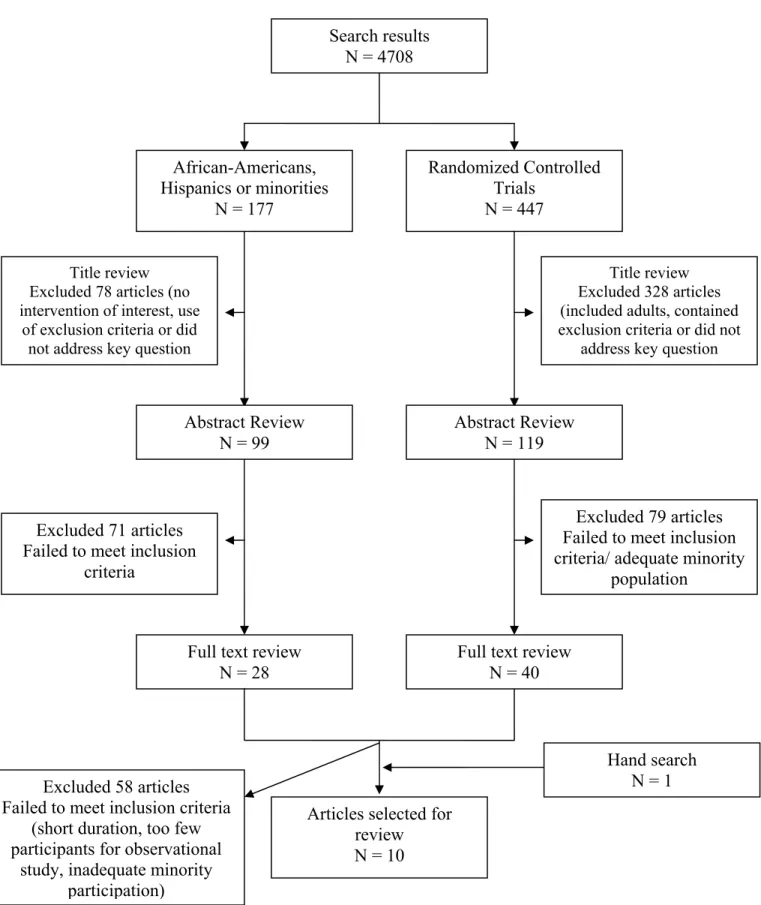
In order to find articles that addressed the key question, I performed a MEDLINE electronic database search, using PubMed, from inception through February, 2008. All searches were limited to children, ages 0-18, to concentrate on the pediatric population, and articles in the English language. The search strategy began with the MeSH term, “overweight” or “obesity,” although the latter term should be included in the first term. Both terms were used at first, but the remaining searches utilized “overweight” since it better reflected the terminology used in much of the pediatric literature since a BMI > 95th percentile was considered “overweight” until recently, yielding a more sensitive search. To find studies on treatment or intervention, the subheading, “therapy” was used in conjunction with “overweight.” This primary search for overweight yielded 4708 articles. To focus on minority population interventions, I searched “African-Americans” and “Hispanic” MeSH terms. The search for overweight therapy was combined with the search for African-American or Hispanics, yielding 132 articles. In order to include articles that may include the general term, “minorities,” a search for overweight therapy and minorities was used and yielded 61 articles. A final search included overweight therapy and African-American or Hispanic populations or overweight therapy and minority populations, yielding a total of 177 articles. Of these, 29 articles were randomized controlled trials (using clinical queries). I conducted a title review of all 177 articles and found 99 applicable articles. I excluded 98 articles that clearly were not relevant to the topic or addressed a topic included in the exclusion criteria. I conducted an abstract review of the 99 articles, followed by a full article review of 28 articles.
A search for overweight therapy for children, ages 0-18, again yielded 4708 articles. From these, I limited the search to 447 randomized controlled trials. I conducted a title review and excluded 328 articles that did not address the key question, included adults, or clearly contained one or more of the exclusion criteria. I then conducted an abstract review of the remaining 119 articles, followed by a full article review of 40 articles (overlap with the previously reviewed 28 articles).
Figure 1: Article Selection
Full text review N = 28 African-Americans, Hispanics or minorities
N = 177
Randomized Controlled Trials
N = 447 Search results
N = 4708
Title review Excluded 78 articles (no intervention of interest, use
of exclusion criteria or did not address key question
Title review Excluded 328 articles (included adults, contained exclusion criteria or did not
address key question
Abstract Review N = 99
Abstract Review N = 119
Excluded 71 articles Failed to meet inclusion
criteria
Excluded 79 articles Failed to meet inclusion criteria/ adequate minority
population
Articles selected for review N = 10
Hand search N = 1 Full text review
N = 40
Excluded 58 articles Failed to meet inclusion criteria
(short duration, too few participants for observational
Data Extraction and Quality Assessment
I extracted data from each study in the review, including characteristics of participants (number of participants, racial/ethnic group, age range, baseline BMI, etc), type of intervention (clinical, school-based, community), magnitude of effect/ outcomes, adverse events, study design and quality of study. To assess internal validity of randomized controlled trials, I used predefined criteria used by the U.S. Preventive Services Task Force to grade each study as good, fair or poor.46 For example, these guidelines consider the following characteristics of a randomized controlled trial: comparable groups with adequate randomization and concealment of allocation; maintenance of comparable groups throughout the study; differential or high loss to follow-up; equal, reliable and valid measurement; clear definition of intervention and appropriate analysis. The internal validity and quality of observational studies were assessed by the criteria summarized by Deeks et al.47 External validity is discussed, but did not affect the quality rating. Additional information on the grading criteria is found in Appendix A.
Data Synthesis
Since the interventions varied widely and some focused on a specific racial or ethnic group alone, I will concentrate on a qualitative synthesis by describing each study, results and limitations, rather than performing a quantitative analysis.
Rating of the Overall Strength of Evidence
quality review: study design, study quality, consistency and directness. This approach provides a systematic way of grading the quality of evidence and remains consistent with other systematic reviews. The grade reflects the strength of the body of evidence for the efficacy of the different types of pediatric obesity interventions. Directness was not addressed in this review since all potential articles were required to address the effectiveness of an intervention with predetermined outcome measures and were therefore considered direct.
Table 2. Definitions in grading the overall quality of evidence
Grade Definition
High Further research is very unlikely to change our
confidence in the estimate of effect.
Moderate Further research is likely to have an important
impact on our confidence in the estimate of effect and may change the estimate.
Low Further research is very likely to have an
important impact on our confidence in the estimate of effect and is likely to change the estimate.
Very Low Any estimate of effect is very uncertain.
RESULTS
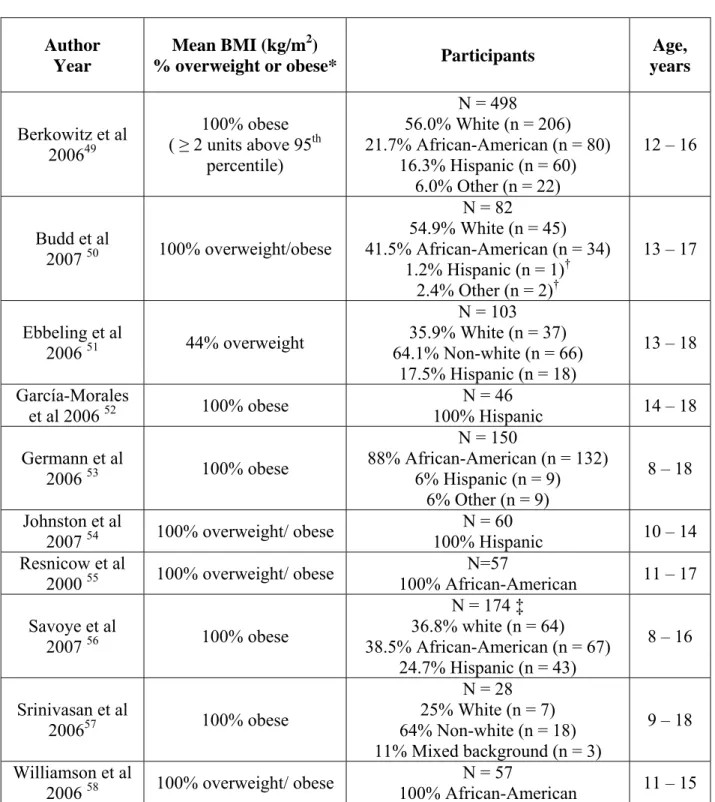
Using the search strategy outlined in the methods section, ten studies were identified that met the inclusion criteria.49-58 All eligible studies were included independent of quality, but are assessed based on the pre-established quality criteria. Seven studies were randomized controlled trials,49, 51, 52, 54, 56-58 one study was a secondary analysis of an existing randomized controlled trial50 and two were observational studies.53, 55 Studies addressed various age ranges with an overall span of age eight to eighteen. All studies looked at interventions in racial and ethnic minorities, and most commonly focused on African-Americans and Hispanics. Four studies focused on one particular racial/ethnic group alone,52, 54, 55, 58 two of which concentrated on African-American females55, 58 and two on Hispanic youth.52, 54 Participant characteristics of included studies are summarized in Table 2.
There were a variety of interventions offered in the included studies. Six studies included a behavioral intervention that promoted changes in eating and physical activity habits, three studies examined the effects of pharmacotherapy and two studies investigated the combination of a behavioral intervention with pharmacotherapy. All randomized controlled trials offered at least the standard of care to the control group. No surgical intervention studies were found that met the inclusion criteria for racial and ethnic minority participation.
Of the four studies that evaluated pharmacotherapy,49, 50, 52, 57 two were funded by pharmaceutical companies,49, 50 one was funded by research grants57 and one was not reported.52
Table 3: Characteristics of Included Studies
Author Year
Mean BMI (kg/m2)
% overweight or obese* Participants
Age, years
Berkowitz et al 200649
100% obese ( ≥ 2 units above 95th
percentile)
N = 498
56.0% White (n = 206) 21.7% African-American (n = 80)
16.3% Hispanic (n = 60) 6.0% Other (n = 22)
12 – 16
Budd et al
2007 50 100% overweight/obese
N = 82
54.9% White (n = 45) 41.5% African-American (n = 34)
1.2% Hispanic (n = 1)† 2.4% Other (n = 2)†
13 – 17
Ebbeling et al
2006 51 44% overweight
N = 103 35.9% White (n = 37) 64.1% Non-white (n = 66)
17.5% Hispanic (n = 18)
13 – 18 García-Morales
et al 2006 52 100% obese
N = 46
100% Hispanic 14 – 18
Germann et al
2006 53 100% obese
N = 150
88% African-American (n = 132) 6% Hispanic (n = 9)
6% Other (n = 9)
8 – 18 Johnston et al
2007 54 100% overweight/ obese 100% Hispanic N = 60 10 – 14 Resnicow et al
2000 55 100% overweight/ obese 100% African-American N=57 11 – 17
Savoye et al
2007 56 100% obese
N = 174 ‡ 36.8% white (n = 64) 38.5% African-American (n = 67)
24.7% Hispanic (n = 43)
8 – 16
Srinivasan et al
200657 100% obese
N = 28 25% White (n = 7) 64% Non-white (n = 18) 11% Mixed background (n = 3)
9 – 18 Williamson et al
2006 58 100% overweight/ obese
N = 57
100% African-American 11 – 15 *Overweight defined as a BMI ≥ 85th percentile and obese defined as a BMI ≥ 95th percentile.
† Due to the small n, these participants were excluded from the secondary analysis.
Studies Examining Pharmacotherapy Interventions
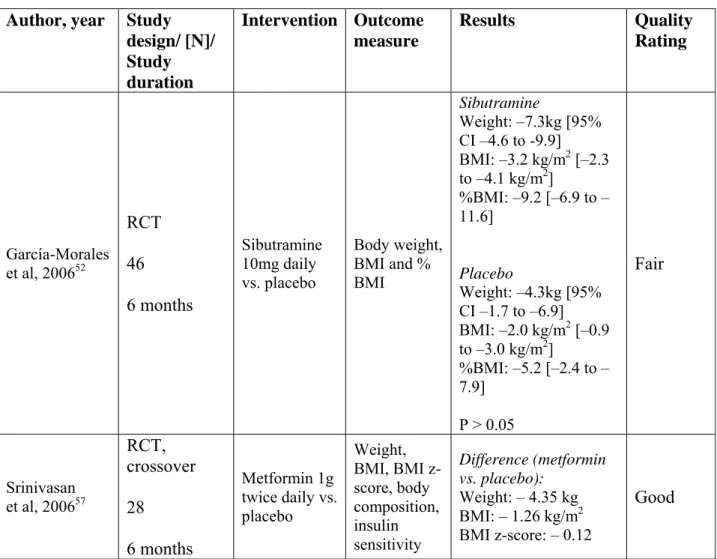
Two randomized controlled trials,52, 57 assessed the effects of pharmacotherapy compared to placebo in obese participants, summarized in Table 3. Both studies only enrolled those children who were considered obese, with a body mass index equal or greater than the 95th percentile for age and gender and were referred to an endocrine clinic. One study52 found no significant difference between placebo and pharmacotherapy, whereas the other study57 found pharmacotherapy to be significantly better than placebo. One of the RCTs compared placebo with sibutramine (Meridia®), a serotonin and norepinephine reuptake inhibitor that has been shown to aid in weight loss and weight maintenance in obese adults,59-61 and has been the subject of investigation in obese adolescents.49, 62 The other RCT studied the effects of metformin, a drug that is used in the treatment of Type II diabetes mellitus and can benefit youth with this chronic condition.63 The role of metformin in weight loss and insulin sensitivity prior to the development of Type II diabetes has been analyzed in adults,64 and increasingly in adolescents.57,
65-69 However, only two identified articles utilizing metformin for weight control included a
sufficient number of minority participants,57, 67 one of which met inclusion criteria for this systematic review. Although the objective in both studies was to assess the effects of pharmacotherapy and not lifestyle changes, both trials offered information on healthy eating habits and physical activity but did not measure the effects.
placebo, all subjects were given individualized dietary and physical activity advice. The investigators assessed the safety of sibutramine use in adolescents and reported a small number of adverse events, including elevated blood pressure and heart rate, headache, dry mouth, nausea, weakness and paleness. None of the side effects warranted discontinuation. Although both groups experienced clinically significant weight loss, the difference between the sibutramine and placebo group was not statistically significant. The study by García-Morales et al was rated fair due to the high post-randomization exclusions (11%) and the lack of a true intent-to-treat analysis.
Srinivasan et al randomized 28 participants in a 12-month cross-over study to receive metformin, 1 g twice daily, vs. placebo for 6 months each, after a two-week wash-out period. Although this review only focuses on the effects of treatment on anthropometric measures, this study assessed insulin sensitivity and safety of sibutramine as well. The study population was at higher risk of obesity complications, as reflected by acanthosis nigricans in 89% of participants, a clinical feature of insulin resistance. After 6 months of treatment, those subjects receiving metformin showed a significant beneficial effect over placebo in weight, weight z-score, BMI, BMI z-score and waist circumference, as well as a benefit in fasting insulin and a small benefit in fasting glucose. The change in insulin sensitivity was not significant between groups, a finding that the authors associated possibly to the inadequate loss of visceral fat. Only 2 younger participants were not able to tolerate metformin 1 g twice daily due to nausea, but did well with 750mg twice daily. Median adherence for both groups was 78%, which may reflect real-life compliance with treatment. The drop-out rate was 14.3%. This study by Srinivasan et al was rated good without serious methodological flaws.
Table 4. Summary of Pharmacotherapy Interventions Author, year Study
design/ [N]/ Study duration Intervention Outcome measure Results Quality Rating García-Morales et al, 200652
RCT 46 6 months Sibutramine 10mg daily vs. placebo Body weight, BMI and % BMI
Sibutramine
Weight: –7.3kg [95% CI –4.6 to -9.9] BMI: –3.2 kg/m2 [–2.3
to –4.1 kg/m2]
%BMI: –9.2 [–6.9 to – 11.6]
Placebo
Weight: –4.3kg [95% CI –1.7 to –6.9] BMI: –2.0 kg/m2 [–0.9
to –3.0 kg/m2]
%BMI: –5.2 [–2.4 to – 7.9]
P > 0.05
Fair
Srinivasan et al, 200657
RCT, crossover 28
6 months
Metformin 1g twice daily vs. placebo
Weight, BMI, BMI z-score, body composition, insulin sensitivity Difference (metformin vs. placebo):
Weight: – 4.35 kg BMI: – 1.26 kg/m2
BMI z-score: – 0.12
Good
Studies Examining Behavioral Interventions
The majority of the reviewed literature examined behavioral interventions, focusing on diet, physical activity and nutrition education. Six studies assessed behavioral interventions that focused on lifestyle changes,51, 53-56, 58 four of which were randomized controlled trials.51, 54, 56, 58
focused only on a specific behavioral modification.51 Two of the intensive lifestyle interventions were family-based,56, 58 one of which utilized the internet to deliver the intervention.58
those subjects with higher BMI’s to start. Therefore, the investigators concluded that this intervention could decrease sugar-sweetened beverage consumption and may have a beneficial effect on body weight and BMI with increasing body weight. The investigators blinded the phone interviewers, but did not report if those measuring BMI outcomes were blinded. In addition, without blinding of the participants and the reliance on recall, the subjects could be pressured to provide expected results during the phone interviews. Strengths of this article were the relatively simple intervention and the 100% completion rate, not seen in any of the other studies.
The studies by Germann et al, Resnicow et al, Williamson et al, Johnston et al, and Savoye et al, were similar in that they provided a multi-disciplinary intensive behavioral intervention that focused on healthy eating habits and increasing physical activity, the mainstay of weight loss. As expected with intensive interventions, the drop-out rate was much higher. Three of the studies had a 40% or greater drop-out or loss to follow-up rate,53, 55, 56 whereas one study had a 95% completion rate.54 One study53 had only 23% of participants achieve clinically significant weight loss and another study55 demonstrated increased weight and BMI after the intervention. Three studies had positive results, one of which54 showed a significant decrease in
weight, BMI and standardized BMI over control, another study56 showed a significant decrease in BMI and percent body fat over the control group and the last study58 found significant percent body fat loss at 6 months but not at 2 years.
Like the previous study by Germann et al, Resnicow et al took a social cognitive theory approach to a 6-month intensive intervention in severely obese African-American females but did not demonstrate any improvement in BMI. The study observed 57 youth recruited from inner-city public housing developments. The participants received dietary and exercise guidance, focused mainly on increasing fruit and vegetable intake, decreasing fat intake, decreasing fast food intake, decreasing television viewing and increasing physical activity. The program also worked to reinforce a positive and healthy outlook, decrease negative expectations, and increase confidence in their abilities to change lifestyle, including hands-on cooking experience. On average, the participants attended 43% of the sessions. The investigators compared high and low attendees but found no significant difference in BMI and both groups showed an increase in body weight and BMI. This study was rated poor due to the high overall loss-to-follow-up (45%), little adjustment for confounding and potential selection bias and use of high and low attendees as comparison groups, which may have important differences.
or recommended behavioral changes were offered, but only nutrition and exercise education. The intervention group had a significant decrease in the percent body fat in the first 6 months, but did not significantly differ at 2 years. Average body mass index increased slightly for both groups, but to a lesser extent in the treatment group. The more long-term follow-up is a strength of this study with weight maintenance implications. This study was rated poor due to the high overall loss-to-follow-up (30%), lack of information on randomization scheme and baseline characteristics of study participants and no blinding of outcome assessors.
Johnston et al evaluated a culturally-appropriate, intensive behavioral intervention in Mexican-American children in Houston, Texas and found significant decreases in weight, BMI and standardized BMI when compared to the self-help group. After recruitment, 60 children were randomized to receive a school-based, instructor-led intervention (n = 40) vs. a self-help, parent-guided manual, Trim Kids, as a placebo (n = 20). Each group was in a separate classroom during the school day. The intervention included 3 months of daily sessions (1 indoor nutrition lesson, 4 outdoor physical activity lesions), followed by 3 months of biweekly sessions. In addition, parents were invited to monthly meetings to learn about healthy eating and family meal planning. To assess adherence to the intervention, participants took biweekly quizzes and wore heart rate monitors to ensure adequate exercise intensity. The investigators attempted to individualize the intervention by modifying participant preferences and using preferred physical activities, in addition to providing all materials in both English and Spanish. This study was rated fair without serious methodological flaws, but it did not report blinding of outcome assessors.
Table 5. Summary of Behavioral Interventions Author, year Study design/ [N]/ Study Duration Intervention Outcome measure Results Quality Rating Ebbeling et al, 200651
RCT 103 25 weeks Home delivery of non-caloric beverages/ instructed not to drink sugar-sweetened beverages BMI (adjusted for age and gender) Intervention group BMI: 0.07 ± 0.14 kg/m2 Control group
BMI 0.21 ± 0.15 kg/m2 Among upper baseline-BMI tertile:
Intervention BMI: –0.63 ± 0.23 kg/m2 Control BMI: +0.12 ± 0.26 kg/m2
Net effect: BMI: –0.75 ± 0.34 kg/m2
Good
Germann et al, 200653
Prospective cohort study 150
1 year
FitMatters - includes cognitive-behavioral therapy, nutritional counseling, exercise therapy, and medical management Body weight, BMI z-score
Mean BMI z-score change: -0.05, SD = 1.41
23% achieved clinically meaningful weight change, defined as -0.70 z-scores or better.
Poor
Johnston et al, 200754
RCT 60 6 months Behavioral intervention I: self-help parent-guided manual (Trim Kids) vs. II: instructor-led intervention with daily followed by biweekly sessions BMI z-score Intervention (II) Weight: – 1.75 ± 10.34 kg
BMI: – 1.16 ± 4.17 kg/m2
%BMI: – 2.81 ± 4.42 Control (I)
Weight: + 1.31 ± 1.53 kg
BMI: + 0.29 ± 0.51 kg/m2
%BMI: + 0.02 ± 1.69
Fair Resnicow et al, Prospective cohort study Nutritional and physical BMI, % body fat, No significant
57 6 months intervention cholesterol, blood pressure and aerobic capacity low attendees. Raw change in BMI +0.7 in high attendees and +0.9 in low attendees
Savoye et al, 200756
RCT 174 1 year Bright Bodies Family-based intensive lifestyle intervention Body weight, BMI, % body fat Intervention
Weight: 0.3kg (-1.4 to 2.0)
BMI: – 1.7 kg/m2 (-2.3 to
-1.1) Control
Weight: 7.7kg (5.3 to 10.0)
BMI: 1.6 kg/m2 (0.8 to 2.3) Poor Williamson et al, 200658 RCT 57 2 years Interactive behavioral internet program (intervention) vs. internet health education program (control) Body weight, BMI, body composition and weight loss behaviors Treatment:
BMI +0.73 ± 0.66, %BMI – 0.004 ± 0.003 Control:
BMI +1.2 ± 0.65, %BMI – 0.001 ± 0.003 Significant difference in % body fat at 6 mths, not 2 years.
Poor
Studies Examining Combination of Pharmacotherapy and Behavioral Interventions
participants, whereas the behavioral program used in Budd et al was the same family-based weight loss program. Both studies used sibutramine 10 mg daily, although one study49 allowed for an increase to 15 mg if BMI was not reduced by 10% in 6 months, which occurred in 47.9% of participants. The trials also measured adverse events to evaluate the safety of sibutramine use in adolescents.
with sibutramine was significantly more than in the placebo group and adverse events led to withdrawal in 6.3% of the treatment group and 5.4% of the placebo group.
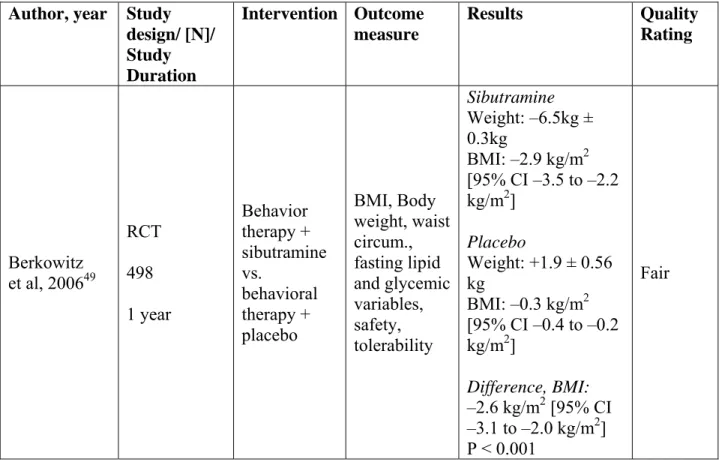
Budd et al performed a subset analysis (n = 79 out of N = 82 in the overall RCT) of a randomized controlled trial published elsewhere,62 in which 34 African American and 45 Caucasian children with a mean age of 14.1 years were randomized to a family-based behavioral intervention and sibutramine or family-based behavioral intervention and placebo. The original article by Berkowitz et al (2003), which assessed behavioral therapy and sibutramine vs. placebo in a diverse sample, assessed change in percent BMI and BMI z-scores between the treatment and control groups for the first 6 months, and then transitioned to open-label treatment of sibutramine for the entire sample. Adherence to lifestyle program and hunger was measured, as well as blood pressure and pulse for safety measure. Unlike the other pharmacotherapy trials, this study enrolled children who were overweight or obese, with a body mass index of at least the 85th percentile. The sibutramine group significantly lost a greater percentage BMI than the placebo group and the difference in BMI z-score was statistically significant. During the 12 months, nineteen participants experienced elevations in blood pressure and pulse significant enough to warrant reductions, five of which discontinued treatment. Two participants experienced ventricular premature complexes, although one case was not thought to be medication-related. However, this study does raise safety concerns of sibutramine use in adolescents. This original article by Berkowitz et al (2003) was rated good.
triglycerides and higher cholesterol levels were found in the Caucasian group at baseline. Retention did not differ between the two racial groups. In Caucasians, the sibutramine group experienced a larger percent BMI change at 6 months than the African-American sibutramine group. The percent BMI change in the African American group was not statistically significant between sibutramine and placebo groups, but investigators thought this could have been due to the smaller sample size of African Americans. The percent change in BMI was not significantly different between the Caucasian and African American placebo and sibutramine groups. Both racial groups had significant decreases in metabolic risk factors. However, these results should be interpreted cautiously since the original study was not powered for subset analysis, resulting in a fair rating. Overall, the 14% of patients discontinued treatment due to adverse events.
Table 6. Summary of Pharmacotherapy/Behavioral Interventions Author, year Study
design/ [N]/ Study Duration Intervention Outcome measure Results Quality Rating Berkowitz et al, 200649
RCT 498 1 year Behavior therapy + sibutramine vs. behavioral therapy + placebo BMI, Body weight, waist circum., fasting lipid and glycemic variables, safety, tolerability Sibutramine Weight: –6.5kg ± 0.3kg
BMI: –2.9 kg/m2 [95% CI –3.5 to –2.2 kg/m2]
Placebo
Weight: +1.9 ± 0.56 kg
BMI: –0.3 kg/m2 [95% CI –0.4 to –0.2 kg/m2]
Difference, BMI: –2.6 kg/m2 [95% CI –3.1 to –2.0 kg/m2]
Budd et al, 2007 50
RCT (secondary analysis) 82 6 months Family-based behavioral therapy + placebo vs. Family-based behavioral therapy + sibutramine Body weight, BMI, % BMI, fasting glucose, insulin, insulin resistance, lipid levels Overall*
Mean change %BMI: BT† + Sibutramine: – 8.5 (SD 6.8) BT + Placebo: – 4.0 (SD 5.4)
Mean change in BMI z-score:
BT + Sibutramine: – 0.2 (0.2)
BT + Placebo: – 0.1 (0.1)
Sibutramine
African-Americans Weight: – 6.9 ± 6.2 kg
BMI: – 2.9 ± 2.7 kg/m2
Caucasians
Weight: – 9.0 ± 6.4 kg
BMI: – 3.6 ± 2.5 kg/m2
Placebo
African-Americans Weight: – 3.4 ± 6.8 kg
BMI: – 1.4 ± 2.0 kg/m2
Caucasians
Weight: – 3.0 ± 5.9 kg
BMI: – 1.6 ± 2.1 kg/m2
Good (original article)/ Fair
* Results from original article † Behavior therapy
General Efficacy
Overall Strength of Evidence
Table 7. Evidence Profile for Pharmacotherapy options for treatment of childhood obesity No. of
studies/ Patients
Study Design
Study Quality Consistency Comments Summary of findings
Overall Grade of Evidence 1 / 46
patients
RCT Fair N/A None No
significant difference
Low
1 / 28 patients
RCT Good N/A Small sample
size, limited external validity Metformin showed benefit over placebo Moderate
Table 8. Evidence Profile for Behavioral treatments of childhood obesity Evidence profile: Comparative efficacy of behavioral interventions
No. of studies/ Patients Study Design Study Quality
Consistency Comments Summary of
findings
Overall Grade of Evidence Decrease in Sugar-Sweetened Beverages vs. Maintain current habits
Outcome: BMI 1 / 103
patients
RCT Good N/A Included
non-overweight children No overall difference Moderate
Internet-based interactive intervention vs. internet-based education Outcome: BMI, %BMI
1 / 57 patients
RCT Poor / serious methodological problems
N/A Slight benefit
in percent body fat at 6 months
No
difference in BMI at 6 or 12 months
Low
Intensive lifestyle intervention Outcome: BMI, BMI z-score 4/ 476 patients 2 obs. studies, 2 RCTs
2 poor quality with serious methodological problems and 2 fair quality
Some
inconsistencies
None 2 RCTs
showed significant difference
Table 9. Evidence Profile for Combined Behavioral and Pharmacotherapy Treatments of Childhood Obesity
Evidence profile: Comparative efficacy of combined behavioral/pharmacotherapy interventions No. of
studies/ Patients
Study Design
Study Quality
Consistency Comments Summary of findings
Overall Grade of Evidence Behavioral intervention + sibutamine vs. placebo
Outcome: BMI, %BMI, BMI z-score 2 / 580
patients
RCTs Fair No
inconsistencies
None Significant decrease in
BMI over placebo
DISCUSSION
Childhood and adolescent obesity is an epidemic, disproportionately affecting minority populations and exposing youth to irreversible cardiovascular complications. Much research has been done to identify interventions that are effective in treating obesity, but results of this review show that there is deficient evidence and few high quality studies on pediatric obesity interventions in minority populations. Several studies were not considered for this review because of lacking minority representation, a critical aspect in current obesity research considering the existing disparities.
Of the included studies, many were limited due to small sample size or high attrition rates. Although decreased compliance and drop-outs might be expected in intensive behavioral interventions and increase external validity of these studies by reflecting reality, the internal validity is still limited and the efficacy of the intervention unclear. Most studies had a short duration, with few interventions evaluating the effects beyond six months. The one study that had a follow-up of two years showed no treatment difference.
The use of pharmacotherapy in children should also be carefully weighed against possible harms. The Food and Drug Administration has approved sibutramine in adolescents of 16 years or older, and use under the age of 16 is considered experimental.71 Although pharmacotherapy in conjunction with lifestyle changes has shown a beneficial effect over lifestyle changes alone, the effect size is modest. Significant adverse events were documented in all pharmacologic treatments, some leading to discontinuation. Individuals for whom pharmacologic treatment is appropriate should be under careful observation and monitoring. Lifestyle changes should remain first-line treatment, reserving medication use for individuals who have failed behavioral interventions or are at high risk for metabolic cormorbidities and cardiovascular complications.72
Limitations
Included studies may be limited due to selection bias. Many studies relied on recruitment for study enrollment. Participants who enroll could be different from those who decide not to enroll in a study. In addition, they may be more motivated to lose weight in general, which could lessen the treatment effect if both intervention and control groups were more likely to lose weight. On the other hand, studies could suffer from high drop-out or non-compliance rates if participants were not as willing to be involved in the study.
Future Research
As this review highlighted, more research of diverse populations is needed to assess interventions in all children. The vast amount of literature of pediatric obesity is impressive, but only ten articles could be found that included a sufficient number of minorities. Many of the studies were limited by small sample sizes, short-term follow-up or large drop-out rates. Large randomized controlled trials that include children from all backgrounds should be conducted in each type of intervention, especially behavioral interventions. The research community should evaluate a standard intervention in different populations- varied racial/ ethnic groups, rural or urban, low or high-income, less educated, etc- to gain information on generalizability. Intensive interventions may be difficult to maintain participation and can have high drop-out rates. Perhaps assessing the readiness of pediatric patients to change and offering these interventions to highly motivated individuals could increase a study’s validity and efficacy, although limit external validity. In addition, long-term follow-up is critical to assess maintenance of weight loss and resulting benefits.
diabetes, in addition to its effects on body composition. Some studies have analyzed the metabolic effects, especially of pharmacotherapy, and perhaps this could be the subject of future studies in minority populations or a future systematic review.
Although cost-effectiveness was not addressed in this review, its role in future research is significant considering the lifelong health consequences and cardiovascular risks initiated by childhood obesity are considered an epidemic problem and public health emergency. These studies would be difficult to perform, but considering the amount of resources the health care system puts into cardiovascular disease, evidence of effective obesity interventions in children could possibly prevent or delay complications and prove cost-effective. An article on short-term cost-effectiveness in the method of delivering an intervention has been published,73 but does not take into account the cost of lasting health consequences. Another study estimated costs about $200 a year for overweight or obese children, which could cover 4 visits to a dietician per year.74 To receive any short-term return of investment, all costs from the child’s overweight or obesity would have to be eliminated. However, considering the lifelong costs of obesity, long-term cost-effectiveness is possible with childhood obesity interventions.74 Although studies on cost-effectiveness are helpful, the quality of childhood obesity interventions should not be based on financial incentive, but rather efficient weight loss and an increase in quality of life and longevity.74
addressed in this systematic review, additional research on the prevention of childhood obesity and potential risk factors to target early intervention are needed.
The obesity epidemic in children and adolescents has left pediatric providers searching for effective treatments for their patients. Much of the literature does not provide answers as few studies have taken place in the primary care setting.75 Outside of community- or family-based interventions, clinical interventions tend to recruit patients from endocrine or specialty obesity clinics. Although these patients are in critical need of intervention, these results are not generalizable to the general population, in addition to limiting interventions to those children without access to the health care system and referrals to specialty clinics. No one intervention is likely to solve the problem of pediatric obesity, but the diverse backgrounds of afflicted children, as well as disparities across racial and ethnic groups, warrant a combined public health approach that targets the individual, the family and the community.
References:
1. Ogden CL, Carroll MD, Curtin LR, McDowell MA, Tabak CJ, Flegal KM. Prevalence of overweight and obesity in the United States, 1999-2004. JAMA. Apr 5
2006;295(13):1549-1555.
2. Nesbitt S, Ashaye M, Stettler N, et al. Overweight as a risk factor in children: a focus on ethnicity. Ethn Dis. 2003;14:94-110.
3. Ogden C, Flegal K, Carroll M, Johnson C. Prevalence and trends in overweight among US children and adolescents, 1999-2000. JAMA. 2002;288:1728-1732.
4. Strauss R, Pollack H. Epidemic increase in childhood overweight, 1986-1998. JAMA. 2001;286:2845-2848.
5. Himes J, Dietz W. Guidelines for overweight in adolescent preventive services: recommendations from an expert committee. Am J Clin Nutr. 1994;59:307-316. 6. Barlow SE. Expert committee recommendations regarding the prevention, assessment,
and treatment of child and adolescent overweight and obesity: summary report. Pediatrics. Dec 2007;120 Suppl 4:S164-192.
7. Field AE, Cook NR, Gillman MW. Weight status in childhood as a predictor of becoming overweight or hypertensive in early adulthood. Obes Res. Jan 2005;13(1):163-169.
8. Mei Z, Grummer-Strawn LM, Pietrobelli A, Goulding A, Goran MI, Dietz WH. Validity of body mass index compared with other body-composition screening indexes for the assessment of body fatness in children and adolescents. Am J Clin Nutr. Jun
2002;75(6):978-985.
9. Pietrobelli A, Faith MS, Allison DB, Gallagher D, Chiumello G, Heymsfield SB. Body mass index as a measure of adiposity among children and adolescents: a validation study. J Pediatr. Feb 1998;132(2):204-210.
10. Cole TJ, Faith MS, Pietrobelli A, Heo M. What is the best measure of adiposity change in growing children: BMI, BMI %, BMI z-score or BMI centile? Eur J Clin Nutr. Mar 2005;59(3):419-425.
11. The Surgeon General's Call to Action to Prevent and Decrease Overweight and Obesity. Rockville, MD: US Department of Health and Human Services, Public Health Service, Office of the Surgeon General; 2001.
12. Krebs NF, Himes JH, Jacobson D, Nicklas TA, Guilday P, Styne D. Assessment of child and adolescent overweight and obesity. Pediatrics. Dec 2007;120 Suppl 4:S193-228. 13. Paluch RA, Epstein LH, Roemmich JN. Comparison of methods to evaluate changes in
relative body mass index in pediatric weight control. Am J Hum Biol. Jul-Aug 2007;19(4):487-494.
14. Nicklas T, Johnson R. Position of the American Dietetic Association: Dietary guidance for healthy children ages 2 to 11 years. J Am Diet Assoc. Apr 2004;104(4):660-677. 15. Maes HH, Neale MC, Eaves LJ. Genetic and environmental factors in relative body
weight and human adiposity. Behav Genet. Jul 1997;27(4):325-351.
16. Freedman DS, Khan LK, Serdula MK, Ogden CL, Dietz WH. Racial and ethnic differences in secular trends for childhood BMI, weight, and height. Obesity (Silver Spring). Feb 2006;14(2):301-308.
18. Wardle J, Brodersen NH, Cole TJ, Jarvis MJ, Boniface DR. Development of adiposity in adolescence: five year longitudinal study of an ethnically and socioeconomically diverse sample of young people in Britain. Bmj. May 13 2006;332(7550):1130-1135.
19. James W, Nelson M, Ralph A, Leather S. Socioeconomic determinants of health: the contribution of nutrition to inequalities in health. British Medical Journal.
1997;314:1545-1549.
20. Gordon-Larsen P, McMurray R, Popkin B. Determinants of adolescent physical activity and inactivity patterns. Pediatrics. 2000;105(e83).
21. Woo JG, Dolan LM, Morrow AL, Geraghty SR, Goodman E. Breastfeeding helps explain racial and socioeconomic status disparities in adolescent adiposity. Pediatrics. Mar 2008;121(3):e458-465.
22. Nader PR, O'Brien M, Houts R, et al. Identifying risk for obesity in early childhood. Pediatrics. Sep 2006;118(3):e594-601.
23. Guo SS, Wu W, Chumlea WC, Roche AF. Predicting overweight and obesity in adulthood from body mass index values in childhood and adolescence. Am J Clin Nutr. Sep 2002;76(3):653-658.
24. Kaufman FR, Shaw J. Type 2 diabetes in youth: rates, antecedents, treatment, problems and prevention. Pediatr Diabetes. Dec 2007;8 Suppl 9:4-6.
25. Liese AD, D'Agostino RB, Jr., Hamman RF, et al. The burden of diabetes mellitus among US youth: prevalence estimates from the SEARCH for Diabetes in Youth Study.
Pediatrics. Oct 2006;118(4):1510-1518.
26. Redline S, Tishler P, Schluchter M, Aylor J, Clark K, Graham G. Risk factors for sleep-disordered breathing in children: associations with obesity, race, and respiratory
problems. Am J Respir Crit Care Med. 1999;159:1527-1532.
27. Figueroa-Munoz J, Chinn S, Rona R. Association between obesity and asthma in 4-11 year old children in the UK. Thorax. 2001;56:133-137.
28. Reybrouck T, Mertens L, Schepers D, Vinckx J, Gewilling M. Assessment of cardiovascular exercise function in obese children and adolescents by body mass-independent parameters. Eur J Appl Physiol. 1997;75:478-483.
29. Adelman R, Restaino I, Alon U, Blowey D. Proteinuria and focal segmental glomerulosclerosis in severely obese adolescents. J Pediatr. 2001;138:481-485.
30. Balcer L, Liu G, Forman S, et al. Idiopathic intracranial hypertension: relation of age and obesity in children. Neurology. 1999;52(870-72).
31. Goulding A, Jones I, Taylor R, Williams S, Manning P. Bone mineral density and body composition in boys with distal forearm fractures: a dual-energy X-ray absorptiometry study. J Pediatr. 2001;139:509-515.
32. Strauss R, Barlow S, Dietz W. Prevalence of abnormal serum aminotransferase values in overweight and obese adolescents. J Pediatr. 2000;136:727-733.
33. Dietz WH, Gortmaker SL. Preventing obesity in children and adolescents. Annu Rev Public Health. 2001;22:337-353.
34. Freedman DS, Dietz WH, Srinivasan SR, Berenson GS. The relation of overweight to cardiovascular risk factors among children and adolescents: the Bogalusa Heart Study. Pediatrics. Jun 1999;103(6 Pt 1):1175-1182.
36. Goran MI, Nagy TR, Treuth MS, et al. Visceral fat in white and African American prepubertal children. Am J Clin Nutr. Jun 1997;65(6):1703-1708.
37. Gower BA, Nagy TR, Goran MI. Visceral fat, insulin sensitivity, and lipids in prepubertal children. Diabetes. Aug 1999;48(8):1515-1521.
38. Williams C. Can childhood obesity be prevented? In: Bendich A, Deckelbaum R, eds. Primary and Secondary Preventive Nutrition. Totowa, NJ: Humana Press; 2001:185-204. 39. Schwimmer JB, Burwinkle TM, Varni JW. Health-related quality of life of severely
obese children and adolescents. Jama. Apr 9 2003;289(14):1813-1819.
40. Swallen KC, Reither EN, Haas SA, Meier AM. Overweight, obesity, and health-related quality of life among adolescents: the National Longitudinal Study of Adolescent Health. Pediatrics. Feb 2005;115(2):340-347.
41. Williams J, Wake M, Hesketh K, Maher E, Waters E. Health-related quality of life of overweight and obese children. Jama. Jan 5 2005;293(1):70-76.
42. Strauss RS. Childhood obesity and self-esteem. Pediatrics. Jan 2000;105(1):e15. 43. Charney E. Childhood obesity: the measurable and the meaningful. J Pediatr. Feb
1998;132(2):193-195.
44. Spear BA, Barlow SE, Ervin C, et al. Recommendations for treatment of child and adolescent overweight and obesity. Pediatrics. Dec 2007;120 Suppl 4:S254-288. 45. Kumanyika S. Obesity treatment in minorities. In: Wadden TA, Stunkard AJ, eds.
Handbook of Obesity Treatment. New York: Guilford Press; 2002:416-446.
46. Harris RP, Helfand M, Woolf SH, et al. Current methods of the US Preventive Services Task Force: a review of the process. Am J Prev Med. Apr 2001;20(3 Suppl):21-35. 47. Deeks JJ, Dinnes J, D'Amico R, et al. Evaluating non-randomised intervention studies.
Health Technol Assess. 2003;7(27):iii-x, 1-173.
48. Atkins D, Best D, Briss PA, et al. Grading quality of evidence and strength of recommendations. Bmj. Jun 19 2004;328(7454):1490.
49. Berkowitz RI, Fujioka K, Daniels SR, et al. Effects of sibutramine treatment in obese adolescents: a randomized trial. Ann Intern Med. Jul 18 2006;145(2):81-90.
50. Budd GM, Hayman LL, Crump E, et al. Weight loss in obese African American and Caucasian adolescents: secondary analysis of a randomized clinical trial of behavioral therapy plus sibutramine. J Cardiovasc Nurs. Jul-Aug 2007;22(4):288-296.
51. Ebbeling CB, Feldman HA, Osganian SK, Chomitz VR, Ellenbogen SJ, Ludwig DS. Effects of decreasing sugar-sweetened beverage consumption on body weight in
adolescents: a randomized, controlled pilot study. Pediatrics. Mar 2006;117(3):673-680. 52. Garcia-Morales LM, Berber A, Macias-Lara CC, Lucio-Ortiz C, Del-Rio-Navarro BE,
Dorantes-Alvarez LM. Use of sibutramine in obese mexican adolescents: a 6-month, randomized, double-blind, placebo-controlled, parallel-group trial. Clin Ther. May 2006;28(5):770-782.
53. Germann JN, Kirschenbaum DS, Rich BH, O'Koon JC. Long-term evaluation of multi-disciplinary treatment of morbid obesity in low-income minority adolescents: La Rabida Children's Hospital's FitMatters program. J Adolesc Health. Oct 2006;39(4):553-561. 54. Johnston CA, Tyler C, McFarlin BK, et al. Weight loss in overweight Mexican American
children: a randomized, controlled trial. Pediatrics. Dec 2007;120(6):e1450-1457. 55. Resnicow K, Yaroch AL, Davis A, et al. GO GIRLS! results from a nutrition and
56. Savoye M, Shaw M, Dziura J, et al. Effects of a weight management program on body composition and metabolic parameters in overweight children: a randomized controlled trial. Jama. Jun 27 2007;297(24):2697-2704.
57. Srinivasan S, Ambler GR, Baur LA, et al. Randomized, controlled trial of metformin for obesity and insulin resistance in children and adolescents: improvement in body
composition and fasting insulin. J Clin Endocrinol Metab. Jun 2006;91(6):2074-2080. 58. Williamson DA, Walden HM, White MA, et al. Two-year internet-based randomized
controlled trial for weight loss in African-American girls. Obesity (Silver Spring). Jul 2006;14(7):1231-1243.
59. Apfelbaum M, Vague P, Ziegler O, Hanotin C, Thomas F, Leutenegger E. Long-term maintenance of weight loss after a very-low-calorie diet: a randomized blinded trial of the efficacy and tolerability of sibutramine. Am J Med. Feb 1999;106(2):179-184.
60. Bray GA, Blackburn GL, Ferguson JM, et al. Sibutramine produces dose-related weight loss. Obes Res. Mar 1999;7(2):189-198.
61. James WP, Astrup A, Finer N, et al. Effect of sibutramine on weight maintenance after weight loss: a randomised trial. STORM Study Group. Sibutramine Trial of Obesity Reduction and Maintenance. Lancet. Dec 23-30 2000;356(9248):2119-2125.
62. Berkowitz RI, Wadden TA, Tershakovec AM, Cronquist JL. Behavior therapy and sibutramine for the treatment of adolescent obesity: a randomized controlled trial. Jama. Apr 9 2003;289(14):1805-1812.
63. Jones KL, Arslanian S, Peterokova VA, Park JS, Tomlinson MJ. Effect of metformin in pediatric patients with type 2 diabetes: a randomized controlled trial. Diabetes Care. Jan 2002;25(1):89-94.
64. Desilets AR, Dhakal-Karki S, Dunican KC. Role of Metformin for Weight Management in Patients Without Type 2 Diabetes (June). Ann Pharmacother. May 13 2008.
65. Freemark M, Bursey D. The effects of metformin on body mass index and glucose tolerance in obese adolescents with fasting hyperinsulinemia and a family history of type 2 diabetes. Pediatrics. Apr 2001;107(4):E55.
66. Fu JF, Liang L, Zou CC, et al. Prevalence of the metabolic syndrome in Zhejiang Chinese obese children and adolescents and the effect of metformin combined with lifestyle intervention. Int J Obes (Lond). Jan 2007;31(1):15-22.
67. Harden KA, Cowan PA, Velasquez-Mieyer P, Patton SB. Effects of lifestyle intervention and metformin on weight management and markers of metabolic syndrome in obese adolescents. J Am Acad Nurse Pract. Jul 2007;19(7):368-377.
68. Kay JP, Alemzadeh R, Langley G, D'Angelo L, Smith P, Holshouser S. Beneficial effects of metformin in normoglycemic morbidly obese adolescents. Metabolism. Dec
2001;50(12):1457-1461.
69. Lustig RH, Mietus-Snyder ML, Bacchetti P, Lazar AA, Velasquez-Mieyer PA, Christensen ML. Insulin dynamics predict body mass index and z-score response to insulin suppression or sensitization pharmacotherapy in obese children. J Pediatr. Jan 2006;148(1):23-29.
70. Li Z, Maglione M, Tu W, et al. Meta-analysis: pharmacologic treatment of obesity. Ann Intern Med. Apr 5 2005;142(7):532-546.
72. Dunican KC, Desilets AR, Montalbano JK. Pharmacotherapeutic options for overweight adolescents. Ann Pharmacother. Sep 2007;41(9):1445-1455.
73. Goldfield GS, Epstein LH, Kilanowski CK, Paluch RA, Kogut-Bossler B. Cost-effectiveness of group and mixed family-based treatment for childhood obesity. Int J Obes Relat Metab Disord. Dec 2001;25(12):1843-1849.
74. Finkelstein EA, Trogdon JG. Public health interventions for addressing childhood overweight: analysis of the business case. Am J Public Health. Mar 2008;98(3):411-415. 75. Whitlock EP, Williams SB, Gold R, Smith PR, Shipman SA. Screening and interventions
for childhood overweight: a summary of evidence for the US Preventive Services Task Force. Pediatrics. Jul 2005;116(1):e125-144.
Appendix A. Quality Assessment Methods
Internal Validity (criteria used by U.S. Preventive Services Task Force) Controlled Trials:
• Comparable groups
o Adequate randomization (sequence generation, computer-generated, etc) o Allocation concealment (concealed randomization, centralized randomization,
etc)
o Groups similar at baseline, equally at risk
• Eligibility criteria specified
• Maintenance of comparable groups
o Attrition o Crossovers o Adherence o Contamination
• Loss-to-follow-up
o Overall high loss-to-follow-up o Differential loss-to-follow-up
• Measurements
o Equal, reliable, valid
o Blinding of outcome assessors to treatment allocation
• Clear definition of intervention • Important outcomes considered • Analysis
o Intention-to-treat
o Post-randomization exclusions
Observational Studies: (Deeks, et al)
• Same source population for both groups?
• Same risk of developing outcome at baseline (i.e. obesity)? • Subjects recruited over same time period?
• Obvious selection bias?
• Ascertainment methods adequate and equally applied? • Attempt to blind outcome assessors?
• Equal follow-up time period? • Overall attrition high (> 20%)? • Differential attrition high (> 15%)?
• Attempt to control for potential confounders in statistical analysis or different lengths of follow-up?
• Recruited patients? • Exclusion criteria?
• Funding source and role of funder?
APPENDIX B. EVIDENCE TABLES
STUDY Author: Berkowitz et al49 Year: 2006
FUNDING: Abbott Pharmaceuticals (makers of sibutramine) RESEARCH
OBJECTIVE:
To see if sibutramine increased weight loss more than placebo in obese adolescents who were also receiving behavioral therapy.
METHODS: 12 month intervention with follow up at month 6 and 12. Weekly visits for first 2 weeks, bimonthly visits until week 12, and month visits after.
Participant, investigators and statisticians blinded.
PARTICIPANTS: N = 498, ages 12 – 16 years, BMI at least 2 units greater than 95th percentile based on age and sex.
Subjects from 33 U.S. outpatient centers
3:1 randomization, n= 368 to sibutramine, n= 130 to placebo INTERVENTION: Instruction in center-specific behavioral program (nutritional
counseling, self-monitoring of eating habits and physical activity, stress management, stimulus control, contingency management, cognitive restructuring, social support, dietary and physical activity counseling) + randomization to 10mg
sibutramine or placebo. If subject did not lose more than 10% of initial BMI by month 6, then sibutramine or placebo was increased to 15mg.
OUTCOME ASSESSMENT:
Primary: change from baseline BMI
Secondary: percentage change in BMI, proportion of patients achieving BMI reductions of 5% or more or 10% or more, absolute and percentage changes in body weight and lipid and glycemic variables, change in waist circumference.
Safety assessments: reported adverse events, changes in blood pressure and pulse rate, electrocardiographic variables. Also measured growth (height) and sexual maturation (Tanner staging).
RESULTS: The estimated mean treatment group difference (after 12 months) for change in BMI was – 2.9 kg/m2 [95% CI, 3.5 to -2.2 kg/m2] and body weight – 8.4 kg [95% CI, -9.7 to -7.2 kg]. P < 0.001 for both. Sibutramine group also had significant improvements in triglyceride levels, HDL levels, insulin levels and insulin sensitivity (P < 0.001). Tachycardia was greater for sibutramine (12.5% vs. 6.2% placebo).
ADVERSE EVENTS:
ADHERENCE/ COMPLIANCE:
Assessed by pill count. 89.1% mean adherence in sibutramine group and 83.9% in placebo group.
ANALYSIS: ITT:* modified (defined as all participants who received at least 1 dose of study medication and recorded at least 1 post-baseline BMI). Last-observation-carried-forward with mixed linear effects model.
Post-randomization exclusions: None reported ADEQUATE
RANDOMIZATION: Yes ADEQUATE
ALLOCATION CONCEALMENT:
Yes
BLINDING OF OUTCOMES ASSESSORS:
Yes
ATTRITION: Overall: 72%
Treatment-specific: 76% in sibutramine group vs. 62% in placebo group (P = 0.001)
NOTES AE’s not pre-specified QUALITY RATING Fair
*ITT = intention-to-treat
STUDY Author: Berkowitz et al, 200362 (original article) Budd et al50 (secondary analysis)
Year: 2007
FUNDING: Knoll Pharmaceuticals/ Abbott Laboratories RESEARCH
OBJECTIVE:
To examine and compare changes in weight loss and
cardiometabolic risk factors in African American and Caucasian adolescents with familial-based behavioral therapy +
sibutramine or placebo. METHODS:
PARTICIPANTS: N = 82 randomized; 79 in secondary analysis; ages 13 – 17 years; BMI ≥ 85th percentile (mean BMI 37.8 kg/m2); from March 1999 to August 2002 at university-based clinic.
INTERVENTION: 6 month intervention of sibutramine + family-based behavioral therapy vs. placebo + same behavioral therapy, then open-label sibutramine treatment for all participants until month 12. OUTCOME
ASSESSMENT:
Primary: weight, BMI, BMI z-scores, % change in BMI Secondary: blood pressure, pulse, hunger
Sibutramine + BT * Placebo + BT
Weight – 7.8 kg (SD 6.3) – 3.2 kg (SD 6.1) p=0.001 % BMI – 8.5% (SD 6.8%) – 4.0% (SD 5.4) p=0.001 RESULTS:
EVENTS: 1 patient with ventricular premature complexes (VPCs) (continued 6 months after sibutramine discontinued, thought benign
1 patient with VPCs at 9 months, 3 weeks after sibutramine discontinued, gone at 12 months. Both asymptomatic.
During 12 months, sibutramine reduced to 10mg in 16 subjects, 5 mg in 7 additional subjects, and discontinued in10 participants 19/43 experienced significant elevations of BP and pulse that led to reductions, and discontinuation in 5 patients.
ADHERENCE/ COMPLIANCE:
Pill count: treatment group used 79.1% of prescribed pills and control group used 78.3% of prescribed pills.
ANALYSIS: ITT: Yes
Post-randomization exclusions: No ADEQUATE
RANDOMIZATION:
Randomization scheme not described, small baseline differences in gender and race
ADEQUATE ALLOCATION CONCEALMENT:
Yes
BLINDING OF OUTCOMES ASSESSORS:
Yes
ATTRITION: At 6 months: 8 (5 placebo, 3 treatment) At 12 months: 20 (10 placebo, 10 treatment)
NOTES: Statistical difference in BMI z-score, but maybe not clinically meaningful. Absolute difference small.
BMI decreased additional 2.4% in control group once switched to open-label treatment from months 7-12.
QUALITY RATING Good (original article) / Fair (Budd) * Behavior Therapy
STUDY Author: Ebbeling et al51 Year: 2006
FUNDING: Grants, National Institute of Diabetes and Digestive Kidney Diseases, Charles H. Hood Foundation and National Institutes of Health
RESEARCH OBJECTIVE:
To examine the effects of decreasing sugar-sweetened beverages on body weight
METHODS: Blinded randomization, stratified by gender and BMI. Telephone contact in first week and then monthly to discuss beverage consumption and provide motivational counseling. Provided in-person training to estimate food/beverage
![Table 5. Summary of Behavioral Interventions Author, year Study design/ [N]/ Study Duration Intervention Outcome measure Results Quality Rating Ebbeling et al, 2006 51 RCT 103 25 weeks Home delivery of non-caloric beverages/ instructed not t](https://thumb-us.123doks.com/thumbv2/123dok_us/8345883.2218035/28.918.101.820.146.1071/summary-behavioral-interventions-duration-intervention-ebbeling-beverages-instructed.webp)