SOA Formation from Toluene Oxidation in the
Presence of Inorganic Aerosols
Gang Cao
A dissertation submitted to the faculty of the University of North Carolina at Chapel Hill in partial fulfillment of the requirements for the degree of Doctor of Philosophy in the
Department of Environmental Sciences and Engineering, Gillings School of Global Public Health.
Chapel Hill 2008
Approved by:
Dr. Myoseon Jang
Dr. Harvey Jeffries
Dr. Chong Kim
Dr. David Leith
©2008 Gang Cao
ABSTRACT
GANG CAO: SOA Formation from Toluene Oxidation in the Presence of Inorganic Aerosols (Under the direction of Dr. Myoseon Jang)
Recent studies have shown that particle acidity increases SOA yields from biogenic
precursors (e.g. isoprene and terpenes). This dissertation is a first attempt to investigate
systematically impacts of particle acidity on aromatic SOA formation via heterogeneous
reactions. A large number of toluene SOA yield experiments have been conducted in a 2 m3 indoor Teflon photoirradiation chamber under various experimental conditions (e.g. light
conditions, NOx concentrations, humidity, inorganic seed compositions). In Chapter II and III,
significant increase in toluene SOA yields by the presence of acidic sulfate have been
observed under most of our experimental conditions, except at high NOx levels that are
however not usual in the real atmosphere.
The observations of our yield studies stimulate the further investigation into the
impacts of heterogeneous chemistry on partitioning of semivolatile organic compounds on
aromatic SOA and also motivate the exploration of a SOA model including partitioning and
heterogeneous chemistry for toluene SOA prediction. In Chapter IV, a newly developed
approach using deutrated alkanes has been employed to semiempirically determine the model
structure of oligomer species of the toluene SOA. The resulting SOA compositions
cal p i
K and experimental partitioning coefficients (iKexpp ) of SOA products, suggesting that heterogeneous chemistry in aromatic SOA significantly impacts the gas particle partitioning
of organic compounds.
In Chapter V, a predictive model for SOA formation through both partitioning and
heterogeneous reactions is further explored for SOA produced from toluene oxidation. The
SOA model performance is evaluated using a variety of SOA experiments in terms of the
ozone formation, the NO to NO2 conversion and the decay of toluene in the gas phase as well
as the production of SOA mass. The model allows us to estimate the relative importance of
partitioning and heterogeneous chemistry for SOA formation. Finally, Chapter VI
summarizes the key findings of the dissertation research and provides the recommendations
ACKNOWLEDGEMENTS
I wish to thank my advisor, Dr. Myoseon Jang, for her guidance and support through doing
the research and writing the dissertation. The personal lessons and professional research
skills I have learned from her will be invaluable in all of my future endeavors.
I also would like to give deep thanks to the remaining members of my doctoral committee:
Dr. Harvey Jeffries, Dr. Chong Kim, Dr. David Leith, Dr. Deborah Luecken and Dr. Ken
Sexton for their time, interest and helpful comments on this dissertation and also for their
understanding and continuous support while I was doing the research off-campus. I must
thank my department Chairs, Dr. Michael Aitken and Dr. Donald Fox for their special
consideration and support with which I can continue my PhD study and complete my
dissertation work away from UNC-Chapel Hill. Special thanks to Mr. Jack Whaley for his
all-the-time prompt response to my request throughout my entire PhD study and for his kind
help and useful suggestions to make my student life easier. I want to thank all of my past and
present colleagues in Dr. Jang’s group: Dr. Nadine Czoschke, Dr. Amanda Northcross,
Tianyi Chen, Jaeyoun Jang, Hyeonkook Kim for the wonderful mutual learning and teaching
experience, the memorable happy time we spent and the precious friendship. I also would
like to thank NSF for sponsoring this research and my department for financially supporting
my research in the last semester of my PhD study. Finally, I am especially grateful to my
husband, my parents and my brother for their unconditional love and constant encouragement
TABLE OF CONTENTS
LIST OF TABLES ... xi
LIST OF FIGURES ... xii
Chapter I Introduction... 1
1.1 Overview of secondary organic aerosol (SOA) formation ... 1
1.2 Heterogeneous SOA formation in the presence of inorganic aerosols ... 2
1.3 Impacts of heterogeneous chemistry on toluene SOA yields ... 3
1.4 Impacts of heterogeneous chemistry on partitioning of semivolatile organic compounds on toluene SOA ... 5
1.5 A predictive model including heterogeneous chemistry and partitioning for SOA formed from toluene oxidation ... 7
Reference ... 8
Chapter II Effects of Particle Acidity and UV Light on Secondary Organic Aerosol Formation from Oxidation of Aromatics ... 12
2.1 Introduction... 14
2.2 Experimental methods ... 16
2.2.1 Teflon film indoor chamber experiments ... 16
2.2.2 Materials and instruments ... 17
2.3 Results and discussion ... 19
2.3.1 Particle acidity: seed aerosol composition and proton concentration... 19
2.3.2 SOA Yields ... 20
2.3.3 Effect of molecular structures on the SOA formation ... 21
2.4 Implications of this study... 29
Acknowledgements... 31
Reference ... 32
Chapter III Secondary Organic Aerosol Formation from Toluene Photooxidation under the Various NOx Conditions and Particle Acidity ... 36
3.1 Introduction... 38
3.2 Experimental section... 41
3.3 Results and discussion ... 43
3.3.1 SOA yields ... 43
3.3.1.1 NOx effect on SOA formation... 43
3.3.1.2 Acidity and humidity effects on SOA formation... 49
3.3.2 Time-dependent growth curve ... 55
3.3.3 Chamber experiments under conditions relevant to the atmosphere ... 58
3.4 Summary... 59
Acknowledgements... 60
Reference ... 61
Chapter IV Impacts of Heterogeneous Chemistry on Partitioning of Semivolatile Organic Compounds on Aromatic SOA ... 65
4.1 Introduction... 67
4.2 Experimental section... 69
4.2.1 Teflon film indoor chamber experiments ... 69
4.2.2 Sampling ... 71
4.2.3 GC-ITMS Analysis of Denuder and Filter Samples ... 71
4.2.4 Materials and instruments ... 72
4.3 Results and discussion ... 73
4.3.2 Impacts of heterogeneous chemistry: vs. of toluene oxygenated products... 78
4.3.3 Effects of particle acidity on the and the of oxygenated toluene products ... 83
4.3.4 Uncertainties ... 84
4.4 Summary and implication... 85
Acknowledgements... 86
Reference ... 87
Chapter V An SOA Model for Toluene Oxidation in the Presence of Inorganic Aerosols.... 91
5.1 Introduction... 93
5.2 Experimental Section... 95
5.3 Results and Discussion ... 96
5.3.1 Model components... 96
5.3.2 OMP model... 98
5.3.3 OMH model ... 98
5.3.4 Gas phase product distribution from a gas phase model of toluene oxidation (MCM) ... 101
5.3.5 Lumping structures of gas phase products... 103
5.3.6 Degree of heterogeneous reactions at different NOx levels ... 105
5.4 Simulation results ... 106
5.5 Uncertainty and implication... 111
Acknowledgements... 112
Reference ... 113
Chapter VI Summary of Research Findings and Recommendation for Future ... 116
6.1 Summary of research findings ... 116
6.2 Recommendation for future studies ... 118
A.2 Principle of the GPT calibration ... 120
A.3 Procedure ... 123
Appendix B Chamber Characterization ... 127
B.1 Particle wall loss ... 127
B.2 Chamber leak rate ... 128
B.3 Light characterization... 128
B.3.1 Experimental measurement ... 130
B.3.2 Experimental procedures... 130
LIST OF TABLES
Table 2.1 Experimental conditions and resulting SOA data for oxidation of toluene with OH radicals produced from ozonolysis of MB using the 2 m3 Teflon Film Chamber ... 18 Table 2.2 Experimental conditions and resulting SOA data for oxidation of 135-TMB with OH radicals produced from ozonolysis of MB using the 2 m3 Teflon Film Chamber ... 19 Table 3.1 Experimental conditions and resulting SOA data from
photooxidation of toluene ... 43
Table 3.2 Experimental conditions and resulting SOA data from photooxidation of toluenefor the low NO region and the high NO region of high NOx experiments ... 44
Table 3.3 Relative SOA yield increase under different NOx concentrations
at a given particle acidity and humidity... 49
Table 3.4 Summary of particle acidity effect (∆YA-NA ) and humidity effect
(∆YHRH-LRH ) on SOA formation under various experimental conditions... 50
Table 3.5 SOA experiments conducted under the atmospheric relevant conditions at
intermediate NOx level... 58
Table 4.1 Experimental conditions and the resulting SOA data... 70
Table 4.2 Experimental partitioning coefficients of two deuterated alkanes on
aromatic SOA... 78
Table 4.3 Estimated activity coefficients and vapor pressures of oxygenated toluene products and comparison of calculated and measured partitioning coefficients at T=295 K ... 81
Table 4.4 Mass percentage of the identified products in the SOA from toluene photooxidation... 82
Table 5.1 Experimental conditions and resulting SOA data from photooxidation of toluene ... 100
Table 5.2 Stoichiometric coefficient (α ) based on mass fraction for each lumped group obtained from MCM simulations of three experiments at different NOx levels. ... 104
LIST OF FIGURES
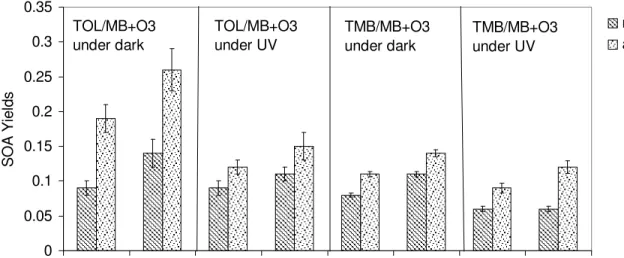
Figure 2.1 SOA yields in the presence of non-acidic and acidic seeds at two different %RH levels under dark and UV light conditions... 21
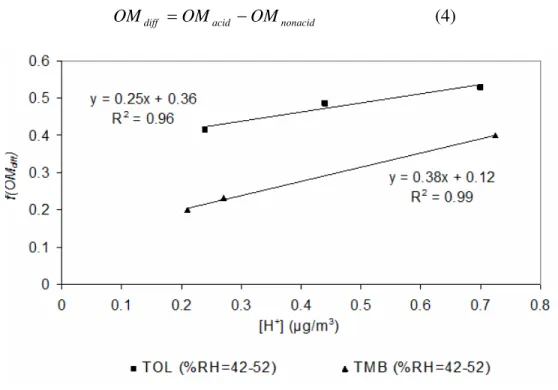
Figure 2.2 f(OMdiff) as a function of a proton concentration at high %RH (42-52)
describing the contribution of acid catalyzed heterogeneous reaction to the SOA mass ... 23
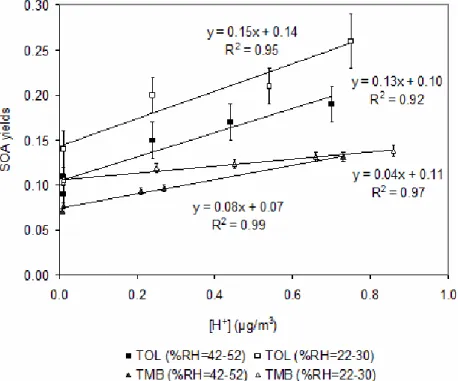
Figure 2.3 SOA yields as a function of a proton concentration... 24
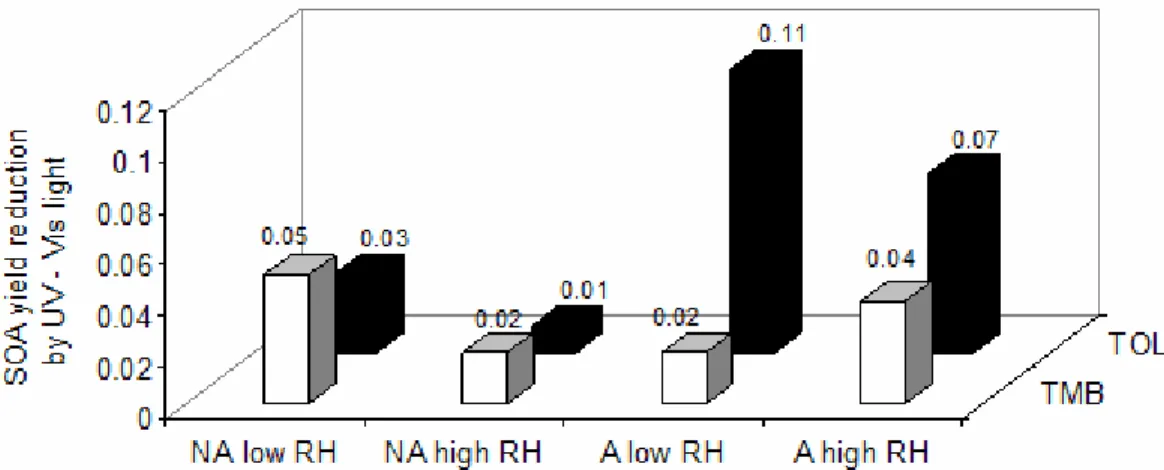
Figure 2.4 The absolute reduction of aromatic SOA yields (∆Ydark-UV) due to
the UV exposure at different humidity levels ... 26
Figure 2.5 The representative time profiles of SOA mass in the chamber with the UV light controlled by on-off/off-on mode showing UV light effects on the particle mass change ... 28
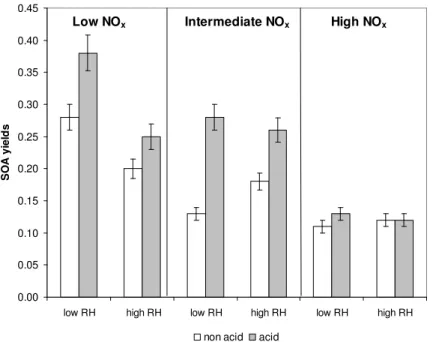
Figure 3.1 SOA yields in the presence of neutral seed and acidic sulfate seed at two different %RH levels under three NOx conditions... 45
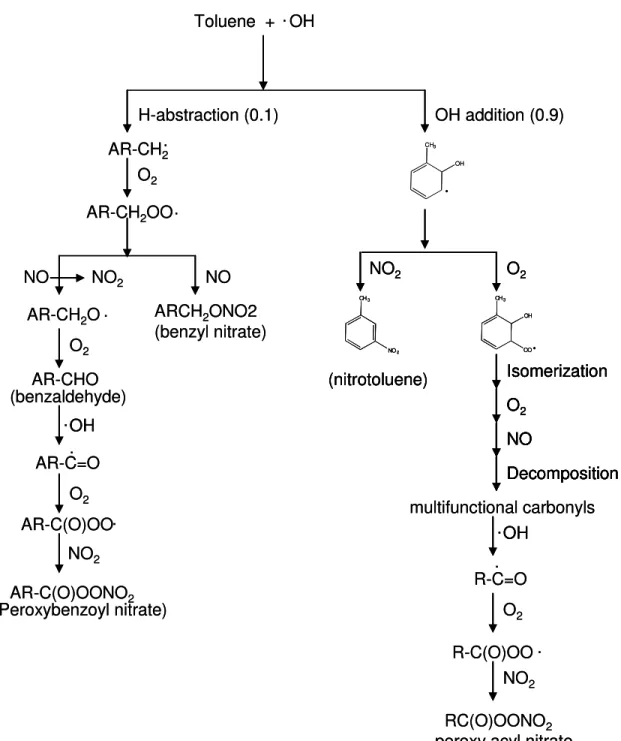
Figure 3.2 The fates of RO2 produced from toluene photooxidation under
different NOx conditions ... 46
Figure 3.3 The possible reaction channels for gas phase oxygenated products at high NOx level... 48
Figure 3.4 A time profile of proton concentration [H+] over the course of an SOA experiment at high NOx level in the presence of acidic sulfate seed ... 54
Figure 3.5 Time-dependent growth curves and SOA yield curves over the course of an SOA experiment ... 56
Figure 4.1 Calculated partitioning coefficients of d40-nonadecane on SOA
comprising different oligomer structures in the presence of the non acidic seed. ... 75
Figure 4.2 Calculated partitioning coefficients of d40-nonadecane on SOA
comprising various oligomer structures in the presence of the acidic seed ... 76
Figure 4.3 RF(Mass ratio/peak ratio) as a function of retention time for
quantification of the identified products in the particle phase. ... 80
Figure 5.1 Components of the SOA model including partitioning and
heterogeneous reactions ... 97
Figure 5.3 Comparison of the predicted OMT and the measured OMT (Table 5.1)
at three NOx levels in the non-acidic and acidic toluene systems... 106
Figure 5.4 Predicted heterogeneous SOA mass fraction (OMH/OMT) at three NOx levels in the non-acidic and acidic toluene systems ... 107
Figure 5.5 Comparison of the predicted OMT and the measured OMT (Table 5.3) at middle NOx and high NOx levels under atmospheric relevant conditions in the non-acidic and acidic toluene systems ... 109
Figure 5.6 Predicted heterogeneous SOA mass fraction (OMH/OMT) at middle NOx and high NOx levels in the non-acidic and acidic toluene systems ... 111
Figure A.1 Experimental setup of the GPT calibration system for calibrating NOx meter and O3 meter ... 121
Figure A.2 The calibration curve for the NOx meter (Jan 06, 2008). ... 125
Figure A.3 Gas phase titration (GPT) chart for the calibration of the O3 meter... 126
Figure B.1 Particle wall loss rate as a function of particle size ... 128
Figure B.2 Fluorescence light spectrum compared with solar spectra for zenith angle of 51°... 129
Figure B.3 All reactions included in the inorganic gas phase model... 131
Figure B.4 Computer screen print for files in the folder “stdinclude” used in Morpho ... 133
Figure B.5 Comparison between measured and modeled values for NO, NO2 and NOx for NO2 actinometry experiments ... 133
Chapter I
Introduction
1.1 Overview of secondary organic aerosol (SOA) formation
Secondary organic aerosols (SOA) have potential impacts on the earth’s radiative
balance, visibility and human health. The magnitude of these SOA effects depends on the
concentration and composition of SOA in the atmosphere. Therefore, understanding
mechanisms of SOA formation is essential for the correct estimation of their effects.
SOA refers to aerosols formed by gas phase multifunctional oxygenated products that
are generated from volatile organic compounds (VOCs) reactions with atmospheric oxidants
(e.g. ozone, hydroxy radical, and nitrate radical). For years, SOA formation has been
explained using two physical processes: self-nucleation and gas-particle partitioning. Both
processes depend on vapor pressure of compounds. Therefore, the potential of SOA
formation from organic precursors has been estimated primarily by their vapor pressures.
SOA products generated through these two pathways are believed to have the same structures
as their gas phase products. Recent findings, however, challenge the conventional SOA
formation theory. For example, some compounds (e.g. carbonyls) that weakly partition due
to their high vapor pressure are found in large amounts in the particle phase (Jang et al.,
2002); high molecular weight (MW) structures that are not seen in the gas phase are detected
in both ambient aerosols and the laboratory generated aerosols (Dommen et al., 2006; Gao et
insignificant SOA precursors according to the gas-particle partitioning theory are found to be
important SOA sources (Lane and Pandis, 2007; Lewandowski et al., 2007; Limbeck et al.,
2003; Szmigielski et al., 2007). Such findings suggest that reactive gas phase organic
products (e.g. carbonyls) condense on the particle phase and are further chemically
transformed into high MW compounds, also called oligomers (characteristic products from
heterogeneous reactions). Many recent studies have suggested that heterogeneous reactions
in the particle phase are important pathways for SOA formation in addition to self-nucleation
and gas-particle partitioning processes (Baltensperger et al., 2005;Gao et al., 2004b; Jang et
al., 2002; Kalberer et al., 2004; Liggio et al., 2005a).
1.2 Heterogeneous SOA formation in the presence of inorganic aerosols
Potential mechanisms for particle phase heterogeneous chemistry of organic
compounds such as carbonyls include hydration, polymerization, formation of
hemiacetal/acetal/trioxane, aldol condensation and cationic rearrangement (Garland et
al.,2006; Jang et al., 2004). The contribution of heterogeneous reactions to SOA formation is
influenced by reactivity of gas phase products from oxidation of organics in these
mechanisms. Jang et al. (2006) lumped major gas phase products of α-pinene ozonolysis into
three groups of reactivity (slow, medium and fast) for the estimation of heterogeneous SOA
formation. For example, heterogeneous reactions of compounds with fast reactivity, such as
oxoaldehydes—the aldehydes that contain at least two C=O groups, can occur without the
need of an acidic catalyst but can be accelerated by an acidic catalyst. Heterogeneous
reactions of compounds with slow and medium reactivity such as oxo-carboxylic acids are
significant only when an acidic catalyst is present in the particle phase. Therefore,
differently to particle acidity. From the aspect of acid-catalyzed heterogeneous reactions, the
interactions between organic compounds and inorganic acid determine degree and rates of
the reactions. The mass ratios of organic to inorganic compounds in aerosols directly
influence the process of acid-catalyzed heterogeneous reactions. For example, if the mass
ratios of organic to inorganic are low, the incidence of acid-catalyzed heterogeneous
reactions could be high. Therefore, an accurate explanation of SOA formation requires
consideration of the chemical interaction between organic and inorganic components in
aerosols. In general, organic and inorganic constituents are often coexisting in the actual
multicomponent ambient aerosols. For example, the mass ratios of organic to inorganic in
ambient aerosols vary from 0.3 to 0.6 (Drewnick et al., 2004; Russell et al., 2004). Thus,
laboratory studies of SOA formation in the presence of inorganic seed aerosol will be more
relevant to the atmosphere.
1.3 Impacts of heterogeneous chemistry on toluene SOA yields
Aromatics are an important class of VOCs in the ambient air and also major
precursors for SOA formation along with biogenic VOCs. Aromatic hydrocarbons constitute
about 20-50% (in PPbC) of the total non methane VOCs in urban atmospheres of the United
States and Europe (Calvert et al., 2002) and contribute a significant fraction of anthropogenic
SOA loadings in urban area. In this dissertation, toluene is selected as an aromatic precursor
for the study on SOA formation because it is the most abundant aromatic VOC in urban
atmosphere comprising about 20-40% of the total aromatic compounds (Calvert et al., 2002)
and produces high SOA yields compared to other aromatic VOCs (Dechapanya et al., 2003).
and Kamens, 2001; Kleindienst et al., 2004; Smith et al., 1998, 1999; Yu et al., 1997) that are
highly reactive for further particle phase reactions contributing significant SOA yields.
Most recent studies of particle acidity effects on SOA formation have mainly focused
on the SOA from biogenic terpenes and isoprene (Czoschke et al., 2003; Czoschke and Jang,
2006; Edney et al., 2005; Gao et al., 2004a;2004b; Iinuma et al., 2004; Northcross and Jang,
2007). Only a few studies (Kalberer et al., 2004; Liggio et al., 2005a; 2005b) suggested
oligomer formation through heterogeneous reactions in the aromatic SOA in the absence of
acidic aerosols or with no seed aerosols. Research efforts are urgently needed to fill the gap
between the studies on particle acidity effects for biogenic SOA formation and the ones for
aromatic SOA formation. This dissertation, for the first time, presents a systematic
investigation on SOA formation from oxidation of toluene in the presence of inorganic seed.
In Chapter II, effects of particle acidity on SOA yields generated from oxidation of
toluene are explored in the absence of NOx. For comparison purposes, SOA formation from
oxidation of 1,3,5-trimethylbenzene (135-TMB) in the presence of inorganic seed is also
studied. Chapter II also evaluates how UV-visible light influences the aromatic SOA
formation at different particle acidity. Presto et al. (2005) reported the reduction of SOA
yields by the presence of UV light for the SOA generated from the ozonolysis of α-pinene.
Their study suggested that UV light decomposed the gas-phase organic products into low
molecular weight species, resulting in less partitioning of gas-phase compounds to the
particle and lower SOA production. In the aromatic systems, the similar phenomena of the
SOA loss by the UV-visible exposure are expected due to the photolysis of carbonyl products
in the gas phase. The degree of SOA yield reduction through UV irradiation is investigated
Previous studies on SOA formation from aromatic photooxidation (Hurley et al.,
2001; Johnson et al., 2004; Ng et al., 2007; Song et al., 2005) have shown that NOx reduces
the aromatic SOA formation suggesting that NOx influences the fate of gas phase organic
peroxide radicals (RO2). Under high NOx conditions, RO2 radicals react with NOx and
produce relatively volatile organic nitrates; while under low NOx conditions, RO2 radicals
react with hydroperoxyl radicals (HO2) forming organic hydroperoxides (ROOH) that may
further react with aldehyde species in the particle phase to produce the low volatile
peroxyhemiacetals (Johnson et al., 2004). However, most of these previous studies were
conducted under the neutral condition. The effects of particle acidity at varied NOx
conditions are poorly understood. NOx concentrations are expected to influence particle
acidity effects on SOA formation because different NOx concentration levels lead to different
gas phase products with diverse physical and chemical properties. Hence, more
comprehensive SOA studies at different NOx levels coupled with various particle acidity and
humidity levels are needed. In Chapter III, SOA formation from photooxidation of toluene in
the presence of inorganic neutral and acidic seed is comprehensively investigated at three
NOx levels and two humidity levels.
1.4 Impacts of heterogeneous chemistry on partitioning of semivolatile organic compounds on toluene SOA
Laboratory observations and model simulations for aromatic SOA formation
indicate that a considerable fraction of aromatic SOA mass is oligomers (Hu et. al, 2007 and
Kalberer et al., 2004), although the exact oligomer fraction is not certainly known due to the
artifacts during the sample preparation, sample analysis and the lack of authentic standards.
Such problems hinder the studies on how oligomers in the particle phase influence
previous partitioning studies, the gas-particle partitioning of semivolatile organic compounds
is estimated by an absorptive partitioning coefficient ( cal p i
K in equation 1) (Pankow, 1994).
0 9
10 501 . 7
L i om i om
om cal
p i
p MW
RTf
K = ∞
γ (1)
where iKcalp is the gas-particle partitioning coefficient (m3/µg), T is the ambient temperature (K), R is the gas constant (8.314 JK-1mol-1), fom is the mass fraction of the absorptive
liquid-like organic material (om), MWom is the average molecular weight (g/mol) of the organic
matter, and iγom∞ is the activity coefficient of i at infinite dilution in a given liquid-like
medium. The ip0L is the subcooled liquid vapor pressure at the temperature of interest (torr). For the previous studies on partitioning of oxygenated gas phase toluene products on
aerosols, it was assumed that iγom∞ was 1 and MWom was around 120 g/mol (Healy et al.,
2008; Jang and Kamens, 2001; Johnson et al., 2006) based on simple gas phase products.
However, such treatment should be reevaluated considering the new and important
heterogeneous chemistry of organics in aerosols because the formation of oligomeric species
in aerosols would considerably influence MWom and om∞ iγ
.
Chapter IV presents an approach using two deturated alkanes to determine
semiempirically the SOA compositions including oligomers generated from photooxidation
of toluene in the absence of NOx. The resulting SOA compositions are used to study the
1.5 A predictive model including heterogeneous chemistry and partitioning for SOA formed from toluene oxidation
The current SOA predictive models by the gas particle partitioning theory solely are
limited to describing the realistic SOA formation. The SOA models in the next generation
should take into account the compounds that might be relatively volatile but reactive for
heterogeneous reactions. Including heterogeneous reactions into SOA models can
significantly reduce the deviation between the modeled and observed SOA mass so that the
predictability of SOA model can be improved considerably. In Chapter V, the partitioning
SOA model developed by Schell et al. (2001) and the heterogeneous SOA model developed
by Jang et al. (2006) are explored for toluene SOA prediction. The partitioning SOA model is
currently used for SOA prediction in the regional air quality model. Therefore, this study has
initiated a preliminary step to incorporating contribution of heterogeneous reactions to
toluene SOA formation into the regional air quality models for SOA prediction. The model
evaluation, in terms of the ozone formation, the NO to NO2 conversion, the decay of toluene
in the gas phase, and the production of SOA mass, is addressed in this chapter.
Finally, Chapter VI summarizes the key findings of this dissertation work and
Reference
Baltensperger, U., Kalberer, M., Dommen, J., Paulsen, D., Alfarra, M. R., Coe, H., Fisseha, R., Gascho, A., Gysel, M., Nyeki, S., Sax, M., Steinbacher, M., Prevot, A. S. H., Sjogren, S., Weingartner, E., Zenobi, R.,2005. Secondary organic aerosols from anthropogenic and biogenic precursors. Faraday Discussions 130, 265-278.
Calvert, J.G., Atkinson, R., Becker, K.H., Kamens, R.M., Seinfeld, J.H., Wallington, T.H., Yarwood, G., 2002. The mechanisms of atmospheric oxidation of aromatic hydrocarbons. Oxford University Press, USA.
Czoschke, N.M., Jang, M., Kamens, R.M., 2003. Effect of acidic seed on biogenic secondary organic aerosol growth. Atmospheric Environment 37, 4287-4299.
Czoschke, N.M., Jang, M., 2006. Acidity effects on the formation of α-pinene ozone SOA in the presence of inorganic seed. Atmospheric Environment 40, 4370-4380.
Dechapanya W., Eusebi A., Kimura Y., Allen D.T., 2003. Secondary organic aerosol formation from aromatic precursors. 2. mechanisms for lumped aromatic hydrocarbons. Environmental Science and Technology 37, 3671-3679.
Dommen, J., Metzger, A., Duplissy, J., Kalberer, M., Alfarra, M.R., Gascho, A., Weingartner, E., Prevot, A.S.H., Verheggen, B., Baltensperger, U., 2006. Laboratory observation of
oligomers in the aerosol from isoprene/NOx photooxidation. Geophysical Research Letters 33, L13805, doi: 10.1029/2006GL026523.
Drewnick, F., Jayne, J.T., Canagaratna, M., Worsnop, D.R., Demerjian, K.L., 2004. Measurement of ambient aerosol composition during the PMTACS-NY 2001 using an aerosol mass spectrometer. Part II: Chemically speciated mass distributions. Aerosol Science and Technology 38, 104-117.
Edney, E. O., Kleindienst, T. E., Jaoui, M., Lewandowski, M., Offenberg, J. H., Wang, W., Claeys, M., 2005. Formation of 2-methyl tetrols and 2-methylglyceric acid in secondary organic aerosol from laboratory irradiated isoprene /NOX/SO2/air mixtures and their detection in ambient PM2.5 samples collected in the eastern United States. Atmospheric Environment 39, 5281-5289.
Garland, R.M., Elrod, M.J., Kincaid, K., Beaver, M.R., Jimenez, J.L., Tolbert, M.A., 2006. Acid-catalyzed reactions of hexanal on sulfuric acid particles: Identification of reaction products. Atmospheric Environment 40, 6863-6878.
K.Y., Beauchamp, J.L., Hodyss, R.P., Flagan, R.C., Seinfeld, J.H., 2004b. Particle phase acidity and oligomer formation in secondary organic aerosol. Environmental Science and Technology 38, 6582-6589.
Healy, R. M., Wenger, J. C., Metzger, A., Duplissy, J., Kalberer, M., Dommen, J., 2008 Gas/particle partitioning of carbonyls in the photooxidation of isoprene and 1,3,5-trimethylbenzene. Atmospheric Chemistry and Physics 8, 3215–3230.
Hu, D., Tolocka, M., Li, Q., Kamens, R. M., 2007. A kinetic mechanism for predicting secondary organic aerosol formation from toluene oxidation in the presence of NOx and natural sunlight. Atmospheric Environment 41(31), 6478-6496.
Hurley, M. D., Sokolov, O., Wallington, T. J., Takekawa, H., Karasawa, M., Klotz, B., Barnes, I., Becker, K. H., 2001. Organic aerosol formation during the atmospheric degradation of toluene. Environmental Science and Technology 35, 1358-1366.
Iinuma,Y., Boge, O., Gnauk, T., Herrmann, H., 2004. Aerosol-chamber study of the α -pinene/O3 reaction: influence of particle acidity on aerosol yields and products. Atmospheric Environment 38, 761-773.
Jang, M., Kamens, R., 2001. Characterization of secondary aerosol from the photooxidation of toluene in the presence of NOx and 1-propene. Environmental Science and Technology 35, 3626-3639.
Jang, M., Czoschke, N.M., Lee, S., Kamens, R.M., 2002. Heterogeneous atmospheric aerosol production by acid- catalyzed particle-phase reactions. Science 298, 814-817.
Jang, M., Czoschke, N.M., Northcross, A.L., 2004. Atmospheric organic aerosol production by heterogeneous acid-catalyzed reactions. Chemphyschem 5, 1-16.
Jang, M.; Czoschke, N.M.; Northcross, A.L.; Cao, G.; Shaof, D., 2006. SOA formation from partitioning and heterogeneous reactions: Model study in the presence of inorganic species. Environ. Sci. Technol. 40, 3013-3022.
Johnson, D., Jenkin, M. E., Wirtz, K., Martin-Reviejo, M., 2004. Simulating the formation of secondary organic aerosol from the photooxidation of toluene. Environmental Chemistry 1, 150-165.
Johnson, D., Utembe, S. R., Jenkin, M. E., 2006. Simulating the detailed chemical composition of secondary organic aerosol formed on a regional scale during the TORCH 2003 campaign in the southern UK. Atmospheric Chemistry and Physics 6(2), 419-431.
Kalberer, M., Paulsen, D., Sax, M., Steinbacher, M., Dommen, J., Prevot, A. S. H., Fisseha, R., Weingartner, E., Frankevich, V., Zenobi, R., Baltensperger, U., 2004. Identification of polymers as major components of atmospheric organic aerosols. Science 303, 1659-1662.
in ambient PM2.5. Journal of Atmospheric Chemistry 47, 79-100.
Lane, T.E., Pandis, S.N., 2007. Predicted secondary organic aerosol concentrations from the oxidation of isoprene in the eastern united states. Environmental Science & Technology 41, 3984-3990.
Lewandowski, M., Jaoui, M., Kleindienst, T.E., Offenberg, J.H., Edney, E.O., 2007.
Composition of pm2.5 during the summer of 2003 in research triangle park, North Carolina. Atmospheric Environment 41, 4073-4083.
Liggio, J., Li, S.-M., McLaren, R., 2005a. Heterogeneous reactions of glyoxal on particulate matter: identification of acetals and sulfate esters. Environmental Science and Technology 39, 1532-1541.
Liggio, J., Li, S.-M., McLaren, R., 2005b. Reactive uptake of glyoxal by particulate matter. Journal of Geophysical Research 110, D10304.
Limbeck, A., Kulmala, M., Puxbaum, H., 2003. Secondary organic aerosol formation in the atmosphere via heterogeneous reaction of gaseous isoprene on acidic particles. Geophysical Research Letters 30, ASC6-1-ASC6/4.
Ng, N. L., Kroll, J. H., Chan, A. W. H., Chhabra, P. S., Flagan, R. C., Seinfeld, J. H., 2007. Secondary organic aerosol formation from m-xylene, toluene, and benzene. Atmospheric Chemistry and Physics 7, 3909-3922.
Northcross, A.L., Jang, M., 2007. Heterogeneous SOA yield from ozonolysis of
monoterpenes in the presence of inorganic acid. Atmospheric Environment 41, 1483-1493.
Pankow, J. F., 1994. An absorption model of gas/particle partitioning of organic compounds in the atmosphere. Atmospheric Environment 28, 185-188.
Presto, A.A., Hartz, K.E.H., Donahue, N.M., 2005. Secondary organic aerosol production from terpene ozonolysis. 1. effect of UV radiation. Environmental Science and Technology 39, 7036-7045.
Russell, M., Allen, D.T., Collins, D.R., Fraser, M.P., 2004. Daily, seasonal, and spatial trends in PM2.5 mass and composition in southeast Texas. Aerosol Science and Technology 38,14-26.
Schell, B., Ackermann, I.J., Hass, H., Binkowski, F.S., Ebel, A., 2001. Modeling the formation of secondary organic aerosol within a comprehensive air quality model system. Journal of Geophysical Research 106, 28275-28293.
Smith, D.F., Mciver, C.D., Kleindienst, T.E., 1998. Primary product distribution from the reaction of hydroxyl radicals with toluene at ppb NOx mixing ratios. Journal of Atmospheric Chemistry 30, 209-228.
reaction of OH from m-. p-xylene, 1,2,4- and 1,3,5-trimethylbenzene. Journal of Atmospheric Chemistry 34, 339-364.
Song, C., Na, K., Cocker, D. R. III, 2005. Impact of the hydrocarbon to NOx ratio on
secondary organic aerosol formation, Environmental Science and Technology 39, 3143-3149.
Szmigielski, R., Surratt, J.D., Vermeylen, R., Szmigielska, K., Kroll, J.H., Ng, N.L., Murphy, S.M., Sorooshian, A., Seinfeld, J.H., Claeys, M., 2007. Characterization of 2-methylglyceric acid oligomers in secondary organic aerosol formed from the photooxidation of isoprene using trimethylsilylation and gas chromatography/ion trap mass spectrometry. Journal of Mass Spectrometry 42, 101-116.
Tolocka, M. P., Jang, M., Ginter, J. M., Cox, F. J., Kamens, R. M., Johnston, M. V., 2004. Formation of oligomers in secondary organic aerosol. Environmental Science and
Technology 38, 1428--1434.
Chapter II
Effects of Particle Acidity and UV Light on Secondary Organic
Aerosol Formation from Oxidation of Aromatics
in the Absence of NO
xGang Cao, Myoseon Jang*
Department of Environmental Sciences and Engineering University of North Carolina at Chapel Hill
CB#7431, Rosenau Hall, Chapel Hill, NC, 27599
Published in Atmospheric Environment, (2007), 41(35), 7603-7613.
Abstract
Recent laboratory observations have shown that particle acidity increases secondary
organic aerosol (SOA) yields. However, these studies have mainly focused on biogenic
precursors such as isoprene and terpenes. In this paper, the effects of particle acidity on
aromatic SOA yields under both dark and UV-Visible light conditions were characterized
through controlled chamber experiments. SOA was produced from oxidation of toluene and
1,3,5-trimethylbenzene (135-TMB) with OH radicals created by ozonolysis of
2-methyl-2-butene (MB). Particle acidity, described with proton concentrations, varied with inorganic
seed aerosol composition and humidity (20%-52%). Overall, in the presence of acidic seeds,
greater increases in SOA yields were observed for the toluene system than the 135-TMB
system. UV irradiation reduced SOA yields for both toluene and 135-TMB systems to
2.1 Introduction
The gas phase reactions of volatile organic compounds (VOCs) associated with the
photochemical cycles of atmospheric oxidants (e.g. ozone, OH radical, and NOx) create
semivolatile multifunctional oxy-products, which produce secondary organic aerosol (SOA)
by either gas-particle partitioning on preexisting particulate matter or self-nucleation. For
many years, SOA formation has been explained mainly by a gas-particle partitioning theory.
However, recent studies (Czoschke et al., 2003; Czoschke and Jang, 2006; Edney et al., 2005;
Gao et al., 2004a;2004b; Iinuma et al., 2004; Jang et al., 2002; Northcross and Jang, 2007)
have suggested that SOA mass also increases by heterogeneous reactions, particularly in
acidic aerosols (e.g. submicron sulfuric acid aerosol). Such findings suggest that further
chemical transformation of organic compounds occurs in the particle phase via
heterogeneous reactions, forming high molecular weight species. The particle phase
heterogeneous reactions (e.g. hydration, polymerization, formation of
hemiacetal/acetal/trioxane, aldol condensation, and cationic rearrangement) can be catalyzed
by inorganic acids accelerating SOA formation (Jang et al., 2002; 2004; Garland et al., 2006)
and can also produce organic sulfates through the reaction of sulfuric acid with organics
(Liggio et al., 2005a).
Aromatics are an important class of VOCs in the ambient air and also major
precursors for SOA formation along with biogenic VOCs. Aromatics react with OH radicals
in the gas phase and produce multifunctional carbonyls (Jang and Kamens, 2001; Kleindienst
et al., 2004; Smith et al., 1998, 1999; Yu et al., 1997) that are highly reactive for further
particle phase reactions contributing significant SOA yields. Although in urban air, about
compounds (Calvert et al., 2002; Fujita et al., 1997; Kurtenbach et al., 2000; Singh et al.,
1985), no study until now characterized the influence of particle acidity on aromatic SOA
formation. Most studies of the particle acidity effects on SOA formation have mainly
focused on the SOA from biogenic terpenes and isoprene (Czoschke et al., 2003; Czoschke
and Jang, 2006; Edney et al., 2005; Gao et al., 2004a;2004b; Iinuma et al., 2004; Northcross
and Jang, 2007). Only a few studies (Kalberer et al., 2004; Liggio et al., 2005a; 2005b)
suggested oligomer formation through heterogeneous reactions in the aromatic SOA in the
absence of acidic aerosols or with no seed aerosols. This paper is a first attempt to
investigate the impact of particle acidity on aromatic SOA formation via heterogeneous
reactions. Particle acidity varied with humidity and inorganic seed aerosol compositions
comprising of sulfuric acid (HS), ammonium bisulfate (ABS), and ammonium sulfate (AS)
aqueous solution.
In our study, NOx was excluded to simplify the inorganic thermodynamics into the
sulfate-ammonia only system eliminating both interference from nitric acid and chemistries
of organic nitrates in SOA formation. The controlled experimental condition of this study
allows us to clearly evaluate the sulfuric acid effects on SOA yields thus reducing the
uncertainties of analyzing the SOA yield data.
Another emphasis of this study is to evaluate how UV-visible light influences the
aromatic SOA formation at the different particle acidity. Presto et al (2005) in their recent
studies showed the reduction of SOA yields by the presence of UV light for the SOA from
the ozonolysis of α-pinene. Their study suggested that UV light decomposed the gas-phase
organic products into low molecular weight species, resulting in less partitioning of
similar phenomena of the SOA loss by the UV-visible exposure are expected due to the
photolysis of carbonyl products in the gas phase. In this study, the degree of SOA yield
reduction through UV irradiation was investigated for the individual aromatic (toluene and
135-TMB).
2.2 Experimental methods
2.2.1 Teflon film indoor chamber experiments
Aromatic precursors were oxidized by OH radicals that were produced from the
reaction of 2-methyl-2-butene (MB) with ozone in the gas phase. MB was selected due to its
rapid reaction rate (3.92 × 10⁻¹⁶ cm3 molecule-1 s-1 at a temperature (T) of 295 K) with O3
(Carter, 2000), relatively high OH production (0.80 to 0.98) (Orzechowska and Paulson,
2002), and the negligible SOA formation. In order to confirm that ozonolysis of MB had a
negligible SOA production, 0.30 ppm of MB reacted with 0.32 ppm of ozone in the presence
of both non-acidic (128 nL/m3) and acidic inorganic seed aerosol (165 nL/m3) at a percent relative humidity (%RH) of 42 at 295 K. No detectable SOA formation appeared from
ozonolysis of MB in both the non-acidic and the acidic systems.
All experiments were conducted in a 2 m3 indoor Teflon film chamber under either dark or UV-visible light conditions. The chamber was surrounded by sixteen fluorescent
lamps (Solarc Systems Inc., FS40T12/UVB) that are controlled by switching “on” and “off”.
Temperature increase due to our light sources is trivial (less than 2 K for the duration of the
experiments). Prior to each experiment, the chamber was flushed with clean air from clean
air generators. The inorganic composition of the seed aerosol was controlled by the different
combinations of the inorganic aqueous solutions (0.01 mol/L) made of AS, ABS, and HS.
inorganic solution. After injecting inorganic seed aerosol, O3 was introduced into the indoor
chamber followed by the injection of a mixture of MB and an aromatic compound (toluene or
135-TMB). The mixture of precursor organics was added to a T-shaped glass tube using a
syringe, then volatilized under clean air streams passing through this T-shaped glass tube by
heating with a heat gun. For all SOA experiments, the initial concentrations of MB and
toluene/135-TMB in the chamber were 0.3 ppm and 3.12ppm (toluene)/2.4 ppm (135-TMB),
respectively. For the light experiments, the chamber was exposed to the light source
immediately after adding the organics. The experimental conditions and the resulting SOA
data at different particle acidity associated with the composition of inorganic seed aerosol
and humidity are summarized in Table 2.1 and Table 2.2.
2.2.2 Materials and instruments
All chemicals used for this study were purchased from Aldrich (Milwaukee, WI) and
had purity levels greater than 99%. Clean air was generated using two clean air generators
(Aadco Model 737, Rockville, MD; Whatman Model 75-52, Haverhill, MA). Inorganic seed
aerosols were generated with a Constant Output Atomizer (TSI, Model 3076, Shoreview,
MN) and ozone was generated photolytically using a Xonics ozone generator (Jelight Model
600, Irvine, CA). The ozone concentration was measured with a photometric ozone detector
(Thermo Environmental Instruments, Model 49, Hopkinton, MA). The particle size
distribution was monitored with a Scanning Mobility Particle Sizer (SMPS, TSI Model 3080,
Shoreview, MN) together with a condensation nuclei counter (CNC, TSI, Model 3025A).
Particle data were corrected for the aerosol loss to the chamber wall ( McMurry and
Grosjean,1985) with a first order decay. The gas-phase concentrations of aromatics were
experiments. The flow rate of GC carrier gas (Nitrogen) through a DB-5 (15m x 0.53mm)
fused silica capillary column (J & W Scientific INC, Cat# 1255012) was 2.5 mL/min. The
oven temperature was fixed at 150 °C for 7 min. Temperature (294-297 K) and %RH of the
chamber were measured with an electronic thermo-hygrometer (Dwyer Instrument, INC,
USA).
The uncertainties of our experiments were mainly from the particle volume
concentration measured by the SMPS and the ∆ROG monitored by GC-FID. For all the
experiments of this study, the estimated uncertainty for SMPS data was ±2% and that for the
GC-FID measurement, within ±6%.
Table 2.1 Experimental conditions and resulting SOA data for oxidation of toluene with OH radicals produced from ozonolysis of MB using the 2 m3 Teflon Film Chamber a,b.
Exp. %RH FHS
c
[H+] (µg/m3)
Init. [O3] (ppm)
Vseed (1011nm3/cm3)
Vmix (1011nm3/cm3)
OM (µg/m3)
Yieldd
dark
1 28.6 0.33 0.01 0.343 1.96 2.79 116 0.14±0.02
2 28.8 0.33 0.01 0.345 1.35 2.18 116 0.14±0.02
3 43.2 0.33 0.01 0.344 1.31 1.94 88 0.11±0.01
4 63.0 0.33 0.01 0.323 1.17 1.66 69 0.09±0.01
5 30.3 0.54 0.24 0.339 1.82 2.94 157 0.20±0.02
6 26.0 0.59 0.54 0.313 1.38 2.58 168 0.21±0.02
7 22.4 0.67 0.75 0.321 1.53 3.02 209 0.26±0.03
8 25.9 0.67 0.75 0.328 1.61 3.11 210 0.26±0.03
9 49.2 0.54 0.24 0.324 2.02 2.90 123 0.15±0.02
10 51.5 0.59 0.44 0.337 1.99 2.99 140 0.17±0.02
11 42.3 0.67 0.70 0.328 1.77 2.86 153 0.19±0.02
light
1 30.8 0.33 0.01 0.338 1.44 1.91 66 0.11±0.01
2 41.8 0.33 0.01 0.332 1.68 2.09 57 0.09±0.01
3 25.5 0.67 0.81 0.350 1.67 2.31 90 0.15±0.01
4 44.4 0.67 0.55 0.335 1.85 2.36 71 0.12±0.01
5 41.0 0.67 0.65 0.328 1.45 1.95 70 0.11±0.01
a Temperature in the range of 294 -297 K
Table 2.2 Experimental conditions and resulting SOA data for oxidation of 135-TMB with OH radicals produced from ozonolysis of MB using the 2 m3 Teflon Film Chamber a,b.
Exp. %RH FHSc [H+]
(µg/m3)
Init. [O3] (ppm)
Vseed (1011nm3/cm3)
Vmix (1011nm3/cm3)
OM (µg/m3)
Yieldd
dark
1 20.8 0.33 0.01 0.330 1.56 2.51 133 0.103±0.004
2 28.8 0.33 0.01 0.355 1.43 2.41 137 0.106±0.004
3 48.3 0.33 0.01 0.325 2.08 2.79 99 0.077±0.003
4 66.0 0.33 0.01 0.337 1.42 2.08 92 0.071±0.003
5 30.8 0.54 0.25 0.333 1.98 3.07 153 0.119±0.005
6 29.3 0.59 0.45 0.342 1.61 2.75 160 0.124±0.005
7 18.0 0.67 0.86 0.325 1.69 2.96 178 0.138±0.006
8 20.4 0.67 0.66 0.318 1.31 2.52 169 0.131±0.005
9 49.1 0.54 0.21 0.342 1.79 2.65 120 0.093±0.004
10 49.5 0.59 0.27 0.331 1.32 2.21 125 0.097±0.004
11 44.8 0.67 0.73 0.340 1.92 3.18 176 0.136±0.005
12 48.6 0.67 0.72 0.313 1.99 3.01 143 0.111±0.004
light
1 24.4 0.33 0.01 0.360 1.55 1.98 60 0.056±0.004
2 43.4 0.33 0.01 0.331 1.74 2.15 57 0.055±0.004
3 21.1 0.67 0.81 0.321 1.77 2.68 127 0.122±0.009
4 19.1 0.67 0.76 0.322 1.66 2.46 112 0.107±0.008
5 43.4 0.67 0.64 0.360 1.61 2.26 91 0.087±0.007
6 41.3 0.67 0.68 0.330 1.77 2.38 85 0.082±0.006
a Temperature in the range of 294 -297 K
b ∆ROG was 1290.05 ± 69.46 (µg/m3) for the dark experiments and 1041.97 ± 50.09 (µg/m3) for the light experiments
c FHS=0.33 (AS); FHS =0.54 (ABS:HS=85:15); FHS =0.59 (ABS:HS=70:30); FHS =0.67 (ABS:HS=50:50) d Yield was calculated by equation 1 with the density of organic matter of 1.4 g/mL The uncertainties of the resulting SOA yields were calculated using the uncertainties of OM and ∆ROG through the propagation of uncertainty for divisions (Levie, 1997)
2.3 Results and discussion
2.3.1 Particle acidity: seed aerosol composition and proton concentration
FHS denotes the sulfuric acid mole fraction of the inorganic seed aerosol consisting of
H2SO4 and NH3 (Czoschke and Jang, 2006). FHS can be expressed as
3 4 2 4 2 molNH SO molH SO molH FHS +
= (1)
Non-comprised of a combination of ABS (NH4HSO4) and HS (H2SO4) (e.g. FHS =0.54 with 85%
ABS and 15% HS, FHS=0.59 with 70%ABS and 30% HS, and FHS =0.67 with 50% ABS and
50% HS solution).
Proton concentrations ([H+], µg/m3) are used to describe the actual particle acidity and calculated from the mass fraction of H+ estimated using an inorganic thermodynamic model (ISORROPIA) (Nenes, 2006) and the inorganic seed mass (Mseed) which is calculated
from the density of the inorganic seed aerosol and the volume concentration of seed aerosol
in the chamber air. The density of inorganic seed aerosol ranging from 1.28- 1.62 g/mL was
calculated with the method developed by Semmler et al. (2006) at a given composition of
aqueous inorganic solution. The [H+] in the seed aerosol of this study ranges 0.01-0.86
µg/m3 as shown in Table 2.1 and Table 2.2.
2.3.2 SOA Yields
The fractional aerosol yield (Y) was defined as (Odum et al., 1996)
ROG OM Y
∆
= (2)
where OM is the produced SOA mass concentration (µg/m3) and ∆ROG is the concentration of the consumed reactive precursor organic gas (µg/m3). In this study, OM was calculated by equation 3.
OM = dom(Vmix-Vseed) (3)
where dom is the density of an organic aerosol, Vmix is the volume concentration of the aerosol
mixtures, and Vseed is the volume concentration of inorganic seed aerosols. According to the
recent studies (Dommen, et al., 2006; Gao, et al., 2004a; Kalberer, et al., 2000; Northcross
and Jang, 2007), the OM density of 1.4 g/ml was used in this paper. Table 2.1 and Table 2.2
were measured using a GC-FID and the resulting ∆ROG was highly reproducible with the
estimated uncertainty of less than ±6% for the dark experiments and the UV-Visible light
experiments.
2.3.3 Effect of molecular structures on the SOA formation
Table 2.1, Table 2.2, and Figure 2.1 summarize the SOA data for the oxidation of
both toluene and 135-TMB, varying the seed composition and humidity in the absence and
the presence of UV light. Overall, the oxidation of toluene with OH radicals gives higher
SOA yields than 135-TMB for all types of inorganic seeds under the same irradiation
conditions. A similar tendency has been reported by other studies (Johnson et al., 2005;
Takekawa et al., 2003; Dechapanya et al., 2003; Odum et al., 1997) for the SOA produced
from the photochemical reactions of aromatics in the presence of NOx.
0 0.05 0.1 0.15 0.2 0.25 0.3 0.35
High RH Low RH High RH Low RH High RH Low RH High RH Low RH
S
O
A
Y
ie
ld
s
non acid acid TOL/MB+O3
under UV TOL/MB+O3
under dark
TMB/MB+O3 under dark
TMB/MB+O3 under UV
Figure 2.1 SOA yields in the presence of non-acidic and acidic seeds at two different %RH levels under dark and UV light conditions. %RH is grouped into two levels: low %RH (22-30) and high %RH (42-52). Non-acidic seed: (NH4)2SO4 (FHS =0.33). Acidic seed: NH4HSO4:
H2SO4 = 1:1 (FHS=0.67).
This observed trend in SOA yields for two aromatic systems indicates significant
partitioning theory, SOA formation is mainly evaluated by volatility of secondary organic
products. Volatility described by vapor pressure of a compound is often predicted by a
molecular structure. 135-TMB has two more methyl substitutes attached to the aromatic ring
than toluene. Thus, the oxygenated compounds from 135-TMB also contain two more
methyl substitutes than those from toluene. On average, the additional two methyl groups in
organic compounds decrease the vapor pressure by one order of magnitude. Therefore, the
vapor pressures of oxygenated products of 135-TMB are lower than those for toluene, and
higher SOA yields are expected for 135-TMB than for toluene. However, this is exactly the
opposite of observations from our experiments and other studies (Odum et al., 1997; Johnson
et al., 2005). This suggests that in addition to the gas-particle partitioning, heterogeneous
reactions in the aerosol are an important process for the aromatic SOA formation. For
example, the multifunctional carbonyls, which are produced from the gas phase reaction of
aromatics with OH radicals through the ring opening pathway, are major oxygenated
products and are highly reactive for heterogeneous reactions in aerosol. However, the
molecular structures of these multifunctional carbonyl products impact heterogeneous SOA
growth. In general, aldehydes have higher reactivity and favorable equilibrium constants for
formation of hydrates and hemiacetals/hemiketal that are important intermediates for
heterogeneous reactions (Carey and Sundberg, 2000). Therefore, aldehydes results in greater
SOA yields than ketones. The oxidation of toluene produces more aldehydes leading to
higher SOA yields while the oxidation of 135-TMB generates more ketones giving less SOA
2.3.4 Acid effects on SOA yield without irradiation
Overall, acidic aerosols lead to higher SOA yield than non-acidic aerosols for both
the toluene and 135-TMB systems. Under dark, the effects of particle acidity appear to be
much stronger with toluene SOA than 135-TMB SOA. To evaluate acid effects on SOA
formation, we estimate the difference in the aerosol mass (OMdiff) between the OM in the
acidic aerosol (OMacid) and OM in the non-acidic aerosol (OMnonacid). OMdiff, expressed as
equation 4, indicates additional organic aerosol mass increases by heterogeneous reactions in
the presence of acidic aerosol.
nonacid acid
diff OM OM
OM = − (4)
Figure 2.2 f(OMdiff) as a function of a proton concentration at high %RH (42-52) describing
the contribution of acid catalyzed heterogeneous reaction to the SOA mass.
The non-acidic seed aerosol made of AS is solid below the efflorescence point that is
in the range of 30-35%RH (Colberg et al, 2004; Gao et al, 2006; Martin et al, 2003), while
the acidic seed particles are aqueous regardless of %RH under our experimental conditions.
only to the experimental data at %RH = 42-52 in this study. The OMdiff fraction, f(OMdiff), is
calculated by dividing OMdiff by OMacid. f(OMdiff) indicates relative significance of the mass
contribution of heterogeneous acid-catalyzed reactions to the total acidic SOA. Figure 2.2
displays the strong linearity (R2=0.96-0.99) between f(OMdiff) and [H+] at high %RH (42-52)
for both toluene and 135-TMB. Overall, f(OMdiff) is much greater with toluene than those
with 135-TMB. For example, f(OMdiff) is 0.41-0.53 for toluene and 0.20-0.40 for 135-TMB.
In Figure 2.3, SOA yields at different levels of humidity were plotted vs. [H+]
estimated with ISORROPIA at a given humidity, inorganic seed composition, and Mseed. The
SOA yields of the toluene system are more sensitive to humidity and [H+] (at the same level of %RH) than that of the 135-TMB system in the acidic aerosol. This result again indicates
that heterogeneous acid-catalyzed reactions in the toluene system are more effective than
those in the 135-TMB system.
Figure 2.3 also illustrates that SOA yields of both toluene and 135-TMB were greater
at low %RH than at high %RH (42-52) in the similar range of [H+]. In order to determine whether the difference in SOA yield between low %RH (22-30) and high %RH (42-52) is
statistically significant, the t-test for the linear regression analysis (Kleinbaum et al., 1988)
between [H+] and SOA yields was performed at two levels of %RH within toluene or 135-TMB system. In detail, for each aromatic system, the two separate t-tests were conducted for
evaluating parallelism and comparing the intercepts of the regression line ([H+] vs. SOA yields) at different %RH levels at the 95% confidence interval. These results show two
regression lines at two different levels of %RH are significantly different, suggesting that [H+] is a useful parameter but [H+] alone is not sufficient to explain the acid effects on SOA. As suggested in the previous study (Jang et al., 2006), the description of a role of water in the
particle phase reactions and the additional kinetic analysis through activity coefficient (e.g.
excess acidity) of carbonyl species in the non-ideality solution such as strong and medium
acidic media are necessary to thoroughly understand the interaction between inorganic acid
and SOA.
2.3.5 SOA formation with irradiation
To investigate the effects of UV light on SOA yields, several sets of SOA
experiments were conducted under similar experimental conditions of those without UV light.
The outcome of UV irradiation is the suppression of the SOA formation for both aromatic
systems. The observation of our study is consistent with the previous report by Presto et al
(2005), who showed that SOA yields from ozonolysis of α-pinene were reduced by the
presence of UV. Figure 2.4 summarizes the impact of the UV irradiation on SOA yields
(∆Ydark-UV) was obtained by subtracting the SOA yield under light from the SOA yield under
dark at the same experimental conditions. The precision of our measurement was good
enough to distinguish the difference of the toluene SOA yields beyond 0.03 and the
difference of the 135-TMB SOA yields beyond 0.009. Therefore, as shown in Figure 2.4,
∆Ydark-UV for the toluene SOA with the non acidic seed was negligible. However, for all other
SOA experiments, depending on the particle acidity, UV exposure leads to significant ∆Y dark-UV values by 0.07-0.11 for the toluene SOA and 0.02-0.05 for the 135-TMB SOA. The
explanations for the decreases in SOA are not yet clear.
Figure 2.4 The absolute reduction of aromatic SOA yields (∆Ydark-UV) due to the UV exposure
at different humidity levels. %RH is grouped into two levels: low %RH (22-30) and high %RH (42-52). “NA” denotes the non-acidic condition and “A” denotes the acidic condition.
We hypothesize that UV irradiation may change the gas phase chemistry resulting in
the SOA loss. UV light decomposes some organic products into smaller and less
condensable or oligomerizable products in the gas phase and decreases the contribution of
these species to the SOA formation. For example, gas phase carbonyls such as conjugated
aldehydes, which are highly reactive for the heterogeneous reactions, undergo photolysis due
light converts these carbonyls to other compounds that may be more volatile or less reactive
for the heterogeneous reactions. In addition to the altered gas phase chemistry, it is possible
that the oxidized products in the particle phase can be degraded into the smaller size
molecules by UV irradiation, resulting in off-gassing of organics into the air. However, this
pathway in the particle has been shown not significant by our experiments discussed below.
A similar experimental approach reported by Presto and coworkers (2005) was used
in this study to examine the UV impact on aromatic SOA after the aerosol formation was
completed. Basically, two sets of experiments were performed under two different humidity
(42-52% and 22-30%) and two different inorganic compositions (non-acidic and acidic
inorganic seed). In the first sets, the chamber initially remained in darkness over the duration
of the SOA experiments (100-130 minutes). Then the UV-Vis lights were switched on and
off every 27 minutes for another 108 minutes to change the lighting conditions of the
chamber (Figure 2.5A and 2.5C). In the second sets of experiments, the chamber was first
exposed to the UV-Vis light during the SOA experiments. Then the UV-Vis lights were
switched off and on as shown in Figure 2.5B and 2.5D. The results showed that after the
completion of SOA formation, the changes in either OM or the particle size distribution were
negligible by alternating UV irradiation condition (the on-off mode) for both aromatic
systems (Figure 2.5). Such observations indicate that the presence/absence of UV light
through the on-off mode afterwards was not influential on SOA formation. According to the
hypothesis suggested by Presto et al (2005), certain products created from heterogeneous
reactions in SOA hardly return to the original compounds that are controlled by the
Figure 2.5 The representative time profiles of SOA mass in the chamber with the UV light controlled by on-off/off-on mode showing UV light effects on the particle mass change. (A) TOL/MB (%RH=42, FHS=0.67); (B) TOL/MB (%RH=30, FHS=0.33); (C) TMB/MB
(%RH=26, FHS=0.33) and (D) TMB/MB (%RH=21, FHS=0.67). The open circle represents
the SOA mass obtained under UV light exposure; the solid circle represents the SOA mass under dark conditions. Each data point is the average SOA mass of three SMPS sampling cycles (3 minutes/cycle).
The effects of particle acidity on the SOA yields remain for both aromatic systems in
the presence of UV light, although the magnitude of acidity impacts is less compared to the
dark experiments, for all aromatic SOA except 135-TMB system at low humidity. As
discussed earlier, multifunctional carbonyls are believed to be highly reactive for the
acid-catalyzed heterogeneous reactions in SOA. However, UV irradiation might decompose 0 10 20 30 40 50 60 70 80
0 50 100 150 200 250
time (min) S O A m a s s ( µ g /m 3) B TOL 40 60 80 100 120 140 160
0 50 100 150
time (min) S O A m a s s ( µ g /m 3) D TMB 40 60 80 100 120 140 160 180
0 50 100 150 200 250
time (min) S O A m a s s ( µ g /m 3) A TOL 0 20 40 60 80 100 120 140 160
0 50 100 150 200 250
certain carbonyls into less reactive compounds for the acid-catalyzed heterogeneous reactions.
Compared to the toluene SOA, the 135-TMB SOA was influenced by UV irradiation to a less
extent. The difference in UV effects on SOA formation between two aromatic systems is
likely due to the difference in the molecular structures of carbonyl products. The carbonyls
produced from toluene are mostly aldehydes while the carbonyls from 135-TMB are ketones.
Generally, the UV-absorption cross sections of aldehydes are larger than ketones
(Finlayson-Pitts and (Finlayson-Pitts, 2000; Martinez et al., 1992) in our light source (260-480 nm). The aldehydes
from the toluene oxidation are more readily photo-dissociated than ketones from the
135-TMB. Therefore, UV irradiation effects are stronger on toluene SOA.
2.4 Implications of this study
In summary, our laboratory studies show particle acidity enhances the aromatic SOA
production through heterogeneous reactions in the aerosol under both dark and UV light
conditions. Under the weak acidic conditions of our experiments (FHS=0.54, [H+] =0.21-0.24)
at %RH=42-52, we observed 36% (dark) and 14% (UV light) SOA yield increases for
toluene SOA compared to SOA yields in the non-acidic seed (FHS=0.33, [H+] =0.01) with the
toluene consumption (∆ROG) of 802.85 µg/m3 (dark) and 611.69 µg/m3 (UV light). Under the similar experimental conditions, 22% (dark) and 24 % (UV light) SOA yield increases
were obtained for 135-TMB SOA at ∆ROG = 1290.05 µg/m3 (dark) and 1041.97 µg/m3 (UV light). Czoschke and Jang (2006) reported that under the similar acidic conditions, about
20% yield increase for the SOA formed by the ozonolysis of α-pinene under dark. Therefore,
heterogeneous acid-catalyzed reactions appear to be effective for the aromatic SOA
data in the dark conditions because no data is available for the acid effects on biogenic SOA
under UV light.
Our studies under NOx free conditions can be applicable to the aromatic SOA
formation in the ambient air which has relative low NOx concentrations. For example, in the
weekday afternoon (especially 12pm-3pm) of the urban area such as Atlanta, Georgia (Wade,
2005), the NOx concentrations decrease below 10 ppb. Compared to the ambient conditions,
the concentrations of inorganic seed (AS; ABS and HS combination) and precursor aromatics
in our laboratory study were relatively high. However, the mass ratio of organic to inorganic
in the particle phase is one of important parameters to be considered if one estimates the
SOA growth by the heterogeneous acid-catalyzed reactions in the atmosphere. The mass
ratios of organic to inorganic compounds directly correspond to the degree and the rates of
the acid-catalyzed heterogeneous reactions of organic species in aerosol. For example, when
the mass ratios of organic to inorganic are low, the incidence of acid-catalyzed heterogeneous
reactions could be high. The mass ratios of organic to inorganic in the ambient aerosols vary
from 0.3 to 0.6(Drewnick et al., 2004; Russell et al., 2004) and the mass ratios in our
experiments under weak acidity conditions are about 0.6. The comparison of our
experiments run under weakly acidic and neutral conditions imply that under ambient
condition, the upper bounds of the average aromatic SOA increase due to particle acidity are
about 15%-25% in the day time and 20%-40% during the night, provided that toluene and
135-TMB are good representatives of aromatic precursors.
This study, focused on inorganic acidity associated with solely H2SO4, was the first
step to explore the impact of particle acidity on the aromatic SOA formation. These results
of NOx. The resulting experimental data set along with the future work on product analysis
will be used to develop a model for SOA formation incorporating both gas-particle
partitioning and heterogeneous reactions.
Acknowledgements
Reference
Carey, F.A., Sundberg, R.J., 2000. Advanced organic chemistry, Part A: structure and mechanisms, 4th ed. Springer Science + Business Media, Inc., USA.
Calvert, J.G., Atkinson, R., Becker, K.H., Kamens, R.M., Seinfeld, J.H., Wallington, T.H., Yarwood, G., 2002. The mechanisms of atmospheric oxidation of aromatic hydrocarbons. Oxford University Press, USA.
Carter, W.P.L., 2000. Documentation of the SAPRC-99 chemical mechanism for VOC reactivity assessment. Volume1 of 2. ftp://ftp.cert.ucr.edu/pub/carter/pubs/s99txt.pdf
Colberg, C.A., Krieger, U.K., Peter, T., 2004. Morphological inverstigation of single
levitated H2SO4/NH3/H2O aerosol particles during deliquescence/efflorescence experiments. Journal of Physical Chemistry A 108, 2700-2709.
Czoschke, N.M., Jang, M., Kamens, R.M., 2003. Effect of acidic seed on biogenic secondary organic aerosol growth. Atmospheric Environment 37, 4287-4299.
Czoschke, N.M., Jang, M., 2006. Acidity effects on the formation of α-pinene ozone SOA in the presence of inorganic seed. Atmospheric Environment 40, 4370-4380.
Dechapanya W., Eusebi A., Kimura Y., Allen D.T., 2003. Secondary organic aerosol formation from aromatic precursors. 2. mechanisms for lumped aromatic hydrocarbons. Environmental Science and Technology 37, 3671-3679.
Dommen, J., Metzger, A., Duplissy, J., Kalberer, M., Alfarra, M.R., Gascho, A., Weingartner, E., Prevot, A.S.H., Verheggen, B., Baltensperger, U., 2006. Laboratory observation of
oligomers in the aerosol from isoprene/NOx photooxidation. Geophysical Research Letters 33, L13805, doi: 10.1029/2006GL026523.
Drewnick, F., Jayne, J.T., Canagaratna, M., Worsnop, D.R., Demerjian, K.L., 2004. Measurement of ambient aerosol composition during the PMTACS-NY 2001 using an aerosol mass spectrometer. Part II: Chemically speciated mass distributions. Aerosol Science and Technology 38, 104-117.
Edney, E. O., Kleindienst, T. E., Jaoui, M., Lewandowski, M., Offenberg, J. H., Wang, W., Claeys, M., 2005. Formation of 2-methyl tetrols and 2-methylglyceric acid in secondary organic aerosol from laboratory irradiated isoprene /NOX/SO2/air mixtures and their detection in ambient PM2.5 samples collected in the eastern United States. Atmospheric Environment 39, 5281-5289.
Finalyson-Pitts, B.J., Pitts, J.N.Jr., 2000. Chemistry of the upper and lower atmosphere: theory, experiments and applications. Academic Press, USA.