"IT WAS LIKE BURNING IN HELL":
A COMPARATIVE EXPLORATION OF ACID ATTACK VIOLENCE
Jane Welsh
A thesis submitted to the faculty of the University of North Carolina at
Chapel Hill in partial fulfillment of the requirements for the degree of Master of Arts in the Department Anthropology
Chapel Hill
2009
Approved by:
Professor James Peacock
Professor Peggy Bentley
Professor Sue Estroff
ii ©2009 Jane Welsh
iii
ABSTRACT
"IT WAS LIKE BURNING IN HELL":
A COMPARATIVE EXPLORATION OF ACID ATTACK VIOLENCE (Under the direction of Dr. Jim Peacock)
This thesis explores the issue of acid attack violence: a sadistic and cruel form
of violence that involves the intentional throwing of corrosive acid onto another person
with the intention of disfiguration. Acid attack violence occurs in many countries but is
particularly prevalent in: Bangladesh, Pakistan, India, and Cambodia. Global statistics
suggest that attacks are predominantly perpetrated by men as a result of shame and
loss of face or loss of honour. Developing an understanding of the motivations and
aetiology of this form of violence is the focus of this thesis as much of the current
discourses and interventions are focused on the victims of these crimes, and do not
address or investigate underlying root causes. Drawing on Heise and colleagues
adapted socio-ecological model, this thesis will explore factors that contribute to the
acid attack violence and will refer to high-profile cases in Cambodia, Bangladesh and
iv
ACKNOWLEDGEMENTS
Numerous people contributed to this Masters thesis. I am grateful for the
encouragement and guidance of my supervisors Dr Jim Peacock, Professor
Peggy Bentley, Professor Sue Estroff at University of North Carolina, Chapel Hill
and Professor Kim Blankenship at Duke University. I also appreciated the
immeasurable financial and emotional support from my family, Denise, Bruce,
and Scott Welsh, and Trisha and Andrew Pearce. Thanks to Anna Schurmann,
Saydia Gurlkah, Alison Fields and Katheryn Bennett for their friendship,
encouragement and suggestions. I would like to thank the Rotary World Peace
Fellowship Programme who contributed financially to my Masters study
programme at the University of North Carolina, Chapel Hill. Lastly, Chour Sreya
and Boun Mao, I am always inspired by your courage.
v
DEDICATION
vi
TABLE OF CONTENTS
LIST OF TABLES AND FIGURES ... ix
ABBREVIATIONS AND ACRONYMS ... x
CHAPTER ONE: INTRODUCTION ... 1
Introduction to the issue of acid attack violence in Cambodia, Bangladesh and India ... 1
Purpose of the study ... 3
Rationale for the study ... 5
Methodology ... 6
Guiding Principles / Explanations / Hypotheses ... 6
Framework of the Thesis ... 7
Note on reference style ... 8
Search Strategy ... 8
CHAPTER TWO: LITERATURE REVIEW ... 9
Existing literature on acid attack violence ... 9
Gender-based violence: ... 11
1. worldwide ... 11
vii
3. in Bangladesh ... 14
4. in India ... 16
Acid attack violence:... 19
1. broad global definitions ... 19
2. an historical context... 21
Prevalence of and motivational trends for acid attack violence: .... 25
1. internationally ... 25
2. South Asia ... 27
3. South East Asia, East Asia and Australia ... 35
4. Europe, North America and Jamaica... 39
5. the Middle East and Africa ... 40
Government Organisations (GOs) and Non-government Organisations (NGOs) responses to acid attack violence: ... 43
Acid Survivors Trust International (ASTI) ... 44
Cambodian League for the Promotion and Defense of Human Rights (LICADHO) ... 45
Children’s Surgical Centre (CSC) and Cambodian Acid Survivors Charity (CASC) ... 46
Association of the Blind in Cambodia (ABC) ... 46
Campaign and Struggle Against Acid Attacks on Women (CSAAAW) .. 47
Acid Survivors Foundation (ASF) ... 47
Naripokkho ... 48
Acid Survivors Foundation Pakistan (ASFP) ... 48
Human Rights Commission of Pakistan (HRCP) ... 49
viii
Progressive Women’s Association (PWA) ... 50
Ansar Burney Trust ... 50
Acid Survivors Foundation Uganda (ASFU) ... 50
Chapter summary ... 51
CHAPTER THREE: THREE CASES ... 52
Cambodia: the case of Tat Marina ... 52
Bangladesh: the case of Babli Akter ... 53
India: the case of Haseena Hussain ... 54
Chapter Summary ... 55
CHAPTER FOUR: SPECULATIONS AND EXPLANATIONS OF THE AETIOLOGY OF ACID ATTACK VIOLENCE ... 56
Cambodia ... 57
Bangladesh ... 63
India ... 66
Discussion and Summary ... 69
Chapter Summary ... 71
CHAPTER FIVE: RECOMMENDATIONS FOR ACTION and IMPLICATIONS for FURTHER RESEARCH ... 72
Recommendations ... 72
Recommendations for my future PhD research ... 78
APPENDIX ONE: SOCIO-ECOLOGIAL MODEL ... 80
ix
LIST OF TABLES AND FIGURES
Table One: Reasons, Causes, Perpetrator / Survivors ... 69
Figure One: Health outcomes of acid attack violence ... 20
Figure Two: La Vitrioleuse ... 20
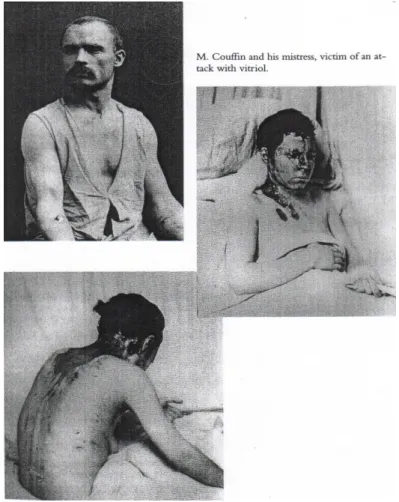
Figure Three: Mr Couffin and his mistress ... 24
x
ABBREVIATIONS AND ACRONYMS
ABC - Association of the Blind in Cambodia
AHRC - Asian Human Rights Commission
ASF - Acid Survivors Foundation Bangladesh
ASFU - Acid Survivors Foundation Uganda
ASFP - Acid Survivors Foundation Pakistan
ASTI - Acid Survivors Trust International
CASC - Cambodian Acid Survivors Charity
CSAAAW - Campaign to Stop Acid Attacks Against Women
GBV - Gender-based violence
GO - Government organisation
HRCP - Human Rights Commission of Pakistan
HRW - Human Rights Watch
ICRW -International Center for Research on Women
INGO - International non-government organisation
IRIN - Integrated Regional Information Networks
LICADHO - Cambodian League for the Promotion and Defense (sic, Fr.)
of Human Rights
LNGO - Local non-government organisation
MoWA - Ministry of Women’s Affairs
NCRB - National Crimes Records Bureau
NGO - Non-government organisation
xi PAHO - Pan America Health Organization
PAT - Project Against Torture
PSI - Population Services International
SACW - South Asia Citizens Wire
VAW - Violence against women
WHO - World Health Organization
UK - United Kingdom
UN - United Nations
UNICEF - United Nations Children's Fund
UNFPA - United Nations Population Fund
CHAPTER ONE
INTRODUCTION
Introduction to the issue of acid attack violence in Cambodia, Bangladesh and India
Acid attack violence is an act of intimate terrorism that involves the
premeditated throwing of sulphuric, nitric, or hydrochloric acid onto another person
(Cambodian League for the Promotion and Defense (sic) of Human Rights (hereafter
LICADHO), Living in the Shadows 1). It is estimated that the earliest case of acid
attack violence occurred in Cambodia in the 1960s, and since that time, the issue
has become an epidemic in this small South East Asian country. In the late 1990s
through to 2005, acid was a favoured weapon of choice for women and men looking
to disfigure rivals and settle scores. Some activists contend that at least 60 people
were attacked in one year alone. 1 Both women and men are attacked for a number
of reasons, including: sexual jealousy and extramarital affairs, land or business
disputes, domestic violence, personal or family disputes, robbery, or hate or revenge
(LICADHO, Categories of Motives 1). In many cases reasons are unclear, and the
attackers unidentified (LICADHO, Categories of Motives 1). However, so far as the
pattern of motivations for acid attacks in Cambodia is concerned, it is women
1Morrison, John, Executive Director of Acid Survivors Trust International (hereafter ASTI), Fact-finding visit to Cambodia 3rd to 9th November 2005. York: ASTI, 2005.
2
attacking other women over sexual jealousy or ‘crimes of passion’ (LICADHO,
Categories of Motives 1).
With regards to Bangladesh, recorded data suggests that the first attack in
this country occurred in 1967 and that attacks have steadily been on the rise, and
similar to Cambodia, peaked in the late 1990s and the early years of 2000 (Odhikar
and Action Aid Bangladesh 3). Attacks are on the decrease in Bangladesh with 192
attacks recorded by a non-governmental organisation (hereafter NGO) in 2007. Akin
to Cambodia, women and men are attacked with acid, however the motivations and
the sex of the perpetrators differ. Predominantly, acid throwers in Bangladesh are
men whose motivations are over land and business disputes followed by marital
disputes.
Although statistics are scarce, observers note that the incidence of acid
attacks is increasing in India, with approximately 174 known cases taking place over
the past five years (Swanson 4). Although acid attacks in other cultural contexts can
be committed against men, acid is predominantly thrown against women in India.
Motivations for attacks against women in India are: spurned love and affection,
sexual jealousy, economic or land disputes, hate or revenge (Campaign to Stop Acid
Attacks Against Women (hereafter CSAAAW) qtd. in Carney). Some of the causes
for acid attacks in all three contexts are: the easy and cheap availability of acid;
traditional perceptions of women; changing gender roles; influences from the media;
and notions of shame, loss of face and loss of honour, revenge and retribution.
However, insofar as authentically addressing these aetiologies, to date, the
3
successful. I argue that a multi-faceted approach and a heuristic device is needed
to understand root causes. Thus, this thesis aims to address this gap.
Historically, acid attacks were also widespread in France, the United Kingdom
and other parts of Europe from the 18th century onwards (Forster 6). Today, in
addition to acid attacks in Cambodia, Bangladesh and India, they are also reported
widely in other parts of South East and South Asia; the Middle East; Central and
Northern Africa; and, to a lesser extent acid attacks also occur in North America and
Europe. These attacks seldom kill but result in serious disfigurement and suffering
which confine women to their homes, thereby leading to economic hardship, social
isolation and depression (Human Rights Watch (hereafter HRW).
Purpose of the study
This study investigates the issue of acid attack violence. The purpose of this
research is to develop an increased understanding of acid attack violence through a
comparison of cases in several countries and to speculate as to why it occurs. Its
objectives are:
1. To identify and enumerate the different ways of understanding acid attack
violence including the scale and scope of the issue.
2. To explore the socio-cultural imperatives of shame, loss of face, loss of
honour and retribution to ascertain how they impinge upon this form of
violence.
3. To determine the various motivations and causes for acid attacks with
4
4. To discuss the ways in which NGOs and the community grapple with and
address this violence.
There are complex and inter-related agendas that can assist in understanding
acid attack violence. The most significant of these are from women’s rights
movements, the NGO community and government. This thesis will also explore the
ways in which these three groups explain and address the issue.
Acid attack violence is a multi-causal problem, with risk factors such as
patriarchal structures and locally specific reasons such as a loss of face or honour
and retribution that contribute to the incidence and severity of acid attack violence.
An adapted socio-ecological model is useful in understanding this interplay of
cultural, societal, situational and personal imperatives that combine to underpin and
proliferate acid attack violence in various cultural settings. This approach argues
that no one process is the sole causative or underpinning factor, and it is an intricate
network of processes together in combination, rather than in segregation, that are
the factors responsible (Bandyopadhyay and Rahman Khan 65). For example, in
this model, cultural imperatives such as traditional views towards women, along with
other processes, combine with personal level imperatives such as a potential
perpetrator’s education level to determine the likelihood of acid attack violence
(Heise 262-290; Comeau and Thampi 6; Bandyopadhyay and Rahman Khan 66;
refer to Appendix One for socio-ecological model).
This research has relevance given the diminutive quantity of research into this
issue and particularly the interface and the interplay between personal, situational,
5
Rationale for the study
My interest in this particular research area emerged whilst working along side
acid attack survivors at the Association of the Blind in Cambodia (2002-2005). In
2005 I produced an Honours thesis on acid attack violence in this country. In 2006, I
worked at the Acid Survivors Foundation in Bangladesh and during this time I visited a
burns unit and NGOs who assist acid attack survivors in India.
There are several justifications for this research. Firstly, in exploring the
literature on the extent and context of acid attack violence, the most salient feature is
the dearth of research on this issue. However, whilst various academic reports on
acid attack violence have been published from overseas (particularly from
Bangladesh and Uganda),there appears to be limited research from other cultural
settings where acid attack violence is a problem. 2 Of the many newspaper and
internet reports written on acid attack violence, most describe titillating physical
consequences of acid throwing or the background of the relationship between the
perpetrator with the survivor/victim and does not acknowledge many of the root
2 See: Rachel Forster, Baseline Survey with International Comparative Analysis of the Legal Aspects
of Acid Violence in Uganda (Kampala: Acid Survivors Foundation Uganda, 2004); Elora Chowdhury,
“Feminist Negotiations: Contesting Narratives of the Campaign Against Acid Violence in Bangladesh,” Meridians: feminism, race, transnationalism 6.1 (2005) 163; Afroza Anwary, “Acid Violence and Medical Care in Bangladesh: Women’s Activism as Carework,”Gender & Society17.2 (2003) 305-313; Anowar Ara Begum, “Acid Violence: A Burning Issue of Bangladesh - Its Medicolegal Aspects,” American Journal of Forensic Medicine & Pathology 25.4 (2004) 231-323’; Jordan Swanson, “Acid Attacks: Bangladesh’s Efforts to Stop the Violence,” Harvard Health Policy Review 3 (1); Firoz Alam Bhuiyan and Ferdushi Haque Lovely, “Acid Violence: A Burning impact on Women of Bangladesh-Case Studies,” Impacts of Global Issues on Women and Children (Dhaka 2006); Mridula
6
causes of acid attack violence nor many of the compounded complications survivors
contend with.
Methodology
Acid attack survivors are predominantly women, and as such they experience
compounded exclusion, marginalisation and persecution for a number of different
reasons. To address the gaps identified in the literature and to make the analysis
comprehensive, feminist, public health and anthropological perspectives guide this
study. An extensive multi-country literature review and a qualitative exploration of
three recent acid attack cases from Cambodia, Bangladesh and India are also
employed.
Guiding Principles / Explanations / Hypotheses
This study seeks to explore the issue of acid attack violence and to highlight
cultural, historical, societal and individual influences that underpin it. It also
extrapolates upon the findings of data collected from organisations and individuals
with the purpose of proving the following guiding principles / hypotheses:
1. That socio-cultural, situational and individual determinants contribute to acid
attack violence.
2. That motivations and causes for acid attack violence vary from location to
7
3. That shame, loss of face or loss of honour are imperatives that perpetuate
attacks and marginalise acid survivors.
Secondary guiding premises of the research will include:
That the experiences and roles of women acid attack survivors are
irrevocably changed post attack including preclusion to marriage and
employment.
That the socio-economic status of the survivor/victim pre-attack impacts upon
opportunities and access to resources post-attack.
Framework of the Thesis
This thesis comprises five chapters. Chapter One introduces the central theme
of this study: acid attack violence. It delineates the broad directions of this research
(including the purpose and rationale of this study), and introduces the academic
theory it is based upon. Chapter Two is a review of literature from many international
settings. It explores various texts, journals and reports to understand the ways in
which various societies and cultures grapples with, and perpetuates this violence.
Chapter Three offers three cases, one each from Cambodia, Bangladesh and India,
to highlight the predominant love oriented punishment for throwing acid and
experiences of survivors post-attack. Chapter Four delineates the theoretical and
methodological concepts and tools, and draws upon various inter-disciplinary fields,
particularly feminism, public health and anthropological theory. This chapter also
8
attack violence. And lastly, Chapter Five concludes the thesis and offers
recommendations for future research and the design and implementation of gender,
cultural and impairment sensitive interventions to assist acid attack survivors and
prevent further attacks.
Note on reference style
The referencing style adopted for this thesis conforms with the MLA Style
Manual, Modern Language Association of America, New York (Gibaldi). This MLA
style does not include the year in parentheses. In addition, this version permits
commentary as well as documentation of references in footnotes (Gibaldi).
Search Strategy
The information presented in this literature review master’s thesis was gathered
primarily from peer-reviewed journal articles, books, organisational project reports,
newspaper articles and Internet websites. Journal databases used included PubMed
(MEDLINE) and EBSCOhost (via NCLive). The general University of North Carolina
at Chapel Hill and Duke University catalog was also searched. Archival searches of
newspapers were conducted. Search terms in both the databases and the catalog
included various combinations of the following terms: violence against women,
gender-based violence, acid attacks, acid violence, acid baths, acid throwing, vitriol
throwing, violence, dowry, dowry deaths, Cambodia, Bangladesh, India, crime,
CHAPTER TWO
LITERATURE REVIEW
“My face suddenly felt tight and it was burning all over. The smoke emanating from my face was suffocating me. Fearing the acid would eat up my face, I ran home. My mother opened the door and went into shock to see her daughter’s face being swallowed up by acid fumes. I received third degree burns on my face, right hand and chest. My features were completely distorted, and it was difficult for my own friends to recognise me. Since my eyelids had shrunk, I couldn’t close my eyes, and this made it very difficult for me to sleep. Every night, I’d sit on my bed waiting for dawn."
Shirin Fuwaley, attacked with acid by her husband
This chapter examines the existing literature relating to acid attack violence
and identifies limitations in coverage. It then explores gender-based violence
(hereafter GBV) and acid attack violence, globally but with particular emphasis on
three Asian contexts: Cambodia, Bangladesh and India. An exploration of the
incidence and motivations for acid attack violence by geographical regions is also
discussed. The chapter concludes with a snapshot of global and local NGOs working
on the issue of acid attack violence.
Existing literature on acid attack violence
In order to understand the complex interrelated factors involved in how, why
and where acid attack violence takes place and occurs, this study also examines the
10
part on existing literature to inform this examination. The rationale for this focus is
that some policy decision makers, judges and lawyers, community leaders,
journalists, community members and others, nominate acid attack survivors as the
cause of acid attack violence, which contributes to their further marginalisation.
Since the first century AD artificially prepared liquid acid has been used to
purify gold and fabricate imitation precious metals in ancient Greece, however, acid
attacks have only been recorded in Cambodia since 1993, India since 1982 and
Bangladesh since 1967 (Stevens). Since the 1990s many medical reports have been
written about the physical impact of acid on the body particularly in Cambodia, West
Africa, Uganda and Bangladesh. 3 However, research for this thesis has revealed a
dearth of published books, reports and journal articles on the topic of acid attack
violence from an individual and socio-cultural perspective. Responding to the
paucity of available literature on this specific aspect of acid attack violence, this
literature review addresses the gaps in that literature, and in the broader literature
related to this study.
The media, medical agencies and human rights organisations working with
acid attack survivors have compiled the predominant body of work on this issue.
Media coverage needs to be treated cautiously as some tend to highlight the
3
See: A Faga, D Scevelo, M.G Messetti, and S Scevelo, “Sulphuric Acid Burned Women in Bangladesh: A Social and Medical Problem” Burns 26 (2000) 701-709; Shahidul Bari and Iqbal Choudhury, “Acid Burns in Bangladesh”, Annals of Burns and Fire Disaster 14.3 (2001); E.K Yeong, M.T Chen, R Mann, T.W Linn and L.H Engray, “Facial Mutilation After and Assault with Chemicals: 15 Cases and Literature Review”, Journal of Burn Care and Rehabilitation 18.3 (1997) 234-237; C.U Ukponmwan, “Chemical Injuries to the Eye in Benin City, Nigeria” West African Journal of Medicine 19.1 (2000) 71-76; J Pitkanen and M.M Al Qattan, “Epidemiology of Domestic Chemical Burns in Saudi Arabia” Burns 2.4 (2001) 376-378; Ph Micheau, F Lauwers, B Joly and S Bon Vath,
11
case stories or can be overly sensationalistic or simplistic. This is also relevant to
the particular contexts of acid attack violence in Cambodia, Bangladesh and India.
Gender-based violence:
1. worldwide
Manderson and Bennett explain that gender-based violence (hereafter GBV)
is endemic worldwide, cutting across age, marital status, religion, ethnicity, class,
urban or rural locations, race, sexual identity, monetary circumstance, and thus
poses human rights violations and public health concerns (1). According to Heise,
Ellsberg, and Gottemoeller “between 10% to 50% of women have experienced some
act of physical violence by an intimate partner at some point in their lives” (qtd. in
Pan America Health Organization (hereafter PAHO). The World Bank statistics
indicate that GBV is a significant cause of fatality and injury to women and girls (qtd.
in Surtees 22).
GBV is about oppression and control of women, and manifests in many different
forms. The United Nations General Assembly defines GBV as:
“...any act…[t]hat results in, or is likely to result in, physical, sexual, or psychological harm or suffering to women, including threats of such acts, coercion, or arbitrary deprivations of liberty, whether occurring in public or private life” (United Nations Population Fund (hereafter UNFPA) 2).
It includes crimes of honour, acid attack violence, child marriage, female genital
mutilation, dowry-related murder, forced abortion, forced use of contraceptives,
pre-natal sex selection female infanticide, enforced sterilisation or pregnancy, sexual
harassment, rape and sexual assault, stalking, heterosexual and same sex domestic
12
and trafficking, (Skinner et al 2; Heise, Ellsberg, and Gottemoeller qtd. in PAHO).
GBV also includes non-fatal and non-physical outcomes such as emotional and/or
financial abuse (Nosek and Howland 1).
2. in Cambodia
In Cambodia, GBV is an insidious and insistent issue. Due to the silent and
hidden nature of violence, there are no extensive statistics on how many women are
victims and survivors of violence in Cambodia (Lim 1). However, it is known that the
reporting of GBV is increasing in Cambodia with many of the most malevolent forms
of violence being committed against women (Lim 1). Much of the literature relating
to GBV in Cambodia discusses the scenario of violence from 1970 to 1991 – a
period of time that created the precarious situation many Cambodian women now
find themselves in (Sodemann 8). Numerous reports and studies of the various
manifestations of VAW in Cambodia have been completed, particularly on the issues
of domestic violence and trafficking. 4 This could be attributed to the fact that
“domestic violence is by far the most common form of gender-based violence”
(UNFPA 3). Domestic violence encompasses a broad spectrum of harmful
behaviour, from physical and sexual violence to psychological cruelty and
4
13
manipulation (Integrated Regional Information Networks (hereafter IRIN) 115).
International Center for Research on Women (hereafter ICRW) extends this
definition to include ‘control (restrictions, sanctions, surveillance) and emotional
violence. Statistics on domestic violence in Cambodia suggest that one in four
women will experience violence (Zimmerman 241), however, due to the moral codes
of behaviour for women (Chbap Srey) where women are expected to be demure and
discreet, and the culture of avoiding shame and protecting face and honour, there is
considerable under-reporting of this issue (Vogin 6; Bit 100; O’Leary and Nee 55).
Poverty and the culture of violence and aggression – systemic from the war and
subsequent occupation are some of the contributing factors to domestic violence in
Cambodia (Lim 3). Symbolic legislation was recently introduced in Cambodia: ‘Law
on the Prevention of Domestic Violence and the Protection of Victims’; this provides
guidelines and definitions of domestic violence (Lim 10).
Human trafficking in Cambodia is at epidemic proportions, so much so that “in
2005, Cambodia became officially recognised as one of the worst countries for
trafficking of women” (Lim 20). It is unclear how many women are trafficked within
and out of Cambodia, however, as an indicator, global figures estimate that between
600, 000 and 800, 000 people are trafficked each year, and the majority is for sexual
exploitation (UNFPA 4). Poverty and migration are two factors that contribute to the
susceptibility of women being trafficked internally within Cambodia and also further
afield. As Bandyopadhyay and Rahman Khan point out: “women who live in poverty
14
traffickers specifically target uneducated, impoverished women in rural villages to be
sold unwittingly into brothels or domestic work (UNFPA 4).
3. in Bangladesh
Similar to Cambodia, VAW is at endemic levels in Bangladesh. Wahed and
Bhuiya note that “domestic violence, acid throwing and burning, sexual harassment
and indecent assault, rape, kidnapping and abduction, trafficking and importation for
immoral purposes and forced prostitution” are the more widespread types of VAW
(341). Buttressing the observed popularity of domestic violence against women
globally, Bangladesh is ranked second in world for rates of domestic violence (Akter
and Ward). Schuler and colleagues note that “47 per cent of the reproductive-aged
women in rural Bangladesh were physically abused” (1729). Further, Bates and
colleagues contend that “66 per cent of the rural married women were physically
abused (slapped/pushed/hit) regularly during their married life, whereas 33 per cent
were kicked/burned/hit by sticks” (191). According to WHO’s Multi-country Study on
Women's Health and Domestic Violence against Women by Garcia Mareno and
colleagues (Bangladesh was one of the countries highlighted in the study), there are
many factors that can contribute to a woman’s vulnerability of experiencing domestic
violence. Based on a socio-ecological framework, some of these include:
Individual factors – education, financial autonomy, previous victimization,
level of empowerment and social support, and whether there was a history of violence in her family as she was growing up.
Partner factors included the male partner’s level of communication with
her, use of alcohol and drugs, employment status, whether he had witnessed violence between his parents as a child, and whether he was physically aggressive towards other men.
15
women, the extent to which extended family, neighbours, and friends intervene in domestic violence incidents, levels of male-male aggression and crime, and some measure of social capital.
Another insidious form of VAW in Bangladesh is sexual violence. The World
Health Organization (hereafter WHO) defines sexual violence as:
“any sexual act, attempt to obtain a sexual act, unwanted sexual comments or advances, or acts to traffic, or otherwise directed against a person’s sexuality using coercion by any person regardless of their relationship to the victim, in any setting, including but not limited to home and work”.
Another violent and detestable forms of sexual violence enacted in Bangladesh is
rape. Rape is a substrate of sexual violence and is “physically forced or otherwise
coerced penetration – even if slight – of the vulva or anus, using a penis, other body
part or object” (Krug 149). Rape is a horrific type of terror as the consequences of
this criminal act continue to torment the survivor. That is, women are often reluctant
to seek justice for fear of: reprisals from the perpetrator (or his family); stigmatisation
leading to possible unmarriagability; and the shame and loss of honour can be
considered more intimidating and punitive against the woman. Thus, statistics on
rape and sexual assault against women in Bangladesh are problematic at best.
WHO reports that indeed, this is a common form of VAW in Bangladesh, with 1434
cases of rape being reported in 2002, with 35 percent of these being gang rapes,
and that 10% of rapes were followed by murder (Wahed and Bhuiya 346). There are
many causal factors and social determinants for rape against women and girls in
Bangladesh. Some of these are: traditional and dominant ideas of masculinity;
perceived obligation that women and girls should engage in sexual intercourse if
they are married; men are the head of the family and thus have conjugal rights; rigid
16 child (Wahed and Bhuiya 341-349).
4. in India
To understand why the phenomenon of acid attack violence happens in India,
it is helpful to outline the basic nature of VAW in this country. Numerous reports and
studies of the various forms of VAW in India have been completed, particularly on
the issues of domestic violence and Dowry Death. 5 Statistics on domestic violence
in India suggest that 45 percent of women are slapped, kicked or beaten by their
husbands (Ministry of Women and Child Development). According to the Crime
Against Women Report by the National Crimes Records Bureau (hereafter NCRB),
in 2007, 20, 737 women reported being raped, 75, 930 women reported being
tortured and 38, 734 women reported being molested (2). However, despite these
grim statistics, due to the sheer scale of the country and other factors including
resourcing at medical centres and police stations, there is considerable
under-reporting of this issue in India. Contributing factors of domestic violence in India are
closely linked to those of acid attack violence, and include: societal stratification,
changing gender roles, insecurity, shame and loss of honour, jealousy, patriarchy,
aggression and frustration.
Dowry Death is described as a particularly menacing and distinct form of
VAW in India. According to Vimochana, dowry crimes are “motivated mainly by
5 See: Subadra Panchanadeswaran and Catherine Koverola, The Voices of Battered Women in India
17
greed, the crime is committed within the four walls of a home on an unsuspecting
wife by her own husband or his family” (qtd. in Menon). 6 It involves the pre-meditated throwing of kerosene or another solvent agent, and then the victim then
set alight. Jutla and Heimbach note that dowry is a:
“concept that arose from the fact that Indian women cannot inherit property…[and] that dowry started in ancient times as ‘varadakshina’ given in all humility by the parents of the bride to the groom voluntarily, out of love and affection and to honor him. But now, Sharma et al state that the stridhan (clothes, ornaments, utensils) given to the bride by her parents has become an integral part of the dowry and is claimed as a right by the in-laws” (165).
Dowry Death is at epidemic proportions in India, so much so that the Crimes
Against Women Report 2007 states that 8093 women were reported killed over
Dowry Death. In addition, there were 5623 complaints lodged for the breach of the
Dowry Prohibition Act 1961 in 2007. However, Rugene and Basu cite that more than
“15 000 women are killed over Dowry in India each year, most commonly by being
doused in kerosene and set ablaze” (qtd. in Jutla and Heimbach 166).
Dowry Death is a nationwide phenomenon, however it is most prevalent in the
Northern States of Uttar Pradesh, Bihar and in the Southern State of Karnataka
(NCRB, Crime in India 2006). Data is sketchy and as mentioned above in relation to
acid attack violence, there is also a dearth of reporting mechanisms and statistics on
Dowry Violence. However, one estimate suggests that in Bangalore, the capital of
Karnataka, one woman every three days is murdered or burnt (The Times of India IT
City plagued by dowry deaths). Vimochana, dispute this and cite that in Bangalore
and its surrounding areas at least three Dowry Deaths occur every day (qtd. in The
18
Times of India IT City plagued by dowry deaths). Similarly, another scholar
contends that there are 90 admissions each month to the Victoria Hospital burns
ward in Bangalore “with 90% of these women having been set on fire” (qtd. in Jutla
and Heimbach 166).
Although Dowry Death is a form of domestic violence, the primary motivations
and circumstances are economic forces, the subordinate role of women, “a lack of
human rights…[a]n absence of support services for victims, and impunity for
perpetrators” (IRIN 102). Menon notes that kerosene survivors and victims are
predominantly “young, married, and from lower, middle class or poor backgrounds”
(qtd. in Jutla and Heimbach 166). This complies with much evidence that: “women
who live in poverty are more likely to experience violence than women of higher
status” (Bandyopadhyay and Rahman Khan 65), however, others state that Dowry
Violence is practiced across all classes, castes, socio-economic and religious
backgrounds (IRIN 102). For example, Vimochana has rigorously compiled data on
the phenomenon since 1999 through the Joint House Committee on Atrocities
Against Women and have found that it is also women from the upper echelons of
society that are preyed upon by greedy in-laws and husbands (qtd. in Menon).
Some scholars speculate as to why fire and kerosene are the chosen tools for
killing women over dowry disputes. One postulation by Sharma and colleagues
contend there are religio-historical influences at play: “fire and its searing/cleansing
powers have been held in great reverence and fear in the Indian psyche” (Sharma,
19
or forcibly committed suicide by burning themselves alive) and Sita are two such
examples:
“an Indian mythological story wherein Lord Rama, after rescuing his wife Sita from the clutches of the demon King Ravana, made her publicly wlalk through fire to prove her chastity. This extended to cleansing and blessing of human bonds and relationships over it. (havens and pheras – Hindu rituals wherein the blessings of “Agni” the God of fire are sought…[E]ven Shushruta’s ancient medical treatise gave it the final sterilising/cleansing authority. From this background, setting oneself on fire may have been arrived at, as an Indian means of honourable suicide” (Sharma et al 252).
However, whilst self-immolation or setting a woman on fire are considered by
some as honourable, the mutation of these types of traditions into the modern day
burning of brides over economic greed, is a perversion of the auspiciousness of Sati.
Kerosene, most often used as the ignition fluid in Dowry Violence, is commonly
found in kitchens in India and is cheap, legal, and accessible. In cases where Dowry
Deaths are investigated, often they are classified by authorities as Dowry Accidents
whereby a stove has burst or there is a kitchen accident (Jutla and Heimbach 166).
Acid attack violence:
1. broad global definitions
Bellamy explains acid attack violence as being culturally, politically, legally,
economically-sanctioned and often homicidal violence directed at girls, women and
men, and perpetrated by both women and men who kill or seriously injure family and
community members with impunity (qtd. in Forster 9). LICADHO in Living in the
Shadows goes on to explain that acid attack violence is a brutal form of
20
onto another person, leaving them physically, socially and emotionally scarred for
life. Specifically, this violent method of retribution “melts human flesh and even
bones, causing excruciating pain and terror, and leaves the victims mutilated and
scarred for the rest of their lives” (1). Consequently, acid attack violence is an
insidious human rights issue, that is, “throwing acid is one of the worst crimes that a
person can commit” (LICADHO, Living in the Shadows 1). An outline of health
outcomes of acid attack violence are found below in Figure One:
Figure One: Health outcomes of acid attack violence
Source: adapted from Heise, Ellsberg, and Gottemoeller (18).
Fatal Outcomes
Homicide Suicide Maternal
mortality
Non-fatal Outcomes
Physical Health Injury
Functional impairment Physical symptoms Poor subjective health Permanent disability Malnutrition
Physical/sexual abuse
Chronic Conditions Chronic pain syndromes Somatic complaints
Mental Health Post-traumatic stress Depression
Anxiety
Phobias/panic disorders Eating disorders
Sexual dysfunction Low self-esteem Substance abuse Neglect
Negative Health Behaviours Physical inactivity Under-eating
Reproductive Health Miscarriage/low birth
rate Pregnancy
complications Gynaecological
disorders
Unwanted pregnancy STDs/HIV
21
Perpetrators of this act will usually use sulphuric acid, nitric acid or
hydrochloric acid – all of which are cheaply and readily available (ASF, 6th Annual
Report 7; LICADHO, Living in the Shadows 3):
“Sulphuric acid is the world's largest volume industrial chemical. It is used to manufacture explosives, other acids, dyes, glue, wood preservatives, and automobile batteries. It is used in the purification of petroleum, the pickling of metal, copper smelting, electroplating, metal work, and the production of rayon and film” (Department of Environment and Heritage).
Sulphuric acid is also used in the production or process of: cotton looming; weaving;
microphone repair; amphetamine drugs; vinegar; traditional medicine; and radio and
television repair (ASF, Report on Focus Group Discussion1; LICADHO, Living in the
Shadows 3). In many instances, acid throwers can purchase it at motorbike
mechanic shops for approximately 40 cents per litre (LICADHO, Living in the
Shadows 3). In contrast, goldsmiths, jewellers, brass makers, and informal gold
polishers use nitric acid to purify gold and metals, and perpetrators can easily
purchase this from many of the gold and jewellery shops for about $1.50 per litre
(ASF 1;LICADHO, Living in the Shadows3). Hydrochloric acid is also used in acid
attacks, this is (also) used to polish jewellery and make soy sauce, cosmetics,
traditional medicine and amphetamine drugs (LICADHO Living in the Shadows 3).
2. an historical context
Literature relating to acid stems back to ancient Greek times, where in the
first century AD, physician Dioscorides recorded that vitriol (a hybrid of sulphuric
acid) was used to purify gold and fabricate imitation precious metals. The literature
22
Persians, Arabs, and Indians from the second century AD up until late medieval
writings (Karpenko and Norris 2). Vitriol appeared in Europe during the 16th century,
and a recorded case of an acid attack occurred in 17th century France under the rule
of Louis XIV (Bodnar, Rougo, Grolleau et al 4). Many reports suggest vitriolic attacks
were in vogue during the late nineteenth century in the United Kingdom and Europe
(Guillais 149; Shapiro 79; Harris 238; Hartman 239). A ‘wave of vitriolage’ occurred,
particularly in France, where in 1879, 16 cases of vitriol attacks went before the
assize court; and from 1888 to 1890 there were 83 reported cases (Hartman 240;
Guillais 149). The rhetorical and theatrical term La Vitrioleuse was coined, and their
violent acts were widely reported in the popular press as ‘crimes of passion’,
perpetrated predominantly by women against other women, and “fuelled by jealousy,
vengeance or madness and provoked by betrayal or disappointment” (Shapiro 139).
La Vitrioleuses intentions were to disfigure the individual facial features of their
disloyal mate or female rival, therefore robbing him or her of the possibility of further
amorous or sexual activity (Harris 238). The crime of vitriolage produced
widespread cultural myths about these women’s based crimes and the “responses to
it (which) presumed that the victim had participated in creating the conditions that
inevitably spilled over into violence” (Shapiro 139). During the late 19th century
several Art Nouveau artists also popularised the image of Vitrioleuses and Grasset’s
1893, disturbing, yet beguiling, ‘La Vitrioleuse’ print is considered an Art Nouveau
masterpiece (see Figure Two below). 7
23
Figure Two: La Vitrioleuse
Source: Arwas (64-65)
Whereas sulphuric acid was used in industrial machinery factories, Shapiro
explains that vitriol was a popular household cleaner, and many Vitrioleuses
procured vitriol cheaply and easily from grocers, dispensaries and hardware dealers
(77). According to 19th century criminal writer Paul Aubry, the majority of
Vitrioleuses were poor women who chose this weapon when they believed
themselves to be economically vulnerable, with no leverage or resources (qtd. in
24
vitriol in ‘crimes of passion’, which for a short time made such crimes even more
prevalent, promoted an increase of cases where middle-class and bourgeois women
also threw acid (Aubry qtd. in Hartman 240). Commentators have also suggested
that in many cases juries often excused women's premeditated, violent acts as they
had ‘honourable motives’ in avenging their loss of love, loyalty and social position
(Harris 238: Shapiro 83). The 1885 case of Marie Couffin is testimony to this, when
in front of nearly five hundred people she attacked her husband and his mistress.
This ‘crime of passion’ was deemed less revolting than her husband’s errant ways,
and she was acquitted of the crime.
25 Image Source: Shapiro (85)
Whilst there is a plethora of information on case studies outlining the
motivations and perpetrators, little literature exists on why vitriol attacks ceased in the
United Kingdom (hereafter UK) and Europe. Possible explanations are that acid
became scarce during World War II, or that reporting of such attacks changed in light
of increased coverage of the war (Watson). Chowdhury suggests that the decline in
attacks was attributed to the strengthening of police and judicial systems (Chowdhury
163). The transformation of gender roles with women joining the war effort and
intimate relationships between men and women, could also be contributing factors to
the decrease of attacks during this time (Goldstein). Further research needs to be
conducted in understanding the history and the demise of vitriol attacks, which will
assist in understanding why attacks continue to occur, and ways to develop
interventions for the present and future.
Prevalence of and motivational trends for acid attack violence:
1. internationally
Acid attacks are not confined only to post-conflict, post-colonial, or developing
countries, but have recently been reported in many other places. Researchers and
activists typically list Bangladesh, India, Pakistan, Nepal, Cambodia, Vietnam, Laos,
Hong Kong, China, the United Kingdom, Kenya, South Africa, Uganda and Ethiopia
as countries where acid attacks occur. 8However acid attacks are more widespread
than this, and have also been reported in many other countries including: Indonesia,
8
26
Malaysia, Myanmar, Thailand, Taipei, Sri Lanka, Afghanistan, India, Iraq, Turkey,
Egypt, the Republic of Yemen, Saudi Arabia, West Bengal, Nigeria, Gabon, Italy,
France, Bulgaria, the United States of America (hereafter USA), Canada, Australia,
Argentina, Cuba, and Jamaica. 9 There are anecdotal cases of acid attacks also
occurring in other countries in Central and North Africa, the Middle East, Central
Asia and South America, although acid attacks have not been reported in the media
covering these attacks.
Additionally, “acid attacks have escalated in recent years…[a]s a novel and
insidious technology of violence against women” (Bandyopadhyay and Rahman
Khan 61). Countries that have reported increases in attacks in the last three years
include Cambodia, Pakistan and India. Possible factors contributing to the
escalating level of acid attack violence include: the ready availability of acid; that it is
a cheap weapon of choice in comparison to guns, knives or grenades; and that
corrupt police officers and weak legal systems ensure that perpetrators often avoid
justice (LICADHO, Living in the Shadows 2).
Attempting to calculate the frequency of acid attacks and the demographics of
acid attack survivors is a difficult task. Acid attacks are dynamic and relentless, and
statistics therefore need constant updating. Most statistical information pertaining to
acid attack violence is related to survivors rather than perpetrators. To design and
9 See: LICADHO, Living in the Shadows 18; Comeau and Thampi "The Physical and Psychosocial
27
implement successful acid attack prevention and other interventions, it could also be
useful to identify and collate information on acid throwers.
2. South Asia
Bangladesh
Information gleaned from prior research, internet news reports, and human
rights and medical reports, depict Bangladesh as having the world’s highest
incidence of acid attacks (Bhuiyan and Lovely 19; Rahman; Woolf). Bhuiyan and
Lovely (19) claim that “Bangladesh has the highest world-wide incidence of acid
violence and acid burns constitute 9% of total burn injuries in Bangladesh”, and
similarly, the Acid Survivors Foundation Bangladesh (ASF) state, “unfortunately
Bangladesh has the world-wide highest rate of reported acid violence cases” (6th
Annual Report7).
The first reported incident of acid attack violence in Bangladesh occurred
during the 1960s and certainly, since the early 1980s, acid attacks have been
steadily increasing: during the 1990s acid attack violence escalated, with 200 cases
reported (Chowdhury 163). The number of acid attacks peaked in 2002 when more
than 487 women, men and children were attacked (ASF,6th Annual Report5).
Motivations trends during this time were primarily rejection of sex and marriage,
marital disputes and female infanticide. However, since the implementation of
prevention strategies by the NGOs Naripokkho, United Nations Children's Fund
(hereafter UNICEF) and ASF, and the implementation of the 2002 Acid Crimes Law
28
10 Statistics compiled by the ASF show that 192 women, men and children were attacked with acid from January to December 2007 (ASF, Acid Attack Statistics). 11
Motivational trends are also shifting in Bangladesh, with 53 women being attacked
over land/property/money disputes. The category of land/property/money disputes
includes “all kinds of clashes between neighbours regarding land and property
ownership, conflicts about the use of common resources, conflicts over private loan
repayments and litigation conflicts” (ASF, 6th Annual Report10). The second most
prevalent motivation is marital disputes with 18 women being attacked (ASF,
Statistics of Acid Attack 2).
Pakistan
"A woman burnt by acid is like a living corpse. Those who commit such vengeful acts seek to sentence their victims to a plight worse than death” Uzma Saeed, a lawyer working with a women's non-government organisation in Lahore, Pakistan.
Statistics on acid attacks in Pakistan are disparate and scattered at best.
Recent data compiled by the Human Rights Commission of Pakistan (hereafter
HRCP) found that in 2007, at least 33 women were burned in acid attacks which
suggest a large decrease in attacks from previous years. In 2004, the HRCP
documented 46 acid attacks in the southern Punjab alone (qtd. in Amnesty
International). The newly established Acid Survivors Foundation Pakistan (hereafter
ASFP) has contrasting figures to the HRCP, and has listed 137 survivors who have
10 However, although the ASF touts significant decreases in acid attacks, it must be noted that kerosene attacks have skyrocketed in Bangladesh in recent years. Which then leads one to speculate that root causes of GBV are not being addressed by this organisation.
29
utilised their services in the past year. However it is the staggering estimate by the
Human Rights Watch (hereafter HRW) that cites “at least 280 women died and 750
suffered injuries in 2002 alone as a result of acid attacks” (HRW). Furthermore, the
HRCP in their State of Human Rights 2004 report state that approximately 400
women are attacked by acid each year and that 15,000 cases of acid attack violence
have been reported over the past ten years (HRCP State of Human Rights 2004
182). These staggering HCRP statistics must be viewed with caution, as they were
collected from local newspapers, and not from a wide array of informant sources. In
contrast, the statistics available for one year later in the State of Human Rights 2005
report do not necessarily correlate with the abovementioned figures, as “according
to HRCP data, seven cases (of acid attacks) were reported between November 1st
2004 and August 31st 2005” (HRCP State of Human Rights 2005 188). Other
figures collected by a local NGO, the Ansar Burney Trust, based in Karachi, estimate
“as of a few years ago…[t]hat as many as four women were seriously burnt in such
cases weekly in Pakistan” (Ansar Burney). The plight of acid attack survivors in
Pakistan has recently been highlighted in the New York Times article ‘Terrorism
That’s Personal’ by Nicholas Kristof. In this op-ed piece, he discusses the work of
the Progressive Women’s Association who have “documented 7,800 cases of
women who were deliberately burned, scalded or subjected to acid attacks, just in
the Islamabad area. In only 2 percent of those cases was anyone convicted”
(Kristof).
The motivations for acid attacks in Pakistan range from men attacking women
30
because she dishonoured him by refusing his proposal” (Ansar Burney), to religious
fundamentalists attacking unknown women “because they felt the women were too
modern and westernised; even if all the women had done is wear jeans instead of
the traditional Pakistani dress” (Ansar Burney).
Sri Lanka
Similar to Pakistan, there are no nationwide or coherent statistics available on
acid attacks in Sri Lanka, however, there are at least three known cases of public
figures being attacked or threatened by acid (Beach and Menon; Francis and
Jayasiri). One case involved the attack of investigative journalist, another the
National Democratic Party general secretary; threats were also made against the
late President Ranasinghe Premadasa (Beach and Menon). In a separate case, the
Asian Human Rights Commission (hereafter AHRC) has reported a brutal assault of
a Sri Lankan domestic worker in Saudi Arabia who had an acid soaked cloth tied to
her head, shoulders and chest in 2004 (AHRC). Indeed, with several cases of acid
attacks reported in the media, there is no doubt many other cases are unreported in
Sri Lanka; therefore this is another country within the region that needs to be flagged
for further investigation on this issue.
India
In the case of India, nationwide figures and motivational trends on acid
attacks are largely not known because of problematic reporting mechanisms, and
31
have been predominantly gleaned from grey literature: newspapers, crime and
police reports, Internet stories, and NGO publications. Several Internet stories and
reports have been compiled by the CSAAAW, which outline specific cases only in
Karnataka state with approximately 174 known cases taking place over the past five
years (Swanson 4). And whilst one article published in the National Geographic
alludes to the 'enforcement of the caste system through acid throwing' – it does not
provide rigorous findings and conclusions (O’Neill). There are numerous newspaper
stories written on acid attack violence in India, in particular, the Hindustan Times and
The Statesman, have covered the issue from the early 1990s to the present day.
Interestingly, international newspapers - The New York Times, The Guardian and
The Independent - began covering acid attack violence in India earlier than the
indigenous papers, where in 1982, the New York Times covered a story of Hindu /
Muslim conflict which involved the throwing of acid. 12 Media coverage on this issue
during the 1980s suggested that motivations for throwing acid was caused by
political unrest 13, however from 1995 onwards reported cases of acid attack
violence tended to be motivated by spurned love affairs and personal disputes.
However, despite increased media reporting on the issue, the accuracy of the
number of acid attacks needs to be contested. As Haq notes, acid attack violence is
12 However this must be viewed with caution as possibly the New York Times, The Guardian and The Independent were uploaded onto library catalogues earlier than then indigenous newspapers.
13 From 1982 through to 1995, all of the reported stories on acid attack violence in India were motivated by political unrest between rival political groups or the sparring Hindu / Muslim factions. See: The New York Times (USA publication), October 6, 1982, ‘Religious Riots in India Appear to Wane’; The New York Times (USA Publication), December 28, 1989, ‘Final India Reports 1,000 Deaths in Hindu-Muslim Fighting’; Courier Mail (Australian Publication), December 12, 1990, ‘Troops Act to Contain Indian Riots’; The Scotsman (Scottish Publication), September 13, 1995, ‘Burning issue of the mutilated women’. The first story published in an Indian newspaper was in The Statesman, July 20, 1998, ‘Chandralekha’.
32
shrouded by a ‘culture of silence’, and many acid attack survivors remain silent as
either they or their family are: ashamed of their disfigurement; blamed for their own
attack as they provoked their own assault; fear further reprisals from the
perpetrator/s; or are unaware of medical, legal or social services available (qtd. in
Chowdhury 172). Furthermore, many acid attack survivors live in rural communities
and as the processes for collecting information on acid attacks are inadequate or
unreliable, this also exacerbates silence on the issue of acid attack violence. Adding
to the complications of accurate and rigorous data collection of acid attacks are that
there are unreliable classifications of injuries as being due to either accidental
workplace acid burns or to pre-meditated acid attacks at some medical facilities, and
because not all cases of acid attacks or threats of acid attacks are reported to
authorities, medical agencies or the media. 14 Of the many Indian acid attack news
stories that appear on the Internet, many attacks seem to occur in Kashmir and
other northern states (The Statesman), and characterised as attacks against women
by their “husbands, neighbours, colleagues, former employers, (and) men they saw
on the streets everyday” (CSAAAW). In 2004, a documentary was produced on acid
attack violence entitled ‘Burnt Not Destroyed’, and in 1999 Namita Gokhale wrote
The Book of Shadows, a fictional story of an acid attack survivor. Despite the lack
of nationwide figures on the issue in India, the presence of such data on news and
Internet, in film and in novel suggests that acid attack violence has been a problem
14 However, although data collection in India (and elsewhere) can be problematic, one
non-government organization in Southern India – CSAAAW – collates and maintains data that appears to be authentic and less contaminated. Members of the CSAAAW are lawyers, doctors, activists and involved and respected in community, thus, survivors and their families are more likely to confide with staff and report cases as acid attack violence.
33
in India at least since the 1980s and possibly for longer, however without conducting
in-depth field research on the topic in India, it is difficult to confirm whether acid
attacks occurred in this country prior to this time. 15 One could speculate that most
likely they did, however locating evidence of a colonial link to this type of violence
could prove challenging, as according to Indian historian Sumathi Ramaswamy, the
likelihood of a British expatriate throwing acid or committing a public crime was not
tolerated or publicised by the ruling elite (pers. comm). Although, during the colonial
reign it is possible that acid was available in India and was used during the
production of gold and woven fabrics, and the polishing of jewellery.
However, insofar as the recent influences for the increase in acid attacks and
the ongoing public interest in this issue, Scott Carney notes that,
“a number of politicians, including the wife of the former prime minister of India, have had acid thrown at them. It is also commonplace in mob violence. Popular televised serials and films reinforce the idea by repeatedly portraying acid attacks” (Carney).
The case of Chennamma Deve Gowda, wife of former Indian Prime Minister
H.D Deve Gowda has created sustained and widespread interest in the issue. On
21 February 2001, H.D Lokesh, nephew of the former Prime Minister, brutally
attacked his aunt with acid in a temple over a family feud. The perpetrator “carried
the acid in a bucket covered with flowers and other pooja articles, which they poured
over her head as soon as she came out'' (The Times of India Judicial probe ordered
into attack on Gowda's wife). The survivor – Chennamma – sustained 40 per cent
burns on her neck, chest, back and one side of her face (The Hindu; Maramkal).
34
Speculative newspaper stories insinuated that the victim, Chennamma, had
contributed to her own attack by daring to interfere in ‘men’s business’: family
sources state that she had attempted to block financial assistance from her affluent,
powerful husband to his under-privileged siblings:
“It is an act of vengeance between the two families. One reached the top-most position in the country, the other is facing grinding poverty with six children, including two physically challenged ones'', a village elder said (The Hindu Gowda sees no need for investigation).
Her husband absolved himself of involvement in or reprisals for this violent crime:
"My view on the matter is simple. There was no need for an inquiry as the incident took place in the abode of God and he (God) himself was the witness. That being the case, what could humans say on such a thing? He did not like the idea of punishing anyone in that regard….[H]ence, I will leave everything to the will of the almighty" (The Hindu Gowda sees no need for investigation).
Similarly, the survivor did not want any legal action taken “because their arrest and
conviction is not going to change or help anything'' (The Hindu Gowda sees no need
for investigation). However, the case was taken to court, and was the first case in
the State of Karnataka to result in a conviction – 6 years of imprisonment for H.D
Lokesh.
Statistics collated for The Crimes in India Report by NCRB indicate a high
incidence of various forms of VAW in India. For example, there was a “total of 1,85,
312 incidents of crimes against women reported in the country during 2007 as
compared to 1,64, 765 during 2006, recording 12.5% increase during 2007” (NCRB
Crime in India 2007 242). Statistics are categorised into six broad classifications:
rape, kidnapping and abduction, homicide for Dowry, torture (both mental and
physical), molestation, sexual harassment/‘Eve-Teasing', and importation of girls
35
not distinguish amongst the various types of torture inflicted on women and girls,
including acid attack violence. However, if acid attacks are classified in this
category, indicators suggest that this form of violence is more prevalent than
previously thought, with a 20.3% increase in cases of torture against women and
girls, with 75, 930 cases in 2007 in comparison to 63, 128 cases reported in 2006.
The statistics on reported cases of Dowry Crimes are also worth highlighting as acid
is also frequently used in this form of violence.
As mentioned above, statistics on the incidence rate of both VAW and acid
attacks can be problematic as not all cases of acid attacks or threats of acid attacks
are reported to authorities, medical agencies or the media. Additionally, many
survivors may present their burns as 'stove burst' accidents. This means that the
incidence of acid attacks in India need to be treated cautiously, given that the data
are based solely on cases reported in the media or to NGOs, rather than on surveys
conducted in rural villages or with police, legal, medical and other social services.
3. South East Asia, East Asia and Australia
In a case mirroring the assault on the Sri Lankan domestic worker, a female
domestic worker from Indonesia was assaulted by acid in Saudi Arabia (Maedzoeki).
Additionally, in early 2006 an Indonesian acid attack survivor underwent a
groundbreaking operation to reconstruct her face with skin from her back (Nugroho).
Although the article reporting this did not explain why the patient was attacked with
acid, or whether there were other recorded acid attack survivors in Indonesia, the
36
remained unreported (Nugroho). Certainly, Monira Rahman from the ASF cites
Indonesia as one location where attacks have been reported (qtd. in Salahuddin).
However, lack of details, statistics and information generally relating to acid attacks
in Indonesia, make it difficult to ascertain the scope of the problem.
Cambodia
Similar to data on acid attack violence in other locations, Cambodia’s recent
statistics on this topic are also incoherent and challenging. In one newspaper story,
it notes that: “The Cambodian Acid Survivors Charity (hereafter CASC) and its
partner, the Children’s Surgical Centre (hereafter CSC), had provided treatment and
surgery to 114 acid burn survivors in Cambodia” (Heng). However, on the CASC
website they state that they have “provided acute burn treatment and surgery to a
total of 190 acid burn survivors. Of these, 56% were women, and 17% were children.
More than 8% were blinded and 6 acid victims died” (CASC). Older data collated by
LICADHO Notification team from local newspapers state that 11 cases of acid
attacks were reported from January to August 2005, with 19 people being injured
those cases (LICADHO, Categories of Motives).
Over the past few years, the predominant motivation identified for acid attacks
in Cambodia are women attacking other women over ‘triangle of loving/relationship
affairs’/’crimes of passion’. Wives often throw acid “against their husbands’
mistresses (Sangsar) or next wife (Proh Pun Kroay): to take revenge and destroy the
appearance of the victims so the husbands will not stay with them” (LICADHO,
37
motivational trend of ‘crimes of passion’ is slowly shifting, with nearly half of all acid
attacks now perpetrated by men (LICADHO, Statistical Acid Report). However,
client reporting to CASC depict ‘accidents’ as the leading cause of acid attacks. 16
Looking further East, recently forty-six people in Hong Kong suffered burns
when an unidentified perpetrator threw two plastic bottles filled with an unspecified
acid from a building into a crowded shopping district onto the street below. To date,
motivations for this attack remain unclear (The China Post).
With regard to mainland China, whilst there are several internet news reports
of acid attacks in that country, mystery surrounds their reporting and
under-reporting. Indeed, one case, where more than 20 school children were burned in an
act of retribution by a fellow student, suggests “the Chinese authorities, anxious to
present the country with an image of safety, sometimes hide stories and release
them days, or even weeks, later, or sometimes do not reveal them at all” (Byelo).
One report that did address motivation, dealt with a ‘crime of passion’ where a first
wife attacked a mistress and her child (Mc Carthy).
Australia
Australia is not immune to acid attack violence. In a highly publicised case
during 1907, Martha Rendell was found guilty of killing her defacto’s three children
by “by applying solutions of hydrochloric acid to their throats” (Haebich 75), and was
the last woman hanged in Western Australia on 6 October 1909 (Haebich 66). In
February 2006 the Sydney Morning Herald reported: “a 36-year old man, who can