The Feasibility of Immediate Postpartum Family Planning
(IPPFP) Services in Humanitarian Settings: A Systematic
Review
By Rebekah Daniel
A paper presented to the faculty of the University of North Carolina at Chapel Hill in partial fulfillment of the requirements
for the degree of Master of Public Health in the Department of Maternal and Child Health.
Chapel Hill, N.C.
November 20th, 2019
Approved by:
First Reader – Sandra L. Martin, PhD
Abstract
In conflict-affected countries, there is a great need to integrate immediate postpartum family planning (IPPFP) services. This is because women and girls in these humanitarian settings are oftentimes at highest risk for maternal mortality due to the unhealthy timing and spacing of pregnancies (Ho & Wheeler, 2017). Therefore, this paper explores the feasibility of integrating IPPFP services into humanitarian settings by (1) conducting a systematic review on this topic and (2) presenting forthcoming IPPFP program data from Save the Children. This information may be used to inform humanitarian workers, governments and ministries of health, and community leaders on how to successfully integrate these services and reduce maternal mortality within complex emergency settings. Following full-text review, 28 studies were selected for inclusion by meeting the following criteria: empirical research articles with intermediate to high quality of evidence, published in English between August 2014 to August 2019 with titles, abstracts or keywords that were relevant to immediate postpartum LARC insertion and reproductive health in emergency contexts. The findings suggested that IPPFP services in humanitarian settings are culturally acceptable, cost-effective, operational, safe, scalable and overall feasible.
Keywords
Purpose of This Paper
This paper plans to discuss the feasibility of IPPFP services and the use of LARCs in these services in humanitarian settings through a systematic literature review and case study example. As a result, the purposes of this paper are to (1) review the literature and discuss the existing background and implementation of IPPFP services in humanitarian settings and (2) to address gaps in evidence through a programmatic case study.
Introduction
Postpartum contraception, also known as postpartum family planning (PPFP), allows women to exercise their human right to contraceptive access so they may choose when to conceive as well as prevent unintended pregnancies if they choose not to conceive (WHO, 2018). By practicing this rights-based approach, women can also ensure the healthy timing and spacing of pregnancy (HTSP), which is a notable benefit to PPFP (ACOG, 2018). The HTSP reduces the risks of adverse maternal and perinatal outcomes by giving the mother enough time to recuperate after her delivery and providing her the capacity to take adequate care of her child. Contrarily, short-intervals between pregnancies increase the likelihood of maternal mortality, subsequent premature and low birth weight babies, congenital disorders and other birth-related complications (ACOG, 2016; Mayo Clinic, 2017). Nonetheless, the unmet need for contraception among postpartum women remain high in many resource-limited settings (MEASURE Evaluation, n.d.).
Immediate PPFP
Integrating high impact practices such as immediate postpartum contraception counseling and services into family planning (FP) programs is key in addressing gaps in unmet FP needs (JHU, n.d.). Contraceptive methods that can be performed or used immediately after childbirth (i.e. within 48 hours of delivery) are long-acting reversible contraceptives (LARCs), injectables, progestin-only pills, lactational amenorrhea and sterilization (ACOG, 2018). Two common LARC methods are intrauterine devices (IUDs) and contraceptive implants, which are largely considered safe for breastfeeding mothers and can last anywhere between three to ten years depending on the type of LARC inserted (ACOG, 2018). On the other hand, injectables require hormonal injections every three months and can result in side effects such as bone density loss among users (ACOG, 2018). Progestin-only pills and lactational amenorrhea are only effective methods if done so adherently and consistently. And finally, sterilization, also known as tubal ligation, is a permanent contraceptive method that requires highly skilled healthcare personnel and explicit service provision when implemented into practice (ACOG, 2018). Therefore, with the assumption of free and informed choice, LARCs have been shown to be a safe, effective and feasible immediate PPFP (IPPFP) intervention for the HTSP (WHO, n.d.).
IPPFP in Humanitarian Settings
Displacement, exposure to environmental toxins, persecution and gender-based violence are just some of the many tragic conditions experienced by communities in these settings. In some cases, protection of marginalized groups by a national government is not guaranteed, often culminating in human rights violations. With that said, IPPFP can negligently be viewed as low priority when providing humanitarian aid in these contexts (WHO, 2017).
Benefits of IPPFP
The immediate postpartum period has several potential benefits for LARC use since women know they are not pregnant and are motivated to avoid short-interval pregnancy (ACOG, 2018). Since the uterus is often lax during the immediate postpartum period, insertion of a LARC can be much easier and less painful after childbirth (ACOG, 2018). The discomfort related to standard LARC insertion can also be masked by the lochia, vaginal bleeding and discharge, which occurs during and shortly after childbirth (ACOG, 2018). Additional benefits to immediate postpartum LARC use are that patients are already under the care of a medical provider when giving birth so it proves to be more cost-effective and provides a level of convenience to both the patient and provider when inserted after childbirth (Washington et al., 2015; ACOG, 2016). Unfortunately, when the uterus contracts post-delivery expulsion rates for IUDs can increase (ACOG, 2018). With that said, challenges with IUD infections and expulsions can occur if not done with a skilled provider, however, the overall benefits more often than not outweigh these risks if handled with precaution (ACOG, 2018).
Unmet Need for IPPFP in Humanitarian Settings
As of 2017, at least 129 million people around the globe are in humanitarian settings, with nearly one-fourth being women and adolescent girls of reproductive age (Guttmacher Institute, 2017). The structural instability and limited resources in humanitarian settings can make it particularly difficult to obtain adequate FP services, much less IPPFP services. According to Casey et al. (2015), only 16% of sexual and reproductive health services in conflict-affected settings in Sub-Saharan Africa are able to provide comprehensive FP services (as cited in Ho & Wheeler, 2018 p. 161). And although more than 95% of postpartum women in resource-limited countries did not want another pregnancy within a year, nearly half had an unmet need for FP services (Pasha et al., 2015). These gaps in services can be problematic as it suggests high rates of unplanned pregnancies, complicated births, unsafe abortions and even higher mortality rates in humanitarian settings (Guttmacher Institute, 2017; Ho & Wheeler, 2017).
Gaps in Data and Research
While the topic of IPPFP has become an emerging interest among FP initiatives and humanitarian workers, there remain gaps in understanding its feasibility in conflict settings. The benefits of IPPFP are contingent on its effective implementation, therefore, synthesizing the information on this topic and finding examples of where it has been effectively implemented is essential on building our working knowledge around this forthcoming topic.
Methods
Review of the Literature Using the L.E.A.D. Framework
a result, this framework has been adapted into this systematic literature review to help strengthen the assessment of evidence and the rigor of the review.
Search Strategy
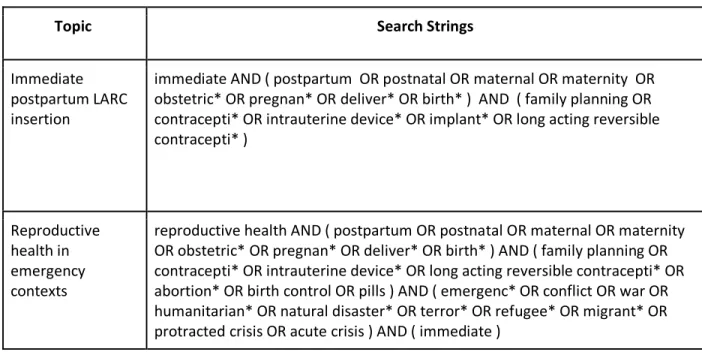
Several databases were used to search for evidence relating to IPPFP in humanitarian settings. These included PubMed, Global Health, Scopus, and Google Scholar. Each database was then searched for empirical research articles related to immediate postpartum LARC insertion and reproductive health in emergency contexts. The first search string was too broad, producing articles that were not relevant to this topic; for this reason, all 19,872 articles were not screened but narrowed down with a more comprehensive search string strategy using the second search string. The search strings for each topic are listed in Table 1.
Table 1. Search String Strategy
Topic Search Strings
Immediate postpartum LARC insertion
immediate AND ( postpartum OR postnatal OR maternal OR maternity OR obstetric* OR pregnan* OR deliver* OR birth* ) AND ( family planning OR contracepti* OR intrauterine device* OR implant* OR long acting reversible contracepti* )
Reproductive health in emergency contexts
reproductive health AND ( postpartum OR postnatal OR maternal OR maternity OR obstetric* OR pregnan* OR deliver* OR birth* ) AND ( family planning OR contracepti* OR intrauterine device* OR long acting reversible contracepti* OR abortion* OR birth control OR pills ) AND ( emergenc* OR conflict OR war OR humanitarian* OR natural disaster* OR terror* OR refugee* OR migrant* OR protracted crisis OR acute crisis ) AND ( immediate )
Screening
In the screening stage, relevant titles, abstracts and keywords were imported into the Covidencei software and read to determine if they should be reviewed for full-text screening. The inclusion criteria included empirical research articles published in English between August 2014 to August 2019 with titles, abstracts or keywords that were relevant to immediate postpartum LARC insertion and reproductive health in emergency contexts. The L.E.A.D. framework was then used to determine the standards of quality for evidence. The standards used to assess the quality of the articles were: level of evidence (found in Appendix A.), risk of bias, internal consistency, and precision. As a result, one of the inclusion criteria for the systematic review was that the evidence met intermediate to high standards for overall quality. However, due to the
i Covidence is a web-based platform that streamlines the production of systematic reviews. It is also the primary
varying nature of quantitative and qualitative evidence, the standards for overall quality assessment were less conservative for qualitative studies.
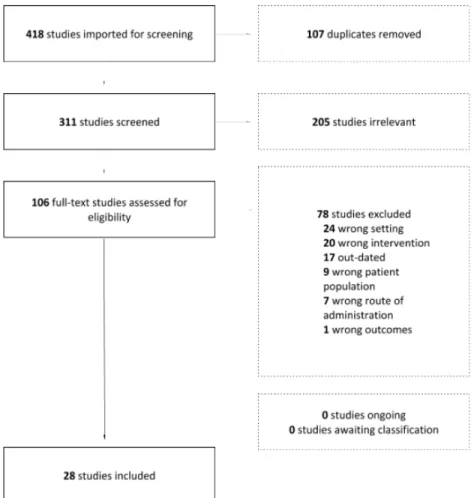
Through this screening process and the removal of duplicates, the articles were narrowed down to 106. The articles were then strategically assessed by doing a full-text screening, excluding articles that were irrelevant to humanitarian settings, deviating from PPFP interventions or outcomes, not focused on humanitarian crises that occurred within the past five years, unrelated to postpartum populations and articles not explicitly focused on the administration of LARCs. In addition, certain types of evidence reviewed may have only answered some parts of the primary research question. Thus, the primary research question was compartmentalized by reviewing the evidence through three key sub-questions adopted from the L.E.A.D. framework: (Type I Evidence) why should we do something about this topic, (Type II Evidence) what should we do about this topic, and (Type III Evidence) how do we implement this information to our topic (Kumanyika et al., 2012)? Articles that met the inclusion criteria and addressed one of these three key sub-questions were included, with the hopes that it would provide a holistic response to the primary research question (Kumanyika et al., 2012). And lastly, from this process came inductive thematic descriptors which emerged using thematic analysis on the final articles included in the L.E.A.D. Evidence Results Table found in Appendix B. These inductive thematic descriptors were then used to describe the feasibility of IPPFP in humanitarian settings.
Results
Figure 1. consists of the search string results and how the evidence were narrowed down to a final 28 articles. While there have been studies of family planning in emergency contexts and IPPFP in resource-limited settings, there is virtually no literature that explicitly discuss IPPFP services in humanitarian settings. Nevertheless, the relevant research that exists suggest that IPPFP services are a feasible intervention for the HTSP in conflict-affected countries. As summarized in Appendix B., there are several criteria used by researchers in this review that suggest that IPPFP services are a feasible option in humanitarian settings: (1) cultural acceptability, (2) cost-effectiveness, (3) operational supply chain, (4) safety and (5) scalability.
Cultural Acceptability
A qualitative assessment conducted by Ho and Wheeler (2018) takes a closer look at facilitators of FP uptake in conflict-affected areas of the DRC. Twenty-three semi-structured interviews and five focus group discussions were conducted with Congolese refugee women who used either LARCs or short-acting contraceptives (Ho & Wheeler, 2018). According to the interviews and discussion groups, the primary reasons for adopting either contraceptive method were due to personal health status, the economic burden of raising multiple children, the HTSP and being healthy enough to continue working (Ho & Wheeler, 2018). Another key finding was that women whose friends or community used contraceptives were more likely to adopt a method themselves (Ho & Wheeler, 2018). This trend also extends to Roosen et al.’s (2018) findings which portrayed Afghani refugee women as health information agents within their communities, even when the information being shared was not always accurate or consistent. With that said, while contraceptive knowledge in refugee camps are low to moderate, the overall demand and acceptability of contraceptives seems to be high (Kisindja et al., 2017).
Cost-Effectiveness
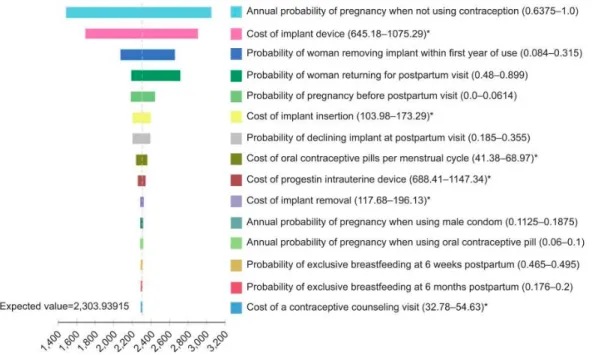
Integrating IPPFP in humanitarian settings could be a safe and viable option at increasing modern contraceptive continuation rates and decreasing the high expenditure costs associated with unintended pregnancies, as suggested in Figure 2. (Sonalkar & Kapp, 2015; Hubacher et al., 2015; Mani et al., 2018; Gariepy et al., 2015; Washington et al., 2015). According to Gariepy et al. (2015) inserting an implant immediately after birth can reduce the long-term costs associated with unintended pregnancies, subsequent high-risk pregnancies and birth complications. Since the structural barriers and undetermined migration patterns can influence access to pregnancy testing and adequate prenatal care, high-risk unintended pregnancies are more likely to occur among women in humanitarian settings (Ho & Wheeler, 2017). That said, since pregnant women in humanitarian settings are most accessible during the time of delivery, providing the option of a LARC method at the time of delivery can be an effective measure at preventing subsequent, unwanted pregnancies (Mani et al., 2018). By preventing these high-risk unintended pregnancies, patients and subsidized health facilities can expect to save $1,263 per patient (Gariepy et al., 2015). And according to Washington et al. (2015), for every 1,000 women who accepted an immediate postpartum IUD, $282,540 were saved and 10 quality-adjusted life years (QALYs) were gained. While these studies did not take place in a resource-limited or humanitarian setting, the sensitivity analysis conducted by the authors indicate that these findings should not vary based on geographical settings.
Operational Supply Chain
Safety/Risks
According to Kisindja et al. (2017), nearly 61% of abortions in DRC refugee camps were self-induced, raising concerns around FP access, unintended pregnancies and safe post-abortion care (PAC) services. Chukwumalu et al. (2017) also emphasize the importance of integrating PAC services into FP programs in conflict zones. This high demand for PAC services in refugee camps may suggest ineffective use of contraceptives in these settings. By integrating access to a full-range of FP methods and counselling, specifically with LARCs which have a higher success rate at preventing pregnancy than condoms and short-acting methods, healthcare workers can help reduce the risks associated with mishandled abortions and promote the HTSP among populations hard to reach (Bhandari et al., 2017; Tibaijuka et al., 2017). Sonalkar and Kapp (2015) also discuss the benefits of immediate insertion of LARCs and how they are safe and viable options for mothers who deliver vaginally and via cesarean section. In addition, providing formal PPFP training to medical providers and midwives can help increase skilled and safe access to IPPFP services in these resource-limited settings (Ali et al., 2017; Gedeon et al., 2015; Pfitzer et al., 2015). Additionally, another risk presented by Samari (2017) found that Syrian refugee women who experienced gender-based violence were less likely to use a modern contraceptive method. As a result, advocating for gender-affirming policies and programmatic solutions in IPPFP services in humanitarian settings could also help eliminate barriers and social harms with immediate, modern contraceptive use (Samari, 2017).
Scalability
According to Casey (2015), building mobile clinics and strengthening health centers is one approach to expanding FP services in humanitarian settings. Providing further education and cultural sensitivity trainings to medical personnel and increasing the number of female providers are also other ways to scale up IPPFP services in conflict zones in a gender-affirming way (West et al., 2017; Castleberry et al., 2019). Additionally, by clinically training midwives to perform postpartum IUD insertions, IPPFP services can be more adaptable and accessible to women in conflict settings (Yalahow et al., 2017; Muganyizi et al., 2018; Cooper & Cameron, 2018; Whitaker et al., 2014). Consequently, the conditions of refugee camps and conflict-affected settings exacerbate existing barriers to FP services (Seyife et al., 2019). As a result, humanitarian settings require unique FP service provision especially since these fragile settings have a window of opportunity to rebuild domains like their health system and FP services during their recovery and nation-building process (Palmer et al., 2016). With that said, adapting IPPFP practices from development settings can help serve as a foundation for replicating and scaling IPPFP services among nations recovering from conflict. (Curry et al., 2015).
Discussion
While the MISP has served a critical role in reproductive health access in humanitarian settings for decades, IPPFP in conflict zones has not been deemed essential nor been enforced. There is also no empirical literature that discuss the variances in feasibility of IPPFP services, if any, between acute versus protracted crises. However, over the recent years, several organizations and initiatives have attempted to address these gaps in knowledge and services in a variety of ways. Case Study: Save the Children’s IPPFP Services
settings. In acute and protracted emergencies, RHiE (1) trains and mentors frontline health providers, (2) provides commodities and manages supply chain, (3) supports community mobilization, (4) integrates reproductive health into humanitarian health responses, (5) increases staff capacity at global, regional and country levels and (6) strengthens systems, processes and policies through monitoring and evaluation. FP and PAC are two domains where the RHiE team have focused its comprehensive services. Over the recent years, the RHiE team has also recognized a demand for IPPFP in humanitarian settings and has collected indicators, created training guides and approaches to integrating IPPFP services into its comprehensive FP and PAC services. Since 2014, the DRC, Pakistan, Somalia, Syria and Yemen have been program locations to monitor and collect monthly routine data on IPPFP indicators shown in Appendix C.
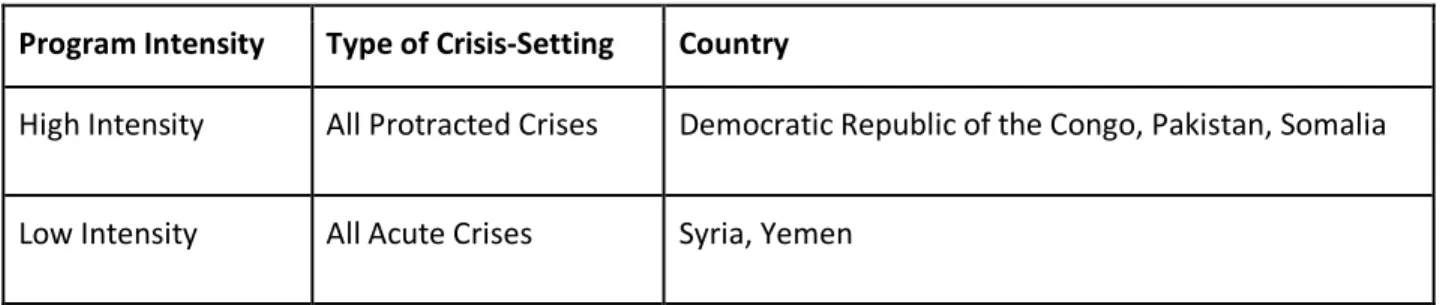
The IPPFP services have been divided by program intensity among the varying conflict-affected countries, as shown in Table 2. Countries considered high intensity are those that have collected data on the indicators listed in Appendix C., implemented routine trainings based off RHiE’s training guides and have integrated IPPFP services into their FP and PAC comprehensive services. Countries considered low intensity are those that have just begun to implement IPPFP services and collect data within the past year and a half.
Table 2. Save the Children’s 2019 IPPFP Program Intensity by Country
Program Intensity Type of Crisis-Setting Country
High Intensity All Protracted Crises Democratic Republic of the Congo, Pakistan, Somalia
Low Intensity All Acute Crises Syria, Yemen
Strengths and Limitations
Of those that accepted a LARC method immediately postpartum, most utilized its benefits for the max duration indicating that the perceived and actual risks of IPPFP methods in humanitarian settings are low. Additionally, while the prevalence of IPPFP methods are relatively low in low intensity countries, acceptors of IPPFP methods in low intensity countries are increasing significantly over time. This increase may be in part due to the growing cultural acceptance of IPPFP services in low intensity countries. Furthermore, the current status of health infrastructures among these conflict-affected countries most likely influence these country programs’ abilities to operate and scale up to high-intensive IPPFP services. For example, in Pakistan FP services are in a separate clinic from antenatal care, obstetrics and gynecology, and labor and delivery which can make it difficult to reach and train all these varying departments in IPPFP services. As a result, Pakistan has had to adjust RHiE’s IPPFP trainings and services in a different way by (1) sparing skilled obstetrics and gynecologists from work for four to six days for IPPFP trainings, (2) integrating video training sessions and (3) setting up FP corners in labor and delivery rooms at supported health facilities along with counselling material in all the maternity clinics.
On the contrary, supply shortages needed to perform IPPFP services have served as one challenge in the implementation of these programs. As a result, countries have done regular provision of instruments and commodities in procedure rooms to make sure supported facilities have the equipment needed to perform IPPFP services. It is also important to note that in all of the high intensity countries, a husband’s permission is culturally required for FP services. That being said, early discussions and counselling surrounding FP use can be critical in a women’s or girl’s decision in seeking out IPPFP services. Additionally, all of the high intensity countries are currently in a protracted crises which have likely influenced the operational supply chain and implementation of these services, unlike the low intensity countries which are in acute crisis-settings.
Conclusion and Next Steps
While there remain gaps in our understanding of the cost-effectiveness of IPPFP services in humanitarian settings and the operational supply chain for these services in acute crisis-settings, perhaps the feasibility of IPPFP services are more heavily weighted on the other thematic descriptors described in the existing literature. With that said, conducting empirical research on this topic and further evaluating current programmatic examples like Save the Children could help inform stronger IPPFP program implementation in protracted and acute crisis-settings. Therefore, by integrating IPPFP trainings, counseling and service delivery at health facilities, women, girls and families will more readily choose to adopt an IPPFP method and practice the HTSP within humanitarian settings.
Acknowledgments
References
Aburas, R., Najeeb, A., Baageel, L., & Mackey, T. K. (2018). The Syrian conflict: a case study of the challenges and acute need for medical humanitarian operations for women and children internally displaced persons. BMC medicine, 16(1), 65.
Ali, M., Miller, K., & Gómez Ponce de Leon, R. F. (2017). Family planning and Zika virus: need for renewed and cohesive efforts to ensure availability of intrauterine contraception in Latin America and the Caribbean. The European Journal of Contraception &
Reproductive Health Care, 22(2), 102-106.
American College of Obstetricians and Gynecologists (ACOG). (2016). Immediate postpartum long-acting reversible contraception. Retrieved from https://www.acog.org/Clinical-
Guidance-and-Publications/Committee-Opinions/Committee-on-Obstetric- Practice/Immediate-Postpartum-Long-Acting-Reversible-Contraception?IsMobileSet=false
ACOG. (2018). Postpartum birth control. Retrieved from
https://www.acog.org/Patients/FAQs/Postpartum-Birth-Control?IsMobileSet=false ACOG. (2018). Long-acting reversible contraception: Intrauterine device and implant. Retrieved
from https://www.acog.org/Patients/FAQs/Long-Acting-Reversible-Contraception-Intrauterine-Device-and-Implant?IsMobileSet=false
Brownson, R. C., Fielding, J. E., & Maylahn, C. M. (2009). Evidence-based public health: a fundamental concept for public health practice. Annual review of public health, 30, 175-201.
Casey, S. E. (2015). Evaluations of reproductive health programs in humanitarian settings: a systematic review. Conflict and health, 9(1), S1.
Casey SE, Chynoweth SK, Cornier N, Gallagher MC, Wheeler EE. Progress and gaps in
reproductive health services in three humanitarian settings: mixed-methods case studies. Confl Health. 2015;9(suppl 1):S3.
Castleberry, N. M., Stark, L., Schulkin, J., & Grossman, D. (2019). Implementing best practices for the provision of long-acting reversible contraception: a survey of
obstetrician-gynecologists. Contraception.
Chynoweth, S. K. (2015). Advancing reproductive health on the humanitarian agenda: the 2012-2014 global review.
Chukwumalu, K., Gallagher, M. C., Baunach, S., & Cannon, A. (2017). Uptake of postabortion care services and acceptance of postabortion contraception in Puntland, Somalia.
Reproductive health matters, 25(51), 48-57.
Cooper, M., & Cameron, S. (2018). Successful implementation of immediate postpartum
intrauterine contraception services in Edinburgh and framework for wider dissemination. International Journal of Gynecology & Obstetrics, 143, 56-61.
Curry, D. W., Rattan, J., Huang, S., & Noznesky, E. (2015). Delivering high-quality family planning services in crisis-affected settings II: results. Global Health: Science and Practice, 3(1), 25-33.
Food and Agriculture Organization of the United Nations (FAO). (2010). Countries in protracted crisis: What are they and why do they deserve special attention? Retrieved from
http://www.fao.org/3/i1683e/i1683e03.pdf
Gedeon, J., Hsue, S. N., Walsh, M., Sietstra, C., MarSan, H., & Foster, A. M. (2015). Assessing the experiences of intra-uterine device users in a long-term conflict setting: a qualitative study on the Thailand-Burma border. Conflict and health, 9(1), 6.
Guttmacher Institute. (2017). In a state of crisis: Meeting the sexual and reproductive health needs of women in humanitarian situations. Retrieved from
https://www.guttmacher.org/gpr/2017/02/state-crisis-meeting-sexual-and-reproductive-health-needs-women-humanitarian-situations
Ho, L. S., & Wheeler, E. (2018). Using Program Data to Improve Access to Family Planning and Enhance the Method Mix in Conflict-Affected Areas of the Democratic Republic of the Congo. Global Health: Science and Practice, 6(1), 161-177.
Johns Hopkins Hospital/University. (n.d.). Evidence level & quality guide. Retrieved from
https://www.hopkinsmedicine.org/evidence-based-practice/_docs/appendix_c_evidence_level_quality_guide.pdf
Johns Hopkins University (JHU). (n.d.). Family planning high impact practices. Retrieved from https://www.fphighimpactpractices.org/briefs/immediate-postpartum-family-planning/ Khan, A., & DeYoung, S. E. (2019). Maternal health services for refugee populations:
Exploration of best practices. Global public health, 14(3), 362-374.
Kisindja, R. M., Kimona, C., Etoy, M., Dorme, F., & Benfield, N. (2017). Family planning knowledge and use among women in camps for internally displaced people in the Democratic Republic of the Congo. International Journal of Gynecology & Obstetrics, 138(3), 256-260.
Kumanyika, S., Brownson, R. C., & Cheadle, A. (2012). The L.E.A.D. framework: using tools from evidence-based public health to address evidence needs for obesity
prevention. Preventing chronic disease, 9, E125. doi:10.5888/pcd9:120157
Lopez, L. M., Bernholc, A., Hubacher, D., Stuart, G., & Van Vliet, H. A. (2015). Immediate postpartum insertion of intrauterine device for contraception. Cochrane Database of Systematic Reviews, (6).
Mani, P., Prateek, S., Yadav, L., & Bansal, P. (2018). Comparative Evaluation of PPIUCD Insertion in Post Placental Vs within 48 Hours of Delivery. Indian Journal of Public Health Research & Development, 9(5), 21-26.
Mayo Clinic. (2017). Getting pregnant. Retrieved from https://www.mayoclinic.org/healthy-lifestyle/getting-pregnant/in-depth/family-planning/art-20044072
MEASURE Evaluation. (n.d.). Healthy timing and spacing of pregnancy. Retrieved from https://www.measureevaluation.org/prh/rh_indicators/family-planning/htsp/healthy-timing-and-spacing-of-pregnancies.html
Muganyizi, P. S., Kimario, G., Ponsian, P., Howard, K., Sethi, M., & Makins, A. (2018). Clinical outcomes of postpartum intrauterine devices inserted by midwives in Tanzania.
International Journal of Gynecology & Obstetrics, 143, 38-42.
Palmer, J. J., & Storeng, K. T. (2016). Building the nation's body: The contested role of abortion and family planning in post-war South Sudan. Social Science & Medicine, 168, 84-92. Pasha, O., Goudar, S. S., Patel, A., Garces, A., Esamai, F., Chomba, E., … Goldenberg, R. L.
(2015). Postpartum contraceptive use and unmet need for family planning in five low-income countries. Reproductive health, 12 Suppl 2(Suppl 2), S11. doi:10.1186/1742-4755-12-S2-S11
intrauterine device experiences from six countries. International Journal of Gynecology & Obstetrics, 130, S54-S61.
Roosen, I., & Siegel, M. (2018). Migration and its influence on the knowledge and usage of birth control methods among Afghan women who stay behind. Public health, 158, 183-197. Samari, G. (2017). Syrian refugee women's health in Lebanon, Turkey, and Jordan and
recommendations for improved practice. World medical & health policy, 9(2), 255-274. Seyife, A., Fisseha, G., Yebyo, H., Gidey, G., & Gerensea, H. (2019). Utilization of modern
contraceptives and predictors among women in Shimelba refugee camp, Northern Ethiopia. PloS one, 14(3), e0212262.
Sonalkar, S., & Kapp, N. (2015). Intrauterine device insertion in the postpartum period: a
systematic review. The European Journal of Contraception & Reproductive Health Care, 20(1), 4-18.
Tanabe, M., Myers, A., Bhandari, P., Cornier, N., Doraiswamy, S., & Krause, S. (2017). Family planning in refugee settings: findings and actions from a multi-country study. Conflict and Health, 11(1), 9.
Tibaijuka, L., Odongo, R., Welikhe, E., Mukisa, W., Kugonza, L., Busingye, I., ... & Bajunirwe, F. (2017). Factors influencing use of long-acting versus short-acting contraceptive methods among reproductive-age women in a resource-limited setting. BMC women's health, 17(1), 25.
Washington, C. I., Jamshidi, R., Thung, S. F., Nayeri, U. A., Caughey, A. B., & Werner, E. F. (2015). Timing of postpartum intrauterine device placement: a cost-effectiveness analysis. Fertility and sterility, 103(1), 131-137.
West, L., Isotta-Day, H., Ba-Break, M., & Morgan, R. (2017). Factors in use of family planning services by Syrian women in a refugee camp in Jordan. J Fam Plann Reprod Health Care, 43(2), 96-102.
Whitaker, A. K., Endres, L. K., Mistretta, S. Q., & Gilliam, M. L. (2014). Postplacental insertion of the levonorgestrel intrauterine device after cesarean delivery vs. delayed insertion: a randomized controlled trial. Contraception, 89(6), 534-539.
Women’s Refugee Commission. (2006). Minimum initial service package (MISP) for reproductive health in crisis situations. Retrieved from http://iawg.net/wp-content/uploads/2015/09/MISP2011.pdf
World Health Organization (WHO). (n.d.). HTSP 101: Everything you want to know about healthy timing and spacing of pregnancy. Retrieved from
https://www.who.int/pmnch/topics/maternal/htsp101.pdf
WHO. (2017). Improving family planning service delivery in humanitarian crises. Retrieved from https://apps.who.int/iris/bitstream/handle/10665/255864/WHO-RHR-17.13-eng.pdf;jsessionid=BADCD051EB119751B341C397DA495190?sequence=1
WHO. (2018). Postpartum family planning: essential for ensuring health of women and their babies. Retrieved from
https://www.who.int/reproductivehealth/topics/family_planning/world-contraception-day-2018/en/
Appendix A.
Types and Levels of Evidence
Level of Evidence Interpretation
A
(Evidence-Based) Meta-analyses Multiple peer-reviewed studies
One high-quality peer-reviewed study with multiple sites/settings B (Effective) One high-quality peer-reviewed study
Peer-reviewed reports and evaluations
C (Promising) State or federal government reports or datasets (without peer review) High quality program evaluations (without peer review)
Other high-quality datasets, posters, and presentations D (Emerging) Stakeholder input (without systematic collection method)
Pilot studies
Expert opinion/communications Studies or evaluations still in-progress
Unclear Evidence categorized as “unclear” is missing information, making it difficult to assess level of evidence. Not Applicable Evidence is not of a type that can be meaningfully assessed using these tools.
Appendix B.
L.E.A.D. Framework Evidence Results Table
Part A. Why should we do something about this topic? (Type I Evidence)
Source Type of
Evidence
Quality Sample
Size (n) Effect Size Confidence Intervals (CI) Outcomes/Relevant Findings
Level Risk
of Bias
Internal
Consistency Precision Overall Quality
Aburas et al. (2018)
Case study B 2 2 2 INTERM
EDIATE
N/A N/A N/A • Syrian internally displaced persons
• MCH services in high demand
• Not enough medical services, resources
or personnel
• Operational
Chynoweth
(2015) Systematic Review A 3 3 3 HIGH N/A N/A N/A • Role of IAWG in FP and its limited progress relative to the other
components of RH
• Funding and awareness have increased
significantly, and service provision has expanded • Operational Ho & Wheeler (2018) Qualitative assessment using program data
B 1 3 2 INTERM
EDIATE 23 semi-structured interviews and 5 focus groups discussion with 40 men and 5 focus groups with 38 women
N/A N/A • Congolese refugees
• Family planning was discussed with their
friends
• Support between women who use FP
• Acceptability Khan & DeYoung (2019) Qualitative in-depth interviews
C 1 2 2 INTERM
EDIATE 5 responde
nts
N/A N/A • Lack of resources in MCH services for
refugee women
• Limited funding and policies
Kisindja et
al. (2017) Cross-sectional survey study, with
descriptive statistics obtained
B 2 3 3 HIGH 155
participan ts
N/A N/A • Refugee camps
• Contraceptive knowledge was moderate,
actual usage was low, and a considerable proportion reported a history of induced abortion
• Improved efforts to increase access to
contraception
• Safety/risks
Palmer & Storeng (2016)
Ethnographic
analysis B 2 3 3 HIGH N/A N/A N/A •• South Sudan The post-conflict context provides a
valuable window into the expansion of social policy and services
• Integral part of peace- and
nation-building efforts
• Scalable
Roosen & Siegel (2018)
Population-based secondary analysis of cross-sectional data from the Afghan Mortality Survey (2010)
A 3 3 3 HIGH N= 48,190
women aged 12-49 years
N/A N/A • Pashtun and non-Pashtun migrants
• Migrants have the potential to be
health-related development agents
• Acceptability
Seyife et al.
(2019) Community-based cross-sectional study
B 2 3 3 HIGH A simple
random sample (SRS) of 329 participan ts were selected
N/A Inconvenie
nce service site: AOR = 0.089,95% CI:0.013, 0.595]
• Refugee camps
• The situations in refugee camps can
exacerbate the existing barriers to the use of contraceptives
• Safety/risks
Part B. What specifically should we do about this topic? (Type II Evidence) Ali et al.
participat
ed • Restrictions against nurses, midwives and other paramedical staff inserting IUDs varied
• Intrauterine contraception (IUC) service
provision has restricted many populations from access
• Scalable
Chukwumal u et al. (2017) Descriptive analysis on Save the Children’s program data
A 3 3 3 HIGH Total of
1,111 clients were provided postaborti on care (PAC) services The mean increase was significan t between 2013/20 14 and 2013/20 15
NO CI, but p-values were .006 and .001
• Increase in demand for LARCs
• Demand for safe PAC
• Safety/risks
Gariepy & Duffy (2015)
Cost-effective
analysis (CEA) A 3 2 2 INTERMEDIATE N/A N/A N/A • Unintended pregnancy costs outweigh cost of immediate implant insertion
• Expected to save $1,263 per patient
• Cost-effective Gedeon et al. (2015) Qualitative in-depth interviews
B 1 3 3 INTERM
EDIATE 31 women
N/A N/A • Burmese refugees
• Women’s experiences with IUDs is mainly
positive
• Acceptable
Lopez et al.
(2015) Randomized control trials (RCTs)
A 3 3 3 HIGH 30 women N/A Expulsion
by 6 months was more likely for the immediate group: (OR 4.89, 95% CI 1.47 to 16.32). IUC
• The benefit of contraception
immediately after delivery may outweigh the disadvantage of increased risk for expulsion
use at six months was more likely with immediate insertion than with standard insertion: (OR 2.04, 95% CI 1.01 to 4.09). Mani et al.
(2018) Prospective cohort study B 2 3 3 HIGH N= 200 Indian
women with 100 women in Group A (immediat e post-placental IUCD) and 100 in Group B (post-partum IUCD within 48 hours).
N/A N/A • PPIUCD is a safe method of
contraception in immediate post-placental insertion
• Safety/risks
Pfitzer et
al. (2015) Secondary analysis from DHS data
A 3 3 3 HIGH 6
countries: Ethiopia, India, Philippine s, Guinea, Rwanda, and Pakistan
N/A N/A • Effective PPFP/PPIUD integration
requires training and mentoring
Samari
(2017) Systematic review B 2 3 3 HIGH 18 reports from
national and intergover nmental publicatio ns were included
N/A N/A • Syrian refugee women
• In all settings, sexual and gender-based
violence reduced use of modern contraceptives • Safety/risks Sonalkar & Kapp (2015) Systematic
review A 3 3 3 HIGH 18 articles were
included
N/A N/A • Insertion of an intrauterine contraceptive
within the first 48 hours of vaginal or caesarean delivery is safe
• Safety/risks
Tanabe et
al. (2017) Mixed methods (ecological study design pulling household and facility surveys and in-depth interviews/foc us group discussions)
A 3 3 3 HIGH For
quantitati ve analysis, 2,733 refugee women in Banglades h, Djibouti, Jordan, Kenya, Malaysia and Uganda; number for qualitative interviews /groups are not stated.
N/A Multivariat
e results show that adolescent s were 72% more likely to experience access-related barriers (odds ratio = 0.27 6; p < .001).
• Refugee women
• Lack of knowledge about different types
of methods
• Provider bias
• Culturally competent/sensitive medical
providers • Acceptability Tibaijuka et al. (2017) Mixed-methods cross-sectional
B 2 3 3 HIGH Quantitati
ve data on 180
N/A More
urban participant
• Incorporating desired
study (focus group discussions and in-depth interviews).
clients, with 4 focus group discussion s (FDGs), and 8 in-depth interviews .
s than rural participant s correctly identified both short-acting methods and long-acting methods (74.2% vs. 35.0% (P < 0.01) for short-acting and 70.8% vs 20.0% (P < 0.001) for long-acting methods)
• Target promotion and supply of LARCs
• Increase counselling, sensitization, and education
• Scalability
Washingto n et al. (2015)
Cost-effective
analysis (CEA) A 3 3 3 HIGH 1,000 women
over a 2-year time horizon
N/A N/A • Immediate PPIUD is effective at
preventing unintended pregnancy
• immediate PP placement resulted in a
cost savings of $282,540 and a gain of 10 QALYs
• While variables will vary depending on
population, they performed univariate analyses examining each variable at its extremes. The results of these analyses demonstrate that the model is robust and there is no single variable that makes immediate placement not cost-effective compared with routine placement. The model is most sensitive to cost of pregnancy
Part C. How do we implement this information to our topic? (Type III Evidence) Casey
(2015) Systematic review A 3 3 3 HIGH 36 eligible articles/p
apers
N/A N/A • Complex settings
• Provide a full range of FP methods,
including LARCs, via mobile clinics and strengthening health center
• Scalability Castleberry et al. (2019) Quasi-Experimental study
B 2 3 3 HIGH ACOG
received 1280 responde nts after mailing out surveys to their SRS. Nineteen percent of OBGYNs offered immedia te postpart um IUD placeme nt and 21% offered immedia te postpart um implant placeme nt. (95% CI, 16.1– 21.3%) and (95% CI, 18–23%)
• A minority of ob-gyns offer either IUDs or
implants immediately postpartum
• Include continuing education of
physicians, patient education and outreach, as well as advocacy to improve insurance coverage and reimbursement
• Scalability
Cooper & Cameron (2018)
Case study B 1 2 2 INTERM
EDIATE
N/A N/A N/A • In the UK
• Ongoing investment in PPIUD training
and education will be essential to ensure a sustainable service
• Scalability
Muganyizi et al. (2018)
Prospective
cohort study B 2 3 3 HIGH 40,470 deliveries,
with 2,347 receiving PPIUD insertions
N/A N/A • In Tanzania
• PPIUD insertion by trained midwives
could be a method of administration when looking at women in conflict-settings
and 1,013 women with a PPIUD who returned for a follow-up visit. West et al.
(2017) Small-scale qualitative study
C 1 2 2 INTERM
EDIATE The sample size was determine d by the number of women who met the inclusion criteria and who agreed to be interview ed, and project resource constraint s (the exact # is not listed).
N/A N/A • A lack of female staff acted as a barrier to
FP access for Syrian refugees
• Having staff of the same gender as
service users is essential to providing culturally sensitive care and increasing FP uptake
• Training midwives to provide care and FP
services
• Scalability
Whitaker et al. (2014)
Randomized control trials (RCTs)
A 3 3 3 HIGH 42
women; 20 into the postplace ntal group
N/A Expulsion
among postplacen tal group was the only
• Postplacental insertion of an IUD is a highly effective contraception method
• Expulsion was significantly more
common in postplacental insertion though
and 22 in the delayed group
statistically significant outcome with a p-value of 0.04. Yalahow et
al. (2017) “Multi-methods study”; qualitative study including 20 key informant interviews and 7 focus group discussions (FGDs) with 48 medical providers
B 2 3 3 HIGH 48
physicians , nurses, midwives, and medical students.
N/A N/A • In conflict zones
• Reproductive health education for
medical and nursing students is
inconsistent and significant content gaps
• Students have few clinical training
opportunities and overarching challenges plaguing higher education also impact health professions’ programs
• There is currently a window of
opportunity to develop creative strategies to improve the breadth and depth of evidence-based education and training, and multi-stakeholder
engagement Curry et al.
(2015)
Ecological study using project service delivery data from 5 countries: Chad, DRC, Djibouti, Mali and Pakistan (descriptive statistics done)
A 3 3 3 HIGH N= 52,616
users from all 5 countries.
N/A N/A • Support to Ministry of Health facilities
• Competency-based trainings
• Supply chain management
• Systematic supervision
• Community mobilization to raise
awareness and shift norms related to family planning
Appendix C.
Save the Children’s IPPFP Service Delivery Indicators
Area Objective Indicators Source of Verification Timeline /
Frequency
Focus Countries
Scale up and improve quality of FP programming in focus countries to reach 207,790 new FP clients
Number of clients monthly who start a new modern method of FP, by method
FP Register, Monthly Data Collection Sheets, FP PAC Database
Monthly
Postpartum FP
Methods Number of immediate PPIUD clients disaggregated by:
1)Immediate PPIUD within 10min after delivery 2)Immediate intra cesarean IUD
3) PPIUD within 48hours and after 10min of delivery
FP Register, Monthly Data Collection Sheets, FP PAC Database
Monthly
Number of tubal ligations immediately after
delivery FP Register, Monthly Data Collection Sheets, FP PAC
Database
Monthly
Total number of deliveries at health facility FP Register, Monthly Data
Collection Sheets, FP PAC Database
Monthly
Percentage of immediate PPIUD clients out of
total deliveries FP Register, Monthly Data Collection Sheets, FP PAC
Database
Monthly
Percentage of supported facilities that provide immediate PPIUD services
Training Database, Supervision Reports, FP PAC Database
Biannually
Long-Acting Method Removal
Number of IUD removals per month, by facility
FP Register, FP PAC database, Long-Acting Method Tally Sheet
Monthly
Number of Implant removals per month, by facility
FP Register, FP PAC Database,
Long-Acting Method Tally sheet Monthly
# of clients requesting removal of IUD or implant, by duration since insertion by method (disaggregated by time passed since insertion: less than 6 weeks, 6 weeks to 6 months, 6
Long-Acting Method Tally sheet
Monthly
months-1 year, 1 year to 2 years, and 2 years and more)
# of clients requesting removal of IUD
or implant, byreason for removal, by method
Categories for reasons: Pelvic inflammatory disease, Irregular cycles/menorrhagia/heavy bleeding, amenorrhea, clients wanted to conceive, client decided to switch to a different method, husband’s unwillingness, time period completion, Other [specify reasons]
Long-Acting Method Tally sheet Monthly
FP Continuation
Number of PPIUD users who return for a follow
up visit within six weeks postpartum Long Acting Method Tally sheet Quarterly
Percentage of PPIUD users who return for 6 week follow-up visit and report real or
perceived complications, disaggregated by main complaint/complication
Categories for complications: expulsions, infections, lower abdominal pain, vaginal bleeding, other [specify reasons]
Long Acting Method Tally sheet Monthly
Number of FP Method users, by method, who are expected to return in a given month for refill (Note: short-term only)
Client Card filing system Monthly
Number of FP Method users, by method, who are expected to return and DO return in a given month for refill (Short-term method only)
Client Card filing system Monthly
Continuing Method Acceptors: Number of clients who return to facility as a re-visit to replenish supply of short-acting FP method or renew a long-term method (by method)
FP Register, Monthly Data Collection Sheets, FP PAC Database