Aligning Medical Student Curriculum with Practice Quality Goals: Impacts on Quality Metrics and Practice Capacity for Students
Journal Pre-proof
Aligning Medical Student Curriculum with Practice Quality Goals: Impacts on Quality
Metrics and Practice Capacity for Students
Amy W. Shaheen, MD, MSc1; Kelly Bossenbroek Fedoriw, MD2; Susanna Khachaturyan3; Beat Steiner, MD, MPH2; Julie Golding4; Julie S. Byerley, MD, MPH5; Gary L. Beck Dallaghan, PhD5
1
Department of Medicine, University of North Carolina School of Medicine, Chapel Hill, NC
2
Department of Family Medicine, University of North Carolina School of Medicine, Chapel Hill, NC
3
School of Public Health and Social Work, University of North Carolina, Chapel Hill, NC
4
Office of Medical Education, University of North Carolina School of Medicine, Chapel Hill, NC
5
Department of Pediatrics, University of North Carolina School of Medicine, Chapel Hill, NC Correspondence should be addressed to Amy W. Shaheen, Department of Medicine, UNC, CB#7110, 101 Manning Drive, Chapel Hill, NC 27599; Telephone 919-966-2276, e-mail: [email protected]; Twitter: @awshaheen
Word count: Abstract - 227; Manuscript – 2,476
Journal Pre-proof
Conflict Disclosure: The authors have no conflicts of interest to disclose.
Author Involvement: Each of the authors has contributed to this project and have read and approved this manuscript.
Acknowledgements: The authors wish to acknowledge the physicians and leadership at Piedmont Health Services Community Health Clinic and the University of North Carolina
Physicians Network who provided student learning opportunities, data for analysis, and logistical support. The authors would also like to acknowledge the UNC Practice Quality and Innovation group for their support of the students, physicians, and practices.
Article Type: AAIM Perspectives
Running Head: Aligning QI and Student Projects
Journal Pre-proof
Aligning Quality Priorities with Medical Student Projects: How an Innovative Curriculum
Increased Preceptor Placements
Introduction
The practice of medicine occurs primarily in the ambulatory environment1 where providers have many competing demands, including health record documentation and patient volume expectations. Subsequently, medical student education has not been a priority for providers, health systems, or community practices.2,3 Yet, accrediting and professional organizations, such as the Association of American Medical Colleges, American Academy of Family Physicians, Ambulatory Pediatric Association, Society of General Internal Medicine, and the Liaison Committee on Medical Education, recommend education in ambulatory settings.4-7
The demand for ambulatory sites has been amplified with over 30 medical schools created since 20108, expanding medical school class sizes to address physician shortages9, and competition for sites from other health professions students. This expansion resulted in a shortage of training sites, particularly with community-based preceptors.8 The Alliance for Clinical Education proposed options to address the preceptor crisis2, including increased financial remuneration, educational relative value units, employment requirements, continuing medical education or maintenance of certificate credits, and increasing time and space for teachers.2,8,10 These solutions have been only partially successful due to lack of funding, increased
Journal Pre-proof
preceptors suggested creative scheduling to maximize patient flow in clinics or working with nurses to do patient in-takes or vaccinations as options.12 Additionally, Penn State Hershey trained students as patient navigators, care transition facilitators, or quality improvement extenders.13,14
These recommendations for recruiting preceptors coincided with parallel pressures on outpatient practices to meet quality metrics. Reimbursement is increasingly tied to meeting such metrics, but practices do not have the resources to dedicate to quality improvement efforts. Incorporating medical students into quality improvement efforts could potentially transform students from a practice burden to valuable asset and improve the educational value of
ambulatory rotations. While there have been studies (e.g., UCSF microsystems clerkship15) on curriculum with the goal of directly improving care,16-21 there are few published
recommendations for systematically incorporating all medical students into ambulatory
population health efforts.2,22 There have been no published data on the impact of such intiatives on faculty recruitment.
In our large public medical school, we systematically implemented a curriculum for students intentionally emphasizing the value students bring to ambulatory practices and ambulatory practices to students. With a required population health curriculum, we sought to demonstrate that student participation in quality initiatives would make educating students more beneficial to health systems while improving student confidence in quality improvement skills. A secondary aim was that the anticipated number of practices engaged in teaching students would increase as students proved to be valued assets in achieving quality metrics.
Journal Pre-proof
Our school of medicine is a large medical school with more than 180 students per class. In March 2016, the school implemented a new clinical curriculum with a focus on longitudinal outpatient experiences. Approximately one-third of the class is based at campuses around the state with alternative curricular models, such as longitudinal integrated clerkships. This study focused on the 128 students who remain at the main campus and participated in a 16-week ambulatory course for junior medical students that replaced the family medicine, internal medicine, and pediatric block schedules. Each student was assigned two days in an adult primary care (internal medicine or family medicine) practice and one day in a general pediatric practice every week. The remaining two days per week were for lectures, electives, hospice, quality improvement, and self-directed learning.
Curriculum: A population health and quality improvement curriculum, including engagement in a quality improvement project for all 128 students at the main campus,
complemented the traditional clinical curriculum. Students completed seven web-based Institute for Healthcare Improvement (IHI) modules during the first six weeks (Table 1).23 In four interactive classroom sessions throughout the 16 weeks, students learned about social
determinants of health, variance, interprofessional teams, and gaps between best evidence and practice. Students also learned quality improvement strategies used to close quality gaps in a population and were required to try to improve a clinic metric using plan-do-study-act (PDSA) cycles.
Journal Pre-proof
required to promote discussion of practice projects with faculty. Faculty participants learned details of the student curriculum, how to choose a project for a student, and how to align student work with practice priorities. Faculty participants learned about and worked with students on driver diagrams and aim statements. We discussed types of change and sustainable changes (i.e., ones in which students worked out new processes for existing staff) versus non-sustainable changes (calling patients to come to clinic). The curriculum is now publicly available at www.med.unc.edu/teachingskills.
Practices: Practice types included university academic practices (Acad), university health system owned and affiliated practices (AP), community health centers (CHC), and private
practices (PP) with no health system financial affiliation.
Outcomes: Student self-report on measures specific to quality improvement skills and teamwork on our mid-point survey and end of medical school survey were collected. A second outcome was to determine if students aligned quality projects with institutional goals. A third outcome was final presentation of their work at a poster session. Finally, we identified the number of training sites pre- and post-implementation of this curriculum to determine if the new curriculum increased clinical placement opportunities.
The surveys were administered to students twice during medical school. After 18 months in medical school, the first survey was completed before beginning required clinical rotations so students had brief exposure to the quality improvement curriculum at this point. The second was at the end of medical school, which is approximately a year after experiencing the quality
improvement curriculum. Students responded to questions using Likert scales for each item. Clinical quality metrics were evaluated using monthly published dashboards for
Journal Pre-proof
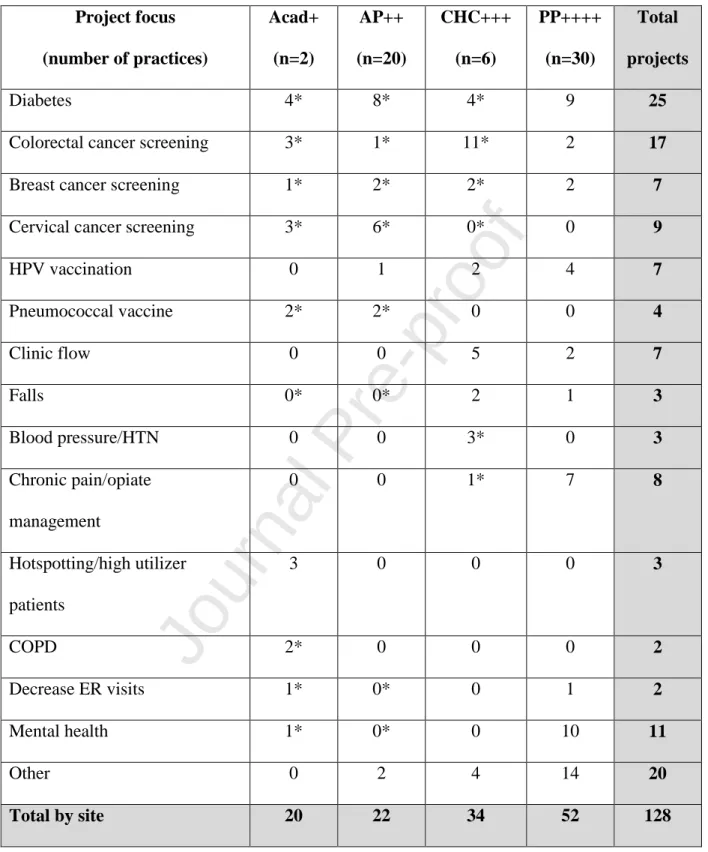
for quality improvement activities. Because we recommended to students and faculty to align student projects with priority activities, we compared dashboard metrics to metrics on which students worked. Private
practice quality dashboards were unavailable, but we were able to sort projects based on measures to get some sense for care priorities in private practices.
After the second trimester, students made posters explaining their work and outcomes. The posters were presented at a dinner during which they were able to discuss their projects. Posters were judged by preceptors, asking students to explain the project and potential next steps in the process.
The effects on practice recruitment were measured by counting the number of potential student placements in each type of site before and after curriculum reform.
Analysis: Descriptive and inferential statistics were used to compare pre- and post-results. Data was analyzed using IBM SPSS version 25.
This submission (#16-2401) was reviewed by the Office of Human Research Ethics, which determined that this submission did not constitute human subjects research as defined under federal regulations and did not require IRB approval.
Results:
One hundred and twenty-eight students completed the ambulatory course between March 2016 and February 2017. All 128 students completed all elements of the population health curriculum.
Journal Pre-proof
The anonymous mid-point survey asked “How confident are you in your current ability
to perform the following activities expected of students beginning clinical rotations including:
Using standard approaches and measures of quality improvement to enhance patient caresuch
as assessing a clinic’s adherence to national clinical practice guidelines and its measured
patient satisfaction levels?” Students rated their confidence as an average of 2.79 out of five,
with five being the most confident. A second question asked, “How familiar are you with the basic terms and concepts of quality and safety, including Plan-Do-Study-Act cycles, aim
statements, institutional reporting systems for near misses, and root cause analyses?” Student rated their familiarity as an average of 2.59 out of five, with five being the most familiar.
On the end of medical school survey, the question asked “How do you rate your ability to apply knowledge and skills of quality improvement and patient safety?” Students rated their ability as a 3.77 out of five (1=not at all; 2=minimal; 3=fair; 4=good; 5= great). Only 8.9% of students rated their skills as two or lower.
Poster sessions gave students an opportunity to display work and celebrate the impact the project had on the practice with providers and health system leaders.
Project Alignment:
Journal Pre-proof
Student Placements:
Prior to the implementation of this innovation, assigning 16 students to clinics was a challenge. With the new longitudinal curricular format and inclusion of the quality improvement requirement, the number of potential student placements increased from 16 to 64. The number of community placements increased from four to 12 and the university-affiliated practice
placements from two to 20. The number of private practice placements also increased from 10 to 30 training sites. There were a total of 75 pediatric, family medicine, and internal medicine faculty involved and the maximum placement needs per trimester was 45, leaving a net surplus of preceptors each trimester.
Discussion:
Aligning the school of medicine curriculum with health system needs so that students could meet those needs resulted in a surplus of available preceptors. Medical students have been an untapped resource for our primary care practices. Practices hosting students were able to align student projects with practice priorities. The additional help to improve care drove demand for students in practices. These findings add credibility to the recommendations for recruiting preceptors by demonstrating students add value to the practice.2,13
Journal Pre-proof
We believe that three elements were essential to our success: the increased length of the course; a more extensive population health and quality improvement curriculum that included aligning student assignments with practice needs and resources; and emphasizing student contributions during faculty development and during a poster session.
The longitudinal nature of the course improved student continuity with the practice, community, and curriculum. Students felt they were a part of the practice and held some of the responsibility for high quality care. Their unique position in the practices made them non-threatening to staff and providers. Repeatedly, students shared stories of identifying processes that were ripe for improvement. Students used these opportunities to identify where they could contribute to the practice goals for improvement and test changes over sixteen weeks.
Over the course of the year, we fine-tuned the curriculum to meet the needs of the
students and practices. The longitudinal nature of the course allowed for a curriculum to build in complexity over many weeks. It also allowed for feedback from many sources, including peers, course directors, and practice members. Preceptors received both formal curricular opportunities through faculty development and informal learning via the student presentations at their practices and the poster sessions.
Finally, emphasizing student successes in the form of student led practice meetings and across practices with faculty development sessions increased preceptor and leadership
Journal Pre-proof
that student involvement can be a net positive for both the system and students. These leaders consequently asked more practices and providers to host students. We have found that this poster symposium also serves as an opportunity for informal faculty development. All participants are required to judge posters and faculty use the judging time as an opportunity to consider next steps in projects or new projects.
While the practices supported the students in their quality efforts, the most notable indicator of practice support for the curriculum was increased numbers of student placements. This increased engagement improved our capacity to accommodate all learners for both pediatric and adult experiences. We were able to engage health system leadership, both public and
private, to encourage practices to host students. This curricular model, with the demonstrated outcomes and celebration of achievements, offers a potential solution for chronic shortages in ambulatory learning sites with which schools of medicine have been plagued.2,3
One limitation of this study is that it was a single institution with course directors skilled in quality improvement teaching and practice. However, students were able to apply classroom learning into projects. In addition, the curriculum covered only basic quality improvement skills. Most medical schools have faculty with this level of knowledge and expertise that could be implemented at other schools.
The length of the course may make this less generalizable to other medical schools. However, we had been using a similar QI curriculum in a four-week clerkship prior to the overall school curriculum reform. The longer course allowed students to do multiple plan-do-study-act cycles and potentially see greater impact. Students also began using a transitions worksheet to “pass on” advice and lessons learned to the next student.24
Journal Pre-proof
this prior knowledge when continuing the project of a previous student. A shorter course could use a transitions worksheet, as we have done.
Notably, prior efforts by the school leadership to increase capacity had not been successful. Although the length of the new curriculum may have enticed practices to engage, invitations of health systems leaders to the symposia may have also raised the profile of the school making them more likely to host students. Course directors heard from a variety of sources (imbedded coaches, practice and care managers, and health systems leaders) that this curriculum really helped the practices and they wanted students placed in as many practices as they could. Highly performing or improving practices likely reflected well on those same leaders. These leaders consequently asked more practices and providers to host students.
Journal Pre-proof
References:
1. Centers for Disease Control and Prevention. Ambulatory Care Use and Physician Office Visits. Available at: https://www.cdc.gov/nchs/fastats/physician-visits.htm Accessed June 16, 2017.
2. Christner JG, Dallaghan GB, Briscoe G, et al. The Community Preceptor Crisis: Recruiting and Retaining Community-Based Faculty to Teach Medical Students-A Shared Perspective From the Alliance for Clinical Education. Teach Learn Med. 2016;28(3):329-36.
3. Fazio SB, Chheda S, Hingle S, et al. The Challenges of Teaching Ambulatory Internal Medicine: Faculty Recruitment, Retention, and Development: An AAIM/SGIM Position Paper. Am J Med. 2017;130(1):105-10.
4. Nutter D, Whitcomb M. The AAMC project on clinical education of medical students. Available at: https://www.aamc.org/download/68522/data/clinicalskillsnutter.pdf. Accessed June 6, 2017.
5. LCME® Data Collection Instrument, for Full Accreditation Surveys in AY 2018-19 6. Baxley EG, Dearing J, Esquivel M, et al. Joint principles for the medical education of
physicians as preparation for practice in the patient-centered medical home. December 2010. Available at:
https://www.acponline.org/system/files/documents/running_practice/delivery_and_paym ent_models/pcmh/understanding/educ-joint-principles.pdf. Accessed May 25, 2017 7. Fazio SB, Demasi M, Farren E, et al. Blueprint for an Undergraduate Primary Care
Journal Pre-proof
8. Erikson C, Hamann R, Levitan T, Pankow S, Stanley J, Whatley M. Recruiting and maintaining U.S. clinical training sites: Joint report of the 2013 Multi-Discipline Clerkship/Clinical Training Site Survey. Available at: https://
members.aamc.org/eweb/upload/13-225%20WC%20Re port%202%20update.pdf . Accessed August 17, 2018.
9. IHS Markit. The Complexities of Physician Supply and Demand 2017 Update: Projections from 2015 to 2030. Prepared for the Association of American Medical Colleges. Washington, DC: Association of American Medical Colleges. Available at https://aamc-black.global.ssl.fastly.net/production/media/filer_public/a5/c3/a5c3d565-14ec-48fb-974b-99fafaeecb00/aamc_projections_update_2017.pdf. Accessed August 17, 2018.
10. Alberti H, Atkinson J. Twelve tips for the recruitment and retention of general practitioners as teachers of medical students. Med Teach. 2018;40(3):227-30. 11. The Breakthrough Series: IHI’s Collaborative Model for Achieving Breakthrough
Improvement. IHI Innovation Series white paper. Boston: Institute for Healthcare Improvement; 2003.
12. Beck Dallaghan GL, Alerte AM, Ryan MS, Patterson P, Petershack J, Christy C, et al. Enlisting Community-based Preceptor: A Multi-center Qualitative Action Study of U.S. Pediatricians. Acad Med. 2017;92(8):1168-74.
Journal Pre-proof
14. Bradham TS, Sponsler KC, Watkins SC, Ehrenfeld JM. Creating a quality improvement course for undergraduate medical education: Practice what you teach. Acad Med. 2018;e-pub ahead of print. DOI: 10.1097/ACM.0000000000002253.
15. Rosenberg M. Medical student explore healthcare delivery improvement with clinical microsystems clerkship. Available at https://medschool.ucsf.edu/features/medical-students-explore-healthcare-delivery-improvement-clinical-microsystems-clerkship. Accessed October 8, 2018.
16. Johl K, Grigsby RK. Engaging Learners in Health System Quality Improvement Efforts. Acad Med. 2017;92(5):593-7.
17. Gould BE, Grey MR, Huntington CG, et al. Improving patient care outcomes by teaching quality improvement to medical students in community-based practices. Acad Med. 2002;77(10):1011-8.
18. The Commonwealth Fund. In Focus: Quality Improvement Training for Medical Students and Residents. Available at:
http://www.commonwealthfund.org/publications/newsletters/quality-matters/2010/october-november-2010/in-focus Accessed September 6, 2017.
19. Headrick LA, Barton AJ, Ogrinc G, Strang C, Aboumatar HJ, Aud MA, et al. Results of an effort to integrate quality and safety into medical and nursing school curricula and foster joint learning. Health Aff (Millwood). 2012;31:2669–80.
Journal Pre-proof
21. Association of American Medical Colleges. Learning from Teaching. Available at: https://www.aamc.org/initiatives/cei/learning/ Accessed November 13, 2017.
22. Society of Teachers of Family Medicine. Preceptor Expansion Action Plans: Tactic 3. Available at
http://www.stfm.org/Resources/ResourcesforMedicalSchools/PreceptorExpansion/Tactic 3. Accessed October 8, 2018.
23. Institute for Healthcare Improvement. Open School. Available at:
http://www.ihi.org/education/IHIOpenSchool/Pages/default.aspx Accessed November 13, 2017.
Journal Pre-proof
Table 1. Sample Schedule for a given student week-highlighted areas show designated time
for quality improvement work (QI)
A.M.
WEEK 1
Orientation:
Session A
Adult clinic Peds clinic QI time at clinic
Adult clinic
P.M. Adult clinic p.m.
Adult clinic Peds clinic Subspecialty experience
Study time
A.M.
WEEK 2
Adult clinic Adult clinic Peds clinic QI time at clinic
Session B
P.M. Adult clinic p.m.
Adult clinic Peds clinic Subspecialty experience
Journal Pre-proof
Table 2: Population Health and Quality Improvement Curriculum over 16 weeks.
Week 1: Orientation
Session A-1.5hour
Differences in what is recommended and the actual care delivered Social determinants and impact on care delivery
Using quality improvement methods to improve the health of a population
Group activity: Make a driver diagram to improve asthma care in a clinic setting
Week 2-4: On Line IHI* Open School courses QI101-105
Developing a SMART** aim statement, driver diagram (web-based slides)
Week 3:
Session B-1 hour
Scope of the project, aligning with practice priorities What to measure
Choosing a Driver for your first PDSA*** cycle Process vs Outcomes measures
Week 5: In the
practice
Try out first PDSA*** and record results
Week 6: On Line Peer formative feedback with QIPAT+ on PDSA***; revise and change as needed
Faculty Office hours (2 hours) for assistance with QI# (Call or in-person)
IHI* Open School courses Triple Aim and Patient Family Centered Care Modules
Journal Pre-proof
Sessions involve face-to-face time with course director. Other curriculum was web-based and self-study. *IHI-Institute for Healthcare Improvement **SMART-Specific, Measureable, Actionable, Relevant, Timely ***PDSA-Plan-Do-Study-Act cycle +QIPAT-Quality Improvement Project Assessment Tool #QI-Quality Improvement
QIPAT+
Week 8: In the
practice
Perform subsequent PDSAs***
Week 9:
Session C-1 hour
Showing data and building momentum in practice presentations Social determinants of health and decreasing or increasing variance Balance measures
Week 12:
Session D-30 minutes
Sustainability and use of transitions form to pass knowledge to next student
Journal Pre-proof
Table 3: Project choice and number of students in each area
Project focus
(number of practices)
Acad+ (n=2) AP++ (n=20) CHC+++ (n=6) PP++++ (n=30) Total projects
Diabetes 4* 8* 4* 9 25
Colorectal cancer screening 3* 1* 11* 2 17
Breast cancer screening 1* 2* 2* 2 7
Cervical cancer screening 3* 6* 0* 0 9
HPV vaccination 0 1 2 4 7
Pneumococcal vaccine 2* 2* 0 0 4
Clinic flow 0 0 5 2 7
Falls 0* 0* 2 1 3
Blood pressure/HTN 0 0 3* 0 3
Chronic pain/opiate management
0 0 1* 7 8
Hotspotting/high utilizer patients
3 0 0 0 3
COPD 2* 0 0 0 2
Decrease ER visits 1* 0* 0 1 2
Mental health 1* 0* 0 10 11
Other 0 2 4 14 20
Journal Pre-proof
Journal Pre-proof
Highlights
Ambulatory preceptor recruitment is possible when students add value
Quality improvement, a value-added skill, can be taught to medical students.