Elementary Principals’ Perception of Response to Intervention (RtI) Implementation in North Carolina: An Exploratory Study
Jerry W. Buckner
A dissertation submitted to the faculty of the University of North Carolina at Chapel Hill in partial fulfillment of the requirements for the degree of Doctor of Education in the
School of Education
Chapel Hill 2013
Approved by:
Advisor: Dr. Fenwick W. English Reader: Dr. Catherine Marshall
ii
iii ABSTRACT
JERRY W. BUCKNER: Elementary Principals’ Perception of Response to Intervention (RtI) Implementation in North Carolina: An Exploratory Study
(Under the direction of Fenwick W. English)
Conceptually, Response to Intervention (RtI) is a multi-tiered problem solving process
rooted in special education yet designed as a framework for early and on-going instructional
interventions for students across a continuum of academic need. In recent years, however,
RtI has become an increasingly significant part of the discourse on school reform in the
United States. As such, RtI implementation has enormous implications for school executives,
especially those serving elementary students. However, few studies have investigated the
implementation of RtI specifically from the perspective of school principals, and even fewer
studies have considered RtI from the viewpoint of principals in North Carolina. Thus, the
purpose of this study was to examine elementary principals’ perception of RtI
implementation in North Carolina utilizing the Stages of Concern Questionnaire (SoCQ;
George, Hall, & Stiegelbauer, 2006). This exploratory study used a web-based, cross
sectional survey methodology. Stages of Concern were categorized in terms of peak and
lowest concerns for principals as a whole and for principals grouped by professional
experience, involvement with RtI, knowledge of RtI, RtI training, use of RtI practices, and
beliefs about RtI. This study also evaluated possible statistical differences in principals’
Stages of Concern for involvement in RtI and knowledge of RtI. Although principals
generally reported elevated levels of knowledge and use of RtI practices, Unconcerned
iv
In contrast, Consequence (Stage 4) emerged consistently as the lowest area of concern.
Descriptive and statistical results from this study are considered in terms of implications for
v
DEDICATION
This dissertation is dedicated to my family for all their patience, sacrifice, and constant
support.
Throughout this journey, my wife, Donna, has been an amazing and steadfast partner.
Her encouragement and sense of humor always kept life grounded and well-balanced. Donna,
I love you. And, congratulations on finishing nursing school in the middle of all this!
To my children, Nathan and Rachel, I want to say a huge “thank you.” On those many
evenings and weekends that I had to study and write, you were willing to give up time so I
could finish. Nathan, I can hardly believe you are ready to graduate high school and start
university. Rachel, I blinked and now you are getting ready to enter high school. I am so
proud of each of you and love you both!
I also want to say a special word of appreciation to my parents, Charles and Mary Anne
Buckner. While we all studied, you kept us going in so many ways. The many suppers we
enjoyed together and the many stories we shared over the last several years are priceless.
Much love to you both.
Now, it is time to bring this journey to a close and begin the next adventure. The world
vi
ACKNOWLEDGEMENTS
It is with deepest appreciation that I acknowledge the many wonderful and talented
people at The University of North Carolina-Chapel Hill who have played a part in my
journey to complete this study.
Foremost, I would like to thank my Committee Chair, Dr. Fenwick W. English, for his
practical advice, refreshing humor, and creative perspective. No matter where he was in the
world or how many projects he had going, he always took time to give me feedback and offer
direction. It has been an honor to work under his leadership.
I would also like to thank Dr. Catherine Marshall and Dr. James Veitch for serving on
my Committee. Their feedback and attention to details kept me focused during the writing
process.
Finally, I would also like to acknowledge some very supportive individuals from the
Odum Institute, specifically Drs. Cathy Zimmer, Teresa Edwards, and Chris Wiesen. Their
knowledge and experience with all things research and statistical were a tremendous help.
There are also some folks outside of UNC that I would like to acknowledge. First, I
would like to express my appreciation to Drs. Ann Allen and Winona Oliver for taking a
special interest in my research. In the early stages of this journey, their questions and
feedback regarding the connection between RtI and school leadership helped frame my
thinking.
Last but certainly not least, I want to say a special thanks to my many professional
vii
participated in this study. It is with upmost respect that I express my appreciation for the
work they do each and every day to support our students across a continuum of academic
viii
TABLE OF CONTENTS
Page
LIST OF TABLES………. xiii
LIST OF FIGURES………... xiv
I. CHAPTER 1: Introduction………... 1
Statement of the Problem………3
Purpose Statement………. 4
Line of Research……… 5
Methodology………. 5
Research Questions……… 6
Rationale for the Study………. 8
Significance of the Research………. 9
Definition of Terms………... 11
Delimitations of this Study……… 16
Limitations of this Study……… 16
Assumptions………... 17
Organization of this Dissertation………... 18
II. CHAPTER 2: Review of the Literature……….. 20
ix
Page
Response to Intervention (RtI): Key Concepts……….. 22
Response to Intervention (RtI): Key Criticisms……… 24
Legal, Historical, and Political Context of RtI……….. 26
The Evolution of Special Education Policy Leading to RtI……….. 28
The Emerging RtI Model: A Response to Flawed Educational Polices and Practices……….. 31
RtI in the Context of a National Policy Discourse……… 37
Influence of RtI on Educational Leadership………. 39
RtI Policies and Implementation in North Carolina……….. 46
Conceptual Framework………. 52
Theoretical Lens……… 56
Concern Based Adoption Model……… 56
RtI Implementation Studies Utilizing Stages of Concern……….. 59
Conclusion………. 60
III. CHAPTER 3: Methodology……….. 62
Introduction……… 62
Purpose of Study……… 62
Research Design……… 63
Design Rationale……… 64
Participant Considerations………. 67
Participants………. 67
x
Page
Risk Considerations………... 69
Compensation and Benefits………... 70
Instrumentation and Survey Design……….. 71
Stages of Concern Questionnaire (SoCQ)………. 71
Conceptual Design of the SoCQ……… 71
Validity and Reliability………. 73
Administration of the SoCQ……….. 74
Scoring of the SoCQ………. 76
Researcher Designed Questions……… 77
Data Collection Procedure………. 77
Access to Participants……… 77
Pilot Study………. 78
Data Collection: Planning, Procedures, and Timeline………... 79
Variables……… 82
Research Questions and Hypotheses………. 83
Analytical Techniques………... 85
IV. CHAPTER 4: Results and Analysis……….. 87
Organization of Chapter……… 87
Return Rate and Descriptive Data………. 88
Survey Return Rate……… 88
Descriptive Data of Participants……… 90
xi
Page
Confidence Level……….. 94
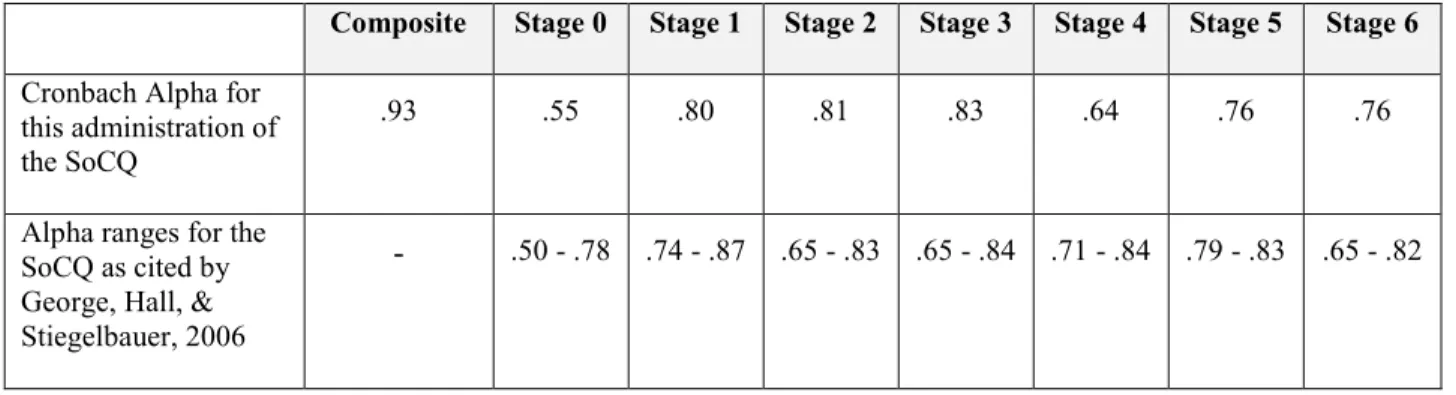
Measures of Internal Consistency………. 95
Research Questions and Results……… 96
Analytical Techniques………... 96
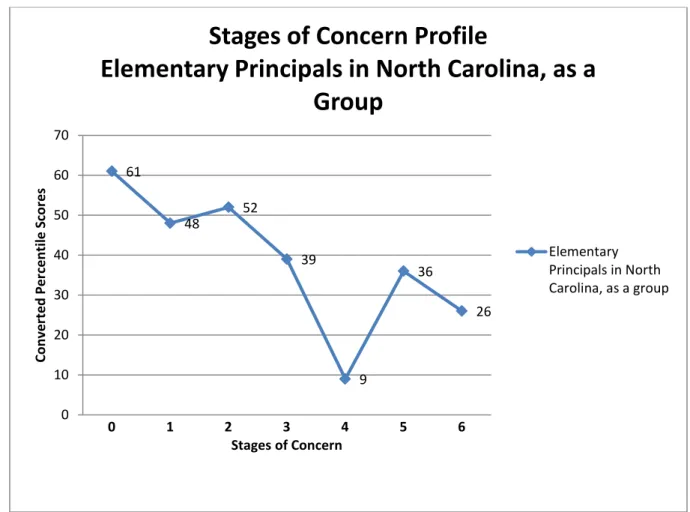
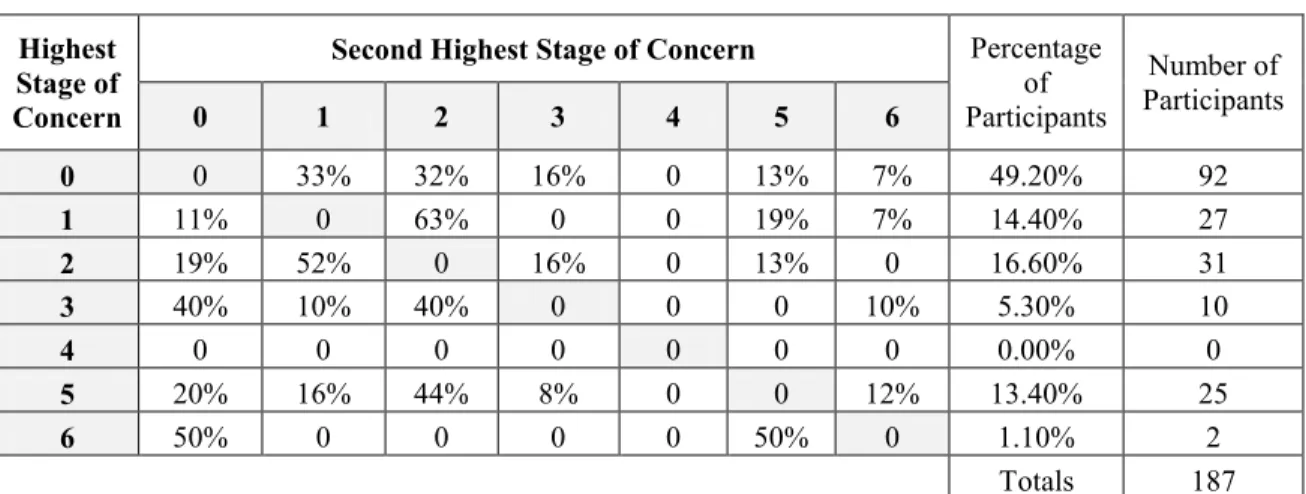
Results for Research Question 1……… 98
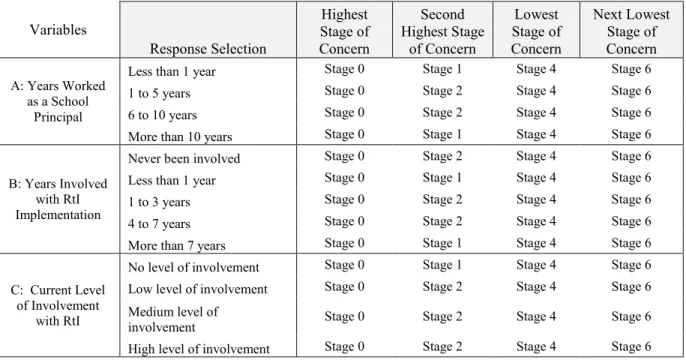
Results for Research Question 2……… 102
Results for Research Question 3……… 105
Results for Research Question 4……… 108
Summative Statement……… 110
V. CHAPTER 5: Discussion of Results……….. 112
Summary of Study………. 112
Practice and Policy Roots of the National Discourse on RtI………. 112
Unfolding the Impact of RtI on School Leadership……….. 114
RtI at the State Level………. 115
Problem and Purpose………. 116
Research Design……… 116
Discussion of Results and Implications………. 117
Research Question 1……….. 117
Research Question 2……….. 119
Research Questions 3 and 4……….. 121
Implications for Leadership Practice and School Policy……….. 122
xii
Page
Recommendations for Future Research……… 126
Recommendations for Future Policy Consideration………... 128
Conclusion………. 129
VI. APPENDICES
Appendix A: Invitation to Participate Letter and Follow-Up Letters……… 130
Appendix B: Sample of Web Based Survey of Elementary
School Principals’ Concerns Regarding RtI……… 134
Appendix C: Stages of Concern: Percentile Scores, Frequency Counts,
and Concern Profiles………... 140
xiii
LIST OF TABLES
Page
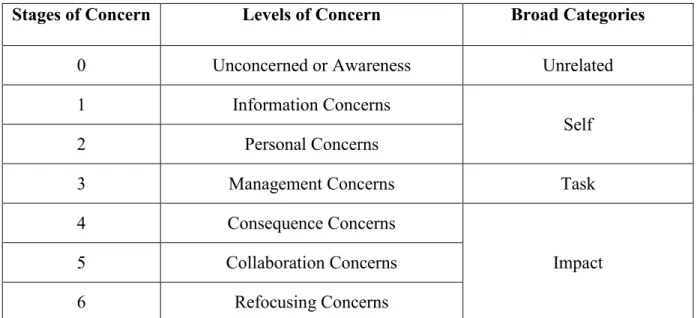
Table 2.1 Stages of Concern………. 58
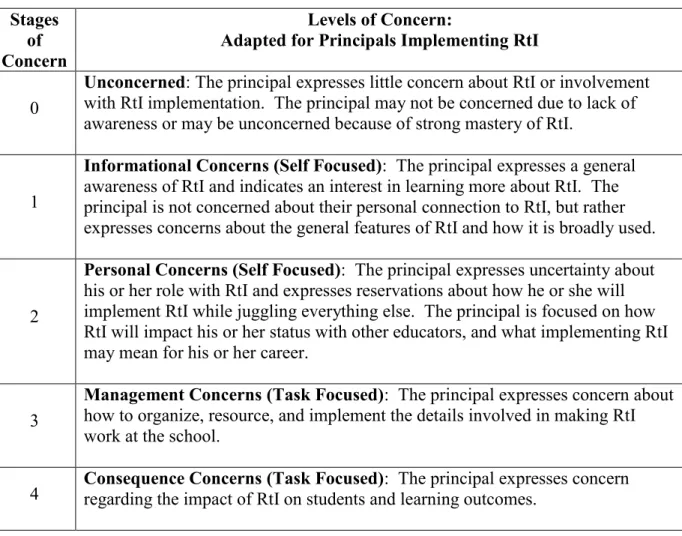
Table 3.1 Stages of Concern for Principals Implementing RtI………. 72
Table 4.1 Descriptive Data of Participants by Independent Variables………. 92
Table 4.2 Alpha Results from SoCQ Administration……….. 95
Table 4.3 Stages of Concern with Converted Percentiles and Frequency Count…………. 99
Table 4.4 Distributed Highest and Second Highest Stages of Concern……… 100
Table 4.5 Highest and Lowest Stages of Concern by Variables……….. 103
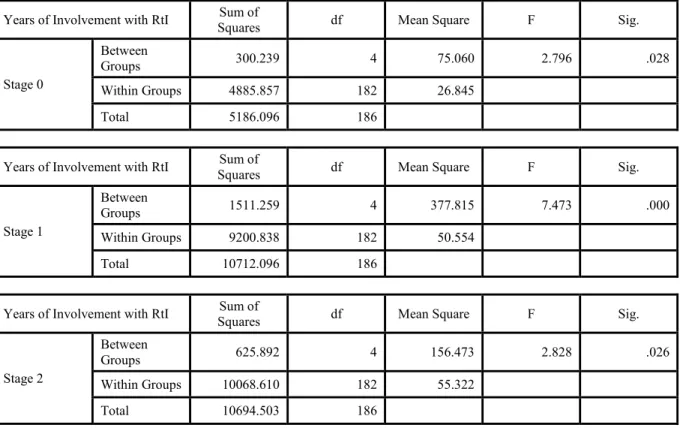
Table 4.6 Analysis of Variance for Years of Involvement with RtI……… 106
xiv
LIST OF FIGURES
Page
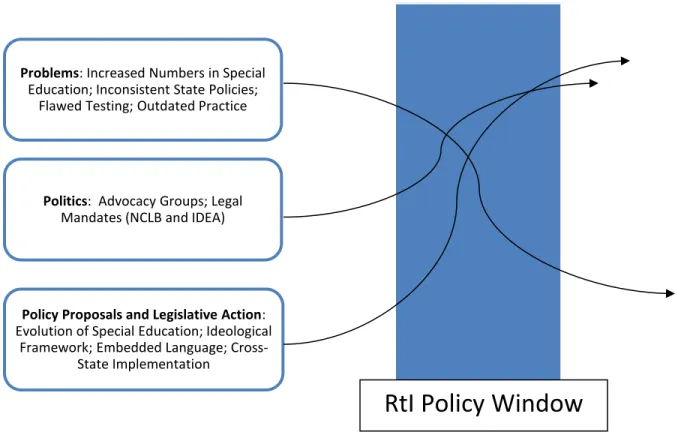
Figure 2.1 RtI Policy Streams and Policy Window……….. 27
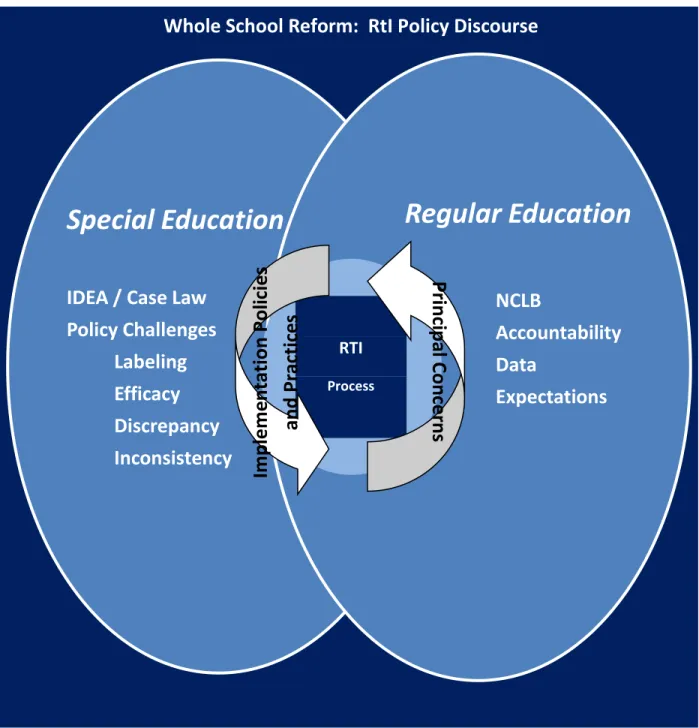
Figure 2.2 Conceptual Framework for RtI Research……… 53
Figure 4.1 Survey Return Pattern by Day………... 89
CHAPTER 1 INTRODUCTION
Since the Congressional reauthorization of the Individuals with Disabilities Education
Act (IDEA) in 2004 and, more recently, President Obama’s proposed reauthorization of No
Child Left Behind (NCLB, 2001; Reiser & Skalski, 2010), Response to Intervention (i.e., RtI)
has become part of an increasingly audible policy discourse regarding 21st century
educational reforms (Glover & DiPerna, 2007; Klotz & Nealis, 2005; Lichtenstein, 2008;
Whitelock, 2010). While there are nuanced policy distinctions between the IDEA and NCLB
mandates (Zirkel & Thomas, 2010), the prominence of RtI language within these federal
documents clearly signals a national movement toward the implementation of an RtI service
model designed to address the instructional needs of all students, including those who
struggle academically in general education and those who may need special education
services due to a learning disability.
Conceptually, Response to Intervention, or RtI, is an integrated, multi-tiered
problem-solving approach to instructional delivery that incorporates research-validated interventions
in a process designed to support student learning through universal screening, on-going
progress monitoring, and early interventions (Batsche, Elliot, Graden, Grimes, Kovaleski,
Prasse, et al., 2006; Glover & DiPerna, 2007; Hall, 2008; Hoover & Love, 2011; Reschly,
Hosp, & Schmied, 2003; Tilly, 2008; Yell, 2012). Although RtI procedures often vary from
state to state, there is relative consistency with regard to the essential elements of RtI
2
interventions are delivered in increasing intensity across three or four tiers (Batsche et al.,
2006; Hoover & Love, 2011; NCDPI, 2011). At the lowest level of intensity (i.e., Tier 1),
interventions are implemented within the core curriculum provided to all students. In
contrast, interventions implemented at Tier 3 (or Tier 4 and beyond, depending on the state)
represent the highest level of support available within the school. Students who receive
services at the highest end of the continuum may, in some, but not all cases, become eligible
for special education entitlements (Batsche et al., 2006; Buffum, Mattos, & Weber, 2010;
Byrd, 2011; VanDerHeyden, 2011). Thus, student instructional needs and carefully
measured rates of academic improvement, rather than special education labels or
psychological diagnoses, drive service delivery.
In North Carolina, RtI implementation is still in its infancy. While a growing number
of local education agencies have begun to implement elements of an RtI problem solving
model with support from the North Carolina Department of Public Instruction (NCDPI), RtI
as an alternative procedure to traditional testing for high-incident special education eligibility
or as a model for general education reform has, for the most part, been approached with
hesitancy by many North Carolina schools (Fixsen, Sims, Blasé, Bartley, Duda, Metz,
Naoom, & Van Dyke, 2011). Although North Carolina does not yet have a state-wide policy
for RtI implementation, the language of RtI already appears in the most recent North
Carolina special education regulations (NCDPI, 2010).
With regard to RtI implementation in North Carolina, three issues are particularly
salient to the context of this study. First, North Carolina is currently transitioning from a
four-tiered system of intervention to a three-tiered model (R. Garland, NCDPI Memo,
3
school improvement model, and is viewed as more congruent with the national RtI model. Second, the North Carolina Department of Public Instruction has redefined RtI as
“Responsiveness to Instruction” (rather than Response to Intervention) to reflect a statewide
priority on strong core curriculum and effective academic support for all students (NCDPI,
2011). Third, RtI is currently being framed by the NCDPI in terms of a whole-school reform
initiative to comply with mandates tied to recent state grants awarded through Race to the
Top funding (NCDPI, 2011).
Statement of the Problem
In view of the fact that RtI is a rapidly strengthening policy initiative embedded within
an active national and state-wide school reform effort, there is ample reason to believe that
multi-tiered problem-solving processes (i.e., RtI) will increasingly influence the leadership
practices of public school principals across the country, including building level executives
within North Carolina. Although some studies are now beginning to consider the broad role
of school leadership within the context of RtI implementation (e.g., Batsche et al., 2006;
Bernhardt & Herbert, 2011; Buffum, Mattos, & Weber, 2010; Duerr & Meyers, 2008; Fixen
et al., 2011; Hale et al., 2010; Hoover, Baca, Wexler-Love, & Saenz, 2008; Wright, 2010),
VanDerHeyden and Burns (2010) strongly argue that comprehensive “leadership models
within RtI are not well articulated” (p. 103). Moreover, the lack of research regarding the
fidelity of RtI implementation within the context of school leadership may well prove to be
the flaw that “shipwrecks” (Ellis, 2005 cited by VanDerHeyden & Burns, 2010) the
long-term changes needed to establish RtI sustainability. According to VanDerHeyden and Burns,
4
sound theoretical basis for RtI and decades of research supporting intervention efficacy
within the model.
The absence of this research becomes more pronounced by the fact that a search of
available databases yields no studies that specifically examine the concerns building-level
principals have regarding RtI implementation. Said differently, the human side of RtI
implementation by school executives is rarely considered by researchers, despite the fact that
change implementation is a highly personal experience and school leaders are ultimately the
ones who create the culture to sustain change. Admittedly, there are a handful of studies that
address concerns about RtI implementation; however, these are almost exclusively
dissertations featuring classroom teachers or support personnel, particularly school
psychologists. Even fewer studies have specifically addressed anything with regard to North
Carolina principals and the current state-led RtI initiative.
Ironically, the implementation of RtI at both the federal and state levels is driven
largely by a national policy discourse directed almost exclusively toward those individuals
who are held publically responsible for student outcomes and teacher performance, i.e., the
elementary school principal. Thus, the concerns elementary school principals in North
Carolina have regarding RtI implementation cannot be ignored and should not be
underestimated.
Purpose Statement
Given that RtI is rapidly becoming integrated with whole-school reform and changes in
instructional delivery, it is imperative to investigate the implementation of a Response to
Intervention (i.e., Responsiveness to Instruction; RtI) process from the perspective of school
5
principals’ perceptions of RtI implementation within North Carolina utilizing the Stages of
Concern Questionnaire (SoCQ Form 075; George, Hall, & Stiegelbauer, 2006).
Line of Research
To date, there are relatively few, if any, studies that specifically address the perception
school principals have toward RtI implementation. Current lines of research that address the
relationship between school leadership and RtI most often explore overlapping themes
focused on administrative practices that support RtI implementation (e.g., Bernhardt &
Hebert, 2011; Hoover & Love, 2011; Kurns & Tilly, 2008), RtI procedural guidelines (e.g.,
Brown-Chidsey & Steege, 2010; Hall, 2008; Wright, 2010), theoretical models (e.g., Batsche
et al., 2006; Burns & Ysseldyke, 2006; Deno, Reschley, Lembke, Magnusson, Callendaer,
Windram, & Stachel, 2009), and intervention outcomes (VanDerHeyden & Burns, 2010;
Fuchs, Fuchs, & Compton, 2010). Other lines of research have begun to emphasize RtI
implementation in terms of academic equity across the spectrum of general and special
education. For example, a study by Artiles, Bal, and King Thorius (2010) frames RtI
leadership from the perspective of social justice and instructional resource equity.
Methodology
In this quantitative study, the Stages of Concern Questionnaire (SoCQ Form 075;
George, Hall, & Stiegelbauer, 2006) was utilized to examine principals’ concerns regarding
RtI implementation. According to Hall and Hord (2011), the SoCQ is a 35-item
questionnaire designed specifically to measure concerns associated with educational
innovations. Moreover, Hall and Hord contend the SoCQ demonstrates robust reliability
ranging from .66 to .83, along with strong alpha coefficients (i.e., .66 to.83). Nearly 30 years
6
Along with the Stages of Concern Questionnaire, this researcher administered 12
additional items created to test the hypotheses articulated in this study. Elementary school
principals will be asked questions about their professional experience and involvement with
RtI implementation, their knowledge of RtI, their use of RtI practices within the school, their
beliefs about RtI, and characteristics of their school population.
The cross-sectional survey methodology used for this study undergirds three closely
linked objectives. First, this study used the SoCQ to identify the composite Stages of
Concern of public elementary school principals throughout North Carolina with regard to the
implementation of RtI within their schools. Second, this study used the SoCQ to identify the
categorical differences in the Stages of Concern, as related to RtI implementation, when the
elementary principals are grouped according to: (a) years of experience as a school principal;
(b) years of involvement with RtI implementation; (c) levels of knowledge of RtI; (d) hours
of RtI training; (e) use of RtI practices; and (f) beliefs about RtI. Third, this study
statistically evaluated possible differences in elementary principals’ Stages of Concern when
grouped by select items associated with involvement in RtI and knowledge of RtI.
Research Questions
This research will utilize the Stages of Concern Questionnaire (SoCQ Form 075;
George, Hall, & Stiegelbauer, 2006) to address four pivotal questions regarding elementary
principals’ perception of RtI implementation in North Carolina public schools:
Research Question #1: What Stages of Concern, as measured by the SoCQ, are collectively rated the highest and lowest by elementary principals in North Carolina with
7
Hypothesis #1a: Because RtI is a relatively recent innovation for North Carolina (i.e., introduced in approximately 2004), it is hypothesized that, as a group, elementary principals
in North Carolina will rate Informational (Stage 1) and Personal (Stage 2) as the two highest
Stages of Concern.
Hypothesis #1b: It is also hypothesized that, as a group, elementary principals in North Carolina will rate Collaboration (Stage 5) and Refocusing (Stage 6) as the two lowest stages
of concern.
Research Question #2: Are there categorical differences in peak Stages of Concern, as related to RtI implementation, for North Carolina elementary principals when grouped by: (a)
years of experience as a school principal; (b) years of involvement with RtI implementation;
(c) levels of knowledge of RtI; (d) hours of RtI training; (e) use of RtI practices; and (f)
beliefs about RtI?
Hypothesis #2: Given that response to innovation is a complex personal and affective process, it is hypothesized that there will be categorical differences in peak Stages of
Concern, as related to RtI implementation, for North Carolina elementary principals when
grouped by: (a) years of experience as a school principal; (b) years of involvement with RtI
implementation; (c) levels of knowledge of RtI; (d) hours of RtI training; (e) use of RtI
practices; and (f) beliefs about RtI.
Research Question #3: Are there statistically significant differences in the Stages of Concern for North Carolina elementary principals when compared in terms of years of
8
Hypothesis #3: There will be statistically significant differences in the Stages of Concern for North Carolina elementary principals when compared in terms of years of
involvement with RtI implementation.
Research Question #4: Are there statistically significant differences in the Stages of Concern for North Carolina elementary principals when compared in terms of perceived level
of knowledge of RtI?
Hypothesis #4: There will be statistically significant differences in the Stages of
Concern for North Carolina elementary principals when compared in terms of perceived level
of knowledge of RtI.
Rationale for the Study
Research clearly indicates that leaders play a critical role in creating conditions that
support innovation. In the context of this study, elementary school executives seeking to
implement RtI as a model for whole-school reform, represent pivotal change facilitators that
ultimately shape the learning culture of the school, including the organizational commitment
to social justice, equity in education, democratic ideals, and political empowerment for
traditionally marginalized students (Lumby & English, 2010; Marshall & Gerstl-Pepin, 2005;
Newell & Kratochwill, 2007). However, in the lived realities, implementing with fidelity the
elements associated with RtI may be difficult, particularly given the complex interaction
between the systems-level policy discourse on educational reform and the street-level
implementation of policies and procedures. Hall and Hord (2011) describe this dilemma in
terms of a “policy-to-practice continuum” (p. 14) and suggest that sustainable change only
occurs within an organization to the extent that each individual’s concerns are taken into
9
A leader cannot establish a climate for anything, change or resistance, without trafficking in the symbols, culture, emotions, fears, and aspirations of those with whom contact is made with effective communication. (p. 133)
Unfortunately, in North Carolina, limited attention has been given to the perception of
school principals regarding the implementation of RtI. Moreover, few studies have
specifically addressed principals’ concerns, as conceptualized by Hall and Hord (2011).
Nevertheless, this researcher contends that an analysis of leaders’ concerns associated with
the implementation of RtI may, in the long-term, be the best strategy to support sustained
engagement of this problem-solving process. Thus, this study utilizes major tenets from Hall
and Hord’s (2011) Concern-Based Adoption Model (CBAM) as a theoretical lens for
examining the implementation of RtI among elementary principals throughout North
Carolina.
Given that the North Carolina Department of Public Instruction is aggressively pushing
RtI adoption as part of a school reform effort, this researcher believes data from this study
will provide strategic information that can be used to: (a) guide the future design of
professional development for school leaders implementing RtI within North Carolina; (b)
support the creation of a school culture that effectively implements RtI, resulting in
long-term academic benefits for all students; (c) address the gap that the literature (e.g., Castillo &
Batsche, 2012) suggests currently exists between RtI theory and large scale implementation;
and (d) shape state and perhaps national policies regarding RtI innovation and
implementation.
Significance of the Research
While it would be professionally inaccurate to tout RtI as a panacea for everything
10
new concept, the current interest in RtI cannot be dismissed. In a political climate driven by
high-stakes accountability, global market competitiveness, persistent gaps in achievement,
and an increasingly diverse mix of learners, educational leaders have struggled to find a
viable tool to address the challenges facing public education in a manner that supports
academic excellence and instructional equity for all students.
A review of the literature (e.g., Fuchs, Fuchs, & Stecker, 2010; Glover & Diperna, 2007;
Hale, Alfonso, Berninger, Bracken, Christo, Clark, et al., 2010; Klotz, & Nealis, 2005; Reiser
& Skalski, 2010; Tilly, 2008) suggests that RtI may well be that tool. As noted earlier, RtI is
designed as a systematic process for: (a) identifying the academic needs of each student
without resorting to diagnostic labels; (b) implementing interventions early in the life of a
child; and (c) adapting instruction based on meaningful progress monitoring.
Under the support of key advocacy groups, including the National Association of
School Psychologist (NASP), the Council for Exceptional Children (CEC), and the National
Institute for Child Health and Development (NICHD), among others (Batsche et al., 2006),
RtI has emerged as part of a national discourse on whole-school reform. At the federal level,
the RtI paradigm has become embedded within No Child Left Behind (NCLB, 2001) and in
the Congressional reauthorization of the Individuals with Disabilities Education Act (IDEA,
2004) (Fuchs, Fuchs, & Stecker, 2010). Furthermore, RtI language is visible throughout
President Obama’s proposed reauthorization of the Elementary and Secondary Education Act
(ESEA; also known as NCLB) (Reiser & Skalski, 2010), and has trickled down to the state
level (Zirkel & Thomas, 2010).
In North Carolina, the Department of Public Instruction (NCDPI) has framed RtI as a
11
(NCDPI, 2011). From this perspective, research regarding RtI implementation in North
Carolina is particularly timely. However, for RtI to be an effective initiative, school leaders
must actively participate in the implementation of this process. Thus, it is imperative to
examine the concerns school leaders have toward implementing the RtI process.
It is the belief of this researcher that a study regarding the concerns of elementary
school principals in North Carolina will broaden the RtI literature base and provide a unique
framework from which to evaluate RtI efficacy as a school reform initiative and tool for
improved learning outcomes for all students.
Definition of Terms
For purposes of this research, terms associated with RtI implementation and stages of
concern have been defined in the following manner:
Elementary school in North Carolina – For purposes of this study, elementary schools will be defined as traditional public schools that serve students from pre-kindergarten or
kindergarten through 5th grade. While this may seem inherently obvious, “elementary”
schools listed by the North Carolina Department of Public Instruction (Educational Directory
and Demographical Information Exchange; EDDIE, 2012) include schools that serve any
combination of grades or students up through high school (i.e., 9th grade). To ensure greater
consistency during data collection and to strengthen the validity of results, the following
schools or student arrangements were not included in this study: hospital schools, combined
schools (e.g., 5th through 8th grades), schools with only select grade levels (e.g., 3rd through
5th), schools with modified schedules (e.g., nontraditional calendar), and schools with
12
schools designed for students with specific disabilities, etc.). Additionally, charter schools
and schools associated with the Department of Defense were not included in this study.
Learning disability (LD) – This term was initially coined by Samuel Kirk in 1963 (Learner, 2000), and has subsequently been used to shape eligibility guidelines. Significant
confusion surrounds the definition of a learning disability because: (a) many in education use
the term as a catch-all phrase to describe a wide range of students who struggle academically;
and (b) each state defines a learning disability according to specific eligibility criteria
(Reschly, Hosp, & Schmied, 2003). Nevertheless, most states that use a discrepancy model
rather than an RtI model, define a student with LD as someone with normal intelligence but
significant discrepancies in academic performance. In contrast, students who are considered
“slow learners” and those with an intellectual disability are technically not defined in terms
of a learning disability because their low cognitive functioning is commensurate with their
poor academic achievement. Under RtI, the term learning disability is solely based on a
student’s non-responsiveness to appropriate tiers of intervention rather than any discrepancy,
per se.
Progress monitoring – Within the RtI model, progress monitoring refers to the
on-going assessment of specific academic sub-skills or behaviors that are the focus of
intervention implementation. The frequency of progress monitoring typically depends on the
level (i.e., Tier) of intervention intensity. For example, students who demonstrate adequate
instructional response are monitored (i.e., assessed) only when needed or during universal
screening. In contrast, students who are at risk for academic difficulty (i.e., the student is not
13
two or more times weekly. It is worthy to note that progress monitoring is generally
conducted by the classroom teacher or by designated support personnel.
Response to Intervention and Responsiveness to Instruction (RtI) – Throughout this study, “Response to Intervention” and “Responsiveness to Instruction” will be used
interchangeably along with the abbreviation, RtI. Within the current literature (e.g., Batsche
et al., 2006; Glover & DiPerna, 2007; Tilly, 2008; Yell, 2012), “Response to Intervention” is
the more common term used nationally to describe a multi-tiered problem-solving process
designed to support student achievement through universal screening, the implementation of
research-validated interventions, and on-going progress monitoring. However, in North
Carolina, the Department of Public Instruction utilizes the term “Responsiveness to
Instruction” to describe its variation on the RtI model (NCDPI, 2011). While these two
terms are conceptually very similar, it may be argued that the NCDPI model provides greater
emphasis on the need for teachers and school leaders to evaluate student achievement and
academic proficiency from the perspective of classroom instruction and related interventions.
School leader - In the context of this study, the term school leader will be used interchangeably with school principal and school executive. The population of North
Carolina school principals invited to participate in this study will all be elementary school
leaders of buildings that serve students from prekindergarten or kindergarten through 5th
grade. Given that RtI is designed as an early intervention process and is overwhelming
geared toward academic improvements among elementary aged students, secondary school
principals (i.e., middle and high school) will not be included in this study on RtI.
14
implementing or preparing to implement RtI at the school level. According to Hord and Hall,
individuals typically progress through seven stages of concern when innovations are
introduced into an organization and individuals within the organization are confronted with
change. George, Hall, and Stiegelbauer (2006) have developed the Stages of Concern
Questionnaire (SoCQ) to examine the human experience (i.e., attitudes, concerns, beliefs)
associated with change implementation. Responses to the SoCQ are tabulated and used to
identify individual peaks and valleys that are then reported in terms of a concern profile.
These concern profiles will be analyzed as part of this study. It is worthy to note that
“concern” in this context refers to “questioning, analyzing, and re-analyzing, considering
alternative actions and reactions, and anticipating consequences” (Hall & Hord, 2011, p. 72).
Tiers of support or continuum of support – With regard to the RtI process, interventions
or instructional supports are provided with increasing levels of intensity, depending on the
student’s need (Glover & DiPerna, 2007; Hall, 2008; Hoover & Love, 2011; Reschly, Hosp,
& Schmied, 2003; Tilly, 2008; Ysseldyke, Burns, Scholin, & Parker, 2010). Nationally, the
most common RtI model includes three tiers (Batsche et al., 2006; Buffum, Mattos, & Weber,
2010; Byrd, 2011; VanDerHeyden, 2011).
Tier 1 interventions are generally implemented by the classroom teacher to all or
most students within the core curriculum.
In Tier 2, teachers or instructional specialists provide a smaller group of students with
more intense academic interventions.
Tier 3 represents the highest level of support (i.e., continuum of support) available
within the school. Students who receive this level of service may, in some cases,
15
It is worthy to note that in North Carolina, the current RtI model includes Tier 4, which
is special education (NCDPI, 2011). However, North Carolina Department of Public
Instruction is moving toward the implementation of a 3-Tiered model (R. Garland, NCDPI
Memo, January 11, 2012).
Universal screening – Universal screening is a key element in the implementation of RtI, and typically involves the administration of a brief (i.e., usually one to eight minutes
each) series of curriculum-based measures designed to evaluate specific sub-skills in reading,
math, and writing (Shinn, 2008). While screenings may vary from grade to grade, screenings
are administered to all students in the school several times annually as a way to provide
benchmark data. Subsequently, this data can be used to measure intervention effectiveness
(Batsche et al, 2006).
Implementation of RtI – Throughout this study, the word implementation is used repeatedly in connection with the RtI process. While the concept of implementation seems
hardly worth mentioning, research by Hall and Hord (2011) as well as Fixsen et al. (2011)
suggests that change and innovation are deceptively complex, and implementation of
innovation is never a single event nor an all-or-nothing adoption. Rather, the implementation
of any new initiative, including RtI, occurs as a process in which stages of engagement and
concern unfold over time as people within the target organization coopt bits and pieces of the
innovation. As such, the term implementation of RtI will be used in this study to describe
any of the various “innovation configurations” (Hall & Hord, 2011) of essential RtI elements
that schools are or will be using. In part, this reflects the reality that some aspects of RtI (e.g.,
use of data, emphasis on early intervention, etc.) have already been embedded to some extent
16
Delimitations of this Study
This study was delimited to traditional public elementary school principals within
North Carolina serving students from prekindergarten/kindergarten through 5th grade. This
researcher readily acknowledges the fact that within any school system, faculty level and
district level personnel (e.g., lead teacher, curriculum specialist, assistant principal,
superintendent, director of human resources, special education compliance specialist, or lead
psychologist) may also be considered a school leader. However, because this study sought to
minimize confounding variables within the sample population of school principals, this
research deliberately focused on the perceptions and Stages of Concern of site-based
preK/K-5th grade public elementary school principals, not assistant principals or other educational
leaders, and not charter, combined, non-traditional, or specialty school principals.
Also, this study was delimited to the Stages of Concern Questionnaire (SoCQ) and 11
supplemental questions constructed by this researcher. While Innovation Configurations and
Level of Use are two additional components that comprise the Concern-Based Adoption
Model (Hall and Hord, 2011), these were not utilized as part of this research because they are
based largely on direct observation.
Limitations of this Study
One limitation of this study is that principal participation was completely voluntary. It
is likely that some elementary principals chose not to participate in this study or were
constrained against participating in this study due to policies developed by the local
education agency (LEA). Thus, there is a risk that potentially significant interactions among
17
A second limitation of this study is that many elementary school principals who
completed the survey may not have been the individuals who were most involved with the
implementation of RtI. While it is true that the school executive is organizationally
responsible for all activities and programs within the building, the functional reality is that
principals typically delegate the implementation of processes such as RtI to others on their
staff. It is likely that some of the respondents in this study have assigned a lead teacher or
counselor or itinerate staff member (e.g., school psychologist, Title 1 provider, etc.) to handle
issues related to RtI implementation. Thus, low levels of concern expressed by some
principals may reflect a lack of direct engagement in the RtI process rather than a disinterest
in the process. In contrast, higher stages of concern may reflect a principal’s confidence in
the one that was delegated to implement RtI rather than a sense of personal proficiency
regarding RtI adoption.
A third limitation of this study is that participants from across the state of North
Carolina may have vastly different definitions of RtI, especially if the participants’ school
districts implement only select aspects of RtI (e.g., screening is used for progress monitoring
but not for creating school-wide benchmarks) or rename the multi-tiered process to fit the
context of that specific LEA. Thus, it is possible that participant responses to the survey may
reflect differences in their RtI models (i.e., their problem solving process) rather than their
concerns of RtI implementation, per se.
18
1. RtI has emerged as a national model for school improvement, and will likely
become more embedded within North Carolina school culture over the coming
years.
2. All elementary school principals in North Carolina will be expected to engage
with some essential elements of the RtI process during the next few years.
3. As elementary school principals become more involved with RtI, they will
experience various levels of concern regarding this educational innovation.
4. Addressing the affective or “personal side of change” (Hall & Hord, 2009) is
critical for the success of any new innovation, including RtI.
5. Understanding these affective concerns will result in more effective professional
development for elementary school principals, greater fidelity of RtI
implementation, and, ultimately, an increase in student learning outcomes.
Organization of this Dissertation
This dissertation is organized into five chapters. Chapter 1 provides the reader with a
conceptual and historical overview of RtI, including the status of RtI in North Carolina, and
builds a rationale leading to the research questions to be addressed by this study. Definitions
of terms, delimitations, and limitations are also provided in this introductory chapter. In
Chapter 2, the researcher will review salient literature regarding the emergence of RtI as an
increasingly powerful paradigm in the discourse of educational reform and review research
relevant to the stages of concern through which individuals progress during the
implementation of change. Chapter 3 details the research design and methodology, the
procedures used for collecting and organizing data, and the statistical analyses employed to
19
respondent data, and discuss the statistical significance of findings. Finally, Chapter 5 will
synthesize the findings of this study as it pertains to the growing body of RtI literature and
will offer some conclusions regarding the concerns elementary school principals have about
the implementation of RtI in North Carolina. Additionally, recommendations for further
Chapter 2
Review of the Literature
While RtI is an emerging policy initiative that has become embedded within the larger
national school reform debate, a review of the literature suggests that few, if any studies,
have considered RtI implementation from the perspective of principals’ concerns. Thus, the
goal for this literature review is two-fold: (1) to provide context for RtI as it relates to current
policy initiatives and the practices of school-based executives, and (2) to establish a
framework from which to consider the policy implications associated with RtI
implementation and evaluate the concerns of public elementary school principals,
particularly those in North Carolina, who implement the RtI process.
Organization of Literature Review
To achieve these goals, this review will begin with a brief overview of RtI, including
key concepts and criticisms. This will be followed by a more detailed examination of the
literature in four parts. In Part One, RtI will be discussed in terms of its legal, historical and
political context, including the evolution of special education policy, the challenges of
disability determination policies and practices, and the policy implications stemming from
the Congressional reauthorization of national mandates such as No Child Left Behind (2001)
and Individuals with Disabilities Education Act (IDEA, 2004).
Part Two will review studies (e.g., Batsche et al., 2006; Buffum, Mattos, & Weber,
2010; Harlacher & Siler, 2011; Lembke, McMaster, & Stecker, 2010; Pascopella, 2010;
21
educational leaders within public schools. Attention will be given to leadership themes that
have emerged from the literature, including creating vision for school wide success,
confronting injustice, utilizing data effectively, reallocating resources, strengthening the core
curriculum, developing personnel, and ensuring meaningful student growth.
In Part Three, attention will also be given to RtI policy as it is currently defined and
implemented within public elementary schools across North Carolina.
In Part Four, the researcher will discuss the conceptual framework guiding this RtI
study, and will present an overview of the Concern Based Adoption Model (CBAM; Hall &
Hord, 2011), specifically the Stages of Concern (SoC; George, Hall, & Stiegelbauer, 2006).
The CBAM and SoC serve as a theoretical lens and methodology for this RtI research. A
more detailed technical discussion of the Stages of Concern Questionnaire will occur in
Chapter 3. Part Four will conclude with a synthesis of studies that have specifically utilized
the Stages of Concern Questionnaire to evaluate RtI implementation.
It is worthy to note that it is beyond the scope of this literature review to consider every
possible study associated with RtI. In part, this is because the field has expanded at an
astounding rate over the past 12 years. Consider, for example, the difference in the number
of studies associated specifically with school-based Response to Intervention (RtI) published
in 2000 compared with the number of those published since 2010. A preliminary review
using the key term “Response to Intervention” in Articles+ search engine yielded fewer than
15 relevant publications addressing RtI between 2000 and 2003. From 2004 until 2005, there
were approximately 400 scholarly publications addressing Response to Intervention in the
context of educational services and student instruction. However, since 2010 there have been
22
associated with student performance outcomes, modes of instructional delivery, data-driven
accountability strategies, theories linked to evidence-based practices, and recommended
implementation procedures identified by case studies and best-practices.
By design, this literature review focuses on RtI research associated with the policies
that undergird the process and educational leadership practices that are influenced by the
model. This also includes research specifically on RtI implementation in North Carolina.
Articles were searched using electronic databases and websites associated with educational
leadership, educational policy, school psychology, and special education. Key terms
included (either separately or in combination): response to intervention, RtI, responsiveness
to instruction, problem solving process, educational policy implementation, stages of concern,
and concern based adoption model. Theoretical studies, policy articles, case law, empirical
studies, state documents, educational department websites, and relevant dissertations were
reviewed as part of this research. Information was also obtained through hard searches of
select books and journals within the field.
This literature review does not address specific procedural guidelines or nuanced
models of RtI, which vary widely from district to district, nor does this review examine the
technical elements associated with multi-tiered curriculum-based measurements (CBMs),
which are dependent upon the specific instruments or vendors used by particular districts.
Response to Intervention (RtI): Key Concepts
In recent years, Response to Intervention (RtI) has emerged from relative obscurity to
become an increasingly dominant construct within the current national policy discourse
regarding instructional accountability and 21st century school reform (Batsche, Elliot, Graden,
23
advocacy, RtI is rapidly becoming embedded in the language of general education as school
leaders seek to support academic excellence and equity for all students (Artiles, Bal, & King
Thorius, 2010; Buffum, Mattos, & Weber, 2010; Fuchs, Fuchs, & Stecker, 2010; North
Carolina Department of Public Instruction [NCDPI], 2011). Response to Intervention is not
a program or a product. Rather, it is a multi-tiered problem-solving process designed to
match instructional interventions with student needs along a continuum of support (Batsche
et al., 2006; Buffum, Mattos, & Weber, 2010; Byrd, 2011; VanDerHeyden, 2011).
Despite the fact that RtI policies and procedures vary from state-to-state, as a flexible
process, it is consistent in five key areas including: (a) the utilization of a problem solving
process as an alternative model for providing services to students demonstrating learning
difficulties or disabilities; (b) a reliance upon data to make decision prior to intervention
implementation or a change in intervention intensity; (c) the implementation of
research-based strategies within flexible student arrangements; (d) the use of universal screening to
support early implementation of intervention; and, (e) a reliance on curriculum-based
assessments (i.e., CBM) for on-going progress monitoring of intervention effectiveness and
instructional fidelity (Batsche et al., 2006; Glover & DiPerna, 2007; Hall, 2008; Hoover &
Love, 2011; Reschly, Hosp, & Schmied, 2003; Tilly, 2008; Ysseldyke, Burns, Scholin, &
Parker, 2010).
Under RtI, interventions are delivered in increasing intensity across three or four tiers.
(Batsche et al., 2006; Hoover & Love, 2011; NCDPI, 2011). Tier 1 reflects the
implementation of core curriculum for all students, whereas Tier 2 refers to core instruction
that is supplemented with targeted interventions for individual students based on progress
24
available within the school, and may, but does not necessarily, include special education.
Special education services can be provided as part of the non-categorical continuum of
services.
Response to Intervention (RtI): Key Criticisms
Although critics represent a relatively minor positionality within the growing body of
RtI literature, a review of the research suggests most criticism is directed toward RtI
implementation procedures rather than toward the problem solving process itself. For
example, some scholars claim the RtI process is often plagued by a lack of fidelity and
inconsistency in implementation (Castillo & Batsche, 2012; Mellard, McKnight, & Woods,
2009), and the high costs associated with the personnel and instructional time necessary for
adequate delivery of interventions may be difficult for some schools to manage (Fuchs,
Fuchs, and Compton, 2012; Kovaleski, 2007; Sciekra & Silberglitt, 2007; Ysseldyke, Burns,
Scholin, & Parker, 2010). Other researchers challenge the inefficiency with which resources
and assessments are utilized and maintained (Friedman, 2010; Little, 2012), and express
concern regarding the frequent confusion some educators have regarding RtI team roles or
responsibilities (Hazelkorn, Bucholz, Goodman, Duffy, & Brady, 2011; Hoover, Baca,
Wexler-Love, & Saenz, 2008). Then, there are some studies that simply minimize the
benefits of implementing a multi-tiered process, arguing that RtI is merely a recycled
construct associated with clinical-based problem solving (Feifer, 2008).
In contrast, a few critics question the fundamental premise of RtI as a viable model for
student support. These individuals often challenge RtI advocates to evaluate the empirical
evidence of RtI as a whole (rather than as components in a process) and identify the potential
25
Schmied, 2003; Reynolds & Shaywitz, 2009; Wert, Lambert, & Carpenter, 2009). According
to Reynolds and Shaywitz (2009), RtI reflects a dubious policy shift in education that is data
obsessed to the point that educators have replaced a “wait-to-fail” model of special education
with a “watch-them-fail” process. More generally, Fixsen, Blase, Naoom, and Wallace
(2009) caution human service advocates (such as school principals and other educators) on
the pitfalls and barriers that exist when rushing to implement evidence-based practices (like
RtI). From their perspective, the successful move from “science to service” (p. 531) is a
complex process that requires a uniquely congruent system of organizational structures,
policy makers, procedures, cultural norms, and social climate. In many ways, this lends
support to a parallel notion articulated by Hall and Hord (2011) regarding the implementation
bridge between policy and practice.
Other researchers have specifically identified critical policy dilemmas. For example,
Brown and Abernethy (2009) tout RtI as a service delivery paradigm that is congruent with
supporting gifted students. Yet, they express frustration that, because of a lack of leadership
and policy clarity, RtI is generally absent from gifted programming components. Similarly,
supporters of programming for English language learners have expressed concern that RtI
policies typically ignore the impact of cultural and linguistic differences (Brown & Doolittle,
2008; Drame & Xu, 2008; Hoover, Baca, Wexler-Love, & Saenz, 2008).
Aside from procedural and policy issues, there are obvious practical concerns
associated with RtI implementation. Numerous critics contend RtI is overwhelmingly
skewed toward implementation in elementary schools with very little applicability to
struggling students enrolled in secondary schools (Faggella-Luby & Wardwell, 2011;
26
early interventions and progress monitoring at the very youngest grades. Moreover,
elementary schools typically have more flexibility when it comes to scheduling multiple tiers
of interventions around an already tight core curriculum. Research by Ehren, Deschler, and
Graner (2010) and Vaughn and Fletcher (2010), for example, indicates RtI implementation in
older grades (e.g., middle school and high school) requires a different model of intervention,
and consequently, a different leadership approach. Nevertheless, the current emphasis on
elementary students undermines the appeal of RtI to a significant portion of teachers and
educational leaders who are often left with few viable strategies to support adolescent
students who experience chronic academic difficulty.
Despite legitimate criticism, the vast majority of these same studies indicate the current
RtI model may be one of the most substantive tools for educational leaders who seek to
address high-stakes accountability, persistent gaps in achievement, and the needs of diverse
learners.
Legal, Historical, and Political Context of RtI
Precursors to RtI first emerged nearly 50 years ago in the form of experimental
teaching and the clinical application of psychology in schools (Tilly, 2008). However, as
Marshall and Gerstl-Pepin (2005) point out, “progressive” policy initiatives in one era often
fail to draw attention from political actors or policy champions until shifts in political
agendas provide space for the once ignored policies to become reframed to match current
cultural or political paradigms. According to Kingdon (2003, cited in Marshall and
Gerstl-Pepin, 2005), policy actions most likely occur when “policy streams” converge within a
“policy window.” With regard to RtI, research suggests a significant policy window is now
27
However, there is also evidence to suggest an opening in the policy window may
produce significant unintended consequences in the implementation of educational
innovation (Marshall and Gerstl-Pepin, 2005; Weinbaum & Supovitz, 2010). Although
Weinbaum and Supovitz (2010) do not specifically describe RtI, their research on policy
adaptation and school reform initiatives supports their theory of “iterative refraction” (p. 68).
These authors define this as “reforms [that] are adjusted repeatedly as they’re introduced into
– and work their way through – school environments” (p. 68). Moreover, the outcome of any
policy window, including the RtI, fundamentally reflects movement from the political
margins to the political center (Marshall & Gerstl-Pepin, 2005).
Figure 2.1: RtI Policy Streams and Policy Window
(Adapted from Kingdon, 2003, cited in Marshall & Gerstl-Pepin, 2005) Problems: Increased Numbers in Special
Education; Inconsistent State Policies; Flawed Testing; Outdated Practice
Politics: Advocacy Groups; Legal Mandates (NCLB and IDEA)
Policy Proposals and Legislative Action: Evolution of Special Education; Ideological
Framework; Embedded Language; Cross-State Implementation
28
The Evolution of Special Education Policy Leading to RtI
To a great extent, the current RtI discourse is rooted in a longstanding social and legal
debate regarding the definition of “appropriate” services (i.e., Free Appropriate Public
Education or FAPE) as it applies to special education as well as the inclusion of students with
disabilities within general education (Yell, 2012). However, the tone and emphasis of this
debate has shifted over the years to reflect changes in social norms, legislative agendas, and
litigated policies. A review of case law suggests a three-stage evolution in thought regarding
educational access and academic equity for students who require support beyond what is
typically provided in general education. Additionally, there is evidence in the literature
showing that RtI as a school reform initiative emanated from a flawed model of special
education and psychological gatekeeping that, according to Artiles, Bal, and King Thorius
(2010), is now seeking to remedy a long history of school-based social injustice toward
marginalized students caught in an “equity-difference dilemma.”
Prior to the 1950s, the notions of disability and appropriate special education services
were rarely considered outside the context of institutionalization (Osborne & Russo, 2003).
Students with obvious handicapping conditions were routinely excluded from public schools
despite compulsory attendance laws. Moreover, courts justified exclusionary policies based
on the assumption that students with disabilities would not benefit from an education and that
such students might disrupt the learning of others (e.g., Beattie v. Board of Education, 1919
and Department of Public Wellfare v. Haas, 1958). The few students who gained access to
segregated educational institutions frequently contended with very harsh and confining
29
Social sentiment began to change, however, as parent advocacy groups began to reject
the prevailing discriminatory definitions of appropriate (i.e., segregated) services for
children with disabilities. During the civil rights era of the 1950s and 60s, the decision of
Brown v. Board of Education in 1954 provided a legal framework for later landmark
litigation giving students with disabilities access to public education. Two court cases in
particular opened these doors: (a) Pennsylvania Association for Retarded Citizens (PARC) v.
Commonwealth of Pennsylvania (1972) and (b) Mills v. Board of Education of the District of Columbia (1972). Then, in 1975, Public Law (P.L.) 94-142 established a federal precedent affirming the benefits of public education for students with disabilities, upholding the right
for all students to attend school, and establishing a basis for due process safeguards for
students with handicaps.
During the 1980s and 1990s, appropriate standards and services became the focus of
significant special education litigation. The landmark case of Board of Education of the
Hendrick Hudson Central School District v. Rowley in 1982 established the legal standard for
appropriate educational services to students with disabilities. Under Rowley, schools were
judged to comply with an equity standard of free appropriate public education (FAPE) if: (a)
the school had complied with procedures and (b) the Individualized Education Plan (IEP)
was reasonably calculated to enable the student to receive educational benefits. Courts
effectively used this two-prong test to create a minimum standard. Thus, “appropriate”
became defined as “sufficient to confer some educational benefit” (Rowley, 1982).
Later, appropriateness was further defined by a four-factor FAPE test used by courts in
ruling for Cypress-Fairbanks Independent School District v. Michael F. (1997).
30
complete and individualized assessment; (b) is it implemented in the least restrictive
environment (LRE); (c) are services coordinated and provided in a meaningfully
collaborative manner; and (d) does it demonstrate positive academic and nonacademic
benefits. Throughout this period other noteworthy cases were adjudicated to further clarify
notions of appropriate standards and services for students needing special education (e.g.,
Cedar Rapids Community School District v. Garret F., 1999; Daniel R. R. v. State Board of
Education, 1989; Honig v. Doe, 1988; Irving Independent School District v. Tatro, 1984; Oberti v. Board of Education of the Borough of Clementon School District, 1993; S-1 v. Turlington, 1981; Sacramento City Unified School District v. Holland, 1994).
Fueled by litigation in the 1980s and 1990s, the 21st century notion of appropriateness
in special education began to focus on documented instructional growth rather than mere
entitlements (Batsche et al., 2006; Yell, 2012). This was consistent with legal mandates
embedded within No Child Left Behind (NCLB, 2001) and the Individuals with Disabilities
Education Act (IDEA, 2004), and mirrored a national shift from compliance-driven
programming (i.e., the letter of the law for access, child find, testing, and labeling) to
research-driven response to instruction (i.e., instructional equity, outcome based results,
curriculum-driven assessment, and accountability). Increasingly courts maintain that
procedural violations must be substantive, including evidence to show the school (a) impeded
a student’s right to FAPE; (b) impeded a parent’s participation in the process; and (c)
deprived the student of educational benefit. Not surprisingly, under these legal parameters,
appropriate special education is rapidly becoming synonymous with the RtI process,
including research-based instruction, responsiveness to interventions, learning outcomes,
31
The Emerging RtI Model: A Response to Flawed Educational Policies and Practices A review of the RtI literature (e.g., Batsche et al., 2006; Buffum, Mattos, & Weber,
2010; Byrd, 2011; Fuchs, Fuchs, & Speece, 2003; Garcia & Ortiz, 2006; Glover & DiPerna,
2007; Klotz & Nealis, 2005; Lichtenstein, 2008; McKenzie, 2009; Tilly,2008; Vanderheyden,
2011; Whitelock, 2010) surrounding traditional special education practices and the need for
educational reform consistently centers around four critical issues, including: (a) the
unprecedented rise in the number of students labeled as having a disability, particularly
among students of color; (b) the lack of evidence showing that the structure and practice of
special education is an effective tool to support adequate academic growth among students
identified with high incident handicaps; (c) the growing debate within the community of
school psychologists regarding the validity of using a traditional IQ-Achievement
discrepancy model for diagnosing a learning disability; and (d) the negative impact
surrounding inconsistent state eligibility policies on mobile families seeking instructional
support for their children. In fairness, it should be noted that in the literature, criticism of
special education is focused primarily upon practices associated with general learning and
behavioral disabilities (i.e., specific learning disabilities) as opposed to programs for students
with severe cognitive impairments or substantive physical handicaps. The literature
regarding this small yet clinically significant group of students suggests a more positive
outcome relative to their handicapping condition (Reschley, 2008).
Unprecedented Rise in Disability Labeling. Since the introduction of P.L. 94-142 in 1975 and its subsequent reauthorizations (i.e., the Individuals with Disabilities Act, IDEA,
1997 and 2004), the number of students placed in special education has grown at nearly three
32
nearly six million school-aged children have been identified as having some form of
handicapping condition that directly impairs their educational performance (Hall, 2008;
Learner, 2000; Reschley, 2008). This accounts for approximately 13% of all US students
enrolled in school; yet, these numbers do not include the growing cadre of students who have
a history of academic difficulty but are ineligible (i.e., did not quality) for specialized support
services. Interestingly, about 5% of all US students between the ages of 6 and 17 have been
diagnosed with learning disability (i.e., slightly less than 50% of all disabilities; Reschley,
2008).
Lack of Instructional Efficacy. While the demand for social justice among the handicapped has yielded remarkable landmark legislation protecting access to a free and
appropriate public education (FAPE), in reality these rights have been more symbolic than
substantive. Current special education practices are often criticized as nothing more than
politically efficient policies of discrimination toward an already marginalized segment of
society (Walker-Tileson, 2011). As early as 1991, Skrtic challenged the structure of special
education by asking the uncomfortable question: What is special about special education?
From his perspective, it is merely “a politically rational system because the nonadaptability
and political inequity of the general education system make [special education] absolutely
necessities.”
Supporting these criticisms is mounting evidence that indicates less than 6% of students
identified with a disability demonstrate sufficient academic growth to ever exit special
education services (Reschley, 2008). Conversely, nearly 94% of students identified for
special education remain confined under a label of disability throughout their educational