COASTAL POLLUTION, CROSS-SECTOR COLLABORATION AND A NEW WAY FORWARD FOR CORAL REEF CONSERVATION
Stephanie Leah Wear
A dissertation submitted to the faculty of the University of North Carolina at Chapel Hill in partial fulfillment of the requirements for the degree of Doctor of Philosophy in the
Department of Marine Sciences.
Chapel Hill 2015
ABSTRACT
STEPHANIE LEAH WEAR: Coastal Pollution, Cross-Sector Collaboration and a New Way Forward for Coral Reef Conservation
(Under the direction of Charles Peterson)
Coral reefs are critically important habitats that provide structure and food to millions of marine flora and fauna, as well as food, jobs, and coastal protection to hundreds of
components of sewage and found a wide range of negative impacts on corals associated flora and fauna, leading me to conclude that sewage should be considered a multi- rather than single stressor in conservation threat frameworks. Additionally, I found that 104 of the 112 coral reef geographies are impacted by some degree of sewage pollution, emphasizing the global extent of the threat. In my literature review on threats to human and coral reef health (Ch. 3), I demonstrate that people and coral reefs share at least 9 serious threats, with at least half being related to pollution. I then highlight that sewage pollution presents an opportunity to galvanize the coral reef conservation and human health sectors to join forces in battling this deadly problem. Recent marine conservation and management practice has emphasized marine protected areas (MPAs) as a primary management tool. However, MPAs do not address key threats to the marine environment (e.g., coastal development and associated pollution). As a whole, this dissertation provides a starting point for natural resource
ACKNOWLEDGEMENTS
I must start off by first thanking my advisor, Pete Peterson. Pete has played an important role in my graduate career. First as a committee member for my master’s thesis 15 years ago, then as a cheerleader as my career evolved, and finally as my advisor for my PhD. Pete enthusiastically welcomed me back into the mix at IMS and worked to pave the way for a most unusual dissertation, ensuring that I would be able to pursue a highly relevant topic in applied marine conservation in a department that has historically focused on natural and physical sciences. He understood the importance of me returning to school both for me personally and for my career. I couldn’t have asked for a better champion. Peter Kareiva has played a similar role from his position at The Nature Conservancy. He started a new
approach and each provided invaluable council throughout this process. I feel fortunate to be staying in this community and look forward to interactions of a more social nature in the future with this great crew! Speaking of fantastic local scientists, I owe a huge thanks to Lisa Campbell, who was my stealth committee member, helping me sort out the best way to approach my manager surveys and pointing me in the right direction when I was learning my way. I am confident this trend will continue, along with her encouraging me to maintain a healthy work life balance complete with yoga sessions and porch parties. While each of these folks provided inspiration and guidance through this process, Roy Vagelos, sponsor of the NatureNet Science Fellows Program, made it all possible with his generous support,
this one, and I am so glad I finally came to my senses. Rod has been one of my favorite supervisors and mentors while at the Conservancy. He always reminded me of how important it was to prioritize my personal life first, then work. That one has also taken me a long time to hear, but I finally did—right about the same time as the PhD advice came through loud and clear! My master’s thesis was dedicated to my parents who “reminded me to always do what I love”, something I was reminded of by Pete on the day of my dissertation defense. I am still grateful for this advice as it has served me well and am also filled with gratitude for the role they continue to play both in my life and the lives of my children. Their enthusiasm for my love of nature, which ultimately turned into a career focused on protecting it,
TABLE OF CONTENTS
LIST OF TABLES ...xii
LIST OF FIGURES ... xiii
CHAPTER I: INTRODUCTION ... 1
References ... 5
CHAPTER II: MISSING THE BOAT: CRITICAL THREATS TO CORAL REEFS ARE NEGLECTED AT GLOBAL SCALE ... 7
Abstract ... 7
Introduction ... 7
Methods ... 9
Data analysis... 13
Results ... 13
Discussion ... 17
Why is there a mismatch? ... 20
Does the mismatch matter? ... 21
Acknowledgements ... 23
References ... 24
CHAPTER III: SEWAGE POLLUTION: MITIGATION IS KEY FOR CORAL REEF STEWARDSHIP ... 25
Abstract ... 25
What is in sewage and how do those components impact
corals? ... 28
Field evidence linking sewage exposure and coral reef health ... 40
Synergistic impacts of sewage ... 44
How extensive is the sewage discharge problem?... 47
Research and conservation recommendations ... 49
Acknowledgements ... 50
References ... 51
CHAPTER IV: BATTLING A COMMON ENEMY: MARINE CONSERVATION AND HUMAN HEALTH SECTORS SHOULD JOIN FORCES IN THE FIGHT AGAINST SEWAGE POLLUTION ... 63
Abstract ... 63
Introduction ... 63
Dirty water sickens corals and people ... 65
Ready to walk the talk... 66
Global health and global conservation organizations could form a powerful alliance ... 68
Maximizing return on investment... 72
What are the costs of collaboration? ... 73
Human benefits beyond immediate health hazards? ... 74
It is time to act ... 74
Acknowledgements ... 75
CHAPTER V: CONCLUSION ... 78
LIST OF TABLES
Table 2.1 - List of geographies represented in the reef manager survey ... 10 Table 2.2 - Threat definitions provided to survey respondents ... 11 Table 3.1 - Examples of coral reef (corals and associated organisms)
responses to common stressors found in sewage ... 30 Table 4.1 - Organizations that list both human and environmental and/or
LIST OF FIGURES
Figure
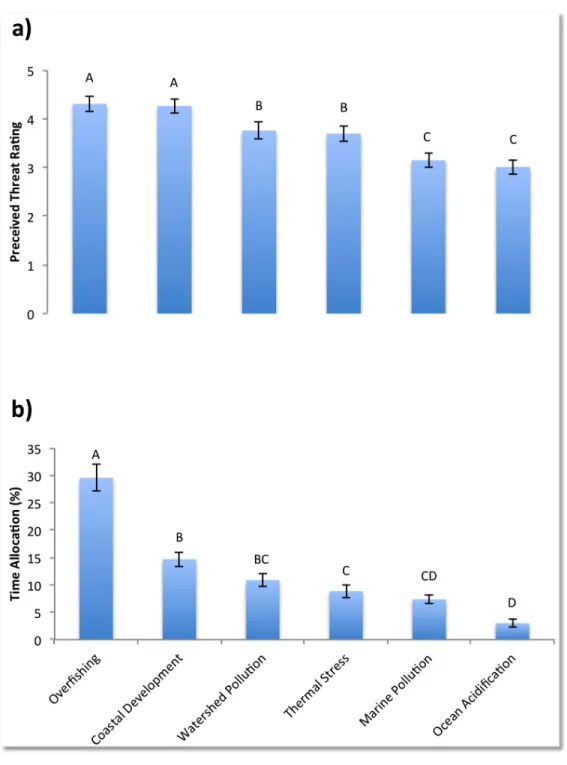
Figure 2.1 - Results of survey looking at perceived threat of the top six threats to coral reefs (threat rating scale of 0-6, with 0 = no threat and 6 = extreme threat) (A) and resource (time) allocation to abate
those threats (B). ... 15 Figure 2.2 - Results of survey looking at perceived threat of the top six
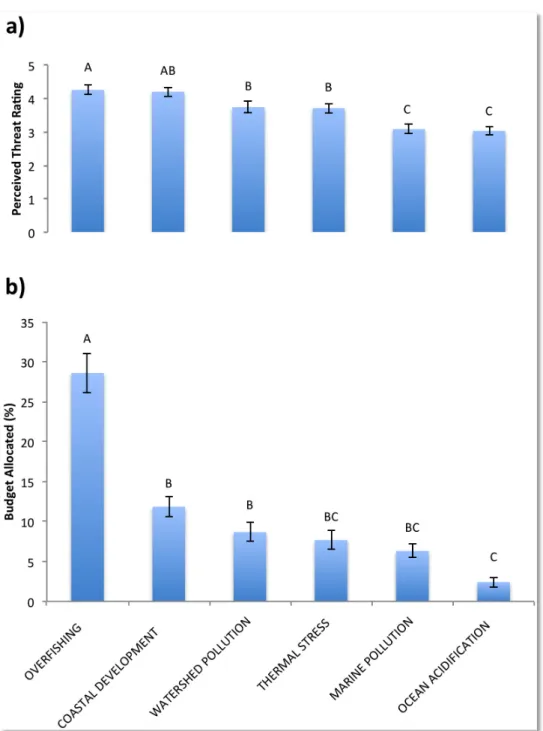
threats to coral reefs (threat rating scale of 0-6, with 0 = no threat and 6 = extreme threat) (A) and resource (budget) allocation to
abate those threats (B). ... 16 Figure 2.3 - Survey responses to question about how resources are being
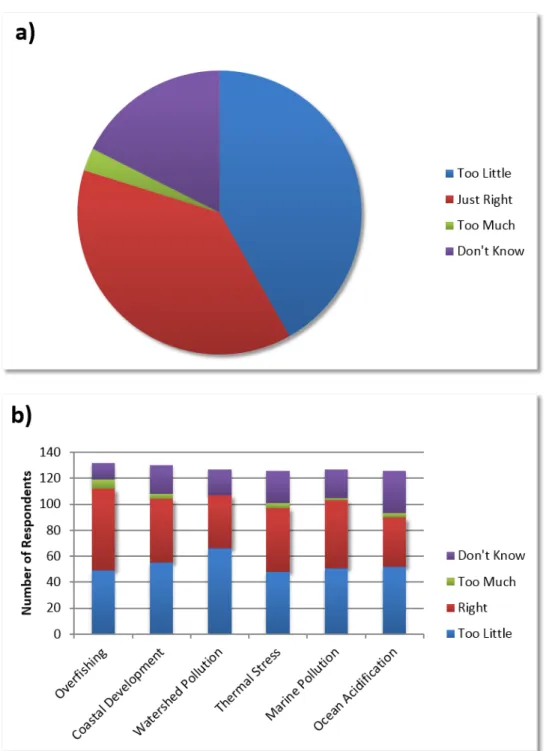
allocated to address threat. ... 18 Figure 2.4 - Survey responses to question asking respondents to identify
which factors influence decisions about how resources are
allocated. ... 19 Figure 3.1 - Interaction diamond illustrating impacts of sewage on
concentrations of known stressors to corals and the positive
feedbacks those stressors can have. ... 45 Figure 3.2 - Global map showing 104 of 112 distinct coral reef
geographies listed in the World Atlas of Coral Reefs7(including 80
countries, 6 states, and 26 territories) with a documented coastal
sewage pollution problem. ... 48 Figure 4.1 - To assess the evidence of a common enemy for coral reefs
and human health, I surveyed the literature using a Web of Science search, with the following search terms: TOPIC: "coral reef*" AND TOPIC: threat* OR stress* OR degrad*; and TOPIC: "human health" OR "public health" OR "community health" AND TOPIC: threat* OR disease* OR ill* OR sick* OR mort* AND
TOPIC: coast* OR tropic* ... 64 Figure 4.2 - Global coral reef map showing 104 of 112 distinct coral reef
geographies (including countries, states, territories) with a documented coastal sewage pollution problem (Wear & Vega
CHAPTER I INTRODUCTION
The loss of essential marine habitats has been extensive across the globe over the past 2-3 centuries — including a 80% loss of oyster reefs,1, 2 a 29-65% decline in seagrass
coverage,2, 3 (a 19% loss of coral reefs,4 and a ~ 50% loss of salt marsh habitat.5, 6 These
habitat declines have been driven by variety of human impacts including overfishing, eutrophication, pollution, invasive species, warming, acidification, and development. Over the next decades, the impact of most of these threats will increase in intensity and extent, with many synergistic effects predicted.2, 7
For many marine ecosystems, there has been substantial allocation of conservation efforts aimed at curtailing these losses. Despite these efforts, we continue to see negligible improvement and often-significant decline in the health and general condition of most marine ecosystems. Coral reefs are no exception. While hundreds of millions of dollars have been spent on coral reef conservation over the last decade, the threat has increased by 30% and coral cover continues to decline.8, 9 These trends highlight that although marine conservation
More resources to implement more of the same conservation strategies—while necessary—will not alone be sufficient to meet the increasing threats facing marine
ecosystems. One critical step forward is ensuring that we spend our conservation resources efficiently and distribute them in relation to the intensity and urgency of severe threats. To do this, we must determine whether resources are being spent on the highest priority threats in proportion to threat intensity. Such assessments will highlight areas in which there are mismatches between funding level and threat intensity, for example, where resources are focused on a narrow suite of strategies and therefore ignore significant threats.
In addition to increasing efficiencies in resource allocation, we also need novel approaches that generate synergisms at all levels of conservation effort. For example, the expertise to solve an engineering problem may reside outside of conservation organizations and without involvement of engineers, effective solutions may never be developed.12
Likewise, building partnerships with non-traditional partners that are working to abate threats that also have a negative impact on the environment is a potentially productive, but largely ignored, interaction. Such collaborations could lead to greater return on investment and advances in solution-based technologies.
A promising example of such a potential synergism is the collaboration that could occur between the human health and conservation sector. This partnership has great potential to maximize synergistic benefits and have more enduring results. The premise of such collaboration would be that promotion of healthy ecosystems promotes not only increased biodiversity but enhanced human health and well being. Improving human health has substantial appeal to policymakers and the global philanthropic community.13 Yet what is
designed to increase the health of ecosystems with the primary goal of increasing the health of local human populations. Without such actions, there is less recognition and realization that the public and environmental health movements can and should combine forces when appropriate, to reach shared goals more rapidly and efficiently.
There are powerful examples of where human health organizations recognize that healthy ecosystems help improve human health. The World Health Organization, for example, states that eliminating environmental hazards to health can prevent up to one-quarter of the global burden of disease.14 Despite this recognition, WHO’s focus is still
overwhelmingly on using human-generated activities and remedies (e.g., water treatment plants, more toilets) to improve water quality14 with comparatively little worked focused on
collaborating with conservation organizations to improve health of humans by increasing ecosystem health. This rarely occurs even though nature can increase public health in many ways, such as healthy watersheds protecting water supplies,15 intact wetlands and forests
filtering toxic pollutants out of our air and water, 15 and intact predator assemblages
suppressing rodent populations and associated human disease driven by rodent outbreaks and their parasites.16
For my dissertation, I use coral reef ecosystems as both a real and model system to begin to address these key voids in marine conservation understanding, i.e., are we
References
1. Beck, M. W., Brumbaugh, R. D., Airoldi, L., Carranza, A., Coen, L. D., Crawford, C., ... & Guo, X. (2011). Oyster reefs at risk and recommendations for conservation, restoration, and management. Bioscience, 61(2), 107-116.
2. Lotze, H. K., Lenihan, H. S., Bourque, B. J., Bradbury, R. H., Cooke, R. G., Kay, M. C., ... & Jackson, J. B. (2006). Depletion, degradation, and recovery potential of estuaries and coastal seas. Science, 312(5781), 1806-1809.
3. Waycott, M., Duarte, C. M., Carruthers, T. J., Orth, R. J., Dennison, W. C., Olyarnik, S., ... & Williams, S. L. (2009). Accelerating loss of seagrasses across the globe threatens coastal ecosystems. Proceedings of the National Academy of Sciences, 106(30), 12377-12381.
4. Wilkinson, C. (2008). Status of coral reefs of the world: 2008. Global Coral Reef Monitoring Network and Reef and Rainforest Research Centre, Townsville, Australia. 5. Gedan, K. B., Silliman, B. R., & Bertness, M. D. (2009). Centuries of human-driven
change in salt marsh ecosystems. Annual Review of Marine Science, 1, 117-141. 6. Silliman, B. R., Grosholz, E., & Bertness, M. D. (Eds.). (2009). Human impacts on
salt marshes: a global perspective. Univ of California Press.
7. Crain, C. M., Kroeker, K., & Halpern, B. S. (2008). Interactive and cumulative effects of multiple human stressors in marine systems. Ecology letters, 11(12), 1304-1315. 8. Burke, L., Reytar, K., & Spalding, M. (2014). A. Perry. 2011. Reefs at Risk
Revisited. World Resources Institute, Washington, DC.
9. Bruno, J. F., & Selig, E. R. (2007). Regional decline of coral cover in the Indo-Pacific: timing, extent, and subregional comparisons. PloS one, 2(8), e711. 10. Hoegh-Guldberg, O., & Bruno, J. F. (2010). The impact of climate change on the
world’s marine ecosystems. Science, 328(5985), 1523-1528.
11. Hughes, T. P., Baird, A. H., Bellwood, D. R., Card, M., Connolly, S. R., Folke, C., ... & Roughgarden, J. (2003). Climate change, human impacts, and the resilience of coral reefs. Science, 301(5635), 929-933.
12. Cheong, S. M., Silliman, B., Wong, P. P., van Wesenbeeck, B., Kim, C. K., & Guannel, G. (2013). Coastal adaptation with ecological engineering. Nature Climate Change, 3(9), 787-791.
14. World Health Organization (2011). WHO Programme Budget 2012-2013. Geneva, Switzerland. http://whqlibdoc.who.int/pb/2012-2013/PB_2012–2013_eng.pdf 15. Myers N. 1997. The world's forests and their ecosystem services. In: G. Daily (Ed).
Nature's Services: societal dependence on natural ecosystems. Washington, DC: Island Press.
CHAPTER II
MISSING THE BOAT: CRITICAL THREATS TO CORAL REEFS ARE NEGLECTED AT GLOBAL SCALE Abstract
Coral reefs have experienced a global decline due to overfishing, pollution, and warming oceans that are becoming increasingly acidic. To help halt and reverse this decline, interventions should be aimed at those threats reef experts and managers identify as most severe. I surveyed 170 managers, representing organizations from 50 countries and
territories, and found that respondents generally agreed on the two major threats: overfishing and coastal development. However, resource allocation did not match this consensus on major threats. In particular, while overfishing receives much attention, coastal development and its attendant pollution are largely neglected and underfunded. These results call for a re-examination of how resources are allocated in coral reef conservation, with more attention given to aligning how money is spent with what are perceived to be the primary threats. Introduction
Despite their well-documented importance to humans, coral reefs continue to decline at a steady pace.1,2,3 Reefs at Risk Revisited (RRR) cited six primary stressors leading to the
majority of decline in coral reefs: overfishing & destructive fishing, watershed-based
organizations and governments to protect reefs, conservationists have been unable to keep pace with these anthropogenic threats. The authors of RRR conclude that the threat level increased by 30% between 1998 and 20112 while coral coverage on reefs continued to
decline.1
It is clear that current reef conservation efforts are not sufficient. There are concurrent needs for both innovative approaches and a calibration of current reef conservation efforts with the magnitude of threats to these systems.4,5,6,7 It is important to ask if resources are
being put to best use.4,6,8 To begin this process, reef conservationists must first assess if their
resources (i.e., time and money) are being strategically allocated to address the major threats they face locally. This type of self-evaluation is critical to undertake, as threats change over time and conservationists and natural resource managers must continually track shifts in conservation priorities to determine whether their actions match those shifts.4 While several
studies have mapped the global distribution of threats2,9,10 no studies have addressed the
question of whether local coral reef conservation has adequately allocated resources to match the perceived local intensity of various threats to coral reefs.
An examination of the match between perceived threats and resource allocation is especially critical for coral reefs, because it is common for reef managers to cite a lack of resources as a limiting factor in their ability to achieve success (author’s observation from over 25 reef manager workshops; personal communication with P. MacGowan). Using a survey of 170 reef managers from 110 different institutions around the world, I conducted an assessment to test whether perceived levels of the top six threats to coral reefs in their
jurisdiction matched the relative amount of time and money allocated within their
is the perceived relative strength of threats to coral reef health? (2) Does the allocation of conservation and management resources match the degree of the perceived threat?; and (3) If there are mismatches, why?
Methods
The experts surveyed for this study were comprised of practitioners with extensive experience (an average of 11.5 years) and knowledge of the coral reef conservation and management activities in their jurisdiction. I identified potential respondents through The Nature Conservancy’s Reef Resilience Network, a global network of coral reef managers from government, NGO, academic, and community organizations. From this pool, I
randomly chose 550 individuals to receive a SurveyMonkey® survey via email. The survey is available as an online supplement (Appendix A). The general goal of the study was provided in the introductory information and no incentive was provided to respondents to complete the survey. The survey data were collected between May and September of 2014. A total of 170 individuals responded to the survey. Of this group, 132 individuals completed the entire survey (47% NGOs, 11% academic, 33% government, and 8% private). These 132 respondents were representative of the geographic range of coral reefs as well as institutions involved in managing coral reef communities. Respondents were from 110 different
Table 2.1. List of geographies represented in the reef manager survey
Country or Territory
American Samoaa Maldives
Australia Marshall Islands
Bahamas Mexico
Belize Mozambique
Bermuda Myanmar
Bonaire New Zealand
Brazil Palau
Cayman Islands Philippines
Commonwealth of Northern Mariana Islandsa Pohnpei
Colombia Puerto Ricoa
Curacao Saudi Arabia
Dominican Republic Seychelles
Egypt Solomon Islands
Fiji Somalia
Germany South Africa
Grenada St Eustatius
Guama St. Vincent and the Grenadines
Hawaiia Tanzania
India Thailand
Indonesia Tonga
Jamaica Trinidad and Tobago
Kenya United Kingdom
Kosrae Floridaa
Lebanon US Virgin Islandsa
Madagascar Venezuela
Malaysia
a U.S. territories
Six threat categories were used in the survey: (1) Overfishing & Destructive Fishing, (2) Watershed-based Pollution, (3) Marine-based Pollution & Damage, (4) Coastal
Table 2.2. Threat definitions provided to survey respondents
Threat type Definition
Overfishing & destructive fishing Includes unsustainable harvesting of fish or
invertebrates, and damaging fishing practices such as the use of explosives or poisons
Coastal development Includes coastal engineering, land filling, run-off from coastal construction, sewage discharge, and impacts from unsustainable tourism
Watershed-based pollution Includes erosion and nutrient fertilizer runoff from agriculture delivered by rivers and coastal waters Thermal Stress Incudes warming sea temperatures, which can induce
widespread or "mass" coral bleaching
Marine-based pollution & damage Includes solid waste, nutrients, and toxins from oil and gas installations and shipping; and physical damage from anchors and ship groundings
Ocean acidification Driven by increased carbon dioxide concentrations, which can reduce coral growth rates
Note. These are the same definitions used in Reefs at Risk Revisited (2011).
The perceived threat level of the six major threats was determined by asking respondents to rate the threats according to severity of threat to coral health in the
respondent’s jurisdiction. It is important to note the responses were not about global threats, but threats being experienced locally. To assess how time and money were being allocated to address each of the six major threats in those jurisdictions, I asked respondents to estimate the amount of time and money their institution spent on each threat. Whether severity of threat aligned with the resources being directed to that threat was determined by comparing the ratings of threat severity and resource allocation.
address each threat, I looked at all respondents combined. I pooled all of the time estimates and calculated a mean. In order to compare time or money spent to the perceived threat rating, I made sure that only respondents that answered the questions about time and money were included in the threat ratings analyses.
I reviewed demographic and job description information about each respondent to ensure my survey population was not biased towards a particular threat (i.e., overfishing) in terms of organizational or occupational mandate. Only three respondents identified
themselves as a fisheries manager and only three institutions were identified as a fisheries agency or department. The vast majority of respondents represented organizations with broader natural resource or coral reef management purposes. The same steps were repeated in order to determine portion of budget dedicated to addressing each threat and how that
compared to the perceived threat ratings.
To determine whether respondents currently perceived mismatches in threat severity and resource allocation to that threat, I asked the respondents whether resources allocated to addressing each particular threat were too little, too much, or just right for their jurisdiction. I summed the responses by threat category. To determine whether there was a strong opinion about a mismatch of allocations in general, I combined all responses in all threat categories. I also gave respondents an opportunity to explain their responses if they had answered “too much” or “too little.”
with coral reef managers at more than 25 international reef management workshops over 10 years in which over 600 managers attended (S. Wear, pers. obs.). I summed the responses for each factor and calculated the percentage across all responses. I was able to categorize the six written responses that were provided into already existing factors.
Data analysis
Perceived threat level and resource allocation (time and money) data were analyzed using linear mixed-effects models with threat type as the fixed factor and respondent ID as the random effect factor. All analyses were conducted using R 3.1.2 (R Core Team 2015). The effect of threat type was tested by comparing the resulting deviance to F statistics (Type II sum of squares) using R car package. Tukey multiple comparisons were conducted using R multcomp package. Data from survey questions that assessed frequency of categorical
responses, that is, whether there was too much or too little allocation to certain threats and factors that influence resource allocation decisions, were analyzed using chi-squared tests. Pairwise Fisher’s test was used to test for differences between categories (P value adjustment method: holm).
Results
All threats were not viewed equally and a few threats emerged consistently as the most important. For respondents that answered time allocation questions, overfishing and coastal development were the most highly rated threats, and did not differ statistically from each other (Figure 2.1a; n=95). Watershed pollution and thermal stress did not differ
n=110), the pattern of the effect of threat type on perceived threat rating was similar. Coastal development and overfishing continued to be the most highly rated threats, whereas marine pollution and ocean acidification continued to be the lowest rated threats.
Time allocation varied among threat types (Figure 2.1b). Managers by far allocated the most time to dealing with the threat of overfishing (P < 0.01 all contrasts). On average, this comprised nearly 30% of managers’ time. Managers allocated significantly less time (~50% less) to coastal development and watershed pollution (P > 0.01 both contrasts), despite the fact coastal development had a similarly high threat rating as overfishing (Figures 2.1a and 2.2a). The least amount of time was allocated to marine pollution, thermal stress and ocean acidification, each of which comprised ~5% or less of managers’ time. For budget allocation, the patterns in the effects of threat type were nearly identical to that of time
allocation (Figures 2.1b and 2.2b), except that the pattern became even more pronounced. For example, managers spent ~66% less money on coastal development in comparison to overfishing (P<0.001), despite the fact that they rated these threats as equal (Figure 2.2b).
Among different factors that may influence decisions about how resources were allocated (Figure 2.4), number of responses differed significantly (X-squared = 29.34; df =15, P <0.02). Government mandates, donor funding, and politics received the highest number of responses, followed by stakeholder/community and conservation organization agendas.
Discussion
The results of my global survey indicate that overfishing and coastal development stand out as the highest ranked threats (Figures 2.1a and 2.2a). Interestingly, this result differs from RRR2 assessment of coral threat intensity, which used globally available proxy data as
opposed to surveys of local experts and managers. The input data for the RRR “proxy analysis of threat” included human population density and infrastructure features such as location and size of cities, ports, and hotels, as well as more complex modeled estimates such as sediment inputs from rivers. For each of these mapped stressors, distance-based rules were developed, such that threat declines as distance from the stressor increases.2 In the RRR
threat ranking, overfishing was clearly identified as the biggest threat to coral reefs, with over 55% of coral reefs at risk from overfishing. The next highest ranked threat was coastal
My survey suggests a different reality for local managers. The biggest difference is the identification of coastal development and pollution as a major threat. While neither the survey approach, nor proxy mapping measure threat directly by documenting impact on corals, the survey approach does allow an examination of alignment between perceived threat and resource allocation. That examination uncovered a striking mismatch in the perceived severity of some threats and the amount of resources allocated to address those threats. Specifically, a disproportionate amount of resources are allocated towards addressing
overfishing in comparison to other similarly, highly rated threats. Most notably this mismatch occurs with coastal development, but also for watershed-based pollution and thermal stress. For example, despite having similarly high threat level ratings, less than half the resources are allocated to coastal development relative to overfishing.
Why is there a mismatch?
There are numerous mechanisms that could be driving these observed mismatches. It is possible, for instance, faced with limited resources, managers are choosing to make a difference with at least one serious threat rather than spreading themselves thin across several serious threats. Alternatively, a threat could be neglected because the tools to address it may not be readily available or familiar to local managers. However, this would not explain the neglect of coastal development and pollution, because there are well-known approaches for reducing these threats.11 Finally, the managers may not realize there is a mismatch. As it
the potential mismatch also suggests that the mismatch is not intentional; rather it is being caused by other factors not apparent to resource managers.
Managers face many pressures and demands that may intervene between what they think they should do and what they actually do. My survey uncovered five major factors that influence managers’ decisions: (1) government mandate, (2) donor priorities, (3)
stakeholder/community support, (4) political agenda, and (5) conservation organization agenda. Many respondents highlighted the lack of understanding of environmental problems and management priorities by politicians and community stakeholders, and pointed out that their support was critical in taking action. If these factors are indeed drivers of the mismatch in resource allocation, then it will be imperative that governments, NGOs, and the donor community begin to recognize that a more holistic approach is necessary to achieve natural resource management goals and evaluate their current funding strategies. Such an approach would be more balanced, incorporating the broader range of threats that impact coral reef ecosystems.
Does the mismatch matter?
Because conservation need far outweighs resources available to address those needs, making sure resources are efficiently allocated is key for maximizing success.8 While this
objective seems obvious, allocating resources for the greatest return on investment (ROI) is still a novel concept in conservation priority setting.8 For coral reefs, survey results call into
abatement at risk. For example, coral reef conservation most often occurs through MPAs and establishment of zoned areas that restrict fishing. While these boundaries can curtail
overharvesting, they cannot stop incursion by coastal pollution or marine-based pollution. Thus, while a manager may succeed in addressing the threat of overfishing, their success may be undone by pollution.
What next?
The recent global declines documented for coral reefs demand that we reexamine what is being done to promote coral reef persistence into the future. Current efforts to develop tools and frameworks to improve cost-effectiveness and conservation outcomes will help managers5,7,8 but until decision-makers embrace the importance of a holistic approach,
Acknowledgements
This work was funded in full from The Nature Conservancy’s NatureNet Science Fellowship to S.Wear. Special thanks to X. Basurto, Q. He, P. Kareiva, M. Miller, C.
References
1. Bruno, J. F. & E. R. Selig. 2007. Regional decline of coral cover in the Indo-Pacific: timing, extent, and subregional comparisons. PLoS One. 2: e711.
2. Burke, L. & K. Reytar. 2011. Reefs at Risk Revisited. World Resources Institute. Washington, DC.
3. Cesar, H. S. J., L. Burke & L. Pet-Soede. 2003. The economics of worldwide coral reef degradation. Cesar Environmental Economics Consulting. Zeist, Netherlands. 4. Wu, J. & W. Boggess, G. 1999. The Optimal Allocation of Conservation Funds.
Journal of Environmental Economics and Management. 38: 20.
5. Wilson, K. A., et al. 2007. Conserving biodiversity efficiently: what to do, where, and when. PLoS Biol. 5: e223.
6. Bottrill, M. C., et al. 2008. Is conservation triage just smart decision making? Trends Ecol Evol. 23: 649-654.
7. Joseph, L. N., R. F. Maloney & H. P. Possingham. 2009. Optimal allocation of resources among threatened species: a project prioritization protocol. Conserv Biol. 23: 328-338.
8. Murdoch, W., et al. 2007. Maximizing return on investment in conservation. Biological Conservation. 139: 14.
9. Bryant, D., et al. (1998). Reefs at risk: a map-based indicator of threats to the world’s coral reefs. Washington, D.C. World Resources Institute.
10. Halpern, B. S., et al. 2008. A global map of human impact on marine ecosystems. Science. 319: 948-952.
11. Wilkinson, C. & J. Brodie. 2011. Catchment Management and Coral Reef
CHAPTER III
SEWAGE POLLUTION: MITIGATION IS KEY FOR CORAL REEF STEWARDSHIP Abstract
Introduction
Coral reefs play a critical role in coastal ecosystem function in the tropics, providing food and habitat for 550,000 to 1,330,000 species.1 Along with the inherent biodiversity
these habitats support, reefs built by corals also provide many valuable services for humans including: shoreline protection, livelihoods from ecotourism, fisheries production, and a living synthesis engine of biomedical and industrially valuable compounds.2, 3, 4, 5 The value
of these services varies globally, but is estimated at over $31 billion (US$, 2014) annually for all reefs combined.6 Unfortunately, reefs and the many benefits they provide are under severe
threat, with evidence of a general pattern of habitat degradation.7, 8
Spatial variation and forces behind coral reef decline
Coral reefs are exposed to a multitude of stressors emanating from human activities7, 8, 9, 10 and as a result, have experienced drastic declines in spatial coverage and diversity over
the past fifty years.7, 8 At a regional level in the Indo-Pacific, live coral cover has declined at
an annual rate of 1% from the early 80’s to 2003; while in the Caribbean, the annual rate of coral cover loss was 1.5% between 1977 and 2001.11 Recent work cataloguing the status of
reefs has estimated that we have functionally lost at least 25% of coral reefs globally and one third of all coral species are threatened with extinction.12 Chief among threats identified in
Reefs at Risk Revisited (RRR) are: overfishing, pollution, coastal development and climate change.8 For example, increasing temperature of surface waters from climate change, has led
to increased bleaching events and subsequent reef loss.13 Bleaching due to elevated water
temperatures is perhaps the most notable stress, with some reefs experiencing over 85%
mortality in the 1998 mass bleaching event.14, 15, 16, 17 While the 1998 bleaching event
resulted in significant losses, coral reefs were already in a state of decline when this event occurred.10, 18 The additive and synergistic effects of long-term overfishing, chronic coastal
pollution, and poorly regulated coastal development had already compromised coral reefs, making it difficult for reefs to withstand more stressful conditions associated with increasing frequency and intensity of bleaching events.10, 18, 19
Over the past two decades, the conservation community has generally considered overfishing as the threat to coral reefs that warrants the most attention.8 For example, RRR
emphasizes that more than 55% of the world’s reefs are under immediate threat from overfishing8 which can lead to phase shifts from coral-dominated reefs to algal-dominated
reefs as the number of algae-eating fish decreases significantly.20 Halpern et al. 21 also
suggest that overfishing is one of the most severe causes of coral reef decline. The extensive scientific literature on overfishing has prompted coral reef management responses that
include: limiting or banning fishing in some areas, regulations that prohibit the take of certain key fish species, and global efforts to influence consumer choice by limiting the demand for ecologically important species.
Notably, the threat to coral reefs from pollution and eutrophication, although potentially just as important as overfishing, as suggested by RRR8 and Halpern et al.21
assessments, has received much less attention from conservation organizations (S. Wear, pers. obs.). Reasons for this disparity may include the practical challenges of dealing with a large-scale diffuse threat, the diversity of pollutants involved, the high cost of water
inherent difficulties of monitoring and evaluating nonpoint sources of pollution along with jurisdictional issues such as agency and private land conflicts.
The largest component of coastally derived pollution is sewage.22, 23, 24, 25 Most coral
reefs are located along the shorelines of developing countries, where tertiary sewage
treatment is rare. Most sewage enters tropical waters as either poorly or completely untreated discharge, or stormwater runoff.25, 26 In fact, the United Nations Environmental Program
(UNEP) estimated that 85% of the wastewater entering the sea in the Caribbean is
untreated.27 As our global population likely expands by 2 billion over the next 35 years,28 the
amount of sewage polluting reefs will also increase. It is thus critically important to
understand the role of sewage discharge in coral reef declines and identify ways to minimize its impact on reef health. In this review, we synthesize what is known about the composition of sewage and how each component may impact coral reef health. We explore interactions between and among these components to evaluate synergisms. We also present a synthesis of previously conducted studies on the impacts of sewage discharge on coral reefs. Finally, we present a summation of the geographic extent of sewage pollution, in regions where coral reefs occur.
What is in sewage and how do those components impact corals?
Most reports addressing the impact of sewage on coral reefs cite high inorganic nutrient content as the primary reason for alarm—as those nutrients could lead to increased growth of algae and coral diseases. 29, 30 However, sewage in its raw form contains many
describe each of these constituents in detail and briefly summarize what is known about negative impacts on coral reefs and the mechanism(s) underlying the impact (Table 3.1). Importantly, this understanding does not come from studies on sewage itself, but rather from work investigating how explicit sewage components (e.g., freshwater, ammonium) impact corals.
Freshwater
The primary component of sewage is freshwater, a known stressor to corals.
Although, there are surprisingly few studies examining impacts of freshwater on coral health, classic laboratory studies conducted over 80 years ago revealed most corals die after
prolonged exposure to fresh or brackish water sources and that the lower salinity tolerance of corals is ~15-20ppt.32 In the field, the effect of freshwater discharge onto coral reefs has been
studied in a limited number of cases using correlational methods.32, 33 In these studies,
Table 3.1. Examples of coral reef (corals and associated organisms) responses to common stressors found in sewage
Stressor Response Sources
Freshwater Increased coral mortality (with
lowered salinity for >24H). Coles and Jokiel 1992; Jokiel et al. 1993
Dissolved inorganic nutrients (ammonium, nitrite+nitrate, & phosphate)
Increased coral bleaching, increased coral disease prevalence and severity,
decreased coral fecundity, algal overgrowth, decreased coral skeletal integrity, decreased coral cover and biodiversity, and increased phytoplankton
shading.
Vega-Thurber et al. 2014; Bruno et al. 2003; Koop et al. 2001; River and
Edmonds 2001; Fabricius 2005; Wooldridge and Done 2009; Wagner et al. 2010; Voss and Richardson 200; Shantz and Burkepile 2014
Endocrine disrupters (e.g.,
steroidal estrogens) Reduction in coral egg-sperm bundles, slowed coral growth rates, coral tissue thickening.
Tarrant et al. 2003, 2004; Tarrant 2005
Pathogens Source of white pox disease pathogen for corals and associated mortality, and increased pathogenicity in corals.
Patterson et al. 2002;
Sutherland et al. 2010, 2011
Solids Reduced photosynthesis of coral
symbionts, coral species richness, coral growth rates, coral calcification, coral cover, and coral reef accretion rates, and increased coral mortality.
Tomascik & Sander 1985; Rogers 1990; Lewis 1997; Fabricius & Wolanski 2000; Fabricius 2005; Pollock et al. 2014
Heavy metals Coral mortality, coral bleaching, reduction of basic functions such as respiration and fertilization success; Fe2+ may increase growth of coral disease.
Stressor Response Sources Toxins Lethal and sub-lethal effects on
corals—highly variable and dependent on specific toxin. Reduced photosynthesis of coral symbionts, coral bleaching, coral mortality, reduced coral lipid storage, reduced coral fecundity, death of coral symbionts, and decreased coral growth.
Nutrients
Sewage discharging into coastal tropical waters contains very high concentrations of inorganic nutrients, such as ammonium, nitrite, nitrate and phosphate. A number of studies have examined effects of these compounds on specific components of coral health. Impacts can be categorized as either direct, having effects on the coral animal or its symbionts, or indirect, whereby nutrients influence other aspects of the reef that in turn negatively impact coral health. One of the most influential single mechanisms is indirect, whereby nutrient enrichment enhances macroalgal overgrowth, killing corals and thereby removing a
foundation species. A growing body of new literature has also examined direct impacts, such as how inorganic nutrients modify microbial communities found on and in corals, coral symbionts, and calcification rates. Here, we briefly review key findings related to each of these topics.
Nutrients and algae
Since tropical reefs are generally nutrient poor or oligotrophic, any significant input of limiting macronutrients into coastal waters could cause shifts in reef community
composition.34 Most research on nutrient impacts on reefs has focused on the direct effects of
inorganic nutrients on primary producers, such as phytoplankton or macroalgae, both of which compete with corals for light and space. For example, increases in nutrient
concentrations can facilitate large, often monospecific, blooms of algae.35, 36, 37 It is also well
documented that increasing inorganic nutrient levels increases macroalgal cover on reefs, to the detriment of coral cover.20, 29, 38-43
space.44, 45 This increase in macroalgal competition, when combined with nutrient pollution,
may further reinforce a coral-depauperate state by reducing the growth and survival of adult corals46, 47, 48 and preventing the recruitment and establishment of juveniles. 45, 48 Increased
macroalgal growth and competitive displacement of corals in response to increasing nutrients from human activities has been documented in enrichment studies in the Caribbean Sea, Indian, and Pacific Oceans.29, 49
Nutrients, coral disease and bleaching
Nutrient enrichment has also been hypothesized to be a driver of coral disease and bleaching. Recent studies on the Great Barrier Reef50 and in the Florida Keys51 found a
positive correlation between bleaching prevalence and inorganic nitrogen (N) levels. Field surveys have also found that coral disease prevalence is often positively correlated with ambient seawater nutrient concentrations.52, 53 For example, increasing nutrient availability is
positively correlated with increased disease progression rates (i.e., the rate of movement of the disease over a coral’s surface) of some coral diseases, such as yellow blotch and black band disease.54, 55
Recent experimental evidence has confirmed predictions from these observational studies and shown that nutrients can cause an increase in both the prevalence of coral disease and extent of bleaching on natural reefs.30 Researchers have enriched replicate portions of a
coral reef with inorganic N and phosphorus (P), to levels within the nutrient ranges
experienced by contaminated reefs.56 After three years of this nutrient enrichment, disease
returned to those in control reef sites lacking the enrichment treatment. These findings demonstrate that measures to reduce inorganic nutrient pollution through water quality mitigation efforts may successfully reduce coral disease and bleaching levels, perhaps even very rapidly.
Nutrients and coral growth
Nutrients have long been hypothesized to reduce coral growth rates. A recent meta-analysis showed that exposure to nitrate and ammonium over a wide range of concentrations (0.5-26 μM) generally had negative effects on corals, but increased P (0.11-26 μM) actually enhanced calcification. 57 Nevertheless, even though elevated P concentrations increased
calcification rates, this response also involved losses of skeletal integrity. The effects were also context-dependent such that different morphologies (mounding vs. branching) and different species of corals exhibited varying calcification responses and varying impacts of N depending on type (nitrate or ammonium) and source (natural or
anthropogenically-derived).57 The variable effects of nutrient pollution across coral morphology and species
carries implications for how different habitat types will uniquely respond to nutrient
enrichment. In particular, mounding and Poritid corals were shown to be more susceptible to the negative effects of increased nutrients, and habitats or ecosystems dominated by these taxa are more likely to suffer impacts from increased inorganic nutrient concentrations that often accompany reduced water quality.
Nutrients can also decrease coral growth by acting on the autotrophic algal partner Symbiodinium that is a symbiont in corals. Nutrients have long been hypothesized to decrease
coral growth rates via bleaching through elevating the abundance of algal symbionts.58, 59
this loss of the pigmented Symbiodinium that causes coral bleaching, decreased growth rates, and even whole colony mortality. It should be noted, however, that recent research has revealed that increased nutrient levels do not always have a negative impact on coral growth but instead can have a unimodal relationship, where increasing nutrient levels first increase coral growth but then decrease coral growth as levels of nutrients rise.61
Nutrients and microbial communities
Coral associated microbes (i.e., eubacteria and archaea) have a multitude of context-dependent roles in health and physiological homeostasis of scleractinian corals.62, 63 For
example, mucus-associated bacteria are believed to regulate the settlement and/or growth of opportunist microbes by occupying space or producing effective antibiotics.64, 65, 66
Alterations in ambient conditions, such as water temperature and nutrient concentrations, have been shown to induce shifts in the associated microbes or microbiome of a coral.67, 68
These shifts can be the result of both direct and indirect effects of inorganic nutrients. For example, tank experiments suggest that addition of inorganic N can induce growth of potential bacterial pathogens.68, 69 An increase in nutrients also can stimulate growth of
macro- and turf algae,70 which have been shown to have multiple negative effects on the
coral microbiome, such as depletion of local oxygen concentrations,37, 71, 72 transferal of
allelotoxins,73, 74, 75, 76 and transmission or vectoring of pathogens.77, 78 Shifts in the
microbiome can ultimately lead to coral health declines and sometimes death.37, 62, 79
Pathogens
seven diseases have been documented in Australia’s Great Barrier Reef, including
cyanobacterial, protozoan, and Vibrio spp. infections.80 The impacts of disease on corals can
be profound, ranging from minor tissue loss to entire colony mortality. For example, in the 1980’s, the two dominant Acroporid species, Acropora palmata and Acropora cervicornis, experienced Caribbean-wide die-offs due to white band disease, with estimates reaching as high as 95% of colonies lost.83, 84 Such losses are unprecedented and have led to dramatic
management responses, including the listing of both taxa under the Endangered Species Act. Recent work has started to link certain environmental conditions,30, 54, 85 as well as a
changing climate, to the emergence of disease.86, 87 However, we understand very little about
reservoirs for coral disease. One such likely reservoir for pathogens is sewage. In fact, sewage effluent has been identified as the source of the pathogen complex that causes white pox disease in Caribbean corals.88, 89, 90 Using Koch’s postulates, Patterson et al.88 first
identified Serratia marcescens as the disease-causing agent for white pox disease. At the time of this study the elkhorn coral, A. palmata, was experiencing a major die-off in the Florida Keys, with more than 70% of coral cover lost due to white pox disease.88 During a
subsequent outbreak of white pox disease in 2003, a unique strain of S. marcescens was identified (PDR60) from samples taken from live A. palmata, as well as two other species of non-Acroporid corals, reef water, and nearby sewage sources.89
In their most recent publication, Sutherland et al.90 used experimental laboratory
environment. While evidence showing that sewage is an important disease reservoir is limited to one type of disease and its associated causal agent, the potential for discovery of more examples is considerable, given the sheer numbers of microbes and viruses present in the average human gut and consequently in the average sewage effluent (e.g., see Refs. 91-93).
Endocrine disrupters
Endocrine disrupters are common pollutants in coastal waters. They include both natural and synthetic estrogens, polychlorinated biphenyls (PCBs), plasticizers,
pharmaceuticals, parabens, phthalates, dioxins, petrochemicals, organochlorinated pesticides, microplastics and detergents.94, 95, 96, 97, 98 Endocrine disrupters are chemicals with the ability
to disrupt the endocrine or hormone system in living organisms. They can act on multiple processes in animals, including reproduction, immune response, and growth. 99 Endocrine
disrupters are commonly identified in sewage effluent delivered by human excretion,96 as
well as through general household wastewater. They have also been detected in sediments adjacent to coral reefs.95, 100, 101
Both distance from the source of sewage and physical characteristics of an area impact the concentrations of endocrine disrupters.96, 100, 102 As is the case for some other
pollutants, well-flushed areas have lower concentrations of endocrine disrupters, whereas areas that are enclosed, or semi-enclosed, tend to have higher concentrations.96 Studies on the
effects of endocrine disrupters on corals have shown that impacts are similar to those they have on other organisms, i.e., suppressing growth and reproduction.95, 103 Early work on
their tissues and skeletons, and metabolize them.103 The metabolic mechanisms are poorly
understood, but what has been shown is that certain estrogens affect coral reproductive abilities, growth rates, and morphological features. For example, Tarrant et al.95 showed that
additions of estradiol to Montipora spp. over three weeks resulted in a reduced number of egg-sperm bundles by 29%, whereas additions of estrone to Porites spp. over 2 to 8 weeks slowed growth rates by 13-24%. Tarrant et al.95 also added estrone to Montipora spp. nubbins
over several weeks, and found an increase in tissue thickness. Much more study is needed to better understand these dynamics, so that informed strategies for minimizing exposure to these and other endocrine disrupters can be developed.
Suspended solids and sedimentation
Both suspended solids and sediments accompany sewage discharge and are threats to coral health.25, 107, 108, 109, 110 Sewage typically contains high concentrations of suspended
solids, primarily organic. Suspended solids increase turbidity and block sunlight, which can reduce growth of coral symbionts.108, 111, 112 Corals may survive for many days under severely
reduced sunlight, but after a few weeks, excessive shading can result in reduced
photosynthetic activity, growth, and ultimately coral cover.113 When chronic shading due to
increased suspended solids occurs, this can result in coral depth distribution shifts.114 Thus,
the impact of suspended solids on corals will depend on how long solids remain in the water column and how much sunlight they block.
High rates of sedimentation may also co-occur with sewage discharge, especially coinciding with storm events.115 The range of impacts from prolonged sediment cover
120, 121 size,122 and ability to reject sediments.120 Regardless of any coping mechanisms that
corals may have, sedimentation impacts are pervasive. Fabricius (2005) conducted an extensive review on field studies that provided evidence that sedimentation has negatively impacted reefs across all major coral reef geographies (See Table 1 in Fabricius 2005).107
This work also highlighted specific stress responses of individual corals (e.g., reduced growth rates, reduced calcification, and increased mortality), communities (e.g., reduction in species richness and coral cover) and ecosystems (e.g., net productivity and accretion rates), to different levels of sedimentation.
Besides the physical stress that sedimentation and suspended solids can generate, there may also be chemical stress generated, especially from sewage-derived sediments because they contain a wide range of compounds. For instance, suspended solids associated with sewage that eventually settle on corals often have a different profile, both in chemical composition and toxicology from those originating from other sources, such as agricultural runoff and natural erosion flows.24 Suspended solids may contain toxic compounds and high
levels of nutrients, each of which can result in negative responses in corals, such as disease and mortality.25, 123 The highly organic particles derived from sewage can chemically stress
corals by greatly increasing biological oxygen demand in surrounding waters, as bacterial consumption of oxygen rises with increasing availability of organic material.25, 123
Heavy metals
Heavy metals are commonly present in sewage worldwide.124 Metals routinely found
studies have shown that exposure to elevated levels of metals can result in coral mortality, bleaching, and decreased fertilization success.126, 127 Heavy metals also have the potential to
damage corals by increasing success of certain microbes. For example, Fe2+, which is
common in raw sewage, is recognized as playing an important role in increasing both the virulence of pathogenic microbes (e.g., Vibrio spp.), and the growth rates of microalgae. This occurs because Fe2+ is a limiting nutrient for microbe reproduction and thus its addition leads
to increased microbial growth.128 When iron is in excess and freely available, it is taken up
by pathogenic microbes, allowing them to further multiply and increase their success in attacking and infecting live corals.128 Lastly, increases in this essential bacterial micronutrient
have been implicated in altering reef community structure and function in extremely oligotrophic environments, such as isolated coral atolls.129
Other toxins
The range of other toxins potentially present in sewage is wide, but which toxins actually are present is dependent on local conditions, such as type and abundance of local industries and agriculture. Chemicals commonly found in sewage beyond the metals and endocrine disrupters discussed above include PCBs, chlorine, pesticides, herbicides, petroleum hydrocarbons, and pharmaceuticals. 24,25, 130, 131, 132 Numerous laboratory studies
and field studies have examined the impacts of these toxins on corals. This work was
summarized by van Dam et al.133 who reported that the response of corals depended both on
type of toxin and its concentration, with responses varying from mortality, to bleaching, to reduced lipid concentrations (See Table 3.1 for examples of responses).
Field evidence linking sewage exposure and coral reef health
negative impacts. However, this prediction is based on studies that did not experimentally expose corals in the field to sewage. To evaluate the findings of field experiments and observational studies assessing the effects of sewage and its constituents on coral reefs, we conducted a search of the literature (Web of Science with following search terms: TOPIC: “coral reef*” and TOPIC: “sewage” and TOPIC: “pollution”). Remarkably, we found not one experimental field study that investigated impacts of sewage on coral reef health. Most studies looking at linkages between sewage and coral reefs focused on identifying indicators of sewage presence and intensity, rather than on the actual impacts of sewage on coral reef constituents, the general untested assumption being that sewage had a negative impact, and so should be monitored and abated.134, 135, 136, 137, 138, 139 We did, however, identify eight
observational studies that surveyed coral reef areas with substantial sewage input and compared them to nearby, environmentally similar areas with little or no known suspected sewage input.115, 140, 141, 142, 143, 144, 145, 146, 147
In each of these correlational studies, scientists investigated how the condition of coral reef communities varied with decreased water quality (e.g., fecal coliform counts, turbidity, and inorganic nutrients) associated with sewage outflows. In seven out of the eight studies, a negative impact of sewage on reefs was implicated and, in one study, no effect was suggested. Below, I briefly review the findings of these studies. Caution should be taken in interpreting the results of these studies, as none used the most robust design (i.e., Before-After-Control-Impact)148 for correlational testing of contaminant effects. Nonetheless, taken
Two of these observational studies focused on the incidence of coral disease in response to sewage exposure. In Kaczmarsky et al.,141 the authors examined two different
sites in St. Croix, USVI—a sewage-impacted site, and an ecologically and geologically similar site nearby, with no known sewage exposure. Water quality sampling by the Virgin Islands Department of Planning and Natural Resources showed high counts of fecal coliforms (1460/100ml) after a sewage overflow event at the sewage-impacted, site but no indication of fecal coliforms (0/100ml) at the non-impacted site (approximately 1.5 km from the sewage pipe). The authors conducted surveys to determine the prevalence of black-band disease and white plague type II at both sites, and found significantly (p < 0.0001) more disease cases at the sewage-impacted sites with seven of the ten species surveyed showing an increased incidence of disease. Redding et al.147 reported similar trends of increasing coral
disease with exposure to sewage. In this study on reefs in Guam, the authors found that increasing sewage (estimated from measurements of sewage-derived N) correlated
significantly to increases in white syndrome disease on Porites spp. and that the level of δ15N
was a strong predictor of severity of this disease.147
Five other field studies implicated increased sewage exposure as the factor generating inferred changes in community structure on reefs, with the most common responses being an increase in macroalgae and a decrease in coral cover.115, 144, 146 For example, a study
examining two bays in Thailand, one sewage-impacted and the other not, found that the sewage-impacted bay had significant increases in turbidity and inorganic nutrients.115, 143 The
authors then correlated these differences to changes at multiple ecological levels of
reef.115, 143 Similarly, a study of reefs in Taiwan that examined the impacts of sewage found
that higher levels of sewage (as estimated by measurements of nutrient and suspended sediment levels) were linked to algal blooms and sediment smothering of corals in shallow areas.145 Finally, during a bleaching event in 1995, scientists examined the interactions
between bleaching and sewage pollution in Curaçao and found that the highest levels of coral tissue mortality occurred on reefs chronically exposed to sewage.142
Our search yielded only one published field study purporting to find no detectable effect of sewage outflow on coral communities. Grigg used a control-impact design to investigate effects of sewage outflow coming from pipes deployed in the coastal waters of Hawaii.140 Grigg stated that there were no statistically significant impacts of sewage outflow
on coral species richness and cover,140 a negative result that has been cited over 180 times in
the literature. Close examination of the methods and results of Grigg,140 however, call into
question this inference and thus challenge the wisdom and rigor of the widespread use of the conclusions of this paper in the scientific literature. Specifically, for the case of coral cover, no statistical results were reported in the figures, tables or text. In addition, visual inspection of the differences in coral cover at shallow depths (Figure 2.1 in Grigg 1994)140 next to
outflow pipes vs. coral cover in control sites, suggest the opposite effect—i.e., significantly less coral cover around outflow pipes. These concerns, along with the fact that there were no before-after data, suggest that Grigg’s strongly worded conclusions140 that sewage does not
impact coral reef ecosystems should be reevaluated.
have concerns about the analysis and interpretation of data provided. Future investigations should use both experimental manipulations of sewage presence in the field, and more rigorously designed Before-After-Control-Impact studies148 to test for this putative causal
relationship. Furthermore, new studies should: (1) employ varying degrees of sewage exposure, in order to produce a functional relationship between increasing sewage concentration and metrics of coral health and reef community condition; and (2) measure concentrations of as many sewage-associated toxins as possible to help begin to decipher which toxin(s) within sewage is most correlated with declines in coral health.
Synergistic impacts of sewage
When organisms experience multiple stressors, synergistic impacts can occur.149 In
particular, exposure to multiple stressors has been cited as a key factor in habitat loss in marine ecosystems150, 151 and to decreasing growth rates in many marine species (e.g., see
Refs. 149 & 152).
This is an important point, because sewage discharge is often mischaracterized as a single stressor in coral reef management. This review challenges that view and documents that sewage is a conglomerate of many potentially toxic and distinct coral and coral reef stressors, including freshwater, inorganic nutrients, pathogens, endocrine disrupters, suspended solids, sediments, heavy metals, and other toxins. Given the high number of individual stressors found in sewage and that the negative impacts of many of these
Figure 3.1. Interaction diamond illustrating impacts of sewage on concentrations of known stressors to corals and the positive feedbacks those stressors can have.
derived from sewage. The most important conclusion that can be taken away from this model is that the pathways for multiple-stressor effects generated by the multitude of component pollutants within sewage, are high both in diversity and abundance, making sewage a potentially lethal cocktail for coral reefs.
In addition to the synergistic effects that can occur among the component stressors found within sewage, there is also the strong possibility for synergistic interactions between sewage discharge and the many non-sewage stressors that impact coral reefs worldwide. For example, warming seas are hypothesized to play a role in facilitating disease outbreaks by increasing the susceptibility of coral to disease through temperature stress and increasing the virulence of pathogens.80, 154 Evidence to support this hypothesis is present in recent work
examining temperature anomalies and disease outbreaks.86, 155 Furthermore, overfishing can
lead to release of small corallivores from predatory control, such that they increase surface wounds on corals.156 Increased wounding of corals is subsequently followed by greater
disease susceptibility in these foundation species.136, 157,158,159Sewage discharge, through
introduction of heavy metals and inorganic nutrients, could also interact with ocean warming and acidification to decrease coral growth and reproduction in an additive or synergistic way.
87, 160 These interactions with sewage are likely to lead to greater declines in coral cover and
ultimately more disease, as stressed corals are more susceptible to disease.87, 160 We would
expect sewage impacts to be strongest in areas in close proximity to human populations, especially in areas with low flushing.96
various effects that combined anthropogenic stressors have on the complex microbial community in the surface mucous layer of corals are not well explored. As we learn more about the role this mucous layer plays in coral health, we may learn that even small disturbances have the potential to tip the balance in favor of more harmful bacteria and viruses, ultimately leading to serious outbreaks of coral disease. Given the high potential for these synergistic interactions to occur when stress levels are high, future scientific studies and conservation efforts focused on sewage discharge should take their potential occurrence into careful consideration.
How extensive is the sewage discharge problem?
We conducted a literature review to determine how many coral reef geographies had a documented sewage pollution problem. Using the World Atlas of Coral Reefs7 list of coral
reef geographies, we conducted a Web of Science search with the following terms: TOPIC: “coral reef*” and TOPIC: “sewage” and TOPIC: “pollution” and TOPIC: “Location Name” (e.g., “Bahamas”). We identified the majority of our cases of sewage-impacted coral reef geographies in this way, with the remainder identified through a Google search using the same key words. In these cases, we typically found a local government report, but a few were noted only in newspaper articles. Our review revealed that, for almost every coral reef
survey reveals that the spatial extent of the problem is global in that it occurs in almost all coral reef geographies. However, the magnitude of the problem in a particular place is not represented in this assessment.
Figure 3.2. Global map showing 104 of 112 distinct coral reef geographies listed in the World Atlas of Coral Reefs7(including 80 countries, 6 states, and 26 territories) with a
documented coastal sewage pollution problem.
The ways by which sewage reaches waters bathing coral reefs are diverse, including intentional sewage contamination through direct-discharge outfall pipes (e.g., Hollywood, Florida sewage outfall),161 and treatment systems that allow sewage overflows or bypasses
during rain events or system failures (e.g., US Virgin Islands Frederiksted sewage bypass outfall).141 Unintended sewage contamination also often occurs through faulty systems,
attributable to engineering design flaws, especially inadequate capacity for flooding waters, a leaking infrastructure, shifts in soils and rock that surround the sewerage system, or lack of maintenance.162 Even when state-of-the-art sewage treatment plants are installed, the