A QUALITY IMPROVEMENT INITIATIVE: EVALUATING PREOPERATIVE EDUCATION IN PROSTATECTOMY PATIENTS
Jessica Asaro
A project submitted to the faculty at the University of North Carolina at Chapel Hill in partial fulfillment of the requirements for the degree of Doctor of Nursing Practice in the Doctor of
Nursing Practice Program in the School of Nursing
Chapel Hill 2020
© 2020 Jessica Asaro
ABSTRACT
Jessica Asaro: A Quality Improvement Initiative: Evaluating Preoperative Education in Prostatectomy Patients
(Under the direction of Deborah Mayer)
Prostate cancer is the most frequently diagnosed cancer in men in the United States. Primary treatments for prostate cancer include active surveillance, radiation therapy with
hormonal therapy, or prostatectomy. An American Urological Association standard of care states that all patients electing to proceed with definitive treatment for prostate cancer, such as
prostatectomy, should be counseled, prior to surgery, about potential side effects of treatment. However, best practices for the type of counseling are not defined by urologic guidelines. Side effects from prostatectomy can have a significant impact on a patient’s quality of life after surgery, which can affect key outcomes, such as anxiety, confidence with the urinary catheter, perceived knowledge, and patient satisfaction with preoperative teaching. Additionally, length of hospital stay and the number of encounters utilized postoperatively may be impacted.
A quality improvement project was performed to evaluate and improve a preoperative prostatectomy patient education class. A literature review was conducted and a group of patients were retrospectively surveyed to guide proposed interventions to the class. Approved
TABLE OF CONTENTS
LIST OF ABBREVIATIONS ... ix
CHAPTER 1: INTRODUCTION... 1
Background and Significance ... 1
Problem Statement ... 1
Purpose Statement ... 3
CHAPTER 2: REVIEW OF LITERATURE ... 4
Review of Literature ... 4
Review of Literature Results ... 5
Conceptual frameworks ... 5
Study designs ... 6
Quality and validity of reviewed studies ... 6
Interventions ... 8
Sample characteristics ... 9
Setting characteristics ... 9
Review of Literature Outcomes ... 10
Anxiety... 10
Confidence ... 12
Perceived and retained knowledge ... 12
Postoperative encounters with urologic surgeon’s office ... 14
Grade of Evidence ... 15
Strength of Recommendation ... 16
CHAPTER 3: CONCEPTUAL/THEORETICAL FRAMEWORK ... 17
The Practical, Robust Implementation, and Sustainability Model ... 17
CHAPTER 4: PROJECT DESIGN AND METHODOLOGY ... 19
Project Design ... 19
Project Setting ... 20
Project Population ... 20
Implementation ... 21
Encouragement of spousal/partner attendance ... 21
Prostate cancer survivor attendance ... 22
Preoperative and Postoperative Evaluation ... 22
Creating online video series ... 24
Outcomes and Measurements ... 24
Data Analysis ... 27
CHAPTER 5: RESULTS ... 30
Results of the Retrospective Study ... 30
Patient characteristics ... 30
Outcomes ... 30
Results of the Prospective Study ... 32
Patient characteristics ... 32
Summary of Results ... 35
CHAPTER 6: DISCUSSION ... 37
Outcome Data ... 37
PRISM ... 38
Limitations ... 40
Recommendations ... 41
Conclusion ... 42
APPENDIX A: FLOW DIAGRAM ... 43
Figure 2.1 ... 43
APPENDIX B: PRISM ... 44
Figure 3.1 ... 44
APPENDIX C: PROJECT OUTLINE... 45
Figure 4.1 ... 45
APPENDIX D: MEASUREMENTS ... 46
Satisfaction with All Preoperative Education ... 46
Demographics ... 48
Anxiety ... 49
Confidence with Urinary Catheter ... 50
Perceived Knowledge ... 53
Satisfaction with Preoperative Education to Date ... 54
APPENDIX E: RESULTS ... 55
Table 5.1 Demographics of Retrospective Patients ... 55
Table 5.3 Postoperative Encounters and Length of
Hospital Stay for Retrospective Cohort ... 56
Table 5.4 Qualitative Responses of Retrospective Patients ... 56
Table 5.5 Demographics of Prospective Patients ... 57
Table 5.6 State-Train Anxiety Inventory (STAI-6) ... 58
Table 5.7 Urinary Catheter Self-Efficacy Scale (C-SE) ... 58
Table 5.8 Perceived Knowledge ... 59
Table 5.9 Satisfaction with Preoperative Teaching to Date ... 60
Table 5.10 Quantitative Responses of Prospective Patients ... 60
Table 5.11 Postoperative Encounters and Length of Hospital Stay for Prospective Cohort ... 60
Table 5.12 Qualitative Responses of Prospective Patients ... 61
LIST OF ABBREVIATIONS
AUA American Urologic Association C-SE Urinary Catheter Self-Efficacy Scale IRB Institutional Review Board
NRC Nursing Research Council
PL Project Leader
PRISM Practical, Robust Implementation, and Sustainability Model
RN Registered Nurse
CHAPTER 1: INTRODUCTION Background and Significance
According to recent statistics from the American Cancer Society, prostate cancer is the most frequently diagnosed cancer in men in the United States (excluding basal and squamous cell skin cancers which are not reported) (American Cancer Society, 2020). The primary treatments for prostate cancer include active surveillance, radiation therapy with hormonal therapy, or prostatectomy (Sanda et al., 2017). Each year at Cone Health Wesley Long Hospital, located in Greensboro, North Carolina, about 100 men undergo prostatectomy and roughly 70 of them attend the preoperative prostatectomy education class that is offered free of cost. Although this preoperative prostatectomy class is not a requirement, it is recommended to all patients scheduled for this procedure. This class has been anecdotally perceived as beneficial and anxiety-reducing for patients; however, the effect of this class on key patient outcomes has not been evaluated. Additionally, not all patients are able to attend the class for various reasons. Problem Statement
According to the American Urological Association (AUA) guidelines, patients with localized prostate cancer should discuss treatment options, such as a prostatectomy, radiotherapy, or active surveillance, with their clinician to determine the best treatment (Sanda et al., 2017). Consistent with the AUA guidelines, if the decision between the patient and provider is to
satisfaction with preoperative teaching. As a result, patients who do not attend this class may seek postoperative care at a higher rate from the urology office than those who attend the preoperative class (Collin et al., 2015; Gadler et al., 2016; Inman et al., 2013). Additionally, patients who do not attend the preoperative class may have an increased length of hospital stay because they may require more extensive discharge education (Bisbey et al., 2017; Inman et al., 2013). Since they do not receive preoperative teaching, patients who do not attend the
preoperative class may feel less confident in postoperative self-management and may be less satisfied overall with their health care experience than patients who attend the class (Bisbey et al., 2017; Gadler et al., 2016; Kretschmer et al., 2017; Paich et al., 2016). These are important outcomes to measure and be aware of, as our health care environment is in the midst of changing from a fee-for-service environment to a value-based system.
Purpose Statement
The purpose of this Doctor of Nursing Practice (DNP) project is to: 1) conduct a
CHAPTER 2: REVIEW OF LITERATURE Review of Literature
The databases searched were PubMed, CINAHL, and PsycINFO. Only articles written in English and published during the years 2013-2018 were considered for the review because five years is the timeframe in which the most recent and relevant research is routinely updated, including the guidelines published by the AUA (AUA, 2018). Search terms included,
“preoperative, pre-operative, pre-op, perioperative, peri operative, teaching, education, learning, instruction, prostatectomy, radical prostatectomy, outcome,” which resulted in 188 articles in PubMed. All of the previously listed search terms, except the term “outcome,” were used again to search in CINAHL, resulting in 92 articles in CINAHL and ten in PsycINFO. Another search was performed in PubMed using the terms “patient education as topic, educat*, preoperative period, preoperative care, preoperative, prostatectomy, radical, radical prostatectomy, radical prostatectomies,” resulting in 88 articles. The terms “preoperative education, preoperative period, preoperative care, preoperative, patient education, educat*, prostatectomy, radical, radical prostatectomy, radical prostatectomies,” were used for second searches in CINAHL and PsycINFO, resulting in twenty articles in CINAHL and six in PsycINFO. A total of 404 articles were identified from these searches and, after duplicates were removed, 317 were identified for further review.
excluded utilizing this criterion, leaving 62 full-text articles to review. The educational
intervention of interest for the purpose of this paper was preoperative teaching for prostatectomy patients. Throughout this paper, the term “prostatectomy” will be used to describe all types of prostatectomies because, although some studies use specific wording such as “robotic” or “laparoscopic” radical prostatectomy, not all of them use this vocabulary and some only use the term “radical prostatectomy.” Therefore, for consistency purposes, “prostatectomy” will be used. Fifty-one articles were eliminated because they were too specific and focused solely on
preoperative pelvic floor education, leaving eleven articles for review. The references of these articles were examined manually for search terms within the title and for a publishing date within the past five years. Fourteen articles were found, but ten of them were duplicates and four of them were excluded based on their full-text applicability, as their preoperative educational intervention focused on pelvic floor education. As a result, there were not any new articles added to the review based on examining the references of the articles. After reviewing one of the articles, a systematic review, more closely, it was determined that the articles within the
systematic review containing findings relevant to this topic were already included in this review, so the systematic review was excluded (Faris et al., 2018). Figure 2.1 in Appendix A depicts a flow diagram of the article review process. Ten articles are included in this review and discussed below.
Review of Literature Results Conceptual frameworks
(Gadler et al., 2016). In this study, the PRISM was used to guide implementation of the project and the development of the questionnaire (Gadler et al., 2016). The PDSA process improvement model was used in evaluating and measuring the sustainability of the project (Gadler et al., 2016). The PRISM will be discussed in further detail below.
Study designs
A variety of study designs were utilized by the researchers in this review. One study was a randomized controlled trial (Huber et al., 2013), one was a quasi-experimental study (Gadler et al., 2016), five out of the ten studies were cross-sectional studies (Bisbey et al., 2017; Huber et al., 2016; Kretschmer et al., 2017; Paich et al., 2016; Paterson et al., 2018), two were cohort studies (Collin et al., 2015; Inman et al., 2013) and, lastly, there was one case study included in this review (DeLano, 2017).
Quality and validity of reviewed studies
In this review, seven out of ten studies used either objective data measures from clinical records and documentation (Collin et al., 2015; Huber et al., 2013; Inman et al., 2013;
validity or measured the number of times an outcome occurred (Bisbey et al., 2017; Collin et al., 2015; Kretschmer et al., 2017; Paich et al., 2016). Eight of the studies used a convenience sampling made up of participants who had volunteered to be in the study and had undergone a prostatectomy or who were going to have a prostatectomy (Bisbey et al., 2017; Gadler et al., 2016; Huber et al., 2013; Huber et al., 2016; Inman et al., 2013; Kretschmer et al., 2017; Paich et al., 2016; Paterson et al., 2018). Seven of the studies utilized patient self-reported instruments (Bisbey et al., 2017; Gadler et al., 2016; Huber et al., 2013; Inman et al., 2013; Kretschmer et al., 2017; Paich et al., 2016; Paterson et al., 2018). Eight of the studies explained how the
participants were chosen and included reasons why participants were excluded (Bisbey et al., 2017; Collin et al., 2015; Gadler et al., 2016; Huber et al., 2013; Inman et al., 2013; Kretschmer et al., 2017; Paich et al., 2016; Paterson et al., 2018). Eight of the studies in this review explained if participants were not included in the final sample, and why they were not included, resulting in sample sizes that accounted for all participants in the studies (Collin et al., 2015; Gadler et al., 2016; Huber et al., 2013; Huber et al., 2016; Inman et al., 2013; Kretschmer et al., 2017; Paich et al., 2016; Paterson et al., 2018). Two studies included calculations and reasoning for the
Interventions
preoperative class within the informational materials they were given in the class, which they could take home and watch at their convenience (Inman et al., 2013).
Sample characteristics
In this literature review, the total number of patient-subjects was 1,388 and the total number of subjects that were partners of the patients was 356. All subjects who were patients were males. Out of the 1,388 patients who were participants, 154 were used in the studies as controls (Huber et al., 2013; Inman et al., 2013). All subjects, both patients and partners, underwent some type of educational intervention related to prostatectomy, whether it was standard education (a control) or a more robust educational program. There were no statistically significant differences in any of the comparison groups within the individual studies regarding patient demographics including age, race, educational level, and employment status.
Setting characteristics
Published research related to preoperative prostatectomy teaching occurred across the globe. Six studies were performed in the United States (Bisbey et al., 2017; Collin et al., 2015; DeLano, 2017; Gadler et al., 2016; Inman et al., 2013; Paich et al., 2016). Three studies were performed in Germany (Huber et al., 2013; Huber et al., 2016; Kretschmer et al., 2017). One study was performed in Scotland (Paterson et al., 2018). Four of the study interventions occurred at the hospital where surgery would be performed (Bisbey et al., 2017; DeLano, 2017; Inman et al., 2013; Paich et al., 2016). In two of the studies, the location of the intervention where the patient underwent prostatectomy was not included (Collin et al., 2015; Kretschmer et al., 2017). In one study, the location of the intervention was in the homes of patients, as they were mailed a video disc to watch at home (Gadler et al., 2016). In two studies (both using the same
his/her office (Huber et al., 2013; Huber et al., 2016). In one study, the intervention occurred at a cancer care facility outside of the hospital where prostatectomy would occur (Paterson et al., 2018).
Three of the preoperative interventions were taught by registered nurses (RNs) who worked on the postoperative unit (Bisbey et al., 2017; Collin et al., 2015; DeLano, 2017). The take home disc was created by a certified nurse practitioner and filmed from the perspective of a patient (Gadler et al., 2016). The video used for educational purposes in the surgeon’s office was developed by an interdisciplinary group of individuals (Huber et al., 2013; Huber et al., 2016). One intervention was taught by an RN in the outpatient education center associated with the hospital where the surgery would take place (Inman et al., 2013). One study did not specify who the performed the education prior to surgery (Kretschmer et al., 2017). The intervention for one of the educational seminars was taught by a team of experts (a urologist, urology nurse
practitioner, a pelvic floor physical therapist, and a social worker who was also certified as a sex therapist) (Paich et al., 2016), while the other group seminar was taught by an experienced prostate cancer specialist nurse, an advanced pelvic floor physiotherapist, and a trained counselor (Paterson et al., 2018).
Review of Literature Outcomes Anxiety
2013). In this study, the effect of a standardized preoperative urinary catheter management education program on patient-reported anxiety preoperatively was studied, and the median differences were taken between the postoperative and preoperative STAI score for patients who did and did not attend the preoperative class (Inman et al., 2013). The median differences for patients who attended the class were -9.6 while the median differences for patients who did not attend the class were -4.9 (p < 0.02), indicating that there was a greater reduction in anxiety for those who attended the class (Inman et al., 2013). In the quasi-experimental trial, researchers developed and evaluated a video education program and measured preoperative anxiety for patients proceeding with prostatectomy and found that although presurgical anxiety was reported by very few patients, patients who watched the video reported less worry and concern about the surgery over time (Gadler et al., 2016). Although these findings were not statistically significant, they may be clinically significant (Gadler et al., 2016). One group of researchers surveyed patients who attended a preoperative prostatectomy class and assessed the effect the class had on anxiety; 191 (91%) of these patients reported feeling less anxious and better prepared for surgery after attending the class (Bisbey et al., 2017). A survey was performed in Scotland that assessed patient perceptions of a preoperative educational intervention for patients undergoing
Confidence
In this review, there were three studies that discussed confidence (Bisbey et al., 2017; Inman et al., 2013; DeLano, 2017). Statistically significant results were found in the cohort study, where researchers examined patient self-reported confidence to manage the urinary catheter at home (Inman et al, 2013). Significant differences were found in patient-reported confidence between those who did not attend the class and those that did attend in the areas of securing the catheter (p < 0.02), switching the leg and overnight bag (p < 0.05), and maintaining cleanliness (p = 0.05), suggesting that those who attended the class had more confidence in caring for the catheter at home (Inman et al., 2013). The case study suggested that the
implementation of a preoperative educational intervention should empower the patient to have confidence in caring for himself after surgery (DeLano, 2017).
Perceived and retained knowledge
2016). Another test was given at the first postoperative appointment which demonstrated that knowledge was retained through the surgical event into the postoperative period (Gadler et al., 2016). Another study used a preoperative prostatectomy education program to measure
knowledge immediately after the teaching session and found that 84% of patients knew what to expect regarding urinary incontinence and understood that there would be changes in sexual ability after surgery (Paich et al., 2016).
Patient satisfaction
Four studies measured patient satisfaction in this review (Gadler et al., 2016; Huber et al., 2013; Kretschmer et al., 2017; Paich et al., 2016). The randomized controlled pilot study
compared standard preoperative prostatectomy education with multimedia-supported
preoperative prostatectomy education and measured patient satisfaction with a 6-point Likert scale (Huber et al., 2013). Results showed that 69% of patients who received multimedia education reported complete satisfaction with preoperative education compared with 52% of patients who received the standard education (p = 0.16), which was not statistically significant but may be clinically significant (Huber et al., 2013). Another study focused on a preoperative education program, measuring satisfaction after the teaching session, and found that both patients and partners reported high levels of satisfaction with the preoperative presentations, with an average satisfaction rate of 94.6% for patients and 94.9% for partners, which may also be clinically significant (Paich et al., 2016). Researchers in Germany surveyed patients who had undergone prostatectomy, assessing their satisfaction of the perioperative prostatectomy counseling (Kretschmer et al., 2017). These researchers found that 75.1% of the patients
well informed about stress urinary incontinence and erectile dysfunction, respectively, which may be clinically significant (Kretschmer et al., 2017).
Another study linked the dynamic of communication between the patient, partner and provider during consultation with postoperative satisfaction (Huber et al., 2016). Statistically significant results were found in this study, indicating that patients whose partner was present at the consultation spoke less often (5% vs. 7%, p = 0.02) (Huber et al., 2016). Open
communication between the patient and partner is important both preoperatively and
postoperatively for coping with changes in sexual function and urinary incontinence (Huber et al., 2016). This communication between the patient and partner can be an important factor for patient satisfaction with preoperative education (Huber et al., 2016).
Postoperative encounters with urologic surgeon’s office
Two studies measured postoperative encounters with the urologic surgeon’s office (postoperative encounters) (Collin et al., 2015; Inman et al., 2013). Researchers in the
Five of the research studies used multimedia technology, like videos, to reach patients who could not attend or who did not want to attend the preoperative class (Bisbey et al., 2017; Gadler et al., 2016; Huber et al., 2013; Huber et al., 2016; Inman et al., 2013). A feasible solution to preoperative education not reaching each patient at the current organization to be discussed may be recording one of the classes and posting the handout materials to the existing prostatectomy website. This approach could help to inform more patients about the procedure and postoperative expectations. Additionally, the patients and partners who attend the class could watch the video again at a later time, at their convenience. A survey measuring anxiety,
confidence, perceived knowledge, and/or satisfaction with the preoperative teaching could be administered immediately before and after the video. It is important to note that some articles that looked at the group dynamic of the preoperative prostatectomy class found the group setting to be beneficial for patients because they could connect with others who were experiencing a similar stressor (DeLano, 2017; Paich et al., 2016; Paterson et al., 2018). If a patient elected to only watch the class online, they may miss out on this interpersonal aspect of the class, but that would be a decision they choose to make based on their situation and feelings. A survey of the class and/or of the patient’s and spouse’s anxiety about the surgery and managing the catheter at home could easily be assessed through validated tools before and after the in-person class. The feedback from these surveys could be analyzed to improve the class and to include teaching strategies that target recurring concerns from the patient and/or partner.
Grade of Evidence
Additionally, it is impossible to compare the effects of the interventions across studies because these studies did not use the same tool to measure patient-reported anxiety, confidence,
perceived knowledge, or satisfaction with preoperative education. Perhaps the biggest weakness in this body of evidence is that some studies did not use validated tools to measure anxiety or patient satisfaction. The Grading of Recommendations Assessment, Development, and
Evaluation (GRADE) system can be used to determine the quality of a body of evidence and can be universally used to systematically rate the quality of the body of evidence (Guyatt et al., 2008). Based on this body of evidence and utilizing the concepts from the GRADE, the quality of evidence available to address this problem is moderate; the true effect of preoperative prostatectomy educational interventions is likely to be close to the estimate of the effect, with better patient satisfaction with preoperative teaching and decreased anxiety, but there is also a possibility that results could be substantially different (Balshem et al., 2011).
Strength of Recommendation
CHAPTER 3: CONCEPTUAL/THEORETICAL FRAMEWORK The Practical, Robust Implementation, and Sustainability Model
The Practical, Robust Implementation and Sustainability Model (PRISM) can help practitioners integrate research findings into practice (Feldstein & Glasgow, 2008). The four domains within the PRISM that make it functional and influence implementation success
include: the organizational and patient perspective of the intervention, the external environment, the implementation and sustainability of the infrastructure, and the organizational and patient characteristics (Feldstein & Glasgow, 2008). For this project, the PRISM was used to guide the retrospective and prospective evaluations of the class, as well as the revisions implemented within the class. The PRISM is a set of concepts representing three others: the Chronic Care Model (CCM), the Model for Improvement, and the Reach, Effectiveness, Adoption,
Implementation, and Maintenance (RE-AIM) framework (Feldstein & Glasgow, 2008).
from this “Intervention” box, to a “Recipients” box which again includes both organizational and patient characteristics, demonstrating that the intervention has a direct impact on the recipients.
Aspects from the Model for Improvement that are emphasized within the PRISM include designing an infrastructure that encourages spread, sharing best practices, observing and
adjusting processes, and ensuring adaptability of protocols (Feldstein & Glasgow, 2008). This aspect of the PRISM was utilized when designing the interventions that would be implemented within the preoperative prostatectomy class. Based on results from the retrospective surveys completed by patients, the Project Leader proposed potential class improvements, which had been key findings in recent research and would be adaptable in the future, to the organization. These improvements were widely accepted by the organization and were successfully
implemented for both this project and will also be sustainable after the project period ends. The details of these interventions will be discussed further in a later section.
CHAPTER 4: PROJECT DESIGN AND METHODOLOGY Project Design
First, a systematic evaluation of the patient education class guided by the Practical, Robust Implementation, and Sustainability Model (PRISM) (Feldstein & Glasgow, 2008) was performed. A survey measuring satisfaction with preoperative education survey was developed by the Project Leader (PL) and received approvals from the Institutional Review Boards (IRBs) at both the University of North Carolina at Chapel Hill and Cone Health. Additionally, the survey and entire project was reviewed and approved by the Nursing Research Council (NRC) at Cone Health. Men with prostate cancer who attended the preoperative education class and underwent prostatectomy from January 1, 2019 through May 16, 2019 were retrospectively surveyed regarding their satisfaction with their preoperative education (retrospective cohort).
Project Setting
According to the PRISM, in order for implementation to be successful, it is important to assess both the organizational and patient perspective prior to planning the implementation (Feldstein & Glasgow, 2008). The organization where the intervention occurred was Cone Health Wesley Long Hospital, which is a 175-bed acute care hospital that has provided specialized services such as bariatric surgery, cancer care, general surgery, orthopedic surgery, and urology to the Greensboro, North Carolina, area since 1917 (Cone Health, 2019a). Specifically, the intervention occurred within the preoperative prostatectomy class which regularly takes place in a classroom at Cone Health Wesley Long Hospital. Cone Health’s values include providing, “exceptional quality, compassionate care, and service in a safe, respectful environment” (Cone Health, 2019c). Notably, five of Cone Health’s hospitals, including Wesley Long Hospital, have been designated with Magnet® status since 2005 (Cone Health, 2019b). According to the American Nurses Credentialing Center (ANCC), Magnet® status is granted to organizations whose strategic goals align with improving patient outcomes (ANCC, n.d.). For this reason, this organization displayed readiness to implement patient-centered and evidence-based research into patient care.
Project Population
Education Survey in Appendix D was developed and administered by the PL, with the objectives of measuring patients’ satisfaction with preoperative teaching and requesting feedback for improvements that could be made to the class. The Demographics Survey in Appendix D, which collected demographic data from patients, was also administered during the call-back survey. The Satisfaction with All Preoperative Education Survey and the Demographics Survey were both approved by the UNC and Cone Health IRBs prior to performing the call-back surveys. This data was used to guide the interventions that were implemented into the class.
Implementation
Based on the feedback from retrospective patients and organizational leadership, the PL proposed revisions to the class which were accepted by organizational leadership. The accepted interventions were 1) the encouragement of spousal/partner attendance and 2) the organization and presence of prostate cancer survivors at future classes. The accepted interventions were then implemented and the prospective cohort was evaluated preoperatively and postoperatively by measuring patient-reported anxiety, confidence with urinary catheter, perceived knowledge, and satisfaction with preoperative teaching. Lastly, the creation of an online video series discussing topics covered during the class was also proposed and accepted, but this video series is not a measurable component of this project.
Encouragement of spousal/partner attendance
The proposed verbiage revisions were accepted by organizational leadership, and the revised invitation is now given to all patients who have elected to proceed with prostatectomy.
Prostate cancer survivor attendance
As seen in Table 5.4 of Appendix E, another important need that was identified by retrospective patients was the presence of prostate cancer survivors at the preoperative prostatectomy class who had previously participated in the class and had undergone prostatectomy at Cone Health Wesley Long Hospital. One patient stated that he liked that, “There was a guy that came in as a guest who had already had the surgery and went through the whole experience.” Additionally, during the retrospective call-backs, the PL spoke with numerous patients who volunteered to return to future classes to talk with men who had not yet undergone prostatectomy. The PL, in coordination with the Volunteer Department at Cone Health, successfully enrolled four prostate cancer survivors who had previously attended the class and had undergone prostatectomy to attend future preoperative prostatectomy education classes as volunteers.
Preoperative and Postoperative Evaluation
anxiety (Bekker, 2015). The Confidence with Urinary Catheter Survey measured confidence using the Urinary Catheter Self-Efficacy tool (C-SE) (Wilde et al., 2016). Responses on this Survey were measured using a 10-point Likert scale, with one being, “not at all confident” and ten being, “very confident.” These responses were scored question by question instead of taking a sum of the values of all questions, as the developers of the C-SE only discussed that higher scores on each question indicate greater self-efficacy, but they did not specifically discuss scoring of the entire tool (Wilde et al., 2016). The Perceived Knowledge Survey was developed by the PL and approved by the University of North Carolina at Chapel Hill and Cone Health IRBs and Cone Health NRC prior to administration. This Survey measured perceived knowledge using three Likert-scaled questions, with responses ranging from one, “not at all informed,” to ten, “very informed.” These responses were scored question by question. Lastly, the Satisfaction with Preoperative Education to Date Survey was also developed by the PL and received the necessary approvals prior to administration. This Survey measured patients’ satisfaction with preoperative teaching using a single Likert-scaled question from one, “not at all satisfied,” to ten, “very satisfied.” The prospective patients then attended the revised class and underwent prostatectomy as scheduled. The prospective patients were then called within seven days of discharge home following prostatectomy and asked to complete these surveys over the telephone: Satisfaction with All Preoperative Education, Anxiety, Confidence with Urinary Catheter, and Perceived Knowledge. Pre- and post-test measures were collected, ordered into a secured data set, and then analyzed using descriptive statistics and paired t-tests to analyze for change and statistically significant differences. Demographic data was also
Creating online video series
As seen in Table 5.2 of Appendix E, 24/35 (68.6%) of the retrospective patients reported that an online video would be helpful for future patients. This intervention was widely accepted and encouraged among leadership at Cone Health Wesley Long Hospital. The PL worked with the Marketing Department at Cone Health to coordinate production of the online video series. The video series is currently in the development phase and will cover these topics: information prior to prostate cancer surgery, during hospitalization, discharge home, and instructor-led hands-on demonstration of the catheter tubing and bags. Question and answer sections will be included in each short video. Additionally, a question and answer session with a Urologist who regularly performs prostatectomies will be included in the video series. The video series will be available to patients who have already attended the class, as well as those patients who are unable to attend the class. Partners and caregivers will also be able to view the video series. The video series will be posted on Cone Health’s website upon completion. Given that the production of the video series is currently ongoing, this intervention is not a measurable component of this project.
Outcomes and Measurements
cohort postoperatively). This data was used to assess patient satisfaction with preoperative teaching, which will guide future revisions to the class.
The Demographics Survey in Appendix D was used to collect demographic information from both the retrospective cohort, as well as the prospective cohort. The Demographics Survey in Appendix D was developed based on recent research addressing preoperative prostatectomy education. Given that age, racial/ethnic background, highest level of education, marital status, and employment status are typically-collected measures for the populations in the research, these patient demographics were measured by the Demographics Survey. Additionally, patient phone numbers were collected so call-backs could be made postoperatively. The Demographics Survey was used to measure demographics for this project’s population and to form a basis of comparison for future studies.
the STAI-6 twice in the prospective cohort: preoperative and postoperatively. When scored, the STAI-6 produced a total score that was statistically compared preoperative and postoperatively.
Confidence with caring for the catheter at home was measured twice in the prospective group, both preoperatively and postoperatively. Confidence with the urinary catheter was measured using the Urinary Catheter Self-Efficacy (C-SE) instrument in Appendix D. This instrument is newly-developed and aims to measure the behavioral aspect of self-management, specifically related to managing a urinary catheter long-term, for those with chronic illness (Wilde et al., 2016). This instrument has a Cronbach’s alpha of 0.89, which is satisfactory in terms of reliability (Wilde et al., 2016). A shortcoming of using this instrument for this project is that it previously was used for patients who were required to manage a catheter for a time period longer than two weeks (Wilde et al., 2016), but the participants in this project managed a catheter for less than two weeks. The quantitative results from the Confidence with Urinary Catheter Survey were statistically compared pre- and postoperatively.
The Perceived Knowledge Survey in Appendix D was developed by the PL and used to measure perceived knowledge in the group exposed to the revised class, also preoperatively and postoperatively. This survey was developed using the three topics that are covered in the preoperative prostatectomy class: preoperative care, during hospitalization, and postoperative care. Perceived knowledge was measured using three 10-point Likert-scaled questions. The quantitative results from this survey were statistically compared pre- and postoperatively. Many of the previously discussed studies used Likert-scaled questions in their survey instruments.
measured on this survey using a single 10-point Likert-scaled question. As previously explained, satisfaction with education at baseline (retrospectively) and postoperatively was measured with the Satisfaction with All Preoperative Education Survey in Appendix D.
Additionally, length of hospital stay in hours for each patient who attended the class (both retrospectively and prospectively) and underwent prostatectomy within the timeframe was also measured utilizing chart reviews performed by the PL. Length of hospital stay is a well-known quality indicator and can be readily compared to in the future.
Chart reviews were performed by the PL to obtain the number of postoperative encounters utilized by each patient who attended the class (both retrospectively and prospectively) and underwent prostatectomy within the timeframe. The number of encounters included both calls to the urology office and urology office visits for each patient within 30 days postoperatively. For the purpose of this project, an encounter will be defined as, “any form of communication that the patient seeks postoperatively in relation to their urologic postoperative care including but not limited to phone calls and office visits and documented in the patient’s record.” The number of encounters per patient postoperatively can readily be compared to in the future and may influence a provider’s opinion of the preoperative prostatectomy class.
Data Analysis
The prospective cohort consisted of the prostatectomy patients who attended the class from October 18, 2019 to December 6, 2019 after implementing approved revisions to the class. The prospective cohort was the group exposed to the interventions implemented in the redesigned preoperative prostatectomy class. This group consented for participation in the project and filled out the Demographics, Anxiety, Confidence with Urinary Catheter, Perceived Knowledge, and Satisfaction with Preoperative Education to Date Surveys in Appendix D. They were also contacted within seven days of discharge from the hospital postoperatively and were surveyed via telephone utilizing the Satisfaction with All Preoperative Education, Anxiety, Confidence with Urinary Catheter, and Perceived Knowledge Surveys. Both cohorts were identified using the attendance sheets kept by the Registered Nurse (RN) who teaches the class. The names and identifying information for these patients were coded to maintain confidentiality. All patient data was stored in a secured environment to also maintain confidentiality.
Demographic data was generally compared between the retrospective and prospective cohorts utilizing percentages of patients in certain demographic groups. No statistical analysis was performed when comparing the cohorts’ demographic data.
The quantitative data related to patient satisfaction with preoperative teaching that was collected from the retrospective and prospective cohorts was analyzed using descriptive statistics. The patient satisfaction results between the cohorts were not compared using statistical analysis.
Average total scores of anxiety, measured using the STAI-6, were calculated and statistically compared preoperative vs. postoperatively. Average confidence scores, measured using the C-SE, were calculated for each question and compared preoperatively vs. postoperatively. Similarly, average perceived knowledge and satisfaction with preoperative teaching scores were calculated and compared preoperatively vs. postoperatively. All of this data was analyzed and statistically significant differences were noted using a dependent sample one-tailed t-test. A dependent sample one-tailed t-test was used to evaluate whether there was a statistically significantly difference in patient reported anxiety, confidence, perceived knowledge, and satisfaction when comparing data from the prospective group of patients before and after the intervention. Specifically, a one-tailed t-test was utilized because averages of each of the patient responses would be a positive relationship or in the same direction.
CHAPTER 5: RESULTS Results of the Retrospective Study
Patient characteristics
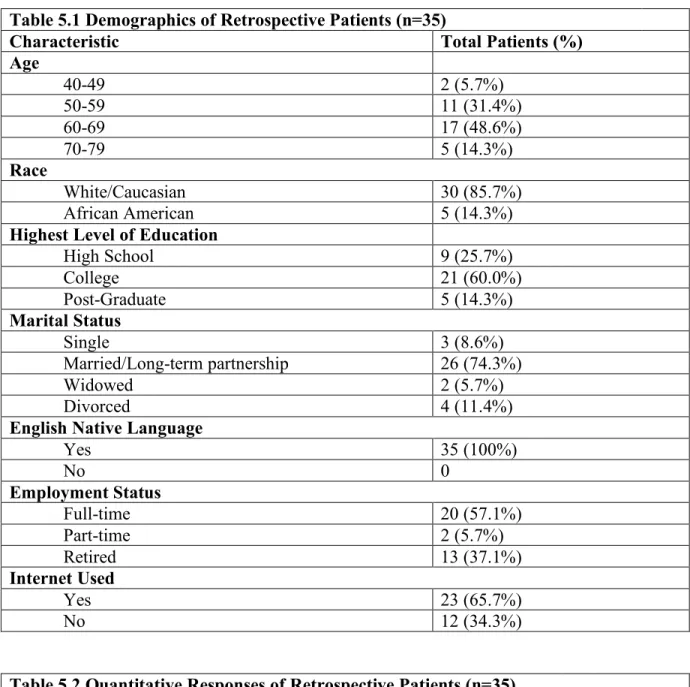
Forty-three patients who attended the class and received surgery at Cone Health Wesley Long Hospital from January 1, 2019 to May 16, 2019 were contacted and enrolled in the retrospective group; 81.4% (n=35) consented to be part of the study. The average age of these patients was 62.5 years old with ages ranging from 47 to 78. All patients identified English as their native language and 85.7% (n=30) patients identified as Caucasian while 14.3% (n=5) identified as African American. Sixty percent (n=21) patients reported completing college. Further, 74.3% patients reported being married (n=26) and 57.1% reported being employed full-time (n=20). All of the demographic results are reported in Table 5.1 of Appendix E.
Outcomes
Table 5.2 in Appendix E summarizes findings from the quantitative questions that were asked of each patient. The patients were satisfied with their preoperative teaching, as the mean for each response was greater than 4 (satisfied). All patients (n=35; 100%) indicated that they would definitely recommend the educational class to others getting the surgery. As previously stated, 68.6% (n=24) of patients believed a video or audio recording of the class would have been helpful, while 97.1% (n=34) believed a video would NOT be the preferred method of teaching over an in-person class.
number of postoperative encounters each patient utilized within 30 days of surgery was 2.46 (standard deviation [SD]=0.82) and the average length of hospital stay in hours for each patient was 33.66 (SD=15.41).
Table 5.4 in Appendix E shows qualitative responses provided by patients about satisfaction with the class, including aspects of that class that they disliked and ways the class could be improved. Notably, seventeen patients liked that the class prepared them for surgery and outlined expectations, eleven liked having the survivors at the class, nine liked the RN who taught the class, and nine liked the hands-on learning with the catheter bag. One patient
Results of the Prospective Study Patient characteristics
Fourteen patients were initially enrolled but three were excluded due to either receiving surgery after the timeframe or failing to answer multiple phone calls and/or return voice
messages from the PL postoperatively. Thus, eleven patients were enrolled into the prospective cohort, provided that they attended the prostatectomy class and underwent surgery between the dates October 18, 2019 and December 6, 2019 at Cone Health Wesley Long Hospital, signed the consent form, and agreed to the terms of the project. The average age of these patients was 61.9 years, with ages ranging from 55 to 75. All patients identified English as their native language (n=11; 100%), 72.7% (n=8) identified as Caucasian, and 27.3% (n=3) identified as African American. Less than half of the patients (n=4; 36.4%) reported completing college, while 63.6% (n=7) reported completing high school. Further, 81.8% of the patients were married (n=9). Seven patients (63.6%) worked full-time and 27.3% (n=3) were retired. All demographic results for the prospective cohort are reported in Table 5.5 of Appendix E.
Outcomes
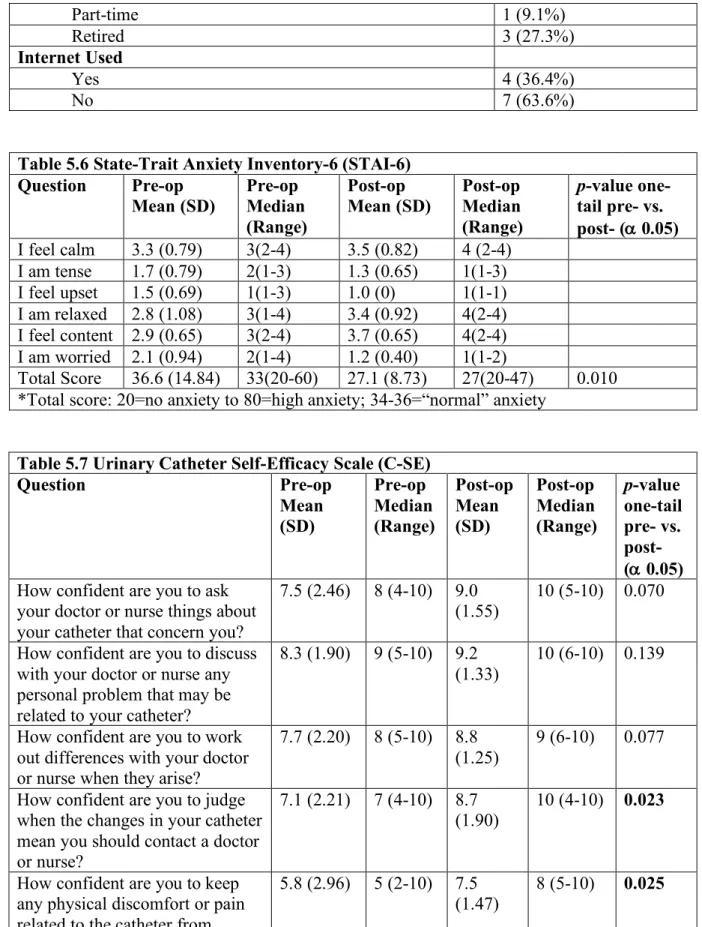
Table 5.6 in Appendix E summarizes the findings from the State-Trait Anxiety
postoperatively and a paired t-test was calculated for the STAI (α=0.05). Statistically significant (p=0.010) results were found for the total score.
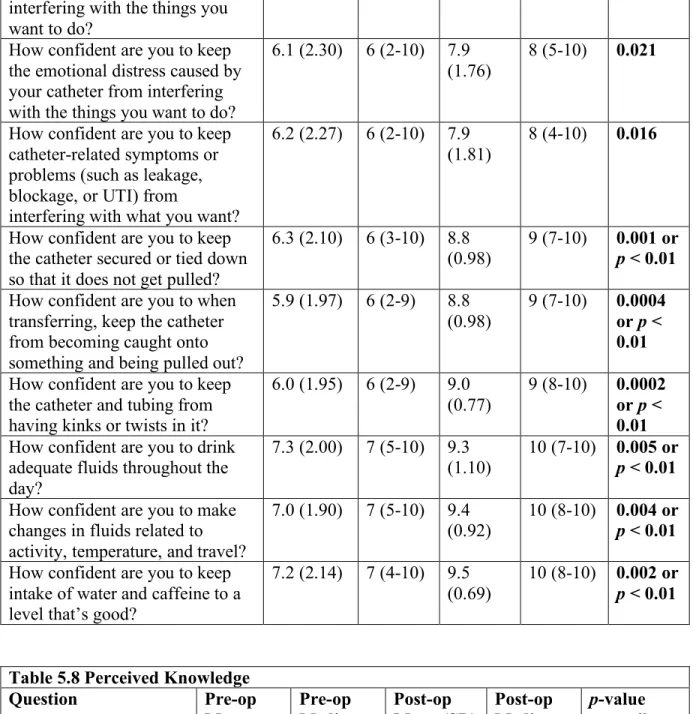
Table 5.7 in Appendix E summarizes the findings from the Urinary Catheter
Self-Efficacy (C-SE). Responses on this tool were measured using a 10-point Likert scale (1= “not at all confident” and 10= “very confident”). These answers were scored question by question instead of taking a sum of the values of all questions, as the developers of this tool did not specifically discuss scoring of the entire tool; only that higher scores on each question indicate greater self-efficacy (Wilde et al., 2016). Numerous significant differences were found when the preoperative scores were compared with postoperative scores showing improved patient-reported confidence in managing the catheter postoperatively.
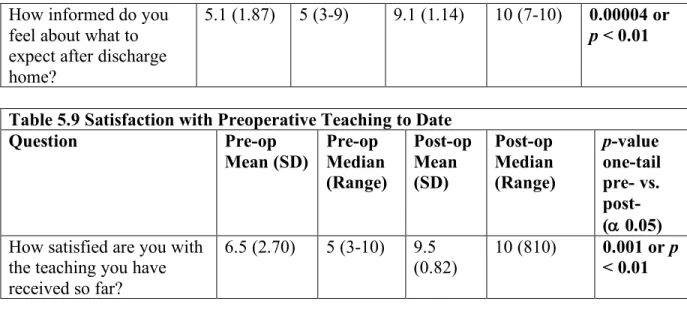
Table 5.8 in Appendix E summarizes findings from the questions regarding patients’ perceived knowledge of their preoperative education. When the averages of each response were statistically compared preoperatively vs. postoperatively, each response had a statistically significant result (p < 0.01 for each question).
Table 5.9 in Appendix E summarizes findings from the single question regarding satisfaction with preoperative teaching. When the averages for this response were compared preoperatively vs. postoperatively, the response had a statistically significant result (p < 0.01).
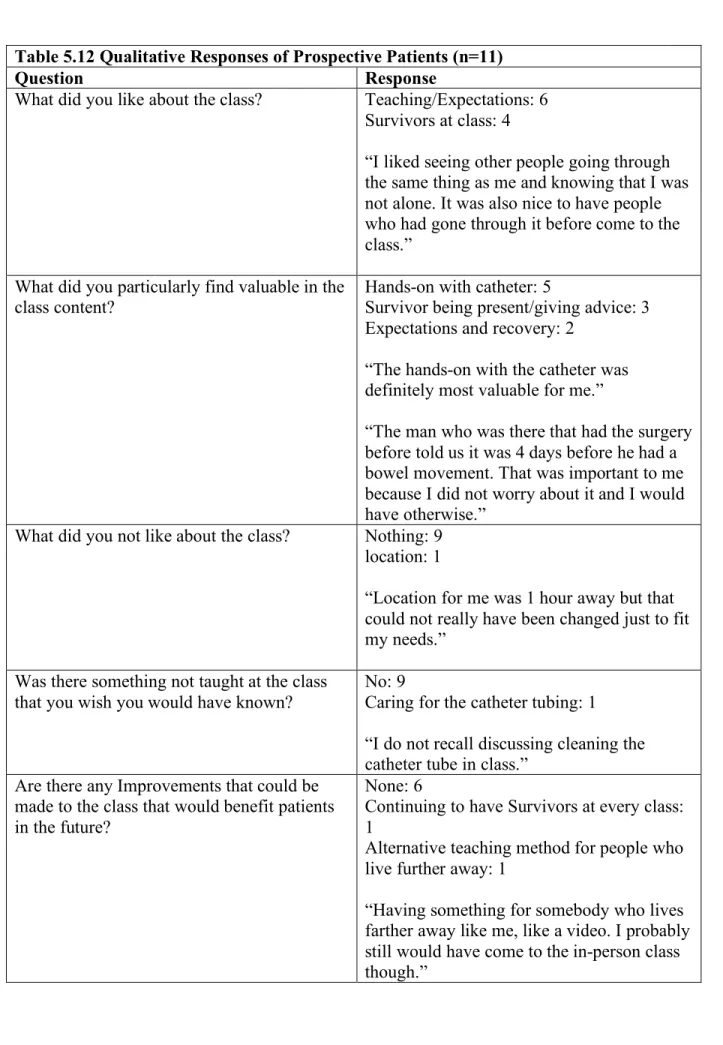
thought a video or audio recording of the class would have been helpful to augment learning, while 100% (n=11) thought a video would NOT be the preferred primary method of teaching over an in-person class.
Table 5.11 in Appendix E shows the average number of postoperative encounters and the average length of hospital stay in hours for the participants. In the prospective cohort, the
average number of postoperative encounters each patient utilized within 30 days of surgery was 2.18 (SD=1.08), and the average length of hospital stay in hours for each patient was 34.27 (SD=5.85).
Summary of Results
The retrospective cohort contained a total population of 35 patients, and the prospective cohort contained a total population of eleven patients. In both the retrospective and prospective cohorts, the largest group of men were between the ages 60-69 (48.6% and 54.5%, respectively) and identified as White/Caucasian (85.7% and 72.7%, respectively). There was a difference in the highest of level of education reported within the two cohorts, with the retrospective cohort having 60.0% college graduates and the prospective cohort having 63.6% high school graduates. The largest group of patients in both the retrospective and prospective cohorts were married (74.3% and 81.8%, respectively) and worked full-time (57.1% and 63.6%, respectively). All of the patients in both cohorts reported English as their native language. The majority of patients in the retrospective cohort (65.7%) used the Internet in their decision-making process for prostate cancer treatment. In the prospective cohort, this was not the case, as only 36.4% of the patients used the Internet in their decision-making process for prostate cancer treatment.
Overall, both cohorts of patients were satisfied with their preoperative teaching. In both cohorts, 100% of patients stated they would definitely recommend the preoperative class to others getting prostate surgery. Also, in both cohorts, the majority of patients believed that an online video or audio recording would have been helpful to view (68.6% and 72.7%,
respectively) but would NOT be the preferred method over an in-person class (97.1% and 100%, respectively).
retrospective cohort (33.66 hours). No statistical analyses were performed on the comparison of this data.
Both the retrospective cohort and prospective cohort liked that the class taught them about what to expect with the surgical process, how to prepare for surgery, and that prostate cancer survivors came to the class to talk with them. In each group, most patients found the hands-on learning with the catheter to be the most valuable aspect in the class content. Most of the patients from both cohorts reported that they did not dislike anything about the class. When asked about improvements that could be made to the class, many of the patients in both cohorts did not recommend any improvements to the class, and for those who suggested an
improvement, many suggested either having a survivor at each class or continuing to have a survivor at each class.
As previously mentioned, there were statistically significant differences noted in the prospective group when comparing total STAI-6 scores preoperatively and postoperatively, when comparing preoperative and postoperative scores with questions four through thirteen on the C-SE survey, when comparing each response on the perceived knowledge survey, and when comparing the satisfaction with preoperative teaching response.
CHAPTER 6: DISCUSSION
As previously noted, the purpose of this Doctor of Nursing Practice (DNP) project is to: 1) conduct a retrospective review to systematically evaluate and update the preoperative
prostatectomy patient education class that is currently offered by Cone Health Wesley Long Hospital to all patients undergoing prostatectomy, and 2) conduct a pre-post designed study to evaluate the preliminary effects of the updated preoperative prostatectomy patient education class on patient outcomes, i.e., anxiety, confidence, perceived knowledge, patient satisfaction with their preoperative teaching, and explore education class participation association with length of hospital stay in hours, and number of postoperative encounters with urologic surgeon’s office (postoperative encounters), including calls to the office and office visits. The interventions for this project included the encouragement of partners/caregivers at the prostatectomy classes and the coordination of prostate cancer survivor volunteers at each class. Although an online video was created as a result of this project, it was not a measurable component of this project. Outcome Data
prostatectomy utilized by these patients decreased (2.5 encounters and 2.2 encounters, respectively).
Guided by the Practical, Robust Implementation and Sustainability Model (PRISM), this project was successful to the extent that it achieved its purpose to systematically evaluate the preoperative prostatectomy patient education class and evaluate key outcomes related to prostatectomy. Improvements made to the class, such as the online video series, may further increase reach to patients who are otherwise unable to attend the class in-person; this has been a goal of organizational leadership for some time.
PRISM
could be compared to future figures. Also, when the online video series is implemented, measures such as number of views could be tracked to determine how many people view the video.
As the PRISM recommends, the interventions implemented for this project were developed with both the patient and organizational perspective in mind. Patients were
retrospectively surveyed prior to the development of any interventions, with their feedback from the call-backs guiding the proposed interventions. In addition, organizational leadership granted approval of the patient-centered interventions prior to their implementation. Although not identified prior to the project, the external environment impacted the online video series. Since data from the patient call-backs suggested that an online video would be helpful, an online video intervention was proposed and received approval from organizational leadership. However, funding the production of the online video series became an issue. With the help of a urology surgeon, a prostate cancer fund was identified, which fully-funded the production of the online video series for prostatectomy patients. Additionally, the marketing department within Cone Health, and an outside production company were necessary for the coordination and production of the online video series.
To date, the interventions the PL helped to establish, including increased
least one of these volunteers will attend each of the preoperative prostatectomy patient education classes to connect with patients who have not yet had surgery. A schedule was developed by the PL to help facilitate at least one volunteer at each class. Each of these interventions are
continuing to be sustained within the organization.
As previously stated, the production of the online video series is pending. The
involvement of the PL is not necessary for the final steps of the publication of the video series. Once the video series has been developed and a URL link has been published to the
organizational website, the plan is to share the URL link via email with patients who attended the class and via mail for those who did not attend. The goal is to have the video published by June 2020. Email will also be used to recruit future prostate cancer survivor volunteers who are interested in attending future classes. Ultimately, the culture of the organization where the interventions occurred was accepting of the interventions, the interventions met the goals of the organization, patients in the prospective group acknowledged that the interventions were helpful, and clinical leadership recognized the improvement in the patient experience for prostatectomy patients resulting from the interventions.
Limitations
This project was performed in a small community hospital that is part of a larger health system. As such, the findings may not be generalizable to a larger setting such as an academic hospital. Additionally, the sample sizes of each of the cohorts in this project were small, which places less emphasis on the statistically significant results that were found.
what caused the reduction in anxiety and increase in confidence, perceived knowledge, and satisfaction.
The project was designed in a way that assessed a patient’s anxiety, confidence,
perceived knowledge, and satisfaction with preoperative teaching before attending the class and again within seven days postoperatively. This study could have been improved if a patient’s anxiety, confidence, perceived knowledge, and satisfaction with preoperative teaching was measured before attending the class and then immediately after attending the class. Since patient outcomes were measured after surgery in this project, the operation could be viewed as a
confounder. Additionally, if the operation was statistically controlled for, the results could have been less limited.
The surveys completed preoperatively and postoperatively were completed in different formats; the preoperative survey was completed by the patient in-person and the postoperative survey was completed through a phone conversation between the patient and the PL. For this reason, bias could have resulted due to the patient reporting a different result than he would have otherwise reported because he was speaking with another person.
Lastly, the tools that were used to measure satisfaction with preoperative teaching and perceived knowledge were not validated, reliable tools. They were specifically developed for the purposes of this project by the PL. Therefore, they further limit the findings of this project. Recommendations
the interventions, and the improvements desired by patients may be different depending on the patient population.
Furthermore, best practices for educating patients prior to urologic surgeries, such as prostatectomy, should be further examined. Patients can be educated in a variety of ways, and the patient experience of surgery and recovery may be affected by the type of teaching they receive prior to surgery.
Conclusion
Preoperative education before scheduled surgical procedures is common practice, but occurs in a magnitude of ways. Specifically, for patients who elect to proceed with
prostatectomy, guidelines recommend educating patients prior to surgery, but the type of recommended education is not explained by the guidelines (Sanda et al., 2017).
As demonstrated by this project, patients who attend a preoperative prostatectomy patient education class before scheduled prostatectomy may have better patient-reported outcomes, such as decreased anxiety, increased confidence, increased perceived knowledge, and increased satisfaction with preoperative teaching. Quality improvement projects should be used to continue to highlight the benefit of preoperative education classes. Online videos, can educate patients located in remote settings who may not have the means to travel to an in-person class, or be used to augment in-person classes. Further, patients currently battling prostate cancer value the
APPENDIX A: FLOW DIAGRAM Figure 2.1
Records identified through database searching (n = 404)
Additional records identified through other sources (n = 18)
Records after duplicates removed (n = 317)
Records screened (n = 317)
Records excluded (n = 255)
Full-text articles assessed for eligibility (n = 62)
Full-text articles excluded, with reasons (n = 51)
Studies included in qualitative synthesis
(n = 11)
Studies included in quantitative synthesis
(n = 10)
APPENDIX B: PRISM
APPENDIX C: PROJECT OUTLINE Figure 4.1 Obtain necessary approvals at UNC and Cone Health
• UNC IRB • Cone Health IRB • Cone Health Nursing
Research Council Retrospective evaluation of current preoperative radial prostatectomy program
• Identify and survey participants who attended preoperative class from 01/01/19 to 05/16/19 • Adminster Surveys
Revise and update program based on survey findings, research, and organizational needs
• Meet with UNC Chair
• Meet with
stakeholders at Cone Health
Perform pre-and post-test
of revised program
• Implementation 10/18/19 through 12/06/19
• Pre-intervention: Administer Surveys
• Post-intervention: Administer Surveys Evaluate and compare participants before and after intervention on key outcomes • Anxiety, confidence, perceived knowledge, satisfaction • Length of
APPENDIX D: MEASUREMENTS Satisfaction with All Preoperative Education
For baseline patients: We are asking for your input on the current class you attended before your prostate surgery at Cone Health.
For prospective patients: We are interested in how satisfied you are with the teaching you had before your prostate surgery.
1. How satisfied are you with your overall preoperative teaching? Circle one. Very unsatisfied Unsatisfied Neutral Satisfied Very satisfied
2. How satisfied were you with the content of the teaching (pre-surgery, during hospitalization, discharge home)? Circle one.
Very unsatisfied Unsatisfied Neutral Satisfied Very satisfied 3. How satisfied were you with the location of the class? Circle one.
Very unsatisfied Unsatisfied Neutral Satisfied Very satisfied 4. How satisfied were you with the time of the class? Circle one.
Very unsatisfied Unsatisfied Neutral Satisfied Very satisfied
5. How satisfied were you with the format of the class (informal, group setting, open discussion encouraged)? Circle one.
Very unsatisfied Unsatisfied Neutral Satisfied Very satisfied 6. How satisfied were you with the class being taught in-person? Circle one. Very unsatisfied Unsatisfied Neutral Satisfied Very satisfied
7. Now that you have gone through surgery and are recovering, a. What did you like about the class?
c. Was there something not taught at the class that you wish you would have known?
8. How satisfied were you with the program as a whole? Circle one.
Very unsatisfied Unsatisfied Neutral Satisfied Very satisfied 9. What did you particularly find valuable in the class content?
10. Would you recommend the program to others getting this surgery? Circle one.
Definitely would not probably would not maybe would/maybe not probably would definitely would
11. Would a video or audio recording of the class content be helpful to view before or after your surgery?
Yes No
12. Would an Internet-based or CD format video be preferred over an in-person class?
Yes No
Demographics 1. What is your age?
2. Which of the follow best describes your racial or ethnic background? Please check one.
o Asian/Pacific Islander o Black/African American o Hispanic/Latino
o Native American/American Indian o White/Caucasian
o Multiracial
o Other. Please specify:
3. Highest level of education completed: Please check one.
o Elementary o High school o College o Post-graduate
4. What is your marital status? o Single
o Married/long-term partnership o Divorced/separated
o Widowed
5. Is English your native language? o Yes
o No
If no, what is your native language? 6. What is your employment status?
o Full-time o Part-time o Retired o Unemployed
7. Did you use the Internet during your decision-making process about treatment options for prostate cancer?
o Yes o No
Anxiety
How do you feel right now at this moment? Circle one choice for each prompt.
Not at all Somewhat Moderately Very much
1. I feel calm 1 2 3 4
2. I am tense 1 2 3 4
3. I feel upset 1 2 3 4
4. I am relaxed 1 2 3 4
5. I feel content 1 2 3 4
Confidence with Urinary Catheter
Select which number between 1 and 10 represents your current amount of confidence in
managing the urinary catheter. For example, if you are somewhat confident, you would probably select a 5.
Communication
1 (not at all
confident) 2 3 4 5 6 7 8 9
10 (very confident) How confident are
you to ask your doctor or nurse things about your catheter that concern you?
1 2 3 4 5 6 7 8 9 10
How confident are you to discuss openly with your doctor or nurse any personal problems that may be related to your catheter?
1 2 3 4 5 6 7 8 9 10
How confident are you to work out differences with your doctor or nurse when they arise?
1 2 3 4 5 6 7 8 9 10
How confident are you to judge when the changes in your catheter mean you should contact a doctor or nurse?
1 2 3 4 5 6 7 8 9 10
Prevent Interference with Daily Activities
1 (not confident
at all) 2 3 4 5 6 7 8 9
10 (very confident) How confident are
you to keep any physical discomfort or pain related to the catheter from interfering with the things you want to do?
1 2 3 4 5 6 7 8 9 10
How confident are you to keep the emotional distress
interfering with the things you want to do?
How confident are you to keep catheter-related symptoms or problems (such as leakage, blockage, or UTI) from interfering with what you want?
1 2 3 4 5 6 7 8 9 10
Prevent Catheter Dislodgement
1 (not confident
at all) 2 3 4 5 6 7 8 9
10 (very confident) How confident are
you to keep the catheter secured or tied down so that it does not get pulled?
1 2 3 4 5 6 7 8 9 10
How confident are you to when transferring, keep the catheter from becoming caught onto something and being pulled out?
1 2 3 4 5 6 7 8 9 10
How confident are you to keep the catheter and tubing from having kinks or twists in it?
1 2 3 4 5 6 7 8 9 10
Fluids
1 (not confident
at all) 2 3 4 5 6 7 8 9
10 (very confident) How confident are
you to drink adequate fluids throughout the day?
1 2 3 4 5 6 7 8 9 10
How confident are you to make changes in fluids related to activity,
temperature, and travel?
How confident are you to keep intake of water and caffeine to a level that’s good?
Perceived Knowledge
Select which number between 1 and 10 represents how informed you feel about the surgical process. For example, if you feel somewhat knowledgeable, you would probably select a 5.
1 (not at all
informed) 2 3 4 5 6 7 8 9
10 (very informed) 1. How informed
do you feel about what to expect before surgery?
1 2 3 4 5 6 7 8 9 10
2. How informed do you feel about what to expect during your
hospitalization?
1 2 3 4 5 6 7 8 9 10
3. How informed do you feel about what to expect after discharge home?
Satisfaction with Preoperative Education to Date
Select which number between 1 and 10 represents how satisfied you are with the teaching you have received so far. For example, if you feel somewhat satisfied, you would probably select a 5.
1 (very
unsatisfied) 2 3 4 5 6 7 8 9
10 (very satisfied) 1. How satisfied
are you with the teaching you have received so far?
APPENDIX E: RESULTS Table 5.1 Demographics of Retrospective Patients (n=35)
Characteristic Total Patients (%)
Age
40-49 2 (5.7%)
50-59 11 (31.4%)
60-69 17 (48.6%)
70-79 5 (14.3%)
Race
White/Caucasian 30 (85.7%)
African American 5 (14.3%)
Highest Level of Education
High School 9 (25.7%)
College 21 (60.0%)
Post-Graduate 5 (14.3%)
Marital Status
Single 3 (8.6%)
Married/Long-term partnership 26 (74.3%)
Widowed 2 (5.7%)
Divorced 4 (11.4%)
English Native Language
Yes 35 (100%)
No 0
Employment Status
Full-time 20 (57.1%)
Part-time 2 (5.7%)
Retired 13 (37.1%)
Internet Used
Yes 23 (65.7%)
No 12 (34.3%)
Table 5.2 Quantitative Responses of Retrospective Patients (n=35)
Question Mean
(SD)
Median (range)
How satisfied are you with your overall preoperative teaching? 4.95 (0.28) 5 (4-5) How satisfied were you with the content of the teaching (pre-surgery,
during hospitalization, discharge home)?
4.89 (0.32) 5 (4-5)
How satisfied were you with the location of the class? 4.83 (0.45) 5 (3-5) How satisfied were you with the time of the class? 4.69 (0.53) 5 (3-5) How satisfied were you with the format of the class (informal, group
setting, open discussion)?
4.86 (0.36) 5 (4-5)