Family PArtners in Lifestyle Support (PALS): Family-Based
Weight Loss for African American Adults with Type 2 Diabetes
Carmen D. Samuel-Hodge, PhD,
Department of Nutrition, Gillings School of Global Public Health, School of Medicine, and Center for Health Promotion and Disease Prevention, University of North Carolina at Chapel Hill, Chapel Hill, NC, USA
Judith C. Holder-Cooper, PhD,
Departments of Psychiatry and Behavioral Science and Community and Family Medicine, Duke University, Durham, NC, USA
Ziya Gizlice, PhD,
Center for Health Promotion and Disease Prevention, University of North Carolina at Chapel Hill, Chapel Hill, NC, USA
Gwendolyn Davis, MPH,
Center for Health Promotion and Disease Prevention, University of North Carolina at Chapel Hill, Chapel Hill, NC, USA
Sonia P. Steele, MPH,
Center for Health Promotion and Disease Prevention, University of North Carolina at Chapel Hill, Chapel Hill, NC, USA
Thomas C. Keyserling, MD,
Department of General Internal Medicine, School of Medicine, and Center for Health Promotion and Disease Prevention, University of North Carolina at Chapel Hill, Chapel Hill, NC, USA
Shiriki K. Kumanyika, PhD,
Department of Biostatistics and Epidemiology, University of Pennsylvania Perelman School of Medicine, Philadelphia, PA, USA
Phillip J. Brantley, PhD, and
Behavioral Medicine Laboratory, Pennington Biomedical Research Center, Louisiana State University, Baton Rouge, LA, USA
Laura P. Svetkey, MD
Sarah W. Stedman Nutrition and Metabolism Center, Division of Nephrology, Department of Medicine, Duke University Medical Center, Durham, NC, USA
Users may view, print, copy, and download text and data-mine the content in such documents, for the purposes of academic research, subject always to the full Conditions of use:http://www.nature.com/authors/editorial_policies/license.html#terms
Corresponding Author: Carmen D. Samuel Hodge, PhD, MS, RD, 1700 Martin Luther King Jr. Blvd., Room 250, CB#7426, Chapel Hill, NC 27599-7426, [email protected], Phone: 919-966-0360, Fax: 919-966-3374.
HHS Public Access
Author manuscript
Obesity (Silver Spring)
. Author manuscript; available in PMC 2017 June 02.Published in final edited form as:
Obesity (Silver Spring). 2017 January ; 25(1): 45–55. doi:10.1002/oby.21700.
A
uthor Man
uscr
ipt
A
uthor Man
uscr
ipt
A
uthor Man
uscr
ipt
A
uthor Man
uscr
Abstract
Objective—To develop and test a family-centered behavioral weight loss intervention for African
American adults with type 2 diabetes.
Methods—In this randomized trial, dyads consisting of African American adult with overweight
or obesity and type 2 diabetes (index participant) paired with a family partner with overweight or obesity, but not diagnosed with diabetes, were assigned in a 2:1 ratio to a 20-week special
intervention (SI) or delayed intervention (DI) control group. The primary outcome was weight loss among index participants at 20 weeks follow-up.
Results—One hundred-eight participants (54 dyads – 36 (SI) and 18 (DI) dyads) were enrolled:
81% females; mean age, 51 years; mean weight,103 kg; and mean BMI, 37 kg/m2. At post-intervention, 96 participants (89%) returned for follow-up measures. Among index participants, mean difference in weight loss between groups was −5.0 kg, p<.0001 (−3.6 kg loss among SI; 1.4 kg gain in DI). SI index participants showed significantly greater improvements in hemoglobin A1c, depressive symptoms, family interactions, and dietary, physical activity, and diabetes self-care behaviors. SI family partners also had significant weight loss (−3.9 kg (SI) vs. −1.0 kg (DI) p=0.02).
Conclusions—A family-centered, behavioral weight loss intervention led to clinically
significant short-term weight loss among family dyads.
Keywords
obesity; family support; intensive behavioral lifestyle intervention; weight loss intervention; diabetes self-management
Introduction
Obesity is estimated to account for 64–74% of new type 2 diabetes cases in the United States(1). There is solid evidence from the Diabetes Prevention Program (DPP)(2) trial that modest weight loss (about 7% of body weight) can reduce the onset of diabetes by about half, among overweight and obese persons at high risk for diabetes. Further, modest weight loss among those with diabetes, achieved through lifestyle behavior changes, provides cardiometabolic and other health benefits(3). In the Look AHEAD trial, 1-year weight losses of 5 to <10% of initial body weight were significantly associated with clinically meaningful improvements in glycemia, blood pressure, triglycerides, and HDL cholesterol(3). Thus, weight loss among those with and at risk for diabetes would lessen the burden of diabetes, and reduce its social and economic costs.
The higher than average burden of type 2 diabetes and its complications among African Americans is well-documented(4), and are linked to the above-average rates of overweight and obesity in this population(5–7). Although Black participants in the DPP lost statistically and clinically significant amounts of weight, the DPP and other randomized controlled trials (RCTs) of intensive behavioral weight loss interventions have reported less weight loss among African Americans, especially women, compared to white participants(8)(9,10)(11). These differential outcomes suggest the need for adaptations of current evidence-based
A
uthor Man
uscr
ipt
A
uthor Man
uscr
ipt
A
uthor Man
uscr
ipt
A
uthor Man
uscr
interventions to improve their effectiveness among African Americans. This need, which also applies to diabetes self-management behaviors, may be met in part, by interventions adapted to the social, family, and community contexts of African Americans(12,13). Family-centered weight loss interventions for those with diagnosed diabetes may also help to prevent diabetes onset in participating family members whose body weight puts them at risk of developing diabetes. Family characteristics such as low family cohesion, high family conflict, low levels of family organization, poor communication, low spouse involvement, too rigid or too permeable family boundaries, and high levels of criticism and hostility have been associated with poor diabetes outcomes(14). In African Americans, family conflict and togetherness are two factors that emerge as significant influences on diabetes
management(14,15). Limited data also suggest that family cohesion (or family closeness and togetherness) and family support may also be important to weight loss success among African Americans(16,17).
Despite the potential promise of family-centered approaches to weight loss among African with diabetes, to date we have not identified published reports of any such interventions. A systematic review of family-centered self-management interventions among adults with diabetes identified 10 studies, but none included African Americans(18). Similarly, a previous review of family involvement in weight control interventions(19), reported no studies with African Americans and only one included an overweight adult family
member(20). To fill this research gap, we developed and tested a family-centered behavioral weight loss intervention for overweight/obese African American adults with type 2 diabetes and an overweight/obese family partner not diagnosed with diabetes. We hypothesized that a family-centered intervention would lead to better weight loss outcomes among African American adults with type 2 diabetes, compared to delayed intervention controls. This report includes primary and secondary study outcomes for weight, lifestyle and diabetes self-care behaviors, family interactions, and psychosocial outcomes.
Methods
Study Design
The Family PArtners in Lifestyle Support (PALS) study was a RCT designed to test a primary outcome of weight change in African American adults with type 2 diabetes (index participants), while also evaluating secondary outcomes of: weight change among family partners; hemoglobin A1c changes among index participants; and changes among both index and family partners in lifestyle behaviors (diet and physical activity (PA)), blood pressure, and selected family and psychosocial factors.
Study Participants
Study participants represented a mix of community and clinical samples recruited via TV ads, email messages, flyers, and a clinical diabetes registry with referrals from diabetes care providers. Inclusion criteria for index participants were: self-described African American aged 21–75 years; self-reported diagnosis of type 2 diabetes; BMI between 25–47 kg/m2, inclusive; hemoglobin A1c value ≤ 11%; currently under the care of a health care provider; able to participate in moderate intensity PA; and willing to participate with a family partner
A
uthor Man
uscr
ipt
A
uthor Man
uscr
ipt
A
uthor Man
uscr
ipt
A
uthor Man
uscr
not diagnosed with diabetes. Family members were eligible to be partners if they did not have a diagnosis of diabetes, lived with or were married (for at least 1 year) to the index person, or were self-described blood relatives who had regular, ongoing contact with the index participant, whether or not they lived with the index person(14). Family partners had the same age, BMI, and PA inclusion criteria as index participants, but did not have to be African American. [See Supporting Information for exclusion criteria.]
The Physical Activity Readiness Questionnaire (PAR-Q)(21) was used to screen participants for the ability to safely engage in moderate intensity PA. Participants with a positive PAR-Q were required to obtain written clearance from their clinician prior to participating in the PA component of the study intervention. The study was conducted at both the University of North Carolina at Chapel Hill (UNC) and Duke University and the Institutional Review Boards at both institutions approved and monitored the study. All participants provided written informed consent.
The flow of recruitment and randomization is depicted in Figure 1. Trained research staff pre-screened prospective participants by phone for study eligibility and motivation to participate. Since randomization to the study required paired participants, during the pre-screening call the index person was asked to identify the family partner of choice. After completing baseline data collection, eligible participant dyads (index participant + family partner) were randomly assigned in a 2:1 ratio to either the family-based special intervention (SI) or the delayed intervention (DI) control group. Permuted block randomization with block sizes of 3, 6, and 9 was used to ensure balance between study groups. Enrollment began in January 2011 and follow-up data collection was completed in September 2012.
Intervention
The weight loss component of Family PALS was informed by several evidence-based behavioral weight loss interventions(2, 22–24), and we conducted formative research (both qualitative and quantitative) to guide our cultural adaptations of the intervention’s family component. Constructs from social interdependence(25) and social support(26) theories provided additional theoretical support for the family-centered adaptations. According to social interdependence theory, when the accomplishment of an individual’s goals is affected by the actions of others there is ‘social interdependence’, which can be positive
(cooperative), or negative (competitive). This positive interdependence leads individuals to encourage and facilitate each other’s efforts to achieve goals and thus mutually supports goal achievement(25). Elements of social support (mutual help and exchange of resources), effective communication, and constructive management of conflict, are key components of these positive interactions(25). In Family PALS, this social interdependence (cooperative) was hypothesized to positively influence weight loss and diabetes self-management both within dyads and among the group of dyads attending intervention sessions.
Family dyads were encouraged to attend 20 weekly group-based sessions together. Each session was offered at least twice weekly for groups of no more than 10 dyads. Sessions were facilitated by trained staff (registered dietitians) and planned to last 120 minutes with the following components: participant weigh-in; group sharing and problem-solving; discussion of a weight control topic (nutrition, PA, or behavior change); opportunity to try a
A
uthor Man
uscr
ipt
A
uthor Man
uscr
ipt
A
uthor Man
uscr
ipt
A
uthor Man
uscr
different PA and/or taste-test a new food or recipe; and goal setting. The study weight loss goal was set at ≥10 lb (4.5 kg) (minimum rate of −0.5 lb (−0.2 kg) weekly). Caloric intake to promote modest weight loss was individualized; the dietary pattern promoted hiqh quality carbohydrates (fruits, vegetables, whole grains, and beans) and fats (vegetable oil and nuts) (27). For PA, we recommended at least 180 up to a maximum of 300 minutes/week of moderate-intensity PA(5). Participant incentives were also included; points were earned for reaching weekly behavioral goals (self-monitoring, fruits and vegetables servings, calories, PA). At sessions #8 and #19, earned points could be redeemed for items such as exercise DVDs, hand held weights, small kitchen appliances, and bathroom scales. For the delayed intervention participants, no educational materials about weight loss were provided during the study period; participants received one newsletter with Family PALS program updates. After post-intervention data collection, DI participants were offered a 6-week program based on Family PALS.
A “Family Time” component (Table 1) was included in every other group sessions. This was a 20-minute segment focused on improving family interactions (cognitive and behavioral skills), rather than diabetes education for family members, which is consistent with evidence that this focus leads to greater effectiveness in family-centered interventions for chronic disease management(28,29). Our adaptations were also guided by formative research conducted specifically to inform the Family PALS intervention(30) and consultations with a clinical psychologist. Formative data (from focus groups and validated family surveys administered to African Americans with diabetes) suggested addressing family issues of: unresolved diabetes conflict, communication, togetherness (cohesion), support, and problem-solving.
Data Collection
We collected baseline and follow up data during in-person visits and by telephone. Except for A1c and diabetes-specific surveys which were administered only to index participants, all other study measures were collected from all participants. At baseline, weight and height were measured without shoes using an electronic scale; blood pressure was measured with an automated monitor, and A1c with a standard point-of-care A1c test kit. [See Supporting Information for measurement details.]
In-person data collection included validated questionnaires to assess PA readiness (baseline only), PA behaviors, dietary intake, diabetes self-management, and health-related quality of life. Phone-administered surveys assessed depressive symptoms, family interactions, and diabetes-related perceptions of control and family conflict. [See Supporting Information for survey details.] Staff not masked to participants’ group assignment recorded a single weight measure at each intervention group session. At 20-weeks post-baseline, follow-up weight (two measures) and in-person and telephone interviews were administered by trained staff masked to participants’ randomization assignment. Participants received $15 cash for each office visit and a $10 check for each data collection phone call.
A
uthor Man
uscr
ipt
A
uthor Man
uscr
ipt
A
uthor Man
uscr
ipt
A
uthor Man
uscr
Sample Size and Statistical Methods
Sample size for the primary study outcome (comparison of index participants’ weight change in the SI and DI groups at 20 weeks) was based on the following assumptions: a two-sided test of significance at α=0.05, random allocation ratio of 2:1, 4 kg standard deviation of weight change(10,31) and 15% anticipated attrition rate. We estimated enrolling 75 index participants (50 in intervention arm and 25 in delayed intervention arm), which provides 80% power to detect a difference of 2.8 kg in mean weight change between groups.
Baseline study sample characteristics were summarized using descriptive statistics and compared between study groups using chi-square and t-tests. For the analysis of the primary outcome, we used a simple t-test under the intention-to-treat (ITT) principle, with last observations carried forward for missing values at follow-up. Additional analyses were conducted using linear regression models adjusting for baseline weight and baseline variables that were considered predictors of weight loss or substantially different between study groups. Analyses for secondary outcomes and weight loss among dyads were similarly performed using t-tests, and linear regression models with data from those who completed the study. SAS software (Version 9.3, SAS Institute, Cary, NC) was used for all analyses.
Results
Participant Characteristics
As depicted in Figure 1, 108 (54 dyads) completed baseline measures and comprised the study sample. Table 2 shows baseline characteristics of study participants. Overall, 81% of participants were females, with a mean age of 51 years, educational attainment of 15 years, and nearly half with annual household incomes between $30,000 to ˂ $70,000. Among the dyads, only 37% had family partners in the same household as the index participant. Slightly over half lived in households with a spouse or someone like a spouse (data not shown), but only 29% of dyads included a spouse. On average, participants weighed 103 kg with a mean BMI of 37 kg/m2. Among index participants, 24% were treated with insulin and 78% diagnosed with hypertension. Baseline values for health-related quality of life were slightly higher than the established norms for persons with diabetes (for both mental and physical scores)(32). Index and family partners scored similarly for family interactions and psychosocial factors.
Outcomes
Post-intervention, we obtained weight data from 89% (96/108) of participants overall (90% (65/72) among SI, and 86% (31/36) in the DI group). Participants lost to follow-up were significantly younger than those assessed (43 vs 52 years; p<.01). We also assessed serious adverse events (events considered life-threatening or requiring an emergency room visit, or an overnight hospital stay). Only two events were reported (a heart attack, and hospital stay for chest pains related to blood clots); neither was study-related.
Index Participants
For the primary outcome of weight change comparison between index participants by study group (ITT), the unadjusted mean difference in weight loss between groups was −5.0 kg, p<.
A
uthor Man
uscr
ipt
A
uthor Man
uscr
ipt
A
uthor Man
uscr
ipt
A
uthor Man
uscr
0001, with a mean weight loss of −3.6 kg among SI and a 1.4 kg gain in DI index
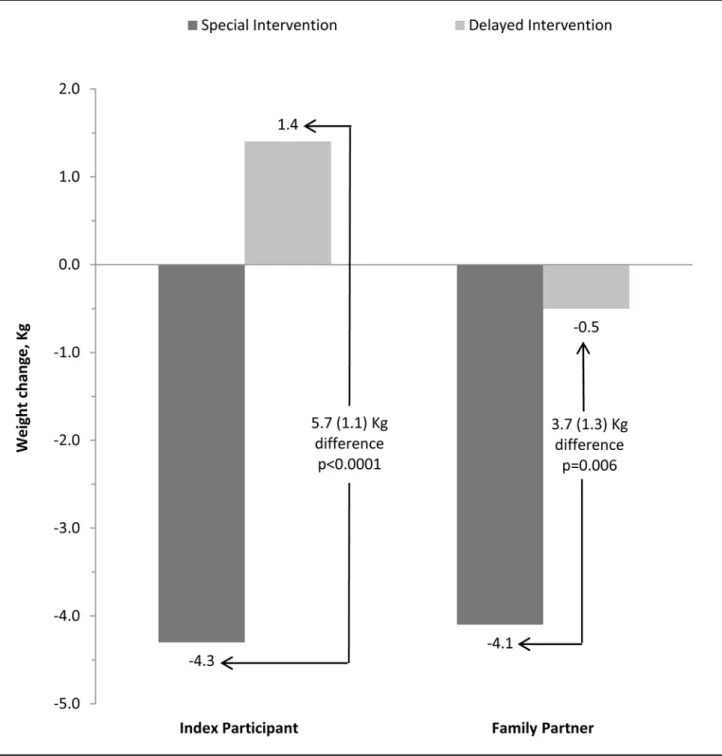
participants. Adjusting for baseline weight, diastolic blood pressure, and frequency of eating breakfast, the mean weight loss difference between groups (ITT), was −4.9 kg, p=.0001. In the analysis of weight change among completers (Table 3 and Figure 2), the adjusted mean difference in weight between groups was −5.7 kg, p<.0001 (4.3 kg loss (SI) vs. 1.4 kg gain (DI)). Among SI index participants, 42% (14/33) lost at least 5% of initial weight, compared to none in DI.
Group session attendance among SI index participants averaged 75% (15 of 20 sessions). Figure 3 shows the pattern of weight loss by attendance (for completers only) at the weekly intervention sessions. For completers, 17 sessions was the median number attended. Weight loss was greater with more sessions attended (−7.1 kg among those attending all 20 session, −5.9 kg for those attending 17 or more sessions, and −1.1 kg with fewer than 17 sessions attended). Moreover, index participants who attended more sessions and lost more weight on average, started at a higher baseline weight.
For secondary outcomes in index participants (Table 3), adjusted analyses showed significantly greater improvements in SI for A1c, dietary and PA behaviors, depressive symptoms, diabetes control perceptions, and self-care behaviors. For blood pressure, the mean difference between groups (−7.9 mm Hg systolic and −5.3 mm Hg diastolic) did not retain statistical significance after full model adjustments.
Family Partners
Table 4 shows secondary outcomes for family partners. Like index participants, family partners (SI) also showed positive changes in weight, although smaller on average. Among family partners, the unadjusted mean change from baseline was −3.9 kg (SI) and −1.0 kg (DI), for a mean difference of –2.9 kg, p=.02. The adjusted mean difference between groups was −3.7 kg, p=.006 (−4.1 kg (SI) and −0.5 kg (DI)). Among SI family partners, 38% (12/32) lost at least 5% of initial body weight. Overall, among both SI family partners and index participants, 28% of completers (18/65) lost at least 7% of initial body weight, and 40% (26/65) lost at least 5% (range 5.3 − 15.4%).
In Figure 3, weight change among family partners (completers only) is also depicted by attendance. Family partners attended slightly fewer sessions on average than their index partners (12 vs. 15 sessions, respectively). Weight change was −5.5 kg among those attending all 20 sessions, −4.3 kg for those attending 14 or more sessions, and −1.1 kg with fewer than 14 sessions attended. In contrast to index participants, family partners who lost more weight and attended more sessions on average had a lower initial weight. Other outcomes among family partners (Table 4) were generally not significantly different when comparing SI and DI. Improvement in physical well-being among SI family members was the only outcome where the adjusted difference remained statistically significant (p=.05).
Family and Dyadic Outcomes
Tables 3 and 4 also show changes in selected family interaction scores. Among index participants, adjusted differences in family cohesion and support of diet and PA were all significant, with greater improvements among SI compared to DI. Similarly, significant
A
uthor Man
uscr
ipt
A
uthor Man
uscr
ipt
A
uthor Man
uscr
ipt
A
uthor Man
uscr
improvements were seen in family cohesion and support among SI compared to DI family members; the adjusted difference in family support for PA, however, was marginally statistically significant (p=.05). Overall, improvements in family problem-solving
communication and unresolved conflict were significantly improved in SI index participants, but compared to DI the adjusted differences were mostly marginally significant. In contrast, among family members the only significant adjusted difference between SI vs. DI was in affirming communication (where DI showed greater improvements).
We also explored a number of outcomes based on the behaviors of the dyads or pairs. For example, we looked at how attending sessions together affected weight loss outcomes and how weight loss in the family partner related to weight loss in the index participant. Pairs attending more than 10 sessions (median) together lost 2.4 kg more than those attending 10 or fewer together (−5.7 vs. −3.3.kg, respectively; p=0.11). Furthermore, index participants lost more weight when paired family members lost at least 5% of initial weight (r=0.24, p=0.46) or 7% (r=0.47, p=0.24). As expected, with the small sample sizes these findings are not statistically significant.
Discussion
Our results demonstrate that a culturally-adapted, family-centered behavioral weight loss intervention for African American adults with diabetes (Family PALS) leads to clinically meaningful weight loss in both index and family partners. We also observed improvements among index participants in A1c, self-reported lifestyle and diabetes self-management behaviors, depressive symptoms, quality of life, and perceptions of diabetes control. Moreover, family interactions (cohesion and social support) improved significantly in both index and family partners. Thus, our study adds meaningfully to the very limited research literature on family-centered interventions for adults with diabetes. More importantly, to our knowledge, it is the first family-centered weight loss intervention study conducted among African American adults with diabetes.
For patients with type 2 diabetes it is challenging to lose weight because of a host of metabolic and psychological factors, including the fact that many conventional glucose-lowering agents (like insulin) commonly result in weight gain(33). Because of this, we are particularly encouraged by our weight loss findings. In a recent review(11) for example, among DPP translations including African Americans with diabetes, two studies with over 82% African Americans reported weight loss outcomes of −2.2 and −2.5 kg (at 1 year and 9 months, respectively), while a third reported −3.0 kg weight loss (at 6 months) among African Americans (39% of sample). Family PALS weight loss of −3.6 kg exceeds these outcomes, despite a shorter weight loss period of 5 months. Furthermore, Family PALS had 42% of SI index participants lose at least 5% of their initial weight which exceeds the 36% observed after one year of weight loss treatment among African Americans in the Look AHEAD trial(3). With a family-centered adaptation of evidence-based interventions, we have demonstrated the potential to greatly improve weight loss outcomes among African Americans with diabetes.
A
uthor Man
uscr
ipt
A
uthor Man
uscr
ipt
A
uthor Man
uscr
ipt
A
uthor Man
uscr
For family partners, weight loss outcomes are equally encouraging. Among PALS family partners, weight loss was slightly higher than that among high-support family partners in SHARE(17) (−3.4 kg vs. −2.8 kg, respectively, using adjusted ITT values). Even more interesting are the descriptive findings suggesting that weight loss was much higher for the index participant when pairs attended more sessions together, and when the family member lost more weight. These observations are similar to those in the SHARE study(17) where greater participation by family/friend partners was associated with greater weight loss. In Family PALS, like other weight loss interventions, attendance was significantly correlated with weight loss (r=0.48, p=0.005). Family PALS’ overall attendance (67%), however, was not higher than that of several studies (68% to 75%) in a recent review of behavioral weight loss interventions among African Americans(9). These findings suggest the importance of pairs attending sessions together.
There are a number of strengths in the development, implementation, and testing of Family PALS. To address the concern that many family-centered chronic disease management interventions have not included input from professionals in the field of psychology or family therapy(34), we sought guidance (during intervention development) from a clinical
psychologist with expertise in this field. Consistent with the recommendations from recent reviews of family-centered interventions among adult with diabetes(18,35) and family interventions for weight control(19), we started with a theory-informed intervention, measured family behaviors and interactions as well as a number or psychosocial outcomes, and evaluated outcomes among family members. Other strengths include good retention (89%) and overall intervention uptake (67%), which exceed rates reported in most single-site weight loss studies among African Americans(9,11).
Study limitations include a short study duration, self-reported PA measurement, point-of-care A1c measurement, and a delayed intervention control group. The comparison of the study intervention with a control group receiving no treatment during the RCT period, limits what Family PALS tells us about the added benefit of actively including family members in weight loss among African American patients with diabetes. For example, we don’t know what the difference in weight loss would be if Family PALS was compared to a similar intervention without active participation of family partners and the “Family Time” component. We knew this would be a limitation when we designed the study but felt given the absence of published interventions, it was more important to first show weight loss effectiveness. Moreover, we allowed many types of family members to partner with the index participant, and because of the very small sub-group numbers we were unable to test differences in outcomes by family partner relationships. Our culturally-appropriate, but broad definition of ‘family’ introduced wide variability in the family behavioral context, with some dyads sharing the same home (and behavioral context), and others not. This broad definition, however, reflects African American life and may have facilitated implementation of our intervention.
Conclusion
Our positive findings make an important contribution to a limited literature on family-centered research for chronic disease management among African Americans, and strongly
A
uthor Man
uscr
ipt
A
uthor Man
uscr
ipt
A
uthor Man
uscr
ipt
A
uthor Man
uscr
support the effectiveness of a family-centered approach. Important research questions that remain include: which family member(s) should be involved; when should they be involved, and how should they be involved in diabetes self-management (and weight loss)
interventions. Further testing of these family-centered adaptations, while addressing longer-term weight loss maintenance represent logical next steps. Expanding this family-centered research base could potentially improve intervention outcomes among African Americans burdened by diabetes and obesity.
Supplementary Material
Refer to Web version on PubMed Central for supplementary material.
Acknowledgments
We are indebted to the family pairs who committed to Family PALS. The authors also acknowledge the mentorship of Dr. Peggye Dilworth-Anderson, and assistance of Larry Johnston, Agna Boass, and student interns, Kina Smith, Kelsey Blaine, Abby Furr, and Jasmine Burroughs.
Funding: This research was supported by the National Institutes of Health grant K01DK080079.
References
1. Must, A.; McKeown, NM. The disease burden associated with overweight and obesity. In: De Groot, LJ.; Beck-Peccoz, P.; Chrousos, G.; Dungan, K.; Grossman, A.; Hershman, JM., et al., editors. Endotext. South Dartmouth, MA: MDText.com, Inc; 2000.
2. Knowler WC, Barrett-Connor E, Fowler SE, et al. Reduction in the incidence of type 2 diabetes with lifestyle intervention or metformin. N Engl J Med. 2002; 346:393–403. [PubMed: 11832527] 3. Wing RR, Lang W, Wadden TA, et al. Benefits of modest weight loss in improving cardiovascular
risk factors in overweight and obese individuals with type 2 diabetes. Diabetes Care. 2011; 34:1481–1486. [PubMed: 21593294]
4. Centers for Disease Control and Prevention. National Diabetes Statistics Report: Estimates of Diabetes and Its Burden in the United States, 2014. Atlanta, GA: U.S. Department of Health and Human Services; 2014.
5. Colberg SR, Albright AL, Blissmer BJ, et al. Exercise and type 2 diabetes: American College of Sports Medicine and the American Diabetes Association: joint position statement. Exercise and type 2 diabetes. Med Sci Sports Exerc. 2010; 42:2282–2303. [PubMed: 21084931]
6. Narayan KM, Boyle JP, Thompson TJ, Sorensen SW, Williamson DF. Lifetime risk for diabetes mellitus in the United States. JAMA. 2003; 290:1884–1890. [PubMed: 14532317]
7. Ogden CL, Carroll MD, Flegal KM. Prevalence of obesity in the United States. JAMA. 2014; 312:189–190.
8. Wingo BC, Carson TL, Ard J. Differences in weight loss and health outcomes among African Americans and whites in multicentre trials. Obes Rev. 2014; 15(Suppl 4):46–61. [PubMed: 25196406]
9. Fitzgibbon ML, Tussing-Humphreys LM, Porter JS, Martin IK, Odoms-Young A, Sharp LK. Weight loss and African-American women: a systematic review of the behavioural weight loss intervention literature. Obes Rev. 2012; 13:193–213. [PubMed: 22074195]
10. West DS, Elaine Prewitt T, Bursac Z, Felix HC. Weight loss of black, white, and Hispanic men and women in the Diabetes Prevention Program. Obesity (Silver Spring). 2008; 16:1413–1420. [PubMed: 18421273]
11. Samuel-Hodge CD, Johnson CM, Braxton DF, Lackey M. Effectiveness of Diabetes Prevention Program translations among African Americans. Obes Rev. 2014; 15(Suppl 4):107–124. 12. McLoyd, VC.; Hill, Nancy E.; Dodge, Kenneth A., editors. African American Family Life:
Ecological and Cultural Diversity. New York: Guilford Press; 2005.
A
uthor Man
uscr
ipt
A
uthor Man
uscr
ipt
A
uthor Man
uscr
ipt
A
uthor Man
uscr
13. Kumanyika SK, Whitt-Glover MC, Gary TL, et al. Expanding the obesity research paradigm to reach African American communities. Prev Chronic Dis. 2007; 4:A112. [PubMed: 17875256] 14. Fisher L, Chesla CA, Bartz RJ, et al. The family and type 2 diabetes: a framework for intervention.
Diabetes Educ. 1998; 24:599–607. [PubMed: 9830956]
15. Chesla CA, Fisher L, Mullan JT, et al. Family and disease management in African-American patients with type 2 diabetes. Diabetes Care. 2004; 27:2850–2855. [PubMed: 15562196] 16. Samuel-Hodge CD, Gizlice Z, Cai J, Brantley PJ, Ard JD, Svetkey LP. Family functioning and
weight loss in a sample of african americans and whites. Ann Behav Med. 2010; 40:294–301. [PubMed: 20721650]
17. Kumanyika SK, Wadden TA, Shults J, et al. Trial of family and friend support for weight loss in African American adults. Arch Intern Med. 2009; 169:1795–1804. [PubMed: 19858438] 18. Torenholt R, Schwennesen N, Willaing I. Lost in translation–the role of family in interventions
among adults with diabetes: a systematic review. Diabet Med. 2014; 31:15–23. [PubMed: 23870045]
19. McLean N, Griffin S, Toney K, Hardeman W. Family involvement in weight control, weight maintenance and weight-loss interventions: a systematic review of randomised trials. Int J Obes Relat Metab Disord. 2003; 27:987–1005. [PubMed: 12917703]
20. Wing RR, Marcus MD, Epstein LH, Jawad A. A “family-based” approach to the treatment of obese type II diabetic patients. J Consult Clin Psychol. 1991; 59:156–162. [PubMed: 2002132]
21. Thomas S, Reading J, Shephard RJ. Revision of the Physical Activity Readiness Questionnaire (PAR-Q). Can J sport Sci. 1992; 17:338–345. [PubMed: 1330274]
22. Hollis JF, Gullion CM, Stevens VJ, et al. Weight loss during the intensive intervention phase of the weight-loss maintenance trial. Am J Prev Med. 2008; 35:118–126. [PubMed: 18617080]
23. Svetkey LP, Stevens VJ, Brantley PJ, et al. Comparison of strategies for sustaining weight loss: the weight loss maintenance randomized controlled trial. JAMA. 2008; 299:1139–1148. [PubMed: 18334689]
24. Svetkey LP, Harsha DW, Vollmer WM, et al. Premier: a clinical trial of comprehensive lifestyle modification for blood pressure control: rationale, design and baseline characteristics. Ann Epidemiol. 2003; 13:462–471. [PubMed: 12875806]
25. Johnson DW. Social interdependence: interrelationships among theory, research, and practice. Am Psychol. 2003; 58:934–945. [PubMed: 14609388]
26. Vaux, A. Social Support: Theory, Research, and Intervention. New York: Praeger Publishers; 1988. 27. Standards of medical care in diabetes–2015: summary of revisions. Diabetes Care. 2015;
38(Suppl):S4.
28. Martire LM, Lustig AP, Schulz R, Miller GE, Helgeson VS. Is it beneficial to involve a family member? A meta-analysis of psychosocial interventions for chronic illness. Health Psychol. 2004; 23:599–611. [PubMed: 15546228]
29. Hartmann M, Bazner E, Wild B, Eisler I, Herzog W. Effects of interventions involving the family in the treatment of adult patients with chronic physical diseases: a meta-analysis. Psychother Psychosom. 2010; 79:136–148. [PubMed: 20185970]
30. Samuel-Hodge CD, Cene CW, Corsino L, Thomas C, Svetkey LP. Family diabetes matters: a view from the other side. J Gen Intern Med. 2013; 28:428–435. [PubMed: 23054922]
31. Samuel-Hodge CD, Johnston LF, Gizlice Z, et al. Randomized trial of a behavioral weight loss intervention for low-income women: the Weight Wise Program. Obesity (Silver Spring, Md). 2009; 17:1891–1899.
32. Ware, JE.; K, M.; Turner-Bowker, DM.; Gandek, B. User’s Manual for the SF-12v2® Health Survey (With a Supplement Documenting SF-12® Health Survey). Lincoln, RI: QualityMetric Inc; 2008.
33. Van Gaal L, Scheen A. Weight management in type 2 diabetes: current and emerging approaches to treatment. Diabetes Care. 2015; 38:1161–1172. [PubMed: 25998297]
34. Campbell, TL. Improving health through family interventions. In: Crane, DR.; Marshall, ES., editors. Handbook of Families & Health. Thousand Oaks, CA: Sage Publications; 2006. p. 379-395.
A
uthor Man
uscr
ipt
A
uthor Man
uscr
ipt
A
uthor Man
uscr
ipt
A
uthor Man
uscr
35. Armour TA, Norris SL, Jack L Jr, Zhang X, Fisher L. The effectiveness of family interventions in people with diabetes mellitus: a systematic review. Diabet Med. 2005; 22:1295–1305. [PubMed: 16176186]
A
uthor Man
uscr
ipt
A
uthor Man
uscr
ipt
A
uthor Man
uscr
ipt
A
uthor Man
uscr
Study Importance Questions
What is already known about this subject?
• Family-centered lifestyle interventions have been shown to be effective in chronic disease management, yet very few studies specifically target high risk minority or African American populations.
• There is a strong evidence base for behavioral weight loss intervention in the prevention and treatment of diabetes, but African Americans (particularly women) have shown suboptimal rates of success.
What does this study add?
• This study addresses an area with no published research – family-centered behavioral weight loss interventions among African American adults with diabetes.
• It complies with several recommendations from recent reviews of family-centered interventions for diabetes and weight management. These include: starting with a theory-informed intervention; obtaining input from experts in the field of psychology or family therapy; and evaluating outcomes among family members.
A
uthor Man
uscr
ipt
A
uthor Man
uscr
ipt
A
uthor Man
uscr
ipt
A
uthor Man
uscr
Figure 1. Study flow diagram
aIndex = participant in dyad with diagnosed diabetes. Both participants in the dyad had to
complete baseline measures before randomization. Only index participants (n=54) included in primary analysis of weight loss. Returnees included in secondary analyses.
A
uthor Man
uscr
ipt
A
uthor Man
uscr
ipt
A
uthor Man
uscr
ipt
A
uthor Man
uscr
Figure 2. Adjusted mean difference in weight outcomes between SI and DI groups (completers)
Values are means (SE). Mean differences between groups of index participants were adjusted for baseline value, diastolic blood pressure, and weekly frequency of eating breakfast. Mean differences between groups of family partners were adjusted for baseline value, diastolic blood pressure, gender, and values for perceived stress, depressive symptoms, family problem-solving and communication total score, frequency of making dinner at home.
A
uthor Man
uscr
ipt
A
uthor Man
uscr
ipt
A
uthor Man
uscr
ipt
A
uthor Man
uscr
Figure 3. Weight change by attendance at weekly sessions among index and family participants (completers)
Time points (weeks) for weight assessment are depicted on the horizontal axis. Week 20 session is the end of the randomized trial. Last weight is brought forward for those with missing values. Four lines show weight loss among completers attending all sessions, those above and below the median number of sessions attended, and the average.
A
uthor Man
uscr
ipt
A
uthor Man
uscr
ipt
A
uthor Man
uscr
ipt
A
uthor Man
uscr
A
uthor Man
uscr
ipt
A
uthor Man
uscr
ipt
A
uthor Man
uscr
ipt
A
uthor Man
uscr
ipt
TABLE 1
“Family Time” component of the PALS interventiona
Session Number “Family Time” – Topics Behavioral target area(s)
1 Introduction to Family Goals (Connect, Communicate, Cope)
• Strengthening family ties by encouraging family members to set goals for connecting and communicating well with each other, and using good coping strategies to deal with family stress
3 Family Goals and PAL Wishes • Share views on family interactions (cohesion, conflict, communication, etc.) from general and diabetes perspectives
• Discuss family goals and PAL wishes for better family connection, communication, and coping.
5 Family Conversations • Share feelings and challenges related to favorite foods. Focus on how family influences feelings about food and sometimes create food-related challenges.
• Discuss solutions for challenging food-related issues
• Target: communication; problem-solving
7 Family Portrait • Describe family support for diabetes and weight loss
• Share what’s good and what could be improved to support better health in families.
• Target: family communication; family support 9 Personal Views about Diabetes
and Weight
• Recognizing old patterns that don’t work and trying a new way of doing things.
• Discuss how beliefs and feelings might be influencing behaviors related to weight loss and diabetes.
• Target: problem-solving 11 Family Conflict – Part 1
(Conflict Resolution)
• Introduce strategies for conflict resolution in families.
• Discuss emotional hot button issues that lead to conflict in families and then problem-solve to generate a list of possible solutions or coping strategies.
13 Family Conflict–Part 2 (Emotional Management)
• Discuss how family communications can influence mood, thoughts, and behaviors. This segment addresses emotional management (e.g., in the context of food policing by family members).
15 Listening and I-Statements • Practice skills in better family communication (general and/or diabetes specific)
• Practice using active listening and I-statements
• Generate key strategies for improving family communication. 17 Family Collage • Practice skills in better family communication (general and/or
diabetes specific) using a family collage to facilitate discussion.
19 My Family Now • Share progress in reaching ‘family goals’ made at the 1st
session
A
uthor Man
uscr
ipt
A
uthor Man
uscr
ipt
A
uthor Man
uscr
ipt
A
uthor Man
uscr
ipt
a
A
uthor Man
uscr
ipt
A
uthor Man
uscr
ipt
A
uthor Man
uscr
ipt
A
uthor Man
uscr
ipt
T ABLE 2 P articipant characteristics a Characteristic Index P articipants (n=54) F amily P artners (n=54) Special Inter v ention Delay ed Inter v ention Index (n=36) F amily (n=36) Index (n=18) F amily (n=18)Demographic Age, years
54 48 55 46 53 50
Female, n (%)
40 (74) 47 (87) 27 (75) 34 (94) 13 (72) 13 (72) Educational achie v ement, years 14.8 15.3 15.0 15.7 14.5 14.9 Annual f
amily income, n (%)
< $30,000 9 (17) 7 (13) 15 (42) 13 (36) 5 (28) 5 (28)
$30,000 – < $70,000
22 (41) 19 (35) 17 (47) 14 (39) 11 (61) 10 (56) $70,000 17 (31) 16 (30) 4 (11) 9 (25) 2 (11) 3 (17)
Spouse or spouse-lik
e person in household, n (%)
26 (48) 35 (65) 14 (39) 23 (64) 12 (67) 12 (67) Emplo
yed full time, n (%)
34 (63) 37 (68) 23 (64) 24 (67) 11 (61) 13 (72) F amily Relationships F amily P
artner in household with inde
x participant, n (%)
20 (37) – 10 (28%) – 10 (56) – F
amily partner as spouse/lik
e spouse, n (%)
16 (29) – 8 (22) – 8 (44) – Ph
ysiologic and Diabetes T
reatment W eight, kg 106.0 99.2 105.4 101.0 107.1 95.3 BMI, kg/m 2 37.8 36.4 38.1 36.6 37.1 36.1 A1c, % 7.5 6.0 7.5 6.1 7.6 5.9
Systolic Blood Pressure, mm Hg
127 126 130 128 121 124
Diastolic Blood Pressure,
c mm Hg
A
uthor Man
uscr
ipt
A
uthor Man
uscr
ipt
A
uthor Man
uscr
ipt
A
uthor Man
uscr
ipt
Characteristic Index P articipants (n=54) F amily P artners (n=54) Special Inter v ention Delay ed Inter v ention Index (n=36) F amily (n=36) Index (n=18) F amily (n=18) Years diagnosed with diabetes
6.6 – 7.3 – 5.4 –
Diabetes treated with insulin, N (%)
13 (24) – 7 (19) – 6 (33) – Diagnosed h
ypertension, N (%)
42 (78) 28 (52) 30 (83) 18 (50) 12 (67) 10 (56)
Lifestyle, Diabetes Self-car
e, F
amily Interactions
Moderate Intensity P
A, min/wk 95.1 91.2 103.8 107.2 77.8 59.2 V
igorous Intensity P
A, min/wk 12.6 21.1 14.3 25.8 9.2 11.7 Fruit, V egetables, servings/d 3.4 3.5 3.5 3.4 3.2 3.6 Fruits, V
egetables, Beans score
15.7 15.2 16.1 15.1 14.8 15.5
Diabetes Self-Care composite score, 5 beha
viors d 19.3 – 20.3 – 17.2 –
Health-related Quality of Life, mental composite score
e 52.6 52.7 53.4 52.4 51.0 53.4
Health-related Quality of Life, ph
ysical composite score
e 46.3 49.3 46.2 48.5 46.6 51.1 Depressi v
e symptoms (PHQ8), sum score
f 3.6 3.1 3.5 3.8 3.8 1.8 Percei v
ed diabetes ne
g
ati
v
e control, mean score
g 1.9 – 1.9 – 1.9 – F
amily support for diet score
h 2.9 2.5 2.8 2.5 3.1 2.6 F
amily support for P
A score h 2.7 2.3 2.5 2.3 3.0 2.3 F
amily cohesion, sum score
36.7 38.3 36.9 38.3 36.2 38.3 F
amily problem-solving communication score, total
A
uthor Man
uscr
ipt
A
uthor Man
uscr
ipt
A
uthor Man
uscr
ipt
A
uthor Man
uscr
ipt
Characteristic
Index P
articipants
(n=54)
F
amily P
artners
(n=54)
Special Inter
v
ention
Delay
ed Inter
v
ention
Index (n=36)
F
amily (n=36) Index (n=18)
F
amily
(n=18)
Unresolv
ed diabetes conflict, mean score
g
1.7
–
1.7
–
1.8
–
a Data are e
xpressed as means (SD) unless otherwise indicated. P
A, Ph
ysical Acti
vity
b Inde
x (n=6) and f
amily partners (n=12) chose not to pro
vide income information
c Diastolic blood pressure w
as the only v
ariable signif
icantly dif
ferent (p<.05) between SI and DI.
d Composite score for self-monitoring blood glucose, P
A, dietary
, and medication adherence, foot self-checks.
e SF-12(32), norm-based mean composite score for mental and ph
ysical well-being; norms for persons with diabetes: mental composite score mean (SD) = 47.3 (10.7); ph
ysical composite score mean (SD)
= 41.5 (11.1). f A score of 10 or greater is considered major depression. g Lo
wer score is a better score; max mean score = 4.
A
uthor Man
uscr
ipt
A
uthor Man
uscr
ipt
A
uthor Man
uscr
ipt
A
uthor Man
uscr
ipt
T ABLE 3Secondary study outcomes: Inde
x participants change from baseline to 20 weeks and mean dif
ferences between groups (completers)
a Outcome Index P articipants Study Gr oup No. Assessed
Change in mean (SE)
Differ ence between gr oups (SE) P-V alue Adjusted change fr om baseline (SE)
Adjusted differ
ence between gr oups (SE) Adjusted P-V alue W eight, kg b Interv ention 33 −4.4 (0.75) −5.9 (1.1) < 0.0001 −4.3 (0.74) −5.7 (1.1) < 0.0001 Control 16 1.6 (0.92) 1.4 (0.87) BMI, kg/m 2 Interv ention 33 −1.6 (0.27) −2.1 (0.40) < 0.0001 −1.6 (0.25) −2.0 (0.38) < 0.0001 Control 16 0.51 (0.31) 0.44 (0.30) A1c, % Interv ention 33 −0.45 (0.19) −0.71 (0.38) 0.07 −0.51 (0.15) −0.89 (0.43) 0.04 Control 16 0.26 (0.34) 0.38 (0.38)
Systolic blood pressure, mm Hg
Interv ention 33 −9.0 (2.7) −7.9 (3.9) 0.05 −7.1 (2.3) −1.9 (3.4) 0.58 Control 16 −1.2 (2.9) −5.2 (2.3)
Diastolic blood pressure, mm Hg
Interv ention 33 −6.7 (1.7) −5.3 (2.5) 0.04 −6.3 (1.6) −4.2 (2.7) 0.13 Control 16 −1.3 (2.0) −2.1 (1.9)
Fruit and v
egetables servings per day
Interv ention 33 0.47 (0.29) 0.75 (0.37) <0.05 0.58 (0.26) 1.1 (0.33) 0.002 Control 16 −0.28 (0.23) −0.51 (0.21) Recreational w
alk time (self-report), min/wk
Interv ention 33 74.7 (22.2) 73.5 (25.8) 0.007 77.4 (23.7) 81.6 (32.5) 0.02 Control 16 1.3 (14.2) 0.27 (12.5) V
igorous intensity ph
ysical acti vity , (self-report), min/wk Interv ention 33 38.8 (12.3) 45.3 (14.9) 0.004 38.0 (12.2) 43.0 (5.9) 0.001 Control 16 −6.6 (9.0) −5.0 (5.9) Depressi v
e Symptoms Score (PHQ8)
Interv ention 34 −2.1 (0.60) −2.1 (1.00) 0.04 −2.2 (0.24) −2.4 (0.91) 0.01 Control 16 0.00 (0.83) 0.16 (0.82)
Mental Composite Score (SF-12)
Interv ention 33 0.06 (0.90) 1.0 (1.6) 0.52 0.84 (0.69) 1.4 (1.3) 0.31 Control 16 1.1 (1.3) 0.54 (1.1) Ph
ysical Composite Score (SF-12)
Interv ention 33 3.9 (1.7) 2.2 (2.0) 0.28 3.7 (1.1) 1.5 (1.2) 0.23 Control 16 1.8 (1.1) 2.2 (0.8) Percei v
ed diabetes ne
g
ati
v
e control, mean score
A
uthor Man
uscr
ipt
A
uthor Man
uscr
ipt
A
uthor Man
uscr
ipt
A
uthor Man
uscr
ipt
Outcome Index P articipants Study Gr oup No. AssessedChange in mean (SE)
Differ ence between gr oups (SE) P-V alue Adjusted change fr om baseline (SE)
Adjusted differ
ence between gr oups (SE) Adjusted P-V alue
Diabetes self-care Composite 7-day score
Interv ention 33 3.9 (0.89) 2.3 (1.8) 0.20 4.3 (0.74)) 3.4 (1.6) 0.03 Control 16 1.6 (1.6) 0.83 (1.4) F
amily support for diet
Interv ention 31 0.62 (0.12) 0.78 (0.24) 0.002 0.67 (0.22) 0.74 (0.22) 0.002 Control 14 −0.15 (0.22) −0.13 (0.17) F
amily support for P
A Interv ention 32 0.62 (0.17) 0.91 (0.23) 0.0003 0.55 (0.16) 0.69 (0.21) 0.002 Control 15 −0.29 (0.17) −0.15 (0.14) F amily cohesion Interv ention 34 1.5 (0.89) 2.2 (1.3) 0.10 1.9 (0.78) −3.6 (1.0) 0.001 Control 16 −0.67 (0.99) −1.6 (0.73) F
amily problem-solving communication, total
Interv ention 34 2.0 (0.67) 1.4 (1.3) 0.29 2.3 (0.67) 2.3 (1.3) 0.08 Control 16 0.63 (1.1) 0.0 (1.1) F
amily problem-solving communication, Af
firming Interv ention 34 1.0 (0.38) 0.72 (0.64) 0.27 1.2 (0.36) 1.1 (0.60) 0.07 Control 16 0.31 (0.54) 0.03 (0.46) F
amily problem-solving communication, Incendiary
Interv ention 34 −1.1 (0.72) −0.75 (0.79) 0.35 −1.2 (0.46) −1.3 (0.83) 0.14 Control 16 −0.31 (0.72) 0.03 (0.70) Unresolv ed f
amily diabetes conflict
Interv ention 34 −0.44 (0.17) −0.35 (0.23) 0.14 −0.49 (0.09) −0.53 (0.27) 0.06 Control 16 −0.09 (0.17) 0.03 (0.24) a V
alues for mean dif
ferences between groups of
inde
x
participants were adjusted for baseline v
alue, diastolic blood pressure, and weekly frequenc
y of eating breakf
ast. A ne
g
ati
v
e v
alue indicates a decrease
compared to baseline; positi
v
e v
alue indicates an increase. Interv
ention = special interv
ention (SI); Control = delayed interv
ention (DI); P
A = ph
ysical acti
vity
b W
eight v
alues are for completers only
. ITT v
alues for the primary outcome of weight change among inde
x participants appear in the te
A
uthor Man
uscr
ipt
A
uthor Man
uscr
ipt
A
uthor Man
uscr
ipt
A
uthor Man
uscr
ipt
T ABLE 4Secondary study outcomes: F
amily partners change from baseline to 20 weeks and mean dif
ferences between groups (completers)
a Outcome F amily P artners Study Gr oup No. Assessed
Change in mean (SE)
Differ ence between gr oups (SE) P-V alue Adjusted change fr om baseline (SE)
Adjusted differ
ence between gr oups (SE) Adjusted P-V alue W eight, kg Interv ention 32 −3.9 (0.97) −2.9 (1.2) 0.02 −4.1 (0.76) −3.7 (1.3) 0.006 Control 14 −1.0 (0.79) −0.5 (0.98) BMI, kg/m 2 Interv ention 32 −1.4 (0.34) −0.98 (0.44) 0.03 −1.5 (0.27) −1.3 (0.44) 0.006 Control 14 −0.40 (0.29) −0.2 (0.34)
Systolic blood pressure, mm Hg
Interv ention 32 −6.3 (2.6) 0.09 (4.6) 0.99 −5.7 (2.3) 1.9 (3.5) 0.59 Control 15 −6.4 (4.0) −7.6 (2.7)
Diastolic blood pressure, mm Hg
Interv ention 32 −2.8 (1.7) 1.7 (2.5) 0.51 −2.6 (1.4) 2.4 (2.5) 0.35 Control 15 −4.5 (1.9) −5.0 (2.1)
Fruit and v
egetables servings per day
Interv ention 32 0.51 (0.22) 0.56 (0.38) 0.15 0.50 (0.17) 0.53 (0.39) 0.19 Control 15 −0.05 (0.32) 0.03 (0.34) Recreational w
alk time (self-report), min/wk
Interv ention 32 60.0 (26.9) 10.0 (37.9) 0.79 64.2 (25.9) 3.1 (44.6) 0.95 Control 15 70.0 (26.9) 61.1 (33.16) V
igorous intensity ph
ysical acti vity , (self-report), min/wk Interv ention 32 13.8 (14.5) 11.8 (17.4) 0.50 15.4 (13.9) 16.6 (22.9) 0.47 Control 15 2.0 (10.3) 1.2 (14.8) Depressi v
e Symptoms Score (PHQ8)
Interv ention 34 −1.0 (0.48) −1.6 (0.65) 0.02 −0.71 (0.34) −0.59 (0.66) 0.38 Control 17 0.53 (0.46) −0.12 (0.58)
Mental Composite Score (SF-12)
Interv ention 32 −2.2 (1.0) −0.54 (1.4) 0.70 −2.1 (0.84) −0.34 (1.5) 0.83 Control 15 −1.7 (1.0) −1.8 (1.2) Ph
ysical Composite Score (SF-12)
Interv ention 32 3.5 (1.4) 3.2 (1.6) <0.05 3.5 (1.1) 3.30 (1.7) 0.05 Control 15 0.30 (0.85) 0.23 (1.2) F
amily support for diet
Interv ention 33 0.50 (0.11) 0.62 (0.33) 0.06 0.51 (0.11) 0.65 (0.21) 0.003 Control 16 −0.12 (0.32) −0.13 (0.19) F
amily support for P
A
uthor Man
uscr
ipt
A
uthor Man
uscr
ipt
A
uthor Man
uscr
ipt
A
uthor Man
uscr
ipt
Outcome F amily P artners Study Gr oup No. AssessedChange in mean (SE)
Differ ence between gr oups (SE) P-V alue Adjusted change fr om baseline (SE)
Adjusted differ
ence between gr oups (SE) Adjusted P-V alue F amily cohesion Interv ention 34 0.93 (0.85) 2.5 (1.3) 0.06 1.1 (0.70) 3.0 (1.2) 0.02 Control 17 −1.5 (0.99) −1.9 (0.90) F
amily problem-solving communication, total
Interv ention 34 0.35 (0.67) 0.12 (1.3) 0.93 −0.06 (0.65) 1.4 (1.4) 0.32 Control 17 0.47 (1.1) 1.3 (1.09) F
amily problem-solving communication, Af
firming Interv ention 34 −0.41 (0.40) 1.2 (0.66) 0.08 −0.62 (0.35) 1.8 (0.70) 0.01 Control 17 0.76 (0.18) 1.2 (0.56) F
amily problem-solving communication, Incendiary
Interv ention 34 −0.76 (0.36) 1.1 (0.80) 0.19 −0.51 (0.35) −0.31 (0.81) 0.71 Control 17 0.29 (0.74) −0.21 (0.68) a V
alues for mean dif
ferences between groups of
family
partners were adjusted for baseline v
alue, diastolic blood pressure, gender
, and v
alues for percei
v
ed stress, depressi
v
e symptoms, f
amily
problem-solving and communication total score, frequenc
y of making dinner at home. A ne
g
ati
v
e v
alue indicates a decrease compared to baseline; positi
v
e v
alue indicates an increase. Interv
ention = special
interv
ention (SI); Control = delayed interv