2008-5435/14/63-192-200
INTERNATIONAL JOURNAL OF OCCUPATIONAL HYGIENE Copyright © 2008 by Iranian Occupational Health Association (IOHA) IJOH 9: 192-200, 2017
ORIGINAL ARTICLE
Identification, Assessment, and Control of Errors in
Chemotherapy Process: A Case Study between Physician and
Nurse
MOSTAFA MIRZAEI ALIABADI
1, IRAJ MOHAMMADFAM
2, ALI REZA
SOLTANIAN
3, MEHRAN GHALENOEI
4, MAHNOUSH KARIMI
5*1Assistant Professor of Occupational Health, Faculty of Health, Hamadan University of Medical Sciences,
Hamadan, Iran;
2Professor, Department of Occupational Health, Faculty of Health, Hamadan University of Medical Sciences,
Iran;
3Associate Professor of Biostatistics, Department of Biostatistics, School of Public Health, Hamadan, Iran; 4Assistant Professor of Occupational Health, Faculty of Health, Qazvin University of Medical Sciences, Qazvin,
Iran;
5MSc Student of Occupational Health, Faculty of Health, Hamadan University of Medical Sciences, Iran.
Received April 08, 2017; Revised June 29, 2017; Accepted September 23, 2017
This paper is available on-line at http://ijoh.tums.ac.ir
ABSTRACT
Human errors are considered as one of the main causes of incidents in the field of healthcare. It is very important to predict errors and identify the factors causing them. The present study was performed to identify and assess physician and nurse 'errors during chemotherapy process, and to determine the corresponding risk and safety principles. This cross-sectional descriptive study was conducted in chemotherapy ward at Imam Reza hospital in Kermanshah, Iran, in 2015. Different activities were carried out including review literature, examining statistics and scientific resources, interviewing with physicians and nurses in chemotherapy, training the aim and research methodology, studying the instructions of chemotherapy, and monitoring activities and measures. Tasks were analyzed by (HTA) method, then errors were identified by SHERPA instruction, and their risks were evaluated. Finally, appropriate control measures were presented to reduce the risks of errors. Overall, 459 errors were identified among the 122 task, 10.46% of errors were unacceptable, and 42.11% were undesirable. Most of the errors were functional, and the fewest were retrieval. These errors occurred for some reasons including lack of doctors and nurses in relation to a large number of patients, lack of comprehensive guidelines, lack of cooperation between doctors, lack of proper training. Functional errors should be prioritized to control and reduce errors, which are possible through the development of guidelines and training courses, the careful monitoring of supervisors and frequent checkup, registering errors and disclosing.
KEYWORDS:
SHERPA, Human errors, Risk assessment, Physicians, Nurses, Chemotherapy
INTRODUCTION
Medical errors are one of the major threats to health care quality [1]. Every person makes an average of 15 errors per workday.
Corresponding author: Mahnoush Karimi Email:[email protected]
193| IJOH | December 2017 | Vol. 9 | No. 4 Mirzaei Aliabadi, et al
unsafe acts [3]. Saying that human being was created to make mistakes, American medical institution in its annual report attracted all the attention to the mistakes and errors in the field of health [4]. The human error is inevitable in any profession.
Therefore, every person may make mistakes. Physicians and nurses are not the excluded from this rule [5]. There is considerable debate about the quality of healthcare in the health system. One out of every ten patients is injured when receiving health care [6]. About 50% to 96% of medical errors are not reported. About 96% of these errors has not been evaluated and cannot be prevented from happening again [7]. Most of these damages are caused by medical negligence.
Thousands of people lose their lives annually due to medical errors [8]. In the United States, almost 400 thousand deaths occur annually due to medical errors and it is the third cause of death in America, which is more than those deaths occur in motorcycle accidents and breast cancer [9, 10]. National Board of Health and Welfare in Sweden, according to the study in 2011, stated, “Annually, among 100000 error cases led to incidents, about 3000 patients die in Sweden. According to the studies conducted in America, England, and Australia, 4% to 16.6% of patients die or become disabled because of damages that half of them can be prevented [11, 5].
Nurses play a significant role in the treatment sections of hospitals. Nurses play crucial roles in patient care and prevention of incidents in recent decades [12]. Among the clinical professions, nurses are highly susceptible to human error as on the one hand, they are subject to physical and psychological pressures and on the other hand, they should remain motivated at the same time [36]. Overall, 2000 deaths and medical malpractice related to nursing error have been occurred in America [13]. So far, despite its importance, chemotherapy process has not been studied in terms of human errors.
The process of chemotherapy is so complicated that it is possible to have errors in each step of the process. In addition to patient safety, errors in the field of chemotherapy threaten the safety of physicians and nurses as well [14, 15]. The most common types of errors are: errors in prescribing [16], in patient identification [17], medication errors [18, 19], distribution of drugs [20], errors in calculating treatment doses, periods of chemotherapy and resting, the way of drug preparation, drug injection in comparison with other drugs [21], error associated with chemotherapy drugs are more likely to lead to severe injuries and even patient death [20, 35]. Moreover, serious errors in the process of chemotherapy are associated with serious consequences, most of which are predictable and preventable [5]. These errors, in addition to
harm the patients, cause irreparable complications for physician and mostly for all nurses. Nurses are considered as a principal key to reducing medical errors in the health care system [12]. Like other physicians, oncologists are even more probable to commit medical errors. While the low therapeutic index and high toxicity of chemotherapy drugs make the errors extremely dangerous in this area, and the nurses and physicians, and others would be exposed to the risks of the process.
That is why the chemotherapy ward of one of the largest hospitals in the western regions of Iran was selected for this study. Totally, 2440 people annually come to the hospital for chemotherapy. Systematic Human Error Reduction & Prediction Approach (SHERPA) method was used in this study. Six methods of PHEA, HEIST, TAFEI, GEMS, CREAM, and SHERPA were examined regarding different characteristics in terms of accuracy, reliability, credibility, comprehensiveness, usability, checkup, structure and efficiency that SHERPA method gained the most points among these methods. It is proper to assess the performance of the medical team [22]. In 2008, it was used to investigate medication administration process. This technique was used to identify laparoscopic surgery errors (2015) and endoscopic surgery errors [23]. SHERPA was employed to evaluate human errors in the emergency ward [24]. In 2014, [25] advantage was taken of this method to identify the ophthalmologists’ errors in cataract surgery. SHERPA is widely used in the nuclear, petrochemical, and oil and gas industries, and it is applied more than other techniques to study errors in the field of health and treatment. The widespread use of the method is mainly due to its validity and acceptable reliability. The role of human error seems to be important in the health and treatment field, particularly the chemotherapy ward. Accordingly, the purpose of this study was to identify errors probable to occur during the chemotherapy process and assess the risks associated with such errors.
MATERIALS AND METHODS
This survey consists of different stages, including presence in the different shifts and monitoring the carried out tasks and familiarizing with the activities, interviewing with doctors and nurses in various stages of research and their purposes and justifying them, studying the particular. A team of three experts who are working in the human error from Hamadan University of Medical Sciences analyzed the results of the SHERPA Worksheets, the result presented of three people and the statistical procedures were computed with the software Excel.
Identification, Assessment, and Control of Errors in Chemotherapy Process … ijoh.tums.ac.ir | 194
practitioners monitoring in the ward are analyzed by HTA in order to identify sub-tasks. There are 5 oncologists and 20 chemotherapy nurses constantly in the chemotherapy ward. The general practitioners visit it to perform daily checks every morning and they are in on-call state in case of emergency. The treatment process is in this order include at first, each of physicians introduces those patients requiring chemotherapy to the ward. Then staff or receptionist, identifying emergency patients, puts clients in queue, and the patient’s file is filled out by the secretary, and it is sent to the matron, after that patient’s drugs are asked by HIS system. The delivery process of all chemotherapy drugs is done on the first day of hospitalization, and all chemotherapy drugs are kept in a ward refrigerator. Non-refrigerated medicines are delivered to the patient. Chemotherapy nurse should take care of the patient from entering the section to leaving it. These tasks are described in the form of HTA. The main advantage of HTA is to break down a task into smaller ones until it is needed. To ensure further, tasks and sub-tasks are checked and examined by consultation and under the supervision of the chemotherapy medical team
The second stage (Task classification): The tasks and subtasks obtained from the first stage are placed in one of five groups of Action, Retrieval,
Checking, Selection, and Communication information tasks. Researcher should train the total identification of tasks and errors to the physicians and nurses in the ward, addition to instruct methodology, he explains the purposes of study so that they can, safely and without worries, share their experiences of tasks and errors with research team; finally, the researcher classifies tasks and errors.
Third stage (HEI-Human Error
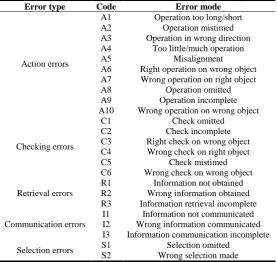
Identification): Tasks are performed and the types of errors associated with each task are determined based on the classification (Table 1). This stage needs the researcher to be present inward in different shifts and to observe tasks in detail and errors, treatment method, and face-to-face interviews, and even to inquire of patients and their companions. To ensure the results and validate all of them, they are given to several nurses and physicians, under the supervising of whom final evaluation is performed.
Fourth stage (Consequence Analysis): Errors are categorized and the critical degree of each error is determined, and the consequences of the determined error should be fully specified.
Fifth stage (Recovery Analysis): The recovery potential of each detected error is determined in the fifth stage, so it should be investigated how errors can be prevented.
Table 1. SHERPA error mode checklist
Error type Code Error mode
Action errors
A1 Operation too long/short
A2 Operation mistimed
A3 Operation in wrong direction
A4 Too little/much operation
A5 Misalignment
A6 Right operation on wrong object
A7 Wrong operation on right object
A8 Operation omitted
A9 Operation incomplete
A10 Wrong operation on wrong object
Checking errors
C1 Check omitted
C2 Check incomplete
C3 Right check on wrong object
C4 Wrong check on right object
C5 Check mistimed
C6 Wrong check on wrong object
Retrieval errors
R1 Information not obtained
R2 Wrong information obtained
R3 Information retrieval incomplete
Communication errors
I1 Information not communicated
I2 Wrong information communicated
I3 Information communication incomplete
Selection errors S1 Selection omitted
S2 Wrong selection made
Sixth stage (Ordinal Probability Analysis): Any error is classified in one of five scales of frequently, often, sometimes, rarely, and never. If error has not been recorded, it is classified in low
classes, whereas it has sometimes occurred in the past, it is in moderate and if occurred repeatedly, it is in high ones (Table 2).
195| IJOH | December 2017 | Vol. 9 | No. 4 Mirzaei Aliabadi, et al
Considering the intensity of occurring, errors are classified in four categories of catastrophic or unacceptable (death or losing systems), critical or undesirable (injuries, occupational diseases or damages to the system is high), borderline or acceptable, but need revising (injuries, occupational diseases or damages to the system is low), and minor
or accepted without revising (injuries, occupational diseases or damage to the system is too low) (Table 2).
Eighth stage (Remedy analysis): Error reduction solutions are presented. The solutions are suggested in the form of changes in the working system that can prevent errors.
Table 2. The matrix of assessing risk Level and risk criteria [26]
Minor(4) Borderline(3)
Critical(2) Catastrophic(1)
Probability of occurring Intensity of risk
4A 3A
2A 1A
frequently (A)
4B 3B
2B 1B
Often (B)
4C 3C
2C 1C
sometimes(C)
4D 3D
2D 1D
Rarely (D)
4E 3E
2E 1E
Never (E)
RESULTS
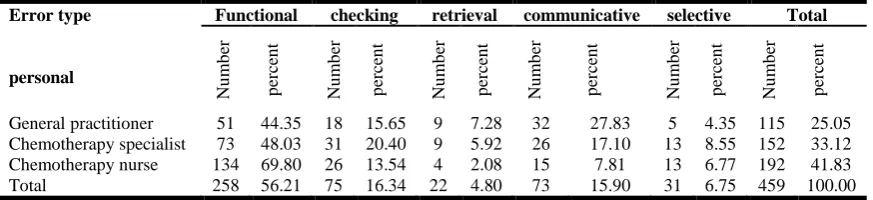
Overall, 122 tasks and 459 types of errors were identified (26 tasks: general practitioner, 39 tasks: chemotherapy specialist, 57 tasks: chemotherapy nurse). About 3.7 errors occurred per task. An example of HTA, diagrams provided for the physician and nurses' tasks is depicted in Fig.1. Of the all identified errors, 56.21% was action (Table 3). The physician and nurses' risk of errors and their level of errors were determined according to the Classic Safety Risk Assessment Matrix (CSRAM) based on Mil-Std- 882D [26]. Regarding the risk of errors, 48 errors (10.46%) were in unacceptable level of risk, 197 errors (42.92%) in undesirable risk level, 204 errors (44.44%) in acceptable level with reviews, and 10 errors (2.18%) in acceptable level risk without reviews (Table 4). Regarding retrieval errors, 45.31% of the errors were non-recoverable that including 52.89% action errors, 18.75% checking errors, 7.21% retrieval errors, 19.23% information communication errors and 1.92% selection errors (Table 5).
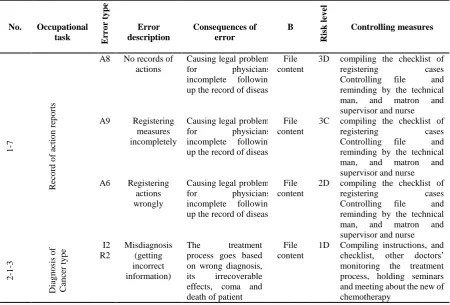
Table 6 presents an example of errors related to the tasks of a physician and nurses using
worksheet SHERPA. Half of errors cannot be identified, the consequences of which are evident in individuals’ deaths, and can be considered as deadly as cancer. The most important tasks of the general practitioner are to lead team in emergency, and follow up counseling, and register and examine conducted measures. The most important tasks of medical oncologist are to diagnose and then to prescribe treatment. Most of the errors are associated with determining the duration of chemotherapy periods and with prescribing the chemotherapy drugs, classified in the group of catastrophic errors. The most important tasks of chemotherapy nurses include preparation and administration of chemotherapy drugs and taking them, preventive measures, recording the reports of activities, counseling, and clinical and paraclinical actions. Most errors of general practitioners and chemotherapy specialists are associated with patients’ safety. These errors cause damages to patients themselves, while the most important errors of nurses in preparation stage cause severe damages to nurses, then to the safety and health of patients and others.
Table 3. Frequency of the risks of treatment cadre errors depending on the type of error
Error type
personal
Functional checking retrieval communicative selective Total
Nu
m
b
er
p
erc
en
t
Nu
m
b
er
p
erc
en
t
Nu
m
b
er
p
erc
en
t
Nu
m
b
er
p
erc
en
t
Nu
m
b
er
p
erc
en
t
Nu
m
b
er
p
erc
en
t
General practitioner 51 44.35 18 15.65 9 7.28 32 27.83 5 4.35 115 25.05
Chemotherapy specialist 73 48.03 31 20.40 9 5.92 26 17.10 13 8.55 152 33.12
Chemotherapy nurse 134 69.80 26 13.54 4 2.08 15 7.81 13 6.77 192 41.83
Total 258 56.21 75 16.34 22 4.80 73 15.90 31 6.75 459 100.00
Red: Risk criteria:unacceptable
Orange: undesirable (harmful) Yellow:acceptable with revising
Identification, Assessment, and Control of Errors in Chemotherapy Process … ijoh.tums.ac.ir | 196
Table 4. Risk level, separately for each type of errors
Table 5. Errors without recovery
Task Type
Task
Error types Chem
o th er a p y S p ec ia li st Chem o th er a p y Nurs e G en er a l Pra ctiti o n er To ta l Num b er p er ce n t Num b er p er ce n t Num b er p er ce n t Num b er p er ce n t
Total errors 152 33.12 192 41.83 115 25.05 459 100.00
Total errors without recovery 92 44.23 68 32.69 48 23.07 208 45.31
functional The number without recovery 47 42.73 48 43.64 15 13.63 110 52.89
checking The number without recovery 17 43.59 10 25.64 12 30.77 39 18.75
retrieval The number without recovery 6 40.00 2 13.33 7 46.66 15 7.21
communicative The number without recovery 18 45.00 8 20.00 14 35.00 40 19.23
Selective The number without recovery 4 100.00 0 0.00 0 0.00 4 1.92
Table 6. An example of a table of errors related to the tasks of a nurse (worksheet SHERPA)
No. Occupational task Erro
r ty p e Error description Consequences of error B Risk lev el Controlling measures 1 -7 Re co rd o f ac ti o n re p o rts
A8 No records of
actions
Causing legal problems
for physicians,
incomplete following
up the record of disease File content
3D compiling the checklist of
registering cases
Controlling file and
reminding by the technical
man, and matron and
supervisor and nurse
A9 Registering
measures incompletely
Causing legal problems
for physicians,
incomplete following
up the record of disease File content
3C compiling the checklist of
registering cases
Controlling file and
reminding by the technical
man, and matron and
supervisor and nurse
A6 Registering
actions wrongly
Causing legal problems
for physicians,
incomplete following
up the record of disease File content
2D compiling the checklist of
registering cases
Controlling file and
reminding by the technical
man, and matron and
supervisor and nurse
2 -1 -3 Dia g n o sis o f Ca n ce r ty p e I2 R2 Misdiagnosis (getting incorrect information)
The treatment
process goes based on wrong diagnosis,
its irrecoverable
effects, coma and death of patient
File content
1D Compiling instructions, and
checklist, other doctors’ monitoring the treatment process, holding seminars and meeting about the new of chemotherapy
Error type
personal
Functional checking retrieval communicative selective Total
Nu m b er p erc en t Nu m b er p erc en t Nu m b er p erc en t Nu m b er p erc en t Nu m b er p erc en t Nu m b er p erc en t
Unacceptable 31 64.58 2 4.17 1 2.08 8 16.67 6 12.5 48 10.46
Undesirable 109 55.33 29 14.72 14 7.11 35 17.77 10 5.07 197 42.92
Acceptable, with reviews
108 52.94 44 21.57 7 3.43 30 14.71 15 7.35 204 44.44
Acceptable, without Reviews
197| IJOH | December 2017 | Vol. 9 | No. 4 Mirzaei Aliabadi, et al
A2 No timely
diagnosis
Disease progression Irreparable
consequences, death
File content
1D Preparing instructions,
checklists, dealing with
offenders I2
R2
No diagnose metastases
(getting incorrect information)
Causing unnecessary treatment and loss of time
File content
1C Preparing instructions,
checklists, others’monitoring 3 -1 -2 -3 S ep ara ti n g Re frig era ted a n d n o n -re frig era ted d ru g s
C1 No attention to
the drug brochure
Perhaps the lack of proper maintenance of medication and
determination of
doses,
Risk of irreparable consequences
- 1E Compiling instruction,
Compiling the cases
checklist, completing it
daily, monitoring supervisor
and matron, providing
important and new points on how to prepare and store medicines in the ward, holding relevant meeting
A8 not put
refrigerated drugs in the refrigerator
Corruption of
medicines, drugs
being unusable
Observin g and corruptin
g drugs
1E Compiling the cases
checklist, completing it the
daily, monitoring of
supervisor and matron,
providing important and new points on how to prepare and store medicines in the ward, holding relevant seminars and training course, dealing with offenders.
DISCUSSION
Work-related injuries in hospitals are more common than in industrial settings, accordingly, hospitals can be regarded as an unsafe environment for both patients and practitioners. About 4%-17% of medical errors lead to permanent disability or patients’ death [28]. 80.5% of medical incidents are harmful and 36.2% of them are preventable (near miss), 13% is deadly (sentinel event) [29].
Safety standards in hospitals include 1) patient’s safety, 2) the safety of personals and clients, 3) the safety of equipment, 4) the safety of facilities. Ignoring these standards causes irreparable damages to life and property. This study aimed at investigating the safety of staff and patients. So far, SHERPA method has not been used to determine human errors in the process of chemotherapy, so the results of this study cannot be compared with other studies. However, the most prevalent and the least prevalent errors were associated with the functional type and the selective type in emergency ward, respectively, which is similar to functional errors of this study and it can justify the difference of treatment cadre tasks in the emergency ward and chemotherapy ward [24].
In a study [25] on ophthalmologists, among 57 identified tasks, 50.94% and 26.64% of errors were announced, respectively, as functional errors and checking errors, which are consistent with the results of this study. In a study [30], 159 errors were identified among 89 tasks for the nurses of the infectious ward, most of them were of functional
type (74.21%) and the least prevalent type was selective (0.63%). Moreover, 5.66% of errors were unacceptable, and 38.36% of the errors were on the harmful level of risk. In this study, 29.69% of errors were medication ones. 69.9% of medication errors (24.7% injection errors, 19.2% errors in determining the dose, 8.2% errors in the equipment, 17.8% errors in the doctor’s orders) were directly related to the nurses [31].
Medication errors were identified [32, 37] nurses as the last shield to prevent medication errors, and the role of nurses could not be ignored in managing medicines, receiving prescribed medicine, computing, checking, assessing patient, documenting and training, regarding the high rate, and the frequency and nature of errors, nurses play an important role in preventing errors.
Errors are the result of the interaction of several factors, including workload, the level of skills and experience of individuals, and the number and characteristics of patients detected as factors influencing the rate of errors [33].
pharmacists. Another strategy is to form a team to check the instructions of chemotherapy, medicine type and its doses, the exact date and time of its injection; it can be a complete and examined solution. In this study, the order of placing errors for both chemotherapy nurses and chemotherapy specialists were quite similar, it is because of significance of similar tasks in the complex process of chemotherapy, and general practitioners should communicate with patients while checking and with a nurse during emergency conditions, as a significant task.
Medical errors can occur anywhere in the healthcare process. Managerial and organizational
CONCLUSION
About 3.7 errors were detected for every studied task given in chemotherapy ward. Considering the high level of errors, with the sensitivity and the difficulty of patients’ status, it is mandatory to implement medical error management systems. This study is one of the few studies in Iran that investigated the errors in the treatment field, and human errors have been estimated by systemic methods for the first time in the chemotherapy ward. Unfortunately, in the country, there is no real and accurate estimation of the errors occurred in the health centers, and the importance of these errors is normally neglected. It is highly recommended to redesign treatment protocols and medical procedures based on principles of human factors and ergonomics (HFE) to enhance the quality of services, improve patient safety and reduce medical errors. SHERPA technique can be a useful tool for identification and assessment of medical errors.
ACKNOWLEDGMENTS
This paper is a Master thesis in the Ward of Occupational Health Engineering, Faculty of Health, and Hamadan University of Medical Sciences. Those should be appreciated, including the head of the hospital, office director of the hospital head, Dr. Shazad, Dr. Sobhani and respectful chemotherapy and surgery nurses, including Ms. Rostami, Ms. Owis, Ms. Chale Chale, Mr. Amiri and the respected authorities of Hamedan Medical Sciences University, who helped to implement the research. The authors declare that there is no conflict of interests.
REFERENCES
1. Mohammadfam I, Bashirian S, Bakhshi Z. Evaluation and Management of Human Errors in Critical Processes of Hospital Using the Extended CREAM Technique. Iran J Health Saf Environ
2017; 25(4):851-8.
2. Manfred M. Increasing safety by implementing optimized structures of team communication and the mandatory use of checklists. Eur J Cardio-rhorac 2012; 41(4)988–92.
3. Ghasemi F, Kalatpour O, Moghimbeigi A, Mohammadfam I. Selecting strategies to reduce high-risk unsafe work behaviors using the safety behavior sampling technique and Bayesian network analysis. J Res Health Sci 2017;17(1)E1-6. 4. Cigger JN. Always having to say you are sorry:a n
ethical response to making mistakes in professional practice. Nurs Ethics 2004; 11(6)568-76.
5. Mohammadfam I, Movafagh M, Bashirian S. Comparison of Standardized Plant Analysis Risk Human Reliaşbility Analysis (SPAR-H) and Cognitive Reliability Error Analysis Methşods (CREAM) in Quantifying Human Error in Nursing Pracştice. Iran J Public Health 2016; 45(3)401-2. 6. WHO. World Alliance for Patient Safety. The
Launch of the World Alliance for Patient Safety. 2004
7. Elfering A, Semmer N, Grebner S. Work stress and patient safety: observer-rated work stressors as predictors of characteristics of safety related events reported by young nurses. Ergonomics 2006; 49(5)457-69.
8. Mohammadfam I, Kamalinia M, Momeni M, Golmohammadi R, Hamidi Y, Soltanian A. Evaluation of the quality of occupational health and safety management systems based on key performance indicators in certified organizations.
Saf Health Work 2017; 8(2)156-61[Persian]. 9. Fein S HL, Singer MK, Spiritus E,Keenan
C,Seymann G,Sojania K,et all. Conceptual Model for Disclosure of Medical Errors. Patient Safety
2008; 2(9)483-94.
10.Colledge A, Car J, Donnelly A, Majeed A. Health information for patients: time to look beyond patient information leaflets. J R Soc Med 2008; 10(9)447–53.
11.Brennan T, Leape L, Laird L, Hebert L, Localio R, Lawthers, A, Newhouse J, Weiler P, Hiatt H. Incidence of adverse events and negligence in hospitalised patients: results of the Harvard medical practice Study. N Engl J Med 1991; 324(6):370-6. 12.Shali M, Joolaee S, Hooshmand A, Haghani H.
Committed Nurse: This Patient is wrong. J Med Ethics Hist Med 2016; 9(34)11-30.
13.Leufer T, Holdforth JC. Let’s do no harm: Medication errors in nursing: Part 1. Nurse Educ Pract 2013; 13(3)213-216.
14.Bilal B, Majd M. chemotherapy spill management policy: policy analysis. ME JN 2013; 7(2)9-21 15.Shahrasbi AA AM, Shokraneh F, Monji F, Noroozi
M, Ebrahimi-Khojin M, et al. Risks to health professionals from hazardous drugs in iran: a pilot study of understanding of healthcare team to occupational exposure to cytotoxics. Excli Journal
2014; 13:491-501.
16.Walsh K, Dodd k , Seetharaman K et al. Medication errors among adults and children with cancer in the outpatient setting. J Clin Oncology 2009; 27(891– 896)
17.Kullberg A,Larsen J, Sharp L. ‘Why is there another person’s name on my infusion bag?’ Patient safety in chemotherapy care e A review of the literature. Eur J Oncol Nurs 2013; 17:228-35. 18.Muller T. Typical medication errors in oncology:
Analysis and prevention strategies. Onkologie
2003; 26:539–44.
19.Vaismoradi M, Jordan S,Turunen H, Bondas T. Nursing students' perspectives of the cause of medication errors. Nurse Educ Today 2014:434-40. 20.Schwappach DL,Wernili M. Medication errors in chemotherapy incidence, types, and involvement of patients in prevention: A review of the literature.
Eur J Cancer Care 2010;19:285-92.
Collaboration, evidence-based best practices, and “smart” technology help avert high-risk adverse drug events and improve patient outcomes . 2011. 22.Lyons M. towards a framework to select techniques
for error prediction: Supporting novice users in the healthcare sector. Appl Ergon 2009; 40(3):379-95. 23.Joise P, Hanna GB, Cuschieri A. Errors enacted
during endoscopic Surgery-a human reliability analysis. Appl Ergon 1998; 29(6):409-23.
24.Kermani A, Mazloumi A, NaslSeraji J, GhasemZadeh F. Identification and evaluation of human errors using SHERPA technique among nurses at emergency ward of an educational hospital in Semnan city, Iran. Occup Environ Med
2013; 4(4):29-43.
25.Mohammadfam I, Saeidi CH. Evaluating human errors in cataract surgery using the SHERPA technique. Ergonomics. 2014; 2(4):41-7.
26.Stanton N, SALMON P. Human factors design& evaluation methods review-Human error identification techniques SHERPA. 1ed, BAE System Publishing., 2004. 140-8 p.
27.Harris D, Marshall A, Young MS, Demagalski J, Salmon P. Using SHERPA to predict designinduced error on the flight deck. Aerosp Sci Technol 2005; 9(6):525-32.
28.Bucknall TK. Implementing guidelines to improve medication safety for hospitalised patients experiences from Western Health, Australia. Evid Based Nurs 2007; 4(1):51-3.
29.Rothschild JM, Hurley CO, Landrigan JW,Cronin K, Martell-Waldrop C,Foskett. & et all. Recovery from medical errors: The critical care nursing safety net. Jt Comm J Qual Patient Saf 2006; 32(2)63-72. 30.Khandan M, Yusefi S, Sahranavard R, Koohpaei A. SHERPA Technique as an Approach to Healthcare Error Management and Patient Safety
Improvement: A Case Study among Nurses. Health Scope. In press(In press),2016 [Persian].
31.Karahan A, Ugurlu Z, Kav S,Abbasoglu A, Kural N, Karaer H. Medication Errors in Oncology Clinics – an Analysis of Incident Reports From Nurses. Eur J Oncol Nurs. 2012:21–6.
32.Marquard J, Henneman PH, Junghee Jo Ze, Fisher DL, Henneman E. Nurses’ Behaviors and Visual Scanning Patterns May Reduce Patient Identification Errors. J Exp Psychol 2011; 17(3)247-256.
33.Lisa M, Nixon C, Giarrusso M. The chemo huddle: a strategy to minimize errors and maximize chemotherapy safety. Eur J Oncol Nurs 2011; 15:275-9.
34.Velde V, Vandenbroucke J, Porre J, Robays H, Verlooy J,Laureys G. Chemotherapy medication error rate in pediatric hematooncology department.
Eur J Oncol Nurs 2010; 14:80-3.
35.Mohammadfam I, Movafagh M, Soltanian A, Salavati M, Bashirian S. Identification and Evaluation of Human Errors among the nurses of Coronary Care Unit Using CREAM Techniques.
Ergonomics 2014; 2(1):27-35.
36.Zarei E, Khakzad N, Reniers G, Akbari R. On the relationship between safety climate and occupational burnout in healthcare organizations.
Saf Sci 2016; 891-104.
37.Kermani A, Mazloumi A, Kazemi Z. Identification of Nurses’ Errors in the Emergency Ward, Using SHERPA Technique. Int J Occup Hyg 2016; 8(1):54-61
38. Kakooei H, Rahimi MH, Hosseini M. The role of bright light during night work on stress and health status of shift work nurses International journal of occupational hygiene. Int J Occup Hyg