T
his “Guidelines Highlights” publication summarizes the key issues and changes in the 2010American Heart Association (AHA) Guidelines for Cardiopulmonary Resuscitation (CPR) and Emergency Cardiovascular Care (ECC). It has been developed for resuscitation providers and for AHA instructors to focus on resuscitation science and guidelines recommendations that are most important or controversial or will result in changes in resuscitation practice or resuscitation training. In addition, it provides the rationale for the recommendations.
Because this publication is designed as a summary, it does not reference the supporting published studies and does not list Classes of Recommendations or Levels of Evidence. For more detailed information and references, the reader is encouraged to read the 2010 AHA Guidelines for CPR and ECC, including the Executive Summary,1 published online
in Circulation in October 2010 and to consult the detailed summary of resuscitation science in the 2010 International Consensus on CPR and ECC Science With Treatment Recommendations, published simultaneously in Circulation2
and Resuscitation.3
This year marks the 50th anniversary of the first peer-reviewed medical publication documenting survival after closed chest compression for cardiac arrest,4 and resuscitation
experts and providers remain dedicated to reducing death and disability from cardiovascular diseases and stroke. Bystanders, first responders, and healthcare providers all play key roles in providing CPR for victims of cardiac arrest. In addition, advanced providers can provide excellent periarrest and postarrest care.
The 2010 AHA Guidelines for CPR and ECC are based on an international evidence evaluation process that involved hundreds of international resuscitation scientists and experts who evaluated, discussed, and debated thousands of peer-reviewed publications. Information about the 2010 evidence evaluation process is contained in Box 1.
MAJOR ISSUES AFFECTING
ALL RESCUERS
This section summarizes major issues in the 2010 AHA Guidelines for CPR and ECC, primarily those in basic life support (BLS) that affect all rescuers, whether healthcare providers or lay rescuers. The 2005 AHA Guidelines for CPR and ECC emphasized the importance of high-quality chest compressions (compressing at an adequate rate and depth, allowing complete chest recoil after each compression, and minimizing interruptions in chest compressions). Studies published before and since 2005 have demonstrated that (1) the quality of chest compressions continues to require improvement, although implementation of the 2005 AHA Guidelines for CPR and ECC has been associated with better CPR quality and greater survival; (2) there is considerable variation in survival from out-of-hospital cardiac arrest across emergency medical services (EMS) systems; and (3) most victims of out-of-hospital sudden cardiac arrest do not receive any bystander CPR. The changes recommended in the 2010 AHA Guidelines for CPR and ECC attempt to address these issues and also make recommendations to improve outcome from cardiac arrest through a new emphasis on post–cardiac arrest care.
Continued Emphasis on High-Quality CPR
The 2010 AHA Guidelines for CPR and ECC once again emphasize the need for high-quality CPR, including • A compression rate of at least 100/min (a change from
“approximately” 100/min)
• A compression depth of at least 2 inches (5 cm) in adults and a compression depth of at least one third of the anterior-posterior diameter of the chest in infants and children (approximately 1.5 inches [4 cm] in infants and 2 inches [5 cm] in children). Note that the range of 1½ to 2 inches is no longer used for adults, and the absolute depth specified for children and infants is deeper than in previous versions of the AHA Guidelines for CPR and ECC.
M A J O R i s s u e s
Evidence Evaluation Process
The 2010 AHA Guidelines for CPR and ECC are based on an extensive review of resuscitation literature and many debates and discussions by international resuscitation experts and members of the AHA ECC Committee and Subcommittees. The ILCOR 2010 International Consensus on CPR and ECC Science With Treatment Recommendations, simultaneously published in Circulation2 and Resuscitation,3 summarizes the international consensus interpreting tens of thousands of peer-reviewed resuscitation studies. This
2010 international evidence evaluation process involved 356 resuscitation experts from 29 countries who analyzed, discussed, and debated the resuscitation research during in-person meetings, conference calls, and online sessions (“webinars”) over a 36-month period, including the 2010 International Consensus Conference on CPR and ECC Science With Treatment Recommendations, held in Dallas, Texas, in early 2010. Worksheet experts produced 411 scientific evidence reviews of 277 topics in resuscitation and ECC. The process included structured evidence evaluation, analysis, and cataloging of the literature. It also included rigorous disclosure and management of potential conflicts of interest. The 2010 AHA Guidelines for CPR and ECC1 contain the expert recommendations for
application of the International Consensus on CPR and ECC Science With Treatment Recommendations with consideration of their effectiveness, ease of teaching and application, and local systems factors.
BOX 1
l a y r e s c u e r a d u lt c p r
m a j o r I s s u e s
• Allowing for complete chest recoil after each compression
• Minimizing interruptions in chest compressions
• Avoiding excessive ventilation
There has been no change in the recommendation for a compression-to-ventilation ratio of 30:2 for single rescuers of adults, children, and infants (excluding newly born infants). The 2010 AHA Guidelines for CPR and ECC continue to recommend that rescue breaths be given in approximately 1 second. Once an advanced airway is in place, chest compressions can be continuous (at a rate of at least 100/min) and no longer cycled with ventilations. Rescue breaths can then be provided at about 1 breath every 6 to 8 seconds (about 8 to 10 breaths per minute). Excessive ventilation should be avoided.
A Change From A-B-C to C-A-B
The 2010 AHA Guidelines for CPR and ECC recommend a change in the BLS sequence of steps from A-B-C (Airway, Breathing, Chest compressions) to C-A-B (Chest compressions, Airway, Breathing) for adults, children, and infants (excluding the newly born; see Neonatal Resuscitation section). This fundamental change in CPR sequence will require reeducation of everyone who has ever learned CPR, but the consensus of the authors and experts involved in the creation of the 2010 AHA Guidelines for CPR and ECC is that the benefit will justify the effort.
Why: The vast majority of cardiac arrests occur in adults, and the highest survival rates from cardiac arrest are reported among patients of all ages who have a witnessed arrest and an initial rhythm of ventricular fibrillation (VF) or pulseless ventricular tachycardia (VT). In these patients, the critical initial elements of BLS are chest compressions and early defibrillation. In the A-B-C sequence, chest compressions are often delayed while the responder opens the airway to give mouth-to-mouth breaths, retrieves a barrier device, or gathers and assembles ventilation equipment. By changing the sequence to C-A-B, chest compressions will be initiated sooner and the delay in ventilation should be minimal (ie, only the time
required to deliver the first cycle of 30 chest compressions, or approximately 18 seconds; when 2 rescuers are present for resuscitation of the infant or child, the delay will be even shorter). Most victims of out-of-hospital cardiac arrest do not receive any bystander CPR. There are probably many reasons for this, but one impediment may be the A-B-C sequence, which starts with the procedures that rescuers find most difficult, namely, opening the airway and delivering breaths. Starting with chest compressions might encourage more rescuers to begin CPR. Basic life support is usually described as a sequence of actions, and this continues to be true for the lone rescuer. Most healthcare providers, however, work in teams, and team members typically perform BLS actions simultaneously. For example, one rescuer immediately initiates chest
compressions while another rescuer gets an automated external defibrillator (AED) and calls for help, and a third rescuer opens the airway and provides ventilations. Healthcare providers are again encouraged to tailor rescue actions to the most likely cause of arrest. For example, if a lone healthcare provider witnesses a victim suddenly collapse, the provider may assume that the victim has had a primary cardiac arrest with a shockable rhythm and should immediately activate the emergency response system, retrieve an AED, and return to the victim to provide CPR and use the AED. But for a presumed victim of asphyxial arrest such as drowning, the priority would be to provide chest compressions with rescue breathing for about 5 cycles (approximately 2 minutes) before activating the emergency response system.
Two new parts in the 2010 AHA Guidelines for CPR and ECC are Post–Cardiac Arrest Care and Education, Implementation, and Teams. The importance of post–cardiac arrest care is emphasized by the addition of a new fifth link in the AHA ECC Adult Chain of Survival (Figure 1). See the sections Post–Cardiac Arrest Care and Education, Implementation, and Teams in this publication for a summary of key recommendations contained in these new parts.
Figure 1
AHA ECC Adult Chain of Survival
The links in the new AHA ECC Adult Chain of Survival are as follows:
1. Immediate recognition of cardiac arrest and activation of the emergency response system 2. Early CPR with an emphasis on
chest compressions 3. Rapid defibrillation
H e a lt H C a r e P r o v i d e r b l s
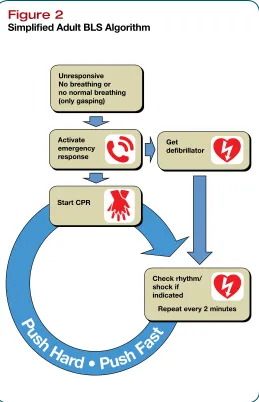
Figure 2
Simplified Adult BLS Algorithm
l a y r e s c u e r a d u lt c p r
LAY RESCUER
ADULT CPR
Summary of Key Issues and Major Changes
Key issues and major changes for the 2010 AHA Guidelines for CPR and ECC recommendations for lay rescuer adult CPR are the following:
• The simplified universal adult BLS algorithm has been created (Figure 2).
• Refinements have been made to recommendations for immediate recognition and activation of the emergency response system based on signs of unresponsiveness, as well as initiation of CPR if the victim is unresponsive with no breathing or no normal breathing (ie, victim is only gasping). • “Look, listen, and feel for breathing” has been removed from
the algorithm.
• Continued emphasis has been placed on high-quality CPR (with chest compressions of adequate rate and depth, allowing complete chest recoil after each compression, minimizing interruptions in compressions, and avoiding excessive ventilation).
• There has been a change in the recommended sequence for the lone rescuer to initiate chest compressions before giving rescue breaths (C-A-B rather than A-B-C). The lone rescuer should begin CPR with 30 compressions rather than 2 ventilations to reduce delay to first compression.
• Compression rate should be at least 100/min (rather than “approximately” 100/min).
• Compression depth for adults has been changed from the range of 1½ to 2 inches to at least 2 inches (5 cm).
These changes are designed to simplify lay rescuer training and to continue to emphasize the need to provide early chest compressions for the victim of a sudden cardiac arrest. More information about these changes appears below. Note: In the following topics, changes or points of emphasis for lay rescuers that are similar to those for healthcare providers are noted with an asterisk (*).
Emphasis on Chest Compressions*
2010 (New):If a bystander is not trained in CPR, the bystander should provide Hands-Only™ (compression-only) CPR for the adult victim who suddenly collapses, with an emphasis to “push hard and fast” on the center of the chest, or follow the directions of the EMS dispatcher. The rescuer should continue Hands-Only CPR until an AED arrives and is ready for use or EMS providers or other responders take over care of the victim.
All trained lay rescuers should, at a minimum, provide chest compressions for victims of cardiac arrest. In addition, if the trained lay rescuer is able to perform rescue breaths, compressions and breaths should be provided in a ratio of 30 compressions to 2 breaths. The rescuer should continue CPR until an AED arrives and is ready for use or EMS providers take over care of the victim.
2005 (Old):The 2005 AHA Guidelines for CPR and ECC did not provide different recommendations for trained versus untrained rescuers but did recommend that dispatchers provide compression-only CPR instructions to untrained bystanders. The 2005 AHA Guidelines for CPR and ECC did note that if the rescuer was unwilling or unable to provide ventilations, the rescuer should provide chest compressions only.
Why: Hands-Only (compression-only) CPR is easier for an untrained rescuer to perform and can be more readily guided by dispatchers over the telephone. In addition, survival rates from cardiac arrests of cardiac etiology are similar with either Hands-Only CPR or CPR with both compressions and rescue breaths. However, for the trained lay rescuer who is able, the recommendation remains for the rescuer to perform both compressions and ventilations.
© 2010 American Heart Association Simplified Adult BLS
Unresponsive No breathing or no normal breathing (only gasping)
Activate emergency response
Start CPR
Get defibrillator
Check rhythm/ shock if indicated
Repeat every 2 minutes
Pu
l a y r e s c u e r a d u lt c p r
Change in CPR Sequence: C-A-B Rather
Than A-B-C*
2010 (New): Initiate chest compressions before ventilations. 2005 (Old):The sequence of adult CPR began with opening of the airway, checking for normal breathing, and then delivery of 2 rescue breaths followed by cycles of 30 chest compressions and 2 breaths.
Why: Although no published human or animal evidence demonstrates that starting CPR with 30 compressions rather than 2 ventilations leads to improved outcome, chest compressions provide vital blood flow to the heart and brain, and studies of out-of-hospital adult cardiac arrest showed that survival was higher when bystanders made some attempt rather than no attempt to provide CPR. Animal data demonstrated that delays or interruptions in chest compressions reduced survival, so such delays or interruptions should be minimized throughout the entire resuscitation. Chest compressions can be started almost immediately, whereas positioning the head and achieving a seal for mouth-to-mouth or bag-mask rescue breathing all take time. The delay in initiation of compressions can be reduced if 2 rescuers are present: the first rescuer begins chest compressions, and the second rescuer opens the airway and is prepared to deliver breaths as soon as the first rescuer has completed the first set of 30 chest compressions. Whether 1 or more rescuers are present, initiation of CPR with chest compressions ensures that the victim receives this critical intervention early, and any delay in rescue breaths should be brief.
Elimination of “Look, Listen, and Feel
for Breathing”*
2010 (New): “Look, listen, and feel” was removed from the CPR sequence. After delivery of 30 compressions, the lone rescuer opens the victim’s airway and delivers 2 breaths. 2005 (Old):“Look, listen, and feel” was used to assess breathing after the airway was opened.
Why: With the new “chest compressions first” sequence, CPR is performed if the adult is unresponsive and not breathing or not breathing normally (as noted above, lay rescuers will be taught to provide CPR if the unresponsive victim is “not breathing or only gasping”). The CPR sequence begins with compressions (C-A-B sequence). Therefore, breathing is briefly checked as part of a check for cardiac arrest; after the first set of chest compressions, the airway is opened, and the rescuer delivers 2 breaths.
Chest Compression Rate: At Least
100 per Minute*
2010 (New): It is reasonable for lay rescuers and healthcare providers to perform chest compressions at a rate of at least 100/min.
2005 (Old):Compress at a rate of about 100/min. Why: The number of chest compressions delivered per minute during CPR is an important determinant of return of spontaneous circulation (ROSC) and survival with good neurologic function. The actual number of chest compressions delivered per minute is determined by the rate of chest compressions and the number and duration of interruptions in compressions (eg, to open the airway, deliver rescue breaths, or allow AED analysis). In most studies, more compressions are associated with higher survival rates, and fewer compressions are associated with lower survival rates. Provision of adequate chest compressions requires an emphasis not only on an adequate compression rate but also on minimizing interruptions to this critical component of CPR. An inadequate compression rate or frequent interruptions (or both) will reduce the total number of compressions delivered per minute. For further information, see Box 2.
Chest Compression Depth*
2010 (New): The adult sternum should be depressed at least 2 inches (5 cm).
2005 (Old):The adult sternum should be depressed approximately 1½ to 2 inches (approximately 4 to 5 cm). Why: Compressions create blood flow primarily by increasing intrathoracic pressure and directly compressing the heart. Compressions generate critical blood flow and oxygen and energy delivery to the heart and brain. Confusion may result when a range of depth is recommended, so 1 compression
Number of Compressions Delivered Affected by Compression Rate and by Interruptions
The total number of compressions delivered during resuscitation is an important determinant of survival from cardiac arrest. The number of compressions delivered is affected by the compression rate and by the compression fraction (the portion of total CPR time during which compressions are performed); increases in compression rate and fraction increase the total compressions delivered, whereas decreases in compression rate or compression fraction decrease the total compressions delivered. Compression fraction is improved if you reduce the number and length of any interruptions in compressions, and it is reduced by frequent or long interruptions in chest compressions. An analogy can be found in automobile travel. When you travel in an automobile, the number of miles you travel in a day is affected not only by the speed that you drive (your rate of travel) but also by the number and duration of any stops you make (interruptions in travel). During CPR, you want to deliver effective compressions at an appropriate rate (at least 100/min) and depth, while minimizing the number and duration of interruptions in chest compressions. Additional components of high-quality CPR include allowing complete chest recoil after each compression and avoiding excessive ventilation.
depth is now recommended. Rescuers often do not compress the chest enough despite recommendations to “push hard.” In addition, the available science suggests that compressions of at least 2 inches are more effective than compressions of 1½ inches. For this reason the 2010 AHA Guidelines for CPR and ECC recommend a single minimum depth for compression of the adult chest.
HEALTHCARE PROVIDER BLS
Summary of Key Issues and Major Changes
Key issues and major changes in the 2010 AHA Guidelines for CPR and ECC recommendations for healthcare providers include the following:
• Because cardiac arrest victims may present with a short period of seizure-like activity or agonal gasps that may confuse potential rescuers, dispatchers should be specifically trained to identify these presentations of cardiac arrest to improve cardiac arrest recognition.
• Dispatchers should instruct untrained lay rescuers to provide Hands-Only CPR for adults with sudden cardiac arrest. • Refinements have been made to recommendations for immediate recognition and activation of the emergency response system once the healthcare provider identifies the adult victim who is unresponsive with no breathing or no normal breathing (ie, only gasping). The healthcare provider briefly checks for no breathing or no normal breathing (ie, no breathing or only gasping) when the provider checks responsiveness. The provider then activates the emergency response system and retrieves the AED (or sends someone to do so). The healthcare provider should not spend more than 10 seconds checking for a pulse, and if a pulse is not definitely felt within 10 seconds, should begin CPR and use the AED when available.
• “Look, listen, and feel for breathing” has been removed from the algorithm.
• Increased emphasis has been placed on high-quality CPR (compressions of adequate rate and depth, allowing complete chest recoil between compressions, minimizing interruptions in compressions, and avoiding excessive ventilation). • Use of cricoid pressure during ventilations is generally
not recommended.
• Rescuers should initiate chest compressions before giving rescue breaths (C-A-B rather than A-B-C). Beginning CPR with 30 compressions rather than 2 ventilations leads to a shorter delay to first compression.
• Compression rate is modified to at least 100/min from approximately 100/min.
• Compression depth for adults has been slightly altered to at least 2 inches (about 5 cm) from the previous recommended range of about 1½ to 2 inches (4 to 5 cm).
• Continued emphasis has been placed on the need to reduce the time between the last compression and shock delivery and the time between shock delivery and resumption of compressions immediately after shock delivery.
• There is an increased focus on using a team approach during CPR.
These changes are designed to simplify training for the healthcare provider and to continue to emphasize the need to provide early and high-quality CPR for victims of cardiac arrest. More information about these changes follows. Note: In the following topics for healthcare providers, those that are similar for healthcare providers and lay rescuers are noted with an asterisk (*).
Dispatcher Identification of Agonal Gasps
Cardiac arrest victims may present with seizure-like activity or agonal gasps that may confuse potential rescuers. Dispatchers should be specifically trained to identify these presentations of cardiac arrest to improve recognition of cardiac arrest and prompt provision of CPR.
2010 (New): To help bystanders recognize cardiac arrest, dispatchers should ask about an adult victim’s responsiveness, if the victim is breathing, and if the breathing is normal, in an attempt to distinguish victims with agonal gasps (ie, in those who need CPR) from victims who are breathing normally and do not need CPR. The lay rescuer should be taught to begin CPR if the victim is “not breathing or only gasping.” The healthcare provider should be taught to begin CPR if the victim has “no breathing or no normal breathing (ie, only gasping).” Therefore, breathing is briefly checked as part of a check for cardiac arrest before the healthcare provider activates the emergency response system and retrieves the AED (or sends someone to do so), and then (quickly) checks for a pulse and begins CPR and uses the AED.
2005 (Old):Dispatcher CPR instructions should include questions to help bystanders identify patients with occasional gasps as likely victims of cardiac arrest to increase the likelihood of bystander CPR for such victims.
H e a lt H C a r e P r o v i d e r b l s
specific about the necessary components of resuscitationsystems. Studies published since 2005 have demonstrated improved outcome from out-of-hospital cardiac arrest, particularly from shockable rhythms, and have reaffirmed the importance of a stronger emphasis on immediate provision of high-quality CPR (compressions of adequate rate and depth, allowing complete chest recoil after each compression, minimizing interruptions in chest compressions, and avoiding excessive ventilation).
To help bystanders immediately recognize cardiac arrest, dispatchers should specifically inquire about an adult victim’s absence of response, if the victim is breathing, and if any breathing observed is normal. Dispatchers should be specifically educated in helping bystanders detect agonal gasps to improve cardiac arrest recognition.
Dispatchers should also be aware that brief generalized seizures may be the first manifestation of cardiac arrest. In summary, in addition to activating professional emergency responders, the dispatcher should ask straightforward questions about whether the patient is responsive and breathing normally to identify patients with possible cardiac arrest. Dispatchers should provide Hands-Only (compression-only) CPR instructions to help untrained bystanders initiate CPR when cardiac arrest is suspected (see below).
Dispatcher Should Provide CPR Instructions
2010 (New): The 2010 AHA Guidelines for CPR and ECC more strongly recommend that dispatchers should instruct untrained lay rescuers to provide Hands-Only CPR for adults who are unresponsive with no breathing or no normal breathing. Dispatchers should provide instructions in conventional CPR for victims of likely asphyxial arrest.
2005 (Old):The 2005 AHA Guidelines for CPR and ECC noted that telephone instruction in chest compressions alone may be preferable.
Why: Unfortunately, most adults with out-of-hospital cardiac arrest do not receive any bystander CPR. Hands-Only (compression-only) bystander CPR substantially improves survival after adult out-of-hospital cardiac arrests compared with no bystander CPR. Other studies of adults with cardiac arrest treated by lay rescuers showed similar survival rates among victims receiving Hands-Only CPR versus those receiving conventional CPR (ie, with rescue breaths). Importantly, it is easier for dispatchers to instruct untrained rescuers to perform Hands-Only CPR than conventional CPR for adult victims, so the recommendation is now stronger for them to do so, unless the victim is likely to have had an asphyxial arrest (eg, drowning).
Cricoid Pressure
2010 (New): The routine use of cricoid pressure in cardiac arrest is not recommended.
2005 (Old):Cricoid pressure should be used only if the victim is deeply unconscious, and it usually requires a third rescuer not involved in rescue breaths or compressions.
Why: Cricoid pressure is a technique of applying pressure to the victim’s cricoid cartilage to push the trachea posteriorly and compress the esophagus against the cervical vertebrae. Cricoid pressure can prevent gastric inflation and reduce the risk of regurgitation and aspiration during bag-mask ventilation, but it may also impede ventilation. Seven randomized studies showed that cricoid pressure can delay or prevent the placement of an advanced airway and that some aspiration can still occur despite application of cricoid pressure. In addition, it is difficult to appropriately train rescuers in use of the maneuver. Therefore, the routine use of cricoid pressure in cardiac arrest is not recommended.
Emphasis on Chest Compressions*
2010 (New): Chest compressions are emphasized for both trained and untrained rescuers. If a bystander is not trained in CPR, the bystander should provide Hands-Only (compression-only) CPR for the adult who suddenly collapses, with an emphasis to “push hard and fast” on the center of the chest, or follow the directions of the emergency medical dispatcher. The rescuer should continue Hands-Only CPR until an AED arrives and is ready for use or EMS providers take over care of the victim.
Optimally all healthcare providers should be trained in BLS. In this trained population, it is reasonable for both EMS and in-hospital professional rescuers to provide chest compressions and rescue breaths for cardiac arrest victims.
2005 (Old):The 2005 AHA Guidelines for CPR and ECC did not provide different recommendations for trained and untrained rescuers and did not emphasize differences in instructions provided to lay rescuers versus healthcare providers, but did recommend that dispatchers provide compression-only CPR instructions to untrained bystanders. In addition, the 2005 AHA Guidelines for CPR and ECC noted that if the rescuer was unwilling or unable to provide ventilations, the rescuer should provide chest compressions. Note that the AHA Hands-Only CPR statement was published in 2008. Why: Hands-Only (compression-only) CPR is easier for untrained rescuers to perform and can be more readily guided by dispatchers over the telephone. However, because the healthcare provider should be trained, the recommendation remains for the healthcare provider to perform both
compressions and ventilations. If the healthcare provider is unable to perform ventilations, the provider should activate the emergency response system and provide chest compressions.
Activation of Emergency Response System
is absent or not normal. The provider should suspect cardiac arrest if the victim is not breathing or only gasping.
2005 (Old):The healthcare provider activated the emergency response system after finding an unresponsive victim. The provider then returned to the victim and opened the airway and checked for breathing or abnormal breathing.
Why: The healthcare provider should not delay activation of the emergency response system but should obtain 2 pieces of information simultaneously: the provider should check the victim for response and check for no breathing or no normal breathing. If the victim is unresponsive and is not breathing at all or has no normal breathing (ie, only agonal gasps), the provider should activate the emergency response system and retrieve the AED if available (or send someone to do so). If the healthcare provider does not feel a pulse within 10 seconds, the provider should begin CPR and use the AED when it is available.
Change in CPR Sequence: C-A-B Rather
Than A-B-C*
2010 (New): A change in the 2010 AHA Guidelines for CPR and ECC is to recommend the initiation of chest compressions before ventilations.
2005 (Old):The sequence of adult CPR began with opening of the airway, checking for normal breathing, and then delivering 2 rescue breaths followed by cycles of 30 chest compressions and 2 breaths.
Why: Although no published human or animal evidence demonstrates that starting CPR with 30 compressions rather than 2 ventilations leads to improved outcome, chest compressions provide the blood flow, and studies of out-of-hospital adult cardiac arrest showed that survival was higher when bystanders provided chest compressions rather than no chest compressions. Animal data demonstrate that delays or interruptions in chest compressions reduce survival, so such delays and interruptions should be minimized throughout the entire resuscitation. Chest compressions can be started almost immediately, whereas positioning the head and achieving a seal for mouth-to-mouth or bag-mask rescue breathing all take time. The delay in initiation of compressions can be reduced if 2 rescuers are present: the first rescuer begins chest compressions, and the second rescuer opens the airway and is prepared to deliver breaths as soon as the first rescuer has completed the first set of 30 chest compressions. Whether 1 or more rescuers are present, initiation of CPR with chest compressions ensures that the victim receives this critical intervention early.
Elimination of “Look, Listen, and Feel
for Breathing”*
2010 (New): “Look, listen, and feel for breathing” was removed from the sequence for assessment of breathing after opening the airway. The healthcare provider briefly checks for breathing when checking responsiveness to detect signs
of cardiac arrest. After delivery of 30 compressions, the lone rescuer opens the victim’s airway and delivers 2 breaths. 2005 (Old):“Look, listen, and feel for breathing” was used to assess breathing after the airway was opened.
Why: With the new chest compression–first sequence, CPR is performed if the adult victim is unresponsive and not breathing or not breathing normally (ie, not breathing or only gasping) and begins with compressions (C-A-B sequence). Therefore, breathing is briefly checked as part of a check for cardiac arrest. After the first set of chest compressions, the airway is opened and the rescuer delivers 2 breaths.
Chest Compression Rate: At Least 100 per Minute*
2010 (New): It is reasonable for lay rescuers and healthcare providers to perform chest compressions at a rate of at least 100/min.
2005 (Old):Compress at a rate of about 100/min. Why: The number of chest compressions delivered per minute during CPR is an important determinant of ROSC and survival with good neurologic function. The actual number of chest compressions delivered per minute is determined by the rate of chest compressions and the number and duration of interruptions in compressions (eg, to open the airway, deliver rescue breaths, or allow AED analysis). In most studies, delivery of more compressions during resuscitation is associated with better survival, and delivery of fewer compressions is associated with lower survival. Provision of adequate chest compressions requires an emphasis not only on an adequate compression rate but also on minimizing interruptions to this critical component of CPR. An inadequate compression rate or frequent interruptions (or both) will reduce the total number of compressions delivered per minute. For further information, see Box 2 on page 4.
Chest Compression Depth*
2010 (New): The adult sternum should be depressed at least 2 inches (5 cm).
2005 (Old):The adult sternum should be depressed 1½ to 2 inches (approximately 4 to 5 cm).
Why: Compressions create blood flow primarily by increasing intrathoracic pressure and directly compressing the heart. Compressions generate critical blood flow and oxygen and energy delivery to the heart and brain. Confusion may result when a range of depth is recommended, so 1 compression depth is now recommended. Rescuers often do not adequately compress the chest despite recommendations to “push hard.” In addition, the available science suggests that compressions of at least 2 inches are more effective than compressions of 1½ inches. For this reason the 2010 AHA Guidelines for CPR and ECC recommend a single minimum depth for compression of the adult chest, and that compression depth is deeper than in the old recommendation.
H e a lt H C a r e P r o v i d e r b l s
Team Resuscitation
2010 (New): The steps in the BLS algorithm have traditionally been presented as a sequence to help a single rescuer prioritize actions. There is increased focus on providing CPR as a team because resuscitations in most EMS and healthcare systems involve teams of rescuers, with rescuers performing several actions simultaneously. For example, one rescuer activates the emergency response system while a second begins chest compressions, a third is either providing ventilations or retrieving the bag-mask for rescue breathing, and a fourth is retrieving and setting up a defibrillator.
2005 (Old):The steps of BLS consist of a series of sequential assessments and actions. The intent of the algorithm is to present the steps in a logical and concise manner that will be easy for each rescuer to learn, remember, and perform.
Why: Some resuscitations start with a lone rescuer who calls for help, whereas other resuscitations begin with several willing rescuers. Training should focus on building a team as each rescuer arrives, or on designating a team leader if multiple rescuers are present. As additional personnel arrive, responsibilities for tasks that would ordinarily be performed sequentially by fewer rescuers may now be delegated to a team of providers who perform them simultaneously. For this reason, BLS healthcare provider training should not only teach individual skills but should also teach rescuers to work in effective teams.
Comparison of Key Elements of Adult, Child,
and Infant BLS
As in the 2005 AHA Guidelines for CPR and ECC, the 2010 AHA Guidelines for CPR and ECC contain a comparison table that lists the key elements of adult, child, and infant BLS (excluding CPR for newly born infants). These key elements are included in Table 1.
Recommendations
Component Adults Children Infants
Recognition
Unresponsive (for all ages) No breathing or no normal
breathing (ie, only gasping) No breathing or only gasping No pulse palpated within 10 seconds for all ages (HCP only)
CPR sequence C-A-B
Compression rate At least 100/min
Compression depth At least 2 inches (5 cm) At least ¹⁄³ AP diameterAbout 2 inches (5 cm) About 1½ inches (4 cm)At least ¹⁄³ AP diameter
Chest wall recoil Allow complete recoil between compressions
HCPs rotate compressors every 2 minutes
Compression interruptions Minimize interruptions in chest compressions
Attempt to limit interruptions to <10 seconds
Airway Head tilt–chin lift (HCP suspected trauma: jaw thrust)
Compression-to-ventilation ratio (until advanced airway placed)
30:2 1 or 2 rescuers
30:2 Single rescuer
15:2 2 HCP rescuers
Ventilations: when rescuer untrained or trained and not proficient
Compressions only
Ventilations with advanced airway (HCP)
1 breath every 6-8 seconds (8-10 breaths/min) Asynchronous with chest compressions
About 1 second per breath Visible chest rise
Defibrillation Attach and use AED as soon as available. Minimize interruptions in chest compressions before and after shock; resume CPR beginning with compressions immediately after each shock.
Abbreviations: AED, automated external defibrillator; AP, anterior-posterior; CPR, cardiopulmonary resuscitation; HCP, healthcare provider. *Excluding the newly born, in whom the etiology of an arrest is nearly always asphyxial.
Table 1
ELECTRICAL
THERAPIES
The 2010 AHA Guidelines for CPR and ECC have been updated to reflect new data regarding defibrillation and cardioversion for cardiac rhythm disturbances and the use of pacing in bradycardia. These data largely continue to support the recommendations in the 2005 AHA Guidelines for CPR and ECC. Therefore, no major changes were recommended regarding defibrillation, cardioversion, and pacing. Emphasis on early defibrillation integrated with high-quality CPR is the key to improving survival from sudden cardiac arrest.
Summary of Key Issues and Major Changes
Main topics include
• Integration of AEDs into the Chain of Survival system for public places
• Consideration of AED use in hospitals
• AEDs can now be used in infants if a manual defibrillator is not available
• Shock first versus CPR first in cardiac arrest
• 1-shock protocol versus 3-shock sequence for VF
• Biphasic and monophasic waveforms
• Escalating versus fixed doses for second and subsequent shocks
• Electrode placement
• External defibrillation with implantable cardioverter-defibrillator
• Synchronized cardioversion
Automated External Defibrillators
Community Lay Rescuer AED Programs
2010 (Slightly Modified): Cardiopulmonary resuscitation and the use of AEDs by public safety first responders are recommended to increase survival rates for out-of-hospital sudden cardiac arrest. The 2010 AHA Guidelines for CPR and ECC again recommend the establishment of AED programs in public locations where there is a relatively high likelihood of witnessed cardiac arrest (eg, airports, casinos, sports facilities). To maximize the effectiveness of these programs, the AHA continues to emphasize the importance of organizing, planning, training, linking with the EMS system, and establishing a process of continuous quality improvement.
2005 (Old):The 2005 AHA Guidelines for CPR and ECC identified 4 components for successful community lay rescuer AED programs:
• A planned and practiced response, typically requiring oversight by a healthcare provider
• Training of anticipated rescuers in CPR and use of the AED
• A link with the local EMS system
• A program of ongoing quality improvement
There is insufficient evidence to recommend for or against the deployment of AEDs in homes.
In-Hospital Use of AEDs
2010 (Reaffirmed 2005 Recommendation): Despite limited evidence, AEDs may be considered for the hospital setting as a way to facilitate early defibrillation (a goal of shock delivery ≤3 minutes from collapse), especially in areas where staff have no rhythm recognition skills or defibrillators are used infrequently. Hospitals should monitor collapse-to–first shock intervals and resuscitation outcomes.
AED Use in Children Now Includes Infants
2010 (New): For attempted defibrillation of children 1 to 8 years of age with an AED, the rescuer should use a pediatric dose-attenuator system if one is available. If the rescuer provides CPR to a child in cardiac arrest and does not have an AED with a pediatric dose-attenuator system, the rescuer should use a standard AED. For infants (<1 year of age), a manual defibrillator is preferred. If a manual defibrillator is not available, an AED with pediatric dose attenuation is desirable. If neither is available, an AED without a dose attenuator may be used. 2005 (Old):For children 1 to 8 years of age, the rescuer should use a pediatric dose-attenuator system if one is available. If the rescuer provides CPR to a child in cardiac arrest and does not have an AED with a pediatric attenuator system, the rescuer should use a standard AED. There are insufficient data to make a recommendation for or against the use of AEDs for infants <1 year of age.
Why: The lowest energy dose for effective defibrillation in infants and children is not known. The upper limit for safe defibrillation is also not known, but doses >4 J/kg (as high as 9 J/kg) have effectively defibrillated children and animal models of pediatric arrest with no significant adverse effects. Automated external defibrillators with relatively high-energy doses have been used successfully in infants in cardiac arrest with no clear adverse effects.
Shock First vs CPR First
e l e c t r i c a l t h e r a p i e s
support early CPR and early defibrillation, particularly when an AED or defibrillator is available within moments of the onset of sudden cardiac arrest. When an out-of-hospital cardiac arrest is not witnessed by EMS personnel, EMS may initiate CPR while checking the rhythm with the AED or on the electrocardiogram (ECG) and preparing for defibrillation. In such instances, 1½ to 3 minutes of CPR may be considered before attempted defibrillation. Whenever 2 or more rescuers are present, CPR should be provided while the defibrillator is retrieved.With in-hospital sudden cardiac arrest, there is insufficient evidence to support or refute CPR before defibrillation. However, in monitored patients, the time from VF to shock delivery should be under 3 minutes, and CPR should be performed while the defibrillator is readied.
Why: When VF is present for more than a few minutes, the myocardium is depleted of oxygen and energy. A brief period of chest compressions can deliver oxygen and energy to the heart, increasing the likelihood that a shock will both eliminate VF (defibrillation) and be followed by ROSC. Before the publication of the 2005 AHA Guidelines for CPR and ECC, 2 studies suggested the potential benefit of CPR first rather than shock first. In both studies, although 1½ to 3 minutes of CPR before shock delivery did not improve overall survival from VF, the CPR-first strategy did improve survival among victims with VF if the EMS call-to-arrival interval was 4 to 5 minutes or longer. However, 2 subsequent randomized controlled trials found that CPR before attempted defibrillation by EMS personnel was not associated with a significant difference in survival to discharge. One retrospective study did find an improved neurologic status at 30 days and at 1 year when immediate CPR was compared with immediate defibrillation in patients with out-of-hospital VF.
1-Shock Protocol vs 3-Shock Sequence
2010 (No Change From 2005): At the time of the
International Liaison Committee on Resuscitation (ILCOR) 2010 International Consensus Conference on CPR and ECC Science With Treatment Recommendations, 2 new published human studies compared a 1-shock protocol versus a 3-stacked-shock protocol for treatment of VF cardiac arrest. Evidence from these 2 studies suggests significant survival benefit with a single-shock defibrillation protocol compared with a 3-stacked-shock protocol. If 1 3-stacked-shock fails to eliminate VF, the incremental benefit of another shock is low, and resumption of CPR is likely to confer a greater value than another immediate shock. This fact, combined with the data from animal studies documenting harmful effects from interruptions to chest compressions and human studies suggesting a survival benefit from a CPR approach that includes a 1-shock compared with a 3-shock protocol, supports the recommendation of single shocks followed by immediate CPR rather than stacked shocks for attempted defibrillation.
Defibrillation Waveforms and Energy Levels
2010 (No Change From 2005): Data from both out-of-hospital and in-hospital studies indicate that biphasic waveform shocks at energy settings comparable to or lower than 200-J monophasic shocks have equivalent or higher success for termination of VF. However, the optimal energy for first-shock biphasic waveform defibrillation has not been determined. Likewise, no specific waveform characteristic (either monophasic or biphasic) is consistently associated with a greater incidence of ROSC or survival to hospital discharge after cardiac arrest.
In the absence of biphasic defibrillators, monophasic defibrillators are acceptable. Biphasic waveform shock configurations differ among manufacturers, and none have been directly compared in humans with regard to their relative efficacy. Because of such differences in waveform configuration, providers should use the manufacturer’s recommended energy dose (eg, initial dose of 120 to 200 J) for its respective waveform. If the manufacturer’s recommended dose is not known, defibrillation at the maximal dose may be considered.
Pediatric Defibrillation
2010 (Modification of Previous Recommendation): For pediatric patients, the optimal defibrillation dose is unknown. There are limited data regarding the lowest effective dose or the upper limit for safe defibrillation. A dose of 2 to 4 J/kg may be used for the initial defibrillation energy, but for ease of teaching, an initial dose of 2 J/kg may be considered. For subsequent shocks, energy levels should be at least 4 J/kg; higher energy levels may be considered, not to exceed 10 J/kg or the adult maximum dose.
2005 (Old):The initial dose for attempted defibrillation for infants and children when using a monophasic or biphasic manual defibrillator is 2 J/kg. The second and subsequent doses are 4 J/kg.
Why: There are insufficient data to make a substantial change in the existing recommended doses for pediatric defibrillation. Initial doses of 2 J/kg with monophasic waveforms are effective in terminating 18% to 50% of VF cases, with insufficient evidence to compare the success of higher doses. Case reports document successful defibrillation at doses up to 9 J/kg with no adverse effects detected. More data are needed.
Fixed and Escalating Energy
e l e c t r i c a l t h e r a p i e s
terminating VF, subsequent energy levels should be at leastequivalent, and higher energy levels may be considered, if available.
Electrode Placement
2010 (Modification of Previous Recommendation): For ease of placement and education, the anterior-lateral pad position is a reasonable default electrode placement. Any of 3 alternative pad positions (anterior-posterior, anterior– left infrascapular, and anterior–right infrascapular) may be considered on the basis of individual patient characteristics. Placement of AED electrode pads on the victim’s bare chest in any of the 4 pad positions is reasonable for defibrillation. 2005 (Old):Rescuers should place AED electrode pads on the victim’s bare chest in the conventional sternal-apical (anterior-lateral) position. The right (sternal) chest pad is placed on the victim’s right superior-anterior (infraclavicular) chest, and the apical (left) pad is placed on the victim’s inferior-lateral left chest, lateral to the left breast. Other acceptable pad positions are placement on the lateral chest wall on the right and left sides (biaxillary) or the left pad in the standard apical position and the other pad on the right or left upper back.
Why: New data demonstrate that the 4 pad positions (anterior-lateral, anterior-posterior, anterior–left infrascapular, and anterior–right infrascapular) appear to be equally effective to treat atrial or ventricular arrhythmias. Again, for ease of teaching, the default position taught in AHA courses will not change from the 2005 recommended position. No studies were identified that directly evaluated the effect of placement of pads or paddles on defibrillation success with the endpoint of ROSC.
Defibrillation With Implantable
Cardioverter-Defibrillator
2010 (New): The anterior-posterior and anterior-lateral locations are generally acceptable in patients with implanted pacemakers and defibrillators. In patients with implantable cardioverter-defibrillators or pacemakers, pad or paddle placement should not delay defibrillation. It might be
reasonable to avoid placing the pads or paddles directly over the implanted device.
2005 (Old):When an implantable medical device is located in an area where a pad would normally be placed, position the pad at least 1 inch (2.5 cm) away from the device.
Why: The language of this recommendation is a bit softer than the language used in 2005. There is the potential for pacemaker or implantable cardioverter-defibrillator malfunction after defibrillation when the pads are in close proximity to the device. One study with cardioversion demonstrated that positioning the pads at least 8 cm away from the device did not damage device pacing, sensing, or capturing. Pacemaker spikes with unipolar pacing may confuse AED software and
may prevent VF detection (and therefore shock delivery). The key message to rescuers is that concern about precise pad or paddle placement in relation to an implanted medical device should not delay attempted defibrillation.
Synchronized Cardioversion
Supraventricular Tachyarrhythmia
2010 (New): The recommended initial biphasic energy dose for cardioversion of atrial fibrillation is 120 to 200 J. The initial monophasic dose for cardioversion of atrial fibrillation is 200 J. Cardioversion of adult atrial flutter and other supraventricular rhythms generally requires less energy; an initial energy of 50 to 100 J with either a monophasic or a biphasic device is often sufficient. If the initial cardioversion shock fails, providers should increase the dose in a stepwise fashion.
2005 (Old):The recommended initial monophasic energy dose for cardioversion of atrial fibrillation is 100 to 200 J. Cardioversion with biphasic waveforms is now available, but the optimal doses for cardioversion with biphasic waveforms have not been established with certainty. Extrapolation from published experience with elective cardioversion of atrial fibrillation with the use of rectilinear and truncated exponential waveforms supports an initial dose of 100 to 120 J with escalation as needed. This initial dose has been shown to be 80% to 85% effective in terminating atrial fibrillation. Until further evidence becomes available, this information can be used to extrapolate biphasic cardioversion doses to other tachyarrhythmias.
Why: The writing group reviewed interim data on all biphasic studies conducted since the 2005 AHA Guidelines for CPR and ECC were published and made minor changes to update cardioversion dose recommendations. A number of studies attest to the efficacy of biphasic waveform cardioversion of atrial fibrillation with energy settings from 120 to 200 J, depending on the specific waveform.
Ventricular Tachycardia
2010 (New): Adult stable monomorphic VT responds well to monophasic or biphasic waveform cardioversion (synchronized) shocks at initial energies of 100 J. If there is no response to the first shock, it may be reasonable to increase the dose in a step-wise fashion. No interim studies were found that addressed this rhythm, so the recommendations were made by writing group expert consensus.
c p r t e c h n i q u e s a n d d e v i c e s
2005 (Old):There was insufficient evidence to recommend a biphasic dose for cardioversion of monomorphic VT. The 2005 AHA Guidelines for CPR and ECC recommended use of an unsynchronized shock for treatment of the unstable patient with polymorphic VT.
Why: The writing group agreed that it would be helpful to add a biphasic dose recommendation to the 2010 AHA Guidelines for CPR and ECC for cardioversion of monomorphic VT but wanted to emphasize the need to treat polymorphic VT as unstable and as an arrest rhythm.
Fibrillation Waveform Analysis to
Predict Outcome
2010 (No Change From 2005): The value of VF waveform analysis to guide defibrillation management during resuscitation is uncertain.
Pacing
2010 (No Change From 2005): Pacing is not routinely recommended for patients in asystolic cardiac arrest. In patients with symptomatic bradycardia with a pulse, it is reasonable for healthcare providers to be prepared to initiate transcutaneous pacing in patients who do not respond to drugs. If transcutaneous pacing fails, transvenous pacing initiated by a trained provider with experience in central venous access and intracardiac pacing is probably indicated.
CPR TECHNIQUES AND DEVICES
Summary of Key Issues and Major Changes
To date, no CPR device has consistently been shown to be superior to standard conventional (manual) CPR for out-of-hospital BLS, and no device other than a defibrillator has consistently improved long-term survival from out-of-hospital cardiac arrest. This part of the 2010 AHA Guidelines for CPR and ECC does contain summaries of recent clinical trials.
CPR Techniques
Alternatives to conventional manual CPR have been developed in an effort to enhance perfusion during resuscitation from cardiac arrest and to improve survival. Compared with conventional CPR, these techniques typically require more personnel, training, and equipment, or they apply to a specific setting. Some alternative CPR techniques
may improve hemodynamics or short-term survival when used by well-trained providers in selected patients. 2010 (New): The precordial thump should not be used for unwitnessed out-of-hospital cardiac arrest. The precordial thump may be considered for patients with witnessed,
monitored, unstable VT (including pulseless VT) if a defibrillator is not immediately ready for use, but it should not delay CPR and shock delivery.
2005 (Old):No recommendation was provided previously. Why: A precordial thump has been reported to convert ventricular tachyarrhythmias in some studies. However, 2 larger case series found that the precordial thump did not result in ROSC for cases of VF. Reported complications associated with precordial thump include sternal fracture, osteomyelitis, stroke, and triggering of malignant arrhythmias in adults and children. The precordial thump should not delay initiation of CPR or defibrillation.
CPR Devices
Several mechanical CPR devices have been the focus of recent clinical trials. Initiation of therapy with these devices (ie, application and positioning of the device) has the potential to delay or interrupt CPR for the victim of cardiac arrest, so rescuers should be trained to minimize any interruption of chest compressions or defibrillation and should be retrained as needed.
Use of the impedance threshold device improved ROSC and short-term survival in adults with out-of-hospital cardiac arrest, but it has not improved long-term survival in patients with cardiac arrest.
One multicenter, prospective, randomized controlled trial comparing load-distributing band CPR (AutoPulse®) with
manual CPR for out-of-hospital cardiac arrest demonstrated no improvement in 4-hour survival and worse neurologic outcome when the device was used. Further studies are required to determine if site-specific factors and experience with deployment of the device could influence its efficacy. There is insufficient evidence to support the routine use of this device.
Case series employing mechanical piston devices have reported variable degrees of success. Such devices may be considered for use when conventional CPR would be difficult to maintain (eg, during diagnostic studies).
ADVANCED CARDIOVASCULAR
LIFE SUPPORT
Summary of Key Issues and Major Changes
The major changes in advanced cardiovascular life support (ACLS) for 2010 include the following:
• Quantitative waveform capnography is recommended for confirmation and monitoring of endotracheal tube placement and CPR quality.
• The traditional cardiac arrest algorithm was simplified and an alternative conceptual design was created to emphasize the importance of high-quality CPR.
• There is an increased emphasis on physiologic monitoring to optimize CPR quality and detect ROSC.
• Atropine is no longer recommended for routine use in the management of pulseless electrical activity (PEA)/asystole.
• Chronotropic drug infusions are recommended as an
alternative to pacing in symptomatic and unstable bradycardia. • Adenosine is recommended as safe and potentially
effective for both treatment and diagnosis in the initial management of undifferentiated regular monomorphic wide-complex tachycardia.
• Systematic post–cardiac arrest care after ROSC should continue in a critical care unit with expert multidisciplinary management and assessment of the neurologic and physiologic status of the patient. This often includes the use of therapeutic hypothermia.
Capnography Recommendation
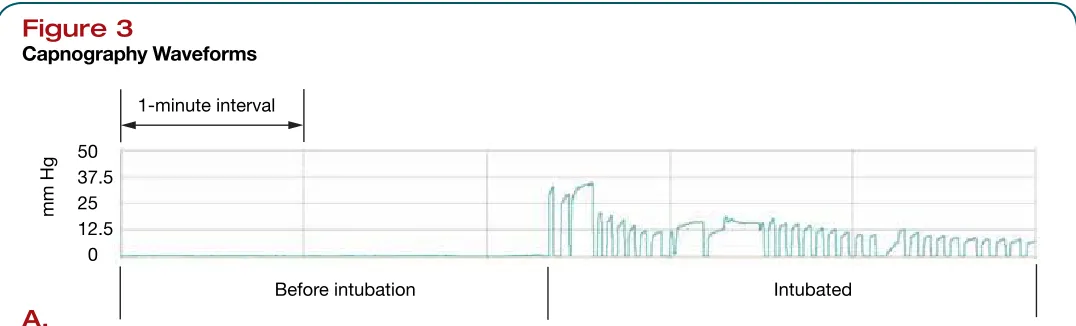
2010 (New): Continuous quantitative waveform capnography is now recommended for intubated patients throughout the periarrest period. When quantitative waveform capnography is used for adults, applications now include recommendations for confirming tracheal tube placement and for monitoring CPR quality and detecting ROSC based on end-tidal carbon dioxide (Petco2) values (Figures 3A and 3B).
A C L S
50 37.5 25 12.5 0
mm Hg
Before intubation Intubated 1-minute interval
A.
Capnography to confirm endotracheal tube placement. This capnography tracing displays the partial pressure of exhaled carbon dioxide (Petco2) in mm Hg on the vertical axis over time when intubation is performed. Once the patient is intubated, exhaled carbon dioxide is detected,
confirming tracheal tube placement. The Petco2 varies during the respiratory cycle, with highest values at end-expiration.
50 37.5 25 12.5 0
mm Hg
CPR ROSC 1-minute interval
B.
Capnography to monitor effectiveness of resuscitation efforts. This second capnography tracing displays the Petco2 in mm Hg on the
vertical axis over time. This patient is intubated and receiving CPR. Note that the ventilation rate is approximately 8 to 10 breaths per minute. Chest compressions are given continuously at a rate of slightly faster than 100/min but are not visible with this tracing. The initial Petco2
is less than 12.5 mm Hg during the first minute, indicating very low blood flow. The Petco2 increases to between 12.5 and 25 mm Hg during
the second and third minutes, consistent with the increase in blood flow with ongoing resuscitation. Return of spontaneous circulation (ROSC) occurs during the fourth minute. ROSC is recognized by the abrupt increase in the Petco2 (visible just after the fourth vertical line) to over
40 mm Hg, which is consistent with a substantial improvement in blood flow.
Figure 3
A C L S
2005 (Old):An exhaled carbon dioxide (CO2) detector or an
esophageal detector device was recommended to confirm endotracheal tube placement. The 2005 AHA Guidelines for CPR and ECC noted that Petco2 monitoring can be useful as a noninvasive indicator of cardiac output generated during CPR. Why: Continuous waveform capnography is the most reliable method of confirming and monitoring correct placement of an endotracheal tube. Although other means of confirming endotracheal tube placement are available, they are not more reliable than continuous waveform capnography. Patients are at increased risk of endotracheal tube displacement during transport or transfer; providers should observe a persistent capnographic waveform with ventilation to confirm and monitor endotracheal tube placement.
Because blood must circulate through the lungs for CO2 to
be exhaled and measured, capnography can also serve as a physiologic monitor of the effectiveness of chest compressions and to detect ROSC. Ineffective chest compressions (due to either patient characteristics or rescuer performance) are associated with a low Petco2. Falling cardiac output or rearrest
in the patient with ROSC also causes a decrease in Petco2. In
contrast, ROSC may cause an abrupt increase in Petco2.
Simplified ACLS Algorithm and New Algorithm
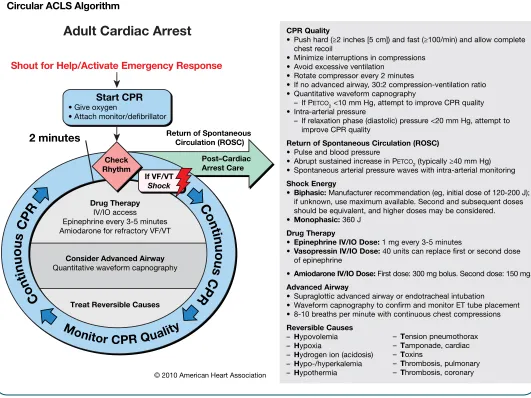
2010 (New): The conventional ACLS Cardiac Arrest Algorithm has been simplified and streamlined to emphasize the importance of high-quality CPR (including compressions of adequate rate and depth, allowing complete chest recoil after each compression, minimizing interruptions in chest compressions, and avoiding excessive ventilation) and the fact that ACLS actions should be organized around uninterrupted periods of CPR. A new circular algorithm is also introduced (Figure 4, above).
2005 (Old):The same priorities were cited in the 2005 AHA Guidelines for CPR and ECC. The box and arrow algorithm listed key actions performed during the resuscitation in a sequential fashion.
Why: For the treatment of cardiac arrest, ACLS interventions build on the BLS foundation of high-quality CPR to increase © 2010 American Heart Association
CPR Quality
• Push hard (≥2 inches [5 cm]) and fast (≥100/min) and allow complete chest recoil
• Minimize interruptions in compressions • Avoid excessive ventilation
• Rotate compressor every 2 minutes
• If no advanced airway, 30:2 compression-ventilation ratio • Quantitative waveform capnography
– If Petco2 <10 mm Hg, attempt to improve CPR quality • Intra-arterial pressure
– If relaxation phase (diastolic) pressure <20 mm Hg, attempt to improve CPR quality
Return of Spontaneous Circulation (ROSC) • Pulse and blood pressure
• Abrupt sustained increase in Petco2 (typically ≥40 mm Hg) • Spontaneous arterial pressure waves with intra-arterial monitoring Shock Energy
• Biphasic: Manufacturer recommendation (eg, initial dose of 120-200 J); if unknown, use maximum available. Second and subsequent doses should be equivalent, and higher doses may be considered.
• Monophasic: 360 J
Drug Therapy
• Epinephrine IV/IO Dose: 1 mg every 3-5 minutes
• Vasopressin IV/IO Dose: 40 units can replace first or second dose
of epinephrine
• Amiodarone IV/IO Dose: First dose: 300 mg bolus. Second dose: 150 mg. Advanced Airway
• Supraglottic advanced airway or endotracheal intubation
• Waveform capnography to confirm and monitor ET tube placement • 8-10 breaths per minute with continuous chest compressions Reversible Causes
– Hypovolemia
– Hypoxia
– Hydrogen ion (acidosis)
– Hypo-/hyperkalemia
– Hypothermia
Check Rhythm
Drug Therapy
IV/IO access Epinephrine every 3-5 minutes Amiodarone for refractory VF/VT
Consider Advanced Airway
Quantitative waveform capnography
Treat Reversible Causes
Adult Cardiac Arrest
Post–Cardiac Arrest Care Start CPR
• Give oxygen
• Attach monitor/defibrillator
2 minutes
If VF/VT Shock
Return of Spontaneous Circulation (ROSC) Shout for Help/Activate Emergency Response
Co
nt
in
uo
us
C
PR
C
on
tin
uo
us
C
PR
Monitor CPR Quality
– Tension pneumothorax– Tamponade, cardiac
– Toxins
– Thrombosis, pulmonary
– Thrombosis, coronary
Figure 4
the likelihood of ROSC. Before 2005, ACLS courses assumed that excellent CPR was provided, and they focused mainly on added interventions of manual defibrillation, drug therapy, and advanced airway management, as well as alternative and additional management options for special resuscitation situations. Although adjunctive drug therapy and advanced airway management are still part of ACLS, in 2005 the
emphasis in advanced life support (ALS) returned to the basics, with an increased emphasis on what is known to work: high-quality CPR (providing compressions of adequate rate and depth, allowing complete chest recoil after each compression, minimizing interruptions in chest compressions, and avoiding excessive ventilation). The 2010 AHA Guidelines for CPR and ECC continue this emphasis. The 2010 AHA Guidelines for CPR and ECC note that CPR is ideally guided by physiologic monitoring and includes adequate oxygenation and early defibrillation while the ACLS provider assesses and treats possible underlying causes of the arrest. There is no definitive clinical evidence that early intubation or drug therapy improves neurologically intact survival to hospital discharge.
De-emphasis of Devices, Drugs, and
Other Distracters
Both ACLS algorithms use simple formats that focus on interventions that have the greatest impact on outcome. To that end, emphasis has been placed on delivery of high-quality CPR and early defibrillation for VF/pulseless VT. Vascular access, drug delivery, and advanced airway placement, while still recommended, should not cause significant interruptions in chest compressions and should not delay shocks.
New Medication Protocols
2010 (New): Atropine is not recommended for routine use in the management of PEA/asystole and has been removed from the ACLS Cardiac Arrest Algorithm. The treatment of PEA/ asystole is now consistent in the ACLS and pediatric advanced life support (PALS) recommendations and algorithms.
The algorithm for treatment of tachycardia with pulses has been simplified. Adenosine is recommended in the initial diagnosis and treatment of stable, undifferentiated regular, monomorphic wide-complex tachycardia (this is also consistent in ACLS and PALS recommendations). It is important to note that adenosine should not be used for irregular wide-complex tachycardias because it may cause degeneration of the rhythm to VF. For the treatment of the adult with symptomatic and unstable bradycardia, chronotropic drug infusions are recommended as an alternative to pacing.
2005 (Old):Atropine was included in the ACLS Pulseless Arrest Algorithm: for a patient in asystole or slow PEA, atropine could be considered. In the Tachycardia Algorithm, adenosine was recommended only for suspected regular narrow-complex reentry supraventricular tachycardia. In the Bradycardia Algorithm, chronotropic drug infusions were listed in the
algorithm after atropine and while awaiting a pacer or if pacing was ineffective.
Why: There are several important changes regarding management of symptomatic arrhythmias in adults. Available evidence suggests that the routine use of atropine during PEA or asystole is unlikely to have a therapeutic benefit. For this reason, atropine has been removed from the Cardiac Arrest Algorithm. On the basis of new evidence of safety and potential efficacy, adenosine can now be considered in the initial assessment and treatment of stable, undifferentiated regular, monomorphic wide-complex tachycardia when the rhythm is regular. For symptomatic or unstable bradycardia, intravenous (IV) infusion of chronotropic agents is now recommended as an equally effective alternative to external transcutaneous pacing when atropine is ineffective.
Organized Post–Cardiac Arrest Care
2010 (New): Post–Cardiac Arrest Care is a new section in the 2010 AHA Guidelines for CPR and ECC. To improve survival for victims of cardiac arrest who are admitted to a hospital after ROSC, a comprehensive, structured, integrated, multidisciplinary system of post–cardiac arrest care should be implemented in a consistent manner (Box 3). Treatment should include cardiopulmonary and neurologic support. Therapeutic hypothermia and percutaneous coronary interventions (PCIs) should be provided when indicated (see also Acute Coronary Syndromes section). Because seizures are common after cardiac arrest, an electroencephalogram for the diagnosis of seizures should be performed with prompt interpretation as soon as possible and should be monitored frequently or continuously in comatose patients after ROSC.
2005 (Old):Post–cardiac arrest care was included within the ACLS section of the 2005 AHA Guidelines for CPR and ECC. Therapeutic hypothermia was recommended to improve outcome for comatose adult victims of witnessed out-of-hospital cardiac arrest when the presenting rhythm was VF. In addition, recommendations were made to optimize hemodynamic, respiratory, and neurologic support, identify and treat reversible causes of arrest, monitor temperature, and consider treatment for disturbances in temperature regulation. However, there was limited evidence to support these recommendations.
Why: Since 2005, two nonrandomized studies with concurrent controls and other studies using historic controls have
indicated the possible benefit of therapeutic hypothermia after in-hospital cardiac arrest and out-of-hospital cardiac arrest with PEA/asystole as the presenting rhythm. Organized post–cardiac arrest care with an emphasis on multidisciplinary programs that focus on optimizing hemodynamic, neurologic, and metabolic function (including therapeutic hypothermia) may improve survival to hospital discharge among victims who achieve ROSC after cardiac arrest either in or out of hospital. Although it is not yet possible to determine the individual effect