________________________________ Author for Correspondence:
Dr. Ganesh Kumar Gudas
Sri Krupa Institute of Pharmaceutical Sciences, Siddipet, T.S.
Research Article
ISSN Print 2231 – 3648 Online 2231 – 3656
Available Online at: www.ijpir.com
Formulation development and evaluation of bilayer push-pull osmotic
pump tablet of Ramipril
J.Geethanjali*, Ganesh Kumar Gudas
1, N.Sriram
2*1
Sri Krupa Institute of Pharmaceutical Sciences, Siddipet, T.S.
2Holy Mary College of Pharmacy, Keesara, Hyderabad, Telangana, India.
ABSTRACT
The aim of the present work was to design and evaluate Push-Pull Osmotically Controlled Drug Delivery system of Ramipril. Push pull osmotic tablets are bilayered tablets consisting of pull layer (drug layer) and push layer (polymer layer) coated with semi permeable membrane containing water leaching pore forming agents. Ramipril is an oral antihypertensive agent which belongs to BCS class II drug with half life of 2-4 hours. Main objective to formulate this system was to achieve zero order release. The present study was also aimed to develop a system that would reduce the frequency of dosing and thus increases patient compliance. In this study an attempt was made to design formulations with varying concentration of polymers. Opadry CA was used as film forming polymer. Mannitol was used as osmotic agents. This system was developed in two stages: (a) Formulation of core tablet & (b) coating of tablet core. Core tablets were evaluated for content uniformity, hardness, & weight variation while coated tablets were evaluated for film thickness and In Vitro release study. All the post compression and precompression parameters showed within limits. The drug- polymer interaction was also studied by conducting FTIR. Selected formulation F1 having Polyox N-80 52% successfully 0.977. The KorsmeyerPeppas equation showed the R2 value to be 0.928 and‟ n‟ retarded drug release for 24hrs and drug release follows Zero order kinetic with R
2
value of value was 0.596 following Zero Order & Anomalous (NonFickian Diffusion). The stability studies were carried out at 40oC/75%RH for 90 days. There was no significant change in the physical property during the stability period.
Keywords:. Push-Pull Osmotically Controlled Drug Delivery system, Zero order.
55 Ganesh K G et al., Int. J. Pharm & Ind. Res., Vol.–09 (01) 2019 [54-61]
INTRODUCTION
Osmotic devices are the most reliable controlled drug delivery systems (CDDS) and can be employed as oral drug delivery systems. Osmotic pressure is used as the driving force for these systems to release the drug in a controlled manner. Osmotic pump tablet (OPT) generally consists of a core including the drug, an osmotic agent, other excipients and semi- permeable membrane coat[1].
Osmosis refers to the process of movement of solvent molecules from lower concentration to higher concentration across a semi permeable membrane. Osmosis is the phenomenon that makes controlled drug delivery a reality. Osmotic pressure created due to imbibitions of fluid from external environment into the dosage form regulates the delivery of drug from osmotic device[2].
Rate of drug delivery from osmotic pump is directly proportional to the osmotic pressure developed due to imbibitions of fluids by osmogent. Osmotic pressure is a colligative property of a solution in which the magnitude of osmotic pressure of the solution is independent on the number of discrete entities of solute present in the solution. Hence the release rate of
drugs from osmotic dispensing devices is dependent on the solubility and molecular weight and activity coefficient of the solute (osmogent)[3].
Ramipril inhibit the actions of angiotensin converting enzyme (ACE), thereby lowering the production of angiotensin II and decreasing the breakdown of bradykinin. The decrease in angiotensin II results in relaxation of arteriole smooth muscle leading to a decrease in total peripheral resistance, reducing blood pressure as the blood is pumped through widened vessels. Its effect on bradykinin is responsible for the dry cough side effect[4,5].
MATERIALS AND METHODS
Ramipril was obtained from Yarrow Chemicals, Mumbai, Polyox N 80, Polyox WSR Coagulant, Opadry CA was obtained from Colorcon Asia Pvt.Ltd, Polyvinyl pyrrolidone, Microcrystalline cellulose, Magnesium stearate, Talc, Di‐sodium hydrogen phosphate, potassium dihydrogen phosphate were obtained as a gift sample from S.D. Fine Chem. Ltd, Mumbai, India. Other materials used were of analytical grade, and procured from commercial sources.
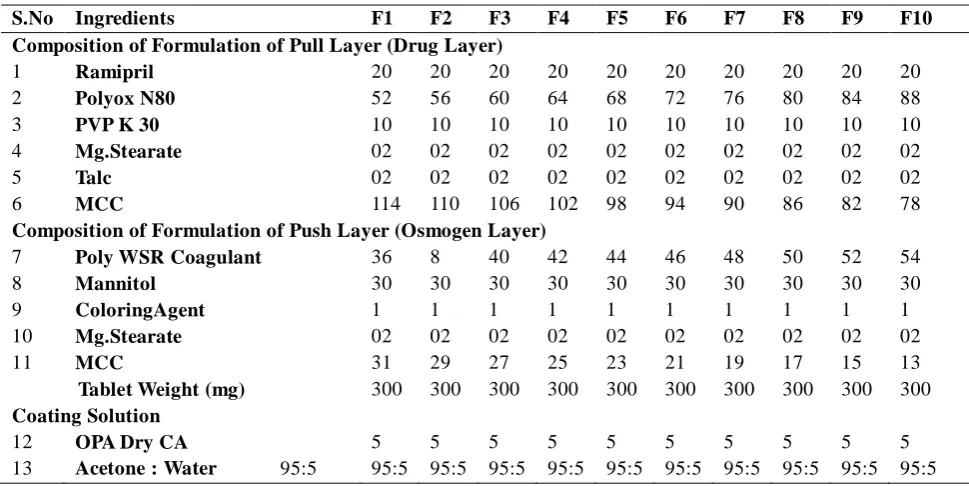
Table 1: Composition of Bi-layer Push Pull Osmotic Tablet System (PPO) of Ramipril
S.No Ingredients F1 F2 F3 F4 F5 F6 F7 F8 F9 F10
Composition of Formulation of Pull Layer (Drug Layer)
1 Ramipril 20 20 20 20 20 20 20 20 20 20
2 Polyox N80 52 56 60 64 68 72 76 80 84 88
3 PVP K 30 10 10 10 10 10 10 10 10 10 10
4 Mg.Stearate 02 02 02 02 02 02 02 02 02 02
5 Talc 02 02 02 02 02 02 02 02 02 02
6 MCC 114 110 106 102 98 94 90 86 82 78
Composition of Formulation of Push Layer (Osmogen Layer)
7 Poly WSR Coagulant 36 8 40 42 44 46 48 50 52 54
8 Mannitol 30 30 30 30 30 30 30 30 30 30
9 ColoringAgent 1 1 1 1 1 1 1 1 1 1
10 Mg.Stearate 02 02 02 02 02 02 02 02 02 02
11 MCC 31 29 27 25 23 21 19 17 15 13
Tablet Weight (mg) 300 300 300 300 300 300 300 300 300 300 Coating Solution
12 OPA Dry CA 5 5 5 5 5 5 5 5 5 5
13 Acetone : Water 95:5 95:5 95:5 95:5 95:5 95:5 95:5 95:5 95:5 95:5 95:5
Formulation Development
Preparation of Bi-layer Push Pull Osmotic Tablet System (PPOP) of Ramipril
Evaluation of Bi-layer Push Pull Osmotic Tablet System (PPO) of Ramipril
Physical Appearance
The general appearance of a tablet, its identity and general elegance is essential for consumer acceptance, for control of low-to-lot uniformity and tablet-to-tablet uniformity. The control of general appearance involves the measurement of size, shape, color, presence or absence of odour, taste etc [6].
Hardness test
Hardness indicates the ability of a tablet to withstand mechanical strength while handling. The hardness of the tablets was determined using Monsanto Hardness tester. It is expressed in kg/cm2. 10 tablets were randomly picked from each formulation and the mean and standard Deviation values were calculated[7].
Friability test
It is the phenomenon whereby tablet surfaces are damaged and/or show evidence of lamination or breakage when subjected to mechanical shock or attrition. The friability of tablets was determined by using Roche Friabilator. It is expressed in percentage (%). 10 tables were initially weighed (Wt. initial) and transferred into friabilator. The friabilator was operated at 25 rpm for 4 min or run up to 100 revolutions [11]. The tablets were weighed again (Wt. final). The percentage friability was then calculated by,
57 Ganesh K G et al., Int. J. Pharm & Ind. Res., Vol.–09 (01) 2019 [54-61]
Weight variation test
The tablets were selected randomly from each formulation and weighed individually to check for weight variation. The US Pharmacopoeia allows a little variation in the weight of a tablet. To study weight variation, 20 tablets of each formulation were weighed using an electronic balance Aqua and the test was performed according to the official method[9].
Drug content (Assay)
Drug content of the tablets was determined by UV Spectrophotometrically.
Uniformity of thickness
Thickness and diameter of tablets were important for uniformity of tablet size. Thickness and diameter was measured using vernier caliper [10].
In vitro
Dissolution Studies
In vitro drug release studies were carried out using USP XXIV dissolution apparatus type II, with 900ml of dissolution medium maintained at 37±1°C for 12 hr, at 50 rpm, pH 6.8 phosphate buffer for 12 hrs for sustained release tablets. 5ml of sample was withdrawn at predetermined time intervals replacing with an equal quantity of drug free dissolution fluid. The samples withdrawn were filtered through 0.45µ membrane filter, and drug content in each sample was analyzed at 265.5nm after suitable dilution by UV/Vis Spectrophotometer and cumulative percent drug release was calculate[11].
Drug release kinetics and mechanism
To analyze the mechanism of drug release from the formulation, the dissolution profile of all the batches were fitted to zero order, first order, Higuchi and Peppas models to ascertain the kinetic modelling of drug release[12].
Zero order
First order
Korsmeyer-Peppas model
Higuichi model
Zero Order
In many of the modified release dosage form particularly controlled or sustained release dosage form (those dosage forms that release the drug in planned, predictable and slower than normal manner) is zero order kinetics.
Q = K0 t
Where, Q is the amount of drug release at time, t and Ko is the release rate constant.
First order
This type of models to analyze the drug dissolution study was first proposed by Gibalgi and Feldman and later by Wagner. The relation expressing this model.
Log Qt = Log Qo + K1t / 2.303
Where Qt is the amount of drug released in time t, Qo is intial amount of drug in the solution and K1 is the first order release rate constant. In this way a graphical relationship between log percent drug remaining versus time to get the first order constant from the slope.
Peppas model
The peppas model is widely used, when the release mechanism is not well known or more than one type of release could be involved. The semi-empirical equation shown as equation:
Mt/M∞ = ktn
Where, Mt/M∞ is fraction of drug released at time„t‟, k represents a constant, and n is the diffusional exponent, which characterizes the type of release mechanism during the dissolution process. For non fickian release, the value of n falls between 0.5 and 1.0; while in case of fickian diffusion, n = 0.5; for zero-order release (case II transport), n = 1; and for super case II transport, n > 1.
Higuichi model
A Large number of modified release dosage form contain some sort of matrix system is such instances the drug dissolves from this matrix. The dissolution pattern of the drug is dictated by water penetration rate (diffusion control) and thus the following relationship applies.
Q = K2 t1/2
Where, Q is the percentage of drug release at time t and K2 is the diffusion rate constant.
RESULTS AND DISCUSSION
Drug excipient compatibility studies -
Fourier- transform infrared (FTIR)
Fig.3: Calibration Curve of Ramipril in Phosphate Buffer pH 6.8
Pre Compression Parameters
Table 2: Micrometric Properties of Granules (Pre-compression Data)
Formulation Codes
*Angle of Repose (°)
Bulk Density (gm/ml)
Tapped Density (gm/ml)
Carr's Index (%)
Hausner's Ratio
F1 20.28±0.06 0.51 0.58 11.45 1.09
F2 20.21±0.03 0.44 0.52 17.18 1.22
F3 22.65±0.05 0.54 0.61 14.18 1.19
F4 21.21±0.01 0.43 0.51 14.12 1.16
F5 22.68±0.09 0.40 0.45 12.65 1.12
F6 23.62±0.07 0.43 0.52 12.36 1.08
F7 20.70±0.06 0.47 0.56 14.03 1.11
F8 21.24±0.05 0.48 0.60 12.10 1.13
F9 22.11±0.04 0.44 0.52 13.09 1.15
F10 21.09±0.02 0.42 0.51 14.05 1.17
*All the values represented as mean ± Standard Deviation (SD), n=3
POST-COMPRESSION EVALUATION TESTS
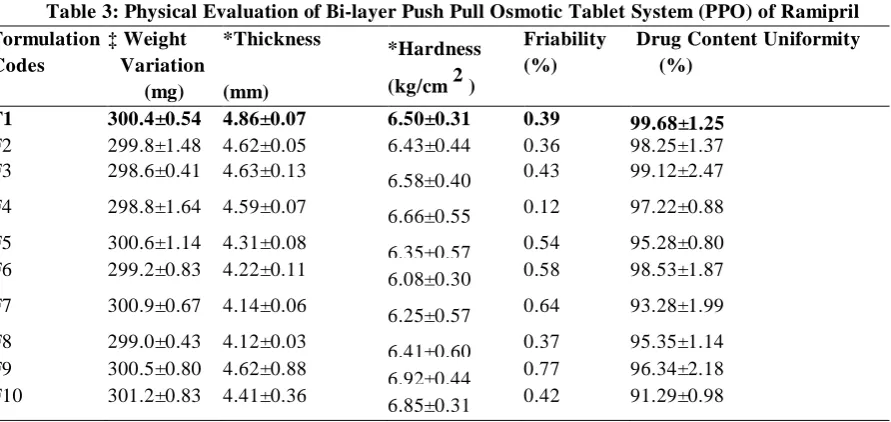
Table 3: Physical Evaluation of Bi-layer Push Pull Osmotic Tablet System (PPO) of Ramipril
Formulation Codes
‡ Weight Variation
(mg)
*Thickness
(mm)
*Hardness
(kg/cm 2 )
Friability (%)
Drug Content Uniformity (%)
F1 300.4±0.54 4.86±0.07 6.50±0.31 0.39 99.68±1.25
F2 299.8±1.48 4.62±0.05 6.43±0.44 0.36 98.25±1.37
F3 298.6±0.41 4.63±0.13 6.58±0.40 0.43 99.12±2.47
F4 298.8±1.64 4.59±0.07 6.66±0.55 0.12 97.22±0.88
F5 300.6±1.14 4.31±0.08 6.35±0.57 0.54 95.28±0.80
F6 299.2±0.83 4.22±0.11 6.08±0.30 0.58 98.53±1.87
F7 300.9±0.67 4.14±0.06 6.25±0.57 0.64 93.28±1.99
F8 299.0±0.43 4.12±0.03 6.41±0.60 0.37 95.35±1.14
F9 300.5±0.80 4.62±0.88
6.92±0.44 0.77 96.34±2.18
F10 301.2±0.83 4.41±0.36
59 Ganesh K G et al., Int. J. Pharm & Ind. Res., Vol.–09 (01) 2019 [54-61]
The Post compression parameters such as Weight variation, Thickness, Hardness, Friability, Drug content of the all formulations (F1-F10)
results was found to be Within the Pharmacopoeial specifications. It is shown in Table No.3.
Fig 3: Comparison of in vitro drug release profile of F1-F5 formulations
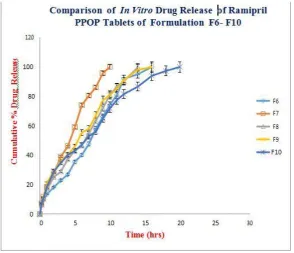
Fig 4: Comparison of in vitro drug release profile of F6-F10 formulations
The developed formulations of Ramipril were subjected to in vitro dissolution studies using USP-Type II dissolution apparatus [Paddle Type] in two media i.e. 0.1N Hydrochloric acid
formulations released 4.371 to 29.358% of drug during initial 2 h. The formulation F1 released 99.99% of drug at 24 h. Whereas F2, F3 and F4 released almost all drug at 11, 12 and 18 h respectively as given in Table 21 and Figure 33. The tablet formulations prepared by Mannitol as osmogen sustained drug release up to 24 h. The tablet formulations F5,F6,F7.F8,F9 released 99.97% of drug at 18h,16h,10h,14h,16h and F10 released 99.96% of drug at 20 h. This concludes the effect of concentration of MCC on release pattern, because at higher concentration it acts as disintegrating agent. The best fit with higher correlation (r2=0.977) was found with zero order equation for tablet formulation F1.
CONCLUSION
In this work an attempt was made to design Push-Pull Osmotic Pump drug delivery system containing an active ingredient Ramipril. The main objective of the present research work is to alter release rate of Ramipril for 24 hrs i.e., by using the Osmotic principle.
IR spectra of pure drug and the excipients are identical and do not show any incompatibility, thus the excipients are compatible with the drug. The prepared granules were also evaluated for various micrometric properties such as angle of repose, bulk density tapped density and Carr‟s index values were found to be within the limits.
The prepared tablets were evaluated for various parameters such as drug content, weight variation, hardness, thickness, friability, In- Vitro drug release studies and release rate kinectics. Among all the batches of prepared by Bi-layer Push-Pull Osmotic Tablet System (PPOP) of Ramipril, formulation prepared by employing the Polyox N80 and Polyox WSR Coagulant in the concentration of 30% and 67% respectively, F1 showed better release of Ramipril from semipermeable membrane coatings of
99.99% and all the Pre-compression and Post-compression parameters are also within the limit as per pharmacopoeial standards.
Further the analysis of release mechanism was carried out by fitting the drug release data to various kinetic equations like Zero order, First order ,Higuchi‟s and Korsmeyer-peppas equations and from the values so obtained, the best fit model were arrived at. The stability studies were carried out at 40±20 C and 75±5% RH for 90days. There was no significant change.
Thus it would be concluded that the Ramipril osmotic tablet containing Mannitol (30 mg) as Osmogen is the best optimized formulation and could be able for safe management of hypertension as it released 99.99% of drug over extended period of time (24 h) with more controlled fashion (Constant plasma level) demonstrating less side effects.
REFERENCES
[1]. Gadage MA, Senthilkumar SK, Tamizhamani. Osmotically Controlled Tablets, “A Modified-release Drug Delivery Technology. Inventi Rapid: Advanced Dosaging 4, 2011, 1-6.
[2]. D.M. Brahmankar, Sunil B.Jaiswal. Controlled Release Medication. In: Biopharmaceutics and Pharmacokinetics. Vallabh Prakashan. 2, 2009, 399- 400.
[3]. Gupta roop, Gupta rakesh,,Rathore Garvendra “ Osmotically controlled drug delivery systems- A review” Int. J. Ph. Sci., Sept-December. 1 271(2), 2009, 269-275.
[4]. Rajan K. Verma, Sanjay Garg, “Formulation aspects in the development of osmotically controlled oral drug delivery systems”, Journal of Controlled Release 79, 2002, 7–27.
[5]. Welling P.G. and Dobrinska M. R., Dosing consideration and bioavailability assessment of controlled drug delivery system,Chapter7, Controlled drug delivery; fundamentals and applications, Robinson J.R. and Lee V. H. L. (Eds.), Marcel Dekker Inc., New York, 29(2), 1978, 254, 373.
[6]. Gupta roop, Gupta rakesh,,Rathore Garvendra “ Osmotically controlled drug delivery systems- A review” Int. J. Ph. Sci. 271(2), 2009, 269-275.
61 Ganesh K G et al., Int. J. Pharm & Ind. Res., Vol.–09 (01) 2019 [54-61]
[8]. Yan Zhang, Zhirong Zhang,Fang Wu, “A novel pulsed-release system b a s e d on swelling and osmotic pumping mechanism”, Journal of Controlled Release 89(1), 2003, 47-55.
[9]. Gautam Singhvi and Mahveer Singh. Review: Invitro Drug Release Characterziation Models.
International Journal of Pharmaceutical Studies and Research. 2(1), 2011, 77-84.
[10]. . Prabakaran, Paramjit Singh, Parijat Kanaujia, K.S. Jaganathan, Amit Rawat, Suresh P. Vyas, “Modified push–pull osmotic system for simultaneous delivery of theophylline and salbutamol, development and in vitro characterization”, International Journal of Pharmaceutics 284(95), 2004, 95–108.
[11]. N.G.Raghvendra Rao, Ashok Yadav “ Formulation and evaluation of zero order release glipizide bilayer matrix tablets using natural and synthetic polymers” International Journal of Current Pharmaceutical Research 2(1), 2010.
[12]. Higuchi T. Mechanism of sustained action medication, theoretical analysis of rate of release of solid drugs dispersed in solid matrices. Journal of Pharmaceutical Sciences. 52, 1963, 1145-1149. [13]. Korsmeyer RW, Gurny R, Doelker E, Buri P. Peppas NA. Machanisms of solute release from
porous hydrophilic polymers. International Journal of Pharmceutics. 15, 1983, 25-35.