http://dx.doi.org/10.22161/ijeab/3.6.11 ISSN: 2456-1878
Evaluation of safety of
Azdirachta indica
seed oil
on Albino rat through haematological and some
antioxidants by the rotatable central composite
design (RCCD) of the response surface
methodology (RSM)
Ojimelukwe Phillippa
2,
Udofia Patrick G
1*,
Anthony Ukom
22Department of Food Science and Technology, Michael Okpara University of Agriculture, Umudike, P. M. B. 7267, Abia
State, Nigeria ([email protected]).
2Department of Food Science and Technology, Michael Okpara University of Agriculture, Umudike, P. M. B. 7267,
Umuahia. Abia State, Nigeria ([email protected])
1Department of Food Technology, Akwa Ibom State Polytechnic, Ikot Osurua, P. M. B. 1200, Ikot Ekpene, Nigeria.
*Corresponding author: email: [email protected] m
Abstract—Raw Azdirachta indica seed oil is gradually adopted by local farmers as a protector of stored grains and legumes against the common insects, but with some reservations on its safety. The study investigated the
safety A. indica on mammalian objects using
haematological and antioxidant indixes. A. indica seed was obtained from the trees in the same location in Utu Ik ot Uk pong, Essien Udim Local Government Area, Nigeria. The Albino rats were obtained from the Animal House of Biochemistry Department of the University of Calabar, Nigeria. The animals were treated with varied A. indica seed oil at varied concentrations, periods of exposure and age. Haematological analyses revealed that models of pack ed cell volume (PCV), red blood cell (RBC), white cell count (WCC) and hemoglobin content (Hb) were not significant. Catalase (CAT), superoxide dismutase (SOD), and glutathione (GSH) were also not significant (p>0.05). Linearity coefficients of the models however appeared to be significant (R2≤0.8000). The mathematical and pictorial models showed slight influence of the test substance on the parameters. The investigation revealed that A. indica seed oil showed no adverse effect on the haematological and antioxidant profile of the animal models at the level of administration, the slight statistical significance could be attributed to other experimental values. A. indica oil seems to be safe on mammalian subjects. More work is recommended on the topic using higher levels of the plant materials at a longer period of exposure.
Keywords— Azdirachta indica, response surface methodology, rotatable central composite design, haematological indices, enzymes.
I. INTRODUCTION
Insecticides are organic and inorganic substances which are used to kill or inactivate insects to check damaging effects of their activities, application is useful in agriculture, medicine, industry and in the homes (Coats, 1999). Deployment of synthetic chemical insecticides in agriculture is claimed to be a major factor behind the increase in the 21st-Century's agricultural productivity (Gerald, 2006). Long-term applications of synthetic insecticides have resulted in residues accumulating in different environmental components of water, food, air and soil (Lorendo-Pino et al., 2014). In order to circumvent their ill effects, ideal insecticides which are not toxic and more environmentally friendly are sought from the plant kingdom (Ojimelukwe, 2008; Lorendo-Pino et al., 2014).
. Botanical insecticides in integrated insect
http://dx.doi.org/10.22161/ijeab/3.6.11 ISSN: 2456-1878 zeamais Motsch. Mikhaiel, (2011) showed that some
volatile oils of plants could protect packages of irradiated wheat flour against Ephestia k uheniella and Tribolium castaneum. Insecticidal activities of aromatic plant extracts and essential oils against Sitophilus oryzae and Callosobruchus chinensis had been demonstrated by (El-Wakil, 2013). Commercial neem seed oil is currently in use in the integrated insect management programme (Chaudhary, 2017). A. indica is native to Asia, but has now naturalized in Nigeria. A. indica is an important item in the traditional medicinal practice in the area of study, according to Pallav et al., (2014) every part of the plant is claimed to posses some medicinal and insecticidal properties, but the seed is grossly underutilized (Schmutterer, 1990). Igbokwe (2017) opined that it is the presence of some biologically active principles like azdirachtin meliacin, gedunin, salanin, nimbin, valasin and their derivatives that confers the anti-inflammatory, hyper glycemic, ulcers, malarial, anti-fungal, anti-bacterial, anti-oxidant, anti-mutargenic, and immunomodulatory properties of neem seed oil in mammalian models including anti-feedant, repellent, effect in insects (Ndodo, 2013).
Oil of A. indica seed is sprayed on
grains/legumes for protection against the damaging effect of the common insects . Protected products are either used for food or feed or replanting. Oily nature of A. indica seed oil prevents its total removal from the stored product and therefore may contain residue at levels high enough to elicit health problems in susceptible individuals of the population, the oil may become rancid and develop mycotoxin (Yin et al., 2003), which is a known carcinogen especially at high level of accumulation. As a new product, A. indica seed oil deserves safety evaluation on mammalian models before injected into the market for human consumption.
In this study, the Rotatable Central Composite Design (RCCD) of the Response Surface Methodology (RSM) was employed to test the linear, combined and quadratic effects of graded levels of age, dose and exposure time on haematological indices and antioxidants of blood of Albino rats. Response surface methodology tests effect of many variables on parameters of interest at the same time, therefore the method is robust, reliable and predictable, the design saves time and cost (Kwak et al., 2015). According to Kanu et al., (2016), chronic diseases affect blood cells adversely, therefore haematological data provides the most important information in the determination of biochemical and physiological state of animal models (Jorum et al, 2016). Damage mediated by free radicals results in high rate of disruption of membrane fluidity, protein denaturation, lipid peroxidation, oxidative deoxyribonucleic acid (DNA) and alteration of platelet functions, the molecular damages
have been linked with diabetes, cancers, inflammation, aging and atherosclerosis (Kanu et al., 2016).
From literature, many works have been done on the safety or toxicity of A. indica seed oil products but to the best of our knowledge, few data is available on the effect of A. indica seed oil on haematological and antioxidant levels using the rotatable central composite design of the response surface methodology.
Therefore the work evaluated the safety of A. indica seed oil through levels of haematological and enzyme indices of Albino rats using the RCCD of the RSM. Data from the work is expected to enhance food security and low cost of insect pest management, cultivation and utilization of neem seed can provide employment.
II. MATERIALS AND METHODS
Forty-five (45) Albino rats of 14 - 40 days were obtained from the animal house of the Department of Biochemistry, University of Calabar, Cross River State, Nigeria. The commercial rodent meal was bought from Pfizer, Lagos. A. indica seed was obtained from Essien Udim Local Government Area in Akwa Ibom State. All reagents used for the study were of analar grade, double distilled water was used for their preparation.
Preparation of A. indica seed powder
Preparation of A. indica seed was sorted, decorted, washed and dried in the sun for 24 hours . It was then dried in hot air oven at 50oC for 24 hours to a
moisture content of about 12%. The dried seed was milled to pass through 0.2-0.5 mm sieve (Fritsch GMBH, Germany BRD-6580), packaged and stored in moisture proof container for subsequent use.
Preparation of A. indica seed oil
Preparation of A. indica seed oil was carried out according to the method adopted by Okigbo, (2008). Five hundred (500) grams of A. indica seed powder was soaked in 1000ml of 95% ethanol in a round-bottomed flask and allowed to stand at room temperature for 24 hours. The filtrate was evaporated with a rotary evaporator (Buch Laboratorriums Technic, AG CH -9230), to free sample from the solvent leaving a dark slurry as the oil.
Animal models
The animal models were handled according to CLSI (2000). They were stabilized for 5 days with water and fed ad lib. A dose of ampicillin was administered through the drinking water to check possible infection, they were housed in separate cages, the housing guaranteed adequate lighting, ventilation and standard humidity.
Administration of A. indica seed oil
http://dx.doi.org/10.22161/ijeab/3.6.11 ISSN: 2456-1878 modification to fit the experimental design. Animals with
similar blood and antioxidants parameters were randomly assigned to the experimental units; (15 laboratory animal cages) (Table 1, 2), watered with commercial table water (ARSAN Water) and fed standard rodent diet (Pfitzer, Lagos) ad lib between 0 to 40 days. Graded levels of A. indica oil was administered orally at concentrations according to the experimental design in Table 1. At the end of each experimental run, animals in the experimental unit were anesthetized with diethyl ether, blood samples were taken from the heart and preserved with EDTA to prevent clotting. Samples were centrifuged at 3,000 rpm for 10 min to obtain the plasma.
Estimation of haemoglobin and antioxidant assay of blood of treated Albino rats
Pack cell volume (PVC), red blood cell (RBC), white cell count (WCC), haemoglobin content (HB) according to the method of Adebayo et al. (2005) using automated haematology analizer (ERMA) (Model PCE 210 Japan). Catalase was assayed spectrophotometrically according to the method of Aebi et al., (1983), estimation of superoxide dismutse was done according to the method
of Aebi et al., (1983), estimation of reduced glutathione was determined by the method of Kwak et al., (2016). Background of experimental design and statistical analysis
RSM enables evaluation of effects of multiple independent variables singly or in combination simultaneously on dependent variables (Meyers et al., 2002). Design Expert Version 10 (Statease Inc., Minneapolis, MN, USA) was deployed for the design and analysis of the experimental data. Age of animal model, dose of the test substance, and exposure time of the animal model to the test substance were chosen from experimental experience (Table 1). The Rotatable Central Composite Design assumes equation 1.
Yi= 𝛃θ= ∑3𝑙=1𝛽𝑖𝑋𝑖 +∑3𝑙 =1 𝛽𝑖𝑖 x2i+∑3𝑗=𝑖+1𝛽𝑖𝑗 𝑋𝑖 𝑋𝑗+ e
... (1)
where Yi is any response, βθ = intercept, βi = first order
model coefficients, βii = quadratic coefficient for the ith
variable, βij = interaction coefficients for the interaction
variables i and j, Xi = any independent variable. Second
order coefficient was generated by regression analysis with backward elimination. Responses were first fitted for the factors by the coefficients of determination, R2.
Table.1: Experimental design and levels of independents variables
Variable Units -α -1 0 1 + α
Age Days 8.6152 14 13.5 40 45.3848
Dose mg/100g 5.8578 10 20 30 34.1421
Time of exposure Days -4.1421 0 10 20 24.1421 α = 1.4142 for RCCD
III. RESULTS
Levels of the independent variables, age (X1) 14-40 days,
dose (X2) 10-30 mg, and exposure time (X3) 0-20 days
were assigned to the experiment by experience and done according to RCCD in Table 1. Effect of the variables on packed cell volume (PCV), red blood cell (RBC), white cell count (WCC), haemoglobin content (Hb), catalase (CAT), superoxide dismutase (SOD) and glutathione (GSH) of the blood samples of the animal models are presented in Table 2. From the table, PCV ranged from 20-39%, RBC ranged fron 7.92 to 9.92x10⁶/ml, WCC ranged from 7110-8221x106/ml, Hb ranged from
12.01-13.17g/100g and means of 33.38%, 8.86x10⁶/ml, 7745.23
x106/ml, 12.69 g/100ml respectively. CAT, SOD and
GSH ranged from 328.9-954.90 IU/gHb, 5478-6917 IU/gHb and 2.35-3.99 IU/gHb and mean of 441 IU/gHb, 6164 IU/gHb, and 3.50 IU/gHb respectively. Standard deviations of the parameters were 4.59%, 0.52%, 454.20%, 12.69%, 166.90%, 416.07% and 0.493% respectively. The low standard deviation of the parameters indicated low variability in the observation as can be seen in Table 2 except SOD and GSH which showed higher values than the control. Run 14 was not included in the calculation due the extraordinarily low values.
Table.2: Experimental runs, results and standard values of the parameters Run Age
Days
Dose mg/100g
Exposure Days
PCV %
RBC x106/ml
WCC x106/ml
Hb g/100g
CAT IU/gHb
SOD IU/gHb
GSH µM/gHb
12 27 20 10 39 9.52 7830 13.17 394.1 5981 3.53
5 8 20 10 38 9.21 8001 12.01 593.5 6098 2.35
10 27 24 24 37 9.51 7911 13.21 394.9 6182 3.75
6 45 20 10 35 9.22 7851 12.91 374.7 5519 3.11
http://dx.doi.org/10.22161/ijeab/3.6.11 ISSN: 2456-1878
4 14 10 0 30 9.25 8110 12.10 389.9 6391 3.34
8 27 34 10 32 9.22 7110 13.00 389.6 6551 3.91
13 27 34 10 35 9.17 8113 12.21 954.9 6276 3.56
7 27 6 10 32 8.97 7917 13.11 377.8 6088 3.98
3 14 30 30 20 9.04 8211 12.01 328.9 5617 3.90
14 27 20 34 9 8.90 8221 12.01 328.9 5617 3.21
1 40 30 0 35 7.92 7117 12.22 389.7 6315 2.66
9 27 20 -4 35 8.21 8220 13.00 399.2 6277 3.77
11 27 20 10 34 8.22 7110 13.00 349.9 6616 3.65
15 27 20 10 34 8.22 7110 13.00 398.3 5478 3.55
PVC = packed cell volume, RBC = red blood count, WCC = white cell count, Hb = haemoglobin, CAT = catalase value, GSH = superoxide dismutase, GSH = glutathione level.
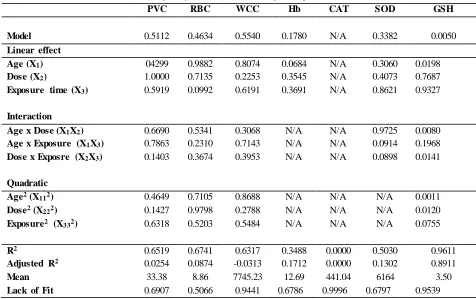
Table.3: Analysis of variance (ANOVA) of the experimental data
PVC RBC WCC Hb CAT SOD GSH
Model 0.5112 0.4634 0.5540 0.1780 N/A 0.3382 0.0050
Linear effect
Age (X1) 04299 0.9882 0.8074 0.0684 N/A 0.3060 0.0198
Dose (X2) 1.0000 0.7135 0.2253 0.3545 N/A 0.4073 0.7687
Exposure time (X3) 0.5919 0.0992 0.6191 0.3691 N/A 0.8621 0.9327
Interaction
Age x Dose (X1X2) 0.6690 0.5341 0.3068 N/A N/A 0.9725 0.0080
Age x Exposure (X1X3) 0.7863 0.2310 0.7143 N/A N/A 0.0914 0.1968 Dose x Exposre (X2X3) 0.1403 0.3674 0.3953 N/A N/A 0.0898 0.0141
Quadratic
Age2 (X112) 0.4649 0.7105 0.8688 N/A N/A N/A 0.0011 Dose2 (X
222) 0.1427 0.9798 0.2788 N/A N/A N/A 0.0120 Exposure2 (X
332) 0.6318 0.5203 0.5484 N/A N/A N/A 0.0755
R2 0.6519 0.6741 0.6317 0.3488 0.0000 0.5030 0.9611
Adjusted R2 0.0254 0.0874 -0.0313 0.1712 0.0000 0.1302 0.8911
Mean 33.38 8.86 7745.23 12.69 441.04 6164 3.50
Lack of Fit 0.6907 0.5066 0.9441 0.6786 0.9996 0.6797 0.9539
Table 2 shows random order of the experimental runs, coeficient of estimate, coefficient of determination, and control values of the parameters. Table 3 shows statistic of analysis of variance (ANOVA) of the experimental data. The model for PCV was not significant (p>0.05). The coefficient of determination, R2=0.6519, and the
Adjusted coefficient of determination, Adj. R2= 0.0524
confirmed a weak statistical confidence of the model. Linear, interaction and quadratic terms of age, dose, and
http://dx.doi.org/10.22161/ijeab/3.6.11 ISSN: 2456-1878
Fig.1: Response surface-contour plot of dose of test substance and age of model animal on pack cell volume of model animal blood
PVC = 23.10 - 0.146(X1) + 1.09(X2) + 0.70(X3)
- 6.099(X1 X2) -0.03(X2 X3) ... (2)
The model of RBC was not significant (p>0.05), the coefficient of determination, R2 =0.6741 indicated weak
confidence on the model. The linear, interaction, and quadratic terms of the model were not significant (p>0.05) except time (X3) with which appeared to be
significant p=0.0992. The model is represented by Fig. 2 which shows that red blood cells increased with age of the animal model and not as a function of dose and time (not shown here) and was corroborated by Equation 3.
Fig.2: Response surface-contour plot of dose of test substance and age of model animals on red blood cell content RBC =10.10 - 0.09(X1) - 0.07(X2) - 0.07(X3) ... (3)
The model for WCC was not significant (p>0.05). Th e coefficient of determination (R2 =0.6317), the linear,
interaction, and quadratic terms of the model were not significant (p>0.05), with mean value of 34.53x10⁶m/l.
The model is represented by Fig. 3 and Equation 3.
WCC =7088 + 47.44(X1) + 85.47(X2)
- 60.79(X3) - 2.55(X1X2) - 0.87(X1X3)
+ 2.71(X2X3) + 0.15(X112) - 1.80(X222)
+ 0.95(X332) ..
(4) 10.00
15.00 20.00 25.00 30.00
14.00 20.50
27.00 33.50
40.00 32
33 34 35 36 37 38 39
P
V
C
(
%
)
Age (Days) Dose (mg/100g body wt)
10.00 15.00 20.00 25.00 30.00
14.00 20.50
27.00 33.50
40.00 8.2
8.4 8.6 8.8 9 9.2 9.4 9.6
R
B
C
(
x
1
0
*
*
/
m
l
)
http://dx.doi.org/10.22161/ijeab/3.6.11 ISSN: 2456-1878
Fig.3: Response surface-contour plot of dose of test substance and age of model animals on white cell count.
WCC =70.88 - 64.150(X1) + 85.47(X2)
- 60.80(X3) - 2.55(X1X2) - 0.87(X1X3)
+ 2.71(X2X3) + 0.16(X112) - 1.80(X222)
+ 0.96 (X332) ...
(4)
The model of Hb was not significant (p>0.05), the coefficient of determination (R2 =0.3488) and Adj.
R2= 0.1712 confirmed weakness of prediction of the
model. The linear, interaction, and quadratic terms of the model were not significant (p>0.05), except age which appeared to be significant, p=0.0684. The model for Hb estimation is given in Equation 5. The model of CAT was not significant and could not be calculated, the linear, interaction, and quadratic terms of the model could not be calculated due to low range of the data (N/A), while the mean value was (420.37 IU/gHb). The model is represented by Equation 5. The model for SOD was not significant (p>0.05), the coefficient of determination R2=
0.5030 confirmed lack of confidence of the model. The linear, interaction and quadratic terms of the model were not significant (p>0.05). The model was represented by Equation 6.
SOD = 6363 - 1.56(X1) - 56.24 + 65.49(X2) - 6.661(X3)
0.0724(X1X2) + 3.9053(X1X2) -5.10 (X1X3)
The model for GSH was not significant (p>0.05). The coefficient of determination (R2= 0.9611, Adj R2=
0.8911) showed some confidence on the model. The linear, interaction and quadratic terms of age, dose and exposure time were not significant (p>0.05). The model is represented by equation 7 and a response surface plot (not shown).
GSH = 1.54 + 0.205 (X1) - 0.032 (X2) - 0.145(X3)
... (8)
IV. DISCUSSION
Many people in the local community where the study was undertaken believed that the oil of A. indica
seed at the level they apply to stored grains and legumes could retain the oil residues at a levels high enough to induce toxicity in mammalian system especially if consumed at high doses at an extended period of time. It is well known that the oil contains some bioactive components like alkaloids, polyphenols and flavonoids which have convinced proofs of influence on good biochemical processes in mammals . This is why they are used for as 'drugs' and nutrients (Wararut et al., 2012). In spite of proven assurances of safety of some botanical oils in nutrition and health, information on every plant material to be introduced into the food chain must be made available (Ojimelukwe et al., 2008) to the consumer population. Fear of toxicity of A. indica seed oil could originate from previous reports of toxicity of Galega officialis, Agentum conyzoles L., Calendula officicinalis, Cedrus deodara (Adebayo, et al., 2010). In our work, the major haematological parameters and organic enzymes were provided on the health status of the animal models, this method is used as a preliminary or decisive step in medical diagnosis before treatment (Wasser et al., 2004). Mean percentage PCV of the blood samples of 15 Albino rats treated with oil of A. indica seed was within the control value. The value obtained was in agreement with that reported by Wasser et al., (2004) on the effect of Gonderma spp on haematological parameter of mice model, but different from that reported by Shamaki et al., (2014) but using the same plant material on Albino rat. The variation in the values of the parameter reported could be attributed to the high dosage of the plant material which was administered, time of exposure, sex, age of the animal models and other experimental conditions. In real life situation, high residues of the A. indica seed oil are rare in processed foods after washing and boiling, therefore treated foods may not contain residual concentration high enough to alter blood parameters above the control values. Therefore results of our study 10.00
15.00 20.00 25.00 30.00
14.00 20.50
27.00 33.50
40.00 7000
7200 7400 7600 7800 8000 8200 8400
W
C
C
(
x
1
0
*
*
6
/
m
l
http://dx.doi.org/10.22161/ijeab/3.6.11 ISSN: 2456-1878 showed no significant variations in pack cell volume
(PCV), red blood cell (RBC), white cell count (WCC), and haemoglobin content (Hb), very slight variations were noticed with increasing age of the animals except in run 14 which did not show reasonable values, this was in agreement with the observation of Adel et al., (2015). The observation suggest that the A. indica seed oil failed to alter most biochemical processes in the animal models to detectable level at the levels and time administered . Catalase (CAT), superoxide dismutase (SOD) and glutathione (GSH) are some of the important endogenous antioxidants (Geta et al., 2002) which counteract the damaging effects of free radicals in living system, the marginal variation among the animal models did not suggest toxic effect of the plant material. This is not surprising because A. indica plant has a good history of remedying liver cirrhosis, inflammation and cancer (el-Shazyl et al., 2000), and is expected to control oxidative stress at the level of administration (Tables 2, 3).
In the study, it could be concluded that the of A. indica seed oil which was administered orally to the animal models did not alter haematological indices and antioxidant values significantly from the control. The slight changes observed did not mean that the animals were sick but could be attributed to experimental errors. Therefore, the use of A. indica oil as an alternative to some chemical synthetic insecticides should be considered.
V. CONCLUSION
Azdirachta indica seed oil may be a safe alternative to the synthetic chemical insecticides. Because the plant material failed to elicit appreciable alteration on the haematological indices and antioxidant levels in Albino rats at the conditions of administration. The use of the plant material as an alternative to the synthetic chemical insecticides should be encouraged, but more work should be carried out on higher levels of other independent variables .
Conflicts of interest: The authors declare no conflict of interest.
REFERENCES
[1] Adebayo, J. O., Adesokan, L. A., Olatunji, D. O., Burro, D., Soladoye, A. O. (2005) Effect of ethanolic extract of Bougainvillea spectabilis leaves on haematological and serum lipid variables in rats. Biochemistry, (17): 45-48.
[2] Adel, K., Raizman, J., Chen, Y., (2015) Complex biological profile of hematologic markers across pediatric, adult, and geriatric ages: establishment of robust pediatric and adult reference intervals on the basis of the Canadian Health Measures Survey. Clin Chem 61: 8.
[3] Aebi, H. E. (1983) Catalase. In Methods of enzymatic analysis, 3rd ed., Bergmeyer, H. U.,
Verlag Chemic. Weinkeim, FL, USA,, pp 273-286.
[4] Adewale O. O., Oduyemi, O. I., Ayokunle, O. (2014) Oral administration of leaf extracts of Momordica charantia affect reproductive hormones of adult female Wistar rats. Asian Pac J Trop Biomed. 4(Suppl 1):S521-4.
[5] Alle, A., Dembele, A., Yao, B and Ado, G. (2009) Distribution of organochlorine pesticides in human breast milk and adipose tissue from two locations in Cote d'voire. Asian J. Applied Sci., 2: 456-463.
[6] Chaudhary, S., Kanwar, R. K., Sehgal, A., Cahill, D. M., Barrow, C. J., Sehgal, R., & Kanwar, J. R. (2017). Progress on Azadirachta indica based biopesticides in replacing synthetic toxic pesticides. Frontiers in Plant Science, 8, 610.
[7] CLSI (Clinical and Laboratory Standards Institute) (2000) How to define and determine reference intervals in the clinical laboratory: approved guideline. Wayne, PA, USA (CLSI document C28-A2).
[8] Coats, J. R. (1999) Mechanisms of toxic and structure-activity relationships for organochlorine and synthetic pyrethroid insecticides. Environmental health perspectives (87): 255-262).
[9] El-Shzygyl, M. M. and el-sharnoubi, E. D. (2000) toxicity of a Neem (A. indica) Insecticide to certain aquati organisms Arch. Envir. Contam Toxical. 39(3): 329-36.
[10]El-Wakeil, N. E. (2013) Botanical pesticides and their mode of action. Gesunde Pflanzen 65:125-149. [11]Gaeta L. M.; Tozzi, G., Pastore, A.; Federici,
G;, Bertini; E.; Piemonte, F. (2002) Determination of superoxide dismutase and glutathione peroxidase activities in blood of healthy paediatric subjects. Clin Chim Acta. 322(1-2):117-20.
[12]Gerald, R. S., Ian, G.. F., Patrick, T. H., and Monica, N (2006) Glossary of Terms Relating Pesticides (IUPAC Recommendations 2006). Pure Appl. Chem., 78 (11): 2075–2154.
[13]Han Sub Kwak, Misook Kim and Yoonhwa Jeong (2015) Developing water -extracted
cocao-coffee beverage: effects of temperature and time on cocao roasting and the beverage acceptability. CyTA - Journal of Food.14(2): 248-254.
http://dx.doi.org/10.22161/ijeab/3.6.11 ISSN: 2456-1878 [15]Igbokwe, C. O., Agina, O. A., Okoye, C. N., Onoja,
R. I (2017) Haematological and serum biochemistry profile of the juvenile wild African giant rat (Cricetomys gambianus, Waterhouse – 1840) in Nsukka, South-Eastern Nigeria – a preliminary investigation. Journal of Applied Medical Research. 45(1): 190-194.
[16]Kanu K. C., Ijioma, S. N. and Atiata, O. (2016) Haematological, biochemical and antioxidant Changes in Wistar Rats Exposed to Dichlorvos based insecticide formulation used in southeast Nigeria. Toxics 2016, 4, 28.
[17]Kwak, H.S., Kim, Misook, Jeong, Yoonhwa (2016) Development water - extracted cocoa - coffee beverage: effects of temperature and time on cocoa roasting and beverage acceptability. CyTA - Journal of Food 14 (2): 248 - 254.
[18]Lars, H.; Johansson, L. A.; Håkan, B. (1987) A spectrophotometric method for determination of catalase activity in small tissue samples. Journal of Analytical Biochemistry. 174(1): 331-336. [19]Meyers, R. H., Montgomery, C. (2002) Response
surface methodology: process and product optimization using designed experiments. New York: John Wiley and Sons. p 798.
[20]Mikhaiel, A. A. (2011). Potential of some volatile oils in protecting packages of irradiated wheat flour against Ephestia k uheniella and Tribolium castaneum. Journal of Stored Products Research, 47(4): 357–364.
[21]Mitra, A., Chatterjee, C., Mandal, F. B. (2011) Synthetic pesticide and their effects on birds. Research Journal of Environmental Toxicology (5(2):81-96.
[22]Ndodo, N. D., Anuka, J. A., Esomonu, U. G., Onu, J. E., Okolo, R. U. and Onwuchekwa, C. (2013) IOSR Journal of Pharmacy, 3(8): 24-28.
[23]Negahdar, M., Djalali, M., Abtahi , H., Sadeghi , M. R., Aghvami, T., Javadi, E. , Layegh, H. (2005) Blood Superoxide Dismutase and Catalase Activities in Women Affected with Breast Cancer . Iranian J Publ Health, 34(3): 39-43.
[24]Ojimelukwe, P. C. (2000). Potentials of Xylopia Aethiopica for short-term protection of cowpea (VAR IT-81D-975) seeds in Nigeria. Nigerian Agricultural Journal. 31(2000)
[25]Ojimelukwe, P. C. and Adler, C. (1999). Potential of Zimtaldehyde, 4-Allyl-anisol, Linalool, Terpinol and other phytochemicals for the control of the confused flour beetle (Tribolium confusum Duval) (Col., Tenebrionidae). J. Pest Sci. 72: 81-86. [26]Ojimelukwe, P. C. and Ogwumike, F. C. (1999). Effects of infestation by Bruchid Beetles (Callosobruchus maculatus) on the nutritional
quality and sensory properties of cowpeas (Vigna unguiculata) Journal of Food Biochemistry 23(6): 637-645.
[27]Ojimelukwe, P. C. (2008). Biosafety of potential plant products for the protection of selected grains against insect pest. XXIII International Congress of Entomology. July, 2008. International Convention Center, Durban.
[28]Ojimelukwe, P.C. and Adler, C. (2000). Toxicity and repellent effects of eugenol, thymol, linalool, menthol and other pure compounds on Dinoderus bifloveatus (Coleoptera: Bostrichidae). J. Sustain. Agric. Environ. 2:47-54.
[29]Okigbo, (2008) Antimicrobial effects of Piper Guineense ‘Uziza’ and Phyllantus amarus ‘Ebe
-Benizo’ on Candida albicans and Streptococcus
faecalis. Acta Microbiologica et Immunologica Hungarica, 54(4):353-66.
[30]Oparaeke, A. M. (2007). Toxicity and spraying schedules of biopesticide prepared from Piper guineense against two cowpea pests. Plant Protect. Sci. 43(3):103-108.
[31]Oparaeke, A. M. and Bunmi, J. O. (2006). Bioactivity of two powdered spices (Piper guineense Honn and Schum and Xylopia aethiopica (Dunal) A. Richard) as home made insecticides against Callosobruchus subinnotatus (Pic.) on stored Barbara groundnut. Agricultura Tropica et Subtropica, 39(2): 132-134.
[32]Pallav, K. D., Ragini, G., Anupam, Kumar, P. (2014) Phytochemical analysis and evaluation of antimalarial activity of Azadirachta indica The Pharma Innovation Journal; 3(9): 12-16.
[33]Shamaki, B. U., Ogbe, A. O., Abdulrahamn, F. I. and Sandabe, U. K. (2014) Haematological parameters in normal albino rats following oral administration of methanolic extract of wild
Ganodema sp. International Journal of
pharmaceutical screening methods. 4(2):94-99. [34]Schmiterer, H. and Sscher, K. R. S. (1987) Natural
insecticides from the neem trees, A.indica, A. Juss. and other tropical plants. Proc. 2nd Int. Neem Conf., Rauischholzhausen, 25-28 May, 1983.
[35]Wararut, B., Supap, S, Siriwadee, C. and Kanokporn, S. (2012) Evaluation of biochemical, hematological and histopathological parameters of albino rats treated with Stemona aphylla Craib. Extract. Journal of Medicinal Plants research 6(27): 4429-4435.