Singaporean Journal of BuSineSS
Economics, and managEmEnt studiEs (sJBEm)
DOI: 10.12816/0039979Research Article NLBNBL
Research Article
Farmers’ Willingness to Pay for Improved Soil Conservation
Practices in Kuyu Woreda, North Shoa Zone of Oromia,
Ethiopia: Application of Contingent Valuation Method
Belay kasaye
Department of Economics, Addis Ababa University, Ethiopia Corresponding Email Address: [email protected]
Tel: +251910222887
Abstract
Land degradation particularly soil erosion is one of the most severe environmental problems in Ethiopia. Achieving sustainable pathways out of land degradation problem and poverty require active participation of people in conservation practices and understand how farmers value the soil conservation. The objective of this study is to investigate the farmers’ willingness to pay for improved soil conservation practices on communal land in Kuyu woreda, North Shoa, Oromia Regional State of Ethiopia. Double-bounded dichotomous format of contingent valuation method is used to elicit respondents’ WTP. Data collected from 184 households were used for analysis. Both the Probit and Bivariate Probit models were estimated. The result of the study indicated that most of the respondents have perceived soil erosion problem and are willing to pay for conservation practices. Factors like sex, education, livestock, income, slope of land, perception, and the frequency of extension visit have a positive and significant influence on the probability of WTP for soil conservation. The study also shows that the mean WTP estimated from the Double Bounded Dichotomous Choice formats was 85.36 Labor days per annual. The total aggregate value of soil conservation in the study is 10,909,349 person days per annum (196,368,282 ETB) from double bound CVM. The study concluded that farmers have perceived soil erosion problem and they are willing to pay in terms of labor contribution for improved soil conservation practice. Therefore, policy implication suggested was any policy intervention designed to address soil erosion problems have needed to take in to account these characteristics.
Keywords: Willingness to pay, Double Bounded Dichotomous Choice, soil erosion, Bivariate Probit models
Introduction
Background and Rationale of the Study
Ethiopia lack the capabilities for this. Although the problem of soil erosion is as old as settled agriculture, its extent and impact on human welfare and global environment are more now than ever before (UNCCD, 2013).
Since the 1970s soil erosion has been identified as the most severe environmental problem in the highlands of East African countries including Ethiopia (Gebremedhin, 1998). In Ethiopia, New land conservations were started in soil erosion and food deficit areas through food-for-work in the 1970 and 1980s (Shiferaw and Holden, 1998). However, the interventions needed improvement to maximize the benefit and balance current and future generation's need (Shimeles, 2012). Currently, even if Ethiopia government is undertaking community participatory measures to conserve land, still now there is the need to improvement on mobilizing local people in conservation.
In Ethiopia, particularly in Oromia regional state, soil erosion is one of the most serious environmental problems especially on the farm and communal land. Even if in the county efforts to curb the soil erosion problem are always in action, inappropriate use of land and absence of active local people mobilization are the main cause of soil erosion (OADB, 2011). Particularly, soil erosion in Kuyu Woreda is severely affecting communal and cultivation lands; and from the total area of the kuyu Woreda around 38570.546 hectares are communally owned lands. Unrestricted access (free grazing), traditional land use, and lack of awareness, absence of appropriate sustainable soil conservation measures and mainly absence of active participation of community are the main cause for soil erosion in the woreda (KWADB, 2011). Thus this environmental problem has impact on the well-being of the community in the study area.
Therefore, the challenge is how to overcome environmental degradation that affects the livelihood of the people in the country in general and Kuyu woreda in particular. Soil conservation is one of the strategies. However, achieving sustainable pathways out of the problem of Soil erosion and poverty through soil conservation strategy requires active participation of farmers and understand how farmers value the soil conservation of activities especially on communal areas of the study area. Thus, to overcome the soil erosion through understanding how farmers value the soil conservation, the non-market valuation methods have become crucial. In this study stated contingent valuation method was employed to estimate the value of improved soil conservation program in a hypothetical market.
Soil erosion picture in Kuyu Woreda
To our knowledge, there has no empirical study on soil conservation that applied valuation techniques on communal lands in Ethiopia in general and the study area in particular. Hence, this kind of research is helps the government and any concerned agent for intervention mechanisms and mobilize the farmers for conservation. The study is limited to examining farmers’ WTP for improved soil conservation practices in Kuyu woreda, North Shoa Zone of Oromia, Ethiopia.
General Objective
The main objective of this study is to investigate the farmers’ willingness to pay for improved soil conservation practices on communal lands of Kuyu woreda.
To estimate the amount of farmers willingness to pay for improved soil conservation practice To estimate the welfare gain using CVM
To suggest policy implications based on the findings of the study
Research Methodology
Source of Data and Data Collection Method
The primary data were collected from 200 randomly selected households from 5 Kebeles of Kuyu Woreda through CV survey questionnaire by employing face-to-face data collection techniques. A double-bounded elicitation format that improve statistical efficiency over single-bounded is used to elicit respondents’ WTP in terms of labor per day (Haab and McConnell, 2002; Hanemann, 1991). In addition, the socioeconomic characteristics information of the households was collected. Secondary data collected from books, journals, articles, and so on.
Population, Sample Size and Sample Techniques
Based on the existence of communal land and erosion severity five kebeles were purposely selected from total 23 kebele of kuyu woreda. Next, two stage sampling technique was employed to select interviewed households. Then, five development teams were randomly selected from each kebele. Finally, eight households were randomly selected from each development teams by using simple random sampling technique. Hence the total number of households was 200. Survey Questionnaires Design and Elicit Format and Field work Procedure
CV survey questionnaires have two parts. First, provide general information and try to collect information on demographic structure and socio economic level of respondents; second provides contingent valuation scenarios and elicits farmers’ WTP for improved soil conservation questions. Before the final survey is implemented the pilot survey that included 20 households was carried out by using open-ended election format. The pilot survey was averaged at 50 person day per year; and based on this results three starting point price were introduced. The field survey was successfully completed with low invalid responses (8.7% protest zeros).
Method of Data Analysis
To analyses data both Descriptive analysis and Econometrics analysis were employed. Both the probit and bivariate probit models were applied for the estimation of CVM. Bivariate model in estimating the double bound CV can lead to efficiency (Geniusn et al., 2005). Cameron (1994) cited in Haab (1997) propose the use of a bivariate probit contingent valuation model when respondents are offered a follow-up bid to an initial contingent valuation question. The bivariate probit CVM solves distortion which is introduced from the follow up questions of the double-bounded contingent valuation survey.
Model specification
Farmers’ decision to pay or not to pay for at any time and can be modeled in a utility framework following Hanemann (1984) as: = ( , , ). Where is the utility of the household i, L is total labour endowment of the household in a year, Z are socioeconomic characteristics of the household, whereas q is soil conservation quality as perceived by the farmer. Furthermore, let us assume that q* as the quality after the soil conservation practice and q as the quality before the soil conservation practices is undertaken. Then: ( − , , ∗) + ≥ ( − , , ) + . BID, is the initial labor payment per year, and are the error terms which are with zero means and independently distributed. Therefore, the probability that a household will decide to pay for the soil conservation is the probability that the conditional indirect utility function for the proposed intervention is greater than the conditional indirect utility function for the status quo. The ithhousehold will be willing to accept the initial bid when ≥ .
'
Where, = 1, ( − , , ∗) + ≥ ( − , , ) +
0, ℎ
Following Hanemann (1984), the probit model can be specified as: ∗ = + = 1 ∗≥ 1 and Yi= 0 ∗<
Where: =is vector of unknown parameters of the model, =is vector of explanatory variables ∗
= Unobservable households’ actual WTP for soil conservation, = Discrete response of the respondents for the WTP, 1 = the offered initial bids assigned arbitrarily to the ith respondents and ε = Unobservable random component distributed N (0, σ)
Estimation of the Mean Willingness to Pay
The most general econometric model for the double–bounded data is: =μ +
Where represents the ithrespondent’s willingness to pay, and j=1,2 represents the first and second answer. The mean for the first and second responses are represented by μ μ .
Following, Greene, (1997), a Bivariate Probit Model can be specified as: y ∗=β X +ε and y ∗=β X +ε
E(ε /X , X ) = E(ε /X , X ) = 0 var(ε /X , X ) = var(ε /X , X ) = 1 cov(ε ,ε /X , X ) =ρ
Where: ∗ is ith respondents’ unobservable true WTP at the time of the first bid. WTP = 1 if ∗>
1; ℎ . ∗: is the ith respondent implicit underlying point estimate at the time of the second bid is offered. The mean willingness to pay (MWTP) from bivariate probit model can be calculated using the formula specified by Haab and McConnell (2002). MWTP =
Where α=a coefficient for the constant term, and β=a coefficient offered bids to the respondents
Results and Discussion
Descriptive Analysis
Table 3.1: Descriptive statistics of variables by their willingness to pay
WTP N=162 NWTP N=22
Variable Mean Std. D. Min Max Mean Std. D. Min Max
Bid1 45.37 22.32 20 80 67.73 23.89 20 80
Ans1 1.00 0.00 1 1 0.00 0.00 0 0
Bid2 90.09 45.58 10 160 33.86 11.95 10 40
Ans2 0.60 0.49 0 1 0.55 0.51 0 1
MaxWTP 89.31 38.50 12 200 38.41 27.27 0 72
Sex 0.81 0.39 0 1 0.64 0.49 0 1
Mstatus 0.93 0.25 0 1 0.91 0.29 0 1
Edu 0.42 0.50 0 1 0.05 0.21 0 1
Fmlysize 7.02 2.30 2 12 6.95 3.00 1 11
Dratio 89.63 62.81 0 300 97.28 39.78 25 166.67
Frmsize 1.24 0.95 0 4.75 1.19 0.86 0.25 3
TLU 3.61 2.82 0.2 16 2.20 1.55 0.7 8.2
Income(‘000) 20.67 11.85 3.40 62.85 16.92 7.307 3.20 32.60
OffFarminc 0.15 0.36 0 1 0.14 0.35 0 1
SlopeLand 0.66 0.48 0 1 0.50 0.51 0 1
SFerosion 0.86 0.34 0 1 0.77 0.43 0 1
Distmarket 129.11 90.24 10 345 111.59 90.59 15 300
Distcomland 24.14 34.85 1 270 35.68 32.55 1 120
Perc 0.98 0.14 0 1 0.68 0.48 0 1
Attit 0.77 0.43 1 1 0.54 0.51 0 0
FreqDA 23.17 29.85 0 144 12.41 26.79 0 96
ACredit 0.49 0.50 0 1 0.41 0.50 0 1
Assist 0.10 0.30 0 1 0.05 0.21 0 1
The ratio of male WTP percentage to NWTP percentage is larger than the ratio of female WTP percentage to female NWTP percentage. This indicates that relatively male headed household is more WTP than that of female headed household. 98% of the respondents who were willing to take the pre specified initial bid in soil conservation practices perceived soil erosion as a problem in their area. This shows that household head who perceived soil erosion as problem more WTP for soil conservation than those who didn’t perceived.
Econometrics Analysis of Households’ WTP
Table 3.2: Probit model estimation of the WTP for SWC.
Exp. Variables Marginal Effect
Coef. Std. Err. z P>z dy/dx Std. Err. z P>z
Bid1 -0.04 0.01 -3.69 0.000 0.00 0.001 -4.34 0.000
Sex 0.95 0.39 2.43 0.015 0.08 0.033 2.47 0.014
Mstatus 0.58 0.67 0.86 0.388 0.05 0.056 0.88 0.378
Edu 1.50 0.49 3.08 0.002 0.13 0.044 2.92 0.003
Fmlysize 0.06 0.08 0.81 0.417 0.01 0.007 0.80 0.424
Dratio 0.00 0.00 -0.65 0.515 0.00 0.000 -0.64 0.524
Frmsize 0.19 0.24 0.79 0.428 0.02 0.020 0.82 0.411
TLU 0.26 0.11 2.38 0.017 0.02 0.010 2.22 0.027
Lnincome 0.80 0.44 1.83 0.067 0.07 0.037 1.85 0.065
OffFarminc 0.39 0.40 0.96 0.338 0.03 0.035 0.94 0.346
SlopeLand 0.68 0.39 1.73 0.083 0.06 0.031 1.90 0.057
SFerosion 0.51 0.40 1.28 0.200 0.04 0.034 1.28 0.200
Distmarket 0.01 0.00 2.4 0.016 0.00 0.000 2.43 0.015
Distcomland 0.00 0.01 -0.63 0.526 0.00 0.000 -0.65 0.514
Perc 2.24 0.48 4.69 0.000 0.19 0.037 5.13 0.000
Attit 0.47 0.44 1.05 0.292 0.04 0.036 1.12 0.265
FreqDA 0.01 0.01 2.1 0.036 0.00 0.001 1.99 0.047
ACredit 0.33 0.51 0.65 0.519 0.03 0.042 0.66 0.507
Assist 0.16 0.55 0.29 0.771 0.01 0.048 0.29 0.772
_cons -11.05 4.66 -2.37 0.018
Num. Obs. 184 184
Factors like Sex, education, TLU, income, land slope, market distance, perception, and frequency of extension agent have positive and significant influence on the probability of farmers’ WTP for soil conservation. As sex is male the probability of yes for WTP is increase by 8%. Female headed households have fewer resources needed for conservation than male headed households. The marginal effect shows that the probability of the WTP for soil conservation increases by 13 % if the household head is literate. It is clear that education increases environmental awareness and enhance their understanding of the value for environmental goods. The probability of WTP increases by 2% for a unit increase in TLU. Therefore, having a large number of livestock can strengthen farmers’ WTP because of they are highly affected by the degradation of the grazing land used for their livestock. The effect of farmer’s perception on WTP is positive and statistically significant at 1%. Additional contact with the extension agents increases the probability of farmers’ willingness to pay for soil conservation practices by 0.11%.
Bivariate Probit Model
The test against the null hypothesis is that the two equations can be independently estimated or the correlation between the two error terms is Zero can be checked by looking at the Likelihood-ratio test of the correlation coefficient (i.e. rho=0). The result is significant at 1 % level of significance, showing that the two equations can be estimated simultaneously.
Table 3.3: Bivariate Probit Statistical Regression output
Robust
Variable Coef. Std. Err. z P>z [95% Conf. Interval]
Ans1
Bid1 -0.0337 0.0058 -3.57 0.000 -0.0604278 -0.0232
Ans2
Bid2 -0.0148 0.0023 -6.34 0.000 -0.0240276 -0.0126043
Marginal effect after biprobit
Variable dy/dx Std. Err. z P>z [95% C.I.] X
Bid1 -.00303 .00007 -0.45 0.005 -.000162 .000101 48.3696
Bid2 -.0077792 .00128 -6.06 0.000 -.010296 -.005263 83.3696
The coefficients of both the initial and second bids are statistically significant at 1%. The coefficients show that as the price offered to a household increases the farmers demand for soil conservation decreases keeping other factor constant. The marginal effect of full model for both Bid1 and Bid2 is significant at 1% level of significance. As Bid1 increase by one unit, WTP decrease by 0.03%; and as Bid2 increase by 1 unit WTP decrease by 0.07%.
Summary of Households’ WTP and Estimation of Total Welfare Estimation of Mean from Double Bounded Dichotomous Format
Table 3.4: Descriptive Statistics of the Dichotomous Choice Format
Variable Obs Mean Stan. Dev Min Max
Bid1 184 48.369 23.622 20 80
Bid2 184 83.342 46.710 10 160
YBid1 184 0.880 0.325 0 1
YBid2 184 0.598 0.492 0 1
Source: Own Survey, 2014
Table 3.5: Estimates of the Double Bounded Dichotomous Choice Format. Robust
Coef. S.E. Z P>z
Bid1 -0.0336697 0.0058 -3.57 0.000
Constant 2.314392 0.3776 6.13 0.000
Bid2 -0.0147951 0.0023 -6.34 0.000
Constant 1.508658 0.2514 6.00 0.000
/athrho 0.752 0.324 2.32 0.020
Rho 0.636 0.1928
Wald test of rho=0: chi2(1)=5.38423; Prob > chi2 = 0.0203 Log pseudolikelihood = -166.38832
Number of obs = 184 Wald chi2(2) = 47.06 Prob > chi2 = 0.0000
Using the coefficients of bid and constant in Table 3.5 mean WTP for soil conservation practices from the double bounded probit estimate was estimated using the formula by Haab and McConnell (2002) to be 85.36 Labor days per year per household. At 95% confidence interval the WTP varies between 68.68 to 101.94 Labor days per year.
Welfare Measures and Aggregation
Aggregation of benefit (TEV) is the final step in the CV research. Measurement of welfare using WTP mean is very important in aggregation of benefit (Alemu, 2000)
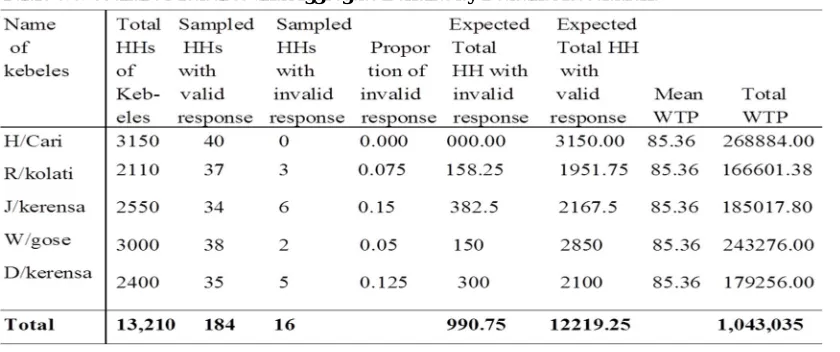
Table 3.6: Welfare Measures and Aggregate Benefits by Peasant Associations
In Table 3.6 the aggregate WTP in terms of labor days per year was converted into monetary value by using wage rate in the local labor market. Shadow wage rate which is good measure of economic value didn’t available. Therefore, based on the mean from the double bounded dichotomous choice format, the aggregate WTP for soil conservation practices is 1,043,035 Labor days per year (18,774,630 ETB) in the selected five kebeles. This shows that there is high level of WTP for soil conservation practices in the study area. The total willingness to pay in the whole study area is simply the product of the respective means and the number of expected households who have valid responses. Hence, the aggregate value of soil conservation in the study area from the double bounded are 10,909,349 person days per annum (196,368,282 ETB).
Conclusion
have a positive and significant influence on the probability of willingness to pay for soil conservation. Variables such as slope of land, perception abut soil erosion problem, and the frequency of extension visit have also a positive and significant effect on the WTP for soil conservation. The study also shows that the mean willingness to pay estimated from the Double Bounded Dichotomous Choice was computed at 85.36 person days per annum. The total aggregate value of soil conservation is 10,909,349 person days per annum (196,368,282 ETB) from double bound CVM. Therefore, this study concludes that farmers have perceived the problem of soil erosion and to overcome the problem, they are willing to pay in terms of labor contribution for improved soil conservation practice.
Policy Implications
The findings of this study indicate that any plan for intervention in the soil conservation should recognize the existing heterogeneity in household characteristics, perception on soil-erosion, physical factors, institutional and demographic factors. In this respect, increasing the level of farmers’ perception on soil conservation through training and centered participatory will help them to develop a positive attitude towards conservation work. Moreover, policy makers can target areas where soil erosion is severe so as to plan more appropriate projects in the future. Policy makers should take into account that farmers who have educated have higher probability of accepting soil conservation projects than those who are not educated. The interaction between extension agents and farmers should be strengthened. More frequent contact between the two could enhance farmers understanding of the environmental problems in general and soil erosion problems in particular. The relatively better off farmers are more willing to contribute to the soil conservation efforts in the study area. Policy makers may target these households especially at the beginning of the conservation efforts based on their willingness to pay.
Acknowledgement
The author would like to express his gratitude to Dr. Abebe Damte for his helpful comments, and advice throughout the work of the study; and Dr. Alemu Mokennen for his constructive comment at the early stage of this study. Next the author thanks Addis Ababa University and Environmental Economics Policy forum For Ethiopia At Ethiopian Development Research Institute (EEPFE/EDRI) for their financial assistance to carry out this study. Finally he also thanks Oromia agricultural development bureaus, rural land and environmental protection and agricultural office of Kuyu woreda that assisted him in providing materials and baseline information and for their support during data collection.
References
Alemu, M. (2000).Valuation of community forestry in Ethiopia: a contingent valuation study of rural households, Environment and Development Economics, 5: 289-308.
Alemu M., Carlsson, F., Gunnar K., and Mahmud Y., (2005) Are agricultural extension packages what Ethiopian farmers want? A Stated preference analysis, working paper in Economics No.172, Department of Economics, Goteborg University.
Alpizar, F., Carlsson, F., Martinsson, P. (2001). Choice Experiments for non-Market Valuation. Working Papers in Economics, Department of Economics, Goteborg University.
Carlsson, F., Frykblom, P., Liljenstolpe, C., (2003) valuing wetland attributes: An application of choice experiments. Ecological Economics, 47: 95-103.
Colombo, S., Hanley, N., (2006). “Analyzing the social benefits of soil conservation measures using stated preference methods” Ecological Economics 58:850-861
CROP, 1998. Poverty and the environment. Comparative research programme on poverty ISBN 82-91844-03-8
David Pearce, et al. (2002). “Economic Valuation with Stated Preference Techniques”. Department for Transport, Local Government and the Regions: London
Ervin CA, Ervin DE. (1982). Factors affecting the use of soil conservation practices: hypotheses, evidence, and policy implications. Land Economics 58: 277–292.
Freeman, A.M., III. (1993). the Measurement of Environmental and Resource Values: Theory and Methods. Washington, D.C.: Resources for the Future.
Greene, W.H. (1997). Econometric Analysis (Second edition). Macmillan Publishing Company, New York
Haab,T.C.,(1997). Estimation Using Contingent Valuation Data from a “Dichotomous Choice with Follow- Up” Questionnaire. East Carolina University
Haab,T., and McConnell, K.(2002).Valuing Environmental and Natural Resources: The Econometrics of Non Market Valuation. Edward Elger Publishing Limited, Glensada House, Montpellier Parade, Cheltenham.
Hanemann, M. (1984). Welfare Evaluation in Contingent Valuation Experiments with Discrete Responses‟. American
Journal of Agricultural Economics, 66, 332-41.
Holden,T., and Shiferaw, B.(2002).Poverty and land Degradation: Peasants’ Willingness to Pay to Sustain Land Productivity. In: Barret, C.B., Place, F. and Aboud A.A. (Eds.).Natural Resources Management in African agriculture.
IFPRI, (2011b). Economics of land degradation: sustainable solution for ending hunger and poverty. IFPRI Issue Brief 68 September 2011
Jonse, B., (2005). Valuing Non-Agricultural Uses of Irrigation Water: Empirical Evidences from the Abbay River-Basin of the Amhara Regional State, Ethiopia. MSc. Thesis, Addis Ababa University. Addis Ababa, Ethiopia.
Oromia Agricultural development Bureus (2011). Natural Resource Development, Conservation & Utilization Process. Soil and water conservation manual, Finfinne
Pender JL, Kerr JM. 1998. Determinants of farmers’ indigenous soil and water conservation investments in semi-arid india. Agricultural Economics 19: 113–125.
Perman, R., Ma, Y., McGilvray, J. and Common, M. (2003). Natural Resources and Environmental Economics 3rd. Pearson Education Limited, the Great Britain.
Scientific and Technical Advisory Panel.2006. Land degradation as a global environmental issue: GEF .Washington, DC, November 2006
Shimeles.D, (2012) Determinants of adoption and continued use of stone terraces for soil and water conservation in an Ethiopian highland watershed. Ecology and Development
Tegenge Gebre Egziabher (1999). Willingness to pay for Environmental Protection: An Application of Contingent Valuation Method (CVM) in Sekota District, Northern Ethiopia. Ethiopian Journal of Agricultural Economics, 3(1): 123-145
Teklewold, H., and Kohlin, G. (2011). Risk Preferences as Determinants of Soil Conservation in Ethiopia. Journal of Soil and water Conservation
Tietenberg, T. (2012). Environmental and Natural Resource Economics. 9th International Edition, Pearson Education,
Inc.
U.S. Department of Agriculture (USDA) (2003).Linking Land Quality, Agricultural Productivity, and Food Security, Resource Economics Division, Economic Research Service, U.S. Department of Agriculture. Agricultural Economic Report No. 823.
UNCCD, (2013). Economic assessment of desertification, sustainable land management and resilience of arid, semi-arid and dry sub-humid areas. 2nd scientific conference 9-12 April 2013 - Bonn, Germany
nited Nations Development Programme (UNDP), (1998). Human Development Report 1998. NewYork: Oxford University Press.
WMO, (2005). Climate and Land Degradation. WMO-No. 989. 2005. World Meteorological Organization ISBN 92-63-10989