Geschke Center
Doctor of Nursing Practice (DNP) Projects Theses, Dissertations, Capstones and Projects
Spring 5-5-2012
Creating an Interactive DNP Project Repository:A
Model for Change
Sara D. Guido Dr. USF, [email protected]
Follow this and additional works at:https://repository.usfca.edu/dnp
Part of theNursing Administration Commons, and theOther Nursing Commons
This Project is brought to you for free and open access by the Theses, Dissertations, Capstones and Projects at USF Scholarship: a digital repository @ Gleeson Library | Geschke Center. It has been accepted for inclusion in Doctor of Nursing Practice (DNP) Projects by an authorized administrator of USF Scholarship: a digital repository @ Gleeson Library | Geschke Center. For more information, please [email protected].
Recommended Citation
Guido, Sara D. Dr., "Creating an Interactive DNP Project Repository:A Model for Change" (2012).Doctor of Nursing Practice (DNP) Projects. 30.
Creating an Interactive DNP Project Repository: A Model for Change
Sara Guido M.S.N., RN, BC- NE, DNP-c
University of San Francisco
TABLE OF CONTENTS
SECTION
I. DEFINING THE PROBLEM ...3-15 Theoretical Framework
Definition of Terms Assumptions and Risks
Project Goals and Expected Outcomes
II. REVIEW OF EVIDENCE...15-23 Literature Review
Discussion
Statement of Need
Background and DNP History Need for Translational Research
Health Information Technology and Nursing Informatics Translation of Evidence from Research to Practice
III. IMPLEMENTATION...23-25 Project Goals
IV. PROJECT EVALUATION...25-33 Part 1 - Deans and Directors Survey
Part 2 - Discussion Board Posted Abstracts: Translation of Evidence Sustainability of the project
V. IMPLICATIONS FOR SYSTEMS LEADERSHIP...33-43 Summary
Dissemination Plan
REFERENCES...44
APPENDICES... A. Systematic Review
Section I
Background, Scope, and Relevance
The changing demands of the United States’ complex healthcare environment require the
highest level of scientific knowledge and practice expertise to assure quality patient outcomes.
Nursing education is undergoing a transformation in doctoral education in order to meet the
increasingly changing complex healthcare needs. From 2002 to 2011, the number of students
enrolled in doctor of nursing practice (DNP) programs in the United States increased from 70 to
8,973. During that same period, the number of DNP graduates increased from 70 to 8,973. As of
2011, there are 153 DNP programs enrolling students at schools of nursing nationwide, and an
additional 160 DNP programs are in the planning stages (AACN, 2011). DNP programs are
available in 37 states plus the District of Columbia. States with the most programs (more than
five) include Florida, Illinois, Massachusetts, Minnesota, New York, Ohio, Pennsylvania, and
Texas (AACN, 2006).
As of 2012, there are 153 DNP programs enrolling students at schools of nursing
nationwide, and an additional 160 DNP programs in the planning stages. DNP programs are now
available in 37 states plus the District of Columbia. States with the most programs (more than
five) include Florida, Illinois, Massachusetts, Minnesota, New York, Ohio, Pennsylvania, and
Texas. From 2009 to 2010, the number of students enrolled in DNP programs increased from
5,165 to 7,034.
During that same period, the number of DNP graduates increased from 660- 1,282
(AACN, 2011). Doctor of Nursing Practice programs: The number of schools offering the DNP
Enrollment in these programs grew by 28.9% in 2011, with 9,094 students now enrolled in DNP
programs (AACN, 2012).
Schools nationwide that have initiated the DNP are reporting sizable and competitive
student enrollment. Employers are quickly recognizing the unique contribution these expert
nurses are making in the practice arena, and the demand for DNP-prepared nurses continues to
grow. The need to incorporate best practices for the improvement and transformation of
healthcare necessitates utilizing technology and innovation. Leaders in the healthcare field are
moving to re-conceptualize educational programs that better prepare today’s health
professionals. The Doctor of Nursing Practice degree provides nurses with the necessary
knowledge and skills needed to redefine best educational practices. This conceptual model
includes using the Essentials of Doctoral Education (AACN, 2006), a document that defines the
theoretical framework.
On October 25, 2004, the member schools affiliated with the American Association of
Colleges of Nursing (AACN) voted to endorse the Position Statement on the Practice Doctorate
in Nursing, which called for moving the current level of preparation necessary for advanced
nursing practice from the master’s degree to the doctorate level by 2015. This shift in teaching
levels and requirements has led to the rapid development of the DNP program. With his change,
there has been a growth and subsequent explosion of evidence-based treatment studies and
research done by DNP students for their final projects that provide an opportunity for a new
standard of information sharing.
In October 2010, the Robert Wood Johnson Foundation’s (RWJF) Initiative on the Future
of Nursing at the Institute of Medicine (IOM) Foundation released a historic report with eight
recommendation is to, “Expand opportunities for nurses to lead and diffuse collaborative
improvement efforts” (RWJF, 2010). It challenges nurse leaders to provide systems change,
using the most up-to-date technology platforms to advance current evidence-based outcomes in
nursing education systems.
In the past, individual schools catalogue and store data form their doctoral students
individually, which can be accessed through their university libraries. The innovative use of a
new platform using informatics technology to enhance systems access to evidence-based practice
outcomes of DNP final projects can provide nurses, and other members of a healthcare team,
more rapid contact to this clinical information that can develop practice outcomes. This
implementation would also promote advanced nursing practice at the highest level of clinical
expertise.
Another influential group working to incorporate informatics is the Alliance for Nursing
Informatics (ANI). This group is a collaboration of organizations that acts as a unified voice for
nursing informatics (NI). ANI represents more than 5,000 nurse informatics groups and brings
together 24 distinct NI groups in the United States. ANI crosses academia, practice, industry, and
nursing specialty boundaries and works in collaboration with the nearly three million nurses in
practice in 2011. ANI’s position is that “meaningful use” of health information technology
(HIT), when combined with best practice and evidence-based care delivery, will improve
healthcare for all Americans. HIT is an essential foundation for the future of nursing, and
informatics nurses must be engaged as leaders in the effective use of information technology to
impact the quality and efficiency of healthcare services (ANI, 2009).
The creation of systems that can provide bridges to information technology requires
accommodate theses and dissertations on their library sites. Some of these sites are public and
can be accessed by everyone, while some require university-specific affiliation. DNP graduates
are distinguished by their abilities to use information systems/technology to support and improve
patient care and healthcare systems and provide leadership within healthcare systems and/or
academic settings (Zaccagnini, 2011). This project aims to apply knowledge and skills related to
information systems and technology.
The Technology Informatics Guiding Education Reform (TIGER) Initiative was designed
to address a skill set needed for all nurses in the 21st century (Hebda, 2010). The skill set
includes informatics competencies that range from basic computer skills to advanced-level
information technology and literacy competencies. Transformation of education requires
integrating informatics systems applications, such as the creation of a new centralized database
for DNP final projects.
Theoretical Framework
DNP-prepared nurses go beyond simply applying evidence into practice and actively
evaluate the results of this application. They generate practice-based knowledge not only by
evaluating existing applications but also by developing new applications from the evidence.
DNP-prepared nurses will be practitioner-researchers who are prepared to play a major role in
transforming, not just applying, their newly gained knowledge (Vincent, 2011).
The organizational theoretical framework of knowledge translation has two overlapping
domains of practice. The DNP-prepared practitioner-researcher and the PhD-prepared
scientist-researcher. Boundaries between these two groups are not rigid, and they are overlapping. The
influence of the doctoral-prepared nurse’s role is broadened by DNPs working closely with PhDs
added value to nursing, and the increase of doctor-prepared nurses making changes to nursing
practice benefits the profession as a whole. Scientific knowledge continues to grow
exponentially, and the need for translating this knowledge into clinical practice has never been
greater. DNP graduates must be prepared in rigorous doctoral curricula to address this need. As
practitioner-researchers, DNP graduates are context experts who will be key in closing the
research-to-practice gap and improving health outcomes in the United States (Vincent, 2012).
Rogers’ Diffusion of Innovations theory (2003), which provides a conceptual framework
for understanding the process of the adoption of new practices or technologies and the associated
social changes, was used. Rogers’ work indicates that in facilitating the adoption of an
innovation it is important to help the community of potential adopters and other stakeholders
participate in the process, clarify their understanding of the innovation, and reduce uncertainty.
This translates into developing materials and communication channels that provide information
and opportunities for input from various stakeholders. (AACN). The Deans and Directors survey
was an attempt to involve stakeholders in the adoption of a new model of storage for DNP final
projects.
In addition, Disruptive Innovation theory identified by Christenson and colleagues
(2004), offers a unique approach to introducing innovation. The innovation focuses on
disruption of the competitive landscape rather than incremental, semi radical, and very radical
innovations that affect both the technology and business model. (O’Grady & Malloch, 2011). A
healthcare example of disruptive innovation occurs when a new technology is designed to
transform the ability for information exchange using a specially designed application, a database
for DNP using innovative information technology. The development of new methods for
data from DNP final projects to others most quickly, This can serve as a more powerful method
of information exchange, using the power of the internet; improving the process of translation of
knowledge to practice and education.
Conceptual underpinnings in a framework of Knowledge Translation developed by
Vincent ET al.conceptualizes the emerging field of translational research.
An organizing model derived from translational research depicts a central circle, with
overlapping circles indicating two domains—that of the scientist-researcher, traditionally the
domain of the PhD-prepared nurse, and that of the practitioner-researcher, conceptualized as the
domain of the DNP-prepared nurse. Boundaries are not rigid, allowing individual interests,
experience, and pre- and postdoctoral opportunities to create roles. However, the purpose of
developing the practitioner-researcher role is to broaden the influence of doctoral prepared
nurses throughout the process of basic discovery to the improvement of health outcomes. The
inner circle represents phases of the translational research process (Vincent, 2011). The
Organizational Framework for Doctoral Knowledge Translation has been adapted with
permission, from authors, and has integrated into it the flow of Nursing Informatics to include
Data, from DNP final Projects-which becomes- Information- to Knowledge to-Translation to
Definition of Terms
AACN essentials. DNP Essentials 1 through 8 are the foundational outcome
competencies deemed essential for all graduates of a DNP program regardless of specialty or
functional focus.
Essential IV: Information Systems/Technology and Patient Care Technology for the
Improvement and Transformation of Health Care. Demonstrate the conceptual ability and
technical skills to develop and execute an evaluation plan involving data extraction from practice
information systems and databases. Their abilities to use information systems/technology to
support and improve patient care and healthcare systems, and provide leadership within
DNP Final Project. The final DNP project produces a tangible and deliverable academic
product that is derived from the practice immersion experience and is reviewed and evaluated by
an academic committee. The final DNP product documents outcomes of the student’s
educational experiences, provides a measurable medium for evaluating the immersion
experience, and summarizes the student’s growth in knowledge and expertise. (AACN, 2006).
Nursing informatics (NI) is a specialty that integrates nursing science, computer science,
and information. Science to manage and communicate data, information, knowledge, and
wisdom in nursing practice. NI supports consumers, patients, nurses, and other providers in their
decision- making in all roles and settings. This support is accomplished through the use of
information structures, information processes, and information technology (ANA, 2008).
Database. A collection of data organized so that various programs can access and update
the information.
Health Information Technology. Comprehensive management of health information
across computerized systems
Data. The raw material of information. Refers mostly to the information entered into,
and stored within a computer or file.
Database. A collection of data organized so that various programs can access and update
the information.
Data Processing. Operations performed on data to provide useful information to users.
Digital. Refers to information processing techniques that convert the actual data into
binary (or machine language) code for more efficient transmission and storage. To retrieve the
information, the binary code must be converted back to an analog signal.
communicated, stored, and managed, and how it is processed into information and knowledge.
This knowledge is useful to nurses in decision-making at the operational, tactical, and strategic
planning levels of health care.
Informatics. Informatics is the discipline focused on the acquisition, storage, and use of
information in a specific setting or domain. To me, what distinguishes informatics from
information science and computer science is its rooting in a domain.
Information systems. Used in health care include the people, structures, processes, and
manual as well as automated tools that collect, store, interpret, transform, and report practice and
management information. Information system is frequently used to refer to the interaction
between people, processes, data and technology. In this sense, the term is used to refer not only
to the information and communication technology (ICT) that an organization uses, but also to the
way in which people interact with this technology in support of business processes.
Information Technology (IT). The technology involving the development, maintenance,
and use of computer systems, software, and networks for the processing and distribution of data
Nursing Informatics (NI) is a specialty that integrates nursing science, computer science,
and information science to manage and communicate data, information and knowledge to
support health care outcomes. This support is accomplished through the use of information
structures, information processes, and information technology (ANA, 2008).
Host. A computer connected to the Internet that allows users to connect to it.
Operating System. A group of computer programs that help manages the computer’s
resources. It acts as an interface between the computer and its application programs. The
operating system’s job is to control the computer on the most fundamental level: it manages
hardware, providing the means for the user and application programs to tell the hardware what to
do.
Interactive DNP Final Project Repository. For storage of data, information and Doctor
of Nursing Practice Projects.
Translational research. A developing science translating evidence based research to
practice. The ability to successfully translate new research findings to the clinical setting and in
turn the generation of new knowledge from the clinical setting itself and further research as
needed. This flow of information goes from DNP Clinical Practitioners to PhD Research
Practitioners.
Assumptions and Risks
The assumption is that a centralized repository would be of value to the profession, and
the risk would be that the project would not provide a valuable mechanism as envisioned.
Although the findings of this project are convincing, there is an assumption that there is a need
for a centralized repository for DNP final projects, the risk is that the repository would not
provide added value.
Summarize Project Goals and Expected Outcomes
With the growth of the DNP clinical doctorate programs, and final outcome projects there
is a need for specialized DNP database for a new method of data entry and retrieval for DNP’s.
A distributed database is a set of interrelated files that can store data (Tolea & Bolyai, 2010).
The creation of a resource specific to DNP students and faculty can provide easier access
to evidence-based projects. Specialization of this database to help track trends and projects of
DNP students from different DNP programs and can later be a source for research into the
DNP programs, student submissions of evidence-based projects have increasingly become a
standard graduation requirement. DNP program final projects are a varied and valuable sources
of original, evidence-based projects related to current identified clinical, administrative, and
educational issues identified. DNP students’ final projects are only available to a select few. In
academia, there is a constraint to use the systems created by the institution. Often this is not
accessible easily by people outside of that particular institution.
Knowledge translation, translational research, is a necessary step for dissemination and
application of findings. DNP prepared nurses can contribute to leading change, and improving
systems to enhance quality improvement and outcomes utilizing the best IT systems and
innovation.
As of 2012, there is no simple, standardized method to store, compare, analyze, or even
study these important and innovative final project student submissions. The only method to
retrieve these projects is to contact each DNP program and request access. This is not utilizing IT
and systems development, to reach the largest audience. Creation of a specialized database
system and data retrieval process for advanced practice nurses and professionals can transform
nursing practice and education to utilize the most up to date technology expertise, and reach the
largest audience. This database would grant healthcare professionals access to project findings,
for the purposes of education, and replication and dissemination of findings can enhance the
utilization of the evidence. Dissemination of findings, and possible replication applicable to their
specific setting. The process of translating evidence to practice is the method in which healthcare
systems care changes. DNP’s are leading this change however; IT can further enhance the speed
The purpose of this project is to gather input from Deans and Directors of DNP programs
through a specialized survey tool. This will aid in identifying valuable input from stakeholders as
related to the perceived purpose and value of creation of a centralized electronically accessible
database for DNP student final projects.
A database can be defined as a set of basic or structured data accessible to a community
of users. A distributed database is a set of interrelated files that can store data (Tolea & Bolyai,
2010). The creation of a resource specific for DNP students and faculty can provide easier access
to evidence-based projects. Specialization of this database to help track trends and use projects of
DNP students from different DNP programs as sources for research into the quality and
outcomes of future DNP final projects across the country.
One of the American Association of Colleges of Nursing’s (AACN) eight essentials of
doctoral education for advanced nursing practice is organizational and systems leadership for
quality improvement and systems thinking (2006). This essential includes identifying needs for
designing and integrating methods for enhancing the use of technology and information to be
applied to education and practice. Creation of a new information technology (IT) platform for
DNP final projects can enhance advanced education and nursing practice at the highest level of
clinical expertise.
As schools implement DNP programs, evidence-based project submissions are
increasingly becoming a standard graduation requirement. Unfortunately, the number of DNP
student final projects – a valuable collection of original evidence-based projects and
forward-thinking solutions to a wide variety of healthcare delivery and policy design – are only available
store information in order to access these important and innovative final projects, except to
attempt to contact each DNP program and request access.
A repository system process for advanced practice nurses and professionals can transform
nursing practice and education to utilize technology expertise to gain access to the findings, for
purposes of education, and replication and dissemination of findings can enhance the utilization
of the evidence. The purpose of this project is to develop consensus as to the valuable aspects
related to the creation of a centralized electronically accessible databank for DNP final student
projects. The goal is to provide a shortened pathway to get DNP final projects’ evidence-based
outcomes easily accessible for people within and outside the DNP program. The creation of an
easily reached display place could build a bridge to help cross the roadblocks other database
systems contain. Additionally, DNP students in programs across the country could easily access
what other students have submitted as final projects, from which they could build on ideas or
adapt project criteria to meet the needs of their individual settings.
Section II
Literature Review
A review of the literature was conducted by a hand search of journals, papers, and
citation tracking. An electronic search was done tracking databases, titles, abstracts, text, and
book chapters. Reviews of empirical and non-empirical studies were reviewed. Abstracts of
citations were reviewed for topic relevance, and inclusion criteria. When met, the specific
articles were retrieved in full to be included in this systematic review.
The in-depth literature review utilized the following online search engines and
publications. Keywords for the search included doctoral education, doctor in nursing practice,
health information technology, innovation and technology, and nursing informatics.
To help explore this large heterogeneous body of knowledge, the review of literature
included three broad areas: the doctor of nursing practice, HIT, nursing informatics, leadership
and innovation, and translational research. Other areas also explored included quality and safety
in healthcare, and nursing education. Articles included were white paper reports that addressed
the history and expansion of the DNP degree; relevant documents form the AACN, IOM reports,
journals, online sources, and books. Some of the evidence reviewed was older than five years,
which is important to note because relevant history relating to HIT and NI was important to
include tracing the development of the field, related to the topic.
A number of keywords were used in various combinations to identify relevant articles,
including doctorate in nursing practice, and clinical doctorate, education, and nursing. Position
statements from professional nursing and medical organizations were included were included.
Additional keywords searched were innovation in healthcare, translational research, doctoral
education, and social networking and innovation.
The systematic review of the literature included a “snow ball” method, including a hand
search of journals, papers, citation tracking, and electronic search using CINAHL, Medline, and
scholarly repositories of the University of San Francisco, theses and dissertations databases, titles
and abstracts, text, book chapters, and a library search of books. Abstracts of citations were
reviewed for topic relevance and inclusion criteria. When met, the specific articles were retrieved
in full, to be included in this systematic review. The format used for evaluating the articles for
this systematic review included, “Why?” “What?” “When?” and “Where?” Each article was
Discussion
The purpose of the systematic review was to explore the best available evidence on DNP
program development and the infrastructure for storage of DNP final projects. To address this
question, qualitative studies using a myriad of methodologies such as phenomenology,
descriptive/exploratory, participatory action research, grounded theory and hermeneutics were
identified. Multiple studies and reports on the history of the DNP were reviewed. The review of
the evidence stimulated questions on a number of areas: How can the use of IT applications lead
to helping transform healthcare? Can the use of an IT database repository help the process of
translating evidence to practice and education?
Are some of the recommended standards of NI being incorporated into education and
practice? How can we build an infrastructure to add to knowledge in EBP coming from the work
of DNP students, which in turn supports the use of HIT in education and practice?
Statement of Need
Informatics is already having a profound effect on how the healthcare industry catalogs
and shares information. By creating a more efficient means to aggregate and share information,
the use of informatics systems in DNP education will improve accessibility to critical thinking,
advancing the translation of evidence to practice, and will provide a shorter pathway to adopting
the creative new evidence emerging from DNP final projects. Development of an integrated DNP
final project repository to enhance EBP and building use of informatics in nursing education will
advance nursing practice and keep pace with other industries utilizing the power of technology to
Background and DNP History
The IOM report Crossing the Quality Chasm (2001) was a landmark study focusing on
improving healthcare and reducing errors. Recommended competencies for today’s healthcare
professionals included improved interdisciplinary teams, integration of quality improvement
standards, and utilizing IT systems.
The AACN’s DNP Essentials document (2006) addresses the eight recommended criteria
for all DNP programs, which are: (a) Scientific Underpinnings for Practice; (b) Organizational
and Systems Leadership for Quality Improvement and Systems Thinking; (c) Clinical
Scholarship and Analytical Methods for Evidence-Based Practice; (d) Information
Systems/Technology and Patient Care Technology for the Improvement and Transformation of
Health Care; (e) Health Care Policy for Advocacy in Health Care; (f) Interprofessional
Collaboration for Improving Patient and Population Health Outcomes; (g) Clinical Prevention
and Population Health for Improving the Nation’s Health; and (h) Advanced Nursing Practice.
Specialty competencies are areas that will prepare DNP graduates to assume a variety of
roles. There are two general categories of specialty competencies: (a) Roles that specialize in the
care of individuals as an advanced practice nurse (APN); and (b) Roles that specialize in practice
at an aggregate, systems, or organizational level. Specific competencies and contents for the
specialty competencies are defined by the specialty organizations. These competencies
complement, and are incorporated into, the eight core DNP Essentials. They are sometimes
referred to as direct or indirect roles (e.g. nurse practitioner, educator, executive/administrator,
or policy role). Upon graduation, all DNPs fill leadership roles to improve and change healthcare
In a follow-up report, the IOM Committee on the Health Professions Education
states, “All health professionals should be educated to deliver patient-centered care as members
of an interdisciplinary team, emphasizing evidence-based practice, quality improvement
approaches, and informatics” (IOM, 2003). Developing new innovative systems to reflect the
needs of today’s healthcare system entails recreating models of education and practice.
The RWJF’s Initiative on the Future of Nursing report identified major recommendations
for healthcare delivery systems improvements (2010). One of these recommendations is to
expand opportunities for nurses to lead and diffuse collaborative improvement efforts and
challenges nurse leaders to provide systems change, using the most up-to-date technology
platforms to advance current evidence-based outcomes in nursing education systems (2010). In
addition, the objectives set forth by the 2010 Affordable Care Act represent legislative change to
conduct a major overhaul of healthcare. With nursing being the largest segment of the nation’s
healthcare workforce, nurses can play a vital role in helping to realize the goals of the Affordable
Care Act (IOM, 2010).
Nurses today have an opportunity to play a central role in improving quality and
transforming the way Americans receive healthcare. The IOM report recommends expanding
opportunities to lead and diffuse collaborative improvement efforts (IOM, 2010). In recognition
of this imperative, leaders in the healthcare field are moving to conceptualize educational
programs that better prepare today’s health professionals. In addition, the use of innovative
technology to disseminate findings to clinical settings can be aided by creating new systems
support and an infrastructure for evidence-based practice findings from DNP final projects.
In their continuous efforts to improve healthcare, both the public and private sectors have
performance of health professionals, reduce operational and administrative costs, and enhance
patient safety (IOM, 2012). Overall, the literature on HIT and its effects on patient safety have
been inconclusive.
In the report Health IT and Patient Safety: Building Safer Systems for Better Care
(IOM, 2011) the IOM examined literature on HIT products and their effects on patient safety.
Overall, the committee findings about HIT literature were inconclusive. Some HIT applications
were successful in improving patient safety, however, the results are not easily generalizable due
to IT applications being so varied in different settings. The report showed worrisome concerns
due to lack of standardization of HIT designs. Creating an infrastructure for a DNP database can
enhance the translation of evidence-based practice outcomes and improve quality and safety in
healthcare.
In the evaluation of systems, it is important to recognize that the HIT is not used in
isolation, but as part of the socio-technical system that also includes clinicians, patients,
organizations, processes, and the external environment. Comprehensive analysis of effectiveness
of systems needs to consider the system as a whole, and design systems with sensitivity to the
many impacting factors.
Need for Translational Research
As practitioner-researchers, DNP-prepared nurses can help close the research-to-practice
gap, thus improving quality of care, by engaging in translational research. DNP-prepared nurses
must bridge the gap between research and practice by learning to critically analyze evidence and
design and implement evaluation studies including Quality Improvement,
According to AACN Essential III, Clinical Scholarship and Analytical Methods for
Evidenced-Based Practice, DNP graduates must be equipped with skills to (a) critically assess
the suitability of evidence for implementation into practice, (b) design and implement process
and outcome evaluation studies within a practice setting, and (c) be QI leaders.
Health Information Technology and Nursing Informatics
As HIT is central to healthcare reform, and nurses comprise the largest group of clinical
users of HIT systems, nurse executives must play a critical role and remain engaged throughout
the lifecycle of system selection, implementation, and optimization. Additionally, the healthcare
team will look to the nurse executive to drive adoption and articulate the goals and anticipated
benefits of the technology implementation to guide healthcare reform (TIGER Leadership
Report, 2007).
The TIGER vision for leadership was defined at a 2006 summit as the state of
“revolutionary leadership that drives, empowers, and executes the transformation of healthcare
through the use of IT.” Two action steps were identified to help achieve the leadership vision:
Create leadership, management, education, and development strategies to support nursing leaders
in transforming care through technology initiatives; and identify strategies to increase the power,
influence, and presence of nursing leadership in IT initiatives, both locally and nationally, at
their own organizations, through their professional organizations, as well as governmental and
legal bodies (TIGER Leadership Report, 2007). Nursing education is changing, and informatics
infrastructure is being incorporated nationwide at varying levels. The needs to further integrate
practices utilizing the best IT and systems by using data mining to collect and store evidence
Another primary goal of the TIGER Initiative is to engage more nurses in the
development of a national healthcare information technology (NHIT) infrastructure (TIGER
Collaborative Report, 2007). The best return comes from utilization of the data to change
practice patterns, to enhance improving EBP, and to create systems to improve quality, safety,
and education.
An informatics infrastructure is essential for evidenced-based practice. Building
blocks of an informatics infrastructure for evidence-based practice need to include the following:
standardized terminology and structures, digital sources of evidence, standards that facilitate
healthcare data exchange among heterogeneous systems, informatics processes that support the
acquisition and application of evidence to a specific clinical situation, and informatics
competencies (Bakken, 2001). Each of these components supports the application of evidence to
practice, as well as the building of evidence from practice.
Translation of Evidence from Research to Practice
The gap between translation of evidence of research findings and their application is
growing. Healthcare education programs are emphasizing inter-professional collaboration and
translational research as a means to reduce this research-to-practice gap. Healthcare providers
(HCP) must be able to translate newly discovered relevant scientific knowledge into their
provision of healthcare and navigation of healthcare systems to improve patient and systems
outcomes (Vincent, 2012). The timeliness of this practice can be enhanced by digitized sources
on platforms that are readily accessible. DNP programs’ curricula guide students to become
leaders in implementation and dissemination into practice. Collaboration in the 21st century is
essential between the DNP and PhD, and other clinical experts.
infrastructures and transformative systems, to bridge EBP research into clinical practice with the
appropriate technology solutions for organizational and educational transformations. My project
goals were to survey participation from leaders and stakeholders of DNP programs related to the
perception of a need for a DNP final project database for the purposes of translational research to
practice. In addition, the posting of current abstracts available on the DNP community website
was to engage DNPs in education and practice about the usability of the abstracts in current
format online in the LLC. It was an attempt to see how useful this platform was for end users
Section III
Implementation
The DNP course of study culminates in a scholarly project, at the conclusion of the
doctoral program (AACN, 2004). Collectively, these final projects are a valuable source of
original evidence of scholarship. Currently, access is neither convenient nor centralized, in a data
system, which reflects the best utilization of technology and innovation available. By creating a
more efficient means to aggregate and share information, the use of informatics systems in
healthcare education will improve access to application of evidence to practice. The purpose of
the survey was to identify the perceived need of a DNP final project platform for Doctor in
Nursing Practice (DNP) final student projects.
After receiving approval from the Institutional Review Board of University of San
Francisco, the Director/Dean of Nursing with current DNP programs were contacted via email to
invite them to participate in a DNP survey. The survey goal was to identify information and
interest, about the perceived value for a collective DNP final project database. The survey
The second part of the project was an intervention aimed at translational research
practice. In addition to a survey of deans and directors regarding DNP projects and project
posting, DNP graduates will be invited to review abstracts of DNP projects that have been
ovulatory posted on the Doctors of Nursing Practice website
http://www.doctorsofnursingpractice.org/studentprojects.php.
DNP graduates who have joined the Doctor of Nursing Practice community will be
invited to participate in a review of the posted abstracts. Participants will be told their
contributions are valuable to building an interactive electronic database of DNP projects.
Participants will be asked to voluntary respond to these three questions:
1. Please share how your review of this DNP project abstract was of value to you?
2. How did the content influence your thoughts on your practice?
3. Please share your thoughts on how reviewing a DNP project is valuable to growing the
profession and improving outcomes.
Subject Consent: Participation is voluntary, consent in conferred as a result of
participation; answers will be aggregated anonymously.
Project goals
Project goals were to identify perceptional trends among nursing leaders To promote the
use of best practices in HIT and NI and explore best possible systems to enhance translational
outcomes related to the DNP EBP final projects. In addition, to add to identifying current status
of individual schools feedback related to building an infrastructure in nursing education utilizing
informatics and HIT.
IRB approval, by USF was received for the implementation of the DNP survey, and the
The project has the potential to advance systems innovation, and demonstrate interest/
consensus on a database for final DNP projects from different colleges and universities.
Section IV Project Evaluation
Part 1: Deans and Directors Survey
A 10-question survey (Table B) was sent to gather evidence related to the need for a
centralized repository for DNP final projects. Comparisons of survey results were examined for
significance statistical significance on selected items. Out of a total of 248 people who were sent
the link, 68 people clicked onto the email sent, a total of 27.4% open rate. A total of 34 people
clicked onto the survey and responded, with a 13.4% response rate.
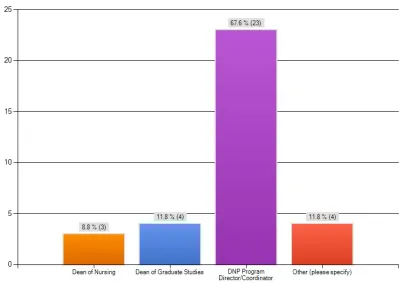
Out of the sample surveyed 67% of the respondents were DNP program
Directors/Coordinators, 8.8% were Dean of Nursing, 11.8% Dean of Graduate Studies and
11.8% were in “other” positions (Graduate program coordinator, Associate Dean for Graduate
Program, Professor, Associate Dean for DNP program).
11.8% of programs starting admitting students between 2005-2006. 64.7 % admitted
students between 2007-2010. 20.6% admitted students between 2011-2012. 85.3% graduated
between 0-50 students in 2011,14.7% graduated between 51-100 students as of December 2011.
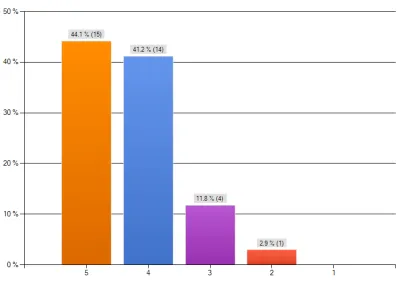
Out of the Deans and Program Directors who responded to survey, 84% felt that there
was important value for an interactive DNP final project database. 11.8% felt it was of average
value.
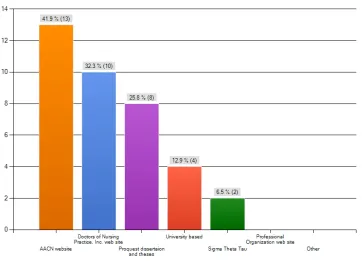
93.9% responded they would support having a link to upload DNP projects on school
website.AACN website 41.9%, Doctors of Nursing Practice, Inc. web site 32.3%, Proquest
Chi-square goodness of fit analysis was used to compare the frequencies of responses for
questions 6 and 8.
Question 6 - What is your perception of value to your students, of an interactive DNP
final project database? For question 6, there was a statistically significant difference in the
numbers of participants choosing the different responses, c2 (4)=30.412, p ≤ 0.05.
Question 8 - In your opinion, where should this database be housed? Frequencies of
responses significantly differed for question 8 as well, c2 (5)=29.784, p ≤ 0.05.
Table 2
The final 2 questions of the survey contained some open-ended questions, to gather
qualitative data from the participants of the survey. Identified themes related to the topic were
valuable in order to capture perceptions. Qualitative findings of the survey described how a
developing the repository for storage of information, in order to gather collective knowledge and
information to help students, educators and clinicians to translate evidence to practice.
The following are comments made by survey participants:
Help build the practice research. By the support of building EBP students can learn
through sharing of ideas, giving the opportunity to further studies, which have been completed.
Increase the depth and scope of studies by building on previous studies. Build collective
knowledge/wisdom, for DNP practice, and practice outcomes. Provides information for students
in DNP Projects to see the breadth of projects as well as foster ideas. Will create a pool of
translational research. There can be replication of projects, which may help to solidify our
knowledge base. As with a centralized database of dissertation work, the final projects can reflect
original scholarship and guide system change. Dissemination of knowledge, Encouraging
innovation, quality care, process improvement, and evidence-based practice leads to evidence
based practice and further study and research. Sharing good and promising practices, it could
help to standardize outputs from all programs, would expand the knowledge base and provide a
springboard for replication and refinement of these projects in other settings. One part of the
definition of scholarship is that it is public and peer reviewed. It allows faculty and students to
enhance nursing scholarship along with sharing the findings since many of these projects may
not be published.
Convenient access threads: Having one place to house DNP final project will
make it convenient for future DNP students to find projects and get ideas on what to do for
their capstone project. Help develop shared norms about expectations, DNP students
beginning a new program will be able to find out what other students have done. There can
examples of projects. I think we also need to start thinking about how we can efficiently
and effectively build culminating projects. So one project could be completed at multiple
sites by DNP students, Easy access to current, relevant practice-related topics. Easy access
to current, relevant practice-related topics. It will provide a venue to retrieve scholarly
reports for clinical practice innovation.
Standards for program evaluation: the scope of the project varies greatly from
DNP program to program. Having a centralized repository was viewed as valuable for a
number of reasons. It would help to gather program input (data) in order to evaluate
outputs. From all programs would expand the knowledge base and provide a springboard
for replication and refinement of these projects in other settings. One part of the definition
of scholarship is that it is public and peer reviewed.
Part 2: Discussion board posted abstracts: Translation of evidence
Currently, there is an open source online DNP LLC, with over 3000 members, it is open
to all educational backgrounds, not exclusively DNP’s. It is an active web-based site, with varied
diverse resources, and content. One area house DNP abstracts of final projects. Five individuals
were contacted for permission to use their posted abstract for a discussion board question that
was posted related to the specific abstract. The questions were related to the value of the
abstracts posted.
The platform to present the abstracts did not lend itself to an open dialogue as expected.
One of the characteristics of an on-line forum includes the opportunity to communicate at will on
topics of personal interest. It is not an ideal vehicle to promote and guide discussion designed to
the posting of abstracts with the request to provide feedback did not pique interest in the on-line
community members.
The abstracts were brief summaries of projects performed by DNP students and
scholars. The summary may not have provided enough information to challenge the on-line
community member. Similarly, the expectation of providing an abstract on a specific topic to an
on-line community member can at best hope to randomly capture the member's interest.
The questions asked were designed to elicit a response from an interested viewer.
Perhaps the questions were not reflective of the concerns or interests that a viewer may have
when viewing an abstract. The overarching goal was to elicit how DNP colleagues would or
could apply findings from scholarly projects into their practice. The questions asked perhaps
were not as direct and succinct as they could have been to elicit these responses.
Sustainability of the project
Continuous Quality Improvement Plan
Issue Recommendation Plan
Feasibility/Cost
Effective/Sustainable
The need for
Appropriate
organizational
structures
Develop a coherent
organizational structure
with clear lines of reporting
and authority. Assessment
of subscription service for
repository
Establish an individual for
accountability for quality of
information
Further needs analysis for system
The need for
Appropriate
Information
System
Develop a repository that
ensures timely and quality
information is made
available.
Consider: the strength of
the research design; the
Quality of the data
Collected; relevance of
The findings for improving
clinical practice
Design categories of information
clinical, policy, leadership systems
Institute a web based knowledge
management portal that provides
timely, quality information on process
and outcome indicators to allow for
standard development and monitoring
within repository
The need for an
Effective
Communication
System and
Structure
Develop an effective
communication system
And structure that ensures
quality and timely
communication through
appropriate channels
Formalize mechanisms for
communication:
·Written and verbal referral systems
For end-users, Structured and regular
Develop mechanism
For feedback of
End users
Identify barriers ongoing,
And make changes as
necessary
Ongoing review of use of system,
including end-user feedback
The need for
Appropriate
Regulatory systems
Develop appropriate
regulatory systems
Establish professional self-regulatory
bodies (peer review) for nursing
· Identify indicators of standards and
set time frames within which to
Feasible
Sustainable
Centralized location TBD
Content management
System
Survey end users re: best location of
centralized repository
Identify best practices for content
Section V Implications for Systems Leadership
Summary
Nursing leaders in education and practice incorporate innovative ideas for the
21-century from our socio- technical society. In order to use best practices in NI and innovation, we
need quality designs that consider cost saving, and collaboration, bridging the gap of education
to practice by use of smart technologies and systems.
The goal of this project was to identify if there was a need for a new web based
knowledge management system to provide easy centralized access to EBP from final DNP
projects, Creating An Interactive DNP Repository: A Model for Change.
Nursing informatics is a specialty that integrates nursing science, computer science, and
information science to manage and communicate data, information and knowledge to support
health care outcomes. This support is accomplished through the use of information structures,
information processes, and information technology (ANA, 2008). In evaluating effectiveness of
structure, processes and outcomes, in relation to DNP final projects, there is a need for
innovation, creativity, and new systems development to improve integration. Identification of
systems, which can monitor quality and effectiveness in nursing and informatics practice need to
be developed. The engagement in the development, implementation and evaluation of systems
and practice is a functional area for nurse informatics leaders.
The integration of NI in designing an Interactive DNP Repository can facilitate the flow
from data- information –knowledge-wisdom- to practice. Enabling the Health Care professional
to use EBP more quickly, and redesign interventions based on their practice settings. Innovative
systems that store digital sources of information of evidence or knowledge can enhance the
With the rapid development of the DNP programs across the United States, the question
is how can the role of IT aid in disrupting the current healthcare system and create a more
integrated approach to DNP final project storage systems? Is the way data is currently stored on
other databases and university websites the best way to disseminate findings? The question of
scholarship in practice challenges us to look at how we are conducting business, and evaluating
whether is it the best practice. There is growing recognition that there is a gap between research
findings and application to practice.
The survey results showed interest from Deans and Directors as to the value for a
centralized information system database for DNP final projects. The awareness was that there is
a noteworthy value to a centralized repository for nursing DNP project’s, ease of access links to
professional oversight. Some of the ideas acknowledged were further defined when participants
responded to a survey question as to how a centralized repository could enhance nursing
education and practice?
Some main themes included the sensible nature of housing projects in one place for
others to easily access. In addition, the content of what could be shared in a centralized
repository would include a vehicle for dissemination of knowledge, improving quality of care,
and the depth and breadth of innovation occurring among DNP students. It provides value for
future students as well, to be able to build on prior research and knowledge obtained by others
working in similar practice settings, This is turn can lead to further evidence based practice study
and research. Sharing knowledge and skills learned adds to collegiality in the profession,
providing examples of projects can provide ways for others to duplicate a project at multiple
settings, building further collaboration. It is a venue for retrieving scholarly reports for clinical
standard outputs from all programs, and provide a body of knowledge for future research and
evaluation of practice. Building collective wisdom about DNP practice and practice outcomes
can help solidify original scholarship, and guide system change. The students need to view wide
examples on a wide variety of topics as they develop ideas for their projects. Sharing nursing
scholarship along with distribution of findings s can build unpublished knowledge, and growing
the DNP profession. The Repository can keep updated on the evolving of DNP scholarship
across the country, quantifying and qualifying the types of DNP work being conducted.
The question of where the Repository is housed is a question of further discussion and
research. Two centralized places had the most interest for survey participants. The AACN
website (41.9%), and the DNP LLC (32.3%) website. Further study and collaboration on
creating the repository, and system for sharing centrally, will be part of my post-doctoral work.
IT provides other additional tools for interactive methods such as discussion boards,
blogs etc., that healthcare leaders can use to share information. Analysis of ways different
college and universities store DNP final projects, has led the researcher to believe that an
interactive system can be created. For greater effectiveness. The need to identify practices that
can incorporate organizational and systems leadership for quality improvement and systems
thinking (AACN, 2006) is a high priority. The use of technology and information for
improvement and transformation of healthcare can be enhanced by disruptive innovative
systems.
A quality repository system using health IT begins with user- centered design principles
and adequate testing and quality assurance. This can be integrated with other current modes of
social networking available, such as discussion boards, blogs, twitter, face book, online DNP
socio-technical trends of today can help deliver information most successfully. Creating systems to
allow easy transfer and use of information about the DNP final projects can help enhance EBP
and help transform nursing and healthcare. The repository system aids in building nursing
knowledge, and can aid in evaluation research by centralizing findings.
The overall goal for the Quality and Safety Education for Nurses (QSEN) project is to
meet the challenge of preparing future nurses to have the knowledge, skills and attitudes (KSAs)
necessary to continuously improve the quality and safety of healthcare systems. As a DNP
educator, innovation to enhance EBP by creating better informatics systems helps meet
recommended standards by professional organizations including the ANA, IOM, AACN, and
QSEN groups. The value of a shared repository enhances knowledge transfer, and helps to build
quality for EBP translation and/or further research by students or healthcare providers and
leaders.
The United States is undergoing a major transformation of its healthcare delivery system,
driven by federal health IT investments and healthcare reforms. In healthcare, disruptive
innovation aims to replace the current healthcare model — whose inaccessibility, unaffordability
and unsustainability impacts every person in this country — with a more cost-efficient,
patient-centric model (HIMMIS, 2012).
While traditional technology developers focus on their own efficiency and effectiveness,
disruptive innovators build products that are more convenient to use, easier to access or more
affordable to a new set of users who either didn’t have the expertise or funds to buy existing
products. As history has shown, new companies lead each wave of decentralization because
The rich knowledge and information is building from the DNP final projects from graduating
students. As a profession, we need to learn from other disciplines, and apply best practices to
nursing. The purpose of the DNP database systemwill be the aggregation, storage and ready
dissemination of evidenced-based practice (EBP) projects. The initial users would be a DNP
student to catalog their final senior DNP projects in a readily available and accessible format.
DNP’s in advanced practice, education and leadership roles in healthcare organizations and
universities can provide the direction to their organizations that are capable of helping to bridge
practice, education, and research. This will in turn foster leveraging of data and evidence for
improving clinical practice, patient outcomes and population health. The goals of creating an
innovative platform for DNP final projects using informatics, facilitates the goals of knowledge
sharing and translation, also the potential for more rapid adaptation to practice and education.
DNP student project findings can be the impetus for new DNP student’s projects that may be
looking for practice projects related to their specialty area. They can then in turn adapt, or
replicate findings, evidence based practices found effective in their clinical setting. This in turn
cans translational practice, and redesigning research based on using evidence based outcomes
from prior DNP final projects. In addition, the sharing of best practices with clinicians,
educators, administrators and leadership, promotes building the nursing knowledge base and
improving the contribution of nursing, by the expertise of DNP students and advanced
practitioners.
Access is not convenient nor centralized, thus not reflecting the best utilization of
technology and innovation available today. Translation of evidence to practice is a developing
Informatics already has a profound effect on how the healthcare industry catalogs and
shares information. By creating a more efficient means to aggregate and share information, the
use of informatics systems in healthcare education will improve accessibility to critical thinking
and provide a shorter pathway to adopting the creative new evidence emerging from DNP senior
projects. The purpose of this survey is to identify perceived need of a National electronically
accessible databank for DNP final student projects.
Five components are proposed as the building blocks of an informatics infrastructure for
evidence-based practice: 1) standardized terminologies and structures (i.e., terminology models),
2) digital sources of evidence, 3) standards that facilitate health care data exchange among
heterogeneous systems, 4) informatics processes that support the acquisition and application of
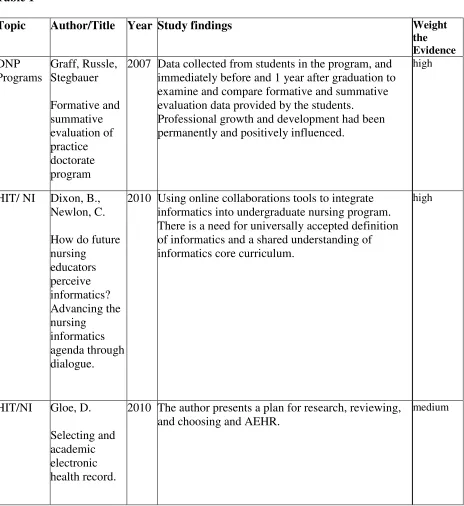
evidence to a specific clinical situation, and 5) informatics competencies. Table 1 displays
selected examples of how the building blocks sup- port the application of evidence to practice
and the generation of evidence from practice.
Tremendous progress in the development of the individual building blocks of an
informatics infrastructure for evidence-based practice has occurred. In particular, sources of
digital knowledge have rapidly increased. Representative sources are shown in Table 2 (with
permission).
However, major challenges remain. These include development of a model that supports
disseminate ion of digital sources of evidence, achievement of consensus standards for
describes-, organizingdescribes-, obtaining access todescribes-, and archiving electronic information sources Integration of the
evidence-based practice infra- structure to support the context of evidence based practice.
Development of an interactive component for information sharing and exchange to promote
The future development of the database could include other clinical doctoral research, or
projects, which can add to the body of evidence-based practice medicine and health care. Due to
the limited amount of randomized controlled studies available on DNP Final project evaluation,
there is a need to develop a way for more rapid translation of evidence to practice and education
A repository would also be useful to begin to evaluate the quality of DNP Final Projects and add
to the body of nursing knowledge for future research and adaptation.
Health care Information Technology provides the means to the ends for safety, quality,
and efficiency today and into the future. There will be continued need for workflow innovations
and health care outcomes based practice and research. It is anticipated there will be more
extensive requirements for both local and global sharing across organizations, more information
sharing with consumers themselves, and transparency of organizational scorecards as compared
to national benchmarks. This means tackling difficult issues such as interoperability and
portability of electronic records for an institution(s) but regions also. Educators need to take
leadership in adopting best innovative systems for information sharing to enhance healthcare
outcomes, and educational processes.
My DNP project journey changed from my original goal. I was interested in scholarship,
quality, and standards of practice outcomes in relation to the AACN essentials of practice. My
analysis was to look at the projects, and compare outcomes across the different DNP programs.
The programs sometimes referred to as the ‘Seven Sisters” included Case Western
Reserve; University of Colorado, Columbia University; University of Tennessee; University of
South Carolina, Rush.
As I attempted to gain access to findings of final DNP projects done at the varying as
information. If you were an affiliate of the University, it might be available. What I found
however was no uncomplicated way to look at programs across the United States. After
contacting each of these schools individually, I began to see the lack of consistency in storage of
DNP final projects. This made sharing of information limited as a larger body of evidence. As a
result of my early research in a project for my own DNP program, the direction of my final
project changed. Investigating the need for a DNP database system by utilizing HIT and NI
became the focus of my final project.
The nursing informatics leader often serves as a catalyst for developing strategic plans,
creating national or system policies and procedures, and serving as champion for complex
projects and disparate system users (ANA, 2008).
As schools implement DNP educational programs, student submissions of
evidence-based projects has become a standard graduation requirement for most DNP programs These
final projects are a valuable collection of original and forward-thinking solutions to a larger
variety of healthcare delivery, leadership, and practice issues only available typically through an
individual university library website.
Technological tools such as online discussion boards, can promote critical thinking,
synthesis and self-directed learning. Translation of evidence via information obtained from DNP
abstracts can disseminate information on evidence-based practice and ultimately provide safer
client care in an improved healthcare system.
Exploring new technologies that enable efficient and effective written communication
and professional collaboration is critical in today’s educational and clinical settings. The US
order to 'communicate, manage knowledge, mitigate error, and support decision making using
information technology'.
These technological tools have an educational value because they are convenient to use,
ubiquitous, primarily open-source software, lead to social engagement professional
collaboration, peer feedback and foster a sense of a 'learning community.
The questions are how nurse informaticians can make use of them within their practice,
education, or research, and whether applications specific to health informatics can be developed.
The United States is undergoing a major transformation of its healthcare delivery system,
driven by federal health IT investments and healthcare reforms. At their joint presentation at the
HIMSS12 Annual Conference & Exhibition in Las Vegas in February, Eric Dishman, General
Manager of Health Strategy and Solutions at Intel Corporation, and Jason Hwang, MD, executive
director of healthcare at the Innosight Institute, presented on the power of “disruptive
innovation” to meet the challenges of transforming the U.S. health sector. Popularized by
Harvard Business School Professor Clayton Christensen, disruptive innovation describes how the
rapid introduction of new technologies, products and services can bring greater value at a lower
price, engaging new consumers and displacing existing business methods. In healthcare,
disruptive innovation aims to replace the current healthcare model — whose inaccessibility,
unaffordability and unsustainability impacts every person in this country — with a more
cost-efficient, patient-centric model.
It will take collaboration and disruptive innovation to architect the
technologies to create new models to integrate, translate, and transform findings of evidence by DNP final projects. There are databases available of outcomes of research findings of doctoral students. However, in the 21 century, the use of the most adaptive technology and systems creation, will help transform health care more quickly, and efficiently.Disruptive innovators can build interactive repository systems that are more convenient to use, easier to access and more efficient to users.
Dissemination Plan
Plans for submission to conferences and professional journals are underway. On April 30,
2012, I will present at a Sigma Theta Tau Research meeting at University of San Francisco. I
have plans to submit a poster presentation for the 5th National DNP Conference Evidence-Based
DNP Education September 19-21, 2012. A plan for developing this project in collaboration with
others will put this plan into action.
In addition, I am contributing to a book that has been accepted for publication describing
my final DNP project. It is a section in the book; on an example of a DNP project which
demonstrates organizational and systems leadership for quality improvement and advancing