PRACTICE RELATED TO READING PROGRAMS IN AN ACCOUNTABILITY-BASED REFORM CONTEXT
by
Amanda Villagómez
A dissertation
submitted in partial fulfillment of the requirements for the degree of
Doctor of Education in Curriculum and Instruction Boise State University
BOISE STATE UNIVERSITY GRADUATE COLLEGE
DEFENSE COMMITTEE AND FINAL READING APPROVALS
of the dissertation submitted by
Amanda Villagómez
Dissertation Title: Looking Back and Looking Ahead: A Narrative Inquiry of Practice Related to Reading Programs in an Accountability-Based Reform Context
Date of Final Oral Examination: 18 June 2012
The following individuals read and discussed the dissertation submitted by student Amanda Villagómez, and they evaluated her presentation and response to questions during the final oral examination. They found that the student passed the final oral examination.
Stan Steiner, Ph.D. Chair, Supervisory Committee Maggie Chase, Ph.D. Member, Supervisory Committee
Sara Fry, Ph.D. Member, Supervisory Committee
iv
ACKNOWLEDGEMENTS
Completing the doctoral coursework and writing this dissertation was a new journey for me – a chance to stretch myself as a teacher and researcher. I am grateful to all of the professors and my colleagues in the program who impacted my thinking about teaching, learning, and being a literacy leader. When it came to the dissertation phase of my program, I was lucky to have the guidance of my chair, Dr. Stan Steiner, and
committee, Dr. Maggie Chase, Dr. Sara Fry, and Dr. Jeff Wilhelm. Each member of my committee helped me to shape and refine my dissertation at various points along the way, providing thoughts and questions to prompt thinking from additional angles. Through suggestions of areas to improve, my committee provided insights into how to strengthen my overall write-up, as well as to think ahead about who I want to be as a researcher in the educational landscape.
Student voices have shaped my identity as a teacher along the way, and I appreciate all students for teaching me something about general trends as well as individuality among adolescents and their literate lives. I am especially grateful for my participants in this study who came back to reflect on their time in my classroom, as well as to provide insights into their new lives as high schoolers.
In addition, I am grateful for the leadership and mentorship of various
v
networking avenues. I am a much better teacher because of the opportunities to learn and grow with a diverse population of educators.
Finally, I want to acknowledge my family’s love and support. Along the way my parents, husband, sisters, and daughters let me know they were proud of me and
vi ABSTRACT
Teaching in an era of standards and accountability-based teaching has a direct
impact on teachers and students. Narrative inquiry methodology was used to better
examine the impact on the participant researcher and her students in the context of
teaching adolescent literacy (Clandinin & Connelly, 2000; Montero & Washington, 2011;
Schaafsma & Vinz, 2011). Over a three year period, adolescent literacy teaching
methodology was examined through contrasting classroom contexts through the eyes of
the teacher researcher and her students.
The following questions guided the inquiry: How has policy impacted me as a
literacy teacher and the decisions I make, as well as the pressure I feel, with regards to
reading programs? Which voices have guided, and continue to guide me, in the midst of
an accountability-based landscape while building capacity to be an effective literacy
leader? How do reading programs, in a time of accountability-based reform efforts,
impact students? Implications from this study address the role of literacy leaders as active
participants at school, community, and national levels, as well as suggestions for
sustaining adolescent readers as they transition to high school.
Keywords: reading programs, standards and accountability, adolescent reading
vii
TABLE OF CONTENTS
ACKNOWLEDGEMENTS ... iv
ABSTRACT ... vi
LIST OF TABLES ... xii
CHAPTER ONE: INTRODUCTION ... 1
Situating the Research... 1
Significance of the Research ... 2
Research Methods and Questions ... 4
Organizational Overview ... 5
CHAPTER TWO: SETTING THE STAGE ... 6
A Vision for Adolescent Literacy ... 6
Context of Education: No Child Left Behind ... 8
What Experts Have Learned from Current Reform Efforts ... 13
Narrowing the Focus – What Is Tested vs. What Is Valued ... 14
Quick Fix Programs vs. the Capacity of Educators ... 21
Adolescent Aliteracy vs. Motivation ... 30
Issues of Equity – No Child Left Behind or Perpetuating the Gap? ... 34
Direction for the Future: Research-Based Needs vs. Policy ... 38
Conclusion ... 45
viii
Introduction and Research Questions ... 47
Research Design... 48
Researcher's Role ... 51
Contexts and Researcher Role in Contexts ... 51
Murray Middle School ... 52
Mariposa Charter ... 53
Murray High School ... 54
Participants ... 55
Daniel ... 56
David ... 57
Diego ... 57
Emiliano ... 58
Giovanni ... 58
Diana ... 59
Erika ... 59
Esmeralda ... 60
Lorena ... 60
Miriam... 61
Nancy ... 62
Renata ... 62
Rocío ... 63
Data Collection Procedures ... 63
ix
Interview Data Collection ... 64
Data Analysis Procedures ... 65
Teacher Narratives ... 65
Student Interviews ... 67
Observations ... 68
Trustworthiness ... 68
Limitations ... 70
Conclusion ... 71
CHAPTER FOUR: PRESENTATION AND ANALYSIS OF RESEARCH TEXTS ... 73
My Before ... 74
First-Year Teacher - Entering the Field ... 74
Second-Year Teacher - Focusing on Reading at Murray Middle School ... 78
Interlude - Summer for Educators... 82
Third-Year Teacher - Scripted Instruction at Murray Middle School ... 82
My After / Their Before: Mariposa Charter from My Eyes ... 95
Examining Experience through the Lens of the Questions ... 101
Revisiting the Questions: Impact of Policy ... 101
Revisiting the Questions: Guiding Voices ... 106
My After / Their Before: Mariposa Charter from Their Eyes ... 110
Regular Classroom Components... 111
A Community of Readers ... 116
Push-In Instruction ... 125
x
Their After ... 130
Preparing for the Transition ... 130
Freshman Year Experiences ... 135
Placements: General Information and Description ... 135
Shifts in Placement ... 145
Student Perceptions of Placements ... 150
Literate Lives ... 163
Examining Experience through the Lens of the Questions: Student Impact ... 177
Rekindling the Passion ... 178
CHAPTER 5: LOOKING BACK, LOOKING AHEAD ... 181
Considering the Questions ... 182
Impact of Policy ... 182
Guiding Voices ... 185
Student Impact ... 188
Implications and Recommendations ... 191
Implications for a Vision of Literacy Leaders as Professionals ... 192
Implications for Sustaining Adolescent Readers ... 196
Recommendations for Further Research ... 206
Conclusion ... 208
REFERENCES ... 211
APPENDIX A ... 224
Round One: Interview Questions/Prompts ... 224
xi
Round Two: Interview Questions/Prompts ... 226
APPENDIX C ... 228
Round Three: Interview Questions/Prompts ... 228
APPENDIX D ... 231
Sample Field Texts to Process Experiences ... 231
Excerpt from a Blog Post Reflecting on Assessments ... 232
Excerpt of a Research Memo from Sunday, May 13, 2012 ... 234
APPENDIX E ... 236
Sample of Narrative Coding Process ... 236
APPENDIX F... 239
xii
LIST OF TABLES
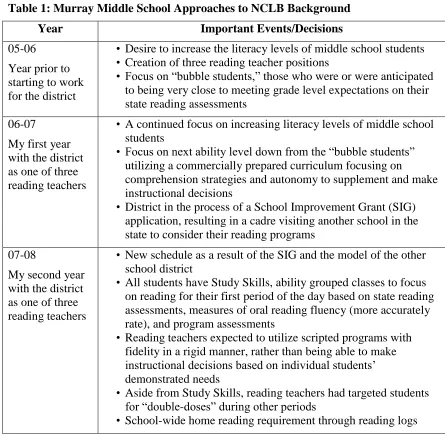
Table 1: Murray Middle School Approaches to NCLB Background ... 53
Table 2: Participants and Interview Rounds ... 55
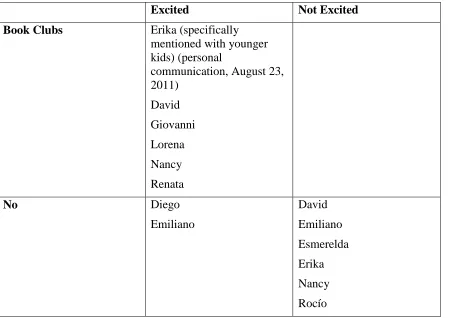
Table 3: General Responses Summary ... 116
CHAPTER ONE: INTRODUCTION
Literacy can be a tool of oppression; it can also be a liberator for language
minorities. It can be a bar to opportunity; or a means of opening a door to empowerment.
-Baker, 2011, p. 317
Situating the Research
Working toward meeting the literacy needs of a range of students is an on-going process. As a nation, various stakeholders have engaged in dialogues about what is necessary to narrow the achievement gap between different groups of students. Discussions revolve around ensuring that all students have the opportunity to develop literacy skills that will position them well for success with the unique demands that this century presents. The intention of the No Child Left Behind Act of 2001 was to address these concerns. However, a system set up to measure progress with standardized
assessments has had unintended consequences on the lives of students and teachers in U.S. schools.
valuing the capacity of educators as professionals (Allington, 2012; Beers, 2009; Dennis, 2008; Dennis, 2009; Demko & Hedrick, 2010; Elmore, 2008; Riddle Buly & Valenia, 2002). Nonetheless, this ignores the concept that students need-high quality teachers who are responsive to students’ needs.
A third concern is related to the impact on adolescent motivation to read, as some educators have brought up concerns about programs influencing aliteracy among
adolescents (Allington, 2012; Applegate & Applegate, 2010; Gallagher, 2009; Layne, 2009). Finally, a fourth concern relates to the issue of equity. Many worry that rather than improving existing achievement gaps, the reform effort may actually be perpetuating the gap by creating a second-rate education for students targeted as needing additional support to meet up to expectations of standardized tests (Allington, 2012; Beers, 2009; Brint, 2006; Demko & Hedrick, 2010; Lipman, 2009; English & Steffy, 2001; Tovani, 2011).
Currently, the United States is at a cross roads as much national dialogue is focusing on the transition to Common Core State Standards (CCSS). While some
educators believe the CCSS are an avenue to potential improvement or to reverse a trend toward an over-emphasis on basic literacy skills and move toward thoughtful literacy (Allington, 2012; Shanahan, 2011), others argue that the continual emphasis on
accountability will remain detrimental to students and teachers (Krashen, 2011; Krashen & Ohanian, 2011; Ohanian, 2011).
Significance of the Research
especially to children who have difficulty—is being routinely ignored. […] the research is being misrepresented” (p. 4). As such, there is a need for continual research to share the experiences that the current direction of educational reform is having on teachers and students, especially with the current opportunity that the shift toward the CCSS provides to re-conceptualize what we value and the type of instruction that can help us actualize the vision in classrooms across the country.
I started my teaching career with the backdrop of No Child Left Behind (NCLB), and the accountability measures as a result of the legislation were still in effect during my first six years of teaching. As such, I experienced teaching in three different districts and noticed how the school/district response to meeting the demands of NCLB greatly influenced the way in which experiences shaped the construction of my identity as a literacy leader.
The purpose of this study was to examine my personal journey as an educator to develop my philosophy of reading programs, with consideration of implications for the overall field of literacy professionals. Early in my teaching career I taught for a district that heavily relied on programs, rather than the capacity of teachers to closely observe students and make decisions based on demonstrated needs. I did not agree with some of the values inherent in the way the programs were set up and was relieved to leave the district for a school in the same community that closely aligned with my teaching philosophy and in which I once again felt valued as a professional.
same community collided with respects to my students. I also considered how student voices can influence practice. Teachers have sustained interactions with students,
allowing them to observe the impact of instructional decisions on students. As such, they can provide another layer of considerations to the dialogue, moving from a theoretical or philosophical level to a blend of theory and practice to illuminate the big picture impact.
Research Methods and Questions
Utilizing narrative inquiry (Clandinin & Connelly, 2000; Montero & Washington, 2011; Schaafsma & Vinz, 2011), I examined a blend of my personal experiences and events that have shaped my decisions along the way, along with student insights. Considering multiple perspectives was vital in order to truly examine the multi-faceted layers of program implementation. One lens or the other alone would not paint as clear of a picture. I specifically examined the following questions:
1. How has policy impacted me as a literacy teacher and the decisions I make, as well as the pressure I feel, with regards to reading programs?
2. Which voices have guided, and continue to guide me, in the midst of an accountability-based landscape while building the capacity to be an effective literacy leader?
3. How do reading programs, in a time of accountability-based reform efforts, impact students?
combination of narratives that I had written, as well as interviews with previous students informed my analysis.
This study was a means for me to closely examine my career as a professional passionate about adolescent literacy and concerned about the direction in which policy has moved the programs available in some schools and districts. Through the inquiry, I was able to consider implications for myself and other educators constructing their knowledge of who they are and who they want to become by looking back and looking forward while considering multiple perspectives. Aside from focusing on experiences from the teacher perspective, the research provided an avenue to hear student voices. When considering the overall effectiveness of policy and programs, it is essential to consider the whole child and the long-term effects, rather than merely analyzing trends in standardized test scores.
Organizational Overview
In the next chapter, I set the stage for the research by providing a review of the literature focusing on an accountability-based reform context and the impact on reading programs and students as readers. Then, in Chapter Three, I provide a rationale for narrative inquiry as a means to investigate the research questions, as well as an
CHAPTER TWO: SETTING THE STAGE
An emphasis on accountability-based reform efforts has heavily influenced the context of education in the United States. Researchers and educators discuss perspectives and concerns related to providing students with quality literacy instruction. In this review of the literature, I provide an overview of a vision for adolescent literacy at the start of the 21st century before glimpsing back to historical attitudes and events that have led to the current context of education, specifically the impact of the No Child Left Behind legislation. Next, I outline areas that have caused concern regarding an emphasis on standardized test scores and the way it has been shaping education in the United States. I conclude by providing a glimpse into discussions about current shifts in education policy and reform.
A Vision for Adolescent Literacy
In a time of increased mechanization that is shifting the job market to more skilled positions, Beers (2009) outlined the requirements for the types of jobs that humans will continue to do:
the ability to recognize, synthesize, and evaluate complex and emerging patterns and draw generalizations from those patterns;
the ability to make on-the-spot predictions based on observed patterns; the ability to use the context of the situation for decisions; and,
the ability to be flexible, adaptable, reactive, reflective, and speculative. (p. 6)
In addition, Harvey (2011) discusses the importance of creativity, thinking, and a sense of wonder. These skills closely align to what is required for critical literacy and active engagement while reading. Tovani (2011) stated, “Readers who are armed with thinking strategies are more independent because they know how to help themselves and are therefore more likely to build knowledge and think critically about the world around them” (p. 186).
Meanwhile, “basic” skills fall lower on the list of most important skills for the work force (Beers, 2009). Other researchers and educators have also been concerned with the emphasis on basic levels of proficiency versus fostering higher-order literacy and critical literacy skills (Allington, 2012; Layne, 2009; Nehring, 2009). Layne (2009) stated:
today’s society, adults and school children whose reading abilities are deficient are treading water in a pool that has no shallow end. (p. 5)
Thus, thoughtful literacy is essential in order to thrive in the 21st century; however, in education, the clash between research and policy influenced implementations means that systems do not always support and facilitate what is most needed.
In order to examine the current context of education in the United States, it is fundamental to consider it through a lens of the history of the purpose of education and curriculum development in the United States as a foundation for present day pedagogy and practices (Nehring, 2009). In the early 20th century, John Dewey emphasized the need for systems fostering deep levels of thought leading to reflective democratic
citizens, rather than transmission models (Shor, 2009). However, there has been a shift in the US educational system to have an ever-increasing amount of national control, which often undermines democratic schooling systems (Giroux, 2009).
Context of Education: No Child Left Behind
No Child Left Behind Act (NCLB) of 2001, which Allington (2012) outlines, has had a strong presence on the educational landscape for a little over a decade. As an extension of the Elementary and Secondary Education Act of 1966, NCLB was meant to narrow the achievement gap and improve instruction in high-poverty schools. As one layer to attempt to ensure that schools work toward the goal of narrowing the
meeting different subgroups’ needs. However, there are flaws in this line of reasoning. Casanova (2010) stated:
It was necessary to find a way to close that gap by improving schools. But it was folly to assume that simply setting the same standards for all schools in the nation, requiring all students to take the same tests nationwide, publishing the results of those tests, and sanctioning schools that failed to measure up to federally imposed standards would improve the schools. (p. 82)
Aside from Casanova (2010), multiple education leaders have expressed concern over an ever-increasing emphasis on testing and scores. Many of the arguments link directly to what Ravitch (2010) refers to as the original intents of reforms being
“hijacked” over time, turning the standards movement turning into a testing movement. Shortly after the passage of NCLB, Elmore (2008) stated, “Thus the federal government is now accelerating the worst trend of the current accountability movement: that
leaders in the field are voicing concerns about the direction of the country with relation to education.
In a system that places such value on testing, test scores highly impact teachers and students; unfortunately, the scores’ reliability is questioned. McGill-Franzen and Allington (2006) outline four sources of contamination: summer reading loss, retention, test preparation, and testing accommodations. Allington (2000) also talks about the dangers of raising scores without improving teaching or school-wide effectiveness, aspects that when in place, improve student learning. Elmore (2008) stated, “[…] relying only on standardized tests simply dodges the complicated questions of what tests actually measure and of how schools and students react when tests are the sole yardstick of
performance” (p. 203). Thus, there are multiple concerns with misuse of standardized test data, rather than viewing it as one data source to use in combination with others.
Title I, including Reading First, focused on supporting growth in communities with high levels of poverty. Unfortunately, as Allington (2012) describes, “One huge problem with the several mandated corrective actions is the almost complete lack of research supported for any of the options” (25). Elmore (2008) corroborates the concept of the lack of knowledge behind policies intended to enact positive change and explains that flaws in current accountability systems will hinder their abilities to achieve what they are intended to. Allington (2012) points out the irony of the situation as he states, “It seems odd, given the emphasis on using ‘research-based’ interventions in NCLB, that so many mandates are offered that have so little evidence of success in improving
Development Act (CSRDA) in 1990 and the Reading Excellence Act (REA) in 1998 were similar (Allington, 2012). Bracey (2009) also explains that the current “descent into hell” with relation to U.S. education has historical roots as it was heavily influenced by the political context during the Cold War (p. 9).
In addition, even though Reading First increased the amount of time that
participating schools spent on “reading,” students spend most of the 90-120 minutes per day doing activities other than actual reading, such as filling out worksheets (Allington, 2012), a trend that is similar to remediation in general (English & Steffy, 2001). A similar trend of time spent reading authentically versus completing worksheets and test
preparation in older grades is also apparent. Allington (2012) stated, “Given that no research supports either workbook nor test preparation activity as a way to improve reading proficiency, it troubles me enormously that so many adolescents are wasting their time” (p. 66). However, the lack of time dedicated to actually reading in school has been an issue since before NCLB (Allington, 1977).
NCLB has had many unintended consequences (Casanova, 2010). Teacher capacity has a strong impact on student achievement; however, this is undermined by the large amount of inexperienced teachers working with the highest need populations (Pappano, 2010), as well as the reliance on programs versus capacity (Allington, 2012). In addition, the disconnect between research and practice relates back to the concept of the purpose of education in a democratic society. Morrell (2010) noted, “We must ask ourselves why we have fallen behind and what we need to do to ensure that our students are ready for their futures as competent professionals and engaged citizens” (p. 146). Morrell (2010) also mentioned that discussions related to education reform often address the need for improved achievement linked to the future of our nation; yet, federal funding expresses a value on defense vs. education.
Even more discouraging is the idea that the history of working toward this goal actually started before NCLB with the Elementary and Secondary Education Act of 1966, and studies have shown that it is possible for all children of various backgrounds, with few exceptions, to learn to read and it just is not happening (Allington, 2012). In their report, Improving Adolescent Literacy: Effective Classroom and Intervention Practices, Kamil et al. (2008) provide five suggestions for teachers with a corresponding level noting the strength of evidence according to the base of research the authors considered:
1. Provide explicit vocabulary instruction. (Strong)
2. Provide direct and explicit comprehension strategy instruction. (Strong) 3. Provide opportunities for extended discussions of text meaning and
interpretation. (Moderate)
5. Make available intensive and individualized interventions for struggling readers that can be provided by trained specialists. (Strong) (p. 7) Additional studies have shown types of classroom strategies that increase reading motivation, including: literature circles, sustained silent reading time, choice in literacy center intervention books, discussions about books, book talks, peer recommendations, modeling strategies, teacher read-alouds, and teacher enthusiasm toward books and reading (Ivey & Broaddus, 2001; Pflaum & Bishop, 2004; Pitcher et al., 2007; Pitcher, Martinez, Dicembre, Fewster, & McCormick, 2010; Rose, 2011).
Many of these strategies foster social aspects, which Smith and Wilhelm (2002) explained spark motivation. Teachers play an active role in fostering an environment that facilitates discussion, such as having access to thought-provoking books and modeling good discussions (Allington, 2007a; Shanklin, 2010). Gallo (2010) emphasizes the importance of teachers not only talking about good books but also providing access to books and time to read in class. In addition, Gallo (2010) recognizes the importance of educators being aware of the body of literature available and mindful of how different literature will appear to individual students, rather than educators only sticking to their personal favorite genres. In addition, by having discussions revolving around genuine, critical questions, inquiry can be a powerful motivator (Smith & Wilhelm, 2002; Wilhelm & Smith, 2007).
What Experts Have Learned from Current Reform Efforts
to consider the level of actual success in implementation, instead of accepting a design solely because “smart people have come up with a terrific research-based school design” (p. 37). This is often the case with what Nehring (2009) calls the view from the top, “the tendency to impose plans that look great from above but that make little sense at the ground level” (p. 54). In the case of NCLB, many components just look nice from afar or do not make sense at the ground level because there are many issues inherent in the policies that prevent the realization of the noble intent of narrowing the achievement gap. While examining the literature, four themes emerged related to accountability-based reform concerns: a narrow focus of education, reliance on quick-fix programs, environments that lead to adolescent aliteracy, and issues of equity. Following are explanations of each.
Narrowing the Focus – What Is Tested vs. What Is Valued
Students may pass the tests, but they’re being robbed of perhaps the only
opportunity they may ever have of building that wide knowledge base that is foundational
if they are able to develop into critical readers of the world.
-Gallagher (2009), p. 35
however, they believe school reform should focus on teaching and learning, rather than assessment. In an effort to ensure that all students receive a quality education, there was a shift toward standards.
Nonetheless, others also express concerns with implementations linked to
standards-based reform (Gallagher, 2009; McNeil, 2009; Riddle Buly & Valencia, 2002). Riddle Buly and Valencia (2002) stated, “[…] sometimes it can be oversimplified and inadvertently lead to inappropriate instruction. More specifically, aligning instruction with state assessments may help teachers focus on what is tested […] but it will not address the skills and strategies that underlie such competence” (p. 234). McNeil (2009) explained the unintended negative impact of standards-based reform and the testing that goes along with it, “Standardization reduces the quality and quantity of what is taught and learned […] over the long term, standardization creates inequities, widening the gap between the quality of education for poor and minority youth and that of more privileged students” (p. 384). Thus, the reform effort often undermines the success of the very students it intends to support.
Riddle Buly and Valencia (2002) emphasize the need to teach students, rather than solely focusing on teaching standards. Meyer (2011) also provides a caution against such decision making:
Compounding the overemphasis on standardized test scores is that the current assessments are more closely aligned to the skills required for previous generations (Beers, 2009). Allington (2007a) stated, “[…] if we continue to define literacy accomplishments as primarily those proficiencies we can sometimes measure (or estimate) from standardized reading achievement tests, we will be selling our students and our nation short” (p. 287). Nehring (2009) cautioned against reducing learning to scores, which “narrows the focus of education” (p. 27).
Much of literacy instruction and assessments do not place a high enough value on highly engaged readers responding thoughtfully to texts, in contrast to educational leaders and researchers who recognize the importance (i.e. Applegate & Applegate, 2010; Beers, 2009; Fink, 2006; Keene & Zimmerman, 2007; Tatum, 2009). Beers (2009) stated, “Our most threatening dragons are the educational policies and classroom practices that reduce our understanding of what it means to live a literate life to a score on a bubbled-in exam” (p. 7). Bracey (2009) explains that it is difficult to assess much of what is most highly valued, and as a result, “We measure what we can and come to value what is measured over what is not. In doing so, we throw away most of education” (p. 4).
Furthermore, some programs lead to students successfully meeting State reading proficiency standards, yet they are not engaged readers (Allington, 2012; Beers, 2009; Keene & Zimmerman, 2007). Applegate and Applegate (2010) stated:
the risk of producing huge numbers of children who see no use for reading in their lives. That illusion of educational success may come at a very high price indeed. (p. 233)
Allington (2012) added to the conversation, stating:
“[…] if we focus children’s attention almost exclusively on remembering after reading, I worry that they will confuse recall with understanding. And if we fail to provide students with models and demonstrations of thoughtful literacy and lessons on how to develop those proficiencies, I fear that we will continue to develop students who don’t even know that thoughtful literacy is the reason for reading. (p. 129)
As such, it is vital to make what we value about reading transparent to students in our words and practice. Researchers advocate for students to have access to legitimate curriculum that will have the power to transform their lives, rather than demeaning skill-based drills (Keene & Zimmerman, 2007; Tatum, 2009). Beers (2009) noted:
Along the same line of thought, researchers have expressed cautions with technology usage that does not empower students (Beers, 2009; Brint, 2006). Beers (2009) remarked about one classroom set up for intervention, “I had walked into a classroom that, though filled with technology, most assuredly was not preparing students for success in the global economy of the 21st century” (p. 3). Brint (2006) explained, “Many teachers continue to use computers for unimaginative drill work” (p. 273). Thus, programs and interventions in place to help narrow the achievement gap can actually serve to provide obstacles to students accessing legitimate curriculum.
Yet, this goes against the aim of democratic schooling. Gillespie (2010) stated his classroom vision, in contrast to the emphasis on testing, “I didn’t want to do test prep; rather, I wanted to teach literary criticism in a way that would benefit my students in their college careers, in their workplace occupations, and in their lives as readers and citizens” (p. 2). Beers and Probst (2011) emphasize the need for this line of thought:
Others corroborate the need to prepare students in order to be productive citizens and cautions about the adverse impact that undermining creativity will have as students navigate the demands of an ever-changing society (Bracey, 2009; Gibboney, 2009; Zimmerman, 2011). Nonetheless, Allington (2012) noted that evaluations of literacy interventions focus on basic literacy, rather than thoughtful literacy, perpetuating a sense of effectiveness with a level of skill that is not ideal.
Furthermore, Allington (2012) described why the problem is exacerbated, “[…] in far too many states paraprofessionals or teachers with no graduate training in reading disabilities provided the extra lessons. In far too many schools paraprofessionals simply monitored struggling readers while they worked on some form of computer-assisted reading lessons” (p. 18). Both of these trends go against what research suggests as being effective (Allington, 2012).
Applegate and Applegate (2010) talk about inclinations to think deeply, mentioning, “Many of these children have simply not yet encountered a situation that demands that they do the same type of thinking about what they read” (p. 228). However, in their study to start exploring a potential relationship, they found that inclination to respond thoughtfully and motivation appear to be related. Applegate and Applegate (2010) state, “[…] It is difficult to avoid the conclusion that a disturbingly large number of elementary school children have little use for reading and a limited inclination to think deeply about what they read” (p. 231).
raising literacy rates” (p. 147). Morrell (2010) also advocated for what we should value, stating, “We need to expand the language of effectiveness to mean more than test results only” (p. 148). In his emphasis for the need to demand a value for critical literacy, Morrell (2010) noted, “Literacy has to be empowering, or else what is the point of demanding it?” (p. 149).
Zimmerman (2011) reflects on the negative impact of too much testing, as well as testing that does not encourage a high level of thought and states a call for action:
Somehow, in our effort to make sure that no child is left behind (or that no child is left untested!) we have forgotten that we need to teach children to be thinkers and problem solvers [...] We need to find ways to bring intellectual rigor and
expansiveness to the classroom so young people will be able to deal with and adapt to the changes they will, no doubt, face--and so that their lives can be as rich and productive as possible. (p. 36)
Bracey (2009) corroborates, stating, “Lately, it’s all dreariness and fearmongering about ‘achievement,’ achievement narrowly defined by test scores. Get it through your head now: In the long run, test scores don’t count” (p. 3). Clearly educational leaders have plenty to say about what is not beneficial. As such, there is a need for frequent, ongoing dialogue about what does count and how practice can portray those values on a daily basis.
policies are either working toward or detracting from those aims, as well as considering what really “counts” in the long run for students.
Quick Fix Programs vs. the Capacity of Educators
The consequences of not meeting AYP have led many people to look for quick fixes or lose sight of individual student needs (Allington, 2012; Beers, 2009; Pitcher et al., 2010; Riddle Buly & Valencia, 2002; Valencia & Riddle Buly, 2004). Elmore (2008) stated, “[…] the increased pressure of test-based accountability, without substantial investments in capacity, is likely to aggravate the existing inequalities between low-performing and high-low-performing schools and students” (p. 207). Often, school leaders turn to commercially prepared, scripted programs that claim to be “proven” or “research based” to meet student needs (Allington, 2012; Dennis, 2008; Dennis, 2009; Demko & Hedrick, 2010; Keene & Zimmerman, 2007; Riddle Buly & Valencia, 2002).
that claim to be “research-based” and what the current body of quality research actually indicates (Allington, 2012).
Programs have limitations with regards to being able to meet the range of adolescents’ literacy needs. In relation to comprehension strategy instruction, Tovani (2011) noted:
Much of the criticism our work drew came from outsiders who tried to translate strategy instruction into a program or a formula. [...] We knew no two readers were alike and therefore no single solution, technique, or strategy could meet the needs of all students. Teaching readers how to comprehend, versus what to comprehend is multifaceted. (p. 179)
Thus, when considering criticism, it is vital to consider whether the impetus of the criticism even aligns with how the advocates propose the ideas or if they are trying to over-simplify.
Allington (2012) also explained that adolescent literacy needs cannot be reduced to a single program:
As struggling readers progress through school, the basis of their reading
will be appropriate for all struggling readers and no product can overcome inexpert teaching. (p. 202)
In addition, Allington (2012) addressed two issues with implementing one commercial program “with fidelity” to meet the needs of all students in a school that NCLB designers ignored as they created the legislation – research did not support core or supplementary programs to have the impact intended through the legislation (aside from Reading Recovery), and the programs have better results when knowledgeable teachers adapt according to their students’ needs. Curricular decisions should be mindful, rather than superficial (MacGillivray, Lassiter Ardell, Sauceda Curwen, & Palma, 2004; Riddle Buly & Valencia, 2002).
However, the current emphasis on pre-packaged programs undermines teachers’ ability to be mindful practitioners. Because the law outlined that Title I services needed to be “supplemental,” the services were frequently provided in pullout settings, leading to fragmentation of extra support (Allington, 2012). Pull out support programs often have commercially prepared intervention programs with relatively static grouping. However, these programs fail to recognize students who are targeted for interventions or who struggle to read in the mainstream do not necessarily have the same needs (Riddle Buly & Valencia, 2002; Valencia & Riddle Buly, 2004).
weaknesses in reading: Cluster 1-Automatic Word Callers who decode words quickly, but do not tend to meaning; Cluster 2-Struggling Word Callers who struggle with meaning and word identification; Cluster 3-Word Stumblers who have difficulty with identification but strong comprehension, Cluster 4-Slow Comprehenders are relatively strong decoders and comprehenders that may not always be automatic with multisyllabic words; Cluster 5-Slow Word Callers are similar to Cluster 1 except they read at a slow, rather than a fluent, rate; and Cluster 6-Disabled Readers who experience “severe difficulty in all three areas—word identification, meaning, and fluency” (p. 527). Another cause for concern with intervention programs is the frequency of decisions about student placements resulting from single measures, rather than multiple indicators (Dennis, 2008; Dennis, 2009; Elmore, 2008; McNeil, 2009; Riddle Buly & Valencia, 2002). Dennis (2008) stated:
Simply put, [high-stakes assessments] place students in categories ranging from advanced to below basic. In other words, they either know how to read or they don’t. These categories provide teachers with little specific information regarding the individual needs of students, and yet many schools determine placement in reading classes based solely on these scores. (p. 578)
Tests scores isolation also fail to distinguish between other factors such as level of motivation and effort during the assessment.
Every major research and measurement organization, as well as the National Research Council, has opposed using standardized test data in making decisions about an individual student’s achievement […] But NCLB mandates standardized testing to identify children for supplemental services, and so on. The achievement tests available today simply cannot provide the sort of information districts need to make decisions about students. (p. 26)
Thus, these mandates are one more example of how the reform looks good from afar but has unintended consequences by instilling mandates that are counter to what literacy leaders know is vital.
In addition, just because students meet minimum proficiency expectations on state reading assessments does not mean that they do not need additional support (Valencia & Riddle Buly, 2004; Pitcher et al., 2010). Valencia & Riddle Buly (2004) stated:
[…] even if Martin were to get the additional two points needed to pass the state test, he would still have a significant problem with rate and some difficulty with automatic decoding of mutisyllabic words, both of which would hamper his future reading success. (p. 526)
However, a system that focuses on test results often overlook this distinction when providing services and support for students. As such, the over-reliance on test scores as the ultimate measure can screen kids who do need support out of interventions.
[…] school districts have come to think of intervention for struggling readers as something accomplished in a session outside the classroom, a session one period long, a session taught by someone other than Tyrone’s classroom teacher. School districts have adopted this model, I believe, because federal education policy has long supported such designs. (p. 7)
As a result, while students may receive interventions with texts that are appropriate, the majority of the day they interact with texts that are not accessible, an aspect that needs to shift to systems considering day-long interventions with appropriate texts linked to grade-level content (Allington, 2007b).
Instead of focusing on programs that will solve schools’ “problems,” researchers advocate for increasing teachers’ capacity, resulting in better teaching and learning all day long (Allington, 2000; Allington, 2002; Allington, 2012; Dennis, 2008; Dennis, 2009; Elmore, 2008; Fullan & Hargreaves, 1996; Kamil et al., 2008; Keene &
Zimmerman, 2007; Nehring, 2009; Newkirk, 2009; Pitcher et al., 2010; Riddle Buly & Valencia, 2002). There is also a need for allowing teachers to make decisions based on their students’ needs (Demko & Hedrick, 2010; Fullan & Hargreaves, 1996; Newkirk, 2009; Pitcher et al., 2010; Riddle Buly & Valencia, 2002). It is essential that systems foster habits of inquiry and reflection (Nehring, 2009). Yet, a shift toward scripted programs “diminishes the need for professional development and normalizes the
In order to best serve the needs of students who struggle to read, teachers and reading specialists must work together to closely analyze student strengths and needs and provide appropriate support, rather than relying on a one-size fits all instructional model (Allington, 2012; Riddle Buly & Valencia, 2002; Valencia & Riddle Buly, 2004). In addition to understanding reading assessments, teachers must also be knowledgeable about reading processes and instruction (Allington, 2012; Valencia & Riddle Buly, 2004).
Valencia and Riddle Buly (2004) provide instructional suggestions for each profile, yet lumping all students identified as needing additional support into one set group does not often recognize the unique needs of each individual student or profile of students. Some programs inaccurately assume what struggling readers need, such as focusing on decoding; yet, Valencia and Riddle Buly (2004) state, “[…] we cannot assume that students who score at the lowest level on the test need decoding instruction” (p. 527) and “[Cluster 6] is the smallest group (9%), yet, ironically, this is the profile that most likely comes to mind when we think of children who fail state reading tests” (p. 527). In addition, Valencia and Riddle Buly (2004) note:
Even for the students who do fall into the Disabled Readers profile, it is about more than capabilities. Teachers also have to consider engagement (Valencia & Riddle Buly, 2004).
Nonetheless, as a result of the push for scripted programs, teachers have been ever-increasingly treated as technicians, expected to embrace scripted programs, rather than playing an active role as professionals (Allington, 2012; Applegate & Applegate, 2010; Brint, 2006; Darder et al., 2009; Dennis, 2008; Dennis, 2009; Demko & Hedrick, 2010; Giroux, 2009; Riddle Buly & Valencia, 2002). Giroux (2009) states, “[…] the deskilling of teachers appears to go hand in hand with the increasing adoption of management-type pedagogies” (p. 442). In addition, teachers who resist the mandated curriculum often feel as if those mandating the curriculum view them as putting children at risk (Legard Larson & Kalmbach Phillips, 2005). Even though NCLB values teacher capacity by emphasizing highly-qualified teachers (Brint, 2006), other related policies, such as a reliance on programs without flexibility, counteract this effort.
Aside from questions of whether or not the programs match students’ literacy needs, there are also concerns for the negative impact that scripted programs have on creativity. Bracey (2009) states, “[...] Of course, if scripted teaching becomes more prevalent this characteristic [giving own perspectives/opinions and asking questions] of American students could disappear. And, if scripted teaching does spread, we are in worse trouble” (p. 7). Bracey (2009) continues to discuss why it is essential to preserve creativity, “It is no accident that ‘creativity’ tops my list of qualities. It is what everybody talks about in connection with America and Americans” (p. 7). Thus, for many
Nehring (2009) addresses teachers’ dilemma with NCLB mandates, as well as suggested action, stating:
Talk about a moral dilemma! How do you do what you know is right in your classroom when all around you the system’s gears demand that you comply with bad educational practice or get shredded to pieces. […] And yet, there is always something you can do. […] Therefore, you need to be in the habit of asking, what do my students need to know for the test, and how can I incorporate that
information into lessons grounded in sound pedagogy? (pp. 86-87)
Yet, this is increasingly difficult in contexts where schools mandate that teachers utilize scripted programs “with fidelity,” in rigid manners.
MacGillivray et al. (2004) explains, “Teachers seem to be caught between exerting their professional knowledge and a compelling need to be team players— because of peer, supervisor, and/or parent pressure—by carrying out the district’s mandate to the letter” (p. 137). In addition, teachers and student teachers often notice a clash between coursework, beliefs, and practice (Legard Larson & Kalmbach Phillips, 2005; Lipman, 2009). Legard Larson and Kalmbach Phillips (2005) notes, “The
authoritative discourse of the scripted program not only interfered, dodged, and collided with the university’s discourse of comprehensive reading instruction, but also conflicted with Claire’s concept of reading instruction” (p. 317). Thus, teachers are in a constant turmoil trying to best meet student needs within a system that does not necessarily facilitate being able to use their professional judgment.
ignorant or inferior; nothing that bores children so they turn off to learning; nothing that underestimates their gifts and potential; nothing that values a test score over a child’s imagination” (p. 37). When reflecting on the power of teachers to change lives, Keene reflected on the challenges that teachers face in order to teach in a way that is best for their students:
Teachers are the key and in this era we are called upon to make courageous decisions in classrooms--even decisions that defy conventional wisdom and existing policy. Increasingly good teaching becomes an act of civil disobedience--at least some of the time. Yet isn’t thdisobedience--at the way thdisobedience--at true change happened in the world? (in Zimmerman, 2011, p. 37)
Thus, teachers have a challenge to decide what they are willing to do in order to advocate for their students and act on their behalf.
Adolescent Aliteracy vs. Motivation
Aside from student reading abilities, teachers must also consider engagement. Trends in adolescent literacy demonstrate a decline in motivation during middle school and high school (Newkirk, 2009; Rideout, Foehr, & Roberts, 2010; Roberts, Foehr, & Rideout, 2005; Wells, 1996). Zimmerman (2011) states:
Gallagher (2009) raised concerns that currently many schools are not creating the
conditions for students to love reading, stating, “[…] many of the reading practices found in today’s classrooms are actually contributing to the death of reading. In an earnest attempt to instill reading, teachers and administrators push practices that kill many students’ last chance to develop into lifelong readers” (p. 2).
Gallagher (2009) outlines four factors that contribute to readicide in schools: “Schools value the development of test-takers more than they value the
development of readers
Schools are limiting authentic reading experiences Teachers are overteaching books
Teachers are underteaching books” (p. 5).
Other researchers have talked about the issue of aliteracy in the United States, students who are able to read but choose not to or have an aversion to it (Allington, 2012; Applegate & Applegate, 2010; Gallagher, 2009; Layne, 2009). Layne (2009) expressed that it is essential to focus on aliterate and disengaged readers and stated, “I am all for teaching reading skills because without skills no one can read; however, if research is being given careful consideration, how are we missing the fact that our aliteracy rate has
surpassed our illiteracy rate?” (p. 8). It is essential to remember the big picture of
students’ lives, not just immediate cut scores.
flexibility to adapt to student needs, do not meaningfully engage students. Pitcher et al. (2007) explained contexts leading to nonreaders and alliterate adolescents, “[…] students judge reading and literacy activities to be unrewarding, too difficult or not worth their effort because they are peripheral to their interests and needs” (p. 379). As such, programs do not only impact struggling readers but can also get in the way of capable readers becoming life-long readers if teachers are not able to be responsive to individuals as readers.
According to Davila and Patrick (2010) adults often have a high level of control over the texts that children read, and they encourage adults to consider implications of reading research in relation to “authorized reading” and “actual reading” (p. 199). Allowing adolescents to have choice in their reading materials increases motivation, which may in turn improve their reading (Allington, 2012; Smith & Wilhelm, 2002; Pitcher et al., 2007; Rose, 2011; Tatum, 2009). Although adolescents do not have to choose everything they read, it is important that they have opportunities to self-select texts (Rose, 2011).
In addition, teachers need to closely consider what they view as “reading” (Newkirk, 2009; Smith & Wilhelm, 2002; Wilhelm & Smith, 2007). This is even more pronounced with the increase of 21st century literacies (Newkirk, 2009; Pitcher et al., 2007; Wilhelm & Smith, 2007). The disconnect between what schools value as reading and writing and literacies outside of schools often leads to avid readers and writers outside of school not recognizing themselves as such (Pitcher et al., 2007).
Every time we give kids a list of those literal end-of-text comprehension
questions, we are implicitly telling them their thinking doesn’t matter. [...] These literal questions narrow kids’ thinking channels rather than expand them. They limit imagination and curiosity rather than expand them. They limit imagination and curiosity rather than driving it. So sadly, many kids quit asking on their own. (p. 119)
Furthermore, Harvey (2011) advocates, “For learning to flourish, we must foster a culture of thinking where our kids are continually interacting with the text, the teacher, and each other” (p. 125).
Educators have emphasized the need to incorporate diverse literature in the classroom, complemented by rich discussions (Christensen, 2011; Gillespie, 2010; Harvey, 2011; Jago, 2011; Keene & Zimmerman, 2007; Tatum, 2009; Tovani, 2011; Wilhelm & Novak, 2011); however, this is stifled by teachers who have to use scripted programs without flexibility to supplement or who are mandated to not have authentic discussions that stray from the script. Despite the pressure for many teachers to utilize scripted instruction, Applegate and Applegate (2010) also talked about another scenario, “We have found that many teachers who enjoy some measure of curricular freedom seize the moment and opt for thoughtful literacy instruction in their classrooms” (p. 232).
such texts” (p. xii). Thus, teachers’ understandings of texts, of kids, and of literacy needs are at the core of effective support.
Issues of Equity – No Child Left Behind or Perpetuating the Gap?
How many other parents face circumstances in which their child would benefit from a
different educational setting and yet are unable, through lack of money or know-how, to
make a change? The answer: millions. […] There is something fundamentally unfair
about the fact that I can do this for my daughter and so many others cannot, especially in
the richest country in the world, and especially in a democracy. (Nehring, 2009, p. 6)
Though NCLB aimed toward equity, some question its true intent, stating it was really set up as a means to attack public education in order to privatize it (Bracey, 2009; Gibboney, 2009). Wilhelm and Novak (2011) refer to it as “inhumane and
antidemocratic” (p. 188). Bracey (2009) explains why NCLB was not equipped to close the achievement gap, “[...] there is nothing in the entire research literature to suggest a program like NCLB would reduce or eliminate that gap. NCLB simply says ‘do it’” (p. 105). Bracey (2009) also stated, “NCLB uses the phrase ‘scientifically based research’ 111 times in its 1,100 pages, but there is no research whatsoever that undergirds the law’s approach to school reform. If anything the research argues against NCLB” (p. 110).
Allington (2012) stated, “The evidence indicates that U.S. schools currently work better for certain children than for others. In order to fulfill the promise of public education, schools must work for all children—regardless of gender, race, or which parents the children got” (p. 11). Allington (2012) questions the likelihood of students from low-income families becoming productive citizens given our current educational system that often fails to teach students living in poverty to read well.
In addition, Allington (2012) explained that even though the Title I services were meant to be supplemental, the instruction often fully or partially replaced mainstream classroom reading lessons. As a result, Allington (2012) stated, “The Title I legislation created the now-widespread ‘second system’ of education” (p. 18). Tovani (2011) explained the impact, “Some kids go all through school never getting the chance to read great works because someone along the way decided they didn’t need it or couldn’t do it” (p. 187). Jago (2011) corroborated by stating, “Children are shortchanged when their teachers shy away from difficult texts” (p. 66). Harvey agrees with Tovani, stating, “Kids who pass the test get text they can sink their teeth into. Kids who don’t get pablum. And then we blame them for not growing as readers” (in Tovani, 2011, p. 187). English and Steffy (2001) explain that tracking students, often those who are poor or minorities, leads to a “vicious cycle in which lower expectations produce lower test results” (p. 98). Brint (2006) concurred and added that tracking leads to demoralization more than learning, and Lipman (2009) discussed the impact of tracking to further “ideologies of deficient
‘others’” (p. 369).
certain proficiency in English and falling behind in school subjects in the meantime (Valencia & Riddle Buly, 2004). In addition, others are concerned about scripted
instruction that is not responsive to language learners’ needs (MacGillivray et al., 2004). After observing one intervention class, Beers (2009) wondered, “[…] how long students had to do that before they went back to other classes, other classes where the experiences were rich and varied and were more about curiosity than correctness” (p. 3). The principal responded that some students worked on the computer based modules all day and would not return to mainstream classrooms until they demonstrated that they could do grade-level work. Beers (2009) noted that the majority of students were minority males and students from low SES backgrounds.
Appalled by what she noticed at the school visit, as well as in a report by Riel and Becker (2000), Beers (2009) noted:
I worry that this digital divide reflects a belief that poorer students cannot handle or grasp higher-level thinking but must be drilled in basic skills. This mindset encourages unequal schooling of this nation’s children, and sustains a segregation every bit as intolerable as segregation based on color. This segregation of
intellectual rigor undermines the democracy of this country by quietly suggesting that some deserve better than others. (p. 4)
less.” To the contrary, Beers (2009) posits that any correlation suggesting lower cognitive ability has more to do with access to opportunities than cognitive capabilities. She
emphasized the need to “educate the public about what literacy ought to look like for all children” (p. 4).
Tovani (2011) also noticed a discrepancy in services and a lack of belief in potential:
Unfortunately, struggling readers aren’t given the same opportunities to get smarter as their counterparts in higher tracks are when it comes to engaging with text. [...] It is evident that the underlying assumption is that thinking critically about difficult text is not something that these students are capable of doing. (p. 185)
However, Tovani (2011) continues to talk about why this is unacceptable, “Teaching all students to think critically is an issue of equity. Providing rich text, strategic instruction, and opportunities for all kids to read, write, and discuss has as much to do with equity as does race, gender, or economic class” (p. 186).
Demko and Hedrick (2010) addressed issues related to diversity in programs stating:
English and Steffy (2001) discussed that tests actually assess culture, rather than
intelligence. Many reformers and educational advocates have talked about the dangers of blaming or stating excuses for why certain populations of students are not learning, rather than believing that all students can learn (Beers, 2009; Casanova, 2010; Cohen & Solnit, 1995; English & Steffy, 2001; Lipman, 2009; Nieto, 2009; Tatum, 2009), as well as the detriment of whining (Nehring, 2009).
Direction for the Future: Research-Based Needs vs. Policy
NCLB shifted a focus to the responsibility to treat education as a civil right (Pappano, 2010). Nonetheless, in many cases the policies intended to reach that end have not fostered an environment that facilitates equity and a high-quality education for all. Nehring (2009) stated:
As far as our public schools are concerned, we have become a nation of mindless adoption. Our problems are defined in terms of test scores and demographics; our solutions are off-the-shelf programs that promise results. Implementation is quick and on the cheap. We treat our teachers like an army of technicians who need only to be trained in a one-day workshop. (p. 119)
The shift away from mindful decisions is evident in some accountability enforced reform efforts. Pappano (2010) stated:
again. It is a new paradigm for education, one not about trusting the process but about seeking results, both measurable and immeasurable. (p. 3)
In order to shift this current context, Nehring (2009) emphasizes the need for the potential for change, requiring mindful practitioners who question and put pressure against established norms in the overall existing school system that are preventing a democratic educational system. However, turnaround also has noble aims, as Pappano (2010) states, “Turnaround is about raising test scores, yes. But it is also about changing lives” (p. 125). There is a need for educators to see the big picture, while reflectively and mindfully advocating for what their students need in order to be successful.
This will continue to be a challenge as deeply entrenched concepts of schooling and policy are in place that may continue to perpetuate current obstacles to our country embodying a democratic education system. Elmore (2008) stated, “The closer an
innovation gets to the core of schooling, the less likely it is that it will influence teaching and learning on a large scale” (p. 11). Giroux (2009) advocated for teachers
understanding the need for schools to embody democratic principles “dedicated to self- and social empowerment […] schools can be public places where students learn the knowledge of and skills necessary to create a critical democracy” (p. 445). Bracey (2009) discussed obstacles to democratic schools given the current context, “How democratic can a school be when teachers operate from scripts that permit no variation, when principals sign contracts requiring X points of test gains each year as a condition of employment?” (p. 183).
[…] a nominally conservative administration has, with No Child Left Behind (NCLB), presided over the single most far-reaching nationalization of education policy in the history of the United States. In doing so, it has put the goal of its own education reforms, performance-based accountability, at risk […] By
centralizing education reform in the hands of federal policymakers—not noted for either their patience or sophistication in this area—NCLB has effectively
narrowed the range of experimentation with accountability policies, consequently narrowing the learning that can occur across states and localities and increasing the risks of failure and adverse effects. (pp. 201-202)
One of the most recent trends in school is having competitive grants, such as Race to the Top, Title I funding for turnaround efforts, and Investing in Innovation. The grants can be viewed as providing schools with extra funding in order to be innovative (Pappano, 2010).
Another new aspect in national school reform is the Common Core Standards, that some view as national standards as more and more states adopt them. The Common Core Standards can be seen as a potential improvement, as Allington (2012) mentioned, “The new national standards for proficient reading have targeted a more thoughtful literacy than has traditionally been expected of school reading programs” (p. 121). Jago (2011) explains that the Common Core initiative drew off an ACT study “Reading Between the Lines,” which focused on the virtues of complex texts, as a starting point. Jago (2011) stated:
assistance in preparing students to meet these standards. Neither will worksheets or skill-and-drill lessons. (pp. 110-111)
As such, some educators are hopeful with the shift that CCSS might prompt.
Furthermore, Porter, McMaken, Hwang, and Yang (2011) outlined benefits of a national curriculum, including: shared expectations or consistency among states, the potential of a greater focus than typically present in state standards, efficiency in development of standards, assessments, and curriculum, and a higher quality of
assessments. Porter et al. (2011) sought to examine how big of a difference the Common Core Standards will represent in comparison to current state standards and assessments, as well as those of Massachusetts and of top-performing countries. The authors were hesitant to make sweeping claims in their findings sections, but noted that it appears that shifts in the Common Core Standards “may represent important increases in quality” (p. 111). When compared to 7th grade standards in Massachusetts, Porter et al. (2011) noted, “Whether these differences between Common Core represents a better curriculum is difficult to judge, although at least at Grade 7 in English Language Arts and Reading, there is a shift in the Common Core Standards toward greater emphasis on higher cognitive demand” (p. 111). In their conclusions, they stated their results demonstrate a shift “toward greater emphasis on higher order cognitive demand” (p. 115); yet, they did not find them to be more focused.
students to texts at an appropriate reading level. Shanahan refers to current practices as what educators “know” but then considers there is not necessarily research to back up matching students to texts vs. having students read more challenging texts. Thus, Shanahan points out that he can see potential advantages to “students spending most of their time reading texts that they are likely to struggle with” (p. 21), while also being concerned about the overall impact on students, stating, “[…] previously, we have tended to over-generalize from younger readers […] to older readers […]. Now, I fear that the common core is over-generalizing in the other direction. Harder beginning reading books may stop many young readers in their tracks” (p. 21). In addition, Shanahan (2011) emphasizes that it will be essential for teachers to have training on how to scaffold comprehension of more complex texts to align with the mindset of the Common Core Standards.
Krashen (2011) views the grants and standards as further perpetuating steps in the wrong direction by emphasizing more and more testing. Two consortia, the SMARTER Balanced Assessment Coalition and the Partnership for Assessment of Readiness for College and Careers (PARCC) are developing assessments to align with the Common Core Standards. In support of their efforts, they received $330 million in Race to the Top funds (Porter et al., 2011). Even though Leu et al. (2011) recognize that the intention of the Common Core State Standards was to recognize the importance of online reading comprehension, they question whether the assessments will reflect the skills necessary for on-line reading comprehension based on the language of the standards. Thus, they
The failure to tightly integrate the practices of on-line reading comprehension into national standards or curricula and into the assessments being developed to
inform instruction has important consequences for those who are least advantaged in society. Policy misalignments lead to a serious concern for any society based on egalitarian principles: They serve to increase achievement gaps, not close them. (p. 10)
As a result of the lack of language to address 21st century literacies in the standards and the potential impact to fully incorporate them into the assessments, Leu et al. (2011) posit that there will not be incentives to teach them as a result of the mindset of teaching what is tested. They expect the students in the poorest schools to be “doubly disadvantaged” while students in schools representing high socio-economic status will be “doubly privileged” based on access to Internet at home and in school.
Krashen and Ohanian (2011) and Ohanian (2011) also criticize professional organizations for lacking a resistance effort against the Common Core. Ohanian (2011) disapproves of the aims of David Coleman, an author of the Common Core Standards, stance on shifting more importance to informational text, while decreasing the emphasis on personal narrative and fiction. Jago (2011) takes a more neutral stance, stating, “The Common Core Standards alone will neither turn students into readers nor improve student achievement. It is going to require the concerted effort not only of teachers but of our whole society” (p. 109).
“In part, students remain stuck because the academic achievement gap does not exist in isolation. It is nursed and nurtured in the arms of poverty. Until we recognize this, we will have failed our children” (p. 5). In talking about one reform leader, Pappano (2010) stated, “He clearly wants them to do more than pass state tests. He wants to give them experiences to help lift them into the middle class, including teaching social skills that entrance requires” (p. 92).
There is hope for positive change when schools place a high value on supporting teachers and fostering their professional development (Pappano, 2010). We are currently at a cross-roads with the direction of education, and the future of education in the United States will depend on how educators and politicians work together to focus on literacy models that emphasize student needs, present-day literacy demands, as well as
engagement. Literacy leaders highlight the importance of the decisions we make today. Allington (2011) stated it bluntly when he said:
We can create schools where teachers use a one-size-fits-all core reading program, where we fill up students’ days with worksheets and test-preparation sessions, and where nonexperts in reading instruction are expected to work with large numbers of at-risk readers—and then we can blame the students or their parents for their struggles. Or we can begin by acknowledging that at-risk readers need more expert reading instruction than we have been providing. (p. 44)