Patron: Her Majesty The Queen Rothamsted Research Harpenden, Herts, AL5 2JQ
Telephone: +44 (0)1582 763133 Web: http://www.rothamsted.ac.uk/
Rothamsted Research is a Company Limited by Guarantee Registered Office: as above. Registered in England No. 2393175. Registered Charity No. 802038. VAT No. 197 4201 51. Founded in 1843 by John Bennet Lawes.
Rothamsted Repository Download
A - Papers appearing in refereed journals
O Lochlainn, S., Amoah, S., Graham, N. S., Alamer, K., Rios, J. J.,
Kurup, S., Stoute, A., Hammond, J. P., Ostergaard, L., King, G. J., White,
P. J. and Broadley, M. R. 2011. High Resolution Melt (HRM) analysis is
an efficient tool to genotype EMS mutants in complex crop genomes.
Plant Methods. 7, p. 43 (9pp).
The publisher's version can be accessed at:
•
https://dx.doi.org/10.1186/1746-4811-7-43
The output can be accessed at:
https://repository.rothamsted.ac.uk/item/8qq02/high-
resolution-melt-hrm-analysis-is-an-efficient-tool-to-genotype-ems-mutants-in-complex-crop-genomes
.
© Please contact [email protected] for copyright queries.
M E T H O D O L O G Y
Open Access
High Resolution Melt (HRM) analysis is an
efficient tool to genotype EMS mutants in
complex crop genomes
Seosamh Ó Lochlainn
1†, Stephen Amoah
2†, Neil S Graham
1†, Khalid Alamer
1, Juan J Rios
1, Smita Kurup
2,
Andrew Stoute
2, John P Hammond
1, Lars Østergaard
3, Graham J King
4, Phillip J White
5and Martin R Broadley
1*Abstract
Background:Targeted Induced Loci Lesions IN Genomes (TILLING) is increasingly being used to generate and identify mutations in target genes of crop genomes. TILLING populations of several thousand lines have been generated in a number of crop species includingBrassica rapa. Genetic analysis of mutants identified by TILLING requires an efficient, high-throughput and cost effective genotyping method to track the mutations through numerous generations. High resolution melt (HRM) analysis has been used in a number of systems to identify single nucleotide polymorphisms (SNPs) and insertion/deletions (IN/DELs) enabling the genotyping of different types of samples. HRM is ideally suited to high-throughput genotyping of multiple TILLING mutants in complex crop genomes. To date it has been used to identify mutants and genotype single mutations. The aim of this study was to determine if HRM can facilitate downstream analysis of multiple mutant lines identified by TILLING in order to characterise allelic series of EMS induced mutations in target genes across a number of generations in complex crop genomes.
Results:We demonstrate that HRM can be used to genotype allelic series of mutations in two genes,BraA.CAX1a andBraA.MET1.ainBrassica rapa. We analysed 12 mutations inBraA.CAX1.aand five inBraA.MET1.a over two generations including a back-cross to the wild-type. Using a commercially available HRM kit and the
Lightscanner™system we were able to detect mutations in heterozygous and homozygous states for both genes. Conclusions:Using HRM genotyping on TILLING derived mutants, it is possible to generate an allelic series of mutations within multiple target genes rapidly. Lines suitable for phenotypic analysis can be isolated approximately 8-9 months (3 generations) from receiving M3seed ofBrassica rapafrom the RevGenUK TILLING service.
Keywords:TILLING, HRM, Brassica, genotyping
Background
The identification and analysis of gene mutations in plants is fundamental to the investigation of gene func-tion. One approach, Targeted Induced Loci Lesions IN Genomes (TILLING) was originally developed in Arabi-dopsis [1] and has subsequently been successful in a range of crop plants [2,3]. In this reverse genetic approach, an ethyl methane sulfonate (EMS) mutagen-ised population is screened for SNPs within target genes
[4]. EMS mutagenesis generates multiple alleles within each gene, including nonsense, missense, splicing and cis-regulatory mutants, in comparison to T-DNA and transposon mutagenesis that generate only knockout mutants [5,6]. Analysis of an allelic series can provide information on important domains or amino acids within the protein of interest. A number of TILLING populations have been developed for a variety of crops of different genome size, including rice [2], wheat [7,8], Brassica rapa [3], Brassica napus [9],Lotus japonicus [10], Medicago trunculata[11], Arachis hypogaea [12], andSolanum lycopersicum[13]. These populations have subsequently been used to isolate mutations in a variety * Correspondence: [email protected]
†Contributed equally 1
School of Biosciences, University of Nottingham, Sutton Bonington Campus, Loughborough LE12 5RD, UK
Full list of author information is available at the end of the article
of genes, including those involved in starch metabolism inLotus japonicas[14], peanut allergens [12] and a gene encoding a fatty acid elongase [9].
High resolution melt (HRM) analysis is a technique that measures the disassociation of double-stranded DNA at high temperature resolution, and permits the analysis of genetic variations (SNPs, mutations, methyla-tion) in PCR amplicons [15-17]. This technique allows genotyping and mutation scanning without the need for costly labeled probes, as it uses high fidelity heterodu-plex-detecting double-stranded DNA binding dyes, such as EvaGreen which exhibit equal binding affinities for GC-rich and AT-rich regions and no sequence prefer-ence [18,19]. The heteroduplex products are detected by the presence of a second low-temperature melting tran-sition [20]. This enables the reaction to be performed in a single tube, making it cost-effective and suitable for high-throughput screening [17]. HRM has been used extensively in the genotyping of human tissue samples for the identification of genes associated with diseases [21,22] as well as identification of clinically important fungal species [23]. HRM has been used for quantitative detection of adulteration with related species of pants used for medicinal purposes [24]. HRM has been used previously to identify mutations in TILLING popula-tions of tomato [13], wheat [8] and Medaka [25]. In the tomato study, HRM was used to identify mutations using DNA pools from an EMS mutagenised population of plants. The wheat studies demonstrated that HRM can be used to isolate novel mutations in starch branch-ing enzyme IIa (SBEIIa) genes from an EMS population [8] and in mutation scans in mixed PCR amplicons con-taining three homeologous gene fragments [19]. It was also demonstrated that homozygous and heterozygous individuals of a single mutation could be genotyped using HRM [19].
The genus Brassicaincludes the closest crop relatives ofArabidopsis thaliana, such asB. rapa (A-genome, 2n = 2x = 20, ~550 Mbp), which includes vegetable crops (e.g. turnip, Chinese cabbage) and oil-seed crops, B. oleracea (C-genome, 2n = 2x = 18, > 600 Mbp) which includes vegetable crops (cauliflower, broccoli, cabbage) and the amphidiploidB. napus(AC-genome, 2n = 4x = 38, ~1100 Mbp), which includes oil-seed crops (canola, oilseed rape) and swede. As with many crop plants Bras-sicagenomes are complex arising from a series of dupli-cation events that has resulted in most genes being present in multiple paralogous and homeologous copies [26,27]. A TILLING population has recently been gener-ated in B. rapato enable gene function to be analysed [3] and has previously been used to identify mutations in the B.rapa orthologue of the INDEHISCENT gene [28]. The aim of this study is to determine if HRM ana-lysis can be used to genotype TILLING mutants in the
crop species B. rapa and thereby to improve the effi-ciency of functional genomics approaches in this species.
Results and Discussion Gene selection and TILLING
In order to demonstrate that HRM is suitable for effi-cient genotyping of mutant lines identified using TIL-LING, two target genes were chosen,BraA.CAX1.aand BraA.MET1.a. InA. thaliana, CAX1has been shown to encode a calcium-proton antiporter [29] and MET1has been shown to encode a DNA methyltransferase [30]. The CAX1 sequence from A. thaliana [Genbank: NM_129373.3] was used to identify the homologous sequence fromB. rapa and from this sequence, 1.5 kb including the transcriptional start was used as the target for TILLING. To isolateBraA.MET1.afrom B. rapa R-o-18, primers were designed based on the B. rapa Chiifu-401 sequence [Genbank:AB251937] [31]. These produced a 2110 bp DNA fragment covering 136 bp upstream of the translational start site together with the first intron and the first 407 bp of the second exon. Both sequences were submitted to the RevGenUK TIL-LING service, which resulted in 20 and 17 mutations being identified in BraA.CAX1.a and BraA.MET1.a respectively (Table 1). These mutations included silent, missense, nonsense and non-coding mutations.
Genotyping of TILLING lines using HRM
From the lines identified using TILLING, twelve (BraA.cax1.a-1, -4, -6, -7, -8, -10, -11, -12, -14, -16, -18, -20) and five (BraA.met1.a-3, -6, -7, -10and -14) lines carrying mutations in BraA.CAX1 and BraA. MET1.a respectively were chosen to be characterised based on the nature and position of the mutation. In order to genotype the lines, a HRM assay was devel-oped for each gene. To increase the specificity of the HRM reaction a nested PCR approach was used for theBraA.cax1.a lines, first using the TILLING primers to amplify genomic DNA, prior to using the HRM pri-mers with this product. In total, three primer pairs were designed to genotype all 12 mutations within the BraA.CAX1.a gene (amplifying fragments of 200, 203 and 260 bp; Table 2) and one primer pair was designed to genotype all the mutations within theBraA.MET1.a gene (amplifying a 399 bp fragment; Table 2). Indivi-dual M3 plants of the TILLING lines and wild-type
R-o-18 plants were then genotyped using the HRM assay using a single primer pair per plate and three technical replicates per plant, allowing multiple alleles to be gen-otyped in a single scanning run. Analysis of the differ-ence plots for the fluorescent signals detected individual plants that were wild-type, homozygous or heterozygous for the mutation in alleles of both genes (Figure 1). Three distinct groups can readily be
Lochlainnet al.Plant Methods2011,7:43 http://www.plantmethods.com/content/7/1/43
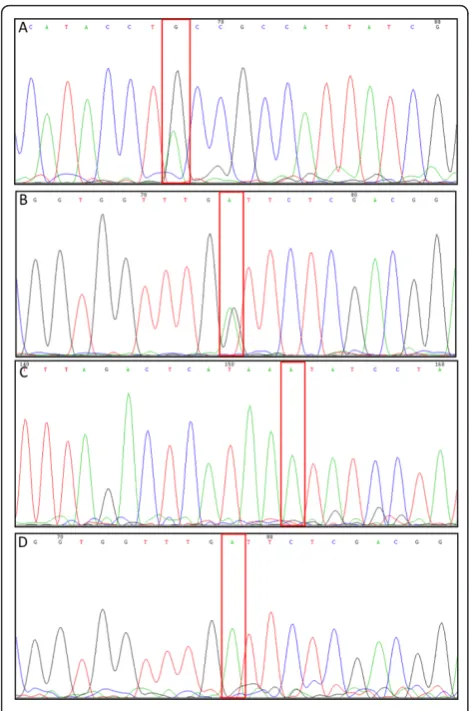
observed in the difference plots. To confirm these results and assign zygosity groups, the PCR products from selected lines were sequenced. Sequencing the HRM PCR products identified by HRM as heterozy-gous from BraA.cax1.a-11and BraA.met1.a-6, showed a double peak at the position of the mutation (Figure 2), confirming that these were indeed heterozygous for
the mutations. In addition, sequencing of PCR pro-ducts fromBraA.cax1.a-1andBraA.met1.a-6 identified as homozygous by HRM, confirmed that they were homozygous for the mutation (Figure 2). These results demonstrate that HRM can be used both for rapid genotyping of TILLING mutants and for distinguishing wild-type, heterozygous and homozygous plants. The
Table 1 Nucleotide changes inBraA.cax1.aandBraA.met1.aTILLING mutants.
Linea Mutation Changeb Position (base-pair)c Position (amino-acid)d Type of mutatione
BraA.cax1.a-1 G to A 881 - Non-coding
BraA.cax1.a-2 C to T 860 - Non-coding
BraA.cax1.a-3 G to A 545 2 Non-coding
BraA.cax1.a-4 G to A 771 77 Missense
BraA.cax1.a-5 C to T 494 - Non-coding
BraA.cax1.a-6 G to A 517 - Non-coding
BraA.cax1.a-7 G to A 673 44 Missense
BraA.cax1.a-8 G to A 599 19 Missense
BraA.cax1.a-9 G to A 645 35 Missense
BraA.cax1.a-10 C to T 736 65 Missense
BraA.cax1.a-11 G to A 795 85 Missense
BraA.cax1.a-12 C to T 708 56 Missense
BraA.cax1.a-13 C to T 689 49 Silent
BraA.cax1.a-14 C to T 661 40 Missense
BraA.cax1.a-15 C to T 658 39 Missense
BraA.cax1.a-16 C to T 421 - Non-coding
BraA.cax1.a-17 G to A 926 - Non-coding
BraA.cax1.a-18 C to T 818 92 Silent
BraA.cax1.a-19 C to T 732 64 Missense
BraA.cax1.a-20 C to T 690 50 Nonsense
BraA.met1.a-1 C to T 3516 248 Silent
BraA.met1.a-2 G to A 3334 188 Missense
BraA.met1.a-3 G to A 3334 188 Missense
BraA.met1.a-4 G to A 3084 104 Silent
BraA.met1.a-5 C to T 3081 103 Silent
BraA.met1.a-6 G to A 3252 243 Nonsense
BraA.met1.a-7 G to A 3500 243 Missense
BraA.met1.a-8 G to A 3012 80 Silent
BraA.met1.a-9 G to A 3495 241 Silent
BraA.met1.a-10 C to T 3335 188 Missense
BraA.met1.a-11 C to T 3069 99 Silent
BraA.met1.a-12 G to A 3330 186 Silent
BraA.met1.a-13 C to T 3324 184 Silent
BraA.met1.a-14 G to A 3213 147 Nonsense
BraA.met1.a-15 C to T 3265 165 Silent
BraA.met1.a-16 G to A 3330 186 Silent
BraA.met1.a-17 G to A 3258 162 Silent
a
- TILLING line,b
- Nucleotide change in mutant line,c
- Position of nucleotide change in base-pairs,d
- Position of amino-acid change in peptide,e
results also demonstrate that multiple alleles can be genotyped using a single primer pair on one PCR plate, allowing multiple lines and individual plants to be genotyped simultaneously.
Backcross analysis
To reduce the mutation load, reciprocal crosses of the TILLING lines and wild-type R-o-18 plants were per-formed with both homozygous and heterozygous mutant
Table 2 Details of primers used for gene isolation and HRM analysis.
Primera Geneb Stagec Mutation Targetedd Sequence 5’to 3’e
BrCAX1 TILLING_Forward BraA.CAX1.a TILLING AGAGATTTCCTAGCCATGTG
BrCAX1 TILLING_Reverse BraA.CAX1.a TILLING CGACCCCTAATTGTTTTATGTG
BrCAX1 HRM1_Forward BraA.CAX1.a HRM 6,16 TCCTCGAAGTTGCCTCTGAT
BrCAX1 HRM1_Reverse BraA.CAX1.a HRM 6,16 GCTGCTGACCATTGTTCCTG
BrCAX1 HRM3_Forward BraA.CAX1.a HRM 7,8,12,14,20 GCAGGAACAATGGTCAGCAG
BrCAX1 HRM3_Reverse BraA.CAX1.a HRM 7,8,12,14,20 CGAGAATGACTTCTTGGAGATT
BrCAX1 HRM6_Forward BraA.CAX1.a HRM 4,10,11,18 TCCAGAAGGTTCCATACAAAGG
BrCAX1 HRM6_Reverse BraA.CAX1.a HRM 4,10,11,18 CGCTGTTCTGTTTAGTAATGTGTTG
BrMet1aF4 BraA.MET1.a Gene isolation ACTTCACAGCATCTCCTCAGGGC
BrMet1aF5 BraA.MET1.a Gene isolation CTTGACAATGGTGCTGTTATTCAG
BrMet1aF6 BraA.MET1.a Gene isolation GTCTGGTTTGATGGCAGAGGACG
BrMet1aR4 BraA.MET1.a Gene isolation CGCACTTCGCAGCTTCAGAAAC
BrMet1aR5 BraA.MET1.a Gene isolation AAATAGAGATTGTTGAACACCCCC
BrMet1aR6 BraA.MET1.a Gene isolation TTGGATACCACAGGTGCCATGC
BrMet1aHRMF BraA.MET1.a HRM 3,6,7,10,14 TGCGATGATAAGGAGAAAGG
BrMet1aHRMR BraA.MET1.a HRM 3,6,7,10,14 TTTGCCGTCTCATCCAAAC
a
- Primer name,b
-gene primer designed to,c
-stage of analysis primer used,d
-line primers used to genotype,e
- sequence of primer
Figure 1HRM analysis forBrassica rapaR-o-18 wild-type and individual plants from M3BraA.cax1.a-11andBraA.met1.a-6TILLING
mutants. A: Normalised melt curves for fluorescent signals from DNA strand dissociation of triplicated technical replicates ofB. rapawild-type (light green lines) and individual plants of M3TILLING mutantBraA.cax1.a-11, plantBraA.cax1.a-11A(red), plantBraA.cax1.a-11B(red), plantBraA. cax1.a-11C(blue), plantBraA.cax1.a-11D(light green), plantBraA.cax1.a-11E(dark green). B: Normalised melt curves for fluorescent signals from DNA strand dissociation of triplicated technical replicates ofB. rapawild type (red lines) and individual plants M3TILLING mutantBraA.met1.a-6, plantBraA.met1.a-6-1(light blue), plantBraA.met1.a-6-2(green), plantBraA.met1.a-6-3(orange), plantBraA.met1.a-6-4(purple), plant BraA.met1.a-14-1(blue). C: Difference plot of genotypes’fluorescence normalised to wild type samples (light green lines, i) and individual plants of M3 TILLING mutantBraA.cax1.a-11, plantBraA.cax1.a-11A(red, ii), plantBraA.cax1.a-11B(red, iii), plantBraA.cax1.a-11C(blue, iv), plantBraA.cax1.a-11D (light green, v), plantBraA.cax1.a-11E(dark green, vi). D: Difference plot of genotypes’fluorescence normalised to wild type (red, i) and individual plants of the M3TILLING mutantBraA.met1.a-2, plantBraA.met1.a-6-1(light blue, ii), plantBraA.met1.a-6-2(green, iii), plantBraA.met1.a-6-3 (orange, iv), plantBraA.met1.a-6-4(purple, v), plantBraA.met1.a-14-1(blue, vi).
Lochlainnet al.Plant Methods2011,7:43 http://www.plantmethods.com/content/7/1/43
plants. A heterozygous plant from the BraA.met1.a-6 line was crossed to a wild-type plant and ten F1 plants
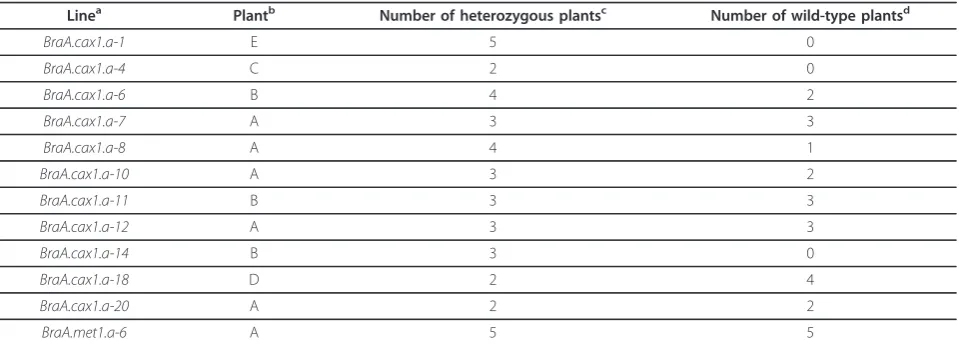
were genotyped. The results from the genotyping showed the expected segregation of the mutant allele, with 5 plants having a heterozygous mutation and 5 plants being wild-type for the mutation. The genotyping results for the F1plants from crosses of theBraA.cax1.a
lines also showed the expected genotyping results (Table 3). For example, the F1 plants of a cross using a
homo-zygous BraA.cax1.a-1 plant were all heterozygous for the mutation (n = 5). In contrast, the F1progeny of
het-erozygous plants showed segregation for the mutation (Table 3). These results demonstrate that HRM can be used to follow mutations and zygosity through multiple generations and crossing events, making it an ideal method for genotyping of TILLING mutants.
Conclusions
To analyse an allelic series of mutants generated using the TILLING approach efficiently, a cost effective, high-throughput genotyping technique is required. Techni-ques that have been used previously include PCR-RFLP, but this relies on the mutation causing a change in a restriction site [32] and TaqMan assays, which can require expensive probes and assay optimisation [18,33]. Alternatively, PCR products covering the mutations could be sequenced. However, this is time consuming and potentially more expensive; HRM analysis of sam-ples in triplicate costs ~30% of Sanger sequencing costs. The results presented here demonstrate that HRM can be used to genotype mutations identified by TILLING from EMS populations in B. rapa. The results also demonstrate that a single PCR primer pair could be used to identify mutations at multiple positions with the PCR fragment. This reduces the number of primer pairs needed to genotype an allelic series and hence the cost. Due to the nature of the HRM process, the DNA extrac-tion, PCRs and melt curve analysis can all be performed in 96-well plates. This enables high-throughput genotyp-ing of multiple alleles of a number of genes to be per-formed quickly and efficiently. This is particularly important in complex crop species such as B rapa, where paralogous genes may be present and accumula-tion of mutaaccumula-tions may be required to generate a phenotype.
Methods Plant material
Seed of the highly inbred, homozygous, self-compatible, rapid cyclingB. rapassp.trilocularis line R-o-18 was used as wild-type control. Seeds for lines (M3
genera-tion) containing mutations in target genes were obtained from the R-o-18 TILLING population through the RevGenUK service [3,34].
Plant growth conditions
Plants were grown under glasshouse conditions with a 16 h photoperiod at 22.3 ± 4°C and 13.3 ± 2°C mean day and night temperatures respectively. Seeds were sown directly into pots (height 11.3 cm; diameter 13 cm) containing Levington M3 high nutrient compost (Monro Group, Chichester, UK) and irrigated twice daily. Following three weeks of vegetative growth, Vita-feed® 2-1-4 nutrient solutions (N-P-K: 16-8-32 + micro-nutrients; Vitax Ltd., Coalville, Leicestershire, UK) were applied to plants weekly at a rate of 3 g l-1 via overhead irrigation. Plants initiated flowering after approximately 6 weeks of growth and seeds were collected approxi-mately 4 weeks thereafter. Perforated bread bags (150 mm × 700 mm, WR Wright & Sons Ltd, Liverpool, UK)
Figure 2Sequencing chromatograms of M3generation ofB.
were used to enclose inflorescences to prevent cross-pollination from neighboring plants.
In silicodata mining to identify gene sequences
Basic Local Alignment Search Tool (BLAST) [35] soft-ware was employed to identify sequences from all Bras-sicaspp. that were orthologous to theA. thaliana CAX1 gene [Genbank: NM_129373.3]. All A. thaliana sequences of interest were retrieved from GenBank [36]. For the BLASTn algorithm [37] the entire GenBank database (March 2009) was interrogated to identify all Brassica sequences sharing > 80% sequence identity at an e-value of < 1e-30 with the A. thaliana query sequence. The Brassica Genome Sequencing Project (BrGSP) database [38] was interrogated (March 2009) using the WuBLAST [39] algorithm for all Brassica BAC-end sequences, fully sequenced BACs, ESTs and genome survey sequence which shared > 80% sequence identity with this query sequence. A. thaliana genes sharing high sequence similarities to the query gene i.e. members of the same gene family including AtCAX2 [Genbank:NM_001036119.1] and AtCAX3 [Genbank: NM_115045.3] were used to interrogate both databases. After in silico comparative sequence analyses, Brassica sequences were assigned to the member of the A. thali-ana gene family with which they shared the highest sequence identity, thus removing false positives. All selected sequences which were orthologous toAtCAX1 were formatted into FASTA and entered into a contig assembly program (ContigExpress, VectorNTI 11, Invi-trogen, Paisley, UK) using default settings to form longer contiguous Brassicasequences and identify possi-ble locus specific paralogues. These nascent Brassica gene sequences were aligned to theA. thalianagene of interest, flanked at either end with 1 Mbp of sequence,
using AlignX software at default settings. The genomic structure of these contigs was elucidated and annotated in the Vector map software (VectorNTI 11). Primers (Table 2) were designed to amplify ~ 1.2 kbp fragments of BraA.CAX1.abeginning upstream from the deduced transcriptional start site to a region within the gene using Primer 3 (Version 0.4.0) [40] with the parameters
“Max Self Complementarity”and“Max 3’ Self Comple-mentarity” adjusted to 2, to avoid hairpin loops and potential dimerisation. Primers to amplify the BraA. MET1.a gene (Table 2) from B. rapa R-o-18 were designed based on the sequence described by Fujimoto et al. [[31], Genbank:AB251937].
Amplification of locus specific sequences fromB. rapa R-o-18
DNA was extracted from leaves of wild-typeB. rapa R-o-18 using the GenElute® Plant Genomic DNA Mini-prep kit (Sigma-Aldrich, Gillingham, UK) according to the manufacturer’s instructions and subjected to PCR amplification using primers (Table 2) designed to Bras-sicacontig sequence. Amplified fragments were ligated in plasmid pCR8®/GW/TOPO® (Invitrogen, Paisley, UK) and subsequently sequenced.
Plant genomic DNA extraction
Genomic DNA was extracted from the BraA.met1.a plants using the DNeasy Plant Min kit (Qiagen, Crawley, UK) following the manufacturer’s instructions or using a rapid salt-extraction method [41]. For theBraA.cax1.a plants, a high throughput extraction method was devel-oped based on a method develdevel-oped by Dr. M. Poole (pers. comm.). A 0.25 cm2 diameter leaf disc from a developing or mid-expansion leaf from each plant was placed in a 96-well plate (Qiagen Collection Microtubes,
Table 3 HRM genotyping results of F1progeny ofBraA.cax1.aandBraA.met1.alines crossed to wild-type.
Linea Plantb Number of heterozygous plantsc Number of wild-type plantsd
BraA.cax1.a-1 E 5 0
BraA.cax1.a-4 C 2 0
BraA.cax1.a-6 B 4 2
BraA.cax1.a-7 A 3 3
BraA.cax1.a-8 A 4 1
BraA.cax1.a-10 A 3 2
BraA.cax1.a-11 B 3 3
BraA.cax1.a-12 A 3 3
BraA.cax1.a-14 B 3 0
BraA.cax1.a-18 D 2 4
BraA.cax1.a-20 A 2 2
BraA.met1.a-6 A 5 5
a
- TILLING line crossed toB. rapaR-o-18 wild-type,b
- Individual M3plant identifier’c- Number of individual F1heterozygous plants identified by HRM’d
-Number of individual F1wild-type plants identified by HRM
Lochlainnet al.Plant Methods2011,7:43 http://www.plantmethods.com/content/7/1/43
Qiagen, Crawley, UK), with a single 3 mm stainless steel ball and a 600μl aliquot of DNA extraction buffer (200 mM Tris-HCL pH 7.5, 250 mM NaCl, 25 mM EDTA and 0.5% w/v SDS) added to each well. Suspensions were shaken for 3 min in a ball mill (8000 Mixer Mill, Glen Creston, Stanmore, UK) until the majority of tissue was disrupted. Plates were subsequently centrifuged in a plate centrifuge (Centrifuge 5804, Eppendorf UK, Cam-bridge, UK) at 5,600 g for 20 min. After centrifugation 300 μl of the supernatant was transferred to a fresh plate (Thermofisher storage plate with rubber sealing mat, Fisher, Loughborough, UK), containing 300 μl of 100% isopropanol, mixed and incubated for 3 min at room temperature. Plates were then centrifuged at 5600 g for 20 min before discarding the supernatant. A 100 μl aliquot of 70% (v/v) ethanol was added and mixed by shaking vigorously for 5 min, centrifuged at 5,600 g for 20 min. The supernatant was discarded and dried in a vacuum manifold for 10 min. DNA was resuspended in 20 μl sterile H2O. The DNA concentration was not
quantified and standardized due to the number of sam-ples extracted simultaneously.
High Resolution Melt (HRM) analysis
Primers were designed for HRM analysis to amplify 100-250 bp regions within theBraA.CAX1.agene and a 399 bp region ofBraA.MET1.a, which were originally used to identify mutations by TILLING. Three sets of HRM primer pairs were designed for BraA.CAX1.a and one for BraA.MET1.a (Table 2), using Primer 3 (Version 0.4.0) with the parameters“Max Self Complementarity” and“Max 3’Self Complementarity”adjusted to 2, and a Tm ≥ 60°C, to avoid hairpin loops and dimerisations.
Primer sequences were examined further by primer thermodynamic software (Vector NTI 11) to confirm that no secondary structures were likely to form. HRM primer amplification efficiencies and specificities, were determined in vitroby PCR amplification of wild-type B. rapaR-o-18 DNA in reaction volumes containing 10μl of GoTaq buffer (5×), 5μl of MgCl2 (25 mM), 1 μl of
dNTPs (10 mM), 5 μl of both forward and reverse pri-mers (10 pmol μl-1), DNA (10 ng), 0.2 μl of Taq poly-merase (GoTaq) and sterile de-ionised water (SDW) to a total volume of 50μl. PCR conditions were 95°C for 5 min and 30 cycles of 95°C for 10 sec, 55°C for 10 sec and 72°C for 30 sec.
Nested PCR approaches to amplify locus specific fragments for HRM analysis
The nested PCR approach was used for theBraA.CAX1. alines. DNA extracted from TILLING lines were ampli-fied with TILLING primers using Phusion™high fide-lity DNA polymerase (New England Biolabs, Hitchin, UK) to ensure sequence integrity of amplified sequences.
Reaction volumes comprised of 4μl of Phusion HF (5×), 0.4μl of dNTPs (10 mM), 1.4μl of forward and reverse BraA.CAX1.a TILLING primers (10 pmol μl-1), 1 μl DNA, 0.6μl of DMSO, 0.2μl of Phusion DNA polymer-ase and SDW to a total volume of 20μl. PCR conditions involved an initial denaturation at 98°C (30 sec) followed by 30 cycles of denaturation at 98°C (5-10 sec), anneal-ing at 58°C (15 sec) and extension at 72°C (30 sec).
HRM reactions
HRM were performed using Type-it® HRM™ PCR kit (Qiagen, Crawley, UK) following manufacturer’s instruc-tions; 1 μl of the initial nested PCR reaction for the BraA.cax1.a lines and 1 μl of genomic DNA for the BraA.met1.a lines was added as template to the HRM PCR reaction mix comprising 5 μl of 2 × HRM PCR Master Mix (including EvaGreen fluorescent dye), 1.75 μl of forward and reverse HRM primers (10 pmol μl-1) and SDW to 10μl. Using an Eppendorf 96-well Master-Cycler 5331, reaction volumes were subjected to 95°C (5 min), followed by 30 cycles of 95°C (10 sec), 55°C annealing (10 sec) and 72°C extension (30 sec). Included within each 96-well analysis plate were samples in tripli-cate, also triplicate wild-type DNA samples and two sets of negative controls, one without DNA added and one without HRM primer added.
Lightscanner™analysis of HRM products
PCR plates containing HRM amplicons were placed into a Lightscanner™ (Idaho Technology, Salt Lake City, USA) and the temperature raised to 60°C for 5 mins to ensure all samples were equilibrated. The melt tempera-ture range was set at 63.3°C-95.4°C with a ramp setting at 0.1°C and a second hold at each step. Exposure was set at “Auto”, background correction to exponential, curve shift to 0.020, standards to‘Auto Group’, and sen-sitivity at normal +2.8. HRM analysis was then per-formed on the dissociation of double-stranded DNA PCR products, which had been saturated with the low PCR-toxic dye, EvaGreen from the initial HRM PCR. The LightScanner™ Data Analysis software (Version 2.0, Idaho Technology) was used to analyse the data and produce normalised disassociation curves and difference plots.
Acknowledgements
Funding for this work was provided by BBSRC (grant reference BB/G013969/ 1) to NG, JH, MRB and GJK and (BB/F009721/1) to GJK, SK and AS.
Author details
Authors’contributions
SÓL developed and performed theBraA-cax1.aanalysis and took the co-lead role in writing the manuscript. SA developed and performed theBraA-met1. aanalysis. NG performed theBraA-cax1.aanalysis and took the co-lead role in writing the manuscript. KA and JJR performed theBraA-cax1.aanalysis. AS and SK developed the HRM analysis. JPH, LØ, GJK, PJW and MRB conceived and participated in development and coordination of the project. All authors contributed to the editing of the manuscript. All authors have read and approved the final manuscript.
Competing interests
The authors declare that they have no competing interests.
Received: 6 September 2011 Accepted: 8 December 2011 Published: 8 December 2011
References
1. McCallum CM, Comai L, Greene EA, Heinkoff S:Targeting Induced Lesions IN Genomes (TILLING) for plant functional genomics.Plant Physiology 2000,123:439-442.
2. Till BJ, Cooper J, Colowit P, Greene EA, Henikoff S, Comai L:Discovery of chemically induced mutations in rice by TILLING.BMC Plant Biology2007,
7:19.
3. Stephenson P, Baker D, Girin T, Perez A, Amoah S, King GJ, Østergaard L:A rich TILLING resource for studying gene function inBrassica rapa.BMC Plant Biology2010,10:62.
4. Till BJ, Reynolds SH, Greene EA, Codomo CA, Enns LC, Johnson JE, Burtner C, Odden AR, Young K, Taylor NE, Henikoff JG, Comai L, Henikoff S:
Large-scale discovery of induced point mutations with high-throughput TILLING.Genome Research2003,13:524-530.
5. Azpiroz R, Feldman KA:T-DNA insertion mutagenesis in Arabidopsis: Going back and forth.Trends in Genetics1997,13:152-156.
6. Balcells L, Swinburne J, Coupland G:Transposons as tools for the isolation of plant genes.Trends in Biotechnology1991,9:31-37.
7. Uauy C, Paraiso F, Colasuonno P, Tran RK, Tsai H, Berardi S, Comai L, Dubcovsky J:A modified TILLING approach to detect induced mutations in tetraploid and haexaploid wheat.BMC Plant Biology2009,9:115. 8. Botticella E, Sestili F, Hernandez-Lopez A, Phillips A, Lafiandra D:High
Resolution Melting analysis for the detection of EMS induced mutations in wheatSbellagenes.BMC Plant Biology2011,11:156.
9. Wang N, Wang YJ, Tian F, King GJ, Zhang CY, Long Y, Shi L, Meng JL:A functional genomics resource forBrassica napus: development of an EMS mutagenized population and discovery of FAE1 point mutations by TILLING.New Phytologist2008,180:751-765.
10. Perry JA, Wang TL, Welham TJ, Gardner S, Pike JM, Yoshida S, Parniske M:A TILLING reverse genetics tool and a web-accessible collection of mutants of the legumeLotus japonicus.Plant Physiology2003,
131:866-871.
11. Le Signor C, Savois V, Aubert G, Verdier J, Nicolas M, Pagny G, Moussy F, Sanchez M, Baker D, Clarke J, Thompson R:Optimizing TILLING populations for reverse genetics inMedicago trunculata.Plant Biotechnology Journal2009,7:430-441.
12. Knoll JE, Ramos ML, Zeng Y, Holbrook CC, Chow M, Chen S, Maleki S, Bhattacharya A, Ozias-Akins P:TILLING for allergen reduction and improvement of quality traits in peanut (Arachis hypogaeaL.).BMC Plant Biology2011,11:81.
13. Gady ALF, Hermans FWK, Van de Wal MHBJ, van Loo EN, Visser RGF, Bachem CWB:Implementation of two high through-put techniques in a novel application: detecting point mutations in large EMS mutated plant populations.Plant Methods2009,5:13.
14. Vriet C, Welham T, Brachmann A, Pike J, Perry J, Parniske M, Sato S, Tabata S, Smith AM, Wang TL:A suite of Lotus japonicus starch mutants reveals both conserved and novel features of starch metabolism.Plant Physiology2010,154:643-655.
15. Gundry CN, Vandersteen JG, Reed GH, Pryor RJ, Chen J, Wittwer CT:
Amplicon melting analysis with labeled primers: A closed-tube method for differentiating homozygotes and heterozygotes.Clinical Chemistry 2003,49:396-406.
16. Garritano S, Gemignani F, Voegele C, Nguyen-Dumont T, Le Calvez-Kelm F, De Silva D, Lesueur F, Landi S, Tavtigian SV:Determining the effectiveness
of High Resolution Melting analysis for SNP genotyping and mutation scanning at the TP53 locus.BMC Genetics2009,10:5.
17. Martino A, Mancuso T, Rossi AM:Application of high-resolution melting to large-scale, high-throughput SNP genotyping: A comparison with the TaqMan® method.Journal of Biomolecular Screening2010,15:623-629. 18. Monis PT, Giglio S, Saint CP:Comparison of SYT09 and SYBR Green I for
real-time polymerase chain reaction and investigation of the effect of the dye concentration on amplification and DNA melting curve analysis.
Analytical Biochemistry2005,340:24-34.
19. Dong C, Vincent K, Sharp P:Simultaneous mutation detection of three homoeologous genes in wheat by High Resolution Melting analysis and Mutation Surveyor®.BMC Plant Biology2009,9:143.
20. Wittwer CT, Reed GH, Gundry CN, Vandersteen JG, Pryor RJ:High-resolution genotyping by amplicon melting analysis using LCGreen.Clinical Chemistry2003,49:853-860.
21. Poláková KM, Loptová T, Klamová H, Moravcová J:High-resolution melt curve analysis: Initial screening for mutations in BCR-ABL kinase domain.
Leukemia Research2008,32:1236-1243.
22. Joly P, Lacan P, Garcia C, Delasaux A, Francina A:Rapid and reliableβ -globin gene cluster haplotyping of sickle cell disease patients by FRET Light Cycler and HRM assays.Clinica Chimica Acta2011,412:1257-1261. 23. Arancia S, Sandini S, De Bernardis F, Fortini D:Rapid, simple, and low-cost
identification ofCandidaspecies using high-resolution melting analysis.
Diagnostic Microbiology and Infectious Disease2011,69:283-285. 24. Mader E, Ruzicka J, Schmiderer C, Novak J:Quantitative high-resolution
melting analysis for detecting adulterations.Analytical Biochemistry2011,
409:153-155.
25. Ishikawa T, Kamei Y, Otozai S, Kim J, Sato A, Kuwahara Y, Tanaka M, Deguchi T, Inohara H, Tsujimura T, Todo T:High-resolution melting curve analysis for rapid detection of mutations in a Medaka TILLING library.
BMC Molecular Biology2010,11:70.
26. Rana D, Boogart T, O’Neil CM, Hynes L, Bent E, MacPherson L, Park JY, Lim YP, Bancroft I:Conservation of the microstructure of genome segments inBrassica napusand its diploid relatives.The Plant Journal 2004,40:725-733.
27. Parkin IAP, Gulden SM, Sharpe AG, Lukens L, Trick M, Osborn TC, Lydiate DJ:
Segmental structure of theBrassica napusgenome based on comparative analysis withArabidopsis thaliana.Genetics2005,
171:765-781.
28. Girin T, Stephenson P, Goldsack CM, Kempin SA, Perez A, Pires N, Sparrow PA, Wood TA, Yanofsky MF, Ostergaard L:Brassicaceae INDEHISCENT genes specify valve margin cell fate and repress replum formation.Plant Journal2010,63:329-338.
29. Cheng N-H, Pittman JK, Barkla BJ, Shigaki T, Hirschi KD:The Arabidopsis cax1mutant exhibits impaired ion homeostasis, development, and hormonal responses and reveals interplay among vacuolar transporters.
Plant Cell2003,15:347-364.
30. Finnegan EJ, Dennis ES:Isolation and identification by sequence homology of a putative cytosine methyltransferase fromArabidopsis thaliana.Nucleic Acids Research1993,21:2383-2388.
31. Fujimoto R, Sasaki T, Nishio T:Characterization of DNA methyltransferase genes inBrassica rapa.Genes & Genetic Systems2006,81:235-242. 32. Parsons BL, Heflich RH:Genotypic selection methods for the direct
analysis of point mutations.Mutation Research1997,387:97-121. 33. Fitzgerald TL, Kazan K, Li Z, Morell MK, Manners JM:A high-throughput
method for detection of homeologous gene deletions in hexaploid wheat.BMC Plant Biology2010,10:264.
34. RevGenUK.[http://revgenuk.jic.ac.uk].
35. Altschul SF, Gish W, Miller W, Myers EW, Lipman DJ:Basic Local Alignment Search Tool.Journal of Molecular Biology1990,215:403-410.
36. GenBank.[http://www.ncbi.nlm.nih.gov/genbank/]. 37. BLAST.[http://blast.ncbi.nlm.nih.gov/Blast.cgi]. 38. Brassica Genome Gateway.[http://brassica.bbsrc.ac.uk]. 39. Chao KM, Pearson WR, Miller W:Aligning two sequences within a
specified diagonal band.Computer Applications in the Biosciences1992,
8:481-487.
40. Rozen S, Skaletsky HJ:Primer3 on the WWW for general users and for biologist programmers.InBioinformatics Methods and Protocols: Methods in Molecular Biology.Edited by: Krawetz S, Misener S. Humana Press, Totowa, NJ; 2000:365-386.
Lochlainnet al.Plant Methods2011,7:43 http://www.plantmethods.com/content/7/1/43
41. Aljanabi SM, Martinez I:Universal and rapid salt-extraction of high quality genomic DNA for PCR-based techniques.Nucleic Acids Research1997,
25:4692-4693.
doi:10.1186/1746-4811-7-43
Cite this article as:Lochlainnet al.:High Resolution Melt (HRM) analysis
is an efficient tool to genotype EMS mutants in complex crop genomes.Plant Methods20117:43.
Submit your next manuscript to BioMed Central and take full advantage of:
• Convenient online submission
• Thorough peer review
• No space constraints or color figure charges
• Immediate publication on acceptance
• Inclusion in PubMed, CAS, Scopus and Google Scholar
• Research which is freely available for redistribution