DEMOGRAPHIC RESEARCH
VOLUME 32, ARTICLE 6, PAGES 183
218
PUBLISHED 22 JANUARY 2015
http://www.demographic-research.org/Volumes/Vol32/6/ DOI: 10.4054/DemRes.2015.32.6
Research Article
Changing norms about gender inequality in
education: Evidence from Bangladesh
Niels-Hugo Blunch
Maitreyi Bordia Das
©2015 Niels-Hugo Blunch & Maitreyi Bordia Das.
This open-access work is published under the terms of the Creative Commons Attribution NonCommercial License 2.0 Germany, which permits use, reproduction & distribution in any medium for non-commercial purposes, provided the original author(s) and source are given credit.
1 Introduction 184
2 Background 186
3 Data and methods 191
4 Results 198
5 Discussion 208
6 Conclusion 210
References 211
Changing norms about gender inequality in education:
Evidence from Bangladesh
†Niels-Hugo Blunch1 Maitreyi Bordia Das2
Abstract
BACKGROUND
While norms are important for educational attainment, especially in the developing world, there are relatively few studies on this topic. This paper, which explores attitudes toward gender equality in education among Bangladeshis, should therefore be of interest to both academics and policymakers.
OBJECTIVE
In this paper, we seek to identify which factors affect the norms regarding the education of girls and boys, as well as of women and men, across two cohorts of married women in Bangladesh. In particular, we look at the relative importance of an individual woman‘s own educational background and those of her spouse and other family members in shaping her attitudes toward gender equality in education.
METHODS
We analyze a rich household dataset for Bangladesh from the World Bank Survey on Gender Norms in Bangladesh, which was conducted in 2006. We use linear probability models to examine the determinants of gender education norms. We also decompose the intergenerational gender norms gap using the Oaxaca-Blinder composition (total and detailed), taking into account several technical issues related to the computation of standard errors and the use of dummy variables in detailed decompositions.
RESULTS
Education norms were found to differ substantially across cohorts, with women from the younger cohort expressing far more positive views than older female respondents
†
We thank David Ribar and participants at the Annual Meeting of the Population Association of America for their helpful comments and suggestions. The comments and suggestions from two anonymous referees and associate editor Andy Hinde helped greatly improve this paper. Remaining errors and omissions are our own. The findings and interpretations are those of the authors, and should not be attributed to the World Bank or any of its member countries or affiliated institutions.
1
Washington and Lee University, Lexington, VA 24450, U.S.A. E-Mail: [email protected].
regarding education for both girls and women. The effect of education on norms could be found among both the respondents and their husbands, as well as among the older women in the household. This suggests that educational norms are shared both within married couples and across generations.
CONCLUSIONS
Our results indicate that the far-reaching changes in female education in Bangladesh have had equally far-reaching effects on the perceived value of education for girls relative to education for boys.
“Earlier fathers used to say „what is the use of educating girls….they will go to another house‟. But now, fathers send both daughters and sons to school and college.” School going adolescent girl, Mymensingh
“Mothers of the earlier generation used to advise their daughters to learn house-work and get education up to primary; now mothers are telling their daughters to get at least secondary school certificate.” School going adolescent boy, Satkhira
Source: World Bank (2008)
1. Introduction
Social norms and attitudes are often indicators of social trends and of the demand for various goods and services. They also frequently point to the trajectory of social change. It is therefore not surprising that norms and attitudes have been studied by scholars for several decades. The literature on norms and their transformation is rich, especially in the US. During the 1970s Mason et al. (1976) looked at changing attitudes regarding women‘s labor market and domestic roles at a time when the women‘s movement in the US was gaining strength, and women were entering the labor market in large numbers. Other scholars built on this work by attempting to assess the importance of education in changing ―sex role attitudes.‖ Still others asked how norms and values change, and whether behaviors precede changes in norms, or vice versa.
while in developed countries with high-quality datasets there have been many analyses of gender norms and attitudes, in developing countries with less high-quality data there have been relatively few studies on gender norms, and those that have been conducted have been restricted to small samples and to topics such as attitudes regarding reproductive decision-making, sex preferences for children, and violence against women. In addition, most of the research conducted in developing countries has focused on using attitudes as explanatory variables for a number of outcomes, rather than as outcome variables in their own right.
Drawing on the literature on changes in ―sex-role attitudes‖ from the US, which has documented changes in attitudes toward gender equality (Mason et al. 1976; Mason and Lu 1988; Brewster and Padavic 2000), and on a body of literature which has assessed the importance of education in changing attitudes toward gender inequality (Kane and Kyyro 2001), we ask how norms regarding gender equality in education have changed in Bangladesh, and also what the individual-level determinants of these attitudes are. While we cannot delineate clear causal pathways of change, we try to separate out the correlates of attitudes to gender equality in education. Additionally, we decompose the intergenerational gaps in the norms in gender equality in education into changes in the observable characteristics and in the responses to those characteristics; and, in doing so, we carefully incorporate recent methodological advances that address potential problems that have arisen in previous decompositions of this kind.
Because most societies in South Asia suffer from entrenched son preference and low parental investments in girls‘ education, we believe it is important to explore the topic of norms regarding gender inequality in education. Parents often do not see the value of educating girls for a number of supply and demand reasons. This translates into poor educational outcomes for girls in absolute terms, but also relative to those of boys. We believe that this paper will enrich our empirical understanding of norm transformation and of some critical areas of gender inequality.
Previous research on education and gender norms has primarily focused on the question of whether education is a liberalizing influence or a constraint on attitudes regarding gender equality. The results of these studies are, to say the least, equivocal (Kane 1995). We situate our analysis on changing attitudes regarding girls‘ education within the overall context of educational expansion in Bangladesh, and the definitions of sex roles and expectations in the culture. Because we provide quantitative evidence on the determinants of gender education norms in Bangladesh, our work also complements the related earlier work by Schuler and colleagues, which involved in-depth interviews and group discussions (see, e.g., Schuler et al. 2006 (and the references therein)).
opportunities. We therefore ask the following questions: How have social norms and attitudes regarding the education of girls and women changed? In particular, to what extent have attitudes changed regarding equal educational opportunities for girls and boys, and for husbands and wives? There are several reasons why these questions are important. ―For although attitudes may fail to influence individual behavior in many instances, marked attitude shifts in the population at large are likely to produce socio-political climates conducive to structural change‖ (Mason et al. 1976:573). Montgomery (1999) also pointed out the value of examining changes in perceptions in response to actual patterns, and the ways in which these perceptions may fuel further change. Thus, as people start to perceive that mortality is declining, this awareness affects not only their ability and willingness to regulate fertility behavior, but also their sense of social and political agency. These new attitudes may in turn cause people to demand greater access to high-quality health care. Thus, we could argue that perceptions regarding the desirability of equal educational opportunities for men and women could in turn lead to increased demand for high-quality education in general, and the increased capacity of women to access the labor market and demand greater equality in marital relationships. All of these changes would have positive effects on women‘s status in Bangladesh.
The remainder of this paper is structured as follows. We first provide the contextual background for studying gender education norms for the specific case of Bangladesh. Next, we present the data and methods underlying the empirical analysis of this paper. We then present the results, followed by a more detailed discussion of the most noteworthy results from the empirical analysis. A final section concludes.
2. Background
Bangladesh: More girls are enrolled in school than boys (Gross enrollment rates from the HIES, 2005)
0 10 20 30 40 50 60 70 80 90 100
Grade 1-5 Grade 6-8 Grade 9-10 Grade 11-12
%
Boys Girls
King, and Pritchett 1998; Shafiq 2009; World Bank 2008).3 Second, there has been a dramatic increase in the share of women who are marrying men less educated than themselves (Table 3, in the next section). This is a product of a marriage market in which the spousal age gap has not changed very much. Thus, in a phenomenon referred to as the ―education squeeze,‖ younger cohorts of women are better educated than the cohorts of men they are marrying. It should be emphasized, however, that the pro-male bias in tertiary education remains very large (Table 1).
Figure 1: Enrollment rates, Bangladesh
Gross enrollment rates from the HIES, 2005
3 This trend continues beyond the time period of the data examined here: in 2011, the most recent year for
Table 1: Gross enrollment rates of boys and girls by level and region
Primary (Grade 1-5)
Lower Sec. (Grade 6-8)
Secondary (Grade 9-10)
Higher Secondary (11-12)
Boy
s
Girls Boys Girls Boys Girls Boys Girls
Barisal 93.9 93.6 55.4 58.9 45.8 58.1 44.7 35.0
Chittagong 83.5 84.5 48.1 58.2 37.2 49.9 34.6 32.8
Dhaka 86.1 84.5 52.7 58.4 62.2 66.6 32.3 33.3
Khulna 96.1 99.5 60.7 66.9 58.3 71.5 39.3 36.2
Rajshahi 85.5 91.5 53.5 70.3 50.3 57.5 38.2 33.4
Sylhet 83.2 85.7 57.1 36.3 39.7 58.0 29.1 28.5
Source: BANBEIS (Government of Bangladesh), 2005/06
The growth in education and the accompanying social changes have probably been the most important recent developments in Bangladesh, but there are others as well. Starting from a very low base of 9%, female labor force participation picked up to over 22% during the years 1993‒2003. While, as indicated, the female labor participation has increased, the female-male gap in labor force participation (LFP) has also increased in relative terms over the past few decades: in 1990 the LFP was 61.7% for females and 88.4 for males, but by 2011 it had decreased to 57.2% for females and 84.3% for males (WDI 2013). Evocative images of hundreds of young girls walking every morning to the garment factories have been etched into the popular imagination as a metaphor for progress. Infant mortality has declined faster in Bangladesh than in any other country in South Asia; and, unlike in neighboring countries, gender differences in infant mortality have disappeared. The total fertility rate today is less than one-third of the rate four decades ago, having declined from about 6.9 in 1971 to about 2.2 in 2011 (WDI 2013). Meanwhile, the microcredit revolution sweeping the countryside has given women visibility and greater status. Better water and sanitation facilities have reduced the drudgery experienced by mothers, who now have time for other activities. An information and communication boom has resulted from the widespread availability of radios, televisions, and mobile phones. The expansion of rural roads and of electrification have enabled many people to find work beyond traditional low-productivity cottage industries. The availability of more secure modes of transport has also given people greater mobility, allowing more women to move out of their villages to take jobs in the city (Hossain and Bose 2004; World Bank 2008).
in access to markets, political forums, and high-tech services. Moreover, there are sharp disparities based on an individual‘s place of residence, wealth quintile, and ethnicity. The practice of dowry payments is on the rise, and is one of the reasons why the average girl is married off by the time she is 15 years old.4
We described above the extent to which education has expanded in Bangladesh. We also noted that educational opportunities for girls have changed the conservative marriage market, as increasing numbers of women are, in contrast to their mothers‘ generation, marrying men less educated than themselves. Clearly, the demand for education is not only contingent on cultural reasons, but has some important structural correlates. For the past two decades, Bangladesh has pursued a policy of enhancing girls‘ education through innovative incentive schemes that provide stipends to girls who remain enrolled in secondary school. Over the past decade, NGOs have also contributed substantially to the expansion of educational opportunities for girls, and of labor market opportunities for women (World Bank 2008: Ch 1).
Despite these changes, progress coexists with patriarchal norms and conservative attitudes toward women‘s roles. It is well known that male bias in South Asia is at the core of a number of negative outcomes for women and girls. The literature documenting this problem and analyzing its correlates throughout the life-cycle in South Asia is rich, and spans a wide range of disciplines. The basis for this norm are the conventions that daughters ―belong‖ to their natal family only until they are married, and that parents should not live with their married daughters or accept financial help from them. It is therefore generally assumed that parental investments in female children are determined by the low expected returns to the parents in their old age (Cain 1978). Education is among the key investments parents typically make in their children.
Marriage is central to the upbringing of girls. The notion that women should be less educated and less accomplished than their husbands is widely accepted in the South Asian culture. Thus, in a practice known as hypergamy, women typically ―marry up:‖ a wife is expected to have a lower social status, caste, employment status, and education than her husband. Although some ethnic minorities do not adhere to this generally accepted pattern, at the other extreme are Hindu societies, which even have a ritual ratification for ―marrying up:‖ i.e., ―anuloma” marriages are acceptable, as a lower caste woman can marry a higher caste man; but ―pratiloma‖ marriages, in which the
women‘s caste is higher than her male partner‘s, are ritually unacceptable. To ensure that the husband has the role of the enforcer of norms and of familial honor, the inter-spouse age difference also tends to be substantial, and has so far remained resistant to change. Another reason why South Asian families may see educating girls to higher levels as pointless is the high dowry amounts paid in these cultures. While the payment
4
of dowries is a singularly un-Islamic practice, it is widespread in Bangladesh; and, based on recent accounts, it appears to be on the rise (Chowdhury 2010; World Bank 2008). Thus, a more educated bride would have to be paired with a groom who is even more educated and accomplished, thus inflating the size of the dowry her family would have to pay for the marriage.
In other ways, too, women and girls are expected to behave in ―appropriate‖ ways. One of the key attributes of a ―good Bengali girl‖ is, for instance, ―shyness,‖ or ―lojja;‖ which means that a girl is expected to refrain from speaking her mind before elders and outsiders. In many conservative parts of South Asia, higher education is thought to liberate girls to such an extent that they would have problems ―adjusting‖ to their marital home. During focus group discussions, we have found that people from rural areas believe that girls who have higher levels of education are more likely than their less educated peers to speak their minds and shed their inhibitions. Whether this is viewed as a positive or a negative effect of education depends on the perspective of the focus group participant (World Bank 2008: Ch 3).
The norm of seclusion or ―purdah‖ in Bangladesh is yet another reason often cited as an explanation for why girls are less educated than boys. Attaining a secondary education often means that pubescent girls have to travel to neighboring villages. Under purdah, this kind of travel may be considered unacceptable, as it jeopardizes the chastity and purity of girls who may then have problems finding suitable, respectable husbands. Research has recently shown that the ―purdah mentality‖ is prevalent in non-Islamic populations of South Asia (Lateef 1990; Das 2004). However, even when it is officially practiced, purdah is an amorphous concept which is viewed in the context of acceptable notions of safety and security. Thus, when appropriate conditions exist, purdah does not prevent girls from attending school or women from participating in the labor market. In fact, women and girls tend to renegotiate the norms of seclusion when offered opportunities (Kabeer 2001; World Bank 2008).
However, recent qualitative work has shown that perceptions among South Asians of girls‘ education and gender norms in general are changing rapidly. Today, local populations take great pride in the expansion of girls‘ education in their towns, and in the impact this expansion has on the community, the well-being of children, and the empowerment of women (World Bank 2008: Ch 3). How and why did this change in perceptions of education come about? At the macro level, we argue that a supply-side push for education tapped the latent demand for education among families of girls, which seems to have existed alongside conservative norms and values. Once the impact of education on girls and communities became apparent, this fueled further demand. Women‘s access to new job opportunities in the garment sector and with NGOs showed families that girls can have an economic worth as well. Globally of course, higher returns to education for women have been shown in a number of studies, including Psacharopoulos‘ (1994) cross-country review, a study by Schultz (1994), and research from such diverse settings as Taiwan (Gindling et al. 1995), the Czech Republic and Slovakia (Chase 1997), and India (Malathy and Duraisamy 1993; Duraisamy 2000).
3. Data and methods
One of the reasons why there is relatively little empirical literature on changing norms in South Asia is that there are few datasets that allow for such analyses. Individual questions in the Demographic and Health Surveys on attitudes toward violence, fertility, and individual diseases have allowed for some analysis of attitudes in these areas, but very few questions provide the information needed for an analysis of attitudes toward gender inequality. To conduct our analysis, we were able to use the World Bank Survey on Gender Norms in Bangladesh (WBGNS) 2006, a unique dataset which has a number of questions on attitudes toward gender equality. Our aim is to understand whether two cohorts of women display differences in terms of gender norms and/or the correlates of these norms, and whether these norms differ with regard to the education of girls versus boys, and of wives versus husbands, respectively (more details below).
The WBGNS 2006 is the first comprehensive, nationally representative household survey of gender norms and practices in Bangladesh. It is based on a sample of adults that include married women in the age groups 15‒25 and 45‒59, married male heads of households in the age group 25‒50, and 500 community leaders (such as Union Parishad (UP) members, Imams/Moulvis (religious leaders), primary school teachers, and Madrasah teachers). The samples were drawn in two stages. In the first stage, 91 clusters5 were selected as a subsample of the 361 clusters included in the Bangladesh
5
Demographic and Health Survey (BDHS) of 2004. The second sampling stage selected one adult from each household. Opinion leaders were selected from among those who were resident in and around the cluster, based on the assumption that they had knowledge of and influence on the people in the cluster. On average, 49 adults and 5‒6 opinion leaders were interviewed in each cluster. Out of the 49 adults interviewed in a cluster, roughly 16 were married women aged 15‒25, 16 were married women aged 45‒ 59, and 17 were married men aged 25‒50. The interviews were conducted in April-May 2006.
We have two estimation samples: older women (1,431 initial observations) and younger women (1,543 initial observations). As explanatory variables were found to be missing for some observations, the samples used in the final/effective analyses were slightly smaller. Our final samples were thus as follows: older women (1,408 observations) and younger women (1,534 observations). Declines of these magnitudes do not seem to affect the representativeness of the estimation samples. The means for the analysis samples are reported in Table 2.
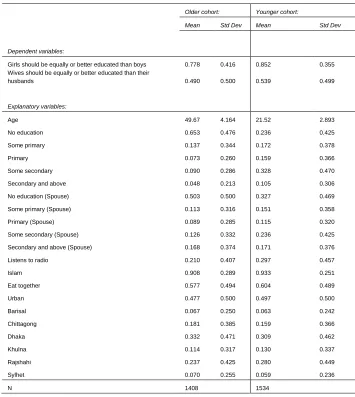
Table 2: Descriptive statistics for the estimation samples
Older cohort: Younger cohort:
Mean Std Dev Mean Std Dev
Dependent variables:
Girls should be equally or better educated than boys 0.778 0.416 0.852 0.355
Wives should be equally or better educated than their
husbands 0.490 0.500 0.539 0.499
Explanatory variables:
Age 49.67 4.164 21.52 2.893
No education 0.653 0.476 0.236 0.425
Some primary 0.137 0.344 0.172 0.378
Primary 0.073 0.260 0.159 0.366
Some secondary 0.090 0.286 0.328 0.470
Secondary and above 0.048 0.213 0.105 0.306
No education (Spouse) 0.503 0.500 0.327 0.469
Some primary (Spouse) 0.113 0.316 0.151 0.358
Primary (Spouse) 0.089 0.285 0.115 0.320
Some secondary (Spouse) 0.126 0.332 0.236 0.425
Secondary and above (Spouse) 0.168 0.374 0.171 0.376
Listens to radio 0.210 0.407 0.297 0.457
Islam 0.908 0.289 0.933 0.251
Eat together 0.577 0.494 0.604 0.489
Urban 0.477 0.500 0.497 0.500
Barisal 0.067 0.250 0.063 0.242
Chittagong 0.181 0.385 0.159 0.366
Dhaka 0.332 0.471 0.309 0.462
Khulna 0.114 0.317 0.130 0.337
Rajshahi 0.237 0.425 0.280 0.449
Sylhet 0.070 0.255 0.059 0.236
N 1408 1534
Notes: Calculations incorporate sampling weights and also adjust for within-community correlation/clustering (Wooldridge, 2010).
We used two different (but related) dependent variables in our analysis. Each of these variables represents an attitude toward a different aspect of gender equality. The first is whether girls should be equally or better educated than boys. The second is whether wives should be equally or better educated than their husbands. These variables are based on the responses to the following two questions: ―Do you think girls should be educated as much as boys should, or does it make more sense to educate boys more?‖ and ―Do you think women should have equal or better education than their husband?‖ The possible responses to the first question include ―same,‖ ―boys more,‖ and ―girls more;‖ while the responses to the second question are simply ―yes‖ or ―no.‖ To maintain consistency between the two dependent variables, which allows us to interpret them similarly, we coded the responses into two binary variables. The first was coded one if the respondent answered ―same‖ or ―girls more‖ (and zero if the respondent answered ―boys more‖), while the second was coded one for ―yes‖ and zero for ―no‖).6 The share of women respondents who said they favor equal or better
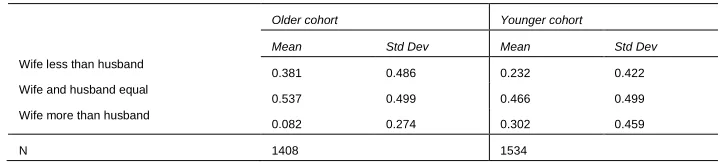
education for girls changed from 77.8% to 85.2% across the two cohorts, while the share of women respondents who said they favor equal or better education for wives changed from 49% to 53.9% across the two cohorts (Table 2). The gender gap in educational attainment appears to have narrowed over time: the ―no education‖ group shrank from 65.3% among the older cohort of female respondents to 23.6% among the younger cohort of female respondents (Table 2). The share of married women respondents who reported they have less education than their husband decreased from 38.1% to 23.2%, while the share of married women respondents who said they have more education than their spouse increased from 8.2% to 30.2% (Table 3).
Table 3: Education equality in marriage across the two cohorts
Older cohort Younger cohort
Mean Std Dev Mean Std Dev
Wife less than husband
0.381 0.486 0.232 0.422
Wife and husband equal
0.537 0.499 0.466 0.499
Wife more than husband
0.082 0.274 0.302 0.459
N 1408 1534
Notes: Calculations incorporate sampling weights and also adjust for within-community correlation/clustering (Wooldridge, 2010).
Source: World Bank Survey on Gender Norms in Bangladesh (2006).
6 As a referee also noted, it would have been useful if we were able to examine the ―same‖ category for both
Based on the theoretical literature on the pathways for changes in attitudes about gender equality discussed previously, we used a set of explanatory variables that included education, region, exposure to the media, and congruity with other attitudes relating to gender equality. Our primary explanatory variable of interest was education, and we defined its role in several different ways. There are at least two pathways through which education interacts with attitudes. First, attitudes toward education can affect whether and how much education individuals get. Conversely, better education can change attitudes toward education. There are therefore inherent problems in establishing a causal relationship here. We can, however, examine whether higher levels of education are associated with more liberal attitudes toward gender equality by looking at an individual‘s education. Research from the US has found that this relationship between higher education and liberal attitudes is not necessarily clear-cut, and is instead contingent upon a number of other factors and has different effects for different categories of individuals (Kane and Kyyro 2001). We used an individual‘s educational attainment (coded as four dummies for some primary, completed primary, some secondary, and secondary and above; with no education being the reference category).
In addition to the individual‘s own education, the overall level of education of the person‘s household may have a bearing on his or her attitudes toward gender equality. The literature on ―social influence‖ and ―social learning‖ in changing perceptions of mortality and fertility has shown that there tends to be a lag between actual and perceived changes (Montgomery and Casterline 1996). Koenig et al. (2003) found in Bangladesh that when women‘s autonomy is an accepted part of the community culture, violence against women decreases. Thus, we would expect to find that individuals who have a higher level of aggregate education and who come from a more educated family—especially from a family in which the level of female education is higher— would be more liberal in their attitudes toward gender equality in education. We therefore also included spousal education as an explanatory variable, since a woman‘s own views on educational equality may well be guided by her husband‘s in a society that is overwhelmingly patriarchal.
Finally, for younger women we added a measure that denotes the highest education level of an older woman in the household. The literature on South Asia is replete with analyses of the manner in which older women in the household exercise control over younger women. Thus, if older sisters-in-law or the mother-in-law are more educated, we would expect the family to ―bring in‖ a more educated and enlightened daughter-in-law. The younger woman‘s attitudes would therefore be expected to be more liberal.
We also added a measure that denotes media exposure: the frequency of listening to the radio. Exposure to information tends to break down norms; for example, the literature on acceptance of family planning has clearly shown the importance of the media in changing attitudes and behaviors. This is especially important when the population in question are not educated. Yet another explanatory variable in our analysis is a measure of gender equality in marriage. In South Asia, having an eating order in which the men and the elders in a family eat before the rest of the family members signifies a patriarchal hierarchy. We believe that if a wife eats with her husband, this is an indicator of equality in marriage, and possibly of other attitudes regarding marriage. In our sample, the proportion of wives who said they eat with their husband increased from 57.7% among the older cohort to 60.4% among the younger sample (Table 2).
Finally, in line with previous studies, we have included region of residence as an indicator of cultural norms (see, for example, Mason et al. 1976). In India, it is common to use region as a proxy for conservatism, and the literature on regional differences is strong (see for instance Dyson and Moore 1983). Bangladesh is, however, all too often viewed as a homogenous entity in the development literature. This is in part because national datasets have a limited number of questions that can allow for the linking of norms and outcomes. The surveys that do include this information are small in scale, and do not allow national generalizations to be made. It is well-known that cultural norms are regionally determined, and that there are more or less conservative areas. For instance, in the region of Sylhet, which is universally regarded as conservative, the indicators of women‘s status tend to be poor. Yet Sylhet is also the major sending area for migrants to, for example, the UK and the Middle East. Especially if some migrants in Dhaka end up in key leadership positions, it is possible that this region will turn out to have an outsize influence on policies related to the status of women.
In terms of estimation, we note the potential endogeneity problems related to gender education norms and the different education measures, especially for individual educational attainment. A similar potential issue exists for gender education norms and eating norms, partly due to omitted variables such as preferences.7 However, as we do not have any variables in this dataset which could act as instruments, it does not seem feasible to try to address this problem using instrumental variables methods. As a result, we must interpret any subsequent results with caution, and avoid assigning them a causal interpretation. Instead, we should see the results as merely reflecting associations with gender education norms. In order to examine whether the possible endogeneity of
7
this variable has any practical implications for the results, we suggest estimating the models progressively, by first showing the results without including this variable (Models M1 and M2 in Tables 4 and 5, below). This will allow the reader to verify that at least the endogeneity concerns for this variable do not affect the conclusions regarding the other explanatory variables and their relationship with gender education norms.
The linear probability model (LPM) provides a more robust alternative to the widely used probit and logit models, both of which are based on rather strong functional form assumptions. Despite its potential shortcomings, the LPM also appears to be appropriate here for several other reasons.8 Hence, the LPM was our preferred estimation method, but we also compared the results for the LPM with those obtained using the probit model to check the robustness of results. Moreover, to allow for arbitrary heteroskedasticity, the estimations were carried out using Huber-White standard errors (Huber 1967; White 1980). Additionally, to allow for the possibility that observations were correlated within communities, the standard errors were also adjusted for within-cluster correlation (Wooldridge 2010).
In addition to examining the determinants of the established gap in norms concerning gender inequality in education across the two cohorts of women, it seemed potentially useful to push the analysis further by examining the composition of the established intergenerational gaps in education norms in more detail. Specifically, this amounts to examining to what extent the observed gaps in the two types of norms regarding gender inequality in education are attributable to changes in the observable characteristics, to changes in the responses to those characteristics, and to other factors (three-fold division);9 and, relatedly, to what extent the observed norms gaps are due to observable and unobservable characteristics (two-fold division).10 This analysis was pursued as an Oaxaca (1973)-Blinder (1973) type decomposition, using several different specifications for the baseline (i.e., ―absence of discrimination‖) model. The standard errors of the individual components were computed according to the method
8 While there may be some concern about using the LPM due to the possibility of the predicted probabilities
falling outside the (0,1)-range and of heteroskedasticity being present by default, it can be argued that the LPM still approximates the response probability quite well. This is particularly the case if (1) the main purpose is to estimate the partial effect of a given regressor on the response probability, averaged across the distribution of the other regressors, (2) most of the regressors are discrete and take on only a few values, and/or (3) heteroskedasticity-robust standard errors are used in place of regular standard errors (Wooldridge 2010). All three of these factors seem to work in favor of using the LPM for the purposes of the application here. Additionally, it has been argued (Angrist and Pischke 2009) that the LPM is at least a fairly good approximation of the conditional expectation function for a given dependent variable, and is likely a better (and simpler) model than a non-linear regression function such as the logit or probit. In sum, we suggest that the use of the LPM for this application appears to be sound.
9 See Winsborough and Dickinson (1971). 10
detailed in Jann (2008), which extended the earlier method developed in Oaxaca and Ransom (1998) to deal with stochastic regressors. In addition to examining the overall composition of the established intergenerational education norms gaps, it appeared to be instructive to perform detailed decompositions as well, as these would allow us to see which explanatory variables contribute the most to the three- and/or two-fold overall decompositions. An issue that arises in this context is that although the overall decompositions are always identified, the results for categorical variables in detailed decompositions depend on the choice of the reference category (Oaxaca and Ransom 1999). A possible solution to this problem is to apply the deviation contrast transformation to the estimates before conducting the decomposition (Yun 2005); this was the approach pursued here.
4. Results
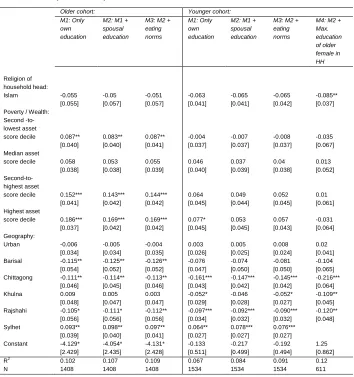
Table 4: Education gender gap norms OLS regression results: girls vs. boys
Older cohort: Younger cohort:
M1: Only own education
M2: M1 + spousal education
M3: M2 + eating norms
M1: Only own education
M2: M1 + spousal education
M3: M2 + eating norms
M4: M2 + Max. education of older female in HH
Age:
Age 0.192** 0.189* 0.191** 0.091* 0.099** 0.093** -0.044
[0.095] [0.095] [0.095] [0.048] [0.047] [0.046] [0.084]
Age squared -0.002** -0.002** -0.002** -0.002* -0.002* -0.002* 0.001
[0.001] [0.001] [0.001] [0.001] [0.001] [0.001] [0.002]
Own education:
Some primary 0.100*** 0.091*** 0.089*** 0.036 0.042 0.038 0.100*
[0.029] [0.031] [0.031] [0.037] [0.033] [0.033] [0.060]
Primary 0.122*** 0.096** 0.093** 0.075 0.058 0.048 0.01
[0.037] [0.041] [0.041] [0.047] [0.044] [0.044] [0.061]
Some secondary 0.104*** 0.061 0.059 0.082** 0.052 0.044 0.04
[0.036] [0.039] [0.038] [0.034] [0.034] [0.035] [0.056]
Secondary plus 0.08 0.027 0.025 0.112** 0.073 0.063 0.09
[0.070] [0.094] [0.092] [0.056] [0.051] [0.051] [0.068]
Spousal education:
Some primary 0.023 0.024 -0.063 -0.061 -0.073
[0.033] [0.033] [0.048] [0.048] [0.080]
Primary -0.053 -0.051 0.088** 0.089*** 0.056
[0.050] [0.049] [0.035] [0.033] [0.063]
Some secondary 0.043 0.04 0.074** 0.077** 0.057
[0.039] [0.038] [0.033] [0.033] [0.053]
Secondary plus 0.078 0.075 0.060* 0.059* 0.086
[0.059] [0.057] [0.032] [0.032] [0.057]
Highest education of older female in HH:
Some primary 0.114***
[0.040]
Primary -0.029
[0.077]
Some secondary 0.085**
[0.040]
Secondary plus 0.086
[0.057] Norms:
Eat together 0.033 0.062**
[0.037] [0.025]
Information access / processing:
Listens to radio 0.056** 0.055** 0.059** -0.017 -0.015 -0.007 0.012
Table 4: (Continued)
Older cohort: Younger cohort:
M1: Only own education
M2: M1 + spousal education
M3: M2 + eating norms
M1: Only own education
M2: M1 + spousal education
M3: M2 + eating norms
M4: M2 + Max. education of older female in HH
Religion of household head:
Islam -0.055 -0.05 -0.051 -0.063 -0.065 -0.065 -0.085**
[0.055] [0.057] [0.057] [0.041] [0.041] [0.042] [0.037]
Poverty / Wealth: Second -to-lowest asset
score decile 0.087** 0.083** 0.087** -0.004 -0.007 -0.008 -0.035
[0.040] [0.040] [0.041] [0.037] [0.037] [0.037] [0.067]
Median asset
score decile 0.058 0.053 0.055 0.046 0.037 0.04 0.013
[0.038] [0.038] [0.039] [0.040] [0.039] [0.038] [0.052]
Second-to-highest asset
score decile 0.152*** 0.143*** 0.144*** 0.064 0.049 0.052 0.01
[0.041] [0.042] [0.042] [0.045] [0.044] [0.045] [0.061]
Highest asset
score decile 0.186*** 0.169*** 0.169*** 0.077* 0.053 0.057 -0.031
[0.037] [0.042] [0.042] [0.045] [0.045] [0.043] [0.064]
Geography:
Urban -0.006 -0.005 -0.004 0.003 0.005 0.008 0.02
[0.034] [0.034] [0.035] [0.026] [0.025] [0.024] [0.041]
Barisal -0.115** -0.125** -0.126** -0.076 -0.074 -0.081 -0.104
[0.054] [0.052] [0.052] [0.047] [0.050] [0.050] [0.065]
Chittagong -0.111** -0.114** -0.113** -0.161*** -0.147*** -0.145*** -0.216***
[0.046] [0.045] [0.046] [0.043] [0.042] [0.042] [0.064]
Khulna 0.009 0.005 0.003 -0.052* -0.046 -0.052* -0.109**
[0.048] [0.047] [0.047] [0.029] [0.028] [0.027] [0.045]
Rajshahi -0.105* -0.111* -0.112** -0.097*** -0.092*** -0.090*** -0.120**
[0.056] [0.056] [0.056] [0.034] [0.032] [0.032] [0.048]
Sylhet 0.093** 0.098** 0.097** 0.064** 0.078*** 0.076***
[0.039] [0.040] [0.041] [0.027] [0.027] [0.027]
Constant -4.129* -4.054* -4.131* -0.133 -0.217 -0.192 1.25
[2.429] [2.435] [2.428] [0.511] [0.499] [0.494] [0.862]
R2
0.102 0.107 0.109 0.067 0.084 0.091 0.12
N 1408 1408 1408 1534 1534 1534 611
Notes: Dependent variable: one if responding that girls should be equally or better educated than boys, zero otherwise. The terms in brackets are robust Huber-White (Huber 1967; White 1980) standard errors. The estimations also incorporate sampling weights and adjust for within-community correlation/clustering (Wooldridge 2010). The reference groups are ”None” (education), “Lowest asset score decile” (poverty/wealth), “Dhaka” (region). *: statistically significant at 10%; **: statistically significant at 5%; ***: statistically significant at 1%.
Among members of a household, the education of the older women was found to be strongly and statistically significantly associated with the attitudes toward gender equality in education of the younger women (M4). Thus, if an older woman in the household is well educated, the younger women will tend to have more egalitarian attitudes. It may therefore be the case that families with more educated women in the household will bring in a well educated daughter-in-law, and that the members of that household will tend to favor equality in education for boys and girls. The information variable related to radio exposure was found to be important for older women but not for younger women, most likely because the latter group, being better educated, have other ways to access information. Younger women who eat with their husband were also shown to be more likely to have liberal attitudes toward the education of children, all else being equal. This suggests that various norms and perceptions are correlated.
Region of residence is the other important correlate of women‘s attitudes toward educational equality for children. Among older women, Barisal and Chittagong were found to be associated with more conservative attitudes toward educational equality for boys and girls, and Sylhet with the most liberal attitudes. Living in Barisal ceases to be a negative influence on attitudes toward gender equality in education among younger women. Thus, it seems that younger women in Barisal are more liberal on this issue than older women. But in Chittagong, we observed the same attitudes among younger women. In fact, this thread of conservatism in Chittagong appeared to be increasing, with younger women displaying stronger and more statistically significant results than older women. The counter-intuitively positive effects of residing in Sylhet on attitudes toward gender equality in education were found to be strong among younger women as well.
Finally, household wealth status emerged as a significant correlate of norms toward gender equality in children‘s education among older women. Thus, the richest quintile of older women were shown to have the most liberal values. But for younger women, socioeconomic status did not appear to matter after controlling for spousal education.
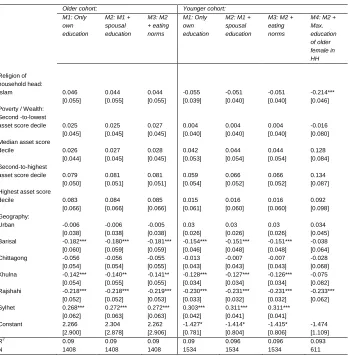
Table 5: Education gender gap norms OLS regression results: wives vs. husbands
Older cohort: Younger cohort:
M1: Only own education
M2: M1 + spousal education
M3: M2 + eating norms
M1: Only own education
M2: M1 + spousal education
M3: M2 + eating norms
M4: M2 + Max. education of older female in HH
Age:
Age -0.068 -0.07 -0.068 0.202** 0.202** 0.202** 0.224**
[0.113] [0.112] [0.113] [0.078] [0.079] [0.080] [0.112]
Age squared 0.001 0.001 0.001 -0.005*** -0.005** -0.005** -0.006**
[0.001] [0.001] [0.001] [0.002] [0.002] [0.002] [0.003]
Own education:
Some primary -0.025 -0.02 -0.021 0.039 0.049 0.05 0.143
[0.041] [0.043] [0.043] [0.046] [0.044] [0.044] [0.096]
Primary -0.091 -0.084 -0.085 0.025 0.031 0.031 0.132
[0.058] [0.063] [0.063] [0.052] [0.052] [0.052] [0.094]
Some secondary 0.066 0.066 0.065 0.024 0.03 0.031 0.096
[0.066] [0.068] [0.068] [0.046] [0.048] [0.049] [0.085]
Secondary plus -0.042 -0.045 -0.046 0.113* 0.128* 0.129 0.158
[0.095] [0.102] [0.102] [0.065] [0.077] [0.078] [0.117]
Spousal education:
Some primary -0.021 -0.02 -0.071 -0.071 0.026
[0.052] [0.052] [0.049] [0.049] [0.083]
Primary -0.019 -0.018 -0.033 -0.033 0.014
[0.054] [0.054] [0.045] [0.045] [0.068]
Some secondary -0.029 -0.03 -0.004 -0.005 -0.023
[0.055] [0.054] [0.049] [0.049] [0.068]
Secondary plus -0.002 -0.004 -0.033 -0.033 -0.016
[0.052] [0.052] [0.057] [0.057] [0.081]
Highest education of older female in HH:
Some primary -0.073
[0.082]
Primary -0.077
[0.106]
Some secondary -0.085
[0.071]
Secondary plus -0.025
[0.107] Norms:
Eat together 0.018 -0.005
[0.033] [0.030]
Information access / processing:
Listens to radio 0.095* 0.096* 0.098* 0.005 0.005 0.005 0.003
Table 5: (Continued)
Older cohort: Younger cohort:
M1: Only own education
M2: M1 + spousal education
M3: M2 + eating norms
M1: Only own education
M2: M1 + spousal education
M3: M2 + eating norms
M4: M2 + Max. education of older female in HH
Religion of household head:
Islam 0.046 0.044 0.044 -0.055 -0.051 -0.051 -0.214***
[0.055] [0.055] [0.055] [0.039] [0.040] [0.040] [0.046]
Poverty / Wealth: Second -to-lowest
asset score decile 0.025 0.025 0.027 0.004 0.004 0.004 -0.016
[0.045] [0.045] [0.045] [0.040] [0.040] [0.040] [0.080]
Median asset score
decile 0.026 0.027 0.028 0.042 0.044 0.044 0.128
[0.044] [0.045] [0.045] [0.053] [0.054] [0.054] [0.084]
Second-to-highest
asset score decile 0.079 0.081 0.081 0.059 0.066 0.066 0.134
[0.050] [0.051] [0.051] [0.054] [0.052] [0.052] [0.087]
Highest asset score
decile 0.083 0.084 0.085 0.015 0.016 0.016 0.092
[0.066] [0.066] [0.066] [0.061] [0.060] [0.060] [0.098]
Geography:
Urban -0.006 -0.006 -0.005 0.03 0.03 0.03 0.034
[0.038] [0.038] [0.038] [0.026] [0.026] [0.026] [0.045]
Barisal -0.182*** -0.180*** -0.181*** -0.154*** -0.151*** -0.151*** -0.038
[0.060] [0.059] [0.059] [0.046] [0.048] [0.048] [0.064]
Chittagong -0.056 -0.056 -0.055 -0.013 -0.007 -0.007 -0.028
[0.054] [0.054] [0.055] [0.043] [0.043] [0.043] [0.068]
Khulna -0.142*** -0.140** -0.141** -0.128*** -0.127*** -0.126*** -0.075
[0.054] [0.055] [0.055] [0.034] [0.034] [0.034] [0.082]
Rajshahi -0.218*** -0.218*** -0.219*** -0.230*** -0.231*** -0.231*** -0.233***
[0.052] [0.052] [0.053] [0.033] [0.032] [0.032] [0.062]
Sylhet 0.268*** 0.272*** 0.272*** 0.303*** 0.311*** 0.311***
[0.062] [0.063] [0.063] [0.042] [0.041] [0.041]
Constant 2.266 2.304 2.262 -1.427* -1.414* -1.415* -1.474
[2.900] [2.878] [2.906] [0.781] [0.804] [0.806] [1.109]
R2 0.09 0.09 0.09 0.09 0.096 0.096 0.093
N 1408 1408 1408 1534 1534 1534 611
Notes: Dependent variable: one if responding that wives should be equally or better educated than husbands, zero otherwise. The terms in brackets are robust Huber-White (Huber 1967; White 1980) standard errors. The estimations also incorporate sampling weights and adjust for within-community correlation/clustering (Wooldridge 2010). The reference groups are ”None” (education), “Lowest asset score decile” (poverty/wealth), “Dhaka” (region). *: statistically significant at 10%; **: statistically significant at 5%; ***: statistically significant at 1%.
Source: World Bank Survey on Gender Norms in Bangladesh (2006).
higher ages, this younger cohort of women appeared to become more liberal in their attitudes. But their own secondary or higher education was found to have only a weakly statistically significant positive association with their attitudes.
Adding the older woman‘s education also brought out a negative association with religion (as we also found for the child education norm regressions for the younger women). Therefore, after controlling for younger women‘s own education, their spouse‘s education, and the education of the older woman in the household, we found that belonging to a Muslim household has a negative and statistically significant association with younger women‘s attitudes toward equality in marriage.
As for regional effects, we found that living in Barisal, Rajshahi, and Khulna (but not Chittagong) has a negative association with liberal attitudes regarding spousal educational equality among older women. But Sylhet again showed up as having a positive association with older women‘s attitudes toward educational equality. All of these effects of region also seemed to persist among younger women, but only until we added the older woman‘s education level. After we did this, the effect of region was no longer statistically significant (except in Rajshahi). Age, too, was found to be a strong and statistically significant factor in younger women‘s attitudes regarding educational equality in marriage. It therefore appears that younger women are heavily influenced by external factors. If left to themselves, they might have more egalitarian values; but after we take into account the household or the community values, their own values become more conservative. Perhaps as women grow older, complete their childbearing, and acquire greater status in the household as more ―junior‖ women enter the family, their views become increasingly their own.
In sum, after establishing the existence of an intergenerational gap in norms concerning gender inequality in both the education of children and adults, the previous analysis examined the determinants of those norms across the two cohorts of women. Again, it would seem potentially useful to also examine the extent to which the observed gaps in the two types of norms regarding gender inequality in education are attributable to changes in the observable characteristics, to changes in the responses to those characteristics, and to other factors; and, relatedly, to what extent the observed norms gap is attributable to observable and unobservable characteristics. We therefore turn next to an Oaxaca (1973)-Blinder (1973) type decomposition, using several different specifications for the baseline (i.e., ―absence of discrimination‖) model.
The decomposition analysis has two components: first, the examination of overall decompositions; and, second, the examination of detailed decompositions, in which the education gender gap norm differential may be decomposed into the contributions from specific explanatory variables. The results from the overall decompositions are shown in Table 6. The top panel gives the results for child gender inequality, while the bottom panel gives the results for adult gender inequality. The first column then gives the three-fold decomposition result, while the next four columns give the two-three-fold decomposition results for different alternative specifications of the ―absence of discrimination‖ group. Starting with the three-fold decomposition of the norms gap related to children‘s education, the first thing to note is that the raw gap, at 7.5 percentage points, is both substantively large and statistically significant. Moreover, it is mainly attributable to the coefficients11 (5.9 percentage points out of the total gap of 7.5 percentage points), although the change in endowments (including education) explains 2.6 percentage points, and the interaction between them explains the remaining -1 percentage point. In addition, only the coefficient part is statistically significant. Moving to the two-fold decompositions of the child norms gap, the unexplained12 portion of the gap is therefore greater than the explained portion, though the latter still accounts for a substantial share of between about 20% and about 34% of the overall norms gap, depending on the specification of the ―absence-of-discrimination‖ model. Hence, a substantial portion of the difference in the norms across the two cohorts regarding child education can be explained by the change in observable characteristics, while an even larger share cannot be explained. It might be possible to interpret the latter as changes in norms and perceptions in the society over time more generally. Again, only the unexplained portion of the gap is statistically significant, while the explained portion is not.
11 This is the portion that is frequently interpreted as representing ―discrimination‖ in decompositions of
gender wage differentials.
12
Table 6: Education gender gap norms overall decomposition across the two cohorts of women: girls’ vs. boys’ and wives vs. husbands’ education
Tree-fold Decomposition:
Two-fold Decomposition:
Weights/”Absence-of-discrimination” model:
D = 0 D = 1 D = 0.5 D = 0.531
Girls’ Vs. Boys’ Education:
Mean prediction high (H): 0.852
Mean prediction low (L): 0.778
Raw differential (R) {H-L}: 0.075***
due to endowments (E): 0.026
due to coefficients (C): 0.059**
due to interaction (CE): -0.010
Unexplained (U){C+(1-D)CE}: 0.049* 0.059** 0.054** 0.054**
Explained (V) {E+D*CE}: 0.026 0.016 0.021 0.020
% unexplained {U/R}: 65.7 79.2 72.5 72.9
% explained (V/R): 34.3 20.8 27.5 27.1
Wives Vs. Husbands’ Education:
Mean prediction high (H): 0.539
Mean prediction low (L): 0.490
Raw differential (R) {H-L}: 0.050
due to endowments (E): -0.004
due to coefficients (C): 0.045
due to interaction (CE): 0.008
Unexplained (U){C+(1-D)CE}: 0.054* 0.045 0.049* 0.049*
Explained (V) {E+D*CE}: -0.004 0.004 0.000 0.000
% unexplained {U/R}: 108.1 91.6 99.8 99.3
% explained (V/R): -8.1 8.4 0.2 0.7
Notes: The references for the different specifications of weights are: 0 (Oaxaca 1973), 1 (Oaxaca 1973; Blinder 1973),0.5 (Reimers 1983),0.531 (relative group size, younger cohort) (Cotton, 1988). Standard errors for calculating statistical significance are computed according to Jann (2008). *: statistically significant at 10%; **: statistically significant at 5%; ***: statistically significant at 1%.
Source: World Bank Survey on Gender Norms in Bangladesh (2006).
of the ―absence-of-discrimination‖ model) of the gap can be explained. Again, this is due to the general lack of statistical (and substantive) significance in the regression model underlying the decompositions.
While the overall decompositions helped to illuminate to a certain extent how norms pertaining to gender inequality in education differ across the two cohorts of Bangladeshi women examined here, detailed decompositions may yield additional insights.13 Specifically, this analysis will allow us to pinpoint exactly which explanatory variables contribute the most to the intergenerational gap in gender education norms. Also, while the explained portions of the two norms gaps were statistically insignificant overall, the contributions from individual explanatory variables may still be statistically significant. Starting with the results for child education norms, they reveal that the effects from specific individual explanatory variables do in fact ―drown‖ in the aggregated explained portion reported earlier; which, again, is not statistically significant overall. Starting with the respondent‘s own education, it is not the difference in educational attainment at the higher levels of education that matters in explaining the differences in the norms gap across cohorts (these are all insignificant, in magnitude as well as statistically), but rather the fact that a greater share of the older cohort have no completed education: the main reason why the older cohort have less favorable gender education norm outcomes is because they have a larger share of the ―no education completed‖ group of respondents, with estimated associations between 1.7 and 2.1 percentage points, which is roughly the size of the explained gap (Table 6). The only other variable that makes a statistically significantly contribution to the explained portion of the gender education norms gap is spousal education at the secondary level and above, although the association here is much more modest, at about 0.4 to 0.5 percentage points. The bulk of the explained share of the gender education norms gap is therefore due to the fact that many women never attended school; in other words, it is the lack of education among the older cohort that accounts for almost all of the explained portion of the gender education norms gap.
Turning next to the detailed decompositions of the unexplained part of the overall gender education norms gap—again, this is the effect of differences in the coefficients (―prices‖ or ―returns‖) across the two cohorts—we can see that the respondent‘s own education does not make a statistically significant contribution to the gap. However, spousal education does: the differences in coefficients for primary education are associated with an increase in gender education norms inequality, while the differences in coefficients for some primary education are associated with a decrease in gender education norms inequality. Listening to the radio tends to close the gap (again, the older cohort had a higher ―return‖ on radio listening in terms of improvements in
13
attitudes regarding gender education norms), while not listening to the radio is more closely associated with negative attitudes toward gender education equality than listening to the radio is associated with positive attitudes (about 2.5 and about one percentage points, respectively).
Again not surprisingly, the results from the detailed decompositions for gender norms in adult education are almost all substantively and statistically insignificant. The only exception is some secondary education, for which there is some (weak) evidence that it leads to a worsening of the explained portion of the norms gap and to an improvement in the unexplained portion of the gap. All of the estimated associations are only statistically significant at the 10% level, however.
5. Discussion
Perhaps the strongest result that we note in our analysis is that Bangladeshi women are more likely to support gender equality in education for their children than to favor gender equality in education between spouses. While the gap in the shares of younger and older women who said they support giving girls the same or better education than boys was about seven percentage points, the gap between these two cohorts on the question of whether a wife should have equal or better education than her husband was only about five percentage points. It is not these shifts themselves that are most remarkable, but the absolute percentages. While a large majority of both groups of women said they believe in educational equality for children, only a little over half said they believe in educational equality in marriage.
The tendency toward having liberal views on children‘s education and conservative views on marriage (or, more important, the lack of an explanation for views on educational equality in marriage) has interesting antecedents and implications. The general norm discussed earlier in this paper that women should be less accomplished than their spouses in most respects is a difficult one to break down. We have also argued elsewhere that while there have been small changes in attitudes toward divorce, marriage in Bangladesh is, by and large, a stable, unchanging institution (World Bank 2008). In other South Asian countries as well, marriage patterns seem very difficult to change. Thus, in Sri Lanka, Malhotra and Tsui (1996) found that modern norms had only a small influence on the timing of marriage. Perhaps as greater numbers of women marry men equally or less educated than themselves, this may change over time, too. However, it is also possible that it is more acceptable to voice liberal attitudes regarding children‘s education, and less so regarding marriage and the marital relationship.
The importance of region as a determinant of attitudes toward educational equality for both boys and girls and husbands and wives has to be underscored. The fact that some regions are known to be conservative has already been pointed out in this paper, but not all of our results are easy to explain. In Sylhet, the region which is widely regarded as being the most conservative in the country, the women seem to have inordinately liberal attitudes toward gender equality in education, both for their children and within their own marriages. When viewed in conjunction with the low educational attainment of women in Sylhet, this finding suggests that here is a ―yearning for education‖ among the women of this region. But Chittagong defies explanation. After Sylhet, it is perceived as being the most conservative of the regions, and it has very low levels of educational attainment among girls. Yet Chittagong is also the region in which the most conservative attitudes toward educational equality among girls and boys were expressed.14
The decomposition analysis showed that a substantial portion of the overall norm gaps could be explained by observable characteristics; and, further, that the explained portion of the norms gap is driven almost exclusively by the decrease in the ―no education‖ group from the older to the younger cohort. In sum, the main factor driving gender education norms in Bangladesh in recent years is the lack of education of the older cohort relative to the younger cohort.
When interpreting the differences in the patterns between the two cohorts of women in the sample, it is important to keep in mind that these differences could well be a function of age and life-cycle, and not of cohort. Nevertheless, we believe that after
14
controlling for a number of demographic characteristics, we have been able to capture the effect of change over time to a fairly large extent.
6. Conclusion
References
Angrist, J.D. and Pischke, J.-S. (2009). Mostly Harmless Econometrics: An Empiricist‟s
Companion. Princeton and Oxford: Princeton University Press.
Blinder, A.S. (1973). Wage Discrimination: Reduced Form and Structural Estimates.
The Journal of Human Resources 8: 436–455. doi:10.2307/144855.
Brewster, K. and Padavic, I. (2000). Change in Gender Ideology, 1977-1996: The Contributions of Intracohort Change and Population Turnover. Journal of
Marriage and the Family 62: 477–487. doi:10.1111/j.1741-3737.2000.00477.x.
Cain, M.T. (1978). The Household Life Cycle and Economic Mobility in Rural Bangladesh. Population and Development Review 4(3): 421–438. doi:10.2307/ 1972858.
Caldwell, J.C., Reddy, P., and Caldwell, P. (1983). The Causes of Marriage Change in South India. Population Studies 37: 343–361. doi:10.2307/2174503.
Chase, R.S. (1997). Markets for Communist Human Capital: Returns to Education and Experience in the Czech Republic and Slovakia. New Haven: Yale University, Economic Growth Center (Discussion Paper No. 770).
Chowdhury, F.D. (2010) Dowry, Women, and Law in Bangladesh. International
Journal of Law, Policy and the Family 24(2): 198–221. doi:10.1093/lawfam/
ebq003.
Chowdhury, M., Nath, S., and Choudhury, R. (2002) Enrolment at Primary Level: Gender Differences Disappear in Bangladesh. International Journal of
Educational Development 22: 191–203. doi:10.1016/S0738-0593(01)00027-X.
Cotton, J. (1988). On the Decomposition of Wage Differentials. The Review of
Economics and Statistics 70: 236–243. doi:10.2307/1928307.
Das Gupta, M. (1995). Life Course Perspectives on Women‘s Autonomy and Health
Outcomes. American Anthropologist 97(3): 481–491.
doi:10.1525/aa.1995.97.3.02a00070.
Das, M.B. (2004). Muslim Women‘s Low Labour Force Participation in India: Some Structural Explanations. In: Hasan, Z. and Menon, R. (eds.). The Diversity of
Muslim Women‟s Lives. New Delhi: Oxford University Press.
Duraisamy, P. (2002). Changes in Returns to Education in India, 1983-94: By Gender, Age-Cohort and Location. Economics of Education Review 21(6): 609–622. doi:10.1016/S0272-7757(01)00047-4.
Dyson, T. and Moore, M. (1983). On kinship structure, female autonomy and demographic behavior in India. Population and Development Review 9(1): 35– 60. doi:10.2307/1972894.
Filmer, D., King, E., and Pritchett, L. (1998). Gender Disparity in South Asia: Comparisons Between and Within Countries. World Bank Policy Research Working Paper No. 1867. Washington, DC: World Bank.
Gindling, T.H., Goldfarb, M., and Chang, C.-C. (1995). Changing Returns to Education in Taiwan: 1978-91. World Development 23(2): 343–356. doi:10.1016/0305-750X(94)00120-N.
Hossain, M. and Bose, M.L. (2004). Nature and Impact of Women‘s Participation in Economic Activities in Rural Bangladesh: Insights from Household Surveys. Dhaka, Bangladesh: Centre for Policy Dialogue, CPD Occasional Paper Series Paper 41.
Huber, P.J. (1967). The Behavior of Maximum Likelihood Estimates under Nonstandard Conditions. In: Proceedings of the Fifth Berkeley Symposium on
Mathematical Statistics and Probability. Berkeley, CA: University of California
Press.
Jann, B. (2008). The Blinder-Oaxaca Decomposition. ETH Zurich Sociology Working Paper No. 5. http://ideas.repec.org/p/ets/wpaper/5.html.
Kabeer, N. (2000). The Power to Choose: Bangladeshi Women and Labour Market
Decisions in London and Dhaka. London: Verso.
Kabeer, N. (2001). Conflicts Over Credit: Re-Evaluating the Empowerment Potential of Loans to Women in Rural Bangladesh. World Development 29(1): 63–84. doi:10.1016/S0305-750X(00)00081-4.
Kane, E.W. (1995). Education and Beliefs about Gender Inequality. Social Problems
42: 74−90. doi:10.2307/3097006.
Kane, E.W. and Kyyro, E.K. (2001). For Whom Does Education Enlighten? Race, Gender, Education and Beliefs about Social Inequality. Gender & Society 15: 710–733. doi:10.1177/089124301015005005.