Converting Block A Building (Bapu GKV
Campus) into Zero Waste Campus
Shadabkhan Pathan Dhaval M. Patel
BE Student Assistant Professor
Department of Civil Engineering Department of Civil Engineering
SVBIT, Vasan, Gandhinagar, India SVBIT, Vasan, Gandhinagar, India
Abhijitsinh Parmar Head of Department Department of Civil Engineering SVBIT, Vasan, Gandhinagar, India
Abstract
Our project is about zero waste campus, a feasibility study. Zero Waste means that all unwanted products and materials will be treated as resources that can be used again, resulting in virtually zero garbage generated on campus. This project focusses on reducing overall waste disposal as part of zero waste action plan. Waste reduction in the campus and reuse of waste like using anaerobic digester to generate biogas from campus waste are the key goals of the present study. Our aim is to achieve campus area that is clean and hygienic, and reduce the burden of solid waste in dump yards. Zero Waste Management should include discard management through recycling and composting, and also must incorporate waste reduction and environmentally preferred purchasing practices. Zero Waste means designing and managing products and processes to systematically to avoid and eliminate the volume and toxicity of waste and materials, conserve and recover all resources, and not burn or bury them.
Keywords: Environmentally, Feasibility, Zero Waste, Disposal
_______________________________________________________________________________________________________
I. INTRODUCTION
Zero Waste
Zero Waste means designing and managing products and processes to systematically avoid and eliminate the volume and toxicity of waste and materials, conserve and recover all resources, and not burn or bury them.
Basic Introduction about Zero Waste Campus
Zero Waste is a goal that is ethical, economical, efficient and visionary, to guide people in changing their lifestyles and practices to emulate sustainable natural cycles, where all discarded materials are designed to become resources for others to use .Zero Waste means designing and managing products and processes to systematically avoid and eliminate the volume and toxicity of waste and materials, conserve and recover all resources, and not burn or bury them. Implementing Zero Waste will eliminate all discharges to land, water or air that are a threat to planetary, human, animal or plant health.
Study Area
The aim of this study is to convert the Bapu GKV Campus into a zero waste campus by suggesting effective methods of waste management which is done by conducting a detailed study of the solid and liquid waste generated in the campus.
Plan (Block-A)
Fig. 1: Plan (Block-A)
II. OBJECTIVE
The zero waste campus is a R3 (reduce, reuse and recycle) educational campaign, designed to increase waste diversion and awareness. Create awareness about waste segregation at source, Conduct a waste audit of campus to study the existing waste disposal pattern. Take collective action against waste production and disposal, providing access to environmental education
III. PROBLEM
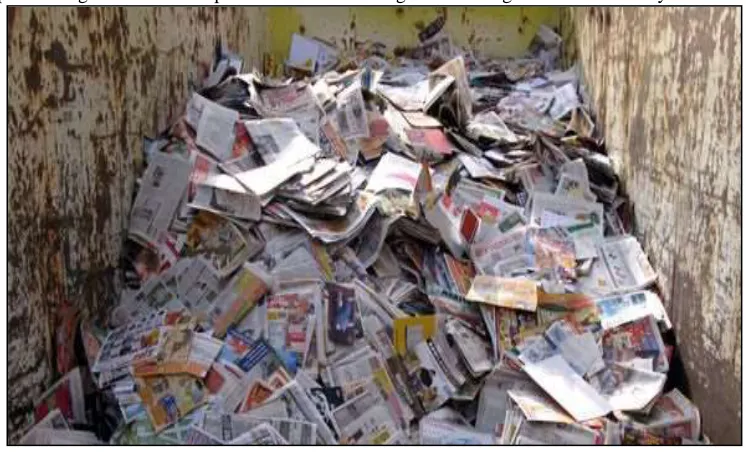
Types of waste generated in campus: The most of the paper waste is generated in the A, C, D, E, F, and Civil. And most of the plastic waste is generated in the boy’s hostel, girl’s hostel and canteen. The maximum, plastic waste is generated in the canteen. The food waste also generated in canteen.
Paper Waste
(https://www.google.co.in/search?q=paper+waste&rlz=1C1EJFB_enIN710IN710&espv=2&biw=1280&bih=662&source=lnms&tbm=isch&sa =X&ved=0ahUKEwiwpICzicnPAhXHgI8KHaqwAlIQ_AUIBigB#imgrc=w-ydbxwdRWQG-M%3A)
Plastic Waste
Maximum amount of plastic waste is generated in the canteen area of the campus. It includes different types of materials like waffers packet ,plastic bottles, tea cups etc. These all are recyclable eccept silver coated plastic.
Fig. 3: Plastic Waste Fig. 4: Plastic Waste
Food Waste
Food waste is generated in canteen area of the campus. Leftover food from canteen and vegetable cuttings are collected by local cowherds to feed their livestock.
Fig. 5: Food Waste Fig. 6: Food Waste
E Waste
Fig. 7: E Waste
Source of image
(https://www.google.co.in/search?q=e+waste&rlz=1C1EJFB_enIN710IN710&espv=2&biw=1280&bih=662&source=lnms&tbm =isch&sa=X&ved=0ahUKEwiclpOAisnPAhXJuI8KHVQECMsQ_AUIBigB&dpr=1#imgrc=ID1l4ueqTavu3M%3A)
Audit Forecasting Data
Table – 1
Date Result Date Result Date Result Date Result Date Result
19-9-16 1.27 26-9-16 3.893 2-10-16 4.077 7-10-16 1.18 12-10-16 1.13
20-9-16 3.31 27-9-16 6.705 3-10-16 2.03 8-10-16 2.33 13-10-16 2.31
21-9-16 1.282 28-9-16 1.88 4-10-16 4.63 9-10-16 1.21
22-9-16 1.66 29-9-16 2.35 5-10-16 1.76 10-10-16 0.11
23-9-16 1.22 1-10-16 2.06 6-10-16 2.32 11-10-16 1.32
Average 2.3222
IV. POSSIBLE SOLUTIONS
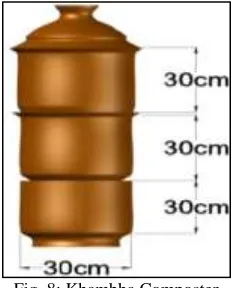
Khambha Composter
Ideal for individual homes to compost in flats, apartments and tight spaces. Every installed 3 T Kambha keeps about 15 kgs of waste from landfill / month (360 kgs / year). Layer your kitchen waste with Remix Powder daily for smell free and fool proof composting. For outdoor use only. For use on a balcony, terrace or garden. Requires a sheltered area away from direct rain (or use our Kambha raincoat large). Holes in the surface and porosity of terracotta regulates moisture and airflow optimally. Harvest compost every time the base unit is full (about every 6 weeks). Rodent proof. Handcrafted terracotta, made by artisan communities. Its modular design makes replacement of parts simple and cost effective.
harvest in 4 months. (Diluted cowdung, microbes, EM are all great accelerators). The design of the product allows for easy harvesting. A large landscape with many types of trees will need many of these to ensure that no garden clippings and leaves leave the site. Yes you can add branches and palms, make sure you cut them down to size. Gardeners value leaf compost highly for use in lawns. It can reduce the landfilling of garden waste.
Fig. 9: Leaf Composter
Biogas Plant
Plastic Tank Biogas Plant a) Materials Used
Plastic Tank, Feedstock Inlet, Reside Outlet, Floating Tank, Rubber for Sealing b) Tools List
Jigsaw, Welding Machine, Hammer, Chisel, Tap Measure, Marker Pen.
According to Sintex industrial Ltd probable Cost of 4 cubic meter Capacity plant around 70,000 rs, without the excavation work.
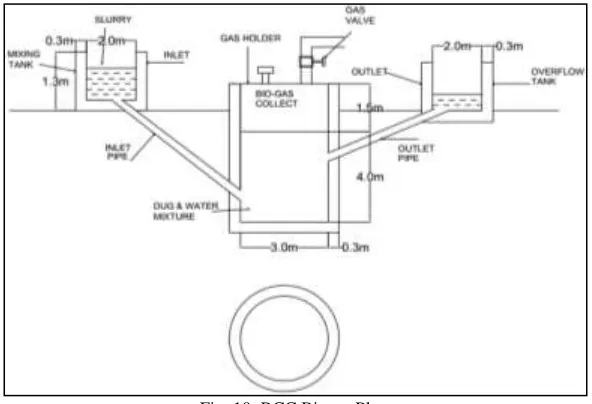
RCC Biogas Plant
a) Design Criteria for RCC Biogas Plant Volume of Tank Food Waste 45kg + Water 45kg = 90kg
Input for six Week = 90*42 =3990kg 1000kg =1 cubic meter
Therefor 3780kg = 3.780 cubic meter
Hence, Minimum capacity of tank is 3.7 cubic meter.
Fig. 10: RCC Biogas Plant
Paper Recycling Unit
energy demanding and at the manufacturing process there are used many of the chemical matters which are very problematic from view point of the environment protection. The paper recycling, simplified, means the repeated deferring, grinding and drying, when there are altered the mechanical properties of the secondary stock, the chemical properties of fibres, the polymerization degree of pulp polysaccharide components, mainly of cellulose, their supramolecular structure, the morphological structure of fibres, range and level of inter fibres bonds. Paper recycling saves the natural wood raw stock, decreases the operation and capital costs to paper unit, decrease water consumption and last but not least this paper processing gives rise to the environment preservation. In campus annually paper waste is generated around 7 tones.
V. CONCLUSION
Waste Generated in the Campus
After the present study it was found that the amount of waste generated in the Bapu GKV campus is as mentioned below Table – 2
Type of Waste Amount of Waste
Unsegregated solid Waste 2.322 tone/year
Wet Waste 0.004 tone/day
Current Waste Disposal Practices